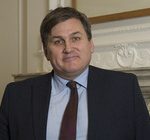
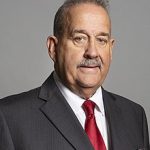
Category: Criminal Justice

  • John McDonnell – 2022 Speech on the Public Order Bill

    John McDonnell – 2022 Speech on the Public Order Bill

    The speech made by John McDonnell, the Labour MP for Hayes and Harlington, in the House of Commons on 23 May 2022.

    It is important that we always have regard to the scope and scale of the legislation that we introduce. I am really fearful about the scope and scale of the Bill, based on my constituency experience. The hon. Member for Crewe and Nantwich (Dr Mullan) raised the issue of ensuring that we can go through the democratic process. There are times when we have gone through that democratic process and, unfortunately, the elected politicians have let us down.

    Dr Mullan rose—

    John McDonnell

    Let me finish this point, so that I can explain. In my constituency, we have gone through the democratic process—often not to the extent or with the result that I wanted. For example, we have been promised time and again that there would be no further expansion at Heathrow. We were told,

    “no third…runway, no ifs, no buts”

    by the leader of the Conservative party and Prime Minister, but that was reneged on. We have been through public inquiries that have recommended no further expansion, but they have been reneged on. People therefore feel that they should look for an alternative that complements the balloting route. In my constituency, that in many instances has resulted in direct protest.

    Dr Mullan

    Is that not just the nature of democracy? Ultimately, in the longer term, we win or lose arguments; we do not win every single one, and we do not lose every single one. The right hon. Gentleman might have more credibility on this issue if he did not have a track record of encouraging direct action against Tory MPs and not letting us go about our daily lives without being disrupted and harassed.

    John McDonnell

    Fair enough. [Interruption.] No, the hon. Gentleman makes a proper point in the debate, no matter how inaccurate or distorted it is, but never mind. Let me explain—[Interruption.] Does the Bill cover activities in the Chamber? Sorry, I cannot help myself.

    In all seriousness, let me explain why the scope and scale of the Bill may mean that it criminalises a large number of my constituents, and why they resort to direct action. They are not what we would describe as typical protesters: they are of a whole range of ages, and in fact Heathrow villages consistently voted for the Conservative party. Many people whom we would classify as normal Conservative voters have engaged in direct action. Why? Because they have endured the noise, the air pollution, the respiratory conditions, the cardiac problems as well as—research now tells us—the increase in cancers in our area as a direct result of pollution from the airport.

    If Heathrow expansion goes ahead, 4,000 homes will be demolished, according to the last inquiry, so 10,000 of my constituents would lose their home. That is why people feel so strongly. They are angry because we will lose our gurdwara and three schools, and our church will be isolated from the rest of the community. They have been legitimately angry, because they feel that Governments—of, I must say, all political parties that have been in government—have consistently let them down. At one time, the proposal was for the expansion to go through our cemetery, so there was the prospect of people having to disinter loved ones buried in our constituency.

    We can understand why my constituents are angry. What did they do? We held public meetings and tried to hold Ministers to account. All that failed, so my constituents resorted to direct action. They blocked roads, they marched, they demonstrated and they sat down in the road. Climate Camp attached itself to the land; under the Bill, that will become an offence. And yes, there was a gluing-on campaign. Actually, one campaigner tried for six months to glue himself to Gordon Brown. It never worked, but there we are. Can Gordon Brown be defined as national infrastructure? My constituents have gone through an training exercise on locking themselves on—not to infrastructure outside their home, but to things inside their home, so as to prevent demolition. That is the strength of feeling there is. Whole families have been motivated to cause disruption by the threat to their community, livelihood, home, church, gurdwara, community centre and local environment, because, unfortunately, politicians have consistently deceived them.

    It is difficult to know what is serious disruption, which is grounds for arrest. The demonstrations we have been on caused a large amount of noise; did that cause serious disruption? They have, of course, caused traffic jams. Is it a question of the length of time that people have to wait in a traffic jam? In all the demonstrations that I have been on, there has been no prevention of the passage of emergency vehicles. We need clarity in clauses 3 and 4 on what serious disruption is.

    The other issue is: what is the definition of national infrastructure? In my constituency, is it just anything within the Heathrow airport boundary? Is it the roads feeding into the airport? How far downstream from the airport does “national infrastructure” go? Virtually every road in my constituency somehow leads to the airport, so any demonstration in the constituency could be designated an offence under this legislation.

    Tom Hunt

    It seems to me that the right hon. Gentleman feels that sometimes direct action is justified, but that perhaps on other occasions it is not. Will he expand on who should decide whether it is justifiable? Would it be the representative Government or him?

    John McDonnell

    My constituents and I have taken the view that because expansion is such a threat to our community, we are willing to engage in direct action, and if we are prosecuted under existing law, we take it on the chin. We go to court, explain our case and accept the fine or whatever. That is the reality of it. That is the way it works. The Bill, however, takes things to another level. One way we have protested is by blocking the tunnel at Heathrow for an hour. Well, we have never really stayed there that long; we have stayed there for half an hour, done a deal with the police and then dispersed. A number of my constituents were fined for that. We went to court, which gave them the opportunity to express their views about what was going on, and to expose what was happening. In some ways, it gained us maximum publicity. Under the Bill, however, they could be serving a sentence of a year, or could have an unlimited fine.

    There is an issue of balance and fairness. There is something about British democracy that we have to uphold here, because we have a long tradition of people like my constituents saying to the state, “This far and no further. You are going beyond the bounds of the mandate on which you were elected.”

    Kit Malthouse

    Does the right hon. Gentleman acknowledge that sentencing is not just about handing out a punishment? It is about deterring people from committing the offence again. Obstructing the highway attracts a level-3 fine of up to £1,000, but that does not seem to have any impact on the willingness of some protestors to do it time and again. Is there not some justification in using sentencing as a deterrent there?

    John McDonnell

    The problem is—and here I follow the advice of Her Majesty’s inspectorate of constabulary and fire and rescue services—that the measures will not be a deterrent. All they will do is incentivise many more people to come forward, because this will make them angry and it will cause undue suffering. I am just giving a concrete example of what the good people in my constituency are doing. If Members thought a road was going to be built through their local cemetery, and that their relatives would have to be dug up, I doubt any of them would not join the demonstration. A number of Conservative MPs and councillors did join us.

    Wera Hobhouse

    Does the right hon. Gentleman agree that these draconian measures are a sign of the weakness of a Government who are on the defensive?

    John McDonnell

    I will finish on the motivation in a minute or two.

    On stop and search, in my constituency, we have come to terms with the orders that designate certain wards enabling access on the streets for stop and search on the basis of where there are serious drug problems or where there has been a knife attack and so on. People have come to terms with that. Not everyone is supportive of it, but they have come to terms with it. I do not think they would be able to come to terms with the designation of a whole area in my constituency just because there might be a demonstration at Heathrow. It would mean having to designate the whole of the Heathrow villages area. On the issue of suspicion of carrying materials, you would need a police squad outside every shop in the Heathrow villages, because every one of my constituents in those areas could be seen as suspicious when they go to purchase something.

    Mr Holden

    Will the right hon. Gentleman give way?

    John McDonnell

    Can I not this time? The hon. Member will understand.

    Let me just say this on the serious disruption prevention orders. The extent by which they curtail freedom is beyond anything we have ever seen before. We are talking about people who are protesting on a whole range of issues. They have not committed a serious violent offence or anything like that. As the HMICFRS has said, it is not compatible with human rights.

    In conclusion, this is an incursion into basic human democratic freedoms—an incursion too far. The motivation —I will be frank—is a populist attempt to garner support for a Conservative party that is deeply unpopular at times at the moment. I also think—my hon. Friend the Member for Leeds East (Richard Burgon) raised this point—the Government are fearful that demonstrations will mount as we go through the next 12 months because of the impact of the cost of living crisis. I think it is in fear of those demonstrations that they are introducing this legislation. It will do more harm than good and make more people disillusioned with the political process. I say to Conservative Members: be careful what you wish for because this will push more people into more forms of direct action—and forms of direct action that none of us would want to see. We all treasure our democratic rights and that is why I will vote against the Bill tonight.

  • Marco Longhi – 2022 Speech on the Public Order Bill

    Marco Longhi – 2022 Speech on the Public Order Bill

    The speech made by Marco Longhi, the Conservative MP for Dudley North, in the House of Commons on 23 May 2022.

    In 2019, the people of this country voted for a no-nonsense Government from the Conservative party, which is and always has been the party of law and order—whatever Opposition Members think.

    As I have said many a time in this place, people in Dudley North are ordinary folk working hard to make a living, and we all know that that it is increasingly hard to make such a living in the current climate. I cannot understand how the privileged and entitled few think it is acceptable to prevent our carers and nurses from getting to work to care for our sick and elderly. They think it is acceptable to block a fire appliance getting to a serious fire, burning a local business to the ground or, more tragically, preventing people inside the burning building from being saved.

    Paul Bristow (Peterborough) (Con)

    My hon. Friend makes a powerful point. Does he think that ordinary people wanting tough measures against those who commit crime, protest and nuisance is one of the reasons why so many people abandoned the Labour party at the last election, voting Conservative for the first time, and why we have so many Conservative MPs now representing northern and midland communities?

    Marco Longhi

    My hon. Friend is absolutely right. It is regrettable that we have not been about to do much about police officers who seem to think it quite all right to commit acts of vandalism on statues, whether we like them or not, or to dance in the street with protesters who should not be congregating because they are breaking lockdown rules. The criminal minority who commit these acts disgust me. They have no concept of the real world and no concept of the misery that they bring to those less fortunate than them. A protest is not peaceful if it blocks key roads or interferes with key infrastructure. “Peaceful” means more than a lack of decibels. New, criminal, disruptive and self-defeating tactics carried out by a selfish minority in the name of protest are causing more serious disruption to the British public, with some parts of the country grinding to a halt, and police resources diverted from the local communities where we really need them. The disruption does not stop at simply preventing us from getting from A to B; it is worsening the cost of living crisis. What is more, blocking a road forces our constituents to go miles out of their way in their cars to get around the idiots disrupting them, which not only costs an awful lot more in fuel—money that most do not have to spend—but means more fossil fuels being burned and more pollution in our environment.

    We cannot trust the Opposition to stick up for hard-working people—our constituents. The shadow Justice Secretary—the hon. Member for Croydon North (Steve Reed)—and the shadow Home Secretary both publicly say that they do not believe that people should be able to cause disruption to citizens going about their daily business, yet they consistently vote against any measures in the House to deal with just that.

    Lee Anderson (Ashfield) (Con)

    My hon. Friend is making some good points in a great speech. He will be aware of a prolific nuisance who wanders around Whitehall with a megaphone, rambling and speaking incoherently, usually on a Wednesday. Last Wednesday, I think, he actually exposed some disturbing parts of his body to the Prime Minister as he was passing on his way to work—disgusting scenes. Does my hon. Friend agree that the Bill should include measures to tackle that sort of nuisance behaviour?

    Marco Longhi

    I thank my hon. Friend for making those points. In exposing himself, that individual probably made more sense than at any time when I have heard him speaking.

    Dr Kieran Mullan (Crewe and Nantwich) (Con)

    Does my hon. Friend agree that everyone in the House knows that if we want to get things done, we have to knock on doors, deliver leaflets and persuade people to vote for us, and that short-cutting that by disrupting people’s lives is not acceptable? If those people want to get things done, they need to do what all of us do: go out and earn votes and change ideas and minds.

    Marco Longhi

    My hon. Friend is quite right. If he was also referring to the individual whom we just described, I challenged that very person to come and stand against me in Dudley North. Let us see if he has the courage to do so—or is he just a big loudmouth and a coward as well?

    Dudley people want to be able to go about their business without others impinging on their ordinary lives. The Bill brings together a set of common-sense approaches. It is about that no-nonsense common sense that ordinary people want this Conservative Government to deliver. I very much thank both the Home Secretary and the Minister for Crime and Policing, who is doing his best to ensure that police officers in Dudley will deliver on these measures, using the new police station that I know he is working hard to secure for the people of Dudley North.

  • Wera Hobhouse – 2022 Speech on the Public Order Bill

    Wera Hobhouse – 2022 Speech on the Public Order Bill

    The speech made by Wera Hobhouse, the Liberal Democrat MP for Bath, in the House of Commons on 23 May 2022.

    We should not be fooled: the measures in this Bill are the very same as those the House of Lords overwhelmingly rejected from the Police, Crime, Sentencing and Courts Act 2022 on the basis that they form a dangerous and blatant power grab that undermines our civil and democratic liberties. The measures include the creation of serious disruption prevention orders that could subject individuals to 24/7 GPS monitoring whether they have been convicted of a crime or not. They include new stop-and-search powers for the police despite a wealth of evidence, as we have heard, that black people are disproportionately targeted. They include a broad, potentially catch-all, new offence of

    “being equipped for locking on”,

    meaning that someone could face an unlimited fine for as little as carrying a bike lock.

    The measures have been described as “draconian”, “authoritarian” and a

    “staggering escalation of the Government’s clampdown on dissent”.

    They were rightly rejected from the 2022 Act and, even though the ink is not yet dry, the Government are already trying to reintroduce powers that would not be out of place in some of the world’s most repressive regimes. Is this really the kind of country that this Conservative Government want us to be?

    It goes without saying that no one should be blocking ambulances from getting where they need to go, which puts lives at risk and does nothing to build public support for a cause. However, the new laws are not about stopping people blocking roads. If the Government really cared about ambulances being delayed, they would be doing far more to tackle the ambulance crisis that is leaving people waiting hours in an emergency. The new laws are about cracking down on the right to peaceful assembly and protest. The police already have the powers they need, as we see when people are arrested for going beyond what is acceptable for a peaceful protest.

    The police are not asking for these new powers; they do not even support them. When consulted, senior police officers said that the orders being proposed by this Government would be a “massive civil liberty infringement”. To make matters worse, this legislation will not even be effective. To quote Liberty,

    “the Government cannot legislate people into silence”.

    If peaceful protest is effectively banned, the likely consequence of this Bill will simply be to push people to seek more urgent routes to protest. All it will do is undermine confidence in our public institutions and in our police at a time when public trust in the police leadership is already fragile.

    Without the right to protest, countless hard-earned freedoms would never have been won. From the decriminalisation of same-sex relationships, to employment rights, to women winning the right to vote, the right to peaceful protest has been a force for change time and again. Protest is not a gift from the state to be given and taken at will. It is a fundamental right, and it is the foundation on which any democracy stands. We Liberal Democrats will always stand up for that right.

    I add my support to the efforts of the hon. Member for Ealing Central and Acton (Dr Huq) to amend the Bill to introduce buffer zones around abortion clinics. It is a clear and tightly targeted measure that would address the harassment of women accessing healthcare. More than 100,000 women in England and Wales every year have abortions at clinics that are targeted by these groups. Since I last supported this measure in July 2021, three more abortion clinics have been targeted for the first time, leaving more women open to abuse and feeling afraid.

    Kit Malthouse

    I am honestly and genuinely perplexed by the argument about buffer zones. I agree that the harassment of women seeking those services is disgraceful and should not be allowed, but why just them? Why not hospitals in general? Why not places of worship? I understand the sensitivity in that particular situation, but why is it that we object to and are willing to restrict that particular form of protest, but not others?

    Wera Hobhouse

    I support a simple and targeted measure against protests outside clinics that harass women seeking abortion. We can talk about other measures, but it is important to protect women who are already in an extremely vulnerable position from such harassment.

    Last week, “Newsnight” ran an alarming story on the difficulty that clinics and local residents face in getting councils to make use of the public spaces protection orders—legislation that Ministers say is the only option. These PSPOs create an unacceptable postcode lottery. Our colleagues in Northern Ireland and Scotland are prioritising finding a solution to this form of persistent and targeted harassment, and we cannot allow women in England and Wales to be left behind.

    I will never support a Bill that goes against our fundamental civil rights and those who do so tonight should be ashamed.

  • Tom Hunt – 2022 Speech on the Public Order Bill

    Tom Hunt – 2022 Speech on the Public Order Bill

    The speech made by Tom Hunt, the Conservative MP for Ipswich, in the House of Commons on 23 May 2022.

    I am very pleased to speak in this debate, and to speak quite early on as well. I was pleased to support the policing Bill and I am pleased to support this Bill as well. It was disappointing that some of the amendments made through that Bill were defeated in the other place. It has made this Bill very timely in strengthening and going further on much of what was good about the previous Bill.

    There is a clear distinction and a difference between what I think everybody in this place would want to defend, which is peaceful protest, and what we see demonstrated by a very small minority of people who seem to have very little consideration for the welfare of others and for the general economy. I think that this Bill makes that distinction. I do not see anything in this Bill, just like I did not see anything in the policing Bill, that threatens peaceful protest. That is not on the table today.

    What is on the table, though, is a Bill that seeks to strike the balance right between allowing peaceful protest and putting clear limits in place when it comes to the reckless activity that meant I had—and I always remember this—one email from a constituent whose carer could not get to them because of the consequences of the reckless behaviour that we saw in East Anglia. Try telling that person who depends upon that care that the Government should not make this issue a priority. I absolutely think that, if I spoke to that constituent today, they would be pleased that this Bill was being debated today and they would see it as a priority. So I am not going to trivialise the importance of this Bill, as some on the Opposition Benches have done.

    Richard Fuller

    My hon. Friend is making a very important point about the role of the Opposition in opposing this Bill in principle. Whatever concerns one might have about some details, the fundamental point that something needs to be done about the issues that Members on both sides have mentioned is the reason why this Bill is being proposed, which is why it is of such great concern that the Opposition are opposing on first principles.

    Tom Hunt

    I very much agree with my hon. Friend’s comments. We have heard—both today, but also outside of this debate—from senior Opposition Members that they get it, and that actually they do want to put some restrictions in place to stop excessive protests that can have very damaging consequences for people. But we have seen absolutely no evidence that, in practice, they are prepared to do that, and whenever there is an opportunity to vote in favour of what they claim they support, they have opposed it, which I do think is quite damaging.

    This points to the wider problem that those in the Labour party have, which is that, on the one hand, they know that actually the majority of people do see this distinction between peaceful protest and the reckless behaviour of a minority, but on the other they want to pander to extremist elements to the left of the political spectrum, and they are caught between those two different pressures. Fortunately, on this side of this House, we feel no such pressure. On this side of the House, we are absolutely clear who we support. We support the 63% of people who, when polled very recently, said that they support the criminalising of locking on—and actually it is not populist to listen to the overwhelming majority who find it deeply frustrating.

    In East Anglia, we were among the worst regions impacted, partly because of the oil terminals around Tilbury, the Thames estuary and south Essex. We were incredibly badly affected for days on end by the behaviour of some of these individuals, and on a bank holiday weekend. We obviously have the story of the care giver, but we also have the example of businesses—small businesses—desperately trying to get themselves back on their feet after an incredibly difficult period, being stifled and limited in their ability to do so, again because of the reckless behaviour of a small minority. I myself remember the day—I think it was the Monday that was particularly bad in our area—that it was only at the sixth petrol station I got to that I was able to get petrol. The amount of petrol that the average petrol station held in East Anglia went from I think 45% of capacity to lower than 20%. That is a direct consequence of the protesters’ behaviour.

    I welcome the fact that we are introducing these new criminal offences for some of the most reckless behaviour, such as the individuals who go on to the M25 and block hugely strategic roads. That is dangerous to themselves, it is dangerous to drivers and it causes immense disruption, and the targeted action the Government have taken is to prevent that reckless activity. But the point here is that there have been too many occasions where the police have not been as hands-on as they should be. It has caused huge frustration to my constituents when they have seen pictures of reckless protests. Actually, let us be clear: these are not protesters; they are criminals. I am going to stop calling them protesters, because at the point at which they decided to sit down on the M25 and endanger themselves and others, they ceased to be peaceful protesters, so I will unashamedly call them criminals.

    When these individuals take that decision, why are we seeing images of police forces that are just, frankly, dilly-dallying—dancing around and doing very little? Why are we seeing that? Why, when the roads to key oil terminals in south Essex are blocked, cannot the police immediately go in there, intervene and move them off, with no pause and no delay whatsoever? So, yes, this Bill is a step in the right direction, and I very much hope that it will create a powerful deterrent to prevent this sort of activity, but I also believe that a firm signal needs to be sent to the police that there have been times when perhaps they have not been as proactive as they could have been in moving some of these individuals on.

    I have spoken about the Opposition and what I think of their views on this matter, but some of the comments made by organisations such as Greenpeace and Amnesty International have also been deeply regrettable. Trying to compare the measures in this Bill with measures promoted and implemented by the Putin regime and the regime in Belarus deeply demeans the whole argument, and those organisations do themselves no service whatsoever if they cannot in their own minds make the distinction between peaceful, legitimate protest by individuals in Russia campaigning for democracy, free speech and the ability to live in a world without persecution or fear and the behaviour of individuals who have every democratic channel open to them but who just want to get their own way. These people say, “I’ve used every democratic channel open to me, but I haven’t got exactly what I want, so I am going to disrupt and undermine our economy and divert police resources.” That is not good enough.

    Dr Rupa Huq (Ealing Central and Acton) (Lab)

    Will the hon. Gentleman give way?

    Tom Hunt

    I will not. This Bill provides further evidence that this Government and Conservative Members get the difference between peaceful and other protests, and that they understand the anger of my constituents and others who are sick of being in hock to an extreme fringe. We do not have the conflict that exists in the Labour party, and I welcome this Bill.

  • Diane Abbott – 2022 Speech on the Public Order Bill

    Diane Abbott – 2022 Speech on the Public Order Bill

    The speech made by Diane Abbott, the Labour MP for Hackney North and Stoke Newington, in the House of Commons on 23 May 2022.

    The Home Secretary opened the debate by boasting that the Government support the police and, above all, support law and order, but the reality is that that is far from the truth. This is a Government who have shown a blatant disregard for the law and who confuse, as in this case, draconian legislation with upholding the law and defending justice. The reality is that they conceive of themselves as lawmakers who are above the law and the rest of us as being subject to their orders.

    In case anyone is in doubt about that, I can offer a few examples. It is Government Ministers who were responsible for attempting to prorogue Parliament in breach of the law. It is Government Ministers who have introduced a disgraceful refugee policy that is almost certainly in breach of international law on the rights of refugees. At the same time, Ministers are embarked on a course that seems to lead to abrogating an international treaty by ripping up the Northern Ireland protocol. This is far from an exhaustive list, but it would be remiss of me not to mention the 126 fixed penalty notices that have been issued to Downing Street staff and Ministers, including the Prime Minister, for breaking their own lockdown rules. Members will be aware that photographs are circulating online today of the Prime Minister jovially drinking at one of those parties that he denied in this House had happened. The Government have no right to claim to be a Government of law and order.

    The Bill is yet another draconian measure from an increasingly authoritarian Government, who presume to lecture the rest of the world on democracy and human rights, yet whose legislation is more authoritarian than many Governments who are widely and often justly castigated. I note in passing that the Bill’s provisions have already been rejected in the other place in its debate on the Police, Crime, Sentencing and Courts Act 2022. Without further time for consultation and without any concessions, the Government have immediately reintroduced the rejected provisions, so it seems that Ministers’ respect for due legislative process is as weak as their commitment to upholding the law.

    The Bill contains provisions for serious disruption prevention orders for people with two convictions for public order offences, or even for those who have been convicted of no offence but are deemed to have caused “serious disruption”. That is not just an infringement of civil liberties; that type of legislation is the mark of authoritarian Governments everywhere. The truth is that no citizen should ever be subject to the arbitrary and unsubstantiated curbing of important civil rights by the state.

    Many Members will remember the enormous demonstrations against the Iraq war, which were over a million strong; the huge anti-apartheid demos of the 1980s; and the marches in support of the miners. If any Members present took part in any of those demonstrations, they will have seen exceptionally large crowds acting entirely peacefully yet causing disruption by their sheer weight of numbers. When a large section of the population are exercised enough about an issue to go on a march, they will cause huge disruption and, often, a great deal of noise, but that is their right. Any Government who are foolish and short-sighted enough to try to curb demos because they are disruptive are creating an authoritarian regime that people will protest against even more strongly.

    On random stop and search, I have campaigned against non-evidence-based stop and search and its predecessor legislation, the sus law, for all my time in public life. I and many others have said that there is a place for targeted, intelligence-led stop and search to prevent or detect a specific crime, but that is not what the Bill proposes. The Bill gives free rein to some of the worst and most discredited policing practices. We should be clear that the overwhelming majority of stop-and-search operations in this country are conducted by the Metropolitan police, but many other forces, some of which have a comparable or even better record of fighting crime, hardly ever use stop and search. The House should be clear that stop and search is almost invariably directed at one section of the community, and that is young black men. According to the Home Office’s own data, six white people from every 1,000 are subject to stop and search, but no fewer than 54 black people from every 1,000 are subject to stop and search, and that figures rises to 157 people if we add people who are designated as “Black Other”.

    Those are wholly unacceptable and flagrantly discriminatory facts. They are known to the Ministers sponsoring this Bill, who must also know of the data showing that discrimination rises in cases where the stipulation of “reasonable grounds” is removed. Both Her Majesty’s inspectorate of policing and the College of Policing have criticised the use of random stop and search and argued that it is counterproductive, yet the Government are persisting on this course. There is a clear risk from these authoritative warnings: when sober and serious independent bodies of some standing use the term “counterproductive”, we should all take note, but apparently Ministers choose to ignore it.

    Finally, I would like to touch on the Bill’s provision on the prohibition of obstruction of major transport works. The Government claim that many of their measures are aimed at Extinction Rebellion, but legislation has a habit of being adapted to suit the needs of Government, especially proposed legislation as loosely drawn and as draconian as this, so the combination of the Government’s track record and Ministers’ wild rhetoric about a rail strike should ring alarm bells for all trade unionists. This Bill would allow a further serious erosion of fundamental rights—in this case, the particular right to organise in the workplace and the right to strike.

    For those and many other reasons, this Bill represents a serious threat to all of our long-held and hard-won rights. Protests—whether the chartists, the suffragettes or the anti-war protests of the 20th century—are part of the history of the political process in this country, and a Government who would seek to limit the right to protest in this way are a Government who do not take seriously this country’s political history and a Government who are seeking to take away people’s rights. This is a Bill that those of us on the Labour Benches will be opposing.

  • Danny Kruger – 2022 Speech on the Public Order Bill

    Danny Kruger – 2022 Speech on the Public Order Bill

    The speech made by Danny Kruger, the Conservative MP for Devizes, in the House of Commons on 23 May 2022.

    I will be brief, because I want to make a simple point in support of the new offence of locking on. I am conscious that the debate has in a sense become a sort of proxy for an argument about how seriously we take the threat of the climate crisis, and I do not want to go down that road. I acknowledge that people on the other side are very sincere in this, including Roger Hallam, who is the principal villain of this debate. I know Roger Hallam slightly—I have met and talked to him—and I respect his views. There are people who want to tear down our society and who are essentially revolutionary in their intent, but I do not think that he or the people who work with him are those people. He does have an absolute sense, however, that our civilisation is under threat unless we take radical action to change our economy, and he is entitled to that opinion. The question is how far it is appropriate to go in support of that cause.

    The question of climate change and the tactics that we are discussing may be new, but it is an old debate. As we have heard, this place has experienced enormous protests over the years and the streets outside have known crowds of tens of thousands—hundreds of thousands—of people protesting against the Government. The question is about the action that can be taken by those protesters. Historically in this country, we had a clear distinction between what was acceptable and what was not, which was a distinction between what was called moral force and physical force.

    Moral force is simply a demonstration of an opinion, as when someone stands up to be counted and shows that they expect legislators to take notice. Physical force goes beyond that, as when someone uses physical power of some form to obstruct what the Government or the law are trying to do, which is the situation that we are in now. When someone locks on or attaches themselves permanently to public infrastructure or the roads, that is not using moral force—it is not simply standing there and being counted—it is inviting the physical intervention of the police. Obviously, it is not rioting or using violence against people, but it is inviting physical intervention and that is why it is unacceptable. It is a new tactic.

    Stewart Hosie

    Clause 2, “Offence of being equipped for locking on”, says:

    “A person commits an offence if they have an object with them…with the intention that it may be used in the course of or in connection with the commission”

    of the offence of locking on. Is the hon. Gentleman saying that if somebody has a heavy bicycle chain and padlock to secure their motorbike, which can be used in the commission of locking on, they should be made a criminal?

    Danny Kruger

    I thank the right hon. Gentleman for that intervention. The fact is that going equipped to commit an offence is a criminal offence in itself. We are creating a new offence here and it is necessary to provide that preventive measure as well. The Bill allows the police to take action in a dynamic and fast-flowing situation to search and to prevent the commission of a crime, so I support the measure.

    Dr Julian Lewis

    As someone who, for decades, has gone around with a heavy chain and padlock to secure my motorcycle, I have never found myself in a situation where I was carrying that device but did not have my motorcycle with me, so hon. Members should think about that. However, what my hon. Friend is explaining so lucidly has been thought of before. To return to the anti-nuclear protests, there was even a term for it—NVDA, which is non-violent direct action. It is not violent, but it is not really peaceful, because it is deliberately breaking the law. I think that is the distinction that he is correctly trying to draw between that and peaceful legitimate protest.

    Danny Kruger

    I thank my right hon. Friend very much for his intervention. He is absolutely right.

    I end with the observation that the protesters we are dealing with, even if they have honourable intent and they are entitled to their opinion—who knows, they might be right about the climate crisis—are not allowed to use our tradition of liberty against us. It is necessary to update the law to criminalise that form of protest.

  • Diana Johnson – 2022 Speech on the Public Order Bill

    Diana Johnson – 2022 Speech on the Public Order Bill

    The speech made by Diana Johnson, the Labour MP for Kingston upon Hill North, in the House of Commons on 23 May 2022.

    I am sure we can all agree that we need to protect our freedoms of speech, of protest and of assembly as a vital part of our democracy. We already have many laws to deal with protest and to protect the public and our major infrastructure. Any extension of those laws needs to be very carefully considered by this place. I am a little surprised, therefore, that the Government have decided to bring forward this legislation from the Home Office first in this new parliamentary Session, when we are still waiting for the regulations from the protest offences in the Police, Crime, Sentencing and Courts Act 2022, which was the major Home Office Bill in the previous Session.

    I was also hoping, as the Chair of the Home Affairs Committee, that the specific recommendations in our recently published report, “Investigation and prosecution of rape”, to improve the experience of victims would be brought forward in legislation through a victims Bill. I was also hoping that our recent report on spiking, which recommended a new offence of spiking, would be in prime place for legislation to be brought forward, but we are where we are today, and this is the Bill before us.

    I have several concerns about the Public Order Bill, which I hope Ministers may be able to address. Her Majesty’s inspectorate of constabulary and fire and rescue services considered many of the proposals in the Bill in its report of March 2021, “Getting the balance right? An inspection of how effectively the police deal with protests”. Clearly, looking at the reports of the inspectorate is incredibly helpful in developing evidence-based policy that can stand up to effective scrutiny, and the report has already been quoted widely in the Chamber this afternoon.

    The report found that

    “most interviewees did not wish to criminalise protest actions through the creation of a specific offence concerning locking-on.”

    The report also concluded that it did not support the introduction of protest banning orders. I noted what the Home Secretary said in her opening remarks about wanting to back the police. That is very important, so will the Policing Minister be able to explain when winding up the evidential basis for bringing forward these particular proposals and the basis on which the Home Office has come to a different conclusion from the inspectorate?

    I also want to raise issues about the actual terms in the Bill. The term “protest” appears 21 times, the term “protest-related disruption” appears 31 times and the term “serious disruption” appears 118 times. However, none of those terms is defined on the face of the Bill. To ensure that the powers conferred in this Bill are used proportionately, and only when absolutely necessary—and to prevent legal uncertainty—I hope that the Minister will commit to ensuring that the Bill will include definitions of those terms.

    On the proposed extension of stop and search powers, in July 2021, the Home Affairs Committee published “The Macpherson Report: Twenty-two years on”, which found that there are still deep-rooted and persistent racial disparities in policing, particularly in the use of stop and search. Our report found that statistics covering the year to 31 March 2020 showed ethnic disproportionality in stop and search is worse now than it was 22 years ago. Black people in 2020-21 were seven times more likely to be stopped and searched than white people, and that was up from five times more likely in 1998. The disproportionality in “no suspicion” searches is even more stark. In 2019-20, black people were 18 times more likely than white people to be stopped under section 60. With such clear ethnic disproportionality occurring, can the Minister explain how the Home Office will tackle those existing disparities with this plan to extend stop and search?

    I note that, in the Bill’s equality impact assessment, the Government state that safeguards exist to mitigate the disproportionate use of stop and search, such as the use of body-worn cameras and extensive data collection on the use of these powers. However, in 2021, Her Majesty’s inspectorate of constabulary said:

    “Too few forces regularly review body-worn video footage”,

    and

    “too many forces still do not analyse and monitor enough information and data on stop and search to understand”

    how to apply stop and search fairly.

    Furthermore, the amendment under clause 7 to the police power to stop and search under section 1 of the Police and Criminal Evidence Act 1984 will allow the police to take pre-emptive action against those suspected of being about to engage in protest-related offences. What specific safeguards will the Government put in place to ensure that such pre-emptive action will not breach a person’s rights under articles 10 and 11 of the European convention on human rights?

    Finally, I want to speak briefly about buffer zones for abortion clinics. The Bill does not legislate for that, but it should. My hon. Friend the Member for Ealing Central and Acton (Dr Huq) has led efforts in this House for some time for change on that matter, and I will continue to support her, including any amendments to this Bill that she tables. In the light of recent events, the Government should also consider buffer zones outside schools and vaccine clinics. But to return to the issue of buffer zones for abortion clinics, for too long, women in England have faced real intimidation and real harassment outside clinics providing abortion care. The Court of Appeal of England and Wales has confirmed that protesters can cause

    “significant emotional and psychological damage”.

    One woman described her experience visiting an abortion clinic in April this year:

    “They came over twice and we said, ‘No thank you.’ She was very pushy, in your face…it has left me anxious as I suffer from poor mental health. When we walked past, she said, ‘Your baby wants to live.’ We had driven for 7 1/2 hours and did not expect this at all.”

    Women accessing a legal and essential form of healthcare should not be subject to harassment. Both Scotland and Northern Ireland have begun to take steps to implement buffer zones and it is time that England did. I hope that the House will have an opportunity to vote on that in due course.

  • Ben Spencer – 2022 Speech on the Public Order Bill

    Ben Spencer – 2022 Speech on the Public Order Bill

    The speech made by Ben Spencer, the Conservative MP for Runnymede and Weybridge, in the House of Commons on 23 May 2022.

    This is an important Bill, which I support. During this debate, we have heard a lot from Opposition Members about peaceful protest. I support peaceful protest and peaceful demonstration, but today’s debate suggests to me that there is some confusion about what peaceful protest is and what it is not.

    My constituents know what peaceful protest is. As Members of Parliament, we see it every day on Parliament Square—people singing, people heckling us, people making themselves and their opinions known to us as legislators. My constituents also know what peaceful protest is not: it is not people blocking the M25, or roads to hospitals, which I think is particularly egregious. I was horrified years ago watching when ambulances were trying to get through to St Thomas’ Hospital. People from Extinction Rebellion were taking it upon themselves to decide who was worthy to pass the blockade and get urgent medical treatment. We have seen the same thing with the recent M25 protests. Peaceful protest is not stopping people going to work or blocking the distribution of newspapers. It is not blockading fuel at a time of particular pressures around fuel. It is not slashing the tyres of trucks or smashing up petrol stations.

    This Bill is not an anti-peaceful protest Bill; it is an anti-criminal behaviour Bill. It is a Bill to tackle the tactics deployed by people with no regard to the consequences of their actions or democratic process and who use criminal damage to try to hold the public to ransom. What really infuriates my constituents is that the people they see deploying these tactics seem to be above the law. They go and lock on and do protesting round and round again, with seemingly no powers to act to stop them. That is why the serious disruption prevention orders are so critical in stopping it. These behaviours are not on and cannot be accepted in any society committed to the rule of law and democracy. This Bill is essential to tackle this criminal behaviour.

  • Anne McLaughlin – 2022 Speech on the Public Order Bill

    Anne McLaughlin – 2022 Speech on the Public Order Bill

    The speech made by Anne McLaughlin, the SNP MP for Glasgow North East, in the House of Commons on 23 May 2022.

    “A little inconvenience is more acceptable than a police state”—not my words, but those of a police officer consulted by Her Majesty’s inspectorate of constabulary and fire and rescue services on proposals in the Bill. I agree with the sentiment.

    People are fleeing war in Ukraine and multiple other countries. The Home Secretary could be focused on sorting out the dangerously long time it is taking to get them to safety. She could be putting her energy into fixing the chaos at the Passport Office. She could be using her power to solve the supply chain issues that are pushing up food prices, which have made things unaffordable for many on these islands. Instead, she is bringing back populist—according to YouGov and Daily Express polls, at least—draconian, anti-human rights policies that were rejected only a matter of weeks ago in the other place. The reason for that is anyone’s guess. Is it to distract from the aforementioned failings of her Department? To raise her profile for when the Prime Minister surely, inevitably, has to stand down? Or just because she can?

    Make no mistake: this, to quote Liberty, is

    “a staggering escalation of the Government’s clampdown on dissent”.

    It is at odds with people’s right to freedom of thought, belief and religion; freedom of expression; and freedom of assembly and association. For some, it will also lead to a clampdown on their right to respect for private and family life. Those are all rights we enjoy through the Human Rights Act 1998, but I do not expect this Government or many of their Back Benchers to care, because they want to tear that Act up and define the rights that they think we should enjoy.

    However, I think that the people out there, who after all elected us, have the right to know that this Government want to control what they think, believe and say. This Bill allows the state to stop and search people who are not suspected of a single wrongdoing. It could lead to someone who has committed no crime having to report to certain places at certain times. I would be interested to hear who they will report to in Scotland, and what consultation has taken place with the Scottish Government on that. The Bill could mean people out there, again having committed no offence, having to wear an electronic tag, and having every single move they make monitored 24/7. That is sinister. The Home Secretary did not like it when the Opposition said this, but it bears striking similarities to what happens in Russia and Belarus. It is all about oppressing and controlling people. It is the stuff of conspiracy theories no more; this is the menacing new reality if you do not agree with the Conservative Government.

    Big Brother Watch is concerned that the Bill takes us one step closer to becoming a surveillance state. That may be ideologically in line with this Government’s desire to control the people, but is it necessary? Will it work?

    Kit Malthouse

    Will the hon. Lady give way?

    Anne McLaughlin

    No, I am not giving way. There is widespread acceptance that the answer to both of those questions is no. Again,

    “a little inconvenience is more acceptable than a police state”.

    It is not just the one police officer who felt that way. Her Majesty’s inspectorate consulted widely on these powers as early as 2020 and they were rejected across the board, not just because they were incompatible with human rights legislation, but because police concluded that they would not be an effective deterrent. So what is the point?

    Existing legislation is already heavily weighted in favour of the authorities, and the 2022 Act has made that even more the case. The former Home Secretary, the right hon. Member for Bromsgrove (Sajid Javid), said in 2018 that,

    “it is a long-standing tradition that people are free to gather together and to demonstrate their views. This is something to be rightly proud of.”

    He was right: it was something to be rightly proud of. Where a crime is committed, the police already have the powers to act so that people feel protected. Where there is a clear need to protect critical infrastructure or transport hubs, the UK already has an array of legislation that allows that to happen, as the former Home Secretary said. The Public Order Act 1986 gives the police powers to place restrictions on protests and, in some cases, prohibit those that threaten to cause serious disruption to public order. There is an array of criminal offences that could apply to protesters, including aggravated trespass or obstruction of a highway.

    Despite that, the Government waited until the Police, Crime, Sentencing and Courts Bill had completed its passage through this House to slip much of what we have before us today into that Bill at the last minute, when it was in the House of Lords—and the Lords roundly rejected it. Instead of accepting the defeat, one week later, the Government regurgitated most of the measures into the Bill before us today. The Home Secretary should accept that these draconian measures have already been rejected by Parliament and respect the democratic process. After all, this Government keep telling Scotland to do likewise, although the issue we intend to revisit—the matter of Scotland’s independence—was last put before the people eight years ago, not just last month.

    Alberto Costa (South Leicestershire) (Con)

    We must remember that at the time of the Scottish referendum, the SNP leadership promised that it was a once-in-a-generation referendum. The passage of eight years can hardly be regarded as that, can it?

    Anne McLaughlin

    What we have here is a once-in-a-fortnight opportunity to bring back legislation that has been rejected in this place. The Government expect us to accept the result of the referendum eight years ago, despite having tested the alternative and despite a series of promises being broken subsequent to Scotland voting no. Why is it acceptable for them to repackage measures a week after they were rejected, even though there has been no time to assess the Police, Crime, Sentencing and Courts Act 2022 for effectiveness, human rights compatibility, or the police’s ability to manage those extensive new powers?

    On the matter of Scotland, yes, the Bill and its powers apply to events taking place in here in England and in Wales, but as I said repeatedly throughout proceedings on the Police, Crime, Sentencing and Courts Bill, I and every SNP Member will defend the right of the people of Scotland to peacefully protest against decisions made on our behalf by another Government, in another country, who were not elected by the people of Scotland. Crucially, we will defend the right of the people of Scotland to protest where that Government sit—right here, at the seat of power. The people of Scotland have come to London many times in their thousands to protest against the illegal invasion of Iraq, the billions squandered on nuclear weapons stationed without our permission on the west coast of Scotland, and the daylight robbery foisted on the women who, when they reached state pension age, discovered that the age had gone up and they would not be receiving their state pension after all. We can stand in the middle of Glasgow or outside the Scottish Parliament all we like—and we do—but the Scottish Parliament cannot change any of those things, no matter whether they want to or not.

    I will defend the right of my constituents to stand outside this place and make their voices heard, and I will defend their right to not be subjected to the outrageous measures proposed here today—measures such as the serious disruption prevention orders, which can be imposed on people whether or not they have committed an offence. It is these orders that allow for reporting and for GPS monitoring. Remember, an individual does not have to have committed an offence to be subject to one of these orders, and anyone who fails to fulfil one of the obligations can be criminalised and subjected to imprisonment for up to 51 weeks. Similar legislation in Belarus allows sentences of up three years, so no doubt the Government will tell us to think ourselves lucky.

    There are also the locking-on measures. My constituent Christine lives in Springburn, and she is a campaigner in the Women Against State Pension Inequality Campaign. She never wanted to be any kind of campaigner, but her state pension was taken from her and she felt compelled to act. If she and other WASPI women come to London to protest, or even just to visit London, and she has glue in her bag because she is a crafter but does not use it, can she be charged? Could she go to jail for 51 weeks? Can the Home Secretary guarantee that she would not? No, she cannot. And how would the glue be found in the first place? It would be found because the Bill also has measures such as suspicionless stop and search. Christine, in her mid-60s and a model citizen, could be stopped and searched regardless of suspicion, just because of where she is and where they think she might go and what she might do—but Christine is not the target, is she?

    We already know that stop and search has a disproportionate impact on people who are black; they are seven times more likely to be stopped and searched. But when it comes to suspicionless stop and search, they are 14 times more likely to be stopped and searched. Is it a coincidence that all this legislation to stop people protesting came on the back of an uprising of movements like the Black Lives Matter movement? The important thing about Black Lives Matter is that it was not led by well-meaning white allies like me; it was and is led by campaigners who are black—those whose lives are devastated by those who do not believe that their lives matter as much as the lives of white people.

    My partner was the founder of Black Lives Matter Scotland. I have been taken aback by the number of people who, over the past couple of years, have approached him and told him that they never spoke of what they experienced as a black person on these islands until Black Lives Matter. Some of them living in remote areas said that, at times, they thought they might be the only black person in Scotland, but suddenly they found a community who got it, and it transformed their lives and the way they thought about themselves. That is why it is so important to encourage movements like that, but that, along with the nerve of environmental campaigners—trying to save the planet, for goodness’ sake; how dare they—is likely one of the reasons why they annoy this Government so much. If not, what is the excuse for suspicionless stop and search, which the Government know will disproportionately impact black people?

    Other than the morality or immorality of this Bill, as with other Bills I have worked on, I am concerned that the terms used are not sufficiently precise. It is all left to be defined by the Secretary of State, which is worrying, given the length of debate on “serious disruption” in the Police, Crime and Sentencing Bill. There is so much uncertainty about where the threshold for serious disruption lies—legal uncertainty being the opposite of what we should be striving for if we are to respect the rule of law.

    The Bill is also excessively broad and the pre-emptive nature of it is disturbing. Have you ever watched a film called “Minority Report”, Madam Deputy Speaker? It had pre-cogs who could see into the future, and people would be arrested before they committed a crime. It sounds ridiculous—[Interruption.] I hear a Conservative Back Bencher say, “Good idea.” It sounds ridiculous and so does he. It sounds far-fetched, but in reality if this Bill passes you could be arrested, Madam Deputy Speaker, you could be charged, and you could end up in prison for something that you might have done.

    I have barely touched the surface in these remarks, but I will make one final point, which was raised by Justice. Referring to clause 10, Justice points out that, while the clause creates an offence if a person

    “intentionally obstructs a constable in the exercise of the constable’s powers”

    of stop and search, with or without suspicion, the Met’s own guidance following the tragic murder of Sarah Everard is that people ask “very searching questions” of the officer, and notes that

    “it is entirely reasonable for you to seek further reassurance of that officer’s identity and intentions”.

    Anyone who did that at or near a designated protest area, as defined by the police, could end up getting 51 weeks in prison, a fine, or both.

    The right to protest is the lifeblood of any democracy. It allows us to hold the powerful to account, which is precisely why they do not want it. It allows us to actively participate and to organise in our communities. History shows us that it is protest that often underpins political, economic and social change. Some of the most fundamental freedoms that we now have were won in spite of Governments. I will end by repeating what I said at the start: this Bill is all about oppressing and controlling the people out there, and they need to know about it. The stuff of conspiracy theories no more; this is the menacing new reality for those who do not agree with the Conservative Government. We should all be very afraid.

  • Nickie Aiken – 2022 Speech on the Public Order Bill

    Nickie Aiken – 2022 Speech on the Public Order Bill

    The speech made by Nickie Aiken, the Conservative MP for the Cities of London and Westminster, in the House of Commons on 23 May 2022.

    As is seen week after week, my constituency of the Cities of London and Westminster tends to be the epicentre of political protest in this country. That is hardly surprising, as it is home to the Government, to Parliament and to the UK’s financial heart in the City of London.

    I am sure that many hon. and right hon. Members can imagine that the effective management of protests, particularly the most disruptive, is of interest to my constituents. They have first-hand experience of having to negotiate their daily lives with the rights of others to protest.

    In the hundreds of letters and emails that I have received from constituents highlighting the disruption that they have suffered during the days and weeks of organised protests, not one has called for the right to protest to be curbed. When it comes to public order, it is especially important to ask ourselves why the measures outlined in this Bill are proper and necessary. What has been made clear to me by both the Metropolitan police and the City of London police is that existing legislation has not kept pace with the evolving tactics of modern-day protesters.

    Specifically, the lack of a lock-on offence makes it almost impossible for the police to balance lawful protest and basic civil rights. Provisions in this Bill will change that. Clauses 1 and 2 will allow police pre-emptively to stop highly disruptive, and in some cases dangerous, lock-ons. Clause 1 is of particular importance, as it will make locking on an offence where such an act,

    “causes, or is capable of causing, serious disruption”.

    That is absolutely right. We have seen individuals glue themselves to vehicles or use lock-on devices on the public highway.

    Last August, those tactics were used on Tower Bridge by protestors who brought parts of Central London to a standstill for hours. Protestors have encased their arms in tubes filled with concrete and locked themselves to makeshift structures at huge heights. We have even seen reports of protesters inserting nails and blades into those pipes in an effort to make removing them more difficult and dangerous for our police officers.

    We cannot overlook the very real concerns of thousands of ordinary people who are disrupted by demonstrations that go well beyond what is necessary. I utterly disagree with the suggestion that just because we agree with a cause, the disruptive activity is right. It is not. Protest tactics using lock-on devices are not just inconvenient for many, but can have real-life consequences—emergency vehicles unable to attend 999 calls, missed hospital appointments or someone unable to get to a dying loved one to say goodbye.

    It also frustrates me and many of my constituents that police officers involved in policing those protests are taken away from policing their neighbourhoods and concentrating on their local policing priorities. It is not just Westminster and City of London police officers being taken away from their daily duties. During a number of major days-long protests, I have seen officers from the home counties and Bedfordshire policing central London. I have even come across police vans in Covent Garden with the word “Heddlu” on them, which is Welsh for police.

    Removing lock-on devices safely requires specialist policing teams to be deployed in what can be high-risk environments, which takes time and significant resources. Just one protest group, Extinction Rebellion, had a total of 54 days of protest between 2019 and 2021, costing some £1.2 million a day. I therefore welcome clause 2, which would allow officers to act on reasonable suspicion that satisfies visual and intelligence-based qualifications to prevent the use of highly dangerous lock-ons.

    Since the publication of the Bill, I have listened to the argument that the offence is not necessary, and that the offences of wilful obstruction of the highway and aggravated trespass cover these actions. To an extent, that is true. However, they are only applicable after assembly of the structure, by which point we will have seen a chain of events that will ultimately lead to serious impositions on the surrounding area, businesses and local people.

    The sticking point in the Lords on the Police, Crime, Sentencing and Courts Act 2022 was provisions specifically relating to noise or limiting freedom of expression. I recognise that, and I accept that, for this kind of legislation, we need to reach an agreement that satisfies both this and the other place. However, I stress that clauses 1 and 2 of this Bill are absolutely necessary to rebalance lawful protest and civil rights. After all, in non-violent protests, the duty of the police is to take a balanced and impartial approach towards all those involved in or affected by the protest—an approach that is consistent with both human rights law and domestic legislation. We must ensure that both lawful protest and everyday life can continue without the basic rights being infringed in respect of either. I believe that the Public Order Bill does exactly that.