Category: Coronavirus

  • Liz Kendall – 2020 Statement on Exercise Cygnus

    Liz Kendall – 2020 Statement on Exercise Cygnus

    Below is the text of the statement made by Liz Kendall, the Shadow Social Care Minister, on 7 May 2020.

    The report on Exercise Cygnus provided clear warnings that we were not properly prepared for a pandemic.

    In particular it highlights that local plans for social care were inadequate and that social care services wouldn’t be able to cope with the number of people discharged from hospitals to ensure the NHS had enough beds to meet demand.

    These warnings have now proved all too sadly true as the unfolding tragedy in our care homes shows. Care providers confirm they were not involved in subsequent discussions on how to put these problems right.

    Ministers must be clear about why they failed to act on the report’s recommendations and what they will now do to fully protect and resource these vital services in future.

  • Dominic Raab – 2020 Statement on the Coronavirus

    Dominic Raab – 2020 Statement on the Coronavirus

    Below is the text of the statement made by Dominic Raab, the Foreign Secretary, on 7 May 2020.

    Good afternoon and welcome to today’s Downing Street Press Conference.

    I’m very pleased to be joined by Sir Ian Diamond the UK’s National Statistician from the ONS, And also by Dr Jenny Harries, Deputy CMO.

    The latest data from our COBR coronavirus data file shows that, as of today:

    there have now been 1,534,533 tests for coronavirus across the UK
    that includes 86,583 tests carried out yesterday
    206,715 people have tested positive, that’s an increase of 5,614 cases since yesterday
    And those who tested positive, very sadly, 30,615 people have now died, and my deepest condolences go out to anyone who has lost a loved one throughout this pandemic.

    Three weeks ago, before the Easter bank holiday weekend, I set out five tests for the UK to move on to the next phase in this pandemic. Then, just as now, there were calls to ease up on the restrictions. But as the science made clear, we couldn’t responsibly do that. In fact, the advice from the group of scientific experts, SAGE, who advise the government made it very clear that there weren’t any changes at all that we could confidently take, Without risking a second peak of the virus.

    That’s why we asked the public to keep going. We weren’t done yet.

    We said ‘stick to the plan’, and the British public kept going. People stuck to the rules. That meant working from home, it meant worries about money it meant adjusting to home schooling, time apart from family and friends, and just not doing many of the things which we all enjoy in life.

    At the same time, there’s been a lot of people who, despite their own personal sacrifices, have gone the extra mile. They volunteered to support the elderly and the vulnerable in their community, who have been shielded themselves away from the virus.

    And each Thursday, of course, we now come together to applaud the NHS staff, and the carers, the people who just kept going to keep our country going.

    And because of that monumental effort we have now passed the peak of the virus. The NHS hasn’t been overwhelmed. We haven’t seen hospital wards overwhelmed with patients, people left without hospital beds, people left without the ventilators that can mean the difference between life and death.

    Now I know the tragic death toll in this country and around the world has been sobering for all of us, and there have been real challenges in this country – with PPE, and with care homes.

    But, in this first stage of the fight against COVID-19, through this national team effort, we’ve prevented the number of deaths rising to even higher levels, and we’ve ensured critically that the NHS had the capacity to cope.

    Today the Cabinet was updated on SAGE’s advice on the progress that we’ve made to date. And as a result of the social distancing measures that we’ve put in place the R level, which signifies the rate of infection, is now between 0.5 and 0.9. The overall number of new cases has been steadily falling and the rate of deaths is also steadily falling.

    Now, just to be clear about what all of this means in practice. The virus is not beaten yet.

    It remains deadly and infectious, and we are working very hard right across government and with local government to bring it down in areas of concern, like in care homes, and I’m confident we can do it and we will do it.

    But, because we held firm three weeks ago, we are now in a position to start to think about the next phase in this pandemic.

    So, this weekend, the Prime Minister will set out the next steps which we can responsibly take over the following weeks, guided by the scientific advice and mindful, as we’ve said right from the word go, of taking the right decisions at the right time.

    Now, we can start setting out how we will live and work, whilst maintaining the necessary social distancing rules, we can also be clearer about those measures which are still necessary to prevent a second peak.

    The Prime Minister has been directing Ministers and our teams of officials right across government to carefully develop a road-map for the next phase.

    It contains appropriate measures to be taken at appropriate milestones, subject to very clear conditions.

    And there be detailed guidance to help inform, advise and reassure the public, businesses and other organisations.

    To get this right, we have set milestones. Some changes can confidently be introduced more quickly than others, and some of those other ones will take longer to introduce.

    And, it’s important to say this, at each point along the way when we take these decisions, they will be based on the five tests and the scientific advice that we receive.

    And as I set out in the fifth of our five tests when I spoke here at this lectern, on 16 April, the point at which we make even the smallest of changes to the current guidance will be a point of maximum risk.

    If people abandon the social distancing, if we forget the sacrifices that were made to get us through the peak, to get us to this point, the virus will grow again at an exponential rate.

    That would lead to a second peak which would threaten the NHS. It would trigger another lockdown, which prolong the economic pain, and we we’re determined to keep it temporary, to keep it as short as possible.

    So, we’ve kept the current measures in place for this long, precisely so that we can bounce back with vigour and energy as soon as possible, as soon as it is responsible to start looking at the second phase.

    And because of that, our next steps will be surefooted and sustainable. Any changes we make will be carefully monitored. If people don’t follow the new rules, or if we see that the R-level goes back up, we will tighten the restrictions again, we will always retain the option to do so. That way we can safeguard public health and we can also safeguard the economy in a sustainable way.

    So having prepared carefully, and based on the updated advice from SAGE, this weekend, the Prime Minister will set out the roadmap for the next phase, along with the conditions for reaching each milestone.

    That way we can provide the country with a better understanding of what lies ahead, we can offer reassurance that we will adjust the restrictions to the minimum necessary to prevent a second spike in the virus, and we can give people the confidence that we’re doing it in a way that will protect life and preserve our way of life.

  • Nicola Sturgeon – 2020 Statement on the Coronavirus (07/05/2020)

    Nicola Sturgeon – 2020 Statement on the Coronavirus (07/05/2020)

    Below is the text of the statement made by Nicola Sturgeon, the Scottish First Minister, on 7 May 2020.

    Good afternoon. Thank you very for joining us again today.

    I want to start with the usual statistical update on COVID-19 in Scotland.

    As at 9 o’clock this morning, there have been 12,924 positive cases confirmed – which is an increase of 215 since yesterday.

    A total of 1,587 patients are currently in hospital with either confirmed or suspected COVID-19 – that is a decrease of 45 since yesterday.

    A total of 86 people last night were in intensive care with confirmed or suspected COVID-19. And that is a decrease of three since yesterday.

    I am also able to confirm today that since 5 March, 2,954 patients who had tested positive and been admitted to hospital for the virus have been able to leave hospital, and I wish all of them well.

    Unfortunately though I also have to report that in the last 24 hours, 59 deaths have been registered of patients who had been confirmed through a test as having the virus – and that takes the total number of deaths in Scotland, under that measurement, to 1,762.

    As always, let me stress that these numbers are not statistics – or just statistics. They represent real people whose loss is being felt and mourned by many. And I want again to send my deepest condolences to everyone who has lost a loved one to this virus – we are all thinking of you.

    I also want to thank again our health and care workers for the extraordinary work that you are doing in these most difficult of circumstances.

    And I want to thank all of you watching at home, for the sacrifices you are continuing to make as you follow our very clear advice to stay at home, save lives and help us to continue to protect the NHS.

    Now I have one main point that I want to update you on this afternoon.

    As I have indicated previously this week, the Scottish Government is legally required to review the regulations giving effect to the lockdown every three weeks, and the latest review falls due today.

    Our assessment of the evidence leads me to the conclusion that the lockdown must be extended at this stage. More detail of our analysis will be published alongside today’s daily statistics at 2pm. But let me say this now.

    We are – together – making really significant progress in our efforts to get this virus under control. I have reported today a further reduction in the number of patients in intensive care. And yesterday, National Records of Scotland reported the first weekly decline in the number of registered deaths related to the virus since this outbreak began.

    All of that gives us real hope and real encouragement.

    But we also know that progress remains fragile. Our estimates suggest that there are still significant numbers of people in Scotland infected with this virus.

    And we are not yet confident that the all-important R number is comfortably below 1 – and I’ve explained and set out before why it is so important to get it and keep it comfortably below 1. Indeed, we think it could still be hovering around 1 just now – which means that any significant easing up of restrictions at this stage would be very very risky indeed.

    Also, we think the R number may still be a bit higher here than it is in other parts of the UK – perhaps reflecting the fact that our first cases came later than England’s and so we may be at a different – and slightly later – stage of the infection curve.

    Now, all of that tells me that extreme caution is required, at this critical juncture, to avoid a rapid resurgence of the virus.

    Before we can judge that it is safe to begin any significant, albeit gradual, easing of the restrictions, we want to see data in the days ahead that confirms a very clear downward trend.

    In particular, I want to see what our estimates of new cases and the R number look like a week from now.

    And I will be looking very carefully, as I’m sure all of us will be, to see if next week’s NRS figures show a continued fall in the number of deaths.

    And it is to allow for such further careful assessment that we have concluded that the lockdown – and the associated regulations – must remain in place for now.

    The legal deadline for the next review of these regulations will be three weeks from now – which is the 28 May.

    But I want to be very clear again today that we can make changes to the regulations before then if the evidence suggests it is safe to do so.

    And let me say again, I am as anxious as anyone to restore some degree of normality to our lives as soon as possible and to reduce the harms that we know lockdown itself is doing.

    It is also open to us to amend the supporting guidance if we think that is possible – and indeed there is one very limited, specific change to the guidance that we are considering already, and I want to come back to that shortly.

    But, first of all, I want to address reports that you might have seen in today’s media that the Prime Minister might be planning on Sunday to announce changes to the lockdown in England. I should stress that these are only media reports – I do not know yet how accurate they are.

    And before I go any further here, I want to take the opportunity to remind you that none of the decisions I am taking just now – absolutely none of them – are driven by politics. They are driven only by doing what is right to tackle this virus and to save lives. And I believe that is true for all leaders across the UK.

    However, I have to be clear with you that the potential changes that are reported in the media today have not yet been discussed with the Scottish Government or, as far as I know, with the other devolved governments.

    I hope we will have discussions in the next few days. We had expected a COBRA meeting today or tomorrow but it seems now that it might not take place until Sunday – which of course is the day the Prime Minister is due to make his statement.

    However, in the last half hour I understand that the Prime Minister has requested a call with the devolved governments later today, and I very much welcome that.

    And if and when those discussions do take place I will make very clear – as I have all along – that it is my preference, if possible, for all four UK nations to make changes, together, at the same pace. Because that certainly helps us give clear, consistent messages to you, the public.

    However, for that approach to work, we must agree to make changes only when all four governments are satisfied that they don’t risk a resurgence of the virus.

    And – again, let me be clear – if the Prime Minister decides that he wants to move at a faster pace for England than I consider is right for Scotland – that is of course his right. I will respect that and I will not criticise him for doing that.

    But I hope you understand, and indeed I hope you agree, that I must make judgments, informed by the evidence, that are right and safe for Scotland.

    I will not be pressured into lifting restrictions prematurely, before I am as certain as I can be that we will not be risking a resurgence of infection rates.

    Now, of the changes that are floated in the media today, there is only one I may – and I would stress at this stage, may – be prepared to agree to in the immediate future – and that is a change to the guidance limiting outdoor exercise to once a day only.

    That is currently, as you know, one of the limited number of reasons that you are permitted to leave home.

    As I alluded to earlier in the week, we are already considering whether it would be possible now, without increasing the R number, to permit you to exercise outdoors more often than once a day – but on the strict conditions that you still stay within your own household group, stay two meters away from others, and stay reasonably close to your own home.

    It would – and let me stress this point – it would not change the overall message to stay at home except for the limited reasons of exercise, food and medicine.

    We will report back on our consideration and indeed any four nation discussion of that over the next few days. In the meantime however, let me be clear that the once a day rule does remain in place.

    The other possible changes that are reported in the media today – such as encouraging more people back to work now or opening beer gardens or encouraging more use of public transport – would not, in my judgement, be safe for us to make yet.

    And I particularly strongly believe that for us to drop the clear, well understood ‘Stay at Home’ message right now could be a potentially catastrophic mistake.

    Now, there’s discussion in many countries about the timing of lockdowns.

    All along we have taken the decisions we considered right and at the time we thought right. And that’s what we will continue to do. And of course, none of us have the benefit of hindsight when we make those decisions.

    But right now we do have the benefit of foresight. And what I do not want a few weeks from now is for us to see a resurgence of this virus and for you to be asking me this – why on earth did you start to ease lockdown a week, or a couple of weeks, too early?

    It’s not an exaggeration to say that the decisions we take now are a matter of life and death. And that is why they weigh so very, very heavily. And it’s why they must be taken with great care. And it is why, as I take them, I will continue to err on the side of caution.

    Now I will keep you updated of any and all discussions with the UK governments – other UK governments – over the weekend.

    For now though, the advice remains the same as it has been.

    It is easier for us to start emerging from lockdown, the lower the R number is, and the fewer infectious cases that there are.

    And so for all of us, the way in which we emerge from lockdown that bit more quickly, is to stick with the current restrictions now.

    So please, stay at home except for essential purposes such as exercise, or buying food or medicines.

    Stay more than two meters from other people when you are out, and do not meet up with people from other households.

    Wear a face covering if you are in a shop or on public transport. And isolate completely if you or someone else in your household has symptoms.

    I know that these restrictions are very tough – and I also know and worry that any talk of easing the lockdown might make it more tempting to go out that bit more often.

    But please, resist that temptation. Stick with the current rules. We must – absolutely must – protect the progress that we have all made together so far. Because it is by doing that that we will continue to slow down the spread of the virus, continue to protect the NHS, and continue to save lives.

    Thank you very much indeed for listening. I’m going to hand briefly to the Cabinet Secretary for Health before her, I, and of course the Chief Medical Officer take questions from journalists.

  • Nicola Sturgeon – 2020 Statement on the Coronavirus (05/05/2020)

    Nicola Sturgeon – 2020 Statement on the Coronavirus (05/05/2020)

    Below is the text of the statement made by Nicola Sturgeon, the Scottish First Minister, on 5 May 2020.

    Good afternoon, thank you for joining us today.

    I want to start with the usual statistical update in relation to COVID-19.

    As at 9 o’clock this morning, there have been 12,437 positive cases confirmed – which is an increase of 171 since yesterday.

    A total of 1,656 patients are currently in hospital with either confirmed or suspected COVID-19 – that is a decrease of 64 since yesterday.

    A total of 104 people last night were in intensive care with confirmed or suspected COVID-19, and that is an increase of five since yesterday.

    I can also confirm that since 5 March, 2,847 patients who had tested positive and been hospitalised for the virus have now been able to leave hospital, and that of course is positive news

    Sadly, though, in the last 24 hours, 44 deaths have been registered of patients who had been confirmed through a test as having the virus – which takes the total number of deaths, under that measurement, to 1,620.

    Now, as I always say, we must never ever think of these numbers as just statistics. They represent individuals whose loss is a source of sorrow to many, and I again want to send my deepest condolences to everyone who has lost a loved one to this virus. We are all thinking of you.

    I also want to again thank our health and care workers for the extraordinary work that you continue to do for us in the most challenging and difficult of circumstances

    Now I have one substantive issue that I want to discuss today. And forgive me if I do so at slightly greater length than normal.

    This follows my update yesterday on our plans for “test, trace, and isolate”.

    Today, I want to set out for you our latest data on the level of infection and the important R number that you have heard us talk about before, and I also want to describe the work that we are doing now to prepare for careful and gradual changes to the lockdown restrictions – I must stress only when we judge it is safe to make them, which I am afraid is not right now.

    Now you’ll find more detail on what I am about to cover today in a new document that we have just published on the gov.scot website – it updates the one we published a couple of weeks ago and, again, I’m asking you please to have a look at that.

    I also want to encourage you to use the new online tool that we are launching today, which gives you the chance to offer ideas on how we should move forward.

    I’ve said before but it is worth repeating that the decisions on how we come out of lockdown will affect each and every one of us, perhaps for some considerable time to come, and so I am determined that I and the Scottish Government make those decisions as openly and as collaboratively as we possibly can.

    Now, as I said yesterday, by Thursday this week, we have to formally assess whether any lockdown restrictions should be lifted at this stage. The other UK governments will also be making an assessment on or around that date.

    As we move forward, we will continue to discuss and, where appropriate, reach decisions on a four nations – UK – basis. It remains my intention to have UK-wide alignment where the evidence supports it, though obviously my overarching responsibility is to reach evidence based decisions that are right for Scotland.

    As I indicated yesterday, I think it is highly unlikely that the Scottish Government will be able to make any significant changes to the current restrictions on Thursday. And I think it’s important that I’m frank with you about that now.

    Today’s paper sets out in detail the data that underpins that conclusion.

    In short, we are seeing progress – real progress, particularly in the number of people admitted to intensive care – but that progress is still fragile.

    That means any increase in the physical interactions we have with other people could quickly see transmission of the virus increase again.

    We estimate that there are currently around 26,000 people with COVID-19 in Scotland. I stress these are estimates, but that is still too high a number to consider that the virus is under control.

    I have also spoken before about the vital importance – the critical importance – of keeping the R number below 1.

    Now we know the R number is higher in care homes, but our best estimate is that the R number in the community is currently between 0.7 and 1. But we cannot be sure that it’s not closer to 1 than 0.7.

    There is also some evidence that the R number in Scotland might be slightly higher at this point than in the rest of the UK – although the modelling that is based on is subject to a high degree of uncertainty.

    But in any event, the R number is not yet far enough below 1 to be confident that any changes to current restrictions wouldn’t quickly send it over 1 again – and if that happened, the virus would start to increase exponentially again.

    That could overwhelm our health service; force us to re-impose restrictions; and it would lead to many more deaths.

    Now as an illustration of this, we include in the paper a chart which is based on recent Danish data, and we are looking at experiences in other countries all the time. What this chart suggests is that that if we were to fully re-open nurseries and primary schools now, the most likely scenario would be a resurgence in the virus that would overwhelm our hospital capacity in a matter of weeks.

    Now, the fact is that any easing of restrictions, whenever we introduce them, will have an impact on the R number. But if we get our baseline lower than it is now, we will have more headroom to cope with that – and be able to avoid outcomes like the one I’ve just highlighted.

    So the hard fact is that we must see further reductions in new cases, hospital and ICU admissions and deaths to be sure that the overall level of infection and the R number are lower than they are now.

    And that means, for the moment, we do need to stick with the current lockdown restrictions .

    However I am acutely aware that the severity of restrictions we are living under now cannot continue indefinitely – we know that lockdown is doing its own damage.

    So we also need to be preparing to make changes as soon as it is safe to do so.

    The next three week period of lockdown, after this Thursday 7 May, is due to end on the 28 May.

    Now, let me stress, that doesn’t necessarily mean we can’t make any changes before then if the evidence suggests it is safe to do so. If we can, we will.

    For example, I’m particularly keen as soon as possible, for the sake of mental health and wellbeing, to enable people to be outdoors more. And obviously we are all keen to get the economy moving again as soon as we can.

    So today’s paper sets out some options that we are working on – both in terms of assessing their impact and on the practicalities of implementation – so that we will be ready to make changes when the evidence tell us that it is safe to do so.

    Now to be clear with you, because I have to make sure I am setting this out clearly, this is not a list of things we will definitely do by certain dates.

    Indeed, we might not be able to take all of these steps even at the end of May.

    This is going to be a long process with different phases along the way.

    And we will only implement these changes when we are as certain as possible that it is safe to do so – and when we can also assure you of that.

    In the meantime, it is vital that we stick rigorously to the current rules.

    But as I said a moment ago it is important that we are preparing now.

    So I want to briefly set out the options that we are working on. Though, again, I must stress that none of these are changes we are implementing as of right now.

    But we are considering, firstly, if and how we could safely change our advice on spending time outdoors – to allow exercise outside to happen more than once a day, so long as we continue to stay apart from people outside our own households.

    But second, we are also considering if a slight relaxation in the rules to allow meeting up with a small, defined group of people from other households – in a sort of bubble – might be possible, even if initially that was only possible out of doors and not indoors.

    This is, of course, one way in which we could start to interact a bit more with family or friends – which I know is so important to all of us.

    However, we also have to consider carefully the impact on the spread of the virus. And we have to think through how such an approach could be implemented in practice – and also how the limitations of it could be enforced if necessary.

    It’s also not something that would be possible for those who are currently shielding – so we have to think also about the fairness of it.

    The third area we are looking at is when and in what order we can resume some NHS and community care services. As you know, we stopped some services – for example, screening programmes and non-urgent elective procedures – to ensure that the NHS could cope with the virus. But these postponements also have implications for health, so we must consider how services can be restarted as soon as possible – and that is what we are currently doing.

    The fourth area relates to how we carefully, gradually and safely allow businesses to re-open. That is a major area of work, for obvious reasons.

    We need to work with business and with trade unions to consider the practical arrangements for different work environments to start up safely – that’s changes to working practices, physical layouts of workplaces, the appropriate use of PPE and the operation of public transport. On this, we are looking carefully at the work the UK government is doing and consulting our own stakeholders on that.

    Initially, we are giving particular consideration to businesses in the construction, retail and manufacturing sectors – and also to some outdoor and rural businesses.

    However, where home working is possible, we are very likely to insist on that for the foreseeable future.

    And I want to be very clear that as of now current guidance to business remains in place.

    Finally, I have said before that one of the hardest decisions I have ever taken was the closure of schools. I know the impact this is having on young people – and I want to thank all of you watching today again for your patience – and it also has an impact on family routine.

    The Deputy First Minister is chairing the Education Recovery Group, which is considering options for how pupils might gradually return to school.

    Now, again, I need to be clear – a return to school might not be possible at all this side of the summer holidays.

    But we are considering whether some groups of students – such as vulnerable children, children who are making the transition from primary to secondary school, or who are studying for national qualifications – could return to school ahead of others.

    And any initial return to school – when it does happen – is of course likely to require a mixture of time in school and learning at home.

    For example it’s possible that different groups could attend school part-time in blocks of a few days – or a week at a time – to enable physical distancing and deep cleaning schools between sessions. In all of this, we are trying to find the right balance between children’s educational and wider needs, and public health imperatives.

    But I want to be crystal clear that while we will of course take the greatest care in all of this, that that is particularly the case with schools. We will not compromise the safety of your children.

    Now as you will understand from the detail I have just given, and more so if you read the paper that has published today, none of these decisions are easy. There are no absolute certainties in any of this and complex judgments will have to be made.

    As I’ve said before, ‘lifting the lockdown’ will not be like flicking a switch.

    It will be a gradual process which will happen in phases.

    What we are seeking to do is find a path to a new normal – one which is less restrictive than the current lockdown, but which doesn’t risk the virus running rampant again.

    Now we have not yet put definite dates on any of what I’ve just set out. But I will update you on an ongoing basis in the days ahead as our evidence, assessments and planning develops.

    And as soon as we can start to attach even tentative dates, we will do that.

    In parallel, we will continue to build the ‘test, trace, isolate’ capacity that I spoke about yesterday.

    But let me end on this point – the most important task for all of us in the here and now is to get the virus under more control than it is right now. And I cannot stress that enough. We really are at a critical stage, and what I’ve set out today about our assessment of the R number in particular tells us how critical this stage is and also how easy it would be to go in the wrong direction.

    So that means asking you again to stick rigorously to the current rules. It means asking you to think hard about your own compliance – and tightening that if anything now, not easing up on it. If you have been going out a bit more than you should, please rectify that.

    Please stay at home except for essential purposes – and remember, at this stage, essential purposes means only essential food supplies, medicines and daily exercise.

    And you should ask yourself if, for example, going for a drive-through coffee is really an essential journey.

    Stay two metres from others when you have to be out.

    Don’t meet up with people from other households.

    Isolate completely if you or anyone else in your household has symptoms.

    Wash your hands regularly, and wear a face covering if you are in an enclosed space with other people – like a shop or public transport.

    All of this is tough – it is really tough – and I know and understand that.

    But I want to stress again – right now we are going in the right direction. If all we keep doing all of the right things, we will keep going in the right direction, and we will get there. Our light at the end of the tunnel that I keep talking about will get brighter as the days go on. And we will find a way through.

    So please keep doing the right things, and thank you for everything that you are doing to comply.

    Now I’m going to hand over to the Chief Medical Officer who is going to say a few more words about the evidence that is before us before I open up to questions.

    Was this helpful?

  • Anne-Marie Trevelyan – 2020 Statement on Global Response to Covid-19

    Anne-Marie Trevelyan – 2020 Statement on Global Response to Covid-19

    Below is the text of the statement made by Anne-Marie Trevelyan, the Secretary of State for International Development, in the House of Commons on 6 May 2020.

    With permission, Mr Speaker, I would like to update the House on the UK’s support for the global effort to tackle the coronavirus pandemic.

    The world is now having to address the biggest threat that it has faced in decades: an invisible killer on a global scale. Here in the UK, communities across the country are united in their determination to beat it, making their own personal sacrifices by staying at home, protecting our NHS and saving lives.

    There is a daunting outlook for countries in the developing world, simultaneously facing a health crisis, a humanitarian crisis and the risk of a protracted economic crisis leading to much greater hardship for years to come. The threat of famines, exacerbated by the worst locust plague for 70 years, fragile healthcare systems that enable the spread of the disease and economic disruptions risk a much longer and harder road back to recovery than for wealthy countries.

    However, through the altruism of the British people and the expertise of our scientists and engineers, the UK is proudly playing a leading role in the global response. On Monday, together with other world leaders, my right hon. Friend the Prime Minister co-hosted a virtual global coronavirus response pledging conference. He called on countries around the world to step up their efforts and work together on this, the

    “most urgent shared endeavour of our lifetimes”.

    World leaders responded, and some £6.5 billion was pledged for the covid-19 response, including the UK’s own £388 million commitment for vaccines, tests and treatments. The UK is proud to stand with our international partners—this is a truly global effort, and the only way to fight this pandemic is together.

    The UK is a development superpower, and we are also a scientific and medical world leader. This enables our response to this global pandemic to be greater than the sum of its parts. From Gloucestershire’s Dr Edward Jenner, who laid the foundations for immunology, to our researchers who developed vaccines for measles and Ebola, the UK has led the scientific response to many global health challenges in the past. I am so proud to be able to say that UK-based scientists, such as those at the Liverpool School of Tropical Medicine, are playing key roles in the global response to this deadly new virus. Scientists in Bedfordshire who developed rapid diagnostic devices to manage the recent Ebola outbreak, funded with taxpayers’ money through UK aid, are using that expertise to develop new rapid diagnostic tests.

    Researchers at Oxford University, funded through CEPI— the Coalition for Epidemic Preparedness Innovations —are now progressing to clinical trials, with funding from the UK Government’s vaccines taskforce, which is also funding a vaccine trial starting soon at Imperial College. In partnership with a British success story, AstraZeneca—one of the world’s largest pharmaceutical companies—our Oxford researchers are working towards ​their vaccine being manufactured at scale. We know that any vaccine might prove to be the solution, so through our Department for International Development aid budget, the UK is the largest single contributor of any country to CEPI’s international efforts to find a coronavirus vaccine. Through this fund, we are working to improve our understanding of the virus and to support scientists around the globe. CEPI is already backing nine potential vaccines.

    The Foreign Secretary outlined at the launch of the World Health Organisation’s access to covid-19 tools accelerator that the UK is proud to work with our international partners to ensure that new vaccines are accessible to everyone, as quickly as possible. No one will be safe until we are all safe. So we will need vaccines against this deadly disease, at home and abroad. Once a vaccine is found, delivering it globally will be the next big challenge. To help with that, we have invested the equivalent of £330 million a year for the next five years in GAVI, the global vaccine alliance that delivers vaccines in 68 of the poorest countries around the world. On 4 June, the UK will be hosting the global vaccine summit to co-ordinate international investment efforts for GAVI. Together with the announcement made by the Prime Minister on Monday, that is a combined additional investment in global health security that comes to more than £2 billion, helping combat the spread of disease. In investing globally, we are helping to protect our citizens—our families—from future waves of infection, and protecting our NHS.

    The global pandemic is one part of the challenge facing the world. DFID’s immediate coronavirus response to date amounts to £744 million. But this is on top of our work to pivot much of our existing work to provide health, humanitarian and economic support where it is needed most, as part of our response to these crises, with a health response that builds on the UK’s long-standing record of supporting countries to prepare for and respond to large disease outbreaks, including as the third largest donor to the World Health Organisation. We are investing on the frontier of research into new rapid diagnostics and therapeutics that can detect and treat coronavirus. Working in partnership with Unilever, we have launched an innovative hand-washing campaign that will reach 1 billion people around the world—a major contribution to global sanitation and hygiene. With the support of British and international non-governmental organisations, and advice from the London School of Hygiene and Tropical Medicine, we will reach one in seven people around the world with information on the most effective ways to stop the virus spreading and save lives.

    We are also working to reduce the global economic impact of the virus by preventing its spread, protecting both the UK public and the stability of our economy. Last month, the UK, together with other G20 countries, announced a commitment to suspend debt service payments to the poorest countries until the end of 2020. This will create up to $12 billion of additional fiscal space. DFID has also made up to £150 million available to the International Monetary Fund for debt relief. These measures will enable developing countries to direct greater domestic resources to their own healthcare efforts, helping to prevent the virus from spreading around the world. We are supporting developing country Governments to make proportionate, evidence-based trade-offs between containing the virus and maintaining open trade, so that ​essential goods and services, including critical medical and food supplies, can continue to move around the world. That supports developing countries, but it also means that British consumers will get the vital goods they need.

    Covid-19 is a global pandemic. It does not respect national borders. Individual efforts will succeed only as part of a global response. The UK will continue to play a leading role in galvanising the most effective co-ordinated international action. In 2017, the scientific community in the UK proudly played a key role in the international response to the Ebola outbreak in west Africa. I am proud to update the House that we are doing so again.

    We are using British expertise and funding to demonstrate leadership internationally. Recognising that needs will be great, we are doing whatever it takes to ensure that vaccines, treatments and technologies are available, to save lives and to support economies in the most vulnerable countries, and to help end the pandemic. That will help reduce the risk of the world being attacked by a second wave of infection. As the Prime Minister said on Monday:

    “It’s humanity against the virus—we are in this together, and together we will prevail.”

    I commend this statement to the House.

  • Matt Hancock – 2020 Statement on the NHS Covid-19 App

    Matt Hancock – 2020 Statement on the NHS Covid-19 App

    Below is the text of the speech made by Matt Hancock, the Secretary of State for Health and Social Care, in the House of Commons on 5 May 2020.

    Yesterday we launched the NHS covid-19 app (“the app”) for initial roll-out on the Isle of Wight over the next two weeks.

    This is the first phase in the development and roll-out of a national “test and trace” programme which will bring together the app, expanded web and phone-based contact tracing, and swab testing for those with potential covid-19 symptoms. This is a vital part of our plans as we move towards the second phase in our battle against covid-19.

    The app has been built by a team including world-leading doctors, scientists and tech experts. If someone installs the app, it will start logging the distance between their phone and other phones nearby that also have the app installed. If a person becomes unwell with symptoms of covid-19, they can report this through the app, which will then anonymously alert other app users that they have come into significant contact with over the previous few days and provide appropriate advice. The app, which takes full consideration of privacy and security, has already been tested in closed conditions at an RAF base.

    This initial roll-out will provide valuable insights into how the public respond to and use the app and how we can improve it further. There will be no changes to social distancing measures during this initial roll-out phase.

    Using the app is voluntary but the more residents who download the app, the more informed our national response will be. The Isle of Wight is leading the way for the UK, for which we thank them.​

    The more rapidly we can identify people at risk of infection and provide them with advice on what action they should take, the more effectively we can reduce the spread of the virus. The test and trace programme will play an increasingly important part in our wider strategy to save lives and protect the health and care system.

    Further details of the national roll-out will be available soon.

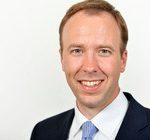
  • Matt Hancock – 2020 Statement on the Coronavirus

    Matt Hancock – 2020 Statement on the Coronavirus

    Below is the text of the statement made by Matt Hancock, the Secretary of State for Health and Social Care, in the House of Commons on 5 May 2020.

    We have flattened the curve of this epidemic, ensured that the NHS is not overwhelmed and expanded testing capacity to over 100,000 tests a day. As a Government, we are working resolutely to defeat the coronavirus, and there are two important areas where I want to update the House today.

    First, on the expansion of our work to test, track and trace, we have now built a national testing infrastructure of scale, and because we have this extra capacity, we will be delivering up to 30,000 tests a day to residents and staff in elderly care homes, making sure that symptomatic and asymptomatic staff and residents can all be tested. Our care system represents the best of us, supporting our loved ones with tenderness and dedication at their time of greatest need. Through this unprecedented expansion of testing, we can give them the certainty and confidence that high-quality testing can provide.

    Secondly, we are working to build the resilience of the NHS. We currently have 3,387 spare critical care beds in the NHS and that does not include the capacity provided by our Nightingale hospitals, including the 460-bed Sunderland Nightingale, which opened earlier today. We should all be very proud that we built up the NHS so fast and that our collective national effort has helped to protect the NHS and flatten the curve. As a result, we are now able to start to restore some NHS services and we are in a position to be able to place the London Nightingale on stand-by. This is good news, because our NHS has not been overwhelmed by this crisis and remains open to those who need care, and that means that this nation’s shared sacrifice is having an impact.

    Throughout its time, this Chamber has borne witness to so much, and it has borne witness to the nation’s resolve once more. I am delighted that the British people are well and truly rising to this incredibly difficult challenge.

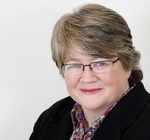
  • Therese Coffey – 2020 Statement on DWP and Covid-19

    Therese Coffey – 2020 Statement on DWP and Covid-19

    Below is the text of the statement made by Therese Coffey, the Secretary of State for Work and Pensions, in the House of Commons on 4 May 2020.

    With permission, Mr Speaker, I will make a statement updating the House on the work of my Department. First, I want to pay tribute to the civil servants in my Department as well as our contractors and partners, who have been working tirelessly to provide help and support to those in need. They are the hidden heroes for many people in this country, and they should take great pride in their hard work in and dedication to supporting people through these difficult times.

    From 16 March to the end of April, we received over 1.8 million claims for universal credit, over 250,000 claims for jobseeker’s allowance, and over 20,000 claims for employment and support allowance. Overall, that is six times the volume that we would typically experience, and in one week we had a tenfold increase. The rate for UC claims appears to have stabilised at about 20,000 to 25,000 a day, which is double that of a standard week pre-covid-19. I am pleased that my Department is standing up to the challenge. We have redeployed a significant number of DWP staff—about 8,000 so far—and staff from other Government Departments, about 500 so far, to process these claims. Our payment timeliness for universal credit is running at a record high.

    We have also issued almost 700,000 advances to claimants who felt that they could not wait for their first routine payment, and the vast majority of those claimants received money within 72 hours. Where possible, and mindful of risk, we have streamlined our processes. We will consider learnings carefully from this time in the response phase, and whether any of them can be made permanent.

    We have also sought to make it possible for people to work from home, and have deployed 10,000 computers. We are now at a level of deploying 750 new devices a day to enable working from home, and have added to the IT capacity for remote users. However, if staff need to continue to work at the office, we are applying social distancing. Making sure that our claimants and civil servants are safe is a key priority. From 17 March we suspended all face-to-face assessments for health and disability benefits. We automatically extended awards for existing claimants that were due to be reassessed by three months, and will only undertake reviews or reassessments when claimants notify us of changes that could lead to a higher payment. Any claim made under the special rules for terminal illness continues to be fast-tracked—it takes an average of six days to process those claims.

    Since 24 March, job centres have not been open for regular appointments, but we continue to offer face-to-face appointments in exceptional circumstances if claimants would not otherwise be able to receive support. Claimants can continue to receive support over the phone or through their online journals. All local jobcentres have been turned into virtual processing teams, prioritising advances and the registration and payment of new claims. We have also paired jobcentres across the country to support one another with processing, using fully our network capacity.

    That focus on the processing of claims means that we have stopped checking the claimant commitment on looking for and being available for work for three months. ​We do, however, want claimants to continue to look for work wherever they are able to do so. Ministers are working hard to make sure that existing vacancies can be accessed by people who have become unemployed. We will continue to support those people while they are waiting for the opportunity for work. We have created a new website to guide people—jobhelp.dwp.gov.uk—and we are advertising 58,200 vacancies.

    Although our IT systems have worked—thanks to extensive work by the universal credit team, including our contractors—I know that some claimants experienced significant delays in the verification of their identity. Identity checks are crucial to reduce fraud risk, so we worked closely with the Cabinet Office to increase substantially the capacity of the online Verify system, and average wait times are now below five minutes.

    Call volumes have been extremely high, with more than 2.2 million calls in one day at the peak. Having recognised the delays that people were experiencing—or, indeed, that they were not able to get through at all—we turned it around with our “Don’t call us—we’ll call you” campaign. A bolstered frontline team now proactively calls claimants when we need to check any information provided as part of a claim. This has been successful in freeing up capacity and reducing the time that customers need to spend on the phone.

    In respect of other departmental operations, although we have redeployed staff we have kept critical work ongoing in child maintenance and bereavement. We are monitoring our performance and will return staff to these areas if the response rate is unacceptable. We have cancelled the pension levy increase, supported defined contributions through the job retention scheme, and worked with regulators to assist defined benefit pensions and to combat scams.

    It is worth reminding the House of our financial injection of more than £6.5 billion into the welfare system so that it can act as a safety net for the poorest in society. We have focused on changes that could be made quickly and would have significant positive impact. We have increased the standard rate of universal credit and working tax credit for the next 12 months by around £1,000 per year; we increased the local housing allowance rates for universal credit and housing benefit claimants, so they now cover the lowest 30% of local rents; and we increased the national maximum caps, so claimants in inner and central London should also see an increase in their housing support payments. I have been made aware that some councils have not made the adjustment in housing benefit, and my Department is communicating with them all this week. Furthermore, across England we had already increased the discretionary housing payment by an extra £40 million for this financial year.

    The 1.7% benefit uplift was implemented in April, ending the benefits freeze, and the state pension rose by 3.9%, as per the triple lock, reflecting last year’s substantial rise in average earnings. We have introduced regulations to ease access to benefits: we legislated to allow access to employment and support allowance from day one of a claim; we relaxed the minimum income floor so that the self-employed can access universal credit more readily; we have made it easier to access ESA by launching an ESA portal for online applications; and we legislated to ensure that statutory sick pay was available for employees ​from day one of sickness or self-isolation due to covid-19. I remind the House that statutory sick pay is the legal minimum.

    We will continue to look at issues that arise—for example, we are ensuring that maternity pay is based on standard pay, not furlough pay levels—and see what we can do quickly and straightforwardly to fix either unintended consequences or unforeseen issues, but it is not my intention to change the fundamental principles or application of universal credit.

    We have undertaken a significant project to support the Ministry of Housing, Communities and Local Government and the national shielding service by establishing the outbound contact centre. Furthermore, we use the contact centre to contact proactively our most vulnerable customers who receive their benefits or pensions solely through Post Office card accounts. I thank the Post Office for helping us to support this group of customers. We have been able to provide contact-free cash payments by Royal Mail special delivery, and we were able to signpost people to extra support from their local council.

    I can inform to the House today that the DWP will stop any new benefit and pension claimants from using the Post Office card account from 11 May, as we prepare for the end of the contract. The uptake of accounts in the past year has been exceptionally low, but, in any event, given that we believe the vast majority of people using POCA already have a bank account, the cost of the contract is poor value for taxpayers. Existing customers who currently receive payment through a Post Office card account will see no change and will continue to receive payment into their accounts for the remainder of the contract period. We can use the HMG payment exception service for people who cannot access any bank account.

    I thank the Health and Safety Executive—an arm’s length body for Great Britain that is sponsored by my Department—for its work on covid-19. It has been doing crucial work with the Department for Business, Energy and Industrial Strategy and Public Health England to provide guidelines for employers to adhere to once restrictions can begin to be eased. The HSE is working hard, along with local authorities, to enable work to continue safely in the sectors for which it is responsible. It has developed practical guidance on the enforcement of the law where workers are being exposed to unnecessary risk.

    In conclusion, my Department is standing up to the challenge of unprecedented demand for its services, and we are getting support to those who need it. We will continue to work across Government to help the nation get through this health emergency. I commend this statement to the House.

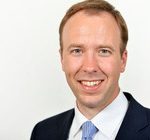
  • Matt Hancock – 2020 Statement on the Coronavirus

    Matt Hancock – 2020 Statement on the Coronavirus

    Below is the text of the statement made by Matt Hancock, the Secretary of State for Health and Social Care, on 1 May 2020.

    Good afternoon and welcome once again to Downing Street for the daily coronavirus briefing.

    I’m joined today by Professor John Newton, who co-ordinates our work on testing, and Professor Stephen Powis, who is the Medical Director of the NHS.

    Every day we are working through our plan to protect life and protect the NHS by slowing the spread and building the capacity so that, at all times, the NHS has got the capacity to give can offer the very best care to everyone who needs it.

    In today’s briefing, after setting out the daily statistics, I want to talk about testing.

    But beforehand I would like to share some really good news. Earlier this week, I said that we are now able to begin the restoration of NHS services. Now that we are past the peak, I can tell you about the next step ‒ the restoration of fertility services.

    Few families have been untouched by the amazing advances in fertility treatment over the past generation, and I know just how time-sensitive fertility treatment can be. And I know how important it is to the families affected. And I know that this treatment can change lives for the better, forever.

    So when I say thank you to all of you everybody watching for staying at home to protect the NHS, of course I’m saying thank you on behalf of the lives you are saving. But I’m also saying thanks on behalf of the lives that the NHS can now once again, help to create.

    Because, together, we have protected the NHS, and now we are now restoring the NHS, and restoring the chance for so many couples to start a family.

    Daily statistics

    Turning to the figures, 177,454 people have tested positive for coronavirus, an increase of 6,201 since yesterday. 15,111 people are currently in hospital with coronavirus and 27,510 people have now sadly died across all settings, an increase of 739. As one, we will remember them and treasure their memories.

    This is a virus that has a devastating impact on families, friends, on local communities. And right across government, we are working day and night to defeat it.

    At the beginning of last month, at this podium, I set a goal that anyone who needs a test should get a test. And that as a nation, we should achieve 100,000 tests per day by the end of the month. I knew that it was an audacious goal, but we needed an audacious goal because testing is so important for getting Britain back on her feet.

    I can announce that we have met our goal. The number of tests, yesterday, on the last day of April, was 122,347. This unprecedented expansion in British testing capability is an incredible achievement. But it is not my achievement. It is a national achievement, achieved by a huge team of people working together.

    And I tell you this: the testing capacity that we built, together, will help every single person in this country. Testing is crucial to suppress the virus.

    I know from personal experience, too, just how much people with symptoms want to know if they have got the disease. I know that I did. It helps remove the worry, it helps keep people safe, and it will help us to unlock the lockdown.

    So many people have tragically died and the challenge that we still face is so huge, but we are making real progress.

    I want to take a moment to thank and pay tribute to the incredible team who did this together and who joined together in one of the greatest national mobilisations that we’ve seen.

    We brought together the best civil servants, the best minds from the private sector, the best scientists, the best lab technicians and the best of the best in the armed forces.

    Setting stretching, ambitious goals in a crisis has a galvanising effect on everyone involved. It’s a mission. If we hadn’t been so bold, if we had chosen a safer, easier path, I just can’t see how we would have built the capacity that we need.

    In a short few weeks, we’ve:

    created a new test for the virus

    built a network of regional testing centres

    put a fleet of mobile testing units on the road

    and created home testing kits, so if you can’t get to a test, we can get the test to you

    We’ve more than doubled the capacity of NHS and Public Health England labs, and created 3 brand new mega-labs to analyse the results.

    So many people have played a part in this work. British diagnostic companies like Randox and Oxford Nanopore and Medical Wire and DNANudge and Samba. Logistics companies like the Royal Mail and Yodel, who were brilliant and got us out of a real hole this week. Academics like Professor Derek Crook and Sir John Bell from Oxford, and Professor Ara Darzi from Imperial.

    Deloitte and Boots who have delivered our drive-through centres, AstraZeneca, GSK and Novacyte, whose lab goes on stream next week, Public Health England and the NHS, of course, who pulled out all the stops. Professor Sharon Peacock, Professor John Newton And UK Biocentre and the Crick, who set up high-tech laboratories.

    And also it wasn’t just a national effort. People from across the world ‒ including ThermoFisher, Hologic, Abbott and Amazon from the US, Qiagen from Germany and Roche from Switzerland.

    And this is how we did it. Because everybody everyone worked together with grit and determination to reach a shared goal, and they thrived because the team contained a diversity of perspectives, backgrounds and, critically, a diversity of thought.

    And when things went wrong, which they did every single day, believe me, we didn’t ask who we could blame – we asked how we could fix it.

    So, to my team, I want to say: you toiled tirelessly, night and day, and I am so proud of what you have achieved. To all of you, on behalf of the government and on behalf of the whole country, thank you.

    As the Prime Minister has said, a big increase in testing provides a way to unlock the puzzle of coronavirus, and testing forms the first element of our plan to test, track and trace.

    By mid-May we will have an initial 18,000 contact tracers in place. That work is underway as we speak. And if it needs to be bigger, we will scale it as required.

    The combination of contact tracers and new technology, through our new COVID-19 NHS app will help tell us where the virus is spreading and help everyone to control new infections.

    People will be able to know if they have been in close contact with someone who is transmitting the disease, and take the action that they need to. Our full-scale test, track and trace model will drive the infection rate down and the lower the R, and the lower the number of new infections, the more effective the track and trace system will be.

    Tracking and tracing will allow us to get R down, and hold R down, and so it will allow us to lift lockdown measures.

    Now this disease affects us all indiscriminately, we’ve seen that. In recent weeks, we have had to impinge on historic liberties to protect our NHS and our loved ones, and yet our goal must be freedom. Freedom from the virus, yes – and we will not lift measures until it is safe to do so.

    But also we care about the restoration of social freedom and economic freedom too. Each citizen’s right to do as they please. For now, we are working together to stay home. We are impinging on the freedom of all, for the safety of all.

    With this next mission, of test, track and trace, I am seeking a solution that allows us – by each of us participating – to target the measures that are needed with much more precision, and so to reassert as much as is safely possible, the liberty of us all.

    That is our next mission. But for now, the most important thing for everyone to do, to keep R down and to get us all through this, is to maintain the spirit and the resolve that has had such an impact thus far.

    So, please, stay at home, protect the NHS and save lives.

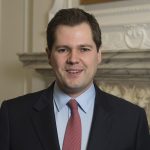
  • Robert Jenrick – 2020 Statement on the Coronavirus

    Robert Jenrick – 2020 Statement on the Coronavirus

    Below is the text of the statement made by Robert Jenrick, the Secretary of State for Housing, Communities and Local Government, in the House of Commons on 2 May 2020.

    Good afternoon,

    Welcome to the coronavirus press conference from Downing Street.

    I’m joined by Dr Jenny Harries, Deputy Chief Medical Officer for England.

    Today’s data shows that:

    1,129,907 tests for coronavirus have now been carried out in the UK, including 105,937 tests carried out yesterday.

    182,260 people have tested positive, that’s an increase of 4,806 cases since yesterday.

    14,695 people are currently in hospital with coronavirus, down from 15,111 yesterday.

    And sadly, of those tested positive for coronavirus, across all settings, 28,131 have now died. That’s an increase of 621 fatalities since yesterday.

    These are heart-breaking losses for every family affected, and our thoughts and prayers are with their families and their friends.

    Jenny will provide an update on the latest data on coronavirus.

    But first, as Communities Secretary, I want to update on the steps we are taking to protect some of the most vulnerable people in our society.

    As the Prime Minister set out this week, we have now passed the peak of this virus.

    And he will provide more details on how we will address the second phase of this battle next week.

    We all know that the restrictive measures – as necessary and as lifesaving as they are – are difficult for everyone.

    All of you watching at home this afternoon have made sacrifices big and small, and I want to thank you once again for all that you are doing.

    You are helping us as a country to turn the tide on coronavirus.

    But for some in our society these measures involve sacrifices that none of us would wish anyone to bear.

    For victims of domestic abuse, it means being trapped in a nightmare.

    The true evil of domestic abuse is that it leaves vulnerable people, including children, living in fear in the very place where they should feel most safe and secure – inside their own home.

    Though domestic violence can leave physical marks, the true extent of the inflicted pain is much deeper than those marks – it can invisible, these are emotional scars.

    Scars that may never heal and which can even pass to the next generation, whose young eyes see things that they never should.

    And hear things that none of us would wish our children to witness.

    As a father of 3 girls, I cannot even imagine women and young children being put in this situation.

    But they are, and we must be alive to the reality of what is happening on all too many homes across the country.

    I want us to defend the rights of those women and children wherever we can, and that is what we are going to do.

    And this is not a crime inflicted solely on women: it affects men too.

    This government has already prioritised tackling domestic abuse.

    The Domestic Abuse Bill, which had its second reading in Parliament last week, is a landmark piece of legislation which will create the first ever legal definition of domestic abuse.

    And this is important because it holds those responsible to account and gives those suffering at the hands of others more confidence that action will be taken and perpetrators brought to justice.

    Today, I can confirm that through the Domestic Abuse Bill, the government will also be ensuring that victims of domestic violence get the ‘priority need’ status they need to access local housing services much more easily.

    This is a fully funded commitment which will mean that no victim of domestic violence has to make the unbearable choice between staying somewhere where they know is unsafe or becoming homeless.

    This government has been clear that we are determined to break the silence that surrounds victims, to stamp out the stigma and strengthen our support for survivors.

    We have already announced an extra £15 million to strengthen our support, and an extra £16 million is going directly to refuge services.

    But we recognise that the extra pressures that are being created due to COVID-19 and that necessitates more support.

    While the necessary social distancing measures remain in place, it is harder than before for victims of domestic abuse to reach out to their friends, to their family, to colleagues, and neighbours for the support that they urgently need.

    Today I can announce a package of over £76 million in new funding to support the most vulnerable in society during the pandemic.

    This funding will help charities support survivors of domestic and sexual abuse, it will support vulnerable children and their families and victims of modern slavery.

    This additional support will ensure more safe spaces and accommodation for survivors of domestic abuse and their children and the recruitment of additional counsellors for victims of sexual violence.

    And this funding will also help front line charities to be able to offer different ways of supporting those in need, including through virtual or phone based services.

    We know that some refuges have had to reduce or even to cancel their services they would want to provide during this pandemic.

    This funding will help them to meet the challenges posed in this national emergency and to continue to help those that desperately need support.

    I’d like to say a word of thanks to domestic abuse charities who are doing so much at this time to help so many people.

    The Women’s Aid refuge in my constituency is one example.

    I’d like to thank Marlene and her amazing team in Newark. People like that do incredible work and deserve all our thanks and gratitude now more than ever before.

    Where refuges don’t have enough capacity to support those in need during the pandemic, some have asked if they could use hotels or other accommodation nearby on a temporary basis.

    For example, as move-on accommodation, where they judge it to be safe and appropriate to do so. We will work with refuges to make this option available to them, if they judge it to be the right one where it’s necessary.

    And thank you also to pharmacies, such as Boots, who are providing a safe space for victims of domestic abuse in some of their shops, and are training more of their staff to be able to support those people when they come into the stores, so they can safely provide support and contact services for help and advice.

    For any victims of domestic abuse watching at home this afternoon, let me say once again that you are not alone.

    You do not have to stay at home. You can and should leave the home if you are in danger.

    Victims should call 999 if in an emergency or if you are in danger and unable to talk call 999 then press 55.

    Our outstanding police will be there for you. They will help you.

    And if you need support please call the national domestic abuse helpline on 0808 2000 247 at any time.

    Secondly, we have also been working with councils and charities to protect those sleeping who have been sleeping on our streets; a group particularly vulnerable to COVID-19.

    We set out to bring people in from the streets.

    So far, more than 5,400 rough sleepers known to councils have been offered safe accommodation in just under a month – ensuring some of the most vulnerable people can stay safe during the pandemic.

    This means that over 90% of rough sleepers known to councils have been offered accommodation where they can self-isolate during the crisis.

    This country is viewed around the world as having taken one of the most intensive and successful approaches to protecting rough sleepers during the pandemic.

    This was the right thing to do.

    By working with charities, local council, churches, faith groups and volunteers, we have helped to protect thousands of lives.

    I am extremely grateful to everyone who has been involved in this phenomenal national effort.

    Today I am announcing that Dame Louise Casey, who is already leading a review into rough sleeping and advising the government on ending it within this Parliament, has been appointed by the Prime Minister and I to spearhead this new government initiative and she will lead a new taskforce.

    In this role, she will oversee our national effort to ensure that thousands of rough sleepers now in safer accommodation continue to receive the physical and mental health support they need, while they self-isolate during the pandemic.

    And she will work hand-in-hand with councils and with other groups across the country to plan how we can ensure as many people as possible can move into long-term, sustainable and safe accommodation they deserve once the pandemic is over.

    We are determined that as few people as possible return to life on the streets, and I can think of nobody better than Louise to help us to achieve this.

    This is a major challenge and I don’t pretend that this second phase will be easy or that we will succeed in every case.

    But we will apply the same energy and commitment and determination to this national effort as we did to the first.

    And I am certain that the charities, the councils and the volunteers the people across the length and breath of the country that have achieved so much in the last month will do the same job again.

    Thirdly, and in closing, I’d like to update you on our shielding programme.

    For those who have been identified by the NHS as being extremely clinically vulnerable due to underlying health conditions, that’s now 1.8 million people in England alone.

    They have been asked to stay at home with no face-to-face contact outside their household, except for their carers, for those people in the shielding group who don’t have family or friends to support them, we’ve offered to provide a basic weekly package of food and essentials.

    I’m delighted to say today that we expect that the 1 millionth shielding package will be delivered in the next few days.

    This service is entirely without precedent – nothing on this scale has been attempted in this country at least since the Second World War.

    I am incredibly proud of the team who helped us deliver it.

    I have loved reading the emails I have received from people who have got the boxes and seeing the photos that have posted on social media.

    I said at the start of this process that there are many people who we are asking to be at home for a prolonged period of time as a result of the virus.

    Not least in the shielded category but that we as a government and as a country that they may be alone at home but that they shouldn’t feel that that they are on their own.

    You are not, and never will be.