Category: Coronavirus

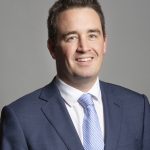
  • Jim McMahon – 2020 Speech on Transport and Covid-19

    Jim McMahon – 2020 Speech on Transport and Covid-19

    Below is the text of the speech made by Jim McMahon, the Labour MP for Oldham West and Royton, in the House of Commons on 12 May 2020.

    I thank the Secretary of State for advance sight of the statement. I also thank him for the way in which he has maintained communication and shown a willingness to work together in the national interest.

    I know that everyone in this House and at home will join me in sending our thanks to all transport workers across the country. As with all our frontline workers, they are the very best of us. It is so important that we give a voice to those workers. Even today, the official advice is found wanting and it will lead to confusion. The scenes we saw yesterday on public transport were unsurprising when the Government ordered a return to work with 12 hours’ notice but without the guidance being in place on how people can be kept safe. May I therefore ask the Secretary of State why his announcement was not made before the Prime Minister’s statement on Sunday?

    Secondly, the Government have produced guidance for bus passengers and operators, but it leaves too much to chance and fails to protect frontline workers. It risks a postcode lottery on standards and protection, and there is far too much “should”, “could”, “not always possible” and “as much as you can”, rather than clear, directive guidance. For bus drivers, for instance, the guidance is that PPE should not be used, but instead reserved for health and care staff. That is despite shocking figures released by the Office for National Statistics that show professional drivers, including those operating taxis, private hire vehicles, buses and goods vehicles, have some of the highest covid-19 fatality rates in the country. May I therefore ask the Secretary of State for the evidence base to support the position that the provision of PPE should not be provided for frontline staff on transport? What discussions have taken place to ensure co-operation across our devolved nations to offer clear and consistent standards for transport, such as buses and rail that, of course, crosses from nation to nation?

    When the Secretary of State says he announced last week a £2 billion fund for cycling, it sounded awfully familiar. Will he confirm that that actually is not new money, but was instead announced pre-lockdown back in February? In that context, can he confirm whether it has now been paid to local councils?​

    The Secretary of State touched on the aviation sector in the guidance that has been produced. A number of airlines have already announced a significant number of redundancies, affecting tens of thousands of jobs directly and throughout the supply chain.

    Even as we transition to a green economy, protecting jobs now so that people can be reskilled for the future is critical. It will be far easier to transition from a point of strength rather than of weakness. The Government have failed to offer a sectoral deal for aviation. There is a real chance to set conditions on staff wages, payments to UK-based suppliers, a shift to green technology, demand that those who seek our help pay fairly into the tax system, as well as halt the payment of shareholder dividends. Why have the Government failed to act?

    Aviation is not alone. We have seen this with ferry operators and the announcement of more than 1,100 jobs at risk with P&O. The Prime Minister’s 14-day quarantine proposal is a total mess. It states that everyone must be quarantined, unless they come from anywhere in the world via France, which is one of the worst affected countries in Europe after the UK. Will the Government produce the scientific advice that justifies why France should be exempt from that policy? Why have the Government decided that now is the time to implement this measure, two months after other countries introduced it? More than 18 million passengers have entered the UK since January. Will the Government publish the scientific advice that led to that change now and not earlier?

    Finally, we urgently need a comprehensive plan for transport. The public rightly demand an end to the chaos surrounding the exit plan. The risk is not just that more lives will be lost needlessly, but that the economic damage will be far deeper, hurting our communities for a generation to come. The Opposition will continue to work together in the national interest, but the Secretary of State must take a message back to the Cabinet table: no more confusion, no more reckless briefings, and no more delay. This is a national crisis that needs a Government who are fit to respond to it, and we hope for the country that that comes sooner, rather than later.
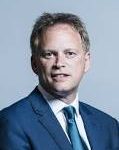
  • Grant Shapps – 2020 Statement on Transport and Covid-19

    Grant Shapps – 2020 Statement on Transport and Covid-19

    Below is the text of the statement made by Grant Shapps, the Secretary of State for Transport, in the House of Commons on 12 May 2020.

    With permission, Mr Deputy Speaker, I would like to make a statement about the new transport guidance for passengers and operators that has been published by my Department today.

    Coronavirus has cast a shadow over the lives of everyone in this country. As we all know too well, for some it has caused unimaginable heartache. For millions more of our fellow citizens, this crisis has meant an enormous sacrifice in the national effort to beat this disease. The Government are immensely grateful to the British people for the profound changes that they have made to their lives over the last few weeks.

    I also extend my thanks to transport workers and the wider freight sector for their immense efforts to keep Britain on the move during this crisis. We will always remember the way in which the industry has served the country during the most challenging of times. Public transport operators have ensured that all those frontline staff have been able to get to work and fight the virus, while freight firms have delivered vital goods and kept supermarket shelves stacked.

    However, it is now time to consider how together we emerge from this crisis. On Sunday, the Prime Minister set out the first careful steps for reopening society and a roadmap for the weeks and the months ahead. Undoubtedly, transport is going to play a very central role in that recovery. It will be the key to restarting our economy and in time will enable us to renew and strengthen those precious ties that are so deeply valued by us all.

    As I said last week, our nation’s emergence from this crisis will not be a single leap to freedom. It will be a gradual process. We cannot jeopardise the progress achieved over the past few weeks by our shared sacrifices. We therefore remain clear that those who can work from home should continue to do so. However, as those who cannot start to return to their jobs, the safety of the public and of transport workers must be paramount. That is why the Department for Transport has today published two new pieces of guidance for passengers and for operators.

    These documents aim to give passengers the confidence to travel, and they seek to give operators the information they need to provide safer services and workplaces for passengers and for staff. We encourage operators to consider the particular needs of their customers and workers as they translate these documents into action.

    The first document is aimed at passengers. I will summarise some of the main points contained in the advice. First, as I mentioned, we continue to ask people to go to work only if they cannot do their jobs from home. That is because even as transport begins to revert to a full service, the 2-metre distancing rule will leave effective capacity for only one in 10 passengers overall. It is therefore crucial that we protect our network by minimising the pressures placed on it and ensure that it is ready to serve those who most need it.

    As a result, we are actively asking those who need to make journeys to their place of work or other essential trips to walk or to cycle wherever possible. In order to ​help us do more of that, last week I announced an unprecedented £2 billion investment to put walking and cycling right at the heart of our transport policy. The first stage is worth £250 million and will include a series of swift emergency measures, including pop-up bike lanes, wider pavements and cycling and bus-only corridors. That money should help protect our public transport network in the weeks and months ahead. It is my hope that they will eventually allow us to harness the vast health, social and environmental benefits that active forms of travel can provide. If people cannot walk, but have access to a car—I appreciate that I will be the only Transport Secretary to have said this for very many years—we urge them to use the car before they consider public transport, avoiding where possible any busy times of day.

    I do, however, recognise that for some people using transport is a necessity. In this case, passengers should follow the guidance we have set out today in order to keep themselves safe. It recommends that travellers must maintain social distancing by staying 2 metres apart wherever possible to prevent the virus. We also advise that as a precautionary measure, particularly where that is not possible, people wear face coverings when using public transport. That could help protect other travellers from coronavirus where someone has perhaps unwittingly or unknowingly developed the illness, but they are not showing any symptoms. We urge passengers to avoid the rush hour and replan their visits, to use contactless payments where at all possible and to wash their hands before and after their journeys.

    In addition, the guidance also reminds us that at this most challenging of times, it is more vital than ever that we think about the needs of others. Our transport operators and their staff are doing an incredible job to keep everyone safe. Please follow their advice. In stations and bus interchanges, be patient and considerate with fellow passengers and staff. In particular, we should remember the needs of disabled passengers, those with hearing and sight impairments and older travellers, too.

    As I mentioned, we are also publishing a second document, guidance for transport operators, today. Those organisations really are at the forefront of the national recovery effort. They know the insides and out of the needs of their customers and their workers, and they understand like no one else their industry’s specific needs. That is why I have no doubt that the operators are best placed to implement the safety processes that work best for their businesses, their employees and their customers. The guidance we are publishing today advises operators across all forms of private and public transport on the measures they can take to improve safety. The steps include ensuring stations, services and equipment are regularly cleaned, and that passenger flows are clearly communicated to try to avoid crowding to try to keep everyone on the network, passengers and staff, two metres apart wherever possible.

    The guidance will develop over time, in line with our increasing understanding of how coronavirus is spread and how it is contained. In addition, it is likely that there will be no one-size-fits-all approach to implementation. It will need to be tailored and localised, based on plans of local specific transport needs. In preparation for that process, yesterday I wrote to local authorities to set out how we can work together to prepare transport networks at a local level for restart and ensure public safety.​

    The documents I publish today will help ready our transport system to support our country as we seek to control the virus and restart the economy. We will inevitably encounter obstacles along the way as we embark on the next stage of our national fightback against the virus. There is no doubt that we need to continue to work together to overcome those challenges. On that note, I would like to express my gratitude to our partners in the devolved Administrations, the local authorities, the Mayors, trade unions and transport operators for their work over the past few weeks. I look forward to continued collaboration in future, because co-operation will be key to setting the country on the road to recovery.

    If everyone plays their part, and if we continue to stay alert, we can control the virus and save lives. If we all follow the guidance on making essential journeys, I believe that together we can harness the power of transport to build a new and revitalised nation. I commend this statement to the House.

  • Drew Hendry – 2020 Speech on Business and Covid-19

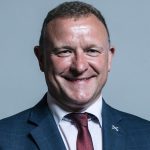
    Drew Hendry – 2020 Speech on Business and Covid-19

    Below is the text of the speech made by Drew Hendry, the SNP MP for Inverness, Nairn, Badenoch and Strathspey, in the House of Commons on 12 May 2020.

    I thank the Secretary of State for advance sight of his statement. Given that the Prime Minister previously attacked what he called the “health and safety fetish” as “madness”, and in 2009 said public warnings were “for the extremely stupid”, the fact that this Government are stressing the need for health and safety must be welcomed. However, it is important to give the utmost clarity.

    I know that is what the Secretary of State will like to think he has done, but his advice is addressed to UK employers. Will he acknowledge, in the spirit of clarity, ​that his advice is for England only? The advice in the other nations of the UK remains to stay at home, protect the NHS and save lives. Lives are at stake. We must have complete clarity. Shops in Scotland are not scheduled for phased reopening from 1 June. Will he make that clear? His five-point plan does not apply at this time in Scotland, Wales or Northern Ireland. Will he make that clear?

    We welcome the measures announced today to transition the furlough scheme, because business and people would be harmed by a cold restart without protection. However, before any reductions in furlough or rates of support start, we first need to fill the gaps for those left behind: those who had a contract or letter of employment by 29 March but whose employers have not logged into Her Majesty’s Revenue and Customs, those agency workers who are not included, staff whose pay is combined with commission, and the forgotten but vital summer seasonal workers. Will the Secretary of State make the case for those workers, or are they still to be left behind?

    Finally, the Secretary of State has made great play—I quote from his statement—of

    “Building a consensus and confidence when moving forward”.

    Will he take that message back to the Cabinet and the Prime Minister, and extend it to the leaders of the devolved nations? His Government have consistently updated Fleet Street before this House, and even before the First Ministers of the devolved nations.

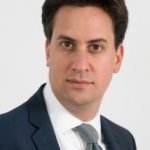
  • Ed Miliband – 2020 Speech on Business and Covid-19

    Ed Miliband – 2020 Speech on Business and Covid-19

    Below is the text of the speech made by Ed Miliband, the Labour MP for Doncaster North, in the House of Commons on 12 May 2020.

    Thank you, Mr Deputy Speaker. May I thank the Secretary of State for his statement, and add my thanks to all the workers and businesses that have kept our country going during these past few weeks? I say to him that we do not underestimate the challenges of lifting lockdown in certain parts of the economy. We agree that it is in all our interests for it to happen if it can be done safely, and that there are difficult decisions confronting Government, businesses and workers, who have to adapt to these unprecedented circumstances. I also want to welcome a number of steps forward in the guidance published last night, which he has talked about in his statement. They do represent progress from previous proposals, and I also welcome the tone of his statement.

    However, I also say to the Secretary of State that what really matters to workers and businesses in these highly sensitive and difficult matters is proceeding in an orderly and judicious way. The confusion and mixed messages of the past 48 hours have been ill-advised and avoidable. Let me ask him six specific questions. First, on the impact of the Government’s change of emphasis on going back to work in phase 1, Ministers say that the reproduction rate of the disease—the R number—is currently between 0.5 and 0.9. How many extra people does he expect to go back to work as a result of the Government’s change of emphasis? What is the scientific advice about the impact on the R number?

    Secondly, we are being told that in our daily lives, outside our places of work, that we must not come within 2 metres of those from other households, for reasons I understand. I listened carefully to what the Secretary of State said, but for workplaces the overview document he has published asks for an observance of 2-metre distancing only “wherever possible”. If it is not possible, the only requirement is that employers should “look into” various mitigation measures. I understand that in some workplaces 2-metre distancing may not be possible, but can he explain why there is no requirement for mitigation if social distancing cannot be observed?

    Thirdly, on enforcement, the challenge is, as the Secretary of State said, not the vast majority of employers, who want to do the right thing, but the small minority who do not. I welcome £14 million more for the HSE budget, but it is a drop in the ocean compared with the £100 million of cuts over the past decade. Given the challenges of enforcement, will he discuss with the trade unions how ​their tens of thousands of health and safety reps could player a bigger and, I believe, constructive role in ensuring covid-19 compliance, including in non-unionised work- places?

    Fourthly, can the Business Secretary now provide an answer for parents who are being asked to go back to work tomorrow but are not deemed “essential” workers and therefore have nobody to look after their children, because they cannot send them to school or nursery? What are parents in those circumstances supposed to do?

    Fifthly, can the Secretary of State clarify the position on the 2.5 million workers who are deemed clinically extremely vulnerable and are advised to shield at home until at least the end of June?

    Currently, they have no automatic right to be furloughed and many have felt pressured to keep working. As workplaces reopen, the pressure will become greater. To protect their health and provide clarity, would it not make sense to place an obligation on employers to furlough these individuals if they cannot work from home?

    The chief medical officer, Chris Whitty, said at the press conference last night that the reopening of workplaces was dependent on whether they can be made safe for work. Can the Secretary of State confirm that workplaces that are not safe should not reopen tomorrow and that, by law, workers who have a reasonable belief that they will be in danger do not have to be at work?

    Finally, the Secretary of State will know that it is the highest paid workers who will generally carry on being able to work from home and lower paid workers who are being asked to go back to work. We also know from yesterday’s figures from the Office for National Statistics that, among men, construction workers have so far been more than twice as likely to die from covid-19 as the average member of the population. I know the Secretary of State will agree that working people are being asked to go back to work to help us all. Whatever the economic pressures, their health must be protected. They deserve to be safe. That is what the Government must take every action to ensure.

  • Alok Sharma – 2020 Statement on Business and Covid-19

    Alok Sharma – 2020 Statement on Business and Covid-19

    Below is the text of the statement made by Alok Sharma, the Secretary of State for Business, Energy and Industrial Strategy, in the House of Commons on 12 May 2020.

    I would like to update the House on the Government’s new covid-19-secure workplace guidance. On 23 March, the Government announced lockdown measures and required certain businesses and venues to close. Our message to workers was that if you can work from home, you should work from home, and millions did. At the same time, the Government provided guidance on how those who could not do their work from home could continue to operate as safely as possible in workplaces that were not required to be closed. I want to thank the many workers in distribution centres, supermarkets, transport, construction and manufacturing across the country who have been playing their part in keeping Britain moving. I hope that the whole House recognises the constructive spirit in which employers have worked with their workers to follow this guidance.

    The Prime Minister yesterday set out steps to beat the virus and restart the economy, so that we can protect jobs, restore people’s livelihoods and fund the country’s vital public services. To support this, we have published new covid-19-secure guidelines, available to UK employers across eight settings that are allowed to be open, from outdoor environments and construction sites to factories and takeaways. This also includes guidance for shops that we believe may be in a position to begin a phased reopening, at the earliest, from 1 June. The Government have consulted approximately 250 stakeholders in preparing the guidance. It has been developed with input from firms, unions, industry bodies and the devolved Administrations. We have worked with Public Health England and the Health and Safety Executive to develop best practice on the safest ways of working across the economy.

    As we return to work, the Government want to give employers and workers confidence that their workplaces will be safe for them to return to, because we recognise that this is an anxious time for many. We recognise that workers want to know that their employer has taken every step to ensure a safe workplace, and we recognise that employers who take steps to keep workers safe want to know that they are doing the right thing. I believe that we have reached a consensus in doing that, and I am encouraged that businesses, representative groups, workers and trade unions can get behind this guidance.

    The guidance has five key points at its heart. First, people should work from home if they can. Employers should continue to take all reasonable steps to help people work from home. For those who cannot work from home and whose workplace has not been told to close, our message is clear: they should go to work. Staff should speak to their employer about when their workplace will open.

    Secondly, social distancing should be maintained in the workplace wherever possible. Employers should redesign workspaces to maintain 2-metre distances between people, stagger start times, create one-way walk-throughs, open more entrances and exits, or change seating layouts in break rooms. Thirdly, where people cannot be 2 metres apart, the transmission risk should be managed. Employers should ensure that every step is taken to reduce the risk ​when people cannot maintain 2-metre distancing. This can include putting up barriers or screens in shared spaces, creating fixed teams of partnering to minimise the number of people in contact with one another, or keeping the activity time involved as short as possible.

    Fourthly, cleaning processes should be reinforced in line with the guidance. Employers should frequently clean work areas and equipment between uses to reduce transmission, provide hand sanitiser and washing stations, and pay attention to high-contact objects like workstations, door handles and keyboards.

    Fifthly, a covid-19 risk assessment must be carried out, in consultation with workers or trade unions. In line with the current health and safety law, all employers must carry out a covid-19 risk assessment. They should identify risks that covid-19 creates and use the guidance published to take measures to mitigate these risks. Employers should share the results of their risk assessment with their workforce. A downloadable notice is included in the documents that employers should display in their workplaces to show their employees, customers and other visitors that they have followed the guidance. They should also consider publishing the results on their website, and we expect all employers with over 50 workers to do so.

    The aim of this approach is for employers to create a collaborative working environment, building confidence and trust between employers and workers. I think the House will recognise that this is already the case across the UK, because the UK has a proud record as a leader in health and safety in the workplace. Our guidance operates within current health and safety, employment and equalities legislation, which is some of the strongest in the world, and we will continue with this approach. We will work closely with the Health and Safety Executive, which has the resources it needs to meet current demand, but of course we want to ensure that this remains the case during the covid-19 pandemic as people return to work. So the Government are making up to an extra £14 million available for the HSE, equivalent to a 10% increase in its budget. This extra money will provide resources for additional call centre staff, inspectors and equipment if needed. In many cases, this will meet the demands of employers and employees who would like further information on how to ensure that workplaces are safe. For the extremely small minority of businesses that do not follow the rules, the HSE and local authorities will not hesitate in using their powers, including enforcement notices, to secure improvements.

    The measures I have set out in respect of social distancing and cleaning are the best ways to manage the risk of transmitting covid-19. Based on the scientific evidence, the use of PPE in the workplace is not recommended by the Government except in clinical settings and a handful of other roles stipulated by Public Health England. Of course, if a worker currently uses PPE to protect against other hazards, such as dust in an industrial setting, they must continue to use it. Workers have the option to use face coverings, which are simple cloth coverings. There are some circumstances in which wearing a face covering may be marginally beneficial as a precautionary measure. The evidence suggests that wearing a face covering does not protect you but may protect others if you are infected but have not developed symptoms. Wearing a face covering is not ​required by law in the workplace. If workers do choose to wear one, they should follow the workplace guidance on how to use it.

    We have been guided by the scientific advice in establishing this position. Today, we provide a framework for how employers can keep workers safe in the workplace. This additional support and clarity, combined with more resource for the HSE, can give employers and workers the confidence they need to return to work safely. As we reopen new sectors of the economy, we will continue our collaborative approach when providing guidance for additional workplaces, meaning that we can provide a clear and safe route back to work for millions. I commend this statement to the House.

  • Rishi Sunak – 2020 Statement on the Covid-19 Economic Package

    Rishi Sunak – 2020 Statement on the Covid-19 Economic Package

    Below is the text of the statement made by Rishi Sunak, the Chancellor of the Exchequer, in the House of Commons on 12 May 2020.

    Thank you, Mr Speaker, for your warm wishes.

    This Government’s plan is one of the most comprehensive anywhere in the world. We have provided billions of pounds of cash grants, tax cuts and loans for over 1 million businesses, tens of billions of pounds of deferred taxes, income protection for millions of the self-employed, and a strengthened safety net to protect millions of our most vulnerable people. These schemes speak to my and this Conservative Government’s values. We believe in the dignity of work, and we are doing everything we can to protect people currently unable to work.

    Yesterday my right hon. Friend the Prime Minister set out our plan for the next phase of the public health response, and today I can confirm the next stage of our job retention scheme. This scheme has been a world-leading economic intervention, supporting livelihoods and protecting futures. Seven and a half million jobs have been furloughed—jobs we could have lost if we had not acted—and nearly 1 million businesses supported who could have closed shop for good.

    As we reopen the economy, we will need to support people back to work. We will do so in a measured way. I can announce today that the job retention scheme will be extended for four months, until the end of October. By that point, we will have provided eight months of support to British people and businesses. Until the end of July, there will be no changes whatsoever, from August to October the scheme will continue for all sectors and regions of the UK, but with greater flexibility to support the transition back to work. Employers currently using the scheme will be able to bring furloughed employees back part-time. We will ask employers to start sharing with the Government the cost of paying people’s salaries.

    Full details will follow by the end of May, but I want to assure people today of one thing that will not change: workers will, through the combined efforts of the Government and employers, continue to receive the same level of overall support as they do now, at 80% of their current salary, up to £2,500 a month.

    I am extending the scheme because I will not give up on the people who rely on it. Our message today is simple. We stood behind Britain’s workers and businesses as we came into this crisis and we will stand behind them as we come through the other side.

  • Lindsay Hoyle – 2020 Statement on Remote Voting in Divisions

    Lindsay Hoyle – 2020 Statement on Remote Voting in Divisions

    Below is the text of the statement made by Lindsay Hoyle, the Speaker of the House of Commons, on 12 May 2020.

    Following the report of the Procedure Committee, and in advance of the first remote Division taking place later today, I have a statement to make about remote Divisions. A decision of the House arrived at by a remote Division has the same effect as a decision arrived at by more traditional means. I ask all Members to pay careful attention to what the Procedure Committee says about the integrity of the system. As the Committee states, any attempt to allow anyone who is not a Member to vote is likely to be a serious breach of privilege.

    The Committee asked me to get a report on the number of Members not registered on the system. I can tell the House that all Members are automatically registered on MemberHub. I have received a report from the House Service that eight Members have not used MemberHub to vote in a remote voting test. I am satisfied that steps have been taken to enable them to vote should they wish to do so.

    On each relevant day, when the business motion is agreed, I will announce my provisional determination on remote Divisions for that day. That provisional determination will be based on representations received by my office. Further representations can be made in the course of the day in question, and the final determination may change in consequence. It is integral to the success of hybrid proceedings that there is greater certainty about the timing and conduct of business than would normally be the case, and I do not expect changes to my determination to be a regular occurrence.

    Finally, I want to assure Members that I will keep the system under review. I will carefully consider feedback from Members and information supplied to me by the Parliamentary Digital Service and House Service in accordance with relevant recommendations of the Procedure Committee. Further guidance on the matters in this statement has been published.

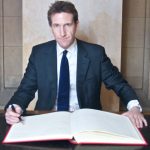
  • Dan Jarvis – 2020 Speech on Covid-19

    Dan Jarvis – 2020 Speech on Covid-19

    Below is the text of the speech made by Dan Jarvis, the Labour MP for Barnsley Central, in the House of Commons on 11 May 2020.

    In South Yorkshire, where I am also the Mayor, the coronavirus has infected more than 4,500 people and, tragically, killed 576 people. My thoughts are with all of those who have suffered and lost, and those who are doing so much to keep our people safe and our society functioning. I will always seek to work constructively with the Government, but we do have a duty to test their policies and to hold them to account. One of their most crucial tasks is to keep the confidence of the British people, and without clarity, we will fail. So I have four immediate concerns.

    The first is that “Stay alert” is vague compared with “Stay at home”. I am glad that the Prime Minister provided more detail today, but many people will still be confused, and confusion risks contagion. Secondly, we cannot ask people to go back to work if they cannot get there safely. Social distancing means much lower capacity on our public transport systems, and a switch to cars would mean instant gridlock. That means that getting people to walk and cycle is central to easing the lockdown. To be fair, the Government seem to understand that, but we urgently need to translate that into action together.

    Thirdly, we cannot force people back to an unsafe workplace. The Government must monitor and support businesses to implement rigorous protective measures, in close collaboration with employees and unions. Until that is done, those workers should remain furloughed. Fourthly, the Government must be careful not to create suspicion, justified or not, that they are motivated by any concern other than fighting the disease. Things such as testing targets that are met just on the one day needed to avoid negative headlines inevitably undermine that vital public trust; this is no time for politics as ​usual. So the Government must be utterly transparent about the data, the advice they are getting and the compromises they are choosing. There must be a clear line between the science and the political decisions based on it. That applies right across the UK, and the Sheffield City Region Combined Authority has led in supporting and informing local communities and businesses, in getting them the help they need and in championing their concerns at Westminster. We have kept our businesses and our light rail system running. We have lined up our local industries to supply PPE to the NHS, and we are developing a recovery plan that truly reflects local needs, but the Government must bring us in to the heart of their response, and fund and empower us accordingly.

    Finally, that response must also serve a wider purpose, We clearly need massive—[Inaudible.] This is the moment for a green new deal, for fixing our crumbling infrastructure and for addressing the unacceptable inequality between our regions and nations. History will not forgive us if, as after 2008, we make such sacrifices only to see inequality grow and the planet burn ever warmer. For all our sakes, the legacy we aim for now must not be a return to the status quo; it must be a national renewal.

  • James Davies – 2020 Speech on Covid-19

    James Davies – 2020 Speech on Covid-19

    Below is the text of the speech made by James Davies, the Conservative MP for Vale of Clywd, in the House of Commons on 11 May 2020.

    I welcome the opportunity to contribute to this debate. During the pandemic, many have turned to their MP for help, and so far nearly 800 cases have been brought to me by constituents. That has proven to be a challenge at times —especially while I have been struggling with covid symptoms myself—but it has been rewarding to assist so many people. I thank all who have joined me in working around the clock to provide responses. I must also thank key workers at this immensely challenging time and pay tribute to all who have volunteered to help their communities.

    I welcome the generous package that the Government have introduced to support individuals and businesses. A great number of my constituents have expressed their thanks for these schemes, and I would like to add my own thanks for the hard work that has been undertaken by Ministers, officials and industry representatives to construct these programmes.

    In such difficult times as these, a united approach across our country is vital, and regrettably, much of my time over the last several weeks has been spent dealing with confusion and anxiety where that has not been the case. It started with national guidance to seek coronavirus advice via the 111 service, when no such service existed in north Wales. Soon afterwards, the Welsh Government were in such a rush to announce the closure of schools in advance of the UK Government that they did so without the initial mention of provision for vulnerable children and those of key workers. Following this, the very successful GoodSAM scheme, which recruited volunteers, was not embraced by the Welsh Government, with far fewer volunteers being registered in Wales as a result. While the UK Government ploughed on with their plans for the Nightingale hospitals, precious little appeared to be under way in north Wales. Following work with the health board, three temporary Rainbow hospitals are now available, and mercifully they have not been required as yet.

    Perhaps one of the greatest issues in my mailbag has been the difficulty of obtaining supermarket delivery slots, because the Welsh Government were initially unable to provide supermarkets with electronic lists of shielded patients. To compound matters, the online form for registering as a vulnerable person would not accept applications from Wales. Shielding letters were greatly delayed in comparison with the situation in England. It then emerged that the 80,000 shielding letters sent out by the Welsh Government included 13,000 that were ​sent to the wrong addresses. Only a week ago, a shocking further 21,000 recipients were identified. A survey by Asthma UK and the British Lung Foundation found that while 10% of its respondents from Wales had received a shielding letter, this rose to an average of 17% in the rest of the UK. I still have many constituents yet to receive a shielding letter, such as Eleri Humphreys from Rhuddlan. It is my belief that the dispatch process of shielding letters highlights critical failures in the IT systems in use in NHS Wales, which contribute towards poor performance of the system on a daily basis.

    As covid testing has been ramped up in England, the Welsh Government failed to match that, with access to testing still unavailable to many groups. It is now belatedly available to some care homes. The online booking portal available in England, Scotland and Northern Ireland does not function in Wales, and until just days ago, all tests carried out in north Wales were being sent on a several-hour trip to Cardiff for processing, when sending them to the Alderley Park “mega-lab” would have reduced lab transfer times to as little as an hour. Most recently, it was revealed that poor communication between the health board in north Wales and Public Health Wales had resulted in a failure to report all of its 84 coronavirus-related deaths over the—[Interruption and loss of connection]

    Mr Deputy Speaker (Mr Nigel Evans)

    We appear to have lost James, but thank you very much for your contribution. Let us move now to our final speaker, Dan Jarvis.

  • Margaret Ferrier – 2020 Speech on Covid-19

    Margaret Ferrier – 2020 Speech on Covid-19

    Below is the text of the speech made by Margaret Ferrier, the SNP MP for Rutherglen and Hamilton West, in the House of Commons on 11 May 2020.

    I express my condolences to those who have lost their lives to covid-19. It is easy to forget amid the daily statistical reports that behind each number is a person who was loved by their family and friends and was an irreplaceable part of the local community. I also take the opportunity to pay tribute to the efforts of key workers in my constituency, who are helping to save lives and keep essential services running. From nurses to delivery drivers, they are all heroes in my eyes, and I am continually impressed by the way that they have adapted and continue to adapt in challenging circumstances.

    In times of national crisis, our choice of words matters. We need to provide clear and consistent information to the public about what we are asking them to do and why. It is regrettable that the “stay alert” slogan for England was briefed to the media before MPs and that no consultation with the devolved Governments took place beforehand. On a basic level, the “stay alert” message can be interpreted as an end to lockdown and as throwing caution to the wind, which could have disastrous consequences for public health. The threat of a second wave remains very real, and the infection rate could move upwards rapidly again. We only need to look at Germany to observe the consequences of lifting lockdown too soon. Now is not the time for caveat and nuance in tackling coronavirus. We need a clear and unambiguous approach like that taken by the First Ministers of Scotland, Wales and Northern Ireland to reinforce the clear message to stay at home.

    Lockdown has not been an easy decision to implement, and it does not come without cost. It has taken its toll on our constituents, and we are all anxious for their wellbeing. We know that businesses are struggling right now, and we want to support them to survive in the months ahead and rebuild over the longer term. From hairdressers to shows and everything in between, they need stability now in order to prepare for the post-coronavirus economy.

    Just as with the lockdown measures, we must not rush into winding down the job retention schemes that give businesses security now. Indeed, we must look at options for extending those schemes for sectors that may struggle to reopen with social distancing. No country is going to avoid the economic impact of coronavirus, but the question comes down to whether recovery puts the wellbeing of society first or tries to carry on as if nothing has happened. We risk creating another lost generation if we do not learn from the innovations that have been born out of necessity during this crisis.

    Flexibility in policy making will be crucial in adapting to the challenges of our post-coronavirus future. That is as true when approaching the question of easing lockdown measures as it is with many other aspects of Government policy. A unitary, one-size-fits-all approach has not always ​been the most desirable approach to managing the crisis. To take just one example, France has designed its exit strategy on the basis of levels of infection. The areas of highest infection continue with more restrictions, while areas of low infection see more relaxed measures.

    To conclude, the reality is that we will be living with coronavirus for some time to come. We owe it to our constituents to be honest about the challenges that that will bring and how we can help them to navigate the new normal. Judging by the messy and unclear manner in which the UK Government changed their coronavirus advice, I am unconvinced that they will bring forward the kind of innovative thinking we need to build a sustainable, long-term recovery from coronavirus across these islands.