Category: Coronavirus

  • Christine Jardine – 2020 Speech on Covid-19

    Christine Jardine – 2020 Speech on Covid-19

    Below is the text of the speech made by Christine Jardine, the Liberal Democrat MP for Edinburgh West, in the House of Commons on 12 May 2020.

    It is a pleasure to take part in this debate today, as I look out of the window at this beautiful day in Edinburgh. Although the past few months have been tough and we have come through much, the people of this city and my constituency know that it will take every ounce of our energy to preserve what it is that makes Edinburgh such a wonderful place. Traffic at our airport is now almost negligible, the Royal Highland Show, which contributes £65 million to our economy, has been cancelled, and that shining gem in Scotland’s cultural calendar, the Edinburgh Festival, will not bring the world to our city this August. Across Edinburgh, myriad small, medium-sized and international companies are concerned for their future—a future of challenges for which they are not responsible.

    For us here in Edinburgh West, as in most constituencies up and down the country, perhaps the biggest task is looking after the thousands of people concerned about their health, their jobs and their financial future. We calculated yesterday that during this period of lockdown we have dealt with around 1,000 pieces of individual casework, every one a personal emergency.

    Much of this crisis has been managed by the UK Government, but also directly, here in Edinburgh, by the Scottish Government. The issues that they face are exactly the same; but in tackling them I would appeal to both our Governments to work together. Much has been said this week about mixed messages, uncertainty, a lack of clarity about what the UK Government were saying about lifting lockdown. Imagine what that is like ​for the people of Northern Ireland, Wales and Scotland, with advice that is often contradictory—not just different: completely contradictory. Can I go out? Can I go to work? Which Government do I listen to? Which advice do I follow? Which guidelines are appropriate if I am out walking my dog? That is ridiculous. It is also not good enough for my constituents, or for any other constituent in any other part of the devolved nations. And for those organisations and companies that I mentioned earlier, any uncertainty is a potential recipe for disaster. In Scotland, our businesses have now had more than eight years of debate about our future. Will our economy be in an independent Scotland? Will our economy be in the UK? Will we be part of the European Union or not? All the uncertainty they have had to deal with seems small now in comparison to the emergency that is Covid-19.

    I would ask both our Governments to work together, so that our airports and our airlines, which are so vital to our economy, are able to build a strategy in which they know that they will be speaking to not just the devolved authority but the UK authority and wider authorities, so that companies like Diageo, based here in Edinburgh West, know which framework they are falling into, and the people of Edinburgh West, Scotland and the rest of the United Kingdom have a clear path- way out of this crisis—a clear, united pathway, with their Governments walking in lockstep for everyone’s future.
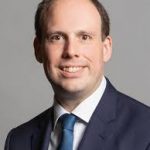

  • Greg Smith – 2020 Speech on Covid-19

    Greg Smith – 2020 Speech on Covid-19

    Below is the text of the speech made by Greg Smith, the Conservative MP for Buckingham, in the House of Commons on 12 May 2020.

    In addition to placing on record my gratitude to everyone in the NHS and on the frontline, I would like to pay tribute to the many of my constituents who have gone above and beyond. From the community hub set up by Buckinghamshire Council, the support network on Facebook for the town of Buckingham, St Laurence’s church in Winslow delivering meals to the most vulnerable, and the Haddenham Scrub Hub sewing garments for the NHS and care staff, every corner of my constituency is playing a part.

    In particular, I would like to highlight two schemes: the incredible Risborough Basket, set up by Councillor Matt Walsh and the team at Princes Risborough Town Council, which delivers orders from local shops and has its own fruit and veg service for isolating households; and Bernie the Bus, set up by Councillors Paul Irwin and Ashley Waite, which collects food bank donations from people’s driveways. It blasts out music, bringing a note of cheer as it passes through the villages, and on the days I volunteered with it in Quainton, Ashendon, Wescott, Marsh Gibbon, Grendon Underwood, Oakley and Brill, I was blown away by the generosity that so many people showed through their donations. Once we are through this crisis, I hope we can capture the very best of the great British spirit shown by these community heroes, and ensure that we can strengthen our country’s strong record of voluntary service for the long term.

    I have also been proud of the many businesses that have adapted, including farm shops doing deliveries and pubs doing takeaways, and even the drive-through beer service at the Chiltern Brewery. So many businesses have done their very best, and I encourage everyone to shop local to support them. One business, sadly, has completely failed to follow the guidance. HS2 Ltd’s contractors have worked throughout the crisis, not social distancing and causing great alarm in villages such as Steeple Claydon. Contractors have been refusing to follow the rules on staying on site, instead using local shops and making residents fearful of the virus being spread. The chief executive of HS2 Ltd gave me many ​assurances on this at the Transport Select Committee, but the gap between promises and reality continues to be wide. I am hopeful that the HS2 Minister can use the evidence I am sending him to hold HS2 Ltd fully to account.

    On business support, the speed with which the Government put in place financial support and security for people’s jobs, including today’s extension of the job retention scheme, has been incredible. That was no small or easy task. With an economy as diverse and dynamic as ours, however, it was inevitable that not every eventuality would be covered, and I am grateful to the Government for listening and adding support throughout the crisis. An example is the additional £10,000 grants announced for the hardest-hit dairy farmers, which I and other colleagues argued for.

    However, a couple of pieces of the jigsaw need to be put in place if we are to complete the picture. Many owner-directors of small businesses—the backbone of our economy—who perfectly legitimately pay themselves through dividends are becoming increasingly desperate. They are facing uncertain futures. I accept that there is no easy solution, but for those who continue to be unable to trade, support needs to be made available. Secondly, many suppliers to the events and hospitality sector do not have the support that the companies they serve have received, despite their inability to trade being the same. I am hopeful that councils will use their new discretionary grants to support them, along with other firms that have contacted me, such as coach companies, kennels and hauliers. With those two calls heard, I commend the Government for their continuing strong response to this crisis.

  • Steven Bonnar – 2020 Speech on Covid-19

    Steven Bonnar – 2020 Speech on Covid-19

    Below is the text of the speech made by Steven Bonnar, the SNP MP for Coatbridge, Chryston and Bellshill, in the House of Commons on 12 May 2020.

    Thank you, Madam Deputy Speaker, for the opportunity to take part in this general debate on covid-19 and to be a voice for the people of Coatbridge, Chryston and Bellshill in these unprecedented times. This pandemic has presented completely new challenges for us all, demanding responses that have no precedent, but this is by no means an excuse for the response of this UK Government.

    This is not the first time that these nations have been faced with a crisis. Indeed, just last week, images of world war two were again broadcast into our homes. It was a time when our nations fought bravely together and when strong leadership provided the ultimate protection against our enemy threats. Today, we face a new fight and a new enemy, but there is no protection in the leadership of this Prime Minister. Where we looked for leadership, calmness, and direction, we found stand-ins, mixed messages and confusion. Covid-19 is no more a natural disaster than a famine; both are highly politicised events. We can waste time blaming the outbreak of disease on global agribusiness, but it would be an insult to the intelligence of the people of these nations if we do not recognise that the true failure in preparation lies at the very heart of the UK Government. For years, this Government have tried to fool us into thinking that their austerity-driven attack on our vital public services has been a societal necessity. Yet the current crisis has magnified the absurdities of these complacent assumptions. Will they now admit that austerity has always been an entirely political decision from which we are all now suffering: hence, the failure to implement immediate isolation and contact tracing for all those entering our borders; hence, the fatal delay in implementing lockdown; hence, the vast shortages of PPE in our hospitals and care homes; hence, the failure to meet revised testing target after revised testing target; and hence, the thousands upon thousands of lonely, untimely deaths that could and should have been prevented.

    Despite those vast failings, a vague optimism has been added to proceedings: a vague optimism that people can go back to work but only if their work is open; a vague optimism that we can travel as far as we desire for exercise, but as long as public transport is not involved; and a vague optimism that we can meet with another outwith our household, but only if we do not plan to meet up with them beforehand. This vague optimism has become the epitome of the UK Government’s message. It is a strange pretence that everything is suddenly normalised: that witnessing the news of hundreds of deaths on our TV screens every evening is just to be accepted and that we can continue with life as we did in the past. A de facto muddling-through has emerged in this UK Government, one that is concentrating on maximising market power rather than on prioritising public health. It is quite disgraceful.​

    My constituents, like many others up and down these countries, are bearing the brunt of this confusion. No one should be forced to risk their health or the health of their loved ones in order to maintain their employment, and yet that is the very dilemma that my constituents are facing after this Prime Minister, on Sunday night, chose, as he always does, to prioritise one-nation Conservatism over a four-nation approach.

    Let me finish by saying this, Madam Deputy Speaker: our death toll is nothing short of catastrophic. Our daily counts have far surpassed that of our neighbouring countries and somehow there is a determination to cloak this in the illusion of a Great Britain; a mythology built on inflated pride and lowered expectations. It is not this Government who are great—far from it—but the people of these nations who make it so. It is the health and social care workers, our security officers, our emergency responders, our till operators, our delivery drivers, and our teachers. It is to them that I give my thanks and appreciation. Those people are the backbone of our society and only when this UK Government begin to prioritise human life over economic prosperity will this country have something to be optimistic about.

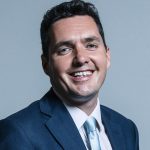
  • Huw Merriman – 2020 Speech on Covid-19

    Huw Merriman – 2020 Speech on Covid-19

    Below is the text of the speech made by Huw Merriman, the Conservative MP for Bexhill and Battle, in the House of Commons on 12 May 2020.

    It is a pleasure to speak in this debate and to see you looking resplendent in the Chair, Madam Deputy Speaker.

    I wish to take the opportunity to thank all my constituents, who have done the most amazing job rallying around and looking after each other—that is what makes my part of the East Sussex coast so special. I also wish to recognise and thank the Government for the support that they have given and the lead they have taken in these difficult times.

    As MPs from all parties will be aware, we face day-to-day challenges. For the past few weeks, my daily challenge has been to try to get our Bexhill testing centre plugged into the central link. We have a frustrating situation whereby we have a testing centre, but it is not plugged in. If anyone from Deloitte is following proceedings, I ask them to plug our local centre in to the national link so that local people can use their local testing centre.

    In my few remaining minutes I wish to focus on the Transport Committee’s inquiry on coronavirus and the implications for the transport sector. We have been looking at the aviation sector, which is clearly on its knees right now and needs our assistance. I note the Government support and welcome it, but recent days have seen us looking towards quarantine. My question to the Government is why now? If it is required from a health perspective, why was it not introduced at the start of lockdown? If it is required now, what help will there be for the aviation sector so that it can pick up? It is important not just for jobs and travel, but for our imports and exports. Some 40% of all imports arrive in the belly of airliners arriving at Heathrow, and it is important that we support them.

    The aviation sector itself needs to do more to support its staff. Yesterday, the chief executive of British Airways’ parent group, Willie Walsh, appeared before the Select Committee. Almost a third of BA staff are facing redundancy, and those who remain have been told that their terms and conditions will be lowered and altered. Some of those terms and conditions have nothing to do with costs—for example, they may relate to grievance procedures. It feels as if BA is using this as an opportunity to undertake long-held reforms of terms and conditions. I asked the chief executive whether he would be willing to allow those employees to share the proceeds of growth if things return back to normal times, but he refused to give that assurance. Thousands of BA staff have contacted me and other members of the Select Committee. They are clearly the best of employees—they care about their carrier and they care about each other— and I hope that BA will use the welcome extension of furlough to put the redundancy plans back in the hold, where they deserve to be.

    I also want to talk briefly about Gatwick, my local airport. It is—or has been—the busiest single runway airport, handling 46 million passengers each year. It is an important national asset, and I really hope that it will survive.

    The next Committee session for us will be on buses and trains. We are very concerned about the worker situation. There are 9.9 coronavirus deaths per 100,000 UK males, yet in the bus sector the figure is 26.4 deaths. Clearly, more needs to be done to protect those workers. I support the measures that the Government have brought in today regarding passengers using their own PPE, ​although I note that, in France, PPE is being handed out on a more professional basis by workers. In Germany, the transport system is back operating as normal because it recognises that social-distancing just does not work in practice. As we move out of lockdown, I hope that we can be more flexible so that we protect our economy and our transport sector.

  • Kirsten Oswald – 2020 Speech on Covid-19

    Kirsten Oswald – 2020 Speech on Covid-19

    Below is the text of the speech made by Kirsten Oswald, the SNP MP for East Renfrewshire, in the House of Commons on 12 May 2020.

    I start by sharing my huge gratitude to all the key workers in East Renfrewshire, who are doing such important ​work, and to the brilliant volunteers supporting our local community at this difficult time. I also pass on my condolences to those in East Renfrewshire who have lost loved ones.

    For the UK Government to be described as “reckless” by the British Safety Council in the midst of a pandemic should make even this Prime Minister pause. It was a disappointment that he did not share his planning or consult—not just with the devolved Administrations, but with local authorities, trade unions, employer representatives, and even, reportedly, his own Cabinet. Having set his announcement for Sunday to allow people to get going with the measures on Monday, it emerged that no preparation had been done with regard to transport, childcare and many other issues. Confusion reigned, even among the Ministers set out to do the morning media rounds. Most announcements applied only to England—although you would struggle to tell—but many in the Prime Minister’s party are demanding that all four nations march towards the cliff edge in lockstep. The response from Scotland is firm: no chance.

    Is it really time to stop protecting the NHS? If not, why is that disappearing from the heart of the campaign in England? And why was the “Stay Alert” slogan launched with green imagery? It is not difficult to see the signal that that is designed to send. As the Prime Minister prevaricates and blusters, it is clear that he is trying to nudge the population into an ill-considered move. Telling people to deal with the pandemic by staying alert is an abrogation of responsibility. A crisis of this magnitude demands leadership; thank goodness for Nicola Sturgeon and her fellow First Ministers.

    But there is no going back to the same old, same old—even if we wanted to. The Prime Minister’s enthusiastic but vague encouragement for people in England to hop in their cars and get back to work is neither sensible nor realistic. It displays a lack of connection to the reality of people’s lives, never mind their working lives. The Prime Minister needs to remedy that as a matter of urgency if he has any interest in workers’ safety and wellbeing.

    I applaud the UK Government for bringing in the furlough scheme but, as ever, the devil is in the less publicised detail. There will be disquiet at the impact on jobs of the employer contribution that the Chancellor announced today that he is looking for. I and other colleagues have been calling for flexibility in furloughing, and the Chancellor said today that there can be flexibility from August; we need to see partial furloughing before that. The Scottish Chamber of Commerce asks that flexibility takes account of a company’s ability to contribute, which will differ depending on location and sector. I hope that the Chancellor will take that on board.

    Despite the recognition of the vulnerability of pregnant women at the start of this crisis, it took until yesterday for half a sentence of guidance to be produced. Women have had to take sick leave or annual leave because the UK Government failed to listen when the issue was highlighted to them. If we are to achieve an orderly end to lockdown when the time is right, listening will be vital, and fair, safe, flexible work will be key. The Government should focus on not only sustaining jobs but enhancing fairness and employment rights as we look ahead. They must properly examine how a universal basic income could underpin a sustainable and fair recovery, which will be so important in the months and years ahead.

  • Neil Hudson – 2020 Speech on Covid-19

    Neil Hudson – 2020 Speech on Covid-19

    Below is the text of the speech made by Neil Hudson, the Conservative MP for Penrith and the Border, in the House of Commons on 12 May 2020.

    The covid-19 pandemic has affected all our lives in so many ways. First, I offer my condolences and prayers to all those who have lost loved ones during this crisis. I pay tribute to all those on the frontline in our NHS and the care sector who have been working tirelessly to look after people and to keep us safe. I also thank the key ​workers who have kept society going, be that in looking after children, supporting our food supply lines or working in our vital public services.

    I thank all those who have come together in Cumbria to support our local communities: our local resilience forums, local volunteer groups, emergency groups, churches and the like. It has been so heartening how people have rolled up their sleeves and are looking out for their neighbour and providing much needed help and support, especially to the vulnerable at this time.

    I very much welcome the unprecedented support measures that the Government have put in place during this crisis, which have provided the lifeline and bridge to allow jobs and businesses to be there on the other side. I also thank the Government for listening to feedback from me and other colleagues and adapting the support schemes so that more people can be included.

    In my constituency of Penrith and The Border, key changes that have helped our tourism sector include the expansion of business grants to bed and breakfasts. I am also so grateful to the Department for Environment, Food and Rural Affairs for responding to our calls for a dairy hardship fund. I hope that the Government can further and widen the support to include directors of companies who have paid themselves a salary through dividends, to expand the flexibility of the furlough scheme —I very much welcome the Chancellor’s announcements today—and to widen the business grants and rates relief strategies. That will really help vital businesses such as vets and dentists.

    As a vet, I pay tribute to the profession of which I am a proud member. Vets, nurses and their allied staff have stepped up in this crisis to provide necessary care for our animals and support for our food supply chains. In addition, the veterinary sector has transferred much needed medical equipment, such as ventilators, into the NHS, and veterinary staff have stepped up in large numbers to volunteer in the NHS and in their communities.

    As we are now looking ahead to the transition phase, it is important that support is in place and is targeted at businesses that may be slower to recover, such as those in the tourism and hospitality sectors, which are so important for Cumbria. [Inaudible].

    The covid pandemic has thrown into sharp relief the importance of food production and security, and the critical areas of health and social care. Newton Rigg College in Penrith has over 1,000 learners and 130 staff, and provides education in vital areas such as agriculture, land-based studies, and health and social care. The college is now the subject of a local provision needs analysis by the Further Education Commissioner’s office, creating uncertainty over its future. It is critical that the Government work with local stakeholders to try to secure a viable and sustainable future for this important institution. Now more than ever, we must look after colleges such as Newton Rigg, that play such a big role in supporting our vital farming industry and providing important career options for our local communities. Covid-19 can and will be overcome, but we must make sure that our communities, businesses and institutions are supported to be there for the long term.

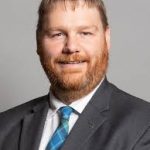
  • Owen Thompson – 2020 Speech on Covid-19

    Owen Thompson – 2020 Speech on Covid-19

    Below is the text of the speech made by Owen Thompson, the SNP MP for Midlothian, in the House of Commons on 12 May 2020.

    I begin with an observation: there had been a consistent approach across the four nations, but, at a time when clarity is critical, we find ourselves in a situation where three of the four nations of the UK are still trying to be clear, consistent and cautious in their approach to tackling and beating the coronavirus pandemic; it is a great pity that the Prime Minister muddied the waters so badly over the weekend. While it is absolutely the Prime Minister’s right to change from a very clear “Stay at home” message to the imprecise “Stay alert” message for England, it is irresponsible to spread the change in the media as if it applied collectively across the entire UK without even consulting the Scottish, Welsh or Northern Irish Governments. This is a public health matter that is rightly being considered by the devolved Administrations on the basis of scientific evidence. It seems that the UK Government’s idea of a four nations approach is less about working respectfully together and more about, “Do as we say.”

    The advice in Scotland remains clear. For the avoidance of any doubt, I will reiterate it here: stay at home, protect the NHS, save lives. While the pandemic has undoubtedly brought challenges, it has also brought ​out the best in our communities. From fundraising to helping neighbours to the willingness of our communities to help, it has been incredible, nowhere more so than in my own Midlothian constituency, with resilience groups in Bonnyrigg and Lasswade, Dalkeith and Woodburn, Danderhall, Eskbank and Newbattle, Gorebridge, Howgate, Loanhead, Newtongrange, Penicuik, Roslin and Bilston, Rosewell and the Tynewater area. I make particular mention of the Mayfield and Easthouses community resilience team, which has so far delivered more than 3,550 hot meals to elderly and vulnerable members of our community. There will undoubtedly be other amazing examples of help and support, and Midlothian Council’s #KindnessMidlothian campaign is certainly well-named to reflect that.

    I also for the most part welcome the Treasury’s response to this pandemic, although there are many areas that still need to be addressed. I welcome the business support that has been put in place by the Chancellor and his efforts so far to resolve problems that have emerged with the schemes, but a lot more urgently needs to be done to help those still left behind. I have many constituents who have yet to receive any support and who had a viable business but cannot get a loan to see them through. The business interruption loan scheme is too cumbersome, and too many banks are still failing to lend. While the bounce-back scheme tackles some of those issues for smaller businesses, the reports that I have heard suggest that it remains far from a streamlined process, and there are only five accredited lenders compared with 50 for the interruption loan scheme. There is also still the issue of support for the self-employed, particularly those who left a good job to run their own business.

    I welcome the extension of the furlough scheme announced by the Chancellor earlier today and the suggested flexibility. I am keen to see the detail of that much more clearly. As we move forward, we need to ensure that protection remains in place for those who need it. At the end of the day, I argue that the best and most flexible support that could be put in place would be for the Government to introduce a universal basic income and genuinely ensure that nobody is missed through these tough times.

    Protecting people’s lives while they are protecting their livelihoods is a complex matter. One size does not fit all and a degree of flexibility to suit differing circumstances is needed from Government—flexible support and flexibility over strategy in the different parts of these isles. I welcome the more cautious approach from the Scottish Government in easing lockdown. I advise the UK Government to take a similar approach. I appreciate that they would choose not to, but they must respect the devolved settlement and not undermine the clarity of message we have here in Scotland.

  • Gavin Robinson – 2020 Speech on Covid-19

    Gavin Robinson – 2020 Speech on Covid-19

    Below is the text of the speech made by Gavin Robinson, the DUP MP for Belfast East, in the House of Commons on 12 May 2020.

    It is a great privilege not only to follow the hon. Member for Loughborough (Jane Hunt), but to participate in this debate. I wish to add my support to the comments of the right hon. Member for Orkney and Shetland (Mr Carmichael) about the opportunities that are there and the importance of approaching this pandemic and our country’s response as one nation, recognising of course that our devolved areas will have distinct differences, but that they should operate within this United Kingdom, drawing on the bonds and support we can give one another.

    It is also important during this general debate to praise the enormous warmth and enthusiastic support that members of my local community in east Belfast have been offering their neighbours, from the network centre in the East Belfast Community Development Agency, through the BT16 covid-19 community response team and the Ballymack centre, where they are making meals every day, to those in Connswater community centre. It has been heartwarming and encouraging to see just how many people within our community are prepared to step up and support one another.

    Can I also, given the day that’s in it and the statement from the Chancellor, recognise the importance of extending the job retention scheme? My colleagues and I, particularly those with airports in our constituencies, have been concerned about the cliff edge proposed for the end of June. Belfast City airport is in my constituency, Madam Deputy Speaker, and you will recall that a fortnight before this pandemic really took hold Flybe went into administration, representing 80% of all the passengers who travel through our local airport and 67% of all routes. As we approach the end of the job retention scheme and that cliff edge in June, there is huge concern, even though it has been extended, that the aviation and tourism sectors will struggle to recover from this pandemic. Although the extension is welcome, I hope that there ​will be further and sustained engagement not only for tourism and aviation but for all the associated sectors in the aerospace industry.

    I am particularly concerned, even though there has been an extension of four months today, that we have yet to hear from British Airways that it is prepared to delay its redundancy plans, for example. The plan is not only to make 12,500 employees redundant, irrespective of Government support, but to cruelly assault the terms and conditions of those workers who will be retained after the pandemic. That is totally wrong.

    I want to make mention of the self-employed income support scheme and highlight my concern that those who have accessed the portal thus far have found that their Northern Ireland driving licence is not sufficient to satisfy the ID requirements. Nor is an Irish passport, even though many residents of Northern Ireland are perfectly entitled to hold one under the terms of the Good Friday/Belfast agreement. I hope that that will be challenged and changed by HMRC in the days to come.

    May I raise my concern about health sector capacity? It has been noted that in Northern Ireland there has been a 40% increase in non-covid-19-related deaths compared with this time last year. It is important that we have capacity within our health service, but it cannot be at the cost of healthcare in other sectors or for other individuals. There are huge strides being made not only to protect our community but to do what is best for it in the light of the pressures we face. The resolve needs to continue, and I know that the Government will work with all the devolved Administrations in ensuring we fight the pandemic and that we, as a country, succeed.

  • Jane Hunt – 2020 Speech on Covid-19

    Jane Hunt – 2020 Speech on Covid-19

    Below is the text of the speech made by Jane Hunt, the Conservative MP for Loughborough, in the House of Commons on 12 May 2020.

    The people of the United Kingdom have done a great job in looking after our communities and our country during this difficult time. They have, in very large part, followed the rules on social distancing, which has enabled us to get to the stage where we can start to look at easing the lockdown and turn our focus towards economic recovery.

    It is immensely sad that people have died during this outbreak, and my heart goes out to everyone who has lost a family member or friend to this dreadful disease. We should not forget a single life taken early, and we owe it to those people and our hard-working NHS and care workers not to allow the virus to rise up again.

    In a Zoom meeting the other day, the CBI discussed the need to focus now on renewal and the idea of rapid recovery. The Bank of England monetary policy committee has also recently predicted a V-shaped economic recovery. That is something that we must strive to achieve, as it is only by ensuring that our industries are thriving that we will be able to maintain and create the jobs that people need to support their families and get ahead in life.

    Unfortunately, it is inevitable that some businesses will not survive, and we must ensure that those that do can grow and take on those who now find themselves unemployed. Undoubtedly, the action that the Government have taken over the past decade to restore the health of the public finances has meant that we have been in a much better position to support businesses and their employees over the course of the first phase. I particularly thank the Chancellor, Her Majesty’s Treasury and HMRC, who have been working tirelessly to ensure that businesses and individuals have access to vital funding, which I know has been a lifeline for many.

    The work of the Ministry of Housing, Communities and Local Government, through local councils, has also been exemplary, with grants to support many of our small businesses, so that we can start up their operations once again with vigour. In the new discretionary grants, I would ask that small businesses in multi-tenancy buildings, and dentists, are also included in the scheme.

    As a country, we have learned some notable lessons over the past couple of months, which need to be taken forward.

    Many small businesses have been adapting their business models to meet the needs of the current climate and produce the goods and services in highest demand. ​These businesses will need to be agile again coming out of the lockdown, to capitalise on their strengths and meet the needs of the markets in the new normal.

    The hard work and dedication of those businesses should not be forgotten: businesses such as JRE Precision in Loughborough, which made the decision early on to start making ventilator parts to ensure that the NHS has the equipment it needs to save so many lives; Tarmac, based at Mountsorrel Quarry, which donated PPE to our frontline workers; and shops such as Bradley’s in Quorn, whose hard work providing essentials for the local community should be rewarded for many years to come with patronage from local residents.

    If we are to achieve a rapid recovery, we need to implement the right policies to ensure that all sectors can mobilise and ramp up activity as soon as possible, from farmers, who are the very backbone of our nation, to universities, which drive innovation and provide young people with the skills needed to support the economy tomorrow, and our largest home-grown businesses, which provide people with opportunities and generate huge amounts of revenue for the Exchequer. This is the best case scenario for our country, and I would ask that the Government continue the fantastic work they have done to date and do all they can provide a route for rapid recovery.

  • Barbara Keeley – 2020 Speech on Covid-19

    Barbara Keeley – 2020 Speech on Covid-19

    Below is the text of the speech made by Barbara Keeley, the Labour MP for Worsley and Eccles South, in the House of Commons on 12 May 2020.

    I speak as an MP for one of the areas outside London that has been hit hardest by covid-19. Tragically, we know that 246 people in Salford died due to the disease in the first two months—a death rate of 95 per 100,000 of our residents. Our thoughts are with their families, and the families of everyone who has died due to the pandemic.

    At the start of this crisis the Government said that they would do whatever it takes to defeat covid-19. Local authorities such as Salford City Council took them at their word, and have done a fantastic job in supporting vulnerable people, our care system, and local businesses. The Government now seem to be backtracking and expecting councils to foot the bill for the crisis response. Across Greater Manchester, Government support for local authorities is already £400 million lower than the costs our councils have incurred, with Salford Council spending £33 million extra in the first six months of the year.

    Can the Minister confirm that Government Ministers meant what they said and that all additional costs incurred by councils will be covered by Government funding? Will the Government look carefully at the suggestion from our Greater Manchester Mayor Andy Burnham about English regional representation at Cobra meetings?

    On the sustainability of local businesses, I have heard from businesses across my constituency that are not eligible for the funding support that they need—from private limited companies to veterinary businesses, from dentists through to the Veterans Garage, which operates in a shared space to provide vital support for veterans.

    Given that none of the businesses that I have highlighted are eligible for any support apart from loans, what reassurances can the Minister give them about their situation? Ministers also need to look again at the need for support for self-employed people in the creative industries. I have been contacted by many constituents working at MediaCityUK in Salford quays, who are not eligible for support.

    The Prime Minister’s announcement on Sunday, and the guidance published since, have led to confusion about what is and is not allowed. Many of my constituents now fear that they will be forced back to work before it is safe for them. I have heard from one constituent whose son has been told to report back for work this week, despite the fact that he lives with his mother and she has been told to shield. The son has been on furlough but was asked to go back to work yesterday, even before the covid-19 secure guidance had been published.

    Will the Minister confirm that businesses will be required to put the necessary protections in place and that no staff will be expected to go back to work until they can be sure it is safe to do so? Will the advice on shielding cover the issue of how that can work when another family member has to go out to work, increasing the risk?

    Finally, I want to talk about family support. The Prime Minister set out a plan for getting people back to work, but the only concession for family contact was ​allowing one person to meet one member of another household outside, while maintaining social distancing. I was contacted after the Prime Minister’s speech by a new mother who had given birth to her baby during lockdown. None of her family or friends has been able to meet her baby or support her, and she is now feeling exceptionally isolated.

    My constituents are being directed back to work, where social distancing is advised but is not even guaranteed. Why is it acceptable for someone to meet large numbers of people at work, but not get the support they need with a new baby from family members? Can the Minister clarify when we will see updated guidance for that new mother and when she will be allowed to meet family members to get the support that she needs with her baby?