Category: Coronavirus

  • Oliver Dowden – 2020 Statement on the Coronavirus

    Oliver Dowden – 2020 Statement on the Coronavirus

    Below is the text of the statement made by Oliver Dowden, the Secretary of State for Digital, Culture, Media and Sport, in the House of Commons on 30 May 2020.

    Let me begin with the latest figures:

    4,171,408 tests for coronavirus have now been carried out in the UK, including 127,722 tests carried out yesterday;

    272,826 people have tested positive, that’s an increase of 2,445 cases since yesterday;

    And sadly, of those tested positive for coronavirus, across all settings, 38,376 have now died. That’s an increase of 215 fatalities since yesterday. This new figure includes deaths in all settings not just in hospitals.

    Of course, every one of those deaths is a tragedy, for the family involved and our thoughts are with all of them.

    As the Chancellor outlined yesterday, those numbers show we are now past the peak and as we continue to flatten the curve, we are able to start reopening parts of the economy. We are also looking at how to begin relaxing other measures so that we can reestablish some normality in other parts of our lives.

    Which brings me to something which many people have been eagerly awaiting news about – that’s the return of live sport.

    More than two months after sport stopped, and after weeks of round-the-clock discussions with medical experts and professional sports bodies, I’m delighted to announce today that the government has published guidance which allows competitive sport to resume behind closed doors from Monday at the earliest, and crucially, only when it is safe to do so.

    It’s up to each individual sport to decide exactly when to resume competition. They know their sports best.

    But football, tennis, horse racing, Formula One, cricket, golf, rugby, snooker and others – all are set to return to our screens shortly, with horse racing first out of the gate in the North East next week.

    It’s been a huge challenge to get to this point. We’ve taken a forensic, clinician-led approach, working with Public Health England and the Department of Health every step along the way.

    We’ve had dozens of meetings, and published pages of detailed guidance outlining first how to get elite athletes back into socially-distanced training, and then back into close-contact training.

    Throughout all of this, we’ve put the safety of the athletes, coaches and support staff first and foremost. And by working so closely with the sports themselves, we have made sure this has been a collaborative, consensual effort to create the safest possible environments for everyone involved.

    The guidance outlines various measures that need to be in place for an event to go ahead, and to keep everyone involved safe. That includes a screening process for coronavirus symptoms at the venue, a one-way system for people and vehicles, minimising the use of dressing rooms, and of course, maintaining social distancing wherever that is possible.

    And as all sports fully recognise, ensuring the mental health of their athletes and staff is as important as their physical health, particularly in these very difficult times. Our guidance today reinforces that.

    It’s taken a lot of hard work to get us here today, so thank you to everyone those involved. It will be welcome news for many.

    Much of the media attention has focused on football, because it has a special place in our national life. Recognising its significance, I set two challenges for football’s return: first that a reasonable number of remaining Premier League games would be broadcast free-to-air, and second that the financial benefits of returning would be shared throughout the entire football family.

    I’m glad to confirm today that a third of the matches to finish the season will now be free to view, including the Liverpool v Everton derby. Live Premier League football will be on the BBC for the first time in its history. This is an open invitation to all fans to be part of this significant moment in our sporting history. It also of course has the really serious public health benefit of encouraging people to watch at home, which will be essential.

    Getting the top leagues back up and running will also release much needed funding to support clubs lower down, many of whom are cornerstones of their local communities.

    With both of these benefits, I can now make it official: Football is coming back.

    Of course, these headline sporting events are only one part of the story.

    I’m keenly aware that even as we reopen some domestic competitive fixtures, not all events will be back on.

    And given the deserved momentum that had built up behind women’s sport after the football, cricket and netball world cups, I will be working hard with the Sports Minister to make sure we don’t lose any of that progress. Visibility matters. Our daughters deserve to see female athletes on the main stage.

    Now our focus is also on how we can get grassroots sport back up and running safely, so that people can reunite with their local teammates.

    While those teams can’t compete together yet, today I’m glad to confirm that we are also relaxing the rules on exercise further, so that from Monday people will be able to exercise with up to five others from different households, crucially so long as they remain 2 metres apart.

    That means people who play team sports can train together and do things like conditioning and fitness sessions that don’t involve physical contact.

    It’s another vital and important step in the right direction.

    We’ve all become a nation of early morning walkers, Wicks workout-ers and evening park runners. Many of us have discovered how valuable and therapeutic physical activity can be and, I hope, we will continue to make more time for it even as life gradually returns to normal.

    We still have a way to go. But for a sport-loving nation, today really is a significant milestone. We won’t be sitting in the stands for a while, and things will be very different to what we’re used to. But live sport will be back on our screens next week. The British sports recovery has begun.

  • Rishi Sunak – 2020 Statement on the Coronavirus

    Rishi Sunak – 2020 Statement on the Coronavirus

    Below is the text of the statement made by Rishi Sunak, the Chancellor of the Exchequer, on 29 May 2020.

    Good evening.

    I’m joined here in Downing Street by Professor Steve Powis, Medical Director of NHS England.

    Let me begin with the latest figures:

    4,043,686 tests have been carried out in the UK, including 131,458 tests yesterday

    271,222 people have tested positive, an increase of 2,095 cases since yesterday

    sadly, of those who tested positive for coronavirus, across all settings, 38,161 people have now died

    that’s an increase of 324 fatalities since yesterday

    Our thoughts, as always, are with the family and friends of those who have lost their lives.

    Today’s figures confirm what the PM has said:

    We are past the peak. We are flattening the curve. We have protected the NHS and the number of deaths is falling.

    Over the coming weeks, we can now take careful but deliberate steps to reopen our economy.

    Across the country, office lights will be turned on and windows thrown open.

    Work clothes and school uniforms will be pulled out of the wardrobe.

    Shops and factories will start to hum with activity.

    As we enter this new phase, things will change.

    Businesses will need to become Covid secure to protect staff and customers.

    We will all need to stay alert as we go about our daily lives.

    And, as Britain returns to work, we need to adapt the emergency programmes we put in place to bridge through the crisis.

    Because of those programmes, our economic prospects are better than they otherwise would have been.

    We have provided:

    tens of billions of pounds of tax cuts, tax deferrals, cash grants and discounted loans for businesses.

    income protection for millions of the self-employed

    a strengthened safety net to protect millions of our most vulnerable people

    And our job retention scheme has now supported more than 8 million jobs and over a million businesses.

    No British Government, Labour or Conservative, has ever done anything like this.

    I believe it has made a real difference.

    But as we reopen the economy, there is broad consensus across the political and economic spectrum:

    The furlough scheme cannot continue indefinitely.

    Two weeks ago, I outlined the principles of my approach:

    the furlough scheme will remain open all the way until October

    we will ask employers to start contributing, as we also introduce flexible furloughing

    and employees will see no change to their level of support

    As promised, I can provide more details today.

    I believe it is right, in the final phase of this eight-month scheme…

    …to ask employers to contribute, alongside the taxpayer, towards the wages of their staff.

    But I understand, too, that businesses and employers have been through an incredibly difficult time.

    So I have decided to ask employers to pay only a modest contribution, introduced slowly over the coming months.

    In June and July, the scheme will continue as before, with no employer contribution at all.

    In August, the taxpayer contribution to people’s wages will stay at 80%.

    Employers will only be asked to pay National Insurance and employer pension contributions…

    …which, for the average claim, account for just 5% of total employment costs.

    By September, employers will have had the opportunity to make any necessary changes to their workplaces and business practices.

    Only then, in the final two months of this eight-month scheme, will we ask employers to start paying towards people’s wages.

    In September, taxpayers will pay 70% of the furlough grant, with employers contributing 10%.

    In October, taxpayers will pay 60%, and employers will contribute 20%.

    Then, after eight months of this extraordinary intervention…

    …of the government stepping in to help pay people’s wages, the scheme will close.

    The biggest request I’ve heard from businesses large and small, right across our country, is to have the flexibility to decide what is right for them.

    So, to protect jobs, and help businesses decide how quickly to bring their workforce back, we are introducing a new, more flexible furlough.

    This is a critical part of our plan to kickstart the economy.

    The financial security of the furlough scheme has been a relief for many, but at the same time people want to work.

    No one wants to be at home on furlough. No one wants to feel unable to contribute.

    So HMRC and the Treasury have worked hard to put the flexible furlough in place not from August 1st, as originally planned, but from July 1st – one month early.

    From July 1st, employers will have the maximum possible flexibility to decide on the right arrangements for them and their furloughed staff.

    For instance, if you are watching at home and on furlough, your employer could bring you back two days a week.

    They would pay you for those two days as normal, while the furlough scheme will continue to cover you for the other three working days.

    To allow us to introduce this new, flexible furlough from July 1st, we will need to close the old scheme to new entrants on June 30th.

    Employers wanting to place new employees on the scheme will need to do so by June 10th…

    …to allow them time to complete the minimum furlough period before then.

    Alongside the furlough scheme for employees, our economic response has also supported the self-employed:

    2.3 million people have now applied for our income support scheme.

    I know people have been waiting to hear whether the scheme will be extended;

    I understand people have been anxious.

    I can confirm today:

    The self-employment income scheme will be extended, with applications opening in August for a second and final grant.

    The final grant will work in the same way as the first did, paid out in a single installment covering three months’ worth of average monthly profits.

    To maintain the sense of fairness alongside the job retention scheme…

    …the value of the final grant will be 70%, up to a total £6,570.

    Otherwise, there will be no changes and no further extensions to the schemes, which continue to be some of the most generous in the world.

    Our economic response to coronavirus was designed to keep people in work, protect people’s incomes, and support businesses.

    All to give us the best chance of recovering quickly as the economy reopens.

    These measures have been on a scale unmatched by any government in recent history.

    But I do want to acknowledge that we haven’t been able to support everyone in the exact way they would want.

    I understand some people have felt frustrated. But you were not and have not been forgotten.

    Even if you don’t qualify for the furlough or self-employment schemes, we’ve provided a wide range of support…

    …from discounted loans, to tax cuts, mortgage holidays and enhanced welfare.

    Now, our thoughts, our energies, our resources must turn to looking forward, to planning for the recovery.

    And we will need the dynamism of our whole economy as we fight our way back to prosperity.

    Not everything will look the same as before.

    It won’t be the case that we can simply put the key in the lock, open the door, and step into the world as it was in January.

    We will develop new measures to grow the economy, to back business, to boost skills, and to help people thrive in the new post-Covid world.

    Today, a new national collective effort begins: to reopen our country and kickstart our economy.

    Thank you.

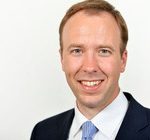
  • Matt Hancock – 2020 Statement on the Coronavirus

    Matt Hancock – 2020 Statement on the Coronavirus

    Below is the text of the statement made by Matt Hancock, the Secretary of State for Health and Social Care, on 26 May 2020.

    Good afternoon and welcome to Downing Street for the daily coronavirus briefing.

    I’m joined by Professor John Newton, our test and trace coordinator.

    Before I provide an update on the work we are doing to combat coronavirus, I’d like to update you on the latest figures.

    In total, 3,681,295 tests have been carried out in the UK, including 109,979 tests yesterday;

    265,227 people have tested positive, that’s an increase of 2,004 cases since yesterday.

    Sadly, of those who tested positive for coronavirus, across all settings, 37,048 people have now died. Yesterday, across the UK, 134 deaths were reported.

    But for the first time since 18 March, I am very encouraged to confirm that yesterday there were no deaths from coronavirus recorded in Northern Ireland.

    I want to pay tribute to Robin Swann, my opposite number, and all of those across the NHS and public health in Northern Ireland, and the people of Northern Ireland who have shown such resolve to be able to bend the curve down and thank them for all the work they have done.

    While the news might not be this positive every day, I look forward to continuing to work with them to keep the virus under control in Northern Ireland.

    Today’s figures from the ONS show across the UK as a whole, the lowest number of deaths from coronavirus for six weeks.

    This is a national endeavour. And whatever the headwinds, as a country we can’t let up on this.

    We are past the peak. We’re flattening the curve. We protected the NHS and the number of deaths is falling. We must keep our resolve.

    I just want to say a massive thank you to everybody, over the Bank Holiday weekend, who stuck to the social distancing rules.

    And to especially my colleagues in the NHS and in social care who are doing so much.

    Even though we are through the peak, there are still 8,802 people in hospital with coronavirus in the UK.

    And there are still 98 NHS colleagues in hospital with coronavirus, including some of whom who are seriously ill.

    So we must maintain our focus. And there are two areas I’d like to provide an update on today. PPE, and treatments. Both incredibly important for the future of tackling this disease – PPE and treatments.

    PPE

    First, we have been working hard to build our supplies of personal protective equipment.

    I know how important this is, especially to colleagues on the frontline.

    We all heard in the early weeks of this crisis, the calls from the frontline for more, and better PPE.

    And we all saw the global scramble to acquire it.

    I have been completely open about the scale and the difficulties of this challenge – building a new supply chain from scratch and of course the operational challenge of delivery.

    General Sir Nick Carter, Chief of the Defence Staff, said it himself – this is the single greatest logistical challenge he had faced in 40 years of service.

    And in response, thanks to the Armed forces and so many others, including so many in the NHS, we have seen a mammoth effort.

    We have ramped up domestic production. And I can announce that we have now signed contracts to manufacture 2 billion items of PPE here in the UK.

    I set a national challenge here. And I’m absolutely delighted that Lord Deighton has stepped up and is helping us to deliver it.

    Around the world, we have signed deals with over 100 new suppliers, including agreeing contracts for a further 3.7 billion gloves.

    Whilst we continue to improve the logistics, and work hard to get everyone the PPE they need, these new supplies mean we are not simply keeping up with demand – but are able to begin to replenish our stockpiles.

    There is a lot further to go on PPE, as on so many things, but we have made significant progress, and I’d like to thank everyone involved.

    And PPE is of course so important as it’s about protecting the people who protect us. We will do that for as long as this virus remains on our shores.

    Research and development

    Next, I wanted to update you on some of the remarkable R&D into treatments that is taking place all across the UK.

    One of Britain’s greatest strengths is our life sciences and research. And we are leading the world in the clinical trials being done here.

    As I said at this podium last week, the very nature of scientific enquiry means that not every project will bear fruit.

    But I am determined that we will explore every possible avenue.

    The RECOVERY trial is the world’s largest trial of potential coronavirus treatments.

    And because our NHS is a universal system, which we are all part of, we have some of the best data and can do some of the best research.

    Today I can announce that we are beginning a new trial, for selected NHS patients, of an anti-viral drug, called remdesivir.

    There have already been some promising early results on coronavirus patients, with early data suggesting it can shorten recovery time by about around four days.

    As you can understand, we will be prioritising the use of this treatment where it will provide the greatest benefit. This is probably the biggest step forward in the treatment of coronavirus since the crisis began.

    These are very early steps. But we are determined to support the science, and back projects that show promise.

    I’d like to thank the NHS, the MHRA, the devolved administrations because this is UK-wide, and Gilead the pharmaceutical company, for their work in making this happen.

    After all, it is worth remembering that in the battle against this virus, we are all on the same side.

    So we will keep working across the world to develop the vaccines and the treatments – and indeed the vaccines – that will help us turn a corner.

    But until a treatment or a vaccine comes good, there is no simple way to defeat this virus.

    So we must not lose our resolve.

    So please – stay alert, control the virus and save lives.

  • Boris Johnson – 2020 Statement on the Coronavirus

    Boris Johnson – 2020 Statement on the Coronavirus

    Below is the text of the statement made by Boris Johnson, the Prime Minister, on 24 May 2020.

    Good afternoon.

    I want to begin by answering the big question that people have been asking in the last 48 hours. And that is – is this Government asking you – the people, the public, to do one thing while senior people here in government do something else?

    Have we been asking you to make sacrifices, to obey social distancing, to stay at home while some people have been basically flouting those rules and endangering lives?

    And it is because I take this matter so seriously and frankly it is so serious that I can tell you today I have had extensive face to face conversations with Dominic Cummings and I have concluded that in travelling to find the right kind of childcare, at the moment when both he and his wife were about to be incapacitated by coronavirus. And when he had no alternative, I think he followed the instincts of every father and every parent. And I do not mark him down for that. And though there have been many other allegations about what happened when he was in self-isolation and thereafter, some of them palpably false.

    I believe that in every respect he has acted responsibly, and legally, and with integrity, and with the overwhelming aim of stopping the spread of the virus and saving lives.

    And I stress this fundamental aim, because it is thanks to this country’s collective resolve in achieving that aim that we continue to make progress.

    So let me give you today’s figures:

    3,458,905 tests for coronavirus have now been carried out in the UK, including 110,401 tests carried out yesterday

    259,559 people have tested positive, that’s an increase of 2,409 cases since yesterday – a smaller increase than we were seeing over the last few weeks

    8,951 people are in hospital with COVID-19 in the UK, down 11% from 10,085 this time last week

    And sadly, of those tested positive for coronavirus, across all settings, 36,793 have now died. That’s an increase of 118 fatalities since yesterday.

    And each of those fatalities represents a family in mourning, the grief of friends and relatives. And as we mourn them we resolve again to beat this virus and get our country back on its feet. We can and we will.

    Two weeks ago I set out the Government’s roadmap to begin easing the measures we put in place to control the spread of coronavirus.

    I said that we would do so in a safe and controlled way, based on our assessment of progress against the five tests we set for adjusting the lockdown.

    We’re going to set out that assessment in detail in the coming days, but today I can confirm that I do believe we will be in a position to move to step 2 of our plan.

    As part of Step 2, we set out plans for a phased reopening of schools.

    Because the education of our children is crucial for their welfare, their health, for their long term future and for social justice

    And so in line with the approach being taken by other countries, we want to start getting our children back in the classroom in a way that is manageable and as safe as possible.

    So we said this would begin with early years settings and reception, Year 1 and Year 6 in primary schools.

    Today I can announce that it is our intention to go ahead with that as planned on June 1st, a week on Monday.

    We then intend, from June 15th, for secondary schools to provide some contact for Year 10 and Year 12 students to help them prepare for exams next year, with up to a quarter of these students in at any point.

    By opening schools to more pupils in this limited way, we are taking a deliberately cautious approach.

    And this comes after a constructive period of consultation with schools, teachers and unions, led by the Education Secretary Gavin Williamson.

    I want to thank all the Education and childcare staff who have stepped up to the challenge and kept schools open throughout this crisis.

    The Department for Education will engage with teaching unions, local authorities and school leaders in the coming days, giving them an opportunity to ask questions and probe the evidence behind our plans.

    And the final decision will be taken as part of the formal review into lockdown measures which the law requires us to undertake by Thursday. We will of course continue to consider all the evidence (as we said we would do), and will continue to work hard with those bodies over the course of the coming week.

    However, I think it is important for us to be clear about the Government’s intentions now, so that teachers and parents can plan in earnest for schools to reopen a week on Monday.

    Now I acknowledge that a 1 June opening may not be possible for all schools, but the Government will continue to support and work with the sector to ensure that any schools experiencing difficulties are able to open more widely as soon as possible.

    Detailed guidance has been published by the Department for Education on how schools can open in a way which is safe for children, teachers and parents.

    While of course we recognise that full social distancing may not be possible, especially when teaching young children, our guidance sets out a range of protective measures to keep children and staff safe. This includes:

    reducing the size of classes and keeping children in small groups without mixing with others

    staggered break and lunch times, as well as drop offs and pick ups

    increasing the frequency of cleaning, reducing the used of shared items and utilising outdoor space

    All children and staff, and their families, will have access to testing if they display symptoms. This will enable children and staff to get back to school if they test negative, and if they test positive we will take the appropriate reactive measures.

    We will continue to work with the sector to support them to prepare for wider opening and ensure all children and young people can continue to receive the best care, education and training possible.

    We will set out what moving to step 2 means for other areas, such as non-essential retail and more social contacts, over the course of the next week.

    And let me stress once again: we are making good progress.

    But that progress is conditional, provisional.

    We must keep reducing the incidence of this disease.

    We must keep that R down below 1.

    And that means we must remember the basics.

    Wash our hands, keep social distance, isolate if you have symptoms – and get a test.

    We are beating this thing, but we will beat it all the faster if we stay alert, control the virus and save lives.

  • Boris Johnson – 2020 Statement on the Coronavirus

    Boris Johnson – 2020 Statement on the Coronavirus

    Below is the text of the statement made by Boris Johnson, the Prime Minister on 25 May 2020.

    Good evening and welcome to the Number Ten Coronavirus Press Conference

    Before I turn to this evening’s announcements, I want to update you on the latest data

    3,532,634 tests for coronavirus have now been carried out in the UK, including 73,726 tests carried out yesterday;

    261,184 people have tested positive, that’s an increase of 1,625 cases since yesterday;

    8,834 people are in hospital with COVID-19 in the UK, down (12%) from 10,092 this time last week;

    And sadly, of those who tested positive for coronavirus, across all settings, 36,914 have now died. That’s an increase of 121 fatalities since yesterday. This new figure includes deaths in all settings not just in hospitals.

    And once again my deepest condolences go out to all those who have lost their loved ones before their time. We must not, and will not, forget them.

    Two weeks ago, I set out our road map for the next phase of our fight against Covid 19.

    It is a cautious plan, informed by the evidence about what is safe, and conditional upon our continued progress against the virus.

    And we are making progress. Thanks to this country’s collective efforts, the key indicators are heading in the right direction. The daily number of deaths is down, the number of new cases is down, our survey evidence suggests the infection rate is falling, and the R has not risen above one.

    So just over 2 weeks ago, we moved to step 1 of our plan, encouraging those who are unable to work from home to go back to work, with new guidelines setting out how workplaces can be made COVID-secure.

    At the same time, we allowed people to spend more time outdoors and to meet one member of another household outside, provided they remain 2 metres apart.

    I also said we would be able to move to step 2 of our plan no earlier than Monday 1 June – a week today.

    We will set out our formal assessment of the 5 tests that we set for adjusting the lockdown later this week, as part of the 3 weekly-review we are legally required to undertake by Thursday.

    But because of the progress we are making, I can, with confidence, put the British people on notice of the changes we intend to introduce as we move into step 2.

    And I think it is important to give that notice, so that people have sufficient time to adjust and get ready before those changes come into effect.

    Yesterday I set out our intention to begin reopening nurseries and particular years in primary schools, reception, year 1, year 6, from 1 June, followed by some contact for those secondary school pupils with exams next year from 15 June. Some contact for years 10 and 12 from 15 June with their teachers.

    This announcement has given schools, teachers and parents clarity about our intentions, enabling them to prepare in earnest. The Department for Education is now engaging with teaching unions, councils and school leaders to help schools get ready.

    Today, I want to give the retail sector notice of our intentions to reopen shops, so they too can get ready.

    So I can announce that it is our intention to allow outdoor markets to reopen from June 1, subject to all premises being made COVID-secure, as well as car showrooms, which often have significant outdoor space and where it is generally easier to apply social distancing.

    We know that the transmission of the virus is lower outdoors and that it is easier to follow Covid Secure guidelines in open spaces. That means we can also allow outdoor markets to reopen in a safe way that does not risk causing a second wave of the virus.

    Then, from 15 June, we intend to allow all other non-essential retail, ranging from department stores to small, independent shops, to reopen. Again, this change will be contingent upon progress against the 5 tests and will only be permitted for those retail premises which are COVID-secure.

    Today we are publishing new guidance for the retail sector detailing the measures they should take to meet the necessary social distancing and hygiene standards. Shops now have the time to implement this guidance before they reopen. This will ensure there can be no doubt about what steps they should take.

    While the vast majority of businesses will want to do everything possible to protect their staff and customers, I should add that we will, of course, have the powers we need to enforce compliance where that is required.

    I want people to be confident they can shop safely, provided they follow the social distancing rules for all premises.

    The food retail sector has already responded fantastically well, enabling supermarkets to be kept open in a safe way – and we will learn lessons from that experience as we allow other retail to open.

    These are careful but deliberate steps on the road to rebuilding our country.

    And we can only take these steps thanks to what we have so far achieved together.

    We will only be successful if we all remember the basics – so wash your hands, keep social distance, and isolate if you have symptoms – and get a test.

    I will now hand over to Yvonne Doyle, Medical Director of Public Health England, to take us through today’s slides.

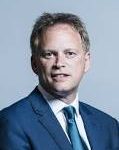
  • Grant Shapps – 2020 Statement on the Coronavirus

    Grant Shapps – 2020 Statement on the Coronavirus

    Below is the text of the statement made by Grant Shapps, the Secretary of State for Transport, on 23 May 2020.

    Opening remarks

    Good afternoon, and welcome to today’s Downing Street press conference.

    I’m pleased to be joined today by Dr Jenny Harries

    Latest data

    Let me start by updating you on the latest information from the government’s COBR data file.

    As of today (23 May 2020):

    3,348,507 tests for coronavirus have now been carried out in the UK, including 116,580 tests yesterday.

    257,154 people have tested positive, that’s an increase of 2,959 cases since yesterday.

    9,331 people are currently in hospital with coronavirus in the UK, down 11% since last week.

    And tragically 36,675 people have now died. That’s an increase of 282 fatalities since yesterday and that’s across all settings.

    Not just a list of statistics, but a devastating reminder of the cruelty of coronavirus.

    Our thoughts are with the friends and families of the victims.

    Transport context

    As we start to relax the restrictions, we must plan our route to recovery….

    Allowing people to resume their lives where possible…

    Getting businesses up and running again…

    And building beyond coronavirus.

    In the short term, we will need to bring back more public transport to keep families safe.

    That process has already begun.

    Rail and tube services increased at the beginning of this week – and they’ll ramp up more next month.

    And to ensure that more buses, trams and light-rail networks return to service today I can announce new investment of £283 million to start moving back to a full timetable.

    However, I do want to stress this funding does not mean we can go back to using public transport whenever we like.

    Remember…

    Those who can should still work from home…

    Those who can should still avoid all public transport.

    Even a fully restored service will only be capable of carrying – at best – one fifth of normal capacity, once social distancing is taken into account.

    So only if you need to travel, and you can’t cycle, or walk or drive, should you take a bus, tram or train.

    But please; avoid the rush hour.

    Marshals

    We’re managing the transport network to make it as safe as possible.

    This week saw the deployment of nearly 3,500 British Transport Police, Network Rail and Transport for London employees.

    These marshals worked with the public to prevent services from becoming overcrowded.

    From 1 June at the earliest – as we move to Phase 2 of the unlock – we will start to deploy twice as many marshals with the assistance of groups like the charity – Volunteering Matters.

    These Journey Makers will help provide reassurance, advice and friendly assistance to commuters.

    The last time we did this, at the 2012 Olympics, it was a great success.

    While these are altogether more serious times – if we show the same public-spirited concern for one another, it will go a long way towards helping transport and passengers cope.

    ZipAbout

    As I have said, it’s essential we stagger journeys and avoid the rush-hour.

    That’s why, at a recent roundtable, we asked the tech sector to come up with innovative proposals to help passengers avoid congestion.

    One good example is ‘Passenger Connect’ from Birmingham start-up ZipAbout.

    A personalised information service which tells rail users how disruption and crowding may affect their journey, while providing alternatives and helping people to maintain social distancing.

    The service has been successfully piloted over the past 12 months and it will be rolled out soon.

    Building for the future

    We’re not just dealing with the immense challenges of the present.

    We’re building for the future too.

    Transport is not just about how we get from place to place.

    It also shapes the places; for good or bad…

    Towns. Cities. Whole nations.

    We now have an opportunity to use the power of transport to improve long-standing national weaknesses, and create something better.

    Rebalancing the economy

    The UKs unbalanced economy is one such weakness.

    Our mission is to level-up Britain.

    The COVID-19 outbreak must be the catalyst to get it done.

    Levelling up. And speeding up.

    So, while roads and railways are less busy, we’re accelerating vital projects.

    Take the North, for example.

    This bank holiday weekend, we’re carrying out vital work to fix Leeds station.

    Continuing to build a new platform…

    … Installing new points and switches…

    … And improving the track to Wakefield.

    Just part of 490 separate engineering projects happening around the country this bank holiday weekend.

    Work that would normally take months of weekend closures are much quicker on these quieter railways.

    Beeching cuts

    And we’re getting on with plans to reverse some of the so-called Beeching rail cuts too.

    Dr Beeching wrote a report back in the 1960s which led to the closure of one-third of our railway network.

    2,363 stations, 5,000 miles of track identified for closure.

    Many of the places removed from the map never recovered.

    That report was perhaps the origin of the ‘left-behind town’.

    But we’re working to reverse Beeching.

    The process has already started in Blyth in the North East and Fleetwood in the North West….

    I visited in January, and also took the opportunity to visit Horden Peter Lee to see the building work.

    There used to be a train station 200 yards away, but it was closed, and the town cut off by the Beeching axe.

    This new station will connect a community of over 50,000 people, improving their quality of life.

    And today, the next 10 schemes to benefit are announced.

    It’s development funding…

    … But if they stack up, then we’re going to build them fast.

    Amongst the many schemes is the reinstatement of the Ivanhoe line in the East Midlands, from Leicester to Burton, via Coalville and Ashby.

    And branch lines on the Isle of Wight, and a new station at Wellington in Somerset.

    Roads

    But no matter how great we make the railway of the future, millions will still rely on the car.

    That’s why today I’m publishing the preferred route to complete the dual carriageway on the A66 from Scotch Corner to Penrith.

    The first new all dual-carriageway across the Pennines in 50 years.

    This is a £1 billion programme that will transform capacity by upgrading junctions and widening the road.

    These road and rail schemes will be the first of many…

    Binding our country together, and connecting people with jobs.

    Towns and cities

    But it isn’t just the balance between regions that we need to reshape.

    It’s hard to see millions who – until a few weeks ago – commuted by train into Manchester, London, Birmingham every day – immediately going back to the same old ways.

    So we have to reshape our towns and cities too…

    The Prime Minister once said:

    Cities are where inspiration and innovation happens … because people can bump into each other, spark off one another, compete, collaborate, invent and innovate. That’s when we get the explosion, or flash of creativity and innovation.

    And yet – with social distancing – it makes all that rather more difficult…

    So we have to find new ways of making it happen.

    Therefore – as conditions allow and not until July – we will be looking to support creative ways for businesses to reopen, whilst maintaining social distancing.

    We know restaurants and bars will want to start trading again, and we will work with them so we can enjoy an outdoor summer in a safe and responsible environment.

    Car parking

    For those who live too far to cycle and walk, and must drive to major conurbations, we will repurpose parking in places just outside town centres…

    … so people can park on the outskirts and finish their journeys on foot or bike or even e-scooter.

    Our aim with many of these measures is not merely to get through the lifting of restrictions, and then return to how things were…

    … But to come out of this recovery stronger, by permanently changing the way we use transport.

    Cycling

    Take the bike for example, previously we announced the introduction of a scheme to help bring bicycles back to a roadworthy condition…

    … relieving the pressure on public transport, and improving the nation’s health.

    Today I can provide the detail of the new £50 bicycle maintenance voucher.

    Available from next month, the scheme will help up to half-a-million people drag bikes out of retirement.…

    … Speeding up the cycling revolution…

    … Helping individuals become fitter and healthier…

    … And reducing air pollution, which remains a hidden killer.

    Clean air should be as big a priority for us in the 21st century as clean water was to the Victorians in the 19th.

    Closing remarks

    The measures discussed today will help…

    … more passengers use trains, buses and trams safely….

    … More commuters to take up active travel….

    … And more people to benefit from infrastructure improvements in the Northern Powerhouse, and across the country.

    They give us all an opportunity to harness the power of transport…

    Not just to help us return to the lives in the post-COVID-19 world…

    … But to make our economy more resilient.

    Our population healthier.

    And to change our nation for the better.

  • Matt Hancock – 2020 Statement on the Coronavirus and Care Homes

    Matt Hancock – 2020 Statement on the Coronavirus and Care Homes

    Below is the text of the speech made by Matt Hancock, the Secretary of State for Health and Social Care, in the House of Commons on 19 May 2020.

    One of the first things we knew about coronavirus as it began its dismal spread across the world was that it reserves its greatest impact for those who are physically weakest, especially the old. In the UK, 89% of all deaths have been of those aged above 65. From the start, we have worked hard to protect those in social care. In early March, we put £3.2 billion into social care—half through the NHS and half through local authorities—and we have repeatedly set out and strengthened guidance for infection control and support.

    For anyone who has a loved one living in a care home and for all the residents and staff, I understand what a worrying time this has been. I am glad that we have been able to protect the majority of homes, and we will keep working to strengthen the protective ring that we have cast around all our care homes. As I said in the House yesterday, last week we set out a further £600 million to strengthen infection control, and this comes on top of a substantial programme of support.

    First, on testing, from the start we have tested symptomatic residents of care homes, even when testing capacity was much lower, and this has always been a top priority. We are now testing all care home residents and staff in England—those with symptoms and those without—and this is being done according to clinical advice, starting with the most vulnerable, and extending to working-age residents, too.

    Secondly, we have strengthened the NHS support available to social care. We are putting in place a named clinical lead for every care home in England and have brought NHS infection-control expertise to the sector.

    Thirdly, we are making sure that local authorities play their part. Councils are conducting daily reviews of the situation on the ground in local care homes, so that every care home gets the support that it needs every day.

    Fourthly, we are supporting care homes to get the PPE that they need.

    Fifthly, we have increased the social care workforce during this crisis and provided more support. Altogether, this is an unprecedented level of support for the social care system. I thank colleagues across social care for their hard work.[Official Report, 20 May 2020, Vol. 676, c. 2MC.]

    We have also broken down some of the long-standing barriers, including between health and social care, and we have learned the importance of making sure that money for social care is ring-fenced specifically for social care, as the £600 million agreed last Friday has been. On top of that, we are requiring much better data from social care, because partial data has bedevilled the management of social care for many years and made ​policy making more difficult. Regular information returns are required in return for the latest funding, and we are looking to change the regulations to require data returns from every care provider, so that we can better prepare and support social care.

    Our elderly care homes provide for people towards the end of their life. They do an amazing job and deserve the praise that they have received from the public during this crisis. Residents are looked after when they need care the most: their hands are held, their brows are mopped and they are made comfortable. As a collective result of our efforts—especially the efforts of care colleagues throughout the country—62% of care homes have had no reported cases of coronavirus.

    The figures released today by the Office for National Statistics show that the number of deaths in care homes has fallen significantly and is down by a third in just the past week, from 2,423 to 1,666. This morning’s statistics confirmed that 27% of coronavirus deaths in England have taken place in care homes, compared with a European average of around half, but whatever the figures say, we will not rest in doing whatever is humanly possible to protect our care homes from this appalling virus, to make sure that residents and care colleagues have the safety and security they deserve.

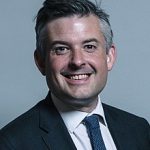
  • Jonathan Ashworth – 2020 Speech on the Covid-19 Response

    Jonathan Ashworth – 2020 Speech on the Covid-19 Response

    Below is the text of the speech made by Jonathan Ashworth, the Shadow Secretary of State for Health and Social Care, in the House of Commons on 18 May 2020.

    On symptoms, the right hon. Gentleman will know that many healthcare specialists were making these warnings eight weeks ago, so can he explain why there has been a time lag in updating the case definition?

    I note what the right hon. Gentleman said about social care, but he will be aware that more than 12,500 people have sadly died in care homes because of covid-19. Last week, he said that he had put a protective ring around care homes from February, but yesterday a care home provider wrote in The Sunday Times:

    “Elderly people weren’t a priority”

    They also wrote:

    “The government was asleep at the wheel.”

    Is the reality not that there was no early lockdown of care homes when needed, and there was no testing of people transferred from hospital to care homes until ​mid-April, seeding the virus? Personal protective equipment was requisitioned from care home staff and given to the NHS because of wider shortages. There was guidance suggesting that infection was unlikely, and that guidance was still in place when there was community transmission.

    We still do not have full testing of all residents and care home staff 12 weeks later. No wonder Age UK has said that this is “too little, too late”. I note that the right hon. Gentleman said that testing will be expanded. Can he bring forward the date by which all care home residents and staff will be routinely tested? The document last week says that it will be by 6 June. Why can the date not be sooner?

    Has this crisis not shown that our care sector is staffed by exceptional, dedicated people, and that migrant care workers are not low skilled but immensely able? Does the right hon. Gentleman agree that the Home Office should acknowledge that, and praise such potential workers, not penalise them?

    I welcome the wider roll-out of testing. The right hon. Gentleman did not mention the antibody test. Could he update the House on that front? It has also been reported today that 20% of hospital patients got covid while in for another illness. Two weeks ago, he suggested to me in the House that he planned to roll out screening of all healthcare workers, whether symptomatic or not. Can he update us on that front?

    On tracing, I have long argued that the safe way to transition out of the lockdown is by having a test, trace and isolation strategy in place, but it depends on a quick turnaround of test results. Can the right hon. Gentleman tell us the current median time for test results to be received by someone when carried out by the Deloitte and other private sector testing facilities, and how soon do directors of public health and GPs receive those results?

    The right hon. Gentleman knows that I believe he should be making better use of local public health services. None the less, he is pressing ahead with the national call centre delivered by Serco. Can he tell us by what date that tracing service will be operational? Will it be operational by 1 June?

    The right hon. Gentleman did not talk about isolation as one of his key elements of the test-trace strategy. Many poorer people will not be able to self-isolate. Will he look at providing facilities for such people, such as empty hotel rooms so they can quarantine? Will those in insecure work be guaranteed sick pay if they are asked to isolate for seven or 14 days?

    On the R number, will the right hon. Gentleman guarantee that every easing of restriction, such as asking children to return to school, is accompanied by a Government statement on the expected impact on the R number and the underlying prevalence of infection? If R rises to be greater than one in a region or local area, how will the Government respond?

    As the right hon. Gentleman says, this is Mental Health Awareness Week. We are very fearful of a growing burden of mental health issues, especially in children, as a result of the lockdown. What extra investment is he putting into mental health services, particularly children’s health services? NHS staff, who are threatened not only by exposure to the virus, but the trauma, emotional ​distress and burnout associated with working on the frontline, need support as well. They need PPE, they need fair pay, they need mental health support. Those care workers who are caring for us need us to care for them and we should thank them again in Mental Health Awareness Week.

  • Matt Hancock – 2020 Statement on the Covid-19 Response

    Matt Hancock – 2020 Statement on the Covid-19 Response

    Below is the text of the statement made by Matt Hancock, the Secretary of State for Health and Social Care, in the House of Commons on 18 May 2020.

    With permission, Mr Speaker, I will make a statement on coronavirus. This is the most serious public health emergency in 100 years, but through the combined efforts of the whole nation, we have got through the peak. Let us not forget what, together, has been achieved. We flattened the curve, and now the number of people in hospital with coronavirus is half what it was at the peak. We protected the NHS, and the number of patients in critical care is down by two thirds. Mercifully, the number of deaths across all settings is falling.

    This Mental Health Awareness Week is an important reminder that we need to look after ourselves, as well as each other. If someone needs support with their mental health, the NHS is there for them. This is particularly important for frontline staff, and we have supported all NHS trusts to develop 24/7 mental health helplines.

    Our plan throughout this crisis has been to slow the spread and protect the NHS. Thanks to the resolve of the British people, the plan is working, and we are now in the second phase of this fight. I will update the House on the next steps that we are taking as part of that plan. First, we are protecting the nation’s care homes, with a further £600 million available directly to care homes in England. We have prioritised testing for care homes throughout, we made sure that every care home has a named NHS clinical lead and we are requiring local authorities to conduct daily reviews of the situation on the ground, so that every care home gets the support it needs each and every day. All this amounts to an unprecedented level of scrutiny and support for the social care system, and a level of integration with the NHS that is long overdue.

    Secondly, the four UK chief medical officers have today updated the case definition to include a new symptom. Throughout this pandemic, we have said that someone who develops a new continuous cough or fever should immediately self-isolate. From today, we are including anosmia—losing one’s sense of smell, or experiencing a change in the normal sense of smell or taste—which can be a symptom of coronavirus, even where the other symptoms are not present. So from today, anyone who develops a continuous cough or fever or anosmia should immediately self-isolate for at least seven days, in line with the guidelines. Members of their household should self-isolate for 14 days. By updating the case definition in line with the latest science, we can more easily recognise the presence of the virus and more effectively fight it.

    Thirdly, we are expanding eligibility for testing further than ever before. Over the past six weeks, this country has taken a small, specialised diagnostics industry and scaled it at breathtaking pace into a global champion. Yesterday, we conducted 100,678 tests. Every day, we create more capacity, which means that more people can be tested and the virus has fewer places to hide.​

    Today, I can announce to the House that everyone aged five and over with symptoms is now eligible for a test. That applies right across the UK, in all four nations, from now. Anyone with a new continuous cough, a high temperature or a loss of, or change in, their sense of taste or smell can book a test by visiting nhs.uk/coronavirus. Anyone who is eligible for a test but does not have internet access can call 119 in England and Wales or, in Scotland and Northern Ireland, 0300 303 2713. We will continue to prioritise access to tests for NHS and social care, patients, residents and staff, and as testing ramps up towards our new goal of a total capacity of 200,000 tests a day, ever more people will have the confidence and certainty that comes with an accurate test result.

    Fourthly, I want to update the House on building our army of contact tracers. I can confirm that we have recruited more than 21,000 contact tracers in England. That includes 7,500 healthcare professionals who will provide our call handlers with expert clinical advice. They will help to manually trace the contacts of anyone who has had a positive test, and advise them on whether they need to isolate. They have rigorous training, with detailed procedures designed by our experts at Public Health England. They have stepped up to serve their country in its hour of need and I thank them in advance for the life-saving work that they are about to do.

    The work of those 21,000 people will be supported by the NHS covid-19 app, which we are piloting on the Isle of Wight at the moment and will then roll out across the rest of the country. Taken together, that means that we now have the elements that we need to roll out our national test and trace service: the testing capacity, the tracing capability and the technology.

    Building that system is incredibly important, but so too are the basics. We need everyone to self-isolate if they or someone in their household has symptoms. We need everyone to keep washing their hands and following the social distancing rules. We need everyone to stay alert, because this is a national effort and everyone has a part to play. The goal is to protect life and allow us, carefully and cautiously, to get back to doing more of the things that make life worth living. That is our goal and we are making progress towards it. I commend this statement to the House.

  • Thangam Debbonaire – 2020 Speech on the Housing Market

    Thangam Debbonaire – 2020 Speech on the Housing Market

    Below is the text of the speech made by Thangam Debbonaire, the Labour MP for Bristol West, in the House of Commons on 13 May 2020.

    Thank you Mr Speaker, and I thank the Secretary of State for an advance copy of his statement.​

    The Government said that they would do “whatever it takes” to get the country through the covid crisis and protect the most vulnerable. The Opposition want the Government to succeed. Lives, livelihoods and homes are on the line. In a spirit of constructive co-operation, we have scrutinised plans carefully and offered suggestions and challenges when appropriate, to try to help to bring down infections and the numbers of people who are infected or who are tragically dying, and to help people manage financially. Sometimes the Government have heeded our calls, sometimes not. I would like them to consider these.

    Today’s announcement provides welcome news for some—and of course we all want new homes to be built —but it leaves more unanswered housing questions, which urgently need Government attention to keep people safe at work and at home, as we do not have community testing, a cure or a vaccine and there are still problems with personal protective equipment. What protection will there be for people who rent, if a landlord or an estate agent wants to show a prospective buyer or new tenant around? What will the Government do to help those trapped by the cladding and leasehold scandals at this time? What discussions have the Government had with the trade unions? There was no mention of that in the statement. What advice do the Government have for anyone who feels that their workplace or construction site is not safe?

    This crisis has taught us that if anyone is struggling, we are all affected. The announcement focused on those who want to move home, but it ignored those who are at risk of being forced to do so. The Secretary of State talked about show homes, but not about people with no home. We have shown that when we work together we can virtually eliminate street homelessness in days. There must be no going back, but people in emergency accommodation face that. Will the Government work with councils and homelessness organisations on the issue of how to provide and pay for a “housing first” approach, so that we can end street homelessness for good this year?

    The Secretary of State said that he knew that homes were sanctuaries, but there is no plan for what happens when the temporary ban on evictions ends. We need to prevent people from falling into arrears, so will the Government heed Labour’s calls to fill gaps in the financial support schemes? Will he guarantee that the local housing allowance will stay at 30% of market rent? Will he consider raising it further until the crisis eases?

    People who are struggling with their rent are worried about what will happen when the ban lifts. The Government say that they are

    “working with the Master of the Rolls to widen the existing ‘pre-action protocol’ on possession proceedings for Social Landlords, to include private renters and to strengthen its remit”.

    That is not enough, so will the Secretary of State consider Labour’s proposal to halt section 8 evictions on the grounds of arrears caused by the lockdown?

    In March, Ministers said that they would provide

    “whatever funding is needed for councils to get through this and come out the other side”.

    That pledge has been repeated by the Secretary of State. This week, however, he told the Housing, Communities and Local Government Committee that councils should not

    “labour under a false impression”​

    that all costs would be reimbursed. Which is it? Will the Secretary of State honour his original commitment to councils?

    The Under-Secretary of State for Housing, Communities and Local Government, the hon. Member for Thornbury and Yate (Luke Hall), appeared to require local authorities to provide accommodation for people with no recourse to public funds but without funding, leading to confusion and people being left out. Will the Secretary of State ensure that there is specific funding for housing people with no recourse to public funds?

    Councils cannot borrow for revenue spending or run deficits. If they cannot balance the books they have to stop spending. They are currently £10 billion short—a fifth of council spending. They could close every library, leisure centre and children’s centre, turn off all the streetlights, and lock the gates to parks, and they would still be billions of pounds short. They would have to make cuts to social care and public health at this time. Will the Secretary of State ensure that councils are fully recompensed for housing and other costs in this crisis?

    Finally, during the crisis we have all become aware of people in overcrowded, unsafe homes, who are unable to self-isolate and worried about the rent. We know how bad it is for mental and physical health when families have no outside space. The Secretary of State says that he wants “more homes, safer homes, and higher quality, more beautiful homes”, but he does not say how he will ensure that they are higher quality, or safe, or beautiful. He could have decided to invest in high-quality, safe, beautiful, socially owned, zero-carbon, truly affordable housing. That would capture the national spirit and turn it into building our future.

    Instead, the Government have focused on private house sales and even today asked councils to allow developers to defer section 106, the community infrastructure levy, which is likely to reduce the numbers of new social and affordable homes. Will the Secretary of State please work with the Treasury, housing associations, local authorities and the building industry to invest in high-quality, truly affordable social housing?

    Our broken housing system has been brutally exposed. Key workers we applaud each week live in poor housing. They have been left behind too long. We must not go back to business as usual. We must solve the housing crisis for all our heroes and for our country.