Category: Coronavirus

  • Robert Buckland – 2020 Statement on Prisons and Covid-19

    Robert Buckland – 2020 Statement on Prisons and Covid-19

    Below is the text of the statement made by Robert Buckland, the Lord Chancellor and Secretary of State for Justice, in the House of Commons on 2 June 2020.

    I am today announcing the Government’s plans for how Her Majesty’s Prison and Probation Service will start to recover from the impact of covid-19.

    I want to first pay tribute to the hard-working staff across the country who have continued to deliver essential services in spite of the virus. They have been striving tirelessly to make sure those in their care are safe and the public is protected.

    The Government have introduced strong measures to save lives and protect the NHS, including reducing face-to-face interactions in both prison and probation, minimising transfers between establishments, shielding the vulnerable, quarantining new entrants to prison and making greater use of technology to enable family contact and supervise offenders in the community.

    As a result of the success of these measures, we are formulating plans for how these restrictions can be cautiously rolled back over the coming weeks and months. This will happen within overarching frameworks for prisons and probation which have been published today. These decisions will be guided by public health advice and the best available data.

    In prisons there will not be a simple easing of restrictions across the estate but national guidance will ensure there is consistency in decision making by governors. That means establishments will progress at their own speed, taking full account of their specific circumstances.​

    We know it will not be a straightforward return to normality. As the Prime Minister has set out, the whole country now needs to prepare for an extended period of living with and managing the threat from the virus.

    But over the coming weeks and months, we will restart aspects of daily prison life, such as social visits, education and work, and face-to-face probation supervision, including unpaid work and accredited programmes, with adaptations where necessary to ensure safety.​

    We will continue to closely monitor the situation, and only proceed once it is safe to do so. Should restrictions need to be re-imposed to ensure the safety of staff and those in our care we will not hesitate to do this.

    During this time, we will continue with measures such as providing additional temporary accommodation, and making careful use of our end of custody temporary release powers, to ensure we are able to manage the possibility of any future outbreaks.

  • Matt Hancock – 2020 Statement on NHS Test and Trace

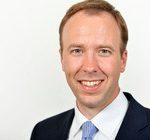
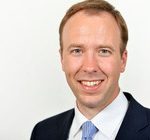
    Matt Hancock – 2020 Statement on NHS Test and Trace

    Below is the text of the statement made by Matt Hancock, the Secretary of State for Health and Social Care, in the House of Commons on 2 June 2020.

    On 28 May the NHS Test And Trace service was introduced across England. This forms a central part of the Government’s covid-19 recovery strategy to help as many people as possible return to life as close to normal as possible, in a way that is safe and protects our NHS and social care.

    The objective of the NHS Test And Trace service is to push down and keep low the rate of reproduction (R) of covid-19 and reduce the total number of infected people by catching cases before they spread the virus. It brings together testing, contact tracing and outbreak management into an end-to-end service.

    The roll-out of the NHS Test And Trace service has been made possible by the rapid expansion of testing. The largest network of diagnostic testing facilities in British history has been created and now has the capacity to carry out 200,000 tests a day. This includes 50 drive-through sites, more than 100 mobile testing units and three mega laboratories. Everyone in England is now eligible for a test if they have covid-19 symptoms. These symptoms are: a new, continuous cough; or a high temperature; or a loss of, or change in, normal sense of smell or taste.

    The NHS Test And Trace service uses a combination of 25,000 dedicated contact tracing staff, local public health experts and an online service to trace the contacts of anyone who tests positive for covid-19. The NHS covid-19 app, which will further extend the speed and reach of contact tracing, will be rolled out nationally in the coming weeks as part of the NHS Test And Trace service.

    On 22 May we announced £300 million of new funding for local authorities in England to work with NHS Test And Trace to develop local outbreak control plans. These plans will focus on identifying and containing potential outbreaks in places such as workplaces, housing complexes, care homes and schools, ensuring testing ​capacity is deployed effectively and helping vulnerable people who are self-isolating access essential services in their area.

    Anyone who tests positive for coronavirus is contacted by NHS Test and Trace and asked to share information about their recent interactions. This could include household members and people with whom they have been in direct contact or within 2 metres for more than 15 minutes. People identified as having been in close contact with someone who has had a positive test must stay at home for 14 days, even if they do not have symptoms, to stop unknowingly spreading the virus.

    Those who need to self-isolate will be informed about local support networks if they need practical, social or emotional support. They will also have access to the same financial support available to those who have to self-isolate because they or another member of their household have symptoms or have tested positive for covid-19. This includes access to statutory sick pay, subject to normal eligibility conditions.

    The public will have a key role to play in making this service a success. They will need to report covid-19 symptoms, book tests, help to identify recent close contacts, and self-isolate for at least seven days if they have covid-19, and for 14 days after they were in contact with the person who tested positive for covid-19 if they are identified as a close contact by NHS Test and Trace.

    We have put in place a comprehensive media campaign to increase public awareness of the NHS Test and Trace service, what it is, why it is important and what the public need to do. This includes TV, radio, video on demand, posters, digital display and social media.

    We are working closely with the devolved Administrations and public health agencies in Scotland, Wales and Northern Ireland to ensure an aligned approach to testing and tracing across the United Kingdom where possible.

  • Jonathan Ashworth – 2020 Speech on the Covid-19 Response

    Jonathan Ashworth – 2020 Speech on the Covid-19 Response

    Below is the text of the speech made by Jonathan Ashworth, the Labour MP for Leicester South, in the House of Commons on 2 June 2020.

    There have now been 56,308 excess deaths since the beginning of March, 12,500 of which are not related to covid, but we do have one of the worst excess death rates in the world—why does the Secretary of State think that is? What does he believe is the cause of the non-covid excess death rate?

    With respect to the PHE’s findings, which I am pleased to see published today, we have always known that there is a social gradient in health. The poorest and most deprived have inequality in access to healthcare and inequality in health outcomes. What the Secretary of State has confirmed today is that covid thrives on inequalities. Yes, indeed, black lives matter, but it is surely a call to action that black, Asian and minority ethnic people are more likely to die from covid and more likely to be admitted to intensive care with covid. He has seen the findings. I note that the Equalities Minister is taking work forward, but what action will be taken to minimise risk for black, Asian and minority ethnic people?

    There are other vulnerable groups who are highly at risk. I am sure the Secretary of State will have seen today the Care Quality Commission report which shows a 134% increase in deaths of people with learning disabilities. Surely it is now time to expand testing to those under 65 in receipt of adult social care.

    On the easing of restrictions, the Secretary of State said that this was a sensitive moment—well, quite, Mr Speaker. Our constituents have concerns and are looking for reassurance, particularly those in the shielding group. They really should not have had to wake up on Sunday morning to find out that they could now leave the house once a day. They need clarity and details. And why were GPs not informed in advance?

    We are still at around 50,000 infections a week, so may I press the Secretary of State a bit further on the easing of restrictions? The biosecurity level remains at 4, but his own Command Paper from 11 May said that changes to lockdown

    “must be warranted by the current alert level”.

    At the Sunday news conference, the Secretary of State for Housing, Communities and Local Government said that all the proposed easing of restrictions had been modelled and showed that the R value remained below 1. That is, of course, reassuring, but will he now publish that modelling so that it can be peer-reviewed?

    The easing of restrictions was based on tests, so may I ask the Secretary of State a couple of questions? First, on NHS capacity, we know that the NHS has not been overwhelmed, but that has been on the back of cancelled planned surgery, delays to vital treatment, and the postponing of cancer screening. Arguably, it has been the biggest rationing exercise in the history of the NHS. Will he now publish the total number of planned operations that have been cancelled and detail them by procedure? As the lockdown is eased, is it his intention to step down some of that surge capacity so that this backlog of clinical need can start to be tackled?

    On managing the virus, one of the tests is on whether we can manage the virus, but, as the Secretary of State has said, that depends on testing and tracing. There is now capacity for more than 200,000 tests, but there is still a lack of clarity about how that figure is arrived at. The UK Statistics Authority has written to him today, saying that his figures are still

    “far from complete and comprehensible”,

    that the testing statistics still fall well short of standards in the code, and that it is not surprising that testing data is mistrusted. That is quite damning, I have to say to him. Will he start publishing again the actual numbers of people tested? Will he stop counting tests mailed to homes as completed? Will he detail what proportion of the 200,000 tests are diagnostic PCR, what proportion are antibody, and what proportion are surveillance? Can he tell us how many care home staff and residents have been tested? When will he start weekly testing of all NHS staff, as that is crucial for getting on top of infections in hospitals? Will he tell us what percentage of the Deloitte-run testing facilities have been sent to GPs?

    On test and trace, which is absolutely vital to safe easing out of the lockdown, the Prime Minister told the House before the recess that it would be “world-beating” and operational by yesterday, but it is not actually fully operational at a local level, is it? Can the Secretary of State confirm that local directors of public health have been told to prepare strategies for tracing with a deadline of the end of June, that they will not actually start receiving local individual data until next week, and that many have still not been told their allocations of the extra £300 million nor what they can spend it on? When will they get those allocations? Despite this, he said yesterday that test and trace is up and running. I am not sure how he can say that it is up and running when local directors of public health are still asking for that information. Will he publish the data and what percentage of infections have been contacted and how many contacts have been followed up? Will that data be published on a daily basis?

    This is a crucial week, given the easing of restrictions, and our constituents want reassurance and clarity, but I am afraid that trust has been undermined by the Dominic Cummings scandal. Our constituents want to do the right thing for their loved ones and their neighbours. Can he give them those reassurances today?

  • Matt Hancock – 2020 Statement on the Covid-19 Response

    Matt Hancock – 2020 Statement on the Covid-19 Response

    Below is the text of the statement made by Matt Hancock, the Secretary of State for Health and Social Care, in the House of Commons on 2 June 2020.

    With permission, I would like to make a statement on coronavirus.

    Thanks to the collective determination and resolve of the nation, we are winning this battle. We have flattened the curve, we have protected the NHS, and together we have come through the peak. Yesterday, I was able to announce that the level of daily deaths is lower than at any time since lockdown began on 23 March. Today’s Office for National Statistics data show that the level of excess mortality is also lower than at any time since the start of lockdown, falling on a downward trend. The ONS reports 12,288 all-cause deaths in England and Wales in the week ending 22 May. That is down from 14,573 in the previous week. That latest figure is still above the average for this time of year and we must not relent in our work to drive it down, but it is now broadly in line with what we might typically see during the winter. We never forget that each of those deaths represents a family that will never be the same again. This House mourns each one.

    We are moving in the right direction, but this crisis is very far from being over and we are now at a particularly sensitive moment in the course of the pandemic. We must proceed carefully and cautiously as we work to restore freedom in this country, taking small steps forward and monitoring the result, being prepared to pause in our progress if that is what public safety requires. So today I would like to update the House on two important aspects of the action we are taking.

    First, NHS Test and Trace is now operational. That means we have updated our public health advice. Since the start of the crisis, we have said to people that you must wash your hands, self-isolate if you have symptoms, and follow the social distancing rules. All those remain incredibly important, but there is a new duty—and it is a duty—that we now ask and expect of people. If you have one of these symptoms—that is: a fever; a new, continuous cough; a change in your sense of taste or smell—you must get a test. We have more than enough capacity to provide a test for anyone who needs one and we have more than enough capacity to trace all your contacts. So, to repeat: if you have symptoms get a test. That is how we locate, isolate and control the virus. By the way, I make no apology for this overcapacity. The fact that we have thousands of NHS contact tracers on standby reflects the fact that transmission of the virus is currently low. If we were in a position where we needed to use all that capacity, it would mean that the virus was running at a higher rate—something that no one wants to see.

    Secondly, I want to update the House on the work we are doing to understand the unequal and disproportionate way that this disease targets people, including those who are from black or minority ethnic backgrounds. This is very timely work. People are understandably angry about injustices, and as Health Secretary, I feel a deep responsibility, because this pandemic has exposed huge disparities in the health of our nation. It is very clear that some people are significantly more vulnerable to covid-19, and that is something I am determined to understand in full and take action to address.

    Today, I can announce that Public Health England has completed work into disparities in the risks and outcomes of covid-19, and we have published its findings. PHE has found the following. First, as we are all aware, age is the biggest risk factor. Among those diagnosed with covid-19, people who are 80 or older are 70 times more likely to die than those under 40. Being male is also a significant risk factor. Working-age men are twice as likely to die as working-age women. Occupation is a risk factor, with professions that involve dealing with the public in an enclosed space, such as taxi driving, at higher risk. Importantly, the data show that people working in hospitals are not more likely to catch or die from covid-19.

    Diagnosis rates are higher in deprived or densely populated urban areas, and we know that our great cities have been hardest hit by this virus. This work underlines that being black or from a minority ethnic background is a major risk factor. That racial disparity holds even after accounting for the effects of age, deprivation, region and sex. The PHE ethnicity analysis did not adjust for factors such as comorbidities and obesity, so there is much more work to do to understand the key drivers of these disparities, the relationships between the different risk factors and what we can do to close the gap.

    I want to thank Public Health England for this work. I am determined that we continue to develop our understanding and shape our response. I am pleased to announce that my right hon. Friend the Equalities Minister will be leading on this work and taking it forward, working with PHE and others to further understand the impacts. We need everyone to play their part by staying alert, following the social distancing rules, isolating and getting a test if you have symptoms. We must not relax our guard but continue to fight this virus together. That is how we will get through this and keep driving the infection down. I commend this statement to the House.

  • Nicola Sturgeon – 2020 Statement on the Coronavirus

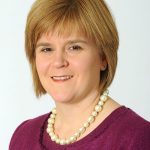
    Nicola Sturgeon – 2020 Statement on the Coronavirus

    Below is the text of the statement made by Nicola Sturgeon, the Scottish First Minister, on 2 June 2020.

    Good afternoon everyone. Thank you for joining us.

    I’ll start as always with an update on the current position in relation to COVID-19.

    As at 9 o’clock this morning, there have been 15,471 positive cases confirmed – which is an increase of 53 from the figures I gave you yesterday. However, I need you to note today that this figure of 53 includes 40 older positive test results, which have only been received today and are being added to the overall total now.

    A total of 1,168 patients are currently in hospital with either confirmed or suspected COVID-19 and that is an increase of 122 from yesterday.

    However, please note that the number of confirmed cases in hospital actually decreased by 23 compared to the figures yesterday.

    A total of 34 people last night were in intensive care with confirmed or suspected COVID-19. That is an increase of 7 since yesterday – all 7 of those are suspected cases at this stage, not confirmed cases.

    I am also able to confirm today that since 5 March, a total of 3,721 patients who had tested positive and required admission to hospital for the virus have now been able to leave hospital.

    And unfortunately, in the last 24 hours, 12 deaths have been registered of patients confirmed through a test as having COVID-19 – that takes the total number of deaths in Scotland, under that measurement, to 2,375. Of course, tomorrow we will have the weekly report from National Records of Scotland which includes confirmed and suspected deaths from the virus.

    Each one of these of course is an individual whose loss is being grieved and mourned by many. I want again today, to send my condolences to everyone who has lost a loved one to this illness.

    Lastly, on statistics I can confirm that the latest report on delayed discharges has been published today. That includes details on the number of older people discharged from hospitals – where they had no clinical need to be – to care homes. In April that figure was 510. An additional 600 were discharged during April to their own homes.

    In addition to thanking our health and care workers – as I do again today from the bottom of my heart – there are two other groups I want to pay tribute to and these groups are relevant to the two substantive issues I want to cover today.

    The first group is our unpaid carers, who of course provide vital support to family, friends and neighbours at all times. This pandemic has been an especially stressful time for many of them, and I want to thank each and every one of them, you if you are watching, for your efforts.

    One of the ways in which the Scottish Government has already acted to support carers, is by establishing a Carer’s Allowance Supplement – worth £460 a year. The supplement is paid to around 83,000 people across the country who receive Carers’ Allowance – people who are on low incomes, and who provide 35 hours or more of unpaid care to a child, or to an adult on disability benefits.

    Last month, we announced that these carers will receive a further Coronavirus supplement of £230. Parliament approved our plans two weeks ago, and so people who are eligible will receive this payment at the end of this month, together with their normal Carer’s Allowance Supplement.

    The specific date of payment will be confirmed in the next few days. Let me stress now, if you are eligible, you don’t need to do anything to receive this Coronavirus supplement – it will be paid to you automatically at the end of the month.

    I know that this pandemic has been really hard for everyone but it has been very hard for carers emotionally – you are inevitably concerned about your own health, and the health of the people that you are caring for. However in many cases, it has also been very difficult financially. This extra payment is one way of providing you with some additional help – but is also an important way of us acknowledging the help and care that you provide to others.

    I also want to acknowledge that this week is Volunteers Week – that’s an opportunity for all of us to highlight and celebrate the service of volunteers in communities the length and breadth of the country.

    Of course, like unpaid carers, the efforts of volunteers are important at all times, but the Covid outbreak has demonstrated once again just how much they contribute. The Scotland Cares campaign, which you will recall we launched at the end of March, received more than 80,000 sign-ups in total. More than 60,000 of those were from people who wanted to volunteer through the British Red Cross or through Volunteer Scotland.

    Some have been shopping for their neighbours – making sure people get the food and prescriptions and other essentials they need – others have been making befriending calls, or providing emotional support, to isolated or lonely people.

    Some are directly helping with the response to COVID-19, and others are volunteering through long-standing community organisations.

    There are also some people who signed up who may not have been asked to volunteer yet, but you may well be needed in the future – for example in supporting people who are asked to self-isolate under the “test and protect” system.

    And of course, alongside the tens of thousands of people who have signed up under the Scotland Cares campaign, there are hundreds of thousands of people and many of you watching will be amongst that number who have been volunteering for years and in some cases for decades.

    There are also, I know, many of you who are maybe not formally recognised as volunteers, but who have been performing important acts of kindness for neighbours and friends for a long, long time. I want to say how grateful I am, and how grateful the Scottish Government is to each and every single one of you.

    Our national response to Covid depends on people being prepared to look out for each other and show solidarity with each other. Volunteers are an essential and highly valued part of that collective national effort.

    Of course, each and every one of us has a part to play in that effort. And it remains the case, that the best way in which each of us can show solidarity with each other, is by sticking to the rules and the public health guidance.

    That is the point I want to end on this afternoon.

    You should still be staying at home most of the time right now, and you should still be meeting fewer people than normal.

    I’d ask all of you to consider whether or not your life feels as if it is going back to normal? I’m sure that’s not the case but if it is, perhaps you should think about whether you are following all of the public health guidance because unfortunately, and regrettably, our lives shouldn’t feel completely normal right now.

    When you do meet people from another household, when you are away from home, you should stay outdoors at all times, and you should stay 2 metres apart from people in other households.

    Now you might be reading or hearing in the media today some voices saying that 1 metre is sufficient – so I want to take the opportunity today to stress that the clear and strong advice from the Scottish Government is to stay 2 metres apart from those in other households.

    Don’t meet up with more than one other household at a time, don’t meet more than one a day – and please keep to a maximum, and I stress, a maximum of 8 people in a group.

    Remember to wash your hands often. That is actually more important as you start to meet, albeit at a physical distance, with people from other households. So wash your hands often and thoroughly. If you’re away from your home, out and about, please remember to take hand sanitiser with you.

    Wear a face covering when you are in shops or on public transport. And again, I want to make a direct appeal to you here, if you haven’t been wearing a face covering so far when you’re in a shop or on public transport or in other enclosed spaces, I’m asking you to please think about doing so now. Because it can offer some protection to other people, it protects them from you transmitting the virus to them if you have it perhaps without knowing it and other people who wear a face covering are offering you some protection as well. So again, it’s something all of us can do to protect each other.

    Remember to avoid touching hard surfaces – and when you do touch a hard surface remember to clean it.

    And if you have symptoms of COVID-19 – a new, continuous cough; a fever; or a loss of, or change in, your sense of smell or taste – you should get tested, and follow the advice on self-isolation.

    I want to underline that point today as well. The success of our test, trace and isolate system – Test & Protect – depends on everyone with symptoms coming forward and getting tested.

    So if you do experience symptoms – please do not delay – do not do that thing that sometimes in normal times all of us do, wait to see if we feel better after a day or so. The moment you start to experience these symptoms, book a test at nhsinform.scot or you can phone NHS 24 on 0800 028 2816.

    It is really important that if you experience those symptoms, a cough, fever, a loss or change in sense of taste or smell then you come forward and book a test.

    Above all else, and this is my final point, please remember that the individual decisions that all of us take right now have an impact far beyond our own health and wellbeing – our individual decisions right now affect the wellbeing of our families, our communities, indeed they affect the wellbeing of the entire country.

    The Scottish Government’s responsibility to lead the country through this pandemic and to take all of the appropriate practical steps we need to take is a responsibility we and I, personally take very seriously.

    But the truth is that our success or failure in suppressing this virus and keeping it suppressed will also depend on all of us as individual citizens and it will depend on our collective efforts as a society.

    We must all continue to do the right thing by each other – by following all the rules and following all of the public health guidance.

    I want to stress today that if we all do that, we will continue to slow down the spread of this virus and we will save lives. So my thanks to each and every one of you for doing that so far and I ask you to continue to do the right thing.

  • Nicola Sturgeon – 2020 Statement on the Coronavirus

    Nicola Sturgeon – 2020 Statement on the Coronavirus

    Below is the text of the statement made by Nicola Sturgeon, the Scottish First Minister, on 1 June 2020.

    Good afternoon. Thanks for joining us for today’s briefing.

    I want to start by providing provide an update, as I always do, on the current position in relation to Covid-19.

    As at 9 o’clock this morning, there have been 15,418 positive cases confirmed – an increase of 18 from yesterday.

    A total of 1,046 patients are in hospital with confirmed or suspected Covid-19. That represents a total decrease of 27 from yesterday, including an increase of 3 in the number of confirmed cases.

    A total of 27 people last night were in intensive care with confirmed or suspected Covid 19. That is the same as the figure yesterday.

    I am also able to confirm today that since 5 March, a total of 3,695 patients who had tested positive and required hospital treatment for the virus have been able to leave hospital.

    And unfortunately, in the last 24 hours, 1 death has been registered of a patient who had been confirmed through a test as having Covid-19 – that takes the total number of deaths in Scotland, under that measurement, to 2,363.

    That figure should be treated with some caution. Although deaths can be registered at weekends, registration numbers are usually relatively low at the weekend and they can be especially low on a Sunday.

    For example, just to illustrate that point, last week I reported 3 deaths on Monday, but then reported 18 deaths on Tuesday. That should be taken into account when looking at today’s figure.

    And of course we must always remember that these numbers are not simply statistics. They represent unique and irreplaceable individuals whose loss is mourned by many. I want to send my condolences to everyone who has lost a loved one to this virus.

    I also want to express once again my deep thanks to our health and care workers. You are doing incredible work in exceptionally challenging circumstances, and all of us owe you a debt of gratitude.

    The statistics that I have just read demonstrate the real progress we have made together against the virus. There are now far fewer people in hospital and in intensive care than at the peak of the outbreak.

    But these statistics also demonstrate how fragile that progress is. There are still hundreds of people in hospital and suffering from this virus. There are still new infections in many health board areas. And it is still the case that every day, I have to stand here and confirm further loss of life.

    The fact is the virus is being suppressed – but it has not gone away, and it is still extremely dangerous. Indeed, our routemap out of lockdown expressly recognises that during phase 1, which we entered on Friday, there is still a high risk that the virus is not yet contained.

    We all must understand that and continue to remember it.

    I know that in the last three days, many of you have had long-awaited reunions with family, friends and loved ones. I really hope you enjoyed that – and enjoyed the lovely weather too.

    I also know that the vast majority of people stuck to the rules when having those reunions and I want to thank you sincerely for that – you stayed outdoors in small groups, and you stayed more than 2m away from other households. So again my thanks to you for that.

    However it is also clear that over the weekend not everyone stuck to the rules. I’m told by the police that on Saturday alone there were 797 dispersals and that is people being moved on for not complying with the rules. To give some content to that, that 797 is five times higher than the figure the previous Saturday.

    And there were clearly cases where, despite the guidance we have issued, people were driving more than 5 miles to beauty spots. In some cases, people were staying overnight in tents, caravans or motorhomes.

    Some of the early statistics we have from Transport Scotland are especially concerning.

    Overall, transport yesterday was 70% up from the previous Sunday. Transport on Saturday was 60% up on the week before.

    In some places – like Loch Lomond and Glencoe for example – the increase was even more dramatic.

    On Saturday, on the A82 by Loch Lomond, traffic was around 3 times higher than the previous Saturday. We saw a similar picture around Glencoe.

    I’m going to be blunt here – it is very hard to see how all of that can have been caused by local residents, or by people travelling a reasonable distance to meet loved ones.

    So we will be considering all of this as we continue to assess the impact of the Phase 1 changes.

    Last week we deliberately allowed some flexibility when we changed the lockdown restrictions. We recommended that people don’t travel more than 5 miles for recreation, but we left room for some discretion so that you could go further to visit family.

    And we strongly recommended that when two households meet, there should be no more than eight people in total in a group – but again, we put that into guidance rather than putting it in law, because we trust, and continue to trust, the majority to keep those groups small and to stay within the rules.

    But it is worth being clear, in fact I have a duty to be clear with you, that if there is continued evidence of even a minority not abiding by those guidelines and travelling unnecessarily – if people meet up in larger groups or make journeys which risk spreading the virus – we will have to put those restrictions, on group size and travel distance, into law. And we won’t hesitate to do so if we think it is necessary for the collective safety and wellbeing of the nation.

    I should make clear, of course, that the stipulation that no more than two households can meet at any one time is already the law, and if need be, it will be enforced.

    And I also want to remind you that the two households should keep 2 metres apart from each other, not share food or utensils, and not go inside each others’ houses.

    And the reason I’m stressing all of this – the real danger we still face – is not because I want to be imposing these restrictions but it is because the progress we have made so far in tackling Covid-19 is not guaranteed and it is not irreversible. Cases could increase again, it won’t take too much for that to happen, rather than continuing to decrease. And if that happens then that will result in more loss of life.

    And if all of that happens restrictions will have to be reimposed, rather than being relaxed. None of us want that. But the only way of avoiding it, is for all of us to comply with the rules.

    Unless you are an essential worker, or work in one of the categories now permitted to be at work – you should still be spending the majority of your time at home.

    You should still be seeing far fewer people than you might normally do. And those meetings you are now able to have – and your life more generally – still should not be feeling normal.

    That basic point applies to everyone. I know that young people, for example, will be hugely frustrated after weeks in doors, and will be desperate to spend more time with friends in the park or at the beach. Young people may also think they are generally less likely to become very seriously ill as a result of this virus.

    I want to say very directly to young people, this virus can still be harmful to you. And even if you yourself are not adversely affected, you can still pass the virus on to other young people, and then some of them may pass it on to others – for example parents or grandparents – who are at greater risk of becoming seriously ill. So please think about that wider interest when you are considering your own behavior in the days and weeks to come.

    All of us want to be able to lift more restrictions, so that we can meet friends in more normal circumstances. We also want to be able to restart NHS services, as the Health Secretary spoke about yesterday – and to allow people to get back to work, school or study.

    But we can only do this if we keep driving the overall level of Covid infections down, and if we continue to suppress the spread of the virus. And we can only do that, if people continue to stick to the rules.

    So please, if I can conclude again by reminding you of what we are asking everybody to do:

    Only meet people from other households outside – because the risk of transmission outside is lower than the risk of transmission indoors – and even outdoors stay 2 metres apart from the other household when you do meet.

    Don’t meet with more than one other household at a time, don’t meet more than one a day and keep to a maximum of 8 people in a group.

    Wash your hands often. Take hand sanitiser with you if you are out and about.

    Please wear a face covering when you are in shops or on public transport or other enclosed spaces where physical distancing might be more difficult.

    Avoid hard surfaces – and clean any you do touch.

    And if you have symptoms, get tested and follow the advice on self isolation.

    Above all, more generally – and this applies to each and every one of us – let’s remember that each decision we take as an individual, affects the safety and wellbeing of us all.

    I know that that’s difficult. I understand just as much as anybody does the desire to see more people, and to travel outside your local area.

    But if we all stick to these rules we are helping to suppress this virus. But if even just a few of you don’t stick to these rules, we are providing a chance for the virus to spread more quickly, and to spread to different parts of the country.

    We need to continue to do the right thing, and to do right by each other. I know that the vast majority of you are doing that. Again, I want to sincerely thank you for that.

    My appeal goes to everybody across the whole population. Let’s stick together and let’s all do the right thing for the benefit of ourselves and each other.

  • Robert Jenrick – 2020 Statement on the Coronavirus

    Robert Jenrick – 2020 Statement on the Coronavirus

    Below is the text of the statement made by Robert Jenrick, the Secretary of State for Housing, Communities and Local Government, on 31 May 2020.

    As Communities Secretary, I will be updating you on our support for the most vulnerable people in society, I’ll be updating you on how we’re shielding people from coronavirus in England, and the next steps in our programme of support for rough sleepers during this pandemic.

    But first, I want to update you on the latest data on the coronavirus response.

    4,285,738 tests for coronavirus have now been carried out in the UK, including 115,725 tests carried out yesterday
    274,762 people have tested positive, that’s an increase of 1,936 cases since yesterday
    7,639 people are currently in hospital with coronavirus, down 15 % from 8,945 this time last week

    And sadly, of those tested positive for coronavirus, across all settings, 38,489 have now died. That’s an increase of 113 fatalities since yesterday.

    Behind each of those deaths is a mourning family, and heartbroken friends and loved ones. Our thoughts and prayers, as ever, are with all of them.

    At the start of this pandemic, we advised Clinically Extremely Vulnerable people to shield until the 30 June. These are individuals who are most at risk of severe illness if they contract the virus – so protecting them has been especially important during the pandemic.

    I think it’s important to explain who is shielding.

    They are not exclusively older people. Over half are under 70. Over 90,000 of them are actually children and they sadly will not be able to return to school tomorrow if their year group is. And hundreds of thousands of those shielding are – or were – at work before the pandemic. Many of these people are working from home, but where this is not possible, they are unable to do the jobs I am sure they would wish to be doing.

    The one thing they all have in common is that they have made a huge sacrifice. I would like to echo the Prime Minister in recognising the resilience of people shielding across the country and express our admiration for their ongoing efforts.

    We know that they often live with other people, so this has had profound impact on their lives as well – and family members have often had to sacrifice a lot to protect the people they love the most. And I know that a significant number of those shielding haven’t left the house at all for 9 or 10 weeks – that is quite an extraordinary restriction on their lives.

    For those who were advised to shield, we set up the National Shielding Service, a huge logistical exercise, unprecedented since the Second World War.

    This has included delivering over two and half million free food boxes, securing priority supermarket delivery services, ensuring people could get medicines delivered to their doorstep, and working closely in partnership with local government and our fantastic NHS volunteer responders helping people in a myriad of other ways, be that delivering shopping, calling people for a ‘check in and chat’ or providing essential care.

    Over 350,000 who are shielding have registered for some support from government, like food, like medicine deliveries. But more than half of those shielding have also said to us they want someone to talk to over the phone – so none of us should forget the emotional burden isolation places upon people, and the effects on mental health and general wellbeing.

    For anyone, shielding or not, it’s important you seek the help you need. And it is available despite the restrictions. So please, if this is you go to GOV.UK or the Every Mind Matters website for advice and practical steps as to what you can do and the support that’s available for your wellbeing during this time.

    I am immensely grateful to all of those in the NHS who have and continue to go above and beyond to support those most at risk during the virus.

    We also recognise the role of local councils and parish councils, who have supported their residents with great effect.

    When we announced a gradual relaxation of restrictions in the last week, I know that many people who are shielding will have been asking: what about me?

    Today we are setting out the next steps for the shielded.

    Now that we’ve passed the peak and the prevalence of COVID-19 in the community has reduced significantly, we believe that the risk to those shielding is lower, as it is proportionately for the general population.

    As with the guidance for shielded people more generally, we want to give people the information and advice they need to make the best decisions for them. This is, as always advisory, for the shielded.

    So, as a first step, I can announce today that we have updated the shielding guidance so that from tomorrow, Monday the 1st of June, people will be advised that they can take initial steps to safely spend time outdoors. This guidance is for England only but we are working very closely with the devolved administrations in Scotland, Wales and Northern Ireland who will issue their own guidance in due course.

    Those shielding will be able to spend time outdoors with members of their own household or, if they live alone, with one person from another household.

    This reflects a lower risk of transmission outdoors, as well as the significantly reduced prevalence of COVID-19 in the community. The full guidance will be uploaded to GOV.UK later today.

    You must still follow social distancing guidelines and remain at a 2 metre distance from others.

    This will enable those shielding to see loved ones, like children and grandchildren.

    Something many I know, are aching to do.

    Having spent many weeks indoors, some will understandably be very cautious and concerned about going outdoors. You should only do what you are comfortable with.

    In our road map we set out, while the shielding guidance is currently in place until the end of June, it may need to be extended beyond that point. Our guidance to those who are shielding will always be advisory, but it is also critical that it is based on the most up to date evidence and data.

    So today, I can say that as part of each review for the social distancing measures for the wider population, we will also review the risks for the clinically extremely vulnerable and assess whether, as we currently believe, the shielding period needs to be extended, and whether it is possible for the shielding guidance to be eased further.

    We will base each assessment on clinical advice from our medical experts, and the best data available about the prevalence of COVID-19 within the community.

    The next review of shielding measures will take place the week commencing 15 June and will consider the next steps for the programme more generally beyond 30 June.

    Following that review, the NHS will also write to all individuals on the shielding patient list with information about next steps on shielding advice and the support that will be available to them.

    If the conditions become less favourable, our advice to those being asked to shield will unfortunately need to be tightened.

    The Government will continue to ensure that support is available to those who need it for as long as possible and for as long as people are advised to follow shielding guidance.

    Once again, can I thank all those shielding for your patience and fortitude thus far. Everyone in the country appreciates the unique challenges you face, and we want to continue to do all we can to ensure that whilst you may be at home, shielding, you are not alone.

    Secondly, I wanted to provide an update on our work on rough sleeping. And I’m joined by the Prime Minister’s advisor on rough sleeping, Dame Louise Casey.

    From the start of this pandemic, we believed we had a special duty to protect the most vulnerable people in our society. And this was especially necessary for those people sleeping rough on our streets.

    Working hand-in-hand with charities and local councils, we have offered accommodation to over 90% of rough sleepers known to us at the start in order to help them stay to safe during the pandemic.

    I want to thank everyone who has been involved in this huge national effort. Thousands of lives have been protected as a result of your work.

    We’ve ensured councils in England have the funding to help continue housing rough sleepers in emergency accommodation as part of the £3.8 billion we’ve provided them in the last 2 months. And we will continue to fund this essential work to get the job done.

    But, as we enter the next phase in our fight against coronavirus, it is right that we start to look ahead.

    Our goal has always been that as few people as possible return to the streets. But words and promises are not enough.

    Because of the action we have already taken, for the first time, in my lifetime, we know who the vast majority of rough sleepers are and where they are living.

    That means we can assess each individual’s needs and tailor the support we provide next. Some people will need help to return to the private rental sector, but others will need accommodation to be provided so they can start to rebuild their lives.

    That is why 6,000 new supported homes will be made available for rough sleepers, providing safe accommodation for people we have helped off the streets during the pandemic.

    The government is backing this effort with £433 million to fast-track the safe accommodation desperately needed to ensure as few rough sleepers as possible return to the streets.

    3,300 of these new homes will become available in the next 12 months, and £160 million will be spent this year to deliver that.

    But rough sleeping is as much a health issue as it is a housing issue – it is a crisis of addiction and mental health as well.

    So we will provide specialist support staff for rough sleepers in this new accommodation to ensure they can continue to receive the health support they will need to transform their lives and fulfil their potential.

    These homes will be a springboard to better things. And they will serve as a new national asset and be a symbol of hope and our belief that no one’s path is predetermined.

    I’m now going to pass over to Dame Louise Casey.

  • Nicola Sturgeon – 2020 Statement on the Coronavirus

    Nicola Sturgeon – 2020 Statement on the Coronavirus

    Below is the text of the statement made by Nicola Sturgeon, the Scottish First Minister, in Edinburgh on 26 May 2020.

    Good afternoon. Thanks for joining us for today’s briefing.

    I want to start – as I always do – by updating you on some of the key statistics in relation to Covid-19 in Scotland.

    As at 9 o’clock this morning, there have been 15,185 positive cases confirmed – an increase of 29 from yesterday.

    A total of 1,200 patients are in hospital with confirmed or suspected Covid-19. That represents a total decrease of 69 from yesterday, including a decrease of 16 in the number of confirmed cases.

    A total of 36 people last night were in intensive care with confirmed or suspected Covid 19. That is a decrease of 4 since yesterday.

    I am also able to confirm today that since 5 March, a total of 3,589 patients who had tested positive for the virus have been able to leave hospital.

    And unfortunately, in the last 24 hours, 18 deaths have been registered of patients who have been confirmed through a test as having Covid-19 – that takes the total number of deaths in Scotland, under that measurement, to 2291.

    Each one is an individual whose loss is a source of grief to many. I want to send my condolences to everyone who has lost a loved one to this virus.

    I also want to express my gratitude – as I always do – to our health and care workers, for everything you are doing in such testing circumstances.

    Today, I want to focus on the launch of NHS Scotland’s test, trace and isolate programme – Test and Protect – the logo for which you will see behind me.

    From the end of this week, through Test and Protect, anyone who suspects they have Covid-19 will be tested.

    If you test positive, your close contacts will be traced and advised to isolate for 14 days.

    The aim of Test and Protect is to quickly identify cases of the virus and then act to break the chains of transmission.

    On 4th May, we published our initial plans.

    I can confirm today, that the system will go live in every one of Scotland’s 14 health board areas on Thursday.

    Test and Protect will be an important tool in the months ahead – it will help us suppress the virus while we slowly ease lockdown restrictions. But it will only be effective if we all play our part.

    So today I’ll set out what the capacity of the new system will be at the point of launch and how this will develop.

    And I’ll set out how you as an individual, your household, your workplace and your employer can support us in making it work.

    Firstly we said that to launch Test and Protect nationally we needed the ability to conduct over 15,000 tests a day. I can confirm today that this capacity is now in place.

    It will be delivered through a combination of NHS labs, academic partners, the Scottish National Blood Transfusion Service and the Lighthouse Lab in Glasgow.

    Secondly, we said we would enhance and extend use of the software that public health teams already use for contact tracing in relation to other infectious diseases.

    That software has been piloted in Fife, Lanarkshire and Highland over the last week and I can confirm that it will be operational in every health board by Thursday.

    Thirdly, we said that we’d aim to have 2000 contact tracers available by the end of this month.

    Based on current demand estimates, we assess that around 700 will be needed in the early phase. However, I can confirm that by the end of the month we will have a pool of around 2000 to draw on if necessary.

    This is a system that will operate at a scale not seen before in Scotland. Over the first couple of weeks, it will need to bed down. But introducing it at the same time as we take the first cautious steps out of lockdown gives us the opportunity to address any operational issues ahead of a potentially more substantial easing of restrictions at the next review date in 3 weeks.

    Over the next few weeks, we will also add enhancements to the system.

    As I said earlier, the technology used by contact tracers will be in place from the start. But we will also add a digital platform to allow people who test positive to enter details of their contacts online.

    We will also continue to build testing capacity and make access to testing more locally accessible. We will keep you updated on all of that.

    Let me now outline what we are asking you, the public to do.

    Let me stress that, just like lockdown, this is something that will only have the desired effect if we all do what is required. It can’t be seen as optional.

    To make sure we all understand what is required, a public awareness campaign will start later this week. And during June, information will be delivered to every household across the country.

    But let me set out the basics here.

    Firstly, as of Thursday we are asking that if you have any of the symptoms of COVID-19 – that is a cough, temperature or loss of taste or smell – you take immediate steps to book a test.

    Please don’t wait to see if you feel better after a day or two – time is of the essence, so get in touch as soon as you experience symptoms.

    You should go to nhsinform.scot or, if you can’t get online, call NHS 24 on 0800 028 2816.

    Online you can ask for a test for yourself, or for someone else that you live with, and book it at one of the drive through testing centres or mobile testing units. For some, there will also be the option of a home testing kit. As I said earlier, in the coming weekswe will be working to further expand local access to testing.

    If you can’t go online, you should call NHS 24 on 0800 028 2816. An adviser will then go through some questions with you, and book you in for a test.

    While you wait for your test and the result, it is essential that you and your household self-isolate. That means staying at home at all times – with the exception of going for the test. You shouldn’t go to the shops, out for exercise or to see anybody else.

    In line with the current guidance, the person with symptoms should isolate for 7 days from the start of your symptoms.

    Other members of the household should self-isolate for 14 days. If any of them start to display symptoms during that time, they should also go through the testing process.

    If your test comes back negative, you and your household can end your isolation.

    However, if you are contacted to be told that you have tested positive, you will be asked at that stage for details of people that you have been in contact with.

    The definition of a contact is people within your household, people you have had face to face contact with, and people who have been within two metres of for a period of 15 minutes or more.

    I want to take the opportunity now to assure you that your privacy will be respected at all times during this process.

    The information you provide will be held securely within the NHS and used only for the purposes of tracing your contacts.

    It will not be used by the Scottish Government – indeed, we won’t have access to it. All the work of identifying and tracing contacts will be done within Scotland’s NHS.

    Let me turn now to what to do if you receive a call from a contact tracer to say that you have been in contact with someone who has tested positive.

    It is no exaggeration to say that how you – how any of us – respond will be vital in stopping the spread of the virus.

    We will ask you to self-isolate immediately – the success of Test and Protect will really depend on all of us trusting this advice and, for the sake of ourselves and each other, agreeing to abide by it.

    If you are at work, the advice will be to immediately head home, taking care to come into contact with as few people as possible.

    We have published guidance this morning for employers, making clear they should support anyone who is asked to self-isolate by Test and Protect.

    If you are well, and can work from home, then your employer will expect you to do so, but they should not ask you to go into work.

    The Scottish Government is also in contact with the UK Government to ensure that employment rights and entitlement to benefits including statutory sick pay, take account of the fact that people may be off work or unable to attend appointments through no fault of their own.

    We have also published today general advice for anyone who is asked to self-isolate. Remember that this is something over the months ahead that could happen to any of us – on more than one occasion.

    This includes hygiene advice for your home, advice for other people in your household, what to do if you care for someone who is shielding or clinically vulnerable, and what to do if you need help accessing food and medicine or even accommodation. It also suggests how we can all make some preparations in advance.

    Now, I know there’s a lot of information here to take in. But don’t worry, we will be taking steps to ensure everyone knows what we are asking you to do.

    For now, let me leave you with these points.

    Test and Protect is an important tool for us in the period ahead. The more effective it is, the more of the lockdown restrictions we will be able to lift.

    However, it can’t do all the work of suppressing the virus. We will all continue to have a vital role to play in our everyday lives. That means even as we ease lockdown, physical distancing, good hygiene and following appropriate advice will continue to be essential.

    And so too will all of us doing what is asked of us. Test and Protect will only work if we all come forward for testing when we have symptoms and if we all agree to self-isolate when asked.

    And if the government steps up to give you the support you need to do so.

    In short, Test and Protect will require exactly the same spirit of solidarity and care for each other as lockdown has done.

    It will be a collective national endeavour.

    People will need the help of family, friends, colleagues and employers. Volunteers who have been supporting efforts to distribute food and care for the vulnerable through lockdown will have a valuable part to play in supporting people through Test and Protect. Government will have to ensure the right capacity, resources and support is in place.

    And all of us will have to agree to make sacrifices for the common good – just as we have been doing.

    In short, by agreeing that some of us will have to stay home at times – when we have symptoms, test positive, or have been in contact with someone who tests positive – we can gradually move away from a situation where everyone has to stay home all of the time.

    As I said earlier, we will make much more information available in the days and weeks to come.

    But let me leave you with the most important message – from Thursday, if you have symptoms you should go online to NHS Inform or call NHS 0800 028 2816 0800 and book a test straight away.

    And for now, all of us must continue to stick with lockdown measures.

    So please, stay at home except for essential purposes.

    When you do leave the house, stay more than two metres from other people. And do not meet up with people from households other than yours.

    You should wear a face covering if you are in an enclosed space such as a shop or on public transport. This is one of the issues covered in the Transport Transition Plan that we will also publish later this afternoon.

    You should also continue to wash your hands thoroughly and regularly.

    And if you or someone else in your household has symptoms of Covid-19, then you should stay at home completely.

    At the moment, these actions are vital – to slow the spread of the virus, protect the NHS, and save lives.

    So thank you once again, for helping to do that.

  • Nicola Sturgeon – 2020 Statement on the Coronavirus

    Nicola Sturgeon – 2020 Statement on the Coronavirus

    Below is the text of the statement made by Nicola Sturgeon, the Scottish First Minister, in Edinburgh on 28 May 2020.

    Good afternoon. Thank you very much for joining us.

    Today, as you are probably anticipating, I will confirm some careful and cautious changes to the current lockdown regulations.

    I will set out what those changes are in a moment – but I want to begin with a simple but really important point.

    The only reason we can make any changes today is that we have made progress in suppressing this virus. And that is entirely down to the sacrifices that all of you have made.

    So more than ever today, I want to say thank you to each and every single one of you.

    I’ll come to the changes themselves in a moment – and because there’s a lot to cover today, my update will be a bit longer than normal – but first of course I will provide the usual statistical update.

    As at 9 o’clock this morning, there have been 15,288 positive cases confirmed – that is an increase of 48 since yesterday.

    A total of 1,238 patients are in hospital with confirmed or suspected COVID-19. That represents a decrease of nine overall from yesterday, including a decrease of 13 in the number of confirmed cases.

    A total of 37 people last night were in intensive care with confirmed or suspected COVID-19. That is a decrease of 1 since yesterday.

    I am also able to confirm today that since 5 March, a total of 3,635 patients who had tested positive for the virus have now been able to leave hospital.

    Unfortunately though, in the last 24 hours, 12 deaths have been registered of patients who had been confirmed through a test as having the virus, and that takes the total number of deaths in Scotland, under that measurement, to 2,316.

    Now I feel very strongly, as I’m sure you do, particularly today as we start to take the first steps out of lockdown, that we must never become inured to these statistics – and we must never ever forget that behind every single one is a person who was loved and is now deeply missed.

    In future, we will want – collectively as a nation – to remember and mourn that loss.

    But for now let me send my condolences to every family who has lost a loved one to this virus.

    Let me also express my deep gratitude to our health and care workers for the incredible work you have done and continue to do, in such extraordinarily difficult circumstances.

    The figures I have just given remind us that the progress we have made so far is real. But these figures also remind us of the toll this virus has taken – and that our progress remains fragile.

    The virus is still proving fatal for too many. Hundreds of people are still in hospital. And new infections are still being identified in most health board areas.

    As I have said before, that means we must proceed with the utmost care and caution.

    Nevertheless, a downward trend in COVID-19 cases is now sustained and unmistakeable.

    As you know, the law requires us to formally review the lockdown regulations at least every three weeks and to keep them in place only for as long as is necessary. And the latest review period ends today.

    I can confirm that we have considered the latest evidence of the spread of the virus and I can report as follows.

    The R number – the transmission rate of the virus – remains in a range of 0.7 to 1.

    We can’t be certain how far below 1 it is – and that confirms, and underlines, that we must continue to exercise caution.

    However, we have now reasonable confidence that the R number has been below 1 for a period of more than three weeks.

    Our modelling also shows that the prevalence of the virus is reducing.

    Last week you might recall that I reported an estimated 25,000 infectious cases across the country. Our latest estimate is that as of last Friday 22 May, there were 19,000 infectious cases in Scotland.

    In addition, the number of patients in intensive care has fallen by 80% since the peak.

    And the number of new hospital admissions has fallen by more than 80%.

    Also, as we saw yesterday in the National Records of Scotland report, deaths associated with COVID-19 – both overall and in care homes – have now declined for four consecutive weeks.

    This evidence has allowed the Scottish Government therefore to conclude that we can now move into Phase 1 of our four phase route map out of lockdown.

    My confidence in that conclusion is bolstered by the launch today of Test and Protect – a system of test, trace, isolate.

    We are now asking any person who has symptoms of COVID-19 – that is a cough, a temperature or loss of taste or smell – to take immediate steps to book a test.

    If this applies to you, please go straight to nhsinform.scot to get a test or, if you can’t go online, call NHS 24 on 0800 028 2816. Don’t wait to see if you feel better before booking a test. And apart from going for the test, you – and all people in your household – should self-isolate.

    If you are contacted by Test and Protect to say you have been in contact with someone who has tested positive, please follow the advice to self-isolate for 14 days.

    But remember – and this is a really important point – that you can minimise the chances of that happening by taking care not to be a close contact of someone outside your own household – and that means staying at least two metres distant from anyone who is not part of your household.

    Test and Protect will be a crucial part of our efforts to control the virus in the weeks ahead. But it will not do it – cannot do it – on its own.

    The decisions that all of us make – about staying two metres apart, washing our hands, wearing face coverings in enclosed spaces – these matter just as much.

    In many ways, in fact, they will matter even more as we start to slowly relax these lockdown rules.

    If we don’t pay close attention, and follow physical distancing and hygiene rules, those 19,000 estimated cases I mentioned earlier will quickly rise again.

    However, all of that said, we are now in a position to make careful changes. And I want to set out now what those changes will be.

    Many of these changes will come into effect tomorrow.

    We are publishing on the Scottish Government website specific guidance to help you understand the changes and also the rules that we are still asking you to follow. So please take the time to read that.

    The focus of our Phase 1 changes is on outdoor activity.

    And the reason for that is this – as long as people from different households remain two metres apart, do not touch the same surfaces and wash hands and surfaces regularly, the risk of the virus spreading is lower in an outdoor environment than it is indoors.

    Even so, in making changes at this stage, we have limited room for manoeuvre. So we need to get the balance right.

    Of course we want to restart the economy as quickly as possible, but we have also kept very firmly in mind the things that matter most to our quality of life – family, friendship, love.

    I will therefore spend most of my time today talking about what these changes will mean for your ability to interact with friends and family.

    But first let me cover what they mean for business and public services.

    From tomorrow, most outdoor work that has been put on hold can resume, and the construction industry will be able to restart site preparation – that’s the first phase of its restart plan. It will require to consult further with government before moving on to the second stage of that plan.

    From tomorrow, garden centres and plant nurseries can reopen some of their services, and we will no longer be discouraging drive-through food outlets from re-opening as well.

    However, non-essential shops, and pubs, restaurants and cafes – except for takeaway – must remain closed at this stage.

    Household waste recycling centres can re-open from Monday – and guidance on this was issued yesterday.

    We continue to ask other business premises to remain closed at this stage, unless providing essential goods and services, and we ask all businesses to let staff work from home wherever possible.

    From Monday onwards, 1 June, teachers and other staff will be able to enter schools for the purpose of preparing for a re-opening of all schools on 11 August, for a blended in school / at home model of learning.

    And from next Wednesday onwards – that’s 3 June – childcare will be available to a larger number of children who most need it, for example vulnerable children and children of essential workers.

    Childminding services and fully outdoor nursery provision will start to reopen from next Wednesday too. However, there will continue to be limits on the number of children that can be cared for, and guidance for childminders will issue on Monday.

    During Phase 1, some key public services – for example some respite care, children’s hearings and some key health programmes – will also begin to restart their work, and further announcements on timing will be made in due course.

    In terms of sport and recreation, some non-contact outdoor leisure activities will be allowed to restart – again from tomorrow.

    This applies to activities where you can safely keep a two metre distance from others at all times and follow strict hygiene practices – for example golf, tennis, bowls and fishing.

    You will also be able, from tomorrow, to sit or sunbathe in parks and open areas. I am sure that will welcomed by many, particularly in this weather – but it will be welcomed especially by those who do not have gardens.

    And you will be able to travel – preferably by walking or cycling – to a location near your local community for recreation. However we are asking you, for now, to please stay within, or close to, your own local area. And don’t use public transport unless it is absolutely necessary.

    Now we are not setting a fixed distance limit in law – but our strong advice is not to travel further than around five miles for leisure or recreation.

    And it is still the case that you should not go to our island communities, except for essential reasons.

    We simply don’t want, in this phase, to see large numbers of people at tourist hot spots or local beauty spots. Crowds of people – even if they’re trying to socially distance – bring more risk than we judge is acceptable and safe at this point.

    So if you do go somewhere and find it is crowded, please use your judgment, change your plans and go somewhere else.

    Now the final area I want to talk about is social interaction.

    But before I do that I want to say something specifically and directly to people who are shielding – the people who are most vulnerable to the virus.

    You are now well into your third month of being advised not to leave home at all. And I know that listening to today’s changes – which don’t yet bring a change to your own circumstances – will be particularly hard for you.

    So I want to assure you that we will be providing you with more information and guidance in the next couple of weeks. And we will be trying, as far as possible, as far as safe, to move to less of a blanket approach – one which requires all of you to stay at home all of the time – to one that more reflects your individual circumstances.

    We know the impact that our advice is having on you, and on your loved ones, is significant – and we are doing everything we can to get that advice right so that you can safely, albeit gradually, start to lead a less restricted life. I want you to know today that you have not been forgotten – and you are a central part of our thinking, as we consider how we move forward.

    More generally, though, we can today confirm changes to the rules on meeting socially. And this, I know, is something everyone has been eagerly anticipating.

    From tomorrow the regulations on meeting other people will change.

    You and your household will be able to meet with another household out of doors – for example in a park or in a private garden.

    We said last week this should be in small groups – and to give you greater guidance on that, we are asking that the total number of people between the two households meeting up should be a maximum of eight. Please keep it to less than that if you can.

    Now, we are not saying that you must pick one household and only meet the same one during Phase 1. But we are saying that you should not meet with more than one other household at a time.

    And while this will not be the law, we also strongly recommend that you don’t meet with more than one other household per day.

    This change will obviously allow you to meet with more people that we can right now – but please remember that we should still be meeting far fewer people outside our own household than we would in normal times.

    Now, I know how much all of you will be looking forward – all of us will be looking forward to seeing family and friends for the first time in a while. But how we do this is going to be really vital.

    Before you meet up with people from another household you should stop, think, read the guidance and make sure you are protecting yourself and others.

    In particular, you must stay outdoors and stay at least two metres away from people from the other household. That is crucial.

    You should also avoid touching the same hard surfaces as they do.

    Let me give an example of that. I suspect many of you will be planning a picnic or a barbecue this weekend. If you are, not only should you stay two metres apart from those in the other household, but each household should also bring its own food, cutlery, plates or cups. Don’t share these things.

    And please – don’t go indoors. Being in someone else’s house should still be avoided, unless of course you are providing support to someone who is vulnerable.

    And that means thinking in very practical terms. We are not putting a legal limit on how far you can travel to meet another household, but please use your good judgment. If the distance is so far that you would have to use someone else’s bathroom, then perhaps you shouldn’t be doing it.

    And the reason for all of this is simple, but it is worth repeating, because I am not putting all of these restrictions – or asking you to put these restriction on your activity for no reason.

    And the reason is this – if you go inside a house or if you share items, if you touch the same surfaces as another household, or come within two metres of each other, that is when you are creating an opportunity – a bridge, if you like – for the virus to spread from one household to another.

    And that is what all of us must still do everything we can to avoid.

    Now, I know the information I give at these briefings sometimes must be hard to absorb.

    But today’s information is really vital. So please watch this back later to make sure you caught all of it. And please read the guidance that you will find at www.gov.scot

    What I have announced today are important first steps back to some kind of normality I hope. But they are by necessity cautious.

    I’ve said before that no changes are risk free – and there are no certainties in any of this – but I have also said that I wanted to ensure that with every step we do take, the ground beneath our feet is as solid as possible. And that is what we are taking care to ensure.

    But I don’t mind admitting to you that as we take these first steps, I do feel a bit nervous.

    I worry that the limited changes we are making to these rules, the very careful changes, might lead to much greater change in reality. And so I really need your help to make sure that is not the case.

    I am sure there are going to be lots of emotional reunions this weekend. You will be planning to see family and friends that you haven’t seen for weeks. And based on the current forecasts, the sun will be shining too. We’ve all waited a long time for this, so I hope you all really enjoy it.

    But please, please – respect the parameters we are setting out.

    Be respectful of each other’s space, and make sure things still feel different to normal, because they should still feel different to normal.

    Above all, remember that each individual decision we will take, will affect the safety and the wellbeing of everyone. Make sure that love, kindness and solidarity continue to be our guiding principles.

    So to recap.

    Still stay at home as much as possible – the virus has not gone away. Lockdown is being modified slightly – it is not over.

    Make sure you are still seeing far fewer people than you might normally do.

    Don’t meet up with more than one other household at a time, don’t meet more than one a day and keep to a maximum of eight people in a group.

    Stay two metres apart when you do meet. And that, I know will be really difficult – perhaps the most difficult part of all. The instinct to hug somebody you love is a really strong one – especially when you haven’t seen that person for quite some time. And I know that for some – couples who live apart for example – for them, this is even more difficult. And I want to assure you that we are considering that point very carefully.

    But for now – whether it’s parents, grandparents, aunties, uncles, siblings, partners from other households – don’t put your loved ones or yourself at risk.

    Also wash your hands regularly and thoroughly.

    Avoid hard surfaces – and clean any that you are touching.

    And if you have symptoms, get tested and follow the advice on self-isolation.

    To end where I started, we are only able to take these careful steps towards a less restricted lifestyle for all of us now because all of you have, overwhelmingly, stuck to the rules so far.

    And the truth is that we will be able to take more steps more quickly in the future, if we all continue to do the right thing, stick to the rules, and most importantly of all now, exercise good judgment at all times.

    I want to thank you again for all you’ve done so far, but thank you in advance for continuing – as I know you will – to do the right thing and remember that this is all about protecting not just ourselves – it is about protecting each other.

    And though these changes are small at this stage, I really hope they do make a positive difference and leave all of us with a real sense of hope that we are on the right track, the track towards greater normality while we continue to beat this virus along the way.

    Thank you very much indeed for listening.

  • Nicola Sturgeon – 2020 Statement on the Coronavirus

    Nicola Sturgeon – 2020 Statement on the Coronavirus

    Below is the text of the statement made by Nicola Sturgeon, the Scottish First Minister, in Edinburgh on 29 May 2020.

    Good afternoon – and welcome to today’s briefing. I am joined today by the Cabinet Secretary for the Economy, Fair Work and Culture, Fiona Hyslop; and our National Clinical Director, Jason Leitch.

    I want to start – as I always do – by updating you on some of the key statistics in relation to Covid-19 in Scotland.

    As at 9 o’clock this morning, there have been 15,327 positive cases confirmed – an increase of 39 from yesterday.

    A total of 1,216 patients are in hospital with confirmed or suspected Covid-19. That represents a total decrease of 22 from yesterday, including a decrease of 28 in the number of confirmed cases.

    A total of 40 people last night were in intensive care with confirmed or suspected Covid 19. That is an increase of 3 since yesterday.

    We shouldn’t read anything into that increase – these figures will fluctuate day to day. But nevertheless it is a reminder that the virus has not gone away.

    I am also able to confirm today that since 5 March, a total of 3,640 patients who had tested positive for the virus and required hospitalisation have been able to leave hospital. I wish all of them well.

    And unfortunately, I also have to report that in the last 24 hours, 15 deaths have been registered of patients who had been confirmed through a test as having Covid-19 – that takes the total number of deaths in Scotland, under that measurement, to 2,331.

    We must never lose sight of the fact that these numbers are not simply statistics. They represent individuals whose deaths are being mourned by friends, family and loved ones. I want to send my condolences to everyone who has lost a loved one to this virus.

    I also want to thank – as I always do – our health and care workers. For the tenth Thursday in a row last night, people across the country joined together to applaud your efforts and show our gratitude.

    There are two items I want to cover today.

    Firstly, I want to recap on the changes to the lockdown restrictions on social interaction and leisure that have taken effect today.

    I’m very conscious that this weekend will be the first – in quite a while – that people will be able to meet up. And so I want to take the time to outline, once again, what the changes are…and the rules you must follow to stay safe and avoid a resurgence of the virus.

    From today, you and your household can meet with another household out of doors – for example in a park or in a private garden.

    However, you should limit the total number of people meeting up, to a maximum of 8. Ideally it should be less than that.

    You should not meet with more than one household at a time. And don’t meet with more than one other household per day.

    If you do meet up, you need to be outside – and you need to stay at least 2 metres away from people in the other household. You should also avoid touching the same hard surfaces.

    For example, if you are having a picnic or barbecue this weekend – not only should you stay 2 metres apart from members of the other household, but each household should also bring its own food, cutlery, plates and cups.

    And please – don’t go indoors. Being in someone else’s house should still be avoided, unless you are providing support to someone who is vulnerable.

    We are not putting a legal limit on how far you can travel to meet another household. But if the distance is so far that you would have to use someone else’s bathroom, please don’t go.

    Again, to be clear, these rules are for a reason. If you go inside a house, or come within 2 metres of each other, or if you touch the same surfaces as another household, that creates an opportunity for the virus to spread.

    And we must do everything we can to avoid that.

    From today, you are also able to sit or sunbathe in parks and open areas.

    You will be able to travel – preferably by walking or cycling – for recreation. However, please stay within, or close to, your own local area. Don’t travel more than around 5 miles from your home.

    We do not want to see large numbers of people at tourist hot spots or local beauty spots. So if you do go somewhere and find it is crowded, please change your plans and go somewhere else.

    If you haven’t done so already, please go to the Scottish Government’s website and read the guidance we are asking you to follow.

    I hope that these changes will bring some improvement to the quality of our lives.

    But they are deliberately and by necessity cautious – and they have been carefully assessed.

    I said yesterday I was nervous ahead of these changes and that’s still the case.

    If too many of us change our behaviour a bit more than these changes are designed to allow, we could see the virus spread quickly again and we will be back to square one.

    And the consequences of that will be measured, not just in more time spent in lockdown – it will be measured in lost lives too.

    So I’m not trying to cramp anyone’s fun this weekend. I want everyone to enjoy these changes – you have more than earned it.

    But I am asking you to please do so responsibly. I am appealing to your judgment and your sense of solidarity to each other.

    Please stay within the rules.

    Apply judgment. We can’t give bespoke guidance for every individual circumstance – but remember that the purpose of the rules is to deny the virus bridges to jump across.

    So continue to limit the people from other households you see.

    Stay distant.

    Be rigorous in your hand hygiene.

    And don’t allow the virus to spread from you to someone else via a hard surface.

    And generally, if you’re wondering whether or not it’s ok to do something this weekend, consider whether you might be providing that bridge.

    And if you are in doubt about whether your plans are within the rules or not, err on the side of caution.

    Because however harsh these rules might feel right now, abiding by them will never be as harsh as grieving the loss of a loved one.

    So please, before you make any plans, stop and think to protect you and your families.

    The second item I want to cover today relates to the economy. This morning, as I do every Friday morning, I chaired the Cabinet sub-committee on the economy.

    Among the items we discussed was our support for business – and particularly for those industries which are not yet able to reopen.

    One of those is – of course – our manufacturing sector. And that’s what I want to focus on today.

    We know that manufacturing is vital to Scotland. And that fact has been underlined over the past couple of months.

    In that time, manufacturers across country have stepped forward, to help Scotland’s response to the crisis. Many have repurposed or scaled up their operations, to meet the demand for things like hand sanitizer and PPE. In doing so, they’ve helped us to provide our frontline services, with the supplies that they need.

    So I want to thank everyone who has contributed to that effort. I also want to thank the many manufacturing businesses – not involved in that essential work – who have remained closed. I know how tough things are at the moment – and I appreciate the sacrifices you are making.

    Unfortunately, most of Scotland’s manufacturing businesses will not be able to reopen until phase 2 of our route map. However, during this first phase, they will be able to start preparations, for a safe return to work.

    Earlier this week, the Scottish Government published guidance for the sector, on the measures that will need to be put in place.

    We are determined to support our manufacturing industry, as it prepares for that restart. We also want to do everything we can to ensure its future success. That was already a priority for the Scottish Government. But it becomes even more important, as the industry recovers from this crisis.

    That’s why I am announcing today that we will provide an additional £20 million of funding for Scotland’s new National Manufacturing Institute. That brings our total investment to £75 million.

    I can also confirm today that the contract to build the new Institute has been awarded, though work will only commence when it is safe to do so.

    The National Manufacturing Institute will be operated by the University of Strathclyde – and it will bring together expertise from academia and industry.

    It will allow businesses – of all sizes – to access research and development. And it will ensure that Scotland remains at the very forefront of advanced manufacturing.

    Of course, we also want to improve the support available to manufacturers – at a local level – right across Scotland. So today, we’re also announcing investment in 12 new projects, as part of our Advancing Manufacturing Challenge Fund.

    Each of the projects is designed to help small and medium sized businesses. And the Cabinet Secretary will set out more detail on them, shortly.

    We know that a strong manufacturing sector is vital to our economic success. So by investing now, we are preparing our economy, for the challenges – and the opportunities – of the post-Covid world.

    Of course, for now, the Scottish Government’s primary focus is on dealing with this crisis.

    Our country has made significant progress over recent weeks. But make no mistake, this virus has not gone away.

    So before I hand over to the Cabinet Secretary, I want to set out for you – once again – what the new rules are.

    Let me be very clear – you should still stay home as much as you can. Lockdown has been modified slightly – but it is not over.

    You should still be seeing far fewer people than you might normally do.

    Don’t meet with more than one other household at a time, don’t meet more than one a day and keep to a maximum of 8 people in a group.

    Stay 2 metres apart when you do meet. That will be difficult, I know. We all want to hug our loved ones. But please, don’t put them or yourself at risk.

    Wash your hands often. Take hand sanitiser if you are out and about.

    Avoid hard surfaces – and clean any you do touch.

    And if you have symptoms, get tested and follow the advice on self isolation.

    Above all, remember that each individual decision we take, will affect the safety and wellbeing of everyone.

    Recent weeks have been tough – and tough times still lie ahead – but I have never been prouder of this country than I am right now.

    So let’s continue to stick together and do right by each other.

    And remember, at all stages – stop, think and protect.

    So I want to thank all of you in advance for doing that – and wish you all, within the rules of course, a happier and certainly a sunnier weekend than we’ve had in a while.