Category: Coronavirus

  • Jonathan Ashworth – 2020 Comments on the Royal College of Pathologists’ Publication

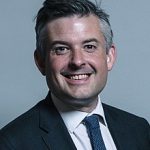
    Jonathan Ashworth – 2020 Comments on the Royal College of Pathologists’ Publication

    Below is the text of the comments made by Jonathan Ashworth, the Shadow Secretary of State for Health and Social Care, on 10 June 2020.

    This virus hasn’t gone away, it could easily get out of control again. Without a strategy to test, trace and isolate people, society will not be able to reopen safely. Labour has called for testing to be expanded further beyond symptomatic carriers and joined up with a comprehensive tracing operation, which should be locally-led and properly integrated with primary care. Both are crucial in the fight against this virus, and every day without proper action puts too many people at risk.

  • Nicola Sturgeon – 2020 Statement on the Coronavirus

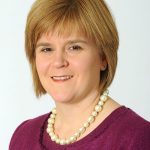
    Nicola Sturgeon – 2020 Statement on the Coronavirus

    Below is the text of the statement made by Nicola Sturgeon, the Scottish First Minister, on 9 June 2020.

    Good afternoon.

    I’ll start – as I always do – with an update on some of the key statistics in relation to Covid-19 in Scotland.

    As at 9 o’clock this morning, there have been 15,653 positive cases confirmed – an increase of 14 since yesterday.

    A total of 1,011 patients are in hospital with confirmed or suspected Covid-19. That represents a total decrease of 31 from yesterday, including a decrease of 14 in the number of confirmed currently cases in hospital.

    A total of 21 people last night were in intensive care with confirmed or suspected Covid 19. That is a decrease of 3 since yesterday.

    I am also able to confirm today that since 5 March, a total of 3,820 patients who had tested positive for the virus have been able to leave hospital. I wish all of them well.

    And in the last 24 hours, 7 deaths were registered of patients confirmed through a test as having Covid-19 –the total number of deaths in Scotland, under that measurement, is therefore 2,422.

    Of course, tomorrow we will have the weekly report from National Records of Scotland which includes confirmed and suspected deaths from the virus.

    After two days of reporting zero deaths, today’s figure of 7 is, of course, not what we would want to hear.

    However, it is important to stress that it is not a surprise either – we know there is a weekend lag in registration of deaths and so the numbers we report on Tuesdays are usually higher than those on Sundays and Mondays. Last Tuesday, for example, we reported 12 registered deaths.

    So, today’s figure though an increase on the last two days, is nevertheless a further indication of a clear downward trend in the number of people who are losing their lives to this virus. And that, of course, is clearly welcome.

    We know, however, that this will be no consolation whatsoever to people who are grieving these lost lives. The figures I have just read out are not simply statistics. They represent individuals who are being mourned and grieved by many. So – once again – I want to convey my deepest condolences to everyone who has lost a loved one to this illness.

    I also want to express again my thanks to our health and care workers. The entire country is so grateful to you for everything you continue to do during this very difficult time.

    And, during what is Carers Week, I also want to thank our unpaid carers. This pandemic has demonstrated again the importance of what you do – but it has also, I know, created additional stress and anxiety for many of you.

    That is why the Health Secretary announced some additional help for young carers on Sunday, and it is why we are paying an additional Coronavirus Carers Allowance at the end of this month, to those who receive the Carers Allowance.

    In addition, we have also helped carers’ centres to work remotely. That means that help, advice and support is still available – online or on the phone – to all carers across the country. That support is not just available to people who have been carers for several months or years – it also applies to people who have had to take on caring responsibilities as a direct result of this pandemic.

    And so I’d recommend to any carer, including any new carer, that if you need advice – or practical help, or just a friendly word – you can search for your local carers’ centre on the Care Information Scotland website, and get in touch. Help is available for you if you need it.

    And finally, thank you once again to all of our carers for everything that you do. Your efforts make such an enormous difference obviously to those you care for, to all of their loved ones, and to the wider community and our whole country. All of us are grateful to you for that.

    I want to highlight two further issues today.

    Firstly, I can confirm that we will publish initial data in relation to our Test and Protect system tomorrow. That information will include how many positive cases have been identified so far through Test & Protect, and how many of those have had their contacts traced. At this stage, this will be national data though we intend to break it down regionally in the weeks ahead and add more detail to it. It is also data that will, at this stage, reflect the early stage of Test & Protect.

    One point that it is important to note at this stage is that the figures that we publish tomorrow will not completely match our daily testing figures that we publish at this daily update, because they will also include results from the drive-through centres that are situated in various parts of the country.

    The Covid update I give tomorrow – which I will deliver in parliament just before First Minister’s Questions – may be too short to explain those new figures in detail. However I will say more about them later in the week.

    For now, though, I want to stress that if you have symptoms of the virus – a new, continuous cough, a fever, or a loss or change in your sense of taste or smell – you should immediately take steps to book at test. Please do not wait to see if you feel better first, do it straight away. And you and your household, of course, should isolate immediately.

    You can book a test at nhsinform.scot or by phoning NHS 24 on 0800 028 2816.

    If you don’t have symptoms but you are contacted to say you’ve been a contact of someone who has tested positive, please do follow the advice you are given on self isolation.

    I can’t stress enough that the willingness of all of us to fully co-operate with Test & Protect in the weeks and months to come will be absolutely vital to our efforts to keep the virus suppressed as we try to restore some normality to our everyday lives.

    The second issue I want to cover relates to the impact of Covid-19 on people from minority ethnic communities.

    Public Health Scotland’s preliminary analysis of data from Scotland, which was published towards the end of May, does not appear to show that people from ethnic minorities are disproportionately affected by Covid in terms of its impact on their health.

    But these are preliminary findings based on limited data, and we know that studies in other parts of the UK and indeed around the world have provided different results to that. And we also recognise that people from ethnic minorities could be disproportionately affected by the economic and social impacts of COVID-19 – as well as the health impact.

    The Scottish Government has already allocated more than £500,000 to organisations that work directly with ethnic minority groups across Scotland. But we know that we may well need to do more.

    For that reason, I am establishing a new expert reference group, made up of academics and other advisers.

    That group will consider the evidence on Covid-19 in Scotland – including the data provided by NHS Scotland, National Records of Scotland and Public Health Scotland – to assess the impact of the virus on minority ethnic communities. In areas where Covid is having a disproportionate effect, they will also make recommendations on policies and approaches to mitigate that.

    It is always essential – at any time – to listen to people from our ethnic minority communities, to work with them, and to ensure that the policies we adopt and implement do not have disproportionate and adverse consequences. It is, however, especially important at this time, and I hope that this expert reference group will ensure that our response to Covid 19 takes full account of the needs and experiences of our minority ethnic communities.

    Finally, I want to end by emphasising once again our key and very important public health guidance.

    Right now you should still be staying home most of the time, and you should still be meeting fewer people than you would normally. If your life feels like it is getting back to normal, ask yourself why that is the case – because it really shouldn’t yet be getting back to normal.

    When you do meet people from another household, you must stay outdoors, and you must stay 2 metres, at least, apart from them.

    Don’t meet up with more than one other household at a time, don’t meet more than one a day – and please keep to a maximum of 8 people in any group.

    Wash your hands thoroughly and often. If you are out of your home, take hand sanitiser with you.

    Please wear a face covering when you are in shops or on public transport or in any enclosed space where physical distancing is more difficult.

    Avoid touching hard surfaces – and any you do touch, make sure you clean them regularly and thoroughly.

    And if you have the symptoms of Covid-19 – a new continuous cough, a fever, or a loss of or change in your sense of taste or smell – you must get tested, and follow the advice on self isolation.

    And above all for all of us, if we all remember each and every day that the decisions we are taking as individuals now have a big impact on the health and wellbeing of all of us, then we will all do the right thing and it is more likely that we get through this crisis more quickly.

  • Fergus Ewing – 2020 Statement on Covid-19 and Scottish Tourism

    Fergus Ewing – 2020 Statement on Covid-19 and Scottish Tourism

    Below is the text of the statement made by Fergus Ewing, the Scottish Tourism Secretary, in the Scottish Parliament on 10 June 2020.

    Presiding Officer, the current situation with Covid-19 is one of the biggest challenges we have faced in our lifetimes.

    Preservation of life has been our overriding objective since the start of this crisis. It’s that simple.

    By staying at home and following the physical distancing guidance the people of Scotland are doing everything they can to protect our NHS, our social care services, and to save lives.

    However, the measures we have taken, and are continuing to take, to deal with this crisis reflect its magnitude. We have had to implement restrictions on liberties which have had a very serious impact on our economy, and our tourism and hospitality sector has been devastated.

    I understand how difficult this is. Businesses have gone from anticipating another bumper tourism season this summer to seeing their income drop to zero almost overnight.

    Presiding Officer, the Scottish and UK Governments have moved quickly to try to address the financial challenges faced by businesses affected by the current crisis, including those in the tourism and hospitality sector.

    The Scottish Government has provided a package of support worth over £2.3 billion – going above and beyond the UK Government consequentials. We have provided rates relief, developed grant schemes not available elsewhere in the UK and we have met with and listened to businesses to understand where gaps still exist.

    Since the middle of March, I myself have spent much of my time taking part in calls with sectoral organisations and business owners to hear first-hand the impact restrictions are having.

    Many taking part in these calls have suffered the most severe impacts upon their lives and their livelihoods.

    I would like to commend the work of organisations like the Scottish Tourism Alliance and UK Hospitality in representing their sectors and providing a vital bridge between the Scottish Government and businesses.

    We have worked in partnership to ensure that the UK Government understands the pressures on the industry in Scotland.

    That work is not completed. Kate Forbes and I have written to the Chancellor to request a discussion on how we can work together to further support the sector and alleviate some of the pressures on businesses, including through a review of VAT rates.

    The UK Government must lead on a financial recovery plan for tourism in the UK with significant funding attached, and we will use those consequentials for the industry in Scotland.

    From my numerous discussions with industry over the past weeks and months I know that what the industry needs now is clarity on when it will be able to re-open and start on the long road back to sustainability and growth.

    I fully understand the unique challenges the uncertainty is creating. Businesses need to know what orders to place and when. They need to have more confidence to take bookings whilst understanding the risks inherent in the continued presence of the virus.

    To take bookings they need to be able to plan staff rotas and shifts, and to restock, and they need to be in a position of readiness to go once restrictions are lifted and avoid any unnecessary delays. Some businesses may also wish to pre purchase PPE equipment.

    Visitors also need time to request annual leave and to make bookings.

    Notice, preparedness and readiness go hand in hand and are a key part of preparing for recovery.

    The Scottish Government understands the exceptional and very challenging circumstances facing our Tourism and Hospitality sector. It is heavily dependent on seasonality, meaning the already limited opportunities are narrowing by the day. Many businesses are facing key decisions on their future, with all the implications for jobs and investment. It is an unenviable position by any measure.

    I do not seek to underplay the impact this crisis is having on all parts of Scotland’s economy – it is, Presiding Officer, profound – but these facts do set this sector apart and this needs to be recognised. We have heard the messages clearly and we are not impervious to the sectors’ calls for more clarity.

    Our responsibility is to balance the exceptional circumstances of the industry with the need to continue to take the right steps at the right time to protect life. Let us remember COVID-19 has not gone away and it remains a threat.

    However I am keen to give additional clarity where possible and to provide an indicative date from which we hope the sector can begin to operate.

    This cannot be definitive.

    The science and health advice must be in the right place – the virus must have been suppressed, the Test and Protect system must be used effectively, and our Route-map must be on course.

    Given the vital interdependencies between the tourism and hospitality sector and the wider sectors of the economy, including public transport, we must make holistic decisions about when to change restrictions. We cannot make changes for any sector, Presiding Officer, in isolation. This is why we must be assured that the epidemic is suppressed to enable the more general opening up of our country that will come with the re-opening of tourism and hospitality – so that everyone – employees, tourists, customers – can be confident that it is safe to make this change.

    Statutory reviews of the current restrictions are required on 18 June and 9 July. Those reviews must take place and the outcomes of them must show the necessary progress in our fight against the virus for tourism to resume.

    As things stand just now, our hope is that we will be able to give the go ahead to a re-opening of the sector at the 9 July review.

    Assuming this does prove possible, some time would then be required for interconnected services such as transport to prepare.

    On that basis and on the clear understanding with the industry that nothing can be absolutely guaranteed at this stage and that we may need to change this date if the evidence requires it, we would encourage tourism and hospitality businesses to prepare – within appropriate safety guidelines – for re-opening on 15 July.

    For the reasons I have set out, this timetable is by necessity both provisional and conditional – but we very much hope it can be met and that setting it out now, even with caveats, gives the sector greater clarity and some much needed ability to plan ahead.

    And I cannot stress enough how important it is for the time until then to be used to implement the changes that are necessary to satisfy regulations and adapt to a new way of living.

    On that – I will say something about this new way of life – because things will not be the same as before. Covid-19 has changed that, and safety must come first.

    I can therefore also announce that we will soon be publishing guidance for the tourism and hospitality sector that will help businesses make the necessary changes.

    We have worked closely with the industry in this area and this will provide a key link between government and the good work done across the sector to prepare guidelines and practical measures for safe re-opening.

    It will mean things will look and feel different and I understand that this is also a challenge for businesses. Workplaces will need to adapt and innovate to make best use of space and facilities within the guidelines.

    There will be a key role for the industry in building confidence in communities who may understandably be hesitant to welcome back visitors.

    Customers – us, the public – will also need to adapt to new ways of using these services, just as we have had to do throughout the crisis – but I do have confidence everyone will – once again – rise to that challenge.

    I accept it is disruptive and difficult. The measures are however essential to ensure workplaces are safe and compliant – and in keeping with our Fair Work principles they have been developed in partnership with trade unions and the appropriate regulatory bodies.

    It will give confidence to employers, employees, customers and the public that Scotland’s tourism and hospitality sector is prepared and ready to once again provide safe, reliable and enjoyable experiences.

    Presiding Officer if I may make one final announcement before I finish – I want to highlight today that I am setting up a Scottish Tourism Recovery Taskforce to take forward strategic oversight of, and provision of advice on, recovery plans in response to the Covid-19 impact on Scottish tourism and hospitality.

    This taskforce will be responsible for ensuring that the tourism recovery plan is fully coordinated with wider Scottish Government and other recovery plans.

    It will also take into account wider actions being taken by the UK Government, other devolved administrations and international best practice, including that of the European Union.

    I will Chair this taskforce along with my colleague, the Minister for Business, Fair Work and Skills, Jamie Hepburn.

    I will announce the membership shortly – we are in the process of seeking to finalise this – and will publish a draft work plan for the group, which will include:

    looking at recovery needs for the sector ,
    working with devolved administrations and UK Government on UK level interventions,
    developing a domestic visitor marketing campaign, and
    crucially, clear public messaging around the safe recovery of tourism and the economic benefits for our communities.

    It will work with closely with the sector, allowing us to identify the key actions necessary for a strong and safe recovery.

    Presiding Officer, 3 months ago, at the start of March, I was involved in the launch of Scotland’s new tourism strategy, taking us through to 2030. That strategy sought to make Scotland the world leader in 21st century tourism.

    That should still be our ambition. Scotland has a wealth of assets and a wonderful reputation as a welcoming country. The COVID-19 crisis has been devastating for the industry, but we must look to rebuild the sector and to begin welcoming visitors once again.

    We recognise that in order to achieve that businesses must be ready to go when safe to do so and avoid any unnecessary delay, inflicting yet more reputational and financial harm. Today’s further clarity on when that may happen will help avoid that and assist them to be ready to reopen.

    Under the guidance of the new tourism taskforce, and with the incredible dedication and hard work of the thousands who work in tourism and hospitality, both in the public and private sectors, I believe we can make a strong and safe recovery.

    Thank you.

  • Boris Johnson – 2020 Statement on the Coronavirus

    Boris Johnson – 2020 Statement on the Coronavirus

    Below is the text of the statement made by Boris Johnson, the Prime Minister, on 10 June 2020.

    Good evening, two weeks ago, I set out the progress we as a country have made against our five tests for adjusting the lockdown, and the measures we could introduce as a result.

    And today, I want to update you again on those five tests and set out some further changes we can now make.

    So can I have the first slide please?

    The five tests are designed, as you know, to ensure that any changes to the lockdown are careful, proportionate, and safe.

    They combine analysis of the latest data on the spread of the disease with assessments of how well we are placed to meet the operational challenges posed by the virus.

    We must do everything in our power to avoid a second peak of infection that overwhelms the NHS – because that would lead to more lives lost, more families in mourning, and more disruption to our economy and way of life.

    Next slide please.

    Our first test is to protect the NHS’s ability to cope, so that we are confident that we are able to provide sufficient critical care and specialist treatment right across the UK.

    It’s thanks to the efforts of those working in the NHS that we can still be confident the NHS can cope.

    On 7 June, 443 people were admitted to hospital with coronavirus in England, Wales and Northern Ireland, down from 628 two weeks earlier, and down from a peak of 3,431 on 1 April.

    And on 9 June, 492 patients with coronavirus were in mechanical ventilation beds in the UK, down from 848 two weeks earlier, and down from a peak of 3,301 on 12 April.

    So that means we are still meeting the first test.

    Next slide please.

    Our second test is to see a sustained and consistent fall in the daily death rates from COVID-19 so we are confident that we have moved beyond the peak.

    And of those who have tested positive for coronavirus, across all settings, I am sad to say that 41,128 have now died. That’s an increase of 245 fatalities since yesterday.

    As measured by a 7-day rolling average, the UK daily death rate now stands at 200, down from 300 two weeks ago, and down from a peak of 943 on 14 April.

    So the death rate has continued to fall, and so the second test is still being met.

    Next slide please.

    Our third test is to receive reliable data from SAGE showing that the rate of infection – the number of people catching Covid – is decreasing to manageable levels across the board.

    In total, 290,143 people have now tested positive for coronavirus, which is an increase of 1,003 cases since yesterday.

    The seven day rolling average of new positive cases found through testing is now 1,419, down from 2,416 two weeks ago, and down from a peak of 5,195 in the first week of May.

    In a moment, Sir Patrick will talk us through SAGE’s latest assessment of the R and other evidence on infection rates.

    Based on the various data available, the government is satisfied the third test is being met.

    Next slide please.

    Our fourth test is that we must be confident that the range of operational challenges, including on testing capacity and Personal Protective Equipment, are in hand, with supply able to meet future demand.

    Yesterday 170,379 tests were carried out or posted out across the UK, compared to around 12,000 at the start of April. The total now stands at 6,042,622.

    Tomorrow the Health Secretary will provide an update on how NHS Test and Trace is performing.

    On PPE, we have secured over 150 deals with new suppliers around the world and procured 2.2 billion items of PPE to be manufactured domestically.

    Despite the immensely frustrating difficulties we have faced with PPE and testing in the past, this progress means we are now satisfied that the fourth test is being met – though of course we remain vigilant.

    Next slide please.

    Our fifth and final test is that we must be confident that any adjustments to the current measures will not risk a second peak of infections that overwhelms the NHS.

    I am grateful to the Chief Scientific Adviser and the Chief Medical Officer for their advice on the measures I am about to set out – and on this basis I can confirm the Government judges we have met the fifth test.

    Therefore, the Government is satisfied that all five tests are still being met and we can proceed with the following further adjustments to the lockdown in England.

    A month ago I set out our roadmap to recovery and that explained the gradual steps we would take to ease the lockdown, as the data and the evidence allows. The measures it contained were all conditional on continued progress in tackling the virus. We are continuing to follow our roadmap, while adjusting our approach as we need to, as we always said we would.

    Although we are tackling this virus as one United Kingdom, it remains the case that the devolved administrations are responsible for lockdown in Scotland, Wales and Northern Ireland. And it is right that they move at the right pace for them, according to their circumstances.

    For that reason, the specific measures I am about to set out apply in England only.

    First, on retail, shops. This has been the most challenging period for shops and high streets in our history. Never before have all shops been ordered to shut in this way. It has now been 82 days since we asked these shops to close their doors and I know the toll this has taken.

    Which is why I am so pleased that, as the Business Secretary confirmed yesterday, we can now allow all shops to reopen from Monday. It is vital that establishments should ensure they are meeting Covid Secure guidelines before they reopen.

    That way we can keep staff and customers safe while we get retail going.

    Second, on social contact. I know how difficult the past months have been for people cut off from their friends and family.

    Last Monday, we relaxed the rules on meeting outdoors so that groups of up to 6 could gather, provided they are socially distant. We did so in the knowledge that transmission of the virus is much lower outdoors, so we could make this change in a safe way.

    But there are still too many people, particularly those who live by themselves, who are lonely and struggling with being unable to see friends and family.

    From this weekend, we will allow single adult households – so adults living alone or single parents with children under 18 – to form a “support bubble” with one other household.

    All those in a support bubble will be able to act as if they live in the same household – meaning they can spend time together inside each others’ homes and do not need to stay 2 metres apart.

    I want to stress that support bubbles must be exclusive – meaning you cannot switch the household you are in a bubble with or connect with multiple households. And if any member of the support bubble develops symptoms, all members of the bubble will need to follow the normal advice on household isolation.

    We are making this change to support those who are particularly lonely as a result of lockdown measures. It is a targeted intervention to limit the most harmful effects of the current social restrictions. It is emphatically not designed for people who don’t qualify to start meeting inside other people’s homes – that remains against the law.

    Unfortunately, we cannot advise anyone who is shielding to form a support bubble at this stage, given their particular vulnerability to the virus. However, I want to say I know how hard it is for those of you who are shielding, and we will say more next week about the arrangements that will be in place for you beyond the end of June.

    Third, on outdoor attractions. Because the risk of transmission is lower outdoors, we can open up some more outdoor attractions for people to enjoy this summer.

    So from Monday, we will allow outdoor attractions where people can stay in their cars, such as safari parks and drive-in cinemas to open.

    I am very grateful to the zoo industry for their cooperation and forbearance, and am happy to confirm that they too can reopen from Monday, provided visitor numbers are managed and safeguards put in place. That includes keeping indoor areas such as reptile houses closed and facilitating social distancing.

    Finally, we will allow places of worship to open for individual prayer this weekend. And I hope that will be of some comfort to those of faith who have been unable to go to their place of worship.

    As set out in our roadmap, the next set of changes – Step 3 – will not begin until 4 July at the earliest, as the evidence allows.

    I know that these changes are only incremental and that some of you, many of you, may be hoping and waiting for more.

    I also know that people will once again find anomalies or apparent anomalies in what people can and cannot do.

    And as I have said before, I’m afraid that is just inevitable when we are only able to give people a small amount of the freedoms that they usually enjoy.

    We will continue to remain cautious and measure the effect of the changes that we make. And as I’ve always said, we won’t hesitate to apply the brakes if that is what the situation requires.

    That has meant moving slower than we would have liked in some areas.

    It is because the rate of infection is not yet quite low enough, and because we are not able to change our social distancing advice including smaller class sizes in schools, that we are not proceeding with our ambition to bring back all primary pupils at least for some weeks before the summer holidays. Instead we are working with teachers to bring back as many pupils as we can within those smaller class sizes.

    We do fully intend to bring all children back to school in September, provided the progress we are making continues, which I hope it will. That is our focus and it is consistent with the approach that has been taken by many other countries in Europe.

    In the meantime we must stick to our roadmap.

    I urge everyone to continue to show restraint and respect the rules which are designed to keep us all safe. It’s only because of the restraint that everyone, you all have shown so far that we are able to move gradually out of this lockdown.

    So please, to repeat what you’ve heard so many times before, stay alert, maintain social distancing and keep washing your hands.

    Help control the virus by getting tested if you have symptoms and isolating if you are contacted by NHS Test and Trace.

    Then, if we all do that together, we will all save lives and begin to rebuild our country.

    And I’ll now hand over to Sir Patrick.
  • Matt Hancock – 2020 Statement on the R-Rate

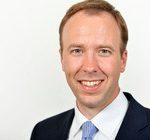
    Matt Hancock – 2020 Statement on the R-Rate

    Below is the text of the statement made by Matt Hancock, the Secretary of State for Health and Social Care, in the House of Commons on 8 June 2020.

    Thank you, Mr Speaker, for this opportunity to update the House on progress on our plans for controlling coronavirus.

    Thanks to the immense national effort on social distancing, as a country we have made real progress in reducing the number of new infections. As we move out of lockdown, we look at all indicators to assess progress in tackling the virus. Last week’s Office for National Statistics infection survey estimated that the number of people who have had coronavirus in England fell from 139,000 between 3 and 16 May to 53,000 between 17 and 30 May—a drop of over half. In terms of new cases, an ONS estimate released on Friday shows that there are now around 5,600 new cases each day within the community in England: a huge drop since the peak.

    The number of new fatalities each day is, thankfully, falling too. Today’s figures record 55 fatalities, the lowest number since 21 March, before lockdown began. They also show that there were no deaths recorded in London hospitals. That is a real milestone for the capital, which, of course, in the early stages of the pandemic, faced the biggest peak. Yesterday, we saw no recorded deaths in Scotland, which is very positive news for us all. Sadly, we expect more fatalities in the future, not least because the figures recorded at the weekend are typically lower. What is more, Mr Speaker, 55 deaths is still 55 too many and hundreds of people are still fighting for their lives. Each death brings just as much sadness as when the figure was much higher in the peak. I know that the thoughts of the whole House are with those families and communities who are grieving for their loved ones.

    We, of course, also look at the R rate. The Scientific Advisory Group for Emergencies confirmed on Friday that its estimates, taking into account 10 different models, are that R remains between 0.7 to 0.9, and that it is below 1 in every region of the country. That means the number of new infections is expected to continue to fall. So there are encouraging trends on all critical measures. Coronavirus is in retreat across the land. Our plan is working and those downward trends mean that we can proceed with our plans, but we do so putting caution and safety first.

    Even at the peak of the pandemic, we protected the NHS and ensured that it was not overwhelmed. We will not allow a second peak that overwhelms the NHS. We are bearing down on the virus in our communities, aided by our new NHS test and trace system, which is growing every day. We are bearing down on the virus in our communities, aided by our new NHS test and trace system, which is growing every day. We are bearing down on infections in our hospitals, including through the new measures to tackle nosocomial infection, such as face masks for visitors, patients and staff. Finally, we are strengthening protections for our care homes, including by getting tests to all elderly care home residents and staff.​

    I am glad to be able to tell the House that David Pearson, the eminent social care expert who has previously led the social care body ADASS—the Association of Directors of Adult Social Services—and has decades of experience of leadership in both social care and public health, will be chairing our new social care taskforce to drive our covid action plan yet further. David has an impressive track record and I am delighted that he will be supporting us in leading this important work. Together, we are getting this virus under control and now more than ever we must not lose our resolve.

  • Matt Hancock – 2020 Statement on the Coronavirus

    Matt Hancock – 2020 Statement on the Coronavirus

    Below is the text of the statement made by Matt Hancock, the Secretary of State for Health and Social Care, on 5 June 2020.

    Good afternoon and welcome to Downing Street’s daily coronavirus briefing.

    Before taking questions from members of the public and the media, I’d like to start by sharing the latest data.

    First slide please.

    The first slide shows the information on infections, and the data published by the Office for National Statistics this morning shows the number of people who had coronavirus in England fell from around 139,000 between 3 and 16 May to around 53,000 between 17 and 30 May.

    That’s represented in percentage terms in this right-hand chart. It demonstrates that the percentage of the population testing positive has been falling consistently over recent weeks. SAGE have confirmed that the R across the whole of the UK is between 0.7 and 0.9.

    The ONS survey also estimated the number of new coronavirus infections which stands at 39,000 per week which is equivalent to around 5,600 per day. And this is lower than the similar estimate made last week. So these are encouraging trends about the reducing spread of coronavirus across the country.

    This slide shows progress on testing and the number of new confirmed cases. In total 5,214,277 tests have been carried out including 207,231 tests yesterday. And these data on tests include both the swab tests to find out if you have coronavirus and also the antibody tests, which stand at just over 40,000 antibody tests a day.

    The antibody tests find out if you have had the virus. And if you have had the virus you can help make a difference because by donating your plasma from your blood that has your antibodies in it then you can help somebody who is currently suffering in hospital with coronavirus.

    I did this earlier today. I gave my antibodies and the process is simple, it’s straightforward. If you have had coronavirus, if you go to the NHS Blood and Transplant website NHSBT then you too can donate your antibodies and help protect somebody who is currently in hospital with coronavirus. And I’d encourage anybody who can do that to step forward.

    The chart also shows that the number of confirmed cases is 1,650 yesterday which brings the total of confirmed cases, confirmed by swab tests, to 283,311.

    This slide shows the data from hospitals. There were 694 admissions, new admissions, with COVID-19 on the latest data, which has fallen over the last week. Those data include England, Wales and Northern Ireland. They don’t include Scotland. And also the bottom data which is across the whole UK, shows the number of people in ventilator beds has fallen from 751 on 28 May, a week ago, down to 571. This is down from a peak of over 3000 on 12 April.

    Slide 4 shows the regional breakdown of people in hospital. And it shows that over 7,000 people remain in hospital, 7,080 to be precise. But this is down 15% from 8,285 a week ago and a peak of over 20,000 in April. The final slide shows the number of people who have sadly lost their lives. And this number stands at 40,261 on the latest information, which is 357 higher than yesterday.

    These slides demonstrate, although the past few months have been a time of sorrow for so many people, because of these deaths is not a statistic but the loss of a loved one for so many families. The slides also show that we have made a progress in our fight against this virus. But they also show that there is so much more to do.

    It shows that we must always remain vigilant.

    Especially when it comes to protecting our NHS, which has been at the front line of the battle.

    And of course thanks to an enormous national effort, we protected the NHS and prevented it being overwhelmed which in turn saved lives.

    And today I want to set out further that we are taking further steps to protect the NHS and especially around face coverings and face masks.

    Yesterday, the Secretary of State for Transport announced that face coverings will become mandatory on public transport from June 15 – with a few specific exceptions – for instance those with breathing difficulties.

    This doesn’t mean surgical masks, which need to be kept for clinical settings, but the kind of face masks that you can easily make at home – in fact there’s a good guide on GOV.UK.

    As more people go back to work, and the passenger numbers start to increase, so face coverings on transport are more important.

    Likewise, as the NHS reopens right across the country, it is critically important to stop the spread amongst staff, patients and visitors too.

    So today we are setting out that all hospital visitors and outpatients will need to wear face coverings.

    One of the things that we’ve learnt is that those in hospitals, those that are working in hospital are more likely to catch coronavirus, whether they work in a clinical setting or not.

    And so to offer even greater protection, we are also providing new guidance for NHS staff in England which will come into force again on the 15 June, and all hospital staff will be required to wear Type 1 or 2 surgical masks.

    And this will cover all staff working in hospital.

    And it will apply at all times, not just when they are doing their life-saving work on the frontline. It will apply in all areas, except in those areas designated as covid-secure workplaces.

    And of course where PPE guidance recommends more stringent protection, of course, that remains in place.

    We are upgrading this guidance to make sure that even as this virus comes under control, as we saw the falling incidences across the country, our hospitals are a place of care and of safety.

    We have also strengthened infection control in care homes. And we are working with the social care sector on how this approach can apply appropriately in social care too.

    It’s about protecting our NHS and social care, which means protecting our colleagues who work in the NHS and in social care.

    And I want to say this to you all my colleagues in health and social care.

    As we get this virus under control, it is so important that we stamp out new infections and outbreaks.

    And of course in health and care you do this brilliantly all the time – and coronavirus is no exception.

    That means that if one of your team tests positive, you have to follow the isolation advice.

    The natural impulse of course of anyone in care, in the NHS is the thing you can best do is be there to help. To be there for the patient.

    But if you have the virus, or are at risk of having the virus, the best thing you can do for them, as well as yourself, is to isolate at home.

    And this means that social distancing in the workplace also must be reiterated and it matters just as much as anywhere else.

    And I know that social distancing and self-isolation can cause big logistical challenges, and we will support you in doing what is right and necessary.

    All of us have a role to play here.

    And the last thing I want to say is this, ahead of this weekend, when I know there are plans for further protests, I want to say something to you as Health Secretary.

    Like so many, I am appalled by the death of George Floyd and I understand why people are deeply upset.

    But we are still facing a health crisis and coronavirus remains a real threat.

    And the reason that it is vital that people stick to the rules this weekend is to protect themselves and their family from this horrific disease.

    So please for the safety of your loved ones, do not attend large gatherings – including demonstrations – of more than 6 people.

    We all need to stay alert, control the virus and save lives.

  • Nicola Sturgeon – 2020 Statement on the Coronavirus

    Nicola Sturgeon – 2020 Statement on the Coronavirus

    Below is the text of the statement made by Nicola Sturgeon, the Scottish First Minister, on 5 June 2020.

    Good afternoon everyone. As you can see, I’m joined today by Iain Livingstone, Chief Constable of Police Scotland and by Professor Jason Leitch, our National Clinical Director.

    I’ll start today – as I always do – by updating you on some of the key statistics in relation to COVID-19.

    As at 9 o’clock this morning, there have been 15,582 positive cases confirmed – which is an increase of 29 from yesterday.

    A total of 995 patients are in hospital with confirmed or suspected COVID-19. That represents a decrease of 26 from yesterday, including a decrease of nine in the number of confirmed cases.

    Now as I said yesterday, in relation to the number of people who had their deaths registered in the previous day, we have to be very careful at reading too much into single day figures, but nevertheless I think it is reasonable to point out, that this is the first time since the 30 March, that the number of patients in hospital has been lower than 1,000. So again, a positive indication of the progress that we are making.

    A total of 23 people last night were in intensive care with confirmed or suspected COVID-19. That is a decrease of five since yesterday.

    I am also able to confirm today that since 5 March, a total of 3,778 patients who had tested positive for the virus have now been able to leave hospital.

    In the last 24 hours though, 14 deaths have been registered of patients confirmed through a test as having COVID-19 – that takes the total number of deaths in Scotland, under that measurement, to 2,409.

    Now as I always do, I want to stress that these numbers are not just statistics. They are individuals whose loss is being deeply felt by their loved ones. So – once again – I want to send my deepest condolences to everyone who has lost a loved one to this virus.

    I also want to express my thanks – as I always do – to our health and care workers. Your efforts are enormously appreciated – and not just by me and by the Scottish Government, they are appreciated, I know, by everyone in Scotland.

    There are – of course – many other frontline and key workers who are helping the country through this crisis and with the Chief Constable here today, I want to take the opportunity to say a special thank you again, to our police officers and staff. They are also working under real pressure at the moment but they are doing an exceptional job for all of us.

    There are two items I want to cover today.

    The first concerns the economic impact of COVID-19. I have just come from the Cabinet sub-committee on the economy earlier this morning – where we noted the latest monthly report, from our Chief Economist.

    That document, which was published this morning, provides a summary of Scotland’s key economic statistics.

    Among other things, it shows that – in the first half of May – almost 1/5 of businesses in Scotland were temporarily closed and that contributed to more than 750,000 people being furloughed or unable to work as normal.

    The report also shows that turnover is down in almost every sector of our economy.

    And it contains new modelling, which takes account of the different phases for easing lockdown. On that basis, the report forecasts a more gradual economic recovery – one which might not see us return to pre-crisis levels, for a number of years.

    In short, today’s publication confirms the scale of the economic crisis that we now face. In doing that, it further underlines why government action is so important and why it will continue to be so important.

    The Scottish Government has already allocated more than £2.3 billion to help businesses and protect jobs. And of course that’s before we consider important UK-wide measures currently in place – such as the Job Retention scheme.

    That kind of support is helping to mitigate some of the economic impact of this crisis. And it will continue to be vital as our businesses seek to rebuild.

    And I want to again today give an assurance that the Scottish Government is determined to everything we can to support that process of rebuilding and recovery. We will continue to do everything we can to protect your livelihoods. That’s important in the short-term, but it is also vital to help lay the groundwork, for a sustainable economic recovery.

    Of course that recovery will be helped by continued progress against this virus. If we have a set-back in tackling the virus, it will make the re-opening of our economy all the more difficult.

    So the second item I want to cover today, is directly related to the first, and it concerns the current lockdown restrictions and particularly how I hope the people will comply with them over this weekend and beyond.

    We’re now, of course, at the close of the first full week since we moved into phase 1 of our route map out of lockdown – and eased some of the restrictions. So far, the vast majority of people have stuck by the new rules. And I want to take the opportunity again today, to thank all of you who have continued to do the right thing.

    However, it’s also clear that – over the past week – not absolutely everyone has done that. The Chief Constable may say more later about compliance – and how the restrictions will be enforced, if necessary.

    For my part, I want to set out very clearly again today, what the current rules are. And to do that, instead of focussing on what we are now allowed to do, I want to again emphasise what we’re asking everyone not to do because it’s by not doing the things, that we know from the evidence that allows the virus to spread more easily, that we will keep it under control.

    So to start, you mustn’t meet people from other households indoors. I know that might be a particular temptation on a weekend like this – when we’re expecting again poor weather. But let me be clear, that is extremely high risk. We know – and we don’t know everything yet about this virus – but we do know that it transmits much more easily between people inside than it does outside. So if you’re not willing to meet outdoors – in all likelihood the rain – please do not meet up with people from other households at all and I cannot emphasise that strongly enough. I am not exaggerating when I say that if you do meet people from other households indoors, you are putting yourselves and you are putting them at risk of getting the virus of becoming ill with it and potentially dying from it and I would ask you not – please – to take that risk.

    However, while the risk of meeting outdoors is lower, it is not absolutely zero – so that means that if you do meet outdoors, you must not get within 2 metres of members of another household.

    You should certainly not be shaking their hands or hugging them, difficult though I know that is and you shouldn’t share food of utensils with people from other households of touch hard surfaces that they may also have touched because again, these are ways in which we know the virus spreads relatively easily.

    And were asking that – when two households do meet up – there should be no more than eight people in total in a group. In addition, you should not go more than five miles for recreation and you shouldn’t leave your face uncovered if you are in and enclosed space like a shop and public transport.

    Wearing a face covering helps you protect others – and having others wear a face covering – means that they help protect you.

    A more general point I want to make is that – even now – you should still be seeing far fewer people than you might normally do. And you should still be trying to stay at home as much as you possible.

    Basically, if you start to feel that your social life is returning to normal – that’s not a good sign right now.

    That message applies to everyone – but it’s perhaps particularly relevant to young people. I want, today, to make a special plea to all of you, the young people of Scotland. Many of you – I know – will be desperate to spend more time with your pals, after weeks of being apart. You might even think that as young people, you are less likely to become seriously ill as a result of the virus and I know this from speaking to the young people in my own life.

    But I want to be very clear – you are not immune from this virus, you can get it and it can be very harmful to you.

    But even if you’re not seriously affected yourself, you can still pass it on to other young people. They might then pass it on to others who are at greater risk from COVID-19 – such as their parents or grandparents. And that could have really tragic consequences.

    So I would urge you – and I know you all know how important this is – please don’t just think about your own risk, please think about the risk to your parents and your grandparents and to your friends’ parents and grandparents. Don’t take risks that you could end up regretting and possibly grieving in the weeks ahead. Please stick to the rules.

    Can I also say finally, just a very brief word and a very heartfelt word to those who I know want to make their voices heard this weekend in support of Black Lives Matter.

    I want to urge you to make your voices heard. We all feel very strongly about this but I want to ask you, to do so safely.

    In normal times, I may well have been planning to join a gathering of support this weekend. But coming together in mass gatherings right now is simply not safe. It poses a real risk to health and it poses a real risk to life.

    So I would encourage you to read the statement that was issued yesterday by Kadi Johnson, Sheku Bayoh’s sister, and by Humza Yousaf, Anas Sarwar and Aamer Anwar asking people to protest in different ways.

    For example you can make your voice heard online, you can lobby elected representatives, or you can make a donation to anti-racism campaigns but please, please, try to stay within the rules that are there for your own protection and above all please stay safe.

    In fact, that’s a message which all of us should heed. If you’re wondering whether or not it’s okay to do something this weekend, ask yourself if you’ve giving the virus an opportunity to spread. And if you’re in doubt about whether your plans are within the rules or not, please err on the side of caution.

    Above all else, please remember that every single decision we take right now as individuals, will affect the safety and the wellbeing of everyone.

    The progress we’ve made against this virus – over these past few weeks – is real and I say that every day because I mean it – and it is as a result of all of us, overwhelmingly, sticking to these rules. And that kind of collective effort will continue to be vital – as we slow the spread of this virus, even further.

    I’m confident that the vast majority of you will continue to play your part. And I want thank all of you, in advance, for showing that solidarity with each other and for doing exactly that.

  • Nicola Sturgeon – 2020 Statement on the Coronavirus

    Nicola Sturgeon – 2020 Statement on the Coronavirus

    Below is the text of the statement made by Nicola Sturgeon, the Scottish First Minister, on 4 June 2020.

    Good afternoon. Thank you very much for joining us for today’s briefing.

    I want to start with my usual update on the current position in relation to Covid-19.

    As at 9 o’clock this morning, there have been 15,553 positive cases confirmed – that is an increase of 49 from yesterday.

    A total of 1,021 patients are currently in hospital with either confirmed or suspected Covid-19. That represents a total decrease of 96 from yesterday, including a decrease of 21 in the number of confirmed cases.

    A total of 28 people last night were in intensive care with confirmed or suspected Covid 19. That is a decrease of 6 since yesterday.

    I am also able to confirm today that since 5 March, a total of 3,758 patients who had tested positive and required hospital treatment for the virus have been able to leave hospital.

    And in the last 24 hours, 9 deaths have been registered of patients confirmed through a test as having the virus – that takes the total number of deaths in Scotland, under that measurement, to 2,395.

    Now, as I often say, we cannot and indeed we should not read too much into any one day’s figures – and tomorrow’s figure or the next day’s figure may be higher than the one I have just given you – but I think it is still worth noting that yesterday was the first weekday, since 27 March, when the number of deaths registered under our daily measure was in single figures. I think that demonstrates the progress we are making against this virus, but it also underlines why we all continue to need to comply with the public health guidance, so that we can continue to make this progress and don’t allow it to go into reverse.

    But of course 9 deaths is still too many, and thinking of those 9 lives lost reinforces the point I make every day: that these figures are not just statistics; they represent people – unique and irreplaceable individuals – whose loss will have left families shattered and grieving. So I want to send my condolences once again to everyone who has lost a loved one to this virus.

    I also want to express my thanks– as I always do – to our health and care workers, for the incredible work you are doing in incredibly challenging circumstances. My thanks goes to each and every one of you. The entire country owes you a debt of gratitude.

    I am joined today by the Chief Medical Officer and the Cabinet secretary for Health. The Cabinet Secretary has some information to share about the prioritisation of cancer services, and the Chief Medical Officer will focus on figures which were published yesterday relating to patients in intensive care.

    Before they speak, I want to acknowledge the job losses announced yesterday at Rolls Royce in Inchinnan. That announcement will have been devastating news for the workforce and their families, at what is already a very anxious time – and unfortunately it may not be the last of its kind in the period ahead. I want to stress that the Scottish Government will do everything we can to secure as good an outcome as we can for those whose jobs are at risk.

    Yesterday’s news emphasises a point I have made before – that alongside a public health emergency, we are also now dealing with an economic emergency, on a scale none of us have experienced.

    And that requires – and it will get – the attention and focus of the Scottish Government, just as the health emergency has and continues to get.

    We have already allocated more than £2.3 billion to help businesses in Scotland through measures such as grants and business rates relief. That is in addition to welcome UK Government measures such as the furlough scheme.

    Mitigating and addressing the economic costs of Covid is going to become an even greater priority in the weeks and months ahead.

    But alongside that, and as part of our response, we also want to help businesses, where possible, to adapt and find new markets.

    One of the areas where we have been doing that already, is in relation to personal and protective equipment, or PPE – in Scotland.

    We are publishing a report today that summarises how we are securing PPE for health and care workers in Scotland – it also sets out the work we are doing to develop a manufacturing chain for that equipment.

    To demonstrate the scale of some of this work, it’s maybe worth looking at an item such as fluid resistant surgical masks. Those are masks which help to prevent blood, bodily fluids and secretions from one person – including water droplets from coughs – coming into contact with the mouth or nose of the person wearing the mask.

    Prior to Covid-19, National Services Scotland would provide around 57,000 of those masks to our health and care sector each week.

    Now, instead of needing 57,000 masks a week, we need 4 ½ million. That is an 80-fold increase.

    To meet that demand, we are importing equipment from overseas. 100 million fluid resistant masks have been imported from China, and a further 60 million are on order.

    But we are also working with suppliers in Scotland to establish domestic supply chains.

    Alpha Solway, a firm based in south-west Scotland which specialises in protective clothing, is due to start producing masks in August. They have taken on 30 new staff to do so, and they are using raw material sourced from Don & Low in Forfar.

    As a result, we hope that in due course, manufacturers in Scotland will be able – not just to meet demand for these masks here in Scotland – but also provide them to other parts of the UK or to other countries in Europe.

    There is a similar story in relation to other items of equipment. We are creating supply chains for non-sterile gowns and FFP3 masks. In addition, Berry BPI are planning to make 2-3 million new aprons a week in Greenock. A number of smaller Scottish enterprises are planning to make visors.

    And CalaChem Ltd has produced 580,000 litres of hand sanitiser at its Grangemouth plant, using ethanol provided by Whyte & Mackay.

    Many other Scottish businesses have diversified in order to help with the provision of PPE and I am grateful to each and every one of them.

    They have worked alongside public service bodies such as NHS Scotland, Scottish Development International and the National Manufacturing Institute for Scotland.

    And it is worth highlighting that in many cases, companies are not simply making existing products. They are often using innovation to improve the equipment – for example by ensuring that face masks fit better on small faces, and that more equipment can safely be re-used.

    Fundamentally, the Scottish Government’s priority – which we are achieving – must always be to ensure that we have adequate stocks of PPE.

    Our health and care service workers – the people who help and protect us – must themselves be protected.

    That is important at the moment, but also for the future, as we look to reopen the NHS, and maintain secure stocks of equipment for social care.

    We will always, when necessary, place major orders with overseas suppliers.

    However we are also increasingly taking advantage of the expertise of manufacturers here. Doing that gives us greater reassurance that supplies will be secure in the long term, and it also creates real benefits in terms of jobs and exports.

    Those benefits don’t of course come close to balancing the wider economic harms caused by this pandemic – and so the Scottish Government will continue to work with business and the UK Government to address those. But these benefits are welcome nonetheless. And they are a testament to the ongoing importance and excellence of our manufacturing sector here in Scotland.

    I will hand over to the Cabinet Secretary and Chief Medical Officer in a moment. Before I do that, however, I want to re-emphasise our key public health guidance.

    And I’m asking you today to focus not just on what you are now allowed to do as a result of the small changes we made last week – but to focus even more so on what we are still asking you not to do.

    It is by not doing certain things right now that we will help stop the virus spreading – so that means not meeting other households indoors, not coming within 2 metres of people from other households, not shaking their hands or hugging them, not sharing food or utensils with others or touching hard surfaces they may also have touched and not leaving your face uncovered in enclosed spaces like shops and public transport.

    So I’m asking you to think about all of that every time you leave home or meet with someone from another household.

    And, particularly, ahead of a weekend when the weather forecast is more traditionally Scottish ie heavy rain – I want to particularly emphasise this point:

    You cannot and must not meet people from another household indoors – that is a sure fire way of allowing this virus to spread again.

    So if you’re not willing to get your waterproofs on and meet outdoors, don’t meet up at all.

    I cannot emphasise that enough.

    So to recap –

    You should still be staying home most of the time, and you should still be meeting fewer people than normal. If your life feels like it is getting back to normal at the moment, you should ask yourself whether it should be and whether you are complying with all the guidance.

    When you do meet people from another household, you must stay outdoors, and you must stay 2 metres apart from them.

    Don’t meet with more than one other household at a time, don’t meet more than one a day – and keep to a maximum – I stress, a maximum – of 8 people in a group.

    Wash your hands often. Take hand sanitiser if you are out and about.

    Wear a face covering when you are in shops or on public transport.

    Avoid touching hard surfaces – and clean any you do touch.

    And if you have the symptoms of Covid-19 – a new, continuous cough; a fever; or a loss of, or change in, your sense of smell and taste – you must get tested, and follow the advice on self isolation.

    Above all else, please remember that the decisions each of us take as an individual, affect the health and wellbeing of all of us.

    Please, continue to do the right thing, and to stick to those guidelines. It really, really matters, and it matters as much now as it did at the start of this pandemic. By doing so, we will continue to slow the spread of the virus, and save lives. So thank you, once again, to all of you for doing that.

  • Boris Johnson – 2020 Statement on the Coronavirus

    Boris Johnson – 2020 Statement on the Coronavirus

    Below is the text of the statement made by Boris Johnson, the Prime Minister, on 3 June 2020.

    First let me first run you through the latest data on our coronavirus response.

    4,786,219 tests for coronavirus have now been carried out or posted out in the UK, including 171,829 tests yesterday.

    279,856 people have tested positive, and that’s an increase of 1,871 cases since yesterday.

    7,485 people are in hospital with COVID-19 in the UK, down 16% from 8,921 this time last week.

    And sadly, of those tested positive for coronavirus, across all settings, 39,728 have now died. That’s an increase of 359 fatalities since yesterday and once again we are with their families in mourning.

    Now that the rate of transmission in the UK has significantly fallen from its peak, we need to take steps to manage the flare-ups and stop the virus re-emerging in the UK.

    I want to update you on the progress we are making on three fronts to prevent a second wave of infections that could overwhelm the NHS.

    First, we have set up NHS Test and Trace in order to identify, contain and control the virus in the UK, thereby reducing its spread.

    As we move to the next stage of our fight against coronavirus, we will be able to replace national lockdowns with individual isolation and, if necessary, local action where there are outbreaks.

    NHS Test and Trace will be vital to controlling the spread of the virus. It’s how we will be able to protect our friends and family from infection, and protect our NHS.

    It does this by identifying anyone who has been in close contact with someone who has tested positive, and asking them to isolate for 14 days in order to avoid unknowingly infecting others.

    The system clearly relies on everyone playing their part.

    So I want to stress again today: we need you to get a test if you have coronavirus symptoms – a high temperature, a new, continuous cough, or a loss of taste or smell.

    There is plenty of capacity and everyone with symptoms is eligible, everyone with symptoms, so please order a test from nhs.uk/coronavirus as soon as you develop symptoms.

    And we need you to isolate yourself if a contact tracer tells you that you have been in contact with someone who has tested positive.

    NHS Test and Trace started operating a week ago. And already thousands of people are isolating who wouldn’t have been doing so before this service was introduced. They are thereby protecting others and reducing the spread of the virus.

    So while we are going to all these efforts here in the UK to control the virus, we must also ensure we don’t reimport the virus from abroad.

    So the second action I want to update you on is the introduction of public health measures at the border.

    Today the Home Secretary has brought forward the legislation needed to establish the new regime from Monday.

    And I want to explain the reasons for introducing these measures now.

    When coronavirus started to spread around the world, first from Wuhan and then from northern Italy and other areas, we introduced enhanced monitoring at the border in an attempt to stop the virus from gaining a foothold in the UK.

    These measures applied, at various different times, to arrivals from China, Japan, Iran and Italy, and required people with symptoms travelling from those countries to self-isolate for 14 days.

    However, once community transmission was widespread within the UK, cases from abroad made up a tiny proportion of the total. At the same time you’ll remember that international travel plummeted as countries around the world went into lockdown. So as a result, measures at the border were halted because they made little difference at the time in our fight against the virus.

    Now that we’re getting the virus under control in the UK, there’s a risk cases from abroad begin once again to make up a greater proportion of overall cases. We therefore need to take steps now to manage that risk of these imported cases triggering a second peak.

    So just as we are asking people already in the UK to isolate for 14 days when contacted by NHS Test and Trace, we’re also asking those arriving from abroad to isolate so that they don’t unknowingly spread the virus.

    There will be some exemptions for a limited number of people who need to cross the border, such as those engaged directly in the fight against coronavirus or who provide essential services.

    And we will review how the policy is working after three weeks. And of course we will explore the possibility of international travel corridors with countries that have low rates of infection – but only when the evidence shows that it is safe to do so.

    The third point I want to make today is we need effective international action to reduce the impact of the virus across the globe.

    This is the moment really for humanity to unite in the fight against the disease.

    Health experts have warned that if coronavirus is left to spread in developing countries, that could lead to future waves of infection coming back and reaching the UK.

    While our amazing NHS has been there for everyone in this country who needs it, many developing countries have healthcare systems which are ill-prepared to manage this pandemic.

    So to ensure that the world’s poorest countries have the support they need to slow the spread of the virus, tomorrow I will open the Global Vaccine Summit.

    Hosted by the UK, and will bring together more than 50 countries and leading figures like Bill Gates to raise at least $7.4 billion for Gavi, the Vaccine Alliance.

    Over the next five years – with the UK’s support as Gavi’s biggest donor – this Vaccine Alliance aims to immunise a further 300 million children in the poorest countries against deadly diseases like polio, typhoid and measles – again saving millions of lives.

    This support for routine immunisations will shore up poorer countries’ healthcare systems to deal with coronavirus – and so help to stop the global spread and, as I say, prevent a second wave of the virus reaching the UK.

    This virus has shown how connected we are. We’re fighting an invisible enemy. And no one is safe frankly until we are all safe.

    And again, of course this is all contingent upon each of us continuing to do our bit.

    And as I never tire of telling you

    Let us not forget the basics.

    Wash your hands regularly and for 20 seconds, wash your hands.

    Do not gather in groups of more than six outside.

    Always observe social distancing, keeping 2 metres apart from anyone outside your household.

    And I want to stress one final point which may be relevant today as the weather threatens I think to take a turn for the worse. Some of you may be tempted to move the gatherings you’ve been enjoying outdoors, indoors, out of the rain.

    I really urge you – don’t do that.

    We relaxed the rules on meeting outside for a very specific reason – because the evidence shows that the risks of transmission are much lower outdoors, much lower outdoors.

    And the risks of passing on the virus are significantly higher indoors, which is why gatherings inside other people’s homes are still prohibited.

    Breaking these rules now could undermine and reverse all the progress that we’ve made together.

    I have no doubt that that won’t happen, I’ve no doubt that that won’t happen. I think the British public will continue to show the same resolve in fighting the virus as they have throughout the outbreak.

    We will get through this if we stay alert, control the virus, and in doing so save lives.

  • Luke Hall – 2020 Statement on Rough Sleeping and Covid-19

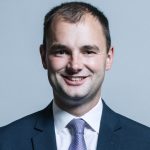
    Luke Hall – 2020 Statement on Rough Sleeping and Covid-19

    Below is the text of the statement made by Luke Hall, the Parliamentary Under-Secretary of State for Housing, Communities and Local Government, in the House of Commons on 3 June 2020.

    Since the beginning of the pandemic, the Government have worked closely with local authorities, charities and health providers to offer accommodation to as many rough sleepers as possible in order to help them stay safe during the pandemic.

    We have asked all local authorities to provide information on the number of individuals they have accommodated. The information provided is management information, not official statistics, and local authorities continue to hold the most recent information.

    This information submitted shows that since the start of the pandemic, local authorities have accommodated 14,610 people. This includes people coming in directly from the streets, people previously housed in shared night shelters and people who have become vulnerable to rough sleeping during the pandemic.

    This is a truly remarkable achievement and has been possible because of an incredible effort by the Government, local authorities and charities.​

    In order to be transparent, we have today published the management information received from local authorities which provides a breakdown of this figure both inside and outside of London.

    This number should not be compared to the official autumn annual snapshot of rough sleeping numbers because the data sets are not comparable. A significant proportion of the 15,000 people accommodated were not rough sleepers but have been housed in order to prevent any risk of them sleeping rough during the pandemic. The work local authorities have undertaken during the pandemic has assisted many who were sleeping rough or living in accommodation where they share sleeping spaces, for example in hostels or night shelters, where they would not be able to fully self-isolate. Local authorities have also housed those at risk of rough sleeping, or who have presented to local authorities as at risk of sleeping rough throughout this pandemic.

    The Government have supported this vital work with £3.2 million emergency funding as an initial first step, followed by funding totalling £3.2 billion to local authorities to allow them to meet local need during the pandemic, including protecting the most vulnerable and rough sleepers.

    We have also announced a further £433 million to provide 6,000 long-term, safe homes to support thousands of rough sleepers currently housed in emergency accommodation move on to more sustainable accommodation.

    The Government are now supporting local authorities on their next steps plans to ensure accommodation arrangements can continue to be managed safely to protect the most vulnerable, assessing individuals’ needs in order to ensure as few people as possible return to the streets. We have asked Dame Louise Casey to spearhead this work through a new covid-19 Rough Sleeping Taskforce.