Category: Coronavirus

  • Matt Hancock – 2020 Statement on the Coronavirus

    Matt Hancock – 2020 Statement on the Coronavirus

    The text of the statement made by Matt Hancock, the Secretary of State for Health and Social Care, in the House of Commons on 14 July 2020.

    With permission, Mr Speaker, I would like to make a statement about coronavirus.

    Thanks to one of the greatest national efforts in peacetime, this deadly virus continues to diminish. Yesterday’s figures show 530 new cases, down around 90% since the peak, while 162 patients are currently in mechanical ventilator beds with coronavirus, down around 95% since the peak. The latest number for deaths recorded in all settings across the UK is 11—the lowest figure since 13 March. According to today’s Office for National Statistics data, for the third consecutive week, total deaths are lower than normal for this time of year.

    Due to this substantial progress, we have been able to restore freedoms and carefully and methodically restore the fabric of this country. However, we cannot let our progress today lead to complacency tomorrow, so we must remain vigilant to keep this virus under control. Our strategy is to protect the NHS, get the virus down and keep the virus down, while restoring as much of normal life as possible. Our tactic is to replace national lockdown with ever more targeted local action as we work hard to defeat this virus once and for all.

    Our NHS test and trace system gets stronger all the time. Since launch six weeks ago, 144,000 people have now been asked to self-isolate who otherwise simply would not have known that they had to. Where we find clusters or outbreaks, we take local action, tackling over 100 incidents a week. Mostly these are small, in an individual care home, pub or factory. But we are prepared to take action on a wider basis if that is what it takes, just as we did in Leicester. Four permanent test sites and 10 mobile testing units have been deployed across the city, meaning that Leicester now has the highest rate of testing in the country. We have launched one of the biggest communication programmes that Leicester has ever seen, including targeted social media posts, website banners, radio ads, billboards and even bin stickers. We have been working closely with all parts of the local community, including community leaders, local businesses and the local football and cricket clubs to get the message out. We have also established a process for making decisions to lift the lockdown, with the first decision point later this week.

    Local action is one way in which we can control the spread of the virus while minimising the economic and social costs. Another is to minimise the risk as we return more to normality. In recent weeks we have reopened retail and footfall is rising. We want to give people more confidence to shop safely and enhance protections for those who work in shops. Both of those can be done by the use of face coverings. Sadly, sales assistants, cashiers and security guards have suffered disproportionately in this crisis. The death rate of sales and retail assistants is 75% higher among men and 60% higher among women than in the general population. As we restore shopping, so we must keep our shopkeepers safe.

    There is also evidence that face coverings increase confidence in people to shop. The British Retail Consortium has said that, together with other social distancing measures, face coverings can

    “make shoppers feel even more confident about returning to the High Street.”

    The chair of the Federation of Small Businesses has said:

    “As mandatory face coverings are introduced, small firms know that they have a part to play in the nation’s recovery both physically and financially, and I’m sure this will welcomed by them.”

    We have therefore come to the decision that face coverings should be mandatory in shops and supermarkets. Last month, we made face coverings mandatory on public transport and in NHS settings, and that has been successful in giving people more confidence to go on public transport and to a hospital setting when they need to, providing people with additional protection when they are not able to keep 2 metres from others, particularly people they do not normally come into contact with. Under the new rules, people who do not wear face coverings will face a fine of up to £100 in line with the sanction on public transport and, just as with public transport, children under 11 and those with certain disabilities will be exempt.

    The liability for wearing a face covering lies with the individual. Should an individual without an exemption refuse to wear a face covering, a shop can refuse them entry and can call the police if people refuse to comply. The police have formal enforcement powers and can issue a fine. That is in line with how shops would normally manage their customers and enforcement is, of course, a last resort. We fully expect the public to comply with these rules, as they have done throughout the pandemic.

    I want to give this message to everyone who has been making vital changes to their daily lives for the greater good. Wearing a face covering does not mean that we can ignore the other measures that have been so important in slowing the spread of this virus— washing our hands and following the rules on social distancing. Just as the British people have acted so selflessly throughout this pandemic, I have no doubt they will rise to this once more. As a nation, we have made huge strides in getting this virus, which has brought grief to so many, under control. We are not out of the woods yet, so let us all do our utmost to keep this virus cornered and enjoy our summer safely. I commend this statement to the House.

  • Justin Madders – 2020 Letter to Baroness Harding About Councils and Health Data

    Justin Madders – 2020 Letter to Baroness Harding About Councils and Health Data

    The text of the letter sent by Justin Madders, the Shadow Health Minister, to Baroness Harding, sent on 14 July 2020.

    Dear Dido Harding,

    It is now more than two weeks since the Secretary of State, Matt Hancock, announced Leicester would be the first city in the UK to be put under a local lockdown. With restrictions expected to be reviewed this week, and anticipated guidance regarding what might trigger further local lockdowns expected, I am writing to ask that the concerns being made by local authorities regarding the timing and detail of the data they receive are recognised and resolved as a matter of urgency.

    Targeted local responses to coronavirus flare-ups are a key part of the Government’s plan to contain the spread of the virus and we know that the provision of complete and reliable data is essential to effectively monitor local areas and assist in that targeting. However, we are still hearing from local authorities and public health officials that there are significant gaps in the availability, quality and speed with which data is being processed and provided by the various organisations tasked with testing.

    The Welsh government publishes Pillar 1 and 2 data daily, but local authorities in England are still only receiving a weekly breakdown of Pillar 1 and Pillar 2 tests, with regional data being published every two weeks. Public health officials across England have also raised concerns that even when they do receive data that it is not easily accessible, with huge amounts of testing data to decipher, and that it does not include vital details on the ethnicity, post codes or workplaces of people who have tested positive, nor the number or proportion of the number of positive tests for each local area. These gaps prevent local authorities from being able to react with speed on the ground.

    Local authorities are clear: the data is not detailed enough, not accessible enough and not frequent enough.

    Labour has long been calling on the government to ensure that local authority directors of public health have access to all Coronavirus test data. As you develop local guidance, I urge you to ensure moving forward that:

    1. Data is transmitted to local authorities on a daily basis, in real time if possible.
    2. There is reference to ethnicity in the data.
    3. That each positive test also identifies by name, postcode and workplace (if any) of the individual.
    4. That the proportion as well as the number of positive tests is provided.

    We hope that should any future lockdowns prove necessary that any measures are agreed with the local authority before being implemented and that transparent and measurable guidance is produced which will help inform all parties the point at which lockdown measures can begin to be relaxed.

    Yours sincerely,
    Justin Madders MP

  • Justin Madders – 2020 Comments on Local Councils and Health Data

    Justin Madders – 2020 Comments on Local Councils and Health Data

    The text of the comments made by Justin Manners, the Shadow Health Minister, on 14 July 2020.

    Councils are getting testing data which is sometimes nearly a fortnight old and has such little information in it that it is virtually useless in being able to spot and stop local outbreaks.

    We are asking that positive test results are given to councils on a daily basis, in real time if possible, and that there should be sufficient information for them to be able to identify the workplace if possible, where an outbreak has occurred.

    The Government needs to be much more open and transparent with local councils so that together we can catch local outbreaks earlier and stop transmission of the virus.

  • Oliver Dowden – 2020 Statement on the Coronavirus

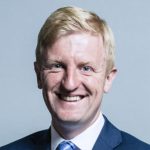
    Oliver Dowden – 2020 Statement on the Coronavirus

    The text of the statement made by Oliver Dowden, the Secretary of State for Digital, Culture, Media and Sport, on 9 July 2020.

    For months now, our lives have been on hold.

    When the call came in March, we pressed pause on many of the things that brighten our lives.

    Meals with friends.

    Trips to the cinema or theatre.

    We had to close our gyms and swimming pools.

    Cancel our holidays.

    And postpone some of our favourite events.

    But as we’ve made huge progress against this disease, we’ve gradually seen the things we love return.

    Today, I’m very pleased to announce we can go a little bit further. As of this weekend, our artists, musicians and dancers can start performing live outside to audiences. We’ll also have the resumption of recreational sport, followed later by the reopening of our gyms, swimming pools and leisure centres.

    Normal life is slowly returning.

    This is an important milestone for our performing artists, who have been waiting patiently in the wings since March. Of course we won’t see crowds flooding into their venues. But from 11 July, our theatres, operas, dance and music shows can start putting on outdoor performances to socially distanced audiences.

    That means theatregoers can experience a live play for the first time in months at places like the stunning Minack Theatre in Cornwall. And music lovers can attend Glyndebourne this summer.

    We are taking various measures to make these places safe as they reopen. Venue capacity will be reduced, and organisations encouraged to move to electronic ticketing, to help test and trace.

    But our performing artists deserve an audience. And now they will be getting one.

    And while those outdoor performances get underway, we will be working with the public health experts to carefully pilot a number of indoor performances – from the London Symphony Orchestra at St Luke’s, to Butlins – to work out how we can confidently usher socially-distanced audiences indoors as soon as possible.

    At the same time, we’re funding scientific studies to help us understand and mitigate some specific public health risks, like the impact of singing, wind and brass instruments on transmission.

    The more we know about coronavirus in every setting, the safer we will be.

    We’re also taking steps through the planning system to protect theatres and venues from demolition or change of use, and of course all of this comms on top of the unprecedented £1.57 billion package of emergency support to help arts, heritage and cultural institutions weather the COVID storm.

    But, of course, we want to see all of our venues open as soon as it’s safe to do so.

    Today’s announcement brings us a further step closer towards that reality.

    Having allowed hairdressers to reopen, beauticians, tattooists, spas, tanning salons and other close-contact services can now do the same I’m pleased to say from Monday. Of course that will be subject to some restrictions on particularly high risk services.

    As I’ve seen myself at the Royal Academy this morning, the National Gallery, and as we’ll see shortly from National Museums Liverpool, our cultural institutions are beginning also to welcome back visitors.

    As these places begin to reopen their doors, I’m really urging people to get out there and to play their part. Buy the tickets for outdoor plays and music recitals, get to your local gallery and support your local businesses.

    We have seen in recent weeks how our landlords, waiters and shop assistants have welcomed customers back with open arms, while doing so much to keep their communities safe. It’s time to give other businesses those same opportunities.

    The Chancellor this week set out a bumper package of tourism and hospitality tax breaks, to get these industries firing on all cylinders once more and protect the millions of people who work for them.

    That means a VAT cut on everything from tickets to shows, theatres, amusement parks, museums and zoos.

    Lower costs for hotels, inns, caravan and campsites.

    Vouchers for food and non-alcoholic drinks.

    I’m urging the British people to make the most of this summer safely. We need them to support the places that we all love.

    And today there is good news for our nation’s fitness.

    As we all know, exercise is incredibly important for both physical and mental health. Even at the height of lockdown it was considered an essential activity – with countless people hitting their parks for their daily run or transforming their living rooms into temporary gyms.

    From this weekend onwards, millions of people will be able to rejoin their local sports teams as soon as their organisations publish approved guidance. Recreational cricket is back on this weekend. Five-a-side football, basketball, hockey and countless other sports will follow shortly after.

    From this Saturday, they’ll also be able to enjoy outdoor pools and waterparks.

    And from Saturday 25th, people will no longer have to work out in the park or on their living room floor. They’ll be able to get back into their gyms, their indoor swimming pools, their leisure centres, and jump on the spin bike or treadmill for the first time in months.

    Now we’ve made a number of positive visits to gyms in recent weeks, and of course had hoped to do this sooner. But we really do have to phase this properly. We will be giving gyms the certainty, clarity and time they need to reopen safely, so that the maximum number can open their doors in just two weeks’ time.

    Again, we’ve worked intensively with both professional bodies and the experts to get us to this point, and facilities will have to take a number of measures to protect their communities. That includes for example using timed booking systems to limit the number of people using the facility at any one time, and reduced class sizes. Equipment will be spaced out, and there will be enhanced cleaning throughout.

    As always, the public will need to do their bit and follow the guidance sensibly and safely. All of the measures we are taking are conditional and reversible. And we will not hesitate to impose lockdowns where there are local spikes – as we saw in Leicester, where things remain closed and of course in any other place when that is necessary.

    But the return of gyms and recreational sport is a vital part of our battle against coronavirus.

    We need to get the nation to get match-fit to defeat this disease.

    And our fight began with a collective effort, and I really hope it will end with one. At the beginning, we all stayed home to protect the NHS and save lives.

    Now the British public has a new part to play.

    It’s time to eat out to help out.

    To enjoy the arts to help out.

    And to work out to help out.

    It’s over to all of you to help the country recover safely.

    Thank you.

  • Nicola Sturgeon – 2020 Statement on Lockdown in Scotland

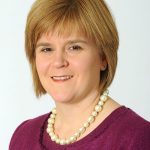
    Nicola Sturgeon – 2020 Statement on Lockdown in Scotland

    The text of the statement made by Nicola Sturgeon, the Scottish First Minister, in the Scottish Parliament on 9 July 2020.

    In Scotland, Covid has now been suppressed to a low level. Indeed, even in the three weeks since I last updated Parliament, there has been significant progress.

    At that time, we were reporting approximately 20 new cases of Covid a day. The daily average now is around 7. Three weeks ago there were more than 540 people in hospital with confirmed Covid. The figure today is 342.

    And there are now just three patients with confirmed Covid in our intensive care units. The number of people dying has also fallen week-on-week, as is shown in our daily statistics and in the weekly reports of National Records of Scotland.

    In addition, our latest modelling suggests the R number remains below 1. It has been between 0.6 and 0.8 for most of the past month and the number of people in Scotland with the virus continues to fall.

    Three weeks ago we estimated that around 2,900 people were infectious. Our estimate for last week is that around 1,000 people in Scotland were infectious.

    That confirms, as I explained yesterday when setting out our decision on air bridges, that prevalence of the virus in Scotland at this stage is several times lower than it is across the UK as a whole.

    Finally, in determining whether we can move from Phase 2 to Phase 3 of exiting lockdown we have assessed our progress in tackling Covid against the six criteria for this stage set out by the WHO and we have concluded that we would meet each of them.

    However, I need to advise Parliament that the fifth of these criteria, which relates to the risk of managing imports of the virus from outside Scotland, did give us some pause for thought.

    The balanced decision we announced yesterday on air bridges was essential for us to conclude at this stage that we are managing that risk in an effective and proportionate manner.

    However, it is essential that we keep this risk under close review. To be clear, this must cover the possibility of importation from other parts of the UK as well as from overseas.

    Taking all of these various factors into account I can confirm it is the judgement of the Government that we can now move from Phase 2 to Phase 3 of the routemap.

    I can also confirm we will allow, in a limited number of sectors, an exception to be made to the requirement for 2-metre physical distancing, however this will be subject to strict conditions tailored to the circumstances of each sector.

    Let me stress the term ‘exception’. The general rule remains 2m. For public transport and the retail sector this exception will be permissible from tomorrow, however it is essential that the required mitigations are in place and appropriate discussions have taken place with trade unions before it becomes operational in any particular setting.

    Given some of what I’ll cover later, it’s also worth being clear at this point that the retail sector includes personal services such as hairdressing.

    I also want to remind everyone that face coverings, already mandatory on public transport, will, from tomorrow, be mandatory in shops as well.

    There will be some exemptions for young children under 5, people with certain health conditions, and for staff in some circumstances. For the vast majority of us, however, it will be the law that we wear face coverings in shops.

    Wearing a face covering on a bus, train, or in a shop, should, for the foreseeable future, become as automatic as putting on a seatbelt in a car. It should not need to be enforced but the police can issue fines for anyone not complying.

    However, I am asking everyone to comply, not from fear of enforcement, but because it is the right thing to do. It helps us protect each other from the virus.

    That leads me to a general point that it is important to stress before I outline the further restrictions we intend to lift.

    The virus hasn’t gone away. It’s still out there and is still just as infectious and just as dangerous as it ever was.

    Lockdown has suppressed it but as lockdown eases there’s a very real risk it will start to spread again – and that is not conjecture. It is already happening in many parts of the world.

    With every restriction we lift the risk increases, especially as we start to permit more indoor activity. So all of us must do everything we can to mitigate it.

    Wearing face coverings is part of that, but so too are the other measures summarised in our FACTS campaign.

    Face coverings.

    Avoid crowded places.

    Cleaning hands and hard surfaces.

    Two-metre distancing.

    Self-isolation and booking a test if you have symptoms.

    I simply cannot stress enough that as we move out of lockdown these basic measures become much more important – not less. Please follow them to the letter.

    Let me now confirm the steps for Phase 3, for which we are now able to set specific dates. You’ll find more detail on gov.scot later today.

    As will be obvious from what I’m about to say, we intend to take the same staggered approach to Phase 3 as we did to Phase 2. Not all changes will happen immediately or at the same time. That means we are not bearing all of the risk at once.

    However, the first change relating to the ability of different households to meet up together will take effect tomorrow. The Health Secretary yesterday announced important changes for people who are shielding.

    For example, from today you will no longer be asked to physically distance from people you live with and will be abld to form an extended household if you live on your own or with children under 18.

    Today’s routemap includes a link to the additional changes we hope to make to the shielding advice up to the end of July.

    The other changes I’m about to announce do not apply to people who are shielding, unfortunately, but do apply to everyone else.

    Before I set out what these are let me make a general point. Last week we said children under 12 no longer have to physically distance when outdoors. From tomorrow, that will apply indoors too.

    However, for adults and, for the time being, older children, the advice to keep a 2m physical distance from people in other households will remain.

    But the general rules on household gatherings will be, from tomorrow, as follows.

    A maximum of 15 people from up to 5 different households can meet together outdoors.

    The advice is to remain 2m distant to people from other households to your own. From tomorrow, limited indoor gatherings will also be permitted. A maximum of 8 people from 3 different households can meet indoors.

    To be clear, that is the household whose gathering it is in, and people from up to 2 additional households. As long as physical distancing from different households is maintained, this can include overnight stays.

    I must stress though, this is one of, if not the highest risk change we have made so far. We know the risk of transmitting the virus indoors is significantly higher than it is outdoors…

    ..so it is essential that we all take the utmost care and strictly follow all of the public health advice.

    That means keeping 2m distant from people in other households, being very careful to clean surfaces after you touch them, and washing your hands regularly – especially when you first enter someone’s house.

    At all times try to avoid creating bridges that allow the virus to spread from one household to another.

    We’re also advising that, between indoors and outdoors activity, adults don’t meet with people from any more than 4 different households in any single day.

    Finally, from tomorrow we will change the guidance so people who are part of a non-cohabiting couple, regardless of their living arrangements, no longer need to stay physically distant from each other, indoors or outdoors.

    The next set of changes will take effect from Monday 13th July. From Monday, organised outdoor contact sports and physical activity can resume for children and young people subject to guidance being followed, and so too can other forms of organised outdoor play.

    Non-essential shops inside shopping centres can reopen, provided of course they follow all relevant health and safety guidance. That will mean that the vast majority of retail from Monday will be open.

    There will also from Monday be an important further resumption of public services, community optometry practices will further increase their services, especially for emergency and essential eyecare.

    Dental practices will be able to see registered patients for non-aerosol procedures. To explain that a bit more, aerosol procedures are those that create a fine mist – for example through use of a high-speed drill – and we cannot yet allow these.

    Unfortunately this means many forms of dental care will still not be possible, however procedures such as check-ups and the fitting of dentures and dental braces can resume.

    From Monday, a woman can have a designated person accompany her to ante and post-natal appointments, and in addition to her birth partner, can designate one other person to attend the birth and also make ante and post-natal ward visits.

    Further changes will then come into force from Wednesday next week – 15th July. From that date indoor restaurants, cafes and pubs will be able to reopen.

    However, just as with indoor household meetings, opening up indoor hospitality poses significantly increased risks of transmission, so it is absolutely essential that the guidance on health and safety is followed rigorously.

    By businesses, by staff, and by customers. That includes guidance on physical distancing and also taking customer contact details for use if necessary by Test and Protect.

    Like public transport and retail, indoor and outdoor hospitality venues will be granted an exemption from the 2m rule from the 15th July – this is dependent on the implementation of all relevant mitigating measures and appropriate discussions taking place with trade unions.

    Mitigating measures in this sector include, for example, clear information for customers that they’re entering a 1m zone, revised seating plans, and improved ventilation.

    The tourism sector can also open from 15th July. That means all holiday accommodation, including hotels, can reopen as long as the appropriate guidance is followed.

    Museums, galleries, other visitor attractions, libraries and cinemas – including drive-ins and other venues screening films – can also reopen on the 15th, although physical distancing and other safety measures will be required. And for many, if not most of these facilities, tickets must be secured in advance.

    The childcare sector can also fully reopen from next Wednesday – something I know is important to families across Scotland.

    I can also confirm that from 15th July hairdressers can reopen, subject to enhanced hygiene measures being in place, and the finalised guidance for hairdressers will be published this week.

    Finally, I’m pleased that we are able to bring forward two changes we were previously keeping under review for later in Phase 3 but that we now judge can be undertaken safely next week – provided necessary mitigations are in place.

    After careful consideration we have decided from 15th July, places of worship can reopen for communal player, congregational services and contemplation.

    However, numbers will be strictly limited, 2-metre physical distancing will be required, and there will also be a requirement to collect the contact details and time of attendance of those entering a place of worship.

    And, unfortunately, given what we know of transmission risks, singing and chanting will also be restricted.

    Detailed guidance is currently being finalised in consultation with our faith communities but I hope today’s announcement will be welcomed by all those for whom faith and worship is important and a source of comfort.

    In addition to that and linked to that change we will also ease restrictions on attendance at services and ceremonies for funerals, weddings and civil partnerships. However, numbers will be even more limited than for worship generally and physical distancing required.

    And I must stress this change applies only to services. Associated gatherings such as wakes or receptions must continue to follow the limits on household gatherings and hospitality.

    I am acutely aware that the restrictions we’ve had to place on attendance at funerals in these past few months have been particularly hard to bear and I’m very grateful to everyone who has complied in what will, I know, have been heartbreaking circumstances.

    While the changes which come into effect next week will not allow full-scale gatherings just yet, I hope they will allow more people to find solace at a time of grief as well as allowing more people to celebrate happier occasions such as weddings and civil partnerships.

    The next set of changes will take effect from 22nd July. At that time personal retail services, which have not yet been able to reopen, for example beauticians and nail salons, will be able to reopen with enhanced hygiene measures in place.

    Universities and colleges can implement a phased return to campus learning as part of a blended model with remote teaching. Motorcycle instruction and theory and hazard tests can also resume from that date.

    But driving lessons in cars unfortunately will have to wait a bit longer. Unfortunately there are other activities which are included in Phase 3 of the routemap that we are not yet able to attach a firm and specific date to.

    However, while we will keep all of this under review, and as we have done with communal worship, bring dates forward whenever possible, it should be assumed at this stage that these other activities will not restart before 31st July.

    These activities include the reopening of nonessential offices and call centres, the resumption of outdoor live events, and the reopening of indoor entertainment venues such as theatres, music venues and bingo halls.

    They also include the reopening of indoor gyms and the resumption of nonprofessional adult outdoor contact sports.

    We will continue to work closely with relevant sectors on the reopening as soon as possible of all these activities.

    For example, we’ll work with the outdoor events sector to review the range of events that could take place as we recognise a one-size-fits-all approach may not be appropriate. However, I hope it will be appreciated, however difficult I know this is, that a number of these activities present particular challenges.

    And while I do know it is difficult, it will take a bit more time to work through how these can be safely addressed. I also want to indicate at this stage that our current expectation is Phase 3 may well last longer than three weeks.

    Given the scale of the changes we are making in Phase 3, it may be wise not to rush that or go into Phase 4 too quickly. But we will keep that under close review.

    Let me reiterate that it is our ambition and our intention that schools will return full-time in August.

    Indeed, this is dependent on the virus continuing to be suppressed to very low levels and therefore it is one of the reasons we are being so careful and cautious in everything else we do right now.

    There’s no doubt today’s statement marks the most significant milestone yet in Scotland’s emergence from lockdown, and I hope the measures we have announced or confirmed today are welcome.

    All of them of course depend on us keeping the virus under control – eliminating it as far as we possibly can now, ahead of the – I’m afraid to say – almost inevitable challenges we will face come winter, remains our objective.

    And we will not hesitate to reimpose restrictions if we consider it necessary to halt the spread of the virus and save lives.

    I will make a further statement to Parliament on 30th July, and between now and then will deliver updates through the regular media briefings.

    However I want to end by stressing the point I made at the outset. It is perhaps the most important point of all.

    This is undoubtedly a time for cautious hope and optimism. There is no doubt Scotland, through our collective efforts, has made great progress in tackling Covid.

    We should all savour our first indoor meetings and meals with friends, our first pint in a pub or catch-up over coffee.

    Many of us, I know, are looking forward to our first non-amateur haircut in many months. And there will be other milestones and reunions that we will enjoy over the next few weeks. They have all been hard-earned by each and every one of us.

    But I have a duty to be crystal clear with the country that this is also a time of real danger. Next week represents the most substantial easing of lockdown so far, and we know that meeting people indoors poses far greater risk than going to a park or someone’s garden.

    As I said earlier on, we see signs of resurgence in many countries across the world right now.

    We must all be aware of that in everything we do. We must remember that Covid, although currently at very low levels in Scotland, is still out there.

    And everything we learn about this still-new virus, about its infectiousness, its ability to kill, and its potential to do long-term damage to health, should warn us that we mess with it at our peril.

    Perhaps more than ever, now is a time of great caution.

    Remember that life should still not feel entirely normal and at all times, especially when we’re meeting indoors with people from other households, we must be constantly alert to the steps we need to take to deny it the chance to spread.

    That’s why the most important thing that everyone should remember and abide by is FACTS.

    Face coverings must be worn in enclosed spaces – public transport, shops, and indeed anywhere else physically distancing is more difficult.

    Avoid – literally, like the plague – crowded places, indoors or outdoors.

    Clean your hands regularly and thoroughly and clean hard surfaces after touching them.

    Two-metre distancing remains the clear and important advice.

    And self-isolate and book a test immediately if you have symptoms of Covid.

    The symptoms to be aware of are a cough, a fever, or a loss of or change in your sense of taste or smell. You can book a test at NHS Inform or by phoning 0800 028 2816.

    And, please, act immediately. Err on the side of caution. If you have any reason at all to worry you might have Covid symptoms get tested straight away.

    It is only because of our collective action, our love for and solidarity with each other that we have made so much progress. Now is not the time to drop our guard, so let’s all keep doing the right things to keep ourselves safe, to protect others, and to save lives.
  • Michael Gove – 2020 Comments on Face Masks

    Michael Gove – 2020 Comments on Face Masks

    The comments made by Michael Gove, the Cabinet Office Minister, on BBC’s Andrew Marr Show on 12 July 2020.

    I don’t think [face masks] will be mandatory, but I would encourage people to wear a face mask when they’re inside and in an environment where they might be mixing with others and where the ventilation may not be as good as it might. So, I think that it is basic good manners, courtesy, consideration, to wear a face mask if you, for example, are in a shop. But, I trust peoples’ good sense, and the Government does look at all times at the emerging evidence and, if necessary,  then tough measures will be taken. On the whole, my view is that it’s always better to trust peoples’ common sense and to give them a clear sense of what is wise and that individuals and businesses are responding well to that.

  • Matt Hancock – 2020 Statement on the Coronavirus

    Matt Hancock – 2020 Statement on the Coronavirus

    Below is the text of the statement made by Matt Hancock, the Secretary of State for Health and Social Care, in the House of Commons on 7 July 2020.

    We are bringing coronavirus under control. Yesterday’s figures showed 352 new cases, the lowest since lockdown began. That is down from over 5,000 a day at the peak. Two hundred and nine patients are currently in mechanical ventilator beds with coronavirus, down from 3,300 at the peak. The latest number of deaths recorded in all settings in the UK was 16. New figures this morning show that for the last two weeks, the number of people who have died from all causes has been lower than the normal average for this time of year.

    Because we are bringing the virus under control, we have been able to restore some of the things that make life worth living. This weekend, restaurants, pubs and hairdressers were buzzing with activity for the first time in months, and yesterday we were able to ease restrictions for the 2.2 million people who have been shielding across England so that they can now spend more time outdoors in a group of up to six, of course while maintaining social distancing.

    Our plan has always been to lift the national lockdown while taking ever more targeted action to suppress the virus. We are seeing a similar approach in other countries, such as Germany, Spain and Australia, where overnight they locked down Melbourne. Last week, we took difficult but vital decisions about Leicester. Since then, we have been working with Leicester and Leicestershire, and I am pleased to say that together, we have brought down the seven-day infection rate from 135 to 117 cases per 100,000 people.

    In reopening hospitality, we have also introduced contact tracing for customers. This system is working. I want to thank all those who are making the system work, and to pay tribute in particular to three pubs that have taken specific action: the Lighthouse in Burnham-on-Sea, the Fox and Hounds in Batley, and the Village Home in Gosport. They have all closed for a deep clean and staff testing after, in each case, a customer tested positive. They are doing the right thing by their customers and their communities. This is NHS Test and Trace working precisely as intended. Three pubs shut so that others can be open, and I think the whole House is grateful.

    Coronavirus has been the worst global pandemic in a generation. Here, we protected the NHS. We built the new Nightingale hospitals in 10 days. At all times, treatment was available for all. Our medical research has discovered the only drug known to work. We have built, almost from scratch, one of the biggest testing capabilities in the world. We are getting coronavirus cornered, but this is no time to lose our resolve. The virus exists only to spread, so we must all stay alert and enjoy summer safely.

  • Jonathan Ashworth – 2020 Comments on Panorama’s Investigation into Cancer Deaths

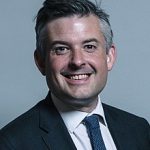
    Jonathan Ashworth – 2020 Comments on Panorama’s Investigation into Cancer Deaths

    Below is the text of the comments made by Jonathan Ashworth, the Shadow Secretary of State for Health and Social Care, on 6 July 2020.

    These figures should be wake up call for Ministers – we already know that there’s been a drop in urgent referrals for cancer and waiting times for vital scans are soaring.

    There will be tragic consequences if Ministers do not urgently put in place the measures needed to restore cancer services and get people the treatment they need.

    We need a fully-resourced plan to restart cancer services; a strategy that enables us to move between the competing demands of the Covid-19 pandemic and non-Covid related care in the months ahead.

  • Justin Madders – 2020 Comments on Not Publishing Daily Virus Figures

    Justin Madders – 2020 Comments on Not Publishing Daily Virus Figures

    Below is the text of the comments made by Justin Madders, the Shadow Health Minister, on 6 July 2020.

    This is an absolute shambles. It seems that the real reason why the Government stopped issuing figures for the number of people tested each day is because they never hit their 100,000 people a day target and they were too embarrassed to admit it.

    We know that the number of people actually tested is less than a third of the number of tests they state are being completed. It is clear that Ministers are losing control over the testing regime and are failing to not only keep track of the tests but to ensure the results are returned swiftly.

    Ministers need to get to grips with the state of the testing regime and be far more open about where the failings are. As lockdown measures are relaxed it is vital the public have confidence that there is an effective test and trace system in place.

  • Jo Stevens – 2020 Comments on People Refusing Vaccine

    Jo Stevens – 2020 Comments on People Refusing Vaccine

    Below is the text of the comments made by Jo Stevens, the Shadow Digital, Culture, Media and Sport Secretary, on 7 July 2020.

    This poll lays bare just how dangerous disinformation online can be.

    The rapid spread of false information about vaccinations could literally be a question of life and death.

    Social media companies must ensure this content has no place on their platforms and Ministers must do more to promote the benefits of vaccines and counter the harmful, dangerous myths which surround them before a coronavirus vaccine becomes available.