Category: Coronavirus

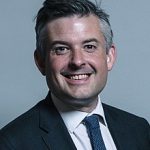
  • Jonathan Ashworth – 2020 Speech on Covid-19

    Jonathan Ashworth – 2020 Speech on Covid-19

    The speech made by Jonathan Ashworth, the Shadow Secretary of State for Health and Social Care, in the House of Commons on 1 September 2020.

    We are indeed all on the same side in fighting this virus. I hope that the Secretary of State understands that when we raise issues, we do so because we urge the Government ​to improve their response to fighting this virus. This remains a lethal virus that leaves many with serious, debilitating sickness. Everything must be done to drive down and eliminate infections and suppress the virus completely.

    With that in mind, I hope that the Secretary of State can answer a few questions today. I am grateful for advance sight of his statement. First, to avoid a second national lockdown, which we all want to avoid, an effective test and tracing regime is vital. I listened carefully to the figures that he outlined, but he did not tell the House that the numbers going into the system have actually fallen in the past week, from 79% to 72%. This system is not yet world beating.

    Throughout questions the Secretary of State has rejected criticisms of the private sector contractors who are involved in delivering the system, so there is no point in me raising them again, but would it not be better if money was spent on investing in local public health teams, particularly in those areas where restrictions are in place, so that they can do more door-to-door testing, as we have seen, for example, in Leicester? Surely that would be a better use of public funding, for example, than paying for so-called influencers on Instagram to big up test and trace.

    On testing itself, the Secretary of State now supports mass testing as a policy aim. It is something I have been calling for, for some months. It is something the former Health Secretary, the Chair of the Health Select Committee, has been calling for. Indeed, we tried to persuade the Secretary of State of its merits before the summer when we asked him to introduce regular testing of NHS front-line staff. He whipped his MPs to vote against it, but will he now, given that he is in favour of mass testing, introduce regular weekly testing of all front-line NHS workers?

    To move to mass testing means evolving our testing regime from one that provides antibody tests and diagnostic PCR—polymerase chain reaction—tests effectively to a system of mass screening using more rapid, on-the-spot antigen tests. The Secretary of State referred to rapid tests in his statement. Can he tell us when rapid, on-the-spot antigen tests will be rolled out across society and which sectors of the workforce will be first in the queue to access those tests?

    Will the Secretary of State also look at introducing saliva testing, which is being used in Hong Kong, for example, and will he ensure the quick turnaround of tests? I wonder whether he has seen the study from Yale that suggests that saliva testing could be as sensitive as nose and throat swabs. What is his attitude towards pooled testing, which would surely increase the capacity in areas of low prevalence? Does he have a plan to introduce pooled testing? Will he allow GPs to carry out testing or, at the very least, to arrange a test for their patients directly? They currently have to ask their patients to log on to the national system, which is causing huge delays.

    On local lockdowns, the Secretary of State said that he wants to involve MPs and elected officials. What process will be used to properly consult local Members of Parliament? What can MPs expect? When a decision has been made to put a local area into restriction, will he publish the specific evidence behind that decision? ​Why is it, for example, that our constituents in Leicester are not able to gather in private gardens? Can he publish the scientific evidence for that decision?

    In Trafford, we have seen infections increase. The local authority leader and the director of public health felt that restrictions should continue, but the hon. Member for Altrincham and Sale West (Sir Graham Brady) felt that they should be lifted. Why did the Secretary of State overrule the advice of the director of public health and instead endorse the representations of the chairman of the 1922 committee? There was a similar story in Bradford, and in Bolton, where restrictions are due to be lifted tonight, infections are increasing. Is it still his plan to lift restrictions tonight in Trafford and Bolton, even though infections are increasing compared with last week, when he made his initial decision?

    The Secretary of State is right: in the end, a vaccine is our best hope to stop this pandemic. Vaccines save hundreds of millions of lives every year, and I repeat my offer to work with him on a cross-party basis to promote uptake and challenge the poison of anti-vax myths, including those that we witnessed at the irresponsible and dangerous demonstration this weekend in Trafalgar Square. We will work constructively with him on the proposals he brings to the House. Does he share my concerns about those leaders, such as Putin and Trump, who are trying to short-cut testing to rush out a vaccine, undermining safety and efficacy, potentially damaging millions of lives and giving succour to the anti-vax movement?

    Finally, health protection is built upon good population health. Poverty makes people sick. Ending cuts and tackling deprivation as a determinant of ill health is vital to improving and protecting people’s health. But the Secretary of State is now embarking on a risky, distracting restructuring of Public Health England in the middle of a pandemic. Tory MPs like to blame Public Health England—it is such rotten luck that these decent, hard-working, competent Ministers are always let down by the people who work for them—but is not the reality that this restructuring will sap morale and focus and should wait until the end of the pandemic? The UK has suffered the highest per capita death rate of any major world economy. To get through this winter safely, our NHS and public health services need resources, and staff need personal protective equipment, fair pay, security and support. I hope he can deliver that.
  • Matt Hancock – 2020 Statement on Covid-19

    Matt Hancock – 2020 Statement on Covid-19

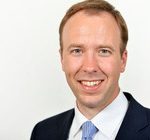
    The statement made by Matt Hancock, the Secretary of State for Health and Social Care, in the House of Commons on 1 September 2020.

    With your permission, and indeed your encouragement, Mr Speaker, I would like to make a statement on coronavirus. The latest figures demonstrate how much progress we are making in our fight against this invisible killer. There are currently 60 patients in mechanical ventilator beds with coronavirus—that is down from 3,300 at the peak—and the latest daily number for recorded deaths is two. However, although those figures are lower than before, we must remain vigilant. I said in July that a second wave was rolling across Europe and, sadly, we are now seeing an exponential rise in the number of cases in France and Spain—hospitalisations are rising there too. We must do everything in our power to protect against a second wave here in the UK, so I would like to update the House on the work we are doing to that end.

    To support the return of education, and to get our economy moving again, it is critical that we all play our part. The first line of defence is, and has always been, social distancing and personal hygiene. We will soon be launching a new campaign reminding people of how they can help to stop the spread of coronavirus: “Hands, face, space and get a test if you have symptoms.” Everyone has a part to play in following the social distancing rules and doing the basics. After all, this is a virus that thrives on social contact. I would like to thank the British public for everything they have done so far, but we must continue and we must maintain our resolve.

    The second line of defence is testing and contact tracing. We have now processed over 16 million tests in this country, and we are investing in new testing technologies, including a rapid test for coronavirus and other winter viruses that will help to provide on-the-spot results in under 90 minutes, helping us to break chains of transmission quickly. These tests do not require a trained health professional to operate them, so they can be rolled out in more non-clinical settings. We now have one of the most comprehensive systems of testing in the world, and we want to go much, much further.

    Next, we come to contact tracing. NHS Test and Trace is consistently reaching tens of thousands of people who need to isolate each week. As I mentioned in answer to a question earlier, the latest week’s data shows that 84.3% of contacts were reached and asked to self-isolate, where contact details were provided. Since its launch, we have reached over 300,000 people, who may have been unwittingly carrying the virus. Today, we also launch our new system of pay to isolate. We want to support people on low incomes in areas with a high incidence of covid-19 who need to self-isolate and are unable to work from home. Under the scheme, people who test positive for the virus will receive £130 for the 10-day period they have to stay at home. Other contacts, including, for instance, members of their household, who have to self-isolate for 14 days, will be entitled to a payment of £182. We have rolled out the scheme in Blackburn with Darwen, Pendle and Oldham, and we will look to expand it as we see how it operates on the ground.​

    The third line of defence is targeted local intervention. Over the summer, we have worked hard to integrate our national system with the local response, and the local action that we are taking is working. In Leicester, as the hon. Member for Leicester South (Jonathan Ashworth) knows well, as a local MP, in Luton and in parts of northern England, we have been able to release local interventions, because the case rate has come down. We also now publish significantly more local information, and I put in place a system for building local consensus with all elected officials, including colleagues across this House, wherever possible. Our goal is that local action should be as targeted as possible. This combination of social distancing, test and trace and local action is a system in which we all have a responsibility to act, and this gives us the tools to control the virus while protecting education, the economy and the things we hold dear.

    Meanwhile, work on a vaccine continues to progress. The best-case scenario remains a vaccine this year. While no vaccine technology is certain, since the House last met, vaccine trials have gone well. The Oxford vaccine continues to be the world leader, and we have now contracted with six different vaccine providers so that whichever comes off, we can get access in this country. While we give vaccine development all our support, we will insist on safety and efficacy.

    I can update the House on changes to legislation that I propose to bring forward in the coming weeks to ensure that a vaccine approved by the Medicines and Healthcare Products Regulatory Agency can be deployed here, whether or not it has a European licence. The MHRA standards are equal to the highest in the world. Furthermore, on the development of the vaccine, which proceeds at pace, I will shortly ask the House to approve a broader range of qualified clinical personnel who can deploy the vaccine in order of clinical priority, as I mentioned in questions. As well as the potential vaccine, we also have a flu vaccination programme—the biggest flu vaccination programme in history—to roll out this year.

    Finally, Mr Speaker, in preparation for this winter, we are expanding A&E capacity. We have allocated billions more funding to the NHS. We have retained the Nightingale hospitals to ensure that the NHS is fully prepared, and we published last month updated guidance on the protection of social care. As well as this, last month, figures showed a record number of nurses in the NHS—over 13,000 more than last year—and record numbers of both doctors and nurses going into training. We are doing all we can to prevent a second peak to prepare the NHS for winter and to restore as much of life and the things we love as possible. As schools go back, we must all remain vigilant and throughout the crisis we all have a role to play.

    This is a war against an invisible enemy in which we are all on the same side. As we learn more and more about this unprecedented virus, so we constantly seek to improve our response to protect the health of the nation and the things we hold dear. I commend this statement to the House.

  • Kate Green – 2020 Comments on Keeping Schools Safe

    Kate Green – 2020 Comments on Keeping Schools Safe

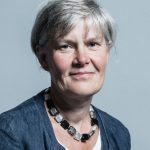
    The comments made by Kate Green, the Shadow Secretary of State for Education, on 1 September 2020.

    The learning that children have lost in recent months shows that keeping schools safely open to all must be a national priority in the months ahead.

    When schools are closed, we see deep inequalities become more entrenched, and those from the most disadvantaged backgrounds lose out most. If the Conservative Government cannot guarantee pupils the education they deserve, then they will fail a whole generation of children.

    Young people’s futures cannot be held back by Conservative incompetence. This is a wakeup call for ministers. They must ensure that schools stay open, that parents and teachers are supported, and that pupils get all the help they need to catch up.

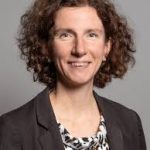
  • Anneliese Dodds – 2020 Comments on Payments to Those Self-Isolating

    Anneliese Dodds – 2020 Comments on Payments to Those Self-Isolating

    The comments made by Anneliese Dodds, the Shadow Chancellor of the Exchequer, on 27 August 2020.

    Effective local lockdowns depend on people self-isolating when they’re supposed to. Labour has been warning for months that the Government needs to make sure that people can afford to do the right thing, but once again Ministers have taken far too long to realise there’s a problem.

    Just last week the Chancellor suggested there was no need to change the system for people who have to self-isolate. Now the Health Secretary – who confessed that Statutory Sick Pay in the UK isn’t enough to live on – thinks the solution is to offer people who aren’t currently eligible the same limited level of support.

    It’s concerning that this will only apply to a limited number of areas with high rates of Covid-19. The instruction to self-isolate applies to everyone in the country, so everyone should get the support they need to self-isolate.

  • Anneliese Dodds – 2020 Comments on Financial Crisis in Households

    Anneliese Dodds – 2020 Comments on Financial Crisis in Households

    The comments made by Anneliese Dodds, the Shadow Chancellor of the Exchequer, on 21 August 2020.

    Even before coronavirus hit, many families in the UK were living on the breadline and this report confirms that the crisis has only made things worse. A third of all adults had no savings going into this crisis, and we now see that millions of families have been forced into debt.

    Sadly the government’s action only risks making this worse. Rather than targeting support to where it is needed most, as Labour has called for, the government is insisting on a one-size-fits-all withdrawal that will plunge us deeper into a jobs crisis and force even more people into dire financial straits. They must change course.

    Over the longer-term, the Government must look at why so many families lack financial resilience in the first place, tackling insecure jobs and poverty wages and providing a proper safety net by replacing Universal Credit.

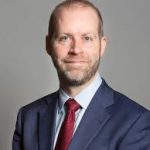
  • Jonathan Reynolds – 2020 Comments on Compensation for Families of NHS Staff

    Jonathan Reynolds – 2020 Comments on Compensation for Families of NHS Staff

    The comments made by Jonathan Reynolds, the Shadow Work and Pensions Secretary, on 21 August 2020.

    Health and social care workers are putting their lives on the line to care for coronavirus patients, often without the proper equipment, and many have sadly lost their lives as a result.

    The Government was right to say we must honour those who have made the ultimate sacrifice. So it is shocking that families are being forced to choose between accessing social security they are entitled to or the compensation they need.

    This must change so that families can grieve in peace with the full support they have every right to expect.

  • Justin Madders – 2020 Comments on Test and Trace Statistics

    Justin Madders – 2020 Comments on Test and Trace Statistics

    The comments made by Justin Madders, the Shadow Health Minister, on 20 August 2020.

    This incompetent government is failing to improve test and trace. In a whole range of measures, from the time it takes to return tests, to the percentage of people who are contacted who have been in close contact with a person who tested positive, things are going backwards. For a quarter of all tests to take longer than 72 hours to get results back is a worryingly poor performance.

    In the week that NHS Providers said track and trace was failing, it seems nobody in the Government has yet picked up responsibility to turn things round. It beggars belief that the head of test and trace has now been given more responsibility by the Government.

  • Rosena Allin-Khan – 2020 Comments on Lockdown and Mental Health

    Rosena Allin-Khan – 2020 Comments on Lockdown and Mental Health

    The comments made by Rosena Allin-Khan, the Shadow Mental Health Minister, on 18 August 2020.

    There’s a hidden mental health crisis taking place behind closed doors.

    The government has been ignoring the nation’s mental health – they must start working with experts.

    The government has no plan to combat loneliness and their incompetence with test and trace means that people aren’t being reassured about the safety of going out.

    This lack of action is creating a perfect storm of mental ill health.

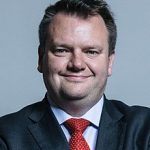
  • Nick Thomas-Symonds – 2020 Comments on Quarantine Measures from France and the Netherlands

    Nick Thomas-Symonds – 2020 Comments on Quarantine Measures from France and the Netherlands

    The comments made by Nick Thomas-Symonds, the Shadow Home Secretary, on 13 August 2020.

    While we support evidence based measures at the border, it’s vital that the Government has a joined-up strategy, and recognises the impact of this on travel-related businesses. It is vital that a sector-specific deal is put in place urgently.

    That the Government has still not put in place an effective track, trace and isolate system has made matters far worse and made it more likely that we are reliant on the blunt tool of 14-day quarantine.

    The Government should publish all of the scientific evidence its decisions are based on and details of any work being done to reduce the time needed to isolate through increased testing and other measures.

  • Justin Madders – 2020 Comments on Ending Daily Deaths Summary

    Justin Madders – 2020 Comments on Ending Daily Deaths Summary

    The comments made by Justin Madders, the Shadow Health Minister, on 10 August 2020.

    The Government must be as transparent as possible with all aspects of coronavirus, including daily death figures. While there may be issues with how the figures are collated, Ministers must find solutions rather than end the publication of these statistics.

    Throughout the pandemic there has been a failure to publish accurate statistics on a whole range of matters – from the number of people tested each day to the constant revision of the number of covid-related deaths.

    It is vital that Ministers commit to continuing to publish daily death figures. Failing to do so risks sending the message out that the virus has been beaten when we know full well it is still circulating.