Category: Coronavirus

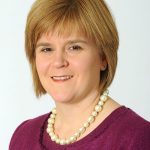
  • Nicola Sturgeon – 2020 Statement on Covid-19

    Nicola Sturgeon – 2020 Statement on Covid-19

    The statement made by Nicola Sturgeon, the Scottish First Minister, in the Scottish Parliament on 7 October 2020.

    Presiding Officer,

    I want to update the chamber today on the current position in relation to Covid.

    In doing so, I will give an assessment of the current course of the pandemic; propose important temporary measures to stem the increase in cases; set out how we will support businesses affected by them; and update the chamber on the longer term work we are doing to further improve our ability to live with Covid.

    And in all of this, I will be very frank about the challenges we face and the difficult balances we must try to strike.

    First, though, I will provide a summary of the daily statistics that were published a short time ago.

    Since yesterday, an additional 1054 cases of Covid-19 have been confirmed.

    That represents 13% of the people newly tested, and takes the total number of cases to 34,760.

    A total of 319 patients are currently in hospital with confirmed Covid-19, which is an increase of 57 since yesterday.

    And 28 people are in intensive care with confirmed or suspected Covid-19, which is an increase of 3 since yesterday.

    And in the past 24 hours, I regret to report that 1 further death has been registered of a patient who had been confirmed as having the virus.

    The total number of deaths in Scotland under that measurement is therefore now 2,533.

    National Records of Scotland has also just published its weekly update, which includes cases where COVID is a suspected or contributory cause of death.

    Today’s update shows that by last Sunday, the total number of registered deaths linked to Covid, under that wider definition, was 4,276.

    20 of those deaths were registered last week. That is the highest weekly number of deaths since late June.

    Every single one of these deaths represents the loss of a unique and irreplaceable individual.

    So once again, I want to send my deepest condolences to all those who are currently grieving.

    These figures illustrate the rising challenge we again face from Covid.

    That challenge is also set out – starkly – in an evidence paper published today by the Scottish Government’s senior clinical advisors – the Chief Medical Officer, the Chief Nursing Officer and the National Clinical Director.

    It assesses our current situation in relation to the virus.

    And it explains – as I will try to do in this statement – why we need to introduce additional measures to control the virus; why it is urgent that we act now; and why we have decided upon the specific actions that I am setting out today.

    Before I come onto that explanation, however, I want to emphasise some of the more positive elements of our current position.

    It is important – for the morale of all of us – that we don’t forget that progress has been made. It might not feel this way, but the situation now is better than it was in March.

    We are benefiting from the sacrifices we made over the summer. By driving the virus to very low levels then, we have helped to ensure that – even after several weeks of increases – the estimated total number of cases in Scotland is currently just 13% of the peak level back in March.

    Cases are rising, but they are not rising as quickly as they were then.

    In addition, we now have Test & Protect teams across the country, who are doing exceptional work. Test & Protect is now bearing a lot of the strain of controlling the virus.

    And we understand more now about how to reduce the risk of transmission – for example, by meeting outdoors rather than indoors if possible, wearing face coverings, cleaning hands thoroughly, and keeping our distance from people in other households.

    So while there are significant restrictions still in place – and they are hard and painful – we are living much more freely now than in the spring and early summer.

    We are determined – if at all possible – that this will continue to be the case.

    So let me be clear. We are not going back into lockdown today. We are not closing schools, colleges or universities. We are not halting the remobilisation of the NHS for non-Covid care. And we are not asking people to stay at home.

    So while the measures I announce today will feel like a backward step, they are in the interests of protecting our progress overall.

    It is by taking the tough but necessary action now, that we hope to avoid even tougher action in future.

    Let me turn now to specifics.

    The need for action is highlighted by the daily figures I reported earlier and, more fundamentally, in the evidence paper published today.

    It’s worth remembering that when I updated Parliament just over two weeks ago, the average number of new cases being reported each day was 285. That was up from 102 three weeks previously.

    Now, we are reporting an average of 788 new cases each day.

    In addition, I can report that in the 7 days up to Monday, the number of people in hospital with Covid increased by almost 80%.

    And the number of people who died with Covid last week was the highest for 14 weeks.

    In fact, there was the same number of deaths in the last week alone as in the whole of the previous month.

    The increase in the numbers of people in hospital with, and sadly dying from Covid reflect the rise we are now seeing in new cases among older age groups. In the second half of September, cases were rising most rapidly in the younger age groups.

    However, in the past week, cases in people over 80 years old increased by 60%, and cases in the 60 to 79 year old age group more than doubled.

    And we are seeing geographic as well as demographic spread.

    Without a doubt – and by some distance – the highest levels of infection are across the central belt.

    We are particularly concerned about Greater Glasgow & Clyde, Lanarkshire, Ayrshire & Arran, Lothian and Forth Valley – and that will be reflected in some of what I say later.

    However, that should not obscure the fact that numbers are rising across Scotland.

    The majority of our health board areas are now recording more than 50 new cases per 100,000 of their population each week.

    And virtually every health board area has a rising number of cases. The only exceptions are Orkney and Shetland, and even they have had cases in recent weeks.

    There is also, as we speak, a significant outbreak in the Western Isles.

    So the need to act – and to act across the country – is clear.

    What is also clear is the need to take additional action now.

    I mentioned earlier that prevalence of the virus is currently around 13% of its March peak.

    However, we estimate that the number of new Covid cases is currently growing by 7% each day.

    So without action – and this is perhaps the starkest warning in today’s evidence paper – we are likely to return to the peak level of infections we had in the Spring by the end of this month.

    It’s also instructive to consider the experience of other countries. Our modelling suggests that we are approximately four weeks behind France and six weeks behind Spain in the resurgence of the virus.

    Their resurgence, like ours, was initially concentrated among younger people. However it spread to other age groups and they are now seeing significantly more hospital admissions, more people in intensive care, and more deaths.

    It is to interrupt that trajectory that we must act now.

    Of course, we have already taken perhaps the most important – and painful – step we can to reduce transmission.

    For the last 12 days, apart from certain limited exceptions, we have not been able to meet up in each other’s homes.

    That should already be making a difference to infection rates even if, because there is always a time lag between introducing new measures and the impact they have, we are not yet seeing it reflected in our figures.

    And let me take the opportunity to emphasise again today how vitally important it is that we all stick to that rule. It’s incredibly hard for all of us not to visit friends and family, or have them visit us. But it is the single most effective measure we can take to stop Covid passing from one household to another.

    So please stick with it.

    That measure is vital, but the clinical advice I have received now is that it is not sufficient. We need to do more and we need to do it now.

    And to those who may wonder if the measures I set out today go too far, let me be clear about this.

    If this was a purely one-dimensional decision – if the immediate harm from Covid was all we had to consider – it is quite likely that we would go further.

    But, 7 months into this pandemic, I am acutely aware that this is not and cannot be a one-dimensional decision.

    We have a duty to balance all of the different harms caused by the pandemic.

    We have to consider the direct harm to health from the virus – which must be reduced – alongside the harm being done to jobs and the economy, which in turn has an impact on people’s health and wellbeing.

    And we have to consider the wider harms to health and wellbeing that the virus – and the restrictions deployed to control it – are now having on all of us.

    For all of these reasons, we are applying a far more targeted approach than we did in March – one which reduces opportunities for the virus to spread, while keeping businesses and other activities as open as possible.

    And we are not recommending that people who shielded over the summer, should return to staying completely indoors. We know how damaging that is to your wellbeing. But we do recommend that you take extra care – especially if you live in the central belt. You can now access information about infection levels in your local neighbourhood on the Public Health Scotland website.

    Presiding officer, let me now set out the additional measures that we are proposing.

    The measures are intended to be in force for 16 days, from Friday at 6pm to Sunday 25 October inclusive – in other words across the next two weeks and three weekends.

    So, firstly, with the exception of the five health board areas I will talk about shortly – pubs, bars, restaurants and cafes will be able to operate indoors on the following very restricted basis only:

    During the day, from 6am to 6pm, for the service of food and non-alcoholic drinks only.

    Hotel restaurants will be able to operate beyond 6pm, but only for residents and without alcohol.

    The reason we are not closing indoor hospitality completely is that we know the benefits, in terms of reducing loneliness and isolation, of giving people – particularly those who live alone – somewhere they can meet a friend for a coffee and a chat.

    But the restrictions will be strictly applied. And all the current regulations and the limits on meeting a maximum of 6 people from 2 households will still apply.

    Again with the exception of the central belt areas I will mention shortly, bars, pubs, restaurants and cafes can continue to serve alcohol outdoors up to the existing curfew time of 10pm, and subject to the 6/2 rule on group size.

    There will be an exemption to these rules – in all parts of Scotland – for celebrations associated with specific life events such as weddings that are already booked and funerals. The current rules for those will continue to apply.

    Presiding Officer,

    These are the new measures that will take effect nationwide.

    However, because of higher levels of infection in the central belt, we are introducing stricter restrictions in the following five health board areas – Greater Glasgow & Clyde, Lanarkshire, Ayrshire & Arran, Lothian and Forth Valley.

    In these areas, all licensed premises – with the exception of hotels for residents – will be required to close indoors and outdoors, though takeaways will be permitted.

    Cafes which don’t have an alcohol license will be able to stay open until 6pm to support social isolation.

    In addition, snooker and pool halls, indoor bowling alleys, casinos and bingo halls will close in these areas for two weeks from 10 October.

    Contact sports for people aged 18 and over will be suspended for the next two weeks – with an exception for professional sports.

    And indoor group exercise activities will not be allowed – although the current rules will remain in place for under 18s. Gyms can remain open for individual exercise.

    Outdoor live events will not be permitted in these five regions for the next two weeks.

    And finally, we are asking people living in these 5 health board areas to avoid public transport unless it is absolutely necessary – for example for going to school or to work, if home working is not an option.

    We are not imposing mandatory travel restrictions at this stage, and specifically, we are not insisting that people cancel any half term breaks they have planned.

    However, in general, we are advising people living in Greater Glasgow & Clyde, Lanarkshire, Ayrshire & Arran, Lothian and Forth Valley not to travel outside the health board area they live in, if you don’t need to – and likewise people in other parts of Scotland should not travel to these areas if they don’t need to.

    More detail of all that I have just set out will be available on the Scottish Government website.

    I now want to set out some of the reasoning behind these decisions, and the focus on hospitality.

    I know that the vast majority of pubs, bars and restaurants have worked exceptionally hard over the last few months to ensure the safety of their staff and customers. I am grateful to them for that.

    However the evidence paper published today sets out why these settings present a particular risk. The R number seems to have risen above 1 approximately three weeks after the hospitality sector opened up. We know that more than 1/5 of people contacted by test and trace, report having visited a hospitality setting.

    That makes sense from what we know about how the virus is spread.

    Indoor environments, where different households from different age groups can mix, inevitably present a risk of transmission. That risk can be increased, in some hospitality premises, if good ventilation is difficult, and if it is hard to control the movement of people. And the presence of alcohol can of course affect people’s willingness to physically distance.

    For all of these reasons, significantly restricting licensed premises for sixteen days temporarily removes one of the key opportunities the virus has to jump from household to household. It is an essential part of our efforts to get the R number significantly below 1.

    It is also worth noting that many other countries are also introducing restrictions on hospitality – Ireland, France, Germany and Belgium have announced a variety of different measures over the past few days.

    I mentioned earlier that one of the things we are trying to do is to balance the public health harm caused by Covid, with wider economic and social harms.

    I know that the measures we are proposing today will have a significant impact on many businesses. And since the Government is placing an obligation on businesses, we also have an obligation to help businesses.

    I can announce that we are making available an additional £40 million to support businesses that will be affected by these measures over the next two weeks. We will work with the affected sectors – especially hospitality – in the coming days to ensure that this money provides the most help, to those who most need it.

    For the rest of this month, businesses can also use the UK Government’s job retention scheme. However, that now requires a significant contribution from employers – so one of the things we will discuss with businesses, in relation to our own support package, is how we can mitigate some or all of that contribution.

    As I have indicated, our intention is that these additional measures will be in place for just over two weeks, incorporating three weekends – from 6pm on Friday to Sunday, 25 October. However, we will keep the situation under review between now and then, and keep Parliament updated.

    We hope that the restrictions already in place and those I have announced today will stem the increase in new cases. However, that is down to all of us.

    The more we comply, the more effective they will be.

    It is also important that we use the next two weeks to prepare, protect and prevent – to further strengthen our resilience and our ability to live alongside this virus. So we will also take the following steps.

    Firstly, we will introduce regulations to extend the mandatory use of face coverings in indoor communal settings – this will include, for example, staff canteens and corridors in workplaces.

    We will take action to strengthen compliance with the different strands of the FACTS advice – focusing on areas where we know from research that compliance is not yet high enough, for example, the need to self isolate.

    I can also confirm that, from this weekend and across Scotland, we are asking shops to return to 2 metre physical distancing and reintroduce the mitigations they put in place earlier in the pandemic – for example, one way systems.

    We will also work across all other sectors to review – and where necessary tighten – the guidance and regulation on their operating practices.

    In addition, we will conduct a further review of our testing strategy – setting out the steps we will take to further expand capacity and build resilience and extend testing to more people without symptoms.

    And, lastly, we will finalise a strategic framework, setting out the different levels of intervention which can be adopted in future – either locally or across Scotland – depending on how the virus is spreading. We hope to align the broad framework with those adopted by other UK nations – although each nation will take its own decisions on implementation.

    We will put this strategic framework to a vote in Parliament after the recess.

    Presiding officer,

    I am well aware that the measures I have outlined today are disruptive to many businesses – especially hospitality businesses – and will be unwelcome to many people.

    However although they are significant – as they need to be, to make an impact – they do not represent a lockdown. In fact, they are designed to reduce the likelihood of a future lockdown.

    We are not requiring people to stay inside all day.

    Schools will stay open. Learning will continue in our universities and colleges.

    Shops will continue to trade, and businesses such as manufacturing and construction will continue.

    And these new restrictions will last for 16 days. They are intended to be short, sharp action to arrest a worrying increase in infection.

    However although they are temporary, they are needed.

    Without them, there is a risk the virus will be out of control by the end of this month.

    But with them, we hope to slow its spread. That will help to keep schools and businesses open over the winter. And it will save lives.

    So please follow these new rules. And continue to take the other basic steps that will protect you and each other.

    Do not visit other people’s homes.

    Work from home if you can.

    Download the Protect Scotland app, if you can.

    And remember FACTS.

    Face coverings; avoid crowded places; clean hands and hard surfaces; 2 metre distancing; and self isolate, and book a test if you have symptoms.

    Sticking to all of this isn’t easy, after seven long months. But it is essential. It’s the best way to look out for each other, and now more than ever, we all need that spirit of love and solidarity that has served us so well.

    And hard though it is to believe it right now, all the hard sacrifices we are making will hasten the brighter days that do lie ahead.

    So, let’s all stick with it – and above all, let’s stick together.

    Thank you, again, for all you are doing.

  • Keir Starmer – 2020 Statement on the Coronavirus

    Keir Starmer – 2020 Statement on the Coronavirus

    The statement made by Keir Starmer, the Leader of the Opposition, on 13 October 2020.

    Good afternoon. We’re at a decisive moment in the fight against coronavirus. The figures are stark and I’m afraid they’re all heading in the wrong direction.

    The number of Covid cases has quadrupled in the last three weeks. Cases may be doubling as quickly as every 7-8 days. There are now more people in hospital with Covid than on 23 March when we went into national lockdown. And while the number of cases is rising more sharply in some areas it is increasing across all regions of the UK and in all age groups.

    We know from bitter experience and great personal loss where all this leads. Three things are now clear: the Government has not got a credible plan to slow infections. It has lost control of the virus. And it’s no longer following the scientific advice.

    The SAGE minutes from 21 September – published yesterday – underline this. They warn that: “A package” of “stringent interventions” is now urgently needed. SAGE also says that: “not acting now…..will result in a very large epidemic with catastrophic consequences….”

    They warn that: “As in the first wave…..the burden of a large second wave would fall disproportionately on the frailest in our society [and] on those on lower incomes and Black, Asian and minority ethnic communities”.

    Among their recommendations is a “circuit breaker”, a short period of national restrictions that SAGE believes would bring the R-rate down and “re-set the incidence of disease to a lower level”. “SAGE’s advice is that this could set the “epidemic back by approximately 28 days or more.”

    They’re very clear that: “The more rapidly these interventions are put in place the greater the reduction in COVID-related deaths and the quicker they can be eased. The Prime Minister has not acted on this advice.

    In the last three weeks he’s introduced two sets of far less stringent restrictions – one on 22 September, one yesterday. Both times the Prime Minister has promised that his measures will control the virus and drive down the R-rate. But we now know this is not supported by the evidence.

    We also know that SAGE has concluded the £12 billion test and trace system is only a having – in their words – “marginal impact.”

    And we also know that in 19 of the 20 areas that have been under local restrictions for over two months infection rates have gone up, not down. There’s no longer time to give the Prime Minister the benefit of the doubt. The Government’s plan simply isn’t working. Another course is needed.

    That’s why I am calling for a two-to-three week circuit break in England in line with SAGE’s recommendation.

    A temporary set of clear and effective restrictions designed to get the R rate down and reverse the trend of infections and hospital admissions.

    This would not mean closing schools. But if this happens imminently….it can be timed to run across half-term to minimise disruption. But a circuit break would require significant sacrifices across the country.

    It would mean only essential work and travel. That everyone who can work from home should do so. Non-essential offices should be closed. Household mixing should be restricted to one household except for those who’ve formed support ‘bubbles’. And all pubs, bars and restaurants would be closed for two-to-three weeks – but compensated so that no business loses out because of the sacrifices we all need to make. It should also mean the UK Parliament moves to remote working.

    A circuit break would also provide an opportunity to reset and to rectify some of the mistakes the Government has made. In particular to get a grip on testing and hand over track and trace to local authorities. A circuit break will have to be accompanied by extensive support for jobs, businesses and our local economies.

    Because if we’re requiring businesses to close we must provide the financial support necessary to protect people and our local communities – because every job matters and every business matters.

    Introducing these kind of restrictions is not something anyone wants to do. This was not inevitable. But it is now necessary if we are to: protect the NHS, fix testing, and get control of the virus.

    I also want to say this directly to the Prime Minister. You know that the science backs this approach. You know that the restrictions you’re introducing won’t be enough. You know that a circuit-break is needed now to get this virus under control. You can’t keep delaying this and come back to the House of Commons every few weeks with another plan that won’t work.

    So act now. Break the cycle. If you do you will have the votes in the House of Commons. I can assure you of that. You don’t need to balance the needs of your party against the national interest.

    As the Deputy Chief Medical Officer said a few days ago, we’re at a tipping point. But if we act now – if we follow the science and break the circuit – we can get this virus under control.

    If we don’t, we could sleep-walk into a long and bleak winter. That choice is now for the Prime Minister to make. I urge him to do so.

    Thank you.

  • David Lammy – 2020 Comments on Virus on Prisons

    David Lammy – 2020 Comments on Virus on Prisons

    The comments made by David Lammy, the Shadow Secretary of State for Justice, on 9 October 2020.

    The sudden jump in coronavirus cases in prisons is very concerning and should act as a warning against complacency in the Ministry of Justice.

    We know from explosions of coronavirus cases among prison populations in other countries that prisons can be ticking time bombs in this pandemic. Major outbreaks in prisons will not only cause unnecessary deaths of prisoners and staff, they can overwhelm local hospitals and spread the virus outside of their walls.

    To prevent the virus from getting out of control in prisons, Ministers need to do more to meet their target headroom across the prison estate of 5,500, as outlined by Public Health England and HMPPS. Alongside this, the government needs to urgently fix coronavirus testing and tracing across the population as a whole.

  • Jonathan Ashworth – 2020 Comments on Excel Testing Blunder

    Jonathan Ashworth – 2020 Comments on Excel Testing Blunder

    The comments made by Jonathan Ashworth, the Shadow Secretary of State for Health and Social Care, on 6 October 2020.

    Because of this Government’s incompetence, there are potentially thousands of people who have been exposed to the virus who could be wandering around not knowing they were exposed and could be infecting people, and the Health Secretary couldn’t even tell us if they’ve been traced. Ministers urgently need to get a grip of their test and trace service.

  • Ian Murray – 2020 Comments on New Restrictions in Scotland

    Ian Murray – 2020 Comments on New Restrictions in Scotland

    The comments made by Ian Murray, the Shadow Secretary of State for Scotland, on 7 October 2020.

    It should never have come to this. Under the SNP Government’s watch, Scotland now has the highest R rate in the UK following a complete failure to tackle the spread of the virus.

    The SNP took too long to set up Test and Protect and ignored warnings about the return of students to university. Businesses and livelihoods are now at risk as a result of the SNP’s incompetence.

    While public health is the priority, people’s jobs must now be protected and there is an urgent need for both the UK and Scottish governments to put their differences aside and work together on the economic impact.

  • Jonathan Ashworth – 2020 Speech on Chaos in Tracing System

    Jonathan Ashworth – 2020 Speech on Chaos in Tracing System

    The speech made by Jonathan Ashworth, the Shadow Secretary of State for Health and Social Care, in the House of Commons on 5 October 2020.

    I thank the Secretary of State for giving me advance sight of his statement. In recent weeks, we have had people being told to travel hundreds of miles for a test; we have had hundreds of children out of school unable to get a test; we have had tracers sitting idle, watching Netflix; and we have had care home tests taking days to be processed. Yesterday, we had a Health Minister saying that this could be a moment of national pride like the Olympics, and we have had a Prime Minister in a complete muddle over the rules. Now, at one of the most crucial points in this pandemic, we learn that almost 16,000 positive cases went unreported for a week. That means that as many as 48,000 contacts have not been traced and are not isolating. Those thousands of people, blissfully unaware that they have been exposed to covid, are potentially spreading this deadly virus at a time when hospital admissions are increasing and we are in the second wave.

    This is not just a shambles; it so much worse than that. It gives me no comfort to say it, but it is putting lives at risk, and the Secretary of State should apologise when he responds. No doubt he will complain about my tone, or say that he will not have any divisive talk, but people want answers. He has just said that over half the 16,000 people have been spoken to by tracers, and they have presumably handed over their contacts, but when will the other 49% be spoken to by contact tracers? How many of the contacts have now been traced and spoken to, and how many are isolating? Why did nobody notice this issue until Friday night? Why did it take until 9.30 on Sunday evening for this to become public? The Prime Minister was clearly aware of the problem, because he said on “The Andrew Marr Show” yesterday morning that there had been a

    “failure in the counting system, which has now been rectified”.

    Speed is of the essence when dealing with a pandemic, so when were local directors of public health informed? The Secretary of State says that this is an ongoing issue, so it has not been rectified, as the Prime Minister said on “Marr”. When will it be fully resolved?

    Public Health England sources say that they report the data when they get the data from test and trace. Can the Secretary of State confirm that the data could not be handed over to PHE because of the size of the Excel spreadsheet files? Was this an issue at one particular Lighthouse lab, or across all the Lighthouse labs? Why are critical databases in a national pandemic being hosted on Excel spreadsheets? Why are they not using specialist database software? The right hon. Gentleman likes to boast of his background in software development, so did he sign off this system? Was he aware of it? The Department of Health and Social Care is responsible for the integrity of pillar 2 testing data. His Department is the data controller, so he is ultimately responsible for this mess. It is a mess made up of fragmented systems passing data back and forth between his Department, PHE and outsourcing companies such as Serco and Deloitte, and it is costing us £12 billion. Surely now is the time not to renew Serco’s contract and instead give responsibility and resources to NHS labs and local public health teams to deliver testing and tracing.

    The Secretary of State says that the data does not impact decisions that have been made about local restrictions, but areas already under restrictions such as Bury, Hyndburn, Burnley, Manchester, Liverpool and Newcastle have seen increases as a result of this data. Will those areas and others under restrictions now be given extra help and resources to battle the virus? Infection rates in other parts of the country that are not under restrictions, such as Newark and Sherwood, are climbing higher with this new data, so should we expect more local restrictions this week?

    The Secretary of State says that he is set to bring in a new three-tiered system to replace the confusing network that is in place. Will he update the House on what the new criteria will be for an area going into restriction and leaving restriction? So far, it has been a bit like “Hotel California”—you can check out, but you can never leave. Families deserve answers.

    The Prime Minister told the House on 20 May that we would have a “world-beating” system in place by June. It is now October. The system is neither competent nor improving. Problems are getting worse. The Government are failing on the basics. When will they finally fix this mess?

  • Jonathan Ashworth – 2020 Speech on Covid-19

    Jonathan Ashworth – 2020 Speech on Covid-19

    The speech made by Jonathan Ashworth, the Shadow Secretary of State for Health and Social Care, in the House of Commons on 1 October 2020.

    I thank the Secretary State for giving me advance sight of his statement. The Imperial study today is indeed encouraging, but, as the chief medical officer said yesterday, we have a long winter ahead. We know that sustained contact, especially in crowded, poorly ventilated spaces, is a driver of infection, and pubs and bars are an obvious risk. I heard what he said about the 10 pm rule, but my concerns relate to everybody leaving the pub at the same time. What action will he take so that we do not see a repeat this weekend of people piling out into city centres, packing out public transport and sometimes piling into supermarkets to buy more drink?

    We completely understand the need for local restrictions, including in Merseyside, as the Secretary of State has just announced. It was probably too late for colleagues from Merseyside to get on the call list this morning, but they would be keen to press him further on the financial support for Merseyside. The region is hugely reliant on hospitality and leisure, and we know that these restrictions exact a heavy social and economic toll. Areas need financial support, otherwise existing inequalities, which themselves have a health impact and allow the virus to thrive, will be exacerbated.

    People need clarity as well. Areas such as Leicester, Greater Manchester, West Yorkshire and Bradford have had restrictions imposed on them for months now. Millions of people in local lockdown areas across the north and midlands just need some reassurance that an end is in sight. Many want to know when they will be able to visit their loved ones and whether they will be able to visit their families over the coming school half-term, for example. Can the Secretary of State confirm whether ​he has now ruled out the so-called circuit break taking place across the October half-term, as was mooted in the newspapers last week?

    Some of the heaviest increases in infection appear to be taking place in areas where restrictions are in place, so why are the interventions not working? Why are the moles not getting whacked? Yesterday, the Prime Minister suggested that the success of Luton in leaving restrictions was because of people pulling together. I have no doubt that people are pulling together across Bolton, Bury, Rossendale, and so on, but what additional help will they receive to drive the virus down?

    I believe that Ministers lost precious ground in fighting the virus by not having an effective test, trace and isolate regime in place by the end of the summer. Testing and tracing is key to controlling the virus. Increasing evidence now shows the importance of backward contact tracing in controlling outbreaks. Is backward contact tracing routinely happening in areas of restriction, and will the Secretary of State publish data on backward contacts reached? We also support the Health Committee’s calls today for routine testing of all NHS staff. Will he finally set a date for introducing it?

    Problems remain with testing generally. I have just heard of a case in the Rhondda where people have booked appointments and turned up at a testing centre, but Serco has pulled the testing centre out and is saying that it needs the Secretary of State to intervene in that area if it is to be reopened. Will he do that?

    On 8 September, the Secretary of State told the Health Committee that the problems with testing would be resolved “in the coming weeks.” That was more than three weeks ago, yet it still takes 30 to 31 hours to turn around in-person tests, 75 hours for home test kits, and 88 hours—more than three and a half days—for test results in the satellite test centres, which are predominantly used by care homes, so he has not resolved the problems. When will he?

    Today we have learned that Deloitte, which is contracted by the Government to help to run test and trace, is now trying to sell contact tracing services to local councils. The Government’s own contractor, one of the very firms responsible for the failing system in the first place, now sees a business opportunity in selling information and services to local authorities. Authorities should be getting that anyway, and this is in the middle of the biggest public health crisis for 100 years. Is this not an utter scandal? How can it be allowed? Does it not once again show that directors of public health should be in charge of contact tracing?

    Finally, this week GPs warned of significant problems with flu vaccine supplies. Boots and LloydsPharmacy have stopped offering flu jab appointments due to issues with supplies. Can the Secretary of State confirm that we have enough flu vaccines available for all who will need one this winter?

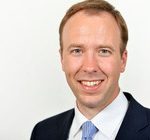
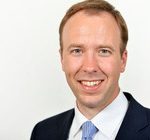
  • Matt Hancock – 2020 Statement on Covid-19

    Matt Hancock – 2020 Statement on Covid-19

    The statement made by Matt Hancock, the Secretary of State for Health and Social Care, in the House of Commons on 1 October 2020.

    With permission, Mr Speaker, I would like to make a statement about the work to tackle coronavirus.

    The virus continues to spread. Yesterday, there were 7,108 new cases. However, there are also early signs that the actions that we have collectively taken over the past month are starting to have a positive impact. Today’s Real-time Assessment of Community Transmission study from Imperial College suggests that although the R number remains above 1, there are early signs that it may be falling. We must not let up, but people everywhere can take some small hope that our efforts together may be beginning to work; I put it no stronger than that. Cases are still rising. However, as the chief medical officer set out yesterday, the second peak is highly localised, and in some parts of the country the virus is spreading fast. Our strategy is to suppress the virus, protecting the economy, education and the NHS, until a vaccine can make us safe.

    Earlier this week, we brought in further measures in the north-east. However, cases continue to rise fast in parts of Teesside and the north-west of England. In Liverpool, the number of cases are 268 per 100,000 population, so together we need to act. Working with council leaders and mayors, I am today extending the measures that have been in place in the north-east since the start of this week to the Liverpool city region, Warrington, Hartlepool and Middlesbrough. We will provide £7 million of funding to local authorities in these areas to support them with their vital work.

    The rules across the Liverpool city region, Warrington, Hartlepool and Middlesbrough will be as follows. We recommend against all social mixing between people in different households. We will bring in regulations, as we have in the north-east, to prevent in law social mixing between people in different households in all settings except outdoor public spaces such as parks and outdoor hospitality. We also recommend that people should not attend professional or amateur sporting events as spectators in the areas that are affected. We recommend that people visit care homes only in exceptional circumstances, and there will be guidance against all but essential travel. Essential travel of course includes going to work or school. I understand how much of an imposition this is, and I want rules like these to stay in place for as short a time as possible. I am sure we all do. The study published today shows us hope that together we can crack this, and the more people follow the rules and reduce their social contact, the quicker we can get Liverpool and the north-east back on their feet.

    We are aligning the measures in Bolton with the rest of Greater Manchester, and I would like to pay tribute to David Greenhalgh, the leader of Bolton council, for his constructive support, and to the Bolton MPs for all they have done in support of Bolton. There are no changes to measures in West Yorkshire, West Midlands, Leicester, Lancashire or the rest of Greater Manchester. It is critical that the whole country acts together now to control the spread of this virus, so please, for your loved ones, for your community and for your country, follow the rules and do your bit to keep this virus under control.​

    By its nature, this virus spreads through social contact, so it has had a terrible impact on the hospitality sector, which in good times exists to encourage the very social contact that we all enjoy. We have had to take difficult but necessary decisions to suppress the virus. The only alternative to suppressing the virus is to let it rip, and I will not do that. I know that many of the individual rules are challenging, but they are necessary and there are those early signs that they are working. In the measures we have introduced, including the 10 pm restriction, we are seeking to strike a balance, allowing people to continue to socialise safely where that is possible while reducing the social contact that the virus thrives on. Elsewhere in the world, they have introduced an evening restriction and then seen their case numbers fall. We know that later at night, people are less likely to follow social distancing.

    Of course we keep all our measures under review, and we will closely monitor the impact of this policy, as with all the others, while continuing our unprecedented support for hospitality businesses by cutting VAT, supporting the pay of staff, offering rates relief for businesses and giving billions of pounds of tax deferrals and loans. Our hospitality industry provides so much colour and life in this country, and we will do whatever we can to support it while acting fast to keep the virus under control. I know that these measures are hard, and that they are yet another sacrifice after a year of so many sacrifices already, but there are some signs that what we are doing together to respond to these awful circumstances is starting to work, so do not let up. Let’s all of us keep doing our bit, and one day over this virus we will prevail.

  • Matt Hancock – 2020 Comments on Self-Isolating

    Matt Hancock – 2020 Comments on Self-Isolating

    The comments made by Matt Hancock, the Secretary of State for Health and Social Care, on 28 September 2020.

    Anyone can catch coronavirus and anyone can spread it. We all have a crucial part to play in keeping the number of new infections down and protecting our loved ones.

    As cases rise it is imperative we take action, and we are introducing a legal duty to self-isolate when told to do so, with fines for breaches and a new £500 support payment for those on lower incomes who can’t work from home while they are self-isolating.

    These simple steps can make a huge difference to reduce the spread of the virus, but we will not hesitate to put in place further measures if cases continue to rise.

  • Matt Hancock – 2020 Statement on Covid-19

    Matt Hancock – 2020 Statement on Covid-19

    The statement made by Matt Hancock, the Secretary of State for Health and Social Care, in the House of Commons on 24 September 2020.

    As set out by the Prime Minister in Parliament on 22 September, the covid-19 infection rate is rising across the country. It is now vitally important that Government take decisive action to limit any further spread, and reduce the chance of more restrictive measures.

    I therefore wish to update you on the Health Protection (Coronavirus, Restrictions) (No. 2) (England) (Amendment) (No. 5) Regulations 2020 (“the No. 2 Amendment Regulations”), and the Health Protection (Coronavirus, Wearing of Face Coverings in a Relevant Place and on Public Transport) (England) (Amendment) (No. 3) Regulations 2020 which both came into force on 24 September 2020.

    It is now a legal requirement for hospitality venues (including cafes, bars, pubs and restaurants) to close between the hours of 10 pm and 5 am. This rule also applies to social clubs, cinemas, theatres, concert halls, casinos, bowling alleys, amusement arcades (and other indoor leisure centres or facilities), funfairs, theme parks, and adventure parks and activities, and bingo halls. However, cinemas, theatres and concert halls will be able to remain open beyond 10 pm if the performance started before 10 pm. There are certain exemptions to these restrictions, including delivery services, drive-through, and service stations. In addition, a “table service only” policy means that customers must be seated to consume food and drink served on hospitality premises.

    If businesses do not adhere to these new requirements, they could face a fine of £1,000 increasing in intervals to £2,000 then £4,000 to a maximum of £10,000 for subsequent offences.

    The “rule of six” introduced on 14 September prohibits social gatherings of more than six people in England, apart from specific exemptions. These exemptions have been further limited to reduce the risk of covid-19 transmission. The amendments include: limiting attendance at support groups, weddings and wedding receptions to 15 people and removing the existing exemption for ​indoor team sports (except for indoor disabled sports and supervised under-18s sports), and significant life events (other than weddings, civil partnerships, and funerals).

    Fines for initial breaches of the rule of six gathering limit have been doubled to reflect the severity of non-compliance. This means fines will be doubled from £100 to £200, doubling again upon reoffence.

    Amendments to the face covering regulations introduce a requirement for the public to wear a face covering in retail, leisure and hospitality venues including restaurants, public houses and bars, except for when seated to eat or drink. We have also extended the requirement to wear a face covering to staff working in these settings unless ​they have a reasonable excuse, in areas which are open to the public and where they are likely to come into close contact with members of the public.

    The penalty for failing to wear a face covering where one is required or gathering in groups of more than six, will now increase from £100 to £200 on the first offence (reduced to £100 if paid within 14 days), rising to a maximum of £6,400 for repeat offenders with no reduction for early payment from the second fine.

    Publicly available Government guidance on gov.uk is being updated to ensure that it is consistent with the new regulations. Sector bodies will also produce updated guidance where relevant.