Category: Coronavirus

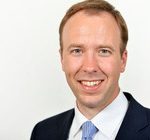
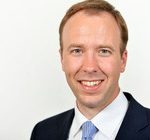
  • Matt Hancock – 2021 Comments on Public Staying at Home

    Matt Hancock – 2021 Comments on Public Staying at Home

    The comments made by Matt Hancock, the Secretary of State for Health and Social Care, on 10 January 2021.

    Our NHS is facing a huge challenge – it is under immense pressure and it’s imperative now more than ever we all play our part.

    I know how much we have all sacrificed already, but the new variant has significantly changed the current landscape and we absolutely cannot let up now.

    There is light at the end of the tunnel – the vaccine will provide a way out of this and over 1.5 million people across the UK have now been vaccinated.

    Every day we are closer to beating this virus, but right now, we need to pull together for one final push and I’m urging you to continue to do your bit by staying at home to save lives and protect the NHS.

  • Boris Johnson – 2021 Comments on Public Staying at Home

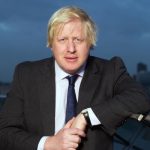
    Boris Johnson – 2021 Comments on Public Staying at Home

    The comments made by Boris Johnson, the Prime Minister, on 10 January 2021.

    Our hospitals are under more pressure than at any other time since the start of the pandemic, and infection rates across the entire country continue to soar at an alarming rate.

    The vaccine has given us renewed hope in our fight against the virus but we must not be complacent. The NHS is under severe strain and we must take action to protect it, both so our doctors and nurses can continue to save lives and so they can vaccinate as many people as possible as quickly as we can.

    I know the last year has taken its toll – but your compliance is now more vital than ever. So once again, I must urge everyone to stay at home, protect the NHS and save lives.

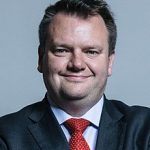
  • Nick Thomas-Symonds – 2021 Comments on Testing Passengers Entering the UK

    Nick Thomas-Symonds – 2021 Comments on Testing Passengers Entering the UK

    The comments made by Nick Thomas-Symonds, the Shadow Home Secretary, on 8 January 2021.

    This is a necessary step, as it’s vital to do everything possible to control the spread of the virus and any further strains.

    However, Labour has been calling for a comprehensive strategy on testing for international travel since April. Instead the Government has been lurching from one crisis to another.

    In that time they have lost control of the virus and risked leaving the nation’s doors unlocked against the possibility of different strains of the virus entering the country from across the world.

  • Alok Sharma – 2021 Comments on the Moderna Vaccine

    Alok Sharma – 2021 Comments on the Moderna Vaccine

    The comments made by Alok Sharma, the Business Secretary, on 8 January 2021.

    Vaccines are the key to releasing us all from the grip of this pandemic, and today’s news is yet another important step towards ending lockdown and returning to normal life.

    The UK was one of the first countries in Europe to sign a deal with Moderna, and I’m delighted our Vaccine Taskforce has secured an additional 10 million doses of their highly effective vaccine to protect the British public and save lives.

    From the scientists and trial volunteers to our world-class regulators and clinicians, we are enormously grateful to everyone who has played their part in this national effort to defeat the virus and get our country back on its feet.

  • Matt Hancock – 2021 Comments on the Moderna Vaccine

    Matt Hancock – 2021 Comments on the Moderna Vaccine

    The comments made by Matt Hancock, the Secretary of State for Health and Social Care, on 8 January 2021.

    This is fantastic news and another weapon in our arsenal to tame this awful disease.

    Through our vaccine delivery plan we have already vaccinated nearly 1.5 million people across the UK. The Moderna vaccine will boost our vaccination programme even further once doses become available from the spring.

    While we immunise those most at risk from COVID, I urge everyone to continue following the rules to keep cases low to protect our loved ones.

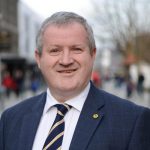
  • Ian Blackford – 2021 Response to Prime Minister’s Lockdown Statement

    Ian Blackford – 2021 Response to Prime Minister’s Lockdown Statement

    The speech made by Ian Blackford, the SNP Leader in the House of Commons, on 6 January 2021.

    Mr Speaker, may I take the opportunity to wish you, your colleagues and members of staff a good new year? I also send my best wishes for a speedy recovery to the hon. Member for Cardiff Central (Jo Stevens).

    People across these islands have entered into this new year feeling a mix of hope and fear: hope that the vaccine will finally end this terrible pandemic, but real fear, too, about the increased cases, the hospital admissions and, sadly, the lives lost. As our First Minister explained on Monday, this phase of the pandemic is now a race: a race to suppress the virus and a race to vaccinate our most vulnerable. If we are asking people for one last effort, if we are asking them to endure weeks of lockdown, then they need more clarity, they need protection and they need financial support. Most importantly, the UK Government have to act in a timely manner. It was said of the French designer, Pierre Cardin, that he was one step ahead of tomorrow. Nobody would say that this Prime Minister is one step ahead of tomorrow, or acts and shows leadership in dealing with this health pandemic. He was slow to act in the spring of 2020, slow in the autumn, and here again reacts after the events to the threats that we all face.

    I want to ask the Prime Minister four specific questions on vaccines, on travel and on financial support, and I would appreciate it if he answered each of them not just for us, but for all the public who want answers. First, on the vaccine, Professor Jonathan Van-Tam said last month that the only thing that will solve the issue of vaccine availability are the “fill and finish” supplies, such as specialised vials. Can the Prime Minister tell us exactly what actions are being taken to ramp up these supplies?

    On travel, is the Prime Minister prepared to learn from his Government’s past mistakes? Will he consider closing the UK border to all but essential travel to prevent new strains of the virus from spreading?

    On support for the self-employed, why did the Chancellor again decide yesterday to exclude the 3 million freelancers and self-employed who have not received a penny of financial support since the start of this crisis? They are desperate and they need help, and they expect the Prime Minister to respond today.

    Finally, on financial support for Scottish businesses, yesterday morning the Scottish Conservatives were busy making memes about an extra £375 million of Treasury support that they said was on its way to Scotland. Can the Prime Minister explain to Scottish businesses why, by the end of the day, it turned out there was no new money at all? Can the Prime Minister now give a personal commitment that the Scottish Government will get this money—this new money—for businesses in Scotland?

  • Boris Johnson – 2021 Lockdown Statement to the House of Commons

    Boris Johnson – 2021 Lockdown Statement to the House of Commons

    The statement made by Boris Johnson, the Prime Minister, in the House of Commons on 6 January 2021.

    Mr Speaker, I share your gratitude to the House of Commons staff for all their efforts and hard work to allow us to meet today in the way that we are. Before I begin my statement, I would like to say that I know the thoughts of the whole House will be with the hon. Member for Cardiff Central (Jo Stevens), who is currently in hospital with covid, and we wish her a full and speedy recovery.

    With your permission, Mr Speaker, I will make a statement about the measures we are taking to defeat this new variant of covid-19, protecting our NHS while it carries out the vaccinations that will finally free us from this wretched virus. There is a fundamental difference between the regulations before the House today and the position we have faced at any previous stage, because we now have the vaccines that are our means of escape, and we will use every available second of the lockdown to place this invisible shield around the elderly and the vulnerable.

    Already, with Pfizer and Oxford-AstraZeneca combined, we have immunised over 1.1 million people in England and over 1.3 million in the UK. Our NHS is following the plan drawn up by the Joint Committee on Vaccination and Immunisation, which is aimed at saving the most lives in the fastest possible time. Given that the average age of covid fatalities is over 80, it is significant that we have already vaccinated more than 650,000 people in that age group, meaning that within two to three weeks almost one in four of the most vulnerable groups will have a significant degree of immunity. By 15 February, the NHS is committed to offering a vaccination to everyone in the top four priority groups, including older care home residents and staff, everyone over 70, all frontline NHS and care staff and all those who are clinically extremely vulnerable.

    In working towards that target, there are already almost 1,000 vaccination centres across the country, including 595 GP-led sites, with a further 180 opening later this week, and 107 hospital sites, with another 100 later this week. Next week we will also have seven vaccination centres opening in places such as sports stadiums and exhibition centres. Pharmacies are already working with GPs to deliver the vaccine in many areas of the country, and I am grateful to Brigadier Prosser, who is leading the efforts of our armed forces in supporting this vaccine roll-out. We have already vaccinated more people in this country than the rest of Europe combined, and we will give the House the maximum possible transparency about our acceleration of this effort, publishing daily updates online from Monday, so that jab by jab hon. Members can scrutinise the progress being made every single day.

    Yet as we take this giant leap towards finally overcoming the virus and reclaiming our lives, we have to contend with the new variant, which is between 50% and 70% more contagious. With the old variant, the tiers agreed by the House last month were working. But, alas, this mutation, spreading with frightening ease and speed in spite of the sterling work of the British public, has led to more cases than we have ever seen before—numbers that, alas, cannot be explained away by the meteoric rise in testing. When the Office for National Statistics reports that more than 2% of the population is now infected, and when the number of patients in hospitals in England is now 40% higher than during the first peak in April, it is inescapable that the facts are changing and we must change our response. And so we have no choice but to return to a national lockdown in England, with similar measures being adopted by the devolved Administrations, so that we can control this new variant until we can take the most likely victims out of its path with vaccines.

    My right hon. Friend the Secretary of State for Health and Social Care will open the debate on the full regulations shortly, but the key point, I am afraid, is that once again we are instructing everyone to stay at home, leaving only for limited reasons permitted by law, such as to shop for essentials, to work if people absolutely cannot work from home, to exercise, to seek medical assistance such as getting a covid test or to escape injury or harm, including domestic abuse. We are advising the clinically extremely vulnerable to begin shielding again, and, because we must do everything possible to stop the spread of the disease, we have asked schools and colleges to close their doors to all except vulnerable children and those of critical workers.

    I do not think the House will be in any doubt about our determination—my determination—to keep schools open, especially primary schools, for as long as possible, because all the evidence shows that school is the best place for our children. Indeed, all the evidence shows that schools are safe and that the risk posed to children by coronavirus is vanishingly small. For most children, the most dangerous part of going to school, even in the midst of a global pandemic, remains, I am afraid, crossing the road in order to get there. But the data showed, and our scientific advisers agreed, that our efforts to contain the spread of this new variant would not be sufficient if schools continued to act as a vector, or potential vector, for spreading the virus between households.

    I know the whole House will join me in paying tribute to all the teachers, pupils and parents who are now making the rapid move to remote learning. We will do everything possible to support that process, building on the 560,000 laptops and tablets provided last year, with over 50,000 delivered to schools on Monday and more than 100,000 being delivered in total during the first week of term. We have partnered with some of the UK’s leading mobile operators to provide free mobile data to disadvantaged families to support access to education resources, and I am very grateful to EE, Three, Tesco Mobile, Smarty, Sky Mobile, Virgin Mobile and Vodafone for supporting this offer.

    Oak National Academy will continue to provide video lessons, and it is very good news that the BBC is launching the biggest education programme in its history, with both primary and secondary school programmes across its platforms. We recognise it will not be possible or fair for all exams to go ahead this summer as normal, and the Education Secretary will make a statement shortly.

    I know many people will ask whether the decision on schools could have been reached sooner, and the answer is that we have been doing everything in our power to keep them open, because children’s education is too vital and their futures too precious to be disrupted until every other avenue, every other option, has been closed off and every other course of action has been taken. That is why schools were the very last thing to close, as I have long promised they would be. When we begin to move out of lockdown, I promise that they will be the very first things to reopen. That moment may come after the February half-term, although we should remain extremely cautious about the timetable ahead.

    As was the case last spring, our emergence from the lockdown cocoon will be not a big bang but a gradual unwrapping. That is why the legislation this House will vote on later today runs until 31 March, not because we expect the full national lockdown to continue until then, but to allow a steady, controlled and evidence-led move down through the tiers on a regional basis, carefully and brick by brick, as it were, breaking free of our confinement, but without risking the hard-won gains that our protections have given us.

    These restrictions will be kept under continuous review, with a statutory requirement to review every two weeks and a legal obligation to remove them if they are no longer deemed necessary to limit the transmission of the virus. For as long as restrictions are in place we will continue to support everyone affected by them, from the continued provision of free school meals to the £4.6 billion of additional assistance for our retail, hospitality and leisure sectors announced by my right hon. Friend the Chancellor yesterday.

    We are in a tough final stretch, made only tougher by the new variant, but this country will come together. The miracle of scientific endeavour, much of it right here in the UK, has given us not only sight of the finish line but a clear route to get there.

    After the marathon of last year, we are indeed now in a sprint—a race to vaccinate the vulnerable faster than the virus can reach them, and every needle in every arm makes a difference. As I say, we are already vaccinating faster than every comparable country, and that rate I hope will only increase, but if we are going to win this race for our population, we have to give our army of vaccinators the biggest head start we possibly can and that is why, to do that, we must once again stay at home, protect the NHS and save lives. I commend this statement to the House.

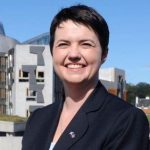
  • Ruth Davidson – 2021 Speech on Covid-19

    Ruth Davidson – 2021 Speech on Covid-19

    The speech made by Ruth Davidson, the Conservative MSP for Edinburgh Central, in the Scottish Parliament on 4 January 2021.

    First, I offer my condolences and those of my party on the news of the passing of Kay Ullrich, who was respected by members across the chamber.

    I, too, am grateful to you, Presiding Officer, for recalling Parliament for today’s statement.

    Nobody wants to live under restrictions for a moment longer than is absolutely necessary or wants those restrictions to be any tighter than needed. However, the increase in infection rate and the transmissibility of the new variant give grave cause for concern. We have come too far to throw all our efforts away, and the roll-out of the vaccine means that we can see a time, soon, when all this will begin to be over.

    That said, this is hard news at a hard time, when the resilience of people across the country has already been worn down over the past year. Many will be dismayed by today’s news, not least the parents of school pupils, who now have to rip up their childcare plans, negotiate with their employers and worry about their children’s fractured education.

    The Children and Young People’s Commissioner Scotland has expressed concerns that closing schools poses

    “a serious risk of harm to the wellbeing of children and young people”.

    He has warned that

    “support for online learning is being provided inconsistently”

    across Scotland and that

    “there is not enough national guidance and support for schools”

    from Government ministers, which threatens a further widening of the attainment gap. What further steps is the Scottish Government taking to address those concerns and to ensure that Scottish pupils continue to get equal access to high-quality education?

    The First Minister:

    I agree that it will be very hard for everybody across Scotland to hear this news today and to contemplate the reality of it over the next few weeks. I reiterate to people that we do not take these decisions lightly. We agonise over them, and we announce such restrictions only if we really feel that there is no alternative. Right now, the only alternative is greater loss of life and the potential for our national health service to be overwhelmed. At this point in time, speed of action is the most important factor of all.

    The decision over which we agonised most was that on the further closure of schools for the majority of pupils. The issue of schools, closed or open, has been contentious in recent weeks, and teachers and others have understandably raised concerns. However, I hope that people see from the responses and actions of the Government that we have striven, and will continue to strive, to keep schools open as normally, as often and for as long as possible. We deem today’s decision to be necessary, for the reasons that I have set out.

    I will ensure that the Cabinet Secretary for Education and Skills sets out for MSPs over the next couple of days the steps that are being taken to ensure that the provision of online education is as parents want it to be and that local authorities are working to ensure that it is of a consistent quality across the country. As I indicated in my opening remarks, we have already taken steps to ensure that more young people have access to digital devices, in order to make online learning more accessible to them.

    Schools and local authorities already have contingency plans in place. Advice for parents is available via the Parent Club website. Parents can also speak direct to schools for more advice. Glow, which is the national online learning platform, has seen a huge increase in users and usage since earlier last year, and we are working actively with local and national partners to enhance the online and remote learning options for pupils. That work will continue over the course of next week and for as long as is necessary.

    I end my answer by reiterating that we want the measures to be in place for as short a period as necessary, for all the reasons that I think everybody understands and agrees with.

    Ruth Davidson:

    Today’s announcement underscores the need to have a comprehensive test and trace system in place. In August, the First Minister promised that, between the UK Government Lighthouse laboratories and NHS Scotland facilities, we would have the capacity for 65,000 tests per day. However, the highest number of tests that were carried out in a single day was 30,619, on Christmas day. Currently, one third of tests are carried out by NHS Scotland, and the majority by the Lighthouse labs. She also promised that the three regional hubs for testing would have opened by the end of December but, so far, only two have done so.

    The test positivity rate over the past seven days is now the highest that it has ever been since the Scottish Government started publishing that data in August. Is there capacity in Scotland to carry out 65,000 tests per day? If there is, why is the number of tests that are carried out on any day well below half of that capacity? When will the Edinburgh regional hub be open for testing?

    The First Minister:

    Yes, there is capacity for 65,000 tests per day. That target, which we set earlier in the year, was met by Christmas. However, the number of tests that are actually carried out on any given day is largely demand driven, because it depends on the number of people with symptoms who come forward for testing. We have seen, and I think that we will continue to see, that number rise as, unfortunately, the faster-spreading strain of the virus infects more people. However, the numbers for capacity and the demand for testing will often not be exactly the same, for obvious reasons.

    Although some aspects of testing of asymptomatic people are not done through the PCR testing that goes through the laboratory network—they are now increasingly done through lateral flow testing, the results of which do not appear in these numbers—other aspects of it are done in that way. For example, we are well through the process of transferring testing of care home staff from the Lighthouse lab network to the NHS Scotland lab network.

    We have a well-functioning test and protect system, which continues to be a really important part of our response to the virus. However, because the virus is now spreading faster, we must have a range of different responses in order to complement that system. As far as interventions are concerned, just as the test and protect system has been important, the vaccine programme will become increasingly important over the next period.

    I understand that there has been a last-minute—or, I should say, late-stage—issue with a sprinkler system in the Edinburgh regional lab. That is in the process of being rectified, and the lab is due to open shortly.

    Ruth Davidson:

    Today’s announcement of further restrictions is particularly difficult to take when in recent weeks we have had such positive news of vaccines being approved and being bought in such large quantities by the UK Government. In her statement, the First Minister said that we are in a race between the vaccine and the virus. It will be impossible to know whether we are winning that race at any given time if we show only the daily infection figures without the daily vaccination figures. Members of the public need more information on precisely how the roll-out is going, both nationally and in their areas, as well as on when they will receive their doses. Also, last week, the health secretary said that those aged over 80 will be invited by letter to attend for vaccination.

    Will the First Minister commit today to publishing not just the national vaccination figures but the numbers of people who have been vaccinated, broken down by health board, so that people can see the progress that has been made in their communities? Can she tell us now when everyone in the over-80 cohort will receive letters with details of their vaccination appointments?

    The First Minister:

    When Parliament was recalled last week, I said—I think in response to a question from a Labour member—that we intend to break down into categories the numbers of people who have been vaccinated, which we currently publish weekly. I hope that we could also do so by region and by health board. I will consider whether there is potential to have greater frequency of publication. I am simply mindful of not putting too many burdens of data collection and publication on the people whom we are expecting to undertake that huge logistical challenge, so it might be that weekly publication will remain the best balance, together with a greater breakdown of statistics.

    It is not that long since the vaccines were approved. In particular, the Oxford-AstraZeneca one is still at an early stage. However, we have already vaccinated more than 100,000 people. At this stage, a small percentage of our population has been vaccinated; the level in Scotland is slightly higher than those in the other UK nations. However, we must continue to focus on accelerating the process as much as possible. As I said earlier, at the moment that is largely constrained by supply. We know what we expect to receive for January, which I hope is a conservative estimate. We are not yet clear on what supplies we can expect beyond that.

    As for the call for priority for the over-80 population, vaccination of those people will start shortly and will be an on-going process. We have been recalculating our modelling for the speed and timescale of vaccination as a result of the change in the chief medical officer’s advice on giving the second dose of the vaccine up to 12 weeks after the first dose, rather than three weeks after it. That will allow us to get the first dose of vaccine to more people much more quickly. We are ensuring that we take full advantage of that, just as we are taking full advantage of the supplies of the vaccine as we get them.

    Ruth Davidson:

    Today’s announcement raises immediate practical questions, and one of the primary ones concerns the legal requirement for people to work from home where they can. That raises all sorts of issues, including who is a key worker and what constitutes essential labour in a workplace outside the home. Who should make such decisions, and what is the process for arbitration in the event of a dispute between a workplace and a local authority or between a boss and an employee? In the first lockdown, we saw different interpretations being used by different local authorities, and different services being provided depending on category. People need to know what the new rules are, how they will apply to them and what recourse will exist where there is conflict. Will the First Minister therefore provide clarity on those important points?

    The First Minister:

    We will set out more guidance on those points. On the issue of key workers in the education context, local authorities have specifically asked for some flexibility in that regard, which I think it is important to afford them.

    There is a balance to be struck. In terms of business, we are not, as of now, in quite as restrictive a position as we were back in March—when non-essential work in construction and manufacturing, for example, was closed—but we need to keep that under review. We need to look at not only the spread of the virus but the really important relationship, which I understand, between people’s ability to work—or rather, the requirement on them to work—and their ability to look after their children and take part in online learning for those children at home.

    The Cabinet Secretary for Economy, Fair Work and Culture will have discussions as early as this afternoon with business organisations, and discussions with trade unions, to ensure that we help people—just as we did back in March—to navigate their way through what I recognise is a difficult situation. However, the message to businesses is that we are again asking them to scrutinise their operations rigorously, as they did in March, and assure themselves that the people whom they are requiring to be at work are genuinely only those who cannot do their job at home. There is a need to ensure that as many people as possible who can work from home are supported to do so.
  • Keir Starmer – 2021 Response to Prime Minister’s Lockdown Statement

    Keir Starmer – 2021 Response to Prime Minister’s Lockdown Statement

    The speech made by Keir Starmer, the Leader of the Opposition, on 6 January 2021.

    Can I thank the Prime Minister for advance sight of his statement and for his telephone call on Monday to update me.

    Can I also thank him for his kind words about the Hon Member for Cardiff Central. She is still in hospital but I’m happy to say she is now improving.

    I also want to thank everyone in our NHS and on the frontline for all the work they are doing at the moment in the most stressful of circumstances.

    The situation we face is clearly very serious.

    Perhaps the darkest moment of the pandemic.

    The virus is out of control.

    Over a million people in England now have Covid.

    The number of hospital admissions is rising.

    Tragically, so are the numbers of people dying.

    It’s only the early days of January and the NHS is under huge strain.

    In those circumstances tougher restrictions are necessary.

    We will support them.

    We will vote for them.

    And urge everybody to comply with the new rules.

    Stay at home.

    Protect the NHS.

    Save lives.

    But this is not just bad luck.

    It’s not inevitable.

    It follows a pattern.

    In the first wave of the pandemic, the government was repeatedly too slow to act.

    And we ended 2020, with one of the highest death tolls in Europe.

    And the worst economic hit of any major economy.

    In the early summer, a government report called ‘Preparing for a Challenging Winter’ warned of the risk of a second wave of the virus mutating, and the NHS being overwhelmed.

    It also set out the preparations the government needed to take.

    I put that report to the Prime Minister in PMQs in July.

    Throughout the autumn, track and trace didn’t work.

    In September, Sage advised a circuit break.

    But the Prime Minister delayed for weeks before acting.

    We had a tier system that didn’t work.

    Then we had the debacle of the delayed decision to change the rules on mixing at Christmas.

    The most recent advice about the situation we are now in was given on 22 December.

    But no action was taken for two weeks.

    These are the decisions that have led us to the position we are now in.

    The vaccine is the only way out now.

    And we all must support the national effort to get it rolled out as quickly as possible.

    We will do whatever we can to support the government on this.

    We were the first country to get the vaccine.

    Let’s be the first to get the country to roll-out a vaccine programme too.

    But we need a plan to work to.

    The Prime Minister’s given some indication in the last few days, but can he tell the House exactly what the plan is?

    Can the NHS deliver 2m vaccines a week?

    I think they can, I hope they can, but have they been given the support and resource to do so? And we will support that, of course.

    Will there be sufficient doses available, week-on-week, to get us to 14m doses by mid-February?

    What can we do to help and it’s vital that that happens.

    I’m glad to hear that community pharmacies will be helping – can we use volunteers in support of this national effort?

    Let me turn to financial support.

    Yesterday’s announcement will help.

    But the British Chamber of Commerce – and others – have already warned it’s not enough.

    There are big gaps and big questions.

    First, why is there still nothing to help the three million self-employed who have been excluded from the very start?

    That was unfair in March, even more unfair in the autumn, it’s totally unforgivable now.

    It may well be a whole year that group have gone without any meaningful support.

    That gap needs to be plugged.

    Secondly, will the Prime Minister drop his plan to cut Universal Credit by £20 a week?

    That needs to be done now. And we will support it.

    Will he immediately extend the eviction ban – which is due to run out in just 5 days’ time, just as we’re going in to this new phase?

    Third, will he address the obvious issues with financial support for those required to isolate – including Statutory Sick Pay and support for local councils?

    And will the Prime Minister finally recognise that now is the worst possible time to freeze pay for our key workers?

    On schools, we all recognise the huge damage that closing schools will cause for many children and families.

    But the Prime Minister knew that closures might be necessary, so there should always have been a contingency plan.

    Up to 1.8 million children don’t have access to a home computer and 900,000 children live in households that rely on mobile internet connection.

    So can the Prime Minister tell us, when is the Government going to get the laptops to all those that need them?

    He’s spoken about the 50,000 delivered and the 100,000 more but 1.8 million children do have access to a home computer so there’s real urgency now as we go into these weeks.

    I welcome what the Prime Minister said about telecoms companies cutting the costs of online learning. It’s vital that they do so, I’m assuming that’s happening straight away because we can’t delay there.

    And will the Prime Minister be straight about what’s going happen with exams this year?

    We cannot leave this to months down the line.

    In particular and very pressing now, for those who were meant to be taking BTEC exams in the next few days.

    Surely they must just be cancelled. Some leadership on this is desperately needed.

    Next, our borders.

    The Prime Minister knows there is real concern about the rapid transmission of this disease and that new strains are being detected in South Africa, Denmark and elsewhere.

    The quarantine system isn’t working.

    And the Prime Minister said yesterday that: ‘we will be bringing in extra measures’ at the border.

    I have to ask, why have those measures not been introduced already?

    This has been briefed to the media for days, but nothing has happened.

    Mr Speaker, this is the third time the country has been asked to close its doors.

    We need to make sure it is the last.

    We will support the Prime Minister and the Government in these measures.

    We will carry the message and do whatever is asked of us, but we will demand that the Prime Minister keeps his side of the bargain and use this latest lockdown to:

    Support families
    Protect businesses
    And to get the vaccine rolled out as quick and safely as possible.

    Thank you.

  • Boris Johnson – 2021 Statement Announcing New National Lockdown

    Boris Johnson – 2021 Statement Announcing New National Lockdown

    The statement made by Boris Johnson, the Prime Minister, on 4 January 2021.

    Since the pandemic began last year, the whole United Kingdom has been engaged in a great national effort to fight Covid.

    And there is no doubt that in fighting the old variant of the virus, our collective efforts were working and would have continued to work.

    But we now have a new variant of the virus. It has been both frustrating and alarming to see the speed with which the new variant is spreading.

    Our scientists have confirmed this new variant is between 50 and 70 per cent more transmissible – that means you are much, much more likely to catch the virus and to pass it on.

    As I speak to you tonight, our hospitals are under more pressure from Covid than at any time since the start of the pandemic.

    In England alone, the number of Covid patients in hospitals has increased by nearly a third in the last week, to almost 27,000.

    That number is 40 per cent higher than the first peak in April.

    On 29 December, more than 80,000 people tested positive for Covid across the UK – a new record.

    The number of deaths is up by 20 per cent over the last week and will sadly rise further. My thoughts are with all those who have lost loved ones.

    With most of the country already under extreme measures, it is clear that we need to do more, together, to bring this new variant under control while our vaccines are rolled out.

    In England, we must therefore go into a national lockdown which is tough enough to contain this variant.

    That means the Government is once again instructing you to stay at home.

    You may only leave home for limited reasons permitted in law, such as to shop for essentials, to work if you absolutely cannot work from home, to exercise, to seek medical assistance such as getting a Covid test, or to escape domestic abuse.

    The full details on what you can and can’t do will be available at gov.uk/coronavirus.

    If you are clinically extremely vulnerable, we are advising you to begin shielding again and you will shortly receive a letter about what this means for you.

    And because we now have to do everything we possibly can to stop the spread of the disease, primary schools, secondary schools and colleges across England must move to remote provision from tomorrow, except for vulnerable children and the children of key workers.

    Everyone will still be able to access early years settings such as nurseries.

    We recognise that this will mean it is not possible or fair for all exams to go ahead this summer as normal. The Education Secretary will work with Ofqual to put in place alternative arrangements.

    We will provide extra support to ensure that pupils entitled to free school meals will continue to receive them while schools are closed, and we’ll distribute more devices to support remote education.

    I completely understand the inconvenience and distress this late change will cause millions of parents and pupils up and down the country.

    Parents whose children were in school today may reasonably ask why we did not take this decision sooner.

    The answer is simply that we have been doing everything in our power to keep schools open, because we know how important each day in education is to children’s life chances.

    And I want to stress that the problem is not that schools are unsafe for children – children are still very unlikely to be severely affected by even the new variant of Covid.

    The problem is that schools may nonetheless act as vectors for transmission, causing the virus to spread between households.

    Today the United Kingdom’s Chief Medical Officers have advised that the country should move to alert level 5, meaning that if action is not taken NHS capacity may be overwhelmed within 21 days.

    Of course, there is one huge difference compared to last year.

    We are now rolling out the biggest vaccination programme in our history.

    So far, we in the UK have vaccinated more people than the rest of Europe combined.

    With the arrival today of the UK’s own Oxford Astra Zeneca vaccine, the pace of vaccination is accelerating.

    I can share with you tonight the NHS’s realistic expectations for the vaccination programme in the coming weeks.

    By the middle of February, if things go well and with a fair wind in our sails, we expect to have offered the first vaccine dose to everyone in the four top priority groups identified by the Joint Committee on Vaccination and Immunisation.

    That means vaccinating all residents in a care home for older adults and their carers, everyone over the age of 70, all frontline health and social care workers, and everyone who is clinically extremely vulnerable.

    If we succeed in vaccinating all those groups, we will have removed huge numbers of people from the path of the virus.

    And of course, that will eventually enable us to lift many of the restrictions we have endured for so long.

    I must stress that even if we achieve this goal, there remains a time lag of two to three weeks from getting a jab to receiving immunity.

    And there will be a further time lag before the pressure on the NHS is lifted.

    So we should remain cautious about the timetable ahead.

    But if our understanding of the virus doesn’t change dramatically once again…

    If the rollout of the vaccine programme continues to be successful…

    If deaths start to fall as the vaccine takes effect…

    And, critically, if everyone plays their part by following the rules…

    Then I hope we can steadily move out of lockdown, reopening schools after the February half term and starting, cautiously, to move regions down the tiers.

    I want to say to everyone right across the United Kingdom that I know how tough this is, I know how frustrated you are, I know that you have had more than enough of government guidance about defeating this virus.

    But now more than ever, we must pull together.

    You should follow the new rules from now, and they will become law in the early hours of Wednesday morning. Parliament will meet – largely remotely – later that day.

    I know that the devolved administrations in Scotland, Wales and Northern Ireland share my conviction this is a pivotal moment and they’re taking similar steps.

    The weeks ahead will be the hardest yet but I really do believe that we are entering the last phase of the struggle.

    Because with every jab that goes into our arms, we are tilting the odds against Covid and in favour of the British people.

    And, thanks to the miracle of science, not only is the end in sight and we know exactly how we will get there.

    But for now, I am afraid, you must once again stay at home, protect the NHS and save lives.

    Thank you all very much.