The comments made by Keir Starmer, the Leader of the Opposition, on 28 January 2021.
Fantastic news about the Novavax vaccine.
This is one more step towards getting Britain vaccinated. Thank you to everyone involved in this national effort.

The comments made by Keir Starmer, the Leader of the Opposition, on 28 January 2021.
Fantastic news about the Novavax vaccine.
This is one more step towards getting Britain vaccinated. Thank you to everyone involved in this national effort.
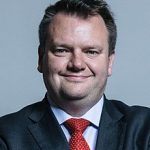
The comments made by Nick Thomas-Symonds, the Shadow Home Secretary, on 29 January 2021.
Yet again on border security Government action is too little, too late. Limiting restrictions to just a handful of countries puts at risk the gains being made by the vaccine, by exposing us to potentially resistant Covid-19 strains, undermining the huge sacrifices of the British people.
Labour is calling on the Government to introduce a comprehensive hotel quarantine system for all travellers, in order to shut down the gaping holes in the Government’s plans. The plans have no clear basis in science and fail to recognise that we do not know where the next strains of the virus will emerge from, until it is too late.
The fact that Britain has already imported strains of the virus identified in South Africa and Brazil, shows that the quarantine systems in place are woefully inadequate, little wonder when just three in 100 people who are supposed to be quarantining are successfully contacted.
The speech made by Nick Thomas-Symonds, the Shadow Home Secretary, in the House of Commons on 27 January 2021.
I am grateful to the Home Secretary for her statement and for advance sight of it. We stand here today with knowledge of the terrible fact that more than 100,000 people have died as a result of this awful virus. We mourn all those lost and think of the families for whom life will never be the same again. In marking that fact, it is not enough to say, “Let us wait to find out why Britain has fared so badly.” We must learn from past mistakes and, crucially, act now. One of the key areas where the Government have clearly fallen short is on protecting our borders. I am deeply concerned that the measures outlined today are yet another example of that—too little, too late.
Yet again, the Government are lurching from one crisis to another, devoid of strategy. Limiting hotel quarantining to only the countries from which travel for non-UK residents was already banned means that the Home Secretary’s proposals do not go anywhere near far enough. Perhaps that is why it appears that there has been briefing to newspapers that the Home Secretary is personally not in support of the policy that she is now advocating to the public.
Mutations of the virus risk undermining the efficacy of the vaccines, threatening life and hope. We cannot know where these mutations will emerge from next. The truth is that the Government are once again behind the curve. Labour is calling for comprehensive hotel quarantining. Today’s announcement is too limited. It leaves huge gaps in our defences against emerging strains. We know that the strains that emerged in South Africa and Brazil have already reached these shores. That is little wonder given that controls have been so lax, with just three in every 100 people quarantining having been successfully contacted and border testing introduced only 10 months after our first lockdown—and even then the start had to be delayed, because the Government could not get the necessary systems in place.
We have seen this reluctance to be decisive from the start of crisis. From 1 January to 23 March last year, only 273 people were formally quarantined, when more than 18 million people entered the country by air. That was at a time when the Government’s chief scientific adviser said:
“A lot of the cases in the UK didn’t come from China…They actually came from European imports and the high level of travel into the UK around that time.”
In April, I wrote to the Home Secretary to ask her to learn the lessons, but by May the UK still was an international outlier, with no travel controls.
As the Home Secretary today belatedly announces very limited hotel quarantining, many questions remain, and I would appreciate it if she would address them. First, how can we be assured that travellers will not arrive with emergent strains via countries that are not on the control list? Secondly, what support is being made available to ensure improvements to quarantine compliance and the isolation assurance service? Frankly, why has it taken so long to step up checks, as the Home Secretary said today, when we know that the system has been failing for months? What discussions have taken place with hotel chains to ensure the availability of rooms? Again, for those travelling out of the UK, why is the enforcement being stepped up only now?
Will the Home Secretary ensure that sufficient support and resources are made available for these very important tasks? When will the Government announce a sector-specific support package for aviation? Getting this policy right is absolutely crucial. The Government cannot allow our border policy to continue to be the Achilles heel of the heroic efforts of the British people during this pandemic.

The statement made by Priti Patel, the Home Secretary, in the House of Commons on 27 January 2021.
With permission, I would like to make a statement. First, I want to begin by echoing the Prime Minister’s remarks. The scale of the suffering that this virus has inflicted is truly heart-breaking, and my thoughts are with those who have tragically lost loved ones.
Yesterday, when I addressed the House, I said that the Government’s focus was on protecting the UK’s world-leading vaccination programme—a programme that we should be proud of—and reducing the risk of the new strain of the virus being transmitted from someone coming into the UK. Yesterday, the Foreign Office announced support for more countries to access the UK’s world-leading gene sequencing capabilities to increase early identification of any new strains of the virus. This is a vital step forward to support the global response to coronavirus, but it is simply not enough on its own to reduce risks to the United Kingdom.
It is clear that there are still too many people coming in and out of our country each day. Today I am announcing further action to strengthen the health measures that we already have at the border, in order to reduce passenger flow—so that only the small number of people for whom it is absolutely essential to travel are doing so—and therefore reduce the risk to our world-leading vaccine programme.
For those entering the UK, there will be a number of measures. First, the police have stepped up checks and are carrying out more physical checks at addresses to ensure that people are complying with the rules on self-isolation. Secondly, we will continue to refuse entry to non-UK residents from red list countries that are already subject to the UK travel ban. Thirdly, as the Prime Minister has said, we will introduce a new managed isolation process in hotels for those who cannot be refused entry, including those arriving home from countries where we have already imposed international travel bans. They will be required to isolate for 10 days, without exception. The Department of Health and Social Care will set out further details on this approach next week.
For those travelling out of the UK, we will also be enhancing and stepping up enforcement of the rules, because despite the stay-at-home regulations, we are still seeing people not complying with the rules. The rules are clear: people should be staying at home unless they have a valid reason to leave. Going on holiday is not a valid reason.
We will introduce a new requirement so that people wishing to travel must first make a declaration as to why they need to travel. This “reason for travel” will be checked by carriers prior to departure. That approach effectively mirrors the checks on arrivals that are already in place with the passenger locator form. Secondly, working with policing partners, we will increase the police presence at ports and at airports, fining those in breach of the stay-at-home regulations. Anyone who does not have a valid reason for travel will be directed to return home or they will face a fine. Thirdly, we will urgently review the list of travel exemptions to make sure that only the most important and exceptional reasons are included.
These are crucial new measures to protect us all. They also complement the robust action that we have consistently taken at the border. While these new measures are being operationalised, I would like to remind anyone seeking to enter our country to comply with the rules. This includes providing evidence of a negative covid test before entering the United Kingdom, self-isolation on arrival for 10 days and the completion of the passenger locator form. Immediately stepping up enforcement means that if someone does not follow the regulations, they will face a fine.
These new measures at the border are a necessary step to protect the public and our world-class vaccination programme. Every layer of protection that we have put in place will help to reduce the risk of transmission of this virus and any new potential strain from entering the UK. As we have done throughout this global health emergency, we will continue to take all steps necessary to protect the public and help prevent the spread of the virus. I commend the statement to the House.
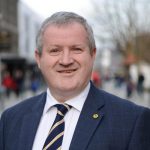
The speech made by Ian Blackford, the SNP MP for Ross, Skye and Lochaber, in the House of Commons on 27 January 2021.
Let me thank the Prime Minister for an advance copy of his statement.
As we know, yesterday the UK reached yet another terrible milestone—100,000 covid-related deaths. Today, it is only right that we reflect on all those who have lost their lives during this pandemic. Our thoughts and prayers are most especially with their families and those who are left with the heaviest burden of grief. In time, there will be a reckoning on the UK Government’s response to this virus and it is clear that that verdict may well be damning. In the here and now, though, it remains our job to focus on how we can support and save as many people as possible in the weeks and months ahead. That means a renewed commitment to maintaining public health, but it also must mean a renewed package of financial support for all those—all those, Prime Minister—who have been left behind by this Tory Government.
Right now, covid is the immediate threat to life, but poverty remains a killer, too. In 2019, the Institute for Public Policy Research revealed that Tory austerity cuts over the previous decade had resulted in as many as 130,000 preventable deaths. The Prime Minister promised not to repeat Tory austerity. If people are to believe him, he should start by making three important announcements today: extend the furlough scheme for the full duration of the pandemic; maintain the uplift to universal credit and apply it to legacy benefits; and put in place a package of support for the 3 million excluded.
Prime Minister, eleventh-hour announcements have to stop. These decisions cannot wait until the Budget in March. People need certainty now. I asked the Prime Minister these same questions at Prime Minister’s questions, but I failed to get a straight answer, so please try again, Prime Minister. Will his Government extend furlough, maintain the universal credit uplift and offer support for the 3 million excluded? Finally, on international travel, both the Scottish and Welsh Governments want to go further on quarantining measures than what his UK Government are proposing. Will the Prime Minister stop his half measures and join the Governments in Scotland and Wales in stricter enforcements on international travel? That, Prime Minister, would be leadership.
The speech made by Keir Starmer, the Leader of the Opposition, in the House of Commons on 27 January 2021.
I thank the Prime Minister for advance sight of his statement. To lose 100,000 people to this virus is nothing short of a national tragedy. It is a stark number: an empty chair at the kitchen table; a person obviously taken before their time. Today, we should remember that, and we should mark the moment by learning the lessons of the last year to make sure that the same mistakes are not made again.
Of course, any Government would have struggled with this pandemic—I get that and the British people get that—but the reality is that Britain is the first country in Europe to suffer 100,000 deaths, and we have one of the highest death rates in the world. The Prime Minister often says that he has been balancing the health restrictions against economic risks, but that simply does not wash, because alongside that high death toll we also have the deepest recession of any major economy and the lowest growth of any major economy, and we are on course to have one of the slowest recoveries of any major economy.
So for all the contrition and sympathy that the Prime Minister expresses, and I recognise how heartfelt that is, the truth is that this was not inevitable—it was not just bad luck. It is the result of a huge number of mistakes by the Prime Minister during the course of this pandemic. We were too slow into lockdown last March, too slow to get protective equipment to the front line and, of course, too slow to protect our care homes—20% of deaths in this pandemic have come from care home residents. I really do not think that the Prime Minister and the Health Secretary understand just how offensive it was to pretend that there was a protective ring around our care homes.
The Government had the chance over the summer to learn from those mistakes in the first wave and prepare for a second wave and a challenging winter. I put that challenge to the Prime Minister in June, but that chance was wasted. The Government then went on to fail to deliver an effective test, trace and isolate system, despite all the warnings. They failed to deliver clear and reliable public messaging, crucial in a pandemic—one minute telling people to go to work, then to do the complete opposite.
The Prime Minister has failed on a number of occasions to follow the scientific advice that the virus was getting out of control. First, in September, when that advice was given, they failed to implement a circuit break or lockdown over half-term as we suggested. Then in December, we had the fiasco over Christmas mixing. Once again, we had the 13-day delay from 22 December, when that further medical advice was given, to when the third national lockdown was finally introduced. As a result, we have seen a third wave more deadly than the first and second waves. Fifty thousand people have died since 11 November. That is 50,000 deaths in 77 days. That is a scarcely believable toll on the British people.
In isolation, any of these mistakes are perhaps understandable. Taken together, it is a damning indictment of how the Government have handled this pandemic. The Prime Minister says, “Well, now is not the time to answer the question why.” That is the answer he gave back in the summer after the first wave. He said the same after the second wave, and he says it again now, each time repeating the mistakes over and over again. That is why now is the time to ask and answer the question why.
The way out of this nightmare has now been provided by our amazing scientists, our NHS, our armed forces and hundreds of thousands of volunteers. The vaccine programme is making incredible progress. The British people have come together to deliver what is the largest peacetime effort in our history. Despite the Prime Minister’s constant complaining, all of us—all of us—are doing whatever we can to help the vaccine roll out as swiftly and as safely as possible.
On schools, first I have to say that even for this Prime Minister it is quite something to open schools one day and close them the next, to call them vectors of transmission and then to challenge me to say that the schools he has closed are safe, only now to give a statement where he says that schools cannot open until 8 March at the earliest because it is not safe to do so. That is his analysis. It is the sort of nonsense that has led us to the highest death toll in Europe and the worst recession.
We of course welcome any steps forward in reopening schools, and we will look at the detail of how the Education Secretary plans to deliver that and the plans to deliver online learning. I also hope that the Prime Minister will take seriously our proposal—echoed, incidentally, by the Children’s Commissioner and the Conservative Chair of the Education Committee, the right hon. Member for Harlow (Robert Halfon)—that once the first four categories of the most vulnerable have been vaccinated by mid-February, he should bring forward the vaccination of key workers and use that window of the February half-term to vaccinate all school staff, including every teacher and teaching assistant. There is a clear week there when that could be done, and it should be done.
On borders, we will look at the detail—
Mr Speaker
Order. I hope that the right hon. and learned Gentleman’s comments are coming to an end; he is well past the five minutes allocated.
Keir Starmer
On borders, we will look at the Prime Minister’s statement in detail, and obviously hear what the Home Secretary has to say, but in due course there will be a public inquiry. The Prime Minister will have to answer the question. I hope that he can finally answer this very simple and direct question, because yesterday he was maintaining that the Government had done
“everything we could to save lives.”
Is he really saying to those grieving families that their loss was just inevitable and that none of the 100,000 deaths could have been avoided?
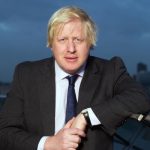
The statement made by Boris Johnson, the Prime Minister, in the House of Commons on 27 January 2021.
With permission, Mr Speaker, I will make a statement on the Government’s measures to safeguard our United Kingdom against the new variants of covid until we have administered enough vaccinations to free ourselves from the virus.
I am acutely conscious that at this moment parents are balancing the demands of working from home with supporting the education of their children, businesspeople are enduring the sight of their shops or restaurants or other enterprises standing empty and idle, and, sadly, too many are coping with the anxiety of illness or the tragedy of bereavement.
I am deeply sorry to say that the number of people that have been taken from us has surpassed 100,000, as the House was discussing only an hour or so ago. I know that the House will join me in offering condolences to all those who have lost loved ones. The most important thing we can do to honour their memory is to persevere against this virus with ever greater resolve.
That is why we have launched the biggest vaccination programme in British history. Three weeks ago, I reported that the UK had immunised 1.3 million people; now that figure has multiplied more than fivefold to exceed 6.8 million people—more than any other country in Europe and over 13% of the entire adult population. In England we have now delivered first doses to over four fifths of those aged 80 or over, over half of those aged between 75 and 79, and three quarters of elderly care home residents. Though it remains an exacting target, we are on track to achieve our goal of offering a first dose to everyone in the top four priority groups by the middle of February.
I can also reassure the House that all current evidence shows that both the vaccines we are administering remain effective against the new variant that was first identified in London and the south-east, by means of our world-leading capability in genomic sequencing. The UK has now sequenced over half of all covid-19 viral genomes that have been submitted to the global database—10 times more than any other country. Yesterday, my right hon. Friend the Health Secretary announced our new variant assessment platform, through which we will work with the World Health Organisation to offer our expertise to help other countries, because a new variant anywhere poses a potential threat everywhere.
To guard against this danger, we must also take additional steps to strengthen our borders to stop those strains from entering the UK. We have already temporarily closed all travel corridors, and we are already requiring anyone coming to this country to have proof of a negative covid test taken in the 72 hours before leaving. They must also complete a passenger locator form which must be checked before they board, and then quarantine on arrival for 10 days. I want to make it clear that under the stay-at-home regulations, it is illegal to leave home to travel abroad for leisure purposes. We will enforce this at ports and airports by asking people why they are leaving and instructing them to return home if they do not have a valid reason to travel.
We have also banned all travel from 22 countries where there is a risk of known variants, including South Africa, Portugal and South American nations. In order to reduce the risk posed by UK nationals and residents returning home from these countries, I can announce that we will require all such arrivals who cannot be refused entry to isolate in Government-provided accommodation such as hotels for 10 days, without exception. They will be met at the airport and transported directly into quarantine. The Department of Health and Social Care is working to establish these facilities as quickly as possible. My right hon. Friend the Home Secretary will set out the details of our plans in her statement shortly. My right hon. Friend the Chancellor of the Duchy of Lancaster has this morning spoken to the First Ministers of Scotland and Wales and the First Minister and Deputy First Minister of Northern Ireland and, as we have throughout this pandemic, we will be working closely with the devolved Administrations to implement these new measures so that, where possible, we continue with a UK-wide approach.
It was the emergence of a new variant that is up to 70% more transmissible that forced England back into lockdown, and I know that everyone yearns to know how much longer they must endure these restrictions, with all their consequences for jobs and livelihoods and, most tragically of all, for the life chances of our children. We will not persist for a day longer than is necessary, but nor can we relax too soon, because if we do, we run the risk of our NHS coming under still greater pressure, compelling us to reimpose every restriction and sustain those restrictions for longer.
So far, our efforts do appear to have reduced the R rate, but we do not yet have enough data to know exactly how soon it will be safe to reopen our society and economy. At this point, we do not have enough data to judge the full effect of vaccines in blocking transmission, nor the extent and speed with which the vaccines will reduce hospitalisations and deaths, nor how quickly the combination of vaccinations and the lockdown can be expected to ease the pressure on the NHS.
What we do know is that we remain in a perilous situation, with more than 37,000 patients now in hospital with covid, almost double the peak of the first wave, but the overall picture should be clearer by mid-February. By then, we will know much more about the effect of vaccines in preventing hospitalisations and deaths, using data from the UK but also other nations such as Israel. We will know how successful the current restrictions have been in driving down infections. We will also know how many people are still in hospital with covid, which we simply cannot predict with certainty today. We will then be in a better position to chart a course out of lockdown without risking a further surge that would overwhelm the NHS.
When I announced the lockdown, I said that we would review its measures in mid-February, once the most vulnerable had been offered the first dose of the vaccine, so I can tell the House that when Parliament returns from recess in the week commencing 22 February, subject to the full agreement of the House, we intend to set out the results of that review and publish our plan for taking the country out of lockdown. That plan will, of course, depend on the continued success of our vaccination programme, on the capacity of the NHS and on deaths falling at the pace we would expect as more people are inoculated.
Our aim will be to set out a gradual and phased approach towards easing the restrictions in a sustainable way, guided by the principles we have observed throughout the pandemic and beginning with the most important principle of all: that reopening schools must be our national priority. The first sign of normality beginning to return should be pupils going back to their classrooms. I know how parents and teachers need as much certainty as possible, including two weeks’ notice of the return of face-to-face teaching. I must inform the House that, for the reasons I have outlined, it will not be possible to reopen schools immediately after the February half-term. I know how frustrating that will be for pupils and teachers, who want nothing more than to get back to the classroom, and for parents and carers who have spent so many months juggling their day jobs not only with home schooling but with meeting the myriad other demands of their children from breakfast until bedtime.
I know, too, the worries we all share about the mental health of our young people during this prolonged period of being stuck at home, so our plan for leaving the lockdown will set out our approach towards re-opening schools. If we achieve our target of vaccinating everyone in the four most vulnerable groups with their first dose by 15 February—and every passing day sees more progress towards that goal—those groups will have developed immunity from the virus by about three weeks later, that is by 8 March. We hope it will therefore be safe to begin the reopening of schools from Monday 8 March, with other economic and social restrictions being removed then or thereafter, as and when the data permits.
As we are extending the period of remote learning beyond the middle of February, I can confirm that the Government will prolong arrangements for providing free school meals for those eligible children not in school, including food parcels and the national voucher scheme, until they have returned to the classroom. We can also commit now that, as we did this financial year, we will provide a programme of catch-up over the next financial year. This will involve a further £300 million of new money to schools for tutoring, and we will work in collaboration with the education sector to develop, as appropriate, specific initiatives for summer schools and a covid premium to support catch-up. But we recognise that these extended school closures have had a huge impact on children’s learning, which will take more than a year to make up, so we will work with parents, teachers and schools to develop a long-term plan to make sure pupils have the chance to make up their learning over the course of this Parliament.
I know that the measures I am setting out today will be deeply frustrating to many hon. Friends and colleagues, and disappointing for all of us. But the way forward has been clear ever since the vaccines arrived, and as we inoculate more people hour by hour, this is the time to hold our nerve in the end game of the battle against the virus. Our goal now must be to buy the extra weeks we need to immunise the most vulnerable and get this virus under control, so that together we can defeat this most wretched disease and reclaim our lives, once and for all. I commend this statement to the House.
The statement made by Boris Johnson, the Prime Minister, on 27 January 2021.
When we look at the toll of this pandemic it must be measured not only in the tragic loss of life that we have endured with over 100,000 deaths and once again I offer my condolences to the families and friends of everybody who has lost loved ones – but I’m afraid we must also remember not just the damage to the economy, but the lost weeks and months of education and the real risk of damage to the prospects of our young people.
And so I share very much the frustration of pupils and teachers who today want nothing more than to get back to the classroom.
And I understand the stress and the anxieties of parents coping heroically with the pressures of homeschooling.
And I know that everybody across the country wants us to get schools open as fast as possible
And I can assure you that is the ambition of this Government.
But I also know, we all know, that with 37,000 people in hospital suffering from covid and the infection rates still forbiddingly high you, we all, must be cautious and we all want only to open schools when we can be sure that this will not cause another huge surge in the disease.
Because the problem is not that schools are unsafe teachers and headteachers have worked heroically to make sure that they are safe, that they are covid secure. The problem is that by definition, schools bring many households together
And that contributes to the spread of the virus within the community, and drives up the R.
And so it follows that if we are to get schools open – and keep them open – which is what we all want then we need to be clear about certain things.
We need to be sure the vaccine roll-out is continuing to be successful as it is and most important, we need to see the impact of our vaccines on those graphs of mortality, we need to see that they really are saving lives and preventing people from becoming seriously ill.
Now we are confident that will happen and vaccines will have that effect but to be responsible we must see the proof. And our current estimates say that the proof will only become visible in the middle of February.
And since we need to give schools two weeks’ notice to re-open it is sensible now to serve notice that we will not be able to re-open schools immediately after half-term on 22nd February.
But if we continue to make the progress that we want to see, and that we believe we can see, then we hope to begin opening schools on Monday 8th March. And to help parents and teachers with this extended period of remote learning
We will extend the arrangements for providing free school meals for those eligible children not in school including food parcels and the national voucher scheme – until those pupils have returned to the classroom.
And as we did this financial year, we will provide a catch-up programme over the next financial year, with a further £300 million of new money to schools for tutoring, and we will work with the education sector to develop, wherever appropriate, specific initiatives for summer schools as well as a Covid Premium for catch-up and to support pupils to catch up. We will work with parents, teachers and schools to develop a long-term plan to make sure all pupils have the chance to make up their learning over the course of this Parliament, so we tackle that issue of differential learning and kids who may have fallen behind through no fault of their own
And so with every jab that goes in we are becoming more confident that we will reach our target of offering a first dose to everyone in the top four priority groups by the middle of February.
And at that moment we will be able to review our progress, judge the state of the pandemic, and the effectiveness of the vaccine, and then in the week beginning 22nd February we will set out our plan not just for re-opening our schools but gradually to re-open our economy and our society and to get our lives back to as close to normal as possible.
Now this will be a timetable that is inevitably going to be subject to adjustment
But I believe it will provide clarity and certainty about the way ahead, a roadmap that we can take together and use as a country to defeat the virus and begin steadily to reclaim our lives.
The statement made by Keir Starmer, the Leader of the Opposition, on 26 January 2021.
This is a national tragedy and a terrible reminder of all that we have lost as a country. We must never become numb to these numbers or treat them as just statistics. Every death is a loved one, a friend, a neighbour, a partner or a colleague. It is an empty chair at the dinner table.
To all those that are mourning, we must promise to learn the lessons of what went wrong and build a more resilient country. That day will come and we will get there together. But for now we must remember those that we have lost and be vigilant in the national effort to stay at home, protect our NHS and vaccinate Britain.
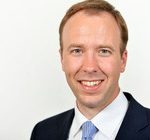
The statement made by Matt Hancock, the Secretary of State for Health and Social Care, on 25 January 2021.
Good afternoon and welcome back to Downing Street for today’s coronavirus briefing. I’m joined by our Deputy Chief Medical Officer, Dr Jenny Harries and Dr Susan Hopkins, who is the Chief Medical Advisor to Public Health England and NHS Test and Trace.
I want to update you on the latest coronavirus data – and the vaccine rollout. In the last week in the UK, we have seen 37,258 cases of coronavirus, on average each day. The NHS is still under intense pressure across all parts of the country with 37,899 people in UK hospitals with COVID-19 – and that includes 4,076 on ventilators.
Sadly, today 592 more deaths were reported. We must never forget the real impact of this disease. The loved ones that we’ve lost. Grandparents. Parents. Friends. Colleagues. We grieve for each one. And the pressure on the front line, I can tell you, is just so relentless. And when I talk to my colleagues who are working in COVID wards.
They are flat out and they are stretched to the limit. They’re doing everything they can. And I want to say a huge thank you to all those colleagues who are working so hard – they are pulling a huge shift and it’s a duty on all of us to support them.
I want to extend that thanks also to our ambulance service workers and in particular I want to thank ambulance service staff who stepped up over the weekend when an appeal went out from the Scottish Ambulance Service for extra help and ambulance services from the other nations stepped forward.
Our health systems across the UK routinely work closely together – offering support when its needed. From vaccines to ambulance services, and the UK is stronger together in the fight against this pandemic.
I know how tough that fight is. Thankfully, there are early signs that the actions we’re taking are working. The rise in the number of cases is slowing – and falling in some parts of the country like London and Scotland. At the same time, the number of vaccinations is going up.
Like many of you, I’ve been talking to members of my family who’ve just had the call to be vaccinated. It’s a really emotional moment when people get vaccinated. It means so much to people because the vaccine brings safety to that individual and marks the route out for us all from this pandemic.
I’m so proud to be able to tell you that we have, as of last night, vaccinated 78.7% of all over 80s. That’s almost 4 in 5 of everyone aged over 80. I’m delighted – you can see from these figures – there’s so much enthusiasm for vaccination amongst the over 80s because octogenarians know what the scientists know: which is that the vaccines save lives.
Of course, the rate limiting factor to this vaccination programme remains supply. As we know, supply is tight. We’ve had a very strong performance in this past week. And I’m confident that the NHS will deliver every shot that’s made available to it. To help with that, today we opened a further 32 large-scale vaccination centres including at Blackpool Winter Gardens, the Black Country Living Museum – better known to many as the set of Peaky Blinders – and London’s Francis Crick Institute – itself no stranger to human ingenuity.
And I’m determined to get vaccine uptake as high as possible. Today we’re funding councils to enhance their vital efforts to engage those who are hardest to reach through our Community Champions scheme. As of today, 6.6 million have now received a vaccine against COVID-19. That’s more than 1 in 9 of the adult population.
On Saturday alone, we gave nearly half a million jabs. In the last week, 2.5 million people have been vaccinated across the UK. That’s a rate of more than 250 people a minute.
We’re on track to offer everyone in the top 4 priority groups a jab by the 15 February. If you’re in one of those groups, one of the top 4 priority groups, and you haven’t had the call yet, don’t worry: the NHS will be in touch.
It’s a truly national effort. Alongside the GPs, pharmacists and other NHS staff and of course Armed Forces working so hard – alongside all of them working every weekend every evening. I particularly want to thank the 80,000 people who stepped forward to help deliver this, doing things like volunteering to stand in car parks for 8 hours a day – in the freezing cold to ensure elderly people can safely get into a vaccination centre.
It’s truly heart-warming. We’ve seen this selfless attitude towards the vaccination programme and it makes me very proud and very grateful to all those who have stepped forward. Because we know the responsibility for our fightback against this disease rests with every one of us. That is equally true when it comes to following the rules and maintaining social distancing.
Social distancing works – by denying the virus the social contact it needs to spread. I want to reiterate an important point made by the Chief Medical Officers and the clinical advice that they have been giving: even if you’ve had the jab, the rules still apply.
There’s 2 reasons for this. First, because the protection takes time. Your body’s immune is only fully trained up around three weeks after your jab. And, even if you have protection yourself, we still don’t know whether you will be able to pass coronavirus on to someone else.
We are monitoring this very carefully and will publish information on it as soon as we have it available. So this is not a moment to ease up.
The success of our vaccine rollout means we cannot – cannot – put our progress at risk.
The final thing I want to say is this. There’s no question that the new variants have made this fight a whole lot tougher. And I want to set out again, precisely what we know about the new variants. As with all science – as we have throughout this unprecedented crisis – we are learning more all the time.
The new variant first discovered in Kent – which comprises now a significant number of our cases now – is spreading 30 to 70% more easily than the existing variant. Based on analysis conducted by academic colleagues in a variety of studies there is a realistic possibility that this variant may be associated with increased mortality compared to the old variant – as well as increased transmission.
Because of our extensive genomic sequencing, we have identified cases of the new variant first identified in South Africa and that one that was first identified in Brazil. Further scientific work is underway to understand more about these variants but in the meantime it reinforces the critical message that we must be cautious.
For all of us, our response must to be extra careful stay at home – maintain social distancing. We’ve all frankly sacrificed too much and its so important that we protect lives and we’re making progress with the vaccine.
With the end in sight we cannot put that progress at risk. And there’s a promise of better days that lie ahead we have to hold our nerve and persevere through this difficult winter. So it’s incumbent on us all, wherever possible to stay at home, protect the NHS, and save lives.