Category: Coronavirus

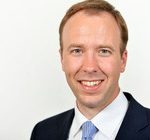
  • Matt Hancock – 2021 Statement on Covid-19

    Matt Hancock – 2021 Statement on Covid-19

    The statement made by Matt Hancock, the Secretary of State for Health and Social Care, on 5 March 2021.

    Good afternoon and welcome to Downing Street for today’s coronavirus briefing.

    I’m joined by Dr Susan Hopkins, from Public Health England and NHS Test and Trace.

    Today, I’ve got an update on progress in our battle against coronavirus, some new evidence of the effectiveness of the vaccines, an update on the cases of the Brazilian variant of concern and extra funding to support mental health in schools.

    Because, of course, on Monday that marks our first step in our opening up after this lockdown.

    Next week, classrooms will be buzzing with activity once more. I know parents across England will be delighted and relieved that all children are going back to school.

    Also, from Monday, I’m just so pleased that we’re able to reopen care homes to visitors.

    We’ve put in place a really careful policy so each care home resident will be able to register a single regular visitor, who’ll be tested and wear PPE.

    I know this really matters to hundreds of thousands of people with a loved one in a care home.

    And I’m really glad that we can make this step.

    So, first, let’s turn to the latest coronavirus data.

    This data shows this progress we’ve made, including more evidence on the impact of the vaccine in saving lives.

    First slide please.

    Here, you can see the number of cases of COVID-19.

    I’m pleased to say that the cases are still falling.

    The average daily number of cases is now 6,685 – the lowest since late September and the weekly case rate across the UK is now 84 per 100,000.

    The latest figures from the ONS, which were published earlier today, reported a further significant decline. They show that in England 1 in 220 people have coronavirus, a fall from 1 in 145 last week.

    This is all encouraging news and it should give us all confidence that we can safely take the steps we’re taking on Monday.

    Next slide please.

    Slide 2 shows the hospital admissions with COVID and it shows that they are falling too.

    There are still 12,136 people in hospital in the UK with COVID.

    That’s still too high, but the average number of new admissions to hospital is 900, the lowest since October.

    Next slide please.

    Thankfully, the number of deaths with COVID are also declining steeply.

    The average number of deaths per day is 248, also the lowest since October.

    And here, the decline is in fact accelerating.

    The halving time of the number of deaths has come down from 19 days – so the number of deaths each day – last month, to halving every 11 days now.

    Not only that, there are now fewer people dying of all causes in care homes than is normal for this time of year.

    Taken together, these 3 slides show that we’re heading in the right direction, although there is further to go. And what we can also see in the data, across the whole UK, is that the vaccine programme is working to protect the NHS and saving lives.

    Next slide please.

    The best way to see this is by looking at how fast cases, hospital admissions and deaths are falling.

    The number of cases have been falling, in a fairly even way, since around the middle of January, by a quarter every week. Just a little bit more in the past few days.

    It’s not been completely smooth.

    A week ago, I stood here and we said that we were worried that the fall in cases was slowing down.

    Thankfully, as you can see in the chart, that now looks more like a temporary blip.

    Which is good news for us all.

    Next slide please.

    Now let’s turn to the number of hospital admissions.

    Again, this is falling steadily, at around a quarter every week.

    But there are early signs that this fall is getting a bit faster.

    In fact, the 29% fall in the last week is the fastest fall in hospital admissions at any point in the entire pandemic.

    Final slide please.

    But where you can really see the effect of the vaccine is in the fall of the number of deaths.

    The number of deaths is falling faster and faster.

    And now deaths are falling by over a third every week. And in fact in the last week have fallen by 41%.

    Faster than before.

    The Chief Medical Officer told us weeks ago that you’d first see the effect of the vaccine in fewer people dying, and then in reduced hospitalisations.

    And I believe that that is exactly what’s happening.

    What this all shows is that the link from cases to hospitalisations and then to deaths, that have been unbreakable before the vaccine – that link is now breaking. The vaccine is protecting the NHS and saving lives and that right across the country, this country’s plan is working.

    And as well as this real-world data, I want to share the results of a study by the University of Bristol which clearly shows the difference our vaccination programme is making.

    The study looked at all patients over 80 who were admitted with serious respiratory disease in Bristol.

    The results showed a single dose of both the Pfizer or Oxford/AstraZeneca jab offers around 80% protection against hospitalisation after at least 2 weeks even amongst the most frail, and those with underlying medical conditions.

    Again, as with the data that were published last week, the effect was slightly stronger in the Oxford jab than with Pfizer. What this corroborates is that what we have seen over the past couple of weeks is that vaccines work. And they’re the best way of securing our freedom.

    As of midnight last night 21.3 million people have been vaccinated.

    I can tell you that we have vaccinated two fifths of the entire adult population of the United Kingdom.

    Yesterday, I was in Scotland, seeing the combined teamwork of NHS Scotland, Scottish local authorities and the armed forces, delivering jabs in Hamilton.

    They were all working together as one, towards a common goal. Protecting us all.

    As anyone who has been to a vaccination centre will know, the joy on people’s faces when they get the jab is unbelievably uplifting.

    And more and more people will be getting this feeling of protection over the next few weeks and months.

    We’re on course to hit our target of offering a first dose to everyone who’s 50 or over, or part of an at-risk group, by 15 of April.

    And all adults by the end of July.

    The vaccine roll-out has allowed us to set out our roadmap for how we’ll carefully lift some of the restrictions that we’ve all endured for far too long.

    And as we do this, we’ll be drawing on the huge testing infrastructure that is now in place.

    We are now testing 2.8 million people a week.

    The roadmap is built on the principle of replacing the protection that comes from lockdown with the protection that comes from vaccines and regular testing.

    So, as we open up – for instance, care homes as I mentioned a moment ago, to visitors – that will come with regular testing for visitors.

    And as schools and colleges return we will be giving teachers, staff, parents, secondary and college students and their households access to rapid regular testing twice a week in term time and in holidays.

    And I urge all those and the households of those who are going back to school or to college next week to take up this offer

    One of the most dangerous things about this virus – one of those dangerous things – is that around one third of those who get it don’t get any symptoms at all and yet can still pass the disease on to others.

    That’s why it’s so important that all of us follow the social distancing and take the precautions that we know we must.

    So rapid, regular testing is a critical part of our response.

    And we can do so much more because of the huge capacity we’ve built up in NHS Test and Trace.

    I would urge you if you’re eligible to participate in one of these regular testing programmes like I do, because that is how we will keep this virus under control as we continue to roll out the vaccine

    For more information on how you can get a test, go to gov.uk/coronavirus.

    I’d urge everyone who’s eligible to get that regular testing.

    Now, I know that this pandemic has been an anxious time for so many young people.

    Growing up, after all, is tough enough at the best of times.

    But during these difficult times, it’s even tougher.

    Home schooling, being unable to see your friends, sport cancelled, and being stuck at home.

    I know just how much people are looking forward to going back to school, seeing friends in a classroom not just on Zoom.

    Monday will be a long-awaited day for many.

    But for some it’ll be a moment of unease and anxiety too.

    We need to help young people to get through this and get their life going again.

    And give them the help and support that they need.

    We’ve worked hard throughout the pandemic to make sure mental health services are open. And we’ve set up 24/7 support for those in need.

    I’m delighted to announce today that we’ll be allocating an extra £79 million to boost mental health support for children and young people.

    Almost 3 million children and young people will benefit from more mental health support teams, and those mental health support teams in schools will be working hard to ensure people get access to the support and care that they need.

    And we’ll be expanding access to mental health services in the community too.

    I’d like to end with some good news on our work to tackle new variants.

    Thanks to the brilliant team who’ve been working so hard over the past week, we’ve now successfully identified the sixth case of the variant of concern first identified in Manaus in Brazil.

    Using the latest technology, and the dogged determination of our testing and tracing scheme, we’ve successfully identified the person in question.

    The best evidence is that this person in question stayed at home and that there’s no sign that there’s been any onward transmission.

    But as a precaution, we’re putting more testing in Croydon, where they live, to minimise the risk of spread.

    This positive outcome was only possible because of the huge genome sequencing capacity that we now have in this country and our test and trace team, so we could identify these cases, track them down and contact them.

    It shows how important this capacity we’ve built is, and how important it is to be transparent whenever new variants are found.

    Because whether it’s here at home or around the world, testing, sequencing and being transparent about what you find helps stop the spread of this disease – and in particular these variants of concern which are so worrying – and protects lives.

    I’m really delighted at the work the team have done this week. They’ve worked absolutely flat out since these 6 cases were first identified on Friday and found the 6 positive cases, even though the form wasn’t filled in quite right.

    So Susan is going to say a little bit more about this in a moment but my summary is:

    Things are moving in the right direction.

    These are challenging times.

    But thanks to the vaccine, we’re making progress.

    But we’re not there yet.

    So, as we go down the road to recovery, it’s vital everybody plays their part, follows the rules and when their call comes, get your jab.
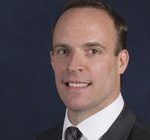

  • Dominic Raab – 2021 Comments on Covid-19 Vaccines in the Ivory Coast

    Dominic Raab – 2021 Comments on Covid-19 Vaccines in the Ivory Coast

    The comments made by Dominic Raab, the Foreign Secretary, on 1 March 2021.

    Today, with UK aid support, people in Côte d’Ivoire are the first to receive vaccinations through COVAX – the biggest ever global vaccine campaign to end the pandemic.

    We’re proud to be one of the biggest donors to COVAX, securing over one billion doses for the most vulnerable around the world. We do it because we want to be a force for good in the world, and because we need a global solution to a global pandemic.

  • Nick Thomas-Symonds – 2021 Comments on Brazil Strain of Virus

    Nick Thomas-Symonds – 2021 Comments on Brazil Strain of Virus

    The comments made by Nick Thomas-Symonds, the Shadow Home Secretary, on 1 March 2021.

    This is unforgivable incompetence from the UK Government. Despite being warned time and time again, they have failed to act to protect our borders against emerging Covid variants and could put at risk the gains from the vaccine.

    People will be appalled to hear someone with the Brazilian variant cannot be identified, raising questions about how many others may have been missed by quarantine measures. There is no excuse for continuing to ignore Labour’s call for a comprehensive hotel quarantine system.

  • Jonathan Ashworth – 2021 Comments on NHS Face Masks Not Meeting Requirements

    Jonathan Ashworth – 2021 Comments on NHS Face Masks Not Meeting Requirements

    The comments made by Jonathan Ashworth, the Shadow Health and Social Care Secretary, on 23 February 2021.

    This is yet another example of ministers buying duff PPE that is inadequate for protecting our hardworking NHS staff. Ministers should apologise and ensure every penny for every piece of unusable PPE is recovered.

  • Boris Johnson – 2021 Roadmap Statement in the House of Commons

    Boris Johnson – 2021 Roadmap Statement in the House of Commons

    The statement made by Boris Johnson, the Prime Minister, on 22 February 2021.

    Mr Speaker, with permission, I will make a Statement on the roadmap that will guide us

    cautiously but irreversibly –

    towards reclaiming our freedoms while doing all we can to protect our people against Covid.

    Today’s measures will apply in England,

    but we are working closely with the Devolved Administrations who are setting out similar plans.

    The threat remains substantial, with the numbers in hospital only now beginning to fall below the peak of the first wave in April.

    But we are able to take these steps because of the resolve of the British public

    and the extraordinary success of our NHS in vaccinating more than 17.5 million people across the UK.

    The data so far suggests both vaccines are effective against the dominant strains of Covid.

    Public Health England has found that one dose of the Pfizer-BioNTech vaccine reduces hospitalisations and deaths by at least 75 per cent.

    And early data suggests that the Oxford-AstraZeneca vaccine provides a good level of protection,

    though since we only started deploying this vaccine last month, at this stage the size of its effect is less certain.

    But no vaccine can ever be 100 per cent effective,

    nor will everyone take them up,

    and like all viruses, Covid-19 will mutate. So, as the modelling released by SAGE today shows, we cannot escape the fact that lifting lockdown will result in more cases, more hospitalisations and sadly more deaths.

    This would happen whenever lockdown is lifted, whether now or in six or nine months, because there will always be some vulnerable people who are not protected by the vaccine.

    There is therefore no credible route to a Zero Covid Britain or indeed a Zero Covid World

    and we cannot persist indefinitely with restrictions that debilitate our economy, our physical and mental well-being, and the life-chances of our children.

    And that is why it is so crucial that this roadmap should be cautious but also irreversible.

    We are setting out on what I hope and believe is a one way road to freedom.

    And this journey is made possible by the pace of the vaccination programme.

    In England, everyone in the top four priority groups was successfully offered a vaccine by the middle of February.

    We now aim to offer a first dose to all those in groups 5 to 9 by 15 April,

    and I am setting another stretching target: to offer a first dose to every adult by the end of July.

    As more of us are inoculated, so the protection afforded by the vaccines will gradually replace the restrictions

    and today’s roadmap sets out the principles of that transition.

    The level of infection is broadly similar across England, so we will ease restrictions in all areas at the same time.

    The sequence will be driven by the evidence, so outdoor activity will be prioritised as the best way to restore freedoms while minimising the risk.

    At every stage, our decisions will be led by data not dates,

    and subjected to four tests.

    First, that the vaccine deployment programme continues successfully;

    second, that evidence shows vaccines are sufficiently effective in reducing hospitalisations and deaths;

    third, that infection rates do not risk a surge in hospitalisations which would put unsustainable pressure on the NHS;

    and fourth, that our assessment of the risks is not fundamentally changed by new variants of Covid that cause concern.

    Before taking each step we will review the data against these tests and because it takes at least four weeks for the data to reflect the impact of relaxations in restrictions

    and we want to give the country a week’s notice before each change –

    there will be at least five weeks between each step.

    The Chief Medical Officer is clear that moving any faster would mean acting before we know the impact of each step,

    which would increase the risk of us having to reverse course and re-impose restrictions.

    I won’t take that risk.

    Step one will happen from 8 March, by which time those in the top four priority groups will be benefiting from the increased protection they receive from their first dose of their vaccine.

    Mr Speaker, all the evidence shows that classrooms are the best places for our young people to be.

    That’s why I’ve always said that schools would be the last to close and the first to reopen.

    And based on our assessment of the current data against the four tests, I can tell the House that two weeks’ from today pupils and students in all schools and further education settings can safely return to face-to-face teaching,

    supported by twice-weekly testing of secondary school and college pupils.

    Families and childcare bubbles will also be encouraged to get tested regularly.

    Breakfast and afterschool clubs can also re-open – and other children’s activities, including sport, can restart where necessary to help parents to work.

    Students on university courses requiring practical teaching, specialist facilities or onsite assessments will also return

    but all others will need to continue learning online, and we will review the options for when they can return by the end of the Easter Holidays.

    From 8 March, people will also be able to meet one person from outside their household for outdoor recreation – such as a coffee on a bench or a picnic in a park – in addition to exercise.

    But we are advising the Clinically Extremely Vulnerable to shield at least until the end of March.

    Every care home resident will be able to nominate a named visitor, able to see them regularly provided they are tested and wear PPE.

    And finally we will amend regulations to enable a broader range of Covid-secure campaign activities for local elections on 6 May.

    As part of Step one, we will go further and make limited changes on 29 March, when schools go on Easter holidays.

    It will become possible to meet in limited numbers outdoors, where the risk is lower.

    So the Rule of Six will return outdoors, including in private gardens

    and outdoor meetings of two households will also be permitted on the same basis, so that families in different circumstances can meet. Outdoor sports facilities – such as tennis and basketball courts, and open-air swimming pools – will be able to reopen

    and formally organised outdoor sports will resume, subject to guidance.

    From this point, 29 March, people will no longer be legally required to stay at home

    but many lockdown restrictions will remain.

    People should continue to work from home where they can and minimise all travel wherever possible.

    Step two will begin at least five weeks after the beginning of step one

    and no earlier than 12 April, with an announcement at least seven days in advance.

    If analysis of the latest data against the four tests requires a delay, then this and subsequent steps will also be delayed to maintain the five week gap.

    In step two non-essential retail will reopen, as will personal care including hairdressers I’m glad to say, and nail salons.

    Indoor leisure facilities such as gyms will re-open, as will holiday-lets, but only for use by individuals or household groups.

    We will begin to re-open our pubs and restaurants outdoors

    and Hon Members will be relieved there will be no curfew

    and the Scotch Egg debate will be over because there will be no requirement for alcohol to be accompanied by a substantial meal.

    Zoos, theme parks and drive-in cinemas will re-open

    as will public libraries and community centres.

    Step three will begin no earlier than 17 May.

    Provided the data satisfies the four tests, most restrictions on meetings outdoors will be lifted, subject to a limit of thirty.

    And this is the point when you will be able to see your friends and family indoors – subject to the Rule of Six or the meeting of two households.

    We will also reopen pubs and restaurants indoors

    along with cinemas and children’s play areas,

    hotels, hostels, and B&Bs.

    Theatres and concert halls will open their doors,

    and the turnstiles of our sports stadia will once again rotate

    subject in all cases to capacity limits depending on the size of the venue.

    And we will pilot larger events using enhanced testing, with the ambition of further easing of restrictions in the next step.

    Step 4 will begin no earlier than 21 June.

    With appropriate mitigations, we will aim to remove all legal limits on social contact,

    and on weddings and other life events.

    We will re-open everything up to and including nightclubs,

    and enable large events such as theatre performances above the limits of step 3, potentially using testing to reduce the risk of infection.

    Mr Speaker, our journey back towards normality will be subject to resolving a number of key questions and to do this we will conduct four reviews.

    One will assess how long we need to maintain social distancing and face masks.

    This will also inform guidance on working from home – which should continue wherever possible until this review is complete.

    And it will be critical in determining how Parliament can safely return in a way that I know Hon Members would wish.

    A second review will consider the resumption of international travel

    which is vital for many businesses which have been hardest hit

    including retail, hospitality, tourism and aviation.

    A successor to the Global Travel Taskforce will report by 12 April so that people can plan for the summer.

    The third review will consider the potential role of Covid-status certification in helping venues to open safely

    but mindful of the many concerns surrounding exclusion, discrimination and privacy.

    And the fourth review will look at the safe return of major events.

    Mr Speaker, as we proceed through these steps we will benefit from the combined protection of our vaccines and the continued expansion of rapid testing.

    We will extend the provision of free test kits for workplaces until the end of June

    and families, small businesses and the self-employed can collect those tests from local testing sites.

    Mr Speaker, in view of these cautious but I hope irreversible changes, people may be concerned about what these changes mean for the various support packages, for livelihoods for people and for the economy.

    So I want to assure the House, we will not pull the rug out.

    For the duration of the pandemic, the government will continue to do whatever it takes to protect jobs and livelihoods across the UK.

    And my Rt Hon Friend the Chancellor will set out further details in the Budget next Wednesday,

    Finally, Mr Speaker, we must remain alert to the constant mutations of the virus.

    Next month we will publish an updated plan for responding to local outbreaks,

    with a range of measures to address variants of concern, including surge PCR testing and enhanced contact tracing.

    We can’t, I’m afraid, rule out re-imposing restrictions at local or regional level if evidence suggests they are necessary to contain or suppress a new variant which escapes the vaccines.

    Mr Speaker, I know there will be many people who will be worried that we are being too ambitious and that it is arrogant to impose any kind of plan upon a virus.

    And I agree that we must always be humble in the face of nature and we must be cautious

    but I really also believe that the vaccination programme has dramatically changed the odds in our favour and it is on that basis that we can now proceed.

    And of course there will be others who will believe that we could go faster on the basis of that vaccination programme

    and I understand their feelings and I sympathise very much with the exhaustion and the stress that people are experiencing and that businesses are experiencing after so long in lockdown.

    But to them I say that today the end really is in sight and a wretched year will give way to a spring and a summer that will be very different and incomparably better than the picture we see around us today.

    And in that spirit, I commend this Statement to the House.

  • Boris Johnson – 2021 Comments on the Roadmap Announcement

    Boris Johnson – 2021 Comments on the Roadmap Announcement

    The comments made by Boris Johnson, the Prime Minister, on 22 February 2021.

    Today I’ll be setting out a roadmap to bring us out of lockdown cautiously. Our priority has always been getting children back into school which we know is crucial for their education as well as their mental and physical wellbeing, and we will also be prioritising ways for people to reunite with loved ones safely.

    Our decisions will be made on the latest data at every step, and we will be cautious about this approach so that we do not undo the progress we have achieved so far and the sacrifices each and every one of you has made to keep yourself and others safe.

    We have therefore set four key tests which must be met before we can move through each step of the plan.


  • Anneliese Dodds – 2021 Comments on Supporting Those Self-Isolating

    Anneliese Dodds – 2021 Comments on Supporting Those Self-Isolating

    The comments made by Anneliese Dodds, the Shadow Chancellor of the Exchequer, on 22 February 2021.

    Anyone who needs support to self-isolate should be able to access it – no matter where they live or when they develop symptoms. That is the only way we can keep the virus under control when restrictions are lifted, avoid the devastating economic damage of another lockdown and help the vaccine programme succeed.

    However, under the current system just three in 10 people who should be self-isolating are doing so.

    The Government’s roadmap to recovery must improve the system of self-isolation in this country. That means expanding the Test and Trace Support Payment to those who don’t have a workplace sick pay scheme, better enforcement, and action to fix the broken system of Statutory Sick Pay.

    This will help prevent another lockdown, protect public health and secure our economy.

  • Helen Whately – 2021 Comments on Care Home Residents Being Allowed Visitors

    Helen Whately – 2021 Comments on Care Home Residents Being Allowed Visitors

    The comments made by Helen Whately, the Minister for Care, on 20 February 2021.

    One of the hardest things during this pandemic has been seeing families desperate to be reunited with their loved ones kept apart and I absolutely want to bring them back together.

    Throughout this pandemic we have sought clinical guidance on how visits can be conducted safely.

    We had to restrict the majority of visiting when the new variant was discovered but we have done all we can to enable visits to continue in some form. That includes providing funding towards costs of screens and PPE.

    As we begin to open up we will move step by step to increase visits while remembering we are still in the grip of a global pandemic.

  • Rachel Reeves – 2021 Comments on Hotel Quarantine Contracts

    Rachel Reeves – 2021 Comments on Hotel Quarantine Contracts

    The comments made by Rachel Reeves, the Shadow Chancellor of the Duchy of Lancaster, on 19 February 2021.

    This Tory government’s obsession with outsourcing and repeated conflict of interests has marred its pandemic response.

    There has got be urgent reassurance that there are no conflicts of interest here – and that the public and those workers trying hard to make the hotel quarantine work don’t pay the price for this government’s last minute, shambolic planning.

  • Matt Hancock – 2021 Comments on Long Covid

    Matt Hancock – 2021 Comments on Long Covid

    The comments made by Matt Hancock, the Secretary of State for Health and Social Care, on 18 February 2021.

    I am acutely aware of the lasting and debilitating impact long COVID can have on people of all ages, irrespective of the extent of the initial symptoms.

    Fatigue, headaches and breathlessness can affect people for months after their COVID-19 infection regardless of whether they required hospital admission initially.

    In order to effectively help these individuals we need to better understand long COVID and identify therapeutics that can help recovery. This funding will kick-start 4 ambitious projects to do just that.