Category: Brexit

  • Lou McDonald – 2022 Comments on the Irish Protocol

    Lou McDonald – 2022 Comments on the Irish Protocol

    The comments made by Lou McDonald, the President of Sinn Fein, on 12 May 2022.

    The Irish Protocol gives the north access to both the EU and British markets; representing a market of more than 500 million people. It protects the Good Friday Agreement and prevents a hard border on the island of Ireland.

    It presents massive opportunities for the north, and does nothing to undermine the constitutional provisions of the Good Friday Agreement.

    Whilst there are practical issues related to the operation of the Protocol to be addressed, joint solutions to these issues must be found through dialogue between the British government and the EU, not unilateral action.

    The EU has offered solutions, and this message has been echoed again today by the Vice President of the European Commission, Maroš Šefčovič. I welcome his statement.

    On the other hand, the British government is engaged in threats to breach international rule of law.

    If the British government follows through on these threats to unilaterally denounce and disapply the Protocol, this would terminate the Withdrawal Agreement Treaty between the British government and the EU.

    Walking away from international obligations would represent an appalling attack on the international rule of law. Any such action, and the threat to do so, must be firmly condemned by the international community.

    The British government says that it wants to act responsibly and respect the Good Friday Agreement, yet their objectives are incompatible with the Good Friday Agreement. Unilateral action will deepen political instability and economic uncertainty.

    It amounts to an anti-Good Friday Agreement agenda disingenuously wrapped up in pro-Good Friday Agreement rhetoric.

    This strategy is actively supported by the DUP, who refuse to enter government in the north, despite the fact that the political institutions are not a party to the Withdrawal Agreement. It is denying democracy and punishing the public and this reckless boycott must end.

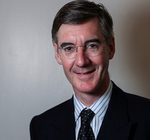
  • Jacob Rees-Mogg – 2022 Statement on U-Turn on Import Controls from EU

    Jacob Rees-Mogg – 2022 Statement on U-Turn on Import Controls from EU

    The statement made by Jacob Rees-Mogg, the Minister for Brexit Opportunities and Government Efficiency, in the House of Commons on 28 April 2022.

    When the UK left the European Union, we regained the right to manage our own borders in a way that works for Britain. This includes how we manage imports into our country from overseas. British businesses and people going about their daily lives are being hit by rising costs caused by Russia’s war in Ukraine and in energy prices. It would therefore be wrong to impose new administrative burdens and risk disruption at ports and to supply chains at this point. The remaining import controls on EU goods will no longer be introduced this year, saving British businesses up to £1 billion in annual costs.

    Instead the Government are accelerating our transformative programme to digitise Britain’s borders, harnessing new technologies and data to reduce friction and costs for businesses and consumers. This is a new approach for a new era, as Britain maximises the benefits of leaving the EU and puts in place the right policies for our trade with the whole world.

    Introducing controls in July would have replicated the controls that the EU applies to its global trade. This would have introduced complex and costly checks that would have then been altered later as our transformation programme is delivered. The challenges that this country faces have underlined that this is not the right thing to do for Britain.

    No further import controls on EU goods will be introduced this year. Businesses can stop their preparations for July now. We will publish a target operating model in the autumn that will set out our new regime of border import controls and will target the end of 2023 as the revised introduction date for our controls regime, which will deliver on our promise to create the world’s best border on our shores.

    This new approach will apply equally to goods from the EU and goods from the rest of the world.

    It will be based on a proper assessment of risk, with a proportionate, risk-based and technologically advanced approach to controls. This includes the single trade window which will start to deliver from 2023, the creation of an ecosystem of trust between Government and industry, and other transformational projects as part of our 2025 borders strategy.

    The controls that have already been introduced will remain in place.

    Specifically, the following controls which were planned for introduction from July 2022 will now not be introduced:

    A requirement for further Sanitary And Phytosanitary (SPS) checks on EU imports currently at destination to be moved to Border Control Post.

    A requirement for safety and security declarations on EU imports.

    A requirement for further health certification and SPS checks for EU imports.

    Prohibitions and restrictions on the import of chilled meats from the EU.

    The border operating model will be updated to reflect this and a copy will be placed in the Libraries of both Houses in due course.

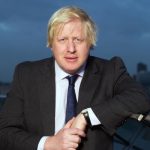
  • Boris Johnson – 2022 Comments on Benefits of Brexit

    Boris Johnson – 2022 Comments on Benefits of Brexit

    The comments made by Boris Johnson, the Prime Minister, on 1 January 2022.

    A year ago today we entered our new relationship with the EU through the world’s biggest ever zero-tariff, zero-quota free trade deal – the UK-EU Trade and Cooperation Agreement.

    That was just the start – our mission since has been to maximise the benefits of Brexit so that we can thrive as a modern, dynamic and independent country.

    We’ve replaced free movement with a points-based immigration system. We’ve secured the fastest vaccine rollout anywhere in Europe last year by avoiding sluggish EU processes. And from Singapore to Switzerland, we’ve negotiated ambitious free trade deals to boost jobs and investment here at home.

    But that’s not all. From simplifying the EU’s mind-bogglingly complex beer and wine duties to proudly restoring the crown stamp onto the side of pint glasses, we’re cutting back on EU red tape and bureaucracy and restoring common sense to our rulebook.

    The job isn’t finished and we must keep up the momentum. In the year ahead my government will go further and faster to deliver on the promise of Brexit and take advantage of the enormous potential that our new freedoms bring.

  • Boris Johnson – 2016 Speech on Leaving EU Creating More Money for NHS

    Boris Johnson – 2016 Speech on Leaving EU Creating More Money for NHS

    The speech made by Boris Johnson, Gisela Stuart and Boris Johnson on 3 June 2016.

    A STRONGER NHS AND MORE MONEY FOR THOSE IN NEED – WHY LEAVING THE EU HELPS PROTECT WORKING PEOPLE

    Our NHS is a precious asset. No other European country gives its citizens the guarantee of free healthcare, there when people need it, irrespective of ability to pay.

    The NHS is a great British institution and its core values – of solidarity, fairness and inclusivity – need to be protected and defended. The wealthy can always buy themselves top quality care and jump the queue for treatment. Working people don’t have that option. Working people need an NHS which is strong and well-funded to give them security at every stage in their lives.

    As our population grows, and as we all live for longer, so the pressures on the NHS are set to grow. We believe that one of the best ways to protect, and to strengthen, the NHS, for the people of this country is to use some money we currently spend on EU membership to invest in improving healthcare.

    The NHS leadership has said it needs an additional £30 billion each year by 2020 to meet future pressures. Eight billion pounds will come from spending increases, and £22 billion will need to come from efficiency savings. The Government rightly committed at the last election to meet that £8 billion target.

    But we don’t underestimate how difficult it will be to make the £22 billion worth of efficiency savings. Again, we are sure ministers, managers, doctors, nurses and everyone in the Health Service will do everything they can. However, trusted health experts such as the Nuffield Trust, the Health Foundation and the King’s Fund have all stressed how difficult it will be to achieve the planned net efficiency savings of 2% each year.

    This level of savings is far above what the NHS has achieved historically. And the demand for NHS services is only set to grow. NHS Improvement, the NHS regulator, has identified rising demand as one of the principal challenges for the NHS’s future funding.

    If we vote to leave the EU on 23 June, we will be able to do something about one of the main causes of higher demand – uncontrolled and unlimited migration from the EU into the UK.

    In 2015, 270,000 people came to the UK from Europe, a population movement equivalent to all the inhabitants of a city the size of Newcastle arriving in our country. Net migration was 184,000, a population increase equivalent to adding a city the size of Oxford to the UK population. Year after year, similar numbers arrive.

    On top of this, between 2005 and 2014, there were 475,000 live births to mothers who were EU citizens. This is the equivalent of adding a city the size of Manchester to the UK population. The cost of maternity services alone to these families is likely to exceed £1.3 billion.

    As we have set out before, it is government policy for five new countries to join the EU: Albania, Macedonia, Montenegro, Serbia and Turkey. We are paying billions to these countries to help them join. The EU is already opening visa-free travel to Turkey. That would create a borderless travel zone from the frontiers of Syria and Iraq to the English Channel. The EU’s plans for future growth will lead to demands being placed on the NHS far beyond what its funding can cope with.

    We have set out our plan to change the immigration system after we vote to leave. We will end the ‘free movement’ of people from the EU and take back control. We will introduce a points-based system under which migrants will be admitted to the UK on the basis of their skills, not their passport.

    But even after we take back control of our migration policy, the NHS will still face funding pressures. Restoring control over our borders is a necessary step, but there is more we should do to guarantee quality care for working people.

    We need to ensure the NHS has as much money as possible and after we vote to leave we will have the means to do so without damaging public finances.

    After we Vote Leave on 23 June, the Government should use some of the billions saved from leaving the EU to give at least a £100 million per week cash transfusion to the NHS.

    This money will be over and above the commitment that the Prime Minister rightly made at the last election to an £8 billion real terms increase.

    How can we pay for this additional spending? From the money we save from leaving the EU.

    The UK’s gross budget contribution is currently over £19 billion or £350 million per week. According to Treasury estimates, this will increase to nearly £400 million per week by 2020.

    We get some cash back through a negotiated rebate and some other money we hand over to the EU is spent here in the UK on areas like farm subsidies.

    But the rebate is not a fixed benefit anchored in the treaties. It is there only by the consent of other EU nations, it has to be negotiated, it has already been reduced, and if we vote to stay it can, and will, be whittled away.

    If we Vote Leave, we take back control of the whole sum. We will no longer be dependent on other countries to protect the money we get back in our rebate. And we will continue to support farming, science, universities and poorer areas of the UK with the money they currently receive from the EU.

    That would mean we would then be able to spend all of our net EU contribution of £10.6 billion on our priorities like the NHS and cutting VAT on fuel.

    Other money will also be liberated to spend on public services in the event of a vote to leave.

    We have already set out plans to amend the European Communities Act 1972 immediately after the referendum to stop multinationals using EU law to claim tax refunds in the UK. This will save taxpayers between £7 billion and £43 billion by 2021.

    It is wrong that big businesses have been using the European Court to starve public services of money they could never have recovered under English law.

    If we leave the EU we could also restore our system of taxation of offshore companies which was set aside by the European Court. The European Court’s judgment has cost UK taxpayers an estimated £840 million each year.

    We can also scrap the EU’s foolish rules on how Whitehall runs procurement processes which add billions to costs every year. The European Commission’s own conservative figures suggest that procurement rules cost at least £1.7 billion each year and delay projects by years.

    There are billions of savings that Government will be able to make after we vote leave and escape the control of the rogue European Court.

    A vote to leave is a vote for a fairer Britain. You only have to look at who funds the IN campaign to realise this: the undeserving rich, the investment banks that crashed the world economy in 2008 and who bankrupted the people of Greece, and the multinational corporations who spend millions on lobbying the corrupt Brussels system.

    This is the choice on 23 June.

    A Vote to Remain means that we keep handing over control of £350 million of our money to the EU every week. A Vote to Remain means we cannot control immigration. A Vote to Remain means greater pressure on the NHS, school places and housing.

    If we Vote Leave, we can take back control of our borders and our money. By 2020, we can give the NHS a £100 million per week cash injection, and we can ensure that the wealthy interests that have rigged the EU rules in their favour at last pay their fair share.

    That is why we believe a Vote to Leave is the right choice for social justice, safer for public services, jobs, and families and better for the next generation.

  • Liam Fox – 2016 Speech on Housing Pressures Caused by Migrants

    Liam Fox – 2016 Speech on Housing Pressures Caused by Migrants

    The speech made by Liam Fox on 2 June 2016.

    All across the country, local authorities are facing huge challenges to meet additional housing targets set by Central Government. Local communities are facing the loss of green spaces in the rush for housebuilding, often failing to take into account the limitations on existing infrastructure.

    Take the village of Yatton, in my own constituency of North Somerset, for instance. Despite having no surplus school places, fully saturated GP surgeries and an already overstretched road system, it is typical of innumerable of villages across the country, where local communities are being asked to absorb large numbers of extra houses without any realistic possibility that the money will be found to provide the extra infrastructure required.

    It is a story being repeated time and time again in more and more places. People rightly ask, “how much of our green space will disappear, possibly forever?” and “how much of our quality of life will be compromised to deal with problems often created far away?”

    And they are right that the problem that is being faced at the local level begins well away from our communities at the level of national policy failure. It lies in the failure to control the growth of our population through immigration, including immigration from the European Union.

    As the Government fails to control the increase in the population due to migration, it forces local authorities to build more and more houses to deal with the ripple effect.

    If we remain in the European Union we will be forced to accept unlimited free movement of people – but there will be no free movement of space coming with them. The inevitable result will be worsening overcrowding in our land limited country.

    Most of the focus in the housing debate has been on supply. There is a relatively broad consensus that the UK needs to build around 250,000 additional homes every year to meet current demand. In the last ten years an average of only 170,000 have been built and the debate has largely been around how changes to planning can facilitate the level of house building required.

    Yet, what this approach to the problem fails to understand is that it is not merely an issue of supply, but one of demand.

    For much of the 20th century, the number of households grew at a faster rate than the population as a whole. Changes in social behaviour, such as divorce and the increased tendency for people to live alone, as well as demographics, meant that the average household size fell. In recent times, however, average household size has changed little, and the key factor driving the growth in household numbers has been population growth.

    The total non-British net inflow of immigrants is close to 350,000 with migration from the EU now accounting for about half of that figure.

    The outcome of the recent renegotiation of benefits will make no significant difference to these numbers, as the office for budget responsibility, the government’s advisory body has confirmed.

    This implies continued total net EU migration to the UK of the order of almost 200,000 people per annum.

    This number is growing dramatically and has already more than doubled since 2012.

    The continuing failure of the Eurozone and the tragically high levels of unemployment in Southern Europe is likely to mean that more and more young people will head to the North of Europe, including the UK, in search of work.

    And all this does not include those countries who may join the EU in the coming years.

    All these factors could considerably boost the numbers and we are powerless to stop it. Staying in the EU is likely to mean continued high levels of immigration over which the UK would have no control while leaving the EU would give back control of immigration policy to the UK government so enabling the number of immigrants to be reduced while, at the same time, being more selective about who can come to the UK.

    Continuation of net migration on the current scale would mean an increase in our population of almost 5 million in 15 years’ time.

    This would be the equivalent of adding the combined population of the cities of Birmingham, Glasgow, Manchester, Liverpool, Leeds, Sheffield, Bradford and Bristol.

    60% of this increase would be from future migrants and their children. This is not a scare story, simply an extrapolation of how today’s immigration figures will impact on our society in the years ahead if changes are not made to policy. Half of this huge figure is attributable to the EU.

    Official figures show that in the last ten years, two thirds of additional households in the UK have been headed up by an immigrant (that is to say that they had a foreign born “Household Reference Person (HRP) – what used to be known as head of household) [c]. Households with a foreign born HRP have increased by around 120,000 a year during this period.

    In London, despite the rapid growth in population the number of households headed by a British born person has actually fallen in the last ten years.

    This is a particular problem in England which takes over 90% of immigrants to the UK despite the fact that it is is already nearly twice as crowded as Germany and 3½ times as crowded as France.

    Yet population growth on the present scale means making our urban areas still more overcrowded or building over valuable green belt or farmland with all the loss of amenity involved.

    At current levels of immigration, the Office for National Statistics project that our population will continue to grow by around half a million a year – a city the size of Liverpool every year.

    This will mean that, in England, we will have to build a new home every six minutes, or 240 a day, for the next 20 years to accommodate just the additional demand for housing from new migrants. That is before we take into account the needs of those who were born here.

    Of course, it would be wrong to imply that most newly built housing is occupied by immigrants. Many immigrant households move into existing properties. The need to build a new home every 6 minutes it is to deal with the additional demand for housing, it is obviously not that these new homes will be occupied directly by immigrants.

    To be even more specific, the difference in projected household growth between ‘high’ net migration and ‘zero’ net migration is 95,000 households per year or more than one additional household every 6 minutes.

    These patterns create consequences for almost all sections of society.

    Most new immigrants move into the private rented sector which has grown as the immigrant population has grown. Competition for rented accommodation obliges all those in the private rented sector to pay high rents which take a large share of income and makes saving to buy a home even harder.

    These resulting high rents and a shortage of housing make it much more difficult for young people to set up home on their own so they have to spend more time in house shares or with their parents.

    The problem in the private rented sector may well be exacerbated by recent moves to clamp down on the buy to rent sector.

    High rents and high house prices resulting from an imbalance of supply and demand in the market often means that families have to live in overcrowded conditions or move away from their local area to find suitable accommodation that they can afford.

    Those living in the parts of the UK with lower housing costs cannot afford to move for work leaving, them trapped in areas with fewer opportunities.

    Of course there are other drivers to housing demand, some of which will have been hidden by the recent undersupply in the market.

    For example, if supply were to be increased some younger people would leave their parents’ home or house shares thus adding to effective demand.

    But this cannot get away from the fact that a huge increase in population is driving a demand for housing that we are finding difficult to cope with, at least without potentially damaging the quality of life for those who already live in our country.

    A satellite survey by a research team at the University of Leicester between 2006 and 2012, found that between 2006 and 2012, 22,000 hectares (54,000 acres) of green space in Britain was converted to “artificial surfaces” – mostly housing, but including the roads, other infrastructure required to support the houses themselves.

    More than 7,000 hectares of forest was felled, 14,000 hectares of farmland concreted and 1,000 hectares of precious wetland was drained to make way for urban sprawl.

    That’s a landscape twice the size of Liverpool, transformed forever, in just six years.

    Without a substantial change in policy, the same thing will happen – again and again and again.

    Membership of the European Union is usually measured in monetary terms but there are other ways of measuring the cost.

    A constant unchecked flow of migration will inevitably result in more of our open spaces and natural greenery being turned over to housing.

    Some of that may be inevitable, with growth of our own population, or changing social behaviours, but simply because some of this pattern may be inevitable is no reason to be resigned to it.

    My message, especially to the young and those with young families is this – if we remain in the EU, if we have uncontrolled migration year after year after year after year, you will find it harder to get a home of your own.

    You will find it harder to see a GP or you will find it harder to get a school place and you will see our green spaces disappear at an even greater rate.

    If we are unable to control immigration and registered from its current levels, then we will pay a much more subtle and long-term price than money can measure.

  • Michael Gove – 2016 Speech on Why UK Should Leave European Union

    Michael Gove – 2016 Speech on Why UK Should Leave European Union

    The speech made by Michael Gove on 8 June 2016.

    I want to thank Dominic for the masterly way in which he has laid out the security risks of staying in an unreformed European Union. With the precision of a great lawyer and the clarity of a truly gifted minister he has made an unarguable case.

    Of course our security rests on the robustness of our borders, the rigour of our surveillance and intelligence systems and the ability of the police and other agencies to take all the necessary steps to keep us safe.

    These are vital policy and operational questions. As Dominic has shown, we currently lack the control we need to maximise our resilience against a range of new threats.

    I want to touch on one other area where we need to feel a greater degree of confidence if we are to safeguard our society in the future. The question of values. Liberal, democratic, values.

    OUR VALUES UNDER CHALLENGE

    If we consider the threats we face today they are – in their origin – ideological. Conflict in the nineteenth and early twentieth centuries was driven primarily by competition between empires and nation states whereas conflict today is driven increasingly by competition between ideologies.

    The terror threat from ISIS, Boko Haram, Al Qaeda and their brothers in Hamas and Hizbollah springs from Islamist fundamentalism. Vladimir Putin’s Russia is driven by an anti-liberal, anti-democratic ideology rooted in an imagined Russian past and revived by figures like Alexander Dugin who see their country providing an alternative to the post-Christian and decadent West.

    If we are to safeguard our country, and indeed our allies, in this world of new dangers then we need not just the right tools, policies and institutions, the right policing, data-gathering and security forces, we also need to be resolute in our support for the right values.

    The United Kingdom has played a distinguished global role in the past as an upholder and defender of liberal democratic values – all the while doing so as an independent democratic nation state.

    Whether it was suppressing the slave trade, or supporting liberal nationalist movements against static autocratic European empires, in the first half of the nineteenth century or seeking to defend the rights of small nations and the principle of self-determination in the twentieth century, the United Kingdom has been clear about its values. And the clearer and more confident we’ve been about our values, the better we’ve been able to defend those values.

    A belief in parliamentary democracy, in the accountability of the powerful to the people, in the settling of laws, taxes and rules by elected representatives, in the independence and objectivity of the judiciary, and in vigorous free speech and open debate – these beliefs have characterised this country for centuries. And it’s by standing firm by those values that we have been able to be a global champion for freedom, working with our allies, for many generations.

    Liberal and democratic values are, of course, very far from being a British possession alone. Ludwig Erhard and Karl Popper, Theodore Herzl and David Ben-Gurion, Alexis de Tocqueville and Raymond Aron, Hernando de Soto and Aung San Suu Kyi are all great liberals and democrats who embody the best in shared humanist values.

    NATION STATES AS VESSELS FOR OUR VALUES – AND HOW THE EU UNDERMINES THEM

    But while these values have universal application they are, history tells us, best upheld and defended by nation states.

    That is one of the central reasons why this debate on our membership of the European Union matters so much.

    If power is to be held accountable it needs a democratic culture and a common electorate to hold it to account. That means a nation state.

    And if a nation state is to be sustainable it needs to know its borders and enjoy a sense of shared allegiance.

    Despite the idealism which attended its birth, the EU is not democratic. The people who guide its destiny – the Five Presidents of Europe – have never been directly elected to their current offices, are in no way democratically accountable, indeed their identities are scarcely known to most of Europe’s citizens. Even one of my most intelligent – and most pro-European Union – friends the editor of the Financial Times Lionel Barber – when questioned last week couldn’t name all five.

    The EU is indeed actually designed purposely to frustrate democracy. Its institutions exist to transfer power away from accountable parliaments in liberal nation states to the supra-national level.

    Of no institution is this more true than the European Court of Justice. The ECJ is, as Dominic pointed out, a court with an activist agenda to advance integration and erode national sovereignty.

    It has been given a hugely powerful tool to advance its agenda in the Charter of Fundamental Rights, which came into force in 2009 and which goes much, much further than the post-war European Convention on Human Rights.

    We believed we had an opt-out from the operation of the Charter nailed down at the time of the Lisbon Treaty.

    But the ECJ — against which there is no right of appeal — has now made it clear this so-called opt-out was nothing of the kind.

    The Luxembourg judges simply disregard it when making rulings based on the Charter, for example on applying the 1951 UN Convention on Asylum and Refugees.

    The Luxembourg Court’s willingness to set aside agreements between nation states is not just troubling in itself as evidence of how an elitist institution at the heart of the EU seeks to override democratic principles, it should also give us warning that agreements made in good faith – like the renegotiation we secured in February – can also be overridden in future.

    If the Court believes an agreement between states runs counter to its own interpretation of the Treaties then the Court will insist on its will being done. As Denmark found when agreements made in the aftermath of its rejection of the Maastricht Treaty were overridden by the Court.

    It’s not just the Court which is prepared to set aside agreements and rip up acts which stand in the way of its integrationist agenda. When the euro ran into, inevitable, difficulties the EU set aside its own rules to provide bailouts for Greece.

    Article 125 of the EU Treaty could not be clearer when it states ‘the Union shall not be liable for, or assume the commitments of, central governments, regional, local or other public authorities, other bodies governed by public law, or public undertakings of any Member State.’

    Yet that clear legal declaration was ignored when it got in the way of keeping the eurozone going. The EU has shown it is willing to cast aside solemn agreements and trample over the rule of law if integration is threatened.

    The high-handedness and undemocratic nature of EU institutions, the ongoing failure of the euro and the economic misery it has brought have all contributed to a weakening of liberal and democratic forces across Europe.

    Extremist and populist forces have grown in strength. A far-right party in Austria has come within an ace of the Presidency, an openly anti-semitic party is the second force in Hungarian politics, Marine Le Pen is in pole position for the French Presidency. The growth in fringe parties has made it much more difficult to form stable governments in EU states such as Spain and Ireland and has brought Nazis into the Greek Parliament. Our ability to present a united front across the West in defence of liberalism and democracy is currently vitiated and undermined by the operation of the EU and its institutions.

    Being more muscular in our liberalism and more insistent on democracy

    The weakening of nation states in Europe has not been accompanied, however, by any upsurge of faith, confidence or loyalty towards EU institutions. Quite the opposite. They command no popular affection, inspire no popular admiration, enjoy no popular enthusiasm.

    And because nation states are less able to assert and embody liberal and democratic values, while EU institutions lack liberal and democratic legitimacy, the forces of liberalism and democracy have been weakened just when they need to be asserted more vigorously than ever.

    Our Prime Minister has been right, and brave, in arguing forcefully that we need to take on the poisonous narrative peddled by Islamist extremists.

    But in order to counter Islamist extremists as effectively as possible we need not just to challenge their beliefs but assert confidence in our own.

    That means strengthening national parliaments, not weakening them, upholding the rule of law not abrogating it and, above all, expressing confidence in nation states and the democratic accountability they bring. The more confident and optimistic we are about the United Kingdom, its traditions, values and potential the better equipped we are to counter enemies of liberalism and democracy.

    And there are particular times when the assertion of our liberalism needs to be especially muscular.

    Nowhere more so than when the essential freedom – freedom of speech – is threatened.

    Which brings me to the case of Turkey.

    That country’s democratic development has been put into reverse under President Erdogan.

    The country which achieved so much under the secular nationalism of Ataturk and his successors is now moving backwards under Erdogan and his Islamist rule.

    The NGO Freedom House has found that freedom of expression is being ‘undermined by provisions in the penal code, the criminal procedure code, and the harsh, broadly worded anti-terrorism law’.

    Journalists who seek to expose corruption have been arrested and efforts to investigate Turkish relationships with fighters in Syria have been thwarted.

    Erdogan’s assault on free speech doesn’t stop at his own borders.

    Erdogan demanded – and won – Angela Merkel’s agreement to the prosecution of the German comedian Jan Böhmermann for producing a lewd poem about him.

    We and the European Union should be protesting in the clearest and loudest possible manner at this erosion of fundamental democratic freedoms.

    But instead we and the European Union are making concession after concession to Erdogan.

    Let’s look at the facts.

    Fact One. It is official British Government policy for Turkey to join the EU, restated by Ministers time and again.

    Fact Two. It is official EU policy for Turkey to become a member. Indeed the Commission has announced the pace of accession will be accelerated.

    Fact Three. Turkey has threatened to end cooperation in stopping mass migration unless the deal for visa-free travel to Europe is implemented in full.

    Fact Four. This visa-free zone which stretches from Turkey’s border with Syria, Iraq and Iran to the English channel is anticipated to start this year once this referendum is out of the way. Sir Richard Dearlove, former chief of MI6, has warned that this is like ‘storing gasoline next to the fire we are trying to put out’.

    Fact Five. The British Government is spending nearly £2 billion to help five countries join the EU including Albania, Serbia, and Turkey.

    Fact Six. It is official British Government policy not to have a referendum on new countries joining. As As things stand, the British people won’t be given a vote in the future on Turkish accession. We were not offered a referendum when Bulgaria, Romania or 17 other states joined. Your only chance to have a say on this is on 23 June.

    With the terrorism threat we face only growing, it is hard to see how it could possibly be in our security interests to open visa free travel to 77 million Turkish citizens and create a border-free zone from Iraq, Iran and Syria to the English Channel.

    It is even harder to see how such a course is wise when extremists everywhere will see that the West is opening its borders to appease an Islamist Government.

    We have a chance on June 23rd to signal with our votes that we want to follow a different course. That we believe in democracy, that we have confidence in our country and its values, that we want the EU at last to get the jolt it needs to change, that we want fundamental liberties upheld, we want to take control of our destiny and we want to stand resolute for freedom. I hope the people for this country take that opportunity, and that stand, and Vote to leave and take back control.

  • Dominic Raab – 2016 Speech on Controlled Immigration

    Dominic Raab – 2016 Speech on Controlled Immigration

    The speech made by Dominic Raab, the then Secretary of State for Justice, on 8 June 2016.

    There is no European country more global in outlook than Britain.

    We trade more beyond this continent than any EU country except Malta.

    Britain is a hub for many of the world’s commercial networks.

    The one truly global language is English,

    And millions of our citizens have family ties beyond Europe, whether with the Indian subcontinent, Australia, New Zealand or Africa.

    I’m only here today because Britain welcomed my father as a refugee from Czechoslovakia in 1938.

    So, I appreciate the advantages of immigration.

    I feel the emotional tug of Europe.

    And I understand the lessons of history.

    But you can feel European and want to leave the anti-competitive and undemocratic EU club.

    It’s not about being a Little Englander.

    I started my career as an international business lawyer, and I later worked at the Foreign Office.

    I spent 3 years posted to The Hague, representing the UK at global institutions like the International Criminal Court and working closely with EU bodies like Eurojust.

    I lost count of how many times Australian, Japanese, Brazilian diplomats bitterly lamented the inward, navel-gazing, focus of EU discussions … at the expense of what was going on in the rest of the world.

    I also have a wife from Brazil, and two young sons.

    My 3 year old already speaks better Portuguese than me.

    I want them to have a perspective of the world beyond our shores, and beyond Europe.

    And I want Britain to leave the EU so we can be more, not less, of a global nation.

    That’s why I am so disappointed with the EU’s lousy record on negotiating free trade deals, from Asia to Latin America.

    And, yes, if we want to be a truly global player,

    With world-beating economic competitiveness, and broad horizons, immigration will be vital both to a thriving economy and a tolerant, outward-looking, society.

    Controlling Immigration

    But, common sense says it has to be properly controlled.

    So, people come in at a rate that can be absorbed by local communities.

    Last year, over a million arrived in Europe from the Middle East, north Africa and beyond.

    They swept across the continent.

    In the UK, net migration was 333,000 last year.

    The government’s pledge is to reduce it to the tens of thousands.

    Yet, net migration from the EU was 184,000 alone.

    Those numbers are likely to rise as economic migrants flee the mass unemployment the single currency has inflicted on southern Europe.

    And they will increase further with Turkey and four low-income Balkan states being lined up for EU membership.

    We could just take the view that mass migration is an irresistible force.

    That national borders are outdated.

    If those campaigning for Britain to stay in the EU embrace that view, they need to be honest with the public about it, including the impact it will have.

    It’s no good dismissing concerns based on people’s real life experiences,

    Of finding their local schools full,

    Of struggling to get a GP appointment, or a home they can afford.

    Of having their wages undercut.

    And those campaigning to stay in the EU need to be up front about who bears the burden.

    Because it is often those on the lowest incomes who feel these pressures the most.

    The Bank of England has calculated that, for this group, every 10% increase in migration leads to a 2% fall in wages.

    Ultimately, if we don’t take back control, I fear Britain’s traditional openness may be tested as never before.

    When I lived in Holland, I saw first-hand the emergence of a nasty strain of anti-immigration politics in the aftermath of the murder of the politician Pym Fortuyn.

    People felt mainstream parties ignored their concerns about immigration.

    It became an issue of mistrust in the political class, not just immigration policy.

    We are seeing it spread across Europe.

    I don’t want it here.

    So, David Cameron was absolutely right to test the dogmatic consensus in Brussels in favour of the rigid rules on free movement.

    They should have listened to him.

    But, we got short shrift, no change to allow us to control the volume of immigration.

    The dogmatic defenders of the EU’s free movement rules are like the most stubborn opponents of gun control in the United States.

    They believe that because something was written into a constitutional document long ago.

    It must be sacrosanct,

    It can’t be challenged,

    Even when it is causing such tensions,

    Even when it puts our safety at risk.

    Security and Border Checks

    Let me turn to security.

    Of all the security issues debated in this referendum, there is one absolutely clear-cut dividend from leaving the EU.

    That is our ability to regain control of our borders.

    Including far stronger powers over who we can deport.

    And proper preventative checks at the border.

    At the moment, we can’t bar anyone in possession of an EU passport or identity card unless they represent a “genuine, present and sufficiently serious threat” to our security.

    There’s two points here.

    First we are forced to rely on other EU government’s putting in place proper controls.

    And yet we already have a very serious problem with other EU states undermining proper border controls and effective passport checks.

    We have to admit EU citizens with residence cards, even though Frontex, the EU’s own external border agency, says these documents are forged on a systematic basis.

    The European Court has prevented us requiring persons from the EU to have documents issued by our Government to come to the UK.
    EU law even forbids us from automatically refusing entry to people without any travel documents at all.

    But this is only the start of the problem.

    On your chair is a photocopy of a Cyprus estate agent journal, advertised particularly to Russians as the Russian text shows.

    This shows open, flagrant selling of EU passports.

    Once people buy these EU passports and with it citizenship of an EU member state, they have the automatic right to come to the UK because of ‘free movement’.

    Given this is already happening at scale, imagine how much worse this problem will be after the next wave of EU accessions.

    The second point concerns the substantive EU test for denial of entry and deportation.

    Even if that high threshold – a genuine, serious, present threat to our security – is met, we have to disclose the reasons to the individual barred, even if that itself could endanger national security.

    We can’t just deny entry to someone, because they made an unexplained trip to Syria, or because sketchy intelligence suggests a link to terrorist activity.

    We can’t even bar people from coming in, solely because they have a criminal record, even for murder.

    Yes, in the past ten years since the Free Movement Directive entered into force, we have refused entry to around 11,000 people coming from the EU.

    But that compares with more than 200,000 barred from outside Europe, who can be excluded simply because their presence is deemed not conducive to the public good.

    That’s the massive difference in the operational bite of our border powers, as a result of EU law.

    Ronald Noble, the former head of Interpol, called the EU open borders policy a “real and present danger” that “abets terrorists”, as shown by the ease with which the Paris and Brussels terrorists moved to and fro across Europe.

    We know Mohammed Abrini, accused of involvement in both the Paris and Brussels bombings, visited the UK three times in 2015, despite a criminal record for robbery and other violent offences.

    We have a terrorism trial going on at the Old Bailey right now,

    Which will shed further light on the links between plotters based in Birmingham and Brussels.

    But it’s clear that the EU’s fetters on our power to deny entry and deport are crucial security issues.

    Both sides in this referendum recognise this.

    That is why the Prime Minister made it a key point in our renegotiation, in his letter to Donald Tusk last November.

    But, the EU point blank refused to change the Free Movement Directive, let alone the EU treaties.

    In fact, the Council Conclusions re-asserted the current rules.

    The best the Commission could offer was to ‘examine the thresholds’ on deportation and denial of entry.

    If the Free Movement Directive is revised at some indeterminate, unspecified, point in the future.

    That means: no change.

    Not even a promise of future change.

    We can’t responsibly bet this country’s security on that.

    It is now the EU and the Luxembourg Court that present the clear and present danger to our security.

    They put their ivory tower dogma of EU free movement ahead of the safety of our citizens.

    Sir Richard Dearlove, the former head of MI6, says leaving the EU would bring important security gains.

    Peter Higgins, former head of immigration at UK ports, describes the passport checks we have in place because we are outside Schengen as ‘pretty minimal’.

    And evidence from the EU’s own institutions, Frontex and Europol, shows the rising security risk we face, if we stay in the EU.

    Conclusion

    When the British people vote to leave the EU and take back control on June 23rd, we will be able to restore control over our immigration policy and our borders.

    An Australian-style, points-based regime so we can choose who comes to this country, based on the skills we need, not the passport of the applicant.

    That’s better for Britain, and it will remove the arbitrary discrimination against non-Europeans.

    Operational law enforcement cooperation with our European partners will continue, because it is in everyone’s interests, and the EU already engages in important operational cooperation, from data-sharing to police cooperation, with non-EU countries, from the US to Australia.

    But, critically, we can put in place the proper border controls required to keep Britain safe.

    I want make sure immigration is managed in the best interests of our economy and our security.

    That’s why I will be voting to leave the EU, to take back control of our borders on 23 June.

  • Nick Tolhurst – 2021 Comments on Expanding Freedom of Movement

    Nick Tolhurst – 2021 Comments on Expanding Freedom of Movement

    The comments made by Nick Tolhurst, an author, on Twitter on 25 December 2021.

    UK Government quietly expanding freedom of movement mobility schemes for hundreds of thousands of European workers – including 40 000 farming workers to protect the post Brexit British economy.

    EU not legally obliged to reciprocate so only EU citizens’ mobility improved.

  • Boris Johnson – 2021 Letter of Response to Resignation of Lord Frost

    Boris Johnson – 2021 Letter of Response to Resignation of Lord Frost

    The letter sent by Boris Johnson, the Prime Minister, to Lord Frost, the Minister of State at the Cabinet Office, on 18 December 2021.

    Text of letter [in .pdf format]

  • Lord Frost – 2021 Resignation Letter Sent to Boris Johnson

    Lord Frost – 2021 Resignation Letter Sent to Boris Johnson

    The letter sent by Lord Frost, the Minister of State at the Cabinet Office, to Boris Johnson, the Prime Minister, on 18 December 2021.

    Text of letter [in .pdf format]