Category: Brexit

  • Desmond Swayne – 2020 Speech on the United Kingdom Internal Market Bill

    Desmond Swayne – 2020 Speech on the United Kingdom Internal Market Bill

    The speech made by Desmond Swayne, the Conservative MP for New Forest West, in the House of Commons on 14 September 2020.

    The Prime Minister has warned us that a threat has been made to interpret the agreement in such a way as to exclude the possibility of the people of Northern Ireland having access to goods from the rest of the United Kingdom—a threat that clearly shows that those who have made it have abandoned any notion of their binding obligation to negotiate in good faith and make best endeavours to secure an agreement. The Government would be utterly negligent if they were not to take precautions to prevent that from arising; it would be outrageous.

    The Chairman of the Justice Committee, my hon. Friend the Member for Bromley and Chislehurst (Sir Robert Neill), has said that the powers that the Government envisage arming themselves with should be used in only the most extreme circumstances. I put it to you, Madam Deputy ​Speaker, that breaking up the economic integrity of the United Kingdom is just such a circumstance. This Bill is a precaution. It is a deterrent. The best way to prevent ourselves from being in the position of needing these powers is to arm ourselves with them.

    There is a principle in international law, which is that no country can be bound by an obligation that it made when that obligation is interpreted in such a way as to undermine the very integrity of that country. That is a principle of international law, and there is only one court that can arbitrate in those circumstances. That is the court of international opinion, and the world can see exactly what is going on. The world has had its own dealings with the European Union and its negotiations. It has seen its infractions of the World Trade Organisation. It has seen what it has done over the European convention on human rights, and it knows what is going on.

    There are those who have said that there is somehow a comparison to be made between the powers that we envisage in this Bill and what China is doing in Hong Kong. That is such a grotesque comparison as to undermine any argument that they might have.

  • Ian Blackford – 2020 Speech on the United Kingdom Internal Market Bill

    Ian Blackford – 2020 Speech on the United Kingdom Internal Market Bill

    The comments made by Ian Blackford, the SNP MP for Ross, Skye and Lochaber, in the House of Commons on 14 September 2020.

    Over the past few years, we have all witnessed this Tory Government plunging this Parliament and our broader politics into ever deeper chaos and disgrace. In that time, Scotland has been dragged out of the European Union against our will. It is almost a year to the day on which this Parliament was illegally prorogued, and in recent months a raft of senior civil servants has been forced out the door. That instability is this UK Parliament’s new normal; it is now part and parcel of a broken Westminster system.

    Here we are again: having dragged us deeper and deeper into their dangerous agenda for the past four years, today this right-wing Brexit cabal has reached rock bottom. The United Kingdom Internal Market Bill is the greatest threat to devolution that Scotland has faced since our Parliament was reconvened with the overwhelming support of the Scottish people in 1999. We are discussing the principles of a Bill that this Tory Government casually and brazenly admit violates international and domestic law—a Bill that cynically uses the precious peace at the heart of the Good Friday agreement as nothing more than a Brexit bargaining chip.​

    The Bill runs to 50 pages, but people across these islands have a right to know exactly what it proposes to do. It does two fundamentally dangerous and undemocratic things: it breaks international law and it breaks devolution. Those two facts explain why there has been such a widespread chorus of opposition to the Bill. That opposition comes from every profession, sector and corner of these islands, and it is why this legislation should and must be resisted by anyone who claims to respect the rule of law and anyone who claims to respect the current devolution settlement.

    As we know, there is opposition on the Conservative Benches. In the other place, the former Tory leader, Lord Howard, told the Government that the legislation would result in the UK is showing itself as having “scant regard” for its treaty obligations. When the Government are getting verbally slaughtered by a Brexiteer who has—how shall I say it?—“something of the night” about him, it is as clear as day that the Tories have gone way beyond the pale.

    The Law Society of Scotland has commented on the Bill, stating:

    “The bill should, as a matter of principle, comply with public international law and the rule of international law, pacta sunt servanda…should be honoured. Adherence to the rule of law underpins our democracy and our society. We believe that to knowingly break with the UK’s reputation for following public international law could have far-reaching economic, legal and political consequences and should not be taken lightly.”

    I repeat: to knowingly break international law. I ask each Member to think on that tonight.

    Every Member has a choice. We know that the Bill breaks international law—so many learned individuals, including the previous Attorney General, have told us so. Tonight, this House can tell the Government that it is not on and that this House is not going to be complicit in a breach of international law. I venture that that is the responsibility that each Member has. Every Member—every Member, Madam Deputy Speaker—should examine their conscience. This is about a Bill that breaches the terms of a treaty, the ink of which is barely dry and on the delivery of which the governing party fought an election.

    Ms Angela Eagle

    The right hon. Gentleman is making points that go to the heart of the Bill, and I share his worries about them. Does he share my worries that the Bill also attempts to curtail judicial review, or prevent it entirely, once that law has been broken?

    Ian Blackford

    The hon. Lady is correct about that, because we know that the Government have got into trouble with the judiciary over their actions in the past, and I will come on to talk about that.

    The right hon. Member for Doncaster North (Edward Miliband), who spoke for the Opposition, was correct when he said that the Prime Minister cannot pretend that he did not know the terms of the treaty or its obligations when he signed it—that simply beggars belief. This is a test for the House this evening; do not wait for the Committee stage, as legally, morally and ethically the right thing to do is to vote down this Bill tonight. This House must be accountable. Do not follow the Prime Minister in acquiescing in breaking the law—if you vote to give the Bill its Second Reading tonight, that is exactly what you are all doing. So this is a test, ​and I understand the challenge the Conservative Members face. Do not support the Prime Minister by breaking the law this evening—it is as simple as that.

    Of course, the Prime Minister has form: a year ago he went to the Queen to prorogue Parliament, an illegal act that the courts forced him to reverse. Here he is again—although in this case he is not, because he has run off—woefully breaking international law this time, seeking to ask the Queen to enact legislation that breaks international law. We have the power individually and collectively to stop the Prime Minister in this act of madness this evening. This is a matter of principle; it is about this House saying that we should not breach our legal obligations—I implore the House to say exactly that.

    We were expecting the Secretary of State for Business, Energy and Industrial Strategy to have drawn the short straw in having to come here to argue for this dreadful piece of legislation, but he was stood down. We all know who the parcel of rogues are behind this legislation; this Bill has the fingerprints of the Prime Minister, the Minister for the Cabinet Office and, of course, Dominic Cummings. We have just heard the bluff and bluster of the Prime Minister in seeking to defend the indefensible. He can try all he likes to dress this up as a business Bill, but no amount of dressing up will hide the fact that this is a naked power grab. The Tories are fooling no one, least of all businesses in Scotland. If this UK Government were actually serious about delivering an ounce of business confidence, they would not be threatening to blow apart any hope of a future trade deal with the European Union.

    Bill Esterson (Sefton Central) (Lab)

    We can see from the right hon. Gentleman’s speech so far that he clearly shares many of the concerns of the Labour Front-Bench team. On that basis, will he confirm that he will be supporting the reasoned amendment standing in the name of the Leader of the Opposition?

    Ian Blackford

    I am grateful for the question. We will be voting against this Bill this evening but we will not be supporting the reasoned amendment, because of some of the other conditions attached to it, not least that there should be a single market Act that does not enshrine the rights of the devolved nations to be able to protect their own interests—that is the fundamental difference we have this evening. I ask the House to oppose the Bill and vote it down on Second Reading.

    The provisions of this legislation recklessly and deliberately risk a bad deal or, increasingly, the economic devastation of a no deal. You cannot claim to support business while pursuing a bad Brexit. You cannot claim to support business by burdening it with yet more economic uncertainty, in the face of a global pandemic, one where we know the challenges we face. Yet, in the midst of this, the Prime Minister brings this Bill. The Government cannot claim to support the Scottish economy by taking more economic powers away from Scotland’s democratically elected Parliament.

    I will turn now to some of the contents of the Bill, and specifically the numerous aspects that will undermine the powers and authority of Scotland’s Parliament. Clauses 2 to 9 contain sweeping powers that could act to compel Scotland to accept lower standards set elsewhere in the UK. That means standards on animal welfare, ​food safety and environmental protection to name but a few. We all know the risk and the threat that that will bring, especially for Scotland’s farmers and consumers. This law is a Tory invitation for chlorinated chicken and hormone-injected beef in our supermarkets. [Interruption.] We can hear the guffawing from the Conservative Benches, but yesterday morning on “Politics Scotland” a Treasury Minister more or less admitted that they could not stop chlorinated chicken coming into the United Kingdom. [Interruption.] Go and check the tapes; it is there.

    Liz Saville Roberts (Dwyfor Meirionnydd) (PC)

    I am sure that the right hon. Gentleman shares my dismay that the non-discrimination clause would mean that popular policies already made by the Welsh Government and our Senedd to do with the smoking ban, the ban on plastic bags, and organ donation could have been called in and not been valid under this legislation.

    Ian Blackford

    The right hon. Member makes a very good point. There are policies that we are very proud of introducing in Scotland, such as minimum alcohol pricing, which was so critical in dealing with misuse of alcohol in Scotland, but there is no guarantee that we would be able to bring in such initiatives in the future. We would have to go cap in hand to Westminster for authority. The days of us being “too wee, too poor, too stupid” are well and truly over.

    The Chancellor of the Duchy of Lancaster and Minister for the Cabinet Office (Michael Gove)

    Don’t be so hard on yourself.

    Ian Blackford

    The sneering contempt that we get from the Minister for the Cabinet Office—he really ought to be ashamed of himself.

    In part four, provision is made for the establishment of a new unelected monitoring body called the Office for the Internal Market. The Bill proposes to hand that unelected body—we often hear about unelected bureaucrats, but here we are—the power to pass judgment on devolved laws, directly over the heads of the Scottish people’s chosen Government. It will also lead to an open invitation for businesses with deep pockets to challenge the democratic decisions of our Scottish Parliament.

    Clause 48 reserves state aid: one of the most blatant power grabs in the Bill, and that is a very high bar. We know that the state aid provisions will merely mirror those of the World Trade Organisation. That will inevitably make a deal with the EU even more difficult and provide little or no scrutiny. Finally, there is clause 46: the ultimate insult and the ultimate attack on devolution. If this legislation is forced through, powers will be given to UK Government Ministers to design and impose replacements for EU spending programmes in devolved areas: infrastructure, economic development, culture and sport, education and training—all of it.

    The Government’s agenda is clear. The Transport Minister would have input and decision-making powers over road building in Scotland, over the heads of the Scottish Parliament. We won a referendum in 1997, when 75% of the people of Scotland voted to have a Parliament. We have elections every five years. Manifestos are put in front of the Scottish people. It is the settled will of the people that that Parliament has control over health, education, housing and transport. How dare ​this Tory Government feel that they can come in and impose their will on those areas of democratic accountability in Scotland? What an insult to our Parliament in Edinburgh and our Parliament in Wales. I say to this Government, “We will stand up against this attack on our Parliament, and on those that enshrined that Scottish Parliament.”

    The agenda of the Conservatives is clear. The Tories will seek to bypass democratically elected MPs and Ministers in Scotland. Union Jack-badged projects will be paid for and prioritised ahead of the priorities of our Parliament. Bitter experience is a good teacher. Tory Governments cannot be trusted to spend money in Scotland.

    We remember what happens when the Tories control state aid spending. In 1992, John Major’s Government diverted cash from the highlands to try to boost dwindling Tory support in south-east England. And we have not forgotten that this legislation comes from a Prime Minister who bragged that a pound spent in Croydon has far more value to the country than a pound spent in Strathclyde. That is the way that the Conservatives look upon Scotland. The Tories will look after their own interests. They will never—not ever—support Scotland’s interests. This Bill would allow them free rein to serve their own narrow needs.

    At its heart, this Bill confirms the centralising obsession of this UK Government. Those in No. 10 who not so long ago made a lucrative living scribbling endless newspaper articles about a supposed centralised Brussels elite are now attempting to centralise and grab every devolved power that they can get their hands on. Apparently, the Tories are not only determined to preside over the death of devolution; they are clearly determined to oversee the death of irony, too.

    The real reason behind this Government’s hunger to pursue this power grab is what should concern us most, though. Paragraph 26 of the explanatory notes makes it clear that the Business Secretary will be given the power to change exemptions from the Bill at any time. In effect, this is a Trojan horse allowing Tory Ministers to encroach even further on devolution, and we know where that will inevitably lead. In order to deliver bad trade deals—the only deals they can now realistically get—the Tories want private health companies to have a guaranteed right to trade unhindered in Scotland and across the UK. With no protections for our Parliament, this would fundamentally weaken and undermine our national health service in Scotland. The same is true for private water companies, with the same threat of undermining standards and raising prices in Scotland. The Tories’ real agenda is about imposing the creeping privatisation and rampant deregulation that they are already implementing in England.

    I am heartened by one thing: the scale of the threat of this legislation is equalled by the scale of the opposition with which it has been met across Scottish society. Those on the Government Benches, especially the Scottish Tories—mind you, there is only one of them in here—would do well to listen to this. The National Farmers Union Scotland confirmed that

    “the proposals pose a significant threat to the development of Common Frameworks and to devolution.”​
    The chair of the Scottish Crofting Federation, Yvonne White, expressed fear that

    “the proposed legislation will lead to a race to the bottom, threatening our high standards in food, environment and animal welfare, thus damaging the image of Scottish produce.”

    She concluded:

    “These standards are best safeguarded by the Scottish Parliament.”

    [Interruption.] I hear someone shouting from a sedentary position, “Don’t let the facts get in the way.” That is a statement from the chair of the Scottish Crofting Federation. It might not suit those on the Tory Benches, but that is the reality.

    The Scottish Council for Development and Industry believes that

    “mutually agreed common frameworks should be the foundation of the UK internal market, rather than the imposition of a single approach across the UK in devolved policy areas.”

    The SCDI is absolutely right. Why is the Joint Ministerial Committee not finishing the work it was engaged on in delivering those frameworks on a consensual basis? But of course that does not suit the Tory Government, who want to attack our democratic institutions.

    The General Teaching Council for Scotland said that supporting the Bill

    “would undermine the four UK nations’ devolved education functions.”

    Michael Gove

    How?

    Ian Blackford

    I hear the Cabinet Office Minister shout, “How?” Perhaps he should go and talk to the General Teaching Council, and it will give him its views directly. [Interruption.] Really? We have the Business Secretary, who is supposed to be taking this Bill through, sitting laughing—laughing at the legitimate comments made by stakeholders in Scotland. It is little wonder that the Tories are rejected in the way they are at the polls in Scotland.

    On its impact on devolution, Professor Nicola McEwen, co-director of the Centre on Constitutional Change, found that the internal market Bill

    “limits policy divergences and risks stifling innovation”.

    The Scottish Trades Union Congress stated that the Prime Minister

    “is uniting political parties, trade unions and wider civil society in Scotland against a power grab which would see UK Government interference in previously devolved matters and a rolling back of the”

    devolution

    “settlement we voted for in 1997”.

    What is happening is that the Tories are uniting civic Scotland against this attack on our Parliament and its powers—farmers, crofters, teachers, industry, academics and trade unions: a coalition of opposition to this Bill and this Tory agenda. Civic Scotland has made its voices and views crystal clear. Anyone supporting this Bill will be ignoring their interests.

    We all have a responsibility to listen to these voices. The new Scottish Tory leadership have been running around half the summer, telling anyone who would listen just how keen they were to stand up to the Prime Minister when they think he is wrong. Well, you have that chance tonight. Listen to the coalition of opposition in Scotland rather than your masters in Downing Street. ​If the Scottish Tories follow their colleagues into the Lobby in support of this power grab, they will expose themselves as being weaker than ever, as failing to stand up for Scotland’s interest against a London power grab. The very first test of the new Scottish Tory leadership will have turned out to be their biggest, and they will have failed. They will simply have shown themselves to be the Prime Minister’s poodles, turning their back on Scotland’s interests. They will have failed once again to stand up for Scottish democracy.

    There is also a special responsibility that falls on the Labour party. Much of the devolution project is a legacy of its Government in 1997. This Bill is a direct attack on that legacy. We must collectively oppose the Bill. I am urging the Labour party at every parliamentary stage to take full responsibility and work collectively with us to hold the Government to account. The Welsh Labour Government are advising the same. They have said that

    “the UK Government plans to sacrifice the future of the union by stealing powers from devolved administrations”,

    and that it is

    “an attack on democracy and an affront to the people of Wales, Scotland and Northern Ireland, who have voted in favour of devolution on numerous occasions.”

    That statement and its analysis comes to the very core of the argument. Over the course of the last 21 years of devolution, Scotland’s people have benefited from the progressive and divergent priorities that our own governance has given us the freedom to pursue. They have seen it, experienced it and come to fiercely value it. Even with limited powers, Scotland’s Parliament and our Government have always sought to mitigate or reject the Conservative policy paths set out at Westminster. We have forged our own path. If this legislation had been in force previously, it would have prevented many progressive policies and divergent choices.

    Over recent months, that conviction and belief in our Parliament has grown. People have seen the exceptional leadership of our First Minister throughout the course of this terrible pandemic. It has reaffirmed their faith and confidence in our institutions, our governance and our nation. Our people have come to a simple but powerful conclusion: decisions about Scotland are best made in Scotland. Right now, poll after poll—the latest one only last Friday—shows that a growing majority have come to the conclusion that all decisions and all powers should now be fully entrusted to the people of Scotland.

    The Tories have never been able to reconcile themselves to that truth. As usual, when they are confronted with change, they are in the depths of denial. Instead of accepting the right of Scottish people to choose their own future, they are trying to grab the powers back that were returned to Scotland 21 years ago. That is exactly what this law is designed to do. It is a full-frontal attack on Scotland’s Parliament and on Scotland’s democracy.

    It has been stated that power devolved is power retained. This implies that this Tory Government can do anything they like with the powers of our Parliament. That is what this Bill is about. It gives them direct spending in Scotland in devolved areas: in health, education, housing and transport. Just dwell on this. We send parliamentarians to Holyrood so that they can enact the people’s priorities, but Westminster is about to ride roughshod over that. If the Bill passes, this Government in London can interfere directly in all those devolved areas, ​over the heads of the Scottish Parliament and our people. There is only one way to stop them—only one answer, and only one option.

    The only way to defend Scotland’s Parliament and its powers is by becoming independent. Our Parliament will consider a new referendum Bill before the end of 2021. The chance to choose an independent future is now coming. No amount of Tory denial and disruption can stand in the way of Scotland’s people’s democratic right to choose a different and better future, and once it comes, people will have their democratic say. I am more confident than ever that they will choose to be part of a new Scotland back at the heart of Europe. We can choose to leave behind the chaos and instability of Westminster. We can get on by becoming an independent, international, law-abiding nation.

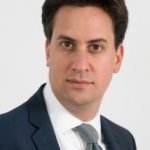
  • Ed Miliband – 2020 Speech on the United Kingdom Internal Market Bill

    Ed Miliband – 2020 Speech on the United Kingdom Internal Market Bill

    The speech made by Ed Miliband, the Labour MP for Doncaster North, in the House of Commons on 14 September 2020.

    I beg to move an amendment, to leave out from “That” to the end of the Question and add:

    “this House notes that the UK has left the EU; calls on the Government to get on with negotiating a trade deal with the EU; recognises that legislation is required to ensure the smooth, effective working of the internal market across the UK; but declines to give a Second Reading to the Internal Market Bill because this Bill undermines the Withdrawal Agreement already agreed by Parliament, re-opens discussion about the Northern Ireland Protocol that has already been settled, breaches international law, undermines the devolution settlements and would tarnish the UK’s global reputation as a law-abiding nation and the UK’s ability to enforce other international trade deals and protect jobs and the economy.”

    There are two questions at the heart of the Bill and of why we will oppose it tonight. First, how do we get an internal market after 1 January within the UK while upholding the devolution settlements, which have been a vital part of our constitution for two decades and are essential to our Union? Secondly, will our country abide by the rule of law—a rules-based international order, for which we are famous around the world and have always stood up?

    Those are not small questions. They go to the heart of who we are as a country and the character of this Government. Let me start with the first question. An internal market is vital for trade and jobs at home, but also for our ability to strike trade deals. It is the responsibility of the UK Government at Westminster to safeguard that market and legislate. On that, we agree with the Government. But that must be done while understanding that the governance of our country has changed in the last two decades. Two decades of devolution settlements reflect a decision that we would share power across our four nations, including devolving key powers over issues such as animal welfare, food safety and aspects of environmental legislation. We should legislate for an internal market, but in a way that respects the role and voice of devolved Governments in setting those standards. That is to respect the devolution settlement. From across the UK, we have heard that the Government are not doing that; that they want to legislate with a blunderbuss approach that does not do that and simply says that the lowest standard in one Parliament must become the standard for all, with no proper voice for devolved Governments. If the Westminster Government decided to lower standards, there would be no voice for the devolved nations, even in a discussion about those standards because the Government have decided not to legislate for common frameworks.

    Ian Blackford (Ross, Skye and Lochaber) (SNP)

    The right hon. Gentleman is getting to the nub of the matter. We have Joint Ministerial Committees, and huge progress had been made in the last few months on agreeing frameworks that would allow us to do exactly what the right hon. Gentleman asked for. Is not the right way to proceed through frameworks in agreement with the devolved Administrations, not the race to the bottom that we get with the Bill?

    Edward Miliband

    The right hon. Gentleman and I come from different positions. I want to respect the devolution settlements that uphold the Union and he has a different point of view, but on this matter we should be legislating for common frameworks. That would be the way to respect devolution. I do not know whether the Prime Minister even understands the legislation—I know he has many things on his plate—but I am sorry to say that on this issue, the Government’s approach has been cavalier. Since 2017, common frameworks have developed and the Government could have legislated for that. We will seek to do that during the Bill’s passage.

    The issues were prefigured in the White Paper. Since then, we have an even bigger question to confront. Let me say at the outset that we want the smoothest trade across our United Kingdom, including Northern Ireland. There is a way to resolve those issues in the Joint Committee set up for that purpose. I have to say that, from a man who said he wanted to get Brexit done and won an election on it, the Bill gets Brexit undone by overturning key aspects of the protocol that were agreed.

    I have been part of many issues of contention across the Dispatch Box, but I never thought that respecting international law would be a matter of disagreement in my lifetime. As Leader of the Opposition, I stood opposite the Prime Minister’s predecessor David Cameron for five years. I do not know why the Prime Minister is rolling his eyes. I disagreed with David Cameron profoundly on many issues, but I could never have imagined him coming along and saying, “We are going to legislate to break international law” on an agreement that we had signed as a country less than a year earlier. Yet that is what the Bill does, in the Government’s own words.

    I want to address three questions at the heart of the matter. Is it right to threaten to break the law in the way the Government propose? Is it necessary to do so? Will it help our country? The answer to each question is no. Let us remember the context and the principle. If there is one thing that we are known for around the world, it is the rule of law. This is the country of Magna Carta; the country that is known for being the mother of all Parliaments; and the country that, out of the darkness of the second world war, helped found the United Nations. Our global reputation for rule making, not rule breaking, is one of the reasons that we are so respected around the world. When people think of Britain, they think of the rule of law. Despite what the Prime Minister said in his speech, let us be clear that this is not an argument about remain versus leave. It is an argument about right versus wrong.

    The Brexiteer and former Chancellor of the Exchequer, Lord Lamont, says that the Bill is impossible to defend. The Brexiteer and former Attorney General who helped to negotiate and sign off this deal as Attorney General ​says that the Bill is “unconscionable”. And the Brexiteer Lord Howard—the Prime Minister’s former boss—said this:

    “I never thought it was a thing I’d hear a British minister, far less a Conservative minister, say, which is that the government was going to invite parliament to act in breach of international law…We have a reputation for probity, for upholding the rule of law, and it’s a reputation that is very precious and ought to be safeguarded, and I am afraid it was severely damaged…by the bill”.

    Sir Bernard Jenkin (Harwich and North Essex) (Con)

    Does the right hon. Gentleman think that the EU has been negotiating in good faith?

    Edward Miliband

    It is very interesting that the hon. Gentleman should say that because a report came out today from the Northern Ireland Affairs Committee, which is chaired by a Conservative Member. This is what the report says and this is my answer to him:

    “These talks began in March and continued throughout the summer in a spirit of good faith and mutual respect for the delicate arrangements in Northern Ireland.”

    That is what the Conservative-controlled Select Committee says about this issue.

    The Prime Minister has said many times that he wants to bring unity to the country during his premiership. I therefore congratulate him on having, in just one short year, united his five predecessors. Unfortunately, their point of agreement is that he is trashing the reputation of this country and trashing the reputation of his office. Why are these five former Prime Ministers so united on this point? It is because they know that our moral authority in the world comes from our commitment to the rule of law and keeping our word. We rightly condemn China when it rides roughshod over the treaties dictating the future of Hong Kong. We say it signed them in good faith, that it is going back on its word and that it cannot be trusted. And his defence? “Don’t worry; I can’t be trusted either.” What will China say to us from now on? What will it throw back at us—that we, too, do not keep to international law?

    Andrea Jenkyns

    Does the Labour party keep its word to the British voters?

    Edward Miliband

    Actually, yes we do, and I will tell the hon. Lady why. We respect the fact that the Conservative party, under this Prime Minister, won the election. He got his mandate to deliver his Brexit deal: the thing that he said was—I am sure she recalls this because it was probably on her leaflets—“oven ready”. It is not me who is coming along and saying it is half-baked; it is him. He is saying, “The deal that I signed and agreed is actually—what’s the word? Ambiguous. Problematic.” I will get to this later in my speech, but I wonder whether he actually read the deal in the first place.

    Ms Angela Eagle (Wallasey) (Lab)

    My right hon. Friend is making an extremely good speech. Would he perhaps tell the House who on earth might have signed this terrible deal with so many ambiguities less than nine months ago?

    Edward Miliband

    My hon. Friend makes an important point; I do believe it was the Prime Minister who signed the deal.​
    In fairness to the Prime Minister, I want to deal with each of the arguments that the Government have made in the last few days for this action. It is quite hard to keep count of the different arguments—you know you are losing the argument when you keep making lots of different arguments—but I want to give the House the top five. First, let us deal with the argument about blockades, which made its first outing in The Telegraph on Saturday through the Prime Minister, and obviously it made a big appearance today.

    I have to say, I did not like the ramping up of the rhetoric from the European Union on Thursday, following the Prime Minister’s publication of this Bill, but even by the standards of the Prime Minister, this is as ridiculous an argument as I have ever heard. Let me let me explain to him why—the point was very well made by the former Attorney General this morning. This is what article 16 of the protocol says:

    “If the application of this Protocol leads to serious economic, societal or environmental difficulties that are liable to persist, or to diversion of trade, the Union or the United Kingdom may unilaterally take appropriate safeguard measures.”

    In other words, let us just say that this threat somehow materialised—and by the way, I believe that Department for Environment, Food and Rural Affairs officials would have to implement it, making it even more absurd that it would happen. If the threat materialised, it is not overturning the protocol that is the right thing to do; it is upholding the protocol, as article 16 says. But do not take my word for it, Madam Deputy Speaker; take the word of the former Attorney General—who definitely read the protocol—who wrote this morning:

    “There are clear and lawful responses available to Her Majesty’s government”.

    As if that was not enough, there is also an irony here—the Prime Minister tried to slip this in; I do not know whether the House noticed—which is that this Bill does precisely nothing to address the issue of the transport of food from Great Britain to Northern Ireland. It is about two issues where the Government are going to override international law: exit declarations, Northern Ireland to GB, and the definition of state aid relating to Northern Ireland. If the Prime Minister wants to tell us that there is another part of the Bill that I have not noticed that will deal with this supposed threat of blockade, I will very happily give way to him. I am sure he has read it; I am sure he knows it in detail, because he is a details man. Come on, tell us: what clause protects against the threat, which he says he is worried about, to GB-to-Northern Ireland exports? I give way to him. [Interruption.]

    Madam Deputy Speaker (Dame Eleanor Laing)

    Order. The right hon. Gentleman cannot give way unless he is asked to.

    Edward Miliband

    There you have it: he didn’t read the protocol, he hasn’t read the Bill, he doesn’t know his stuff.

    Let us deal with the second bogus argument. The Prime Minister claimed on Wednesday that it was necessary to protect the Good Friday agreement. The first outing for that argument was on Wednesday, at Prime Minister’s questions. I have to say to him, I would rather trust the authors of the Good Friday agreement than the Prime Minister, who has prominent members of the Government ​who opposed the agreement at the time. However, this is what John Major and Tony Blair wrote—[Interruption.] They don’t like John Major. They said that the Bill

    “puts the Good Friday agreement at risk”—

    [Interruption]—this is very serious—

    “because it negates the predictability, political stability and legal clarity that are integral to the delicate balance between the north and south of Ireland that is at the core of the peace process.”

    These are very important words from two former Prime Ministers, both of whom helped to win us peace in Northern Ireland. The Prime Minister may not want to believe them, but he will, I hope, believe himself—[Laughter]—maybe not—because this is what he said about the Northern Ireland protocol:

    “there are particular circumstances in Northern Ireland at the border that deserve particular respect and sensitivity, and that is what they have received in the deal.”

    It is

    “a great deal for Northern Ireland.”—[Official Report, 19 October 2019; Vol. 666, c. 578-579.]

    I do not understand this. He signed the deal. It is his deal. It is the deal that he said would protect the people of Northern Ireland. I have to say to him, this is not just legislative hooliganism on any issue; it is on one of the most sensitive issues of all. I think we should take the word of two former Prime Ministers of this country who helped to secure peace in Northern Ireland.

    Sammy Wilson (East Antrim) (DUP)

    Before the shadow spokesman lectures the Prime Minister about reading documentation or starts lecturing us about the Good Friday agreement, does he not recognise, first of all, that the Good Friday agreement talks about the principle of consent to change the constitutional position of Northern Ireland, which is what this protocol does? The Good Friday agreement has within it a mechanism to safeguard the minorities in Northern Ireland through a cross-community vote, which again the protocol removed. So before he starts talking about the threats to the Good Friday agreement, does he not recognise that the protocol was a threat to it in the first place?

    Edward Miliband

    The right hon. Gentleman did not like the protocol at all. He would rather have not had the protocol. He and I just have a disagreement on this issue. I believe it was necessary to make special arrangements for Northern Ireland, or for the UK to be in the EU customs union to avoid a hard border in Ireland. That is why the Prime Minister came along and said the protocol was the right thing to do.

    Let me deal with the third excuse we heard. This is the “It was all a bit of a rush” excuse. As the Prime Minister said in his article, times were “torrid” and there were “serious misunderstandings”. He tries to pretend that this is some new issue, but they have been warned for months about the way the protocol would work. The Chancellor of the Duchy of Lancaster, who is sitting in his place, was warned at the Select Committee in March and was asked about these issues. The Business Secretary was written to by the House of Lords Committee in April.

    Let us just get this straight for a minute, because I think it is important to take a step back. The Prime Minister is coming to the House to tell us today that his flagship achievement—the deal he told us was a triumph, ​the deal he said was oven-ready, the deal on which he fought and won the general election—is now contradictory and ambiguous. What incompetence. What failure of governance. How dare he try to blame everyone else? I say to the Prime Minister that this time he cannot blame the right hon. Member for Maidenhead (Mrs May), he cannot blame John Major, he cannot blame the judges, he cannot blame the civil servants, he cannot sack the Cabinet Secretary again. There is only one person responsible for it and that is him. This is his deal. It is his mess. It is his failure. For the first time in his life, it is time to take responsibility. It is time to ’fess up: either he was not straight with the country about the deal in the first place, or he did not understand it.

    A competent Government would never have entered into a binding agreement with provisions they could not live with. If such a Government somehow missed the point but woke up later, they would do what any competent business would do after it realised it could not live with the terms of a contract: they would negotiate a way out in good faith. That is why this is all so unnecessary. There is a mechanism designed for exactly this purpose in the agreement: the Joint Committee on the Northern Ireland protocol. What did the Chancellor of the Duchy of Lancaster say on 11 March at the Committee on the Future Relationship with the European Union? He will recall that he was asked about state aid. He said:

    “the effective working of the protocol is a matter for the Joint Committee to resolve.”

    The remaining issues to which the Bill speaks are not insignificant, but nor are they insurmountable, and that is the right way to pursue them, not an attempt at illegality.

    Let me come back to the excuses. Fourthly, on Sunday, there was the Justice Secretary’s “the fire alarm” defence: “We don’t want to have to do this, but we might have to.” I want to be clear with the House about something very, very important about a decision to pass the Bill. I have great respect for the hon. Member for Bromley and Chislehurst (Sir Robert Neill), but I want to make this point. The very act of passing the Bill is itself a breach of international law. It would be wrong for hon. and right hon. Members on either side of the House to be under any illusions about that as they decide which Lobby to go into tonight. If we pass the Bill, even if there is a nod and a wink from the Prime Minister to the hon. Member for Bromley and Chislehurst, we equip the Government with the power to break the law. That in itself is a breach of the Northern Ireland protocol and therefore a breach of international law.

    Sir Robert Neill

    I have listened carefully to the right hon. Member’s formulation and I understand much of what he says. However, an Act passed by this House only becomes law when it comes into force. He will be right, I submit, to say that as soon as any of these provisions came into force we would potentially breach international law. That is not quite the same thing, as I think he would fairly concede.

    Edward Miliband

    That is not a risk we are going to take.

    So the fire alarm defence simply does not work. The last defence was floated as a trial balloon, one might say, by the Northern Ireland Secretary last Tuesday, I believe. He said it was a breach of the law in a “specific and limited way.” That really is a new way of thinking ​about legal questions. It now turns out that breaking the law specifically and in a limited way is a reasonable defence for this Government. We have all heard of self-defence, the alibi defence, the innocence defence; now we have the Johnson defence: you can break the law, but in a specific and limited way.

    Think about the grave context we face. The Home Secretary is in today’s newspapers warning everyone, “You must abide by the law.” On this, she is absolutely right. She says,

    “I know that, as part of our national effort, the law-abiding majority will stick to these new rules. But there will be a small minority who do not”.

    You couldn’t make it up. What she does not say in the article, but what we now know about this Government, is that the Johnson defence means something very specific: there is one rule for the British public and another rule for this Government. Pioneered by Cummings, implemented by Johnson—that is the Johnson rule.

    This is the wrong thing to do. It is not necessary and it is deeply damaging to this country. Let us think about the impact on our country in the negotiations. The Government’s hope is that it will make a deal more likely, but that relies on the notion that reneging on a deal we made less than a year ago with the party we are negotiating with now will make that party more likely to trust us, not less. Think about our everyday lives: suppose we made an agreement with someone a year ago and we were seeking to have another negotiation with them; if we had unilaterally reneged on the first deal we made, would it make them more likely to trust us, or less likely? Obviously, it would make them less likely to trust us.

    We know the risks. I very much hope the Prime Minister gets a deal. As a country, we absolutely need a deal. We know the risks of no deal if this strategy goes wrong. The Prime Minister said last week that no deal is somehow “a good outcome”. He is wrong. I hear all the time from businesses—I am sure the Business Secretary, who is in his place, does too—that are deeply worried about the danger of no deal. I know what the Prime Minister thinks about the views of business, thanks to his four-letter rant, but this is what businesses have to say. Nissan says there could be no guarantee about its Sunderland plant if there were tariffs on UK to EU trade. Ford says that no deal would be disastrous. The NFU says it would be catastrophic for British farming—indeed, the Chancellor of the Duchy of Lancaster, when he was Secretary of State for Environment, Food and Rural Affairs, said the same thing. We are in the biggest economic crisis for 300 years, the biggest public health crisis for 100 years. No deal is not some game; it is about the livelihoods of millions of people across our country.

    What about the prized trade deal with the United States? I know the Prime Minister thinks he has a friend in President Trump, but even he must recognise the necessity of being able to deal with both sides. The Speaker of the House of Representatives, Nancy Pelosi, said:

    “The UK must respect the Northern Ireland Protocol as signed with the EU… If the UK violates that international treaty and Brexit undermines the Good Friday accord, there will be absolutely no chance of a US-UK trade agreement passing the Congress.”

    This is the signal that we—the country known for the rule of law, the country that abides by the law, the ​country that founded international law—are sending to our friends and allies around the world. That is why we cannot support the Bill.

    The Government must go back, remove the provisions breaking international law and ensure that the Bill works in a way that respects the devolution settlements. That is what a responsible, competent and law-abiding Government would do. This is a pivotal moment to determine the future of our country—who we are and how we operate. In shaping that future, we have to stand up for the traditions that matter: our commitment to the rule of law. The Bill speaks of a Government and a Prime Minister who are casual, not to say cavalier and reckless, about the gravity of the issues confronting them. The Prime Minister should be focusing on securing a Brexit deal, not breaking international law and risking no deal. He is cavalier on international law and cavalier on our traditions. This is not the serious leadership we need, and it is why we will oppose the Bill tonight.

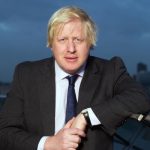
  • Boris Johnson – 2020 Statement on the United Kingdom Internal Market Bill

    Boris Johnson – 2020 Statement on the United Kingdom Internal Market Bill

    The statement made by Boris Johnson, the Prime Minister, in the House of Commons on 14 September 2020.

    I beg to move, That the Bill be now read a Second time—and that this House act to preserve one of the crucial achievements of the past three centuries, namely our British ability to trade freely across the whole of these islands.

    The creation of our United Kingdom by the Acts of Union of 1707 and 1801 was not simply a political event, but an act of conscious economic integration that laid the foundations for the world’s first industrial revolution and the prosperity we enjoy today. When other countries in Europe stayed divided, we joined our fortunes together and allowed the invisible hand of the market to move Cornish pasties to Scotland, Scottish beef to Wales, Welsh beef to England, and Devonshire clotted cream to Northern Ireland or wherever else it might be enjoyed.

    When we chose to join the EU back in 1973, we also thereby decided that the EU treaties should serve as the legal guarantor of these freedoms. Now that we have left the EU and the transition period is about to elapse, we need the armature of our law once again to preserve the arrangements on which so many jobs and livelihoods depend. That is the fundamental purpose of this Bill, which should be welcomed by everyone who cares about the sovereignty and integrity of our United Kingdom.

    We shall provide the legal certainty relied upon by every business in our country, including, of course, in Northern Ireland. The manifesto on which this Government were elected last year promised business in Northern Ireland

    “unfettered access to the rest of the UK”.

    Stephen Doughty (Cardiff South and Penarth) (Lab/Co-op)

    I am listening carefully to what the Prime Minister is saying, but why did one of his own distinguished Members describe his policy this week as “Nixonian Madman Theory”? Is the Prime Minister not deeply worried that his policies and approach are being compared to those of the disgraced former US President Richard Nixon, rather than someone like Winston Churchill?

    The Prime Minister

    Actually, I think that this Bill is essential for guaranteeing the economic and political integrity of the United Kingdom and simply sets out to achieve what the people of this country voted for when they supported our election manifesto: not only unfettered access from NI to GB and from GB to NI, but also—I quote from the manifesto—to

    “maintain and strengthen the integrity and smooth operation of our internal market.”

    Wes Streeting (Ilford North) (Lab)

    Will the Prime Minister give way?

    The Prime Minister

    I will not.

    The Bill is designed to honour that pledge and maintain those freedoms. When we renegotiated our withdrawal agreement from the EU, we struck a careful balance to reflect Northern Ireland’s integral place in our United Kingdom, while preserving an open border with Ireland, with the express and paramount aim of protecting the Belfast/Good Friday agreement and the peace process. In good faith, we accepted certain obligations in the Northern Ireland protocol in order to give our European friends the assurances they sought on the integrity of their single market, while avoiding any change to the border on the island of Ireland. We agreed to conduct some light-touch processes on goods passing between Great Britain and Northern Ireland, in case they were transferred to the EU.

    Jim Shannon (Strangford) (DUP) rose—

    The Prime Minister

    I give way to the hon. Gentleman, who knows a great deal about the subject.

    Jim Shannon

    This is a very important debate, as the Prime Minister and I know and as everyone in the House knows. Does he accept that the EU’s determination to use Northern Ireland as a stick to beat the UK with as punishment for daring to leave an institution that had no respect or concern for our people has been underlined by the behaviour of MEPs, and indeed of some in this House, as they seek again, against the will of the majority of people, to stop Brexit instead of doing the honourable thing: respecting the vote and the recent general election validation, taking care of the UK and putting our people first, as the Prime Minister has said he will do? This legislation is a way of doing that.

    The Prime Minister

    The intention of the Bill is clearly to stop any such use of the stick against this country, and that is what it does. It is a protection, it is a safety net, it is an insurance policy, and it is a very sensible measure.

    In a spirit of reasonableness, we are conducting these checks in accordance with our obligations. We are creating the sanitary and phytosanitary processes required under the protocol and spending hundreds of millions of pounds on helping traders. Under this finely balanced arrangement, our EU friends agreed that Northern Ireland—this is a crucial point—would remain part of the customs territory of the United Kingdom, able to benefit from free trade deals with other countries, which we are now beginning to strike. It ensures that the majority of goods not at risk of travelling to the EU—and that is the majority of goods going from GB to Northern Ireland—do not have to pay tariffs.

    But the details of this intricate deal and the obvious tensions between some of its provisions can only be resolved with a basic minimum of common sense and good will from all sides. I regret to have to tell the House that in recent months the EU has suggested that it is willing to go to extreme and unreasonable lengths, using the Northern Ireland protocol in a way that goes well beyond common sense simply to exert leverage against the UK in our negotiations for a free trade agreement. To take the most glaring example, the EU has said that if we fail to reach an agreement to its satisfaction, it might very well refuse to list the UK’s food and agricultural products for sale anywhere in the EU. It gets even worse, because under this protocol, that decision would create an instant and automatic prohibition on the transfer of our animal products from Great Britain to Northern Ireland. Our interlocutors on the other side are holding out the possibility of blockading food and agricultural transports within our own country.

    Andrea Jenkyns (Morley and Outwood) (Con)

    Does the Prime Minister agree that there is no greater obligation for MPs than to our voters, that the British people were told that no deal is better than a bad deal and we would prosper without a deal, and that given that the EU refuses to negotiate in good faith, we have no alternative but to legislate to protect our internal market?

    The Prime Minister

    My hon. Friend is entirely right. Absurd and self-defeating as that action would be, even as we debate this matter, the EU has not taken that particular revolver off the table. I hope that it will do so and that we can reach a Canada-style free trade agreement as well.

    It is such an extraordinary threat, and it seems so incredible that the EU could do this, that we are not taking powers in this Bill to neutralise that threat, but we obviously reserve the right to do so if these threats persist, because I am afraid that they reveal the spirit in which some of our friends are currently minded to conduct these negotiations. It goes to what m’learned friends would call the intention of some of those involved in the talks. I think the mens rea—

    Sir Robert Neill (Bromley and Chislehurst) (Con)

    Will the Prime Minister give way?

    The Prime Minister

    I give way to my right hon. and learned Friend.

    Sir Robert Neill

    I never object to another promotion.

    I have listened carefully to what the Prime Minister says, but does he accept that were our interlocutors in the EU to behave in such an egregious fashion, which would clearly be objectionable and unacceptable to us, there is already provision under the withdrawal agreement for an arbitrary arrangement to be put in place? Were we to take reserve powers, does he accept that those reserve powers should be brought into force only as a final backstop if we have, in good faith, tried to act under the withdrawal agreement and are then frustrated? The timing under which they come into force is very important for our reputation as upholders of the rule of law.

    The Prime Minister

    My hon. Friend is absolutely right in what he says. He knows a great deal about this matter, and it is of great importance that we go through the legal procedures, as we will. As things stand, however, in addition to the potential blockade on agricultural goods, there are other avenues that the EU could explore if it is determined to interpret the protocol in absurd ways, and if it fails to negotiate in good faith. We must now take a package of protective powers in the Bill, and subsequently.

    For example, there is the question of tariffs in the Irish sea. When we signed the protocol, we accepted that goods “at risk” of going from Great Britain into the EU via Northern Ireland should pay the EU tariff as they crossed the Irish sea—we accepted that—but that any goods staying within Northern Ireland would not do so. The protocol created a joint committee to identify, with the EU, which goods were at risk of going into Ireland. That sensible process was one achievement of our agreement, and our view is that that forum remains the best way of solving that question.

    I am afraid that some in the EU are now relying on legal defaults to argue that every good is “at risk”, and therefore liable for tariffs. That would mean tariffs that could get as high as 90% by value on Scottish beef going to Northern Ireland, and moving not from Stranraer to Dublin but from Stranraer to Belfast within our United Kingdom. There would be tariffs of potentially more than 61% on Welsh lamb heading from Anglesey to Antrim, and of potentially more than 100% on clotted cream moving from Torridge—to pick a Devonshire town at random—to Larne. That is unreasonable and plainly against the spirit of that protocol.

    The EU is threatening to carve tariff borders across our own country, to divide our land, to change the basic facts about the economic geography of the United Kingdom and, egregiously, to ride roughshod over its own commitment under article 4 of the protocol, whereby

    “Northern Ireland is part of the customs territory of the United Kingdom.”

    We cannot have a situation where the boundaries of our country could be dictated by a foreign power or international organisation. No British Prime Minister, no Government, and no Parliament could ever accept such an imposition.

    Miss Sarah Dines (Derbyshire Dales) (Con)

    How will my right hon. Friend ensure that Derbyshire Dales lamb, grown in our country, can be enjoyed by our fellow citizens in Northern Ireland, which is part of our country?

    The Prime Minister

    I thank my hon. Friend very much. The best way for us all to be sure that such lamb can be sold throughout the whole United Kingdom is to vote for this Bill, and to protect the economic integrity of the UK. [Interruption.] To answer the questions that are being shouted at me from a sedentary position, last year we signed the withdrawal agreement in the belief, which I still hold, that the EU would be reasonable. After everything that has recently happened, we must consider the alternative. We asked for reasonableness, common sense, and balance, and we still hope to achieve that through the joint committee process, in which we will always persevere, no matter what the provocation.

    Jeremy Wright (Kenilworth and Southam) (Con)

    I am grateful to my right hon. Friend for giving way, and I want to ask him, if I may, about the ministerial code. When I was the Attorney General in the previous Government, I was happy to confirm that the ministerial code obliged Ministers to comply with international as well as domestic law. This Bill will give Ministers overt authority to break international law. Has the position on the ministerial code changed?

    The Prime Minister

    No, not in the least. My right hon. and learned Friend can consult the Attorney General’s position on that. After all, what this Bill is simply seeking to do is insure and protect this country against the EU’s proven willingness—that is the crucial point—to use this delicately balanced protocol in ways for which it was never intended.

    The Bill includes our first step to protect our country against such a contingency by creating a legal safety net taking powers in reserve, whereby Ministers can guarantee the integrity of our United Kingdom. I understand how some people will feel unease over the use of these powers, and I share that sentiment. I say to my right hon. and learned Friend that I have absolutely no desire to use these measures. They are an insurance policy, and if we reach agreement with our European friends, which I still believe is possible, they will never be invoked. Of course, it is the case that the passing of this Bill does not constitute the exercising of these powers.

    Chris Bryant (Rhondda) (Lab)

    Hang on!

    The Prime Minister

    If the powers were ever needed, Ministers would return to this House with a statutory instrument on which a vote—perhaps this is the question to which the hon. Gentleman is awaiting an answer—would be held. We would simultaneously pursue every possible redress—to get back to the point I was making to my hon. Friend the Member for Bromley and Chislehurst (Sir Robert Neill)—under international law, as provided for in the protocol.

    In addition to our steps in domestic law, if we had to make clear that we believed the EU was engaged in a material breach of its duties of good faith, as required and provided for under the withdrawal agreement and the Vienna convention on the law of treaties, we would seek an arbitration panel and consider safeguards under article 16 of the protocol.

    It is a question not of if we meet our obligations, but of how we fulfil them. We must do so in a way that satisfies the fundamental purpose of the protocol, the Belfast Good Friday agreement and the constitutional position of Northern Ireland. We will work with the EU on all of these issues. Even if we have to use these powers, we will continue to engage with the joint committee so that any dispute is resolved as quickly and as amicably as possible, reconciling the integrity of the EU single market with Northern Ireland’s place in the UK’s customs territory.

    What we cannot do now is tolerate a situation where our EU counterparts seriously believe that they have the power to break up our country. If that is what hon. Members on the Opposition Benches want them to have, then I am afraid that they are grievously mistaken. That illusion must be decently dispatched, and that is why these reserve powers are enshrined in the Bill.

    In addition, the Bill will help deliver the single biggest transfer of powers to the devolved Administrations since their creation, covering a total of 160 different policy areas. Each devolved Administration will also be fully and equally involved in the oversight of the UK’s internal market through a new independent body, the Office for the Internal Market. The Bill will maintain our common cause of high standards, where we already go beyond the EU in areas ranging from health and safety to consumer and environmental protections.

    Chris Bryant

    May I take the Prime Minister back to the question asked by the former Attorney General, the right hon. and learned Member for Kenilworth and Southam (Jeremy Wright)? It seems to me quintessential to the way we do our business that Ministers abide by the law. Indeed, the Justice Secretary is required by law to swear that he will uphold the rule of law. How, therefore, can the Prime Minister seriously advance a piece of legislation that says:

    “regulations…are not to be regarded as unlawful on the grounds of any incompatibility or inconsistency with relevant international or domestic law”.

    That is just gobbledegook, isn’t it? It is complete and utter nonsense.

    The Prime Minister

    I do not know whether the hon. Gentleman was listening, but I made it very clear that we do not relish the prospect of having to use these powers at all. We hope very much, as I said, that the EU will be reasonable, but any democratically elected Government of this country—indeed, I would say any MP representing the people of this country—must be obliged to do whatever he or she can to uphold the territorial integrity of this country. That is what we are doing. Furthermore, instead of UK taxpayers’ money being disbursed by the EU, this Bill, which is an excellent Bill, will allow the Government to invest billions of pounds across the whole of the UK to level up.

    A year ago, this Parliament was deadlocked, exasperating the British people by its failure to fulfil their democratic wishes and, worst of all, by undermining our negotiators, as the right hon. Member for Leeds Central (Hilary Benn) will recall. Effectively, Parliament told the EU that if it played hardball, this House would oblige it by weakening our country’s hand and legally forbid our representatives from walking away from the negotiating table. I hope that this House will never make that mistake again. Instead, let us seize the opportunity presented by this Bill and send a message of unity and resolve. Let us say together to our European friends that we want a great future relationship and a fantastic free trade deal.

    Steve Brine (Winchester) (Con)

    The Prime Minister will remember that we have some history in this regard. I did not want us to leave with no agreement last year, and we fell out over that. But he was true to his word and we had an agreement.

    We said in our manifesto:

    “We will ensure that Northern Ireland’s businesses and producers enjoy unfettered access to the rest of the UK”.

    Is it not the truth of the matter that the way to do that is either through this Bill or by agreeing the free trade agreement—the Canada-style deal—that the EU said was on the table and of which the Prime Minister said when he came into office, “Okay, they now seem to have stepped back from that”?

    I thank the Prime Minister for saying that tonight is difficult for some of us, but this is an important piece of legislation. Will he assure me that it is still his policy and the policy of his Government to secure that FTA with the EU that it said it wanted and that we know we want?

    The Prime Minister

    I thank my hon. Friend for the spirit in which he asked his question and made that important point. He is absolutely right to focus on where we are now in our talks on the free trade agreement. It is by passing the Bill tonight and in subsequent days that we will make the possibility of that great free trade agreement more real and get it done sooner.

    Therefore, with this Bill we will expedite a free trade agreement not only with our European friends and partners, but with friends and partners around the world; we will support jobs and growth throughout the whole United Kingdom; we will back our negotiators in Brussels; and, above all, we will protect the territorial integrity of the UK and the peace process in Northern Ireland. I urge the House to support the Bill and, as my hon. Friend the Member for Winchester (Steve Brine) rightly said, to get back to the business of securing a free trade agreement with our closest neighbours that we would all wish to see. I commend the Bill to the House.

  • Keir Starmer – 2020 Article in the Sunday Telegraph

    Keir Starmer – 2020 Article in the Sunday Telegraph

    The article by Keir Starmer, the Leader of the Opposition, in the Sunday Telegraph on 13 September 2020.

    Let’s Get Brexit Done. That was the promise the Prime Minister made to the British people on the steps of Downing Street hours after last year’s General Election.

    I accept that the leave-remain divide is over. The country needs – and wants – to move on. That is why it is in the best interests of the British people to negotiate a trade deal with Europe.

    It is what the public want, it is what they were promised and it is what they expect to be delivered. I believe a deal is possible too. The outstanding issues are difficult, but they are not insurmountable. An agreement can be struck if both sides hunker down in good faith and break the logjam.

    And yet, it is this Prime Minister and this Conservative Government who have turned the clock back and are reigniting old rows.

    I am not blind to the fact this could be part of the Government’s negotiating strategy in the final weeks of talks. We were repeatedly told last year that the talks were on the brink of collapse, only for a breakthrough or concession from the Government to come a few days later. That is part and parcel of what we have come to expect from Brexit.

    However, the decision to propose a Bill last week that would break an international agreement we signed a matter of months ago is wrong. Many former leaders of the Conservative Party have spoken out to say so. And I suspect the Prime Minister agrees with them and knows his actions are counterproductive.

    First, public trust has been broken. The deal the Prime Minister promised would be done is now being reopened. The divisions within the Conservative Party are being reignited. And at a time when we are all doing everything we can do to follow social distancing rules, ministers are on the television and radio justifying why it is ok for them to break international law. It is as ludicrous as it is frustrating.

    We have broken the trust of our global partners too. I believe we can be a proud nation on the world stage and a moral force for good. We can work with our international partners to strike the best possible trade deals. But, the Prime Minister risks holding Global Britain back. How can we get the best trade deals when we cannot be trusted to keep our word?

    The Labour Party I lead will always speak out in the national interest. I want the talks with Europe to succeed. I have long argued that it is possible to get a deal that can allow businesses to thrive, good jobs to be created and peace in Northern Ireland to be preserved. I want to see our own union of nations –England, Scotland, Wales and Northern Ireland – protected too.

    People want to move on from this torturous debate; they want to see a deal done so we can focus as a united nation on how we protect ourselves from the next wave of the pandemic.

    We have all been alarmed by the sharp increase in coronavirus cases in recent days. We have all heard heart-breaking stories from friends or family members who have struggled to get a test. The anxiety we all felt at the start of this pandemic is returning. People are scared about what the next few months might bring, how the virus can be contained, how our economy can be protected and jobs can be saved. Our focus, the Government’s focus, must be on this.

    I want ministers to be fixing the test, track and isolate system. I want to see a plan for how we can protect our care homes from a second wave, support families who are worried about their jobs and make sure children can still get the education they need. Those are my priorities. The priorities of the British people. We should be getting on with defeating this virus, not banging on about Europe.

    Get on with Brexit and defeat the virus. That should be the Government’s mantra.

    Labour is prepared to play its part in making that happen. If the Government fixes the substantial cross-party concerns that have been raised about the Internal Market Bill, then we are prepared to back it. But if they do not, and the talk collapse, then it is their failure and incompetence that will have let the British people down.

  • Emily Thornberry – 2020 Comments on the Appointment of Tony Abbott

    Emily Thornberry – 2020 Comments on the Appointment of Tony Abbott

    The comments made by Emily Thornberry, the Shadow Foreign Secretary, on 26 August 2020.

    Any way you look at it, this is an absolutely staggering appointment. On a personal level, it is shameful that Boris Johnson thinks this offensive, aggressive, leering, gaffe-prone misogynist is the right person to represent our country overseas.

    And on a professional level, this is someone with no hands-on experience of negotiating trade agreements, who denies the climate change that we believe should be at the heart of our trade policy, and who clearly has no concept of the importance of Britain’s trade with the EU.

    He was ousted by his own colleagues after just two years in power, and rejected by his own constituents just last year. They are the people who know him best, and wanted rid of him, yet here we are now, hiring him to negotiate our trade deals around the world.

    It’s yet more breathtaking incompetence from a government that has turned it into an art-form.

  • Chris Leslie – 2015 Comments on the Risk of Brexit

    Chris Leslie – 2015 Comments on the Risk of Brexit

    The comments made by Chris Leslie, the then Shadow Chief Secretary to the Treasury, on 23 April 2015. The comments were made with reference to an interview with George Gillespie, the Chief Executive of MIRA, the text of which is at the base of this page.

    This is an embarrassing start to the day for George Osborne. The chief executive of the company he is visiting has warned of the ‘danger’ of Tory policy on the European Union, which risks ‘destroying’ Britain’s alliances with our trading partners.

    As Citi warns in its election briefing today, a Conservative government after the election ‘would raise Brexit risk’ which ‘would be highly damaging for the UK economy’.

    And the Tories would not only endanger jobs and investment by risking exit from Europe, their plans to double the spending cuts next year would hit working families hard and damage our NHS.


    Transcript of Dr George Gillespie, Chief Executive of MIRA, Today Programme, Thursday, 23 April 2015

    John Humphrys:
    But you’re successful, you’re optimistic, we’ve got a new government coming, what worries you about the next 5 years?

    George Gillespie:
    We’ve talked about skills; I guess another major issue for me would be Europe. One of the reasons that MIRA has been very successful is that the UK is seen around the world as a good place to set up business, it has a very good legal system, we have reasonable employment laws, a good balance between employee and employer and we are a landing strip for Europe. If we cut ourselves from Europe all of a sudden that whole reason for coming to the UK starts to disappear and that makes that much more difficult to attract foreign investment in the UK.

    JH:
    If we cut ourselves off from Europe do you think there is a danger of that?

    GG:
    The perception around the world even as we discuss it now, before we even get to having a referendum and the consequences of that, I’m in China, I’m having to explain that no, the UK is not leaving Europe right now but even the discussion that are going on are already having ripple effects around the world. In terms of the perception that the UK is moving away from Europe.

    JH:
    So your message to them is what, the Chancellor will be sitting in the very chair you’re occupying in an hour from now.

    GG:
    My message would be to think very, very carefully that we don’t accidently don’t end up destroying one of our key industrial allies which is to be part of Europe, the largest European market.

    JH:
    Destroying is a big word?

    GG:
    I think we need think very carefully about stepping out of Europe. I’m quite passionate about it and I have said that many times.

    JH:
    But you think there is a real danger?

    GG:
    I think there is a danger that other factors other than, let’s say economics or industrial development drive a decision and the population vote for something that perhaps has longer terms consequences…

    JH:
    In other words a kind of emotional knee-jerk response…

    GG:
    Potentially yes…

    JH:
    And that worries you?

    GG:
    That does yes. If looking forward into the next government period that is one of the issues that definitely concerns me.

  • Rachel Reeves – 2020 Comments on Customs Lorry Park in Kent

    Rachel Reeves – 2020 Comments on Customs Lorry Park in Kent

    The comments made by Rachel Reeves, the Shadow Chancellor of the Duchy of Lancaster, on 30 July 2020.

    This giant lorry park will stand as a symbol of the Government’s failure to plan properly for Brexit, with so little achieved in four years and only five months to go before the end of the transition period.

    Ministers need to explain how much this park will cost and how it will operate, and reassure residents who understandably fear it will make their lives a misery.

    When Boris Johnson talked about relaxing planning laws, no one thought he meant turning part of the Garden of England into a lorry park the size of about 15 football pitches.

    The Prime Minister promised an ‘oven-ready’ deal and said there would be extra cash for major projects. No one imagined that meant concreting over the countryside to build a lorry park.

  • Ian Blackford – 2020 Speech on the Future UK-EU Relationship

    Ian Blackford – 2020 Speech on the Future UK-EU Relationship

    The text of the speech made by Ian Blackford, the SNP MP for Ross, Skye and Lochaber, in the House of Commons on 15 July 2020.

    I beg to move,

    That this House welcomes the European Union’s openness to extend the transition period for negotiations; calls on the Government to immediately accept this offer and notes the Scottish Government’s publication of 3rd June entitled, “COVID-19: The Case for Extending the Brexit Transition Period”, warning of the damage a no deal would cause to the economy in addition to the cost of the covid-19 health crisis.

    The Prime Minister, like all of us here, could not have foreseen the covid-19 pandemic when his Government initiated the process of leaving the European Union. 2020 has become a year like no other, and this Government must adapt and do what is right by their citizens. Our priority must be dealing with this health emergency and the consequent economic challenge; it is definitively not business as normal. That is why my Government in Edinburgh, under the stewardship of Nicola Sturgeon, has prioritised dealing with the crisis above all else. We are demanding that the UK Government do the same—[Interruption.] Mr Speaker, it has started already. This is a serious subject, and what we get is laughing and guffawing from the hon. Member for West Aberdeenshire and Kincardine (Andrew Bowie). He really should show some respect and grow up.

    The SNP is calling on the Government immediately to extend the Brexit transition period while we navigate the unprecedented health and economic crisis we currently face. The European Union has expressed its ongoing openness to extending the transition period for negotiations, and the UK Government now need to accept that offer. The Government will claim that this opportunity ended at the end of June, but we are dealing with realpolitik here. We know that while we are still in the transition period this House can legislate for an extension and the European Union would recognise the mutual benefit. It simply requires political will and leadership.

    The Scottish Government have set out their position in “COVID-19: The Case for Extending the Brexit Transition Period”, which sets out why it is vital, if we are to ensure the most rapid recovery possible from the covid-19 crisis, that the UK must immediately seek an extension to the Brexit transition period for two years. We are in unprecedented times: a health pandemic, an economic crisis, and the real threat of a second wave of covid-19 later this year. Now is the moment for the UK Government to recognise reality and to reconsider their position.

    The United Kingdom is facing an unprecedented economic crisis. The Office for Budget Responsibility and the Bank of England have published various scenarios in which GDP falls by as much as 13% to 14% this year, which would be the largest decline in economic output in 300 years. By comparison, the most recent largest single-year fall in GDP was 4.2% on the back of the financial crisis in 2009. This overshadows anything that any of us we will ever face.​

    At least 1 million jobs have already gone, and many more will go when the Government end the furlough scheme, which is needed as a bridge to secure employment until recovery takes hold. Indeed, we know from the Office for Budget Responsibility that close to 2 million of those on the furlough scheme could face unemployment. Just dwell on that: the threat of unemployment in the UK could perhaps increase to as many as 4 million people. Just dwell on the human misery—the families struggling to make ends meet and pay their bills; a sharp rise in poverty, and the human cost of that for families and their children. That is why a stimulus package is required to build confidence and get folk back to work.

    Douglas Ross (Moray) (Con)

    The right hon. Gentleman is outlining the stark realities that we currently face across the whole United Kingdom, and indeed the world. Because of that, is he grateful that Scotland is part of the United Kingdom, and that the broad shoulders of this Union are supporting Scotland, with more than £10 billion going from the UK Government to Scotland just during the covid pandemic?

    Ian Blackford

    I must say that I am disappointed in the hon. Gentleman, as I would expect more of him than that. I say to Conservative Members that we must ensure that we have the tools at our disposal in the Scottish Parliament and the Scottish Government. I spoke about the importance of the furlough scheme, and we welcomed that. We will welcome Government measures that help to deal effectively with the challenge we face. There is a harsh reality, however, for our industries in Scotland, such as the tourism industry, which is important in my constituency and that of the hon. Gentleman, as well as many others.

    Effectively, we are facing three winters, and there is a truncated summer season. Our tourist industry barely exists over the winter months, and the last thing we need is to find that the UK Government are kicking the legs away from our industry by ending the furlough scheme early. The challenge for every Conservative Member of Parliament from Scotland is to ensure that if the UK Government do not provide the necessary support for our businesses and our people, those powers have to reside in the Scottish Parliament. Will Scottish Tory MPs stand with us and ensure that the Scottish Parliament has the powers it needs to do its job and protect the people of Scotland? I think we know the answer.

    The Chancellor said that the UK is suffering because of covid-19, in common with many other economies around the world. However, the UK economy is likely to suffer worse damage from this crisis than any other country in the developed world. According to the OECD, a slump in the UK’s national income of 11.5% during 2020 will outstrip falls in France, Italy, Spain, Germany and the US. With the continued risk of a second wave hitting the economy and our communities in winter, the idea of the UK leaving the European Union at the same time is economic madness.

    The outlook is bleak—there is no other way to look at it—and things are about to get much worse, unless the Government end their refusal to extend the Brexit transition period. Refusing to do so is the ultimate act of self-harm. With businesses fighting for survival, a bad deal or no deal will burden businesses with additional costs and red tape. Yesterday, the Financial Times told us that UK Government officials had indicated that a ​potential additional 215 million customer declarations will be required, at a cost of up to £7 billion. Businesses are fighting for survival, and the UK Government want to send them a bill for £7 billion. I wonder if the Prime Minister will put that on the side of a bus. That is not taking back control; that is self-induced madness.

    We can stop this now. We can recognise that this is a price that we cannot pay in the middle of a health and an economic crisis. All it requires is political will. All it requires is leadership.

    Craig Mackinlay (South Thanet) (Con)

    Is it not the case that the injudicious dropping of a crisp packet would be enough for the Scottish National party to be asking for the extension of the implementation period or the scrapping of the whole project altogether? Might I remind the SNP—I wonder whether the right hon. Gentleman has the figures—that more people voted for Brexit in Scotland than have ever voted for the SNP?

    Ian Blackford

    Really? Is that the best that Thanet can send to the House of Commons? Heaven help them. I have to say to the hon. Gentleman that we were told that if we stayed in the United Kingdom in 2014, Scotland would be respected and that we were to lead the UK. The question for him and for his Government is: why did they not respect the fact that Scotland voted to stay in the EU, with 62% of those living in Scotland voting to do so? At every opportunity in the past few years, the Conservatives, as they have been in every year since 1955, have been thoroughly rejected by the people of Scotland, and it is no wonder. We stood on a platform in the election in December about Scotland’s right to choose. The Tories said, “Say no to devolution. Say no to independence.” How did that go down? They lost more than half their seats and we increased our representation from 35 to 48. I think he has had his answer.

    Douglas Ross

    Will the right hon. Gentleman give way?

    Ian Blackford

    You’ll get your opportunity later.

    Douglas Ross

    On a point of order, Mr Speaker.

    Mr Speaker

    I hope it is a point of order.

    Douglas Ross

    It is a point of order, Mr Speaker, because the right hon. Gentleman said that Scottish Conservatives stood on a manifesto commitment against devolution. This Government have given more powers than ever to the Scottish Parliament, and we have never stood on a manifesto against devolution—

    Mr Speaker

    We do not both need to stand at the same time—it is easier if you sit down. As a person who is very good with red cards, you should be aware of what we need to do to keep good order. That is a point of clarification and I am sure you will want to save some of that for when you speak later.

    Ian Blackford

    Mr Speaker, to use football parlance, I think the hon. Gentleman is offside and the Tory party regularly gets a red card from the people of Scotland. The Tories have shown themselves hostile to devolution since time immemorial; a leopard does not change its spots.​

    Why are this Government intent on this hammer blow hitting the UK economy when we are already in dire straits? We need to create the circumstances for recovery, not make a bad situation even worse. Instead, this UK Government want to spend hundreds of millions of pounds on border infrastructure to prepare for Brexit. Any rational person—I know that not many of those exist on the Tory Benches—would point out the lunacy of such tomfoolery, but of course this is driven by the ideology of those who want to “take back control” whatever the cost, whatever the impact on jobs, whatever the impact on communities, and conveniently blame it on covid-19, rather than admit the reality that it has been self-induced as a result of dogma. This is economic self-harm brought on by the UK Government, cheered on by Dominic Cummings as he holds the reins of power in Downing Street—well, not in our name.

    We know that the UK is not even ready for leaving the EU at the end of December. The Government’s own International Trade Secretary has warned of possible legal challenges from the World Trade Organisation; increased smuggling from the EU if not all UK ports are ready to carry out checks; concerns about the protocol if EU tariffs are applied to all goods heading for Northern Ireland by default; and the undermining of the UK’s international trade policy. The NAO said that the Tory Government’s 2019 £100 million Get Ready for Brexit campaign was ineffective and made no clear difference—another monumental waste of scarce resources. Can the Minister, when she rises to respond, tell us how much money will be wasted on the new Let’s Get Going campaign?

    Then there is the issue of lost EU funding—something that has been so critical for Scotland for so many decades. “Not to worry”, we are told, “The UK will step in with a shared prosperity fund”. Where is it? Where is the shared prosperity fund? There has been no detailed information from the UK Government on how the fund will operate. Can the Minister update us?

    The European Commission’s Brexit preparedness publication also makes for grim reading. Certificates of authorisations will no longer be valid for placing products in EU markets. Products certified by UK-based bodies will no longer automatically be allowed into the EU. All service firms will lose access to the single market unless equivalence arrangements are in place to ensure that standards are the same in the UK and the EU. The visa exemption for UK nationals does not provide for the right to work in the EU and is subject to the reciprocity mechanism applying to third countries. It could be suspended if EU citizens ceased to be given visa-free access to the United Kingdom for short stays: the right to work and travel freely in the EU—rights we have enjoyed for more than 47 years—ripped up, opportunities cut off, hopes shattered, dreams crushed, and for what?

    Experts and industry figures have been clear: businesses will not be ready for the end of the transition period at the end of this year. More than 100 UK company chiefs, entrepreneurs and business groups have written to the Prime Minister saying that businesses simply do not have the time or capacity to prepare for big changes in trading rules by the end of the year, especially given that we are already grappling with the upheaval caused by coronavirus. They can see that, we can see that; the only people who cannot are the Government Front Bench and their cheerleaders on the Back Benches.

    Gareth Johnson (Dartford) (Con)

    Is the right hon. Gentleman aware that the CBI—hardly the biggest fan of Brexit—says that if we extend the implementation period it will create uncertainty for business and completely advises against it? What does he know that the CBI doesn’t?

    Ian Blackford

    I could read out statistics from all sorts of business organisations that are, quite frankly, scared stiff about what ending the transition will mean.

    A survey by the Institute of Directors tells us that three out of four business leaders believe that their organisation is not ready for the end of the transition period and that one in seven says that dealing with the pandemic has taken up bandwidth that would have been devoted to preparing for Brexit. The Institute for Government says that in normal circumstances meeting

    “the 31 December deadline would have been heroic: doing so in the midst of an international health crisis, with the energies of governments across Europe focused on their handling of the outbreak, seems out of reach.”

    Jimmy Buchan, chief executive of the Scottish Seafood Association, said:

    “We are within six months of Brexit and we still do not know what the future holds for us.”

    That is the uncertainty that businesses are facing. For many businesses that manage to survive the coronavirus crisis, this second, Brexit shock would hit them at their weakest and could be the final straw that puts them out of business—more jobs lost, more households in desperate situations, and all because of the intransigence of the Tory Government.

    It does not have to be like this. We on the SNP Benches welcome the EU’s openness to extending the transition period for negotiations. Six political parties from every nation of the United Kingdom wrote to Michel Barnier calling for the UK and the EU to agree a two-year extension. In a letter to me, representing the SNP, along with the Lib Dems, Plaid Cymru, the Social Democratic and Labour party, the Green party and the Alliance party, the EU’s chief negotiator confirmed:

    “an extension of up to one or two years can be agreed jointly by the two parties. The European Union has always said that we remain open on this matter.”

    Mr Barnier said that any extension decision should have been taken by the Joint Committee “before 1 July”. We have been given an olive branch—a get-out-of-jail-free card—but the Prime Minister has failed to grasp it. The UK Government have set themselves to crash out of the EU with a devastating bad deal or a catastrophic no-deal.

    All the while, EU leaders have highlighted the lack of progress in negotiations. Angela Merkel recently said:

    “To put it mildly, progress in the negotiations has been very limited. I will continue to press for a good solution. But we in the EU and also in Germany must and should prepare for the event that an agreement is not reached after all.”

    That should deeply worry all of us.

    There is still time to change course. The Institute for Government has made it clear that there are mechanisms for an extension. It cites four legal options for extending the transition period: amend the end date of the transition period in the withdrawal agreement; create a new transition period to begin on 1 January 2021, which would mean striking a new agreement alongside future relationship negotiations; include an implementation phase as part of the future relationship treaty; or create an implementation phase to prepare for a potential no-deal exit.​

    The Scottish Government have set out the evidence to back up the arguments for an extension to the transition. Their analysis has revealed that ending the transition period in 2020 could remove £3 billion from the Scottish economy in just two years—£3 billion in just two years. Are our colleagues from Scottish Tory constituencies prepared to sit back and see that self-harm take place against their constituents, or for once, are they going to stand up for us, stand up with us and stand up for Scotland?

    The Scottish Government’s analysis revealed that ending the transition period will be calamitous—a £3 billion hit to Scotland made in Westminster and delivered by this Prime Minister and his Government. A no-deal Brexit scenario has greater economic implications and could see the economy 8.5% smaller by 2030 compared with the scenario of continued EU membership. That is the price that Scotland will have to pay if we stay in the Union of the United Kingdom. Those are eye-watering numbers, but behind the statistics is the human cost: unemployment, hardship, poverty—Scotland paying the price for Tory dogma.

    I take no pleasure in saying that UK relations with the Scottish Government are worse than ever under this Prime Minister’s leadership. We have been increasingly concerned at the lack of any meaningful consultation with the Scottish Government and other devolved nations on the Brexit talks and at the growing threat of a Tory power grab in devolved areas, including agriculture and food standards—all for a Brexit fantasy that Scotland never gave its consent to and that is now being used as a power grab from the Scottish Parliament, and for a future that we never voted for.

    It is worth reminding folk in Scotland of the promises that were made in 2014 during the independence campaign. If we stayed in the UK, we would be staying in Europe. Well, we stayed in the UK, and we have been taken out against our will. All the way through this process, the Scottish Government have sought to achieve a compromise to best protect jobs. [Interruption.] We talk about compromise, and the Tory MPs laugh at Scotland. That is the way that Scotland is treated by the Tories in this House. They ought to be ashamed of themselves. Carry on, because people in Scotland will be listening.

    We have said that staying in the single market and the customs union is the least worst option for jobs and our communities. At every turn, we have been shut out, shouted down and disregarded. It is little wonder that so many who voted to stay in the UK in 2014 now recognise the UK they voted to remain in no longer exists. It is little wonder that poll after poll shows a majority for independence. So many see our future as an independent country in Europe—an outward-looking Scotland, working constructively with others—and see this as a choice of a progressive future with independence, or one of staying with an increasingly inward-looking UK. [Interruption.] The Under-Secretary of State for Scotland, the hon. Member for Banff and Buchan (David Duguid) keeps chuntering away from a sedentary position. If he wants to say something, I will allow him to get in. [Interruption.] Well, perhaps he would not continue to shout and chunter; it is most disrespectful to everybody, including his own constituents.

    David Linden (Glasgow East) (SNP)

    My right hon. Friend speaks about the polling, which shows that we are only going in one direction as support for independence ​has gone up. Does my right hon. Friend agree with my analysis that the UK Government are clearly carrying out polling on a regular basis—we know that the Cabinet Office is carrying out that polling—and does he, like me, want to see the UK Government publish the polling analysis that is being paid for by taxpayers, which will show that support for Scottish independence is on the rise?

    Ian Blackford

    Indeed, let us have transparency. Let us have some openness. The UK Government should indeed publish that information.

    Where does power lie today in the United Kingdom? The Prime Minister has invested political and Executive oversight in an unelected adviser, Dominic Cummings. We know that a Green Paper is to be published tomorrow, ahead of a joint ministerial meeting with the devolved Governments, that is nothing more than a blatant power grab under the guise of the establishment of a UK internal market. When this Tory Government said they wanted to take back control, they did not mean just from Brussels; they meant from Edinburgh, they meant from Cardiff and they meant from Belfast. This Tory Government’s contempt for devolution has always been known. They fought against devolution in 1997, and they lost.

    Of course, the covid crisis has seen the Scottish Government give effective leadership to the people who live in Scotland. The success of that leadership is reflected in the high standing of our First Minister not just with the public in Scotland, but elsewhere—[Interruption.] Again, I hear the laughing and the chuntering. Meanwhile, the Prime Minister and his team have dithered and given out mixed messages. Rather than recognise and applaud the success of the Scottish Government, the Tories want to attack them. The Tories cannot come to terms with our Scottish Government providing effective leadership, so they want to constrain our Parliament—that is the reality—and not just our Parliament, but the Parliaments in Wales and in Northern Ireland.

    I am grateful that the Welsh First Minister is standing shoulder to shoulder with us, and I am asking our colleagues in the Labour party—

    Hon. Members

    Where are they?

    Ian Blackford

    Where are they, indeed. Members should not worry, because the SNP will provide an effective Opposition.

    I am respectfully asking my friends in the Labour party who are present to stand with us. We went through the Lobby together to establish devolution, and devolution is now under attack from this Tory Government. There is a question to be asked of the Labour party: will they stand with us? [Interruption.] It would be helpful if they would turn up, but I hope when it comes to votes —and there is going to be a fight over the coming months—that we stand shoulder to shoulder against this attack on devolution in Scotland, in Wales and in Northern Ireland.

    What is now taking place is nothing more than an undignified attempt to neuter the Scottish Parliament. Let me put the Tories on notice that we will stand up for the sovereign rights of our Parliament enshrined by the referendum result and by the establishment of our ​Parliament. Let me remind the Tories: our Parliament was established by overwhelming numbers in 1997. It belongs to the people of Scotland.

    The Lord Commissioner of Her Majesty’s Treasury (David Rutley)

    Not the SNP!

    Ian Blackford

    “Not the SNP!” Do I really have to take that? I know the hon. Member represents an English seat and perhaps he does not pay much attention, but if he looks at every one of the results of elections to the Scottish Parliament since 2007 and to Westminster since 2015, as well as the European results, he will see that the people of Scotland have put their trust in the SNP to defend them from the kind of attacks that we have from the Tory Benches. [Interruption.] I hear, “What about a referendum?” so let me say this. We went to the people of Scotland last December and we stood on the principle of Scotland’s right to choose. We got 45% of the vote. There is a bigger gap between us and the Tories than there is between the Tories and Labour in the United Kingdom. We won that election, by any definition. The people of Scotland elected us in 48 of the 59 constituencies. There are six Tories from Scotland. We won that election. I accept that the Conservatives won the election in the UK, but that means that it is incumbent on the Conservatives to recognise that the SNP won in Scotland.

    David Duguid (Banff and Buchan) (Con)

    No, it’s not.

    Ian Blackford

    “No, it’s not”—well, there we are: democracy Tory-style. The Tories think that they can simply ignore the people of Scotland. I say to them: carry on, because people are saying now that support for the SNP and support for independence is rising, and you will not stop the people of Scotland determining our own future. It is ours to choose and we will not be stopped by any Tory Government.

    Several hon. Members rose—

    Ian Blackford

    I am going to make some progress.

    A Scottish Government assessment of the proposal that is coming tomorrow shows that successful pioneering policies such as minimum unit pricing for alcohol, our no tuition fees policy and the smoking ban would face the unelected body that the Conservatives now want to put in place. The proposed establishment of an unelected external body to determine whether a Bill in the Scottish Parliament has met a new test is outrageous. It is completely undemocratic and will not be accepted. Westminster, under these plans, will have the power to block the legislative process in Scotland under the guise of this new body, so that Scotland’s elected representatives could not decide what is best for Scotland. The internal market plan would also require standards in one part of the UK to be automatically accepted in others. This would be a serious threat to Scotland’s high food standards.

    Any forthcoming legislation on these plans needs the consent of the Scottish Parliament. The decisions of the Scottish Parliament must be respected. Will the Minister confirm that Westminster will recognise the importance of consent from the Scottish Parliament, and accept that if consent is not granted the legislation cannot be passed? That is the historical position.

    The internal market plan also suggests that the UK Government will include state aid in their power grab. The Scottish and Welsh Governments have been clear ​that state aid policy should be devolved under current legislation. They want to stay closely aligned with the EU state aid rules. Legal experts have noted that Westminster’s decision to legislate to make state aid policy a reserved power was an implicit recognition that the UK Government were not confident of winning the argument in court. We already know that this Tory Government will do what they want to Scotland with regard to state aid if they get their way on this. Of course, the Tories have form. In 1992, John Major’s Government diverted cash from the highlands to try to boost dwindling Conservative support in south-east England.

    Let us be clear: the UK faces a constitutional crisis. Scotland continues to be completely ignored by Westminster and Westminster has proved itself to be utterly incapable of acting in Scotland’s interests. With the exception of the Scottish Tories, who have completely isolated themselves, the Scottish Parliament is united against the moves to erode Scotland’s devolved settlement. All the Opposition parties, as well as the SNP in government, recognise this threat to devolution coming from the Tories. The Scottish Tories remain tin-eared. The UK Government must recognise that Scotland has a choice: we either accept the downgrading of our Parliament or we choose to become an independent country. Let me appeal to those who live in Scotland to join the momentum. There is another way: we can stop the power grab, we can defend our interests, and we can finish our journey to independence.

    People want an extension, and in Scotland people have a right to an extension. Scotland voted overwhelmingly to remain in the European Union. A new poll has put support for Scottish independence at 54%, and that is the second Panelbase poll to show such figures in recent weeks. This marks the highest level of support for the SNP and independence ever, in any poll of its kind. The recent polling on independence shows the unstoppable power of people choosing their own future.

    Since the Westminster election of 2019, a majority of polls have shown support for independence in the lead. Commenting on the findings, Professor John Curtice said:

    “Never before have the foundations of public support for the Union looked so weak.”

    He explained that

    “the past three months have exemplified how Scotland could govern itself better as an independent, small country”.

    Even a casual observer could draw that conclusion, based on how the Scottish Government led by Nicola Sturgeon have dealt with the covid-19 crisis compared with this UK Government. Indeed, Nicola Sturgeon scores more highly with English voters than the Prime Minister does—[Laughter.] Conservative Members think the fact that the Prime Minister is unpopular, certainly in Scotland, is funny. We do not think it is funny; we think it is something much worse than that. It is now impossible for the UK Government to deny Scotland a choice over its future. The Prime Minister may be the best recruiting tool for Scottish independence since Margaret Thatcher.

    The cost of leaving the EU and managing a health crisis simultaneously is unacceptable, particularly when we could be facing a covid second wave in the winter. If the Prime Minister and the Tories fail to seek an extension, if they push ahead with their power grab, and if they ​continue to impose a future on Scotland that we never voted for, the choice will be clear. The only way to protect Scotland’s economy and our place at the heart of Europe is to become an independent country, and that day is coming. We can provide our road map to independence. We will have our say. Scotland will become an independent country.

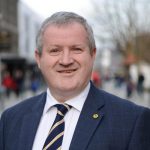
  • Rachel Reeves – 2020 Speech on End of EU Transition Period

    Rachel Reeves – 2020 Speech on End of EU Transition Period

    The text of the speech made by Rachel Reeves, the Labour MP for Leeds West, in the House of Commons on 13 July 2020.

    I thank the Minister for advance sight of his statement. I associate myself with his comments about Dave Prentis, a great trade union leader who is always fighting for a better deal for public sector workers.

    It is vital that businesses and jobs are supported and that the oven-ready deal that the country was promised is delivered on this year, yet frankly many of us are worried about whether the oven was even turned on. Alarm bells have been ringing in the Cabinet this past week, expressed by the Secretary of State for International Trade in her extraordinary letter to the Minister and the Chancellor of the Exchequer written on 8 July. The letter presents a picture of chaos, complacency and confusion right at the top of government. Let me highlight to the House those concerns.

    First, the Trade Secretary expresses concern that the UK will be vulnerable to a World Trade Organisation challenge. Will the Government publish their advice and analysis of risk and cost to the Government of such a challenge?

    Secondly, the Trade Secretary highlights that there are EU-facing ports where the infrastructure to implement controls does not currently exist. Will the Minister give the country and, indeed, his Cabinet colleague reassurance by publishing all relevant delivery plans, land purchases and rental agreements, with timescales and risks—and not just for the port of Dover? The Labour party wants to see British firms exporting. We do not want to see their goods stuck at ports or, indeed, in lorry parks.

    Thirdly, the Trade Secretary is concerned in her letter that traders from the rest of the world could export their goods to the UK through the EU and, in her words,

    “undermine the effective operation of our trade policy”

    and undermine the collection of tariffs due. How will the Government prevent smugglers from exploiting the phased-in approach to the border? What is the estimated loss to tariffs as a result of the six-month delay to UK border checks on imports travelling through the European Union?

    Fourthly, on Northern Ireland, the Trade Secretary said that the digital delivery of the dual tariff system in Northern Ireland is a high risk and that HMRC is planning to apply the EU tariff as a default from 1 January. She adds:

    “This is very concerning as this may call into question NI’s place in the UK’s customs territory.”

    Those are her words. What risk do the Government attach to that? What reassurance can the Minister provide that the commitments made in the Government’s command paper on Northern Ireland will be fully honoured, and why do we have to wait until the end of this month for the details on Northern Ireland to be published? It is all very well announcing a multi-million pound advertising campaign, but if the right hon. Gentleman cannot persuade his bestest friend in Cabinet that everything is going according to plan, it is hardly surprising that the country is anxious and confused.

    A month ago, the Prime Minister said that there was “no reason” that a deal could not be reached by the end of this month. Will the Minister update us on where we are in terms of being on track to meet that deadline, with a deal agreed in the next fortnight? The Government have previously estimated that there will be up to 400 million customs declarations per year. HMRC said that they would cost £32 each, adding up to a staggering £12.8 billion bill for business. Does the Minister have any updated assessment of those numbers and the cost to UK firms?

    It is also reported that HMRC is not planning to test the systems until November—a handful of weeks before they are needed. Will the Minister explain why those checks are not taking place sooner, and will he outline what recent engagement the Government have had with Scottish and Welsh Governments on state aid policy prior to the announcements today? More than half of UK trade will experience greater delays, costs and barriers, so what percentage of UK trade will enjoy easier trading terms on 1 January next year?

    The best way to help all businesses to prepare is, of course, to agree a deal with the European Union on the terms that we were told to expect. That means no fees, charges, tariffs or quantitative restrictions across all sectors. It does not mean, as we heard in the statement today, customs, physical checks, export declarations, a commodity code, and economic operator restrictions and identification, and it certainly does not mean a living document with guidance that changes day by day.

    I am sure the Minister will agree that we should never make promises that we cannot keep, so will he guarantee that the promises made to UK businesses and workers in the Conservative party manifesto in December last year will be honoured, because they are not consistent with the statement that he has delivered this afternoon? Last week, the Chancellor of the Exchequer stood at that Dispatch Box and said that he will do all he can to support British business. Today, the Chancellor of the Duchy of Lancaster stands at the same Dispatch Box and is wrapping those businesses in red tape and sending them to a super-sized lorry park in Dover. For the sake of all workers worried about their jobs and all business owners anxious about their future, we need the Government to get this right. I am not convinced that today’s statement does that.