Category: Brexit

  • Kevin Brennan – 2020 Speech on the Future Relationship with the EU Bill

    Kevin Brennan – 2020 Speech on the Future Relationship with the EU Bill

    The speech made by Kevin Brennan, the Labour MP for Cardiff West, in the House of Commons on 30 December 2020.

    I understand completely the exasperation of people that, four and a half years after the Brexit referendum, we are still debating this subject, and I understand the desire to move on. I also accept the proposition that a thin deal is better than no deal, but this is not only a thin deal; it is a bad deal. A far better deal could and should have been negotiated by the Government and still could be.

    In the nearly 20 years that I have spent in this House—15 of them on the Front Bench—there have been many occasions when I have voted for a proposition with reservations; that is the nature of parliamentary and party politics. But there are occasions when that proposition is too damaging to support. I accept that there is a valid argument at this stage, as laid out by my right hon. and learned Friend the Leader of the Opposition, to move on and for the Opposition to build on this bad deal. I also accept that in politics, many decisions—perhaps most—are not between what is right and what is clearly identifiable as wrong but are on a continuum between what is unpalatable and what is unacceptable. Clearly, no deal is unacceptable. This bad deal is certainly unpalatable and, in places, unacceptable because of the ideological approach taken to negotiations by this awful right-wing shambles of a Tory Government who are determined to set Britain on a path that will damage it culturally and economically.

    While I understand the desire to move on, I simply do not understand why it is necessary for those who believe that this is a bad deal to vote for it and dip their fingertips in the indelible ink of this abject failure of national ambition. The deadline we are up against today is an entirely artificial one, sustained only so that the Prime Minister can say that he has met his own political timetable. The truth is that the transition period could have been extended or the deal could have been introduced on a provisional basis to allow the House to thoroughly scrutinise it line by line, rather than follow the “take it or leave it by lunchtime” timetable that the Government have artificially manufactured today.

    My right hon. and learned Friend the Member for Holborn and St Pancras (Keir Starmer) was right to talk about the red tape for manufacturing in this deal, checks for farmers, burdensome regulation on businesses and the fact that the consequences of the deal will be economically damaging. In addition, the Government have chosen to end the Erasmus educational programme for young people, there is no proper recognition of professional qualifications and they will remove work permit-free access across the EU for touring musicians, who have already been unable to work for the last year due to covid. In the last few days, that issue alone has triggered a petition to Parliament of more than 200,000 signatures. Less than a year ago, the hon. Member for Selby and Ainsty (Nigel Adams), who was at the time the Minister for Sport, Media and Creative Industries, said in Westminster Hall:

    “It is essential that free movement is protected for artists post 2020.”—[Official Report, 21 January 2020; Vol. 670, c. 56WH.]

    That is just one example of the failure of the Government to deliver even on their own woefully inadequate promises in relation to this deal. This is a thin deal. It is a failure, even on the Government’s own terms. In short, it is a bad deal, and I will not be voting for it.


  • Cheryl Gillan – 2020 Speech on the Future Relationship with the EU Bill

    Cheryl Gillan – 2020 Speech on the Future Relationship with the EU Bill

    The speech made by Cheryl Gillan, the Conservative MP for Chesham and Amersham, in the House of Commons on 30 December 2020.

    It is a pleasure to follow the right hon. Member for Leeds Central (Hilary Benn). I do not always agree with him, but I recognise the detailed and sterling work he has done on the Brexit Select Committee and am glad that he is voting for the Bill today.

    I also welcome the fantastic news on the Oxford-AstraZeneca vaccine, which along with the Bill gives us a double reason for celebration. I add my congratulations and plaudits to the Prime Minister and all our negotiators on their steadfastness in bringing home this deal.

    Make no mistake, it took guts and determination both to leave the EU and, finally, to deliver this result. It may not be perfect. I, too, for example, share the reservations expressed by my right hon. Friend the Member for Maidenhead (Mrs May) about the position of our services industry, which needs urgent resolution on, for example, what the equivalence rules will look like.

    The deal has been hard won and delivers zero tariffs and zero quotas, which brings a huge sigh of relief to many businesses and industries across the country. At the same time, it allows the UK once again to control its destiny through its own elected representatives and its own courts—the independence and control over our affairs that I and many others voted for in the referendum.

    This is not a precipitative end to our relationship, but the controlled departure that we were all hoping for. Our participation in programmes such as Horizon Europe and EU Space Surveillance and Tracking indicates our recognition that there are things we can do better together across Europe, but now without having to be subject to a regime that we could not change or, at the very least, even influence.

    There will be many other things that we can do better, such as the Turing scheme, which is going to offer 35,000 UK students worldwide opportunities and will replace Erasmus. When we pass this legislation today, we will be in a golden position to create a great future for the United Kingdom—a future that the people of Wales, Scotland, Northern Ireland and England will grasp with both hands. The trade deals and continuity agreements that we have already signed with 62 countries are testament to that, and we must make a great deal of fuss about the work that has gone into those signings, which will mean so much for our country in the future.

    To those who continue to wage a war of attrition against this reborn independence and look backwards towards membership of the EU, I hope they, too, will now move on and develop the guts and determination of our Prime Minister to back our own Union and contribute positively to its future success. I believe that the UK’s future is bright, working alongside Europe, but finally, after today, not subjugated by it.

    It is with great pleasure that I support this Bill.

  • Hilary Benn – 2020 Speech on the Future Relationship with the EU Bill

    Hilary Benn – 2020 Speech on the Future Relationship with the EU Bill

    The speech made by Hilary Benn, the Labour MP for Leeds Central, in the House of Commons on 30 December 2020.

    May I draw attention to the fourth report of the Brexit Select Committee, on the agreement, which was published this morning? The Committee’s wonderful staff worked really hard over Christmas, but we have not had the opportunity, in three days, to produce a fuller report, and I did write to the Leader of the House about giving the Committee a bit more time to complete the task that was given to us just under a year ago.

    I will be voting for this Bill to implement the agreement today, because, quite simply, the alternative is no deal. I recognise that others in the House will abstain or vote against, but if we were in the position where every one of their votes were required in order to get this Bill, and therefore this agreement, through, I cannot believe that any of those colleagues would actually choose no deal, with all the damaging economic consequences it would bring, over a deal. That is why, in the end, the Prime Minister realised that he had no alternative but to get an agreement. This is not a vote about whether we support Brexit—I do not, but it has happened. This is a vote about making a bit better of a bad job.

    There are aspects of the agreement that will be welcomed: the absence of tariffs, which has been referred to; the agreement on healthcare; the level playing provisions, which seem pretty reasonable to me; and our having access to some of the information that we require for our security. But we must also be honest about what is missing from this agreement and what that will mean. It does not deliver frictionless trade. It will impose checks, costs and red tape on British businesses that export to Europe. Frankly, I was astonished to hear the Chancellor of the Duchy of Lancaster on the radio the other morning apparently praising red tape as a benefit because it will make British businesses get “match fit” to trade. That is certainly a novel economic theory and it does not reflect the Conservative party as we previously understood it. The agreement offers no certainty yet on data transfer or financial services, which are so important to our economy. We did not get what was sought on conformity assessments, rules of origin, mutual recognition of qualifications, or reduced sanitary and phytosanitary checks. There is, as of this moment, no agreement yet on Gibraltar.

    Why has this happened? It has happened because from the start the Government were faced with having to choose between sovereignty, on the one hand, and the economic interests of the country, on the other, and however hard they tried to pretend that they could have the best of both, that was never possible—a trade-off would always have to be made. We see that in the agreement before us, which is long and complex, rather like Brexit itself, and the full implications of both have yet to be revealed.

    Today this Bill will pass, and tomorrow the process of leaving the EU will be complete, but the day after we will need to look forward, because a new question will confront us as a nation: what kind of relationship do we now wish to have with our biggest, nearest and most important trading partners and friends? The other reason why I will be voting for this Bill today is that, for all it has failed to secure, it at least provides a foundation on which, in the years ahead, we can build what I hope will be a strong economic and political relationship with our European friends. I hope, as we move beyond leave and remain, we will now be able, as a country, to come together to do exactly that.

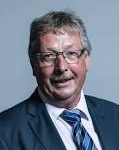
  • Sammy Wilson – 2020 Speech on the Future Relationship with the EU Bill

    Sammy Wilson – 2020 Speech on the Future Relationship with the EU Bill

    The speech made by Sammy Wilson, the DUP MP for East Antrim, in the House of Commons on 30 December 2020.

    I am glad that in two days’ time we will be finally leaving the EU. That is something that my party and I personally campaigned for, and it is something that would probably not have happened had it not been for the votes and crucial debates in this House when remainers tried to undermine the result of the referendum.

    I have to say that today that euphoria is tinged with sadness, because the deal that the Prime Minister has struck will not apply equally to all parts of the United Kingdom. Northern Ireland will not enjoy all the benefits of this deal. Indeed, we will still find ourselves tied to some of the restrictions of EU membership that the rest of the United Kingdom has been freed from. We welcome the limitations that have been placed on the withdrawal agreement and the mitigations that have been made to it, but unfortunately the withdrawal agreement is still an integral part of the Government’s policy and an integral part of this deal. This deal commits the Government to implementing not only this agreement but supplementary agreements, and they have to do it in good faith.

    We therefore find that the detrimental impacts of the withdrawal agreement—that Northern Ireland will still be subject to some EU laws made in Brussels; that those laws will be adjudicated by the European Court of Justice; and that there will be barriers to internal trade within the United Kingdom between Northern Ireland and GB, and GB and Northern Ireland—are already being manifested. GB companies are indicating that they will no longer supply to Northern Ireland. VAT on cars will increase in Northern Ireland. From 1 January 2021, second-hand cars in Northern Ireland will be 20% dearer as a result of VAT rules applying, and a whole range of other things.

    Jim Shannon

    Does my right hon. Friend agree that there seems to be no protection for the single market regulations, in particular for banking and investment firms? There is not even the option for firms in Northern Ireland to apply for authorisation to the equivalent of the Financial Conduct Authority. Does he feel that that is an anomaly that needs to be addressed?

    Sammy Wilson

    Of course, it is not only in those areas. The Prime Minister talked about the way in which, because there was no longer any need for regulatory conformity, the UK could free itself to develop FinTech, biosciences and agricultural practices. Because Northern Ireland will still remain under some of the EU regulations, we will, in many ways, not be able to benefit from those new and exciting opportunities.

    Having said that, Northern Ireland will still be part of the United Kingdom. I know that people have said that this deal will drive a wedge into the Union. A wedge can only be driven into the Union when the people of Northern Ireland decide that they no longer wish to remain part of the UK. When it comes to a choice between joining the Irish Republic—a small nation which will bob about in the future storms of economic chaos—and being anchored to the fifth-largest economy in the world, which will prosper under Brexit, I believe that that choice will be an easy one for the people of Northern Ireland.

    What I would say to the Prime Minister, though, is that there will be economic damage as a result of our exclusion from this agreement, but there are opportunities. There is a joint committee, there is a review of the agreement, there is the fact that we now have parliamentary sovereignty, and there is the fact that the Government can act unilaterally to undo economic damage. We will continue to press you and your Government, Prime Minster, to live up to your promises that Northern Ireland will not be disadvantaged as a result of the deals you have done.

    Let me finally say that we will not be voting for this deal today, and I think the reasons are obvious. We are excluded from many of its benefits. That does not mean we have any common cause with the petulant remainers in this Parliament who want to undo the referendum; it is because we are disappointed Brexiteers. It is because we are people who believed that the United Kingdom should leave and should leave as a whole, and that is not happening, and for that reason we will not be voting for this deal today.

  • Bill Cash – 2020 Speech on the Future Relationship with the EU Bill

    Bill Cash – 2020 Speech on the Future Relationship with the EU Bill

    The speech made by Bill Cash, the Conservative MP for Stone, in the House of Commons on 30 December 2020.

    In these historic days, as we regain our freedom and independence, I pay a profound tribute to our democracy and to the sovereignty of the mother of Parliaments, but above all to the voters in the referendum and the general election last December and, of course, to our Prime Minister, who, against all the odds, led us out of parliamentary paralysis last year to victory, delivering us from 48 years of subjugation to EU laws and European Court jurisdiction and regaining our sovereignty. Our Prime Minister—a great classicist—is, like his hero Pericles, the first citizen of his country and, like him, has saved our democracy. Like Alexander the Great, Boris has cut the Gordian knot. Churchill and Margaret Thatcher would have been deeply proud of his achievements, and so are we.

    This Bill on our future relationship with the EU provides for a new exciting era for our trade with Europe and the rest of the world on sovereign terms—not on those of the EU, as with the Chequers deal. We must pay tribute to David Frost, Oliver Lewis and the Attorney General and her advisers for the successful outcome of the negotiations. There remain challenges on fishing and in relation to Northern Ireland; we must use our new and renewed sovereignty to exercise the political muscle that it gives us to resolve those challenges. We can, and I believe we will.

    Regaining our right to govern ourselves is a true turning point in our great history. In peacetime, it compares only with the restoration by Monck in 1660, on the absolute condition of parliamentary consent, then followed by the Hanoverian succession in 1689 and the evolution of our modern parliamentary democracy, which has been the bedrock of our freedom and which enabled us, with the leadership of Churchill, to repel the danger of conquest in May 1940.

    In April 1990, I was asked by Margaret Thatcher to lunch at No. 10 with members of the Cabinet. Margaret Thatcher asked me what I felt about Europe. I replied, “Prime Minister, your task is more difficult than Churchill’s. He was faced with bombs and aircraft. You are faced with pieces of paper.” Our Prime Minister, my right hon. Friend the Member for Uxbridge and South Ruislip (Boris Johnson), has achieved what all those years ago I was told was impossible. I refused to believe that. So did the Maastricht rebels and, last year, the 28 Tory Spartans. That opened the way to where we are today. We have now won back our sovereignty, despite those European pieces of paper, and we in this country owe our Prime Minister our deepest congratulations on his achievement.

  • Margaret Beckett – 2020 Speech on the Future Relationship with the EU Bill

    Margaret Beckett – 2020 Speech on the Future Relationship with the EU Bill

    The speech made by Margaret Beckett, the Labour MP for Derby South, in the House of Commons on 30 December 2020.

    Today is the day on which the Prime Minister promised us that he would get Brexit done, in one of the many sermons and catchphrases that have not illuminated but rather obscured this debate. At the weekend we had a good example of that obscurity—the Prime Minister mentioned it today—with the £660 billion deal that enables us to trade with the European Union with zero tariffs and zero quotas. I am sure that many fairly casual observers get the impression that this is some kind of negotiating triumph that we have wrung from the European Union. The fact is, however, that these are privileges and rights that we already had. The £660 billion is what we have salvaged—it is what we have left from what was a much greater package of rights and freedoms.

    I am not knocking it—it is a good thing—but it is important to recognise that it is not a net gain.

    That is not all that is obscure and misleading. The Prime Minister spoke today about fishing rights—I think his phrase was that we would be able to catch whatever we like. If we look at this agreement, we see that that is not the case. He said that there were no non-tariff barriers, as well as the tariff agreements on trade, but that is not true either. The agreement makes it clear that there is much more bureaucracy and many more rules and regulations—the very things that the Prime Minister claimed we would be escaping. Littered throughout the agreement are working parties, specialist committees and the partnership council, to negotiate when there are differences.

    Even for the stuff that has been agreed, a great deal of bureaucracy and negotiation surrounds it, and there is much that is left out, including the protection of designated products such as Stilton so that quality can be maintained and we can be assured that our producers have their rights in the market—that is all put on one side. It has already been mentioned in the debate that the huge issue of financial services has been left on one side and will have to be addressed in the future. This weekend, a blogger described the provisions in the treaty as “negotiations without end”.

    Today, we have a Hobson’s choice: we are for or we accept this deal, or we have no deal. That is why my vote will be cast to accept the passage of this legislation to the statute book. I do not accept that that means we cannot criticise it in future; I certainly intend to do so.

  • Peter Bottomley – 2020 Speech on the Future Relationship with the EU Bill

    Peter Bottomley – 2020 Speech on the Future Relationship with the EU Bill

    The speech made by Peter Bottomley, the Father of the House and the Conservative MP for Worthing West, in the House of Commons on 30 December 2020.

    The House will know that the right hon. Member for Ross, Skye and Lochaber (Ian Blackford) is a more cheerful person than his speech suggested. He gave us a 25-minute lesson in humility, for which we are grateful, and talked about ignoring popular votes. In the 2019 election, the SNP received 1,200,000 votes, and in 2014 the vote against independence was 2 million. That is a gap of 800,000—two thirds of the vote that the right hon. Gentleman leads in this House. He should be cautious both in predicting the future and in interpreting the past.

    As Father of the House, I ought to recognise that the only significant speech ever made by a Father of the House was in the Narvik-Norway debate in May 1940, when in about his 11th year as Father of the House, David Lloyd George probably gave people the confidence to withhold their votes from the Government. I do not argue that today. We need to say, as many have said—except for the leader of the SNP—that this debate and vote is about whether we go for this deal or for no deal. In that, I agree with the right hon. and learned Gentleman the Leader of the Opposition. I give my vote, although in the referendum I argued that, on balance, it was better to stay in. We lost and, unlike the SNP, one has to accept the result of a referendum.

    Jonathan Edwards

    Will the hon. Gentleman give way?

    Sir Peter Bottomley

    No, if the hon. Gentleman does not mind.

    When my father, who survived serious personal injury during the war, was involved in the first negotiations about joining the European Union, I asked him for his views on the economic impact. He said that, on balance, it did not make much difference. We joined in 1973—two years before I was elected to the House of Commons—but it did not make a big difference to our economy until after 1979, when the change in Britain resulted in us going from being the sick man of Europe to being people who were looked on with respect, with many asking, “How did you do it?” The answer was in part by chance and in part by freedom and a cautious approach to a free market economy, led by Margaret Thatcher, who also led the significant debates to stay in the European Union in 1975. That was one of the best speeches she ever made and it can be read via the Margaret Thatcher Foundation.

    I was nominated, or vouched for, as a candidate by Sir Robin Turton, a leading anti-marketeer. Margaret Thatcher and I—and, I argue, the country—won the June 1975 by-election after Neil Martin, a leading campaigner against staying in the European Common Market, asked Conservatives to vote for me, even though he and I disagreed, in the same way that Sir Robin Turton and I disagreed when he supported me.

    We are often taken down paths we do not expect—the Prime Minister can probably vouch for that himself. I believe that we have to make a success of our present situation, and we have to make sure, as one of my friends kindly said, that we open a new chapter in a vibrant relationship with our continental cousins. We can, some of us, look with affection on the past, with admiration at what has been achieved in this past year, and with confidence to the future.

    We ought to stop using this as an argument for Scottish independence. We ought to accept that the Labour party has, in many of its proud traditions, put the national interest before party interest. I say to the Prime Minister, as I said to him in reasonable privacy one day, that we want a leader we can trust and a cause that is just, so will he please lead us in the right direction in future?

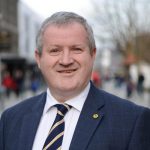
  • Ian Blackford – 2020 Speech on the Future Relationship with the EU Bill

    Ian Blackford – 2020 Speech on the Future Relationship with the EU Bill

    The speech made by Ian Blackford, the Leader of the SNP in the House of Commons, on 30 December 2020.

    Thank you, Mr Speaker. It is a pleasure to follow the former Prime Minister, the right hon. Member for Maidenhead (Mrs May). I wish you, Mr Speaker, all staff and Members a good new year when it comes tomorrow evening. May I quickly reflect on the sadness of the events that took place on 2 January 1971 in Glasgow, when 66 predominantly young people lost their lives in the Ibrox disaster, including five from one village in Fife, Markinch? I am sure that the whole House will want to remember those who sadly lost their lives at that moment.

    When this bad Brexit deal was published, one of the very first public images that was released showed the Prime Minister raising his arms aloft in celebration. When I saw that image, my thoughts immediately turned to the European nationals who have made their home here. They are certainly not celebrating. During the four years and more of this Brexit mess, the main emotion they have felt is worry: worry about staying here, about their jobs and for their families. In Scotland, these citizens are our friends. They are our family. They are our neighbours. Before this Tory Government force through a deal that rips us out of the European Union, the single market and the customs union, let us get this message out to Scotland’s 234,000 EU citizens: Scotland is your home, you are welcome.

    The value we place on European citizenship—that real sense of belonging to the European Union—cuts to the very core of this debate. Scotland is at heart a European nation. It always has been. Forcing our nation out of the EU means losing a precious part of who we are. Scotland did not become European when the United Kingdom joined the EEC 40 years ago. Our relationship with Europe predates the United Kingdom by some way. An independent Scotland has enjoyed centuries of engagement with European nations. Scottish merchants travelled, traded and settled on the continent. We shared citizenship with France and we appealed our nationhood to Rome. Scotland was European before it was British. That European history and heritage goes back to our nation’s place in the Hanseatic League in the 15th century. Scotland was central to a trading alliance that forged connections and commerce with the north Atlantic, the Netherlands, Germany Scandinavia and the Baltic. We were a European trading nation right up until many of our privileges were ended by the Treaty of Union. It was three centuries ago, and here we go again: with Westminster seeking to end our access to those European relationships by removing us from today’s union of nations across our continent; Westminster ending free movement of people and the access to labour that is so crucial to our economic success; and Westminster seeking to end our automatic right to live, work and get an education in 27 member states of the EU—rights that our generation had, which will be taken away from our children and grandchildren. And for what?

    It was way back on 11 July 2016 that the former Prime Minister, the right hon. Member for Maidenhead, first spoke the infamous words, “Brexit means Brexit.” We all know what followed the use of that foolish phrase: nearly four years of constant chaos and confusion. Today, at least we have some clarity. We now finally know what Brexit means. We have it in black and white. It means the disaster of a deal. It means broken promises. It means economic vandalism. It means an isolated United Kingdom in the middle of a global pandemic. It means the worst of all worlds for Scotland.

    This morning’s proceedings are so critical precisely because of that clarity, because with that clarity comes a choice, and it is a fundamental choice for Scotland. It is a choice between a future defined by this disaster of a deal or the future that the SNP is offering to the Scottish people: an independent nation at the heart of the European Union. Today, the contrast between the two futures is clearer than ever, and that choice will not go away.

    Sir Iain Duncan Smith (Chingford and Woodford Green) (Con)

    I wonder if I could put to the right hon. Gentleman the same question that was put to a colleague of his by the Leader of the Opposition and by the Prime Minister. Today, when the Scottish National party votes against this deal, it is therefore voting for no deal. Is it his determination that, the day after tomorrow, the UK would have no deal and would be in a worse situation? Is that his position now? Could he answer yes or no?

    Ian Blackford

    I am grateful to the right hon. Gentleman for the question, because it is very simple. This is a piece of legislation that has been put forward today. No deal is not on the Order Paper. The deal that we currently have—the deal that exists today—where we are in the single market and customs union is the best deal for us. We have argued many times in this House, as the right hon. Gentleman knows, that we should have extended the transition, and that offer to extend the transition was there from the European Union. It is not our choice to accept a shoddy deal. What we should be doing—

    Sir Iain Duncan Smith rose—

    Ian Blackford

    I will give way one more time.

    Sir Iain Duncan Smith

    I am grateful for this—

    Mr Speaker

    Order. Sir Iain, you are very early on the call list, and I am sure that you do not want to go down the list.

    Ian Blackford

    Thank you, Mr Speaker. We will accept your guidance on these things, although I was looking forward to the debate that we were having.

    Now that we see the scale of the bad Brexit deal, the question before the Scottish people is clear: which Union does Scotland wish to be part of? Which future will we choose: this broken Brexit Britain or the European Union? If this whole Brexit saga was truly about sovereignty, the Scottish people cannot and will not be denied our sovereign right to that self-determination. No democrat and nobody in this House should stand in the way of that—even boris with a small b. The Tory denial of democracy is a position that cannot and will not hold. Scotland will have the right to choose its own future.

    Now that the detail of this deal is finally in front of us, people hope that Brexit fictions are swiftly replaced with Brexit facts. Judging by the Prime Minister’s performance today, his Government are still drowning in delusion or simply just putting on an act, but for those of us who have lived in the real world these past four years, it is long past time that reality finally bursts the Brexit bubble. In recent days we have heard wild celebrations and claims from leading Brexit cheerleaders that this is the largest free trade deal in history. I am sorry to inform them that it is not. The biggest and best free trading bloc in the world is the one that this Tory Government are dragging Scotland out of. It is made up of 27 nations and 500 million citizens. It is called the European Union.

    In the middle of a pandemic and economic recession, Scotland has been removed from a market worth £16 billion in exports to Scottish companies and a market which, by population, is seven times the size of the United Kingdom. Leaving the European single market and customs union would be damaging at any time, but in the middle of the current crisis, Prime Minister, it is unforgivable. It is an act of economic vandalism, pure and simple.

    As usual with the Tories, it is people who will pay the price. Initial Scottish Government modelling estimates that the deal could cut Scotland’s GDP by around 6.1%—that is £9 billion in 2016 cash terms by 2030. That will leave people in Scotland—the same people who have always opposed Brexit—£1,600 poorer. That is the cost of the Prime Minister’s Brexit.

    Dr Liam Fox (North Somerset) (Con)

    I am extremely grateful to the right hon. Gentleman for giving way. Perhaps he could tell us what estimate he has made of the cost to the Scottish economy of losing access to the UK single market through independence.

    Ian Blackford

    Really? I am amazed that the right hon. Gentleman, who of course comes from Scotland, seems to be threatening the people of Scotland with lack of access. Is that really the message the Conservatives want to deliver to the people of Scotland? Shame on him, shame on him, shame on him.

    For all the Tory talk of levelling up, the deal is blatantly preparing the ground to level down on standards. Only in the last few days, the Institute for Public Policy Research has warned of what many of us have suspected all along: that the deal leaves workers’ rights and environmental protections at

    “serious risk of being eroded.”

    Another Brexit bubble that badly needs bursting is the myth that leaving the EU will somehow make it easier for businesses to trade. This is literally the first trade deal in history that puts up barriers to business instead of removing them. In 2016, the leave campaign’s assortment of lies included the claim that Brexit would remove red tape for business. Huh—since then, plenty of Brexit red lines have disappeared, but none of the red tape. This bad Brexit deal means that businesses will be burdened with mountains more bureaucracy and more costs. If the Prime Minister wants to disagree with that, I will certainly give way to him.

    Presumably the Brexiteers think that that is okay, because the tape will now be coloured red, white and blue. [Interruption.] I hear the Chancellor of the Duchy of Lancaster say, “It’s how they tell them.” He should tell that to the fishing businesses that all of a sudden will have to fill in customs declarations. He should tell them why, at his behest and based on his narrow ideology, that is the answer. The deal means more delay, paperwork and checks—[Interruption.] If he wants to deny that, he should rise to his feet. He knows that fishing businesses will face additional costs as a consequence of what his Government have done.

    The deal means more delay, paperwork and checks, all of which will burden business, slow trade and cost jobs. This deal not only inflicts economic self-harm; it ignores economic reality. There is barely a reference in the deal to the service sector, which is 80% of the entire UK economy. Services have been left in complete limbo. Where there is any mention, it is not good news. The deal confirms an end to the financial passporting rights that have been relied upon by financial services firms across the United Kingdom.

    Let me turn to the biggest betrayal of all: the broken promises to Scotland’s fishing communities. There are no Scottish Tory MPs in the Chamber. If there were, they would now be squirming. We know that the Brexit deal means a drop in key fishing stocks. For cod, haddock, whiting and saithe, the deal means less access to fish than under the existing arrangements. Let me say that again: less access to those fish than under the common fisheries policy.

    One thing that is missing from the deal—I would have thought better of the Chancellor of the Duchy of Lancaster—is the special privileges, the so-called Hague arrangements, that gave additional fishing rights to Scotland. They were not even negotiated as part of this deal. We have lost them, one can only assume, through the incompetence of the UK negotiators.

    The Scottish Tories said that

    “tying fishing to a trade deal”

    was a red line that must not be crossed, yet here we are: it is exactly what has been done. Every single Tory promise—every red line—has been blown out of the water. Countless broken promises, but not even one resignation—yet. Not even one apology; not a hint of humility, or of regret.

    I take no comfort in saying that this was predicted because this deal represents a history of bitter betrayal. Our fishing industry—our Scottish fishing industry—was sold out by the Conservatives on the way into Europe in 1973, and as the United Kingdom leaves, it has been sold out all over again. The Scottish Fishermen’s Federation knows that it has been conned, stating that the deal

    “does not restore sovereign UK control over fisheries, and does not permit us to determine who can catch what, where and when in our own waters.”

    [Interruption.] I hear the Prime Minister muttering, “Rubbish.” This is fishing organisation after fishing organisation in Scotland, Prime Minister, that knows exactly what you have done to them. For Scotland’s fishing communities, lightning might not strike twice, but the Tories definitely do.

    The latest Scottish Tory leader, the hon. Member for Moray (Douglas Ross), gave one of the more graphic promises: he said that he would drink a pint of cold sick rather than vote for a deal that gave EU vessels access for two years. Well, this deal gives them five years’ access, and potentially much more. Let us just say that there will be plenty of Scottish voters in the north-east who will be very interested in what he is drinking after he and his colleagues break every single promise and walk through the Lobby with the Prime Minister.

    In later speeches, my colleagues will attempt to cover and scrutinise as much as we possibly can, in the limited time, of the effect of this Bill in Scotland. It has to be said, though, that this lack of scrutiny is not helped by the stance taken by the Labour party. I am sad to say that the official Opposition have been missing in action. There was a time when Labour had six tests that it said needed to be passed in order for it to support any deal. Labour’s Brexit tests have disappeared as quickly as Tory promises. I can understand that this might be politically pragmatic for Labour, but it definitely is not politically principled. But I suppose political principle is hard to manage when you cannot even get a coherent position between Scottish Labour and its UK bosses. Unfortunately, when it comes to a position on this Brexit deal, Labour is literally all over the place. Today in the Scottish Parliament, Labour will join with the Scottish National party in refusing to grant a consent motion to this Bill. I am grateful for that. Labour will not only join us but the Greens and the Liberal Democrats standing with us: our Scottish Parliament united against the Tories, united against this Bill.

    It is ultimately for others to explain their own actions and the litany of broken promises that will stay with them at the next election, because, in the end, this is not so much about the Brexit promises of political parties as about its impact on people. It is about respecting the democratic decisions that voters make. Both England and Wales voted to leave the European Union. They have decided that their future lies elsewhere. Let me make this clear: I may not agree with that decision, but I, and my party, respect it. This legislation respects it, and it forms a pathway to the future. The people of Northern Ireland voted to remain in the European Union. Due to the efforts of both Michel Barnier and the Irish Government, the protocol protects the peace process. It means that Northern Ireland avoids a hard border and stays in the European single market. I support that protocol and its protection of a hard-won peace. This deal respects that. That being said, the Scottish Tories, including Baroness Davidson and the former Scottish Secretary, the right hon. Member for Dumfriesshire, Clydesdale and Tweeddale (David Mundell), threatened to resign if Scotland was not offered the same deal as Northern Ireland. I say to both of them now that there is still time—we are still waiting.

    The only democratic decision that has been ignored is the voice and vote of the Scottish people. None of this deal respects the choice that we made. I genuinely ask Members to reflect on that reality. Imposing this Brexit, imposing this deal means imposing a future that Scotland’s people did not vote for and do not want. Let us not forget that one of the central claims of the Better Together campaign in 2014 was that if we stayed in the UK, we would stay in the European Union. That is the promise that was made.

    We were also told that if we stayed in the United Kingdom, we were to lead the United Kingdom. On the day after the referendum, that all changed: Scotland was told to get back in its box. Right through the Brexit process, Scotland’s voice has been ignored by Westminster, our attempts at finding compromise rebuffed at every opportunity, tossed aside on the premise that Westminster is supreme, locking Scotland out of the key decisions affecting our future and ignoring our desire to retain our European citizenship.

    Sir Charles Walker (Broxbourne) (Con)

    Despite the right hon. Gentleman’s gloom, he knows that I adore and love his country. Does he not believe that Scotland has the character to succeed? Despite his misgivings, Scotland is a great country. Why is his speech so full of gloom and misery when Scotland has the character to prosper and succeed now?

    Ian Blackford

    I thank the hon. Gentleman. May I reciprocate and say that I love England and its people? I want us to maximise our opportunity, but this deal limits our opportunity. I want to unleash Scotland’s potential. That potential will be unleashed with an independent Scotland at the heart of Europe.

    The Prime Minister’s broken promise on Erasmus has been such a totemic issue in the last few days. He will remember standing in this House and promising us that we will stay in the Erasmus programme. That betrayal denies our young people the opportunities that European citizenship has given us. It denies them the European freedoms that we cherish—living, working and studying abroad. Around 200,000 people have taken part in Erasmus, including around 15,000 UK university students each year. It is also important to say that Erasmus is not solely about university students but about supporting youth workers, adult education, sport, culture and vocational training. That is why the Scottish Government are so committed to exploring every opportunity to keep Erasmus in place for our people.

    Even the very name Erasmus signals our long-established European links. That long tradition of connection comes right into the modern day with our own Winnie Ewing, Madame Écosse herself. Winnie, a former mother of the European Parliament, was Chair of the EU Education Committee that brought in the Erasmus scheme. [Interruption.] People at home will be watching this, and we have the Prime Minister and Chancellor of the Duchy of Lancaster laughing about the success of the Erasmus scheme. Utterly, utterly, utterly pathetic—utterly pathetic.

    All that history between Europe and Scotland, all those links and all these opportunities are now at stake. Scotland’s story is European, and that story does not end today. Our past is European, and our future must be European. As a nation, that is a choice that we made in 2016, and I am confident that it is a choice we make now. We cannot support this legislation because it does not respect that choice and it does not provide for our future. Scotland’s course is now set, and it is a very different course from the decisions being taken in the Westminster Parliament. We know that the only way to regain the huge benefits of EU membership is to become an independent state at the heart of Europe once more. That is the decision that the Scottish people will make. We begin that journey today. There is now an empty seat at the top table in Europe. It will not be empty for long.

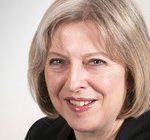
  • Theresa May – 2020 Speech on the Future Relationship with the EU Bill

    Theresa May – 2020 Speech on the Future Relationship with the EU Bill

    The speech made by Theresa May, the former Prime Minister, in the House of Commons on 30 December 2020.

    I welcome the deal and I will be supporting it today. I welcome the fact that the official Opposition will be supporting this deal, but I did listen with some incredulity to what the Leader of the Opposition said. He said he wanted a better deal. In early 2019, there was the opportunity of a better deal on the table, and he voted against it, so I will take no lectures from the Leader of the Opposition on this deal.

    The Prime Minister has said that central to this deal are the tariff-free and quota-free trade arrangements, subject to rules of origin requirements. It would have been unforgivable for the European Union not to have allowed tariff-free and quota-free access, given that it signed up to that in the political declaration signed with my Government in November 2018.

    One of the reasons for supporting this deal is the security arrangements that have been put in place, which are very important. Access to passenger name records and Prüm are important, but there is an issue of timeliness of access to those and other databases such as the European criminal records information system. I hope, in operational terms and in practice, we will see little change to the ability to investigate as a result of the good relationships that have been built up.

    I think that the EU has made a mistake in not allowing us access to SIS II. I understand that it set as a principle that we could not have that access, but we should aim to try to find some resolution to that in the future, because it is an important database. It helps us in our fight against modern slavery and child abduction, and in identifying criminals across our borders.

    One area in which I am disappointed by the deal is services. It is no longer the case that UK service providers will have an automatic right of access to provide services across the EU; they will have to abide by the individual rules of a state. I understand that a lawyer advising on UK law in the Czech Republic will have to be resident, but in Austria will have not to be resident. That is just an example of the difference in the rules.

    The key area is financial services. In 2018, at Mansion House, I said that we wanted to work to get a financial services deal in the future treaty arrangement, and that that would be truly groundbreaking. It would have been but, sadly, it has not been achieved. We have a deal in trade that benefits the EU, but not a deal in services that would have benefited the UK. The treaty is clear that future negotiation on these points is possible, and I hope that the Government will go to that negotiation with alacrity and vigour, particularly on financial services.

    Of course, a whole structure is set up under the treaty. One thing it does not do is to excise the EU from our lives, because a whole structure of committees is set up, some of which, like the partnership council, will be able to amend the arrangement and make determinations on its operation and interpretation without, as far as I can see, any formal reference to this Parliament.

    Sovereignty has underpinned the negotiations since article 50 was triggered. Sovereignty does not mean isolationism; it does not mean that we never accept somebody else’s rules; it does not mean exceptionalism. It is important as we go forward that we recognise that we live in an interconnected world and that if the United Kingdom is going to play the role that I believe it should play in not just upholding but encouraging and promoting the rules-based international order, and in ensuring that we promote these interests and values and strengthen multilateral institutions such as the World Trade Organisation, we must never allow ourselves to think, as I fear that some in this House do, that sovereignty means isolationism.

    I say to all Members across the House that today is the time, as I have said before, to put aside personal and party political interests, which sadly too many have followed in the past, to vote in the interests of the whole UK and to support this Bill.

  • Keir Starmer – 2020 Speech on the Future Relationship with the EU Bill

    Keir Starmer – 2020 Speech on the Future Relationship with the EU Bill

    The speech made by Keir Starmer, the Leader of the Opposition, in the House of Commons on 30 December 2020.

    It is often said that there is nothing simple about Brexit, but the choice before the House today is perfectly simple: do we implement the treaty that has been agreed with the EU or do we not? That is the choice. If we choose not to, the outcome is clear: we leave the transition period without a deal—without a deal on security, trade or fisheries, without protection for our manufacturing sector, farming or countless British businesses, and without a foothold to build a future relationship with the EU. Anyone choosing that option today knows there is no time to renegotiate, no better deal coming in the next 24 hours, no extensions, no Humble Addresses and no SO 24s—Standing Order No. 24 debates—so choosing that option leads to one place: no deal.

    Or we can take the only other option that is available and implement the treaty that has been negotiated. This is a thin deal. It has many flaws—I will come to that in a moment.

    Jonathan Edwards (Carmarthen East and Dinefwr) (Ind)

    Will the right hon. and learned Gentleman give way?

    Keir Starmer

    I will in just a minute.

    But a thin deal is better than no deal, and not implementing this deal would mean immediate tariffs and quotas with the EU, which will push up prices and drive businesses to the wall. It will mean huge gaps in security, a free-for-all on workers’ rights and environmental protections, and less stability for the Northern Ireland protocol. Leaving without a deal would also show that the UK is not capable of agreeing the legal basis for our future relationship with our EU friends and partners. That matters, because I want Britain to be an outward-looking, optimistic and rules-based country—one that does deals, signs treaties and abides by them.

    Sir Edward Leigh (Gainsborough) (Con)

    Will the right hon. and learned Gentleman give way?

    Keir Starmer

    I will in just one moment.

    It matters that Britain has negotiated a treaty with the EU Commission and the 27 member states; and it matters, ultimately, that the UK has not gone down the blind alley of no deal. It means that our future relationship starts on the basis of agreement, not acrimony.

    Jonathan Edwards

    I am grateful to the right hon. and learned Gentleman for setting out the position of the Labour party, but he used to have six tests for any Brexit deal that he would be willing to support. How many of those tests does he believe the agreement actually meets?

    Keir Starmer

    There is only one choice today, which is to vote for implementing this deal or to vote for no deal, and those who vote no are voting for no deal. I will give way again to the hon. Gentleman. If he is voting no, does he want no to succeed at 2.30 this afternoon when the House divides?

    Jonathan Edwards

    I am afraid the leader of the Labour party has accepted the spin of the Government that this is a binary choice between deal and no deal. It says a lot about the way his position has changed over recent weeks.

    Keir Starmer

    This is the nub of it. Those voting no today want yes. They want others to save them from their own vote. Voting no, wanting yes. That is the truth of the situation, and that is why my party has taken a different path.

    Sir Edward Leigh

    I congratulate the right hon. and learned Gentleman on doing the patriotic and right thing today, but there is quite a lot of interest in the country in what deal he would have negotiated if he had been responsible for the negotiations.

    Keir Starmer

    A better one than this, for the reasons that I am about to lay out. [Interruption.] I will go into some of the detail—not too much—but if anyone believes what the Prime Minister has just said about financial services, they have not read the deal. With no further time for negotiation, when the default is no deal, it is not a mark of how pro-European you are to reject implementing this treaty. It is not in the national interest to duck a question or to hide in the knowledge that others will save you from the consequences of your own vote. This is a simple vote, with a simple choice—do we leave the transition period with a treaty that has been negotiated with the EU, or do we leave with no deal? So Labour will vote to implement this treaty today to avoid no deal and to put in place a floor from which we can build a strong future relationship with the EU.

    David Linden

    I am grateful to the Leader of the Opposition for outlining how clear this is for him. His party has two parliamentarians in Edinburgh South—one in the Scottish Parliament and one in Westminster. At 4 o’clock this afternoon, the Member of the Scottish Parliament will vote against the deal and the Member of the Westminster Parliament here will vote for the deal. How does he square that circle?

    Keir Starmer

    The hon. Gentleman knows very well that it is a different vote. [Interruption.] It is a completely different vote, on a different issue.

    David Linden rose—

    Keir Starmer

    I give way to the hon. Gentleman with my question. When he votes no, against this treaty, this afternoon, does he want the Bill to fail and thus we leave tomorrow night without a deal? Is that the intention? Does he want the result to go the way he is voting?

    David Linden

    I think the right hon. Gentleman will understand that there will be members of his own party in the Lobby with me this afternoon. If he can point out to me in the Order Paper where I am voting for no deal, I will be very happy. Will he tell me what page that is on?

    Keir Starmer

    That absolutely identifies the point. He is going to vote in the hope that others will vote the other way and save him from the consequences of his own vote. That is the truth of the situation of the SNP. He is hoping that others will do the right thing and vote in favour of implementing the treaty. We fought against no deal together for months and years, and now those voting no are going to vote for no deal. Nothing is going to happen in the next 24 hours to save this country from no deal. So he wants to vote for something, but he does not want that vote to succeed; he wants others to have the burden of voting for it to save us from no deal.

    Mr Steve Baker (Wycombe) (Con) rose—

    Keir Starmer

    I will give way in a minute. I am going to make some progress.

    It is, of course, completely unacceptable that this debate is happening now—one day before the end of the transition period. The Prime Minister said he had a deal that was oven-ready.

    Adam Holloway (Gravesham) (Con)

    Will the right hon. and learned Gentleman give way?

    Keir Starmer

    That was about a year ago. Then it was supposed to be ready in July, then September, then November and finally it arrived on Christmas eve. That matters, because businesses have had no chance to prepare for the new regulations. Talk to businesses about their concerns. They have real difficulties now. Many of them have already taken decisions about jobs and investment because of the uncertainty, and of course that is made worse by the pandemic.

    Let me now go to the deal itself and analyse some of the flaws in it. Let us start with the Prime Minister and what he said on Christmas eve in his press conference. He said:

    “there will be no non-tariff barriers to trade.”

    His words. He was not being straight with the British public. That is plain wrong. It is worse than that. It was not an aside, or an interview or an off-the-record remark. It was a scripted speech. He said that there would be no non-tariff barriers to trade. The Prime Minister knows that it is not true. Every Member of this House knows it is not true. I will give way to the Prime Minister to correct the record. Either stand up and say that what he said was true, or take this opportunity to correct the record. I give way.

    The Prime Minister

    The right hon. and learned Gentleman knows perfectly well that this is a zero tariff, zero quota deal. He says that he would have negotiated a different and better deal. Perhaps he can tell us whether he would have remained within the customs union and within the single market. Perhaps he will also say a little bit about how he proposes to renegotiate the deal, build on it and take the UK back into the EU, because that remains his agenda.

    Mr Speaker

    Let us get on with the debate.

    Keir Starmer

    Typical deflection. The Prime Minister, at a press conference, told the British public that there will be

    “no non-tariff barriers to trade”.

    The answer he gave just now is not an answer to that point. It is not true, and the Prime Minister knows what he said was not true. He simply will not stand up and acknowledge it today. That speaks volumes about the sort of Prime Minister we have.

    Adam Holloway

    Will the right hon. and learned Gentleman give way?

    Keir Starmer

    I will in just a minute. The truth is this: there will be an avalanche of checks, bureaucracy and red tape for British businesses. Every business I have spoken to knows this; every business any Member has spoken to knows this. That is what they are talking about. It is there in black and white in the treaty.

    Jonathan Gullis (Stoke-on-Trent North) (Con)

    Will the Leader of the Opposition give way?

    Keir Starmer

    I will in one minute. There will be checks for farmers, for our manufacturers, for customs, on rules of origin, VAT, safety and security, plant and animal health, and much more. Many British exporters will have to go through two regulatory processes to sell to existing clients in the EU. To keep tariff-free trade, businesses will have to prove that enough of their parts come from the EU or the UK. So there will be significant and permanent burdens on British businesses. It is somewhat ironic that for years the Conservative party has railed against EU bureaucracy, but this treaty imposes far more red tape on British businesses than there is at the moment.

    Mr Dhesi

    The lead-up to this Brexit deal has seen a litany of broken promises. Earlier this year, the Prime Minister stood at the Dispatch Box and said that there was

    “no threat to the Erasmus scheme”.—[Official Report, 15 January 2020; Vol. 669, c. 1021.]

    Among other things, he made grand statements about taking back full control of our fishing waters. Does my right hon. and learned Friend agree that, despite all the promises, it is not only British fishermen who are accusing the Prime Minister of betrayal and of having caved in to arrive at this insufficient deal?

    Keir Starmer

    These are examples of the Prime Minister making promises that he does not keep. That is the hallmark of this Prime Minister.

    Adam Holloway

    Can the Leader of the Opposition not in some way join the millions of people in this country, including many millions of patriotic Labour voters, on the remarkable achievement of the Prime Minister?

    Keir Starmer

    I am glad that there is a deal and I will vote for the Bill to implement it, because a deal is far better than no deal. That is the right thing to do. But to pretend that the deal is not what it is is not being honest, and nor is it a base from which we can go forward. To pretend that there are no non-tariff barriers when there are is just not true. The Prime Minister will not just get up and say, “I got it wrong. I didn’t tell the truth when I was addressing the public.” [Interruption.] The Prime Minister says I do not know what I am talking about. His words were that there will be no non-tariff barriers to trade. Will there be no non-tariff barriers to trade, Prime Minister? Yes or no? The ox is now on his tongue, I see.

    Whatever the Prime Minister says, there is very little protection for our services. That is a gaping hole in this deal. Ours is primarily a services economy. Services account for 80% of our economic output, and we have a trade surplus with the EU in services, but what we have in this text does not go beyond what was agreed with Canada or Japan. The lack of ambition is striking, and the result is no mutual recognition of professional qualifications. Talk to doctors, nurses, dentists, accountants, pharmacists, vets, engineers and architects about how they will practise now in other EU states, where they will have to have their qualifications agreed with each state separately with different terms and conditions. Anybody who thinks that that is an improvement really does need to look again at the deal.

    Matt Rodda (Reading East) (Lab)

    Will my right hon. and learned Friend give way?

    Keir Starmer

    In just one minute.

    The deal will make it harder to sell services into the EU and will create a huge disincentive for businesses to invest.

    The very thin agreement on short business travel will make things much harder for artists and musicians, for example. Prime Minister, they want to hear what the answers to these questions are, not just comments from the Front Bench.

    On financial services, even the Prime Minister himself has accepted—I do not know whether he will stick to this, or if it is one that he will not own now—that the deal does not go as far as we would have liked, so pretending that it is a brilliant deal just is not on. We have to rely on the bare bones of equivalence arrangements, many of which are not even in place, that could be unilaterally withdrawn at short notice. That is the reality of the situation. We are left to wonder: either the Prime Minister did not try to get a strong deal to protect our service economy, or he tried and failed. Which is it?

    Let me turn to security. The treaty offers important protections when compared with the utter chaos of no deal, such as on DNA and fingerprints. There are third-party arrangements to continue working with Europol and Eurojust. I worked with Europol and Eurojust, so I know how important that is, but the treaty does not provide what was promised: a security partnership of unprecedented breadth and depth. It does not, and anybody today who thinks that it does has not read the deal. We will no longer have access to EU databases that allow for the sharing of real-time data, such as the Schengen information system for missing persons and objects. Anybody who thinks that that is not important needs to bear in mind that it is used on a daily basis. In 2019, it was accessed and consulted 600 million times by the UK police—600 million times. That is how vital it is to them. That is a massive gap in the deal, and the Prime Minister needs to explain how it will be plugged.

    Let me turn to tariffs and quotas. The Prime Minister has made much of the deal delivering zero tariffs and zero quotas. It does—

    The Prime Minister

    Aha!

    Keir Starmer

    Thank you, Prime Minister. It does, or rather it does for as long as British businesses meet the rules of origin requirements. It does as long as the UK does not step away from a level playing field on workers’ rights and environment—

    The Prime Minister

    Rubbish!

    Keir Starmer

    The Prime Minister says rubbish—[Interruption.] I have read it. I have studied it. I have been looking at nothing else than this for four years. The Prime Minister pretends that he has got sovereignty, and zero tariffs and zero quotas. He has not: the moment he exercises the sovereignty to depart from the level playing field, the tariffs kick in. This is not a negotiating triumph. It sets out the fundamental dilemma that has always been at the heart—

    The Prime Minister

    Well, vote against it then!

    Keir Starmer

    The Prime Minister says vote against it—vote for no deal. As my wife says to our children, “If you haven’t got anything sensible to say, it’s probably better to say nothing.”

    The situation sets out the fundamental dilemma that has always been at the heart of the negotiations. If we stick to the level playing field, there are no tariffs and quotas, but if we do not, British businesses, British workers and British consumers will bear the cost. The Prime Minister has not escaped that dilemma; he has negotiated a treaty that bakes it in. This poses the central question for future Governments and Parliaments: do we build up from this agreement to ensure that the UK has high standards and that our businesses are able to trade as freely as possible in the EU market with minimal disruption; or do we choose to lower standards and slash protections, and in that way put up more barriers for our businesses to trade with our nearest and most important partners?

    For Labour, this is clear: we believe in high standards. We see this treaty as a basis to build from, and we want to retain a close economic relationship with the EU that protects jobs and rights, because that is where our national interest lies today and tomorrow. However, I fear that the Prime Minister will take the other route, because he has used up so much time and negotiating capital in doing so. He has put the right to step away from common standards at the heart of the negotiation, so I assume that he wants to make use of that right as soon as possible. If he does, he has to be honest with the British people about the costs and consequences of that choice for businesses, jobs and our economy. If he does not want to exercise that right, he has to explain why he wasted so much time and sacrificed so many priorities for a right that he is not going to exercise.

    After four and a half years of debate and division, we finally have a trade deal with the EU. It is imperfect, it is thin and it is the consequence of the Prime Minister’s political choices, but we have only one day before the end of the transition period, and it is the only deal that we have. It is a basis to build on in the years to come. Ultimately, voting to implement the treaty is the only way to ensure that we avoid no deal, so we will vote for the Bill today.

    But I do hope that this will be a moment when our country can come together and look to a better future. The UK has left the EU. The leave/remain argument is over—whichever side we were on, the divisions are over. We now have an opportunity to forge a new future: one outside the EU, but working closely with our great partners, friends and allies. We will always be European. We will always have shared values, experiences and history, and we can now also have a shared future. Today’s vote provides the basis for that.