Category: Biography

  • BIOGRAPHY : Vladimir Kara-Murza

    BIOGRAPHY : Vladimir Kara-Murza

    BIOGRAPHY : Vladimir Kara-Murza

    Vladimir Kara-Murza is a Russian opposition politician, journalist, and documentary filmmaker. He was born in Moscow in 1981 and graduated from the Moscow State Institute of International Relations in 2003. Kara-Murza started his political career in 2004 as a member of the liberal opposition party, Yabloko, and later worked for the pro-democracy NGO Open Russia. He served as a deputy leader of the People’s Freedom Party from 2015 to 2018, where he was a prominent critic of Russian President Vladimir Putin and his government.

    Kara-Murza holds both Russian and British passports and has spent years as a politician opposing Putin. He is known for his criticism of Putin’s policies, particularly the war in Ukraine, and has been a vocal advocate for democracy and human rights in Russia. He has claimed to have been poisoned twice by Russian operatives in the past, and his case has received international attention.

    On April 17, 2023, Kara-Murza was sentenced to 25 years in prison on charges of treason and other offenses, including spreading false information about the Russian army and “participation in the activities of an undesirable organization”. His sentencing has been widely condemned by human rights organizations and foreign governments, with many seeing it as part of a broader crackdown on opposition voices in Russia, which has intensified since Putin sent troops to Ukraine in 2022.

    In addition to his political activities, Kara-Murza is also a respected journalist and documentary filmmaker. He has produced several documentaries, including “Nemtsov,” a film about the assassination of Russian opposition leader Boris Nemtsov. He has also contributed articles to major publications such as The Washington Post, The Wall Street Journal, and The Financial Times.
  • BIOGRAPHY : William Bridgeman, 1st Viscount Bridgeman

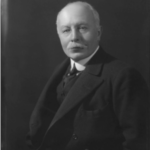
    BIOGRAPHY : William Bridgeman, 1st Viscount Bridgeman

    WILLIAM BRIDGEMAN

    William Clive Bridgeman (1864-1935) was a British Conservative politician who served as a Member of Parliament (MP) and Cabinet minister.

    Bridgeman was born in London, the son of a prominent judge and served as a Lieutenant in the Royal Horse Guards during the Sudan campaign of 1884-1885. He later became a solicitor and was elected as the MP for Oswestry in 1906. In 1916, he was appointed as the Parliamentary Secretary to the Ministry of Munitions and held the position until 1919.

    In 1922, Bridgeman was appointed as First Lord of the Admiralty, a position he held until 1924. He then served as the Secretary of State for War from 1924 to 1929 and as the Home Secretary from 1929 to 1930. He was also the President of the Board of Education from 1930 to 1931.

    Bridgeman was known for his strong support of naval rearmament, which he considered necessary to meet the growing threat from Germany in the 1920s. He also supported the introduction of a National Insurance scheme to provide medical care for the working class.

    Despite his long career in politics, Bridgeman was considered a moderate politician who did not play a major role in shaping government policy. Nevertheless, he was respected for his sound judgment and knowledge of government and was considered a competent administrator.

    Bridgeman retired from politics in 1935 and died later that year at the age of 71. He was survived by his wife and children and was widely remembered as a dedicated public servant who had served his country with distinction.

  • BIOGRAPHY : Stanley Baldwin

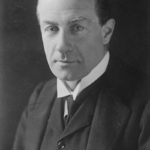
    BIOGRAPHY : Stanley Baldwin

    STANLEY BALDWIN

    Stanley Baldwin was a British politician and statesman who served as the Prime Minister of the United Kingdom on three occasions, first from 1923 to 1924, then from 1924 to 1929, and finally from 1935 to 1937. He was born on August 3, 1867, in Bewdley, Worcestershire, England, and was the son of Alfred Baldwin, who was also a prominent politician.

    Baldwin was educated at Harrow School and Trinity College, Cambridge, before beginning a career in business as a steel manufacturer. He became involved in politics in the early 1900s and was elected to Parliament as a Conservative Party member in 1908. He held several important government positions, including President of the Board of Trade and Minister of Labour, before becoming Prime Minister for the first time in 1923.

    As Prime Minister, Baldwin was known for his efforts to promote social and economic stability in Britain, and he worked to promote international peace and cooperation. He was particularly concerned with the rise of fascism in Europe, and he played a key role in negotiating the Hoare-Laval Pact, which sought to resolve the conflict in Ethiopia.

    Baldwin retired from politics in 1937 and was succeeded as Prime Minister by Neville Chamberlain. He was made a peer in the House of Lords in 1937, and he continued to be an influential figure in British politics until his death on December 14, 1947, at the age of 80.

    Stanley Baldwin is remembered as one of the most significant political figures of the 20th century, and he is regarded as a moderate and pragmatic politician who was committed to preserving peace and stability in Britain and the world.

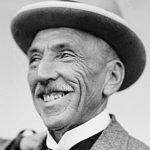
  • BIOGRAPHY : Billy Hughes (Australian Prime Minister)

    BIOGRAPHY : Billy Hughes (Australian Prime Minister)

    BILLY HUGHES

    William Morris “Billy” Hughes (1862-1952) was an Australian politician who served as the Prime Minister of Australia from 1915 to 1923. Hughes was born in London and immigrated to Australia in 1884. He was initially a member of the Australian Labor Party (ALP) but later broke with the party and became a key figure in the conservative and nationalist movement in Australia.

    Hughes became Prime Minister in 1915, during the First World War, and he was a controversial and divisive figure. He was a strong advocate of conscription and was a key figure in the successful campaigns for conscripted soldiers to be sent to fight in the war. However, his support for conscription was deeply unpopular with many Australians and was a major factor in the split of the ALP and the formation of the Nationalist Party.

    Hughes was also a strong advocate for Australian independence and worked to increase Australia’s international standing. He was a key figure in the establishment of the League of Nations and was the first Australian Prime Minister to travel overseas to attend an international conference.

    Despite his controversial reputation, Hughes was a successful Prime Minister and is widely regarded as one of the most important figures in Australian political history. He remains one of the longest-serving Prime Ministers in Australian history and is remembered for his role in the First World War, his commitment to conscription, and his advocacy for Australian independence.

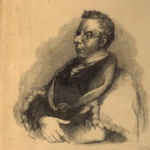
  • BIOGRAPHY : Thomas Curson Hansard

    BIOGRAPHY : Thomas Curson Hansard

    THOMAS CURSON HANSARD

    Thomas Curson Hansard (1776-1833) was an English printer and publisher who is widely regarded as the father of parliamentary reporting. He was born in London and became a printer and publisher in the early 19th century. Hansard saw an opportunity to produce verbatim reports of parliamentary debates and began publishing them in 1812.

    At the time, the reporting of parliamentary proceedings was limited and often partisan, and Hansard saw an opportunity to provide a more accurate and impartial record of the debates. He quickly established a reputation for accuracy and impartiality, and his reports became popular with the public and widely regarded as the authoritative source of information on parliamentary proceedings.

    Hansard’s reports were a major innovation in parliamentary reporting, and he is credited with creating the modern Hansard. He was awarded a contract to supply reports of parliamentary debates to the government in 1829, and his reports became an important source of information and accountability in the UK.

    After his death in 1833, his business was continued by his family, and the Hansard became an official government publication in 1909. Today, the Hansard remains an important historical document and a source of information on the debates and decisions of the UK Parliament.

    Hansard’s legacy has had a lasting impact on parliamentary reporting and democracy in the UK. His commitment to accuracy and impartiality has set the standard for parliamentary reporting, and his name has become synonymous with the official record of parliamentary proceedings. He is widely regarded as one of the pioneers of parliamentary reporting and a key figure in the history of parliamentary democracy.