Category: Attack on Ukraine

  • Michael Gove – 2022 Statement on Homes for Ukraine Update

    Michael Gove – 2022 Statement on Homes for Ukraine Update

    The statement made by Michael Gove, the Secretary of State for Levelling Up, Housing and Communities, in the House of Commons on 22 June 2022.

    The Homes for Ukraine scheme will allow eligible children and minors under the age of 18 who have already applied through the Homes for Ukraine Scheme to come to the UK without a parent or guardian, the Government announced today, 22 June 2022.

    This policy will initially apply to the 1,000 children who have already applied to the Home Office but are unable to travel as they are not travelling or reuniting with a parent or guardian.

    After working closely with the Ukrainian Government, the changes will enable a child to apply for a visa if they have proof of parental consent. This must be certified by an authority approved by the Ukrainian Government such as notary authorities or Ukrainian consul abroad.

    Extensive sponsor checks will also be carried out by local authorities ahead of any visa being granted, with councils able to veto any sponsor arrangements they deem unsuitable.

    The sponsor should also, except in exceptional circumstances, be someone who is personally known to the parents.

    The Government are working with the Ukrainian Government, devolved Administrations, local authorities and charities and voluntary groups.

  • Ben Wallace – 2022 Comments on UK Defence Industry and Support for Ukraine

    Ben Wallace – 2022 Comments on UK Defence Industry and Support for Ukraine

    The comments made by Ben Wallace, the Secretary of State for Defence, on 20 June 2022.

    Backed by our formidable Defence industry, the UK has been one of the global leaders in providing military assistance to support Ukraine’s armed forces. Their creativity and commitment to this complex and demanding problem has been invaluable to helping resist the Russian invasion.

    As this unprovoked attack continues and Russia’s tactics change, we are working closely with industry partners to provide innovative solutions that will bolster the heroic Ukrainian efforts for the coming weeks and months.

  • John Healey – 2022 Speech on the UK and NATO’s Commitment to Ukraine

    John Healey – 2022 Speech on the UK and NATO’s Commitment to Ukraine

    The speech made by John Healey, the Shadow Secretary of Defence, in the House of Commons on 20 June 2022.

    Today marks day 117 since Russia began its brutal and illegal invasion of Ukraine. It is now a grim, grinding war of attrition. NATO’s Secretary-General warned last week that the alliance

    “must prepare for the fact that it could take years.”

    Everything that can be done must be done to help to maintain the Ukrainian military’s morale, weaponry and personnel. The Government will continue to have Labour’s full support in the military assistance they provide to Ukraine.

    In April, when responding to the Defence Secretary’s statement in this House, I urged the Government to move to supply

    “the new NATO weapons that Ukraine will need for Putin’s next offensive”.—[Official Report, 25 April 2022; Vol. 712, c. 463.]

    In these last two months, what NATO-standard stock has been supplied from the UK to Ukraine, and how many new contracts for missiles or ammunition production have the MOD now managed to sign and start?

    On Friday, as the Minister said, the Prime Minister offered to train 10,000 new Ukrainian soldiers every three months. This is exactly what is needed. Did President Zelensky accept Britain’s offer? Will these Ukrainian recruits be trained in Britain? Which other NATO nations will be involved in such training?

    As we mark the start of Armed Forces Week, the Labour leader and I had the privilege of visiting NATO’s maritime command and our UK Permanent Joint Headquarters in Northwood this morning. We wanted to thank our personnel for the service they give to our national and NATO commitments. However, there are serious growing concerns about the UK meeting its NATO commitments, with the failure to reboot defence plans in response to Ukraine, delays to a fully modern warfighting division until 2030, continued uncertainty over Ajax and, of course, further deep cuts to Army numbers.

    The new head of the Army said in an internal message to troops last week that

    “there is now a burning imperative to forge an Army capable of fighting alongside our allies and defeating Russia in battle”,

    so why are Ministers pushing ahead with plans to cut another 10,000 soldiers? When will they halt these cuts, and when will they start to rebuild the strength of the British Army to meet the threats that our country and our NATO allies face?

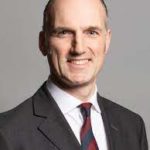
  • Leo Docherty – 2022 Statement on the UK and NATO’s Commitment to Ukraine

    Leo Docherty – 2022 Statement on the UK and NATO’s Commitment to Ukraine

    The statement made by Leo Docherty, the Minister for Defence People and Veterans, in the House of Commons on 20 June 2022.

    Russia’s assault on Ukraine is an unprovoked, premeditated attack against a sovereign democratic state that threatens global security. As set out to the House previously, the United Kingdom and NATO stand with Ukraine. We are providing political and practical support to support its self-defence, and will further strengthen NATO’s deterrence and defence posture. Individual NATO allies, led by the UK, are also supporting Ukraine with lethal aid to ensure that Ukraine wins.

    The United Kingdom was the first country to provide lethal aid, and we have increased our military and aid support, bringing the total budget to £1.3 billion. To date, we have sent over 6,900 anti-tank missiles; five air defence systems, including Starstreak anti-air missiles; 120 armoured fighting vehicles, including a small number of Stormers; 1,360 anti-structure munitions; 4.5 tonnes of plastic explosives; and 400,000 rounds of small-arms munitions. In addition, we have supplied over 200,000 items of non-lethal aid, including more than 82,000 helmets; more than 8,000 body armour kits; range finders; and medical equipment. As announced on 6 June 2022, we are providing cutting edge multiple-launch rocket systems, which can strike targets up to 80 kilometres away with pinpoint accuracy, offering a significant boost in capability to the Ukrainian armed forces. On 17 June, the Prime Minister offered to launch a major training operation for Ukrainian forces, with the potential to train up to 10,000 soldiers every three months—120 days.

    We are currently supplying significant air power to NATO, including increased air patrols, with both Typhoons and F-35s for NATO air policing. We have also deployed four additional Typhoons to Cyprus to patrol NATO’s eastern border. That means that we now have a full squadron of Royal Air Force fighter jets in southern Europe, ready to support NATO tasking. The United Kingdom has contributed more troops than any other ally to NATO’s enhanced forward presence. UK troops will also be deploying a company-sized sub-unit to Bulgaria to work bilaterally alongside our Bulgarian counterparts for up to six months, enhancing interoperability. The PM will meet NATO leaders again for next week’s Madrid summit, where NATO will agree the new strategic concept to set the direction of the alliance for the next decade and will agree long-term improvements to our deterrence and defence posture in response to Russia’s invasion of Ukraine. The United Kingdom’s commitment to the alliance and European security is unconditional and enduring. Our commitment to article 5 of the Washington treaty is iron clad. We stand ready to defend our allies.

    Mr Ellwood

    First, may I thank you, Mr Speaker, for the flag-raising ceremony that you hosted today to mark Armed Forces Week?

    The Prime Minister was right to visit Ukraine last week. The UK has been an exemplar in our support to that country compared with many of our NATO allies. But Russia is not losing and Ukraine is not winning. The Prime Minister said, “Prepare for a long war”, and the new head of the British Army seeks to reconfigure our land forces to potentially face Russia on the battlefield. This all starkly illustrates that long-term European security is threatened not just by the utility of force but a wider conflict between the west and growing authoritarianism.

    However, future generations may ask of NATO, “Why did you not put that fire out in Ukraine when you could have?”—by securing the port of Odesa, for example, rather than instead allowing Putin to claim a win and take his fight elsewhere. The penny is dropping in this regard. If we now recognise that our world is becoming more dangerous, Britain should lead a coalition of the willing that offers Ukraine the scale of support that it requires. Recognising this new picture requires us to review our own defence posture. We can certainly be proud of what Britain has done in upgrading its battle presence in the Baltics, leading the way in training Ukrainians and providing lethal weapons systems, but I say to the Minister that the tempo of these duties is unsustainable.

    We are overloading our troops with those widening commitments and we are not replenishing our defence stocks fast enough. All three services are now too small to manage the ever-greater burden that we are going to place on them. The cuts set out in the 2021 integrated review to personnel and military equipment must now be reversed.

    Does the Minister agree that once again, Britain finds itself leading other European allies in spelling out the scale of the threat that the continent now faces, and stepping forward when other nations hesitate to confront that threat? We cannot do that on a peacetime defence budget of 2.2%; it is time to upgrade our defence posture and spending to 3% if we are serious about preventing the spread of conflict in Europe.

    Leo Docherty

    I am grateful for the opportunity to speak to some of my right hon. Friend’s points. He said that Russia is not losing in Ukraine, with which I would take issue. I think that Russia is losing and that it was losing from the point of invasion. Its catastrophic losses in the west of the country and the way that it has had to refocus in the east describe that strategic loss, so I disagree with him on that.

    Our domestic response will always be threat-based. My right hon. Friend made some remarks about whether NATO forces should have been deployed to Ukraine in anticipation of the Russian invasion. Our judgment is—and collectively, everyone would judge—that we got the balance right between providing reassurance and effect, while avoiding the direct conflict that would have resulted immediately from putting NATO forces directly into Ukraine.

    As I said, we are a threat-based organisation. In making the argument for defence expenditure, we need to understand that there are three basic points of context that I ask my right hon. Friend to take note of. First, we do everything as part of the NATO alliance. We are one of a 30-member defensive alliance—soon to be 32—and because of that, we are a great deal stronger than we are separately. One of the significant lessons for the Russian military machine is how exposed it is by being alone. We are stronger as an alliance; as an alliance, we massively outnumber any kind of effect the Russians can bring to bear.

    Secondly, it is important to recognise that we acknowledged the significant threat posed by Russia as part of our defence Command Paper, which came out of the integrated review and was released in March 2021; many right hon. and hon. Members will have read it. Page 5, paragraph 1.4 leads with the fact that

    “Russia continues to pose the greatest nuclear, conventional military and sub-threshold threat to European security.”

    In terms of our doctrine and our response, that is not new to UK national defence. That is a really important contextual thing to understand.

    Thirdly, that is why we are making good use of the £24-billion uplift that we have had under this Government, which is driving forward the agility, deployability and lethality that we need in the new global context. Manifold lessons will be drawn from the outrageous Russian invasion of Ukraine, including the vulnerability of armour and of large bodies of troops; the potency of technology and remote fires; and the urgent importance of having a fully modernised military with match-fit technology. That is what the integrated review and the defence Command Paper do.

    We have more money than we have ever had—£24 billion more than we would have had otherwise. We will always keep things under review, but we should be confident that doctrinally and militarily, in terms of kit and equipment, we are on the right lines.

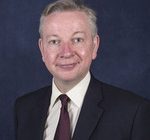
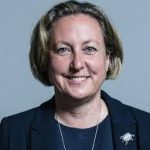
  • Anne-Marie Trevelyan – 2022 Speech at WTO Ministerial Conference

    Anne-Marie Trevelyan – 2022 Speech at WTO Ministerial Conference

    The speech made by Anne-Marie Trevelyan, the Secretary of State for International Trade, on 17 June 2022.

    I want to thank everyone who has worked around the clock at the WTO Ministerial Conference over the past week. Our hard work was not in vain. As the Director General said in her closing speech, we have successfully shown that the WTO is capable of responding to some of the biggest challenges of our time.

    As the UK’s first Ministerial Conference as an independent member, I am incredibly proud of the active and principled role that we played. We approached negotiations with a constructive spirit, and showed flexibility to get things done.

    I was pleased to convene fellow Ministers to discuss trade measures in support of Ukraine. Against the backdrop of Putin’s illegal war, it was important to demonstrate the breadth of support for our heroic Ukrainian friends. Whilst Russia may have had a presence at MC12, I am clear that it does not represent a normalisation of trade relations between the UK and Russia.

    Global food insecurity was already an issue before Russia’s invasion of Ukraine. So it was right that the WTO membership gave this issue the attention it deserves by signing a new political declaration, which recognises the important role that trade can plan in improving global food security.

    There was apprehension going into MC12 about whether the membership could put aside their differences and unite behind common goals. I am proud that we proved the naysayers wrong. The reality is that this Ministerial Conference has produced positive outcomes.

    We know that businesses, in both developed and developing countries, wanted us to guarantee tariff-free digital trade. I am happy to say that we delivered for them. Digital trade is what allows a start-up in Malawi access to the same global opportunity as an MSME in Manchester, or indeed a multi-national in California. In the digital age, the E-Commerce Moratorium provides certainty and lowers costs for global supply chains. And, in time, we want to see this Moratorium made permanent.

    Coming into discussions about the WTO’s response to the pandemic, we were clear that the solution to the access of Covid-critical goods lay beyond Intellectual Property, such as principles in applying export restrictions, increased transparency supporting trade facilitation and tariff reduction. While we pressed for the WTO Declaration to go further, we welcome the fact that members found common ground and committed to keep working to improve our preparedness for future pandemics.

    The UK is a long-standing champion of equitable access to vaccines. However, we could only accept an outcome on TRIPS that was operable and did not undermine the existing Intellectual Property framework. That is why the UK fought hard to clarify the exact intent and scope behind the TRIPS Decision. After intense negotiations, we are satisfied the final text is sufficiently workable.

    Let me be clear: this is not about waiving IP rights. This decision should make it easier for developing countries to export the vaccines they produce within existing flexibilities.

    The Fisheries Agreement does not go as far as many members wanted (the UK included). But it does go some way to delivering what our ocean’s need and all those that are dependent on them. We made a firm commitment to continue negotiations so that we can support the recovery of global fish stocks.

    The agreements we reached this week may not be perfect, but they do provide a platform on which we can continue to build. No one has worked harder than the Director-General, who has moved mountains in her efforts to bring about consensus. I congratulate her, the WTO Secretariat, Committee Chairs and Facilitators for their tireless efforts.

    The UK still believes in the centrality of the WTO to the global trading system. The outcomes achieved in Geneva this week show that we are not alone in this belief. Let’s not wait until MC13 to keep making progress.

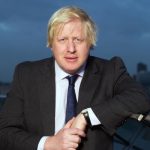
  • Boris Johnson – 2022 Comments on Second Visit to Kiev

    Boris Johnson – 2022 Comments on Second Visit to Kiev

    The comments made by Boris Johnson, the Prime Minister, on 17 June 2022.

    My visit today, in the depths of this war, is to send a clear and simple message to the Ukrainian people: the UK is with you, and we will be with you until you ultimately prevail.

    As Ukrainian soldiers fire UK missiles in defence of your nation’s sovereignty, they do so also in defence of the very freedoms we take for granted.

    That is why I have offered President Zelenskyy a major new military training programme that could change the equation of this war –harnessing that most powerful of forces, the Ukrainian determination to win.

    Two months on from my last visit, the Ukrainian grit, determination and resilience is stronger than ever, and I know that unbreakable resolve will long outlive the vain ambitions of President Putin.

  • Boris Johnson – 2022 Press Conference on His Second Visit to Kyiv

    Boris Johnson – 2022 Press Conference on His Second Visit to Kyiv

    The press conference with Boris Johnson, the Prime Minister, on 17 June 2022.

    Thank you for having me. It’s great to be back here again in Kyiv and to see you, but also to see how life is coming back to the streets, to the cafes, to the restaurants.

    It’s much livelier than it was just a few weeks ago when you and I went on our impromptu walk about, Volodymyr, and that’s a very positive thing. It’s good to see visitors, let me put it this way from other European countries, coming to Kyiv.

    But we’ve got to face the fact that only a couple of hours away a barbaric assault continues on entirely innocent people.

    Towns and villages are being reduced to rubble.

    And as you rightly say, Volodymyr, we continue to see the deliberate targeting of civilians – what is unquestionably a war crime.

    And in a hideous echo of the past, the illegal deportation of people that the Russian forces believe are insufficiently sympathetic to Putin’s aggression and in these circumstances, we can only once again salute the heroism of the Ukrainian forces, the bravery of your armed forces.

    In these circumstances, Volodymyr, I completely understand why you and your people can make no compromise with Putin.

    Because if Ukraine is suffering, if Ukrainian troops are suffering, then I have to tell you that all the evidence is that Putin’s troops are under acute pressure themselves and they are taking heavy casualties.

    Their expenditure of munitions, of shells and other weaponry is colossal.

    And after our 114 days of attack on Ukraine, they have still not achieved the objectives they set out for the first week.

    So Volodymyr, we are here once again, to underline that we are with you to give you the strategic endurance that you will need and we are going to continue to help intensify the sanctions on Putin’s regime.

    We’re going to do everything we can to continue to strengthen the diplomatic coalition around the world for Ukraine.

    And I completely understand and sympathise with the need for continued financial support for Ukraine.

    We’re going to work together to liberate the grain, as you rightly say that he’s being held hostage right now by Putin, depriving people around the world of the food that they need.

    And of course, we will continue, as we have from the beginning, to provide the military equipment, the training that may be necessary to go with that with that new equipment, so that you – the Ukrainian people, the Ukrainian Armed Forces, will be able to do what I believe Ukrainians yearn to do and that is to expel the aggressor from Ukraine.

    And that will be the moment for talks about the future.

    And it will be in that context of a free Ukraine that we and other countries will be making the security commitments and guarantees that we’ve we discussed so often.

    And we will work together with you and with our partners to rebuild your wonderful country for the benefit of Ukrainians and I might say, for the benefit of the whole of the global economy.

    Thank you for having me to Kyiv again. Always wonderful to be here. Slava Ukraini.

  • Ministry of Defence – 2022 Statement on Ben Wallace’s Visit to Ukraine

    Ministry of Defence – 2022 Statement on Ben Wallace’s Visit to Ukraine

    The statement issued by the Ministry of Defence on 10 June 2022.

    The working visit took place this week to allow the Defence Secretary to hear first-hand how the operational needs of Ukraine’s Armed Forces are developing as the nature of the conflict continues to change. This will ensure that the UK’s continued support is evolving to meet those requirements and is tailored to the situation on the ground.

    The Defence Secretary visited Minister Reznikov on the first of the two day visit, before speaking with President Zelenskyy about how the UK support will continue to meet Ukraine’s needs as the conflict enters a different phase.

    The three agreed to work even more closely going forward in support of their shared goal of enabling Ukraine to liberate itself from illegal Russian occupation. They also discussed the range of equipment and training the UK is currently providing and what further support we can offer to help Ukrainian forces to defend their country.

    The meetings focused on the UK continuing to provide operationally effective lethal aid that meets the current and future threats facing Ukraine and follows up on a number of other in person meetings. In March, Minister Reznikov visited the Ministry of Defence and in April a Ukrainian military and political delegation visited Salisbury Plain training area to discuss UK provision of lethal aid. These face to face meetings allow for in-depth discussions on what support is required to meet the requirements of the Ukrainian Armed Forces.

    Britain was the first European country to send lethal aid to Ukraine and has since sent military aid worth more than £750 million, including thousands of anti-tank missiles, air defence systems and armoured vehicles. The UK has also played a key convening role in the international effort to supply weapons to Ukraine, most notably hosting the first two international donor conferences. The Defence Secretary will ensure the insights and future requirements established from this visit will be used to support the wider international response.

    Following the new phase of the conflict in the Donbas, the UK recently announced it would gift M270 multiple-launch rocket systems (MLRS) to Ukrainian forces defend themselves from Russian long-range artillery, which has been used indiscriminately to devastate population centres.

  • Ben Wallace – 2022 Comments on UK Gift of Rocket Launchers to Ukraine

    Ben Wallace – 2022 Comments on UK Gift of Rocket Launchers to Ukraine

    The comments made by Ben Wallace, the Secretary of State for Defence, on 6 June 2022.

    The UK stands with Ukraine in this fight and is taking a leading role in supplying its heroic troops with the vital weapons they need to defend their country from unprovoked invasion. If the international community continues its support, I believe Ukraine can win.

    As Russia’s tactics change, so must our support to Ukraine. These highly capable multiple-launch rocket systems will enable our Ukrainian friends to better protect themselves against the brutal use of long-range artillery, which Putin’s forces have used indiscriminately to flatten cities.

  • Volodymyr Zelenskyy – 2022 Speech to the European Council

    Volodymyr Zelenskyy – 2022 Speech to the European Council

    The speech made by Volodymyr Zelenskyy, the President of Ukraine, on 30 May 2022.

    Dear Mr. President Michel.

    Dear Mrs. President Roberta.

    Dear friends!

    I am glad to be able to address all of you without exception. Today is the 96th day of Russia’s full-scale war against our state, against all of us and against all of you. Against European unity.

    Russia wants to see at such meetings not a united European Council that we see now, not a united European Union, but 27 separate states, 27 fragments that cannot be put together. This is their wish.

    This policy of the aggressor is consistent, and there is no delay in it. Unlike Europe, Russia does not need to hold such summits and seek compromises for weeks. By the way, I want to thank you for talking about these compromises, for striving to find help and support for Ukraine.

    So, they are not ready to compromise, choosing what to do to achieve their goals. And now we see how the Russian offensive in Donbas is destroying our cities, destroying the communities of Ukraine, and at the same time how the European unity, the desired European unity may falter.

    On April 8, the 44th day of the war, the EU’s fifth sanctions package was imposed. And 52 days have passed since then. What happened during this period?

    At that time, as of April 8, there were 169 children on the list of those killed by the Russian occupiers in Ukraine. As of today 243 children are on the list.

    At that time, as of April 8, 928 educational institutions were destroyed. Kindergartens, schools, universities. As of today – 1888.

    According to the information for the past day, the number of Russian missile strikes at Ukraine is already almost 1,600. Russia has used more than 2,400, almost 2,500 different missiles against us, against the civilian population. And then, as of April 8, there were less than a thousand strikes and they used about a thousand missiles. This is the progress of their aggression.

    And, of course, I want you to understand me – I’m not blaming any of you. It is only the Russian state that is to blame for everything that is happening. But I am convinced that it is obvious to each and every one of you that there should be progress in sanctions for this aggression. And for us it is crucial. And it will help us a lot!

    The progress that makes Russia begin to seek peace. And only this can be our common demand. Peace. There can be no compromises at the expense of our territorial integrity, our sovereignty!

    I am grateful to everyone who promotes the sixth sanctions package and tries to make it effective. However, unfortunately, for some reason it is not there yet. And why do you depend on Russia, on their pressure, not vice versa? Russia must depend on you.

    Why can Russia still earn almost a billion euros a day by selling energy resources? Why are banks of a terrorist state still working with Europe and the global financial system? Serious questions. And why are Russian propaganda channels still active in the European Union? This is an information weapon of the Russian Federation. Why are Russian civil servants who support the war and judges who openly support repression still not under sanctions?

    Each of these important questions is not just about sanctions packages or the war in Ukraine. All this is about us. All this is about Europe itself.

    Dear friends!

    Ladies and Gentlemen!

    Only through greater unity can we find effective responses to everything that Russia is doing against us and against you. If someone torpedoes a ship, one or more cabins cannot hope to stay afloat when others drown.

    You can see that the consequences of Russia’s aggression have gone beyond our continent. And they will definitely return with even bigger problems for the whole of Europe. For example, large-scale famine in Africa and Asia will mean a threat of a new large-scale migrant crisis for southern and south-eastern Europe.

    And when you hear food blackmail from Moscow, please know that this is their deliberate strike at your societies. To ensure this strike, Russia simply uses the people of Africa and Asia as hostages, deliberately pushing them to starvation. So that people from there flee to you en masse. Are you ready for this? I don’t think so.

    Let’s take a look at price instability in the energy market. It’s not just some of the usual market fluctuations periodically observed.

    Last year, Russia created conditions for the record increase in gas prices. Now, investing in instability, Russia is making all energy prices skyrocket. For what? For Europeans to protest, not against the aggressor and their aggression, but against their own states. Against you personally. Against their leadership.

    And if this is a threat to each and every one of you, if this is Russia’s bet on political chaos in your countries, why do some people still think they can defend themselves alone?

    Europe must show strength. Because Russia perceives only strength as an argument. It’s time. It’s time for you to be not separate, not fragments, but one whole.

    Ukraine has shown by its own example why this is important. Why it’s important to be united. In our country, starting from February 24 there is the maximum unity, everyone is working for one result – state protection. And thanks to this we managed to do what the world did not expect, Russia did not expect – Ukraine stopped their army, and everyone was afraid of it, everyone remembers. And we managed to liberate part of our occupied territory.

    Greater unity is truly the foundation of this strength. You know this. Finally, all quarrels in Europe must end, internal discord that only encourages Russia to put more and more pressure on you, on the whole of Europe.

    The sixth sanctions package must be agreed upon. It must be effective – including oil. So that Russia feels the price of what it is doing against Ukraine and against the whole of Europe. And for you and us to finally become independent from Russian energy weapons. At least from its oil part.

    And we must immediately find a solution that will prevent the food crisis from unfolding.

    Of course, I thank you for your efforts together with partners to create green corridors for agricultural exports from Ukraine. But still, you understand that a reliable guarantee of food security is impossible without ending Russia’s war against Ukraine on our land. Because there can be no peaceful trade, no steady agricultural production, if Russia retains the ability to intercept ships with Ukrainian agricultural products. And not only in the Black Sea. Or to strike at our cities, ports, elevators, other infrastructure.

    Mr. President Michel!

    You were recently in Odesa and were forced to go into a shelter due to a missile attack. Mr. President has felt for himself what I am talking about now.

    And if this was felt even at such level, why is Russia still not recognized as a terrorist state, a state – sponsor of terrorism?

    And another aspect. The European home was never complete without Ukraine. It won’t be. There will never be a full-fledged European power without Ukraine. The very fact that Ukraine remained a fragment of Europe, somewhere outside your countries, contributed to the fact that Russia has developed an aggressive appetite to seize its neighbors.

    Only the enlargement and strengthening of European unity can prevent the recurrence of what Europe experienced on February 24, in 2014, and even in 1968 or 1956.

    Therefore – at the strategic level – the status of a candidate for membership in the European Union for Ukraine should be approved already in June. I would like to express gratitude to the countries of the Western Balkans for their understanding and support for granting candidate status to our country. Thank you very much.

    On April 8, when the fifth sanctions package was approved, we also received a questionnaire from the European Union. And we have already answered it over this time. We have already provided these answers to the European Commission. Unprecedentedly fast, and most importantly – in a coordinated manner. We expect the same reaction from Europe.

    And we reject any attempt to find an alternative that no one needs, or to find something else for Ukraine. We need to be like you. We want Ukraine to receive candidate status.

    We have met all the necessary criteria for this status. And I am sure that those individual states that are still hesitant about us, you know it well, will change their minds and show our united strength. The strength of our nations who support our membership in the European Union by an unprecedented majority. The strength of your nations, the strength of your states and a united Europe.

    I want to thank you for your unity, ability to be united, energetic, to have a future in a strong European Union and to ensure that the developments in the world depend on us. So that we depend on ourselves, not on some offices somewhere in Moscow.

    Right now you can determine whether everything that the European Union says about itself is true. About unity in diversity, common values and the same approach to all European democracies.

    We need a common customs space that will strengthen both Ukraine and all those involved in trade with us. We need a common payment space that will accelerate integration at the level of ordinary people. And a common roaming space. It is very important for our displaced people, more than 5 million of them, not to experience discrimination.

    And, of course, further armed and financial support for Ukraine is absolutely necessary. Now our common freedom depends on our success on the battlefield, and your stability depends on our stability.

    And this is another reason to find and freeze, and then confiscate all Russian assets and allocate them for the reconstruction and compensation for the damage caused by the war.

    Dear colleagues!

    Dear friends!

    We have already started a conversation with most of you about rebuilding Ukraine. We are creating a large-scale recovery plan. The global United24 support project has been activated. The European Commission is also preparing a platform for reconstruction. I urge all of you to join these initiatives now.

    If rebuilding begins during the war and becomes truly pan-European, it will be one of the most convincing pieces of evidence for everyone and, of course, for Russia in particular, that Europeans are strong. And they will not allow any of the integral parts of Europe to be destroyed. Neither Ukraine nor any other part.

    And finally.

    A 9-year-old girl died today as a result of the Russian shelling of the Kherson region of Ukraine. Two more children were wounded: a 7-month-old baby and a 5-year-old girl. A normal person can’t just put up with it. With such crimes. Daily crimes. These are the deliberate killings by the Russian military of our civilians, our children. They know exactly who they are firing at.

    And I really count on your principledness and activity to bring to justice every Russian soldier who killed or tortured our people, and every commander who gave or condoned such orders. Europe can definitely do that.

    Let’s do it!

    Because this is not just a question of the aggressor’s responsibility for a particular war, but of protecting humanity as such.

    Thank you for your attention.

    Glory to Ukraine!