Category: Attack on Ukraine

  • Volodymyr Zelenskyy – 2022 Statement on the Situation in Ukraine (25/06/2022) – 122 days

    Volodymyr Zelenskyy – 2022 Statement on the Situation in Ukraine (25/06/2022) – 122 days

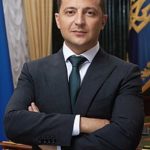
    The statement made by Volodymyr Zelenskyy, the President of Ukraine, on 25 June 2022.

    Unbreakable people of an unbreakable country!

    Russia today again hit Kyiv with missiles. Early in the morning. The second army of the world triumphantly “defeated” a kindergarten and an apartment building. The man died, he was only 37 years old. There are wounded, among them – a girl named Zhenya, she is seven years old, the daughter of the deceased, now she is in “Okhmatdyt”. Her mother was also wounded. By the way, a citizen of Russia. That’s that. She was not threatened by anything in our country, she was completely safe, until Russia itself decided that everything was equally hostile to them now – women, children, kindergartens, apartment buildings, hospitals, railways.

    Missiles also hit the Mykolaiv region, the Chernihiv region, Odesa, Cherkasy. Artillery and mortar shelling did not stop in the Kharkiv region, in the Sumy region, in Donbas, in the south of our state. My condolences to the families and friends of the victims. Everyone who was injured is given all the necessary help.

    Part of the missiles were shot down. But only part. We need a powerful air defense – modern, fully effective. Which can ensure complete protection against these missiles. We talk about this every day with our partners. There are already some agreements. And partners need to move faster if they are really partners, not observers.

    Delays in the transfer of weapons to our state, any restrictions are actually an invitation for Russia to strike again and again. The occupiers – these terrorists – must be beaten with all our might so that they do not think they can put pressure and outplay someone.

    What are these missiles about today? And what are yesterday’s 62 missiles – for only one Saturday, for 24 hours – are about? They are about the Russian method: to escalate every time international events take place. And at the same time they are about determination. About, for example, the fact that the leaders of the G7, who gathered in Germany today for a summit, have enough common potential to stop Russian aggression against Ukraine and against Europe as a whole. It is possible.

    But this is possible only if we get everything we ask for, and just in time we need it – weapons, financial support, and sanctions against Russia. It cannot be otherwise in this war. Because it is here – in the sky over Kyiv, in the sea near Odesa, on the land of the Kharkiv region, Donbas, in the Kherson and Zaporizhzhia regions – that it is being decided what life will be like in Europe in the future. Here, in Ukraine, and nowhere else.

    Of course, there are not as many missiles in Russia as we have confidence in ourselves. But Russian weapons can be stopped only by more powerful weapons.

    I spoke about this today with Prime Minister of Canada Justin Trudeau – how else we can strengthen defense support for Ukraine and how else we can increase the pressure of sanctions on Russia. I thanked Justin for the help already provided – one of the most tangible.

    And today I want to say a few more things, very targeted.

    Firstly, all pilots, dispatchers, mechanics and other people who ensure the launch of missiles at Ukraine must understand: we will find you all. Each of you will be responsible for these strikes. And if someone thinks that he will evade responsibility by saying that such was the order, you are mistaken. When your missiles hit residential buildings, these are war crimes. Trial is what awaits you all. And there will be nowhere to hide for you – neither on the shores of the Caspian Sea, over which your missiles are launched, nor in Belarus… Nowhere.

    And I would like to separately address the citizens of Belarus today. Both civilians and those in uniform. You are being drawn into the war. And even more actively than in February and in the spring months. The Kremlin has already decided everything for you – your lives are worth nothing to them. But you are not slaves or cannon fodder. You do not have to die. And you can prevent anyone from deciding for you what awaits you next.

    I know that the people of Belarus support Ukraine, they support us, definitely us, not the war. And that is why the Russian leadership wants to draw you – all Belarusians – into the war, wants to sow hatred between us.

    A lot now depends on the ordinary people of Belarus. And I know that you can refuse to participate in this war. Your lives belong only to you, not to someone in the Kremlin.

    Ukraine will defend itself from strikes from any direction and from any weapon. I’m sure we will endure and get everything back. But anyone, any normal person in any country, in particular in Belarus, can contribute to the protection of life.

    This week will be very important for all of us. Therefore, we continue to work at all levels and do not slow down.

    Glory to all who defend the state!

    Glory to Ukraine!

  • Volodymyr Zelenskyy – 2022 Statement on the Situation in Ukraine (24/06/2022) – 121 days

    Volodymyr Zelenskyy – 2022 Statement on the Situation in Ukraine (24/06/2022) – 121 days

    The statement made by Volodymyr Zelenskyy, the President of Ukraine, on 24 June 2022.

    Ukrainians!

    All our defenders!

    45 Russian missiles over the night and morning of today. Zhytomyr region, Lviv region, Chernihiv region, Mykolaiv. In the evening – more missiles. Different types, different launch areas… All of them were launched with one goal – to show that Russia allegedly can achieve something, that the Russian army will allegedly succeed.

    Today marks the fifth month of a full-scale war. The occupiers were going to capture most of our country on the fifth day, but have to stage such a missile show on the fifth month, which does not change anything strategically for Russia. This is such a phase of the war – morally difficult, emotionally difficult. When we know that the enemy will not succeed, when we understand that we will still be able to defend our state, but we do not feel the time limits of this, we do not feel how many more strikes, losses, efforts will be before we see that victory is already on our horizon.

    For this, Russia needs these missile strikes at cities across the country, artillery and mortar shelling of the border areas of our state, the border areas of the Chernihiv, Sumy regions, Kharkiv, Dnipropetrovsk region. It is not just the destruction of our infrastructure, it is also a very cynical, calculated pressure on the emotions of our people.

    But it’s not us who will be overpowered, we will overpower them. No Russian missiles, no strikes can break the morale of Ukrainians. And each of their missiles is an argument in our negotiations with partners.

    I will take part in the G7 Summit on Monday. The NATO Summit will take place next week. 45 missiles in half a day and just on the eve of such meetings. All clear. Another confirmation of our position. This confirms that sanctions packages against Russia are not enough, that Ukraine needs more armed assistance, and that air defense systems – the modern systems that our partners have – should be not in training areas or storage facilities, but in Ukraine, where they are now needed. Needed more than anywhere else in the world.

    And one more thing that should be said today after such a missile attack. In the four months of the war, more than 20,000 Ukrainian warriors were awarded state awards. More precisely, 20,463. These are the Armed Forces, the National Guard, border guards, our rescuers, police, intelligence, Security Service, our doctors, State Security Administration, State Special Communications Service, NABU special forces, State Bureau of Investigation and employees of the Judicial Security Service… 156 warriors were awarded the title of Hero of Ukraine. This is the scale of courage, this is the level of resistance. And if there are more than 20 thousand of those whose feat has already been awarded, what kind of missiles can anyone in Russia hope for? What artillery, what mines can help the occupiers, if they are really opposed by mass people’s resistance?

    Therefore, all our cities: Severodonetsk, Donetsk, Luhansk – we will return everything. Every week we go to Kherson. Melitopol, Berdyansk, Enerhodar and Mariupol were never forgotten. And all other cities of Ukraine that are temporarily occupied will be Ukrainian only. Thanks to our heroes, thanks to each and everyone who does not get tired, who does not succumb to emotional breakdowns, who struggles and who knows that victory is ahead. Our victory, only ours.

    Eternal glory to all who defend Ukraine!

    Glory to Ukraine!

  • Volodymyr Zelenskyy – 2022 Statement on the Situation in Ukraine (23/06/2022) – 120 days

    Volodymyr Zelenskyy – 2022 Statement on the Situation in Ukraine (23/06/2022) – 120 days

    The statement made by Volodymyr Zelenskyy, the President of Ukraine, on 23 June 2022.

    Good evening, great people of our state!

    Today was marked by a discussion of the historic decision of the EU Summit – granting Ukraine candidate status.

    Since this morning and until this moment, there is a dialogue on television, radio, on the Internet about what it means, what conditions Ukraine has to fulfill, how difficult it will be to fulfill and how many years it will take…

    And I want to say the following on this day. Let’s rejoice at least a little. In a quiet, modest way, silently, but rejoice. For ourselves, for our beloved state. Let’s feel the moment and the taste of this moment.

    Imagine conquering Everest. You reached the penultimate point. You didn’t look around, didn’t even take a breath and talk about the further way to the top. How difficult it will be to overcome the last 1848 meters. Instantly we forgot and devalued our own success.

    Maybe we should first recall that we have already covered 7,000 meters?! Let’s not be ashamed to talk about our achievements. Let’s not be a nation with a short memory and inferiority complex.

    We say: Ukraine has been granted EU candidate status. Let’s say: Ukraine has gained EU candidate status. Did it fall from the sky? Haven’t we endured and done a lot?

    Today we focus on seven EU requirements. Yes. It’s true. But does it scare us? No. Because before that we successfully fulfilled hundreds. Let’s not forget about it. Not for bragging, but for the belief that we will definitely overcome this path. We have covered 7,000 meters, so we will not stop – we will reach our Everest.

    Let’s talk at least for a moment not about what awaits us, but about what we managed to do. Because, forgetting about it, we underestimate the significance of this step.

    There were times when we couldn’t take tickets in the evening and fly to Europe in the morning. We stood in line. Documents, visas, etc. Remember? A pile of papers that we carried in the file, which were required by all government agencies with officials who did not report to us and did not submit electronic declarations. High-ranking officials, for the control of which there was neither a special body nor a special court. Deputies with immunity. President who could not be impeached. Land that could not just be bought.

    Sounds wild? It seems it wasn’t with us, doesn’t it? It was. And not so long ago. But we changed everything.

    Privatization. Land reform. Open-list voting. Decentralization. NACP, Anticorruption Court, administrative services centers, public services online. Diia. Split. Unbundling. Concession. Common aviation space. Industrial visa-free regime. Deoligarchization.

    Much has been done. Exactly done! Let’s not forget that. Let’s be proud of ourselves. Respect ourselves.

    And we repelled the Russians. And we will win. Because when we respect ourselves we will be respected by others.

    Do not rejoice at a slap in the face of Moscow, but be proud of applause for Ukraine. And that’s why I want to see us in one family. Let it inspire you.

    We deserved it. Realized it. Smile, please. And may God give us all a quiet night.

    Well, tomorrow is the battle again. With new strength. With new wings.

    Glory to Ukraine!

  • Nadhim Zahawi – 2022 Comments on Support for Ukraine

    Nadhim Zahawi – 2022 Comments on Support for Ukraine

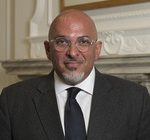
    The comments made by Nadhim Zahawi, the Chancellor of the Exchequer, on 15 July 2022.

    We are unwavering in our support for Ukraine.

    The UK stands steadfast with our partners in condemning Russia’s illegal and barbaric actions. Putin’s illegal war has disrupted the supply of food, energy and other vital goods, has caused prices to rise and is exacerbating the challenges the global economy was already facing as we bounced back from the pandemic.

  • Anne-Marie Trevelyan – 2022 Comments on the UK-Ukraine Infrastructure Summit

    Anne-Marie Trevelyan – 2022 Comments on the UK-Ukraine Infrastructure Summit

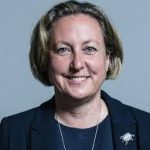
    The comments made by Anne-Marie Trevelyan, the Secretary of State for International Trade, on 11 July 2022.

    Ukrainian citizens are not only defending their country against Putin’s illegal war – they are trying to rebuild it.

    Restoring public services, unblocking disrupted supply chains and re-open life-saving evacuation routes all need urgent and concerted action. President Zelenskyy is right that these challenges must be shared by countries and businesses around the world.

    I was pleased to confirm the UK’s unflinching support to play our part in these efforts when I met Minister Kubrakov today.

    I heard how families have emerged from bomb shelters to find their properties turned to rubble. So I want to make sure that UK companies can help by providing temporary bridges and modular, prefabricated housing to help – the same type of emergency housing the UK needed after World War Two.

    Longer term, the UK will be providing expertise on the delivery of sustainable and resilient infrastructure through our brilliant UK-based businesses. And we’ll be continuing to work closely with Ukraine to offer them any help needed elsewhere, be it on energy, water, sanitation or public utilities.

    It’s particularly poignant to have held the inaugural taskforce meeting in Poland.

    Poland has been quite literally on the frontline of the efforts to support Ukraine against Putin. The government and its citizens have been extraordinarily generous in their support of Ukraine. It makes the UK even prouder than ever to call Poland a friend, and I’m pleased to have strengthened that friendship today.

  • Boris Johnson – 2022 Answers at Liaison Committee (Visa System For Ukrainian Refugees)

    Boris Johnson – 2022 Answers at Liaison Committee (Visa System For Ukrainian Refugees)

    The answers given by Boris Johnson, the Prime Minister, at the Liaison Committee held in the House of Commons on 6 July 2022.

    Dame Diana Johnson: Thank you. Good afternoon, Prime Minister. A few weeks ago, I met a group of Ukrainian MPs who had travelled to the UK via the Republic of Ireland. Like every other country, the Republic of Ireland, for Europe, doesn’t require a visa. They then travelled up through the common travel area. They didn’t have anything checked. They were raising with me whether it was a sensible decision to allow such a bureaucratic visa system for Ukrainians fleeing Ukraine—if it was a sensible use of resources. As we know, it has compromised the capacity of the Home Office. What do you say to that?

    The Prime Minister: I hear you loud and clear, Diana. I think that the argument that has been put me is—well, two things. First of all, we have got to be careful that we are able to screen people properly and—

    Dame Diana Johnson: Yes, but these people are coming up through the common travel area; there’s no screening.

    The Prime Minister: I accept that, and I accept the limitations of screening, but on the other hand, you’ve got to look at what we have done so far: 135,000 visas have been issued, and I think that the record is getting better and better. The UK is hosting a lot of Ukrainians, and I think we should be very proud of that.

    Q32 Dame Diana Johnson: Okay. Perhaps I will come on to the problems with the Home Office and, as I have just alluded to, the capacity issues of the Home Office when they designed a whole new visa system. Why is it that British people are waiting so long to get their passports when we all knew there was going to be a surge in passport applications after covid, with people wanting to travel, have family holidays, get married abroad, and all of those things? Why is it that we’ve ended up with people waiting so long and having to spend so much time and money to get a passport?

    The Prime Minister: It is very frustrating, and I share everybody’s frustration. I think the answer is that the demand has been very big because people are very keen to go on holiday—

    Q33 Dame Diana Johnson: But this isn’t rocket science; you knew this.

    The Prime Minister—and we’ve rushed people into the Passport Office—

    Q34 Dame Diana Johnson: But why are we having to do that? We knew this was happening.

    The Prime Minister—and the numbers are starting to improve. I think, from memory, 91% get their passport within four to six weeks.

    Q35 Dame Diana Johnson: Well, the standard that the Home Office is supposed to operate on is three weeks. It is now 10 weeks. When will it go back down to three weeks?

    The Prime Minister: Well, I don’t know when it goes back down to three weeks, but I think that what I have in my head is that 91% get their passport within four to six weeks. I would urge everybody who is thinking of going away four to six weeks from now and hasn’t got a passport to get a passport.

    Q36 Dame Diana Johnson: Okay, so the bread-and-butter issues just aren’t being looked at by the Home Office and dealt with in a very good way. Why is it that your Government now have a backlog of 89,000 asylum claims that they have not decided? Why has that happened?

    The Prime Minister: Well, the UK has historically had very large numbers of asylum claims—

    Dame Diana Johnson: They’re stable.

    The Prime Minister—and I seem to remember that there were many, many thousands of asylum claims left un—

    Dame Diana Johnson: It is incorrect, Prime Minister.

    The Prime Minister—undecided when the last Labour Government left office.

    Q37 Dame Diana Johnson: No, Prime Minister. The asylum claims in this country have remained fairly steady in the last few years, so your Home Office has built up a backlog of nearly 90,000 claims they’ve not decided. Can I just ask you, then, why is your Government so bad at actually sending back failed asylum seekers? In 2010, we sent back 10,663; last year, we sent back 806 failed asylum seekers. Why?

    The Prime Minister: Diana, I don’t think that it’s the fault of the officials; I think they do their level best. I don’t think it’s that they’re so bad; I think it’s that our brilliant legal profession is so good at finding reasons why they should not be returned.

    Q38 Dame Diana Johnson: That’s your answer? It is not to do with the fact that you have not been able to enter into agreements with other countries and you have not got a replacement for the Dublin agreement?

    The Prime Minister: My—

    Dame Diana Johnson: No? Okay.

    The Prime Minister: If you look at what happened with the Dublin agreement, that broke down across the board. Returns agreements have been extremely hard to strike.

    Q39 Dame Diana Johnson: Well, let’s put it this way. You said about 20 people came across in small boats across the channel last year—20—and there were 28,000 who came. On the civil service cuts that you talk about—the 20%, 30% or 40% cuts—will that help the Home Office get to grips with some of these problems, or will it make the situation worse?

    The Prime Minister: I think that certainly what you need when you talk about the asylum seekers crossing the channel illegally and in very frail vessels—

    Dame Diana Johnson: No, your cuts.

    The Prime Minister: The way to fix that is not just by having more civil servants, but to have a proper deterrent for the people traffickers—

    Q40 Dame Diana Johnson: I don’t think we are talking about having more, Prime Minister. We are talking about cuts.

    The Prime Minister—and to reduce the numbers of people who are being made to risk their lives.

  • Boris Johnson – 2022 Answers at Liaison Committee (Ukraine)

    Boris Johnson – 2022 Answers at Liaison Committee (Ukraine)

    The answers given by Boris Johnson, the Prime Minister, at the Liaison Committee held in the House of Commons on 6 July 2022.

    Tom Tugendhat: Prime Minister, good afternoon. The alliance that has been brought together to dissuade Russia from further actions, and indeed to push Russia out of Donetsk and Luhansk, has clearly got a window of opportunity before the winter starts to bite and the coalition starts to fracture as energy prices in Europe rise and homes across our country start to suffer. Are you able to concentrate on building that alliance at the moment?

    The Prime Minister: Yes, and thanks, Tom. If you look at what the UK has done over the last couple of weeks, I think that the efforts of UK diplomacy, strategists, security and our armed forces have been very considerable. The G7 outcomes were at the upper end of expectations; NATO, again, probably exceeded expectations, both in the level of unity and in virtually every country around the table in NATO being determined to help President Zelensky in that window of opportunity you described.

    Q2 Tom Tugendhat: And you are seeing, of course, food prices rise around the world as the ports of Odesa are closed and Mariupol and so on are occupied. What are you doing to make sure the food is getting out from the Black sea—that such wheat as is available is able to get out? How are you supporting the United Nations, and what are you doing to prepare those states, including in the middle east and, of course, Africa, that are facing enormous food poverty, with the possibility of migration and the pressures that that will cause?

    The Prime Minister: First of all, on the grain that is being held hostage in Odesa, we are working with the UN Secretary-General, António Guterres, who is leading the negotiations. The Turks are clearly crucial: they hold the waters. What the UK is offering is both demining capabilities, including remote demining capabilities—which we are good at—and the insurance of the vessels that might be used to ferry the grain out through the Bosphorus.

    We are looking at other routes in addition to convoys through the Bosphorus. We are also doing what we can to help smaller packets of grain go through land routes, or indeed up the River Danube and out that way, and we are spending some money on upgrading the railways to that end. We are starting to see some growing quantities of grain coming out, not via the Black sea but overland and on the rivers.

    Q3 Tom Tugendhat: As you know, we are seeing enormous pressure on the weaponry that goes into Ukraine. We are seeing a lot of promises but, sadly, fewer deliveries than promised from many countries. What are you doing to increase production and co‑operation between armaments companies around Europe, and in the United States and Canada, to increase the supply?

    The Prime Minister: The UK led the way in inaugurating the Ramstein conferences, which have brought countries together to supply weaponry to Ukraine, though the Americans and I are very much in the lead on that and are certainly providing the bulk of what is going in. We will be doing more in August at the Copenhagen conference, as I am sure you know—another military donor conference.

    The supplies continue to go in. The Ukrainians are steadily getting the kind of kit that they need if they are going to expel the Russians from where they are, but it is also very important that they are trained to use the multiple launch rocket systems effectively, so that very expensive weaponry is put to good use.

    Q4 Tom Tugendhat: Your Foreign Secretary has explained that victory in Ukraine means taking back every single square inch of Ukrainian soil, including Crimea. What is your view of victory?

    The Prime Minister: We cannot be more Ukrainian than the Ukrainians. That is for them to decide. President Zelensky has set out his ambitions; it will ultimately be for him to decide what are the terms that he wants, but he has been very clear that he would like to return at least to the status quo ante 24 February.

    Q5 Tom Tugendhat: What is your view of what victory for us should look like?

    The Prime Minister: I think that victory for the Ukrainians would be a result that the Ukrainian people feel is the right one, and at the moment I think I am right in saying that 90% or more of Ukrainians believe passionately that there should be no deal that involves land for peace. They want the Russians expelled from every part of the territory that Putin has invaded.

    Q6 Tom Tugendhat: Are you confident of holding the NATO agreement—or, rather, the European and American agreement—together in making sure that that coalition sustains the Ukrainians, even when the winter prices start to bite?

    The Prime Minister: I think what was notable at Madrid was how anxieties about the friability of the coalition were proved to be unfounded. That is because the logic of the situation simply demands international unity. There is no other solution; there is no deal on offer. Even if the Ukrainians wanted to do a deal of land for peace, Putin isn’t offering any such deal. He remains utterly maximalist in his objectives. That is why we have to continue to support Zelensky in the way that we are. That’s accepted around the table.

    Q7 Tom Tugendhat: Part of your commitment to sustaining Ukrainian operations, and indeed wider British military operations, was your increase to 2.5%. Given that the various international organisations, and indeed our own statistical agencies, do not foresee any growth in the UK economy in the coming years, who are you going to take the money off in order to increase the defence budget?

    The Prime Minister: Well, I’m not certain I agree with your premise about the growth of the UK economy in the coming years. I am sure we will come to this in later sections, but both the IMF and the OECD see us going back to being at or near the top of the growth league.

    Tom Tugendhat: It’s still a percentage, rather than an absolute.

    The Prime Minister: Sure. The 2.5 is just a prediction. It is based on the—I think—reasonable assumption that we are going to have to continue with the investments we are making in the future combat aircraft system and the AUKUS agreements with the Australians and the Americans. Those are very big projects. They will be expensive, but they are the right things for the country.

    Q8 Tom Tugendhat: The last question from me will be on Sweden and Finland. Clearly, their membership of NATO is an extremely important event—not just for them, but for all of us. What are the implications for the guarding of the High North and particularly the integrity of the United Kingdom and Scotland as part of that in the Alliance? What commitments is the UK willing to make to increase co-operation with Sweden and Finland—not just in military supplies, but in training?

    Chair: As briefly as you can, please.

    The Prime Minister: We already do a lot of co-operating with the joint expeditionary force—the JEF—as you know, which is up there in the High North. The addition of Finland and Sweden is a great moment for the Alliance. I think it will strengthen the Alliance. It tells you all you need to know about Putin and his aggression that countries as peaceable as Sweden and Finland have decided to join NATO.

    Chair: Tobias Ellwood.

    Q9 Mr Ellwood: Prime Minister, it is good to see you again. We are establishing that the world is getting more dangerous; the next decade is going to be very bumpy indeed. I want to focus on UK defence capabilities. Despite the injection of £24 billion, the integrated review has seen a tilt towards cyber and space, which is welcome, but it has come at the expense of cuts to all three conventional services.

    At your last appearance before the Committee, prior to the Russian invasion, you boldly stated that tanks are not the answer to the defence of Ukraine and that “the old concepts of…tank battles on the European landmass…are over”. Prime Minister, do you now recognise the value of tanks as part of our land warfare mix? Do plans to reduce our tank numbers now need to be reviewed?

    The Prime Minister: Thank you very much, Tobias. It is certainly important for the UK to have tanks. However, what were even more valuable, for the Ukrainian purposes, were anti-tank weapons. If you look at what really changed the course of the first few weeks of the war, it was the Javelins and the NLAWs in particular that were used to destroy the tanks and make Russia’s tank warfare extremely difficult. You will have seen exactly what happened.

  • Volodymyr Zelenskyy – 2022 Statement to European Council after Ukraine Given Candidate Membership

    Volodymyr Zelenskyy – 2022 Statement to European Council after Ukraine Given Candidate Membership

    The statement made by Volodymyr Zelenskyy, the President of Ukraine, on 23 June 2022.

    Greetings to all our friends, all leaders-friends of Ukraine!

    Greetings to all who support freedom!

    That is how I began my address to the European Council on March 24, three months ago, when I urged you to support us.

    And that’s quite a path we have come in these three months! All of us together: Ukraine, your states and the European Union as a whole.

    This path is not politics. I believe this is what will always be the starting point of Europe’s new history. Europe without division. Europe without “gray” zones. Europe that is truly united and that knows how to defend itself, its values, its future.

    Today you have adopted one of the most important decisions for Ukraine in all 30 years of independence of our state.

    However, I believe this decision is not only for Ukraine. This is the biggest step towards strengthening Europe that could be taken right now, in our time and in such difficult conditions, when the Russian war is testing our ability to preserve freedom and unity.

    On the fifth day of Russia’s full-scale war against Ukraine, we applied to join the European Union. We provided extremely fast and high-quality answers to the questionnaire we received from the European Commission.

    And here is the desired result today. Today, I would like to reaffirm that Ukraine is capable of becoming a full-fledged member of the European Union.

    Then, three months ago, I addressed each country of the European Union and indicated at what stage we were, as I thought, in our relations. And today I would like to tell each and every one of you personally what our people feel, and in the same order as it was then.

    Lithuania stands for us. Thank you, Mr. President! Gitanas, you know how grateful Ukraine is to your people and to you personally.

    Latvia stands for us. Thank you, Mr. Prime Minister! I believe that together we will be able to strengthen the international legal order.

    Estonia stands for us. Thank you, Mrs. Prime Minister Kallas! By helping one, we help everyone. Estonia has done a lot.

    Poland stands for us. Thank you, Mr. Prime Minister! Your state, your people, your President – all of you on this path to Europe are truly brothers with us.

    France stands for us. Thank you, Emmanuel! You can be sure that with Ukraine, Europe will really be able to be among the global leaders in the XXI century.

    Slovenia stands for us. Thank you, Mr. Prime Minister! I am grateful for the unwavering protection of the common European cause.

    Slovakia stands for us. Thank you, Mr. Prime Minister! We have to continue to protect each other, it makes us really strong.

    The Czech Republic stands for us. Thank you, Mr. Prime Minister! I believe that we will also be together on the path to Ukraine’s full membership in the EU.

    Romania stands for us. Thank you, Mr. President! Klaus, our cooperation in the region and in European structures can indeed become one of the foundations of global stability.

    Bulgaria stands for us. Thank you, Mr. Prime Minister! Thank you for choosing the side of good in the confrontation that began on February 24 without hesitation. We know it’s not easy for you.

    Greece stands for us. Thank you, Mr. Prime Minister! And I’m personally thankful to the Greek people, your country, which I really love.

    Germany stands for us. Thank you, Olaf! Thank you for your support at a crucial moment.

    Portugal stands for us. Thank you, Mr. Prime Minister! Your country knows our people well. And I am sure that we will only increase positive ties between us.

    Croatia stands for us. Thank you, Mr. Prime Minister! And thank you for the help with the experience we use to protect our freedom.

    Sweden stands for us. Thank you, Mrs. Prime Minister! Blue and yellow truly always stand together!

    Finland stands for us. Thank you, Mrs. Prime Minister! Your willingness to resist aggression is simply amazing!

    The Netherlands stands for us. Thank you, Mr. Prime Minister! You can be sure that your choice of Ukraine will definitely strengthen our common European freedom, the rule of law and our unity in diversity.

    Malta stands for us. Thank you, Mr. Prime Minister! The voice of your island makes the European community complete.

    Denmark stands for us. Thank you, Mrs. Prime Minister! Be sure that the protection of European values will only increase with Ukraine.

    Luxembourg stands for us. Thank you, Mr. Prime Minister! We truly understand each other, and your energy inspires us to future victories.

    Cyprus stands for us. Thank you, Mr. President! Thank you for the choice in favor of our people and our values.

    Italy stands for us. Thank you very much, Mr. Prime Minister! Thank you for your strength, for your perseverance. Thank you for proving that the principles of decent people are truly the foundation of Europe.

    Spain stands for us. Thank you, Mr. Prime Minister! I believe that we can significantly strengthen our relations.

    Belgium stands for us. Thank you, Mr. Prime Minister! We hope that after our victory we will be able to see each other often in Brussels on common European affairs.

    Austria stands for us. Thank you, Mr. Chancellor! I am convinced that we will be able to make Europe even safer and historically the most stable.

    Ireland stands for us. Thank you, Mr. Prime Minister! This is a historic rapprochement of our nations. Your personal leadership is truly impressive.

    Hungary stands for us. Thank you, Mr. Prime Minister, thank you, Viktor, together we are capable of much more than alone!

    Mrs. President of the European Parliament Roberta Metsola! We are grateful to you personally and grateful to the European Parliament! You were the first to support Ukraine’s candidate status the day after our application.

    Mr. President of the European Council, dear Charles, Mrs. President of the European Commission, dear Ursula, I am grateful to you both for the leadership that has led us all to this day. I am grateful for the sincere help, for the faith in Ukraine, in Ukrainians, in all of us.

    I have always said that we, Ukrainians, believe in the European Union. Although we remained formally outside the European Union, our country probably had the largest number of flags of a united Europe.

    They were in the hands of our people during the revolutions. They have been in the hands of our people in the trenches since 2014. I believe that the flag of the European Union will be in every Ukrainian city that we have yet to liberate from the occupation of the Russian Federation.

    Ukrainian and European flags will also be together when we will be rebuilding our state after this war together.

    And today in the framework of our joint meeting – the summit of all European leaders, I would like to express special gratitude to our heroes – each and everyone who defends the independence of Ukraine with weapons in their hands, defends the freedom of Europe.

    Thank you! Thank you for making possible a new history of Ukraine, a new history of Europe – even stronger, even freer.

    Thank you all so much!

    Glory to Ukraine!

  • Volodymyr Zelenskyy – 2022 Statement on the Situation in Ukraine (22/06/2022) – 119 days

    Volodymyr Zelenskyy – 2022 Statement on the Situation in Ukraine (22/06/2022) – 119 days

    The statement made by Volodymyr Zelenskyy, the President of Ukraine, on 22 June 2022.

    Ukrainians!

    Our defenders!

    Today, June 22, is the Day of Mourning and Remembrance of the Victims of War. That war. A war that was to remain forever in the history of the XX century and was never to be repeated. But it is repeated.

    Today there is no shortage of words that Russia did the same on February 24 as the Nazis did on June 22. Much has been said about this. And I want to add only one thing. Then 1418 days passed from the morning of the invasion to the defeat of the aggressor. We must liberate our land and achieve victory, but faster. Much faster. This is our national goal, and we must work to achieve it on a daily basis. Not only the state, but also every citizen – at the level at which it is possible.

    From the very morning I continued the telephone marathon for a positive decision on the candidacy for Ukraine. 11 leaders today.

    Bulgaria. I thanked Prime Minister of Bulgaria Petkov for supporting Ukraine and the development of the whole of Europe with our participation.

    Latvia. We discussed with Mr. Prime Minister Kariņš the cooperation between our countries, between Ukraine and the European Union, as well as our joint opportunities to protect Europe from the crises that Russia organizes, including the food crisis.

    Greece. I was glad to hear the words of sincere support for Ukraine. Mr. Prime Minister and I have the same vision of the historical significance of the decision that is expected from the European Council.

    Sweden. Prospects for bilateral cooperation and cooperation at the level of European structures were discussed with Prime Minister Andersson.

    Estonia. Thanked Mrs. Prime Minister Kallas for her continued support of Ukraine. The priorities of our cooperation and the agenda in the context of the NATO Summit in Madrid next week were discussed.

    Czech Republic. Fruitful conversation with Mr. Prime Minister Fiala. The priorities of the Czech presidency of the Council of the European Union in the next six months were discussed. And now I am sure that the voice of the Czech Republic is in favor of Ukraine.

    Belgium. I thanked Mr. Prime Minister De Croo for supporting our European perspective and invited him to visit Ukraine. I hope that Belgium will take a significant part in the post-war reconstruction of our country.

    Austria. I am grateful to Chancellor Nehammer for the political and humanitarian support, for understanding the needs of Ukraine. We can do a lot to develop relations between our states.

    Slovenia. We agreed with Mr. Prime Minister Golob that we can strengthen cooperation between our countries. I thanked him for the consistent support of the candidacy for Ukraine.

    Moldova. I spoke with President Sandu. We supported each other on the eve of an important meeting of the European Council. And we will help each other to complete this path to the European Union faster.

    Today I spoke again with President of Lithuania Gitanas Nausėda. I expressed full support to him over the situation around the Kaliningrad region of Russia.

    Tomorrow I will continue this marathon – we must provide maximum support to our state. We expect a key European decision tomorrow night.

    The occupiers struck at Mykolaiv, seven missiles. Fortunately, no one was killed. Five people were injured. There were strikes at the Kharkiv region as well. There are casualties. There were strikes at the borders of the Chernihiv and Sumy regions.

    In Donbas there are massive air and artillery strikes. The goal of the occupiers in this direction remains the same – they want to destroy the whole Donbas step by step. Entire. Lysychansk, Slovyansk, Kramatorsk – they aim to turn any city into Mariupol. Completely ruined.

    That is why we repeatedly emphasize the acceleration of weapons supplies to Ukraine. Parity is needed on the battlefield as soon as possible to stop this devilish armada and move it beyond the borders of Ukraine.

    I am grateful to the United States for its assistance in investigating war crimes in Ukraine. I am grateful to Mr. Eli Rosenbaum for his willingness to join in the establishment of justice – he is one of those American investigators who managed to expose many Nazis. Our joint investigation team must be as strong as possible so that none of the Russian criminals avoid punishment. And this will be one of the largest contributions to the protection of international law and order of our time. Just as September 1, 1939 and June 22, 1941 ended in Nuremberg trials, February 24, 2022 must end in a fair tribunal. Russia must be held accountable for all the evil it has brought to Ukraine.

    Today I signed a new decree on awarding our heroes. 195 combatants were awarded state awards, 17 of them posthumously.

    Eternal memory to all whose lives were taken by the occupiers!

    Eternal glory to everyone who fights for Ukraine!

    We are preparing for the historic decision of the European Council, there are only a few hours left.

    Glory to Ukraine!

  • Volodymyr Zelenskyy – 2022 Statement on the Situation in Ukraine (21/06/2022) – 118 days

    Volodymyr Zelenskyy – 2022 Statement on the Situation in Ukraine (21/06/2022) – 118 days

    The statement made by Volodymyr Zelenskyy, the President of Ukraine, on 21 June 2022.

    Good health to you, fellow Ukrainians!

    Today was a day of extremely active foreign policy activity – almost a marathon of phone conversations. We are increasing the number of those who stand for Ukraine’s candidacy and adding confidence that the decision on Friday will be positive.

    Slovakia. In a conversation with Prime Minister Heger, we coordinated our positions on the eve of the session of the European Council.

    Lithuania. I thanked President Nausėda for the decision of the Three Seas Initiative Summit to grant Ukraine the status of a partner-participant. We also coordinated our steps.

    Hungary. There was a very fruitful conversation with Prime Minister Viktor Orbán. I invited him to visit Ukraine and thanked him for the important support for our sovereignty and territorial integrity of our state. We agreed to develop cooperation in the energy sector.

    Portugal. We agreed with Prime Minister António Costa to involve his country’s experience in our rapprochement with the European Union.

    Next – Denmark. I expressed gratitude for supporting Ukraine, including with weapons. I also noted the speech of Mrs. Frederiksen in the Verkhovna Rada of Ukraine, which took place today.

    Spain. In a conversation with Prime Minister Sánchez I noted that our cooperation would strengthen both Ukraine and the entire European Union. The possible outcome of the NATO Summit in Madrid, which will take place in late June, was discussed.

    Ireland. I noted Ireland’s active support for our European integration and invited Irish Prime Minister Martin to visit Ukraine.

    Croatia. I am confident that we can expand our cooperation both bilaterally and at the level of European structures. I thanked Prime Minister Plenković for his support of Ukraine.

    I was happy to see in Kyiv a great friend of our state – Prime Minister of Luxembourg Bettel. And I would like to draw your attention once again to the assistance from Luxembourg. 15% of the defense budget of this state – this was a contribution to the defense of Ukraine. Both the greatness and the nobility of the state are immediately felt.

    Today, Mr. Bettel visited the cities of the Kyiv region that had been liberated from the occupiers. I am grateful to him for his sincere understanding of our people and for Luxembourg’s readiness to take part in the post-war reconstruction of Ukraine.

    My schedule for tomorrow is as busy as today. I will do my best to ensure that the historic decision of the European Union is adopted. This is important for us.

    By the way, today, without delay, I signed the law on ratification of the Istanbul Convention adopted yesterday. Protecting all people from violence and discrimination is our principle.

    In all negotiations, I always emphasize that the seventh package of the European Union sanctions is needed as soon as possible. Russia must feel a constant increase in pressure for the war and for its aggressive anti-European policy. Another Russian threat to Lithuania, another wave of energy pressure, another batch of lies from Russian officials about the food crisis are all arguments to agree on the seventh package of sanctions.

    The situation on the frontline is without significant changes. With the help of tactical moves, the Ukrainian army is strengthening its defense in the Luhansk region, which is really the toughest area right now. The occupiers are also putting serious pressure on the Donetsk direction. In the Kharkiv region there is brutal and cynical Russian artillery shelling. It will not give anything to the occupiers, but the Russian army is deaf to any rationality. It simply destroys, simply kills – in this way it shows its command that it is not standing still. In the south we defend our Mykolaiv region, our Zaporizhzhia, and gradually liberate the Kherson region.

    And just as actively as we fight for a positive decision of the European Union on the candidacy for Ukraine, we fight every day for the supply of modern weapons for our country. We do not decrease our activity for a single day. The lives of thousands of people depend directly on the speed of our partners – on the speed of implementation of their decisions to help Ukraine.

    Today I signed two major decrees on awarding our defenders. At the request of the Commander-in-Chief of the Armed Forces of Ukraine, 210 combatants were awarded, 3 of them posthumously. At the request of the Minister of Internal Affairs, 255 warriors of the National Guard of Ukraine were awarded, 41 of them posthumously, 41 border guards, 12 of them posthumously, and 45 policemen.

    And I want you to realize that when I talk about signing such decrees, it’s not just a routine and not something mechanical. It is only thanks to the mass courage and wisdom of our people on the battlefield that Ukraine lives and can really count on victory.

    Eternal glory to all who fight for our state!

    Eternal memory to all who gave lives for Ukraine!

    Glory to Ukraine!