Category: Attack on Ukraine

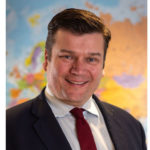
  • James Heappey – 2022 Statement on Ukraine

    James Heappey – 2022 Statement on Ukraine

    The statement made by James Heappey, the Minister for the Armed Forces and Veterans, in the House of Commons on 22 September 2022.

    I beg to move,

    That this House has considered the situation in Ukraine.

    This is a timely debate. Since my right hon. Friend the Defence Secretary last updated the House on 5 September, the Ukrainian army’s counter-offensive has made rapid progress along three axes—west, north and east of Kherson. In lightning advances through the eastern region of Kharkiv, the cities of Izyum and Balakliya have been liberated. In the east of Kharkiv Oblast, Ukraine has now secured bridgeheads on the east bank of the Oskil river where Russia is attempting to consolidate its defences. Most recently, the Ukrainian authorities report that a village close to the eastern city of Lysychansk has been recaptured. That is a significant achievement as it means that Russia no longer has full control of the Luhansk region—the self-proclaimed “people’s republic”.

    So far, Kyiv says that as much 6,000 sq km of territory has been recaptured. Russia’s forces withdrew from the region in the face of the Ukrainian advance, while a significant number of troops deserted or surrendered. The withdrawal was anything but orderly, with large quantities of munitions and equipment abandoned. Russian airborne forces have also suffered substantial losses and fear being cut off from the main Russian force. As the Russian army attempts to consolidate on a new defensive line, poor logistics mean that its troops are without food and supplies, morale continues to plummet, and the Kremlin is worried about how to stop widespread desertion.

    On day 211 of a five-day operation, none of Russia’s initial objectives has been achieved. Its attempt to take Kyiv was thwarted. Its efforts to weaken NATO have backfired. Indeed, with Finland and Sweden joining, as a direct result of Russia’s aggression against its neighbours, the alliance has never been stronger. Not only do Russian casualties continue to climb, with an estimated 25,000 Russian dead, but tens of thousands have been injured and tens of thousands more have already deserted. Russia’s war machine is now severely depleted, with more than 3,000 armoured and protected vehicles destroyed, more than 400 artillery pieces decimated and scores of fixed-wing aircraft, helicopters and unmanned aerial vehicles downed.

    Seven months into this conflict, Russia lacks sufficient manpower in the field to achieve any of its objectives and the mood of Moscow is changing. Voices from across Russian society are speaking out against the military command and making barely veiled criticism of Putin himself. The reality is that Ukraine is winning. That is the context in which we should understand Putin’s latest escalation yesterday.

    Mr Toby Perkins (Chesterfield) (Lab)

    The Minister spoke about the mood in Moscow. We saw President Putin’s ludicrous recent announcement that he would consider any attack on any areas that he now considered Russian to be an attack that could be met with a nuclear response. Will the Minister reaffirm the conviction of this House that we will not be bullied by President Putin, that the Ukrainians have our complete support and that, if Putin wants to bring an end to this violence, he can do so at any moment—

    Madam Deputy Speaker (Dame Eleanor Laing)

    Order. I think the Minister has got it.

    James Heappey

    Thank you, Madam Deputy Speaker, but the hon. Gentleman is absolutely right: the nuclear sabre-rattling—that is what it is—is the act of a desperate man who knows that this is not going his way. We will not be deterred from doing what we have done so successfully for the past nine months.

    Bob Seely (Isle of Wight) (Con)

    My right hon. Friend speaks of sabre-rattling. Clearly, there is a great deal of bluff and threat and Putin is trying to break the alliance between Kyiv and the west. Are the Government saying that it is their belief that this is purely bluff?

    James Heappey

    My hon. Friend, more than anybody in the House perhaps, will know that the Government’s exact intelligence assessment is not something to be shared in the House. However, as I said in response to the previous intervention, we believe it is sabre-rattling and that it is designed to drive a wedge into the cohesion of the western alliance and to deter us from supporting Ukraine at the exact moment when Ukrainian troops seem to have the upper hand.

    Sir Iain Duncan Smith (Chingford and Woodford Green) (Con)

    If I may pursue that a little further, we have always known that Russia sees what we used to call tactical nuclear weapons as war-fighting weapons rather than strategic ones. Although NATO has said it will not be bullied, in truth, NATO is not directly involved in this conflict. What does my right hon. Friend think might happen if Russia were to use one of those weapons as a way of deterring it? What does that do to the alliance’s position?

    James Heappey

    I hope my right hon. Friend will allow me, but I am not going to discuss nuclear doctrine at the Dispatch Box.

    Sir Bernard Jenkin (Harwich and North Essex) (Con)

    In response to the intervention by the hon. Member for Chesterfield (Mr Perkins) about not being bullied, what discussions are the UK Government having with our American counterparts, who are saying they want a negotiation without specifying what the baseline of the negotiation is? Will we be making it clear that the baseline is that Russia has to get out of all occupied Ukraine as the basis for the negotiation?

    James Heappey

    I suspect my hon. Friend knows that we speak to our American and Ukrainian counterparts daily at every level, from the military operational level through to heads of Government. The UK and the US are entirely aligned in their view that this ends on President Zelensky’s terms; it is for him to define what the end state is. I have heard nothing from Washington to suggest that that is not also their view.

    Dr Andrew Murrison (South West Wiltshire) (Con)

    Nevertheless, will my right hon. Friend accept that unless we are going to defeat Russia in classical terms, which is unlikely and undesirable, there has to be an off-ramp to allow Putin to construct a narrative that will go down well among his population and through the media, which of course he controls? It is not acceptable to say that we cannot offer Putin something out of this that will enable him to save face and get whatever it is through with his population.

    James Heappey

    I am not sure I agree entirely with my right hon. Friend. If Putin were looking for an off-ramp, he has had plenty of opportunities to de-escalate and claim victory at some point along the route. In the 48 hours immediately following a mobilisation of Russian society—a clear escalation—I am certainly not going to stand here representing His Majesty’s Government and say that he deserves any further opportunities for an off-ramp, when he has made his decision on what should come next.

    Mr Tanmanjeet Singh Dhesi (Slough) (Lab)

    Recent shocking reports of war crimes and mass graves discovered in newly liberated areas of Ukraine are further evidence of the appalling conduct of Russian forces and the need to hold them to account. Can the Minister confirm what support our Government are providing to Ukrainian prosecutors and international efforts through the International Criminal Court to document, investigate and prosecute those crimes?

    James Heappey

    From memory, it is the Canadians who have taken the lead on that internationally, but the Ministry of Justice is engaged in supporting their efforts. Obviously, as we work with the Ukrainians and see evidence of those outrages, through the closeness of our relationship and the way we are sharing information so freely, we are passing the information on outrages, when we find them, to the appropriate international bodies to ensure that they are prosecuted.

    Jim Shannon (Strangford) (DUP) rose—

    James Heappey

    I would like to make some progress if I may, but I will come to the hon. Gentleman later.

    Vladimir Putin has been forced to announce a partial mobilisation, breaking his own promise not to mobilise parts of his population. He has brought in amendments to the criminal code, increasing penalties for desertion, surrender and refusal to fight, and he has agreed to imminent sham referendums in Luhansk, Donetsk, Kherson and Zaporizhzhia, effectively annexing those territories.

    Russia is unlikely to be able to muster the 300,000 mobilised reservists quickly, let alone deploy them as an effective fighting force. Indeed, Putin’s remarks sparked mass panic in Russia yesterday, with one-way flights out of Moscow immediately selling out. Putin is rattled and his tactics transparent. He is implicitly acknowledging his heavy losses and his armed forces’ inability to achieve any of their objectives. His false narratives, escalatory rhetoric and nuclear sabre-rattling are all, bluntly, admissions of failure.

    It is clear that Putin and his Defence Minister have backed themselves into a corner. They have sent tens of thousands of their own citizens to their deaths, ill-equipped and badly led, and they are now to send hundreds of thousands more—with little training and no winter uniform—into the teeth of the Ukrainian winter against an opponent that is motivated, well equipped and succeeding. Neither Putin’s nor Shoigu’s lies, threats and propaganda can disguise the truth: Russian conscripts are going to suffer horribly for the Kremlin’s hubris.

    Margaret Ferrier (Rutherglen and Hamilton West) (Ind)

    A key consideration as Russia mobilises will be atrocity prevention. That will be essential. Will the Minister ask the Prime Minister to make it a matter for the National Security Secretariat and ensure that it is at the very heart of the UK’s strategy?

    James Heappey

    The straight answer is that atrocity prevention has always been at the centre of our strategy, trying to deny the Russians the ability to take Ukrainian territory in order to commit those atrocities. Our priority since Ukrainian territory has been taken is to give the Ukrainians the means to retake that territory as quickly as possible, so that they can get in there and investigate what has been done.

    Jim Shannon

    I reinforce what the Minister has said, but I also want to outline the human rights issue and all the atrocities taking place in the occupied territory. For instance, 400 Baptist churches have been destroyed and pastors of Baptist churches have gone missing—they have disappeared and we do not know where they are. Families have been displaced and believers have had to move. That is an example of the barbarity and violence of the Russians against churches and against the right to freedom of religious belief.

    James Heappey

    The hon. Gentleman is absolutely right and I know he speaks with real conviction on matters of freedom of religion. It is extraordinary to me, every day that we read of a recaptured town or village, to hear what has been happening, on our continent, in 2022. It is all the motivation we need to maintain course and speed and keep doing what we are doing to support Ukraine so it can retake its territory as quickly as possible.

    Alex Chalk (Cheltenham) (Con)

    As the Kremlin grows more desperate, the disinformation grows more dishonest. What more can we do to ensure that the false narrative the Kremlin is seeking to peddle—namely, the complete dishonesty and fallacy that there are NATO troops in Ukraine—is entirely exposed for the sham that it is?

    James Heappey

    I think we have been clear throughout that NATO is not an active participant in this conflict. Putin tries to claim daily on Russian television that it is, but in reality, all that NATO has done as an organisation since February is to reinforce its eastern flank to guard against contagion in the conflict. It is purely a false narrative peddled by President Putin to say anything otherwise.

    Mrs Sheryll Murray (South East Cornwall) (Con)

    Will my hon. Friend join me in welcoming the safe return of the Ukrainian prisoners of war, including the five British nationals?

    James Heappey

    I absolutely will. I place on the record our enormous gratitude to the Ukrainian Government, for it is they who negotiated that release. We are hugely grateful to them for doing so.

    In the face of—

    Alicia Kearns (Rutland and Melton) (Con)

    Will my hon. Friend give way?

    James Heappey

    I was nearly there. I will give way one last time.

    Alicia Kearns

    I thank my right hon. Friend for that point about the hostages. However, Paul Urey’s family will have found yesterday incredibly difficult because he did not come home alive. Will the Minister please reassure me that the Government are doing all they can to hold Russian proxies to account for Paul Urey’s murder—it was exactly that—by a state?

    James Heappey

    We certainly are doing all we can. If my hon. Friend has any particular concerns, I would be very happy to meet her to discuss them.

    Philip Dunne (Ludlow) (Con)

    Will my hon. Friend give way?

    James Heappey

    One last time.

    Philip Dunne

    I am most grateful to my right hon. Friend for giving way just before he winds up. The Prime Minister reconfirmed earlier this week the United Kingdom’s leadership across the western alliance in undertaking that the British Government would maintain their commitment to supporting the Ukrainian Government with both munitions and finance. Before he finishes, is there anything the Minister could add to her statement to elaborate on what that means?

    James Heappey

    Oh that I were approaching the wind- up of my speech—although I will attempt to accelerate. The detail that my right hon. Friend is hoping for is a few pages away: we will get to it.

    In the face of such irresponsible language, we must show our resolve. Ukraine and the international community will never accept the outcomes of those referendums. The UK, alongside the international community, stands united behind Ukraine, and we will continue to do all we can to support it. Russia must be held to account for its illegal invasion and continued crimes against humanity.

    As we have already discussed, the evidence of these crimes continues to mount. Within the past week, the Kremlin has fired long-range missiles at Kharkiv and used missiles to strike Pivdennoukrainsk, Ukraine’s second largest nuclear power plant. A dam on the Inhulets river at Kryvyi Rih has been attacked for no ostensible military value, and a psychiatric hospital has been fired on, killing patients and medics. In the pine forests of Izyum, we have seen once more appalling evidence of war crimes—as we seem to every time Russian troops are driven out of an area.

    So far, the UN has verified that at least 5,916 civilians have died, including, sadly, 379 children. The complete toll is almost certainly higher and millions more have been displaced because of Putin’s actions. Meanwhile, Russia’s reckless behaviour around the Zaporizhzhia nuclear plant—the biggest of its kind in Europe—has continued. Currently, all six of the plant’s nuclear reactors are offline, and the situation remains precarious despite repair to one of the power plant’s power lines, which provides vital electricity to cool the reactors.

    Putin’s callous actions are having a devastating effect not just inside Ukraine. Russia’s weaponisation of Ukrainian grain supply has had global ramifications, undermining food security and causing rising food prices. The brokering of the Black sea grain initiative between the UN and Turkey—assisted by the UK’s diplomatic efforts—is now having an impact. To date, some 165 ships bound for Europe, the middle east, Africa and Asia have left Ukrainian ports, carrying around 3.7 million tonnes of food.

    Dr Luke Evans (Bosworth) (Con)

    Will my hon. Friend give way?

    James Heappey

    If my hon. Friend will forgive me, I will make progress just so that I do not test Madam Deputy Speaker’s patience.

    That has in turn precipitated a drop in global food prices, but it is essential that the current deal is extended beyond its initial 120 days and that Russia does not renege on that agreement. Unsurprisingly, food security is high on the agenda as world leaders meet at the United Nations General Assembly in New York this week. Russian aggression is causing hundreds of millions of people in the global south to go hungry, or even starve. Putin must answer for that.

    The destructive effects of Putin’s war underline why it is essential that it ends on President Zelensky’s terms, and why the UK must maintain its unstinting support. The UK is proud to have been the first European country to provide weapons to Ukraine, and proud of our efforts to help it to defend itself from land, sea and air. To enable our Ukrainian friends to better protect themselves against Putin’s brutal use of long-range artillery, we have sent them the multiple-launch rocket system with hundreds of missiles, which can strike targets up to 80 km away with pinpoint accuracy. These continue to have a major impact on the battlefield. I place on the record the UK’s thanks to Norway, which donated three platforms to the UK, enabling us to send more of our own platforms to Ukraine.

    To date, we have also gifted more than 10,000 anti-tank missiles, almost 200 armoured vehicles, 2,600 anti-structure munitions, almost 100,000 rounds of artillery ammunition, nearly 3 million rounds of small arms ammunition, 28 M109 155 mm self-propelled guns, 36 L119 105mm light artillery guns and ammunition, 4.5 tonnes of plastic explosives, maritime Brimstone missiles, six Stormer air defence armoured fighting vehicles fitted with Starstreak anti-air missiles and hundreds of missiles, and thousands of integrated air defence systems, uncrewed systems and innovative new electronic warfare equipment. We have also deployed a British Army squadron with Challenger 2 tanks to Poland to backfill for the T-72 tanks that Poland has donated to Ukraine.

    The funding package that we announced on 30 June is being used to deliver further matériel, including more than 100 logistics support vehicles, more armoured fighting vehicles, a further 600 short range air defence missiles, an additional 30,000 rounds of artillery ammunition, more integrated air defence systems, uncrewed systems and innovative new electronic warfare equipment, and more than 20,000 sets of winter clothing. In all, the UK has spent £2.3 billion, and is the second largest donor in the world.

    Mr Clive Betts (Sheffield South East) (Lab)

    I thank the Minister for giving way. I think there is strong cross-party support for the assistance that the British Government have given. The Ukrainians themselves say that they want longer-range missiles and more tanks, particularly from Germany. What is the Government’s position on that, and what are they doing to encourage other countries to respond positively to those requests?

    James Heappey

    I speak to my Ukrainian counterpart each week—often numerous times a week—as does the Secretary of State. At the military level, we are speaking all the time. We have a good understanding of what the Ukrainians need, and in reality, it is all those things. There is a sort of baseline of ammunition to keep them in the fight tomorrow, the day after and the day after that. Then there are the things they need to build a force capable of retaking territory. We are working on delivering it all, not just by ourselves but with our partners around Europe. Ukraine will continue to get all the support that it needs as it seeks to mount a counter-offensive this autumn and beyond.

    Barbara Keeley (Worsley and Eccles South) (Lab)

    It is very important to the war effort in Ukraine that Ukrainian culture is seen and appreciated in the UK. Earlier this year, I raised with the previous Home Secretary, the right hon. Member for Witham (Priti Patel), the support needed to allow musicians from Ukraine, such as the Ukrainian Freedom Orchestra, to perform at the BBC Proms. That performance by the musicians who had fled the war in Ukraine was made possible by a visa fee waiver and support with visa processing. As there is now uncertainty, will the Minister discuss the issue with the Home Secretary so that she can confirm that that essential support will be extended to other Ukrainians who are looking to enter and perform in the UK?

    James Heappey

    I am grateful to have been asked to speak to the Home Secretary, because although I have some expertise on where in the world 152 mm ammunition is manufactured, that is something I had not heard of. I will speak to the Home Secretary and come back to the hon. Lady as quickly as I can.

    Wayne David (Caerphilly) (Lab)

    We all warmly support the effective military support that this country is giving to Ukraine, but is the Minister addressing the obvious depleting of our own reserves of available missiles?

    James Heappey

    We absolutely are. Under the previous Prime Minister and under the current one, the Treasury was given very clear instructions, which it has been delighted to follow, to replace everything that we give on a new-for-old deal. We are grateful to the Chancellor of the Exchequer for agreeing to that.

    John Spellar (Warley) (Lab)

    Providing the cash is very welcome and necessary, but is there not a fundamental problem with equipment manufacture and particularly supply chain vulnerabilities, which do not just apply to the UK? What steps is the Department taking to mobilise the defence industry and its supply chain to ensure that those obstacles are overcome, and rapidly, for our supply as well as Ukraine’s?

    James Heappey

    The right hon. Gentleman is absolutely right, and he is expert in these matters. It is certainly the case that countries have depleted their own stockpiles to support Ukraine, and as a result of a profoundly changed global security situation, everybody has committed more money to defence. Although that is great news for the defence industry in the medium term, it brings with it more demand than current manufacturing capacity can supply. The former Minister for Defence Procurement, my hon. Friend the Member for Horsham (Jeremy Quin)—sadly, he left the Ministry of Defence in the latest reshuffle, but he has been brilliantly replaced by the new one, my right hon. Friend the Member for Elmet and Rothwell (Alec Shelbrooke)—worked hard to make sure that that new manufacturing capacity is brought online as quickly as possible.

    Training is as important as military hardware. Here, too, the UK has been in the vanguard, busily establishing a network of camps to train 10,000 Ukrainians. This has been accompanied by specialist armed training across a number of countries in Europe. To date, we have trained more than 4,700 troops from the armed forces of Ukraine in the UK, and our units are being joined by forces from Sweden, Finland, Denmark, Lithuania, Canada, the Netherlands, Norway and New Zealand. Our training offer is already making a difference to Ukraine’s combat effectiveness, and it will continue for as long as Ukraine wishes.

    Ukraine has proven its capability not just to halt the invasion but to roll the Russians back. Those who contended that the support provided by the UK and our international partners was futile have been proven wrong, but Ukraine now needs more support to get through the winter, to push home its position of advantage and to recover its territorial integrity. That means helping Ukraine to replenish its stockpiles of equipment and ammunition as well as service its existing kit. It means helping Ukraine to plug its capability gap and refurbish the equipment captured in recent offensives. It also means making sure that as temperatures plummet to minus 20° and below, Ukrainian soldiers remain warm, well fed and motivated while Russian soldiers freeze without any concern from their leaders in the Kremlin.

    At the beginning of August, at the invitation of the Danish Government, the Secretary of State co-chaired a conference to discuss further support for Ukraine on training, equipment and funding. At that conference, the Defence Secretary announced that the UK would establish an international fund for Ukraine to ensure the continued supply of essential military support throughout 2023. Last week, partner nations met again to reaffirm our commitment to supporting Ukraine for as long as it takes, and to maintaining momentum on planning and co-ordinating our continued support to Ukraine throughout the next year.

    In addition, the Prime Minister, speaking at the UN General Assembly, has pledged that this Government will match or exceed the £2.3 billion of support that the UK has given to Ukraine since February. This further cements our leadership internationally and our resolve to stand behind Ukraine as it retakes sovereign territory currently occupied by the Russians.

    It is vital that we maintain our momentum in support of Ukraine. There will inevitably be those who, given the rising impacts of Putin’s weaponisation of energy, argue that we should seek to normalise relations with the Kremlin on Putin’s terms and return everything to the way it was, but we must be honest with the public. We cannot succumb to Putin’s scaremongering and threats of blackmail. This Government are doing everything they can do address the energy crisis, and on Wednesday my right hon. Friend the Business Secretary brought forward an unprecedented package of measures to address those issues.

    Dr Liam Fox (North Somerset) (Con)

    Will my right hon. Friend make it very clear that however this war ends, Putin and his henchmen who are responsible for it can never escape from the sanctions imposed on them personally, and those responsible for war crimes will be held accountable for their actions?

    James Heappey

    On the last point, I can certainly confirm to my right hon. Friend that there is every intention to make sure that people are held fully to account for the outrages that they committed or that were committed in their name. On his former point about the ongoing imposition of sanctions against those who were involved, I know that colleagues from the Foreign Office and the Treasury will be keen to make sure that that is absolutely the case.

    What we cannot do is turn back the clock. The consequences of appeasing Putin would be catastrophic not just for Ukraine, but for security in the Euratlantic as a whole. Russia would continue to threaten the prosperity of the UK and its allies, and indeed the entire rules-based international system.

    We should not assume that Putin’s ambitions would stop at Ukraine. If we fail to maintain western resolve, Putin could seek to expand his ambitions beyond Ukraine and into NATO territory in the Baltics or against our other partners. An emboldened Russia would also mean an emboldened President Xi in China. In other words, relaxing our resolve would make the next 20 years on our planet far more uncomfortable, dangerous and expensive.

    It is therefore to the enormous credit of the British public that in the face of significant personal financial challenge, they continue to overwhelmingly support the Ukrainian war effort. Their support sends a more powerful message to Putin than anything I, or any other Minister, could say from the Dispatch Box. Let us make no mistake: His Majesty’s Government will not falter and Putin’s latest pronouncements will not change our course. We will continue to stand up for and with Ukraine for as long as it takes. We will continue to provide the Ukrainian people with all the support they need to rid their land of the Russian occupiers.

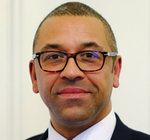
  • James Cleverly – 2022 Statement on Ukrainian Prisoners of War

    James Cleverly – 2022 Statement on Ukrainian Prisoners of War

    The statement made by James Cleverly, the Foreign Secretary, on 21 September 2022.

    I welcome the safe return of Ukrainian prisoners of war and one civilian, including five British nationals. Prisoners of war from other countries held by Russia-backed proxies have also been returned. This brings to an end many months of uncertainty and suffering, including the threat of the death penalty, for them and their families, at the hands of Russia.

    Tragically that was not the case for one of those detained and our thoughts remain with the family of Paul Urey.

    I would like to express my gratitude to President Zelenskyy and his team for their efforts to secure their release, and to HRH Crown Prince of Saudi Arabia, Mohammed bin Salman and his team, for their assistance. I continue to call on Russia to comply with International Humanitarian Law and not exploit prisoners of war and civilian detainees for political purposes.

  • James Cleverly – 2022 Comments on Russia’s Invasion on Ukraine

    James Cleverly – 2022 Comments on Russia’s Invasion on Ukraine

    The comments made by James Cleverly, the Foreign Secretary, on 20 September 2022.

    We live in an increasingly unstable, divided world. As Foreign Secretary, I will work to bring countries together to tackle aggression, overcome challenges and promote our democratic values. We will judge others on actions not words.

    Every day the devastating consequences of Russia’s barbaric tactics become clearer. There must be no impunity for Putin’s hostility.

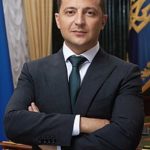
  • Volodymyr Zelenskyy – 2022 Statement on the Situation in Ukraine (18/09/2022) – 207 days

    Volodymyr Zelenskyy – 2022 Statement on the Situation in Ukraine (18/09/2022) – 207 days

    The statement made by Volodymyr Zelenskyy, the President of Ukraine, on 18 September 2022.

    Good health to you, fellow Ukrainians!

    I started this day, as always, with a morning conference call.

    The Commander-in-Chief, the Minister of Internal Affairs, the heads of intelligence, the Minister of Defense, the Minister of Infrastructure, the Ministry of Foreign Affairs, the Secretary of the National Security and Defense Council, the Security Service, the Head of the Office, “Ukroboronprom” and some others who are responsible for the most important areas of assistance to our defenders.

    This is how my day starts. Often – with the same questions, often – with similar answers. And this is always the time for the most important words for Ukraine.

    Izyum, Balakliya, Kupyansk and the Kharkiv region in general are the cities and communities that we have liberated. These words are heard now. They are heard everywhere.

    Mariupol, Melitopol and Kherson are also heard, but they will sound even more often and louder when we liberate them.

    Donetsk, Horlivka and Luhansk – they will be heard as well. Dzhankoy, Yevpatoriya, Yalta – and they will, too. Definitely.

    We do not talk about what’s not ours. Only our words, Ukrainian words, sound.

    Every morning, every afternoon, every evening, every night – for 207 days already.

    They sound thanks to the Armed Forces of Ukraine, thanks to the Special Operations Forces, thanks to the Main Intelligence Directorate, thanks to the Security Service of Ukraine, thanks to the territorial defense, thanks to the border guards and the entire system of the Ministry of Internal Affairs – from the National Guard and the National Police to the rescuers of the State Emergency Service.

    The most important words that are heard thanks to our medical workers and transporters, thanks to energy workers and volunteers, thanks to fighters of the information front and educators, thanks to diplomats and many others who do their job in a way that makes us all stronger. Strengthens our ability to fight and win.

    Perhaps it seems to someone now that after a series of victories we have a certain lull. But this is not a lull.

    This is preparation for the next sequence. For the next sequence of words that are very important to us all and that definitely must be heard.

    Because Ukraine must be free – the whole of it.

    And in conclusion, as always, words that sound and will always sound. They are heard by us, they will be heard by our children, they will be heard by our grandchildren. They will be heard in free Ukraine.

    Eternal glory to all our heroes!

    Glory to Ukraine!

  • Volodymyr Zelenskyy – 2022 Statement on the Situation in Ukraine (16/09/2022) – 205 days

    Volodymyr Zelenskyy – 2022 Statement on the Situation in Ukraine (16/09/2022) – 205 days

    The statement made by Volodymyr Zelenskyy, the President of Ukraine, on 16 September 2022.

    Dear Ukrainians!

    In Kharkiv region, investigative actions are ongoing in the areas that were liberated from the Russian occupation.

    All the crimes of the Ruscists are being recorded, evidence of their guilt is being collected.

    Torture chambers where civilians of occupied cities and towns were abused, premises where people were kept – even foreigners – were found. In particular, seven citizens of the Republic of Sri Lanka, students of the Kupyansk Medical College. Back in March, they were captured by Russian soldiers and subsequently kept these people in the basement. Only now, after the liberation of Kharkiv region, these people were saved, they are provided with proper medical care.

    Exhumation of bodies continues at a mass burial site near Izium. As of now, more than 440 graves have been found. It is too early to say about the number of people buried there, investigations are ongoing.

    There is already clear evidence of torture, humiliating treatment of people… Moreover, there is evidence that Russian soldiers, whose positions were not far from this place, shot at the buried just for fun.

    The world must react to all this. Russia has repeated in Izium what it did in Bucha. And now we have just begun to learn the full truth about what was happening in Kharkiv region at that time.

    It is good that the UN units are already preparing a group of employees who will visit this place near Izium, who will see and be able to report to everyone in the UN system about what the Russian terrorists did.

    We will ensure full access of journalists to the liberated territory and all places of human abuse. We will provide access to tell the world that ruscism must be condemned.

    I thank all our partners, all leaders and just our ordinary people who help fight for justice. Fight for the official recognition of Russia as a state sponsor of terrorism, for the strengthening of sanctions against Russia for this terror.

    I held a meeting of the Supreme Commander-in-Chief Headquarters today. As always, key leaders of the defense and security sector, key representatives of the central government, who ensure the implementation of the defense plan, attended it. Commanders of operative forces reported on the situation on the front line. In addition to completely understandable issues and solutions, the topic of advanced weapons, which will significantly strengthen our army, was also touched upon.

    I spoke today with the President of Finland. I thanked us for the support we have already received and outlined the additional needs we have. An important topic of conversation was the European policy regarding visas for citizens of the terrorist state. I believe that for every country that shares a common border with Russia, the visa issue is vital and should be resolved in favor of a complete restriction of access for Russian citizens.

    I also spoke today with representatives of the Nike company. I thanked them for the decision to leave the Russian market. The right decision. This is an example of how business can play a significant role in protecting humanity and freedom. If a state chooses the path of terror, it is the duty of every self-respecting company to distance itself from such a state.

    Today, a meeting of the group led by Andriy Yermak working on Ukraine’s accession to the Organisation for Economic Co-operation and Development took place in the Office, a meeting with the G7 ambassadors and other partner states. This is an extremely important direction, which is important both in the context of European integration and in the context of the internal transformation of our state. During the meeting, the diplomats were given the details of our initiative to create an ad hoc international tribunal to punish Russia for the crime of aggression against Ukraine. I’m thankful to the G7 representatives and other partner countries for their willingness to support Ukraine!

    And one more thing. This Saturday we celebrate Rescuer’s Day – a professional holiday of those who dedicated their lives to saving others. And it is also the day of those who, under certain circumstances and thanks to their decency and courage, became a rescuer by helping someone else. Today, I honored such people with state awards. And, of course, tomorrow in the evening address I will say more about it. But I want right now, without waiting for tomorrow evening, to congratulate everyone who performs this noble work, who saves people. I want to thank you for the thousands of saved lives, for the security you are returning to us, all Ukrainians.

    Eternal glory to all who care about people! Please always help each other, always keep unity in everything. We must stick together, all Ukrainians, and that’s how we will win.

    Glory to Ukraine!

  • Volodymyr Zelenskyy – 2022 Statement on the Situation in Ukraine (15/09/2022) – 204 days

    Volodymyr Zelenskyy – 2022 Statement on the Situation in Ukraine (15/09/2022) – 204 days

    The statement made by Volodymyr Zelenskyy, the President of Ukraine, on 15 September 2022.

    Good health to you, fellow Ukrainians!

    Today in Kyiv, a new plaque dedicated to President of the European Commission Ursula von der Leyen was unveiled on the Walk of the Brave. It was really a great honor and simply a pleasure for me to take part in this unveiling, in the recognition of Mrs. Ursula’s bravery. She is one of the central figures of the European policy towards Ukraine, she is one of those thanks to whom the European space and European values are now really being protected.

    Today Mrs. Ursula has visited our country for the third time since February 24. And every time her visits open a new stage in the rapprochement of Ukraine and the European Union. We discussed all the key points in our relations. But now I want to highlight the issue of integration, the movement of our country towards full membership in the EU.

    Whatever the circumstances, we will still implement every detail of our arrangements to open the possibility of membership negotiations. Already in November, we are to fulfill the seven recommendations of the European Commission, which we received when we obtained the candidate status. The assessment by the European Commission of our progress in integration should begin as soon as possible. And next year, we should clarify the key issue: when we can start membership negotiations. The Ukrainian side will do everything for this. And as elements of rapprochement, we consider such things as the regime of the EU internal market for Ukraine, as the unification of our institutional work, for example, at customs – in joint customs control between Ukraine and EU countries. We are already working on this.

    Today I thanked Mrs. Ursula for the support already provided – macro-financial, sanctions, defense. We also discussed energy cooperation, which is extremely important for Ukraine and for every EU country on the eve of this winter, which Russia will try to use against all of us in Europe.

    I told about a new and particularly vile tactic of Russian terrorists – attacks on energy and hydrotechnical infrastructure. Just during the stay of the President of the European Commission in Ukraine, the Russian army launched new missile attacks on Kryvyi Rih, on the Kirovohrad region. In both cases – on hydrotechnical structures. The purpose of these strikes is completely clear. These are attacks on people, on the normality of life in Ukraine. The terrorist state is trying to show that it can allegedly compensate with such strikes for the cowardice and incompetence of its military, for the failure of its efforts to avoid sanctions and economic isolation.

    In response, we must show that there will always be a tough and principled reaction to every manifestation of Russian terror. That is why the eighth EU sanctions package is needed – we talked about it with Mrs. Ursula. A principled decision by the United States of America regarding the terrorist state, the legal recognition of this status is also needed, and we discussed this, by the way, recently during the visit of US Secretary of State Antony Blinken to Kyiv. We also discuss this issue during contacts with congressmen.

    Progress is needed in providing Ukraine with air defense systems. We already have agreements with certain countries, our diplomats are working with others. I want to emphasize that without providing us with a sufficient number of sufficiently effective air defense systems that will protect the Ukrainian skies, Russia will continue to feel impunity and provoke new local and global crises. Therefore, protecting Ukraine from Russian missiles is truly a basic element of global security.

    In general, supporting Ukraine with weapons, ammunition and finances is crucial for peace in Europe. The better support we have, the sooner this war will end. I talked about it with the representatives of the leading think tanks of Poland, Britain, France and the US who arrived in Kyiv. Real protection of freedom and common values of the free world is possible now only as a result of Ukraine’s victory in this war.

    I also spoke about further support for Ukraine with Canadian Prime Minister Justin Trudeau. As always, very substantive, specific. We discussed various security issues, including Russian missile strikes, defense assistance, training of our military, prospects for the developments on the battlefield, restoration of critical infrastructure before the winter period. I am grateful to Mr. Prime Minister for the support already provided to us, in particular financial, for the funds for the purchase of gas. And for understanding the steps we need to take to ruin Russia’s terrorist plans.

    An important IAEA resolution was adopted today – a resolution demanding that Russia cease all actions against the Zaporizhzhia nuclear power plant at the plant itself, at any other nuclear facility in Ukraine. Although international organizations are often limited in their ability to respond, we see that the IAEA clearly identifies the source of radiation danger, namely: the Russian military presence at the Zaporizhzhia power plant, Russian actions against the nuclear power plant. Therefore, the complete demilitarization of the plant, the immediate withdrawal of all Russian troops from there is the only thing that can ensure the implementation of this IAEA resolution. And this is also a basic element of global security. As long as Russian soldiers remain at the nuclear power plant, the world remains on the brink of a radiation disaster – worse than even Chornobyl. And it is the joint responsibility of everyone in Europe and the world – to remove the Russian presence from the territory of the ZNPP.

    Today I want to thank all the representatives of the State Emergency Service, utility services, construction workers, police officers, military personnel, representatives of local authorities, business representatives – everyone who is involved in eliminating the consequences of Russian missile terror, who helps those who suffered from the strikes. In Kryvyi Rih and the Kirovohrad region, in Kharkiv and Zaporizhzhia, in Mykolaiv and the Donetsk region – in all the cities and communities that Russia tortures with its missiles.

    The terrorist state has already used more than 3,800 different missiles against us. But no missile will bring Russia closer to its goal. There will be no subjugation of Ukraine. And each missile brings Russia closer to greater international isolation, greater economic degradation and even clearer historical condemnation.

    And finally. A mass burial site was found in Izyum, Kharkiv region. The necessary procedural actions have already begun there. There should be more information – clear, verified information – tomorrow. Tomorrow there will be Ukrainian and international journalists in Izyum. We want the world to know what is really happening and what the Russian occupation has led to. Bucha, Mariupol, now, unfortunately, Izyum… Russia leaves death everywhere. And it must be held accountable for that. The world must hold Russia to real account for this war. We will do everything for this.

    Eternal memory to all those whose lives were taken away by the occupiers! Eternal glory to everyone who fights for Ukraine!

    Glory to Ukraine!

  • Volodymyr Zelenskyy – 2022 Statement on the Situation in Ukraine (14/09/2022) – 203 days

    Volodymyr Zelenskyy – 2022 Statement on the Situation in Ukraine (14/09/2022) – 203 days

    The statement made by Volodymyr Zelenskyy, the President of Ukraine, on 14 September 2022.

    Ukrainians!

    I’ve returned from the Kharkiv region – from our Kharkiv region, from the districts that were liberated.

    As of today, almost the entire region is de-occupied. It was an unprecedented movement of our warriors – Ukrainians once again managed to do what many considered impossible. On the first day of active operations alone, our troops advanced 19 kilometers. 110 kilometers were covered in five days of fighting. In total, almost 400 settlements were de-occupied. The 150,000 Ukrainians who remained in this territory feel again now what an ordinary, safe, normal life is like.

    The Russian army has been in the Kharkiv region for more than five months. And during this time, the occupiers did not even try to do anything for the people. They only destroyed, only deprived, only took away. They left behind devastated villages, and in some of them there is not a single undamaged house. The occupiers left schools turned into garbage dumps, and churches – broken, literally turned into toilets.

    Journalists – both Ukrainian and foreign journalists – gained access to the liberated areas. The world must see this destruction, must feel the pain that Russia has brought to Ukrainians. Our law enforcement officers already receive reports of murders, tortures and abductions by the occupiers. What the world saw in Bucha, what we saw in the de-occupied territory of the Chernihiv region, Sumy region, and what we are seeing now in the Kharkiv region are evidence of genocide against Ukrainians. Evidence that Russia cannot bring anything else except for genocide.

    And I will speak in Russian to “comrades”.

    Your missile attacks today, Russian missiles targeting Kryvyi Rih, the dam of the Karachunivske Reservoir, the objects that have no military value at all, in fact hitting hundreds of thousands of ordinary civilians, is another reason why Russia will lose. And not just this war, but history itself.

    History is written by people, never by savages. Who will you remain in history? All those who launch these missiles. Those who came to our land. Weaklings. You are weaklings waging a war against civilians. Scoundrels who, having fled the battlefield, are trying to do harm from somewhere far away. You will remain terrorists whom their own grandchildren will be ashamed of.

    Events show that the only way out for Russian soldiers is to surrender to Ukrainian forces. This is the only option that guarantees them life and attitude in accordance with all conventions. Every Russian soldier should have already understood that only in Ukrainian captivity will no one use him as cannon fodder in a war that is obviously losing for Russia.

    At the site of the missile attack on Kryvyi Rih, everything is being done to eliminate the consequences of this yet another Russian vile act. A vile act, which may please insane Russian propagandists, but will certainly not save the moral and psychological state of Russian soldiers. They understood that the Russian command is incompetent, and that a rout awaits them in Ukraine on all fronts. Russia will not fix this with any terror, as terror only confirms the weakness of the one who resorts to it.

    Today in Izyum, I awarded our heroes. It was an honor for me to present state awards on this very land to those who liberated this land. I am grateful to the warriors of the 14th and 92nd separate mechanized brigades, the 25th separate airborne brigade, the 80th separate airborne assault brigade – everyone who in just five days forced the enemy to retreat in panic, abandoning equipment, ammunition, numerous Russian flags. I am grateful to the 107th MLRS brigade, the 40th, 43rd, 44th separate artillery brigades, the 26th artillery brigade. I want to thank the 15th separate artillery reconnaissance brigade – all the warriors who ensured the timely destruction of enemy targets and the advance of our ground units. And, of course, I am grateful to the fighters of the Main Intelligence Directorate, all who skillfully turned the enemy’s panic into real hysteria.

    I am grateful to Colonel-General Oleksandr Syrsky and the officers of his staff – everyone who planned and successfully conducted the military operation to liberate the Kharkiv region.

    The Ukrainian flag will return to all parts of our country. Just like in the Kharkiv region, Ukrainian warriors will be met in Donbas, in the south, and in Crimea. It will happen, it will definitely happen.

    I also held a meeting today in Kharkiv regarding the energy situation in the city and the region. We take into account the fact that the terrorist state can resort to any new vile acts. All levels of Ukrainian authorities – both central and local, rescue services, energy companies, transporters – are tasked with preparing for any scenarios. Reserves for energy, heat and water supply are needed – for all possible cases.

    We are preparing for tomorrow’s active day. We are waiting for the news from the frontline. There will be diplomatic news from Kyiv – President of the European Commission Ursula von der Leyen is paying a visit. Today was almost a Ukrainian day in Brussels. For the first time in the history of the European Union, a state from outside the EU was actually represented at a special session of the European Parliament during the annual State of the EU Report – this is our state. So far – from outside the EU. We are working for full membership – politically, legally, symbolically.

    The First Lady of Ukraine was present during this annual report of the President of the European Commission. We have an important result of this visit – one hundred million euros for the reconstruction of 74 schools in Ukraine in the framework of the Fast Recovery Plan. We will do everything to implement a large-scale social initiative – cancellation of roaming charges for our people in the EU and for Europeans in Ukraine. This will be a strong signal of our rapprochement. And I thank Mrs. Ursula von der Leyen, I thank all our friends in the European Union for their unwavering support.

    I am thankful to all our warriors! I am thankful to everyone who participates in the rescue operations after the Russian strikes. We will respond to the terrorists for each of their vile acts, for each missile, for each projectile. We are capable of that.

    Glory to Ukraine!

  • Volodymyr Zelenskyy – 2022 Statement on the Situation in Ukraine (13/09/2022) – 202 days

    Volodymyr Zelenskyy – 2022 Statement on the Situation in Ukraine (13/09/2022) – 202 days

    The statement made by Volodymyr Zelenskyy, the President of Ukraine, on 13 September 2022.

    Good health to you, fellow Ukrainians!

    Today I held another meeting of the Staff of the Supreme Commander-in-Chief. The participants, as before, are Reznikov, Zaluzhny, Syrsky, Kovalchuk, Litvinov, Yermak, Monastyrskyi, Kubrakov, Danilov, Lebid and others.

    The first and most important issue is the reports of commanders by direction. Oleksandr Syrsky reported on the successes in the Kharkiv region, Andriy Kovalchuk – on the movement of our troops in the south.

    We considered the draft budget for defense and security for the next year.

    The situation in the liberated territory of our state was analyzed in detail. As of now, stabilization measures have been completed in the districts with a total area of more than 4,000 square kilometers. Stabilization continues in the liberated territory of approximately the same size. Remnants of occupiers and sabotage groups are being detected, collaborators are being detained and full security is being restored.

    Border guards are tasked with protecting the state border in the liberated territory.

    Once again, I thank all our fighters who ensured such a large-scale and quick defeat of the invaders in the territory of the Kharkiv region!

    By the way, today I signed another decree on awarding our warriors. 153 combatants were awarded state awards, 12 of them posthumously. All – for bravery in the battles in the east of our country – in the Kharkiv region, in Donbas.

    It is very important that together with our troops, with our flag, ordinary normal life comes to the de-occupied territory. As an example, in Balakliya, in Hrakove, the payment of pensions for five months at once, for the time when we simply could not make payments due to the occupation, has already been started. And all Ukrainian pensioners in the liberated territory will receive payments. Ukraine always fulfills its social obligations to people.

    Today I held a meeting with the Defense Ministers of Denmark and Estonia who arrived in Kyiv. Of course, we talked about further support for our state, about further pressure on Russia. I thanked them for the principled and consistent help in protecting people’s freedom and life.

    I held negotiations with International Monetary Fund Managing Director Kristalina Georgieva. I thanked her for the allocation of $1.4 billion in additional support for our state. We discussed a new program of cooperation and, in general, the preservation of Ukraine’s financial stability.

    We have a result in our work on security guarantees for our state. Today, a package of recommendations was presented by the international group led by Andriy Yermak and Anders Fogh Rasmussen – these are the recommendations that should form the basis of the future system of security treaties that will give Ukrainians peace of mind and guarantee the prevention of any war against Ukraine.

    We are working to ensure that the strongest subjects of the free world become guarantors of the security of our state. So that at the multilateral and bilateral level, it is stipulated in detail who, how and when should react in case of any threat to the state security of Ukraine. React with sanctions, arms supply, all the necessary material and financial support.

    The main thing is clear and legally binding steps, specific and timely actions, in particular, preventive actions aimed at preventing war and cooling the aggressor’s intentions. That is, everything that our country did not have before and because of which Russia had the illusion it could go unpunished for the war against Ukraine.

    Together with our partners, we have already built a powerful anti-war coalition, which includes dozens of different states. And now we are working to ensure that the most powerful states that are already helping us become a coalition of peace that will last forever.

    I spoke today with Prime Minister of Italy Mario Draghi. I informed him about the situation on the frontline, about the successes of our state. We always note: in every victory of Ukraine there is also a victory of those who, together with us, defend freedom and European values. Italy is among the strongest.

    Mr. Draghi and I discussed the situation at the Zaporizhzhia nuclear power plant and the Russian provocations in great detail. Thank you for understanding that the demilitarization of the ZNPP is a fundamental condition for the return of radiation safety to all of us in Europe.

    I am grateful to everyone who helps our country expel the occupiers!

    I am grateful to each of our warriors who do everything to bring victory closer!

    Glory to Ukraine!

  • Volodymyr Zelenskyy – 2022 Statement on the Situation in Ukraine (12/09/2022) – 201 days

    Volodymyr Zelenskyy – 2022 Statement on the Situation in Ukraine (12/09/2022) – 201 days

    The statement made by Volodymyr Zelenskyy, the President of Ukraine, on 12 September 2022.

    Ukrainians!

    All Europeans!

    And everyone in the world who believes that terror should have no place on earth.

    Why is the biggest source of terror in the world – Russia – still able to wage this war? And why can it wage the war so cruelly and cynically? There is only one reason – insufficient pressure on Russia. The response to the terror of this state is insufficient.

    Just look at what Russia can afford. No other terrorist has ever done this in history – so many things at once.

    Radiation terror at the Zaporizhzhia nuclear power plant. Six power units! The presence of Russian troops at the plant, constant Russian provocations and shelling of the plant’s territory alone put Ukraine and all of Europe on the brink of a radiation disaster.

    Energy terror. Residents of many countries around the world are suffering due to the painful increase in prices for energy resources – for electricity, for heat. Russia does it deliberately. It deliberately destabilizes the gas market in Europe. With its strikes it deliberately limits our Ukrainian ability to export electricity to Europe. The export of electricity from Ukraine could alleviate the severity of the energy crisis in Europe in the same way that the export of our food relieves the severity of the food crisis in the world.

    Hunger terror is a very cynical and completely deliberate tactic of Russia. And it is directed not just against poor countries, but specifically against those regions of the world from which a new inflow of refugees may come to Europe. Severe migrant crisis in Europe – this is the calculation of the terrorist state.

    Fortunately, together with our partners, together with the UN, Turkey, we managed to achieve an export grain initiative. Russia was forced to unblock our ports. But now it is threatening a blockade again.

    And how does the world react? There is still no official recognition of Russia as a state – sponsor of terrorism. Citizens of the terrorist state can still travel to Europe for vacation or shopping, they can still get European visas, and no one knows whether there are torturers or murderers among them who have just returned from the occupied territory of Ukraine. Until now, Russian propagandists can still work precisely in those countries of Africa, Asia, Latin America, Europe, which are threatened with the greatest chaos due to price and energy crises created by Russia. We are still forced to ask for help in protecting our skies from Russian missiles – after 200 days of full-scale war!

    Yesterday and today, the Russian army struck the Ukrainian energy infrastructure. Hundreds of thousands of Ukrainians found themselves in the dark – without electricity. Houses, hospitals, schools, communal infrastructure… Russian missiles hit precisely those objects that have absolutely nothing to do with the infrastructure of the Armed Forces of our country.

    On the one hand, this is a sign of the desperation of those who invented this war. This is how they react to the defeat of Russian troops in the Kharkiv region. They can’t do anything to our heroes on the battlefield, and that’s why Russia is directing its vile strikes against civilian infrastructure.

    On the other hand, Russia is trying to prevent us from directing Ukraine’s capabilities in such a way as to stabilize the situation in Europe. Our electricity export is something that Russia is very afraid of right now. Because we can disrupt Russian plans to empty the pockets of Europeans this winter due to crazy energy prices.

    We still need to strengthen our cooperation in order to overcome Russian terror. Russia must be designated a terrorist state. Strengthen sanctions – the eighth EU sanctions package is needed. Increase aid to Ukraine, and above all speed up the provision of air defense systems.

    I am grateful to all the rescuers who fought the consequences of Russian missile strikes at energy facilities. Hundreds of settlements in several regions of Ukraine were cut off due to these strikes.

    At the request of the Minister of Internal Affairs, today I would like to especially note the contribution to the stabilization of the situation of Major General of the Civil Protection Service Oleksandr Volobuyev, Colonel of the Civil Protection Service Oleksandr Mislavskyi, Senior Lieutenant of the Civil Protection Service Vitaliy Dzyabko, Ensign of the Civil Protection Service Denys Kostenko and fireman, Ensign Oleksandr Gulyi. Thank you. I am grateful to you and your colleagues!

    The energy supply of the Dnipropetrovsk region, Poltava region, Sumy region, Kharkiv region and the city of Kharkiv was restored. But today there are new strikes at energy facilities. New blackouts in Kharkiv. And we must be aware that the meanness of Russian terrorists knows no bounds – they will try to make such a form of terror systematic.

    On my behalf, the Prime Minister of Ukraine held a meeting today with the Ministry of Energy, the Ministry of Territories and Communities Development of Ukraine, the Ministry of Finance and Naftogaz. A coordinating headquarters will be formed to quickly respond to all such manifestations of Russian terror. Funds will also be allocated for the restoration of damaged objects and for assistance to the de-occupied territories.

    From the beginning of September until today, our warriors have already liberated more than 6,000 square kilometers of the territory of Ukraine – in the east and south. The movement of our troops continues.

    I am thankful to the 57th separate motorized infantry brigade, which has recovered from heavy fighting in the east and is advancing very bravely, very confidently in the south direction.

    I am thankful to the 59th separate motorized infantry brigade for steadily moving forward despite everything – despite the features of the open terrain, despite the artillery of the occupiers.

    I am thankful to the fighters of the 128th separate mountain assault brigade for the liberation of several settlements and very effective actions to neutralize the enemy’s activity. Guys, you are true heroes!

    Separately, I want to thank our anti-aircraft fighters today. Yesterday, we all saw the consequences of the Russian strikes. But at the same time, most of the terrorists’ missiles were shot down. Nine of the twelve missiles were shot down. Seven missiles were shot down by warriors of the 138th Dnipro anti-aircraft missile brigade of the “East” air command, and two missiles were shot down by the sky defenders of the 96th Kyiv anti-aircraft missile brigade of the “Center” air command. Thank you, our defenders!

    Thank you to everyone who fights for Ukraine!

    Thank you to everyone who is really ready to fight against Russian terror!

    We bring victory closer every day.

    Glory to Ukraine!

  • Ursula von der Leyen – 2022 State of Union Address

    Ursula von der Leyen – 2022 State of Union Address

    The address made by Ursula von der Leyen, the President of the European Commission, on 14 September 2022.

    A UNION THAT STANDS STRONG TOGETHER

    INTRODUCTION

    Madam President,

    Honourable Members,

    My fellow Europeans,

    Never before has this Parliament debated the State of our Union with war raging on European soil.

    We all remember that fateful morning in late February.

    Europeans from across our Union woke up dismayed by what they saw. Shaken by the resurgent and ruthless face of evil. Haunted by the sounds of sirens and the sheer brutality of war.

    But from that very moment, a whole continent has risen in solidarity.

    At the border crossings where refugees found shelter. In our streets, filled with Ukrainian flags. In the classrooms, where Ukrainian children made new friends.

    From that very moment, Europeans neither hid nor hesitated.

    They found the courage to do the right thing.

    And from that very moment, our Union as a whole has risen to the occasion.

    Fifteen years ago, during the financial crisis, it took us years to find lasting solutions.

    A decade later, when the global pandemic hit, it took us only weeks.

    But this year, as soon as Russian troops crossed the border into Ukraine, our response was united, determined and immediate.

    And we should be proud of that.

    We have brought Europe’s inner strength back to the surface.

    And we will need all of this strength. The months ahead of us will not be easy. Be it for families who are struggling to make ends meet, or businesses, who are facing tough choices about their future.

    Let us be very clear: much is at stake here. Not just for Ukraine – but for all of Europe and the world at large.

    And we will be tested. Tested by those who want to exploit any kind of divisions between us.

    This is not only a war unleashed by Russia against Ukraine.

    This is a war on our energy, a war on our economy, a war on our values and a war on our future.

    This is about autocracy against democracy.

    And I stand here with the conviction that with courage and solidarity, Putin will fail and Europe will prevail.

    THE COURAGE TO STAND WITH OUR HEROES

    Honourable Members,

    Today – courage has a name, and that name is Ukraine.

    Courage has a face, the face of Ukrainian men and women who are standing up to Russian aggression.

    I remember a moment in the early weeks of the invasion. When the First Lady of Ukraine, Olena Zelenska, gathered the parents of Ukrainian children killed by the invader.

    Hundreds of families for whom the war will never end, and for whom life will never go back to what it was before.

    We saw the first Lady leading a silent crowd of heartbroken mothers and fathers, and hang small bells in the trees, one for every fallen child.

    And now the bells will ring forever in the wind, and forever, the innocent victims of this war will live in our memory.

    And she is here with us today!

    Dear Olena, it took immense courage to resist Putin’s cruelty.

    But you found that courage.

    And a nation of heroes has risen.

    Today, Ukraine stands strong because an entire country has fought street by street, home by home.

    Ukraine stands strong because people like your husband, President Zelenskyy, have stayed in Kyiv to lead the resistance – together with you and your children, dear First Lady.

    You have given courage to the whole nation. And we have seen in the last days the bravery of Ukrainians paying off.

    You have given voice to your people on the global stage.

    And you have given hope to all of us.

    So today we want to thank you and all Ukrainians.

    Glory to a country of European heroes. Slava Ukraini!

    Europe’s solidarity with Ukraine will remain unshakeable.

    From day one, Europe has stood at Ukraine’s side. With weapons. With funds. With hospitality for refugees. And with the toughest sanctions the world has ever seen.

    Russia’s financial sector is on life-support. We have cut off three quarters of Russia’s banking sector from international markets.

    Nearly one thousand international companies have left the country.

    The production of cars fell by three-quarters compared to last year. Aeroflot is grounding planes because there are no more spare parts. The Russian military is taking chips from dishwashers and refrigerators to fix their military hardware, because they ran out of semiconductors. Russia’s industry is in tatters.

    It is the Kremlin that has put Russia’s economy on the path to oblivion.

    This is the price for Putin’s trail of death and destruction.

    And I want to make it very clear, the sanctions are here to stay.

    This is the time for us to show resolve, not appeasement.

    The same is true for our financial support to Ukraine.

    So far Team Europe have provided more than 19 billion euros in financial assistance.

    And this is without counting our military support.

    And we are in it for the long haul.

    Ukraine’s reconstruction will require massive resources. For instance, Russian strikes have damaged or destroyed more than 70 schools.

    Half a million Ukrainian children have started their school year in the European Union. But many others inside Ukraine simply don’t have a classroom to go to.

    So today I am announcing that we will work with the First Lady to support the rehabilitation of damaged Ukrainian schools. And that is why we will provide 100 million euros. Because the future of Ukraine begins in its schools.

    We will not only support with finance – but also empower Ukraine to make the most of its potential.

    Ukraine is already a rising tech hub and home to many innovative young companies.

    So I want us to mobilise the full power of our Single Market to help accelerate growth and create opportunities.

    In March, we connected successfully Ukraine to our electricity grid. It was initially planned for 2024. But we did it within two weeks. And today, Ukraine is exporting electricity to us. I want to significantly expand this mutually beneficial trade.

    We have already suspended import duties on Ukrainian exports to the EU.

    We will bring Ukraine into our European free roaming area.

    Our solidarity lanes are a big success.

    And building on all that, the Commission will work with Ukraine to ensure seamless access to the Single Market. And vice-versa.

    Our Single Market is one of Europe’s greatest success stories. Now it’s time to make it a success story for our Ukrainian friends, too.

    And this is why I am going to Kyiv today, to discuss this in detail with President Zelenskyy.

    Honourable Members,

    One lesson from this war is we should have listened to those who know Putin.

    To Anna Politkovskaya and all the Russian journalists who exposed the crimes, and paid the ultimate price.

    To our friends in Ukraine, Moldova, Georgia, and to the opposition in Belarus.

    We should have listened to the voices inside our Union – in Poland, in the Baltics, and all across Central and Eastern Europe.

    They have been telling us for years that Putin would not stop.

    And they acted accordingly.

    Our friends in the Baltics have worked hard to end their dependency on Russia. They have invested in renewable energy, in LNG terminals, and in interconnectors.

    This costs a lot. But dependency on Russian fossil fuels comes at a much higher price.

    We have to get rid of this dependency all over Europe.

    Therefore we agreed on joint storage. We are at 84% now: we are overshooting our target.

    But unfortunately that will not be enough.

    We have diversified away from Russia to reliable suppliers. US, Norway, Algeria and others.

    Last year, Russian gas accounted for 40% of our gas imports. Today it’s down to 9% pipeline gas.

    But Russia keeps on actively manipulating our energy market. They prefer to flare the gas than to deliver it. This market is not functioning anymore.

    In addition the climate crisis is heavily weighing on our bills. Heat waves have boosted electricity demand. Droughts shut down hydro and nuclear plants.

    As a result, gas prices have risen by more than 10 times compared to before the pandemic.

    Making ends meet is becoming a source of anxiety for millions of businesses and households.

    But Europeans are also coping courageously with this.

    Workers in ceramics factories in central Italy, have decided to move their shifts to early morning, to benefit from lower energy prices.

    Just imagine the parents among them, having to leave home early, when the kids are still sleeping, because of a war they haven’t chosen.

    This is one example in a million of Europeans adapting to this new reality.

    I want our Union to take example from its people. Reducing demand during peak hours will make supply last longer, and it will bring prices down.

    This is why we are putting forward measures for Member States to reduce their overall electricity consumption.

    But more targeted supported is needed.

    For industries, like glass makers who have to turn off their ovens. Or for single parents facing one daunting bill after another.

    Millions of Europeans need support.

    EU Member States have already invested billions of euros to assist vulnerable households.

    But we know this will not be enough.

    This is why we are proposing a cap on the revenues of companies that produce electricity at a low cost.

    These companies are making revenues they never accounted for, they never even dreamt of.

    In our social market economy, profits are good.

    But in these times it is wrong to receive extraordinary record profits benefitting from war and on the back of consumers.

    In these times, profits must be shared and channelled to those who need it the most.

    Our proposal will raise more than 140 billion euros for Member States to cushion the blow directly.

    And because we are in a fossil fuel crisis, the fossil fuel industry has a special duty, too.

    Major oil, gas and coal companies are also making huge profits. So they have to pay a fair share – they have to give a crisis contribution.

    These are all emergency and temporary measures we are working on, including our discussions on price caps.

    We need to keep working to lower gas prices.

    We have to ensure our security of supply and, at the same time, ensure our global competitiveness.

    So we will develop with the Member States a set of measures that take into account the specific nature of our relationship with suppliers – ranging from unreliable suppliers such as Russia to reliable friends such as Norway.

    I have agreed with Prime Minister Støre to set up a task force. Teams have started their work.

    Another important topic is on the agenda. Today our gas market has changed dramatically: from pipeline gas mainly to increasing amounts of LNG.

    But the benchmark used in the gas market – the TTF – has not adapted.

    This is why the Commission will work on establishing a more representative benchmark.

    At the same time we also know that energy companies are facing severe problems with liquidity in electricity futures markets, risking the functioning of our energy system.

    We will work with market regulators to ease these problems by amending the rules on collateral – and by taking measures to limit intra-day price volatility.

    And we will amend the temporary state aid framework in October to allow for the provision of state guarantees, while preserving a level playing field.

    These are all first steps. But as we deal with this immediate crisis, we must also look forward.

    The current electricity market design – based on merit order – is not doing justice to consumers anymore.

    They should reap the benefits of low-cost renewables.

    So, we have to decouple the dominant influence of gas on the price of electricity. This is why we will do a deep and comprehensive reform of the electricity market.

    Now – here is an important point. Half a century ago, in the 1970s, the world faced another fossil fuel crisis.

    Some of us remember the car-free weekends to save energy. Yet we kept driving on the same road.

    We did not get rid of our dependency on oil. And worse, fossil fuels were even massively subsidised.

    This was wrong, not just for the climate, but also for our public finances, and our independence. And we are still paying for this today.

    Only a few visionaries understood that the real problem was fossil fuels themselves, not just their price.

    Among them were our Danish friends.

    When the oil crisis hit, Denmark started to invest heavily into harnessing the power of the wind.

    They laid the foundations for its global leadership in the sector and created tens of thousands of new jobs.

    This is the way to go!

    Not just a quick fix, but a change of paradigm, a leap into the future.

    STAYING THE COURSE AND PREPARING FOR THE FUTURE

    Mesdames et Messieurs les Députés,

    La bonne nouvelle est que cette transformation nécessaire a commencé.

    Elle a lieu en mer du Nord et en mer Baltique, où nos États membres ont massivement investi dans l’éolien en mer.

    Elle a lieu en Sicile, où la plus grande usine solaire d’Europe produira bientôt la toute dernière génération de panneaux solaires.

    Et elle a lieu dans le nord de l’Allemagne, où les trains régionaux roulent désormais à l’hydrogène vert.

    L’hydrogène peut changer la donne pour l’Europe.

    Nous devons passer du marché de niche au marché de masse pour l’hydrogène.

    Avec REPowerEU, nous avons doublé notre objectif : nous voulons produire dix millions de tonnes d’hydrogène renouvelable dans l’Union européenne, chaque année d’ici 2030.

    Pour y parvenir, nous devons créer un animateur de marché pour l’hydrogène, afin de combler le déficit d’investissement et de mettre en relation l’offre et la demande futures.

    C’est pourquoi je peux annoncer aujourd’hui que nous allons créer une nouvelle Banque européenne de l’hydrogène.

    Elle aidera à garantir l’achat d’hydrogène, notamment en utilisant les ressources du Fonds pour l’innovation.

    Elle pourra investir 3 milliard d’euros pour aider à construire le futur marché de l’hydrogène.

    C’est ainsi que se bâtira l’économie du futur.

    C’est cela, notre Pacte vert pour l’Europe.

    Et nous avons tous vu au cours des derniers mois à quel point le Pacte vert pour l’Europe est important.

    L’été 2022 restera dans les mémoires. Nous avons tous vu les rivières asséchées, les forêts en feu, la chaleur extrême.

    Et la situation est bien plus grave encore. Jusqu’à présent, les glaciers des Alpes ont servi de réserve d’urgence pour des rivières comme le Rhin ou le Rhône.

    Mais comme les glaciers d’Europe fondent plus vite que jamais, les sécheresses futures seront beaucoup plus graves.

    Nous devons travailler sans relâche à l’adaptation climatique et faire de la nature notre premier allié.

    C’est pourquoi notre Union poussera pour un accord mondial ambitieux pour la nature lors de la conférence des Nations Unies sur la biodiversité qui se tiendra à Montréal cette année.

    Et nous ferons de même lors de la COP27 à Sharm el-Sheikh.

    Mais à court terme, nous devons aussi être mieux équipés pour faire face au changement climatique.

    Aucun pays ne peut lutter seul contre les phénomènes météorologiques extrêmes et leurs forces destructrices.

    Cet été, nous avons envoyé des avions de la Grèce, la Suède ou d’Italie pour combattre des incendies en France et en Allemagne.

    Mais comme ces évènements deviennent plus fréquents et plus intenses, l’Europe aura besoin de plus de capacités.

    C’est pourquoi aujourd’hui j’annonce que nous allons doubler notre capacité de lutte contre les incendies au cours de l’année prochaine.

    L’Union Européenne achètera dix avions amphibies légers et trois hélicoptères supplémentaires pour compléter notre flotte.

    Voilà la solidarité européenne en action

    Honourable Members,

    The last years have shown how much Europe can achieve when it is united.

    After an unprecedented pandemic, our economic output overtook pre-crisis levels in record time.

    We went from having no vaccine to securing over 4 billion doses for Europeans and for the world.

    And in record time, we came up with SURE – so that people could stay in their jobs even if their companies had run out of work.

    We were in the deepest recession since World War 2.
    We achieved the fastest recovery since the post-war boom.

    And that was possible because we all rallied behind a common recovery plan.

    NextGenerationEU has been a boost of confidence for our economy.

    And its journey has only just begun.

    So far, 100 billion euros have been disbursed to Member States. This means: 700 billion euros still haven’t flown into our economy.

    NextGenerationEU will guarantee a constant stream of investment to sustain jobs and growth.

    It means relief for our economy. But most importantly, it means renewal.

    It is financing new wind turbines and solar parks, high-speed trains and energy-saving renovations.

    We conceived NextGenerationEU almost two years ago, and yet it is exactly what Europe needs today.

    So let’s stick to the plan.

    Let’s get the money on the ground.

    Honourable Members,

    The future of our children needs both that we invest in sustainability and that we invest sustainably.

    We must finance the transition to a digital and net-zero economy.

    And yet we also have to acknowledge a new reality of higher public debt.

    We need fiscal rules that allow for strategic investment, while safeguarding fiscal sustainability.

    Rules that are fit for the challenges of this decade.

    In October, we will come forward with new ideas for our economic governance.

    But let me share a few basic principles with you.

    Member States should have more flexibility on their debt reduction paths.

    But there should be more accountability on the delivery of what we have agreed on.

    There should be simpler rules that all can follow.

    To open the space for strategic investment and to give financial markets the confidence they need.

    Let us chart once again a joint way forward.

    With more freedom to invest. And more scrutiny on progress.

    More ownership by Member States. And better results for citizens.

    Let us rediscover the Maastricht spirit – stability and growth can only go hand in hand.

    Honourable Members,

    As we embark on this transition in our economy, we must rely on the enduring values of our social market economy.

    It’s the simple idea that Europe’s greatest strength lies in each and every one of us.

    Our social market economy encourages everyone to excel, but it also takes care of our fragility as human beings.

    It rewards performance and guarantees protection. It opens opportunities but also set limits.

    We need this even more today.

    Because the strength of our social market economy will drive the green and digital transition.

    We need an enabling business environment, a workforce with the right skills and access to raw materials our industry needs.

    Our future competitiveness depends on it.

    We must remove the obstacles that still hold our small companies back.

    They must be at the centre of this transformation – because they are the backbone of Europe’s long history of industrial prowess.

    And they have always put their employees first – even and especially in times of crisis.

    But inflation and uncertainty are weighing especially hard on them.

    This is why we will put forward an SME Relief Package.

    It will include a proposal for a single set of tax rules for doing business in Europe – we call it BEFIT.

    This will make it easier to do business in our Union. Less red tape means better access to the dynamism of a continental market.

    And we will revise the Late Payment Directive – because it is simply not fair that 1 in 4 bankruptcies are due to invoices not being paid on time.

    For millions of family businesses, this will be a lifeline in troubled waters.

    Der Mangel an Personal ist eine weitere Herausforderung für Europas Unternehmen.

    Die Zahl der Arbeitslosen ist so niedrig wie nie zuvor.

    Das ist gut!

    Aber gleichzeitig liegt die Zahl der offenen Stellen auf Rekordniveau.

    Ob Lastwagenfahrer, Kellnern oder Flughafenpersonal.

    Ob auch Krankenpfleger, Ingenieurinnen oder IT-Technikerinnen.

    Von Ungelernt bis Universitätsabschluß, Europa braucht sie alle!

    Wir müssen daher viel stärker in die Aus- und Weiterbildung investieren.

    Dazu wollen wir eng mit den Unternehmen zusammenarbeiten.

    Denn sie wissen am besten, welche Fachkräfte sie heute und morgen brauchen.

    Und wir müssen diesen Bedarf besser in Einklang bringen mit den Zielen und Wünschen die Arbeitssuchende selbst für ihren Berufsweg haben.

    Darüber hinaus wollen wir gezielter Fachkräfte aus dem Ausland anwerben, die hier Unternehmen und Europas Wachstum stärken.

    Ein wichtiger erster Schritt ist, ihre Qualifikationen in Europa besser und schneller anzuerkennen.

    Denn Europa muss attraktiver werden für die, die etwas können und sich einbringen wollen.

    Deshalb schlage ich vor, 2023 zum Europäischen Jahr der Aus- und vor allem auch der Weiterbildung zu machen.

    Sehr geehrte Damen und Herren Abgeordnete,

    zu meinem dritten Punkt für unseren Mittelstand und unsere Industrie.

    Unabhängig davon, ob wir über maßgeschneiderte Chips für die virtuelle Realität sprechen oder über Speicherzellen für Solaranlagen – der Zugang zu Rohstoffen ist entscheidend für den Erfolg unserer Transformation hin zu einer nachhaltigen und digitalen Wirtschaft.

    Lithium und seltene Erden werden bald wichtiger sein als Öl und Gas.

    Allein unser Bedarf an seltenen Erden wird sich bis 2030 verfünffachen.

    Und das ist ein gutes Zeichen!

    Denn es zeigt, mit welchem Tempo unser Europäischer Green Deal vorankommt.

    Das Problem ist nur, dass derzeit ein einziges Land fast den kompletten Markt beherrscht.

    Wir müssen vermeiden erneut in Abhängigkeit zu geraten wie bei Öl und Gas.

    An diesem Punkt kommt unsere Handelspolitik ins Spiel.

    Neue Partnerschaften helfen uns, nicht nur unsere Wirtschaft zu stärken, sondern auch unsere Interessen und unsere Werte global voranzubringen.

    Mit gleichgesinnten Partnern können wir auch außerhalb unserer Grenzen Arbeitsstandards und Umweltstandards sichern.

    Wir müssen vor allem unsere Beziehungen zu diesen Partnern und zu wichtigen Wachstumsregionen erneuern.

    Ich werde daher die Abkommen mit Chile, Mexiko und Neuseeland zur Ratifizierung vorlegen.

    Und wir treiben die Verhandlungen mit bedeutenden Partnern wie Australien und Indien voran.

    But securing supplies is only a first step.

    The processing of these metals is just as critical.

    Today, China controls the global processing industry. Almost 90 % of rare earths and 60 % of lithium are processed in China.

    We will identify strategic projects all along the supply chain, from extraction to refining, from processing to recycling. And we will build up strategic reserves where supply is at risk.

    This is why today I am announcing a European Critical Raw Materials Act.

    We know this approach can work.

    Five years ago, Europe launched the Battery Alliance. And soon, two third of the batteries we need will be produced in Europe.

    Last year I announced the European Chips Act. And the first chips gigafactory will break ground in the coming months.

    We now need to replicate this success.

    This is also why we will increase our financial participation to Important Projects of Common European Interest.

    And for the future, I will push to create a new European Sovereignty Fund.

    Let’s make sure that the future of industry is made in Europe.

    STANDING UP FOR OUR DEMOCRACY

    Honourable Members,

    As we look around at the state of the world today, it can often feel like there is a fading away of what once seemed so permanent.

    And in some way, the passing of Queen Elizabeth II last week reminded us of this.

    She is a legend!

    She was a constant throughout the turbulent and transforming events in the last 70 years.

    Stoic and steadfast in her service.

    But more than anything, she always found the right words for every moment in time.

    From the calls she made to war evacuees in 1940 to her historic address during the pandemic.

    She spoke not only to the heart of her nation but to the soul of the world.

    And when I think of the situation we are in today, her words at the height of the pandemic still resonate with me.

    She said: “We will succeed – and that success will belong to every one of us”.

    She always reminded us that our future is built on new ideas and founded in our oldest values.

    Since the end of World War 2, we have pursued the promise of democracy and the rule of law.

    And the nations of the world have built together an international system promoting peace and security, justice and economic progress.

    Today this is the very target of Russian missiles.

    What we saw in the streets of Bucha, in the scorched fields of grain, and now at the gates of Ukraine’s largest nuclear plant – is not only a violation of international rules.

    It’s a deliberate attempt to discard them.

    This watershed moment in global politics calls for a rethink of our foreign policy agenda.

    This is the time to invest in the power of democracies.

    This work begins with the core group of our like-minded partners: our friends in every single democratic nation on this globe.

    We see the world with the same eyes. And we should mobilise our collective power to shape global goods.

    We should strive to expand this core of democracies. The most immediate way to do so is to deepen our ties and strengthen democracies on our continent.

    This starts with those countries that are already on the path to our Union.

    We must be at their side every step of the way.

    Because the path towards strong democracies and the path towards our Union are one and the same.

    So I want the people of the Western Balkans, of Ukraine, Moldova and Georgia to know:

    You are part of our family, your future is in our Union, and our Union is not complete without you!

    We have also seen that there is a need to reach out to the countries of Europe – beyond the accession process.

    This is why I support the call for a European Political Community – and we will set out our ideas to the European Council.

    But our future also depends on our ability to engage beyond the core of our democratic partners.

    Countries near and far, share an interest in working with us on the great challenges of this century, such as climate change and digitalisation.

    This is the main idea behind Global Gateway, the investment plan I announced right here one year ago.

    It is already delivering on the ground.

    Together with our African partners we are building two factories in Rwanda and Senegal to manufacture mRNA vaccines.

    They will be made in Africa, for Africa, with world-class technology.

    And we are now replicating this approach across Latin America as part of a larger engagement strategy.

    This requires investment on a global scale.

    So we will team up with our friends in the US and with other G7 partners to make this happen.

    In this spirit, President Biden and I will convene a leaders’ meeting to review and announce implementation projects.

    Honourable Members,

    This is part of our work of strengthening our democracies.

    But we should not lose sight of the way foreign autocrats are targeting our own countries.

    Foreign entities are funding institutes that undermine our values.

    Their disinformation is spreading from the internet to the halls of our universities.

    Earlier this year, a university in Amsterdam shut down an allegedly independent research centre, which was actually funded by Chinese entities. This centre was publishing so-called research on human rights, dismissing the evidence of forced labour camps for Uyghurs as “rumours”.

    These lies are toxic for our democracies.

    Think about this: We introduced legislation to screen foreign direct investment in our companies for security concerns.

    If we do that for our economy, shouldn’t we do the same for our values?

    We need to better shield ourselves from malign interference.

    This is why we will present a Defence of Democracy package.

    It will bring covert foreign influence and shady funding to light.

    We will not allow any autocracy’s Trojan horses to attack our democracies from within.

    For more than 70 years, our continent has marched towards democracy. But the gains of our long journey are not assured.

    Many of us have taken democracy for granted for too long. Especially those, like me, who have never experienced what it means to live under the fist of an authoritarian regime.

    Today we all see that we must fight for our democracies. Every single day.

    We must protect them both from the external threats they face, and from the vices that corrode them from within.

    It is my Commission’s duty and most noble role to protect the rule of law.

    So let me assure you: we will keep insisting on judicial independence.

    And we will also protect our budget through the conditionality mechanism.

    And today I would like to focus on corruption, with all its faces. The face of foreign agents trying to influence our political system. The face of shady companies or foundations abusing public money.

    If we want to be credible when we ask candidate countries to strengthen their democracies, we must also eradicate corruption at home.

    That is why in the coming year the Commission will present measures to update our legislative framework for fighting corruption.

    We will raise standards on offences such as illicit enrichment, trafficking in influence and abuse of power, beyond the more classic offences such as bribery.

    And we will also propose to include corruption in our human rights sanction regime, our new tool to protect our values abroad.

    Corruption erodes trust in our institutions. So we must fight back with the full force of the law.

    Honourable Members,

    Our founders only meant to lay the first stone of this democracy.

    They always thought that future generations would complete their work.

    “Democracy has not gone out of fashion, but it must update itself in order to keep improving people’s lives.”

    These are the words of David Sassoli – a great European, who we all pay tribute to today.

    David Sassoli thought that Europe should always look for new horizons.

    And through the adversities of these times, we have started to see what our new horizon might be.

    A braver Union.

    Closer to its people in times of need.

    Bolder in responding to historic challenges and daily concerns of Europeans. And to walk at their side when they deal with the big trials of life.

    This is why the Conference on the Future of Europe was so important.

    It was a sneak peek of a different kind of citizens’ engagement, well beyond election day.

    And after Europe listened to its citizens’ voice, we now need to deliver.

    The Citizens’ Panels that were central to the Conference will now become a regular feature of our democratic life.

    And in the Letter of Intent that I have sent today to President Metsola and Prime Minister Fiala, I have outlined a number of proposals for the year ahead that stem from the Conference conclusions.

    They include for example a new initiative on mental health.

    We should take better care of each other. And for many who feel anxious and lost, appropriate, accessible and affordable support can make all the difference.

    Honourable Members,

    Democratic institutions must constantly gain and regain the citizens’ trust.

    We must live up to the new challenges that history always puts before us.

    Just like Europeans did when millions of Ukrainians came knocking on their door.

    This is Europe at its best.

    A Union of determination and solidarity.

    But this determination and drive for solidarity is still missing in our migration debate.

    Our actions towards Ukrainian refugees must not be an exception. They can be our blueprint for going forward.

    We need fair and quick procedures, a system that is crisis proof and quick to deploy, and a permanent and legally binding mechanism that ensures solidarity.

    And at the same time, we need effective control of our external borders, in line with the respect of fundamental rights.

    I want a Europe that manages migration with dignity and respect.

    I want a Europe where all Member States take responsibility for challenges we all share.

    And I want a Europe that shows solidarity to all Member States.

    We have progress on the Pact, we now have the Roadmap. And we now need the political will to match.

    Honourable Members,

    Three weeks ago, I had the incredible opportunity of joining 1,500 young people from all over Europe and the world, who gathered in Taizé.

    They have different views, they come from different countries, they have different backgrounds, they speak different languages.

    And yet, there is something that connects them.

    They share a set of values and ideals.

    They believe in these values.

    They are all passionate about something larger than themselves.

    This generation is a generation of dreamers but also of makers.

    In my last State of the Union address, I told you that I would like Europe to look more like these young people.

    We should put their aspirations at the heart of everything we do.

    And the place for this is in our founding Treaties.

    Every action that our Union takes should be inspired by a simple principle.

    That we should do no harm to our children’s future.

    That we should leave the world a better place for the next generation.

    And therefore, Honourable Members, I believe that it is time to enshrine solidarity between generations in our Treaties.

    It is time to renew the European promise.

    And we also need to improve the way we do things and the way we decide things.

    Some might say this is not the right time. But if we are serious about preparing for the world of tomorrow we must be able to act on the things that matter the most to people.

    And as we are serious about a larger union, we also have to be serious about reform.

    So as this Parliament has called for, I believe the moment has arrived for a European Convention.

    CONCLUSION

    Honourable Members,

    They say that light shines brightest in the dark.

    And that was certainly true for the women and the children fleeing Russia’s bombs.

    They fled a country at war, filled with sadness for what they had left behind, and fear for what may lie ahead.

    But they were received with open arms. By many citizens like Magdalena and Agnieszka. Two selfless young women from Poland.

    As soon as they heard about trains full of refugees, they rushed to the Warsaw Central Station.

    They started to organise.

    They set up a tent to assist as many people as possible.

    They reached out to supermarket chains for food, and to local authorities to organise buses to hospitality centres.

    In a matter of days, they gathered 3000 volunteers, to welcome refugees 24/7.

    Honourable Members,

    Magdalena and Agnieszka are here with us today.

    Please join me in applauding them and each and every European who opened their hearts and their homes.

    Their story is about everything our Union stands and strives for.

    It is a story of heart, character and solidarity.

    They showed everyone what Europeans can achieve when we rally around a common mission.

    This is Europe’s spirit.

    A Union that stands strong together.

    A Union that prevails together.

    Long live Europe.