Category: Attack on Ukraine

  • Volodymyr Zelenskyy – 2022 Speech to the Forbes 400 Summit on Philanthropy

    Volodymyr Zelenskyy – 2022 Speech to the Forbes 400 Summit on Philanthropy

    The speech made by Volodymyr Zelenskyy, the President of Ukraine, on 23 September 2022.

    Ladies and Gentlemen! Friends!

    Thank you for the invitation to participate in this summit.

    I am sure that today many wise words will be said about charity – about the experience of philanthropy and opportunities to help.

    Therefore, I do not want to waste your time now on what others may say.

    I want to draw your attention to one detail, which I think is very important – to the experience that Ukraine has acquired and that others can acquire – together with us, together with Ukraine.

    Ukraine is currently the only place on earth that very organically combines investment and philanthropy.

    In Ukraine, you can be an investor and, as a result, a de facto philanthropist in relation to others, you can even be just a businessman, and such quite ordinary economic activity is transformed into a real good help for hundreds of millions or even billions of people.

    Just look at how much the world depends on the supply of agricultural products from Ukraine to the global market. For subjects of the agricultural sector in Ukraine, for businessmen and farmers, this is business and this is work, this is the economy. But as a result, it is the right to food for hundreds of millions of people in the countries of Africa, Asia and Europe.

    We are currently sending agricultural products to Ethiopia, Somalia, Yemen, Lebanon and other countries. This is a real lifesaver.

    But how much depends on logistics!

    When Russia blocked our seaports, exports decreased significantly. Because grain, sunflower and other agricultural raw materials are such a cargo, the supply logistics of which is very, very difficult to rebuild. Large volumes can now be delivered primarily by sea. We need more investment in the expansion of export technologies.

    For example, we are preparing the construction of a pipeline with Poland for the export of sunflower oil. This is a pilot. A specific project, which is the economy for us, and for the global food market, it is an element of stability, an element of security.

    By investing in agro-processing in Ukraine and in the construction of food storage facilities, it is possible to expand not only the logistical possibilities for the supply of agricultural products, but also the range of goods that can be supplied.

    The more added value Ukraine produces, the more added security the people of the world get.

    Look at what the production of electricity in Ukraine means. On the one hand, it is business. Quite a profitable business – in particular, in the field of green energy production. But given our ability to export electricity, this is not just business – this is a real tool to prevent energy poverty for tens of millions of people in the countries of Europe with which we border. This is the stabilization of the energy situation on the entire European continent.

    We are approached by Moldova, Romania, Poland, and other neighbors to help them with electricity in the winter. And we are ready to help. And that is why investments in the expansion of our energy capacities are a salvation from the cold for various peoples.

    Moreover! Ukraine’s ability to export tens of gigawatts of electricity is an important factor in European climate policy. Currently, Europe, unfortunately, is still heavily dependent on Russia’s dirty energy resources. They are dirty not only because their sale is Russia’s way of financing the war. Not only because their burning pollutes the atmosphere. But also because they are extracted so brutally and carelessly in relation to the environment that their extraction in Russia is synonymous with ecological disaster.

    Ukrainian electricity can help replace dirty Russian energy resources. And therefore, this is climate security.

    We also have tremendous opportunities in the development of hydrogen energy and transportation of green hydrogen to Europe. The sun, wind, nuclear energy, green hydrogen – all this is in Ukraine, and it’s not just billions of dollars that can be invested and earned, but billions of dollars that will work to help different countries and peoples – tens of millions of people.

    New green clean energy requires lithium, graphite and other rare earth metals. We have enough of them. Therefore, by investing in Ukraine, one can accelerate the development of green energy in other countries as well.

    We generate tens of millions of cubic meters of wood annually. At the same time, we ensure the restoration of forests. Investing in the production of ecological products from wood and cellulose in Ukraine is a way to reduce the world’s use of petroleum products and plastic, and it is part of the joint protection of our nature.

    Another example is that the whole world needs fertilizers for food production. Why make or buy them from Russian gas? It is possible to build facilities for the production of tens of millions of tons of pure green and cheap ammonia in Ukraine. You can make money from this and help not only food security, but also peace – peace on our planet.

    Ukraine has never waged illegal wars. We are not aggressors. We have never wished harm to other peoples. We have never made geopolitics a means of conquering someone else. Why is this important?

    When any economic player works with us, it means that the economic potential that he creates with his business helps realize only peace, only peaceful goals.

    For example, if any company now works in Russia, it indirectly helps evil – at least it pays taxes to the budget of the aggressor state, that is, it supports their economy, which serves terror. Or even supplies something to the Russian army, directly helping the killers.

    When any state gets carried away with geopolitics and becomes an aggressor, business can inevitably become an accomplice to this evil.

    Therefore, we are grateful to all companies and businessmen who left the Russian market.

    And that is why we offer all the companies and businesses of the world to come to us in Ukraine – to start a business here, to localize their production here, to work with Ukraine in order to have access to the huge markets of the European Union, Britain, Canada and other nations with which we are friends.

    We give priority to the development of our processing industry – its various directions. We have a special program for its development. And we offer all investors of the world to join in its implementation.

    This is the same process – when investments, when business, when the economy – simply by working – become philanthropy, because they can increase the potential of peace in the world and reduce the potential of aggressors.

    Look at the capabilities of our IT sector and industries such as drone production.

    Russia tried to destroy our digital resilience. But we did not allow that.

    Ukrainian digital potential has endured, it is very solid. Our digitization has a powerful social aspect – it is technology that really works for the welfare and protection of people. Our people have digital documents, access to digitized government services, and a high level of digitization of business.

    IT companies in Ukraine are profitable, and their business is both a boon for millions and an element of peace protection, if we take the context of cyber security and Russian cyber attacks.

    Just like, for example, the production of drones in Ukraine. For those who invest, this is the economy. And for those who then use drones – depending on their class – it’s safety, it’s comfort or work.

    Again: I don’t want to take up a lot of your time and I don’t want to repeat what you’ve probably already heard and know.

    But I want to emphasize this point – any significant human effort leads to a long chain of consequences. Any significant effort of a business or a businessman leads to such consequences that directly or indirectly can affect the lives of other people – can do good. And this is achieved not even simply by giving money somewhere.

    But also by the fact that you work morally, work consciously, conduct your business in such a way that your investments, which give you profit, simultaneously help others have a better life – safer, more satiated, more educated, healthier, wealthier.

    Business has this power. And I urge all of you to boldly use this power of business – to invest in such a way that it is at the same time an aid to the normal life of various peoples.

    I invite you all to Ukraine! Thank you for your interest and faith in Ukraine, which you definitely have, otherwise I would not have this address of mine now.

    I sincerely believe that we will be able to restore justice for our country and restore peace as soon as possible.

    Glory to Ukraine!

  • Volodymyr Zelenskyy – 2022 Speech at the 77th Session of the UN General Assembly

    Volodymyr Zelenskyy – 2022 Speech at the 77th Session of the UN General Assembly

    The speech made by Volodymyr Zelenskyy, the President of Ukraine, on 22 September 2022.

    Greetings to all people of the world who value peace and unity between different and equal nations!

    I wish you all peace!

    I thank you that we are united in our striving to restore peace and to guarantee peace for any nation that has become a victim of the armed aggression.

    A crime has been committed against Ukraine, and we demand just punishment.

    The crime was committed against our state borders. The crime was committed against the lives of our people. The crime was committed against the dignity of our women and men.

    The crime was committed against the values that make you and me a community of the united nations.

    And Ukraine demands punishment for trying to steal our territory. Punishment for the murders of thousands of people. Punishment for tortures and humiliations of women and men.

    Punishment for the catastrophic turbulence that Russia provoked with its illegal war and not only for us, Ukrainians, but for the whole world. For every nation that is represented in this Hall of the UN General Assembly.

    I am speaking on behalf of the state, which is forced to defend itself, but has the formula for peace. I am speaking to everyone who wants to hear how to achieve peace.

    I will present a formula that can work not only for us, but for anyone who may find themselves in similar circumstances as we did. It is a formula that punishes crime, protects life, restores security and territorial integrity, guarantees security, and provides determination.

    There are five preconditions for peace.

    Dear Mr. President of the General Assembly!

    Dear Secretary-General of the United Nations!

    Dear heads of states and governments!

    Dear journalists! 

    Nations of the world!

    Ukraine wants peace. Europe wants peace. The world wants peace. And we have seen who is the only one who wants war.

    There is only one Entity among all UN Member States who would say now, if he could interrupt my speech, that he is happy with this war – with his war. But we will not let this Entity prevail over us, even though it is the largest state in the world.

    Ukraine showed strength on the battlefield, using its right to self-defense in accordance with Article 51 of the UN Charter. And no one will reproach us now or in the future with weakness or inability to fight for ourselves, for our independence.

    We are achieving a result in this fight and we see what the end of this war will be, and what will be the guarantees of a stable peace.

    The UN Charter proclaims the equality of nations – and we proved that Ukraine is equal among the equals.

    The UN Charter protects the inviolability of borders – and we confirm our state borderline by expelling the occupiers outside.

    The UN Charter stipulates the value of human rights, dignity and life, and we also stipulate them – with every Ukrainian city freed from Russian occupation.

    We did not provoke this war. We held 88 rounds of talks in various formats to prevent this war, just from the beginning of my presidency until February 24 this year.

    But Russia – instead of stopping the crime of aggression, which it started back in 2014 – turned it into a full-scale invasion. And we have no choice but to defend ourselves. We do it. We push the aggressor beyond the internationally recognized border of the Ukrainian state.

    And this is the first item of our peace formula. Comprehensive item. Punishment.

    Punishment for the crime of aggression. Punishment for violation of borders and territorial integrity. Punishment that must be in place until the internationally recognized border is restored. Until the aggression stops. And until the damages and losses for the war are fully compensated.

    Therefore, sanctions against the aggressor are part of the peace formula. Blocking the trade and relations with the aggressor is part of the peace formula. All this is a punishment.

    So long as the aggressor is a party to decision-making in the international organizations, he must be isolated from them – at least until aggression lasts. Reject the right to vote. Deprive delegation rights. Remove the right of veto – if it is a Member of the UN Security Council. In order to punish the aggressor within the institutions.

    We should not turn a blind eye to propagandists who justify aggression, but apply a full package of personal restrictions against them. That is a punishment for lying.

    Citizens of the aggressor state should not be allowed to enjoy tourism or shopping in the territory of those who value peace, but should be encouraged through visa restrictions to fight against the aggression of their own state. Punish for abetting the evil.

    A Special Tribunal should be created to punish Russia for the crime of aggression against our state. This will become signal to all “would-be” aggressors, that they must value peace or be brought to responsibility by the world.

    We have prepared precise steps to establish such Tribunal. They will be presented to all states.

    Ukraine will appeal to the UN General Assembly to support an international compensation mechanism.

    We count on your support.

    Russia should pay for this war with its assets. It is also a punishment. This is one of the most terrible punishments for Russian officials, who value money above everything else.

    The second item of the peace formula is the protection of life. The most concrete item.

    Now, while the sessions of the General Assembly continue, in the Ukrainian town of Izyum, Kharkiv region, the exhumation is under way… of bodies from a mass burial, which happened when the territory was controlled by Russian troops. The bodies of women and men, children and adults, civilians and soldiers were found there. 445 graves.

    There is a family that died under the rubble of a house after a Russian airstrike – father, mother, 6- and 8-year-old girls, grandparents. There is a man who was strangled with a rope. There is a woman with broken ribs and wounds on her body. There is a man who was castrated before the murder, and this is not the first case.

    Ask, please, the representatives of Russia why the Russian military are so obsessed with castration. What was done to them so that they want to do this to others?

    The only thing that differs the mass burial in Izyum from what the world saw in Bucha is, in fact, the burial. The Russian army was in Izyum for a longer time, and therefore the bodies of the killed people were buried, and not scattered on the streets.

    So, how can we allow the Russian army somewhere on Ukrainian soil, knowing that they are committing such mass murders everywhere? We cannot.

    We must protect life. The world must protect life. Every state suffering the armed aggression needs the opportunity to protect its citizens and liberate its territory.

    If it requires help with weapons or shells – they should be provided. If you need financial help for this, it should be given. If for this, it is necessary to help with the intelligence data – just do it. But what is not needed is lies.

    We can return the Ukrainian flag to our entire territory. We can do it with the force of arms.

    But we need time.

    We tried to speed it up. We tried to implement the basic provisions of the UN Charter for Ukraine through negotiations.

    But Russia is afraid of real negotiations and does not want to fulfill any fair international obligations. It lies to everyone. As it is typical for aggressors, for terrorists.

    Even now, when Russia talks about negotiations, it only wants to slow down its retreat. Russia wants to spend the winter on the occupied territory of Ukraine and prepare forces to attempt a new offensive. New Buchas, new Izyums… Or at least it wants to prepare fortifications on occupied land and carry out military mobilization at home.

    We cannot agree to a delayed war. Because it will be even hotter than the war now.

    For us, this is a war for life. That is why we need defense support – weapons, military equipment and shells. Offensive weapons, a long-range one is enough to liberate our land, and defensive systems, above all, air defense. And we need financial support – to keep internal stability and fulfill social obligations to our people.

    Physical and social protection are two elements of any nation’s life. So, the second item of our peace formula is the protection of life. By all available means – allowed by the UN Charter.

    The third item of our peace formula is restoring security and territorial integrity.

    Look at how many elements of global security Russia has undermined with its war – maritime safety, food safety, radiation safety, energy safety and safety from weapons of mass destruction.

    We are already restoring maritime safety and food security. And I thank Mr. António Guterres for his personal involvement. Algeria, Ethiopia, Egypt, Libya, Kenya, Somalia, Sudan, Tunisia, Bangladesh, Israel, India, Iran, Yemen, Cyprus, China, Korea, Lebanon, Türkiye, Belgium, Bulgaria, Greece, Ireland, Spain, Italy, Netherlands, Germany, Romania and France have already received Ukrainian agricultural products.

    And we have to increase the supply by sea. Both under market conditions and within the UN Food Program, for which Ukraine is always a reliable partner.

    By the way, despite all the difficulties caused by the war, we decided to provide humanitarian aid to Ethiopia and Somalia, so we will send them an additional amount of our wheat.

    But it is more difficult with other security elements.

    On the eve of the General Assembly meeting, Russia fired missiles at the South Ukraine Nuclear Power Plant. The explosion hit the station buildings – windows were broken, walls were damaged. The rockets exploded only three hundred meters from the walls of the reactors!

    And this is after the IAEA’s clear appeal to Russia to stop any hostile activity against any nuclear facilities of Ukraine and, in particular, against the Zaporizhzhia Nuclear Power Station – the largest one in Europe, which Russia has turned into a target.

    And that makes all of you a target.

    Russian radiation blackmailing is something that should concern each and every one of you, because none of you will find a vaccine against radiation sickness.

    The cost of living crisis continues in dozens of countries, it roots in the destabilization of the energy market. It is necessary to remove the main factor of global price turbulence, namely: Russian energy blackmailing.

    It is necessary to cap the prices at which Russia exports its energy resources. It is necessary to make Russian oil and gas – just ordinary goods again. Currently, oil and gas are Russia’s energy weapons. And that is why it manipulates the markets so that electricity, gas, petrol and diesel become the privilege of few instead of being a common good available to all.

    Limiting prices is safeguarding the world. This is the way to restore energy and price security.

    But will the world go for it? Or will it be scared? Will it be scared of Russian threats?

    It is necessary to take only one strong step, after which everything will become clear. The time has come for this.

    This step will put everything in place. After the Russian missile terror. After the massacres. After Mariupol. After the burning of Ukrainian prisoners in Olenivka by the Russian military. After blocking the ports. After the strikes of Russian tanks and missiles on nuclear power plants. And after threats to use nuclear weapons, which have become the rule, not the exception, for Russian propagandists…

    We must finally recognize Russia as a state sponsor of terrorism. At all levels. In all countries that confess the values of peace and protection of human life. Legally. Politically.

    If you don’t have a legal mechanism, you can make a political decision – in the parliaments. This is the foundation for restoring global security. If this strong step is taken, doubts will disappear – whether to take other important steps.

    And what is very sensitive – is the border, the territorial integrity.

    When one country tries to steal the territory of another state, it puts all world nations under attack.

    Global security cannot be restored without restoring the territorial integrity of the nation which suffered the armed aggression.

    So, the third item of the Ukrainian peace formula is the restoration of security and territorial integrity. The fourth item is security guarantees.

    Every nation has the right to security guarantees. Not only the largest nations. Not only the most fortunate ones.

    We have proposals to upgrade the security architecture for Ukraine, and for Europe and the world, which will not allow any more aggression against us. We are already presenting them to partners.

    Proposals for legally binding multilateral and bilateral treaties. These are the conditions for the guarantors to act, and the timeline for their actions to bring results – results on land, at sea and in the air; in diplomacy and politics, in economy and finance, in providing weapons and intelligence. Each of you, who will receive the text of our peace formula will also see the details of what we offer as security guarantees.

    I do not want to compare our offers with the guarantees of any alliances that exist on the planet now. I want to stress that it is always much better to guarantee the security of a nation, preventively, rather than to stop a war after it has already begun.

    And the fifth item of the Ukrainian peace formula is determination. Something without which the other four items will not work.

    This is our determination to fight. This is the determination of the partners to help us, and also themselves. And this is the determination of the world to unite around the one who fights against armed aggression and to call to order the one who threatens all.

    So, all five items of our formula: 

    • punishment for aggression;
    • protection of life;
    • restoration of security and territorial integrity;
    • security guarantees;
    • and determination to defend oneself.

    This is the formula of crime and punishment, which is already well known to Russia. And this is the formula of justice and law and order that Russia has yet to learn. As well as any other potential aggressors.

    What is not in our formula? Neutrality.

    Those who speak of neutrality, when human values and peace are under attack, mean something else. They talk about indifference – everyone for themselves. Here’s what they say. They pretend to be interested in each other’s problems. They take care of each other formally. They sympathize only for protocol. And that is why they pretend to protect someone, but in reality they protect only their vested interests. This is what creates the conditions for war. This is what needs to be corrected in order to create conditions for peace.

    All you need is determination.

    There was a lot of talking about reforming the UN. How did it all end? No result.

    If you look carefully at our peace formula, you will see that its implementation is already becoming a de-facto reform of the United Nations. Our formula is universal, and unites the North and the South of the world. It calls for the world’s majority, and encourages to expand the representation of those who remained unheard.

    This is an imbalance when Africa, Latin America, most of Asia, Central and Eastern Europe comply with the right of veto, that they themselves never had.

    And this is what Ukraine is talking about. And have you ever heard such words from Russia? But it is a permanent member of the Security Council. For some reason. For what reason, not Japan or Brazil, not Türkiye or India, not Germany or Ukraine. The day will come when this will be resolved.

    As for the talks between Ukraine and Russia.

    Probably you have happened to hear different words from Russia about the talks – as if they were ready for them. But. They talk about the talks but announce military mobilization. They talk about the talks but announce pseudo referendums in the occupied territories of Ukraine.

    What is true then? The military mobilization in Russia is true. Sham referendums are also true. Russia wants war. It’s true. But Russia will not be able to stop the course of history. Mankind and the international law are stronger than one terrorist state. Russia will be forced to end this war. The war it has started.

    I rule out that the settlement can happen on a different basis than the Ukrainian peace formula. The further the Russian terror reaches, the less likely it is that anyone in the world will agree to sit at one table with them.

    And if my words will be followed by new Russian missiles and acts of terrorism it will only prove the weakness. Russia’s weakness. Its inability to prevail over us, its inability to prevail over the world.

    It will only prove that 5 items of the Ukrainian peace formula must be implemented as soon as possible.

    We are ready for peace. But true, honest and fair peace. That’s why the world is on our side.

    And finally.

    I want to thank one hundred and one countries that voted for my video address to take place. It was a vote not only about the format. It was the vote about principles.

    Only seven countries voted against: Belarus, Cuba, North Korea, Eritrea, Nicaragua, Russia and Syria.

    Seven. Seven who are afraid of the video address. Seven who respond to principles with a red button. Only seven.

    One hundred and one – and seven.

    Friends! If this coalition is against our determination, then I congratulate you all. Because this means that peace will prevail over any aggression, and that there is no obstacle for us to implement the peace formula.

    I thank you for your attention!

    Once again, I wish you all peace!

    Glory to Ukraine!
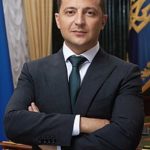
  • Volodymyr Zelenskyy – 2022 Speech at the Global Food Security Summit

    Volodymyr Zelenskyy – 2022 Speech at the Global Food Security Summit

    The speech made by Volodymyr Zelenskyy, the President of Ukraine, on 21 September 2022.

    Dear colleagues!

    Ladies and Gentlemen!

    I am grateful for the opportunity to participate in this meeting.

    Given the meeting is taking place on the margins of the UN General Assembly, I will mention one of the fundamental documents of the modern international legal system.

    This is the Universal Declaration of Human Rights. 30 articles about the most urgent things for every person out of the billions of people who have lived, live and will live on our planet. I will now quote Article 25:

    “Everyone has the right to a standard of living adequate for the health and well-being of himself and of his family, including food, clothing, housing and medical care and necessary social services, and the right to security in the event of unemployment, sickness, disability, widowhood, old age or other lack of livelihood in circumstances beyond his control.”

    This is a very important definition – the definition of the right, not the privilege, the right, not the fortune, the right, not the vagaries of climate. The right to food. The right to protection against hunger. The right!

    Ukraine considers this right inalienable for all people, for all countries. Every person in the world should be free from hunger and even the threat of it. Every country in the world should be reliably protected from famine.

    And any state that provokes famine, that tries to make access to food a privilege, that tries to make the protection of nations from famine dependent on the smile of fortune or the mercy of some dictator – such a state must get the toughest reaction from the world. Reaction as for the use of weapons of mass destruction – chemical, biological or nuclear. Because the spread of famine is the same immoral and inhumane weapon of mass destruction as the spread of deadly bacteria or radiation.

    This is Ukraine’s position. This is the position of a nation that has lost millions of people to Holodomors. Therefore, we particularly feel what the words “food security” really mean. What the right to protection against hunger is. What the right to food is.

    We feel why this is not a privilege, why it should not be an accident and why anyone who destroys this right should face a tough response.

    That is why we are making so much effort to restore our agricultural exports. This is not only an economic issue for us. This is a question of basic values and respect for life as such.

    In 8 months of last year, Ukraine exported almost 38 million tons of agricultural products. In 8 months of this year, the world market has received almost 10 million tons less already.

    Minus 10 million tons of our agricultural exports is plus tens of millions of people who found themselves on the brink of starvation or are starving. And these are only the initial consequences of the Russian blockade of our ports, Russian attempts with missile strikes to prevent us from building new export logistics, and the immoral political game with fluctuations in food prices.

    Russia must bear responsibility for this.

    Why did it need all this? To supposedly graciously give food in exchange for sovereignty. In exchange for political submission. In exchange for vulnerability. Vulnerability of many African, Asian and European countries.

    That is why Russia wants to make protection from hunger not a right, but a privilege, and wants to make food – not an inalienable right, but something to beg for.

    We categorically do not accept that. We consistently fight against that. Even in the conditions of a full-scale war, we help those who cannot provide agricultural products for themselves with our agricultural products. And I want to assure the UN that Ukraine will continue to be a guarantor of the UN World Food Programme.

    In particular, we are already helping Somalia and Ethiopia. Africa, Asia, Europe, the American continent… Wherever food is needed, we are ready to export and help.

    And we call for your solidarity.

    Stand in solidarity with us in holding Russia to account. Stand in solidarity with us in guaranteeing the right of any person and any country to protection from hunger, the right to food.

    This is a right, not a privilege. It should be so. I believe that we will be able to guarantee it.

    I am grateful to UN Secretary-General Guterres. I am grateful to Türkiye and President Erdoğan. Our grain export initiative is working steadily. And I am grateful to all Ukrainians – each and every one who turns our ability to guarantee global food security into an objective reality.

    I thank all of you for your support and attention!

    Glory to Ukraine!

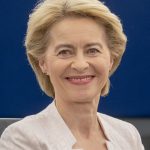
  • Ursula von der Leyen – 2022 Speech at Princeton University

    Ursula von der Leyen – 2022 Speech at Princeton University

    The speech made by Ursula von der Leyen, the President of the European Commission, at Princeton University on 22 September 2022.

    Dear Dean Jamal,

    Dear Andy, Professor Moravcsik,

    Thank you very much for welcoming me back to Princeton,

    Distinguished members of the Princeton faculty and administration,

    And most importantly, dear students,

    Indeed, this is the United Nations General Assembly week right now. And you can imagine that one dominant topic was and is the war that Russia unleashed against Ukraine. It was 24 February when Russia invaded Ukraine and brought war back to Europe. I visited Kyiv for the first time since the beginning of the war round about five to six weeks after the invasion started. And I went to the town of Bucha. Before the war, Bucha was a quiet, friendly suburb on the outskirts of Kyiv. It has been occupied by Russian troops. Two days before I went to Bucha, it had been liberated by Ukrainian armed forces. When I went there, I saw mass graves; I saw the body bags lying there – men, women, children. I saw these brutal scars of missiles and bombs that had been aimed deliberately at residential areas, hospitals, schools kindergartens. So I basically saw first-hand the reality of Putin’s war.

    Last week, as you said, Andy, I was again in Kyiv and I was in Irpin, also on the outskirts of Kyiv. You still see the scars of the bombing of houses and hospitals and schools. I spoke, for example, to schoolchildren. And while we were speaking, when I visited that school, there was a missile alarm so we had to go to the shelter. And they told me that it was the third time on that day that they went to the shelter. That is their daily experience. But I also saw that life has come back to Kyiv. The streets were filled with people, the shops were open. People in Kyiv try to win their life back. The Ukrainian army is making impressive advances, liberating many towns and villages, and forcing the Russian army to retreat. Of course, I know that this all needs consolidation, but the success of the last days is lifting spirits – and not only the Ukrainian ones.

    I know that some are calling to stop the fighting. But I must say that the reality is as follows: If Russia stops fighting, the war is over. If Ukraine stops fighting, there will be no more Ukraine. Much is at stake. Not just for Ukraine – but also for Europe, for the international community and for the global order. Russia has invaded Ukraine with the goal to wipe the country from the map – that is what Putin says and writes. So Ukrainians are fighting for their survival, but they are also fighting for global values. This is not only a war that Russia has unleashed against Ukraine. This is a war on our values; this is a war on the rules-based international order. This is an attack on the UN Charter. I mean, Russia is a permanent member of the Security Council of the United Nations, we should not forget it. This is trampling on the UN Charter. And this is a war about autocracy against democracy. And I tell you: Many, many worldwide are watching very precisely what the outcome is going to be.

    From day one on, the United States and the European Union and many other friends have stood at Ukraine’s side with weapons, and it is amazing to see the bravery of the Ukrainians fighting for their survival; with funds; with hospitality, on the European Union side, for more than 8.1 million refugees in seven months; and with the toughest sanctions the world has ever seen. Let me tell you that these sanctions have only been possible because of a very, very close cooperation with our friends in the United States. As you said, I have been in politics now round about 20 years, 14 of them in the government of Angela Merkel. Never ever have I experienced such an intense, trustful and detailed cooperation with the White House. And therefore, I think the saying is right: When you face a crisis, you know who your true friends are. Since last year already – it was around Christmas or New Year when Putin had started, as you might remember, to deploy 10,000 troops to encircle Ukraine –, our teams started to work on the sanctions to align the European system with the American system. They are very different but the effect of the sanctions should be the same. And we do not want extraterritorial effects but sovereign effects from the European Union but also all the other G7 members that joined us and, of course, the United States. And this intense work over weeks then had as consequence that when the invasion started – on day two, day four, day six –, we could immediately deliver three very heavy packages of sanctions that are unfolding their effect right now. The sanctions are biting. Russia has tried everything to camouflage the effects. And as this is not a free country, you can twitch and turn around facts and figures into what you want them to be. Or you can say what you want and hide what you want. But if you look at the financial sector in Russia, it is on life support now. Russia’s industry is in tatters. It is very interesting to see the military complex, because the military complex now has a very hard time to replenish what is necessary for the armed forces. Because the updated technologies are missing, these are coming from our side and are no longer delivered, there is a ban on the exports. The spare parts are missing. So you observe now that the Russians are cannibalising their refrigerators and their dishwashers to get semiconductors they can use for the military complex. Basically, the Kremlin has put Russia’s economy on the path to oblivion. And I want to make it very clear that the sanctions are here to stay. This is the time for resolve and not for appeasement.

    The same is true for our financial support to Ukraine. So far, Europeans have provided more than EUR 19 billion in financial assistance since the beginning of the war. And that is without counting our military support. The message is: We are in it for the long haul.

    I grew up in a divided country. I was lucky. I was born in West Germany, in the western part of Europe, in a free and democratic country. I vividly remember the times of the Iron Curtain. When I was your age, student age, when we wanted to drive to the island of West Berlin that was surrounded by the GDR, I remember, still today, the feeling of being terrified when you were driving on the corridor through the death zone. Because you knew, one false move and there is no rule of law anymore to protect you. So I remember this feeling very well, what the Iron Curtain and the Wall, and the death zone were all about. I also remember, of course, in 1990 the jubilant days, when the Iron Curtain came down, when the Wall in Berlin came down, and when the countries behind the Iron Curtain broke free. Indeed, the Baltics, Poland, Romania, Hungary, Slovakia, Slovenia, Bulgaria, Czechia – you name it, so many others. Today, there is the same wind of change that is once again blowing across the continent. Because Ukraine has now applied for membership in the European Union. With their decision to apply for the candidate status in order for Ukraine to join the European Union, they have very clearly chosen the path of freedom. And with our decision to grant them candidate status, we have chosen to stand by Ukraine as long as it takes.

    This war will change Europe and the world fundamentally. Take energy, I want to speak a little bit about energy. At the beginning of the war, Europe was heavily dependent on Russian fossil fuels: coal, oil, gas. 60% of the Russian budgets’ revenues at that time was from fossil fuels. So you can imagine how important the fossil fuel export was and is. Putin has built very strategically, and later on used, our dependency to blackmail us, basically to suffocate us, with lowering – already in hindsight, I see it – the gas supply last year to the storage to make sure that we have not enough gas in the storages to make it through the winter, and slowly but surely cutting the gas supplies to one Member State after another. At the moment, he prefers to flare the gas – that is literally burning the gas – instead of delivering it, as he should, if you look at the contracts. I guess that he obviously thought that he could intimidate us and divide us. But let me tell you that just the opposite is the case. This blackmailing has really united us. And it is a turning point, because we have decided, as a European Union: We will end our reliance on Russian fossil fuels.

    Meanwhile, Europe has banned Russian coal imports completely. We have been winding down and are winding down the oil imports from Russia, down to 10% by the end of the year. Gas is interesting. Let me give you three figures: If you look at the overall global pipeline gas demand, 75% was the demand of the European Union on global pipeline gas supplies. So we are a huge client – very important. Half of it was imports from Russia. Today, we are down, on Russian imports, to 25%. One quarter is left. How are we doing this? We are diversifying away from the Russian supply towards other suppliers that are democratic friends and trustworthy. First of all, of course, our friends in the United States. I closed an agreement with President Biden on LNG imports that really, really helped us and saved us in these difficult times. It is very successful. The second point that we are doing, besides diversifying away, is saving energy. The energy that is not being used is good energy. We save it to the storage for the coming winter.

    Of course, this comes at a price. So let me tell you that we all feel that the global energy market is very tight. The whole Russian supply is missing, so we are demanding energy on the global market. Therefore, the global market is really tight. Energy prices are skyrocketing, as you will observe in Europe. This is a heavy burden on people’s and businesses’ shoulders. We are taxing now the windfall profits of electricity-producing companies to have a targeted support for vulnerable households and vulnerable businesses. We are doing all this not only because it is necessary but also because we know that this is the way to dry out Putin’s war chest. And we know that we are doing this because with energy independence and energy freedom comes greater power to defend the global rules. This is the immediate response. But there is of course a mid-term and long-term response.

    Ultimately, the best way to get rid of fossil fuels is a massive investment in renewable energy. Every kilowatt-hour that we are producing electricity from sun, from wind, from hydropower, from geothermal, from biomass, from green hydrogen – you name it – is not only good for the climate – it is also good for the climate that is the most important part – but it makes us independent. It is home-grown; it is security of energy supply; it created good jobs at home. If you look at the price today of solar and wind energy, it is cheaper by now than fossil fuels. This is why, for example, we are investing heavily in offshore wind parks. The biggest one worldwide is now starting in the North Sea. When it is ready to go, it will heath 50 million European homes throughout the whole year.

    So in sum, the era of Russian fossil fuels in Europe is coming to an end. And this is a big geopolitical shift, because if you look at the map, the demand and supply from Russia is coming to an end. This demand from the European Union will now switch towards the Global South. Because if we do it right, we are not only diversifying to other gas or fossil fuel suppliers, but we massively invest now in renewable energies, in regions where the resources are in abundance. If you look at the other side of the Mediterranean, in the European Union, it is the African continent: sun, wind, partially hydropower, in abundance. And if we invest in the infrastructure, we do not only gain freedom from the blackmail that we have experienced with Russia, but we are also fighting the right cause against climate change.

    The fight against climate change is the biggest one. And I want us – the Europe Union and the United States – to be allies in that fight. Global warming is the real crisis that is overshadowing everything. We know that climate change is man-made. The body of evidence is overwhelming. So it is us. The impact is tangible, you know it: floods, droughts, wildfires, hurricanes, tornados, melting glaciers, rising sea levels. I had yesterday a bilateral meeting with the Prime Minister of Pakistan: three-quarter of the country is inundated – climate change, it is nothing but climate change. So it is very bad. But there is a glimpse of hope, because if it is true that climate change is man-made, we can do something about it. That is the good news and the bad news. And that is what the European Green Deal is all about. When I came into office in 2019, this was the first initiative I took. Our strategy, the European Green Deal, wants to transform our economy, so that we preserve and restore nature. We need to decarbonise our economy; we need to move towards the circular economy; we need to develop a way of life and work that gives our planet a real fighting chance for the next generation, for you. So we have, as the European Union, cast in law our goals for 2030 and climate neutrality for 2050. We want to be the first climate-neutral continent by 2050. And we are the first highly industrialised continent that has put a concrete plan on the table on how we want to get there. So pieces of legislation, legal acts to make this transformational change happen.

    What are the principles? The first one is: CO2 needs a price, because nature cannot pay the price anymore. Those who emit CO2 must pay. Therefore, we have put in place an Emissions Trading System: If you want to emit CO2, you pay. If you want to avoid that, you go and innovate into clean technologies. Second principle: The transition has to be just, otherwise it will not happen. So we invest massively to support the regions that have to leapfrog forward, for example coal-abating regions that have to leapfrog forward into completely different industries. And we have a Social Climate Fund to support the small incomes and the vulnerable businesses that have no leeway to adapt to cleaner mobility, to insulated houses, to better heating systems and all that is necessary to change. The third principle is: We need massive investments in innovation and infrastructure. That is the point where NextGenerationEU comes into play. I called it NextGenerationEU because we raised EUR 800 billion on the capital markets to invest in projects that will serve the next generation. EUR 360 billion of these will go into projects of the European Green Deal. And I am very glad that the United States is matching that now. I was happy to hear that from this climate package, USD 369 billion, I think, are going into green projects, projects fighting climate change. The fourth principle is, and that follows from it, that the fight against global warming is a global one, a global task. Europe is responsible for 9% of the global emissions. We need everyone on board. Therefore, I very much welcome President Biden’s strong commitment to also become climate-neutral by 2050. And last but not least, the fifth and last principle is: We consider the European Green Deal as a huge business opportunity – our new growth strategy. If we master the turnaround, those who have innovated and developed the clean solutions will be the front-runners. They will have the first-mover advantage. Then the whole world will be asking for their technologies. This is the reason why we have to prepare now if we want to be competitive in the future.

    This brings me to one afterthought. I have been speaking about energy, I have been speaking about dependency, the European Green Deal or fighting climate change. The green transition but also the digital transition, I must say, will massively increase our needs for raw materials. Lithium for batteries; silicon metal for chips; rare earths to produce magnets, for example for electric vehicles. Demand for those raw materials and rare earths will presumably at least double until 2030. The good news is: That shows that the European Green Deal and the green transformation overall worldwide is progressing fast. The not-so-good news is: One country dominates the market. Out of the 30 critical raw materials, today 10 are mostly sourced from China. And China basically controls the global processing industry. Almost 90% of rare earths and 60% of lithium are processed in China. We have to avoid falling into the same trap and dependency as we did with oil and gas. So we have to be very careful not to replace one old dependency with a new one.

    And that brings me back to where I started: Democracy versus autocracy. Each of our democracies is very unique and different. Because ultimately, they have been shaped by our people, by our history, by our backgrounds, our cultures, our constitutions. But in the very end, democracies in all forms come down to one single point. And that is: It gives people a voice. It gives the ability to change things at the ballot box. In democracies, we even fight for the right to be against us. That is democracy. To be able to speak you mind. To change your mind, if you want to. To be free to be yourself so that if you are different from the majority, you are equal before the law. It is the accountability to all, and not only to those who have voted for you. That is democracy. A system where power is given and taken away by the citizens and framed by checks and balances. And we see what the alternative is. At the beginning of this year, Russia and China declared an ‘unlimited friendship’. And despite the fact that cracks have appeared in the last days, both continue to aim for a fundamentally different vision of the future. I believe we have to take this challenge very seriously. We need to defend the open and inclusive international order – both in the United States and the European Union, and beyond. Those who were lucky enough to be born and raised in democracies – like me – can often take the democracy just for granted. It was always there. I have always lived in a democracy. But now I realise that it is not going to be here if I do not stand up for this democracy. Those who have lived in autocracies and authoritarian regimes will know all too well how precious freedom is. In Europe, we have learnt that we must always work on improving democracy – because we know how quickly and how devastatingly history can change. We know that the opponents of democracy today are using sophisticated, new tools, modern technologies to oppress and manipulate through systematic disinformation. Disinformation is not a partisan issue, it is a societal one. Because it seeks to muddy the waters so much that truth and facts become impossible to distinguish from lies and falsehoods. So in the very end, democracy needs us – each and every one of us, explicitly. By that, I want to address you, the students, the faculty members, the administration here in this room: You have the privilege to study and work in an institution that is based on a long tradition to unveil truth through critical discourse, through evidence-based research, respect for facts and figures, the understanding of history. These are the tools and the ingredients to dismantle disinformation. You have a mission. As politicians, we have a mission, too, but you have a mission. Or in the words of Princeton’s informal motto: In the nation’s service and in the service of humanity.

    Many thanks for your attention.

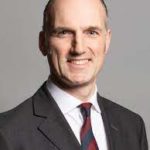
  • Leo Docherty – 2022 Speech on Ukraine

    Leo Docherty – 2022 Speech on Ukraine

    The speech made by Leo Docherty, the Minister of State at the Foreign and Commonwealth Office, on 22 September 2022.

    I am very grateful to all Members for their contributions to this extremely useful debate today. I am also grateful to those on the Opposition Front Bench for their constructive and positive tone.

    The hon. Member for Plymouth, Sutton and Devonport (Luke Pollard) correctly pointed out that this is Putin’s war—not Russia’s war—and that he is to blame, not the Russian people. We are in agreement on that. He pointed out the grave peril facing Putin’s army this winter, which will really test them. I am pleased to confirm that we do indeed have a long-term strategy. The tone of that has been set out again by the Prime Minister in New York, and our collective institutional efforts will be working in alliance with that.

    The integrated review will evolve—it is a working document and it is inherently correct that it will evolve as time passes. Robust plans to ensure the supply of munitions, both in terms of what we give our Ukrainian allies and what we need for ourselves, are energetically being put in place. I am pleased to see that the new Minister of State, my right hon. Friend the Member for Elmet and Rothwell (Alec Shelbrooke), has joined me on the Front Bench this afternoon.

    The hon. Member for Cardiff South and Penarth (Stephen Doughty) gave us some moving reflections on his recent visit to Ukraine. He usefully pointed out the remarkable resolve of the Ukrainian force. That word “resolve” expresses all we need to know about the Ukrainian capability. We are in absolute agreement on that. He mentioned some issues concerning trade. I will write to him on those, because they are important in terms of the broader picture.

    We were honoured to have our former Prime Minister, my right hon. Friend the Member for Uxbridge and South Ruislip (Boris Johnson), speak to us. I know that he is not in his place because of a pre-arranged appointment. He was right to point out that this was a shameful war of conquest and that Russia’s youth is being sacrificed on the altar of Putin’s ego. He said that Putin’s rhetoric shows that he is weak, not strong. Putin’s singular achievement in Ukraine has been to unify the west. He mentioned the leadership of President Zelensky; I think we have all been moved by that and by the recent images of Madam Zelenska coming over for the state funeral last week. We are grateful for the bond formed by our former Prime Minister and President Zelensky, which is now being taken up by our new Prime Minister.

    Great democracies, as my right hon. Friend the Member for Uxbridge and South Ruislip said, must have the stomach to stand up to tyranny this winter. I know we all agree with that, and our new Prime Minister was very clear about that in her speech in New York last night. Resolve is what we will all show.

    The hon. Member for Glasgow South (Stewart Malcolm McDonald) gave some very useful reflections on his recent visit. He warned that we should be aware of the “Putin whisperers” and pointed out that while the war could stop tomorrow if Russia just stopped attacking, if Ukrainians stopped defending, Ukraine would cease to exist. I thought both points provided a very useful lens through which to see the situation. We are in agreement on that, and the Government are grateful for the continued support of his party.

    The right hon. Member for Bournemouth East (Mr Ellwood) gave some interesting reflections on grain, the weaponisation of food and energy by President Putin and the broader strategic issues at stake. The hon. Member for Aberavon (Stephen Kinnock) gave some personal reflections on his time with the British Council in Russia and used that as an important lens through which we can see the sheer bravery of those protesting against Putin’s war machine. Since yesterday it seems that at this rate they are likely to imprison more people than they can draft as new members of their armed forces.

    My right hon. Friend the Member for New Forest East (Dr Lewis), the Chair of the Intelligence and Security Committee, pointed out that when it comes to tyrants such as Putin,

    “cynicism has no limits and hypocrisy no boundaries”.

    That was extremely useful historical context. However, I can assure my right hon. Friend that we are energetically making plans to ensure that the provision of munitions for Ukraine, as well as for ourselves, is sufficient. I know that collectively we all hope to see 3% spent on our own domestic defence sooner rather than later, and the Government have commendable plans in place.

    The hon. Member for Tiverton and Honiton (Richard Foord) again put this matter in historical context by reminding us that even if we are not interested in war, war is certainly interested in us. He called out Putin’s lies, and I join him in that calling-out. He also gave some interesting reflections on his meetings in Ukraine with Ukrainian MPs, who have been a model of courage and resolve; I salute him in his reference to those gallant friends.

    My right hon. Friend the Member for North Somerset (Dr Fox) gave a useful description of the arc of Putin’s aggression over the years. Of course, this war is not seven months old; it started many years ago with Putin’s statement at the Munich Security Conference in 2007, the invasion of Georgia in 2008 and the illegal annexation of Crimea in 2014. That was a useful context in which to set this challenge. My right hon. Friend also gave some interesting thoughts on the broader strategic situation regarding Russia’s malign activity in the Balkans and the malign influence and supply of drone munitions by Iran.

    My right hon. Friend the Member for Chingford and Woodford Green (Sir Iain Duncan Smith), who I think is on his way back, gave some Gladstonian context to the debate, pointing out that freedom has no greater bulwark than the breasts of free men and women. Freedom is not free, and we all face the price individually in houses up and down the country this winter because of the sharp rise in energy prices. He pointed out that President Putin thinks he can split us, but I offer him reassurance that we are resolute. He also made some interesting strategic remarks about the relationship between this conflict and China: China is watching and, in this new era of global competition, we are essentially deterring China in Europe. That is important to remember.

    The hon. Member for Stirling (Alyn Smith) reiterated the support of his party, for which I was most grateful, and made some interesting comments on sanctions. My hon. Friend the Member for Rutland and Melton (Alicia Kearns) made some good points about war crimes and preventing sexual violence in conflict. I am pleased to confirm that we have established with our partners the Atrocity Crimes Advisory Group and we will be hosting a conference in November on preventing sexual violence in conflict, in which I know she will be interested.

    The hon. Member for Putney (Fleur Anderson) reflected on her personal experiences in Ukraine, as did my hon. Friend the Member for Huntingdon (Mr Djanogly). I regret that my hon. Friend the Member for Isle of Wight (Bob Seely) had very little time to give us his expertise, but we treat these issues very soberly. He referred to the umbilical cord between us and our Ukrainian allies, and I am grateful for his contribution.

    Many other hon. Members made contributions that I do not have time to cover, including the hon. Members for Birkenhead (Mick Whitley), for St Helens South and Whiston (Ms Rimmer), for Llanelli (Dame Nia Griffith), for West Dunbartonshire (Martin Docherty-Hughes) and for Strangford (Jim Shannon), and my hon. Friends the Members for The Cotswolds (Sir Geoffrey Clifton-Brown), for Devizes (Danny Kruger) and for Ruislip, Northwood and Pinner (David Simmonds).

    In conclusion, our Government remain absolutely committed to continuing our support for Ukraine. As winter approaches, Ukraine’s resolve will be tested, and our resolve will be tested. This war, and the humanitarian damage that it is inflicting on Ukraine, remains very grim. The global economic consequences—most pressingly on energy and food prices—affect all of us. As the Prime Minister made clear last night in New York, we must remember that, as we support Ukraine, we are defending our own way of life: we are standing for freedom, democracy and the sovereignty of nations. We will not be deterred.

  • Stephen Doughty – 2022 Speech on Ukraine

    Stephen Doughty – 2022 Speech on Ukraine

    The speech made by Stephen Doughty, the Labour MP for Cardiff South and Penarth, in the House of Commons on 22 September 2022.

    I thank colleagues on both sides of the House for their valued contributions to today’s debate. I, too, think it is fantastic that we have seen the release of a number of Britons and others; that is wonderful news, but we must also recognise that others are still being held or have not made it safely home. I also welcome the new Minister to his place and look forward to working constructively with him over the weeks and months to come.

    The attendance and the comments made today from both sides of the House show that the resolve of this House has never been stronger and that our continued commitment to the freedom of Ukraine and our opposition to Putin’s illegal and barbaric invasion are palpable. I, too, joined the recent cross-party delegation to Kyiv, and I draw attention to my declaration of interests as a guest of Yalta European Strategy, which will be tabled in due course. I was able to convey our cross-party support personally to President Zelensky, who is remarkable, given what he is doing and the effort he is leading. It is worth saying that, when I met him, his first comments were to offer his sincere condolences to all of us on the loss of Her late Majesty the Queen and to make clear his absolute thanks and gratitude to the British people, this House, the Government and all parties for our continued and resolute support. Those tributes were echoed by Ukrainians who left flowers at the British ambassador’s residence and the British embassy in Kyiv.

    I was left with three main reflections from that visit. The first is about the brutality of the Russian invasion. We saw with our own eyes the scenes in Bucha, Irpin and Hostomel. We saw residential buildings that had been rocketed. We saw areas where terrible atrocities had been committed. The tactics that the Russians are using are very clear, and that has been exposed in even greater, horrifying detail in recent days in Izium. It is absolutely clear that we have to work with the Ukrainians to bring those who committed those acts at all levels to justice. We also saw the holocaust memorial at Babyn Yar, which recognises the horrific slaughter of 34,000 Jews by the Nazis in 1941. That same memorial, and indeed the nearby TV tower, was damaged and civilians were killed in a Russian attack just months ago. It is absolutely extraordinary, and we saw the shrapnel from that attack.

    The second reflection is about the resolution of Ukrainians at every level—the individual soldiers, citizens and Members of Parliament we met, and of course the Government—to fight for the freedom of their country. MPs were taking resources to soldiers from their areas to support them. At the same time, their Parliament is sandbagged. Can we imagine this Parliament with sandbags in the windows to defend democracy? That is what Ukrainians are doing. They are clearly also a western, European, ambitious, young and dynamic country with no affection for, or affiliation with, Putin’s regime or his agenda. It is very clear where they want to stand, and we need to stand with them.

    The third reflection I was left with is about the absolute criticality of western, European and indeed United Kingdom unity and support for the Ukrainians in their efforts at all levels—militarily, economically and otherwise. Our military and economic support are crucial to the success we have seen in recent days and to the defence of Ukraine, and our economic support more broadly will be critical going forward. We have to show resolve in supporting Ukraine through what will be a difficult few months this winter. On one of the nights we were there, we saw that the Russians are already attacking critical national infrastructure in response to Ukrainian successes. They took out the electricity and water supplies to millions of people in the east of the country. That is what they are willing to do in response—to attack civilian infrastructure.

    Let us be clear: for Ukraine this is a war of necessity, survival and national unity, but for Putin it is one of choice and aggression; it is an imperial war and an attempt at colonisation and annexation. That must be clear in the message we share around the world with our partners, and we must make it clear in our diplomatic efforts in the global south, south Asia and elsewhere. We need to work with Ukrainians to make clear what Russia is doing, what its agenda is and how it is prosecuting this war in the most barbarous and inhumane way possible.

    Although Putin’s war machine has stalled in recent days, the consequences of the war will, sadly, reverberate for years. The destruction it has already brought to towns and villages across Ukraine, as well as the damage it has done to critical infrastructure, have the capacity to set the country back decades. We saw bridges and civilian infrastructure damaged and destroyed. That is why it is crucial that we provide Ukraine not only with financial and economic support to get its people through the winter, but, in the long term, with trade and investment links to sustain it through the period of rebuilding, which must come when it is victorious.

    I was a little disappointed to hear that the UK trade envoy, although having been in post for some years, had not in fact visited Ukraine. There were also concerns about the lack of activities coming from the British-Ukrainian Chamber of Commerce. We need to be looking to the long term. We need to be providing Ukrainians with hope for their future when this war is over. I hope the Minister will be able to comment on that.

    As was made clear by my hon. Friends at the opening of this debate, Labour continues to fully support the Government’s position to provide the necessary military assistance for the defence of Ukraine. Indeed, I remain humbled and moved by the UK’s training programme for new Ukrainian recruits as well as the matériel support that we are providing. I want to thank all those who continue to play this critical supporting role. Putin expected this war to be over in days, but, thanks in part to our support, the people of Ukraine are resisting and fighting back seven months down the line, and I am confident that, in the end, freedom and liberty will triumph.

    None the less, dark days lie ahead. We have heard many worrying comments in the debate today. Indeed, the speech that Putin made yesterday was meant to frighten and intimidate the international community into withdrawing support to fracture our alliance. We must not let him succeed. The Estonian Prime Minister, Kaja Kallas, put it fantastically when she said that threatening with nukes belongs to the arsenal of a pariah state. That is absolutely right. Now is not the time to withdraw support or to cower to Putin’s distortions and threats. In particular, we need to work with Governments across Europe in the months to come. We have heard worrying things about the situation in Italy and the comments being made in Hungary and elsewhere. We need to stay unified and resolute in our support for Ukraine. That is when our words and our deeds will count the most. The Government will continue to have the Opposition’s support in the agenda that has been set out and that has been followed over the past seven months. I know that they can also count on the support of the people from Cardiff South and Penarth who came out on the streets on Ukrainian independence day and at other events recently.

    In the proceedings today, real tribute has been paid to the immense sacrifices that Ukrainians continue to make for their own country, for Europe as a whole, and also for the values that we all share, and I know that, in the end, those are the values that will prevail.

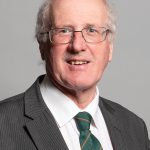
  • Jim Shannon – 2022 Speech on Ukraine

    Jim Shannon – 2022 Speech on Ukraine

    The speech made by Jim Shannon, the DUP MP for Strangford, in the House of Commons on 22 September 2022.

    I am pleased to be called in this debate. I was moved the other day when I watched the solemn and dignified meeting between our Princess of Wales and Olena Zelenska, the wife of the Ukrainian President. The image was clear: the UK and Ukraine were standing together at that level, with the ladies very much to the fore. I want us to continue to do the right thing by the people of Ukraine and continue to stand with them in their darkest hour. I want to say a big thanks to all those in my constituency who work at Thales in east Belfast, which makes the next generation light anti-tank weapons. The management tell me that most of the workforce come from my constituency, so I want to say a big thanks to them for all they have done. They have made a turning point for many in Ukraine conflict.

    There is no denying the many ways in which Ukrainians are suffering as they continue to have their homeland invaded by Putin, and I am grateful to other Members for highlighting such atrocities. I would like to draw attention to the ways in which freedom of religion or belief is being trampled on during the crisis, especially given that, as I have said many times, religious freedom is a bellwether human right; where it is protected, other human rights tend to be secured too.

    This year, the executive director of the Institute for Religious Freedom said that Russian attacks on religious freedoms in Ukraine had never been as “cruel” as they are now. He said that if Russian invaders previously expelled believers from Ukrainian churches and prayer houses, they are now destroying them with bombs and missiles strikes. It should be remembered that international attacks against religious sites can constitute war crimes according to international humanitarian law. The damage to freedom of religion or belief does not stop there. The president of the Ukrainian Baptist Theological Seminary said that in six months of the war about 400 Baptist churches had been forced to close. Pastors of the churches have been kidnapped and gone missing, as have some of the parishioners. Many corners of Ukraine feel the ripples of war, and while war rages basic human needs cannot be met. No doubt, at the conclusion of the war the psychological and spiritual distress caused by it will remain. The Donbas and Luhansk regions are the ones where this is happening most.

    Northern Ireland is known for our giving spirit, and many of our churches, across all denominations, have been sending financial support to churches in Ukraine to purchase food and clothing. With those churches closing, the support avenues in the Donbas and Luhansk regions are affected for those who no longer have a safe place to be, a place of comfort and a place to get food. These avenues of support were essential for people in Ukraine, and we have a duty of care to these people to ensure that they can survive this war. Everyone has mentioned the atrocities and the important support the UK has given to Ukraine, but it is also important that we underline the despicable things that have happened to human rights and those who have lost their right to freedom of religion or belief—

    Madam Deputy Speaker (Dame Rosie Winterton)

    Order.

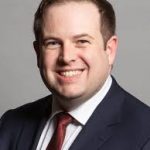
  • David Simmonds – 2022 Speech on Ukraine

    David Simmonds – 2022 Speech on Ukraine

    The speech made by David Simmonds, the Conservative MP for Ruislip, Northwood and Pinner, in the House of Commons on 22 September 2022.

    I place on record my thanks to my two local authorities for the work they have done in supporting and resettling Ukrainians who have had to flee the war and find a new home in the United Kingdom. The work the Government have done to support them is fantastic, and I have heard good reports that the financial support, in particular, that has been made available has been enormously helpful. While there is clearly a little bit more work to do for those who are going to be settling in the UK in the long term, to ensure that access to education, healthcare and other services continues to be available in the time they are here, it is a success story despite some of the concerns that were raised at the time.

    I will focus on two points that emerge from what is happening in Ukraine at the moment, and from some of the points made by a number of Members about how we prepare for the future. Before being elected to this House, I was a member of one of the constituent bodies of the Council of Europe. Its meetings were always challenging, given that at that time, we had Ukraine—which had been invaded by Russia to the extent of Crimea—and Russia in the same room, debating their supposed mutual respect for human rights and the rule of law. But it is clear that with proposals such as the new European political community there is an opportunity for the UK and other countries that do respect the rule of law to bolster the position of politicians, civil society organisations and leaders in Russia who do not condone the actions of Vladimir Putin. He is by no means the only politician in Russia. Many of us who have been engaged in any sense in those international operations will know that there is internal opposition to him in that country. We hope that if the work being done by Ukrainians succeeds, and if the pressure brought to bear by the international community succeeds, we will have an opportunity to foster a relationship with a much more positive Russian Government than the one we have at the moment. It will bolster the efforts we are putting in to support Ukraine if we can strengthen the hand of critics of Putin at home, and that will lay the groundwork for a more constructive relationship in the future, which will be particularly important for the reconstruction of Ukraine.

    Finally, I wish to touch on the point about cyber. I had the opportunity to be a witness at the Home Affairs Committee before being elected here, and prior to my session a witness from GCHQ was asked at the height of the Brexit debates, “Do the Russians want the UK to leave the EU?” The answer was very informative: what the Russians were seeking was not a particular outcome, but division in the west. They wanted us in this House and us in the west to be arguing among ourselves about what was happening. That goes to the heart of the points made by so many Members, and I echo this one: the unity and consistency of purpose across the allies is so vital to the long-term outcomes for Ukraine.

  • Martin Docherty-Hughes – 2022 Speech on Ukraine

    Martin Docherty-Hughes – 2022 Speech on Ukraine

    The speech made by Martin Docherty-Hughes, the SNP MP for West Dunbartonshire, in the House of Commons on 22 September 2022.

    I rise to speak not only as the Member for West Dunbartonshire but because, coming from a place like Clydebank, I am keenly aware of what it is like growing up in a place that had the worst aerial bombardment in these islands during the second world war, playing in the ruins and the bomb craters. That is why it is clear to me that just as planning for a new social settlement for people in these islands began right in the middle of the last great war—as we would call it—although it was not exactly a perfect settlement, that is something we must now do to help Ukraine build itself a prosperous and sustainable peace, integrated into the European Union and the mainstream of a free Europe, as it wishes.

    The challenge is stark. The Kyiv School of Economics has reported a 33% drop in gross domestic product, which is something that we will need to bear in mind, and a $200 billion bill to repair the damage done by the Russian Federation. That requires commitments from not only this Government but other allies—commitments that are not only financial, and to timescales that are measured not in weeks but, I am afraid, in decades. Although, as we have heard, there is a lot of support across the House for such measures, we need to hear a lot more from Treasury Ministers about what they plan to do. It is also something of a philosophical challenge for the Government: Ukraine is now a candidate country for the European Union and, contrary to the way things have often worked in military planning, long-term economic and social change will be delivered through its gradual and deepening alignment with the rest of Europe. I hope there will be nothing to stop this Government ensuring that Ukraine is able to do that to the fullest possible extent.

    If Ministers have not already done so, I urge them to begin the essential planning that is required for what will be needed in Ukraine when it wins the war—a very modern Marshall plan. I am glad to note that in the regular debates, it has become customary for many to repeat the couplet “Slava Ukraini, heroyam slava!”—glory to Ukraine, glory to the heroes! However, I am mindful of the old Gaelic proverb that translates as “To a man prepared for war, peace is assured.” Ukraine is prepared and peace can be assured, but its continued existence as a sovereign state requires more than heroic platitudes and, I am afraid, even proverbs uttered on the Floor of the House of Commons.

  • Danny Kruger – 2022 Speech on Ukraine

    Danny Kruger – 2022 Speech on Ukraine

    The speech made by Danny Kruger, the Conservative MP for Devizes, in the House of Commons on 22 September 2022.

    May I start by putting on the record my appreciation for the British troops based in my constituency of Devizes for the work that they have done in training our allies in Ukraine on Salisbury Plain, and, most of all, my appreciation for Ukraine for her leadership, her army and her people? They have resisted Putin, they have fought back, and they are winning.

    The question now is: what next? Members might be familiar with the famous story in Vladimir Putin’s memoir of him as a young boy chasing a rat with a stick. It got into a corner, turned on him and attacked. Putin is now that rat, driven into a corner by the heroic Ukrainians. The risk is that the rat now turns, does what he said he would and launches a nuclear strike on Ukraine or a NATO country, even including the UK. The lesson from the story of Putin and the rat is not that we do not corner him—there is no escape route for him that we can offer, except his defeat and humiliation. The lesson we must learn is that we must be ready for the rat to turn.

    I do not doubt Ukrainians’ determination to stand whatever happens, and I do not doubt the commitment of the British Government or, indeed, the wider alliance to stand with the Ukrainians. My concern is with our own preparedness in the event of a nuclear strike, either in Europe or here. I know that Ministers did not like it when the Chairman of the Defence Committee, the right hon. Member for Bournemouth East (Mr Ellwood), raised that point earlier, and I do not expect them to say anything other than that our defences and doctrine in the event of a nuclear strike are entirely up to date and ready. My concern is with our wider resilience, not just in the event of a nuclear strike but against the wider economic and military pressures that we might be under. I am concerned that our conventional defences should be as strong as possible. We have learned the critical importance of men and armour in this war, and I would like to see our Army grow. We also need to be concerned with our economic security and our social resilience.

    I echo the point made by my hon. Friend the Member for Rutland and Melton (Alicia Kearns) when she talked about the need for a whole-of-state approach. There is talk of a new integrated review; I echo the calls for that, and hope that it will include not just whole-of-state resilience, but whole-of-society resilience as well.