Author: admin

  • Pat McFadden – 2024 Statement on the Covid-19 Inquiry

    Pat McFadden – 2024 Statement on the Covid-19 Inquiry

    The statement made by Pat McFadden, the Chancellor of the Duchy of Lancaster, in the House of Commons on 19 July 2024.

    With permission, Mr Speaker, I would like to make a statement on the covid-19 inquiry. Yesterday, Baroness Hallett published her report from the first module of the UK covid-19 inquiry, which examines the resilience and preparedness of the United Kingdom between 2009 and early 2020.

    My thoughts, and I am sure the thoughts of the whole House, are with the families of those who lost loved ones during the pandemic. Their grief and the nature of their loss is harrowing, with so many loved ones lost before their time; so many heartbreaking last goodbyes said over a phone or iPad; and in some cases there was not even the chance to say goodbye at all. So many friends and family members were denied even the chance to go to a funeral, and many others found their lives changed by covid forever. We can only begin to imagine the anguish and anger that people feel, because this report confirms what many have always believed: that the country was not as prepared as it should have been, and that more could and should have been done.

    Baroness Hallett is unequivocal:

    “The UK was ill prepared for dealing with a catastrophic emergency, let alone the coronavirus…pandemic”.

    She finds that “processes, planning and policy” across all four nations failed our citizens. There were fundamental failures of state, with poorly performing public services, as well as health and social inequalities contributing to our vulnerability.

    The inquiry finds that

    “the UK prepared for the wrong pandemic”,

    with a focus on influenza to the effective exclusion of other potential pathogens. There was a lack of leadership, a lack of appropriate challenge and oversight from Ministers and officials, which allowed major gaps to open up in the UK’s resilience in the period leading up to the pandemic.

    Baroness Hallett finds

    “fatal strategic flaws underpinning the assessment of the risks”

    and

    “a failure to learn sufficiently from past civil emergency exercises and outbreaks of disease.”

    Ministers and officials took false comfort from a positive analysis of the UK’s preparedness. Not enough thought was given to how we might seek to prevent the worst effects of a pandemic, such as with a system of test and trace, rather than accepting the consequence of spread as inevitable.

    In this emergency, the cracks in our society were exposed. The inequalities were glaring, and that weakened the response. That is why the report’s findings on the most vulnerable are so important: what it says about the elderly, ethnic minorities and those already subject to existing health inequalities, particularly in the early months of the pandemic; those with higher risk of serious illness who were asked to shield for extended periods; those living in overcrowded houses, working in the gig economy or on low incomes; those who suffered as a result of the appalling increase in domestic abuse during the lockdowns; and, of course, disruption to education and the inequalities of vastly different access to online learning and IT equipment. Resilience has to be for all of us, not just some of us.

    The underlying picture that this report sets out is stark. Before the pandemic began, our public services were already stretched to their limit, during what should have been normal times. This was especially true of the NHS, overstretched even before the pandemic hit, and key workers in other services, overburdened in normal times and then asked to go above and beyond. A nation can only be as resilient as the foundational strength of its infrastructure and public services.

    As I stand here today with 8 million people on NHS waiting lists, prisons overflowing, councils pushed to the brink and public services in a worse position than they were even in 2020, we must ensure that we are prepared. Baroness Hallett says that it is not a question of if another pandemic will strike, but when. Resilience is not just about another pandemic, but about the full range of risk that we face. We are reminded of that this morning as reports come in about a global IT outage affecting airlines, GP surgeries, banks, media and other organisations. It is not easy to know what the future holds. We cannot plan fully for every possible risk, but we must do what we can to learn the lessons of this period.

    The Government’s first responsibility is to keep the public safe. That is a top priority of this Government. With a long-term approach to strengthening our national resilience, I shall lead a review of our national resilience against the range of risks that the UK faces. I shall chair a dedicated Cabinet Committee on resilience to oversee that work. Of course, it is not just about central Government, so we will work with the devolved Governments, regional mayors and local leaders as we consider the report’s recommendations. When we have an emergency, we should do everything we can to work together locally and nationally. The Prime Minister has already started to reset relationships with critical partners, because resilience is too important for division to get in the way. Instead, it has to be about co-operative strength.

    Some improvements to our operational effectiveness have already been made. The previous Administration did make efforts to improve preparedness. These include changes in the way that the Government access, analyse and share data, including with the public. They also changed the risk assessment processes and the way in which the centre of Government works to prepare for and respond to crises. As an incoming Government, in office for just two weeks, we will look at those efforts in the coming months as we develop our own approach. Where things are good, they should be kept; where they are not good enough, they should be changed.

    The inquiry’s report recommends improvements in the way whole-system risks are assessed and managed across the UK Government and the devolved Governments, and improvements to the leadership and oversight provided by Ministers. The Government will carefully consider all the findings and recommendations, including any from the Grenfell inquiry that also have a bearing on resilience planning. We will respond in full within six months.

    We will also play our full part in international efforts to improve global health and pandemic preparedness, from disease surveillance and vaccine development to strengthening health systems in the global south and building even greater international co-operation. The United Kingdom has a huge amount to offer and it is in our national interest to do so, because, as we have seen so powerfully, pandemics do not respect international borders, so global health security is an essential element of national security.

    I wish to thank Baroness Hallett and her team for all their work so far and for putting the voices of the bereaved at the heart of the inquiry. Amid the tragedy of the pandemic, the British people came together in the most extraordinary ways—from the incredible service and sacrifice of our frontline workers, not least in the NHS, to the generosity of volunteers across our communities supporting one another with acts of kindness. It was a story of service that showed the very best of our country. This Government of service are determined to learn the lessons from this inquiry and to prepare as best we can for the future. That is the duty that we have to the people we serve, and indeed to the memory of those we lost. It is in that spirit that I commend this statement to the House.


  • Keir Starmer – 2024 Statement on the UK Covid-19 Inquiry

    Keir Starmer – 2024 Statement on the UK Covid-19 Inquiry

    The statement made by Keir Starmer, the Prime Minister, in the House of Commons on 18 July 2024.

    The Chair of the UK covid-19 inquiry, the right honourable Baroness Heather Hallett, has today published the inquiry’s module 1 report, which examines the resilience and preparedness of the United Kingdom between 2009 and early 2020. I have today laid before both Houses a copy of this report.

    The report concludes that the UK was under-prepared for the covid-19 pandemic, and that process, planning and policy across all four nations failed UK citizens. Poorly performing public services, pre-existing general levels of ill-health, and health and social inequalities are cited as factors that made the UK more vulnerable.

    The covid-19 pandemic impacted each and every person in the UK. However, it did not have an equal impact, with some affected more than others and with some people still living with the impact of the virus.

    The Government’s first responsibility is to keep the public safe, and as Prime Minister I am personally committed to each and every family who lost loved ones, and whose lives were changed forever, that this Government will learn the lessons from the inquiry. This means ensuring that the UK is prepared for a future pandemic, as well as the broadest range of potential risks facing our country. That is a top priority for this Government and what everyone should rightly expect from a Government working in their service.

    The Government are committed to working with our colleagues in the devolved Governments, mayors and local partners as we carefully consider the recommendations in the report, as their efforts are vital to ensuring the resilience of the whole of the United Kingdom.

    I would like to thank Baroness Hallett and her team for their thorough work on this report. The Government will carefully consider all of the findings and recommendations of the report in the context of the Government’s overall approach to resilience.

  • Keir Starmer – 2024 Statement on the NATO Summit

    Keir Starmer – 2024 Statement on the NATO Summit

    The statement made by Keir Starmer, the Prime Minister, in the House of Commons on 18 July 2024.

    I attended the NATO leaders summit in Washington DC on 9-11 July, with the Foreign Secretary, the Defence Secretary and the Paymaster General and Minister for the Cabinet.

    The summit marked the 75th anniversary of the world’s most successful defensive alliance. Following Russia’s illegal invasion of Ukraine, NATO stands bigger, stronger and more united than ever. Sweden attended for the first time as a full ally. Ukraine, Australia, New Zealand, Japan, the Republic of Korea and the EU also participated.

    Allies welcomed Mark Rutte’s confirmation as NATO’s next Secretary-General, following on from Jens Stoltenberg’s outstanding decade of leadership.

    The summit agreed an ambitious set of outcomes which will help to ensure the safety, security and prosperity of the one billion citizens of NATO allies. This included: further measures to boost our deterrence and defence, particularly against Russia, including ensuring that readier and more capable forces are available to deliver NATO’s new war-fighting plans; agreeing a NATO industrial capacity expansion pledge to accelerate defence industrial production; a new cyber-defence centre; and a refreshed artificial intelligence strategy. We welcomed the fact that 23 allies now invest at or above NATO’s target of 2% of GDP on defence.

    I emphasised this Government’s steadfast commitment to the NATO alliance. Our strategic defence review will ensure that a NATO-first policy is at the heart of Britain’s defence plans. I confirmed that the UK will commit almost all of our armed forces to NATO, maintain our presence in Estonia and Poland, lead the land arm of the allied reaction force this year, and maintain and modernise our nuclear deterrent.

    NATO allies met with President Zelensky in the NATO- Ukraine Council and agreed measures to enhance NATO’s support to Ukraine as it advances on its irreversible path to NATO membership. These included establishing the NATO security assistance and training for Ukraine (NSATU), which will coordinate the provision of military equipment and training for Ukraine by allies and partners. We made a pledge of long-term security assistance for Ukraine, with allies proportionately contributing a minimum baseline of funding of €40 billion over the next year. This pledge includes this Government’s commitment to providing £3 billion a year of military support for Ukraine until 2030-31 and for as long as needed. I joined 22 other countries in signing a Ukraine compact that draws together the bilateral security assurances that we have each signed with Ukraine.

    Allies also met with leaders from New Zealand, Australia, Japan, the Republic of Korea and the EU. We agreed with our Indo-Pacific partners that we should continue to work together on shared challenges of the future, as security developments in their region directly affect Euro-Atlantic security. I had bilateral discussions with Prime Minister Kishida of Japan, President Yoon of the Republic of Korea and Prime Minister Luxon of New Zealand to discuss a range of topics, including advancing a shared approach that protects our interests, security and values.

    I met with President Biden at the summit and at the White House, where we reaffirmed our shared commitment to NATO and the special relationship as the bedrock of our collective security and prosperity. We will continue to work side by side across the breadth of the relationship including on shared geopolitical challenges and our aligned ambitions for greater economic growth.

    I also held bilateral meetings with President Zelensky of Ukraine, Prime Minister Kristersson of Sweden, Prime Minister Støre of Norway, President Erdoğan of Türkiye, Chancellor Scholz of Germany, and Prime Minister Trudeau of Canada. I engaged with all other allied and visiting leaders at the Summit. I met with Congressman Mike Johnson, Speaker of the United States House of Representatives; Congressman Hakeem Jefferies, Democratic Leader of the United States House of Representatives; Senator Chuck Schumer, Majority Leader of the United States Senate, and Senator Mitch McConnell, Republican Leader of the United States Senate. Additionally, I met with Speaker Emerita Nancy Pelosi and had a discussion with other key Senators.

    I look forward to continuing to strengthen relations with European counterparts at the European Political Community summit at Blenheim Palace today.

  • Lucy Powell – 2024 Statement on the Government’s Legislative Programme

    Lucy Powell – 2024 Statement on the Government’s Legislative Programme

    The statement made by Lucy Powell, the Leader of the House of Commons, in the House on 18 July 2024.

    Following the state opening of Parliament, it is customary for the Leader of the House of Commons to list the formal titles of Bills to be introduced.

    Other measures will be laid before the House in the usual way. The programme will also include Finance Bills to implement budget policy decisions and estimates for public services. The list does not include draft Bills.

    Arbitration Bill

    Armed Forces Commissioner Bill

    Bank Resolution (Recapitalisation) Bill

    Better Buses Bill

    Border Security, Asylum and Immigration Bill

    Budget Responsibility Bill

    Children’s Wellbeing Bill

    Commonwealth Parliamentary Association and International Committee of the Red Cross (Status) Bill

    Crime and Policing Bill

    Cyber Security and Resilience Bill

    Digital Information and Smart Data Bill

    Employment Rights Bill

    English Devolution Bill

    Football Governance Bill

    Great British Energy Bill

    High Speed Rail (Crewe to Manchester) Bill

    Hillsborough Law

    Holocaust Memorial Bill

    House of Lords (Hereditary Peers) Bill

    Lords Spiritual (Women) Act 2015 (Extension) Bill

    Mental Health Bill

    National Wealth Fund Bill

    Passenger Railway Services (Public Ownership) Bill

    Pension Schemes Bill

    Planning and Infrastructure Bill

    Product Safety and Metrology Bill

    Rail Reform Bill

    Renters Reform Bill

    Skills England Bill

    Sustainable Aviation Fuel (Revenue Support Mechanism) Bill

    Terrorism (Protection of Premises) Bill

    The Crown Estate Bill

    Tobacco and Vapes Bill

    Victims, Courts and Public Protection Bill

    Water (Special Measures) Bill

    Detailed information about each of these Bills can be accessed from the gov.uk website at: https://www.gov.uk/government/publications/kings-speech-2024-background-briefing-notes

  • Andrew Gwynne – 2024 Statement on Respiratory Syncytial Virus Immunisation Programmes

    Andrew Gwynne – 2024 Statement on Respiratory Syncytial Virus Immunisation Programmes

    The statement made by Andrew Gwynne, the Parliamentary Under-Secretary of State for Health and Social Care, in the House of Commons on 18 July 2024.

    I am today confirming that the new immunisation programme to protect infants, with a vaccine during pregnancy, and older adults against respiratory syncytial virus will start this September.

    RSV is a common respiratory virus that usually causes mild cold-like symptoms but can cause severe illness, especially for young infants and older adults. There is a significant burden of RSV illness in the UK population which greatly impacts NHS services during the winter months. RSV accounts for over 30,000 hospital admissions for children under five and is estimated to cause around 9,000 admissions among adults over the age of 75 each year. The programme could free up thousands of hospital bed days and help to prevent hundreds of deaths each year.

    In June 2023, the Joint Committee on Vaccination and Immunisation advised that an RSV immunisation programme that is cost-effective should be developed to protect both infants and older adults. From September, a routine programme will begin in England for those turning 75 and for pregnant women, who will be offered vaccination from 28 weeks of pregnancy until full term to protect their baby during the first months of life when they are most vulnerable to RSV. A one-off campaign will also run from September 2024 until 31 August 2025 for all older adults aged 75 to 79 years old on 1 September 2024.

    The UK Health Security Agency is now working rapidly with the NHS to ensure we are ready, in September, to deliver the UK’s first RSV vaccination programme. The programme will save lives and protect people most at risk. We are delighted that the RSV vaccination programme will begin soon across all four UK nations.

    His Majesty’s Government are encouraging eligible members of the population to come forward for their vaccination when they have been invited to do so by the NHS, to protect those most vulnerable to RSV illness and to reduce NHS winter pressures.

    Older adults will be invited to come forward when they turn 75 and will be able to book their vaccination appointment with their GP.

    Older adults aged 75 to 79 years old on 1 September 2024 will be invited to receive their RSV vaccination with their GP in a timely manner to ensure as many people as possible are protected this winter.

    Those that are at least 28 weeks pregnant should speak to their maternity service or GP surgery to get the vaccine to protect their baby.

  • Steve Reed – 2024 Statement on Water Sector Reform – First Steps

    Steve Reed – 2024 Statement on Water Sector Reform – First Steps

    The statement made by Steve Reed, the Secretary of State for Environment, Food and Rural Affairs, in the House of Commons on 18 July 2024.

    The new Government will never look the other way while water companies pump record levels of sewage into our rivers, lakes and seas. That is why we have outlined our immediate measures to begin the work to clean up our waterways.

    First steps to clean up our rivers, lakes and seas

    The Government have announced a series of initial steps towards ending the crisis in the water sector.

    The new measures represent a step change to ensure the water industry cuts sewage dumping and attracts major private-sector investment to upgrade infrastructure while prioritising the interests of customers and the environment. The initial measures include:

    Securing agreement from Ofwat that funding for vital infrastructure investment is ringfenced and can only be spent on upgrades benefiting customers and the environment. Ofwat will also ensure that when money for investment is not spent, companies refund customers, with money never allowed to be diverted for bonuses, dividends or salary increases.

    Water companies will place customers and the environment at the heart of their objectives by changing their articles of association—the rules governing each company —to make the interests of customers and the environment a primary objective.

    Consumers will gain new powers to hold water company bosses to account through powerful new customer panels. For the first time in history, customers will have the power to summon board members and hold water executives to account.

    Strengthening protection and compensation for households and businesses when their basic water services are affected. Subject to consultation, the amount of compensation customers are legally entitled to when key standards are not met will more than double. The payments will also be triggered by a wider set of circumstances including boil water notices.

    Water (Special Measures) Bill

    Yesterday, the Government went further in the King’s Speech announcing the intention to introduce a new Bill to put water companies under special measures to strengthen regulation as a first step to clean up our rivers, lakes and seas.

    The Water (Special Measures) Bill will:

    Strengthen regulation to make water company executives criminally liable for severe failure.

    Give the water regulator new powers to ban the payment of bonuses if environmental standards are not met.

    Boost accountability for water executives through a new code of conduct for water companies, so customers can summon board members and hold executives to account.

    Introduce new powers to bring automatic and severe fines.

    Require water companies to install real-time monitors at every sewage outlet with data independently scrutinised by the water regulators.

    These measures will strengthen the enforcement regime and make clear that the new Government will not tolerate poor performance across the water sector.

    The Government will outline further legislation to fundamentally transform and reset our water industry and restore our rivers, lakes and seas to good health.

  • Ed Miliband – 2024 Statement on Energy Infrastructure Planning Projects

    Ed Miliband – 2024 Statement on Energy Infrastructure Planning Projects

    The statement made by Ed Miliband, the Secretary of State for Energy Security and Net Zero, in the House of Commons on 18 July 2024.

    This statement confirms that it has been necessary to extend the deadlines for decisions on the following four applications made under the Planning Act 2008:

    The Mallard Pass solar farm development consent order for the construction and operation of a solar farm energy generation development on land in Lincolnshire, South Kesteven and Rutland by Mallard Pass Solar Farm Ltd. The Secretary of State received the examining authority’s report on 16 February 2024, and the previous deadline for a decision was 13 June 2024.

    The Sunnica solar farm development consent order for the construction and operation of a solar farm and battery storage energy generation development on land in Cambridgeshire by Sunnica Ltd. The Secretary of State received the examining authority’s report on 28 June 2023, and the previous deadline for a decision was 20 June 2024.

    The Gate Burton energy park development consent order for the construction and operation of a solar farm and battery storage energy generation development on land in Lincolnshire by Gate Burton Energy Park Ltd. The Secretary of State received the examining authority’s report on 4 April 2024 and the previous deadline for a decision was 4 July 2024.

    The North Lincolnshire green energy park development consent order for the construction and operation of a combined heat and power enabled energy generating development, with an electrical output of up to 95 MWe, incorporating carbon capture, associated district heat and private wire networks, hydrogen production, ash treatment, and other associated developments on land at Flixborough industrial estate, Scunthorpe by North Lincolnshire Green Energy Park Ltd. The Secretary of State received the examining authority’s report on 15 August 2023, and the previous deadline for a decision was 18 July 2024.

    Under section 107(1) of the Planning Act 2008, the Secretary of State must make a decision on an application within three months of the receipt of the examining authority’s report unless exercising the power under section 107(3) of the Act to set a new deadline. Where a new deadline is set, the Secretary of State must make a statement to Parliament to announce it. Prior to taking decisions, the Secretary of State decided to set new deadlines for the applications as follows:

    Mallard Pass solar farm: 22 July 2024.

    Sunnica solar farm: 22 July 2024.

    Gate Burton energy park: 22 July 2024.

    This is due to the general election as no decisions are taken during a pre-election period. This is the first opportunity I have had to update the House on these cases.

    The decisions for those cases extended to 22 July have now been taken. In the case of the North Lincolnshire green energy park, the new deadline is 18 October 2024 to allow for the Department for Environment, Food and Rural Affairs to consider the evidence gathered by its review into the role of waste incineration capacity in the management of residual wastes in England.

    The Department will always endeavour to issue decisions ahead of the deadlines above, wherever possible.

    The decision to set the new deadline for the North Lincolnshire green energy park application is without prejudice to the decision on whether to grant or refuse development consent.

  • Jonathan Reynolds – 2024 Statement on the UK Steel Safeguard Extension

    Jonathan Reynolds – 2024 Statement on the UK Steel Safeguard Extension

    The statement made by Jonathan Reynolds, the Secretary of State for Business and Trade, in the House of Commons on 18 July 2024.

    I would like to make a statement on decisions made by the previous Government in relation to the UK’s steel safeguard measure.

    A successful steel industry is critical to our economic future, and we need the right policy environment to build sustainable growth in the UK and to ensure we respond effectively to unfair overseas trading practices and protectionist measures.

    Trade remedy measures enable Governments to protect their businesses from unfair foreign trade practices. They tackle issues of dumping or of unfair Government subsidies or, as in the case of safeguards, give businesses time to adjust to unforeseen increases in imports.

    The UK has, since 2018, applied a safeguard measure on imports of certain steel products. A safeguard measure imposes a tariff on specified product imports. This provides a level playing field and protects domestic producers from serious injury caused by unforeseen increases in imports giving them the needed time to adjust.

    The UK’s safeguard measure applies on 15 different steel product categories and was set to expire on 30 June 2024 under UK law. The Trade Remedies Authority conducted an investigation to determine whether or not there would be injury or threat of injury to domestic steel producers without the safeguard. They considered evidence from both domestic and international industry and organisations. After careful consideration, the Trade Remedies Authority recommended to the previous Secretary of State for Business and Trade that the measure should be extended on all 15 product categories for a further two years, to 30 June 2026.

    The previous Government considered the evidence in the Trade Remedies Authority’s recommendation and wider matters in the public interest, including the UK’s obligations under the relevant World Trade Organization agreement. They took the decision to extend the measure on all 15 categories for a further two years, to 30 June 2026. The decision to extend the measure on five of the 15 product categories represented a departure from the UK’s obligations under the relevant WTO agreements. The previous Government balanced this against the evidence the TRA found in their investigation and the UK’s public interest. As shadow Business and Trade Secretary, I supported this decision.

    The previous Government also decided to extend the application of the suspension for Ukraine to 30 June 2026. The extension review conducted by the Trade Remedies Authority did not consider the future of the existing suspension for Ukraine as it was beyond the scope of their investigation. The previous Government decided that it was in the UK’s public interest to extend the suspension for Ukraine to 30 June 2026. This decision was taken to ensure that imports of Ukrainian steel will not be subject to the additional safeguard quotas and duty. This is in line with the UK’s commitment to support Ukraine in the war with Russia, which the Prime Minister has reaffirmed to President Zelensky.

    In taking this decision with respect to the Ukraine suspension, UK legislation requires the Secretary of State to lay a statement before the House to explain why such a decision was taken. Now that Parliament has been reconstituted, I am laying this statement to make the House aware of the decision taken by the previous Government.

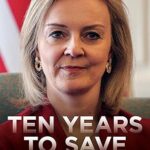
  • BOOK REVIEW : Ten Years to Save the West by Liz Truss

    BOOK REVIEW : Ten Years to Save the West by Liz Truss

    BUY ON AMAZON


    It’s fair to say that Liz Truss had a difficult few weeks as Prime Minister. She’s not the only politician to have faced a troubled reputation, but the careful crafting together of a clever, thoughtful and penetrating auto-biography can change matters somewhat. Although Truss hasn’t written a full auto-biography, she has sought to address many of the issues which caused her trouble when in office.

    Early on in the book, Truss addresses her thoughts about the Monarch dying, noting “why me, why now?” to hearing the news. This is an honest thing to recount, any individual would feel that this is unfortunate timing at best, although perhaps it needed more humility in general to balance what feels instead as quite a self-centred first few chapters. And that is the challenge here, writing a book which shows an understanding of what went wrong, but the writing style doesn’t burden itself with focusing on that.

    Some passages are odd, the former Prime Minister writing “I have strong views about the bold changes required to ensure that freedom and democracy win”, but this is inevitably true of most those who seek to be elected to the House of Commons. There are few political figures who don’t have strong views about making changes to the current system. However, these appear to be views she genuinely holds, as later on she accuses David Cameron of “not being prepared to do the bold things that Britain needed”. She might have disagreed with his views and policies, but Cameron did oversee some substantial structural changes in many areas.

    On justice, her views look towards the United States and she is unashamedly in support of their criminal justice system, writing “I looked enviously across the Atlantic where there were elected judges and prosecutors and a constitutionally appointed Supreme Court”. The attacks on others come thick and fast, “the sheer level of snobbery, the power of vested interests and the disdain for the democratically decided will of the British people, whether it was over Brexit or immigration, shocked me”.

    There are some aspects where criticism seems to flow easily from Truss, condemning Sue Gray for hugging her after she received bad news and noting “I didn’t welcome her unsolicited embrace, but given how delicate I was feeling, she got off lightly”. It felt like a passage that didn’t need to be included in the book, a cheap attack on someone trying to be kind that could have been dealt with at the time. Truss then smashes into the “anti-growthers” in Cabinet, as if any Conservative Cabinet Minister was supportive of shrinking the economy. Instead of looking like a thoughtful and reflective former senior political figure, there’s almost a sneering attitude which is missing from the last several books written by former Prime Ministers.

    Truss is better on Ukraine, perhaps because she can point her obvious anger at Putin, rather than directing it towards whatever civil servant or Cabinet colleague she could find. She seems to have accepted the view early on that Putin was a real threat to Ukraine in terms of a widespread military attack far more extensive than their previous occupation attempts, trying to get other countries to get behind her concerns. But, the approach that Truss takes is finding a common enemy and although it might play well on Ukraine, there is an argument that politics should bring people together and not divide them.

    When Johnson was deposed, this led Truss to see her opportunity, although it was inevitable that she had some concerns. She wrote:

    “My husband Hugh said it would be impossible to lead the party, given the level of infighting and nihilism demonstrated by the removal of Boris. The Conservatives were too divided to back any decisive course of action, he said. Even Hugh, who predicted it would all in tears, accepted that this was the moment I was expected to run and that if I didn’t, people would say that I had bottled it. Ian Sherwood, my political agent in my Norfolk constituency, also thought I should run – but he thought it would be for the best if I came second”.

    Whereas other former Prime Ministers talk about the sense of wonder of Downing Street and the new life, Truss focuses on the negatives with some force. She notes that she couldn’t exercise and when her security would take her to Hyde Park or a private garden, she noted it was like “a prison exercise yard”. The former Prime Minister risks verging into Marie Antoinette territory, complaining that “I had to spend time organising my own hair and make-up appointments”. She’s not the first Prime Minister to have encountered issues such as this, it was made into a brilliantly written sketch in Yes, Prime Minister, but it sounds resentful rather than being a little annoyance amidst one of the most exciting opportunities possible to have for a politician.

    On the Government’s economic policy, she said that after a meeting with Treasury officials, “there was no word of warning about any likely issues with the bond markets and no-one mentioned the issues surrounding liability-driven investments (LDIs)”. Startlingly, she also writes that “I had no confidence in the methodology I knew the OBR used and believed its modelling to be fundamentally flawed”. Truss, as a former Chief Secretary to the Treasury, simultaneously expresses an astounding lack of personal knowledge of LDIs, whilst also condemning the OBR who could have warned her of her economic model. Concerns were raised about LDIs, including by Simon Wolfson, at the very time she was the Chief Secretary.

    Truss does address the LDI issue with her comment that “I hadn’t heard of LDIs and neither had most Treasury officials, one of the impacts or removing so much expertise from the Treasury and putting it into the Bank of England and OBR”. This does perhaps make matters worse, Truss had condemned in full flow the Bank of England and OBR, before recognising the knowledge base that would have saved her budget from failure was within those organisations. And as a failed budget, it was undeniable, rolled back by Truss herself it was an expensive mistake that required the Bank of England to dig Truss out of a hole. There is no depth of argument in the book about what happened, no finesse or structure, it’s a disappointingly empty explanation of the self-inflicted economic crisis.

    In the final chapter, Truss comes up with some plans for the future based on her experiences. Anyone who has held the position of Prime Minister inevitably has a contribution to make and this is the area of the book where she could have detailed her strategic plan based on what she encountered. It was an opportunity to inspire, bring people together and look towards the future. The first point she made was, in capitals, “WE MUST BE CONSERVATIVES”. This apparently “means rejecting net zero zealotry and wokeism”, an easy culture wars argument that seems to be an important priority for Truss. What does it actually mean? She doesn’t say. Secondly, “WE MUST DISMANTLE THE LEFTIST STATE”, effectively saying that conservatives were too willing to accept institutional frameworks and that the people must be trusted more. Thirdly, “WE MUST RESTORE DEMOCRATIC ACCOUNTABILITY”. This includes “abolishing QUANGOs such as the OBR”. Liz Truss is clear that institutions such as the OBR are a real problem, so clear it’s mentioned perhaps more times than necessary, points are often laboured in the book, although that saves an explanation of the details.

    Fourthly, “CONSERVATISM MUST WIN ACROSS THE FREE WORLD, PARTICULARLY IN THE UNITED STATES”. Not content with condemning institutions in the UK, she explains that this is a global problem. Fifthly, “WE MUST REASSERT THE NATION STATE”. Again, a complaint again about international institutions working together which she doesn’t feel have sufficient democratic accountability. Sixthly, “WE MUST END APPEASEMENT”. This is in reference to countries such as China, Russia and other threats to the nation state. All combined, it’s a surprising set of priorities, with effectively no mention made of public services or how to improve them, matters which many people might want to find more about.

    Establishments must evolve and modernising and changing institutions is important, but much is in the detail rather than the generality. It would be very easy for an elector to say ‘there’s no point in politicians, none of them care’, but the reality is that the vast number of MPs do care a lot. Sweeping statements are dangerous, indeed rather than condemn the Bank of England with such glee, Truss could have come with challenging solutions for them to change.

    The book is a very tough read, full of negativity and arguably limited self-awareness or solutions to tackle the problems in society. With broad sweeping strokes of how so many politicians or officials didn’t want growth, the book struggles to hit its mark. The Prime Minister who rolled back nearly the entirety of Liz Truss’s budget was Liz Truss, she sacked Kwarteng and then reversed the budget she said was essential. Truss does accept mistakes in the book, but it’s not clear exactly what those mistakes were and she once again apologises in broad sweeps. At times she launches attacks on institutions and individuals, whilst forgetting that she was the Prime Minister and could have changed any institution or over-ridden their decisions. In fairness, the book is accessible and easy to read, a title that can be completed in one sitting it does flow in a way that some other more stodgy biographies fail to achieve.

    It could be suggested that friends of the former Prime Minister might have cautioned her not to write a book such as this. This isn’t because of the establishment and institutions that would want it to remain hidden, but instead because it explains why Liz Truss was ousted so quickly and that only one person is responsible for that. Few political memoirs miss the mark, there are some that show great humility such as those of John Major, Rory Stewart, David Cameron, Ken Clarke, Alan Johnson and Gordon Brown. Others go into considerable depth, more formal tomes such as those by Margaret Thatcher, Nigel Lawson, Tony Blair and Winston Churchill. Few seem to have failed to engage, perhaps only Edward Heath’s auto-biography equals this with its lack of self-reflection and awareness. This is a useful and interesting contribution, but it feels as though a more positive approach for the future could have transformed this title. Why was the book rushed out? It might be unkind to suggest that this was some positioning by Truss in preparation for what seemed at the time as a potential second term for Donald Trump, a President who she might have thought was in alignment to her and a way to justify her global big thinking.

  • Kirsty McNeill – 2024 Speech on the Adequacy of the Scotland Act 1998

    Kirsty McNeill – 2024 Speech on the Adequacy of the Scotland Act 1998

    The speech made by Kirsty McNeill, the Parliamentary Under-Secretary of State for Scotland, in the House of Commons on 18 July 2024.

    I thank the right hon. Member for warmly welcoming me to the Chamber and, indeed, for the work that we have done together in the past on promoting the values of humanitarianism. He will know not only that this is my first day speaking at the Dispatch Box but that my maiden speech, just a short while ago, was my very first contribution of any kind in this House. I hope that with nearly four decades of dedicated service in this place, he may still recall the trepidation of standing here to speak for the first time.

    Turning to the subject matter of the debate, I begin with a celebration of the Scotland Act 1998. It is 25 years since Her late Majesty Queen Elizabeth II opened the Scottish Parliament and the late, and much-missed, Donald Dewar was sworn in as First Minister. Donald Dewar, the father of devolution, described the Scottish Parliament as “not an end” but a “means to greater ends”—namely, greater social justice in Scotland. That is the driving imperative that still guides Labour, which is why ensuring support for both the Union and the devolved institutions should be seen as a precondition for, and not the sum total of, this Government’s ambitions.

    In the quarter century since the establishment of the Scottish Parliament, we have seen a deepening of devolution through the 2012 and 2016 Scotland Acts. Crucially, those reforms were based on cross-party consensus in Scotland. I am immensely proud that I will now have a role in the ongoing success of those Acts as they continue to deliver for people in Scotland.

    It is right that we continue to hear views from all sides on how constitutional frameworks should evolve. However, I believe that it is through relationships and collaboration that we will drive progress together and deliver for the people we were sent here to serve. As my right hon. Friend the Secretary of State for Scotland has made clear, we all need to work on resetting relationships. Indeed, the Prime Minister has already made this a priority, with his first official engagement being with the First Minister in Scotland. That has been mirrored by early engagement by Ministers throughout the UK Government, and I assure the House that it will continue.

    For my part, I am clear that improved and ongoing co-operation will depend on three main things. The first is the sincerity of our collective commitment to a deep and durable resetting of relationships. Like the 1998 Act itself, collaborative working must endure beyond specific Administrations and Ministers, and be about more than formal structures and machinery. That does not always mean that we will agree, but we must be more mature about those disagreements, and depolarise and detoxify the tone of debate in Scotland. That should be the nature of grown-up politics and it is what the people of Scotland, and of all four nations of the UK, rightly expect from us as their elected representatives.

    Secondly, we need a dynamic understanding of devolution as an ongoing process of redistributing power, which is already evidenced in our commitment to metro mayors in England and to further devolution within England, as set out in the King’s Speech, and in the establishment of the Council of the Nations and Regions. Thirdly, we must commit to a genuine era of people power, with communities, co-operatives, civil society and local government working with the Government at all levels to deliver the change Scotland needs. As I hope my maiden speech made clear, we all need to have an open-hearted approach to working together in the best interests of the people we serve.

    I turn now to the substance of today’s debate. I appreciate the deeply held concern of the right hon. Member. The Government are focused on rebuilding trust in politics across the whole of the UK. In our manifesto, we have been clear that it is not only here in Westminster where more must be done to uphold the standards we expect to see in public life. Scrutiny of the Scottish Government is a matter for the Scottish Parliament, and it could be raised there by the right hon. Member’s colleagues. Nevertheless, we have committed in our manifesto to ensuring that Members of devolved legislatures will have the same free speech protections enjoyed by MPs here at Westminster, to better ensure that elected representatives can hold those in power to account. I hope that the right hon. Member will welcome that commitment. It is important to emphasise that legal proceedings between Mr Salmond and the Scottish Government are ongoing.

    I appreciate that there will be many views on how the Scotland Act 1998 might be improved. That is only right, and I am sure that we will continue to hear those views both here and in the Scottish Parliament, but as I have said, the settlement has been remade over the course of 25 years on the basis of broad consensus. Delivery must now be our focus. As the King’s Speech set out yesterday, this Government are committed to delivering change for Scotland. From making Scotland the home of Great British Energy, which is central to our mission to make the UK a clean energy superpower, to the new national wealth fund and the new deal for working people, we will deliver a better outcome for people in Scotland, particularly those at the sharp end of inequality, which holds back too many people.

    While it is true that co-operation between Governments at a political level has not always been straightforward, nevertheless the Scotland Act has endured. I have often said that while Scots do not have to agree about everything, we do have to find ways to agree about more. Labour is the party of devolution and we will be a Government of collaboration, but above all we are going to deliver for the people of Scotland. There is so much to do. It is time to get started.