Author: admin

  • PRESS RELEASE : The Houthis must stop their attacks on ships in the Red Sea – UK statement at the UN Security Council [September 2024]

    PRESS RELEASE : The Houthis must stop their attacks on ships in the Red Sea – UK statement at the UN Security Council [September 2024]

    The press release issued by the Foreign Office on 12 September 2024.

    Statement by Ambassador James Kariuki, UK Deputy Permanent Representative to the UN, at the UN Security Council meeting on Yemen.

    I’m grateful to the Special Envoy Grundberg and Acting USG Msuya for their briefings. And I also thank Ms Al Obahi for her vital insights that serve as a timely reminder of the importance of engagement with civil society and the Yemeni community, especially women, in order to achieve long-term stability and peace in Yemen.

    I also welcome the participation of the permanent representative of Yemen in our meeting today.

    Let me make three points.

    First, I join the briefers in highlighting the plight of UN, NGO workers and staff and former staff of diplomatic missions who remain in Houthi captivity.

    It is over three months since their detention; that’s three months of families being torn apart by the unprovoked and arbitrary act; and three months of reducing the humanitarian community’s capacity to be able to fully support Yemenis in need. There is no justification for this. We once again call on the Houthis to immediately and unconditionally release those detained.

    Second, I join Ms Msuya in highlighting the severe constraints on humanitarian access in Yemen especially in Houthi-controlled areas. The reckless actions of the Houthis are further restricting an already complex and hostile operating environment, making it almost impossible to get aid to those who need it.

    We must all be clear about the importance of safe and effective humanitarian access so that we can continue to deliver critical, lifesaving support to the Yemeni people.

    Third, we once again reiterate this Council’s call for the Houthis to cease their dangerous and illegal attacks on maritime shipping.

    The recent attack on the MV Sounion is a clear example of the Houthis’ disregard for the catastrophic environmental and economic consequences of their actions for both Yemen and the region.

    We call for the immediate cessation of arms supplies to Houthis. The continued supply of advanced weapons which enables these attacks shows complete disregard for the UN Arms Embargo.

    President, to conclude, the UK is grateful to Special Envoy Grundberg’s efforts to facilitate economic dialogue, de-escalate tensions and preserve space for a future peace process.

    We are unwavering in our support to his efforts to secure an inclusive, sustainable peace in Yemen and we continue to call on all parties to de-escalate tensions and preserve space for negotiations under UN auspices.

    Rather than pursuing reckless attacks and the detention of innocent civilians, we urge the Houthis to prioritise the needs of Yemenis by engaging with peace process negotiations.

  • PRESS RELEASE : Planning permission granted for Kendal flood defence work [September 2024]

    PRESS RELEASE : Planning permission granted for Kendal flood defence work [September 2024]

    The press release issued by the the Environment Agency on 12 September 2024.

    The improvements to New Road flood defence work in Kendal were made following feedback from the community and through consultation.

    Planning permission has been granted for a revised design for flood defences at New Road in Kendal by Westmorland and Furness Planning Authority following the planning committee deferring the application in May.

    Feedback from local residents and interest groups on the original plans approved in 2019 as well as comments through the common land consultation shaped further improvements made to the flood scheme design by the Environment Agency.

    The new design includes changes to the open aspect and accessibility through the area for both the local community and visitors.

    The approved design includes a safer common access arrangement for the fairground and for other activities at the location.

    The New Road flood wall complements the stonework and finish of Gooseholme Bridge and the wider flood scheme throughout Kendal, creating and maintaining a safe community green space with access for all.

    The planning decision means work can now start on this section of the Kendal and Upper Kent Catchment Flood Risk Management Scheme which will better protect more than 1,920 homes and 2,250 local businesses from the impact of flooding.

    Changes made in response to feedback

    Environment Agency Flood and Coastal Risk Manager, Richard Knight said:

    These changes to the original design have been made in response to the feedback from the community and interested parties.

    We listened, we duly considered local people’s requests, and we believe the new design will enhance the town whilst providing better protection to homes and businesses against the very real threat of flooding.

    Being granted planning permission for the New Road area heralds the start of the next part of the flood risk management scheme for Kendal.

    It is important to get the scheme built as quickly as possible to protect the homes and businesses in this area of Kendal.

  • PRESS RELEASE : Royal Navy and RAF shadow Russian ships and intercept Russian aircraft to protect UK national security [September 2024]

    PRESS RELEASE : Royal Navy and RAF shadow Russian ships and intercept Russian aircraft to protect UK national security [September 2024]

    The press release issued by the Ministry of Defence on 12 September 2024.

    HMS Iron Duke and HMS Tyne shadowed four Russian vessels in UK waters and RAF jets intercepted a Russian Bear aircraft approaching the UK area of interest.

    Royal Navy warships have spent the past week closely shadowing the Russian Navy as four of its vessels sailed through the Channel and the North Sea, helping to protect UK national security.

    Alongside this, two RAF Typhoons scrambled from RAF Lossiemouth yesterday (11/09), supported by a Voyager from RAF Brize Norton, to intercept two Russian Bear-F aircraft operating near the UK.

    The RAF jets were launched under NATO command and worked closely with our partners to monitor the aircraft as they passed through international airspace. Our Typhoon fighters escorted the aircraft out of the UK’s Flight Information Region and at no time did the Russian aircraft enter UK sovereign airspace.

    Typhoons are part of the RAF’s Quick Reaction Alert, which sees aircraft in Scotland and England at high-readiness 24/7, 365 days a year ready to defend and protect UK airspace.

    Defence Secretary, John Healey MP said:

    This government is committed to making the UK secure at home and strong abroad. Efforts by the Royal Navy and RAF over the last two weeks demonstrate their selfless commitment to protecting our national security.

    I’d like to thank those members of our armed forces who took part in this operation, their professionalism and skill was on full display while working seamlessly with our NATO allies to uphold international standards.

    In a six-day operation hand-in-hand with NATO allies, the Portsmouth-based frigate HMS Iron Duke shadowed the Kilo-class submarine Novorossiysk and its supporting tug Evgeny Churov through the Dover Strait and into the Atlantic.

    The carefully-choreographed operation started at the beginning of September when Canadian warship HMCS Shawinigan escorted the diesel-powered submarine and her support vessel as they sailed from the Baltic and headed across the North Sea. The Canadian patrol ship handed over monitoring duties to the Royal Navy as the Russian vessels approached the busy Dover Strait.

    From there HMS Iron Duke ensured constant watch on the two vessels, using her many sensors including her Wildcat helicopter, from 815 Naval Air Squadron, in the air. The submarine remained on the surface throughout the operation.

    Once the Russian vessels had passed UK waters, HMS Iron Duke handed over shadowing duties to the Marine Nationale off the northwest coast of France, where the frigate FS Auvergne took up the mission.

    The ship then returned immediately to the North Sea for a near carbon copy operation – this time with Steregushchiy-class corvette Stoiky and tanker MT Yaz as it approached Dover, picking up shadowing duties from the Belgian Navy, whose patrol vessel BNS Castor had kept watch up to that point.

    HMS Iron Duke then handed over monitoring duties to patrol ship HMS Tyne off north western France.

    Throughout both journeys past the UK – permitted under international law in accordance with the right of innocent passage– the Russian warships and their support vessels were closely monitored by UK forces to ensure they acted in a safe and non-threatening manner.

    Commanding Officer of HMS Iron Duke Commander David Armstrong said:

    These were the fourth and fifth such operations for HMS Iron Duke since we emerged from a period of intense training in July, and I am extremely proud of the professionalism and selfless dedication that my ship’s company consistently display as they perform their duty.

    Maritime security operations of this nature are a fundamental capability of the Royal Navy, with the protection of our sovereign waters and critical national infrastructure a key focus.

  • PRESS RELEASE : North Korea ballistic missile launches on 12 September 2024 – FCDO statement [September 2024]

    PRESS RELEASE : North Korea ballistic missile launches on 12 September 2024 – FCDO statement [September 2024]

    The press release issued by the Foreign Office on 12 September 2024.

    Following North Korea’s ballistic missile launches on 12 September, a Foreign, Commonwealth & Development Office (FCDO) spokesperson gave a statement.

    An FCDO spokesperson said:

    North Korea’s ballistic missile launches on 12 September are another breach of multiple UN Security Council resolutions (UNSCRs). Unlawful ballistic missile launches continue to destabilise the peace and security of the Korean Peninsula.

    The UK strongly urges North Korea to stop such provocations, to engage in meaningful diplomacy and accept offers of dialogue.

  • PRESS RELEASE : Sir Michael Barber appointed as adviser to the Prime Minister [September 2024]

    PRESS RELEASE : Sir Michael Barber appointed as adviser to the Prime Minister [September 2024]

    The press release issued by the Cabinet Office on 12 September 2024.

    The Chancellor of the Duchy of Lancaster has announced the appointment of Sir Michael Barber KB as the Prime Minister’s Adviser on Effective Delivery.

    Sir Michael will support the Prime Minister in driving forward the delivery of the five national missions. This will include coordinating ambitious, measurable, long-term objectives that deliver change across the UK.

    The part-time role is a Direct Ministerial appointment and will be unpaid. Sir Michael will take up the role for an initial 12-month period, starting in September 2024.

    Sir Michael has extensive experience in implementing large-scale system change, working with many governments internationally to drive delivery.

    He has worked closely with several recent Prime Ministers and senior Ministers in different administrations, most recently as an adviser on skills delivery to the former Chancellor of the Exchequer and Secretary of State for Education from 2022 to 2023.

    He has also served as Chief Adviser to the Secretary of State for Education on school standards (1997 to 2001), Head of the Prime Minister’s Delivery Unit (2001 to 2005) and Chair of the Office for Students (2017 to 2021).

    Prime Minister Keir Starmer said:

    By changing the way we govern this country – through setting long term goals on the economy, energy, safer streets, breaking down barriers of opportunity and building an NHS fit for the future – we can rebuild the public’s trust in our politics and deliver the change Britain needs.

    I’m delighted Sir Michael will be supporting us to change lives for the better as we fix the foundations and deliver our five national missions.

    Sir Michael Barber KB said:

    It is an honour to be asked to take on this role. The five missions are vital to the future of the country and I look forward to assisting the Prime Minister with their delivery.

    ENDS

    Notes to editors

    • As part of the appointment process, Sir Michael has declared all potential conflicts of interest.
    • He has stepped down as Chair of the company he founded, Delivery Associates, and will not undertake any work of any kind for Delivery Associates with the UK government.
    • Sir Michael’s letter of appointment makes clear that as a result of this appointment, Delivery Associates should not gain any advantage in relation to any potential future work with the UK government or be disadvantaged. This stated government position is the same as that applied to Sir Michael’s role in the previous administration.
  • PRESS RELEASE : New taskforce launched to turbocharge flood preparedness and delivery of flood defences [September 2024]

    PRESS RELEASE : New taskforce launched to turbocharge flood preparedness and delivery of flood defences [September 2024]

    The press release issued by the Cabinet Office on 12 September 2024.

    The Taskforce will co-ordinate flooding preparation and provide long-term, strategic thinking to better protect communities.

    A new Floods Resilience Taskforce to turbocharge the development of flood defences and bolster the nation’s resilience to extreme weather has convened for the first time, Secretary of State for Environment, Food and Rural Affairs Steve Reed announced today (Thursday 12 September).

    The Taskforce brings together the Secretary of State and Floods Minister Emma Hardy with representatives from Defra, MHCLG, Home Office, Cabinet Office, the Environment Agency, the Met Office, Local Resilience Forums, Mayoral Offices, emergency responders and the National Farmers Union, among others.

    The expert group discussed how they will speed up and co-ordinate flooding preparation and resilience between central government, local authorities and community responders, and emergency services.

    The group will also use their collective experience and knowledge to identify and protect vulnerable areas, including championing the delivery of drainage systems, flood defences and natural flood management schemes in communities.

    This comes as the current Met Office outlook suggests autumn is likely to be wetter than usual.

    The Taskforce also outlined its plans to take a long-term, strategic approach to the challenges of flooding. This will support better protection for families across the country, as well as underpinning the resilience of the economy to the growing threat of climate change. These challenges include ensuring that funding for national infrastructure remains sustainable into the future.

    Secretary of State for Environment, Food and Rural Affairs Steve Reed said:

    Flooding devastates communities and businesses across the country. For far too long the delivery of flood schemes has been too slow and left communities underwater.

    That is why the new Government is acting now to speed up the building of flood defences and bolster our emergency response.

    Floods Minister Emma Hardy said:

    The climate crisis is the greatest global challenge we currently face, and as an eyewitness to extreme flooding myself, I know the devastating impact these events can have on our livelihoods.

    As chair of the Floods Resilience Taskforce, I will work closely with our partners to ensure projects remain on track and not only protect homes but create more green jobs and drive investment in our towns.

    The Environment Agency is the government’s primary delivery partner for flood defences and continues to support the construction of hundreds of projects across the country.

    Recognising the scale of the challenge, Environment Agency teams have been prioritising the construction, maintenance, and repair of key flood defences – including the Cockett Wick seawall in Essex, which will ensure 3,000 homes and businesses are protected better after a £12 million investment.

    Caroline Douglass, Executive Director for Flood and Coastal Risk Management at the Environment Agency, said:

    Protecting people and communities is our top priority, which will only become more pressing as climate change brings more extreme weather and rising sea levels.

    This new Taskforce will look at the range of resilience measures available to provide options to reduce flood risks in more communities – and we will play our part to ensure essential projects are delivered across the country.

    5.5 million properties in England are at risk from flooding and the country has just experienced the wettest 18 months on record (to February 2024) following extreme weather including Storms Babet and Ciarán.

    The next meeting of the Taskforce will take place in early 2025 and will discuss longer-term oversight of wider flood resilience strategy and investment, as well as any rapid learning on the response to major flooding.

    Last week, Floods Minister Emma Hardy also met with representatives from the insurance industry to discuss the role they can play in building a resilient nation.  The meeting explored the support insurers can provide to their customers, which includes raising more awareness and take up of Build Back Better, which can provide for up to £10,000 in addition to like for like flood repairs to enable future resilience of a property.

    In August, the government also launched the Floods and Droughts Research Infrastructure, which is backed by £40 million and will be the first UK-wide network looking to understand the impact of extreme weather conditions across the country, identifying where incidents are likely to occur and planning to limit their impact.

  • PRESS RELEASE : Attorney General visits Ukraine to drive accountability [September 2024]

    PRESS RELEASE : Attorney General visits Ukraine to drive accountability [September 2024]

    The press release issued by the Attorney General’s Office on 12 September 2024.

    The Attorney General Lord Hermer KC visited Kyiv, Bucha and Irpin to drive forward accountability for Ukraine.

    Speaking alongside President Zelenskyy, Ukrainian Prosecutor General Andriy Kostin and ICC Prosecutor Karim Khan, the Attorney General opened the United for Justice Conference.

    The Attorney General said:

    The UK supports Ukraine’s fight for freedom and its fight for justice. Russia must be accountable both for specific atrocities and its act of aggression. From the battlefield to the courtroom, the UK stands with Ukraine.

    The conference was held in an underground car park in central Kyiv for safety, a daily reminder of the toll of war.

    At Bucha’s cathedral, the Attorney General heard of the brutal murders and executions of ordinary people as they cycled to work, walked to the shop or sought to flee Russia’s occupation in March 2022.

    Bucha was a place of terror two and a half years ago. Though homes have been rapidly reconstructed, wounds remain. Father Andriy, the Archpriest of the Cathedral, told from his experience of the importance of international rule of law and accountability, to provide justice for the people of Bucha and prevent further atrocities.

    The Attorney General also stopped at the Romanivika Bridge, Irpin, blown up in 2022 to stop the Russian advance to Kyiv, but now a commuter route from the city to its suburbs.

    There he heard about the part-UK funded Mobile Justice Units which support victims, including of conflict related sexual violence, across Ukraine.

    The Attorney General also held detailed discussions with Prosecutor General Kostin on the work of his Office to prosecute the 135,000 incidents of alleged war crimes in real-time, as well as training and other support the UK is providing to help prosecutors.

  • Keir Starmer – 2024 Keynote Speech on the NHS

    Keir Starmer – 2024 Keynote Speech on the NHS

    The speech made by Keir Starmer, the Prime Minister, at the King’s Fund on 12 September 2024.

    [NB, this is the redacted speech issued by 10 Downing Street with political comment removed]

    As you have heard today, Lord Darzi has published his independent report on the state of our NHS.

    It is an incredibly comprehensive analysis. Some of you will have seen it, there are copies available, please read it.

    A raw and honest assessment. That is what we asked for.

    And that is why I wanted to come here to the King’s Fund.

    Home to many of our country’s leading healthcare experts.

    Because your contributions are going to be vital.

    As we get this precious institution back on its feet,

    And build an NHS that is truly fit for the future.

    And look, our starting point couldn’t be further from that goal.

    Public satisfaction in the NHS has fallen…

    [Please note political content redacted here.]

    To an all-time low today.

    Think of the impact that has on staff who are putting in so much day in day out, knowing that confidence is at an all-time low.

    And that is because, as everybody in the country knows, the last government broke the NHS.

    But until this morning, we didn’t know the full scale of the damage, which is laid bare in the report.

    Even Lord Darzi, with all his years of experience.

    Is shocked by what he discovered.

    It is unforgiveable.

    And people have every right to be angry.

    It’s not just because the NHS is so personal to all of us.

    Or because when people can’t get the care they need…

    They’re off work sick, with huge costs for our economy.

    It’s because some of these failings are literally life and death.

    Take the waiting times in A&E…

    More than 100,000 infants waited more than 6 hours last year…

    And nearly a tenth of all patients are now waiting for 12 hours or more…

    That’s not just a source of fear and anxiety…

    It’s leading to thousands of avoidable deaths….

    And that phrase avoidable deaths should always be chilling.

    That’s people’s loved ones who could have been saved.

    Doctors and nurses whose whole vocation is to save them…

    Hampered from doing so.

    It’s devastating. Heartbreaking. Infuriating…

    And that’s just scratching the surface.

    High-risk heart attack patients waiting too long for urgent treatment.

    Cancer diagnosis patients waiting too long….

    With cancer death rates higher than other countries

    And when it comes to getting help for mental health …

    …. 345,000 are waiting over a year.

    That’s roughly the entire population of Leicester.

    [Please note political content redacted here.]

    Covid hit our NHS harder than healthcare systems in other countries.

    The NHS delayed, cancelled, or postponed far more routine care during the pandemic than any comparable health system.

    And why?

    Because our NHS went into the pandemic in a much more fragile state.

    Fewer doctor, fewer nurses and fewer beds than most other high income health systems

    [Please note political content redacted here.]

    What Lord Darzi describes as a “calamity without international precedent”.

    A “scorched earth” approach to health reform, the effects of which are still felt to this day.

    And at the same time, they inflicted what the report describes as:

    “the most austere decade since the NHS was founded”

    Crumbling buildings.

    Decrepit portacabins.

    Mental health patients in Victorian-era cells infested with vermin.

    When we say they broke the NHS…

    That’s not performative politics.

    Just look at it.

    The 2010s were a lost decade for our NHS.

    [Please note political content redacted here.]

    And it’s not just the state of our National Health Service in crisis.

    It’s also the state of our national health.

    We’re becoming a sicker society.

    Spending more of our lives in ill-health than ten years ago.

    There are 2.8 million people economically inactive because of long-term sickness.

    As today’s report makes clear –

    “The NHS is not contributing to national prosperity as it could.”

    But perhaps Lord Darzi’s most damning finding is about the declining physical and mental health of our children.

    Fewer children getting vaccinated…

    While those from the most deprived backgrounds…

    Are twice as likely to be obese by reception age.

    And much of this is a direct result of wider social injustices..

    Poor quality housing

    Lower incomes,

    Insecure employment.

    All of it, not just damaging the health of our nation…

    It’s piling up the pressures on our NHS.

    That’s the report.

    But look, I haven’t come here just to set out this appalling inheritance. Though it is really important that we know it and properly understand it in detail.

    Getting people back to health and work would not only reduce the costs on the NHS.

    It would help drive economic growth – and fund public services.

    My government was elected on a mandate for change so I’m also here to talk about how together we fix it.

    I feel very deeply the profound responsibility for this.

    And indeed, the opportunity of this moment.

    The NHS may be broken, but it’s not beaten.

    As the report says, the NHS may be in a “critical condition”.

    But “its vital signs are strong”.

    And we need is the courage to deliver long-term reform.

    Major surgery not sticking plasters.

    We’ve got to face up to the challenges….

    Look at our ageing society.

    And the higher burden of disease.

    Look, the NHS is at a fork in the road.

    And we have a choice about how it should meet these rising demands.

    Don’t act and leave it to die.

    Raise taxes on working people.

    Or reform to secure its future.

    Working people can’t afford to pay more.

    So it’s reform or die.

    So let me be clear from the outset, what reform does not mean.

    First, it does not mean abandoning those founding ideals.

    Of a public service, publicly funded, free at the point of use.

    That basic principle of dignity.

    Inspired of course by Bevan,

    That when you fall ill,

    You should never have to worry about the bill.

    That is as true today as when the NHS was founded 76 years ago.

    And I believe that so deeply.

    As some of you will know, my mum and my sister both worked for the NHS.

    My wife works for the NHS.

    The NHS cared for my Mum throughout what was a very

    But “its vital signs are strong”.

    long illness…

    The NHS runs through my family like a stick of rock.

    And you know, this isn’t just about emotion.

    It’s about hard facts too.

    The NHS is uniquely placed for the opportunities of big data and predictive and preventative medicine.

    So the problem isn’t that the NHS is the wrong model.

    It’s the right model.

    It’s just not taking advantage of the opportunities in front of it.

    And that’s what needs to change.

    Second, reform does not mean just putting more money in.

    Of course, even in difficult financial circumstances.

    My government will always make the investments in our NHS that are needed.  Always.

    But we have to fix the plumbing before turning on the taps.

    So hear me when I say this.

    No more money without reform.

    I am not prepared to see even more of your money spent

    On agency staff who cost £5,000 a shift

    On appointment letters, which arrive after the appointment,

    Or on paying for people to be stuck in hospital

    Just because they can’t get the care they need in the community.

    Tonight, there will be 12,000 patients in that very position.

    That’s enough to fill 28 hospitals.

    So we can’t go on like this.

    As Lord Darzi has said –

    NHS staff are “working harder than ever”

    But “productivity has fallen.”

    Because patients can’t be discharged,

    And clinicians are spending their time trying to find more beds.

    Rather than treating more patients.

    That isn’t just solved by more money – it’s solved by reform.

    And third, reform does not mean trying to fix everything from Whitehall. It really doesn’t.

    When Lord Darzi says the vital signs of the NHS are strong.

    He’s talking about the talents and passion of our NHS workforce.  That’s what he’s talking about.

    The breadth and depth of clinical talent.

    The extraordinary compassion and care of our NHS staff.

    If we are going to build an NHS that is fit for the future…

    Then I tell you, we are going to do it with our NHS staff.

    And indeed, with our patients too.

    We are going to change it together.

    Now, that starts with the first steps,

    40,000 extra appointments every week.

    But we’ve got to do the hard yards of long-term reform.

    So this government is working at pace

    To build a Ten-Year Plan.

    Something so different from anything that has gone before.

    This plan will be framed around three big shifts,

    Three fundamental reforms,

    Which are rooted in what Lord Darzi has set out today.

    First, moving from an analogue to a digital NHS.

    Already we can see glimpses of the extraordinary potential of technology,

    Like the world’s first ever non-invasive, knifeless surgery for Kidney cancer… Just imagine that.

    Pioneered by Leeds Teaching Hospitals.

    Or the precision cancer scanners…

    I saw just yesterday.

    Or simply for transforming how we manage a condition.

    We went to Kingsmill Hospital earlier this year and met a 12-year old called Molly.

    She used a smartphone to monitor her glucose levels…

    Instead of being forced to repeatedly prick her fingers.

    It made such a difference to her daily life and gave great reassurance to her mum who could remotely check on the settings and the findings.

    We’ve got to make these opportunities available to everyone.

    We’ve got to use technology to empower patients and give them much greater control over their healthcare.

    Take an innovation like the NHS app.

    This could be a whole digital front door to the NHS.

    Appointments, self-referral, reminders for check-ups and screenings.

    Patients in control of their own data,

    Healthcare so much more transparent,

    So you always know your options,

    And the standards that you should expect.

    And you know, earlier this year I went to Alder Hey Hospital. Many of you will know it, it’s a fantastic hospital, where they carry out heart surgery on infants, which is really humbling to see.

    I met the parents of a two-year old who had extremely complicated heart surgery. A tiny infant, an incredible surgery.

    I asked them about their child’s history and condition, how did he come to be here, what’s the story behind it,

    And as they told me, I could see them welling up as they went through the history, conditions, all the background through all of that over and over again.

    They really struggled to tell the story and they have to do this every single time.

    Because the records weren’t held electronically.

    We’ve got to have fully digital patient records.

    So that crucial information is there for you.

    Wherever you go in our NHS.

    And while I’m on technology

    We’re also going to throw the full weight of the British Government behind our world leading life sciences.

    Second, we’ve got to shift more care from hospitals to communities.

    Now The King’s Fund has long called for this.

    Successive governments have repeatedly promised it.

    But what’s happened?

    The opposite.

    The share of the NHS budget spent on hospitals has actuallyincreased.

    Now this Ten-Year plan has to be the moment we change this.

    The moment we begin to turn our National Health Service

    into a Neighbourhood Health Service.

    That means more tests, scans, healthcare offered on high streets and town centres.

    Improved GP access.

    Bringing back the family doctor.

    Offering digital consultations for those who want them,

    Then they told me that every time they went to a different hospital, they had to go virtual wards.

    And more patients can be safely looked after in their own homes.

    Where we can deal with problems early,

    Before people are off work sick and before they need to go to hospital.

    And we’ve got to make good on the integration of health and social care.

    So we can discharge those 28 hospitals worth of patients.

    Saving money.

    Reducing the strain on our NHS,

    And giving people better treatment.

    And third in terms of the shifts, we’ve got to be much bolder in moving from sickness to prevention.

    Now we’ve already announced NHS health checks in workplaces.

    Blood pressure checks at dentists and opticians.

    And that is just the beginning.

    Planning for ten years means we can make long-term investments in new technologies

    That will help catch and prevent problems earlier.

    And there are some areas in particular

    Where we’ve just got to be more ambitious.

    Like children’s mental health.

    Or children’s dentistry.

    You know, one of the most shocking things that I saw, I’ve ever seen…

    This was actually when I was at was at Alder Hey Children’s Hospital again.

    As I mentioned earlier, I went to the ward where they do heart operations.

    The single biggest cause of children going into that hospital…

    Between the ages of 6 and 10…

    Was to have their rotting teeth taken out. I couldn’t believe it. I was genuinely shocked.

    All politicians say they are shocked too often, but I was honestly shocked, the single biggest cause of going into hospital of children between 6 and 10 is having their teeth taken out.

    Can you think of anything more soul-destroying?

    For those children what a price to pay.

    And for that brilliant NHS team who want to use their talents to save lives.

    Instead spending their time taking out rotting teeth.

    Something that could be so easily prevented.

    And look, I know some prevention measures will be controversial.

    I’m prepared to be bold even in the face of loud opposition.

    So no, some of our changes won’t be universally popular.  We know that.

    But I will do the right thing – for our NHS, our economy, and our children.

    Now, the task before us is the work of our generation.

    We’ve already hit the ground running.

    Negotiating an offer to end the strikes

    [Please note political content redacted here.]

    Strikes that were costing us all a fortune.

    And we inherited 1,000 trainee GPs who were set to graduate into unemployment…

    Instead we hired them.

    But only fundamental reform and a plan for the long-term can turn around the NHS and build a healthy society.

    It won’t be easy, it won’t be or quick.

    It will take a ten-year plan.

    Not the work of just one Parliament.

    But I know we can do it.

    Because we’ve done reform before.

    [Please note political content redacted here.]

    To deliver better outcomes for patients and better value for taxpayers.

    [Please note political content redacted here.]

    My Government has a huge mandate for change.

    We are mission-driven.

    And I think the themes of this conference today are fitting for this moment.

    Challenge. Change. And hope.

    Because the challenge is clear before us.

    The change could amount to the biggest reimagining of our NHS since its birth.

    And the hope, well that’s what’s really exciting and galvanising about this moment.

    Because if we get this right,

    People can look back and say –

    This was the generation that took the NHS from the worst crisis in its history.

    Got it back on its feet and made it fit for the future.

  • PRESS RELEASE : Nuclear safety, security and safeguards in Ukraine – UK national statement to IAEA Board [September 2024]

    PRESS RELEASE : Nuclear safety, security and safeguards in Ukraine – UK national statement to IAEA Board [September 2024]

    The press release issued by the Foreign Office on 12 September 2024.

    UK Ambassador to the IAEA Corinne Kitsell’s statement to the International Atomic Energy Agency Board of Governors meeting on Ukraine.

    Chair,

    The United Kingdom thanks the Director General both for his comprehensive report on Nuclear Safety, Security and Safeguards in Ukraine and for the recent report entitled: ‘Two years of IAEA continued presence at the Zaporizhzhia Nuclear Power Plant’. We are, as ever, grateful to the IAEA personnel working to help maintain nuclear safety, security and safeguards across Ukraine under the most challenging of circumstances. We also value the IAEA as the only reliable, impartial provider of information to the International Community on what is actually happening at ZNPP.

    Chair

    As the DG has said, the situation at ZNPP continues to be precarious. The report before us today identifies a numerous specific concerns, all consequences of Russia’s seizure, occupation and militarisation of a previously well run Ukrainian nuclear power plant. I would like to highlight three areas of particular concern:

    First – that two years on, the ISAMZ mission cannot secure the access it requires to fully assess whether the DG’s 5 Concrete Principles for Protecting the ZNPP are being observed at all times. Russian armed troops have blocked access to the western parts of the turbine halls. What are they hiding? The ISAMZ team has also been prevented from accessing the cooling pond isolation gate and the Zaporizhzhia Thermal Power Plant (ZTPP) switchyard. At the same time, this report confirms the presence onsite of armed troops and military equipment including armoured personnel carriers and weapons mounted armed vehicles;

    Second – that, two years on, the IAEA continues to identify major shortcomings in existing emergency arrangements, specifically the ability to ensure an effective response in the event of any emergency that warrants implementation of public protective actions off site. To be clear this is about protecting people and the environment in the event of an emergency.

    Third – Water and Power – that the IAEA report describes the diminishing availability of water at ZNPP and the vulnerable state of the off-site power supply to the Plant. Two years on, ZNPP continues to rely on only two off-site powerlines. Only last week one of those lines (the 330 kilovolt back up line) was disconnected for nearly three days.

    Chair

    Across Ukraine’s NPPs, reliability of power supply remains concerning. On 26 August one reactor at Rivne NPP and one at South Ukraine NPP went into automatic shutdown, with reductions in operating power reported in the remaining reactor units at those plants, as a result of electrical grid fluctuations. On 26 August, Ukraine was enduring a massive Russian missile and drone attack, which targeted critical energy infrastructure. We welcome the DG’s 3rd September update emphasising the importance of protecting Ukraine’s energy infrastructure to ensure it does not impact nuclear safety and announcing planned IAEA assessments of damaged Ukrainian substations.

    Despite these extremely challenging circumstances, Ukraine’s Nuclear Power Plants remaining under Ukrainian control, continue to operate safely and effectively, carrying out scheduled maintenance, with reliable supply chains, and conducting large scale emergency exercises. We are aware of the toll this takes on the operating staff, hence our support for trauma risk management workshops in July aimed at equipping NPP managers, supervisors and psychologists with the skills to spot signs of distress and provide support.

    Chair,

    Mindful of the time, I apologise for adding a couple of additional points to the statement that I had planned to make but I must address some of the Russian propaganda that we have heard this evening:

    First, drone attacks. The UK has made clear, including at the UN Security Council, our support for the DG’s 5 Principles for protecting the ZNPP – principles that have been necessary because of Russia’s seizure and occupation of a Ukrainian nuclear power plant. We do not condone any drone attacks at, towards, or from ZNPP.  In relation to alleged drone attacks – reports coming from Russian personnel exercising control over the Plant – we appreciate, and rely on, the fact based, impartial reporting of the IAEA  - our only source of reliable information.

    Second, this Board must be clear that the situation at Kursk NPP and ZNPP are not comparable. Unlike Russia we have not witnessed Ukraine intentionally seize and endanger a NPP on another country’s sovereign territory. And we all heard our distinguished Ukrainian colleague make a clear statement to the Board this week that Ukraine has no intention of targeting a NPP.

    With that, I take note of report GOV/2024/45 and ask that it be made public.

    Thank you, Chair.

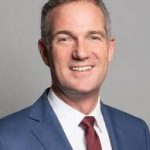
  • Peter Kyle – 2024 Speech at the Science and Engineering Conference

    Peter Kyle – 2024 Speech at the Science and Engineering Conference

    The speech made by Peter Kyle, the Secretary of State for Science, Innovation and Technology on 11 September 2024.

    Good afternoon.

    It’s a real pleasure to be here.

    Thank you for having me along. It really does mean the world to connect with people on the front line of R&D.

    Something you notice quite quickly when you get appointed to this job, is you do feel quite distant from the front line of some of things you’re making big decisions about, so it’s great to be here to connect with as many people as possible.

    Since I’ve got this job, people have constantly been asking me how it connects to people’s lives and is science really relevant to the daily lives and lived experiences of people.

    It is quite surprising for me to hear that question put in so many different ways.

    But the answer for me has never changed because anyone who has stepped foot into a secondary school classroom can see in a heartbeat how important science is to energising and inspiring young people.

    Anyone who has felt the sheer excitement of students setting up an experiment for the first time can see how important science is to inspiring young people.

    And they’ll tell you: not connecting with people’s lives just isn’t true.

    Because if you accept the idea that the only people interested in science are the professionals.

    The people with PhDs and post-docs.

    Then you’ve lost the argument about science before it has even started.

    Our challenge is not about persuading people to care about science.

    It is about what happens to science if you are forced to make difficult decisions.

    If you inherited – for example – a state with broken public finances and broken public services.

    How many of those young people would say that science should be first priority?

    And that’s the challenge we’ve got to overcome.

    We can’t just tell them that it is interesting or important.

    They already know that.

    We must show them why it matters so much for the things that they care about most.

    That is what our missions collectively is to achieve.

    They set out a clear plan for tackling the country’s greatest challenges together.

    A plan with R&D at its foundation.

    We know that the young people in that classroom want to live fulfilling and happy lives.

    So we must show them we can use science to build an NHS fit for the future.

    An NHS where doctors can use quantum scanners to detect diseases invisible to the human eye, giving them back precious years with their grandparents.

    Those young people care about achieving their own potential.

    So we must show them that technology such as AI can break down the barriers to opportunity.

    Helping teachers use AI to plan lessons that help every pupil go as far as their talents will take them.

    They care about the future of their planet, too.

    So we must show them that innovation can transform the way we generate clean energy and combat climate change.

    The success of our missions will be measured by the meaningful difference we make to everyday people’s lives.

    And every one of them will depend on growth.

    Because, more than anything else, it is growth that will shape those young people’s future.

    It is growth that determines whether they can get a good job in the place they grow up.

    Whether we can fix our hospitals and schools.

    Today, a decade of lost growth means that British people are earning less than a tenner more each week than they did in 2008.

    Taxes are at a seventy-year high.

    National debt is the highest its been since the 1960s.

    Stagnant growth and productivity has come at a profound cost to our country, our communities and individuals.

    A cost that is felt in our public services and in working people’s pockets.

    We are faced with a systemic problem and challenge.

    A problem the same old sticking plasters cannot fix.

    So we have got to do things differently.

    And science, it must be part of the solution as it has done every single time our country has moved forward.

    Because long-term, sustainable economic growth is impossible without innovation.

    You simply cannot make people better off without investment in R&D.

    A couple of months ago, I went to Glasgow to see what success could look like.

    There, I met some of the extraordinary people working in the city’s space sector.

    Some of them will have grown up as the children of shipbuilders, in a place that once built a fifth of the world’s ships.

    Now, they are building more satellites than anywhere else in Europe.

    Satellites that could transform the way we understand climate change.

    Or provide Internet access to some of our most remote communities.

    Later this year, I am heading to South Wales.

    The collapse of heavy industry there hollowed out cities, towns, and villages.

    Hundreds of thousands were left unemployed.

    Unable to do the only job they – or their parents – had ever done, many of them never worked again.

    Now, the region is home to the world’s first compound semiconductor cluster.

    And those same cities, towns and villages are once again at the beating heart of the global economy.

    Home to people who are designing and making the chips that are powering the digital revolution and driving forward our net zero ambitions.

    Their children might one day do the same.

    If I wanted to show people why science matters, I would point to places like that across our country.

    Places where R&D is providing good jobs in industries built to last.

    And giving communities their future back.

    The success of Glasgow and South Wales is testament to the power of partnership.

    Between the public and the private.

    World-leading universities working with bold, dynamic businesses.

    Too often, though, government has been missing in action.

    Some of the people I spoke to in Glasgow told me that the relationship with the state has felt less like a partnership – and more like a one-way street.

    Ever-shifting funding settlements have made it impossible to plan into the future and give the stability they need.

    A maze of unwieldy regulation has held business back, preventing them from developing products that could change people’s lives for the better.

    Universities have been treated like political footballs, rather than celebrated as a public good that they are.

    That is bad for innovation. It is bad for growth. And it is bad for working people.

    So it’s time to turn the page.

    In our national missions, I see an opportunity to build a long-term, strategic partnership in which we can both invest.

    A partnership anchored in stability – and in a belief that science and technology can benefit every single one of us, wherever we live in the country.

    It begins in the places where research happens: in labs and lecture halls across the country.

    Sometimes, life-changing discoveries can take decades to develop.

    Earlier this week, I spoke at the Terrence Higgins Trust.

    In 1982, Terrence Higgins became of the first people in the UK to die of an AIDS-related illness.

    It was almost thirty years before the treatment now used to prevent HIV infection became available to the public.

    For thirty years, scientists worked tirelessly to find a cure, often without the support they deserved – or, worse – in the face of outright opposition to even working on those solutions.

    If we want to see more breakthroughs like this.

    Breakthroughs that can bring back hope to millions.

    Then we need a coherent, clear-sighted approach.

    An approach grounded not in short-term decisions, but in a realistic, hopeful vision of a future where science makes life in Britain better.

    That is why we are introducing 10-year budgets for certain R&D activities.

    By giving researchers the long-term funding, they need to remain right at the heart of the cutting edge, we will end the uncertainty that undermines innovation.

    We will restore strength and stability to the relationship between industry and our research institutions.

    And we will give businesses in Britain the confidence to invest wholesomely in R&D.

    Above all, our approach will be determined by a relentless focus on delivery.

    We have already commissioned our AI Action Plan which will set out how we can make the very best use of artificial intelligence to grow the economy and improve public services, and the relationship between citizens and the public services that they depend on.

    And we have unlocked new investment in essential R&D infrastructure like the UK Biobank, the world’s leading biomedical database.

    That funding that will supporting scientists who are trying to find cures to devastating diseases like Parkinson’s, dementia and cancer.

    We know that discoveries this could take decades.

    But once they happen, it shouldn’t take decades for people to benefit.

    Because every day of dither or delay is another day that someone misses out.

    On the job that could change their life.

    Or the treatment that could save their life.

    The Regulatory Innovation Office will cut the time it takes for businesses to bring new ideas onto the market and into our lives.

    And Skills England will give them access to a home-grown workforce with the talent to take on the challenges of tomorrow.

    By fixing the foundations of our broken skills system, it will give every young person – no matter where they live – the opportunity to get on life.

    This week, hundreds of thousands of those young people will step into a science lab for the very first time.

    Each of them will have come home full of stories, of what they have done that day.

    The excitement of that first experiment.

    Or the disaster of an attempting a discovery gone wrong.

    As they get older, many of them will hold onto that kernel of inspiration.

    But they will begin to wonder – what does science do for me?

    When I can’t get a good job in my town.

    And my parents have been waiting weeks to see the doctor.

    Science means something different to all of us.

    Whether we are investing in new products in the lab.

    Or putting them to use on the factory floor.

    Our challenge remains the same.

    Not simply to tell people about the power of innovation.

    But to show them, by putting that power to use for the public good.

    In our missions, we have the promise of a partnership with a purpose.

    A partnership with people at its heart.

    Now, we must get on with the job and deliver for them.

    Thank you very much.