Author: admin

  • Carla Lockhart – 2024 Speech on the Terminally Ill Adults (End of Life) Bill

    Carla Lockhart – 2024 Speech on the Terminally Ill Adults (End of Life) Bill

    The speech made by Carla Lockhart, the DUP MP for Upper Bann, in the House of Commons on 29 November 2024.

    Like many others across the House I come to this debate with personal experience. Many of us have been at the bedside of a loved one as they have neared the end of their life. For me that was on 11 June 2023, when my dad’s earthly journey ended. Terminally ill for five years with a painful, aggressive cancer, he had a faith that sustained him and a health service that sought to support, care, comfort and preserve his life. Consultants and medical staff went over and above to ensure that he got every opportunity to see his family, and particularly his grandchildren, grow up. Did I want to see my dad suffer? Absolutely not. Equally, though, those difficult times provided us with an opportunity to care for and express love for a person whose life we valued.

    The root of my conviction is this: life in all its forms is of inherent worth and value. While I have come to that conclusion partly because of my faith, like all Members across the House I have listened carefully to the evidence in coming to my conclusion on the danger that this Bill represents. Each individual person is of extraordinary value, not because of their capacity, intelligence or appearance, or for any reason other than that they are human.

    It is right that we should rage against death, with its suffering and pain, as it is not natural, but the Bill takes that rational fear to an irrational and dangerous conclusion. The answer to a fear of death or of dying badly, or even a desire for a good death, is not logically to legalise a means of bringing about death in a more efficient or sanitised state-sponsored fashion. We are having the wrong debate today. We should be debating how as a society we can improve an individual’s end-of-life experience through improved investment in end-of-life and palliative care, and the very best medical or hospice facilities. I strongly support efforts to that end, to improve how we provide for those who are suffering in their final months of life rather than seeking to end their life more quickly than is necessary, as this Bill does.

    Tragically, at the moment one in four people do not have access to the care they need at the end of life. Many are unable to see their GP and get the pain medication they need as they face their last few months. It is a broken system, and one that the Government have pledged to fix. Surely that should be the priority, rather than introducing a state service that ends life. We need to debate how to properly fund the healthcare system we have, but the Bill would halt that debate and divert much-needed funding for better palliative care into ending life, not preserving it.

    The Bill undermines the foundation on which our NHS is built—to preserve and protect life. It is not about individual pain; it is about a societal change that would end and devalue lives. It puts at risk the lives of vulnerable and marginalised people across our communities, with wholly inadequate safeguards against coercion. As has been the case in every country where such legislation has been introduced, it would see the rapid expansion of eligibility criteria, and it cannot protect against the unreliability of a terminal diagnosis. When we look at the complications of the drugs used in places such as Oregon, we see that it would not guarantee a good death.

    Death is final. Today I have stood up for what is right, told the truth and warned of the dangers of this rushed and ill thought out Bill. I urge the same honesty from those who support it. This Bill is not the answer to end-of-life care, and that is why I and my Democratic Unionist party colleagues will vote against it.

  • Anna Dixon – 2024 Speech on the Terminally Ill Adults (End of Life) Bill

    Anna Dixon – 2024 Speech on the Terminally Ill Adults (End of Life) Bill

    The speech made by Anna Dixon, the Labour MP for Shipley, in the House of Commons on 29 November 2024.

    I am honoured to have been called in this debate. It has been moving to hear contributions from across the House. Feelings have been particularly raw for me, as I witnessed my close friend Sharon dying of cancer over the last few months aged just 55. She had good access to palliative and hospice care, and died at home with her sister and niece. But even with that support, her final days were difficult. Her sister wrote to me:

    “she was highly distressed, everyday she said she’d had enough and wanted to die—it was very undignified for her and it was heartbreaking to observe but be powerless to help.”

    Each story we hear of loss and grief is unique. As legislators, we must consider everyone who will be affected, both directly and indirectly, by a change in the law. The public and the courts are rightly looking to Parliament to answer the question of whether the provision of assisted suicide should be a legal option. It is incumbent on us as parliamentarians to do the job properly.

    Like many other Members, I have spent the past weeks listening to constituents and professionals in my Shipley constituency and experts in this place. I have read numerous reports and articles. As well as the moral and ethical dilemmas, there are many complex legal and practical considerations that need careful examination. I take a different view from the right hon. Member for Goole and Pocklington (David Davis), who has just spoken. I welcome the reassurances from my hon. Friend the Member for Spen Valley (Kim Leadbeater) and her commitment that the Bill Committee should take evidence, but I am not confident that a private Member’s Bill process will be able to adequately address the issues. That is why I have co-sponsored the cross-party amendment, tabled by my colleague the hon. Member for Runnymede and Weybridge (Dr Spencer), to call for an independent review and a systematic public consultation on these legal changes and for an independent assessment of the provision of palliative care.

    With a background in health and social care, and specifically in ageing, I am particularly mindful of the context of the Bill and I wish to make three brief observations that concern me. First, we have heard many times about inequalities in access to palliative and end-of-life care. According to Hospice UK some 100,000 people die each year who could benefit from end-of-life care but do not receive it. Those who are non-white and from lower socioeconomic backgrounds are less likely to get care. Unless terminally ill people are confident of access to high quality end-of-life care, how can they make an informed choice about assisted dying? I believe that investment in palliative care must come before a change in the law is implemented.

    My second point is about the failure to reform social care. Some people have to spend their life savings, including the value of their home, on care. Much of the responsibility for providing care falls to family members who fill the gap. Older and disabled people with a terminal illness may feel an unspoken pressure to go down the route of assisted dying to protect their inheritance, or because they do not want to be a burden. There is a real, direct risk of coercion. Annually there are 400,000 cases of domestic abuse against older people in England and Wales.

    My third concern is that the NHS is on its knees, as outlined in the Darzi report, and an impact assessment is needed to understand fully the cost of implementation to the NHS. Do we have the doctors? What additional training is required? What is the opportunity cost of the necessary but lengthy process of establishing consent, capacity, and absence of coercion? Without that we risk making dying legal, but finding that it is available only to those who can pay.

    I will conclude my remarks, respectful of the fact that many colleagues want to speak. I recognise that people can benefit from a potential change in the law—people such as my friend Sharon, for whom palliative care was unable to relieve her suffering. However, there are also many who could be put at risk by a change in the law, and other direct and indirect costs and consequences that need to be weighed up. I believe we should adopt the precautionary principle in this case, and without a proper public consultation and a detailed examination, I will be unable to support the Bill today.

  • David Davis – 2024 Speech on the Terminally Ill Adults (End of Life) Bill

    David Davis – 2024 Speech on the Terminally Ill Adults (End of Life) Bill

    The speech made by David Davis, the Conservative MP for Goole and Pocklington, in the House of Commons on 29 November 2024.

    Thank you, Madam Deputy Speaker. I will try to keep it brief and stick with procedure.

    The decision we are taking today must be, for most Members, one of the most painful decisions. It certainly is for me. I am someone who has changed his position. I am a believer in the sanctity of life, but I am also an antagonist to torture and misery at the end of life. Accordingly, I intend to vote for the Bill on Second Reading. I say to those who have made procedural comments that Second Reading is a point of principle, not a point of conclusion. I have changed my position because since the scandal of Dr Shipman and the murders he carried out, the behaviour of the health service has changed. I have witnessed, with constituents in particular, any number of people who have died slowly and in agony beyond the reach of palliative care—the hon. Member for Bury St Edmunds and Stowmarket (Peter Prinsley) made the point brilliantly—so that no matter how well we do it, we cannot fix that problem.

    Secondly, I am going to disagree with my right hon. Friend the Member for North West Hampshire (Kit Malthouse): it is not insulting to critique what others who have tried this have done. The countries that have tried this provide a wide range of examples and outcomes. If on Third Reading I think that the outcome we are heading towards is Belgium, I will vote against; and if the outcome is Canada, I will probably vote against. If it is Australia, I will vote in favour. That is what the next stage of this process is about.

    I say to both the Bill’s sponsors that it has a number of areas that they know I think they have to put right—about a dozen, in truth.

    Dr Arthur

    Will the right hon. Gentleman give way?

    David Davis

    I am afraid not, as I have only five minutes.

    I will pick one of those areas, as it is technical and awkward. Clause 4(2) appears to give doctors the right to initiate the process. But after the “Do not resuscitate” scandal during the covid crisis, I do not want that at any price—I do not want the state initiating this process. That is critical for me. I am really making the point that the decision on Second Reading is about principle, not outcome.

    The hon. Member for Spen Valley (Kim Leadbeater) has said that she will work hard to make the Committee work. I am sure she will, and she may succeed. But I say this to the Government. I understand perfectly well that they are trying to maintain a route of strict neutrality, but there is a distinction between neutrality and responsibility. They need to focus on responsibility. This Bill is more important than most of the Bills in their manifesto; I am not trying to be rude. Is the hon. Member for Clacton (Nigel Farage) here? He got mobbed over breakfast by people talking about this. More people in the Dog and Duck care about this than they do about most other things that we are doing, so it deserves four days on Report in Government time over the course of several weeks.

    We do not need a royal commission. The House can do this, but it needs to be given the option. I say to the Government that the path of responsibility is to give us the time to get this right. If we get it right, it will be one of the things that we can be proudest of in the coming years. I reiterate that I want the Bill to succeed. It is more important than most Bills that we handle. It cannot be dealt with in five hours here and a few hours in Committee. I will vote for it today, but I want the Government to help me be able to vote for a good Bill at the end.

  • Marie Tidball – 2024 Speech on the Terminally Ill Adults (End of Life) Bill

    Marie Tidball – 2024 Speech on the Terminally Ill Adults (End of Life) Bill

    The speech made by Marie Tidball, the Labour MP for Penistone and Stocksbridge, in the House of Commons on 29 November 2024.

    Today’s decision has been one of the hardest that I have had to make. In my career in disability law and policy, I chose not to focus on debates about whether disabled people should be born or whether we should die. Instead, I focused on enabling disabled people to live better, more fulfilling lives.

    Today, I find myself voting in a way that I thought I never would. I will vote in favour of moving the Bill to the next stage of the legislative process. That has been a difficult journey for me. I have arrived here by looking at the evidence, reflecting on my own lived experience and listening to the many, many constituents who have written to me in support of the Bill, sharing their compelling and tragic stories of death—death which did not come with dignity or respect.

    In reflecting on my own life, one moment from my childhood stood out. When I was six years old, I had major surgery on my hips. I was in body plaster from my chest to my ankles, and in so much pain and requiring so much morphine that my skin began to itch. I remember vividly laying in a hospital bed in Sheffield Children’s hospital and saying to my parents, “I want to die. Please let me die.” I needed to escape from the body I was inhabiting. That moment has come back to me all these years later. That moment made it clear to me that if the Bill was about intolerable suffering, I would not vote for it.

    I have subsequently had a good life, a fulfilling life, a life where I have worked towards ensuring disabled people are valued by our society. But that moment also gave me a glimpse of how I would want to live my death: just as I have lived my life, empowered by choices available to me; living that death with dignity and respect, and having the comfort of knowing that I might have control over that very difficult time. For so often, control is taken away from disabled people in all sorts of circumstances.

    In order to ensure that there is compassionate choice at the end of life, it is right that the Bill is tightly drawn around the final stage of terminal illness for adults and includes the strongest safeguards. The choice of assisted dying as one option for adults when facing six months’ terminal illness must be set alongside the choice of receiving the best possible palliative and end of life care, or it is no choice at all.

    Having analysed the Bill closely, therefore, there are changes I would want to see in Committee to strengthen those options and ensure the way that choice is presented by medical practitioners is always in the round. People deserve dignity in death, and for those who do not choose to end their lives in this way, they and their loved ones should feel reassured and safe in the knowledge they will receive the very best of care. I would also want to ensure that the final stages of the Bill properly define “dishonesty”, “coercion” and “pressure”. I think it is necessary to embed mandatory language in the Bill around the need for a code of practice on palliative care, as well as improving the regulations on training for medical practitioners. I trust my hon. Friend the Member for Spen Valley (Kim Leadbeater) to champion those amendments and to continue to diligently listen to Members, as she has throughout this process.

    However people vote today in this House—a decision of conscience—it is incumbent on all of us to commit to improve palliative, end of life and adult social care. It must be the start of the work that we do in this place to ensure the very highest standards in these areas. That will be a very great legacy indeed: giving people the dignity they need in the moment of death. For many of us across the Chamber, considering these issues has been extremely hard and upsetting. We have had to go to the very depths of our selves to understand what choice we will make today. While we may enter different voting Lobbies, we leave this Chamber shoulder to shoulder. I know we will all work in our own ways to make systemic change to improve the lives of our constituents, and people up and down this country.

  • Tim Farron – 2024 Speech on the Terminally Ill Adults (End of Life) Bill

    Tim Farron – 2024 Speech on the Terminally Ill Adults (End of Life) Bill

    The speech made by Tim Farron, the Liberal Democrat MP for Westmorland and Lonsdale, in the House of Commons on 29 November 2024.

    The motives of those proposing the Bill are grounded in compassion—in the heat of this debate, I want to seriously acknowledge that—particularly the hon. Member for Spen Valley (Kim Leadbeater), who has conducted herself with great dignity throughout. Neither side has a monopoly on compassion—I will always be affected by watching my mum suffer at her death at the age I am now—so let us not think badly of one another’s motives; let us instead be courteous and let us be curious.

    My opposition to the Bill is grounded in compassion. To legalise assisted dying would be to create the space for coercion that would undoubtedly see people die who would not otherwise have chosen to do so. There are no safeguards in the Bill that would prevent that.

    Naz Shah (Bradford West) (Lab)

    Will the hon. Member give way?

    Tim Farron

    I had better not.

    To be fair, no safeguards would be possible, even if we were not going through this hasty process. First, there is the risk of self-coercion. Many of us will have heard older relatives utter words similar to, “I am a burden to you. You would be better off without me.” We all know reasonably instinctively that people will present it as making a sovereign choice, but it will be a choice born out of coercion. Unless there is a clause in the Bill that I have missed to employ mind readers, no amount of doctors, safeguards or bureaucratic mechanisms will prevent those who self-coerce from opting to die simply because they assume that no matter what their loved ones say, everyone would be better off if they were dead.

    To add to the stats we just heard from the hon. Member for Cowdenbeath and Kirkcaldy (Melanie Ward), we know that in Canada more than one in three people opting for assisted dying gave as their reason for choosing to die that they felt they were a burden on others. Honestly, I do not see how we need any further discussion to push us into the No Lobby than that clear evidence from where it is legal.

    Secondly, there is coercive control. In the last Parliament, we passed groundbreaking and long-overdue legislation on domestic violence. As society’s understanding of that often hidden evil has developed, our eyes have been opened to one horrific factor in particular: that of insidious, manipulative coercive control. Thousands of people have been—and are today—victims of those who seek to manipulate their will, take over their lives and coerce them into believing that their perpetrator’s will is actually their will. We all know through our constituency casework of people who have been victims. One common theme is that victims often did not realise that they were being controlled until long afterwards. It can take years for the penny to drop. I do not need to spell it out, then—do I?—that for those coerced into choosing assisted dying, that penny will never drop. They will no longer be with us.

    Thirdly, people will choose assisted dying because of their pain when they would not do if that pain was properly managed. Here is where the evidence from other countries becomes truly disturbing—in fact, terrifying. In the last decade, the countries in Europe without assisted dying increased palliative care investment by over three times more than those that had legalised it. In the United States, those states without assisted dying saw an increase in the size of their palliative care teams that was also three times greater than that in states that had legalised it. That is clearly no accident and no coincidence. Indeed, the group that have contacted me who are most vociferously against the Bill are palliative care doctors.

    Sorcha Eastwood (Lagan Valley) (Alliance)

    The discussion we are having—and I pay tribute to the hon. Member for Spen Valley (Kim Leadbeater) for the way that she has conducted it—almost implies that palliative care is of the same excellent standard across the UK. I have to inform the House that it is not, which is a matter of deep regret. I cannot stand by the Bill because many vulnerable, marginalised people will be impacted by it. I want to support and affirm life, and I want that to be with dignity.

    Tim Farron

    I thank the hon. Lady for her important and powerful intervention. Those palliative care doctors who have been in touch with me know that to opt for legalised assisted dying is to opt, inevitably, to divert resources away from palliative care—that is the evidence. I spoke to one of those palliative care doctors this week, who works in a hospice. She said:

    “The only patients I care for, are those who are dying”.

    We all know what is coming. Assisted dying means a shift in focus away from helping people to live in dignity and comfort, towards simply helping people to die. Then, it becomes a self-fulfilling prophecy. Let us not kid ourselves: palliative care is a postcode lottery in this country, especially for the poor and the old. If the motivation of those who choose assisted dying is to end their pain, we can be absolutely certain that those NHS trusts with the weakest palliative care offer will be those with the highest incidence of people choosing to die. In other words, it will not really be their choice at all.

    An observation made to me by a senior oncologist just last week was that there are fewer more stressful situations in a person’s life than to be given a terminal diagnosis—I remember being with my mum as she was given hers—and to be told you are going to die. The oncologist then explained that among terminally ill people there is a vast amount of severe but undiagnosed depression and psychological illness. Similar but distinct from the danger of self-coercion, there is nothing in the Bill to safeguard against people who suffer like that from choosing to die before their time, yet in so many cases it will be people’s mental health that leads them to choose to die, not their physical condition. We simply cannot be all right with that.

    Here we are, on the precipice of agreeing to sanction and support the deaths of people in despair. Our society has chosen a dystopian and contagious path if it chooses to facilitate the death of those who have a terminal illness rather than standing with them, weeping with them, valuing them and loving them against the desolation that any of us would feel if we were given a diagnosis of that sort. It is no wonder that the Government’s own suicide prevention adviser is strongly opposed to the Bill.

    I totally respect that many of my colleagues in our corner of the House—my fellow liberals—will take a different view. I am opposed to the Bill because I am a liberal. Libertarians believe that personal liberty is so important that there can be no fetters on it. But I am liberal, not a libertarian. I believe that freedom is essential and that the rights of the individual underpin a decent society, but my rights must be held in check if they nullify your rights.

    Since we know—we really do—that to legalise assisted dying is to permit people to die who will self-coerce, as a consequence of manipulative coercive control, outrageously not because of a real, sovereign choice but because of a heartbreaking Hobson’s choice due to inadequate palliative care, I have no right to impose that ultimate and most appalling constraint on the freedom of the most vulnerable in our society. I urge all of us to stand in defence of those most vulnerable people, to defiantly defend their liberty, to make a renewed commitment to world-class palliative care and to human dignity, and to reject the Bill.


  • Peter Prinsley – 2024 Speech on the Terminally Ill Adults (End of Life) Bill

    Peter Prinsley – 2024 Speech on the Terminally Ill Adults (End of Life) Bill

    The speech made by Peter Prinsley, the Labour MP for Bury St Edmunds and Stowmarket, in the House of Commons on 29 November 2024.

    I asked the ear, nose and throat nurse I have worked with for 20 years about assisted dying, and she said it is an essential change. There is no doubt in her mind. Like me, she has seen the unbearable distress that some head and neck cancers cause, and she knows of the very difficult deaths of some of our patients, despite excellent palliative care. It is this experience that has changed my mind. When I was a young doctor, I thought it unconscionable, but now I am an old doctor and I feel sure it is the right change.

    I have seen uncontrollable pain, choking and, I am sorry to say, the frightful sight of a man bleeding to death while conscious, as a cancer had eaten away at the carotid artery. It is called a carotid blowout. I know the terrifying loss of dignity and control in the last days of life. I am speaking here of people who are dying, not people living well who have chronic or terminal diseases. We are talking about people at the end of their lives wishing to choose the time and place to die. This is not some slippery slope. We are shortening death, not life, for our patients. This is not life or death; this is death or death.

    Coercion and manipulation have been spoken about and are no doubt feared, but the danger of no change to the law is a greater fear for those who are dying and wish to have choice. The very real fear of loss of dignity and control are at the heart of it. Do not underestimate that. There are strict safeguards in this tightly written Bill, and I fervently hope there will be the opportunity to refine them as it progresses.

    Steve Witherden (Montgomeryshire and Glyndŵr) (Lab)

    Assisted dying is already occurring in unregulated ways, with up to 650 terminally ill people taking their own lives each year, often in traumatic circumstances, causing additional pain for their loved ones. The Bill promotes freedom of choice at the end of life in a controlled and regulated manner. Does my hon. Friend agree that legal assisted dying would provide essential safeguards where there currently are none?

    Peter Prinsley

    I thank my hon. Friend for that timely intervention. Some may say that we do not have the resources to introduce this change, and many may say that we must invest in palliative care, which of course we must. But I see assisted dying as complementary to, not an alternative to, palliative care.

    Melanie Ward

    My hon. Friend briefly mentioned coercion, and the well-held fears of many of us in the House about the risk of coercion, particularly for vulnerable people. What does he make of the fact that in Washington state, where the relevant law is restricted to terminally ill people like this Bill, last year 59% of those who went through with an assisted death did so because they feared being “a burden” to “family, friends or care givers”? In Oregon, the proportion last year was 43%.

    Peter Prinsley

    I respect my hon. Friend’s report of the statistics, about which I have no further information.

    Colleagues know the gravity of the law that we are discussing and might feel that the moral weight of such a change is simply too great to bear; they may fear that our wisdom is insufficient. But I urge us to be brave today and allow the Bill to progress in this new Parliament.

    Finally, a prison chaplain told me only this week of a gentle old man he met in prison, serving life for agreeing against every instinct in a last act of love to suffocate his wife, who was dying in uncontrollable agony. We are a compassionate people and we can do much better than that.

  • NEWS STORY : Prime Minister Meets with Amir of Qatar

    NEWS STORY : Prime Minister Meets with Amir of Qatar

    STORY

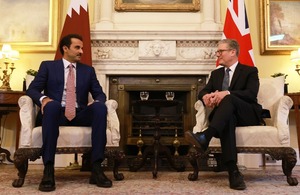
    Keir Starmer, the Prime Minister, has met with The Amir of Qatar His Highness Sheikh Tamim Bin Hamad Al Thani at Downing Street. A spokesperson said that the UK and Qatar have formed a new clean energy partnership with an initial investment of £1 billion from Qatar. The two countries plan to continue growing their investment relationship and the Prime Minister of the UK praised Qatar’s role in mediating conflicts in the Middle East, specifically mentioning their help in securing the release of hostages from Gaza. He also urged the release of all remaining hostages, including British national Emily Damari.

  • NEWS STORY : Defence Minister Praises HMS Prince Of Wales Crew

    NEWS STORY : Defence Minister Praises HMS Prince Of Wales Crew

    STORY

    Maria Eagle, the Defence Minister, has said that the people of Liverpool should be “hugely proud” of their aircraft carrier and crew. The carrier is docked in Liverpool this week for the first time since March 2020 and the HMS Prince of Wales and her sister ship HMS Queen Elizabeth are the largest warships ever built for the Royal Navy. The vessels are capable of carrying up to 40 aircraft and are an important part of the UK’s defence policy. Eagle said in a statement:

    “It was fantastic to see HMS Prince of Wales’s berthed on the River Mersey, showcasing the impressive defence capabilities, sailors and service personnel keeping Britain safe and secure at sea across the globe. It’s a proud moment for the people of Merseyside ahead of the deployment of HMS Prince of Wales next year to the Indo-Pacific region to exercise with partners and allies to help promote a free and open Indo-Pacific.”

  • NEWS STORY : Clive Myrie Refuses to Resign from BBC as Organisation Hit by Further Scandal

    NEWS STORY : Clive Myrie Refuses to Resign from BBC as Organisation Hit by Further Scandal

    STORY

    Clive Myrie, the BBC News presenter, has admitted serious allegations made against him that he failed to record external earnings in an abuse of the organisation’s policy. Myrie hasn’t stepped down from the BBC, but said in a statement:

    “An apology – I’ve had several administrative issues, and I didn’t fill out the correct paperwork for some of my external public events, so they haven’t been published until now. I’ve told the BBC I won’t be taking part in any more paid external events in the foreseeable future, beyond a handful of pre-existing commitments, so that this doesn’t happen again. My sincere apologies.”

    The BBC has this week faced criticism over its failure to deal with allegations made against Gregg Wallace, with the BBC saying in a statement that it was aware of the issue and would be taking “appropriate action”. Some of the clients have included American Express, ING, Suffolk Chamber of Commerce, the Football Association and the National Residential Landlords Association..

  • Edward Leigh – 2024 Speech on the Terminally Ill Adults (End of Life) Bill

    Edward Leigh – 2024 Speech on the Terminally Ill Adults (End of Life) Bill

    The speech made by Edward Leigh, the Conservative MP for Gainsborough, in the House of Commons on 29 November 2024.

    I pay tribute to the hon. Member for Hackney South and Shoreditch (Dame Meg Hillier), and I want to follow her in talking about palliative care. Let me start by reading an email that was sent to me only yesterday by a personal friend and constituent:

    “I apologise for adding to the thousands of emails you will be receiving. I just wanted to tell you why I oppose the right to die Bill. I know you are aware of the experience I had when my husband was dying. In hospital we had a dreadful experience because they had no end-of-life care and he suffered. Once in the Hospice it was a different story and he received the loving care he rightly deserved.

    My argument is that, instead of assisted dying, we should be spending much more money on end-of-life care and funding the wonderful Hospice movement. Thank you for reading this.”

    I will read another letter, from a doctor, which I think encapsulates some of the problems that we encounter in this issue:

    “Only recently, I was giving my condolences to a grieving woman who had lost her husband in the early hours. He had been given a few small doses of pain relief and mild sedatives over the last few nights for symptom control and had passed away peacefully at her side. She asked me in all seriousness, ‘Doctor, did the nurses give him something to make him die quicker last night?’ This was an awful lingering doubt that she had. I was able to firmly reassure her that, no, the medication would not have sped up his passing.

    For her, and the vast majority of other patients, doctors are there to prolong life and palliate symptoms. Were this to change, then we would not be doctors in the eyes of many, but bringers of death, agents of a state which counts its weakest members as expendable and worthy of nothing but an early grave.

    I do not want to be a member of a profession which has that reputation or role”.

    Those are two witnesses who have written to me. I have taken an increasing interest in this whole issue of palliative care, and the law frankly—

    Mr Perkins

    Will the right hon. Gentleman give way?

    Sir Edward Leigh

    Will the hon. Gentleman forgive me if I do not? I know that many people want to speak. I just want to develop this argument, then I will finish.

    The law is so unclear. I have talked to a number of palliative care specialists, and they say that we can give as much morphine as we want to a patient and we will not kill them, but there is real doubt in the minds of the public. A lot of the impetus around this debate, and the reason why people in opinion polls are apparently supportive of this measure, is that they are terrified of dying in pain. There is no need for this. When I talk to consultants and practitioners in palliative care, they say that they can manage pain. I was struck by a very touching email that was sent to me by a constituent, who actually supports the Bill on the grounds that when his wife was dying, and he was begging the doctor in a national health hospital to give her more morphine, the doctor said, “If I did that, I would be breaking the law.”

    I can see the Health Secretary is sitting here, and I really think that if we are going to have a serious debate about this issue, we need to have something equivalent to a royal commission to determine what doctors can and cannot do. It is essential that we really reassure the public. There is tremendous interest in and huge doubt about this issue. Many people are conflicted, and we have heard many moving stories about people’s fear of dying in agony, but until we clear this up, I do not think that we can make the progress that this issue deserves. Yes, we have to fund our hospice movement seriously. It is very worrying that we are going to fund the NHS to fund death, but that we are not adequately funding our hospice movement.

    Before we take this momentous decision, we have to be realistic about it: if the Bill were to pass at 2.30 pm, that would be it. I do not believe that a private Member’s Bill, which has only five hours of debate and on which many Members of Parliament will not be given time to speak, is the right mechanism. In the last Parliament, we discussed a certain subject that we all know about—it was a very different issue. We had hundreds of hours of debate, questions and scores of civil servants crawling over the issue. Surely this issue is even more important. Surely we should have had more than just two or three weeks to consider this Bill. We should be looking at the detail, because the devil is in the detail in respect of possible coercion, the facilities available to the hospice movement and the issues I have talked about, including the lack of clarity in the law as to how we can or cannot relieve pain. Can we not pause a moment? Those are the practical points that I want to make.

    This is so important: the futures of so many vulnerable people are at stake. I was struck by the comment made earlier by the hon. Member for Brent West (Barry Gardiner) that we cannot consider this issue just in terms of individual hard cases. We must consider it in terms of society as a whole. What sort of society are we? Are we a society that loves our NHS, that loves life, that loves caring and that loves the hospice movement? Or are we a society that believes that there is despair? I will vote for hope at 2.30 and I will vote against the Bill.