Author: admin

  • NEWS FROM 100 YEARS AGO : 9 December 1925

    NEWS FROM 100 YEARS AGO : 9 December 1925

    9 DECEMBER 1925

    The Bill confirming the Irish agreement was approved by the House of Commons.

    The Government of India (Civil Services) Bill, which had passed the House of Lords, was read a second time in the Commons. A money resolution under the Land Settlement Facilities Act, 1919, was agreed to, fulfilling, it was explained, a promise made to Local Authorities that the State would hand over to them small holdings which were bought for the settlement of ex-Service men, on a self-supporting basis.

    The Rating and Valuation Bill passed second reading in the House of Lords.

    An “agreed” document on the question of rural land policy was issued by the Liberal and Radical Candidates’ Association. Mr Lloyd George expressed satisfaction with the scheme.

    Lord Oxford, speaking at Liverpool, said if he had to try to condense into three words the policy of the present Government in regard to the coal industry, he did not think it could have been expressed in more concentrated and accurate form than “wait and see.”

    Mr Ramsay MacDonald, touring his constituency, told his hearers that peace in Ireland would be cheap at the price of a million or two.

    The costliness of the present system of transport was brought out at the sitting of the Coal Commission by a witness. The private ownership of waggons was a survival of the early days of the railway, and one for which no parallel could be found in any other country.

    Details are now available of the disaster at Fenny Stratford level crossing, in which a charabanc that had crashed through the crossing gates was struck by a train. A survivor gives a graphic story of her terrifying experience, while the signalman on duty near the scene tells what he saw. Seven people are dead, and five are in a critical condition.

    A Geneva telegram states that the Council of the League unanimously adopted the Hague Court’s advisory opinion regarding the procedure to be followed in deciding the Mosul question.

    According to a Teheran correspondent, a secret agreement is being negotiated between Turkey and Russia.

  • NEWS FROM 100 YEARS AGO : 8 December 1925

    NEWS FROM 100 YEARS AGO : 8 December 1925

    8 DECEMBER 1925

    The safeguarding of industry resolutions embodying the 33⅓ per cent customs duties on imported cutlery and gloves passed report stage in the House of Commons.

    Lord Oxford, addressing the Liberal and Radical Candidates’ Association, counselled them as to reaching an agreed land policy which they could place before the country. Twelve years ago the party had hoped to bring to a climax a series of reforms by a drastic reform of the land system. War had intervened. It now lay with them to reach unity on an agreed policy, but one which would avoid risky, dubious, uncertain expedients.

    The text of the new Irish Bill to give effect to the agreement reached on the Irish boundary question has been issued. It consists of only two clauses.

    Addressing the members of the London Irish Club, Lord Derby expressed the hope that the unhappy time of Ireland was past.

    In the Dail President Cosgrave, in moving the second reading of the Bill giving effect to the recent Irish Boundary settlement, expressed the view that it would mean the turning point in Irish history.

    The Government are asking a further £9,000,000 for the coal mining industry subvention, making £19,000,000 in all. A memorandum explains how the scheme is working.

    Major J. W. Hills (Unionist) was elected by a majority of 5011 for the Ripon Division in the vacancy caused by the appointment of Mr E. F. L. Wood as Viceroy of India. There had been no contest in the division since 1910, and women electors voted for the first time.

  • NEWS FROM 100 YEARS AGO : 7 December 1925

    NEWS FROM 100 YEARS AGO : 7 December 1925

    7 DECEMBER 1925

    Sir Austen Chamberlain and Mr Amery have arrived in Geneva for the meeting of the League Council. The most urgent matters on the agenda are the Graeco Bulgarian frontier dispute and the Mosul question.

    The German Cabinet has resigned, a step which Dr Luther, the Chancellor, had stated would be taken after the signature of the Locarno Treaties. President von Hindenburg has accepted the Government’s resignation, and has requested the Chancellor to conduct the country’s affairs until a new Cabinet has been formed.

    In his annual report to President Coolidge, Mr Dwight F. Davis, the United States Secretary of War, declares that the present strength of the Army is inadequate and an increase in personnel necessary. Stress is laid on the strategic importance of the Panama Canal, and a ten years’ programme for the increase of its defenders is foreshadowed, as is also a programme for the defence of Oahu.

    Mr Lloyd George addressed a meeting at Coventry upon his land proposals, and said they were not submitted as tables of the law immutable. He was sanguine that at the Liberal Conference today and tomorrow complete agreement would be reached which would permit of the submission of proposals representing the whole body of Liberal opinion in the country. The task of liberation which he was asking the Liberal Party to undertake would do its health good; there was nothing like hard work for curing megrims and tantrums.

    Mr de Valera denounces the Irish agreement, accuses Britain of cheating, and adds that now that Irishmen have been found prepared to put their hand to an instrument dismembering the country, his only hope is that the people will not consent to it. Sir James Craig, the North of Ireland Premier, had a great reception at Belfast, and said he hoped that the new agreement might have a lasting effect for the good of all Ireland, Great Britain and the Empire.

    Mr A. J. Cook, secretary of the Miners’ Federation, speaking in the Durham coalfields, said we would be face to face during the next twelve months with the greatest economic crisis this country had ever known, a crisis that was going to have great political consequences.

    The Executive Council of the Shale Miners’ and Oilworkers’ Association, at a meeting at Bathgate, agreed to recommend acceptance of the new terms of settlement in the shale mines crisis.

  • NEWS FROM 100 YEARS AGO : 6 December 1925

    NEWS FROM 100 YEARS AGO : 6 December 1925

    6 DECEMBER 1925

    It was reported that residents of Tarbrax, a remote village in Lanarkshire, were facing starvation. 400 people marched to Carnwath in the hope of receiving some poor relief.

    There was hope of a strike settlement between the employers and the Executive Council of the National Union of Shale Miners and Oilworkers.

    The entire German Cabinet resigned, with Dr Luther charged with seeking to form a new one.

  • NEWS FROM 100 YEARS AGO : 5 December 1925

    NEWS FROM 100 YEARS AGO : 5 December 1925

    5 DECEMBER 1925

    Opinion in Ireland is divided on the Irish boundary settlement. Belfast accepts it with a feeling of relief, Londonderry is disappointed, and Dublin criticises it as not a good bargain from an Irish point of view.

    The Prime Minister stated in the House of Commons that he had decided to postpone the fourth safeguarding resolution, that dealing with paper, for this session owing to the shortness of time remaining available for business, and to allow time for the Irish Bill.

    The Rating and Valuation Bill passed third reading in the House of Commons, and the House of Lords at a formal sitting gave it a first reading.

    The Roads and Streets in Police Burghs (Scotland) Bill and the Circuit Courts and Criminal Procedure (Scotland) Bill were read a third time in the House of Commons.

    Professor Charles Sarolea, in an article entitled “France’s Ordeal: Battle of the Franc,” emphasises the dangers involved in a collapse of the French currency.

    Proposals for the future organisation of the broadcasting service were submitted to Lord Crawford’s Committee by Sir Arthur Stanley, Professor A. M. Low, and Mr D. S. Richards, on behalf of the Wireless League. These included the forming of a representative commission to be in supreme control, and the devoting of all the revenue, less a deduction to the Post Office for collection, to improvements. Plans for the detection and punishment of “oscillators” were also mentioned.

    At a sitting of the Coal Commission in London Mr Markham, an owner, alleged that miners spent 8s. to 10s. a week on cinemas.

  • NEWS FROM 100 YEARS AGO : 4 December 1925

    NEWS FROM 100 YEARS AGO : 4 December 1925

    Complete agreement was reached in the Irish boundary crisis. The settlement provides for the retention of the present boundary and for financial adjustments.

    The Tithe Bill was read a second time and the Expiring Laws Bill a third time in the House of Lords.

    Safeguarding resolutions imposing duties on imported fabric gloves, fur and leather gloves, and imported gas mantles were passed by the House of Commons in Committee of Ways and Means.

    During an all night sitting on the duty for the safeguarding of the cutlery industry, the Socialist party, in its anxiety to obstruct the Government, unwittingly plunged the House of Commons into the first secret session since the outbreak of war in August 1914.

    The Spanish Military Directory has resigned, and has been replaced by a civilian Cabinet. The King, in a message to General Primo de Rivera, the Prime Minister, says he trusts that within a reasonable period, which His Majesty hopes will be brief, the country will have constitutional laws of a normal character.

    The French Chamber, after an all night sitting, passed M. Loucheur’s Finance Bill as a whole by 257 votes to 229. Fifty two Socialists abstained from voting, and this saved the Briand Government.

  • NEWS STORY : UK to Host Major Peacebuilding Conference for Israel and Palestine

    NEWS STORY : UK to Host Major Peacebuilding Conference for Israel and Palestine

    STORY

    The United Kingdom will host a major peace-building conference on 12 March 2026 to launch an International Peace Fund for Israel and Palestine, aiming to bring together civil society leaders from across the region. The event at Lancaster House is intended to map existing grassroots initiatives and create a durable framework to support dialogue, reconciliation and an attempt at long-term stability following decades of distrust and agitation.

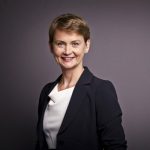
    Foreign Secretary Yvette Cooper said the conference would draw on international experience, including lessons from Northern Ireland, to help build trust and strengthen community level peace efforts. The initiative follows recent shifts in the Middle East, including a ceasefire agreement and ongoing humanitarian concerns in Gaza.

    The Government has stated that the new Fund will provide sustained financial backing for organisations working to reduce tensions, promote cooperation and support conditions for a viable two state solution. Although there remains scepticism on what can be achieved, delegates at the March gathering will examine ways to coordinate global support and ensure long term investment in peace-building across both societies.

  • PRESS RELEASE : UK to boost peacebuilding efforts for Israel and Palestine [December 2025]

    PRESS RELEASE : UK to boost peacebuilding efforts for Israel and Palestine [December 2025]

    The press release issued by the Foreign Office on 9 December 2025.

    The UK will host a key peacebuilding conference next year to help establish an International Peace Fund for Israel and Palestine.

    • Foreign Secretary to host Israeli and Palestinian civil society leaders in March next year to focus on delivering sustainable peace 
    • Meeting at Lancaster House will support the establishment of an International Peace Fund for Israel and Palestine
    • UK to use peacebuilding expertise from Northern Ireland and ongoing Western Balkans work to support Middle East efforts

    The UK will host a key peacebuilding conference on 12 March next year to help establish an International Peace Fund for Israel and Palestine.

    The conference at Lancaster House will bring together civil society leaders from across the region and delivers on the Prime Minister’s pledge to host the event and set up a fund which can provide the long-term finance that is required for peacebuilding efforts to deliver genuine change.

    October’s US-led ceasefire agreement – and President Trump’s 20-Point Plan – have presented a critical opportunity to achieve lasting peace and security in the Middle East. All living hostages have since been released and the UK continues to push for the remaining deceased hostage to be returned. Gradually, more aid is getting into Gaza but much more needs to be done and the UK is pressing for all restrictions to be lifted so that humanitarian supplies can be delivered at the pace and volume required, especially with winter drawing in. 

    Civil society organisations in Israel and Palestine have a vital role to play in reinforcing the forward momentum of recent months. Over the past year, the UK has been working with partners on the ground and internationally to ensure that civil society groups are ready to take the lead in advancing long-term stability, and driving progress towards a two-state solution, with peace and security for Israelis and Palestinians alike. 

    Foreign Secretary Yvette Cooper said:

    After two years of the most horrendous suffering, the US-led ceasefire agreement has now been in place for two months. But it remains highly fragile, and there is still a long journey ahead to implement the 20-point plan endorsed by the United Nations, and achieve a just and lasting peace. 

    This conference will be a crucial step in that journey, bringing together representatives of Palestinian and Israeli civil society to build common ground between their communities, challenge entrenched divisions, and work towards a future where both states can live side-by-side in peace and security. 

    With the UK’s experience of the reconciliation process in Northern Ireland and our ongoing support for peacebuilding in Western Balkans, we are well placed to host and facilitate these talks, and the new International Peace Fund we are helping to create will provide the practical support to drive this work forward.

    The UK- hosted meeting will bring together international peacebuilding expertise and civil society organisations from the Middle East, to map existing peace-building work and support the establishment of an International Peace Fund for Israel and Palestine. 

    Discussions will focus on the practical steps that the Peace Fund can best support, and the best practice that can be learned from other similar initiatives, including the International Fund for Ireland that helped support dialogue and reconciliation between unionist and nationalist communities more than a decade before the Good Friday Agreement. The fund will support activities that bring Israelis and Palestinians together to reduce violence, build trust, and create the conditions for a lasting and just peace.

  • Steff Aquarone – 2025 Comments on Saving Sheringham Bus Shelter

    Steff Aquarone – 2025 Comments on Saving Sheringham Bus Shelter

    The comments made by Steff Aquarone, the Liberal Democrat MP for North Norfolk, on 9 December 2025.

    Sheringham residents did it.

    In the face of bullying and intimidation from Conservative-run Norfolk County Council, our community stood its ground – literally – in freezing temperatures to protect the heritage bus shelter.

    Last night, their grit paid off. Sheringham Town Council listened and voted to save the shelter.

    Now it’s time for Norfolk County Council to engage properly with residents and deliver the transport improvements this town has been promised – with the bus shelter front and centre.

    Throwing toys out of the pram isn’t an option!

    Community power wins again.

  • Shabana Mahmood – 2025 Statement on the Independent Inquiry into Grooming Gangs

    Shabana Mahmood – 2025 Statement on the Independent Inquiry into Grooming Gangs

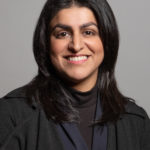
    The statement made by Shabana Mahmood, the Home Secretary, in the House of Commons on 9 December 2025.

    Thank you, Madam Deputy Speaker, with your permission I will make a statement on the Independent Inquiry into Grooming Gangs, the appointment of its Chair and panel, and the inquiry’s terms of reference.

    I know that, for many, this day is long overdue. For years, the victims of these awful crimes were ignored. First abused by vile predators, they then found themselves belittled and even blamed, when it was justice they were owed.

    In January, my predecessor asked Baroness Casey of Blackstock, who’s here with us today, to conduct a National Audit on Group-Based Child Sexual Exploitation and Abuse.

    With devastating clarity, Baroness Casey revealed the horror that lies behind that jargonistic term. It is vital that we too call these crimes what they were: multiple sexual assaults, committed by multiple men, on multiple occasions.

    Children were submitted to beatings and gang rapes. Many contracted sexually transmitted infections. Some were forced to have abortions. Others had their children taken from them.

    But it was not just these awful crimes that now shame us.

    There was also an abject failure by the state, in its many forms, to fulfil its most basic duty: protecting the young and vulnerable.

    Worse still, some in positions of power turned a blind eye to the horror, even covered it up.

    Despite a shameful lack of national data, Baroness Casey was clear that in some local areas, where data was available, and I quote:

    “Disproportionate numbers of men from Asian ethnic backgrounds” were “amongst the suspects”.

    Like every member of my community who I know, I am horrified by these acts.

    We must root out this evil, once and for all. The sickening acts of a minority of evil men – as well as those in positions of authority, who looked the other way – must not be allowed to marginalise – or demonise – entire communities of law-abiding citizens.

    What is required now is a moment of reckoning. We must cast fresh light on this darkness.

    In her audit, Baroness Casey called for a national inquiry.

    In June, the government accepted that recommendation.

    Today, I can announce the Chair of the inquiry and panel that will form the leadership of the inquiry, and a draft of the Inquiry’s terms of reference.

    The inquiry will be chaired by Baroness Anne Longfield.

    As many in this place will know, Baroness Longfield was the Children’s Commissioner from 2015 to 2021. She has devoted her life to children’s rights, including running a charity supporting and protecting young people, and working for Prime Ministers of different political parties.

    In recognition of her service, Baroness Longfield was elevated to the Lords earlier this year.

    At that point, she took the Labour whip, which, on taking up this appointment, she will now resign.

    Alongside her, I can also announce her two fellow panellists.

    The first is Zoë Billingham CBE.

    Zoë is a former Inspector at His Majesty’s Inspectorate of Constabulary, and currently serves as Chair of Norfolk and Suffolk NHS Foundation Trust.

    She brings deep expertise in safeguarding and policing, specifically in holding forces to account.

    The second panellist is Eleanor Kelly CBE.

    Eleanor is the former Chief Executive of Southwark Council.

    In 2017, she supported the survivors of the London Bridge terrorist attacks, and the victims of the Grenfell Tower fire of the same year.

    Together, the Chair and panel bring deep experience of championing children’s rights, knowledge of policing and local government, and, crucially, a proven track record of holding powerful institutions to account.

    Each individual was recommended by Baroness Casey.

    And her recommendation follows recent engagement with victims.

    The first thing the Chair and Panel will do, alongside Baroness Casey, is meet with victims later this week.

    Today, we also publish the draft terms of reference which I will place in the library of the House.

    Baroness Casey was clear this inquiry must be time-limited to ensure justice is swift for those who have already waited too long.

    For that reason, it will be completed within three years, supported by a £65 million budget.

    The inquiry will be a series of local investigations overseen by a national panel with full statutory powers.

    Baroness Longfield has confirmed that Oldham will have a local investigation.

    The Chair and panel will determine the other locations in due course.

    And no location will be able to resist a local investigation.

    These terms of reference are clear on a number of vital issues:

    The inquiry is focused, specifically, on child sexual abuse committed by grooming gangs.

    It will consider, explicitly, the background of offenders – including their ethnicity and religion – and whether the authorities failed to properly investigate what happened out of a misplaced desire to protect community cohesion.

    The inquiry will act without fear or favour, identifying individual, institutional and systemic failure, inadequate organisational responses, and failures of leadership.

    It will also work hand in hand with the police.

    Where new criminality comes to light, be that by the perpetrators or those who covered up their crimes…

    The Inquiry will pass evidence to law enforcement, so they can take forward any further prosecutions, and put more of these evil men behind bars.

    The inquiry must, and will, place victims and survivors at the forefront, with a charter setting out how they will participate and how their views, experiences and testimony will shape the inquiry’s work.

    As I have said already, the terms are in draft form.

    The Chair will now consult on them with victims and other stakeholders.

    They will be confirmed no later than March, when the Inquiry can begin its work in earnest.

    Alongside launching this inquiry, Baroness Casey’s audit contained a number of other recommendations, which the government accepted in full.

    As the inquiry begins its work, we continue righting these wrongs.

    I can announce today that I have commissioned new research from UK Research and Innovation to rectify the unacceptable gaps in our understanding of perpetrators’ backgrounds and motivations, including their ethnicity and religion.

    My predecessor wrote to all police forces calling on them to improve the collection of ethnicity data, and while the Home Secretary does not currently have the power to mandate that this is collected, I will rectify this by legislating at the earliest possible opportunity.

    The Department for Education is currently interrogating gaps in “children in need” data, identified in the audit, which seem to under-report the scale of this crisis.

    My Rt Honourable Friend the Education Secretary will soon publish the findings of an urgent review of this data conducted by her department.

    Across government, the audit identified that poor data sharing continues to put children at risk.

    As a result, we are introducing a legal duty for information sharing between safeguarding partners.

    We are creating a unique identifier for each child, linking all data across government.

    And we are upgrading police technology to ensure data can be shared across agencies.

    The audit also identified an absurdity in our legal system that saw some child rapists convicted of lesser crimes.

    As a result, we are now changing the law to make clear that children cannot consent when they have been raped by an adult, so perpetrators are charged for the hideous crime they have committed.

    While the law has protected abusers from the consequences of their crimes, it has too often punished victims. Some survivors were convicted for crimes they had been coerced into, continuing their trauma to this day.

    We are already legislating in the Crime and Policing Bill to disregard offences related to prostitution, and the Ministry of Justice is now working with the Criminal Cases Review Commission to ensure they are resourced to review applications from individuals who believe they were wrongly criminalised.

    The National Audit identified further weaknesses in relation to taxi licencing.

    Abusers were applying for licences in areas where controls were lax, to circumvent protection put in place by local councils to tackle abuse.

    My Right Honourable Friend the Transport Secretary will soon be legislating to close this dangerous loophole in the regulation of taxis.

    The audit was clear that justice has not been done. Baroness Casey requested that a new national police investigation was required to bring offenders to justice.

    Last month the National Crime Agency launched Operation Beaconport, reviewing previously closed cases of child sexual exploitation.

    It has already flagged more than 1,200 cases for potential reinvestigation, more than 200 of which are high-priority cases of rape.

    The evil men who committed these crimes – and thought they got away with it – will find they have nowhere to hide.

    The audit finally called on the government to fund the delivery of its recommendations.

    Alongside investment in the Inquiry itself, I can announce today that a further £3.65 million will be committed this year to the policing operation, survivor support and research into grooming gangs.

    This work, Madam Deputy Speaker, is essential.

    But without truth, there can be no justice.

    Today, I have announced the Chair and panel of an Inquiry which will shine a bright light on this dark moment in our history.

    They will do so alongside the victims of these awful crimes, who have waited too long to see justice done.

    This inquiry is theirs, not ours.

    So I call on all those present to put politics aside, for a moment, and to support this Chair and her panel in the pursuit of truth and justice.

    And I commend this statement to the House.