Author: admin

  • Richard Holden – 2026 Speech on Road Safety Strategy

    Richard Holden – 2026 Speech on Road Safety Strategy

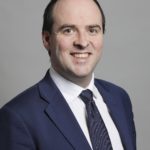
    The speech made by Richard Holden, the Shadow Transport Secretary, in the House of Commons on 8 January 2026.

    I thank the Minister for advance sight of the statement, although obviously some of it was reported in The Times earlier this week. I welcome the fact that the Government have published the road safety strategy, and I welcome the broad ambition, shared right across the House, to reduce the number of people killed and seriously injured on our roads. As a former Roads Minister and as a local MP, I too have met many grieving families torn apart by deaths on our roads. The fact that we have seen a 10% to 15% reduction since 2010 does not mean that we do not need to go further.

    In that spirit, I welcome the comprehensive look at motorcycle training that the Minister has announced, as well as the expansion of Project PRIME from Scotland on motorcycle safety. That will be a major improvement to our road safety. I also welcome stiffer fines and enforcement against bad faith drivers, particularly those on ghost plates, as has been mentioned, and against those trying to evade justice via the use of dodgy number plates and other things to conceal their identity. I also welcome the road safety investigation branch and the better use and collation of data and data sharing—those are incredibly important. I also welcome the inclusion of Sharlotte’s law, which will help to prevent people trying to evade justice by ensuring that timely blood testing can take place in the most serious of cases.

    It is clear that there will be concern about some of the new moves announced and whether they are wholly related to road safety, and I would like to look at a couple of those. In oral questions, the Minister appeared to suggest that part of the reason for the six-month delay after getting a theory test was to ensure that more driving tests are available. In reality, it will mean an even larger group of people waiting to book driving tests, so I fear that the Government have not fully thought through the consequences of that. I remember meeting a woman aged 60 who had just lost her husband of 40 years. She lived in a small village with no bus service. She had always relied on him to drive. Are we really telling her that she will have to take a theory test and then wait six months after passing it to take a driving test?

    I can think of women in similar circumstances—men take more driving tests than women at an earlier stage in life—who maybe only take a test when they move for jobs or after having children. We need to properly think through the consequences of some of what the Government are proposing. It is important that we look at this broadly to ensure that we are not restricting freedoms via legislation to fix problems that are the result of not sorting out driving tests.

    No one in this House disputes that drink-driving is totally unacceptable, but I hope that Ministers and the Secretary of State will reflect on the experiences in Scotland, where changes in this space have already been made, and on the concerns right across the hospitality sector that there is no clear evidence of improved road safety outcomes following those changes. In fact, it is extraordinary that the Department—to quote an answer to one of my written questions—

    “has not made an assessment of the impact on the economic viability of pubs in Scotland”

    as a result of the changes that have already happened up there. Changing the legal limit alone will not change behaviour, and any reform must be based on a thorough examination of the evidence and impacts, not on attempts to look tough.

    Alongside alcohol, the House must not lose sight of drug-driving, and I welcome some of the measures announced today. However, the commitments to testing seem rather vague. It would be great to hear more from the Minister on that because the police are pushing for more roadside drug testing. Governments of all stripes have pushed for an emphasis on education and behavioural change. However, that sits uneasily with this Government cutting the budget for the THINK! road safety campaign by £1.2 million last year, particularly when lifelong learning and changes are so critical to many of the plans that the Government have announced today.

    That brings me to my final major point, which is around enforcement. This place can pass all the laws it wishes, but if they are not enforced, all that does is undermine faith in our democratic institutions. The House will be aware that police numbers under this Government are down by around 1,300 in the latest figures. Enforcement sits at the heart of any credible road safety policy, so are there are plans to ensure additional roads policing to ensure that enforcement happens?

    Finally, there are some omissions. Why still exclude vulnerable road users and motorcyclists from bus lanes in many areas? There is a real missed opportunity to improve safety and survival for those people. There is also a glaring absence when it comes to tackling the scourge of unlicensed and uninsured criminals driving with impunity. Measures such as requiring proof of identity to register a vehicle could have been included, as recommended by the all-party parliamentary group for transport safety. I am sure that the hon. Member for Blaydon and Consett (Liz Twist) might mention that in her remarks, too.

    Road safety is not delivered by strategies and consultations alone; it is delivered when the law is clear and evidence-based, enforcement is consistent and the Government are willing to confront difficult issues, rather than relying on process and pre-briefed headlines. While we welcome many of the measures, there are still many questions to be answered, and I look forward to the Minister’s response.

    Lilian Greenwood

    I welcome the support from the shadow Secretary of State for our measures to tackle road harm. I was slightly surprised by his comment about the coverage in the press because we did of course publish the strategy yesterday, giving him the opportunity to have a full 24 hours to read it. Nevertheless, I note his comments and welcome his support. I also note his comment about the reduction in those killed and seriously injured over the previous Government’s term. I welcome the fact that the numbers went down slightly, but they are nothing to the level of ambition that this Government are showing and the seriousness that this problem requires.

    The right hon. Member questioned why we are introducing a minimum learning period for new drivers. This is a safety measure. It is about saying that in order to set people up for a lifetime of safe driving, whenever they take their driving test and learn to drive, they need to get a range of pre-test practice in a variety of conditions. We want people to take the time to learn properly, to ensure they know how to cope with things like extreme weather, driving at night and driving on different sorts of roads. We think that that is the right thing to do. Nevertheless, it is, of course, subject to a consultation, and we will listen carefully to all the views expressed in that.

    When it comes to drink-driving, of course we do not want to stop people going out and enjoying our hospitality sector. What we are clearly saying is, “If you’re going to go out and have a drink, leave your car at home.” Reducing the drink-drive limit would simply bring England and Wales into line with Scotland and the rest of Europe. We are the only countries, except perhaps Malta, that have this higher drink-drive limit—

    Jerome Mayhew (Broadland and Fakenham) (Con)

    We are one of the safest.

    Lilian Greenwood

    We are no longer the safest. We have been dropping down the rankings, and progress has stalled compared with other countries across Europe. Sir Peter North’s review in 2010 estimated that reducing the drink-drive limit from 80 mg to 50 mg would save an estimated 43 to 168 lives each year and avoid a very large number of serious injuries—a conservative estimate put it at 280. We are acting on the evidence.

    When it comes to drug-driving, we are looking at how we can make better use of testing. I know that too many people who have suffered as a result of someone drug-driving wait a long time for their case to come to court. It takes too long to process, which is why we are looking at things like roadside testing. Through our award-winning THINK! campaign, we continue to target publicity at those who cause the most danger: young men aged 17 to 24. At the end of last year, we did an anti-drug-driving campaign—the first in 10 years—using the sorts of media channels that get to those we are trying to target, including TikTok and Instagram.

    Finally, the shadow Secretary of State is right to speak about enforcement. That is why this Government are investing in additional police officers—an extra 3,000 police officers by March and 13,000 by the end of this Parliament. We are responding to the requirements of the police. We are giving them the legislation and the powers they need to crack down on those who cause danger on our roads. I am pleased to see that our strategy has been welcomed by the National Police Chiefs’ Council’s lead for roads policing, Jo Shiner. I welcome the right hon. Member’s other comments, and we look forward to reading the official Opposition’s comments in response to our consultations.
  • Lilian Greenwood – 2026 Statement on Road Safety Strategy

    Lilian Greenwood – 2026 Statement on Road Safety Strategy

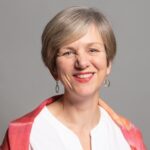
    The statement made by Lilian Greenwood, the Parliamentary Under-Secretary of State for Transport, in the House of Commons on 8 January 2026.

    With permission, Madam Deputy Speaker, I would like to make a statement on our new national road safety strategy.

    It is a sad truth that, by the time I finish speaking and we hear the Opposition’s response, it is likely someone will have died or been seriously injured on our roads. It is an even sadder truth that that would likely have been entirely preventable. Even though we have some of the safest roads in the world, more than 1,600 people died on our roads last year, and nearly 28,000 were seriously injured.

    Over the course of my lifetime, road safety has improved immeasurably—in no small part thanks to a titan of my party, Barbara Castle—but it is safe to say the last 10 years represent a lost decade. Death and serious injury numbers have plateaued despite improvements in vehicle safety. The UK has slipped from third to fourth in Europe’s road safety rankings, and the human cost of too little action and too much complacency is clear: lives taken too soon, lives altered beyond recognition, and lives grieved by the families left behind.

    If that was not enough, a decade without a comprehensive road safety strategy has meant that the country lost out on nearly £7 billion in economic output last year. That should not just give us pause; it should spur us to action. We would not tolerate that on our railways or in our airspace, and I am determined to ensure that we no longer tolerate it on our roads. That is why I am standing here today: to say quite simply that enough is enough.

    The targets that we are setting match the full measure of our ambition. We want to reduce the number of people killed or seriously injured on British roads by 65% by 2035, and by 70% for children under 16. Our vision is clear: any road user—however they choose to travel—should be able to move safely on our roads. There are four main ways in which we will deliver that vision through the strategy.

    First, we will put all road users at the heart of the strategy. When it comes to protecting vulnerable road users, we will be guided by the evidence. We know, for example, that young drivers between 17 and 24 are at a higher risk of death or serious injury on our roads. They account for 6% of driving licences yet are involved in 24% of fatal and serious collisions. That is why we will consult not just on a minimum learning period for learner drivers, but on a lower blood alcohol limit for novice drivers. I would also recognise the important debate on young driver safety that my hon. Friend the Member for Shrewsbury (Julia Buckley) secured last January.

    Another key area is the safety of older drivers. In 2024, about 24% of all car drivers killed were aged 70 or older. While driving is rightly seen as a vital form of independence in older age, it cannot come at the expense of safety, so we will consult on mandatory eyesight tests for drivers over 70 and explore options for cognitive testing, recognising the risks of driving with conditions such as dementia.

    We also will not ignore the fact that motorcyclists are 40 times more likely to be killed or seriously injured on our roads compared with car drivers, so we will reform the motorcycle training, testing and licensing regime. That starts today with a consultation, including on removing the ability to ride on L-plates indefinitely.

    Let me move to advances in technology and data. We will consult on mandating 18 new vehicle safety technologies under the GB type approval scheme—a change that could prevent more than 14,000 deaths and serious injuries over 15 years. That includes autonomous emergency braking, a proven safety technology that Meera Naran has tirelessly campaigned for as Dev’s law, after the tragic loss of her son. I am delighted to see her in the Public Gallery; she has been an incredible campaigner on this issue.

    To learn from collisions and prevent future harm, we will establish a data-led road safety investigation branch covering the whole of Great Britain. It will draw on data to carry out thematic investigations and make recommendations. To give those involved in collisions the best chance of survival, we will ensure that police-recorded collision data and healthcare data are shared more effectively.

    The third theme is about infrastructure. Safer roads and effective speed management are essential pillars of the “safe system” approach that guides the strategy. That starts with investment. The Government are providing £24 billion between 2026 and 2030 to improve motorways and local roads, building on record funding for pothole repairs. We will also publish updated guidance on setting local speed limits and the use of speed and red light cameras, supporting local authorities to make evidence-based decisions.

    Because rural roads remain among the most dangerous, with motorcyclists often navigating sharp bends, we will build on the success of Project PRIME—perceptual rider information for maximisation of enjoyment and expertise—in Scotland, which saw real safety improvements thanks to new road markings.

    Finally, let me talk about enforcement. We know that most drivers are safe, and we do not want to get in their way. However, they need to feel confident that the Government have their back, so my message to the minority of drivers who are unsafe and reckless is simple: if you drive dangerously, if you drive illegally or if you make our roads less safe, you will face the consequences.

    Take drink and drug-driving. We know that it was a contributory factor in 18% of road fatalities in 2023, so we will consult on lowering the drink-drive limit, which has not been changed in England and Wales since 1967. We will review penalties for drink and drug-driving offences and explore the use of alcohol interlock devices. New powers will be considered to suspend licences for those suspected of the most serious offences.

    We also propose tougher penalties for those who drive without insurance—I thank my hon. Friend the Member for Swindon North (Will Stone) for his persistent advocacy on this issue. We will also look at penalty points for failing to wear a seatbelt and failing to ensure that child passengers are wearing theirs, too.

    Thanks to the tireless campaigning of my hon. Friends the Members for West Bromwich (Sarah Coombes) and for Rochdale (Paul Waugh), we are tackling illegal number plates. We will increase penalties for using illegal plates and ensure that the Driver and Vehicle Licensing Agency is empowered to carry out more robust checks on number plate suppliers.

    These rightly bold ambitions cannot be met by Government working alone. We call on the support of Members from all parts of the House and extend our hand in partnership to the devolved Governments, mayors, local authorities, the police and other stakeholders. I thank my hon. Friend the Member for Brentford and Isleworth (Ruth Cadbury) for her support on behalf of the Transport Committee and my hon. Friend the Member for Rossendale and Darwen (Andy MacNae) as chair of the all-party parliamentary group for transport safety for his advocacy on this important issue.

    I have sat with families torn apart by deaths and serious injuries on our roads—it is one of the hardest parts of my job. Even through intolerable pain, they campaign, fight and demand change so that others can be spared their sense of loss. This strategy is for those brave families. I truly believe that this is a turning point for road safety in this country, when we finally put victims at the heart of policymaking, see road safety as a shared responsibility and understand that, while driver or rider error is inevitable, fatalities and serious injury are not. A multilayered system, from safer speeds and vehicles to safer roads and robust enforcement, is how we protect every road user. That is how we ensure that people walk away from collisions rather than being carried and how we deliver safer roads for everyone who relies on them. I have laid copies of the documents in the Libraries of both Houses, and I commend this statement to the House.

  • PRESS RELEASE : Prime Minister call with President Trump of the United States [January 2026]

    PRESS RELEASE : Prime Minister call with President Trump of the United States [January 2026]

    The press release issued by 10 Downing Street on 8 January 2026.

    The Prime Minister spoke to the President of the United States, Donald Trump, this afternoon.

    The leaders discussed Euro-Atlantic security and agreed on the need to deter an increasingly aggressive Russia in the High North.

    European Allies had stepped up in recent months to defend Euro-Atlantic interests, but more could be done to protect the area, the Prime Minister said.

    The leaders looked forward to speaking again soon.

  • NEWS STORY : Prime Minister reinforces NATO unity and UK security in call with Mark Rutte

    NEWS STORY : Prime Minister reinforces NATO unity and UK security in call with Mark Rutte

    STORY

    Prime Minister Sir Keir Starmer held a significant call with NATO Secretary General Mark Rutte on 8 January 2026 to coordinate the alliance’s response to escalating security challenges in the North Atlantic and the High North. The conversation followed a flurry of diplomatic activity, including the ‘Coalition of the Willing’ meeting in Paris, and comes amid heightened tensions regarding regional territorial integrity and the future of Ukrainian security.

    The two leaders began the discussion by paying tribute to British military personnel who have been engaged in critical operations in the North Atlantic and Syria over the recent days. These missions have been described as vital for protecting both UK national interests and wider Euro-Atlantic security against evolving threats.

    A primary focus of the call was the increasingly contested High North region. Both the Prime Minister and Mr Rutte agreed that while NATO allies have successfully increased their presence in the Arctic and North Atlantic, more robust action is required to deter Russian aggression in these waters. They welcomed ongoing strategic discussions on how the alliance can further protect the region from Russian maritime and hybrid threats, which have intensified throughout the winter months.

    Regarding the conflict in Ukraine, the Secretary General provided an update on the morning’s North Atlantic Council meeting. The leaders reaffirmed their commitment to securing a just and lasting end to the war, stressing that any potential peace settlement must be underpinned by strong security guarantees. This dialogue follows the Prime Minister’s recent political declaration alongside France and Ukraine concerning the deployment of deterrent forces and the establishment of military hubs to support Kyiv’s long-term defensive capabilities.

    The call also touched upon the importance of maintaining a unified alliance posture following reports of American interest in Greenland. Sir Keir, who also spoke with Danish Prime Minister Mette Frederiksen today, reiterated the UK’s firm support for Danish sovereignty and the self-determination of the Greenlandic people.

  • PRESS RELEASE : Keir Starmer call with NATO Secretary General Mark Rutte [January 2026]

    PRESS RELEASE : Keir Starmer call with NATO Secretary General Mark Rutte [January 2026]

    The press release issued by 10 Downing Street on 8 January 2026.

    The Prime Minister spoke to NATO Secretary General Mark Rutte this afternoon.

    The leaders began by paying tribute to the UK personnel involved in operations in the the North Atlantic and Syria in recent days to protect UK and Euro-Atlantic security.

    Turning to the meeting of the Coalition of the Willing on Tuesday, both leaders welcomed the strong commitments by all participants in Paris. It was vital that the security guarantees for Ukraine ensured Russia was never able to invade again, the leaders reiterated.

    The Secretary General then updated on the North Atlantic Council meeting this morning. They agreed that more needed to be done to deter Russia in the High North and welcomed discussions on how Allies could further protect the region from increasing Russian threats.

    Both agreed to stay in close touch.

  • Paul Dennett – 2026 Statement on Attack Destruction of Holocaust Memorial Bench in Salford

    Paul Dennett – 2026 Statement on Attack Destruction of Holocaust Memorial Bench in Salford

    The statement made by Paul Dennett, the Mayor of Salford, on 8 January 2026.

    We are deeply saddened and appalled by the mindless vandalism and destruction of the Holocaust Memorial bench in Clowes Park. The bench was a memorial to Holocaust survivor Mr Chaim Ferster and the work he has done over many years sharing his story and experiences, while also teaching & reminding us all about the horrors of the Holocaust.

    I have personally been in contact with Mr Chaim Ferster’s youngest son and community representatives to offer our sincerest condolences and full support at this time.

    I’d also like to thank Councillor Andrew Walters for escalating this matter to Greater Manchester Police (GMP), who are investigating the incident. The City Council and City Mayor’s Office will continue to work closely with GMP’s officers, our local Jewish community and Mr Chaim Ferster’s family in connection with this shocking incident. Our thoughts continue to be with all those who are affected by this hateful act at this time.

    Working with Mr Chaim Ferster’s family and our local Jewish community, the City Council will also seek to address concerns of safety and security within Clowes Park and restore and repair the Holocaust Memorial Bench, so it can be rightfully put back into place and serve, once again, as a place of peace and reflection.

    Hate has no place in our great diverse and vibrant City of Salford and we stand shoulder to shoulder with our all our residents & communities in the face of such adversity, showing the Spirit of Salford in all that we do.

  • PRESS RELEASE : Border Force seizes over 250 endangered species [January 2026]

    PRESS RELEASE : Border Force seizes over 250 endangered species [January 2026]

    The press release issued by the Home Office on 8 January 2026.

    Hundreds of endangered species seized in crackdown on international wildlife smuggling.

    Live snakes, tarantulas and lovebirds have been found crammed into vehicles at the UK border following a global crackdown on wildlife smuggling gangs.

    In just one month, Border Force seized more than 250 endangered species and illegal wildlife products at airports, ports and mail depots across the country.

    The seizures this autumn were part of an annual international operation to combat illegal wildlife smuggling – representing a 73% increase from 2023.

    They include two rainbow boa constrictors, which officers found hidden under blankets in a car in Dover. The driver had bought them at a German reptile show without a licence.

    Border Force also discovered over 100 endangered birds crammed into a car, including scarlet ibis, green-cheeked conures and lovebirds. Some had died and the rest were kept in filthy conditions, risking the spread of disease.  

    There has also been a surge in spider trafficking since 2023. In one instance, Border Force intercepted a car transporting over 2,000 live tarantulas from Europe – worth an estimated £70,000. The consignment included more than 300 protected species without the appropriate licences.

    Adult tarantulas can sell for between £50 to £500 depending on the species.

    Other items prevented from reaching the black market included an elephant hair ring from the United States, king cobra balm from Thailand and a blacktip shark jaw from Australia.

    Wildlife crime is worth up to £17 billion a year globally, making it the fourth largest international crime – behind firearms, drugs and human trafficking. 

    The intercepted items are protected by the Convention on International Trade in Endangered Species (CITES) which is currently marking its 50th year.

    Migration and Citizenship Minister Mike Tapp said: 

    Wildlife smuggling is serious organised crime. It fuels corruption, drives species to extinction, and undermines our border security.

    I congratulate Border Force on this year’s hugely successful operation, which has cut off a major source of funding for dangerous gangs.

    But we won’t stop until we’ve broken this business model. Anyone attempting to bring illegal wildlife products into the UK – by air, sea, or post – will be searched and prosecuted.

    DEFRA Minister Mary Creagh said:

    The illegal wildlife trade is vile and destroys the natural world.

    By tackling wildlife crime we’re sending a clear message to the criminal gangs that this government will strain every sinew to bring those involved to justice.

    The seizures took place between 13 September and 15 October as part of Operation Thunder – an annual crackdown led by Interpol and the World Customs Organization to dismantle criminal smuggling networks. 

    Police supported this year’s operation, carrying out inspections across the country. Where sellers could not provide paperwork, officers seized items including shark and crocodile meat, ivory carvings and a tiger claw bottle.

    Border Force’s specialist CITES team at Heathrow is recognised as world leaders in detecting and seizing illegal wildlife products.

    More than ever before officers are taking an intelligence-led approach – working with international partners to share expertise and shut the trade down. 

    Where possible, seized items will be rehomed or used for research. 

    As part of the Plan for Change, the government is determined to strengthen border security and break the business model of organised crime.

    Anyone who suspects smuggling and trafficking of any kind can report it online using the report smuggling service.

  • PRESS RELEASE : We welcome the Syrian leadership’s commitment to eradicate chemical weapons – UK statement at the UN Security Council [January 2026]

    PRESS RELEASE : We welcome the Syrian leadership’s commitment to eradicate chemical weapons – UK statement at the UN Security Council [January 2026]

    The press release issued by the Foreign Office on 8 January 2026.

    Statement by Caroline Quinn, UK Deputy Political Coordinator, at the UN Security Council meeting on Syria.

    It has been a year since the fall of the Assad regime in Syria.

    This new Syrian government has provided hope that Assad-era chemical weapons will be verifiably identified and eliminated, once and for all.

    The United Kingdom applauds the continued commitment of Syria’s leadership to comply with the Chemical Weapons Convention and to meet its obligations under Resolution 2118 and we commend the continued professionalism and dedication of the OPCW technical secretariat staff who carry out their work in Syria under difficult conditions. 

    In 2025, Syria and the Organisation for the Prohibition of Chemical Weapons made important progress under challenging circumstances.

    First, multiple OPCW deployments to Syria have increased our understanding of the scale and scope of Assad’s chemical weapons programme. Evidence found of an undeclared chemical weapons programme was a stark reminder of the threat in Syria and to the wider region.

    Second, a Syrian-led decision on expedited destruction was adopted by the OPCW Executive Council in October allowing Syria and the OPCW to deal with dangerous elements of Assad’s programme upon discovery. 

    And third, a Syrian-led decision adopted at the Conference of the States Parties in November was an important step towards restoring Syria’s rights and privileges at the OPCW.

    The United Kingdom welcomes the establishment of a continuous OPCW presence in Syria and the appointment of a new Syrian Permanent Representative to the OPCW in the Hague. We pay tribute to Qatar for representing Syria since January 2025.

    These milestones provide a foundation for Syria and the OPCW secretariat to accelerate their work in 2026; however, there remain challenges to overcome.

    Significant and sustainable financial and in-kind support from the international community is needed to deliver the elimination of Assad’s remnant chemical weapons programme.

    The United Kingdom is proud to support Syria in this respect, having contributed over $3.8million since December 2024 to OPCW Syria missions. We will continue to provide technical expertise to both Syria and the OPCW. 

    We urge Council members and the wider international community to assist in this endeavour.

    President, this Council has spent more than a decade discussing this file.

    With clear commitment from Syria’s leadership to eradicate chemical weapons and to seek accountability for their use, we hope to see continued progress in 2026 to deliver these important outcomes for the Syrian people.

  • PRESS RELEASE : Flight PS752 – Sixth anniversary statement [January 2026]

    PRESS RELEASE : Flight PS752 – Sixth anniversary statement [January 2026]

    The press release issued by the Foreign Office on 8 January 2026.

    The Foreign, Commonwealth and Development Office has issued a statement marking six years since the downing of Ukrainian International Airlines Flight 752.

    An FCDO spokesperson said:

    Today marks the six-year anniversary of Iran’s illegal downing of Ukraine International Airlines Flight 752.

    After all these years, Iran continues to refuse to take full legal responsibility for the downing, despite admitting its Islamic Revolutionary Guard Corps shot down Flight PS752.

    This is an affront to the memory of the 176 innocent victims, including UK nationals.

    The UK, alongside our allies in Canada, Sweden and Ukraine, remains committed to the pursuit of justice, accountability and transparency for the victims and their families.

    We will continue to progress our legal cases at the International Court of Justice and the International Civil Aviation Organization. Iran must be held accountable for its breaches of international law.

  • NEWS STORY : Labour Party Call for Reform UK to Expel Chris Parry for Hate Speech

    NEWS STORY : Labour Party Call for Reform UK to Expel Chris Parry for Hate Speech

    STORY

    The Labour Party has called for Reform UK to expel Chris Parry for comments that he made on social media. The party said in a statement:

    “Nigel Farage should stop being so weak and throw Chris Parry out of Reform UK today.”

    The row centres on comments made by Rear Admiral Dr Chris Parry, Reform UK’s candidate for the Hampshire and the Solent mayoral election. Parry apologised after Nigel Farage, the party leader, suggested that he should.

    Referring to a post he had made about David Lammy, the Deputy Prime Minister, being forced to “go home”, Parry said:

    “It was a clumsy tweet, there’s no question about that.”