Author: admin

  • PRESS RELEASE : Russia’s illegal and inhumane assault against Ukraine’s civilian population continues – UK statement to the OSCE [January 2023]

    PRESS RELEASE : Russia’s illegal and inhumane assault against Ukraine’s civilian population continues – UK statement to the OSCE [January 2023]

    The press release issued by the Foreign Office on 13 January 2023.

    Ambassador Neil Bush condemns Russia’s continued attacks against civilians and critical infrastructure in Ukraine.

    Thank you Mr. Chair. My statement today will once again focus on Russia’s attacks against civilians and critical infrastructure in Ukraine. On Thursday 29 December, Russia subjected Ukraine to a massive bombardment, one of the largest seen since the invasion began and lasting five hours. Once again, in a repeat of a sickening pattern, Russia targeted civilians and energy infrastructure – killing three and wounding many more. A mere 36 hours later on the 31st December, as Ukrainians prepared to welcome in the New Year, Russia’s illegal and inhumane assault against Ukraine’s civilian population continued.

    The last day of 2022 saw more loss of innocent Ukrainian lives, with dozens injured and homes, schools, a children’s hospital and a hotel damaged. According to Foreign Minister Kuleba, Russia did not even pretend to attack so-called legitimate targets; these strikes were aimed at civilian areas, seeking to pummel Ukraine’s population into submission as they celebrated the New Year. There is zero justification for this – none whatsoever.

    There is an obvious path out of this senseless invasion. Ukraine has been clear that it seeks a diplomatic end to the war. An end that begins by stopping all Russian attacks against Ukrainian civilians and critical infrastructure, and the withdrawal of all Russian forces from Ukraine.

    Mr Chair, Russia portrays itself as the party of peace and Ukraine as the aggressor. This is absurd. It was Russia that illegally annexed Crimea in 2014; it was Russia that fuelled war in the Donbas for the last 8 years; and it was Russia that swept aside the principles of the UN Charter and of this organisation, when Putin launched his full-scale invasion last February. Russia’s armed forces are killing and maiming the people of Ukraine – and deliberately trying to deprive them of heat, light and water in the depths of winter. President Putin’s declaration of a ceasefire over Orthodox Christmas was a transparently cynical ploy to prop up his reputation at home. Russia’s claims of being interested in peace would be laughable if its actions were not so horrific.

    Russia’s destructive and illegal war aims in Ukraine have not changed as we move into 2023. Putin still seeks the complete subjugation of Ukraine; the erasure of Ukrainian history and culture; and the overthrow of Ukraine’s democratic government and institutions. However, the UK’s aims have not changed either. Our support for Ukraine – a free, sovereign and democratic Ukraine – remains steadfast as ever. Our admiration of the incredible courage and resilience of the Ukrainian people grows daily. Our belief in the principles of the UN Charter and of the OSCE remains unshakeable. In his first call of 2023 with President Zelenskyy, my Prime Minister reaffirmed the UK’s long-term support for Ukraine – throughout this year and beyond. We will not falter in the face of tyranny and aggression. We will not abandon our friends.

    Russia is alone on the world stage, isolated and facing a bleak future as it pursues a failing war based on the irrational decisions of one man. President Putin’s New Year speech was grim and hostile. In contrast, President Zelenskyy’s message was filled with hope and unity. As the New Year was ushered in, addressing the people of Ukraine, President Zelenskyy declared, “We fight as one team – the whole country, all our regions”. The UK is proud to stand with and support that team. We are with the whole country, we are with all the regions and we will be with them when Ukraine’s victory is realised.

  • PRESS RELEASE : Clare Lombardelli appointed as OECD Chief Economist [January 2023]

    PRESS RELEASE : Clare Lombardelli appointed as OECD Chief Economist [January 2023]

    The press release issued by HM Treasury on 13 January 2023.

    Chief Economic Adviser to the Treasury, Clare Lombardelli, has been appointed as the new OECD Chief Economist – the first time a British person has held this role in thirty years.

    As OECD Chief Economist, Clare will be working with OECD member countries and partners to confront difficult macroeconomic and structural challenges. She will lead the OECD’s economic work, replacing France’s Laurence Boone, who has held the post since 2018.

    Clare has worked in government since 2005, after starting her career as an economist at the Bank of England. During this time her roles have included Principal Private Secretary to the Chancellor, Private Secretary for Economic Affairs to the Prime Minister and Budget Director. She has also worked as a technical adviser for the International Monetary Fund. She will step down from the Treasury after the Spring Budget.

    Chancellor Jeremy Hunt said:

    Clare is an exceptional civil servant – throughout her time in government she has always delivered clear and level-headed advice. Most recently she has led teams at the Treasury to promote sustainable economic growth and setting and implementing fiscal policy.

    I congratulate Clare on her well-deserved appointment. It’s great to have a Brit in the role and look forward to working with her in the future.

    Permanent Secretary to the Treasury James Bowler said:

    I’m delighted Clare is being appointed to such a key international role. With her proven economic experience and leadership over almost 20 years in government, she fits the job very well.

    Clare has been an exceptional Chief Economic Adviser and colleague at the Treasury making a huge contribution under successive Governments and I wish her all the best.

    Clare Lombardelli said:

    I look forward to taking up my new role, leading the OECD’s economic work to improve policies to benefit people around the world. I have loved my time in the civil service and the Treasury – it has been a huge privilege to work with such talented, dedicated and supportive colleagues as we’ve tackled the UK’s biggest economic challenges.

    A recruitment process for Clare’s replacement will be set out shortly by the Treasury.

  • PRESS RELEASE : Business Secretary in talks with Saudi Arabia to advance commercial collaboration in UK space based solar [January 2023]

    PRESS RELEASE : Business Secretary in talks with Saudi Arabia to advance commercial collaboration in UK space based solar [January 2023]

    The press release issued by the Department for Business, Energy and Industrial Strategy on 13 January 2023.

    • Business Secretary Grant Shapps met with Chairman of Saudi Space Commission and Minister of Communications and Information Technology, His Excellency Abdullah Al-Swaha in the Kingdom of Saudi Arabia (KSA)
    • the Ministers discussed UK and KSA collaboration in space, including a potential joint investment in space based solar power that could help unlock significant commercial opportunities for British businesses
    • builds on a long-standing bilateral relationship between the UK and Saudi Arabia based on trade, investment, defence, security and energy

    The UK and Saudi Arabian governments discussed ambitious plans yesterday (Thursday 12 January), for collaboration in space and innovation, including the potential to invest in the development of space based solar power.

    Business Secretary Grant Shapps met with His Excellency (HE) Abdullah Al-Swaha, the Saudi Arabian Chairman of the Saudi Space Commission and Minister of Communications and Information Technology this week, to discuss the potential agreement that could help unlock significant commercial opportunities for British businesses.

    A collaboration between UK company Space Solar Ltd, and NEOM – a new Saudi city being built in the Tabuk Province to incorporate smart city innovations, world-class technology and data intelligence – could see each nation committing significant investment into developing space based solar power (SBSP) in the coming years.

    SBSP sees solar energy collected using a very large satellite in geo-stationary orbit with solar panels, and beaming the energy to a fixed point on earth using radio technology. Its main advantages over wind and terrestrial solar energy are the ability to deliver clean energy, day and night, throughout the year, and through all weather conditions. Interest in the technology has grown in recent years as costs fall rapidly.

    Early UK investment could leverage significant private investment, and development of SBSP in the UK could provide substantial benefit to the domestic space and technology sectors, through the creation of valuable intellectual property, jobs and industrial contracts.This collaboration on space follows extensive backing for the space sector from the Business Secretary.

    Business Secretary Grant Shapps said:

    The Kingdom of Saudi Arabia is on an ambitious journey to modernise its economy and society, which opens up a host of opportunities for burgeoning British businesses, exporting UK expertise that could transform global access to renewable energy, including space based solar power.

    Collaboration on a global scale is an essential part of realising the UK’s ambitions in science and innovation, which is why I am excited to be here in the Gulf – where we are now playing an integral role in influencing energy transition plans – to develop our bilateral relationship with a state so open to business, and with aspirations so grand.

    The UK already has strong and significant links with both Saudi Arabia and the United Arab Emirates – with SABIC (Saudi Basic Industries Corporation) and Alfanar committing to investing a combined total of £1.85 billion into decarbonisation and clean energy technology in Teesside.

    The UK and Saudi Arabia have a long-standing bilateral relationship based on trade, investment, defence, security and energy, and we intend to maintain our relationship with the country on the grounds of vital national security and economic interests.

    Saudi Arabia’s ‘Vision 2030’ shows encouraging signs of change – as well as social reform and improved human rights, it is full of opportunity for the UK economy, with possibilities for space based solar collaboration being just one example.

    Any future funding in collaboration with Saudi Arabia will be subject to value-for-money analysis and investment security scrutiny.

  • PRESS RELEASE : Net Zero Review – UK could do more to reap economic benefits of green growth [January 2023]

    PRESS RELEASE : Net Zero Review – UK could do more to reap economic benefits of green growth [January 2023]

    The press release issued by the Department for Business, Energy and Industrial Strategy on 13 January 2023.

    • Chris Skidmore publishes his Net Zero Review, setting out the ‘historic opportunity’ offered by net zero
    • former energy minister says the UK’s leadership on tackling climate change has led to changes at home and around the world – with more than 90% of the world’s GDP now committed to net zero
    • review makes 129 recommendations, all to seize opportunities from creating a green economy

    The UK’s leadership on tackling climate change has delivered real change at home and led to a global transformation – but more should be done to reap the economic benefits that presents, Chris Skidmore says today.

    Mission Zero, his Net Zero Review, makes 129 recommendations covering areas including the greater role that business can be supported to play, making better use of infrastructure and delivering more energy efficient homes. Every one is designed to maximise economic investment, opportunities and jobs – all while working towards achieving legally binding targets to reach net zero carbon emissions by 2050.

    He urges ministers to grasp the ‘historic opportunity’, highlighting how the government’s Net Zero Strategy offers the right direction, and the right policies to do so.

    Chair of the Net Zero Review, Chris Skidmore MP, said:

    We should be proud of the lead the UK has taken in tackling climate change, having exceeded expectations so far in our race to net zero emissions by 2050. As essential as that is environmentally, it also puts us at an economic advantage globally.

    We lead in areas including clean technologies, science, manufacturing and green finance – areas that, if managed right, can lead to new jobs and strong economic growth.

    In developing this report, we have engaged with communities, economists and climate experts from across the country through more than 50 roundtables and 1800 submissions – all of which have led to the Mission Zero findings.

    My recommendations are designed to make the most of this historic opportunity, covering the length and breadth of our economy, so that people in every part of the country can reap the benefits of this both in their communities, and in their pockets.

    Business and Energy Secretary Grant Shapps said:

    With a wealth of talent and expertise, and a track record to be proud of, the UK is well placed to ensure that tackling climate change also brings new jobs and investment for businesses and communities.

    I am grateful to Chris Skidmore – the man who signed our climate commitments into law – for his detailed report today, which offers a range of ideas and innovations for us to consider as we work to grasp the opportunities from green growth.

    Chris Skidmore’s proposals include:

    • backing business – these include reviewing incentives for investment in decarbonisation, including via the tax system, and launching a Help to Grow Green campaign offering information and advice to small businesses so they can plan ahead
    • backing local action – these include reforming the planning system to put net zero at its heart nationally and locally, and backing at least one Trailblazer Net Zero City, local authority and community that can work towards reaching net zero by 2030
    • delivering energy efficient homes – including legislating for the Future Homes Standard so that no new homes will be built with a gas boiler from 2025, adopting a 10-year mission to make heat pumps a widespread technology in the UK
    • using infrastructure to unlock net zero – including developing a cross-sectoral infrastructure strategy by 2025 to support the building and adaptation for new green energy sources such as hydrogen to support the green economy

    Official statistics show there are already around 400,000 jobs in low carbon businesses and their supply chains across the UK, with turnover estimated at £41.2 billion in 2020. Both the British Energy Security Strategy and Net Zero Strategy aim to leverage an additional and unprecedented £100 billion of private investment, while supporting an additional 480,000 British jobs by 2030.

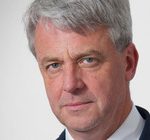
  • Andrew Lansley – 2023 Speech on the Australia/New Zealand Trade Deal (Baron Lansley)

    Andrew Lansley – 2023 Speech on the Australia/New Zealand Trade Deal (Baron Lansley)

    The speech made by Andrew Lansley, Baron Lansley, in the House of Lords on 9 January 2023.

    My Lords, I am glad to follow my noble friend for these purposes, the noble Earl, Lord Sandwich, as we are fellow members of the International Agreements Committee. I ask noble Lords to bear with me, as I am the fifth member of that committee to speak in this debate. I hope not to repeat too much of what my colleagues have said but, in so far as the scrutiny of these two agreements is concerned, the committee in this place was able to produce a report in June last year, which was debated here on 11 July. To that extent, I think that many of the criticisms of the scrutiny of these deals were of the other place, rather than here. They have been scrutinised here, as was demonstrated by that debate, in a timely fashion under CRaG.

    My friend the noble Earl, Lord Sandwich, referred again to the importance of the Government having a trade policy document, and referenced the New Zealand Trade for All strategy. This was the first agreement entered into by New Zealand after the publication of that policy document. That demonstrates the benefits of a high-quality document. I was rather struck that noble Lords have been quoting George Eustice, the former Secretary of State at Defra, who I will refer to later. It was important when he said that we should look at strengthening the role of Parliament in scrutiny and perhaps even agreeing the negotiating mandate. My noble friend Lord Frost referred to that. As he said, countries such as Japan and the US, and the European Union, all use their parliamentary processes to their advantage. As my noble friend said, we do not want disagreements to be suppressed within government and then erupt afterwards, with Ministers saying, as George Eustice did, that we gave away far too much for far too little in return. I do not happen to agree with him but that is not the point. We should be able to see what the Government’s objectives are in trade policy—not necessarily the detailed negotiating trade-offs but certainly the objectives. As the noble Lord, Lord Kerr of Kinlochard, said, we can illustrate that by reference to examples. We ask about matters such as the Government’s approach to investor-state dispute settlements but all we get in reply is, essentially, the conclusion that they have reached on any individual negotiation, not what the Government’s approach is in general.

    The result was different in different agreements, depending upon the approach of the other counterparties. There are a number of illustrations of that. The noble Earl, Lord Kinnoull, chair of the EU Affairs Committee, was here a moment ago. That committee and the International Agreements Committee have a right to expect that we are consulted soon about what the Government’s policy is in relation to carbon border adjustment mechanisms and the implementation of emissions trading schemes, not only between ourselves and the European Union but on the impact that the policy will have on our trading policy more generally. If we do not do that, we will find that, as a consequence, it is potentially one of the largest non-tariff barriers being erected across the globe, alongside the issue that the noble Earl raised about the Inflation Reduction Act in America.

    This has been an interesting and wide-ranging debate. In the rest of what I have to say, I want to focus on the Bill itself. This has been a great debate, and I have much enjoyed it, not least the maiden speech of my noble friend Lord Swire. We overlapped for only 14 years in the other place. I hope that perhaps we will overlap a little longer in this place—who knows, as he is not 74? It is a great pleasure to have him here and the benefit of his experience in our debates.

    It is not in my register of interests, but I should say that my sister-in-law is a sheep farmer in north Wales. Even over Christmas, she did not raise the question of the Australia or New Zealand trade agreements with me at all, so I do not know what her view on these may be—just as well, perhaps.

    Those of us on the International Agreements Committee welcomed these agreements as being of high quality and demonstrating what can be achieved; that is also my personal view. There is a feeling that some of the 32 chapters were included without sufficient substance and that the substance will have to be added over time. For example, I thought that the innovation chapter in the agreement with Australia was a very good thing, but we will not know what it is going to mean for some time to come. I hope it will mean something pretty substantial.

    This Bill simply provides the power to implement the procurement chapters—chapter 16 in each of the two agreements—and it is necessary because the powers are not there already. Once the Procurement Bill passes, the powers will be available in that legislation to do this by statutory instrument in the future; the noble Baroness, Lady Liddell, made this point earlier. The Procurement Bill means that we will not see primary legislation for purposes such as this in the future. I think that is probably correct, because the changes in our domestic legislation are relatively modest. In future, this kind of thing should be done by statutory instrument, as long as—taking the point made by the noble Lord, Lord Kerr—it is done by an affirmative procedure, because there will be a whole range of changes. The other place implements the tariff changes, and this place looks at things such as the procurement changes and a whole raft of others, but we should be doing such things by affirmative procedures wherever possible. That will enable us to exercise some control if need be—if there is a serious problem—at each stage. I hope that the ratification process will be under way by then; we will have seen it under CRaG. If there are serious problems associated with an agreement, we should know beforehand.

    I said I wanted to refer to George Eustice again; I am going to mark the card of the noble Lord, Lord Purvis of Tweed, in advance of his speech, because he referred to George Eustice’s speech at Oral Questions. The point that George Eustice was making was that he believed a problem with the agreements was that they could lead to hormone-fed beef coming to this country but that this would also be possible under the CPTPP. I do not think he is right about that. In any case, it is not a problem associated with the Australia and New Zealand free trade agreements; it is an issue we need to address in the CPTPP. That is when it comes up. What is the dispute resolution mechanism under the CPTPP? If necessary, that would need to be addressed by our Government in the context of that agreement itself.

    I took part in the passage of the Procurement Bill and tabled amendments which would have limited the nature of the repeal of this Bill by that one in due course. The problem is not that the Procurement Bill will take future powers instead of this Bill but the way it repeals it. The Procurement Bill will repeal:

    “An Act of Parliament resulting from the Trade (Australia and New Zealand) Bill that was introduced into the House of Commons on 11 May 2022.”

    So if we amend this Bill, it will be repealed by the Procurement Bill in due course. This is not a satisfactory procedure. The assurances that we received in this House from my noble friend Lady Neville-Rolfe during the passage of the Procurement Bill were that, if we amend this Bill, the Government will look to ensure that any necessary changes might be made to the nature of the repeal during the passage of the Procurement Bill in the other place. I ask my noble friend Lord Johnson of Lainston simply to reiterate, if he may, that same reassurance.

    I am not aware of a necessity for amendment. In the other place, the Official Opposition supported the Bill, and the amendment they were looking for was for further impact assessments. As my noble friend Lord Udny-Lister rightly said, the Government have committed themselves—and I hope my noble friend will further commit the Government—to two-year monitoring reports and a five-year comprehensive evaluation of both agreements. Frankly, that should be sufficient for this purpose, so I do not think we need to amend the Bill to make that happen.

    From my point of view, there are issues that we have raised and issues that I feel strongly about in the agreement. For example, there is the fact that we managed to get an agreement with Australia before the European Union did; perhaps that is one of the benefits of Brexit. However, is it not ironic that, for example, the geographical indications element of our agreement is wholly dependent on the European Union securing changes in the Australian geographical indicators regime so that we might take advantage of it? It is ironic and regrettable. It is just one more of the many illustrations of how we want to see what our trade policy should be and, in future, to see that we scrutinise not only the deal that the Government return with but the negotiating mandate that they take with them in the first place. In those circumstances, I think we would find our overall scrutiny and the support we were able to give to the Government’s trade policy all the better, all the stronger and probably all the more effective internationally.

  • John Montagu – 2023 Speech on the Australia/New Zealand Trade Deal (11th Earl of Sandwich)

    John Montagu – 2023 Speech on the Australia/New Zealand Trade Deal (11th Earl of Sandwich)

    The speech made by John Montagu, 11th Earl of Sandwich, in the House of Lords on 9 January 2023.

    My Lords, I shall start with enthusiasm, but I may not be able to keep it up. The Australia and New Zealand agreements have been trailblazers among the FTAs post Brexit and I am glad that the Minister and the International Agreements Committee, to which I belong, have helped to see them through government as well as Parliament. They are, in general, excellent and productive agreements with two old friends and allies which bring undoubted benefits to this country across the whole spectrum of goods and services.

    We should also acknowledge the co-operative attitude of the Government, or the various Governments, to our committee and our various reports. I thank successive Ministers for recognising the critical role of Parliament in scrutinising these agreements—the new Secretary of State’s response to our Australia report has confirmed this—but the CRaG process itself is inadequate, as the noble Lord, Lord Kerr, and the noble Baroness, Lady Young, have said so well already. The committee itself has pointed out several times, over nearly three years, that to have any useful role we have to assess the negotiation objectives of an agreement right at the start. The noble Lord, Lord Goodlad, said that the Government have everything to gain by this. We also need to discuss the outlines of the agreement, without of course giving away any of its content, in which case the NDA process would be involved. I am not convinced that Ministers have gone far enough to meet these requirements but, since we have had more than one change of personality, maybe we will be better understood in future. Our relationship is still being developed. We have not yet received the response to our New Zealand report, and when we do, the horse will have long bolted.

    I recognise that this is a somewhat artificial procurement Bill due for instant repeal, but it seems appropriate to make concluding remarks on the FTAs themselves, as others have. On the content, we were concerned about three issues on Australia in particular: agriculture, the environment, and the role of the DAs in both these agreements. I suspect that none of us was wholly satisfied with the way these three issues were handled. I shall use the helpful “Myth” and “Reality” sections in the DIT explainer accompanying the Bill. On agriculture, HMG persist in saying that 15 years of TRQs and safeguards provide sufficient protection for UK sheepmeat and beef producers, simply on the grounds that “it is unlikely” that Asian and Pacific countries will cease importing Australian meat. The noble Lord, Lord Frost, for example, said this was much too long and that we need adjustment and competition. On the contrary, it is just the sort of thing that could happen given an unfavourable political climate in China or elsewhere in Asia. It remains unsettling for farmers planning ahead. Here I also speak as an NFU member.

    On animal welfare, it is quite true that standards are going up and the TAC did provide convincing reassurance, as the Minister said, that Australia was raising its animal welfare performance. However, the Government admit that they are raising standards only to the level of many other countries. The noble Baroness, Lady Bennett, mentioned the procedure of mulesing, for example, and she should know. It seems that higher standards apply only to RSPCA-approved farms, so there is still a way to go.

    On pesticides, Defra says that the results of monitoring are published after consideration by its Expert Committee on Pesticide Residues in Food. Public concern about residue levels seems to us to justify a more specific monitoring exercise relating to Australia, and perhaps the Minister could say if this will be undertaken. Apart from this, the side letter on GIs and the chapter on SMEs are both to be welcomed as promising support for small businesses, including farmers. The noble Baroness, Lady Liddell, mentioned migrant workers which was extremely helpful because it has not been covered.

    Moving to the environment, I say that the new Government in Sydney are likely to prove much more positive about climate change, although it is too late for the FDA itself. Our Government claim that illegal logging will be tackled under the agreement, but there are no policy statements or details as to what happens in the separate states of Australia. It is another case of wait and see and further monitoring. Australia’s reliance on coal remains a major issue, but the Government have promised that the committee will receive reports and updates over time. This is welcome, and perhaps the Minister will confirm it. The noble Baroness, Lady Young, who is no longer in her place, pressed the Government on monitoring, so I hope the Minister will be able to respond fully.

    I need say only one word about the devolved Administrations. This has been said time and again and I am surprised it has not come up today: devolved matters are not just matters for consultation. They are integral to the national policy of each of our member nations. This means that agriculture in the DAs comes right at the front of negotiations. This did not happen in the case of these agreements. I believe the Government still claim that the DAs have been fully engaged. Of course, the overlap of policy in different departments does make life more difficult for them.

    I have touched on only three issues, and I have left New Zealand to last. On agriculture, environment and climate, New Zealand is and has been a model country. We can learn a lot from her. I recognise the other benefits that have come in, such as extending copyright—another thing not mentioned—and the growing importance of motor vehicles and machinery in UK exports by value under this agreement. New Zealand has been a model in one other respect: it has published an exemplary policy document summarising its aims and objectives in trade agreements, including more difficult issues such as human rights. I could spend some time on this, but I will not. The noble Lord, Lord Kerr, has said that trade is not a watertight department. It is surely natural to discuss wider policies with friends who are also our trading partners. The Minister knows from our recent meeting that most of us in the committee have strong views on this. As we have heard today, we are hoping that the Government will take them seriously.

    Finally, I should add that our application to the CPTPP will be greatly assisted by these two FTAs, while providing access to new markets in Asia and standing up to China, as the noble Lord, Lord Howell, given all his experience, fluently reminded us. But that will be a subject for another day.

  • PRESS RELEASE : Response to Drug Deaths Taskforce report [January 2023]

    PRESS RELEASE : Response to Drug Deaths Taskforce report [January 2023]

    The press release issued by the Scottish Government on 12 January 2023.

    Cross-government action plan backed by £68 million.

    More than 80 actions supported by £68 million over the course of this parliament are outlined in the Scottish Government’s response to Changing Lives, the final report from the Drug Deaths Taskforce.

    Measures are being taken across a broad range of areas including employment, justice, transport, education and health and social care to improve the lives of those affected by drugs.

    The response is underpinned by two principles – that services treat problem drug use the same as any other health condition and that people with lived experience are involved in policy decisions.

    Many of the 20 recommendations and 139 action points made by the Taskforce are already being addressed but new announcements include:

    • £30 million ringfenced from the Enhanced Services Allocation to NHS territorial Boards from April 2023 to support specific drug treatment services within primary care settings
    • £18 million to develop stabilisation and crisis care services, in addition to the £100 million already available for residential rehabilitation
    • £4.3 million for a Stigma Action Plan which includes an accreditation scheme for organisations to improve awareness and challenge stigma across public life
    • £5.5 million for new programmes for children and families including the expansion of Routes, a young person’s support group run by Scottish Families Affected By Drugs
    • £3.4 million additional funding to deliver a workforce action plan and expand the Addiction Workers Training Programme run by the Scottish Drugs Forum and an additional £3.3 million to expand trauma training
    • £2.4 million to improve care for people with co-occurring mental health and substance use conditions to build on the recommendations set out in the recent rapid review
    • £0.5 million for an initial pilot to expand the concessionary travel scheme to include people with a substance dependency

    Drugs Policy Minister Angela Constance said:

    “Every drug death is a tragedy and unacceptable. We continue to face a public health emergency and cannot underestimate the scale of this crisis.

    “The Drug Deaths Taskforce was formed to provide independent expert advice on our response to this emergency and this cross-government action plan includes a broad range of initiatives which will not only support the complex needs of people who use drugs but also help support prevention and early intervention.

    “This publication outlines our whole government commitment to addressing this challenge and ensuring that people with problem substance use can access all the services they need and are entitled to.

    “I thank the Taskforce members, past and present, for their important contribution. The final report, Changing Lives, has provided us with clear, evidenced recommendations and our response outlines a new, even more ambitious, phase of our mission to save and improve lives.”

  • PRESS RELEASE : Winter funding for food groups in Scotland [January 2023]

    PRESS RELEASE : Winter funding for food groups in Scotland [January 2023]

    The press release issued by the Scottish Government on 12 January 2023.

    Cash-first approach will help those facing hardship.

    Social Justice Secretary Shona Robison has announced an additional £2.4 million in funding to help people struggling to afford food and other essentials.

    The funds will go to four organisations to distribute mainly on a ‘cash-first’ basis to people in immediate need in the face of the cost of living crisis.

    A focus on crisis payments and shopping cards will allow people to choose for themselves what they need.

    Ms Robison announced the funding on a visit to Prospect Community Housing in Wester Hailes, Edinburgh, where she heard how staff are helping residents through debt and income advice services.

    She said:

    “I know people are struggling with the cost of food and other essentials right now, and this additional funding will get more support to some of those who need it most this winter.

    “We are working with partners to prioritise urgent cash-first action when it comes to food insecurity and this will take some of the pressure off food banks.

    “This funding has the potential to directly reach 7,500 people, and many more will benefit than this, as the Corra Foundation and Fareshare will between them distribute it further to an estimated 900 organisations.

    “We want people to make sure they are getting all the support they are entitled to, so I encourage anyone who is struggling financially to get advice on what support they may qualify for – through their local authority, a local advice service, or Social Security Scotland as well as checking out our cost of living website.”

    Carolyn Sawers, Chief Executive at the Corra Foundation said:

    “This £1 million contribution to the Household Hardship Fund from the Scottish Government provides a dignified cash first approach for those most impacted by the cost of living.

    “Organisations which have received money through the fund have told us it is making a significant difference helping families with the essentials of food, fuel, and household items.

    “Corra is committed to working alongside others in tackling the long-term issues of poverty. The Household Hardship fund is an important step in responding to the crisis that people across Scotland face today.”

    Sally Thomas, Chief Executive of the Scottish Federation of Housing Associations (SFHA), said:

    “Housing associations and co-operatives are doing everything they can to help tenants keep their heads above water, heat their homes and put food on their table this winter. However  our members are increasingly reporting that tenants are facing impossible decisions on and between household bills and food as costs soar.

    “It’s simply not right that anyone in Scotland should be going hungry this winter. As we continue to face this unprecedented crisis, this money will be critical to helping ensure social landlords can provide a response to food insecurity that is tailored to the needs of their tenants and communities, maintaining dignity and choice.”

  • PRESS RELEASE : Record medical training posts filled in Scotland [January 2023]

    PRESS RELEASE : Record medical training posts filled in Scotland [January 2023]

    The press release issued by the Scottish Government on 11 January 2023.

    Highest numbers since records began.

    More medical training posts have been filled in 2022 than at any other year since records began in 2013.

    Latest recruitment figures show 1,073 posts for doctors in training were filled successfully – 93% of the 1,155 advertised.

    The majority of specialties filled at 100%, including Core Psychiatry, Clinical Radiology and Core Surgical Training. General Practice training places saw 99% also filled successfully.

    Health Secretary Humza Yousaf said:

    “The results of this year’s recruitment process continue to show that Scotland is a highly desirable place to live, train and work as a trainee doctor. This is testament to our first-class medical education system and flexible training opportunities.

    “Building on our high staffing levels, that have consistently grown for the last decade, is absolutely vital to the recovery of our NHS and I would like to thank each and every doctor in training who has opted to pursue their career in Scotland.  All NHS Scotland staff work tirelessly to meet the healthcare needs of our country.

    “We realise that there is always room for improvement and will therefore continue to work with NHS Education for Scotland to support our trainees as much as we possibly can to ensure the sustainability of our workforce.”

    Professor Emma Watson, Medical Director, NHS Education for Scotland, added:

    “The 2022 recruitment figures reflect the strong reputation Scottish medical education and training has among doctors beginning their careers as General Practitioners or Hospital Specialists. It is our responsibility to meet their expectations and to continue to improve and through education and training prepare and support them in their roles in the NHS.”

  • PRESS RELEASE : Delivering a fair and secure zero carbon energy system [January 2023]

    PRESS RELEASE : Delivering a fair and secure zero carbon energy system [January 2023]

    The press release issued by the Scottish Government on 10 January 2023.

    Strategy to deliver a just transition for the energy sector published.

    A route map to secure Scotland’s fastest possible fair and just transition away from fossil fuels has been published.

    The draft ‘Energy Strategy and Just Transition Plan’ sets out a plan for Scotland’s renewables revolution to be accelerated as North Sea basin resources decline.

    This would result in a net jobs gain across the energy production sector, with the potential to increase renewable energy exports and reduce exposure to future global energy market fluctuations.

    Key policy proposals published for consultation include:

    • substantially increasing the current level of 13.4 Gigawatts (GW) of renewable electricity generation capacity, with an additional 20 GW by 2030, which could produce the equivalent of nearly 50% of current demand
    • an ambition for 5 GW of renewable and low-carbon hydrogen power by 2030, and 25 GW by 2045
    • increasing contributions of solar, hydro power and marine energy to the energy mix
    • generation of surplus electricity enabling export of electricity and renewable hydrogen to support decarbonisation across Europe
    • setting out final policy positions on fossil fuel energy, including consulting on a presumption against new exploration for North Sea oil and gas
    • accelerated decarbonisation of domestic industry, transport and heat in buildings
    • increasing access to affordable energy by urging the UK Government to take stronger, more targeted action for fair energy market reform
    • maximising household, business and community benefit from energy projects, including through shared ownership of renewables

    Published as part of the draft Energy Strategy is a Just Transition Plan for the energy sector. This details the support being provided to grow Scotland’s highly skilled energy workforce, increase jobs in energy generation and the supply chain, while enabling communities and businesses, particularly in the North East, to prosper.

    Analysis shows the number of low carbon production jobs is estimated to rise from 19,000 in 2019 to 77,000 by 2050 as the result of a just energy transition, meaning there will be more jobs in energy production in 2050 than there are now.

    The Strategy also sets out recommended actions for the UK Government to take in reserved policy areas, including powers relating to energy security, market mechanisms, network investment and market regulation.

    Scottish Ministers have invited the UK Government to join an Energy Transition delivery group to drive forward the vision set out in the Strategy.

    Net Zero & Energy Secretary Michel Matheson said:

    “Scotland is an energy rich nation, with significant renewable energy resource, a highly-skilled workforce and innovative businesses across a globally renowned supply chain.

    “The renewables revolution is global, as all countries seek to address concerns about climate change, and Scotland is at the forefront of this transition.

    “At a time of unprecedented uncertainty in our energy sector, accelerating the transition towards becoming a renewables powerhouse makes sense for a number of reasons – particularly to helping to mitigate against future global market volatility and the high energy prices which are making life so difficult for so many people across Scotland. For example, onshore wind is one of the most affordable forms of energy.

    “While we do not hold all the powers to address these issues at source, this Strategy sets out how we can achieve an energy transition that ensures we have sufficient, secure and affordable energy to meet our needs, support Scotland’s economic growth and capitalise on future sustainable export opportunities.”

    Just Transition Minister Richard Lochhead said:

    “The oil and gas industry has made a vast contribution to Scotland’s economy and its workers are some of the most highly-skilled in the world. But Scotland’s oil and gas basin is now a mature resource.

    “A just transition to a net zero energy system will secure alternative employment and economic opportunities for those already working in the industry and will provide new green jobs in Scotland for future generations. Embracing this change will ensure we avoid repeating the damage done by the deindustrialisation of central belt communities in the 1980s.

    “There is a bright future for a revitalised North Sea energy sector focussed on renewables.”