
Author: admin

  • Peter Walker – 1967 Speech on the Government’s Transport Policy

    Peter Walker – 1967 Speech on the Government’s Transport Policy

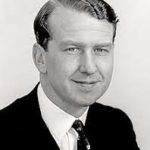
    The speech made by Peter Walker, the then Conservative MP for Worcester, in the House of Commons on 6 November 1967.

    I beg to move, at the end of the Question, to add: but humbly regret that the Gracious Speech contains proposals to nationalise further large sections of the transport industry instead of concentrating on practical measures to improve conditions for the travelling public and for industry. I am sure the House regrets that this debate is taking place under the shadow of a major railway disaster. I assure the House that any criticisms of the management or policies of British Railways are in no way connected with the railway’s safety record, which has been outstanding over the years, or the diligence with which our railwaymen apply themselves to seeing that railway travel is safe and secure.
    Last week’s by-election results are perhaps a reflection on the fact that the Government’s performance contrasts vividly with their plans. If the plans which have been published week by week, and month by month, had been fulfilled, or even started to be fulfilled, the Government’s popularity would be very much higher, but instead we have had a long series of plans contrasting vividly with performance, and this is particularly true of transport.

    An examination of the various forms of transport shows that in every sphere Government policies are hindering progress. In aviation one finds that B.E.A.’s future is in jeopardy as a result of the constant delay and indecision of the Government on replacing the present B.E.A. fleet. If one considers future developments in aviation, internal air services, the development of freight air services, and the indecision, and probably wrong decision, on matters such as Stansted, one sees aviation once again being affected by the Government. It is remarkable that this industry, which could perhaps best be quoted as an industry of the future, is completely and utterly without investment grants as a result of the Government’s policies.

    When one considers shipping, and ports and docks, one sees that only last week the Confederation of British Industry and the British Shippers’ Council gave their verdict on the Government’s policy. Their verdict is summarised in a statement issued last Wednesday or Thursday: To face the industry with an administrative revolution when it is already grappling with great changes would surely reduce operating efficiency, retard evolution, increase costs, and thus, by raising the price of exports, damage the economy. No case has been made for fundamental change now or in the future. The Minister’s proposals establish no reasoned case for a further change of ownership or control. On the railways, we see a fast increasing deficit, obviously completely out of the Minister’s control. Indeed, it was the Minister herself who said in reply to a Question on 25th January of this year, at col. 1471 that the railway deficit this year would be £130 million, but we were told in a debate in another place that the figure was now likely to be £150 million. Labour relations on the railways have never been worse than they are at the moment, and the position of top management is in complete chaos.

    One of the most fundamental needs is an improvement in the road building programme, but we see the Minister complacently going up and down the country boasting that at the moment expenditure on road building is higher than it has ever been in our history. This is a boast which every Minister of Transport has been able to make every year since 1950, but the real test of the Minister’s performance—and that of the Government—is to see how the right hon. Lady has carried out the road building programme which she inherited.

    The programme was laid down in great detail in July 1964. It proposed Government expenditure of £1,200 million on road building in the years 1965 to 1970. The party opposite said that it was an electioneering offer, and something to entice the voters. Indeed, the right hon. Member for Vauxhall (Mr. Strauss), who at that time was the shadow Minister of Transport, stated categorically in the Press and in speeches that the programme announced by the Tories for the period 1965–70 was too little and too late.

    Let us examine what has happened to the programme which the present Government described as too little and too late. We can establish the exact figures because my right hon. Friend the Member for Barnet (Mr. Maudling) published a White Paper setting out the Government’s investment programme for 1967–68. He said that in that year at 1963 prices, £470 million would be spent by the Government and local authorities on roads in this country. Adjusted to 1963 prices, it would be necessary to spend £53 million this year to fulfil the promise which hon. Gentlemen opposite described as too little and too late. This year the Government and local authorities will spend £450 million on the roads, so this year alone they will spend £81 million less than that set out in a programme which they described as too little and too late.

    The Government have stated categorically that in the period 1965–70—this information was given in reply to a Question—they will spend £1,100 million. This is £100 million less than the sum laid down in the programme which they described as too little and too late, and during this period the motorist has had an extremely bad deal. Comparing this year’s figures with those for 1964–65, one sees that this year the Government will spend £70 million more on roads, but from the owners of motor cars they will get an extra £350 million in increased petrol tax, in increased Purchase Tax, and in increased motor vehicle licences. Thus, for every £1 extra which they are spending on reads they are taking an extra £5 from the motorist. This is the Government’s record for the motorist and the roads.

    The Government’s record on the railways, in aviation, in shipping, and in the road programme is bad, and what do they offer for the future? They have put forward a programme—which received enthusiastic support at the Labour Party conference as a good Socialist one for tackling transport problems—substantially to increase the nationalisation of public transport.

    First, I turn to the proposals for passenger transport authorities. These proposals have no friends. Local authorities do not like them; industry does not like them, and the bus industry in particular does not like them. Everybody is opposed to them. The Minister says that this is not nationalisation, and describes me as illiterate for speaking of it as such. She claims that it is local ownership and not nationalisation. The only real ownership which will be given locally is the ownership of losses.

    How can the Minister claim that these P.T.A.s will have local control? Let us consider some of the features of the proposal. These authorities will be very much in the hands of the Minister of Transport. First, the Minister will designate the boundaries of the P.T.A.s, and she has specifically stated that not only will she designate them but will allow no form of public inquiry into them, and there will be no appeal from her decisions. So much for local control of the boundaries.

    Secondly, local control will consist of immediately confiscating the assets of all municipal bus companies—a very odd and peculiar way of giving local control—and doing away with local bus companies.

    Thirdly, there will be considerable investment control in the hands of the Minister. Grants will depend on her being satisfied with the way P.T.A.s are run. Then, the Minister will have nominees on the boards of the P.T.A.s. Her first suggestion was that one-third of the representatives should be appointed by the Ministry of Transport and that the chairmen should also be so appointed. We are pleased to know that as a result of considerable criticism and pressure she has reduced her demands for representation, and the chairmen will now be appointed by the P.T.A.s. But let us remember that even if, for example, her representatives consisted only of 20 per cent. of the Board, this would be 20 per cent. more than the representation on the boards which are now running local government transport. Also, if, in a public transport authority area, 60 per cent. of the authorities were Tory-controlled and 40 per cent. Labour-controlled, with the Minister’s nominees and the Labour-controlled representatives the Minister’s nominees would have a majority on the P.T.A. Under the P.T.A.s, many major boroughs will have no appeal on the question of fares or timetables.

    There is much evidence that there is no great advantage in size, in respect of bus operations; indeed, the public will vouch for the fact that the bigger the size the less efficient is the bus company, the more inferior its labour relations, and the less direct contact it has with the public.

    It is becoming more and more clear that all the local authorities in the major conurbations and elsewhere are becoming bitterly opposed to this project. The Minister will say that this is due to briefing and interference on the part of the Conservative Central Office and the leaders of Tory councils, but she should remember that last May the people of this country overwhelmingly voted Tories to their local councils, and they did not vote for them to give back into public ownership private and municipal bus companies.

    But not only Tory councils are opposed to this scheme. One of the Minister’s civil servants—a person who is particularly responsible for P.T.A.s.; a Mr. Locke—spoke to municipal operators, and if he reported accurately to the Minister he will have told her that local authorities are passionately opposed to her proposals. At the M.P.T.A. conference five Labour chairmen of local authority transport committees spoke in the debate upon the P.T.A. proposals. Every one was opposed to those proposals. Perhaps their objections were most appropriately put by Councillor Williams, chairman at St. Helens, who said: It would be a voice in the wilderness. I am second to none as a supporter of the Labour party, but this is not one of the things they ought to be doing. Another opinion—and I am sure the Minister will appreciate this, as she represents a Lancashire division—was expressed by Alderman Walsh, vice-chairman at Bolton, who said that the whole programme could only be called a load of codswallop. It is understandable that local authorities should be strongly opposed to P.T.As. First, the ratepayers will have to bear the service charges necessary to compensate for the taking over of privately owned bus companies. Secondly, they will lose their municipal assets. Thirdly, they will have to make a contribution to the deficit of passenger railway services in their areas. Fourthly, fares will increase as a result of the levelling up of wages and conditions of all those employed in bus companies which are taken into P.T.As.

    One of the proposals which will be greeted with great alarm is a clear undertaking that P.T.As. will have control over coaches and coach excursions going out of their areas. Many people travel by coach because of the cheap fares. To travel from Birmingham to London costs 34s. by coach, but £3 6s. by second-class railway fare. We can understand this Minister, for what she will describe as good transport planning, deciding that it is wrong to take this traffic from the railways and therefore placing considerable restrictions on coach services.

    Alternatives to this programme are quite clear. They are immediately to repeal some of the policies which the Government have pursued, which are directly opposed to the efficient running of our bus companies. It was this Government who took away investment allowances for buses and coaches, immediately resulting in increased fares. It is this Government who made bus companies create an interest-free overdraft for the Government, in the form of S.E.T., and it is this Government who are dragging their feet on trade union reform, which would help to bring single manning and do away with some of the overmanning which exists today.

    It is a remarkable thing that if there was one proposal which should have waited for the report of a Royal Commission it was the P.T.A. proposal, which should have waited for the report of the Royal Commission on Local Government. But the Government were determined to hasten through these proposals before the published. What a different attitude to their attitude on trade union reform. The creation of passenger transport authorities will result in considerable increases in road fares and a great loss of freedom of choice in terms of transport for the individual, and we shall oppose this proposal.

    The post-war history of the railways is that from the early 1950s, as people began to own more and more motor cars, and passengers turned from the railways to the roads, and as a great modernisation programme was required to change from steam to diesel electric, the railways ran into increasing deficits. It was then that a Conservative Government appointed Lord Beeching and a major reorganisation started to take place. The success of this was reflected in the last two years of Tory Government, when the railway deficit was reduced by £37 million. In the first three years of Labour Government it will have increased by over £30 million.

    Today we have had published a White Paper. I say that it has been published today but, like all Government documents, it was really published many weeks previously in the Press. It is remarkable that every major proposal in the White Paper appeared in The Times of 26th June. That newspaper’s transport correspondent described the proposals of the Joint Steering Group under the chairmanship of the Parliamentary Secretary. He described its conclusions in respect of subsidies for services of social importance; he described the recapitalisation of the railways and the writing off of a great deal of capital. He described in detail the proposals for reorganisation of the main board and the doing away with regional boards, and he went on to describe the special subsidies for bridges, level crossings and railway police.

    If that same correspondent wanted to summarise the Minister’s White Paper he could not do better than repeat his article of 26th June. This is a terrible reflection upon Her Majesty’s Government.

    One political correspondent suggests today that the right hon. Lady should become the next Foreign Secretary. On Press leaks, she puts Lord Chalfont completely in the shade, because every major proposal from the Ministry since she has been Minister has been leaked, in one way or another, beforehand. If these proposals were not leaked by the Ministry itself, the Ministry should have done something to give this House the White Paper, the details of which appeared in the Press in June, some time before November, a few hours before this debate. Instead, with the normal sense of priorities of this Government, the Press came first and Parliament came afterwards.

    The White Paper carries the report and recommendations of a very distinguished firm of accountants, Cooper Brothers, who have done a great deal of work, and of the steering group which contained a number of distinguished men from industry and the British Railways Board, and a distinguished professor of finance, under the chairmanship of the Parliamentary Secretary. The whole House will want to examine carefully its proposals, and we obviously have not had time to study some of the background facts and statistics; some of the figures, of course, are not available in the White Paper. But there are some questions which I should like to ask the Minister.

    First of all, she states in the White Paper, in rather strange wording; that, after consultation with British. Railways, the Government have decided to adopt the proposals. Do British Railways agree with the proposals? I know that they had representatives on the Steering Group, but it has been said that the Chairman and many of the Board disagree with the proposals. We should like to know whether this is true or whether it was purely consultation, without the Board fully supporting the proposals.

    One of the things which will dramatically affect British Railways is the Minister’s proposals for a National Freight Authority. This Steering Group contains the advice of one of the best firms of accountants in the world, with men of considerable ability who have looked in depth into the management and financial problems of British Railways. I therefore challenge the right hon. Lady to ask this same Steering Group, with all its knowledge, whether or not it is in favour of the creation of the National Freight Authority. If it is, that will give great support to her case. If it is not, it will show that her proposals are thoroughly irresponsible and against the future interests of British Railways. If the right hon. Lady declines that challenge to put that question fairly and straightly to the Steering Group, the country will realise why?

    The real problem for the railways is not the proposals in the Report, interesting though they are and correct as many probably are. It is easy to study and decide what should be done, but the test is implementing that study. Everything that has so far happened has given us absolutely no confidence in the Minister’s ability to bring this Report into being, because the essence is the attraction of top and good management. The railways today have labour relations problems, and a rising deficit, yet, for more than a week, 350,000 men employed by British Railways— an industry losing £150 million a year—have known that their chairman has been under notice to quit, but have had no idea who his replacement is to be. That is an appalling situation for any major industry.

    Also, almost every national newspaper reported that, in the middle of the most crucial negotiations with the unions, in which a major strike was a possibility, the chairman of British Railways was called out to be hold by the Minister that she was going to offer him another job. What a way to handle top management. If this did not happen, the Minister should immediately have issued a statement saying that it did not, instead of leaving this situation for a week.

    Everyone knows that the chairman has been offered another job but does not know his replacement. The vice-chairman has said that he will join a shipping company and has given notice to quit. Did the Minister tell Mr. Shirley that she would like him to go, after which he found another job, or did the reverse happen? As the Minister has constantly praised Mr. Shirley in the country for the wonderful way in which he has organised freight liner trains, why can she not provide him with the terms and conditions under which he could stay? Either he was important and successful, in which case it was her duty to see that he was kept or enticed to stay, or else he has been inefficient for some time, in which case she has been wrong to praise him all over the country. As well as the chairman and vice-chairman, Mr. Fiennes, one of the most creative thinkers of all the general managers of British Railways, has been sacked and has left the service.

    This is the position of top management in British Railways after the Minister has been in charge for a couple of years. She says in the White Paper that the real need is for stability of British Railways. What a lot of stability there is at present—an army without a general, a major industry not knowing exactly what will happen in terms of top management.

    Who will be attracted to take on the jobs of top management? What is this Minister’s record in this respect? Just look at the treatment of top management. First of all, the road construction units were created so that the county surveyors, who had been vocal critics of all Governments, would no longer have that same say. Then, Sir Alexander Samuels was removed from his position as road traffic adviser to the Minister because, as we knew, he was having a number of disagreements with her. Then, Sir Alfred Owen had views on the 70 m.p.h. speed limit and was removed from his position as chairman of the National Road Safety Advisory Council and replaced by the Parliamentary Secretary, Lord Rochdale, who was Chairman of the National Ports Council, opposed nationalisation and was in favour of developing Portbury, so he was given another job and replaced by someone from one of the nationalised boards. This is a complete record of any person who disagrees with the Minister being removed to another job.

    Who will take on the job of Chairman of British Railways, with this sort of background—[HON. MEMBERS: “George will.”]—when the Minister has already stated that the track will remain at 11,000 miles, no matter what the commercial considerations? The new chairman will immediately inherit that fixed position. She has also said that she will take away from British Railways its most expanding element, the freightliner trains, and give it to the National Freight Authority. So the new Chairman will be told. “You will have to keep the track as it is and I am taking away the best potential for the future, but, apart from that, you have every freedom and may get on with the job.” This is an impossible position for top management.

    Any top management coming into British Railways while the present Minister remains will, of course, remember her words at the Labour Party conference. When pressed to set up various organisations, she said: No, friends, when it comes to transport planning, I have got to be the overall authority. The real trouble is that any person working under this Minister knows that he will always be subject to considerable political interference.

    The other proposal which will be in the Government’s Bill, the National Freight Authority itself, also has no friends and no supporters in industry. No one in the railways supports it, either. There has been no pronouncement from the Railways Board or from the railway unions saying that it wants such an authority. Sir Donald Stokes, who would not be quoted as an enemy of the present Government, has made his position clear. He said: If we are going to have restrictions for Socialist doctrinaire reasons, it is absolutely crazy. He went on: … if they are going to restrict road transport, it is still worse, because in Great Britain we need above all a competitive transport system. This is the biggest machine tool of industry. Sir Donald Stokes has clearly stated his view, and so has the C.B.I.

    The proposal for a national freight authority is a proposal to allow the nationalised industries to take over a large section of the road haulage industry without compensation. Seventy thousand vehicles will be subject to new tribunals. How many bureaucrats will be employed on those tribunals? What sort of people will decide, and what criteria will those people use?

    The Minister has stated that licences will be taken away or refused only if it can be shown that the railways are faster, less expensive and more reliable. Those are the three criteria. Will all three have to apply or will it be a matter of balance? Who will judge the speed of British Rail? Will British Rail have to prepare a time-table? A lot of tribunals would not take much note of that. Who will decide whether the reliability will be better or worse? Is this to be based on promises? Who is to decide on cost in its relationship with time?

    We on this side of the House have made our position quite clear. We believe that the best people to decide how best to send their goods are the customers themselves, and not some bureaucratic tribunal trying to decide for them. The position is that £150 million worth of assets belonging to private road hauliers are in jeopardy without any form of compensation.

    Let us just look at the handicap which the Government have put on those in the road haulage industry before they start: three increase in fuel tax, graduated pension contributions up, National Insurance contributions up, Selective Employment Tax, postage and telephone costs up, industrial training 1.6 per cent. up, road vehicles licences increased by 50 per cent. and investment allowances on road haulage vehicles completely taken away by this Government. The Minister has said that the N.F.A. would give the road haulage industry a good run for its money, and so I should think, with the handicap put on the road haulage industry before ever it starts.

    In every sphere of transport the performance is bad, and instead of the Government offering remedies for these performances they are embarking on a programme of public ownership of all our ports and docks, considerable ownership of the bus industry, interferences in the ancillary services such as taxis and coaches, and a considerable extension of the public section of long distance road haulage. We on this side believe that this will make no contribution to efficiency. It is yet another attack on free enterprise by a Government that by now should realise that they are doing great harm to the country by their constant attacks on free enterprise, and that they will bring about a considerable worsening, and not an improvement, of the nation’s transport system.
  • NEWS FROM 100 YEARS AGO : 26 January 1923

    NEWS FROM 100 YEARS AGO : 26 January 1923

    26 JANUARY 1923

    The German Railwaymen’s Union in Essen sent a strong message to the French Government telling it to withdraw from taking control of German services in the Ruhr Valley. They said that there were growing safety issues and ordered their workers not to support the French authorities in the occupied region.

    A general strike began of boatmen on the Rhine, causing a suspension of all freight traffic on the river.

    A committee appointed by the Bishop of London recommended demolishing a number of city churches that weren’t well used to raise more money by selling off the sites. Opponents of the idea complained that many of the churches were designed by Christopher Wren and had significant historic interest, with a decision to be made by the future Church of England Representative Assembly.

    Dublin authorities confirmed that they had executed two men in Waterford for illegally possessing ammunition and firearms. The two men, Michael Fitzgerald and Patrick O’Reilly, brought the number of people executed to 50 over the last three month period.

  • PRESS RELEASE : Thérèse Coffey – Farmers central to food production and environmental action [January 2023]

    PRESS RELEASE : Thérèse Coffey – Farmers central to food production and environmental action [January 2023]

    The press release issued by the Department for Environment, Food and Rural Affairs on 26 January 2023.

    The Secretary of State for Environment, Food and Rural Affairs has today (Thursday 26 January 2023) set out detailed plans for the nation’s farming sector, supporting farmers to be profitable and resilient as they produce food sustainably while protecting nature and enhancing the environment.

    The accelerated roll out of the Sustainable Farming Incentive – a key part of the Government’s Environmental Land Management schemes – will provide farmers with a diverse range of paid actions to manage hedgerows for wildlife, plant nectar-rich wildflowers and manage crop pests without the use of insecticides.

    These incentives will make food production more resilient and efficient over the longer term whilst contributing towards the UK’s environmental goals on carbon, biodiversity, water quality and net zero. Together this will safeguard the long-term prosperity of the farming industry and protect the environment for future generations.

    Environment Secretary Thérèse Coffey said:

    Farmers are at the heart of our economy – producing the food on our tables as well as being the custodians of the land it comes from.

    These two roles go hand-in-hand and we are speeding up the roll out of our farming schemes so that everyone can be financially supported as they protect the planet while producing food more sustainably.

    Environmental Land Management

    Six additional standards will be added to the Sustainable Farming Incentive this year, meaning farmers can receive payment for actions on hedgerows, grassland, arable and horticultural land, pest management and nutrient management. They build on the three existing standards to improve soil health and moorlands introduced in 2022 – which nearly 1,900 farmers already have in agreements.

    The Government has also detailed what farmers will be paid to deliver through an enhanced version of the Countryside Stewardship scheme, which will see around 30 additional actions available to farmers by the end of 2024. The expansion builds on the more than 250 actions farmers can take at present with the scheme seeing a 94% increase in uptake since 2020 and is now part of thousands of farm businesses. The next round of Countryside Stewardship Higher-Tier will open in February, with Mid-Tier following in March.

    Countryside Stewardship Plus will reward farmers for taking coordinated action, working with neighbouring farms and landowners to support climate and nature aims. It will deliver the same high environmental ambition previously planned for Local Nature Recovery, including managing floodplain meadows to reduce flood risk and improve biodiversity, restoring and maintaining peatland for carbon capture and storage, and enhancing and managing woodland to mitigate against drought and enhance its resilience to climate change.

    The scheme will also be improved so farmers benefit from greater flexibility over when they can apply and how they manage their agreements, with improved access for tenant farmers and increased access to Higher Tier options and agreements.

    Elsewhere, following high demand last year, Defra has confirmed it will open applications for the second round of the Landscape Recovery scheme in the spring to support ambitious large-scale nature recovery projects, focusing on net zero, protected sites and habitat creation. This could include projects creating and enhancing woodlands, peatland, nature reserves and protected sites such as ancient woodlands, wetlands and salt marshes.

    They involve groups of land managers and tenant farmers, working together to deliver a range of environmental benefits across farmed and rural landscapes. 22 projects began last year aiming to restore nearly 700km of rivers and protect and enhance 263 species.

    Today’s announcement provides clarity and certainty to farmers, allowing them to make business decisions and cover costs as direct payments are phased out whilst getting involved in Environmental Land Management schemes. The plans also deliver on the assurances provided by the Farming Minister earlier this month, during a speech at the Oxford Farming Conference announcing increased payment rates.

    Further details on the new standards and payment rates being rolled for the Sustainable Farming Incentive as well as information on the future roll out of Countryside Stewardship Plus from 2024 is available on gov.uk.

    Straightforward applications

    The Sustainable Farming Incentive has been made as straightforward as possible to apply online for with farmers giving positive feedback over the simplicity and speed of the application.

    The 2023 offer has been made as flexible and accessible as possible to enable farmers to get started in the scheme and start to deliver the outcomes for their business and the environment. These improvements are based on learnings from extensive pilots and feedback to make it simpler, clearer and more workable for farmers.

    Over time, it will continue to evolve so that it supports and incentivises farmers to deliver the right combinations of actions, at the right scale, in the right places and in a joined-up way with their neighbours. This will be essential for us to make the required progress towards our environment and climate targets alongside food production.

    Harry Baker Cresswell, an agent working with two arable farmers from Northumberland, said:

    I work with two holdings which are part of the SFI pilot, neither of which were in existing schemes.

    The application and payment experiences have been good to date, and the objectives of SFI for arable land have been clearly set out.

    SFI is different to previous Environmental Stewardships models in that the option-requirements are much less prescriptive. This is welcome, but does require a little steering to ensure objectives are met – something that Defra has recognised with its SFI Management Payment.

    This is a real step forward in the journey towards enthusing widespread participation in the ELM schemes.

    Kitty Hamilton, a mixed farmer from East Lincolnshire, said:

    The big positive of the SFI pilot is the flexibility, which we really like. We were able to retain habitats from previous schemes which we were really proud of. The pilot fits well with our current and planned farming methods, which means it’s gently nudging us towards a more regenerative system.

    The fact that we can layer the standards, and use all of the land on the estate, means that we can generate a good income. Generally I’ve enjoyed engaging with the learning activities, helping us to upskill professionally and personally within our organisation.

    Robin Milton, a livestock farmer from Exmoor, said:

    We’ve been on three standards to give the SFI pilot a trial run because we felt it would benefit our business.

    The application process was straight-forward and, although the guidance was lengthy, I learned quite a bit and we ended up doing more than we needed to – which isn’t a bad thing.

    Taken together the Environmental Land Management schemes mean there is something on offer for every type of farmer.

    For tenant farmers there is range of actions relevant to their holding, especially through the Sustainable Farming Incentive which has been designed with them in mind. Shorter three-year agreements have been introduced with no landlord consent required meaning the risk of entering an environmental scheme has been reduced considerably. There are also no penalties in the event a farmer leaves the scheme early.

    Upland farmers can be paid for actions on moorland, grassland and upland peat with over 100 actions in all schemes applicable to them.  From this year, farmers in existing Higher Level Stewardship agreements will be able to expand their activities and increase their payments by having a Countryside Stewardship agreement as well.

    The 2019 manifesto commitment maintains the annual farming budget of £2.4 billion until the end of this Parliament, with all reductions from farmers’ direct payments reinvested back into the sector. All three Environmental Land Management schemes are accessible to farmers with the budget managed flexibly so that we can achieve the best value for money and deliver the intended outcomes in ways that best suit farmers and land managers.

  • PRESS RELEASE : British Embassy Washington Welcomes New Defence Attaché, Rear Admiral Tim Woods [January 2023]

    PRESS RELEASE : British Embassy Washington Welcomes New Defence Attaché, Rear Admiral Tim Woods [January 2023]

    The press release issued by the Foreign Office on 25 January 2023.

    Rear Admiral Tim Woods has joined British Embassy Washington as its new Defence Attaché. He will lead the UK’s extensive military engagement and partnerships across all branches of the United States military.

    Rear Admiral Woods joins the team in Washington from Kyiv, Ukraine where he was the British Defence Attaché – at the frontline of the UK’s support to the Ukrainian military. In Kyiv he also served as Head of the British Defence Staff in Eastern Europe, commanding all Defence Attaches across Belarus, Moldova, Georgia, Armenia, Azerbaijan and Ukraine at a defining moment in European security.

    He brings more than three decades’ experience both on land and at sea. Previous roles have included active duty in Afghanistan, deployments to the Far East, submarine patrols, secondments to NATO, the UK Ministry of Defence and the National Security Secretariat.

    Rear Admiral Woods joined the Royal Navy in 1988 after training at Britannia Royal Naval College in Dartmouth, south west England, and at sea. He is a graduate of the prestigious Royal College of Defence Studies, where he was awarded the Wellington Prize for Strategic Analysis.

    Commenting on the appointment, His Majesty’s Ambassador to the United States of America Dame Karen Pierce said:

    I am delighted to welcome Rear Admiral Tim Woods to the British Embassy. The UK’s military-to-military links with the US form part of the bedrock of the Special Relationship and have protected our citizens for decades. Tim’s extensive experience in Ukraine, NATO and with US forces will be a huge asset at this critical time, as we work with the US to support Ukraine.

    The Rear Admiral said he was relishing his new role at the heart of the UK-US defence relationship:

    I have worked closely with our American colleagues throughout my military career and have seen the strength of the relationship – the UK’s most important single bilateral partnership – at first hand.

    I am thrilled to have moved to such an exciting and welcoming country, and am looking forward to meeting US decision makers to ensure our hand-in-glove relationship remains very focussed on the range of pressing defence and security threats. I also look forward to travelling throughout the various states over the next three years, and seeing our defence collaboration in action across America.

    Rear Admiral Woods takes over the role of UK Defence Attaché at the British Embassy from Air Vice-Marshal Mick Smeath who will become Director of the Global Defence Network, the head of UK Defence Attachés worldwide.

  • PRESS RELEASE : The UK urges the Sudanese authorities to enhance their cooperation with the International Criminal Court – UK Statement at the UN Security Council [January 2023]

    PRESS RELEASE : The UK urges the Sudanese authorities to enhance their cooperation with the International Criminal Court – UK Statement at the UN Security Council [January 2023]

    The press release issued by the Foreign Office on 25 January 2023.

    Statement by Chanaka Wickremasinghe, UK Legal Adviser, at the Security Council briefing by the Prosecutor of the International Criminal Court on Darfur.

    President, I thank the Prosecutor for the thirty-sixth report on the Situation in Darfur, pursuant to Resolution 1593 and for his presentation today.

    We welcome the swift progress made in the trial of Mr Abd-Al-Rahman as a historic step towards seeking accountability for survivors and affected communities in Darfur after many years. In this light, the UK would like to commend the ICC’s tireless commitment for more than 17 years to help deliver justice for the people of Darfur.

    The trial of Mr Abd-Al-Rahman has enabled victims and witnesses to courageously tell their stories and to demonstrate to other victims that justice can be delivered. Such progress is an example of how strong cooperation with the ICC can translate into meaningful action.

    It is therefore deeply disappointing that sufficient cooperation has been lacking from the Sudanese authorities, despite their reassurances to the Chief Prosecutor during his visits to Sudan.

    Stronger engagement would demonstrate that the Sudanese authorities are serious about delivering their commitments on transitional justice, as outlined in the 2020 Juba Peace Agreement and the initial Framework Agreement signed 5th December 2022.

    The UK urges the Sudanese authorities to immediately enhance their cooperation with the Court, in three areas in particular:
    Firstly, we call on the Sudanese authorities to provide prompt access to Sudan, including unimpeded access to documentary archives and witnesses relevant to the Court’s investigations.

    Secondly, a permanent presence is vital for the Office of the Prosecutor to  deepen its engagement with affected communities. We therefore urge the Sudanese authorities to help facilitate the establishment of a field office in Khartoum, and to remove the unnecessary bureaucratic impediments preventing Court staff from being granted multiple-entry visas to Sudan and to give access to ICC staff to Darfur.

    Thirdly, the UK calls on the Sudanese authorities to respond swiftly to the Court’s outstanding requests for assistance, noting that 34 requests currently remain outstanding, with no responses received in the current reporting period.
    Finally, Mr President, we welcome and encourage the continuation of cooperation between the Court and third States, which has proved vital, particularly in the absence of sufficient cooperation from the Sudanese authorities.

    The UK would like to reiterate our support to the Court in delivering justice for the people of Darfur. In this respect, we call for action to deliver on the four ICC warrants which remain outstanding in the Darfur situation, and we continue to call for the surrender of Mr Banda, who remains a fugitive from justice.

    Thank you.

  • PRESS RELEASE : Prime Minister celebrates Scottish culture in Burns Night Downing Street reception [January 2023]

    PRESS RELEASE : Prime Minister celebrates Scottish culture in Burns Night Downing Street reception [January 2023]

    The press release issued by 10 Downing Street on 25 January 2023.

    Prime Minister celebrates Scottish culture and the integral contribution it makes to the fabric of the UK at Number 10 reception this evening.

    • Prime Minister to celebrate Scottish culture and the integral contribution it makes to the fabric of the UK at Number 10 reception this evening
    • Guests expected to enjoy haggis toasties, fresh fruit sodas and seeing Scottish businesses showcased whilst listening to Robert Burns’ poems
    • Prime Minister will personally award Wheels to Heal founder Khalid Raza with a Points of Light Award for his community work

    The Prime Minister Rishi Sunak is expected to celebrate Scottish culture this evening by hosting a reception in Downing Street to celebrate Burns Night.

    Guests, including faith group leaders, will be welcomed to the event with sounds of traditional bagpipes and drums, and will be able to enjoy Scottish cuisine from stalls in an indoor-street market.

    Deeney’s famous haggis toasties and Rapscallion’s fresh fruit sodas are going to be on offer, and there will be a range of other businesses showcased as part of the event.

    Deeney’s was set up by Carol and Paddy at a market in East London in the summer of 2012. Inspired by Carol’s Scottish roots, it has been a mainstay of London’s street food scene ever since, partly thanks to their famous ‘Macbeth’ haggis toastie, and they now have restaurants in both London and Tokyo.

    Glasgow-based Rapscallion Soda was born in 2016 and has built a reputation for its inventive exotic flavours using raw ingredients, such as Burnt Lemon, Dry Lime and Rhubarb.

    Those in attendance are also expected to be offered a dram of the Isle of Raasay Distillery’s finest. Founded in 2017, the Inner Hebrides island’s first legal distillery produces both whisky and gin in its contribution to Scotland’s drinks exports, worth £4.2. billion in total in 2021.

    It is expected that the Prime Minister will also briefly chat to fashion designer Siobhan Mackenzie about her innovative work reinventing tartan classics such as kilts, tailoring and accessories into contemporary styles.

    As is tradition, it is anticipated that Hugh McMillan, member of the Scottish Poetry Library, will recite Robert Burns’ A Man’s a Man for a’ That, as well as a selection of other poetry.

    As part of the celebrations, the Prime Minister will take the opportunity to personally award Mr Khalid Raza, founder of the charity Wheels to Heal with a Points of Light award.

    It will be the UK’s 1974th Points of Light award, recognising the outstanding contribution Mr Raza has made to both his own community and countless others across the world. After discovering 150 wheelchairs by chance in a landfill, Raza created Wheels to Heal – a volunteering network which gives people access to wheelchairs and mobility aids. Since its inception in 2015, the charity has funded and rescued 6,500 wheelchairs from landfill and 5,500 mobility aids from care homes, delivering them across the globe.

  • PRESS RELEASE : Rishi Sunak call with leaders of US, Germany, France and Italy [January 2023]

    PRESS RELEASE : Rishi Sunak call with leaders of US, Germany, France and Italy [January 2023]

    The press release issued by 10 Downing Street on 25 January 2023.

    The Prime Minister spoke to the leaders of the United States, Germany, France and Italy this afternoon.

    The Prime Minister welcomed the decisions by allies to announce major battle tank contributions and updated on the UK’s unwavering support for Ukraine, including his decision to donate a squadron of Challenger 2 tanks last week.

    This decisive, collective action would be a catalyst for other countries to follow suit, the Prime Minister added.

    The Prime Minister said it was now clear Russia was on the backfoot, and there was a window for international partners to accelerate efforts to secure lasting peace for Ukraine.

    He called on allies to intensify their support in the coming weeks and months.

    All the leaders welcomed the strong coordination of military supplies and reflected on the collective international action across the spectrum in support of Ukraine.

    They also welcomed the continued humanitarian and economic support for Ukraine in the wake of ongoing indiscriminate and barbaric Russian attacks on civilian infrastructure.

    The leaders agreed to stay in close touch.

  • PRESS RELEASE : Our commitment to a sustainable solution to the conflict and humanitarian crisis in Syria – UK Statement at UN Security Council [January 2023]

    PRESS RELEASE : Our commitment to a sustainable solution to the conflict and humanitarian crisis in Syria – UK Statement at UN Security Council [January 2023]

    The press release issued by the Foreign Office on 25 January 2023.

    Statement by Ambassador James Kariuki at the Security Council briefing on Syria.

    Let me start by again thanking Special Envoy Pedersen and OCHA Deputy Director Mudawi for their powerful briefings today.

    I will highlight three points:

    First, the United Kingdom welcomes the recent adoption of resolution 2672 to continue the delivery of life-saving aid to millions of Syrians in need. But let’s be clear – 6 months is not a sufficient timeline within which humanitarians can effectively operate and we heard that again today. The humanitarian community have consistently warned us that shorter mandate renewals force UN agencies and NGOs to direct much of their effort to contingency planning. That uncertainty limits their capacity to help those in need. Meanwhile, the humanitarian situation continues to deteriorate with 15.3 million Syrians now in desperate need of humanitarian aid.

    Second, with humanitarian needs growing each year, the Assad regime continues to profit from the production and trafficking of narcotics, most prominently captagon – which provides billions of dollars annually to the regime. Turning the country into a ‘narco-state’ harms the people of Syria and adds to regional instability. We urge partners in the international community to condemn this clearly and to continue supporting those affected by the captagon trade.

    Third, we applaud Special Envoy Pedersen’s efforts to continue engagement with Damascus, as well as countries in the region and beyond.The UK stands ready to support a political process in line with resolution 2254. We must guard against any process that does not deliver on the legitimate aspirations of the Syrian people and which will not contribute to a lasting and sustainable peace.

    We have heard from Russia that they were taking steps to renew the Constitutional Committee. But we have seen no progress. We urge Russia to stop stalling what ought to be a Syrian-led and Syrian-owned political process. It is time to move away from discussions of process for the Constitutional Committee and begin to tackle substance.

    President, it has been seven years since this Council unanimously adopted resolution 2254. The principles set out in that resolution remain the only means for achieving a sustainable solution to the conflict and humanitarian crisis in Syria.

  • PRESS RELEASE : Deputy Head of Mission conducts first official visit to Honduras [January 2023]

    PRESS RELEASE : Deputy Head of Mission conducts first official visit to Honduras [January 2023]

    The press release issued by the Foreign Office on 25 January 2023.

    Deputy Head of Mission, Paul Huggins, held a series of meetings with key stakeholders in the public and private sector at Tegucigalpa to continue strengthening economic and commercial relations between Honduras and the UK. Among the objectives were to understand the business environment and explore opportunities to share UK expertise, including the offer of British companies in priority sectors.

    Deputy Head of Mission Huggins met with the Sub Secretary of Economic Integration and International Trade, Mr Melvin Redondo, to discuss Honduras’ economic and commercial plans for 2023 and the status of the implementation of the Association Agreement between Central America and the UK. In addition, he met with representatives from the Honduran Council of the Private Sector (COHEP) and UK companies operating in Honduras to understand their perceptions on the economy and business environment.

    Regarding the opportunities to share UK expertise, the Deputy Head of Mission highlighted the benefits of the green economy, including the use of technology in agriculture and water treatment. For this purpose, he held meetings with the Secretary of Strategic Planning, Mr Ricardo Salgado, representatives from the Directorate of Agriculture, Science and Technology (DICTA), and Zamorano University.

    Deputy Chief Huggins also explained the role of UK Export Finance (UKEF) – organization in charge to promote and facilitate UK exports around the world- at several meetings as to find opportunities of new commercial projects in Honduras. These included the Central American Economic Integration Bank (CABEI) and the Central Bank of Honduras. The Deputy Head of Mission stated that the UK wants to promote honest and reliable investment through trade using the benefits that UKEF provide to businesspersons.

    Finally, the Deputy Head of Mission met at the Ministry of Foreign Affairs with the Director General of Foreign Policy, Maria Alejandra Zelaya and the Director of Economic and Trade Relations, Daniel Barahona. They discussed improved ways to take advantage of the UK-Central America Association Agreement, the critical need to tackle climate change and agreed on the importance of Honduras continue joining the international community in condemning the actions of Russia against Ukraine, which are increasing food prices around the world.

    From July 2021 to June 2022, total trade between Honduras and the UK was more tan UDS220 million; an increase of 45.3% compared to the same period the year before. Honduran exports amounted USD170 million, while UK exports USD50 million. The main Honduran products exported to the UK were fish, crustaceans, coffee, textiles, fruits, vegetables and sugar; while the main UK products exported to Honduras were refined oil, electric motors, plastics, scientific instruments and textile fabrics.

  • PRESS RELEASE : Extra 1,420 police join forces across England and Wales in 3 months [January 2023]

    PRESS RELEASE : Extra 1,420 police join forces across England and Wales in 3 months [January 2023]

    The press release issued by the Home Office on 25 January 2023.

    Latest figures show that there are more than 16,700 additional police officers in England and Wales since April 2020.

    An extra 1,420 officers have joined police forces across England and Wales in the past 3 months, as the government continues its unprecedented drive to recruit 20,000 additional police officers by March 2023.

    Figures released today (25 January) show that more than 16,700 additional police officers have joined the police since April 2020 as part of the government’s pledge to get more police officers on our streets.

    Today’s figures mean that the government has met 84% of that target and is well on the way to recruiting 20,000 new officers by March.

    The figures released today also show the number of police officers from an ethnic minority background is at an all-time high, as the government’s recruitment campaign works to change the face and culture of policing.

    While there is more to do to ensure policing is representative of the communities it serves, there are 11,691 police officers who identify as being from an ethnic minority, more than ever before.

    There are also now 51,107 female officers in our 43 police forces in England and Wales, which is also at its highest point.

    Home Secretary Suella Braverman said:

    Improving confidence in our police forces means we must attract the brightest and the best to one of the toughest but most rewarding jobs in our country. I am delighted we are on track to deliver our bold promise to the British people of putting 20,000 additional officers on the streets.

    This next generation of brave police officers will add to efforts to drive down invasive crimes like burglary and neighbourhood offences, return to common sense policing and make our communities feel safer and stronger.

    New recruits are subject to a rigorous vetting and assessment process to assess suitability for the role of police officer, including testing against core behaviours and values.

    Policing and Crime Minister Chris Philp said:

    Policing is a career like no other and I am proud so many thousands of people in England and Wales want to put themselves forward to protect their communities from danger – in a challenging, essential and rewarding job.

    In a matter of months, when this once-in-a-generation recruitment drive is complete and we have a record number of officers across England and Wales, our police forces will be more representative than ever of the communities they serve.

    The overwhelming majority of new recruits recently surveyed report positive job satisfaction and want to remain officers for the rest of their working lives, and compared to other public sectors, voluntary resignations in policing remain low at 2.5%.

    The rate of uplift growth varies by quarter with the June and December quarters traditionally slower. This is due to the way that forces plan recruitment to hit their annual targets.

    Chair of the National Police Chiefs’ Council (NPCC) Martin Hewitt said:

    We are getting really close to achieving an additional 20,000 officers into policing nationwide and I am pleased to see great progress with this ambition from all forces.

    All of our police forces are working hard to recruit new officers who meet nationally agreed College of Policing standards by the end of March and although we are nearly there, we know how important it is to continue to focus our efforts on making sure policing is as diverse and representative as the communities we serve.

    Overall funding for policing will rise by up to £287 million in the next financial year (2023-24) compared to the 2022-23 funding settlement, bringing the total up to £17.2 billion for the policing system. In addition every police officer received a £1.9k uplift to their salary with effect from 1 September 2022, which equalled up to an 8.8% increase for those on the lowest pay points.

    All recruits must meet the standards set by the College of Policing and the government has worked with chief constables and the college to modernise, standardise and increase resilience in the recruitment process to ensure forces are able to hire the additional officers to keep communities safe.

    Anyone interested in applying to their local force can visit Join the Police to find out more.