Author: admin

  • Robert Courts – 2023 Parliamentary Question on Support for Ukraine’s Judiciary and War Crimes Trials

    Robert Courts – 2023 Parliamentary Question on Support for Ukraine’s Judiciary and War Crimes Trials

    The parliamentary question asked by Robert Courts, the Conservative MP for Witney, in the House of Commons on 1 February 2023.

    Robert Courts (Witney) (Con)

    What steps she has taken to support Ukraine’s judiciary in their conduct of war crimes trials.

    The Attorney General (Victoria Prentis)

    I thank my constituency neighbour for his question. This Government firmly believe in international accountability. Ukraine’s judiciary should be congratulated on prosecuting war crimes right now, in real time, during a brutal conflict. On Monday I met a delegation of Ukrainian judges in this building and heard how they are approaching this monumental task. They are grateful for our practical support, including an extensive training programme led by Sir Howard Morrison.

    Robert Courts

    What assessment has the Attorney General made of the international community’s progress in bringing Russian leadership to trial for the crime of aggression in Ukraine?

    The Attorney General

    The crime of aggression is one of the most significant in international criminal law. At Ukraine’s invitation, we have joined a core group of states to discuss the establishment of a bespoke tribunal. We are absolutely determined to play a leading role in ensuring international accountability for Russia’s actions.

    Nick Smith (Blaenau Gwent) (Lab)

    Will there be Russian war reparations to Ukraine, and how can the UK support that?

    The Attorney General

    At the moment, the international community is rightly focused on prosecuting war crimes. That is the right focus, as we hope that in so doing we will have a good effect on the behaviour of those fighting this conflict at the moment. We are undoubtedly starting to turn our minds to reparations, and there is a great deal of work going on within Government on how best to support the Ukrainians to do that. I know that the Secretary of State for Business, Energy and Industrial Strategy is very involved in that.

    Mr Speaker

    I call the shadow Minister.

    Andy Slaughter (Hammersmith) (Lab)

    Three weeks ago, the Secretary of State for Justice told me from the Dispatch Box that Russian war crimes would be pursued via Ukrainian domestic courts and the International Criminal Court, even though that denied the possibility of prosecuting Putin and his inner circle for the crime of aggression. At the time, the Attorney General appeared to share his view. Last week the Foreign Office welcomed the special tribunal necessary to try Putin, saying it would “complement established mechanisms”. That is welcome, and I think it is what the Attorney General has said today, but can she—because we know her to be a candid and thoughtful person—explain and confirm what by any definition is a screeching U-turn in Government policy?

    The Attorney General

    I am afraid I really would not describe this as a screeching U-turn—[Interruption.] No, not at all. This is a development in a very difficult area of international law. [Interruption.] I would just listen to this for a moment. It is a very delicate area of international law. This is a live and brutal conflict—we are all agreed on that—and it is right that most of the prosecutions take place in Ukraine, with real-time evidence and with witnesses present. Those prosecutions are going well, and I think we all support the Ukrainian judiciary in that. I hope very much that there will be an international moment of accountability following this war. I suspect that many courts will need to be involved, including both the ICC and any special tribunal.

    Mr Speaker

    I call the SNP spokesperson.

    Angela Crawley (Lanark and Hamilton East) (SNP)

    It is almost one year to the day since the beginning of Russia’s illegal invasion of Ukraine, and an estimated 7,000 civilian lives have been lost during this time, in one of the most barbaric atrocities against civilians recorded since the second world war. Given that the UK will host a major international meeting on war crimes in March, what further support will the Attorney General give on information sharing and testimonial gathering, and on ensuring that legal expertise will be fully utilised to hold Russian war criminals to account?

    The Attorney General

    I thank the hon. Lady for her question. It is fortuitous that the Lord Chancellor has just entered the Chamber, because in March he is hosting an important conference, with the Dutch, to discuss how further we can help and support the work of the ICC. Further, we have the work of the special tribunal that I mentioned, and we are providing a great deal of practical help on the ground in training Ukrainian judges and providing funding to help them to find evidence and to prosecute these crimes effectively.

  • Mick Whitley – 2023 Parliamentary Question on Access to Justice

    Mick Whitley – 2023 Parliamentary Question on Access to Justice

    The parliamentary question asked by Mick Whitley, the Labour MP for Birkenhead, in the House of Commons on 1 February 2023.

    Mick Whitley (Birkenhead) (Lab)

    What recent assessment she has made of the effectiveness of the Crown Prosecution Service in ensuring access to justice for victims of crime.

    The Solicitor General (Michael Tomlinson)

    All victims of crime deserve the right support, and the CPS has published the findings of independent research and is implementing changes based on that to deliver what victims need. There is new and innovative victim communication for half of CPS areas.

    Mick Whitley

    Justice delayed is justice denied, but as of September 2022 more than 17,300 Crown court cases had been outstanding for a year or more, and nearly 5,000 had been outstanding for more than two years. What does the Attorney General have to say to the victims of those crimes, whose lives have been put on hold for years while waiting for their cases to be brought to justice, and to those who cannot cope with any more delay, even if that means allowing their cases to collapse?

    The Solicitor General

    The hon. Gentleman raises an important point, and the Attorney General and I are working closely with the Ministry of Justice. There has been good progress in terms of the CPS and the time it takes for cases to be heard. The most recent figures for the CPS show that it is 171 days on average, and I am determined to see that improve and decrease.

    Mrs Flick Drummond (Meon Valley) (Con)

    Victims of crime have already been through distressing circumstances, so can my hon. and learned Friend tell me what the CPS is doing to inform and support people to navigate the criminal justice system?

    The Solicitor General

    I am grateful to my hon. Friend for her interest in this important area. The CPS has launched a new online guide for victims, ensuring that they have access to the necessary information. She is right that accessible information is the key to supporting victims and ensuring that they can navigate the criminal justice system.

    Karl Turner (Kingston upon Hull East) (Lab)

    The Solicitor General will be aware that victims of crime are being badly let down, waiting months and years for their cases to come to court. That problem is being exacerbated by the fact that there is now a disparity between criminal defence barristers’ pay and that of prosecution barristers. What does he intend to do to right that wrong and put victims first?

    The Solicitor General

    The hon. Gentleman is right to say that we should be putting victims first, and indeed we are doing so. On his specific question, the Treasury has agreed to consider the CPS funding position following publication of the criminal legal aid independent review—a report that he will know about. Discussions regarding fees and funding are ongoing, but I fully support him in putting victims first and ensuring that those cases are brought on as quickly as possible.

    Jonathan Gullis (Stoke-on-Trent North) (Con)

    I put on record my thanks to the Solicitor General for his compassion and care when dealing with the very tragic case of Sharlotte-Sky, who lost her life on Endon Road in Norton Green. He will know that Claire, Sharlotte’s mother, has felt that she has been failed, because ultimately it took over a year to get simple answers from a blood test as to whether in this case someone had been drinking and on drugs. What engagement has the Solicitor General had with the Department for Transport about its review, in order to speed up answers for our police officers and, most importantly, for victims of this horrific crime?

    The Solicitor General

    I pay tribute to my hon. Friend, who has diligently and vigorously pursued his constituent’s case—I well remember the Adjournment debate that he brought to this House and the important points that he raised concerning the unduly lenient sentence scheme. I am determined to work closely across Government, and I know that my hon. Friend will continue his campaign to pursue this.

  • BIOGRAPHY : William Bridgeman, 1st Viscount Bridgeman

    BIOGRAPHY : William Bridgeman, 1st Viscount Bridgeman

    WILLIAM BRIDGEMAN

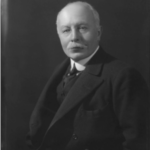
    William Clive Bridgeman (1864-1935) was a British Conservative politician who served as a Member of Parliament (MP) and Cabinet minister.

    Bridgeman was born in London, the son of a prominent judge and served as a Lieutenant in the Royal Horse Guards during the Sudan campaign of 1884-1885. He later became a solicitor and was elected as the MP for Oswestry in 1906. In 1916, he was appointed as the Parliamentary Secretary to the Ministry of Munitions and held the position until 1919.

    In 1922, Bridgeman was appointed as First Lord of the Admiralty, a position he held until 1924. He then served as the Secretary of State for War from 1924 to 1929 and as the Home Secretary from 1929 to 1930. He was also the President of the Board of Education from 1930 to 1931.

    Bridgeman was known for his strong support of naval rearmament, which he considered necessary to meet the growing threat from Germany in the 1920s. He also supported the introduction of a National Insurance scheme to provide medical care for the working class.

    Despite his long career in politics, Bridgeman was considered a moderate politician who did not play a major role in shaping government policy. Nevertheless, he was respected for his sound judgment and knowledge of government and was considered a competent administrator.

    Bridgeman retired from politics in 1935 and died later that year at the age of 71. He was survived by his wife and children and was widely remembered as a dedicated public servant who had served his country with distinction.

  • BIOGRAPHY : Stanley Baldwin

    BIOGRAPHY : Stanley Baldwin

    STANLEY BALDWIN

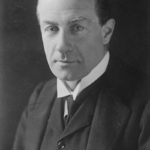
    Stanley Baldwin was a British politician and statesman who served as the Prime Minister of the United Kingdom on three occasions, first from 1923 to 1924, then from 1924 to 1929, and finally from 1935 to 1937. He was born on August 3, 1867, in Bewdley, Worcestershire, England, and was the son of Alfred Baldwin, who was also a prominent politician.

    Baldwin was educated at Harrow School and Trinity College, Cambridge, before beginning a career in business as a steel manufacturer. He became involved in politics in the early 1900s and was elected to Parliament as a Conservative Party member in 1908. He held several important government positions, including President of the Board of Trade and Minister of Labour, before becoming Prime Minister for the first time in 1923.

    As Prime Minister, Baldwin was known for his efforts to promote social and economic stability in Britain, and he worked to promote international peace and cooperation. He was particularly concerned with the rise of fascism in Europe, and he played a key role in negotiating the Hoare-Laval Pact, which sought to resolve the conflict in Ethiopia.

    Baldwin retired from politics in 1937 and was succeeded as Prime Minister by Neville Chamberlain. He was made a peer in the House of Lords in 1937, and he continued to be an influential figure in British politics until his death on December 14, 1947, at the age of 80.

    Stanley Baldwin is remembered as one of the most significant political figures of the 20th century, and he is regarded as a moderate and pragmatic politician who was committed to preserving peace and stability in Britain and the world.

  • Wera Hobhouse – 2023 Parliamentary Question on Prosecution Rates on Violence against Women and Girls

    Wera Hobhouse – 2023 Parliamentary Question on Prosecution Rates on Violence against Women and Girls

    The parliamentary question asked by Wera Hobhouse, the Liberal Democrat MP for Bath, in the House of Commons on 1 February 2023.

    Wera Hobhouse (Bath) (LD)

    What steps she is taking to increase the proportion of cases relating to violence against women and girls that are prosecuted.

    The Attorney General (Victoria Prentis)

    Tackling violence against women and girls remains one of the Government’s top priorities, and we are doing all we can to make streets and homes safer. We are prioritising prevention, supporting survivors and strengthening our pursuit of aggressors.

    Wera Hobhouse

    It is a well-known national scandal that only 3% of rape cases have led to charges against the perpetrator. Locally, Avon and Somerset police are making big strides towards change. They have tripled charge rates, are bringing more cases to the Crown Prosecution Service and have changed their investigative focus from the victim to the perpetrator. I am immensely proud of this progress, and I hope that my local area could become part of the ongoing pilot for specialist rape courts. Can the Attorney General confirm when a decision on the further roll-out of specialist rape courts will be made? Will my local Crown court be considered to be part of the next stages?

    The Attorney General

    Evidence is being gathered from our three specialist courts, but I should emphasise that every Crown court tries rape cases and will benefit from the learning. The south-west, as the hon. Lady has outlined, is showing the way by demonstrating new ways of working with the police, providing specialist training to all first responders. They are also, I hear, planning a community event later this month.

    Miriam Cates (Penistone and Stocksbridge) (Con)

    Prosecution rates for the appalling crime of rape against women and girls have been too low across the country. What impact does my right hon. and learned Friend believe that Operation Soteria will have on prosecuting cases of rape?

    The Attorney General

    I thank my hon. Friend for her question. She is always a great advocate for vulnerable people. Operation Soteria is focused on delivering cultural transformation in the investigation of rape offences. It looks to ensure that the victim is well supported and the case thoroughly investigated. I was glad to see joint working between the police and CPS when I visited Leeds last Friday. They are working closely together and, crucially, with support services such as independent sexual violence advisers to make sure we really deliver for victims.

    Jim Shannon (Strangford) (DUP)

    A recent revelation in Northern Ireland is that a man was punished with 140 hours of community service after domestically assaulting his wife on two different occasions. What steps will the Attorney General take to ensure that harsher sentences are given to those guilty of inflicting violence on women? We need harsher sentences.

    The Attorney General

    I thank the hon. Gentleman for raising that important case. Sentencing is, of course, a matter for the independent judiciary, the Ministry of Justice and the Sentencing Council. I know that he shares the Government’s desire to do all we can to make sure that the victims of violence against women and girls get justice.

    Sir Oliver Heald (North East Hertfordshire) (Con)

    Does the Attorney General agree that the Crown Prosecution Service is very dependent on the quality of the investigation from the outset? I therefore welcome this joint working, which is something that had been hoped for over many years and seems to be delivering results. I do not know whether she has anything she can say about its roll-out to the country as a whole.

    The Attorney General

    I thank my right hon. and learned Friend for his question. I know that this is something he has personally been working on for many years. It is true to say that joint working is the answer, and in Leeds on Friday I was able to see a police gatekeeper—that is what he is called, but I think a better word would be “interpreter”—who was able to work between the lawyers and the victim and witnesses and ensure that the case was investigated properly right from the beginning and that disclosure was managed in a sensible way.

  • PRESS RELEASE : Synthetic opioids will be banned as government acts to stop drug deaths [February 2023]

    PRESS RELEASE : Synthetic opioids will be banned as government acts to stop drug deaths [February 2023]

    The press release issued by the Home Office on 3 February 2023.

    Eleven more lethal substances to be made Class A drugs, following a recommendation by the Advisory Council on the Misuse of Drugs.

    To stop lethal drugs claiming more lives, 11 synthetic opioids will be banned in the UK, the Home Office announced today (3 February 2023).

    On the recommendation of Advisory Council on the Misuse of Drugs (ACMD), 10 additional nitazenes and brorphine will be made Class A substances.

    These highly dangerous drugs are psychoactive substances which can be more potent than fentanyl. To protect lives, their possession will now be illegal and anyone who supplies the drugs will face up to life in prison, an unlimited fine or both.

    Often mixed into other pills sold on the street, the government commissioned the ACMD to investigate after the substances were linked to rising overdoses in other countries. The ACMD found one drug, isotonitazene, was responsible for 24 fatalities in the UK in 2021 alone. Their recommendation to place all 11 narcotics in Class A has been accepted.

    Policing Minister Chris Philp said:

    Synthetic opioids are highly dangerous substances, which ruin lives and devastate communities.

    We must stop these lethal drugs from reaching our streets, to prevent more tragic deaths and other harmful consequences of addiction, from violent crime to antisocial behaviour.

    Drugs like these erode our society and we accept the Advisory Council on the Misuse of Drugs’ recommendations, to bring proper penalties on their supply.

    The substances to be added to Class A of the Misuse of Drugs Act 1971, subject to Parliamentary approval, are: Butonitazene, Etodesnitazene (etazene), Flunitazene, Isotonitazene, Metodesnitazene (metazene), Metonitazene, N-Desethylisotonitazene, N-Piperidinyl-etonitazene (etonitazepipne), N-Pyrrolidino-etonitazene (etonitazepyne), Protonitazene and Brorphine. Because they have no recognised medical uses in the UK, they will also be placed in Schedule 1 of the Misuse of Drugs Regulations 2001. Legislation will be brought forward to control these substances under the Misuse of Drugs Act 1971, as soon as possible, when Parliamentary time allows.

    The move comes as a UK Drugs Ministerial was held yesterday, with ministers and experts from across the four nations. Chaired by the Policing Minister, it seeks to facilitate a UK-wide approach to tackling substance misuse.

    Attendees included Scottish and Welsh representatives, Angela Constance MSP and Lynne Neagle MS, along with representatives from the Office for Health Improvement and Disparities, and Department for Health and Social Care. Dame Carol Black, Independent Advisor on Combating Drugs, and Owen Bowden-Jones, Chair of the ACMD, were also in attendance.

    Delegates shared information on drug-related deaths, including impacts of poly-drug use, as well as drug supply and use across the UK.

    The meeting was the third of its kind. It supports the cross-government drug strategy, which brings a whole-system approach to tackling drugs, from enforcement through to treatment. Over 2,900 county lines, which shift drugs around the country, have already been dismantled through the approach. As part of the effort to tackle drug-related deaths, we have also dedicated £780 million to support people through treatment and recovery.

    And today, the Department of Health and Social Care has also announced £53m will go to 28 local authorities in England to provide housing support to people in drug and alcohol treatment. The funding strengthens our government-wide commitment to reducing drug use and improving treatment outcomes, as part of the drug strategy.

  • PRESS RELEASE : New law gives tens of millions more say over their working hours [February 2023]

    PRESS RELEASE : New law gives tens of millions more say over their working hours [February 2023]

    The press release issued by the Department for Business, Energy and Industrial Strategy on 3 February 2023.

    The government backs law that gives all workers the legal right to request a predictable working pattern

    • Law will combat ‘one-sided flexibility’, where workers are often on standby for work that never comes

    Today (Friday 3 February), the government supported Blackpool South MP Scott Benton’s Workers (Predictable Terms and Conditions) Bill, which will bring forward huge changes for tens of millions of workers across the UK.

    The move, which would apply to all workers and employees including agency workers, comes after a review found many workers on zero hours contracts experience ‘one-sided flexibility’.

    This means people across the country are currently left waiting, unable to get on with their lives in case of being called up at the last minute for a shift. With a more predictable working pattern, workers will have a guarantee of when they are required to work, with hours that work for them.

    If a worker’s existing working pattern lacks certainty in terms of the hours they work, the times they work or if it is a fixed term contract for less than 12 months, they will be able to make a formal application to change their working pattern to make it more predictable.

    Labour Markets Minister Kevin Hollinrake said:

    Hard working staff on zero hours contracts across the country put their lives on hold to make themselves readily available for shifts that may never actually come.

    Employers having one-sided flexibility over their staff is unfair and unreasonable. This Bill will ensure workers can request more predictable working patterns where they want them, so they can get on with their daily lives.

    Blackpool South MP Scott Benton said:

    A significant number of my constituents experience unpredictable work. Being able to ask their employers to consider requests for a more predictable working pattern such as working on set days, or for a permanent contract, will help them to work more predictable hours and provide more reliably for their families in some cases, and help with their work-life balance in other situations.

    This Bill gives people a right to ask their employers to consider requests and will be welcomed by thousands of people.

    The move comes as part of a package of policies this government is supporting to further workers’ rights across the country, such as:

    • supporting parents of babies who need neonatal additional care with paid neonatal care leave
    • requiring employers to ensure that all tips, gratuities, and service charges received must be paid to workers in full
    • offering pregnant women and new parents greater protection against redundancy
    • entitling unpaid carers to a period of unpaid leave to support those most in need
    • providing millions of employees with a day one right to request flexible working, and a greater say over when, where, and how they work

    These policies will increase workforce participation, protect vulnerable workers, and level the playing field, ensuring unscrupulous businesses don’t have a competitive advantage.

    This package builds on the strengths of our flexible and dynamic labour market and gives businesses the confidence to create jobs and invest in their workforce, allowing them to generate long-term prosperity and economic growth.

  • Andrew Griffith – 2023 Speech to The City UK’s Annual Dinner

    Andrew Griffith – 2023 Speech to The City UK’s Annual Dinner

    The speech made by Andrew Griffith, the Economic Secretary to the Treasury, to The City UK’s Annual Dinner on 2 February 2023.

    Good evening, everyone, and thank you for the invitation to speak to you. And thank you Miles for your kind introduction.

    Your contribution to the sector, to the economy, to people’s lives is well known.

    Along with related professional services, you contribute over 10% of the country’s GDP, 2.2 million jobs. The largest capital market in Europe and the second largest in the world. And that’s before we think about nearly

    £76 billion in total taxes which is enough to fund the entire police force and school system.

    The UK is fortunate to have such a strong sector. We know that you have a choice of where to locate and will never take you for granted.

    You are part of our history.

    London was one of the first ever stock exchanges to be founded.

    This year marks 250 years since a group of stockbrokers

    moved to Sweeting’s Alley to set up a formal club.

    Before then, for close to a century, they’d be working out of the City’s coffee houses because they were deemed too uncouth and rude to be allowed into the Royal Exchange, the City’s centre of commerce.

    Of course, I’m sure nobody at all would have that view today!

    But in all seriousness, from those humble coffee house roots – shared by insurers at Lloyds Coffee Shop – the entire financial services sector has become a data and markets giant.

    From early trading in precious metals, to the telegraph revolution, ticker tape and real time prices. And in between all of the innovation, supporting war efforts, funnelling money into infrastructure and tackling the issues of the day.

    We are at our best when we are contributing to solutions to national and global challenges.

    It was almost a year ago today that we received intelligence about tanks amassing on the Russian border with Ukraine.

    As Putin’s barbaric invasion got under way, you came together to help deliver the biggest economic sanctions in history.

    With the help of the UK insurance sector – really the world’s insurance sector – we followed this by implementing a price cap on Russian oil, further undermining Russia’s ability to profit from aggression.

    And finally, when people’s livelihoods were at risk from a global pandemic, you stepped in to help us support businesses and families with your payments capabilities. So for everything that everyone in this room has done and your individual leadership – thank you.

    As we emerge from a difficult few years for our country, we need to turn our attention to the long-term.

    We have five clear priorities.

    Halve inflation. Grow the economy. Reduce debt. Cut waiting lists. And stop the boats.

    Three of these priorities are about the economy. That’s because the prosperity that it’s our job to deliver can only come on the back of economic stability and growth.

    Yes there are economic headwinds, but we have the highest employment rate for half a century, inflation is lower than 14 other EU countries, and the private sector has grown by 7.5% in the last year.

    And last week a survey of business leaders by PWC said the UK was the third-most attractive country for CEOs expanding their businesses.

    As the Chancellor said last Friday, our vision for the UK is an enterprise culture built on low taxes, reward for risk, access to capital and smarter regulation.

    With volatile markets and high inflation, sound money must come first but our ambition is to have nothing less than the most competitive tax regime of any major country.

    Delivering stability means making sensible choices on spending to tame inflation: not exposing the most vulnerable, but also not believing we can simply spend our way to prosperity.

    As a former CFO myself, I know the importance of balancing the books and I recall graphicly what it was like trying to issue capital in the uncertain markets post 2008.

    But we are well placed. All of the natural advantages which have brought us here remain. Our language, culture, great cities and the rule of law.

    Our universities are ranked second globally for their quality and include three of the world’s top ten. In order to support the ground-breaking work they do, the government has protected our £20 bn research budget, now at the highest level in history.

    Your government has a mandate and a majority and only this week Parliament was passing important financial services legislation.

    The Prime Minister has set out five domains of outsize growth and potential where Britain is up with the very best in the world.

    Advanced manufacturing, the clean energy revolution, life sciences and digital technology. And of course, financial services.

    As your champion I make the case that we count twice. For without efficient and effective capital markets we cannot hope to exploit the potential of the others.

    We are fortunate to be one of the world’s top two financial hubs and the world’s largest net exporter of financial services. Your capability to deploy capital behind innovation combined with our research strengths, makes our aspiration to be a technology superpower ambitious but highly achievable.

    One would think it was self-evident that growth is good.

    As Robert Colvile, Director of the Centre for Policy

    Studies, argues in his report “The Morality of Growth” that to some, growth has become the enemy.

    Obviously, I disagree. This entire Government does.

    That’s important because the private sector, we must never forget, is what drives growth and lets us invest in public services.

    And, as Colvile writes, “firms are most effective at doing good when they do well – when they are profitable and successful and attractive employers”.

    Let me speak personally for a moment. As we chart our course in a globally competitive marketplace, we have to be clear eyed about what it is that we want to be good at.

    My view is simple: if we can’t be globally effective in financial services, we should all go home now.

    It is my job to help you achieve that. To remove friction, to support and celebrate risk takers and to shape regulatory frameworks that are well regarded but agile.

    As I’ve said before, this sector has had more reviews than Netflix. Many of the authors and contributors are here tonight. We know what we want to do. Now is the moment to get on and deliver.

    We are taking this forward in a number of ways: through the Financial Services and Markets Bill, and through the Edinburgh Reforms.

    Unleashing the sector, realising potential, delivering for you and for UK plc.

    My ambition is for us to be the global financial hub – using our strengths to enhance strong relationships with jurisdictions all around the world, attracting investment and increasing opportunities for cross-border trade.

    I want to work hand-in-glove with you this year on the priorities I have agreed with the Chancellor.

    First, is to deliver the Financial Services and Markets Bill.

    To get that on the statute book by Easter so we can unlock the reforms it contains.

    Second, as I’ve alluded to, is boosting competitiveness by delivering the Edinburgh Reforms.

    Third, and related, is to unleash private capital to invest in all those growth sectors I mentioned earlier.

    And fourth, I want us to bolster financial inclusion and support retail savers and investors.

    Good regulation has the power to be a positive tool to enable you all to compete in a global world.

    I am grateful to TCUK for your work on how the regulators’ authorisation processes can be made more efficient.

    This is an important area, and one that I have raised with the leadership of the FCA and the PRA.

    I am pleased that they have committed to make improvements and I am grateful for their collaboration.

    In order to strike a better overall balance, the Financial Services and Markets Bill will introduce a new secondary objective in law for the PRA and the FCA on growth and international competitiveness.

    That’s important, and taken with a number of other measures, we do expect to see a real change.

    And I want to put to bed any idea that this is about a race to the bottom: the government’s vision is about making UK regulation more proportionate and simpler whilst retaining high regulatory standards.

    Nor do we seek to diverge for divergence’s sake. In running international businesses, no one wants to add extra complexity or difference. The ambition of a European MoU remains.

    Whether it’s implementing the outcomes of Lord Hill’s Listing Review or making regulation more tailored for the UK market, we’re ensuring we remain one of the best countries in the world to do business.

    As the Chancellor laid out just days ago, if we’re going to have successful Enterprises – growing companies need capital.

    That is why we have selectively used the regulatory flexibility we now have.

    One of the most tangible examples – one that will unlock over £100 billion of pounds for productive investment, creating jobs and prosperity – is reforming Solvency II.

    It is a change that will unleash capital into productive investments, such as offshore wind.

    It will allow the insurance sector to play an ever-greater role in providing opportunity to left behind communities and our transition to Net Zero, with the industry expecting to invest more than £100 billion over the next decade.

    Good for business: good for the country.

    And then there’s an issue close to my heart: financial inclusion.

    What does that mean?

    It means making sure all people, regardless of their background or income, have access to the useful products and services which help them succeed in life.

    And let me be clear: this isn’t woolly talk.

    We’re driving tangible measures.

    Take access to cash. You don’t need telling that one of the macro trends we’re likely to see continue this year is a move from cash to electronic payments.

    Yet cash is something that millions cannot currently live without.

    Those in rural communities, the elderly, those who use cash to manage personal finances.

    That is why, for the first time since the ancient Kelts began minting coins in the British Isles, this year will see communities’ benefit from new laws to protect access to cash.

    It is also a personal mission to foster an environment that supports individual savers and investors.

    This is a government that will always be on the side of those saving for the future or their retirement.

    It’s these steps – and more – that show we mean it when we say financial services need to deliver for everyone.

    Finally, one of the reasons this sector is so successful is innovation. We want to do everything we can to ensure that UK financial services are at the forefront of technological advancements.

    Just look at fintech – what an incredible UK success story.

    Despite a challenging economic backdrop, the sector attracted $12.5 bn of investment last year.

    That’s second only to the US globally. It’s more than the next 13 European countries put together.

    We are committed to turbocharging the growth of the UK fintech sector with the new Centre for Finance, Innovation, and Technology – CFIT.

    Indeed, today we’ve heard the exciting news that Ezechi Britton has been appointed as the CEO of CFIT.

    He brings extensive experience as a fintech entrepreneur and in venture capital investment.

    Building on our FinTech lead, we are going to go further, establishing a framework for regulating cryptoassets and stablecoins.

    Just yesterday we published a consultation setting out comprehensive proposals for regulating the sector. It’s a big potential opportunity – I want to get it right so am actively seeking your views.

    The golden thread here is innovation. Being at the forefront of change, is how we will make the UK the natural home of innovative financial services companies.

    Rather than looking enviously at our competitors, I want them to look to emulate us.

    Ladies and Gentlemen, Miles, I am excited.

    Excited to be in this job, and excited to be able to push ahead with a significant programme of work for the balance of this year.

    The opportunity we have is substantial and the moment to seize it is right now.

    Together we can continue to build the UK as one of the world’s most competitive locations for financial services.

    A financial services superpower that will help secure the long-term economic wellbeing of the country.

    Thank you again for your welcome, thank you for listening and thank you for everything you continue to do for this industry and this country.


  • Robbie Moore – 2023 Speech on Planning Policy

    Robbie Moore – 2023 Speech on Planning Policy

    The speech made by Robbie Moore, the Conservative MP for Keighley, in Westminster Hall, the House of Commons on 26 January 2023.

    It is a pleasure to serve under your chairmanship, Mr Vickers.

    I congratulate my hon. Friend the Member for Isle of Wight (Bob Seely) on securing this important debate. It is important because planning policy impacts on everyone, and everyone has a view on it, whether that is negative or positive. Generally, it impacts on everyone’s life.

    I will pick up on some of the absolutely valid points made by my hon. Friend the Member for South West Hertfordshire (Mr Mohindra) about the fact that a lot of planning policy has to be community-driven. Sometimes, it has to be generated at the grassroots level, rather than top-down. As has been said, it is incredibly important that planning policy is community-led. It has to consider the environment and relate to the needs of what is required within a specific community. It is important that we develop houses that meet and enhance the health and wellbeing of the communities we all represent.

    I take a keen interest in planning policy because I studied architecture at Newcastle University and, in my year in industry, worked for a great company up in Newcastle that was involved in master planning exercises for housing regeneration schemes. One of the schemes we got involved with was in a deprived area of Sunderland, Southwick, and looked at how we could enhance a community through the quality of build of houses being developed. Indeed, I remember when I was at university, I did my dissertation on Byker and how the built environment can support communities. That is absolutely what planning policy should be about.

    There are a few issues I want to cover in my contribution. I will consider local plans and how we can ensure that the infrastructure we all like to talk about—whether that is roads, GPs, schools or parks—is supported and there to enhance people’s quality of life with regard to housing. I will also touch on affordable housing and what an industrial strategy looks like when we are talking about employment use, and I will finish by talking about telecom masts.

    My constituency of Keighley and Ilkley is going through a review of its local plan. Our local planning authority, Bradford Council, is looking at the local plan and will be putting it out for its second consultation in the not-too-distant future—I have been informed that that will happen shortly. One of the inevitable challenges is the drive to increase housing numbers across the whole of the Bradford district, which contains many different settlements, including not only Bradford city itself, but Keighley and Ilkley, which as towns are very different from the city. The complexity lies in the different make-up of those settlements and where the need is in those settlement areas.

    Through the first consultation on the local plan, it became clear that the local authority seems to have an incredible will almost to offload some of those housing numbers to the easy wins—the easy wins being most of the outlying areas in the greenfield or in green-belt areas where it might be easier to get those planning applications through at a later date. The local plans are being developed at the moment that will create the next 15-year housing strategy, which will, we hope, be adopted later this year.

    The concerns I have raised constantly are that the plan does not focus enough on prioritising brownfield development. We must refocus on those brownfield sites. Yes, they are more complex to develop—they may have contamination issues, issues with highways, challenges from some of the old mill settlements and so on—when trying to create a clean slate to drive that private inward investment into some of those sites. However, that has to be looked at because, unless we actually have a brownfield-first priority, we run the risk of not only reducing the soul of a settlement where those brownfield site holes in a settlement have been identified, but not actually developing houses where that need is identified.

    My concern is that, in several of the towns I represent, the housing numbers that have been proposed are dramatic. They are way over and above the need identified for those settlements. In some of the discussions I have been having with the local authority, I hear that it has allocated the housing numbers to those settlements based on the deliverability factor—that is, it knows it can deliver x houses in those settlements because can build it on greenfield or take green-belt land out of the green belt for housing, rather than having a proper focus on brownfield first.

    I will give some examples. There is Silsden—I should declare an interest, because that is the town that I live in. It is in the middle of the constituency, and it has had a proposed increase in housing numbers of about 580. Silsden is a relatively small settlement that has grown and grown; as we speak, we have an application from Persimmon Homes for 140 houses, to which I have put in an objection. We have had a Barratt Homes development; we have had Countrywide looking at putting in a development; we have Linden Homes currently building on site; and Skipton Properties has recently built a housing development.

    Bob Seely

    My hon. Friend is making a great speech, and I thank him so much for being here. Is not one of the problems with these big property companies, apart from the fact that they land bank, that they are interested only in really big sites? Since the great crash 10 or 15 years ago, a lot of the medium-sized and smaller building companies have gone out of business. We need to motivate smaller companies, or find financial incentives for developing smaller sites in a way that is much more acceptable to smaller towns and villages. That is better than Persimmon Homes, which, apart from anything else, has a dreadful reputation for the quality of its build, just plonking down 100 homes here or 500 homes there, and almost taking over and swamping the village.

    Robbie Moore

    That is exactly the point that I want to come on to, because Silsden is being inundated with houses. A live application for 140 houses is being considered by Bradford Council. I am completely opposed to it, but it is one of about six planning applications made over a period of time, and some of those houses are still being built. The point is that there has not been a sensible conversation about the impact on infrastructure and, as my hon. Friend pointed out, the quality of the build.

    The road infrastructure going through Silsden is not great at all. I drive through Silsden weekly, and the roads are tight and narrow. The pavements are not wide enough, let alone the roads. There are no conversations about the school, the GP services and the other facilities that the town needs in order to stay vibrant. Settlements sometimes need to grow organically; growth must be driven by the requirements of individual settlements. There sometimes needs to be a focus on brownfield sites first, or on development of niche, smaller sites, which could be grown at an organic speed and delivered in line with settlements’ need.

    In Ilkley, the average house price is somewhere around £420,000. That is very high, but local plan proposals suggest that Ilkley needs to grow by another 314 houses. I am constantly pushing back, because the community and I need to see the requirement for Ilkley to grow by that number of houses over the next 14 years.

    Just down the road, in the constituency of my hon. Friend the Member for Shipley (Philip Davies), Burley in Wharfedale has grown hugely recently—by about 700 houses. The implications for the GP service are huge. It has been a real challenge to unlock money, whether through section 106 or the community infrastructure levy, to improve the infrastructure. I have been helping out my hon. Friend with that.

    I will come on to the quality of the build, which my hon. Friend the Member for Isle of Wight made a really good point about. I have mentioned Harron Homes in this Chamber before; the quality of its build has been shocking, and it is not great to say that. I will give another example. About 50 houses were built—again, in Silsden. Other Members from across West Yorkshire have made this point in this Chamber before. The site was finished, in the developer’s eyes, yet there were huge snagging issues. The road was not even sorted out; in fact, sewage from the site had to be disposed of by a lorry that came in and emptied the tank, because the connection with Yorkshire Water were not sorted out. How can we ensure more enforcement against property developers when build is not of the quality that residents, and we representatives, expect? What can the Government do to put more pressure on developers to enhance the quality of houses, and of the master planning of the community that is being developed?

    That brings me to industrial strategy. Inevitably, when it comes to planning, everybody likes to talk about houses, because that is quite an emotive issue, but I agree with the points that my hon. Friend the Member for Isle of Wight made about the use of compulsory purchase powers. On North Street in Keighley, there are many empty buildings with fantastic architecture. How do we use compulsory purchase powers to unlock those sites, and force the owners to change them into housing, or get them into some sort of community use, so that they do not sit empty year after year? Those sites could be used by the town.

    Dalton Mills is a fantastic building. It is an old mill—one of the biggest in Keighley—that has been redundant for many a year, although “Peaky Blinders” was filmed there. The quality of the site has deteriorated over many years, and last year there was a big fire— 100 firefighters and 21 fire engines came. The building unfortunately suffered a huge amount of fire damage, although the façades seem to be structurally sound. It is a unique site just outside the centre of Keighley, but we are unable to unlock it because the landowner seems aloof—we cannot get in touch with him. We cannot get traction with some of these key sites. How can we unlock them, in planning policy terms, using compulsory purchase powers?

    Let me turn to the speed at which local authorities operate. In order to drive growth and job creation, we want light industrial units in appropriate places, but it takes too long to get the planning applications through the system and get those units built. I have been shown many examples in Keighley. About four years ago, a planning application was submitted to the local authority for eight or 10 light industrial units. It did not get any traction from the local authority until the early in the covid period. During the covid period, the units got built and occupied, and now those businesses are flourishing. The demand is there; we just need to increase the speed.

    Of course we want to drive better connectivity, but telecom masts have to be in locations where they do not have an adverse impact on the beauty of a village, and they must not be too close to residential units. There needs to be a mechanism for putting pressure on organisations such as Clarke Telecom that drive some of the applications. We must ensure that they look at where the best sites are. I will give three examples.

    Unfortunately, a telecoms mast was approved in Addingham. It has a huge impact; it does not look good on the drive into the village. There would most definitely have been a better site for it. Putting it elsewhere would not have affected connectivity. All the residents of Addingham are impacted when they drive into the village and see that ghastly telecoms mast. An applicant applied to put a telecom mast on a site in the middle of Ilkley that was not even part of the public highway; they just thought they could get away with it. They had to withdraw the scheme, which will now be reconsidered. I put a lot of pressure on them. There was an application for a mast on a roundabout in the heart of the beautiful village of East Morton. We want to drive connectivity, but we do not want random applications for masts all over the place, with applicants seeing what they can get away with. That is not acceptable.

    We have covered loads of points. I thank my hon. Friend the Member for Isle of Wight for securing this debate, because planning policy without doubt impacts all our constituents. Everyone is incredibly passionate about it.

    The Government are absolutely going in the right direction, and I commend them for listening to the many concerns that I have raised about housing numbers. The key point that I want to reiterate before I close is that planning policy has to be driven by need. What we need, rather than local authorities aiming policy at quick wins, is to create housing where it is needed, and a “brownfield first” policy.

  • Gagan Mohindra – 2023 Speech on Planning Policy

    Gagan Mohindra – 2023 Speech on Planning Policy

    The speech made by Gagan Mohindra, the Conservative MP for South West Hertfordshire, in Westminster Hall, the House of Commons on 26 January 2023.

    It is a pleasure to speak under your chairmanship, Mr Vickers. I congratulate my hon. Friend the Member for Isle of Wight (Bob Seely)—my good friend—on bringing forward this really important debate. I commend him and my right hon. Friend the Member for Chipping Barnet (Theresa Villiers) for the excellent work that they have done on the issue for a significant time. Most of that work was done behind closed doors, as critical friends of the Government. It allowed me, as a Government loyalist, the space to contribute positively, in a small way, to making sure that the legislation was exactly as we wanted, without been seen as disruptive or disloyal.

    As I have said many times in this Chamber, I come from a local government background. I was a councillor for 17 years before being elected to this place. Actually, there was a bit of overlap because of the pandemic. In that time, I spent many years on planning committees. Most recently, I was chairman of a planning committee in Epping Forest. I was a dual-hatter: I was also a county councillor in Essex. During my tenure as county councillor, I was responsible for strategic planning. In all those years in local government, I thought that local plans were better than what preceded them: the regional development agencies, which were part of a clunky, top- down model imposed on our communities from Whitehall. Although the local plan process remains emotive and, I would argue, quite difficult, it is part of a journey, and part of the future legislation, which will improve the process.

    I commend the Government for listening to the constructive criticism and feedback that people such as my hon. Friend the Member for Isle of Wight have put forward. Top-down numbers are helpful, but they should not be a stick with which to beat local authorities. I am happy for provisions on the five-year land supply to be removed. I always thought that they were a tool that unscrupulous developers or applicants could use to put development in the wrong place. I think I speak on behalf of the whole House when I say that politicians are always conscious of unintended consequence. No politician, whatever their party, wants to put forward bad laws or policies. When it comes to encouraging councils to ensure a pipeline of future development, a hard five- year deadline would open up a massive can of worms; unscrupulous developers from around the country would get involved. Both my authorities’ planning departments were a bit under-resourced, through no fault of their own, which meant that they were in some ways swimming against the tide, and finding that increasingly difficult.

    My constituency of South West Hertfordshire is a beautiful part of the world. The Chilterns area of outstanding natural beauty is to our west, and we have the border with London to the south. We have the best of all worlds: we have very good transport links with London, but we retain that village feel. We are about 80% green belt, so pretty much wherever we look, we see prime green belt, farmland and trees. Part of the joy of representing South West Hertfordshire is that, waking up in the morning, I am more likely to hear a bird than cars. That is not to say we do not need further investment in transport—and I will continue to bang on about the train network and the tube in the south—but it is a nice place to live. As a conservative with a small C, part of my role as the elected Member of Parliament is to retain what we love about the community. Pressures that we experience in the home counties and London, particularly pre pandemic because of the draw for better-paid jobs, mean that we will continue to have these debates on local planning issues.

    It is great to see the Minister in her place. My plea to her is to try to future-proof the local planning process. With the way people live their lives post pandemic, the south-east is less of a draw, because they can have a well-paid, good job with future career prospects without moving down to South West Hertfordshire or London. My generation, including a lot of my friends from the midlands, was drawn down to London. As chair of the all-party parliamentary group for regeneration and development, I had a meeting with Birmingham City Council yesterday. After hearing about the exciting plans in that part of the world, I think that if I were an 18 or 20-year-old from there now, I would not necessarily see the bright lights of London as the real draw. People can still have a good quality of life, with reasonable house prices and a good work-life balance, and live in a vibrant community with lots of future plans.

    I represent half of the area covered by Dacorum Borough Council and most of the area covered by Three Rivers District Council. The two councils did a poll back in 2020, asking residents to name their favourite thing about living in South West Hertfordshire. Over three quarters of respondents across both council areas said it was the parks and open spaces. The silver lining of the pandemic is that people have really appreciated what is on their doorstep.

    As someone who still commutes into London every day, I may be a rare breed. A lot of people are still getting back to working full time in their office space, after being perfectly set up over the last couple of years to work from home. Avoiding a two-hour commute there and back, which I have to do most days, is a draw. However, as well as saving on the commute time and transport costs, the quality of life aspect is important. Planning, by its very nature, should be focused on the health and wellbeing of communities. As a Conservative councillor, my view was that when planning is done badly, not only does it create an eyesore, but the negative aspects of poor development lead to unhealthy outcomes, which mean an additional burden on the state in future years. As a Conservative, one of my values is offering value for money. Where we can reduce the cost burden for future generations, we should be proactively doing that. The way we do planning is very much part of that mix.

    Apparently, 1.2 million homes are lying dormant on brownfield sites. I referred earlier to the significant green-belt aspect of my community. Although there is always a draw to do what is easy—that is, if there is a piece of grassland, build on it—that does not mean it is the right thing to do. My hon. Friend the Member for Isle of Wight spoke about renewed emphasis on getting brownfield sites back into use. That is absolutely the right theme, which I hope my Government will continue to push.

    Some of the regeneration in our communities is to do with not necessarily new homes, but the quality of what people see outside their windows. For someone driving to the local shops, being next to a derelict site where nothing looks to have happened for five or 10 years has a subconscious bearing on how they feel for the day. Although new development is a pain in the short term, people feel the benefit of those brand new hospitals or schools, or additional classroom space. That is what the planning process is meant to do. It is meant to make the next generation living in that area have an easier life than the previous one.

    Strategic planning is absolutely required. We have had piecemeal planning, which we see occasionally from planning application appeals. Inevitably, those have led to a can of worms, with developments in the wrong place. They might make a lot of money for the developer at the time, but they have a significant impact on local authorities, especially when trying to offer a support network such as social services or NHS nurses, which have to go to out-of-the-way places that can be the wrong sites for such developments.

    From January last year to September, across all the Hertfordshire councils, about 12,000 applications were received, with about 11,500 decisions taken and, of those, 85% granted. The planning application process therefore does not seem to be the issue or a bottleneck. Planning remains complex, which it needs to be, with a lot of expertise required—I applaud the Government’s drive for digitisation, because more people will engage in the process—but there should be more motivation to do the right thing, although I do not yet know how to do that. Putting in an application just to increase the property value, without developing it—I know loved ones who have done the same—might be helpful in the short term, but it is a false economy as regards what is available or in the pipeline to be developed.

    In the south of my constituency, Three Rivers District Council is Liberal Democrat-controlled. For many years, since I was elected, I have pushed it to continue the momentum to get a local plan in place. As the constituency Member of Parliament, I would argue that the council is probably using the change in the forms in planning legislation that we are looking to make as an excuse not to get on and do it. In the north of my constituency, Dacorum District Council is Conservative-controlled, and it is just getting on with its plan, as my right hon. Friend the Member for Hemel Hempstead (Sir Mike Penning) said at Prime Minister’s questions. While that is difficult, it is absolutely the right thing to do.

    My plea to the Minister is that where we think councils are using the situation to do the wrong thing, we need, whether by a quiet word, threats of sanctions or whatever—I do not know what tools she has in her armoury—to encourage such councils to get on and do their plan, because sitting one’s head in the sand is not the solution for planning. We need to have those mature, if typically emotive, conversations and for decisions to be made. Politicians are elected to make decisions, even when they are sometimes difficult to make.

    The Levelling-up and Regeneration Bill is in a good place. There is more to do, but I would not expect that to happen in this piece of legislation. I am sure future legislation will be coming down the pipeline through the Department for Levelling Up, Housing and Communities.

    The demand for housing in this country cannot and should not be ignored. My hon. Friend the Member for Isle of Wight spoke about start times, and that is a big issue in my part of the world. While people will remain emotive about new development, typically such new homes are for the local community. When people move out of mum and dad’s home, where will they live? In my part of the world, it means they have to move significant distances away.

    Brownfield land is very much there, and we need proactively to get it back into use, even more so than now. The counterpart to that is some green-belt land. The Government should encourage regular reviews of green belt, because it has various spectrums—if it is prime arable land, absolutely we should retain it in the green belt, but if a site is on the edge of settlement, has been dilapidated for 20 years and is of no help or environmental benefit, we should identify it and make better use of it. With the right plan and policies in place, we can maximise the benefits of planning and keep our green spaces safe.