Author: admin

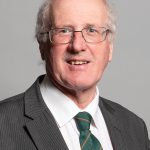
  • Jim Shannon – 2023 Speech on Removing VAT from Sunscreen Products

    Jim Shannon – 2023 Speech on Removing VAT from Sunscreen Products

    The speech made by Jim Shannon, the DUP MP for Strangford, in the House of Commons on 9 February 2023.

    It is pleasure to be called to speak in this debate and to serve under your chairmanship, Mr Sharma. I thank the hon. Member for East Dunbartonshire (Amy Callaghan) for bringing the issue forward. She and I have been friends for a long time in this House, and I am really pleased to see her in her role here. We share APPG roles and I deputise for her—not very well; she does it much better than I do. What a pleasure it is to be here.

    I want to add a Northern Ireland perspective to this debate, as I always do. I fully support the hon. Lady’s request to reduce VAT on sunscreen products. Melanoma is a growing health problem in Northern Ireland. My office has six staff members, and three of them—50%—told me that they have immediate family members who had melanoma. One of the younger girls, who is in her early 20s, admitted that she used sunbeds until her father had third-stage melanoma. This is not a disease of the tropics. Perhaps because of our skin and where we are from, we take the sun a wee bit more aggressively than they do in the Mediterranean, for instance. We usually go boiled red to start with, and then when the pain is too much we move to the sunscreen, which we should have done at the very beginning.

    It has been found that 86% of cases of melanoma can be prevented by adopting simple sun protection measures, including wearing factor 30-plus sunscreen. That is a very small thing to do, but the hon. Members for East Dunbartonshire and for Erewash (Maggie Throup) and I are asking the Government to do something to incentivise that. We are not asking for a lot; we are just asking for a wee nudge in the right direction. The United States of America and Australia have already done that.

    The incidence is increasing, and there are now more than 16,000 new cases of melanoma skin cancer each year in the UK. The problem is growing, and therefore the need is greater than it ever was. Of course, that does not take into account repeat diagnoses of melanoma—the hon. Member for East Dunbartonshire said that she got it twice.

    In the 15-to-44 age group, melanoma skin cancer is the second most common cancer in males and the third most common in females. I find it difficult to comprehend why that is the case when all those people were taught the dangers of the sun in school. We were told to be careful when we go out—mum and dad told us that as well, but more often than not we ignored it.

    Amy Callaghan

    Does the hon. Gentleman agree that, despite people believing they do not need to wear sunscreen in Scotland, Northern Ireland and other places across the UK, it is essential that they do? They are more likely to contract melanoma if they are pale and fair haired, or have red hair, which is common in our isles.

    Jim Shannon

    In my case, with no hair.

    Amy Callaghan

    You’ve got a wee bit.

    Jim Shannon

    I’ve got a wee bit round the sides. I used to have a whole lot of hair. The hon. Lady makes a fantastic point, and it is true: we are of a fair skin, and that right away puts us in the target area.

    We have the information, but for some reason the message just is not getting across. One in 36 males and one in 47 females will be diagnosed with the deadliest form of skin cancer in their lives, so we need to stop seeing sunscreen as a luxury, like a nice moisturiser. We should instead see it as an essential, like good nutrition or drinking water. If it is put in that category, the seriousness of what we are trying to achieve will be clear.

    One way of getting the message across is to make it cheaper to purchase sunscreen. My speechwriter—a very busy girl—loves her holidays abroad. I think it is because it means she does not have to answer my calls for two weeks. She has no speeches to prepare, and of course she has no internet access due to overseas roaming charges. She never buys sunscreen before she goes because it is half the price in Florida—that is where they go for their holiday every year. She waits until she gets to Florida and buys enough to bring home and do the whole year back here, because the savings are significant. Hon. Members might say that is an Ulsterman or Ulsterwoman thing, but we do look for a bargain. If it is a bargain that helps our skin and protects us, that is why we do it.

    In the US, sunscreen products have been exempt from VAT-style taxes since 2012. In Australia, they are exempt provided they are principally marketed for use as a sunscreen and have an SPF rating of 15 or more. The reason for that is that in Australia and America, sunscreen is seen as an essential daily living product. That is how they categorise it. Some of us have been conditioned to see it as a holiday item, but they see it as something they need to have all the time. Many people who have never gone abroad have melanoma. It is not a holiday problem; it is a lifetime problem.

    Public polling indicates that many people find the cost of sunscreen too high, and with the current cost of living crisis deepening, that cost is likely to deter increasing numbers of people from buying sunscreen. The major retailers Tesco and Asda have recognised cost as a prohibitive barrier for people buying sunscreen, and Tesco reduced the price of its own-brand sunscreen by 20% in 2021 to offset VAT. In a consumer poll—such polls are good barometers of what people are thinking—some 57% of respondents said that the product was too expensive, and 29% claimed that they would wear it daily if it were a little bit cheaper. Incentivise it, make it happen and address the issue.

    The call for VAT to be removed from sunscreen was part of a sun safety campaign in 2013. That is why I support removing VAT from sunscreens that are factor 30 or more: as Melanoma Focus has said, doing so will make sunscreen more affordable and send a powerful message from the Government about the importance of skin protection. We only have one chance for our skin: it will last us our lifetime, but if we have constant cases of melanoma, then unfortunately it might not last us for the right time. I further support the recommendation that that measure be coupled with a Government-backed cross-media awareness campaign akin to the Australian Government’s successful Slip, Slop, Slap campaign, which the hon. Member for East Dunbartonshire referred to. It reminds me of one of those catchy 1960s tunes from when I was a wee boy—I am aging myself by saying that —but a campaign is significant.

    With increasing temperatures in the United Kingdom from climate change, such a measure is becoming increasingly urgent. The hon. Member deserves great gratitude for bringing this debate forward, because—as others have said, and as those who follow my speech will say as well—this is an urgent subject. Removing VAT from sunscreen would not have been possible under EU rules, but it is now; there is nothing to restrict us, except those of us who live in Northern Ireland. I hate to say it, but in every debate I have, I have to temper everything with the Northern Ireland protocol. In Northern Ireland, we would not be able to take advantage of leaving the EU in this way, due to the protocol. However, that is a different issue for another day.

    Melanoma Focus believes that if this policy were implemented, the reduction in VAT revenue would be offset by reduced melanoma skin cancer cases and therefore reduced costs to the NHS. That is a crucial factor: if we take action to ensure that people can protect themselves more by being able to buy sunscreen that wee bit cheaper, we can ensure that those people do not need ongoing healthcare, with its associated costs. That seems logical to me.

    Amy Callaghan

    The hon. Gentleman is making a great speech, and I welcome his support for VAT Burn. On his point about the EU, there are little to no advantages of Scotland being outwith the EU, but while we are tied to this place and also outwith the EU, we can reform the VAT on products such as sunscreen. We will take that tiny little benefit that we can, and we appreciate it.

    Jim Shannon

    I thank the hon. Lady for her intervention. We certainly encourage the Government to take advantage of opportunities to promote better health as a result of leaving the EU.

    The “Getting It Right First Time” NHS review of dermatology highlights high and increasing demand for skin cancer treatment, with 200,000 surgical operations for suspected skin cancer carried out every year, and skin cancer rates doubling every 14 to 15 years. That is the main factor driving the request being made today. When it comes to health, those are the stark figures, and I believe they highlight the need for additional workforce to meet current and future pressures, and also suggest that we need to raise sun and skin awareness to reduce pressures on dermatology services.

    In conclusion, I support the call to remove VAT from sunscreen. I say to the Minister, who knows that I respect her greatly, that we make that call today because we believe it is worth supporting. The Government have taken other steps when it comes to VAT—the hon. Member for East Dunbartonshire referred to sanitary products. Removing VAT from those products was something that the Government should have done; they did so, and I welcome that. Today, we make another request.

    It is not just a matter of listening; it is also about taking action to protect our people and our NHS, and the future of its services. Here is a figure for everyone— 85% of cancer is preventable. This is preventable, if we take some steps in the right direction. Let us take the steps in this place to prevent it right across all of this great nation, this United Kingdom of Great Britain and Northern Ireland.
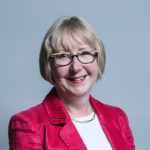
  • Maggie Throup – 2023 Speech on Removing VAT from Sunscreen Products

    Maggie Throup – 2023 Speech on Removing VAT from Sunscreen Products

    The speech made by Maggie Throup, the Conservative MP for Erewash, in the House of Commons on 9 February 2023.

    “It won’t happen to me”—that is what we all think. But then it does. It happened to me. Back in 2019, I noticed a blemish on my left arm. Knowing that both my parents had benign skin cancer, I decided to get it checked out. After a biopsy, my blemish was diagnosed as melanoma and I underwent surgery to remove the cancer. I was one of the lucky ones. The melanoma had not spread. I was not ill. I was discharged from the cancer specialist in 2020, free from melanoma. While I am left with an impressive scar on my left arm, the outcome could have been so different had I not been aware of the signs to look for and caught the cancer early.

    One in 36 men and one in 47 women in the UK will be diagnosed with melanoma in their lifetime. Tragically, 2,300 people die from the disease each year. That number has included a business acquaintance of mine, who very sadly passed away in his early 40s, and BBC Radio Derby presenter Colin Bloomfield, who passed away at the age of just 33 in April 2015 after his melanoma metastasised to his lungs.

    These deaths do not need to happen—86% of melanomas are preventable by adopting simple sun protection. That is why I back the call for sun protection of SPF 30 and above to be available VAT-free. I congratulate the hon. Member for East Dunbartonshire (Amy Callaghan) on securing today’s debate and on all the work she has done on this issue.

    The Government can do a lot, but they cannot stop people going out in the sun; they can do a lot, but they cannot change the weather. But they can remove VAT from sunscreen. We need to remove every possible barrier that could stand in the way of people buying a life-saving product. At the same time, such a measure sends out the message that the Government are serious about tackling all types of cancer. From an economic perspective, a healthy workforce is a productive workforce. The cost to the NHS of not taking action against a preventable cancer must be huge. We need to break down the silos in the NHS, between the NHS and the Treasury, and between all Government Departments, and look at the cost of not removing VAT on such a product.

    As is often the case, each and every one of us needs to take some personal responsibility. They say that only mad dogs and Englishmen go out in the midday sun. We should be taking the same preventive measures during the hot summer months here that we would if we were on holiday abroad. That includes seeking shade, wearing a hat and loose clothing, and keeping out of the sun when it is most prevalent. Through a combination of these actions, we will see a noticeable decline in cases of melanoma, which at the moment takes far too many lives, far too early, but the Government have a part to play as well.

  • PRESS RELEASE : Rishi Sunak meeting with Prime Minister Kristersson of Sweden and President Niinisto of Finland [February 2023]

    PRESS RELEASE : Rishi Sunak meeting with Prime Minister Kristersson of Sweden and President Niinisto of Finland [February 2023]

    The press release issued by 10 Downing Street on 18 February 2023.

    The Prime Minister met Swedish Prime Minister Ulf Kristersson and Finnish President Sauli Niinisto in Munich today.

    He underscored the UK’s unwavering support for Sweden and Finland’s accession to NATO. The Prime Minister was clear that a NATO with Sweden and Finland in it will be stronger, and he expressed his hope that they would be able to join ahead of this summer’s NATO Summit.

    The Prime Minister said that Sweden and Finland’s huge contribution to European security was already evident from the work they do with the UK through the Joint Expeditionary Force, particularly in the northern most reaches of the continent.

    The leaders agreed that Europe’s long-term security would be defined by our response to Putin’s war in Ukraine.

  • PRESS RELEASE : Plans to bolster patient safety and boost support for frontline staff by streamlining the system for healthcare regulators [February 2023]

    PRESS RELEASE : Plans to bolster patient safety and boost support for frontline staff by streamlining the system for healthcare regulators [February 2023]

    The press release issued by the Department of Health and Social Care on 18 February 2023.

    The government will streamline the system to modernise regulatory legislation to boost patient safety and support staff.

    • Regulating thousands of medical associate professions will help increase their deployment on the frontline
    • Potential for their role to be expanded, including looking at the case for extending prescribing responsibilities to PAs and AAs, reducing pressure on other frontline staff

    The government has reaffirmed its commitment to streamline the system, improve patient safety and expand the role of medical support staff in the NHS to relieve pressure on GPs and improve access to services.

    A new consultation will be launched today seeking views on draft legislation to provide the General Medical Council (GMC) with powers to regulate physician associates (PAs) and anaesthesia associates (AAs) for the first time.

    These professions support doctors and surgeons in providing medical care and anaesthetic services to patients. With over 3,500 PAs and 160 AAs working already, regulation will enable them to play an increasingly important part in supporting the workforce to deliver the medical care appropriate for a growing, changing and ageing population.

    Regulation is key to help maximise the potential of these roles to boost the workforce and increase their deployment on the frontline, particularly in primary care. For example, once regulated, opportunities could be explored for PAs to help relieve pressure on GPs, including looking at the case for extending prescribing responsibilities to PAs. This would free up clinician time to focus on seeing patients and boosting the number of appointments.

    The government consultation, launched today, also represents the next step in the government’s commitment to modernise the regulatory system for healthcare professionals across the UK. These changes will give all regulators the powers to design their own regulatory processes to improve patient safety and help to streamline the system to enable staff to join the NHS frontline more easily.

    Health and Social Care Secretary Steve Barclay said:

    I want all parts of modern, multi-skilled healthcare teams to able to work to their full potential.

    That’s why we’re modernising out of date regulatory legislation to harness the full potential of roles such as physician and anaesthesia associates to provide the highest quality care for patients and relieve pressure on the NHS.

    This could also open the door to expanding prescribing powers, helping free up GPs, improve access to appointments and reduce pressure on hospitals.

    The wider proposals also include:

    • Streamlining the system to allow regulatory bodies to update and change their day-to-day regulatory processes and standards, without needing the approval of Parliament or the Privy Council, allowing them to respond to changes quickly.
    • Modernising and improving registration and regulatory processes to enable professions to respond to emerging healthcare challenges more quickly and ensure patients can continue accessing high quality services, confident they are provided by practitioners who are fit to practice. For example, during the Covid pandemic, regulators wanted to introduce remote fitness to practise hearings to boost workforce numbers, but this required to enable regulators to open emergency registers, slowing down the process.
    • Ensuring consistent powers for each of the healthcare professional regulators as there is currently variation in the powers regulators have available. This means regulators across different professions will be working with similar powers, presenting opportunities for collaboration and sharing of best practice, ultimately aimed at improving patient safety and outcomes.

    PAs and AAs undergo two years of post-graduate studying on average. PAs deliver health care and treatment to patients, such as diagnosing illnesses, performing diagnostic and therapeutic procedures and developing treatment management plans, under the supervision of doctors whilst AAs generally work in hospitals and emergency environments and provide care for patients before, during and after their operation or procedure, including taking a history, performing physical examinations, and using diagnostic data to identify relevant problems.

    The government’s ambition is to increase training places for AAs and PAs, with 1,000 PAs being trained each year from 2023/24 and 250 AAs being trained each year from 2024/25.

    The proposals will help provide a template for future reforms to support the NHS and improve access for patients.

    There are record numbers of staff working in the NHS helping to ease winter pressures and we will publish a comprehensive workforce strategy this year to help recruit and retain more staff, with independently verified forecasts for the number of doctors, nurses and other professionals that will be needed in five, 10- and 15-years’ time.

  • PRESS RELEASE : Rishi Sunak meeting with US Vice President Kamala Harris [February 2023]

    PRESS RELEASE : Rishi Sunak meeting with US Vice President Kamala Harris [February 2023]

    The press release issued by 10 Downing Street on 18 February 2023.

    The Prime Minister met US Vice President Kamala Harris, at the Munich Security Conference today.

    They paid tribute to the enduring strength of the UK-US relationship, which protects our people and makes the world a more secure place. They agreed there is no clearer evidence of that than in Ukraine, where we are the country’s two closest international partners.

    The Prime Minister and Vice President Harris discussed how to accelerate international action on Ukraine, to allow them to win the war and secure a just and lasting peace. They agreed on the importance of thinking beyond Ukraine’s immediate needs to how the international community can ensure Ukraine never faces the same threats again.

    They agreed that Putin’s war in Ukraine is a global war, both in terms of its impact on food and energy security and in terms of its implications for internationally accepted norms like sovereignty. The Prime Minister and Vice President Harris condemned those countries who have supported Putin’s efforts politically and militarily.

    The leaders also spoke about the AUKUS alliance, where we are working alongside Australia to make the Indo-Pacific region more stable and secure.

  • PRESS RELEASE : Rishi Sunak meeting with Poland’s Prime Minister Mateusz Morawiecki [February 2023]

    PRESS RELEASE : Rishi Sunak meeting with Poland’s Prime Minister Mateusz Morawiecki [February 2023]

    The press release issued by 10 Downing Street on 18 February 2023.

    The Prime Minister met Poland’s Prime Minister Mateusz Morawiecki at the Munich Security Summit today.

    They reflected on a profoundly challenging year for the continent following Russia’s invasion of Ukraine, which brought war to Poland’s borders. The leaders welcomed the UK and Poland’s unity of purpose and ever-closer collaboration, as we stand side by side to help Ukraine and bolster European security.

    The Prime Minister committed to continue to support Poland’s security, including through the deployment of the Sky Sabre air defence system and British troops stationed in Poland with NATO’s enhanced Forward Presence. The leaders discussed working with allies to provide further strategic military support to Ukraine’s defence.

    They agreed to continue working closely together to deepen our defence and security partnership, strengthen our energy security and develop the UK and Poland’s thriving economic and cultural links.

  • PRESS RELEASE : Joint statement by Rishi Sunak and the President of the European Commission [February 2023]

    PRESS RELEASE : Joint statement by Rishi Sunak and the President of the European Commission [February 2023]

    The press release issued by 10 Downing Street on 18 February 2023.

    Joint statement by the Prime Minister and President of the Commission Ursula von der Leyen at the Munich Security Conference, 18 February 2023.

    President of the Commission von der Leyen and Prime Minister Sunak updated one another on their discussions with President Zelensky last week. They agreed on the importance of giving Ukraine the military momentum they need to secure victory against tyranny.

    The leaders welcomed the powerful alignment in EU and UK support for Ukraine over the past year, as exemplified both by our record military and economic aid to the country, and the coordination of the most substantial and unprecedented sanctions packages in response to Putin’s war of aggression against Ukraine. They agreed EU and UK efforts to train Ukrainian troops will make a real difference on the battlefield.

    The President and the Prime Minister expressed their confidence that the spirit of cooperation with which we have responded to Putin’s brutal war in Ukraine should also be reflected across the full range of issues the EU and the UK face together.

    They also had a positive discussion about the talks on the Ireland / Northern Ireland Protocol. They agreed that there had been very good progress to find solutions. Intensive work in the coming days is still needed at official and ministerial levels.

    The leaders agreed to remain in close contact over the coming days.

  • Rishi Sunak – 2023 Speech at Munich Security Conference

    Rishi Sunak – 2023 Speech at Munich Security Conference

    The speech made by Rishi Sunak, the Prime Minister, in Munich on 18 February 2023.

    The United Kingdom will always be on the side of freedom, democracy and the rule of law.

    And the security of our European continent will always be our overriding priority.

    Now there’s no greater example of those commitments than our response to the war in Ukraine.

    Just this year we became the first country in the world to provide tanks to Ukraine – and the first to train pilots and marines.

    We gave £2.3 billion last year – and we will match or exceed that in 2023.

    Now other allies can tell a similar story – and our collective efforts are making a difference.

    But with every day that passes, Russian forces inflict yet more pain and suffering.

    Now the only way to change that is for Ukraine to win.

    So we need a military strategy for Ukraine to gain a decisive advantage on the battlefield to win the war, and a political strategy to win the peace.

    To win the war, Ukraine needs more artillery, armoured vehicles and air defence.

    So now is the moment to double down on our military support.

    When Putin started this war, he gambled that our resolve would falter.

    Even now, he is betting that we will lose our nerve.

    But we proved him wrong then.

    And we will prove him wrong now.

    Together we’re delivering as much equipment in the next few months as in the whole of 2022.

    And together we must help Ukraine to shield its cities from Russian bombs and Iranian drones.

    And that’s why the UK will be the first country to provide Ukraine with longer-range weapons.

    And it’s why we’re working with our allies to give Ukraine the most advanced air defence systems, and build the air force they need to defend their nation.

    Now of course, the UK stands ready to help any country, provide planes that Ukraine can use today.

    But we must also train Ukrainian pilots to use the most advanced jets, and that’s exactly what Britain is doing…

    So that Ukraine has the capability to defend its security for the long term.

    But to win the peace we also need to rebuild the international order on which our collective security depends.

    First, that means upholding international law.

    The whole world must hold Russia to account.

    We must see justice through the ICC for their sickening war crimes committed, whether in Bucha, Irpin, Mariupol or beyond.

    And Russia must also be held to account for the terrible destruction it has inflicted.

    We are hosting the Ukraine Recovery Conference in London this June.

    And we should consider – together – how to ensure that Russia pays towards that reconstruction.

    Now second, the treaties and agreements of the post-Cold War era have failed Ukraine.

    So we need a new framework for its long-term security.

    From human rights to reckless nuclear threats, from Georgia to Moldova, Russia has committed violation after violation against countries outside the collective security of NATO.

    And the international community’s response has not been strong enough.

    As Jens Stoltenberg has said, “Ukraine will become a member of NATO.”

    But until that happens, we need to do more to bolster Ukraine’s long-term security.

    We must give them the advanced NATO-standard capabilities that they need for the future.

    And we must demonstrate that we’ll remain by their side, willing and able to help them defend their country again and again.

    Ukraine needs and deserves assurances of that support.

    So ahead of the NATO summit in Vilnius we will bring together our friends and allies to begin building those long-term assurances.

    And our aim should be to forge a new charter in Vilnius to help protect Ukraine from future Russian aggression.

    Now let me conclude with one final thought.

    What’s at stake in this war is even greater than the security and sovereignty of one nation.

    It’s about the security and sovereignty of every nation.

    Because Russia’s invasion, its abhorrent war crimes and irresponsible nuclear rhetoric are symptomatic of a broader threat to everything we believe in.

    From the skies over North America to the suffering on the streets of Tehran, some would destabilise the order that has preserved peace and stability for 80 years.

    They must not prevail. And we need not be daunted.

    As President Zelenskyy said when he addressed the UK Parliament last week, we are marching towards the most important victory of our lifetime. It will be a victory over the very idea of war.

    And we could have no greater purpose than to prove him right.

  • PRESS RELEASE : Rishi Sunak meeting with the German Chancellor Olaf Scholz [February 2023]

    PRESS RELEASE : Rishi Sunak meeting with the German Chancellor Olaf Scholz [February 2023]

    The press release issued by 10 Downing Street on 18 February 2023.

    The Prime Minister met the German Chancellor, Olaf Scholz, in Munich today.

    He paid tribute to the role Chancellor Scholz has played in eliminating Germany’s energy dependence on Russia and transforming Germany’s defence.

    The leaders agreed on the need to sustain the record level of international support for Ukraine. They agreed recent international offers of main battle tanks and other equipment would be transformational on the ground.

    The Prime Minster stressed the need for allies to think not just about securing peace in the short term, but about strengthening Ukraine’s long-term defences.

    The leaders also discussed the importance of strengthening NATO, and expressed their support for Swedish and Finnish accession.

  • PRESS RELEASE : British soldiers lead joint desert training exercise with Oman [February 2023]

    PRESS RELEASE : British soldiers lead joint desert training exercise with Oman [February 2023]

    The press release issued by the Ministry of Defence on 18 February 2023.

    Troops perfected their battle-winning tactics during a two-week exercise alongside the Royal Army of Oman – a key partner in the Gulf.

    British troops have been honing their desert war-fighting skills on a training area six times the size of Salisbury Plain over the last two weeks (3-14 February). They were taking part in Exercise Khanjar Oman, the first main training exercise of their four-month deployment to Oman.

    The combined exercise saw soldiers operate alongside the Royal Army of Oman on the Ras Madrakah joint training area, as they built towards a mock assault on an enemy urban area. The exercise tested troops’ ability to train and operate in arduous terrain, including desert plains, complex wadi systems and mountains.

    At the same time, it provided an opportunity to perfect key soldiering skills, including soldiering in austere environments, working with partner forces and learning battle-winning tactics to protect the British public from future threats.

    Battlegroup Commander Lt Col Ben Hawes 2nd Battalion, The Royal Anglian Regiment, is preparing his troops to assume command of NATO’s Very High Readiness Joint Task Force (VJTF) in January 2024. He said:

    Since March last year, the focus of our training has been to ensure that we are ready to fight against a peer enemy force. This exercise is the UK ensuring that its spearhead battlegroup is in exactly the right place to go out the door.

    My troops have been absolutely put through their paces. Everything that our peer enemies could do to us, has been done to us. I’ve operated with every single one of my radio frequencies jammed, I’ve operated with no GPS, I’ve operated at night for long periods of time; we’ve done training serial after training serial.

    This is about our ability to operate and sustain an operation against an enemy that has the same, or maybe even greater capabilities than we do.

    More than half the soldiers participating in the exercise were drawn from 2nd Battalion The Royal Anglian Regiment. Smaller numbers were drawn from The Royal Logistics Corps, The Royal Engineers, The Royal Artillery, The Royal Scots Dragoon Guards, 1st Battalion The Royal Anglian Regiment and the Coastal Security Force.

    The 4th Light Brigade Combat Team is delivering the first series of exercises for Exercise Desert Khanjar, which describes the two annual, four-month deployments of UK troops to the British Army’s Land Regional Hub in Duqm, Oman.

    It is the British Army’s foremost annual training and defence engagement event to take place across the Gulf region, involving up to 1,000 British and 100 Omani soldiers.

    During deployment, British personnel undertake unit training, exercise with partners and provide a forward-based force capable of building regional security capabilities and responding to threats where they arise.