Author: admin

  • PRESS RELEASE : UK and international partners confirm support for Special Tribunal on Crime of Aggression as Foreign Secretary visits Lviv [May 2025]

    PRESS RELEASE : UK and international partners confirm support for Special Tribunal on Crime of Aggression as Foreign Secretary visits Lviv [May 2025]

    The press release issued by the Foreign Office on 9 May 2025.

    Foreign Secretary David Lammy will visit Lviv today in joint show of support for Ukraine, as the UK announces sanctions on 100 ships in the Russian shadow fleet.

    • Foreign Secretary David Lammy will visit Lviv today [Friday 9 May] in joint show of support for Ukraine’s future in Europe
    • visiting Lviv, European partners will reaffirm their commitment to securing a just and lasting peace
    • for the first time, ministers will also confirm their support for the establishment of a Special Tribunal for the Crime of Aggression against Ukraine

    Visiting Lviv to stand in solidarity with Ukraine in their defence against Russia’s illegal invasion, Foreign Secretary David Lammy will join European ministers in the city to hold further talks on securing a just and lasting peace in Ukraine.

    He will also, alongside representatives of the Core Group of at least 37 countries, announce united and ardent support for the establishment of a Special Tribunal, to hold those responsible for the crime of aggression against Ukraine to account.

    Today’s events come as the Prime Minister announced a major package of sanctions to target the decrepit and dangerous shadow fleet carrying Russian oil. Our world-leading sanctions have plunged Putin’s ships into crisis. According to some estimates, sanctions have crippled 200 ships – almost half of Putin’s entire fleet.

    The UK has been clear that the security of the UK, which underpins this government’s Plan for Change, starts in Ukraine. Securing a just and lasting peace in Ukraine and combating Russia’s malign influence around the world mean a safer Britain at home. We are boosting our defence spending , with an increase of £13.4 billion year on year, to respond to these challenges.

    Foreign Secretary David Lammy said:

    Today – and every day – we stand with Ukraine. We stand for a just and lasting peace, for a secure Europe, and for accountability and justice. I have been supportive of a Special Tribunal to prosecute Russia’s leaders for their war of aggression since March 2022, just weeks after Putin’s full-scale invasion. This was a key manifesto commitment and as soon as we came into government, we made it a top priority.

    We stand against Putin, against his stalling and backtracking on peace, and against his dodgy shadow fleet of oil tankers. We are determined to sink his failing ambition to fund his illegal war through them – that is why we have today unleashed the largest package of sanctions against them, with 110 targets.

    We call on Russia to drop the gimmicks and agree to an unconditional ceasefire as Ukraine has done. Those standing with Putin today in Moscow should reflect on the lessons of history: peace will always prevail and aggressors will never be allowed to succeed.

    Through our 100 Year Partnership, this government’s Plan for Change and our ongoing military and diplomatic support, the UK’s commitment to Ukraine is stronger than ever.

    The Foreign Secretary will join 17 other foreign ministers and Ukrainian Minister for Foreign Affairs Andrii Sybiha to discuss the next steps for an enduring peace in Europe. European ministers will make clear that they are united in support of Ukraine and its clear commitment to peace, and condemn Putin’s stalling, backtracking and ongoing bombardment of Ukrainian civilians.

    The Special Tribunal meeting is a milestone moment, as we now have the legal foundations for a Tribunal, following the culmination of more than two years of careful and complex negotiations among at least 37 states to deliver a united position on justice and accountability. The government is delivering on its manifesto, and the UK is building on its commitments as part of the UK-Ukraine 100 Year Partnership.

    The UK will also provide nearly £25 million in new funding to support local Ukrainian organisations protect the most vulnerable who continue to suffer from Russia’s ongoing aggression.

    This includes £10 million to HAVEN to protect and evacuate civilians in frontline areas where Russian attacks continue and £5 million to Mercy Corps so they can support local organisations to meet people’s basic needs as quickly as possible in an emergency. £9.4 million will go to the Ukrainian Red Cross who continue to build up Ukraine’s country-wide emergency response to urgent humanitarian needs. Some of this funding will improve access to and the quality of recovery and rehabilitation services, including for veterans.

    The Foreign Secretary’s visit comes as Ukrainian grain and other food produce, supported by £3 million provided by the UK for the World Food Programme to send produce to Syria, arrives in Türkiye to be distributed worldwide. This Ukrainian produce provides a lifeline to the most vulnerable around the world including in Syria with Ukrainian grain crucial for global food security. In stark contrast, Russia repeatedly attacked Ukrainian port infrastructure and ships and has imposed conditions on a Black Sea ceasefire.

    Today’s meeting in Lviv highlights the strength of European unity. Today, and its historical importance, should service as a reminder that peace, respect of sovereignty, and justice will always prevail.

    The British people have never once wavered in their support for Ukraine. Supporting them means defending our shared democratic values and Ukraine’s right to determine its own future in a free and peaceful Europe.

    Background

    • negotiations on the Special Tribunal will now move to the Council of Europe, where the next stage will involve finalising the legal framework and discussions around how to operationalise the Tribunal. Once established, the Tribunal will complement the International Criminal Court’s active investigation and Ukrainian efforts to hold perpetrators of war crimes to account in their own courts

  • NEWS STORY : “Thugs” Daniel Graham and Adam Carruthers Guilty of Felling Sycamore Gap Tree

    NEWS STORY : “Thugs” Daniel Graham and Adam Carruthers Guilty of Felling Sycamore Gap Tree

    STORY

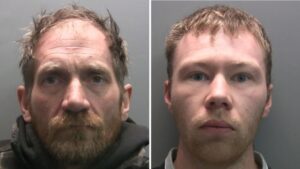
    Two men have been found guilty of criminal damage after cutting down the world-famous Sycamore Gap tree, a much-loved landmark along Hadrian’s Wall in Northumberland. Daniel Graham, 38, of Carlisle, and Adam Carruthers, 31, of Haltwhistle, were convicted today at Newcastle Crown Court following a week-long trial that gripped the nation. The pair were found to have felled the 300-year-old sycamore in the early hours of 28 September 2023, causing what prosecutors described as “an act of calculated and senseless vandalism”.

    The tree, situated in a dramatic natural dip in the landscape near Crag Lough, had become one of the most photographed trees in the UK and was an emblem of the North East’s cultural and natural heritage. Its destruction sparked widespread outrage and sorrow, with tributes pouring in from around the world. During the trial, the court heard that Graham and Carruthers had used a chainsaw under the cover of darkness to cut down the tree in what was described by the prosecution as “a deliberate and premeditated act”. CCTV footage, forensic analysis of sawdust found on the suspects’ clothing, and mobile phone location data were key to securing the convictions.

    Judge Margaret Ridley described the act as “environmental vandalism of the highest order”, adding that the loss of the tree was “a blow not just to the landscape but to the national psyche”.

    Both men showed little emotion as the verdicts were read. Sentencing has been adjourned until next month, with the judge indicating that custodial sentences are being considered. Northumbria Police Detective Chief Inspector Jane Dobson praised the public for their assistance during the investigation and stated, “This case struck a nerve across the UK. The Sycamore Gap tree was more than just a tree — it was a symbol, and we were determined to find those responsible.” In the wake of the verdict, the National Trust has confirmed that plans are underway to grow a new sycamore from seeds taken from the original tree, though it may take decades before the landscape regains its former shape.

  • PRESS RELEASE : FCDO statement on DPRK ballistic missile launches [May 2025]

    PRESS RELEASE : FCDO statement on DPRK ballistic missile launches [May 2025]

    The press release issued by the Foreign Office on 8 May 2025.

    The FCDO has released a statement following ballistic missile launches by the Democratic People’s Republic of Korea (DPRK) on 8 May.

    An FCDO spokesperson said:

    DPRK’s ballistic missile launches on 8 May are another breach of multiple UN Security Council resolutions (UNSCRs). Unlawful ballistic missile launches continue to destabilise the peace and security of the Korean Peninsula.

    The UK strongly urges the DPRK to stop such provocations and return to dialogue.

  • Ursula von der Leyen – 2025 Statement on Election of New Pope

    Ursula von der Leyen – 2025 Statement on Election of New Pope

    The statement made by Ursula von der Leyen on 8 May 2025.

    We sincerely congratulate His Holiness Leo XIV on his election as Pope and head of the Catholic Church.

    We wish that his pontificate be guided by wisdom and strength, as he leads the Catholic community and inspires the world through his commitment to peace and dialogue.

  • Ursula von der Leyen – 2025 Speech at the Choose Europe for Science Event

    Ursula von der Leyen – 2025 Speech at the Choose Europe for Science Event

    The speech made by Ursula von der Leyen, the President of the European Commission, on 5 May 2025.

    It is an honour to be here in the Sorbonne – surrounded by some of the brightest minds in the world. Dear Emmanuel, you once said that before being a university, the Sorbonne was an idea. An idea of scientific excellence, collaboration and – if I may add – of opportunity. And no story encapsulates this better than that of Maria Salomea Skłodowska-Curie, also known a Marie Curie. In her homeland of Poland, then under Russian occupation, women were barred from universities. So, she and her sister joined underground night schools, dreaming of freedom through knowledge. That was at the end of the 19th century. Her journey would eventually bring her to La Sorbonne. Here she was allowed to study and do her research. She ultimately revolutionised medicine and physics. Maria Skłodowska-Curie became the first woman to win a Nobel Prize, the first person to win a Nobel Prize twice, and the only person to win a Nobel Prize in two different fields. And her discoveries and her work on radiation saved millions of lives. I start with this story not just because we are here in the Sorbonne – or even because it shows how scientific excellence can change the course of destiny. But because this is also a story about freedom. Freedom to learn and invent. It is a story about openness. Openness to turn ideas into groundbreaking discoveries. And it is a story about collaboration beyond borders. And this is exactly what Europe and the world need more today. Because I am convinced that science remains the fuel of progress and growth for our societies. Without the ideas and breakthroughs that come from scientific research, progress sooner or later stagnates.

    Unfortunately, as your discussions have shown today, the role of science in today’s world is questioned. The investment in fundamental, free and open research is questioned. What a gigantic miscalculation. I believe that science holds the key to our future here in Europe. Without it, we simply cannot address today’s global challenges – from health to new tech, from climate to oceans. And as I look around the room – and at all the young people here – I know we are far from having run out of new ideas or bright minds. In fact, the truth is we have barely scratched the surface of the knowledge that science can offer us. So more than ever we need to stand up for science. Science that is universal – shared by all humanity – and that is unifying. Because the pursuit of knowledge and the yearning to understand how things work are values that bring us together as people, as it has done today. We can all agree that science has no passport, no gender, no ethnicity or political party. And as such it does play a crucial role in connecting people and creating a shared future in today’s fractured world. We believe that diversity is an asset of humanity and the lifeblood of science. It is one of the most valuable global goods and it must be protected.

    That is why I am here today, to say that Europe will always choose science. And Europe will always make the case for the world’s scientists to Choose Europe. Scientific endeavour runs deep through European history – from Pythagoras and Aristotle in Ancient Greece to Galileo and Copernicus in the Renaissance period or to Koch or Pasteur in latter centuries. The oldest university in Europe was founded in Bologna, where teaching started as far back as 1088. And Europe was the home of the Scientific Revolution which saw one of the most consequential transformations in human history – thanks to breakthroughs in mathematics, astronomy, biology and much more. That tradition lives on today. Europe already has the second highest scientific output in the world. It is home to over 2 million researchers – one quarter of the world’s total. We lead in green tech, health, economics, business and social sciences. We excel in areas of scientific research and technologies that are pivotal to our future – from aerospace to robotics, from automotive to engineering, from biotechnologies to pharmaceuticals, just to name a few.

    And we have a huge number of natural advantages that help set us apart. The first is sustained and stable investment from Europe and its Member States. Europe runs the world’s largest international research programme, Horizon Europe. It has a firepower of over EUR 93 billion. Over the last 40 years, the European Union has funded 33 Nobel Prize laureates. European support has made possible breakthroughs in genome sequencing and mRNA vaccines. It spurred the development of cutting-edge microchips, and even led to the first image of a black hole. These examples show what we all know – the return on investment in science is unparalleled. We have worldclass research infrastructure. From particle physics to molecular biology, and from space exploration to nuclear fusion. This helps make Europe a leader in fundamental research.

    We have a world-leading supercomputing infrastructure, EuroHPC, and we are investing massively in AI, quantum and digital research. Finally, we also have a proud tradition of open and collaborative science. We uphold the principles of open science, open education and data sharing. Our European Research Council is run not by politicians, but by scientists, for scientists. Our Horizon Europe programme is a magnet for global cooperation. From the UK to Switzerland, from Canada to South Korea, more and more countries want to join it. We see scientists from across the world collaborating here in Europe. Take CERN as a case in point. Founded 70 years ago to carry out cutting-edge research that no individual nation could do alone, it is today the world-leading laboratory for high-energy particle physics and related technologies. Researchers from over 100 nationalities working together for the good of humanity. This is how science should work, and it is why scientific freedom and collaboration must always be at the heart of our institutions and our infrastructure.

    Ladies and Gentlemen,

    Europe has everything that is needed for science to thrive: we have the stable and sustained investment; we have the infrastructure; we have the commitment to open and collaborative science, we have a social market economy that delivers access to good schools, education and healthcare for all. But at the same time, we have to be alert and work on our deficiencies. We know that researchers still face too much – or too complex – bureaucracy here in Europe compared to some other parts of the world. We know that the path from fundamental research to business and to market is not straightforward or fast enough here in Europe. We know that we need to offer the very best a longer-term perspective. We are ready to tackle this head on.

    We want Europe to continue to be at the forefront of fundamental research. We want Europe to be a leader in priority technologies from AI to quantum, from space, semiconductors and microelectronics to digital health, genomics and biotechnology. We want scientists, researchers, academics and highly skilled workers to choose Europe. And this is why today I am presenting the first elements of our Choose Europe Initiative.

    The first priority is to ensure that science in Europe remains open and free. This is our calling card. We must do everything we can to uphold it – now more than ever before. We want to strengthen the free movement of knowledge and data across Europe – just as we do for goods, talents and capital across our Single Market. And we want to enshrine freedom of scientific research into law in a new European Research Area Act. Because as threats rise across the world, Europe will not compromise on its principles. Europe must remain the home of academic and scientific freedom.

    The second element of Choose Europe is financing. Science is an investment – and we need to offer the right incentives. This is why I can announce that we will put forward a new EUR 500 million package for 2025-2027 to make Europe a magnet for researchers. This will help support the best and the brightest researchers and scientists from Europe and around the world. We aim to create a new seven-year ‘super grant’ under the ERC to help offer a longer-term perspective to the very best. Through the ERC, we are already supporting researchers who relocate to Europe with a top-up beyond their grant. We are now doubling the amount they can receive this year. And I want to extend this support for 2026 and 2027.

    At the same time, we must also focus on the next generation. This is why we are also increasing support to early career scientists through our Choose Europe pilot under Maria Skłodowska-Curie. Those that choose Europe will benefit from higher allowances and longer contracts. We will expand this support over the next two years, with targeted incentives in frontier fields, like AI. For the mid- and long-term: together with our Member States, we want to reach the 3% of GDP target for investment in research and development by 2030. And we will put forward ambitious proposals on research and innovation funding in the next long-term budget. Because we know that an investment in science is an investment into our future.

    The third part of Choose Europe is the need to fast-track the pathway – from breakthrough science to transformative innovation and business opportunities. This is why we will put forward a first ever European Innovation Act and a Startup and Scaleup Strategy, to remove regulatory and other barriers, and to facilitate access to venture capital for innovative European startups and scaleups.

    Last but not least: We have to make it easier and more attractive to come to Europe for research. We will better link up researchers with research institutions. We will speed up the process around entering and staying in Europe. We already have an excellent platform that links researchers worldwide with thousands of jobs in Europe, as well as providing visa support and career guidance. We now want to support public and private institutions to better link up to highly skilled workers and researchers, and to speed up and simplify the entry for top researchers. Because bringing the best from across the world is about bringing out the best of Europe.

    Ladies and Gentlemen,

    Europe has made its choice. We are choosing to start a new age of invention and ingenuity. We are choosing to put research and innovation, science and technology, at the heart of our economy. We are choosing to be the continent where universities are pillars of our societies and our way of life. We are choosing to be the continent where innovation serves humanity, where global talent is welcomed. Because as the history of the Sorbonne and our excellent universities show, progress thrives on freedom, openness and collaboration. So, to every researcher, at home or abroad, to every young girl and boy who dreams of a life in science, as Maria Skłodowska-Curie once did, our message is clear: Choose Science. Choose Europe.

  • Donald Tusk – 2025 Statement on Election of New Pope

    Donald Tusk – 2025 Statement on Election of New Pope

    The statement made by Donald Tusk, the Prime Minister of Poland, on 8 May 2025.

    Habemus Papam! Evil will not prevail. Zło nie zwycięży. Ił male non prevarrà. The optimism and hope that the world needs.

  • Emmanuel Macron – 2025 Statement on Election of New Pope

    Emmanuel Macron – 2025 Statement on Election of New Pope

    The statement made by Emmanuel Macron, the President of France, on 8 May 2025.

    A historic moment for the Catholic Church and its millions of faithful. To Pope Leo XIV, and to all Catholics in France and around the world, I extend a message of fraternity.

    On this May 8th, may this new pontificate be one of peace and hope.

  • Volodymyr Zelenskyy – 2025 Statement on Election of New Pope

    Volodymyr Zelenskyy – 2025 Statement on Election of New Pope

    The statement made by Volodymyr Zelenskyy, the President of Ukraine, on 8 May 2025.

    Congratulations to His Holiness Pope Leo XIV @Pontifex on his election to the See of Saint Peter and the beginning of his pontificate.

    Ukraine deeply values the Holy See’s consistent position in upholding international law, condemning the Russian Federation’s military aggression against Ukraine, and protecting the rights of innocent civilians.

    At this decisive moment for our country, we hope for the continued moral and spiritual support of the Vatican in Ukraine’s efforts to restore justice and achieve a lasting peace.

    I wish His Holiness Leo XIV wisdom, inspiration, and strength—both spiritual and physical—in carrying out his noble mission.

    Ad multos annos!

  • Keir Starmer – 2025 Comments Following UK’s Economic Trade Deal with the US

    Keir Starmer – 2025 Comments Following UK’s Economic Trade Deal with the US

    The comments made by Keir Starmer, the Prime Minister, on 8 May 2025.

    Just a few moments ago, I spoke to President Trump, the President of the United States.

    And I am really pleased to announce to you, and I wanted to come to you to announce it, that we have agreed the basis of an historic Economic Prosperity Deal.

    That is a deal will protect British businesses and save thousands of jobs in Britain, really important, skilled, well-paid jobs.

    It will remove tariffs on British steel and aluminium, reducing them to zero.

    It will provide vital assurances for our life sciences sector, so important to our economy and grant unprecedented market access for British farmers without compromising our high standards.

    And for the great British cars that you make here, that we see all around us, this deal means that US tariffs will now be cut from 27.5% to 10% for 100,000 vehicles every year, that’s a huge and important reduction.

    And I know from when I was last here, how much that will have been weighing on your minds when you knew the size of the tariffs that would otherwise be in place.

    To get that decrease was hugely important to me and I can tell you my teams were working really hard on this deal night and day for weeks. I was working with them.

    And in politics what matters sometimes is who you have in your mind’s eye when you are making these deals, who do you have in your mind’s eye when you are taking decisions.

    What I took away from here last time was you and the brilliant work that you do and had you in my mind’s eye as we did that.

    We have scope to increase that quota as we go forward, this is not fixed, this is where we have got to.

    And all of these tariff cuts will come into place as soon as possible and that’s really important in relation as well to the work that you are doing, and the brilliant cars that you make.

    And as Adrian has said I was here with you just a few weeks ago and I promised you that I would deliver in the national interest.

    And today I am really pleased to come back here, to be able to look you in the eye and say I have delivered on the promise I made to you.

    And that’s why as soon as I knew this deal was coming in today, I said I want to come back to JLR to talk to the workforce there, for whom this means so such.

    Now of course we are the first country to secure such a deal with the United States.

    In an era of global instability that is so important. The great challenge of our age is to secure and renew Britain.

    And that is what we are going to do.

    Acting in the national interest.

    Shaping this new era – not being shaped by it.

    If it’s not good for Britain, we won’t do it.

    If it doesn’t mean more money in people’s pockets, we won’t do it.

    If it doesn’t mean security and renewal in every part of the country – we won’t do it.

    But that doesn’t mean we’re turning inward.

    Instead, we are sending a message to the world that Britain is open for business – seeking trade agreements with India on Tuesday, with the US today, and working to boost trade with other partners too – including of course the EU with who we have an important meeting just a week on Monday.

    Making deals that will benefit working people.

    You know – in recent years an idea has taken hold that you show strength by rejecting your allies.

    That you shut the door, put the phone down, storm off. I’ve had plenty of people urging me to do that rather than stay in the room and fight for the interests of our country.

    I want to be absolutely crystal clear – that is not how this Government operates. It is never how this Government operates. We don’t storm off, we stay in the room, and we negotiate, and we work for our country with the national interest at the foremost of our mind.

    Because the other way of working doesn’t deliver the benefits that working people need.

    And so I also want to be clear – this is just the start.

    With the deal we have done today we can say: jobs saved. Jobs won. But not job done.

    Because we are more ambitious for what the UK and US can do together.

    So we are hammering out further details to reduce barriers to trade with the United States across the board.

    We have £1.5 trillion invested in each other’s economies, creating 2.5 million jobs across both countries.

    There are so many areas where I think we can even more than that and put more pounds in the pockets of working people across the United Kingdom.

    As the two biggest services exporters in the world, we will work to bring down barriers, creating jobs in our thriving services sectors – in Leeds, in Manchester, London and Birmingham.

    As the only two western nations with trillion-dollar tech sectors we will go further to deepen our partnership in new technologies to shape the innovations of this century together and create the jobs of the future.

    Because, look – our history shows what we can achieve when we work together.

    And what timing for this deal, that we have agreed this deal on VE Day.

    80 years ago, today Churchill was addressing the nation at the end of the Second World War. Victory in Europe.

    And we were standing the United Kingdom with the United States on defence and security. For 80 years we have been the closest of partners, and today we have added to that trade and the economy in the special relationship between us.

    Defined by peace and economic prosperity.

    So, it is fitting today that we renew the bond on the 80th anniversary of VE Day.

  • NEWS STORY : UK and Allies Urge Action on Press Freedom at OSCE Meeting

    NEWS STORY : UK and Allies Urge Action on Press Freedom at OSCE Meeting

    STORY

    The United Kingdom, alongside 13 other OSCE participating states, issued a joint statement today emphasising the critical importance of safeguarding media freedom across the OSCE region. Delivered by French Ambassador Fatène Benhabylès-Foeth on behalf of the informal Group of Friends on Safety of Journalists, the statement coincided with World Press Freedom Day commemorations.

    The coalition highlighted escalating threats to journalists, including harassment, imprisonment, and even fatalities. They pointed to restrictive legislation and digital challenges—such as disinformation and AI misuse—as exacerbating factors undermining press freedom. The statement underscored the ongoing risks faced by journalists in conflict zones, notably citing the deaths and injuries of media personnel in Ukraine amid Russia’s continued aggression.

    Reaffirming their commitment to human rights and media freedom, the participating states called for concrete actions to protect journalists and uphold democratic values throughout the OSCE area.