Author: admin

  • Stephen Crabb – 2014 Speech on Welfare Reform

    Stephen Crabb
    Stephen Crabb

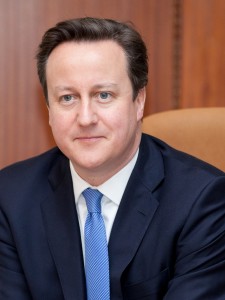
    Below is the text of the speech made by Stephen Crabb, the Welsh Office Minister, in Cardiff on 13th February 2014.

    Good morning and thank you for inviting me to speak here today.

    This morning, more people in Wales have gone out to work than at any other time in our nation’s history.

    Economic inactivity in Wales today is at its lowest since records began, and both the overall rate of employment and the actual numbers of people in jobs are at a record high.

    But, ladies and gentlemen, the tragedy is this:

    ..that at the same time as a record number of people are out working today, there remain around 200,000 people here in Wales who have never worked a day in their lives.

    That’s a tragedy for each one of those individuals and it’s a tragedy for our nation.

    A small country like Wales needs to maximise every bit of skill and talent and potential that we have.

    And that’s why I am so passionate about welfare reform.

    Welfare reform is about saying that this waste of opportunity and potential is just not acceptable any longer;

    ..it’s about recognising and bridging the gulf that has been allowed to open up between those whose lives are dependent on benefits and those who are economically active;

    ..and it’s fundamentally about returning the welfare system to its true values and purpose: as both a tool of social protection and an enabler for those in poverty, where they can, to regain their economic independence.

    Our welfare reforms are about expanding opportunity and making a positive difference to real lives.

    And so there is nothing compassionate or progressive about ducking the challenge of welfare reform.

    The assault on welfare reform in Wales

    Yet, over the last three years, that is exactly what our critics in Wales have urged that we should do.

    There has been a ferocious assault against welfare reform within Wales, led by the Welsh Labour Party which has turned its face against welfare reform – a cause which Labour itself championed twenty years ago when so many of the problems of dependency and the decline of work incentives were first being highlighted.

    Instead Welsh Labour has led the calls for welfare reform to be resisted, abolished, watered down or delayed.

    And in the Welsh media there has been a voracious appetite for any story which casts welfare reform in a negative light. Since 2010 there have been more column inches devoted to criticising different aspects, any aspect, of welfare reform than almost any other political subject;

    ..and an escalating rhetoric of criticism which reached its peak a year ago when a Welsh Government Minister attacked the reforms as a “social atrocity” and accused UK Government of “stepping away from their responsibility to the most vulnerable in society”.

    Language like creates headlines in Wales and turns poverty into a political football, but it does nothing – nothing at all – to further the interests of the forgotten 200,000 people in our nation who have yet to work a day in their lives,

    ..and for the 92,000 children who are growing up in households where no-one works,

    ..and for those communities here in Wales where more than one third of the residents are claiming out-of-work benefits.

    The responsible position is not to urge less welfare reform in Wales,

    ..but to recognise that Wales needs welfare reform as much as anywhere else in the UK and to work to ensure that it bears the right fruit for Wales.

    Wales should be using this once-in-a-generation opportunity to break the cycle of dependency and revitalise those communities blighted by worklessness.

    Wales needs welfare reform.

    Welfare reform here to stay

    Regardless of the precise contours of the current devolution settlement, the truth is that Welsh Government has a shared interest in seeing the economic health of our nation improve, and that means a shared interest in seeing the cycles of poverty and dependency broken in Wales, and therefore they do have a shared responsibility to be a positive partner in welfare reform.

    Welfare reform must not be a blind-spot for Welsh Government.

    Because, make no mistake, welfare reform is here to stay.

    And just as the UK and Welsh Governments now work together far more effectively than ever before on strategic infrastructure investment, so I believe that the two governments will need to find ways of working together to see welfare reform achieve its ambitious aims here in Wales.

    I therefore very much welcome the new established working group that will meet for the first time today that brings together the Wales Office, Welsh Government and the Department for Work & Pensions to seek to resolve the difficulties around access to ESF-funded skills training in Wales which currently prevents unemployed people on the Work Programme in Wales getting the full range of support and training they need to improve their employability.

    As the Commons Welsh Affairs Select Committee said recently:

    The last thing we need.. is bureaucracy getting in the way of people simply being able to do what is most effective. The fact that different programmes are funded differently or run by different organisations should not.. create barriers at the point of delivery. The point is to get people in to work, for all the benefits that brings both to them and to the public purse.

    Local Government a key partner in welfare reform

    And local government, too, in so many ways the unsung hero of social policy in Britain, has a central role to play as welfare reform is rolled out.

    I have recently met with authorities from across Wales to discuss, in particular, the localised impacts of the changes to housing benefit, but also to hear the approaches being taken to wider welfare reform matters in Wales.

    Later today I will be visiting Caerphilly where the Borough Council has participated in one of the Universal Credit local pilot schemes, working alongside the Department of Work & Pensions, to explore how local expertise can support residents to claim Universal Credit, making sure they are aware of benefit changes and within full reach of assistance when they require it – practical assistance such as advice on debt and household finance.

    And no-one is blind to the challenges that lie ahead, but I have been impressed with the dedication and focus with which local authorities are approaching welfare reform.

    They understand the importance and significance of this agenda to Wales.

    I believe whichever Party – or parties – are in power in Westminster after 2015, there will be no turning back the clock or any return to the kind of welfare system which does not encourage hard work and which does not foster social mobility.

    Already as the first fruits of our changes are starting to appear – seen in the falling numbers of long-term unemployed and increasing numbers coming back into the labour market – I believe there is the opportunity to move away from the screeching rhetoric and to achieve consensus here in Wales on the broad direction of welfare reform.

    In the last three years we have only just begun to tackle the monumental challenge in front of us.

    Welfare reform will need to shape the strategies and business plans of every tier of Government – Local Government, Welsh Government and UK Government – for years to come.

    And if we get this right, with each layer of government working together effectively and with a shared ambition for welfare reform in Wales, then the impacts it will have on the economic and social landscape of our nation will be transformational.

    The principles which guide welfare reform

    And so I would like to set out this morning some of the key principles which are guiding our welfare reforms and which I think can provide the basis for that consensus in Wales:

    Moral duty to provide both a safety net and a pathway out of poverty

    Firstly, the starting point is a fundamental recognition that the state has a moral duty to provide a safety net for those facing poverty and hardship.

    We must not and will not walk away from the most vulnerable in society.

    Both compassion and self-interest point us towards providing real help to those in poverty. And there will always be a role for a strong safety net to protect those who face hardship from slipping further into poverty.

    And so Universal Credit will refocus that safety net to provide more support to those on the lowest incomes – 75% of those who gain from Universal Credit will be in the bottom 40% of income distribution.

    The introduction of Universal Credit will also significantly improve the take-up of unclaimed entitlements.

    And so around 200,000 households in Wales will actually have higher entitlements under Universal Credit – of £163 per month on average.

    Our responsibility to the poor also means providing support to those affected as we reshape the welfare system.

    We know that many households in Wales are affected by the current reforms, and this can be unsettling and disruptive for some, but we are committed to providing the necessary support to help those affected through the transition.

    This is why we have increased the amount of money available to local authorities in Wales to use for Discretionary Housing Payments for those tenants in social housing affected by the changes to housing benefit: £7.9 million in 2014/15.

    No-one is walking away from a duty towards the poor.

    But if this duty translates into rights on behalf of some to receive welfare payments then with those rights must surely come responsibilities.

    The great failing of the modern welfare state was the stripping away of these responsibilities which helped to foster inactivity and long-term dependency.

    Benefit payments alone do not provide a pathway out of poverty. That is why our welfare system should provide the full range of support, guidance and incentives that gives people the opportunity to improve their circumstances and return to the freedom of an independent life.

    Restoring the value of work, and increasing the incentive to work

    Secondly, the key to encouraging people to leave benefit dependency and return to the job market is to restore the value of work in society and that means changing the equation so that there is always a financial incentive to work compared to the alternative of benefits.

    That is why, as a Government, we have introduced a cap on benefits so that no household can receive more in welfare payments than the average working family earns through employment.

    In Britain, we are already seeing thousands of those whose benefits have been capped returning to the labour market and taking up jobs.

    Furthermore, the introduction of Universal Credit will improve work incentives as financial support will be reduced at a steady rate, taking actual earnings into account at the time they are received. If a claimant is working part time, they may continue to receive some payment. If their hours then increase, their Universal Credit payment will reduce, but they will keep more of their earnings and will always be financially better off in work.

    The intention is that any work pays, in particular, low-hours work.

    Reducing the complexity of the current system and removing the distinction between in-work and out-of-work support, will make clear the potential gains to work and reduce the risks associated with moves into employment.

    At the same time we are helping to put money back into the pockets of working people by raising the Income Tax Personal Allowance to £10,000.

    This will benefit 1.2 million workers in Wales and take 130,000 out of income tax altogether – many of whom are on the lowest wages.

    Taken together with a strong minimum wage, which we want to see increased significantly, these measures represent a very powerful set of tools to draw people back into the workforce by changing the financial incentives to work.

    I happen to believe that there are very, very few people who do not to work.

    As people we are hard-wired to be productive and make an economic and social contribution.

    But the previous welfare system far too often allowed those instincts to become blunted, and the drive to provide for oneself became weakened in a society where work didn’t always pay.

    Work shapes us as people, it provides security for our families and it inspires our children to follow in our footsteps – and it is right that work should be at the heart of our efforts to tackle poverty.

    – A benefits system which reflects the realities of modern labour market

    Thirdly, it is imperative that our benefits system is reshaped to reflect the realities of the modern labour market.

    We need a system that can respond to the modern and flexible labour market where an increasing number of people are, by choice or necessity, working part-time or in multiple low-hours jobs.

    The previous welfare system shut out those who wanted to return to work by presenting a seemingly binary choice between full-time work and unemployment.

    For many of the longest term unemployed, facing difficult barriers to work, returning straight back to full-time employment will present a huge and in some cases impossible challenge.

    We need a welfare system that encourages and supports them in taking their first steps back into work and building up their hours as they acquire confidence and skills.

    That is why Universal Credit is a dynamic system which is designed to be flexible to cope with the transition back into full-time work. It gives job-seekers the flexibility to take on part-time, short-term or alternative work patterns, depending on what is appropriate for their individual needs.

    Moving the welfare system to reflect more the realities of the modern labour market also means changing the nature of the interaction between the claimant and the advisers who will support that person as they receive benefits. Claimants now receive a more targeted and individualised service than ever before.

    I have seen firsthand some of the remarkable changes that have taken place in the design and approach within JobCentre Plus in Wales to reflect this. Walking into JobCentre Plus in Newport city centre, for example, you will see a busy open-plan dynamic working environment where not only the staff are busy at work but claimants too, working on job searches, skills workshops, CV writing; and that’s exactly as it should be. Claimants working hard to find work.

    And thanks to these changes and the digital revolution that we are bringing to the benefits system, claimants will no longer be the passive recipients of handouts, but will be firmly in the driving seat, taking control of their own prospects.

    – welfare reform is about bridging the gulf that has allowed to emerge between those dependent on benefits and those in work

    The previous system fostered and allowed a gulf to open up between those who are dependent on benefits and those who are in work – where people who have become dependent on benefits no longer have to live with the same range of practical life choices that people in work do. For those who have been dependent on benefits the longest, that gulf is a very wide one indeed.

    And so the fourth principle I would highlight is the need to ensure there is no gap between the choices that those in work have to make and those that made by people receiving benefits – and in so doing we are restoring fairness back to the benefits system.

    Practical choices, for example, over what type and size of property they will find affordable:

    The changes to housing benefit for social tenants, bringing it into line with Labour’s changes to housing benefit for tenants of private landlords, means that all tenants on benefits will now have to make the same types of decisions as people in work have to about what size property is right for them at this point in their lives.

    Other basic practical life issues involve managing money on a daily, weekly and monthly basis – including the timely payment of rent.

    People in work have to do this. How on earth did we arrive at a system of housing benefit that removes much of that basis financial housekeeping from people on benefits and so deskill them further?

    And so, in the face of all the criticism we have seen from housing associations in Wales and others, I absolutely defend the principle of Universal Credit being paid to the recipient and not direct to landlords.

    Yes, we need to build in safeguards – and we are – and yes we need to ensure that those with specific and challenging circumstances and conditions still have the option of having their housing related benefit paid straight to their landlord.

    But the starting point must be an expectation that the majority of people on benefits can, and should be expected to, manage their own household finances.

    Wales a beacon of social mobility

    I am incredibly fortunate as a Wales Office Minister that I am able to get and about meeting many of the people at the cutting edge of welfare reform in Wales –

    – the superb teams of advisers in JobCentre Plus in places like Newport and Aberdare;

    – the innovative teams delivering the Work Programme in places like the old Burberry factory in Treorchy,

    – and inspirational an historic organisations like the Merthyr Tydfil Institute for the Blind which is delivering the Workstep programme to people with a whole range of disabilities.

    And people here will tell you there are no magic wands or silver bullets when it comes to tackling worklessness in some of our most deprived communities.

    And no-one is pretending there are.

    But you will also hear very few people running to the barricades to defend a welfare system which too often locked in that worklessness and created dependency.

    My own approach to welfare reform is also shaped by the experience of seeing a single mother raise three boys in council housing in West Wales thirty years ago:

    – absolutely dependent on the welfare system, and the kindness and generosity of others, to keep her family’s heads above water; having to make all those horrible decisions about what food and clothing was affordable;

    – thankful for good quality free school meals and a good local bus service for days out on the Pembrokeshire coast.

    But those circumstances were not fixed; and, initially, taking advantage of the rule that allowed her to work a few hours each week without the benefits being withdrawn, she got a small job filing at a local office. Gradually she increased her hours even to the point eventually when her benefit was being withdrawn pound per pound, but her skills and self-confidence were improving all the time.

    Eventually, when her sons were in their teens, she was able to get a full-time job, and move off benefits completely. Shortly after, she was able to afford driving lessons and buy her first car which expanded her work options even more.

    Things were still very tight, but how far she had come on that journey from personal crisis and breakdown to economic independence!

    And it should be a central feature of our welfare state that this type of journey – that my own mother made – should be encouraged and incentivised as far as possible.

    And that is exactly what our welfare reforms seek to achieve.

    One of the great strengths of Welsh society in the past was the belief – written deep in the hearts of so many men and women – that hard work and education was the route out of poverty.

    And so Wales became a beacon of social mobility.

    The welfare system we are reforming has too often acted as a brake on that social mobility, not providing a pathway out of poverty.

    Our shared vision, whether as politicians or practitioners, must surely be for Wales to become once again that beacon of social mobility:

    – a place where it does not matter what street you grew up in, whether in social housing or private;

    – where it does not matter what school you went to;

    – or who your father or mother were, or what jobs they may or may not have done;

    – a place where hard work, education and a strong community provide pathways of opportunity so that everyone can achieve their potential to the best of their ability.

    And this is why welfare reform is much, much bigger than just a financial or economic issue.

    It’s actually about what kind of society we want to live in; and our children after us.

    And it’s why I am determined that our nation of Wales should see the full benefits of welfare reform in the months and years ahead.

    Wales needs welfare reform.

  • Tim Collins – 2005 Speech on Literacy

    Below is the text of the speech made by Tim Collins, the then Shadow Education Secretary, on literacy on 14th April 2005.

    When Mr Blair was first elected he told us that education was his ‘number one priority’ . The following year he said ‘there is no greater injustice to inflict upon a child than a poor education’ . But after eight years, four Education Secretaries and now three manifestos, all we have had is more talk, while across the country thousands of children are being failed by just such a poor education.

    The ability to read and write is at the foundation of all learning. Without those basic skills, the whole field of education is a closed door. But for too many pupils, that door has remained firmly shut.

    One in three pupils leave primary school unable to write properly, and 44,000 leave secondary school without a single GCSE. Employers complain that many school leavers lack basic literacy and numeracy, meaning they have to invest in remedial training to bring them up to scratch. . As Digby Jones of the CBI puts it, employers ‘pick up the pieces and the bill’ for the failures in our education system .

    Even Mr Blair himself, in a rare moment of candour, has admitted the number of pupils unable to meet basic standards is a ‘scandal’ .

    And who is worst hit? Evidence shows it is the most underprivileged who suffer most. Children from underachieving, underprivileged backgrounds. Children whose parents do not or cannot teach them the basics themselves, and, as Michael has said, children of immigrants whose first language is not English.

    When one in five children – and arguably one in three – do not achieve the standard of reading and writing expected of their age, it is clear the current approach isn’t working. The Labour-dominated Education Select Committee last week called this figure ‘unacceptably high’, and I wholeheartedly agree with them.

    Mr Blair said in his manifesto yesterday that ‘we want to see every pupil achieving the basics’ – but we have heard it all before. After eight years, the number of children failed by his policies on literacy stands at over a million .

    We need more than just talk, and I am announcing today the decisive action that the next Conservative Government will take.

    We will focus on what works. And what works in the teaching of reading is the proven, traditional method of phonics. In particular, what experts call ‘synthetic phonics’, which has been shown to improve pupils’ reading scores dramatically in Scotland. Children are taught letter sounds and how they blend into words, before being taught letter combinations and to work from sounds to letters.

    It’s not rocket science, but it is not what Labour’s much-heralded National Literacy Strategy has delivered. The Education Secretary claimed last month that the strategy was ‘almost entirely based on synthetic phonics’ , but reading experts have specifically rejected her claim, saying ‘this is not the case’, and that Labour’s approach puts ‘considerable emphasis’ on other, less effective methods .

    As the Reading Reform Foundation has argued, this fudged strategy ‘dilutes the effectiveness’ of the guidance, and means teachers ‘continue to be confused by the increasing amount of contradictory phonics advice’ .

    This cannot continue. As Education Secretary I will not allow any more of our children to become the unfortunate victims of failed educational experiments. And I will not allow teachers to be put in the impossible situation of being asked to deliver mutually contradictory approaches.

    So the next Conservative Government will replace the present National Literacy Strategy with new guidance based wholly and exclusively on synthetic phonics. We will not waste time commissioning yet more reports and pilot projects. The evidence is there, and it is clear. We will act on it.

    Doing this will particularly help those pupils for whom English is a second language, giving them the extra support they need to make the most of the educational opportunities available to them. It cannot be right that such children are allowed to continue to struggle, and that divisions in our society risk being entrenched as a result.

    As Michael rightly says, it is in all our interests that people who choose to make their home here are helped to learn the language of our nation. And a return to traditional teaching methods will help to achieve that. As the Select Committee found, synthetic phonics are ‘of particular benefit to children at risk of reading difficulties’.

    Mr Blair has had eight years to deliver on his promises, and has failed. Where Labour offer more talk, we will take firm action.

  • Ray Collins – 2011 Speech to Labour Party Conference

    Below is the text of the speech made by Ray Collins, the then Labour Party General Secretary, to the party conference on 25th September 2011.

    Thank you Chair, and thank you Conference.

    This is the 38th consecutive Party Conference I have attended, and whilst I hope to be attending many more, this is my last Conference as your General Secretary.

    For many conferences now, you have heard me bang on about my priorities as General Secretary.

    I am afraid that, for one last time, I am going to bang on about them again here today.

    My priorities were threefold:

    – To put the Party on a stable organisational and financial footing.

    – To ensure that we are the Party of equality, advancing the cause of women, Black, Asian, and ethnic minority communities and other under-represented groups.

    – And to ensure we are a party of the future, with a growing and vibrant youth movement.

    Being General Secretary has given me the opportunity to meet and get to know many of the Party’s young activists. I have always believed that our young members are not just the leaders of tomorrow; they are important voices here and now.

    But it is only latterly that I have fully appreciated quite how capable those leaders of tomorrow are. I have endeavoured to support their work, and in response to their extremely persistent lobbying, agreed to fund a full-time Youth Officer in Head Office.

    I am also extremely proud to have worked – alongside a great many others – to ensure that we look like the country we seek to represent.

    There is very much more to do, and we must never be complacent about the future, but when I sit in the PLP, and look around me at our diverse, talented Labour benches, I feel an incredible sense of optimism.

    On the finances, you will see from the Treasurer’s Annual Report, quite how much progress we have made.

    In 2010, for the first time in many years, we fought a General Election without adding to the Party’s debt burden.

    Our finances forced us to be cleverer in our campaigning, deploying resources where they made the most impact.

    We lost, and we lost badly, but I honestly believe that as a Party we campaigned better and harder than we ever have before.

    And despite all the media predictions, we stopped the Tories achieving an overall majority.

    We have learned the lessons of that campaign by developing Project Gameplan, our strategy to win the next General Election.

    These lessons were learnt in many of the constituencies I had the pleasure to visit, campaigning with members on the doorstep.

    I know I should not single any out, but I do want to mention a few:

    – Chesterfield

    – Edgbaston

    – Islington South

    – Oxford West

    – And Hastings

    These are constituencies that know:

    – That engaging with voters on the doorstep is not something you only do at election time.

    – That ‘Will you vote Labour?’ is the last question you ask, not the first.

    – That there is no such thing as a safe Tory or Lib-Dem seat where there are dedicated activists determined to buck the trend.

    It is these lessons that underpin Refounding Labour. It is how we will become an organisation fit for purpose that will win the next election

    Under Ed Miliband’s leadership we can win.

    I look forward to playing my part in that victory, but also, in something of a departure for me, to being able to speak with my own voice in the House of Lords on issues dear to me, and to the rest of the country.

    It was my experiences as a child that first drew me to politics. The sudden death of my father at an early age meant my mother was faced with the loss of her husband, her home, and her household income in quick succession.

    She was determined to provide for her children, and her hard work and resolve secured our future.

    Yet hard work and resolve were not enough on their own. It was the Equal Pay Act that provided a level playing-field for women like my mother. It was changes in the law that gave my mother protection from exploitation, and it was changes in the law that enabled her to become an economically active individual, rather than dependant on the state.

    The politics is the personal, and we never resonate more than when we are supporting voters in their aspirations for themselves and their families.

    I want to wind up by saying a big thank you to all those who have supported me in my work as General Secretary.

    They are too numerous to mention individually, and I hope to thank them in person over the course of this week.

    But I do want to single out the Party’s staff, who are one of Labour’s greatest assets. They work tirelessly on behalf of the Party they love, and no General Secretary could have asked for more.

    I also wish to thank my husband, Rafael. He has put up with me working weekends and evenings for a very long time, and without his support, I would have been lost.

    The fact that I am able to call him ‘my husband’ is, for me, one of Labour’s greatest achievements in office. Thank you Rafa – for everything.

    But my greatest thanks are reserved for you, the Party members.

    The best bit of my job has been travelling to constituencies up and down the country, seeing the work that you do, knocking on doors, and making new friends.

    You are the lifeblood of our Party, and your passion for our country’s future is formidable to behold.

    I wish my successor as General Secretary, Iain McNicol, all the very best for the future.

    I know he will value you every bit as much as I do – indeed, it would be impossible not to.

    It has been my very great privilege to serve you as General Secretary, and I look forward to seeing you on the campaign trail.

  • Ray Collins – 2009 Speech to Labour Party Conference

    Below is the text of the speech made by Ray Collins, the then Labour Party General Secretary, to the 2009 Labour Party conference in Brighton.

    Thank you Chair, and thank you Conference.

    I am delighted to be here in Brighton for my second Annual Conference, as the Party’s General Secretary – although it is my 36th as a Labour Party member.

    Harold Wilson once said that ‘a week was a long time in politics’

    Having been in the job for a year, I now know exactly what he meant.

    But it has been a productive year, working together with the NEC to win for Labour, and I want to especially thank Cath Speight,

    She has chaired the NEC brilliantly this past year, and who has been a constant source of strength and support.

    When I spoke at Conference twelve months ago, I outlined my three priorities for our Party:

    – putting the Party on a solid, long-term organisational and financial footing.

    – promoting equality within our Party, by making it the personal responsibility of the General Secretary.

    – and investing in Young Labour and Labour Students, ensuring our young members are the shapers of policy and campaigns today, as well as the leaders of tomorrow.

    Last year I was very frank with you about the financial problems we faced, and despite solid progress, our position remains difficult.

    Nevertheless, I remain optimistic for the future.

    I am optimistic because your National Executive has adopted a strategy that over the long term will: reduce our debt burden, by utilizing our commercial income and reduce structural costs, so we live within our means

    This enables us to guarantee that every penny received in donations from individuals and organisations will go directly into campaigning.

    This Give-to-Win strategy is helping us to meet our objective to secure the funds to fight the next General Election,

    And on Wednesday, Jack Dromey, the Party’s treasurer, will be announcing an important new initiative to build upon our fundraising activities.

    I want to thank Jack and all the fundraising team for all the work that they have been doing. The Party is in a better place financially because of their efforts.

    But whilst we have not been able to do all that we wanted – we have achieved much:

    Douglas has already taken you through our campaigning strategy, but let me stress again:

    675 thousand marginal seat voters contacted – more than twice as many as in the run-up to the last election

    4.5 million pieces of personalised direct mail sent to key voters using Print Creator

    5 million pieces of print sold through the campaign shop – a real testament to how much work you are doing on the ground.

    And our online Virtual Phone Bank – used by thousands of members from all over the country to make over 25,000 phone calls to target voters so far.

    There is much much more, that I could talk about for another hour at least, but as I am a humane General Secretary, I will suggest that instead you go along to the Labour Party stand and collect a General Election handbook.

    You will also find there a free street-stall pack for every local party, containing postcards and newspapers to be used in your local high street during next week’s Tory Party Conference.

    And it is not just the Party who have been innovative – – our affiliates too, both the trade unions and the socialist societies, have been looking at new ways of reaching voters:

    Unison, UNITE and the GMB’s development of member-to-member contact through online surveys, emails and phone calls.

    The Christian Socialist Movement is reaching out to faith communities, communicating the Party’s record on combating poverty.

    Community’s election magazine special, and their campaign drive against the BNP.

    BAME Labour have been engaging our ethnic minority communities, ensuring their voice is heard at the very highest levels of the Party

    USDAW’s fantastic campaign materials, that celebrate our government’s achievements.

    I said last year, and I will say it again, that though we have invested in new technologies – there is no substitute to local activists knocking on doors and speaking to one another in factories and on shop-floors.

    We may be outspent by the Tories, but we will never be outgunned.

    You, the Party members, and the union activists who give us a direct link into thousands of communities and workplaces, are the true strength of our Party,

    I want to thank you for all you did in the local and European elections, and all that you are doing now.

    I want too to thank the Party’s staff, who do everything that is asked of them and more. When money is tight, it is the staff who feel it most, but they are undaunted, travelling all over the country to deliver for the Party, and for you, the members – No General Secretary could ask for more.

    And whilst I will do all in my power to secure the funds to fight the next General Election, I also pledge to you that the Party’s long-term financial stability will be sustained.

    Because we must end the twenty-first century as we began it – as a Party of government creating a better Britain for all.

    But if we are to be a Party of the future, then we must not look like a Party of the past. We must reflect those we seek to represent, not just because it is right but because it is crucial to our electoral success across all our communities.

    And here I want to say a few words about our policy of All-Women shortlists.

    As a party, we adopted this process for one reason alone: the shameful under-representation of women within our Parliamentary Party.

    It was not an easy road down which to travel, but the Labour Party has never been about what is easy, it is about what is right, which is giving women their proper voice in Parliament.

    Labour Party leads the way on this, and we cannot afford to slip back.

    So as your General Secretary I will make the case for your policy at every opportunity, and to those who argue that it is undemocratic, I say this: what could be more undemocratic than a 21st century Parliament in which less than a fifth of its members are women – eighty years after they won the right to vote?

    We hope too, that automatic short-listing for ethnic minority candidates will begin to further their representation at a national level.

    Because we are a nation of vibrance and diversity. It is our strength, both as a country and as a party, and we must always stand strong against the voices of hatred, who seek only to divide and to persecute.

    We have been here before, at a time of economic difficulty, when a fascist party sought to exploit people’s poverty and turn them against their neighbours.

    Only then they were not called the BNP, and they were led not by Nick Griffin, but by Oswald Mosley.

    We stood against them then, as we stand against them now, and no one more so than my friend and comrade from the T&G, Jack Jones, who sadly died earlier this year.

    From the battlefields of Spain, to the streets of the East End, Jack was adamant that fascists would not pass.

    I can think of no better tribute to the man, than that we continue his struggle; driving the BNP from Brussels and local government, and ensuring that they never gain a foothold in Westminster.

    To this end, we have established an anti-BNP taskforce, led by Harriet Harman, and we want you to join with us, giving your time and whatever you can afford, to fighting the racists and the fascists, wherever they raise their ugly heads.

    I think Jack would have been proud of our young members, who have campaigned not just against the BNP, but for the Labour Party;

    – spreading the message of our achievements across the country.

    They were there in the local and European elections, and, like many of you, they were there in Glenrothes, when we defied the predictions of the media, by returning Lindsay Roy to parliament.

    I know too that they will be there in Glasgow North-East, and I hope to see you all there with them, when we elect Willie Bain to Westminster.

    And this is what gives me every cause for optimism going into the next election. The media might have written us off, but let me tell you something: the media doesn’t have the first idea about the commitment and the passion of Labour Party members.

    The elections in June were tough for our Party, and I want to thank all our council and MEP candidates, especially those who lost their seats to a climate of anti-politics that was no fault of their own.

    But wherever I go in the country, I do not see a party on its knees. I see a Party ready to fight,

    To fight for the future of a country that faces a very stark choice.

    So let us focus for a minute upon Cameron’s victorious councils, the ones he claims “demonstrate Conservative government”, and represent his ‘modern breed’ of Tory.

    Bromley and Lincolnshire where the Conservative council have taken steps to use tax-payers’ money to subsidise private school fees.

    Essex, where Cameron’s shadow business minister has advocated wholesale privatisation of all public services.

    And Barnet, where the Tories want to see a “Ryanair” approach to council services.

    “Cheap and cheerful,” says council leader, Mike Freer.

    Cheap if you’re a high-band tax-payer, perhaps -, but very far from cheerful if you’re poor or sick or disabled.

    The Tories have opposed every action we have taken to tackle the recession.

    They would have let the banks go to the wall, blocked support for families and jobs, and would cut public services for the many, at the same time as giving away millions of pounds to the 3,000 wealthiest estate owners in Britain.

    Contrast that with Gordon Brown’s help for hard-working families, hit hard by the recession:

    300,000 people helped to stay in their homes

    200,000 businesses kept open using the tax deferral scheme

    500,000 jobs saved

    And over 300,000 additional jobs, training, college and school places created, so that the recession has not claimed another lost generation of the young, as it did in the 80s and 90s under the Tories.

    Cameron would jeopardise all this, and when we tell the voters this, they listen, wherever they are in the country. This was demonstrated in June, in Hastings and in Oxford – where we made council gains in Cameron’s own backyard.

    When I meet members, I know you haven’t given up, you are fired up, because the dividing lines have never been as clear as they are now.

    You are fighting back in your constituencies, and you are fighting back in the marginal seats.

    And to those of you who think you could do more, I urge you to go to the Party stand, and volunteer today.

    Let us prove the media wrong, and the country right.

    Let us keep Britain Labour. I know we’re up to the task.

  • Vernon Coaker – 2012 Speech to Labour Party Conference

    Below is the text of the speech made by Vernon Coaker, the Shadow Secretary of State for Northern Ireland, to Labour Party conference on 4th October 2012.

    Conference. Northern Ireland is a great place and I’m very privileged to be Labour’s Shadow Secretary of State.

    Let me say that one of Labour’s greatest achievements was to help bring about peace in Northern Ireland.

    We should never be afraid to say how proud we are of that and how strongly we feel about protecting its legacy. And that’s because Northern Ireland has changed and changed for the better since the bad old days of conflict, violence and isolation.

    A fortnight ago I visited the new Giant’s Causeway Centre in North Antrim that already is attracting thousands of visitors. During the summer I toured the new Titanic Quarter and saw the very positive difference the regeneration of that part of Belfast is making.

    I’ve been to cities, towns and villages, from next year’s City of Culture in Derry~Londonderry to the twin cathedrals of Armagh and the picturesque Fermanagh lakes around Enniskillen.

    What makes Northern Ireland special is its people.

    But they are being let down by this Tory-led Government at Westminster. One out-of-touch Secretary of State has been replaced by another. But changing the Tory faces at the Northern Ireland Office isn’t what counts.

    They need to change the Tory policies on Northern Ireland.

    Unemployment has risen to over 8%.

    Nearly one in four young people are without a job. Almost half of those without work have been unemployed for over a year.

    Time and again we see that this Government has all the wrong priorities.

    Because when hundreds of thousands of people – families, communities and businesses – across Northern Ireland are suffering in these very difficult economic times, the Tories are giving millionaires a £40,000 a year tax break. Giving the richest more money, but at the same time taking money away from those who can’t afford to lose it.

    As I told the Northern Ireland Pensioners’ Parliament, 90,000 older people in Northern Ireland – 1 in 3 pensioners – are being hit by the Tory-led Government’s ‘Granny Tax’. And 20,000 families with children will lose out because of changes to tax credits.

    And businesses are suffering too.

    But after two years of talking about devolving corporation tax powers to Northern Ireland there is still no agreement about whether it should happen and what it would cost.

    And with estimates of the cost to the block grant varying from £200m to £700m, there is still a significant gap between the Treasury and the Executive that needs to be bridged.

    But rising unemployment and the recent announcements of major job losses show that Northern Ireland’s economy can’t wait. The Tory-led Government needs to catch itself on. The Secretary of State and the Treasury need to stop dithering. Northern Ireland needs action now.

    Major decisions that impact upon people in Northern Ireland are still taken at Westminster.

    On tax and spend, welfare reform and the overall economic direction taken by the UK. And on all of these the Government is making the wrong decisions.

    That’s why Labour has a real plan for jobs and growth in Northern Ireland. We want to support the First and Deputy First Ministers, and the Executive, to build and develop the economy.

    So we would reverse the Government’s damaging VAT rise for a temporary period to give immediate help to high streets and struggling families and pensioners in cities, towns and villages across Northern Ireland.

    We would bring forward long-term investment projects to get people back to work and strengthen our economy for the future. Northern Ireland’s construction industry needs that help.

    We need to build skills through apprenticeships and training that will equip our young people for the future.

    And we would give a one-year national insurance tax break to every small firm that takes on extra workers, helping to create jobs and grow local businesses that make up the bulk of Northern Ireland’s private sector.

    We would reduce VAT on home improvements, repairs and maintenance, helping to create work for our young tradesmen and women and stop them having to move to Canada and Australia. They are needed at home.

    And we would have a £2 billion tax on bank bonuses to fund a real jobs guarantee that would help 2,000 young people in Northern Ireland back to work.

    Because I know that young people will be the driving force behind further progress in Northern Ireland. But they are being let down by this Tory-led Government.

    The young men and women I meet are ambitious for themselves and their communities. But they can’t realise those ambitions if they aren’t given the chance to get on.

    No job, no hope and no future are no choices at all.

    We can’t be complacent about the challenges facing Northern Ireland. The threat from those who want to destroy the peace and progress remains high.

    I want to thank the Police Service of Northern Ireland for all that they do to keep people safe and secure. I’ve been privileged to meet police officers drawn from every community and serving every community with dedication and integrity. They have my admiration and our support.

    Recent weeks have also shown that sensitivities about parades are still very evident in some areas, particularly in Belfast. The reality is that many communities in Northern Ireland are still deeply divided and that sectarianism is an ingrained and uncomfortable truth across all sections of society.

    But a shared future can only happen through building shared spaces and shared experiences with shared prosperity and shared responsibility.

    That includes taking responsibility for what happened in the past. Because we need to deal with the legacy of Northern Ireland’s Troubles, the death of 3,000 people and injuries and trauma for tens of thousands more. We can’t truly move forward until we do.

    I’ve met so many people – families and friends of those who died during the terrible conflict of the past – who simply want justice and to know the truth about what happened to them or their loved ones.

    Our view is clear. We need a comprehensive, inclusive process to deal with the past, and victims and survivors should be at the heart of it.

    It won’t be easy.

    There are many challenges and complications. And there is no consensus about what that process should look like. But then there was no consensus at the start of the negotiations that led to the Good Friday agreement.

    The Agreement showed that you have to get people talking and keep people talking until you find a way forward.

    But the Tory-led Government says nothing.

    Does nothing.

    Even when the Assembly asked the Secretary of State to help facilitate talks between all parties.

    They did nothing.

    If I’d been in that position, I’d have heeded the call of political parties and victims and survivors in Northern Ireland and convened talks to discuss how we move forward.

    Because unlike the do-nothing Tories, I won’t hide away or shirk my responsibility on this or any other issue, and neither will any Labour government.

    Ed Miliband and I feel strongly that we, the Labour Party, made a promise to a generation in Northern Ireland that theirs would be a better future.

    Because as I said at the outset, one of Labour’s proudest achievements is helping to bring about peace in Northern Ireland.

    We know that there is still work to be done.

    We know that big challenges remain.

    And we know Northern Ireland still matters.

    That’s why I will keep standing up and speaking up for Northern Ireland, and keeping to the promises we made for a better and brighter future for all.

  • Vernon Coaker – 2012 Speech to Irish Labour Party Conference

    Below is the text of the speech made by Vernon Coaker, the then Shadow Secretary of State for Northern Ireland, to the Irish Labour Party in Galway on 16th April 2012.

    It is a huge honour and privilege to be here representing my party, the British Labour Party, at the centenary conference of your party, the Irish Labour Party. I want to thank your Leader, the Tánaiste Eamon Gilmore, and your General Secretary, Ita McAuliffe, for their kind invitation. I carry with me the best wishes of my party leader, Ed Miliband, and colleagues from throughout the Labour Party and the trade union movement to all of you.

    In the one hundred years of your existence, you have provided inspiration to democratic socialist parties across the world, and nowhere is your influence felt more than in my party and the trade union movement in Britain. What Edinburgh and Liverpool gave you in Connolly and Larkin has been repaid in many more cities in Britain so many times over, and that such a large number of my colleagues in the Parliamentary Labour Party have Irish backgrounds is a testament to that. Indeed in my own constituency of Gedling in Nottingham, the Chair of the Labour Party is Seamus Creamer, a Tipperary man.

    The ties between Britain and Ireland are bonds of people, places and history. Our shared past is complicated, intense and has often been marred by conflict and division. But in this year, the one hundredth anniversary of the Irish Labour Party, the third Home Rule Bill and the Ulster Covenant, the relationship is transformed. We stand shoulder to shoulder now as friends and neighbours and the special link between our countries has deepened, widened and developed as we both strive for a fairer, more equal and more just society where opportunity is available to all regardless of background, gender, ethnicity or sexuality.

    What has happened in Northern Ireland is an example of that. We in the Labour Party will speak up for the peace and progress – as the party who in government helped with others to bring about the Good Friday Agreement and all that flowed from it – and we will stand up for fairness in tough times.

    We will hold the UK Government to the promises that were made to help deliver a real peace dividend for Northern Ireland. Because whilst there has indeed been much progress made, we must make sure that the political focus does not prematurely move on. We need to continue working together on Northern Ireland – in a way that is appropriate to the devolved settlement – and while applauding the continuing progress, we still need to understand the threat which remains and recognise the special circumstances that exist.

    We all know that the people of Northern Ireland and their representatives, including our friends and sister party the SDLP, are still wrestling with the consequences of the past as they move forward, and this is no time for us to fail to give them a priority that they both demand and deserve. For my part, working on behalf of the British Labour Party, I will try my very best to meet the challenges of supporting the peace process, standing up for Northern Ireland and helping to build the future and prosperity its people deserve.

    But what Britain and Ireland also share are values. The values of Irish people, and the Irish in Britain, are Labour’s values too. The importance of fairness, family, looking out for each other, working together, pride in identity, pride in community, and pride at playing a part in doing your bit to make society better. Your President, Michael D. Higgins, visited Britain during his campaign for election. And many members of my party were involved in helping him win his historic victory. I’m delighted that he has appointed one of my party colleagues, Sally Mulready, to the Council of State in Ireland, another example of the close connections between our two countries.

    In my own city of Nottingham just a few weeks ago I saw those values on display in the Market Square for the St Patricks Day Parade. The hurlers, footballers, dancers and musicians. It was even more than just a celebration of culture, it was a celebration of community and the pillars of strength which bind communities together.

    And when I visited Dublin last month, for the first time as Shadow Secretary of State for Northern Ireland, I saw those values being lived when I visited Croke Park. What a wonderful organisation the

    Gaelic Athletic Association is. That basic concept of giving to others freely what was given to you, rooted in communities across Ireland and providing, inspiring and creating in equal measure. And these are difficult times in which to live out these values. But as Labour people we aren’t averse to hard work. And we are not afraid to assert these values and stand up for them with pride in what we believe.

    And we in the Labour Party in Britain have a tough job to do to get back in government. Although I’m sure you would agree that being in government isn’t easy. And I think the hardest thing we need to work on is getting in to government at the same time! This hasn`t proved easy in the first hundred years of our parties’ existence so let’s try to make it happen a bit more often over the next hundred years.

    So I finish by thanking you again. For your friendship, your comradeship and for what you, the Irish Labour Party have done and are doing for your country. You, the members, young and old, men and women, from all backgrounds and walks of life, led by Eamon Gilmore, are an example and an inspiration to us in the Labour  Party in Britain, and I hope our two parties will – like our two countries – deepen and develop our special bond in the years ahead. By doing so we can together build that better fairer future that is our common goal.

    Thank you again for this very special honour.

  • Margaret Curran – 2013 Speech to Labour Party Conference

    Below is the text of the speech made by Margaret Curran, the Shadow Secretary of State for Scotland, to the 2013 Labour Party conference in Brighton.

    Conference,

    On 18th September next year, people in Scotland will decide their future.

    And they will decide the future of Britain too.

    This is a decision that matters to every Scot, but it also matters to every person here today.

    And to each one of you, who have campaigned, leafleted, made the case and taken the argument to the SNP.

    I say thank you.

    This is your campaign, and I pay tribute to each and every one of you today.

    Because what we are fighting for;

    – a future of working together and not apart,

    – a future of shared hopes,

    Is based on the same values that brought together in 1900 the men and women who created the British Labour Party.

    A gathering of people from Glasgow, from Cardiff and Liverpool, from the north of England to the valleys of Wales.

    They watched Kier Hardie – a proud Scot – make the case for the creation of our party.

    Hardie believed passionately in a Scottish Parliament but he knew then, as we know now, that to advance the cause of working people, to overcome those who would divide and rule, we had to work together across Britain.

    Not split along national or regional borders and compete against each other, but work shoulder to shoulder for our cause.

    And, friends, time after time, the Labour Party – influenced, shaped and led by Scots – guided by those values of solidarity, fairness and equality have built lasting monuments to what we can achieve together.

    Social housing and equal pay,

    The welfare state,

    The National Health Service.

    These are the pillars that support our society and join the Labour Party of Hardie, Wheatley and Jennie Lee with the Labour Party of Brown, Dewar and John Smith.

    Labour giants who we pay tribute to today.

    Conference, I don’t look to our past because I think the best times are behind us.

    I do it because it reminds me of what we have achieved together.

    And it tells me how much we can still do in the future, if we stay together, and work together as a united Labour Party and a united people.

    Because we aren’t like Salmond’s Nationalists who think that a problem pushed over the border is a problem solved.

    Nor like David Cameron’s Tories who want to set us all against each other in a race to the bottom.

    But, Conference, if the SNP have their way their plan will mean the breakup of the Labour Party.

    And I want to send a clear message from this conference.

    That after 113 years, Alex Salmond is not going to bring our movement to an end.

    Because, Conference, we are the party of Scotland.

    Whose values are the values of the Scottish people.

    The party that shaped a generation and made good on the promise of a Parliament.

    That didn’t sit through 18 years of Tory rule nursing a grievance, but became the true voice of our nation.

    Conference,

    Don’t let Alex Salmond fool you or the SNP delude you.

    They are nationalists and their entire mission is independence.

    To them, the only division that matters is the one they think exists between Scotland and the rest of the UK.

    Every action they have taken since the start of this campaign has been with separation in mind.

    Not the people of Scotland.

    So Alex Salmond will attack the Tories one day.

    And then he’ll turn on Labour the next.

    He tells people that he wants to continue all the best policies we started.

    But we could never call on his support when we were in power.

    He’ll promote every other union, like the EU and NATO.

    But won’t support the union on our own doorstep even when jobs and opportunities are threatened.

    Conference, don’t be fooled.

    The SNP have many masks, but behind them all there is nationalism.

    Conference, you’ve probably heard that Johann Lamont has been taking on the SNP with energy and focus.

    She’s taking Alex Salmond down a peg or two every week in the Scottish Parliament.

    Now, Conference, I’ve known Johann for a long time.

    And I really should have warned Alex Salmond that her specialty has always been sorting out arrogant men whose self-regard knows no bounds.

    Under Johann’s focus arguments for separation are beginning to wither.

    The realities are being exposed.

    We now know the SNP say one thing in public, and another in private.

    And they’ll go to any length to keep the truth away from the Scottish people.

    Remember, this is a government, when challenged about their legal advice on Scotland’s EU membership, went to court, using taxpayers money, to cover up advice they were forced to reveal didn’t even exist.

    This is a government that tells us in public that when we’re independent our state pensions will be guaranteed, but in a leaked paper admit they don’t know how they will be funded.

    This is a government that can’t answer the shop stewards at Rosyth and Govan when they say independence will cost thousands of jobs in Scottish shipbuilding.

    And, Conference, unbelievably, the Nationalists can’t even make up their mind about what currency an independent Scotland should use.

    Alex Salmond says the Pound, but the head of the Yes Campaign wants something different.

    Conference, we all know Alex Salmond likes a day at the races, but don’t let him gamble with the future of Scotland.

    We all want to change Scotland.

    We want to see a better future for our country.

    But Alex Salmond is putting his party’s interests above those of the Scottish people.

    It’s now time to make our Governments understand what is really happening in our homes, our businesses, and our communities.

    Families struggling, looking in disbelief, as they see that bankers’ bonuses are back but their wages are going down.

    Young people who can only see a life of short term contracts ahead of them.

    Businesses with shattered confidence and empty order books.

    Parents across the country who fear that they won’t be able to give their children what only a few years ago they took for granted.

    These are the realities that both the UK and Scottish Governments can’t address.

    That’s why people are looking to Labour to set out a new way.

    And this week in Brighton, people across Scotland will see our alternative.

    An alternative that demonstrates we have the plan to deal with the cost of living crisis facing hard working families.

    And a plan that shows it’s only One Nation Labour that can rid Scotland, and Britain, of the Tories.

    Conference, this week people in Scotland will see there is a clear choice.

    A clear choice between Labour and the Tories.

    And between Labour and the SNP.

    You have to ask yourself – who do you trust with your future?

    Ed Miliband – a Prime Minister who will repeal the bedroom tax?

    Or a Scottish National Party who want to slash tax for big corporations?

    Johann Lamont who fights for carers and college students?

    Or Alex Salmond who fights for constitutional change?

    Do you trust a Labour Party whose story is the story of Scotland’s communities?

    Or a Scottish National Party who, after eighty years, can’t even get their story straight?

    Conference, this is the choice we face.

    And at this key moment in Labour’s story and Scotland’s history.

    With Johann Lamont in Scotland.

    And Ed Miliband across the UK.

    We will reject the division of nationalism.

    And fight together united for a better future for all of Scotland’s people.

  • Margaret Curran – 2012 Speech to Labour Party Conference

    Below is the text of the speech made by Margaret Curran, the Shadow Secretary of State for Scotland, to the Labour Party conference on 2nd October 2012.

    Conference, I want to tell you about Scotland.

    I want to tell you about a country of just 5 million that has the passion and pride of a place with millions more.

    A country that contains in its history the beginnings of the enlightenment and the engine room of an empire.

    And where people today are forging a future that relies as much on the digital economy as it does on heavy industry.

    Conference this is my country – and because of the Union it is your country too.

    But, Conference, too many want to leave the story there.

    They’re happy to celebrate these glories, but they’re not prepared to see the realities that, today, too many people across Scotland face.

    Because how could a nation that gave the world the steam engine, the telephone and penicillin be expected to watch as the ingenuity of young Scots goes unrealised with one in four heading from the school gate to the dole queue?

    How can a country whose education system was the envy of the world be expected to stay silent when 10,000 of our sons and daughters languish on college waiting lists?

    And how can a people whose sense of solidarity was so deep that closing a yard meant much more than the loss of a workplace be expected to watch again as their communities are ravaged by recession?

    Let me tell you Conference – we can’t stand for it and we won’t.

    Scots are trapped between two Governments that have their priorities all wrong.

    And by the day, the similarities between them are growing.

    What’s the solution to every economic problem?

    A cut in the taxes paid by their people and an assault on the services used by our people.

    So when George Osborne suggests lowering corporation tax to 22 per cent, Alex Salmond goes further and says bring it down to 20.

    While Osborne makes nurses and care workers and classroom assistants pay for a crisis not of their making, Salmond joins in and cuts 30,000 jobs from Scotland’s public sector.

    And when the coalition cuts and Scots are at the sharp end, where is the Secretary of State for Scotland?

    Conference, Michael Moore is nowhere to be seen.

    Take it from me, it’s a difficult job to Shadow the Scottish Secretary when he’s barely casting a shadow on Government himself.

    But I’ll tell you the one place you can find him. Day after day, night after night, he’s there in the voting lobbies with the Tories.

    Regardless of the consequences.

    A double dip recession.

    Tax credits cut.

    Long term unemployment at a 16 year high.

    Parents relying on food banks to feed their families.

    Taking from pensioners to provide to millionaires.

    All his Government’s choices.

    All his shared responsibility.

    Conference, Scotland could and should be better than this.

    We have a life sciences industry that employs over 32,000 people.

    Creative industries that contribute £3 billion to our prosperity.

    And close to a fifth of our nation’s economy relies on our energy sector.

    Our people have so much to give, but still too many just don’t get that opportunity to get on, to do well and to flourish.

    And as the world changes around us,

    As the weight of the global economy moves to the world’s South and East,

    As technology opens up new fronts in our search for prosperity and opportunity,

    Scots realise that we can’t look to the solutions of the past to make us strong in the future.

    Our response has to be rooted in the reality of the world around us, a world that is more interconnected and interdependent than ever before.

    We cannot afford to listen to those who say that the answer to Scotland’s problems is to build a wall around ourselves.

    So, the strength to overcome the challenges of our time comes from binding together, not breaking apart.

    And that is as true of the challenges we face as a nation as it is of those we face in our families, our towns or our cities.

    And, Conference, this is what separates us from the Tories and the SNP.

    That whether we’re talking about improving our schools, raising our living standards, or deciding how we govern ourselves we are led by one simple truth: “That by the strength of our common endeavour we achieve more than we achieve alone.”

    This isn’t just a slogan written on our membership cards but a truth written on our hearts.

    We believe it, we live by it and if we are honoured with the confidence of the Scottish people at the next election we intend to govern by it.

    Conference, with Ed Miliband as our Leader, we have a vision for a new economy, a new politics and a new society.

    And in Johann Lamont, as we saw last week, we have a Scottish Leader who is unafraid to tell the hard truths or face the big issues.

    And thanks to that great top team, we’re off our knees and winning again, across Scotland.

    Winning people’s confidence.

    Winning the trust of business, our vibrant third sector and our community groups.

    Winning the elections which give us the chance to put our principles into action.

    We’ve got a long way to go yet, but conference, if you want to know why all the campaigning and hard work and long nights and tough fights are worth it – just remember how you felt when you heard the magic words:

    GLASGOW.

    LABOUR HOLD.

    We know that when we fight, we win. And we are in the fight of our lives. Because in 2014, Scotland faces a decision about whether to break up Britain.

    A decision with consequences not only for every Scot but every person across these islands.

    And in the years that follow we will have to fight again, when we face UK and Scottish General Elections.

    On the one side two parties that play the politics of division.

    And on the other a Labour Party that sees the strength in all of us to work together and succeed.

    A Labour Party that isn’t satisfied with what Scotland is today, but obsessed with what Scots could be tomorrow.

    A Labour Party with the ideas, imagination and strength to rebuild Scotland and rebuild Britain.

    And a Party which believes the Scots’ ideals of solidarity and social justice speak to concerns which are so great, so urgent, so universal, that we should never allow them to stop at our border, but send them onwards and outwards, to inspire not just the rest of Britain, but the rest of the world.

  • Jack Cunningham – 1998 Speech to the Oxford Farming Conference

    Below is the text of the then Secretary of State for Agriculture, Fisheries and Food, Jack Cunningham, on 6th January 1988 at the Oxford Farming Conference.

    Introduction

    I am delighted and honoured to open this 52nd Oxford Farming Conference. Oxford has a consistent record of identifying new trends in farming issues and communicating them to the wider world. Your title of the present conference – “the real world” – and your list of outstanding speakers demonstrate your determination to continue this fine tradition of leadership in the international debate on farming.

    The present section of the conference is entitled “the world view”. As the United Kingdom begins its presidency of the European Union – the world’s biggest importer and second biggest exporter of food – this is highly appropriate. I shall say something later about my priorities for the presidency of the Agriculture Council during the next six months. But first I want to speak about the new British government’s approach to the farming industry in Britain and to the future of agricultural policy in Europe. Both have important implications going well beyond the borders of the United Kingdom and indeed of the European Union.

    UK Farming

    When I was appointed Minister of Agriculture I made clear what my priorities for British agriculture would be. I want to see an industry that is: successful, competitive and sustainable; that farms in an environmentally benign way; and that responds to consumer demands for high quality and, above all, safe food. Right from the start I put the health and well-being of people and the environment at the top of my Ministerial agenda.

    My experience since last may has confirmed that these are the right objectives. The British public has sent a very clear message about the kind of farming it wants, and which it expects both government and industry to deliver.

    Consumers increasingly want to know what is in their food and how it is produced. They want production systems which safeguard animal welfare, which they perceive as essentially natural and which do not damage the environment. They are often suspicious of new technologies and new production methods. Far more than in the past they look critically at the judgements and advice of scientists, governments and large multi-national companies where their food is concerned.

    Nor are they willing any more to indefinitely subsidise farming for its own sake, even if they are willing to do so in order to help the environment or preserve and develop remote rural communities and areas.

    These are complex and demanding messages from the public. They require a positive response both from government and from your industry. Farmers, I know, listen carefully to what their customers are saying. Like any other business you only survive by providing what the customer wants. He or she can always go elsewhere and these days consumer choice is expanding dramatically. It will continue to do so.

    But government has a key part to play too. Food safety and consumer confidence cannot be left to the market alone. Government has a duty to ensure that quality and hygiene standards are high, that the welfare of animals is protected, that food safety is maintained at the highest possible level. Government must also ensure that consumers are given all the information they want about the food they buy. Clear and accurate information is increasingly important as consumers become more discerning. It is also the key to successful adoption of new technologies which may bring great benefits, but about which some consumers have considerable unease.

    Above all, consumers must have confidence in the regulatory process and in government’s commitment to put their interests first. I will not hesitate to act on this principle, as I have recently shown over bone-in beef, specified risk materials and our decision to publish HAS scores. Our decision to create an independent Food Standards Agency with wide ranging powers is further evidence of this commitment. We shall be publishing our proposals in a white paper very shortly.

    My plans to reorganise and redirect the Ministry of Agriculture, and to give it a new culture of openness and consumer involvement, together with a new identity which reflects the public’s expectations, are further essential steps to restore consumer confidence. As I work with our European partners for removal of the beef export ban, I must be able to demonstrate to those partners that our commitment in Britain to put safety first is paramount.

    I recognise that higher standards may mean extra costs for the industry. You will understandably insist that if British farmers have to meet these high standards then so should your competitors. Otherwise your competitive position will be undermined. In a European single market and an increasingly open world trading system, how can this be assured?

    This is not an easy question to answer. The straightforward response is that we should agree the high standards, whether of food safety or of animal welfare or for the environment, at European level and with our international partners. That is right wherever it is possible to do so. It is particularly important in the highly competitive European single market. That is why I have been pressing the Commission hard to produce proposals, for example, to phase out the use of battery cages for laying hens throughout the EU, and for the uniform treatment of specified risk materials in beef.

    We must also make full use of the new international trade rules which allow countries to set high standards of human, animal and plant health protection provided they do this with proper respect for the science and in a non-discriminatory way.

    But setting high standards for ourselves must not provide the excuse – as some in Europe have proposed – to erect unnecessary trade barriers against imports. When it comes to welfare issues or production systems, for example, we in Europe need to set our own standards for ourselves and make a virtue of them. We must then ensure consumers have the information about which products meet these standards and which do not. If consumers know that buying British means buying the best quality and best safety, you have nothing to fear from competition from farmers who do not meet those standards.

    CAP Reform

    I want to turn now to the question of the competitiveness of British farming. Let me start with a prediction – always a risky business for politicians! This is that by the time you hold your 62nd conference, in 2008, agricultural production in the European Union of 21 or more members will be very different from today – no longer subsidised – except in specific areas to preserve or enhance the environment and contribute to rural economies and enterprise.

    Is that realistic? Should I have said 2010 rather than 2008? Perhaps. But the key message is that by then the inefficient world of European agricultural subsidy will have changed dramatically. The next WTO round is likely to require it. The budgetary implications of EU enlargement to the east will also do so. Enlightened farmers – particularly in this country, but also abroad – are preparing now for the restructuring of their industry.

    The process of fundamentally reforming the cap will begin later this year when the Commission tables its proposals following up AGENDA 2000. I have no doubt that the negotiation in the Agriculture Council will be long and difficult. Some member states would prefer not to have to reform the CAP. But they all recognise that reform is essential in order to avoid wasteful surpluses and exclusion of our farm producers and their products from growing world markets. Some reform will undoubtedly come, probably during 1999.

    The direction of Franz Fischler’s proposed reforms is right. European agriculture should not be insulated from world markets. Following the Uruguay round agreement, and reforms in American farm policy, our prices must come down to world levels if our agriculture is to retain its place in those markets. It is right to help farmers adjust to lower prices through higher direct payments. Equally, it is right to strengthen agri-environmental and rural development policies. These are important measures for preserving and enhancing the environment, helping meet biodiversity targets and dealing with any problems of desertification or rural unemployment, all of which are important considerations.

    But we must not delude ourselves that the AGENDA 2000 reforms as they stand are sufficient to equip European agriculture to face the challenges of the next decade. The simple fact is that the average size of farm in the EU is 17.5 hectares and that is too small to give farmers a full time living from their land in the more open markets that will increasingly prevail. We should not base our policies on the delusion that sustainable agriculture can be built in Europe on such a base.

    For this reason alone – and there are many others, I can assure you – the idea of imposing a Community-wide ceiling on CAP payments is a perverse nonsense. It is wholly at odds with the objective of creating competitive agriculture. I will strenuously oppose any ceiling or other modulation of aid which discriminates against British farmers.

    We need a policy of reform that will encourage the development of our agriculture into a force capable of competing successfully in our own and world markets. This requires a level playing field and recognition that the most efficient farms are often quite large. We must avoid pursuing the chimera of an indefinable “European agricultural model” based on unviable farms that can only survive with ever increasing subsidy from taxpayers and consumers. If the CAP is to prepare European agriculture for a Union which includes Poland, Hungary and other Central European countries; if it is to prepare for a realistic outcome of the next WTO round; if it is to serve an agricultural industry that wants to remain a major force in the world, governments need to develop policies for the future and not be nostalgic about the past.

    What does this mean in practice? First, support prices must be aligned with world prices as Franz Fischler has proposed. But this cannot be restricted to beef and some cereals. It is no less important to move to world prices for milk and sugar too. The fact that quotas apply to production of these products may mean that surpluses will accumulate less quickly. But if we keep our quotas we just surrender market share to our competitors in third countries. That cannot be in our farmers’ interests on any interpretation.

    Second, we must recognise that farmers need clarity in policy making, like any businessmen operating in a long term industry. Farmers accept there is a need for reform. But once that reform is completed it should bring stability. That means the reform must properly address the pressures on the CAP so as to avoid the need for further reforms a few years later when the next WTO round is concluded.

    Unfortunately, the AGENDA 2000 proposals make hardly any attempt to take account of the WTO round, or indeed the imminent enlargement of the EU. If they did, we would have an end date for milk quotas. The proposed compensation payments would be decoupled from production and be degressive. Failure to tackle these fundamental questions now, in this reform, will put the EU once again in a defensive position in the WTO negotiations, losing the opportunity to secure support for a sustainable long term policy which meets the real needs of our diverse rural areas. It will also leave the EU facing a second – and possibly much more painful – round of reform.

    Failure to reform thoroughly now will also make the accession of the Central European countries very much more difficult. The objective of enlargement is to bring these countries, which suffered for so long under Communist rule, into the European democratic family. But forcing them to introduce milk quotas and sugar quotas, IACS forms and base areas and all the bureaucracy that goes with them will be reminiscent of the old command economy that they have so recently and painfully shaken off. Our contacts with Central European colleagues suggest that they are appalled at such a prospect.

    Competitiveness is not just about the Common Agricultural Policy and modernising farm structure. Technology is also important for enabling farmers to produce high quality food at competitive prices, whilst protecting the environment.

    An important factor in this is research. My department funds a very substantial research programme. A main theme of this is sustainability, including issues such as reduced inputs of pesticides and fertilisers, exploring the potential of bio-control systems, and the usefulness of buffer zones to protect freshwater fish and their habitats. This helps both to inform our policies and to help show farmers and environmentalists alike the options available for changes to present practice.

    UK Presidency

    I began by referring to the UK Presidency of the European Union which began 5 days ago. The government is determined to run an efficient, impartial Presidency. We strongly believe in the importance of the European Union and in Britain’s ability to play a constructive, leading role in it. I am determined that the work of the Agriculture Council, over which I will briefly preside, will illustrate this fully.

    We will have a busy agenda, reflecting many of the themes I have touched upon. The top priority will be the launch of the negotiations on AGENDA 2000, comprising reform of no less than 6 commodity regimes (dairy, arable, beef, wine, olive oil and tobacco) and introduction of a reinforced agri-environmental and rural development policy. I do not expect to complete the reforms in our term. There will not be enough time for that. But when the Commission table their proposals, I shall give the negotiations a major push so that they are in good shape for the Austrians to carry forward when they take up the Presidency in July.

    Secondly, I would like to use the UK presidency to make progress on proposals to improve animal welfare across the union. There exists a wide measure of support, particularly amongst Northern member states, for better animal welfare. We need to respond to that. I have asked Franz Fischler to table early proposals covering the welfare of hens in battery cages and the welfare of animals at slaughter, two key areas of public concern. I will give them high priority in the Council as soon as he brings forward detailed proposals.

    Thirdly, we shall need to agree changes to the bananas regime to take account of the recent WTO ruling. Whilst this may be of less significance to many of you here than other elements of the CAP, I can assure you it is of critical importance to the banana producers in the small Caribbean countries whose economies could be wrecked if we cannot agree a new deal for them.

    Fourthly, we shall have to agree the 1998 CAP price fixing, though I hope this will not take up too much time given that the important negotiations will be on the CAP reform dossiers. A central event of the Presidency will be the Informal Agriculture Council in May. I am very much looking forward to bringing Commissioner Fischler and all my Council colleagues to Northern England where I plan to show them some of the very best of British livestock farming. I want all of Europe to understand the immense efforts we and particularly you have made – and are making – to ensure the safety of British beef and to begin introducing systems of traceability and quality assurance which will stand comparison with the best in the world.

    We shall have many other – less headline grabbing – dossiers to handle and no doubt some unforeseen problems in the Council. My aim will be to deal with all the issues in a fair, constructive and impartial way, as all our partners will expect.

    British agriculture continues to demonstrate toughness and resilience. The ability to overcome current difficulties demands such qualities and more. It demands policies which work to develop genuinely sustainable farming economically and environmentally.

    The prospect of change is always difficult to face, particularly at a time when incomes are squeezed and the impact of BSE is so debilitating. But British farmers have an excellent track record of responding to the challenge of change. And you have many natural advantages, including a relatively advanced farm structure and a strong asset base. The fact that you have responded so much more positively to the Commission’s reform ideas than have farming interests in other member states is a credit to you and your representatives, and your forward thinking. Those very qualities are the ones that will keep you ahead of the competition.

    For my part, you may be assured of my determination to fight for British farming interests in the forthcoming negotiations in Brussels. I am committed to policies which will encourage you to succeed in increasingly competitive markets, to ensure a level playing field in Europe and in the rest of the world wherever possible, and to help restore the confidence of consumers that is so crucial to all your success.

  • Jack Cunningham – 1997 Labour Party Conference Speech

    Below is the text of a speech made by the Minister of Agriculture, Fisheries and Food, Jack Cunningham, to the 1997 Labour Party conference in 1997.

    British interests in Europe encompass agriculture, fisheries and food. Our ability to change the Common Agricultural Policy, ensure a sustainable future for our fishing industry, and provide safe, affordable, properly labelled food is determined by our standing in the European Union.

    We inherited a shambles from the Tories on Europe – credibility and trust were at rock bottom. – the BSE crisis – the appalling consequences of new variant CJD, we express our deepest sympathy to the families who have lost loved ones, – the ban on British beef – the quota hopping fiasco in fishing.

    The cost of this Tory incompetence runs to billions of pounds to taxpayers, industry, farmers and fishermen alike.

    We have begun to turn things around by developing a constructive, open dialogue with the Commission, the Council of Ministers and the European Parliament. Progress has been made but much remains to be done.

    Today I can announce the formal submission to the European Commission of a date based export scheme for British Beef. This we hope will operate in parallel with the Export Certified Herd Scheme.

    We have started a dialogue with fishermen about creating a sustainable fishing industry for Britain. I want to thank in particular colleagues in the European Parliament and Neil Kinnock for their advice and support.

    We said we would establish a new, more effective role for Britain in Europe and we have done so.

    Reform too is necessary in the Ministry of Agriculture.

    We have made a rapid start. I have put the health and well-being of people and the environment at the top of my agenda.

    We have begun the establishment of a new independent food standards agency. Open consultation with everyone concerned is guiding the drafting of our White Paper. I expect the necessary legislation to follow next year.

    We intend to rebuild people’s confidence in our food, through open debate, clearer, more informative labelling and more rigorous hygiene standards.

    We have accepted and will implement the recommendations of the Pennington Report.

    I shall appoint a consumer representative to every advisory committee.

    New powers including custodial sentences available to the courts await anyone proved to have undermined Britain by illegally exporting British beef before the ban is lifted. If food plants persistently fall short of acceptable hygiene standards they will be closed.

    We now have reform of the Common Agricultural Policy on the European agenda. Change is essential. The CAP wastes billions of pounds of European taxpayers’ money. It does not ensure a sustainable environment and results in higher food prices.

    We are working to build coalitions for change which will benefit consumers, farmers and the environment.

    Last week I was the first UK Minister of Agriculture ever to address the organic food conference of the Soil Association. I want to see resources from the CAP transferred to organic farming and to investment in rural enterprise.

    We have made progress too for the first time having animals recognised as sentient beings in all future European legislation. We have introduced better controls for the welfare of animals in transit.

    We are promoting the export of meat rather than livestock – more manifesto commitments delivered.

    In Europe too we must find a solution to the WTO decision on the banana regime. Surely the powerful nations of the world can find a way to resolve this situation.

    I shall do everything possible to meet our historic obligations to these people during my term as President of the Council of Agriculture Ministers and beyond.

    In the Ministry of Agriculture we are delivering our manifesto commitments to the British people:

    through a more open, redirected department

    through strengthened consumer involvement

    with a more productive relationship in Europe

    by tackling reform of the CAP

    by driving up food hygiene standards

    by insisting on better animal welfare.

    New Labour is the real party of the countryside. We now represent more rural constituencies than the Tories and the Liberals put together.

    And I can make one further commitment today.

    It is time to take a fresh look at our quarantine laws. I am therefore establishing an independent scientific assessment of all the alternatives. This discussion document is published today and a full public consultation will follow.

    I want to create a department that can tackle the challenges of the new Millennium. To produce safe food and safeguard the environment for all our people. An open, accessible department which is trusted by consumers, environmentalists and farmers alike.