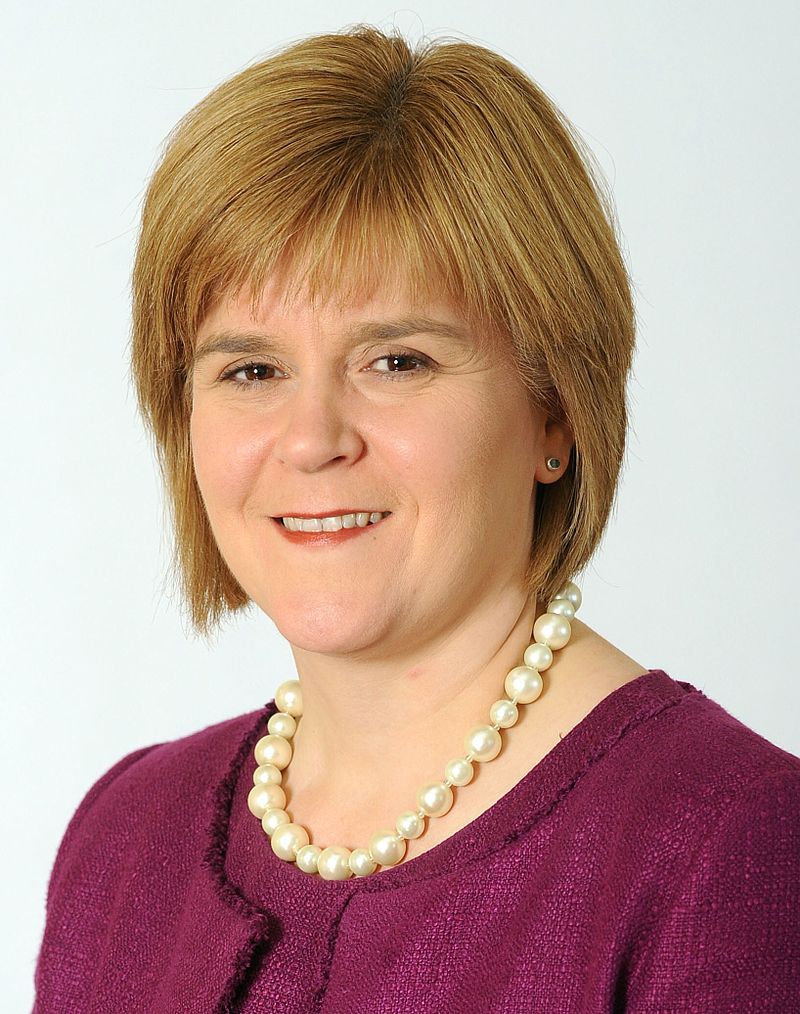
Author: admin

  • Chuka Umunna – 2012 Speech to the High Pay Commission

    Below is the text of the speech made by Chuka Umunna to the High Pay Commission and IPPR on 12th January 2012.

    Thank you for that introduction Michael and to the ICAEW for hosting this event.

    And thank you too to the High Pay Commission and the Institute of Public Policy Research for inviting me to speak.

    All three organisations have made major contributions to informing and stimulating the national debate on this issue which has dominated the news agenda since the year started, the High Pay Commission in particular.

    The headlines and clipped news reports do not do justice to this issue so today my aim is:

    – to explain why excessive pay and rewards for failure matter from the point of view of our businesses, those who own them and society at large; and,

    – to get to the heart of the problem and outline the solutions as we see them in Her Majesty’s Opposition.

    The economy is the issue of this parliament not simply because of the lack of growth and the highest rate of unemployment for 17 years which people are experiencing in the here and now. But also because of the long term structural trends in an economy which has failed to deliver incomes to keep pace with rising living costs, a pattern repeated in other developed economies.

    What do I mean by this? Not enough of the reward from rising productivity has found its way into the wage packets of average earners with the result that middle income earners have actually seen their wages stagnate from 2003, whilst high earners have seen their wages soar. Consequently many people have come to feel that, in the good times the economy did not really work for them, while in the bad times they were being made to carry much of the risk.

    So it is time for some hard reflection on the nature and direction of our economy and the changes we need to make:

    – changes to get growth going again in the short term, which is why we have put forward an immediate stimulus package in the form of our 5 point plan for growth and jobs;

    – changes to ensure that future prosperity benefits everyone;

    – changes to ensure we can pay our way in the world and take full advantage of the new opportunities that new markets bring – which is why we need to build a New Economy based on a reformed capitalism.

    The FT have just started a series of articles under the title Capitalism in Crisis. I wouldn’t go as far as those dangerous lefties. Capitalism has been and remains a powerful engine of human progress. But in recent speeches and, again, over the weekend I argued that what we need is a New Economy based on a better, more responsible and more productive capitalism than our current national variety.

    That New Economy must be built on a partnership between productive business and active government: the entrepreneurial impulse in us all encouraged and supported; closed circles broken up and opened to everyone. And, as Ed Miliband said in his speech on Tuesday, we must think how we build a New Economy that delivers fairness for Britain at a time when there is less money to spend.

    In many ways, the issues around executive pay are a good place to start. Excessive pay and rewards for failure are symptomatic of what is wrong with the way our economy has been operating over the last 30 years – of how wealth is created, how opportunities are shared, how success is rewarded, and how power is exercised in our companies. It is something Ed Miliband has been talking about for many, many months now.

    There are some who say it is no business of government – no business of politicians – to be commenting on these matters. We have no right to interfere in the affairs of privately owned companies is their refrain. I could not disagree more strongly with that statement.

    At the heart of my politics is the belief that we are all mutually dependent. This notion is deeply embedded in the values of the Labour Party. Better together. Stronger together.

    So to argue that politicians and society at large, should not take an interest in these matters, is to feed the idea that society is here and business is over in the corner there which is dangerous.

    Why? Because business and society are not separate islands – they are mutually dependent. Business needs a strong society, providing it with human resource, talent and custom. A strong society needs everything that productive business can offer: the jobs, the growth, the innovation, the opportunities, the wealth creating potential. That is why we should take an interest in the pay issue.

    And while it is right that those who work hard, generate wealth and create jobs for our country are rewarded, where failure is rewarded or people award themselves huge pay rises that bear no relation to performance or what their companies can bear, trust is severely undermined. As Ken Costa, the former Chair of Lazard International said last October:

    “Put bluntly, ultimately businesses cannot work, banks cannot lend, economies cannot function and societies cannot flourish without mutual trust and respect, or without fundamental honesty and integrity.”

    That is why the contributions that the ICEAW have made are so welcome – you are the important keepers of the accountancy flame, your mission to ensure that “people can do business with confidence”. And here you are helping to ensure that people can have confidence in business. That has to be right.

    As Sir Roger Carr, the current Chair of the CBI, said on taking up his post last year, business needs to show that it is “a force for good.” This is why it was so ridiculous for the Prime Minister and others to infer or suggest that Ed Miliband was being anti-business for raising these issues in his Labour Party conference speech last year – it is very much in the interests of business to resolve these problems and it is rather ironic that the PM is now talking about the need for reform in much the same terms as Ed.

    The discussion should start by asking what we pay people for? We pay people to do a job and, where they do so successfully, people do not object to them enjoying the fruits of their success. As for bonuses – my colleague the former Chancellor Alistair Darling put it well last Sunday when he said a bonus is surely “something special, something unusual, something that you give for that little bit extra, not a matter of routine and entitlement.”

    Having a skill that is in short supply but high demand is likely to be well rewarded in the marketplace. And as the size of some markets has increased – to become continental and in some cases genuinely global – so have rewards to those at the top have risen.

    Of course it is not easy to chart a successful course for a major corporation, where the contours of the market place can change rapidly, where new competitors are around every corner, and where new technologies can make an entire business model obsolete overnight. It takes special skill and extraordinary commitment. So no one is against success that rewards this merit and application. Success should be rewarded.

    But increasingly, what we have seen is something else. Reward that is not linked to success or performance: a self-perpetuating spiral of remuneration for those in the golden circle. Handsome rewards for failure. Rewards that seem quite unbelievable to the vast majority of people in this country; rewards from another planet.

    And while there are more egregious examples that have gained notoriety, this is not about individuals. The growing gap between increases in pay and increases in company performance is systemic. In the last decade the value of FTSE 350 companies increased by eight per cent, while the average total earning of executives in those companies increased by one hundred and eight per cent.

    As rewards at the top have become disproportionate to company performance, so rewards for executives have become disconnected from the rest of the workforce. They are no longer just the best paid employees. Increasingly, they are becoming a class apart.

    And let us be absolutely clear who we are talking about – we are not talking about the budding entrepreneur, the small business owner struggling in tough times; this does not apply across all business. We are talking about the relatively small number of people running our largest businesses and working in our more prominent financial institutions. We are talking about FTSE 100 bosses who were paid 14 times the median pay of a worker in 1980, and who are now paid 75 times the median pay of a worker.

    I should also point out that this is not a recent phenomenon, but a trend over the last three decades. In the three decades to 1979, executive pay grew 0.8% on average. In the last ten years, growth in the pay of FTSE 100 executives has been closer to 20% a year. It has now reached a point where, as Richard Lambert, former Director General of the CBI said last November, it is “damaging the interests of British business in political, economic and reputational terms”.

    Why is this ballooning pay such a problem? For three reasons: it is a bad for the companies themselves; it is bad for our economy overall; and, yes, it is bad for our society.

    For the companies themselves, the issue is a classic problem of agency.

    Since the 1980s there was a move to create an entrepreneurial culture amongst executives at the top of our large corporations but it didn’t quite work. I’ll explain why.

    The owners of the company – the shareholders – entrust executives with substantial powers to make far reaching decisions about the running of the company. Oversight is difficult, because those involved in the day to day management have plenty of discretion and a large information advantage. How can shareholders ensure their agents, the directors – the executive directors in particular – act consistently in those shareholders best interests? The solution was to try to align the incentives – through bonuses, shares, share options, incentive plans and the like, using different mechanisms and over different time frames.

    But the fact is that it is hard to create a true entrepreneurial culture among executives at the top of a large corporation. Upside incentives can be made similar, but the structure of downside risk is completely different for an entrepreneur who has everything on the line. Entrepreneurs have most of their own money on the line when they make decisions; executive directors of large companies do not.

    The result has been that the value of incentive packages for executives has risen out of all proportion to improvements in company performance. If it ever worked, it seems that there are now declining returns. In the first decade of this century FTSE 350 firms increased their pre-tax profits by 50% and their earnings per share by 73%, while year end share prices fell by 5%. Over the same period, bonuses for executives in these companies have risen by 187%, long term incentive plans by 254%. This demonstrates what psychologists have already found – that the relationship between financial incentives and performance is far from simple, and is not even reliably positive.

    At the same time, the heavy focus on the alignment of high powered incentives risks crowding out other, more rounded but equally powerful intrinsic motivations of executives that are just as relevant to the company’s success – the satisfaction of doing a good job, the pride in leading and growing a great company, of winning in the market place, of having the respect of peers, of creating a legacy of sustained and sustainable success.

    We are not opposed to performance related pay but it does make you wonder: if a company is so concerned that an executive paid only their salary won’t be motivated to work hard in the best interests of the company, then maybe they have the wrong person in the job?

    At its worst you end up with perverse incentive structures which encourage the wrong kind of decision making, as the failures in many financial institutions in the wake of the 2008/9 financial crash so clearly illustrated.

    And this approach to executive reward creates negative consequences in other parts of the business. Overemphasising the importance of the contribution of those of those at the top can undermine the motivations of others in the business. As the High Pay Commission has shown, there is a growing body of research that confirms that just as relative rewards matter as a basis for social comparison among executives, so they matter to other employees too. They matter for employee engagement, and their sense of identification with company goals. Feelings of unfairness in pay reduce the willingness to cooperate, can reduce effort and weaken commitment. Unsurprisingly, greater pay inequality in a firm has been found to be associated with lower firm performance.

    So excessive pay and rewards for failure are undoubtedly bad for business.

    The second reason this is a problem is because it is bad for our economy. I’ve lost count of the number of companies I’ve visited who say to me that they can’t find the engineering graduates they need to hire. Where are they? Lets face it – many of them are following the money. In the decade to 2007, 60% of the increase in the income share of the top 10 per cent went to finance workers. This talent drain, with rewards disproportionate to success, has distorted the market and makes the challenge of rebalancing the economy – by region as well as by sector – so much harder.

    Likewise, entrepreneurs, those running our small businesses are the lifeblood of our economy, providing approximately two thirds of private sector jobs and almost half of private sector turnover. We need people to take risks and set up these businesses – why would they do so if they can earn excessive wealth in the boardroom and the City?

    And the third reason this matters is because it is bad for our society. Executive pay has helped promote inequality and there is a huge body of research to show that this has a detrimental impact on society. At this juncture many people refer to the “Spirit Level”, the book by Richard Wilkinson and Kate Pickett.

    Today, I’ll refer you to comments of the former Chief Economist at the IMF, Raghuram Rajan – the IMF is of course George Osborne’s institution of choice when it comes to quoting people! He has argued that high levels of inequality contributed to the financial crisis. In his recent book, Fault Lines, Rajan explains how high levels of wage inflation at the top and wage stagnation for the rest of the population led to a growth in easy credit.

    So I have talked about what we pay people for, how a small group are being paid far in excess of what they deserve, and the adverse impact this is having on our businesses, our economy and our society. What would we – the Opposition – do to change all this?

    The High Pay Commission has put forward a tranche of recommendations to increase transparency, accountability and fairness. The recommendations enjoy support in the business community and are in line with measures implemented in the U.S., Germany and other countries to address these issues. We support them too.

    In the main, the Commission suggests seeking to effect the changes through the UK Corporate Governance Code in the first instance, followed by legislation if the amendments to the Code do not bring about the change needed. This is the right approach. Legislation should be the last resort, used only if there is not sufficient compliance with the Code within a reasonable period of time.

    On the proposals themselves: first, transparency – over the level of reward and over the approval of reward packages. In trying to align executive incentives, reward packages have become increasingly complex, making it difficult for shareholders to understand exactly what is being paid.

    This problem is intensifying. Increasing numbers of directors are being rewarded through ever more complex service agreements. Individual reward packages are more generous and ‘performance’ targets seem to be getting easier to hit.

    To enhance transparency, the High Pay Commission recommends that:

    – Executive pay should comprise a basic salary, with only one additional performance related element where necessary;

    – The publication of pay packages of the ten highest paid employees outside the boardroom; and,

    – The reporting of pay packages in a standardised form, including a single figure showing total remuneration.

    We endorse these proposals. They will give shareholders access to simple, standardised information on which they can make reasoned judgements. While we wait and wait for this Conservative led-government to match words with deeds, there is no reason why business cannot begin taking action now.

    In addition, the Commission proposes that investment and pension fund managers be required to disclose how they vote on all issues, including on remuneration. This transparency would allow pensioners and investors to see where their monies are being used to finance big pay deals. It is their money, after all.

    This increase in transparency would also increase accountability, and is just one of a number of changes needed to do so.

    To examine the dynamics of a remuneration committee is to observe a case study of what happens when responsibility is diffused, backgrounds of participants are homogenous, and loyalties can overlap. Participants are drawn mostly from a narrow class of, mostly male, current or former executives. The voice of employees is silent and shareholders vote in an advisory capacity on remuneration reports after the event. You don’t need to be a rocket scientist to detect a problem with this old way of doing business.

    The way non-executive directors are appointed and the backgrounds from which they are drawn – they are often ex-executives themselves – is not conducive to the appointment of people who are prepared to shake it up and introduce new ways of thinking. That is why we endorse the Commission’s recommendations to have employee representation on remuneration committees and to open up the recruitment of non-execs to a wider pool.

    But I want to look at where we should go further. In the UK, the nomination committee of the Board – which is responsible for hunting out people to serve on boards – is made up of other Board members. Candidates are nominated by those Board members at the company’s AGM and, in most cases, are elected as a matter of course.

    We should consider moving towards a system which other countries have adopted where the nomination committee is not composed of board members but is composed of the four or five biggest shareholders in the company along with the non-executive chair of the board – that same committee, composed of shareholders, also recommends the structure and amount of remuneration. This would create far stronger lines of accountability to those who ultimately own the business and would promote the shareholder activism and engagement which is key.

    In addition the role of remuneration consultants must be looked at, as the Commission says in its report. In his 2006 letter to Berkshire Hathaway shareholders, Warren Buffet referred to a remuneration consultancy called “Ratchet, Ratchet and Bingo”; “The name may be phony,” he said, “but the action it conveys is not”, highlighting his view that such consultancies inflate executive pay. There are widespread concerns that these consultancies are ratcheting up pay here too.

    Indeed, it is my view that, unchecked, their effect could be similar to that of unscrupulous football players’ agents – inflating salaries sometimes way beyond talent or contribution and often working against the long term interests of the companies themselves.

    Part of the problem is that – in their advisory role to remuneration committees – the consultants owe their duties to the Board and not to shareholders. This needs to be looked at, along with the risk of conflict where consultants are advising both executive management and non-executive directors on remuneration. That is why it is right that companies should publish the extent of their use of remuneration consultants.

    I am aware of the voluntary guidelines to prevent remuneration consultants cross-selling services but, given the risk of conflict, consideration should be given to taking a more strict approach. Lawyers giving legal advice in the same context are not subject to some voluntary code but to binding rules that prevent the provision of advice where there is a potential for conflict of interests, unless strong, viable and properly policed Chinese Walls are erected. Why should the same not apply here?

    Finally, on fairness, the disconnection of executive reward from the pay of other employees is at the heart of loss of trust. This needs to be rebuilt. That is why we endorse the Commission’s call for companies to publish the ratios between the highest paid employees and the median.

    It is also another reason for having an employee on the remuneration committee of the Board, something the Prime Minister has failed to commit to implement – as Ed said on Tuesday, it would mean top executives would have to look an ordinary member of staff in the eye before they award these pay packages.

    To continue to inform this important debate, we endorse the High Pay Commission’s call for a permanent body to monitor high pay, along the lines of the Low Pay Commission Labour established.

    All of these measures are designed to empower shareholders – to give them the tools to be able to take action, and to increase the accountability of directors to them.

    David Cameron has sought to do this by making shareholder votes on remuneration binding. We will examine this proposal when Vince Cable, my opposite number, provides further detail later this month.

    However, there are a number of problems with what he has suggested. First, it is backward looking. As CBI Head John Cridland has said, this would be like shutting the stable door after the horse has bolted.

    Secondly, there are large practical difficulties with the proposal as its retrospective impact would create legal problems in trying to unpick contracts already agreed – I say this from my own experience, having practiced as a specialist employment law solicitor for the best part of a decade.

    And thirdly, without a matching requirement of transparency – the provision of clear and simple information – shareholders may not be any the wiser about what they are voting on, and may even be less inclined to vote.

    So it is not enough for David Cameron to say he wants shareholders to be given a vote on these issues. We have seen and heard this kind of thing from him before – talking a good game but fiddling at the margins.

    I believe in shareholders’ democracy but democracy is about more than voting. If we are to empower shareholders, they need information provided through greater transparency of boardroom pay – as well as the means to mobilise and become more active in the running of their companies.

    And this takes us to the heart of the issue – the need to encourage greater activism amongst shareholders. We cannot ignore the long term trends that are working against this. Since the early 1990s, foreign ownership of total UK equity has increased from less than 15% to around 40% in 2008. The average length of time investors hold their shares has fallen from 5 years in the 1960s to less than 8 months by 2007, with an enormous increase in high frequency trading.

    These trends make it harder, but all is not lost – there are grounds for optimism. Voting by shareholders in FTSE 350 companies has now risen to a respectable 68%. There is clearly an appetite for more shareholder power and we have to nurture the use of it. It can be built upon by putting more – and more effective – tools in the hands of shareholders in the way I have described.

    And all this needs to be underpinned by a renewed and explicit focus on relative reward based on merit – the fairness that inspires employee loyalty to a company, and the fairness that renews public trust in business.

    The current business environment is as tough as it has ever been. Labour has set out a plan for jobs and growth to get the economy moving again, get people back into work, and to reduce the deficit.

    But we also must address the underlying challenges in our economy that have persisted over many years, and which the financial crisis brought in to sharp relief. Excessive executive pay is one of them.

    That is why I am glad that this debate is going on and proud of the role that Ed has played in leading it. Let’s make it count. Let us begin preparing the ground for the better days that lie ahead. Let us build a better economy for Britain.

    Thank you.

  • Chuka Umunna – 2011 Speech to Universities UK

    Below is the text of the speech made by Chuka Umunna to Universities UK on 2nd December 2011.

    Thank you for that kind welcome. I am hugely grateful for your invitation to speak today at this critical time for our universities and the Higher Education sector.

    This gives me the first opportunity to give a speech on this major part of my brief since my appointment as the Shadow Secretary of State for Business, Innovation and Skills.

    At a time of considerable change and instability Universities UK has been a constant voice of good sense and reason. I know both my predecessor in the role, John Denham, and our former lead on Higher Education, Gareth Thomas, greatly appreciated your wise counsel and advice.

    Though he is not here, I’d like to take this opportunity to thank John, who is a real champion of Higher Education. He brought a huge amount of expertise to bear on the brief as a former Secretary of State for Innovation Universities and Skills and as Shadow Business Secretary.

    Both I and Shabana Mahmood, our new Shadow on Universities, want to maintain and grow the close working relationship John and Gareth had with you.

    I, of course, shadow Vince Cable. Vince is a bit different to me – he has been around for somewhat longer than me. In fact, a journalist pointed out when I was appointed in October that not only is Vince twice my age but, during his lifetime, he has been a member of the Labour Party for longer than I have.

    Anyway – notwithstanding the comparisons with Vince – though Shabana and I may not be in Government, we have an important role to play as an Opposition holding the government to account and ensuring they do right by our students, by the institutions our students attend, by those who work in them and, above all, by our country. You want this too which is why a constant dialogue, between us and you, is absolutely essential. For example, we will want to work closely with you on the forthcoming Bill and the changes that it will bring.

    Shabana and I will also be making a series of visits to universities in the coming months to listen and learn, and we look forward to engaging with many of you then as we develop our policy, and thank you for all your help and assistance to date.

    Just as there has been change in our team I know there has been some in yours too.

    I look forward to working with Eric Thomas, and I would like to pay tribute to the work of Steve Smith before him. I want to pay tribute to you, the members – Vice Chancellors and Principal s up and down the country – for the work you do, not just as leaders of your institutions but also as leaders in your communities. You preside over a world class Higher Education sector with a strong international reputation.

    Collectively, you represent excellence in teaching and research. Your institutions consistently feature high up in global rankings as the latest figures demonstrate and you continue to drive innovation through your advanced research and its application.

    People forget that our HE sector is our seventh largest export industry, generating over £59 billion in output, and more than 650,000 jobs. You are drivers of jobs and growth nationally.

    And the institutions that you lead are major employers, and important drivers of regional growth too. With the abolition of the Regional Development Agencies, your voices as advocates for your regions are more important than ever.

    The bottom line is that universities are integral to our future success as a country.

    Nowhere was this more evident to me than during my recent trip with Ed Miliband to the Warwick Manufacturing Group which is part of Warwick University.

    In 1980, Professor Lord Kumar Bhattacharyya set up the WMG to reinvigorate UK manufacturing through the application of cutting edge research and effective knowledge transfer. Thirty years on, it is continuing to do just that. It brings academic rigour together with industrial and organisational practice. It is an example of how the Higher Education sector, working with industry, can drive growth in the real economy.

    There are other excellent examples too like Cambridge Technopole, at the heart of which sits Cambridge University. It provides research and innovation support for high-tech businesses in that region.

    There is the University of Abertay, at the centre of a video games designing cluster, with degree courses providing highly skilled graduates but also managing a research and development fund for local developers.

    One of the business advisers helping our review talks extremely positively of the knowledge transfer from Sheffield Universities and his bakery business, in improving skills progression and development and productivity improvements to achieve his goal of being the best baker in Britain.

    I am sure you would all be able to give me more examples of what your centres of learning are doing to add to this list.

    These kinds of collaborations and partnerships should be a bigger part of getting growth going in our economy and our future success. And so it is an essential element of our policy review work.

    Later I will say something about our thinking to date and the principles that will guide the development of our policy:

    Fairness for students;

    Autonomy for universities enabling them to deliver excellence;

    Sustainable funding; and,

    Universities playing a central role in the economic as well as the cultural life, in regional and national economies.

    However, before I do this I must turn to the elephant in the room (so to speak) – the cloud hanging over your futures – what the Government is pushing through and where it is getting it wrong.

    Where the Conservative-led Government is getting it wrong

    With the anniversary of the vote to triple fees next week, I think it would be worth recapping on what has been, let us say, a challenging year and where we have got to.

    When the Conservative-led Government initially set out its changes to Higher Education – cutting the teaching grant by 80% and hiking up fees – we said what was proposed was unnecessary, unfair and unsustainable: not good for students or the future of Higher Education, one of Britain’s great success stories.

    It was why we asked the Government to lay out their p lans in full so we could subject them to the necessary scrutiny. So what happened?

    The vote to triple tuition fees came first before any White Paper, surely the wrong way round. Then the changes on access and widening participation were forced out, with subsequent changes to those plans.

    As fees levels began to emerge with £9,000 looking to be far from the exception to the rule which the Government promised, their sums didn’t add up and a black hole came into view. First Ministers ignored this and claimed it would all even out in the end. But their miscalculation saw a scramble to claw back in other ways. There were exhortations; claims OFFA was now a regulator and would set levels; even threats to universities with Ministers crudely claiming that fee levels were so high because universities were inefficient.

    Lets take a step back and reflect on that particular claim for a moment – in business, companies have to factor in risk and cost it. You are businesses too and this Government has displayed an abject lesson in creating unnecessary risk for you.

    So the White Paper arrives at the end of June of this year. When the threats failed, frankly because of the mess the Government had created, they pulled ‘core and margin’ and AAB out of a hat which they then bolted onto the original plans.

    This is no way to run government policy on Higher Education – this is no way to treat our universities. Vince Cable called his dismantling of the RDAs Maoist and chaotic. It could equally have applied to another area of his brief.

    The reforms are not the evolutionary change UUK has argued for.

    Institutions have had to make decisions affecting their future financial viability not knowing how the rules will change month to month.

    You are now in the ridiculous position where you have previously set your fee levels and agreed access agreements with OFFA in April only to find that the rules of the game changed with the Wh ite Paper. Following its publication you found you were faced with a deadline to bid for the 20,000 places which were taken from universities and for which you could now bid – that deadline closed before the deadline for revised access agreements to be signed off by OFFA.

    27 institutions have re-submitted their access agreements proposing lower fee levels and 25 today have been told they can change their agreements according to OFFA’s announcement a few moments ago. We still need to look fully at the detail but the OFFA letter confirms there is no evidence on what works best to widen access – fee waivers or bursaries – but the Government still ploughs ahead none-the-less. Fee waivers of course help the Government’s mess as it reduces its bill. The chaos remains for students and the university system, a system which gets ever more complex and bureaucratic.

    If the Government had backed Labour’s proposal at conference, which I will get onto in a moment, none of these current access changes, nor core and margin would have been necessary, nor would quality be under threat. Fees would have been capped at £6,000.

    ‘Core and margin’ is designed to reduce the cost of courses to make up for the Government getting its sums wrong – it isn’t for the benefit of students or the Higher Education sector. And because of this mess students have applied for courses without knowing the fee levels – making far reaching decisions about their lives without the information that they need. This is no way to help our young people get on in life.

    Then there are the visa changes to Tier 4 – the student visa route – which hasn’t helped either. As I said, the UK’s 7th largest export is Higher Education for foreign students. This was thrown into chaos by the Home Office’s changes which deter foreign students from applying to UK universities. There was little regard to the impact and to the reputation of the UK HE Sector around the worl d. Where was the Business Department pressing your case? As an Opposition we recognised this threat and I know John worked with you in trying to get the Government to recognise the damage it was doing.

    Overall, though, their reforms are seeking to introduce something more fundamental: a more market-led system, or mini-markets, overlaid with a more complex and bureaucratic structure.

    We are supportive of student choice. Within a diverse sector, students currently have a wide range of high quality options by course and by institution. We welcome the extension of choice that will result from allowing Further Education colleges the power to award degrees, which will allow people who live in areas that are not near a university to access Higher Education courses.

    But this market is beset with problems and few have said it will work well. There will be intended and unintended consequences. Ministers admitted that there would be institutional failure as a result.

    There are rightly fears that the reforms will discourage universities from offering science and technology courses and student take up of the same, at a time when these types of course should be the centre-piece of a future Higher Education system as our competitors countries recognise.

    There are rightly fears that social mobility and access will stall. Aim Higher has been scrapped, the National Scholarship Programme, though described as “national” is misleading – it does not have national eligibility criteria but is more a lottery with students with the same social and economic backgrounds getting different types of benefit depending on where they study; and there is widespread confusion among students as to its purpose. The respected Sutton Trust has said the tripling of fees will reduce the gains made on widening access and social mobility. This is exacerbated by ‘AAB’ and ‘core and margin’, which has led to complex access arrangements b eing crow-barred on to try and correct imbalances. Widening access is very much an afterthought not an outcome of the new system.

    OFFA, with a hugely expanded role, is still an office of a handful of staff assessing access agreements. It is not clear what the sanctions are going to be for universities that do not fulfil their obligations.

    In fact, UCAS figures have seen a drop in application to universities and a variation is emerging across regions with the North East seeing the highest drop. What does that say about ‘rebalancing’ the economy?

    Also, there are fears that the expansion of for-profit providers will unbalance Higher Education further and undermine quality. Apollo Group, Kaplan and the Education Management Corporation have all met with the Higher Education Minister, David Willetts. All currently have lawsuits being pursued against them in the US for aggressive recruitment practices and miss-selling of courses.

    And with the changes that have taken place we still do not know how much future turbulence will be added on top – will there be further rounds of core and margin?

    So that is the landscape. In light of all this, let me pause a second and pose some questions:

    Are the changes to Higher Education helping to widen access, ensuring that those with the best potential are in our universities?

    Are they enhancing opportunities?

    Are they giving stability to universities to plan and to build on their success?

    Are they helping our universities compete in the world?

    Are they helping to put universities at the heart of growth, working with business and Government to create future success?

    Are they working to support the STEM needs of our economy?

    In all case the answers is sadly a no.

    So it is in this context that we are having to think about the future of Higher Education – who knows what we would inherit at the time of the next General Election were we elected.

    And I know that you have of course worked with the Government to try and secure a better outcome to the changes. It hasn’t been easy. You all want the best for your institutions and the sector. For some there are silver linings – perhaps the ability to raise more income. Some argued from the start that, with the Government cutting the teaching grant by 80%, higher fees were the only way. Some perhaps see opportunities flowing from the access changes and bidding for courses. Others we know are deeply frustrated with what has been going on.

    So what is our thinking? Well, we must deal with the world as we find it, not as we would like it to be. This lies behind the policy announced by Ed Miliband at the Labour Party Conference.

    First, let me turn to fees. It is absolutely right that graduates make a contribution. It underpins the changes we introduced in Government and which brought an extra £1bn into Higher Education. But this Government is now forcing many students to take on debts of more than £40,000 – long-term debts, and long-term impacts.

    It strikes at the root of what Ed Miliband has called the Promise of Britain – that the next generation should do better than the last. Many families fear their children will do worse than the generation before. That’s why we have put forward an alternative funding package, reducing the maximum level of fees from £9,000 to £6,000.

    No university would be worse off under this plan, as any money lost through a reduction in tuition fees would be compensated for – for individual universities the proposal is revenue neutral.

    And, there would be no need for the core and margin system and the uncertainties and mess it creates. With the sums back under control, there would be no black hole from £9,000 fees.

    I’ll explain how this works: reducing the maximum level of fees to £6,000 while compensating universities for the difference costs £1.1 billion. Of that £1.1 billion:

    £350 million will come from automatic savings from reducing the cap to £6,000 because it will means some associated expenditure, such as on as fee waivers, will no longer be required;

    £300 million comes from cancelling the Government’s planned cut to the corporation tax on the banks; and,

    £500 million comes from asking the top ten percent of graduates – graduates earning over £65,000 in each year of their working life – to pay more through a combination of a higher interest rate (from 3% to 4%) and to continue to pay for an additional two years if they pay off their loan within 20 years.

    So this could be implemented now. It would maintain funding for universities but avoid harm to families and graduates from the Government’s plans. It would reduce the debt which graduates will be loaded with, and would be an important step towards a more graduate-tax like system with wealthier graduates being asked to pay more due to the combination of a higher interest rate and time limited overpayment for two years.

    Our proposal and our approach are guided by our core principles – that graduates should make a fair contribution to the cost of Higher Education and that those who benefit the most should pay the most.

    And if by the time of the next election we can do more, then we will – so starting out from the position set out at our Party Conference this year, we will be looking at further ways to:

    Reduce the burden on families and students who are being saddled with high debts;

    Maintain funding for universities; and

    Develop a fairer payment system for graduates.

    Our policy review will be looking at these issues further.

    To date the review – and the interim findings were published a few weeks ago – has been focused on the economic challenges we face which brings me to my second point – international competitiveness and paying our way in the world.

    We need a new economy, which is fair, resilient, competitive, and supports the long-term. It needs active, intelligent government working with business to build a vision for the future economy, and develop strategies for the sectors for which we have a competitive advantage and where can compete. It is not business as usual but a different approach.

    Higher Education is an essential element of our future success – not only as an export sector as I have laid out, but in terms of training, skilling and developing what will be part of the future workforce, supporting the research and leading the collaborative work with industry. Your report published yesterday supports this view.

    One of the challenges Britain faces is that the economy has skill shortages at the same time as under-utilising the skills we have. We need more companies that can utilise those skills. That means creating the conditions where we encourage companies who invest in the long term; creating the conditions in which we do not rely on low skills, low paid jobs where we cannot and should not compete.

    The role of universities is central to increasing our productivity and building a more skilled workforce to bring this new economy about.

    In 2001 we set a commitment to get 50% of 18-30 year olds entering Higher Education to go to university. It was ambitious. It was right. It helped focus our collective efforts. It wasn’t arbitrary as some claimed but achieved real change. In 1999 39% of young people went to university and this grew to 47% in 2009/10. This is a huge achievement. And it happened at a tim e when we rescued apprenticeships and supported vocational education too.

    But, the target was virtually met when we left office. A fair question is therefore what should the future hold?

    As part of our review, we will be looking at how we can build on this and the best way we can assess ourselves against our competitor countries – I think that has to be the yardstick against which we should judge our progress in the future.

    It is right in the global world, with global markets, that we are outward looking in this way. We need to be focused on being among the best in the world. So we need to benchmark ourselves against the best.

    Yes, the numbers of young people going into university but also a broader account too, of the quality and type of courses students undertake which supports our industries and economy of the future and – in a similar way – the quality, level and take up of vocational education. We need to look at the overall skill and education levels of 100% of our future generation and be among the best in the world.

    In concluding, let me draw on your report and quote two thin gs to support the arguments I’ve just made for a new economy – something I can leave you to think about.

    In your report you say, and I quote:

    “Countries with high levels of innovation [also] tend to have, on average, higher proportions of graduates in their populations and a stronger track record of investment in Higher Education.”

    I think innovation is key.

    In your report you also list the number of Chinese, US and EU graduates per year in 2010 and the estimates in 2020. I added up the numbers. The increase in per year graduates in China in 2020 compared to 2010 is nearly the same as the total number graduates in 2020 in the US and EU combined.

    The landscape is changing.

    Together we must work to ensure Britain is set up to meet the new challenges.

    Thank you.

  • Joyce Quin – 1999 Speech on Devolution

    Below is the text of the speech made by the then Foreign Office Minister, Joyce Quin, held at the Northern Ireland Assembly on 26th February 1999.

    I am delighted to be the first FCO Minister to address the Northern Ireland Assembly. This audience, more than most, will understand the dynamic between domestic and international affairs, between the Assembly’s transferred responsibilities and EU and international relations. We intend that the UK Government and the devolved administrations will cooperate effectively where their interests overlap. It is my particular aim – and that of Robin Cook – that the FCO’s co-operation with all the new administrations should be one of real partnership. I will say something today about the arrangements that I hope will underpin our partnership.

    RENEWAL IN THE UK AND EU

    As the FCO Minister for Europe and devolution I am involved in two of the Government’s most ambitious and exciting programmes. Devolution in Northern Ireland, Scotland and Wales is part of a wider programme of democratic renewal. Described by Tony Blair as ‘the biggest programme of change to democracy ever proposed’, it includes reform of the House of Lords, incorporation into UK law of the European Convention on Human Rights and strengthening the voice of the English Regions.

    We are in the middle of an important phase in the development of the European Union, in which Britain is playing a leading role. We are in the decisive phase of the Agenda 2000 negotiations: we want reforms to control EU spending and overhaul the CAP. These reforms are a necessary prelude for enlargement, which Britain strongly supports. We are encouraging the modernisation of the EU’s institutions, to make them more effective and accountable. We back Europe’s fight against crime, drugs and illegal immigration. we are taking forward the employment and economic reform agenda in the EU. We want the single currency to be a success, whether Britain is in or out. Big issues and a big agenda.

    GOALS AND PRINCIPLES

    There is a fit between our reforms at-home and our objectives in Europe. The UK has for too long been too centralised. Devolution will ensure that many decisions that affect the day to day lives of people will be taken locally – taking into account local needs, conditions and history. The idea of a centralised Europe is also discredited. The goals of ‘subsidiarity’ and ‘devolution’ are the same. We want to ensure that diversity is respected. We want to find flexible solutions.

    But the Government also believes that working together in the EU benefits the UK. We need to work together to tackle common problems. This is the vision behind our initiative on European Defence. It is the vision behind the single market and the common foreign and security policy. It is the vision behind devolution in the UK too.

    The Government believes that conducting international and EU relations on a UK basis benefits all the component parts of the UK. We have influence and respect as one of the major EU states; as a permanent member of the UN Security Council; and as a member of the G7. This influence means an effective foreign and security policy. It means we can drive forward international cooperation on drugs, environment and human rights. It means we can provide our companies with effective advice and assistance across the globe.

    THE DEVOLUTION SETTLEMENT

    Last year three important Acts established the framework for devolution in the UK. Devolution is different in each of Northern Ireland, Scotland and Wales – tailored to the needs, political circumstances and aspirations of the people. In Northern Ireland it is giving tangible effect to will of the communities for peace and cooperation. The Assembly will have the wide range of powers with which you are familiar. It will be able to legislate on such matters as health, education, support for industry, agriculture, and fisheries. A new democratic focus with real powers over real issues.

    The UK Government will remain responsible for international relations, including relations with the EU. This includes the negotiation and agreement of treaties and other international agreements, relations with territories outside the UK, relations with the EU and international organisations, the regulation of international trade, international development assistance and consular assistance to British nationals in distress. It is clear that in some areas the interests of the UK Government and the devolved assemblies will overlap.

    Northern Ireland has particular interests. Inward investment plays an important role in the regeneration of the local economy. Northern Ireland is a major beneficiary of EU programmes including the Peace and Reconciliation Programme and structural funds.

    PRINCIPLES FOR COOPERATION

    The UK Government has made clear that it wants to involve the devolved administrations in the development of policy on international issues that also have implications for devolved functions. This is particularly true in relation to EU matters, where legislation in Brussels will have a direct impact in areas for which the Assembly is responsible.

    In these and other areas, we expect to set out agreed working arrangements in a series of Concordats between the UK Government on the one hand and the devolved administration on the other. To that end we shall be putting to the Northern Ireland administration proposals for Concordats both on EU matters and on international relations more generally. However until the Executive Committee has taken on its powers and elections have taken place in Scotland and Wales we shall not be able to finalise these working arrangements.

    The Concordats will provide a framework for practical cooperation. A key principle is that there should be no surprises. The administrations need to keep each other informed of developments that might impact on each other’s responsibilities. The FCO will keep the Northern Ireland administration informed on international and EU developments that touch on its devolved responsibilities. We will provide relevant information and analysis including reporting from our overseas Posts. For its part the Assembly should keep us informed, including on its policy proposals, legislative programme and proposed international contacts.

    The UK Government will continue to be the formal channel for relations with other countries. The UK is, of course, the EU member state and the member of international organisations. It will be for the UK to negotiate and conclude treaties and other binding international agreements. There is, however, no barrier to the devolved administrations maintaining working level contacts with other governments on matters within their responsibility. Indeed we hope and anticipate that contacts will develop quickly with other leading European regions. These may lead to informal agreements highlighting common concerns and strengthening ties e.g. through twinning arrangements.

    Where international and EU negotiations touch on devolved matters we intend to involve the devolved administrations as directly and fully as possible in the formulation of the UK’s position. This arrangement will require a mutual respect for confidentiality and a commitment to support the agreed UK position. There will of course be disagreements. We will need to broker agreements. This is, of course, a role familiar to the Cabinet Office and Cabinet Committees. However, what we propose in this instance is to establish a Joint Ministerial Committee of which the UK Government and the devolved administrations would be members. The JMC will be a consultative rather than a deliberative body, supported by a committee of officials and a joint secretariat. I think it will provide an important forum in which we can all find common ground.

    Ministers and officials of the devolved administrations will be able to participate in EU Council of Ministers meetings and other EU negotiations. The emphasis must be on working as a team to achieve the best outcome. As at present, it will be for the lead Minister to decide how each member can best contribute.

    The UK Government and the devolved administrations will need to work together to ensure the implementation of the UK’s EU and other international obligations. The devolved administrations will normally play a leading role, consulting the UK Government. Under the devolution legislation it will be for the UK Government, after consultations in each case about if and how this should be done, to make subordinate legislation splitting quantitative obligations (e.g. reductions in greenhouse gas emissions) between the UK and the devolved administrations. We will together need to ensure that any difference of approach nonetheless produce consistency of effect and, where appropriate, of timing. There will be cases where we will agree that it is more convenient to implement obligations through UK wide legislation. We intend to continue to implement UN Security Council Resolutions by means of Orders in Council under the United Nations Act 1946. If we fail to implement our obligations each administration will bear the share of the financial costs or penalties imposed, flowing from its own conduct in this respect.

    OPPORTUNITIES FOR COOPERATION

    The FCO will continue to serve the interests of the UK and all its constituent parts. We will assist official visits to other countries by Ministers and members of the Assembly. We will work together on programmes for official guests and in arranging international meetings when these take place in Northern Ireland, Scotland or Wales.

    Our Posts will continue to promote the UK and all its constituent parts. We will ensure that the World Service and the British Council continue to reflect the diversity of all the constituent parts of the UK. We will work together on threats to the environment, encourage respect for human rights and tackle drugs, terrorism and international crime. We will continue to help travellers from all parts of the UK in trouble overseas.

    TRADE AND INVESTMENT

    The Assembly will be responsible for supporting industrial development in Northern Ireland. The Industrial Development Board has done an excellent job and I am sure it will continue to so. Locate in Scotland and the Welsh Development Agency have also done Scotland and Wales proud. But I want to make it crystal clear that the UK Governments trade development and investment promotion effort will continue to serve you and all the constituent parts of the UK.

    The UK trade promotion effort is the most extensive and effective in the world. The FCO puts more resources into this activity that any other, over 30 per cent of frontline effort. 221 Embassies, High Commissions and other Posts assist companies to export and invest, and identify and encourage inward investors. I am confident that we will build on our recent successes.

    The Invest in Britain Bureau, a joint FCO/DTI operation, maintains a close relationship with the Industrial Development Board and the other development agencies at home and abroad. We were glad to support the Board’s inward investment roadshow in the US last year. You might like to know that the current edition of IBB’s main promotional magazine – Briefing on Britain – gives pole position to a feature on Northern Ireland’s attractions and successful track record in securing inward investment from world famous companies such as Fujitsu, Ford, Caterpillar and Nortel as well as newer companies in fast growing sectors like software, multimedia and communications centres.

    REPRESENTATION IN BRUSSELS

    Our Embassies and High Commissions will continue to work on behalf of all the constituent parts of, the UK. UKRep in Brussels will continue to represent the UK to the European Institutions. We expect that the devolved administrations will set up their own offices. These might be inside or outside the UKRep framework. The key is that they should complement rather than cut across existing activity. The role of regional administrations in Europe is increasing. It will be to the advantage of the UK that we can enrich our relationships with regional links.

    CONCLUSION

    We live in a world where there is no neat divide between local and international issues. Encouraging industrial development or addressing climate change requires us to work on a global level to concert international action and at a local level to make a difference in our communities. Devolution will provide us with new challenges and new opportunities to make a difference. I hope we can rise to those challenges together.

  • Queen Elizabeth II – 2014 Queen’s Speech

    queenelizabethii

    Below is the text of the 2014 Queen’s Speech, delivered by HM Queen Elizabeth II in the House of Lords, London, on 5th June 2014.

    My Lords and Members of the House of Commons.

    My government’s legislative programme will continue to deliver on its long-term plan to build a stronger economy and a fairer society.

    To strengthen the economy and provide stability and security, my ministers will continue to reduce the country’s deficit, helping to ensure that mortgage and interest rates remain low.

    An updated Charter for Budget Responsibility will be brought forward to ensure that future governments spend taxpayers’ money responsibly.

    My government will also continue to cut taxes in order to increase people’s financial security.

    My ministers will implement measures to increase further the personal allowance and to freeze fuel duty.

    Measures will be brought forward for a married couple’s allowance, which will recognise marriage in the tax system.

    Legislation will be introduced to help make the United Kingdom the most attractive place to start, finance and grow a business. The bill will support small businesses by cutting bureaucracy and enabling them to access finance.

    For more information about today’s announcements, read the Queen’s Speech background briefing notes.

    New legislation will require ministers to set and report on a deregulation target for each Parliament. The legislation will also reduce delays in employment tribunals, improve the fairness of contracts for low paid workers and establish a public register of company beneficial ownership. Legislation will be introduced to provide for a new statutory code and an adjudicator to increase fairness for public house tenants.

    Legislation will impose higher penalties on employers who fail to pay their staff the minimum wage. Measures will be brought forward to limit excessive redundancy payments across the public sector.

    In respect of National Insurance contributions, legislation will be brought forward to tackle avoidance and to simplify their collection from the self-employed.

    My government will introduce a bill to bolster investment in infrastructure and reform planning law to improve economic competitiveness. The bill will enhance the United Kingdom’s energy independence and security by opening up access to shale and geothermal sites and maximising North Sea resources. Legislation will allow for the creation of an allowable solutions scheme to enable all new homes to be built to a zero carbon standard and will guarantee long-term investment in the road network.

    My government will continue to implement major reforms to the electricity market and reduce the use of plastic carrier bags to help protect the environment.

    A key priority for my ministers will be to continue to build an economy that rewards those who work hard.

    Legislation will be brought forward to give those who have saved discretion over the use of their retirement funds. My government’s pension reforms will also allow for innovation in the private pensions market to give greater control to employees, extend the ISA and Premium Bond schemes and abolish the savers’ 10 pence tax rate.

    The overall benefits bill will continue to be capped so that public expenditure continues to be controlled and policies will be pursued so people are helped from welfare to work.

    My government will increase housing supply and home ownership by reforming the planning system, enabling new locally-led garden cities and supporting small house building firms.

    Legislation will be brought forward to sell high value government land, encouraging development and increasing housing.

    My ministers will continue to promote the Help to Buy and Right to Buy schemes to support home ownership.

    My government will continue to deliver the best schools and skills for young people. In England, my ministers will help more schools to become academies and support more free schools to open, whilst continuing investment to deliver more school places. Further reforms to GCSEs and A Levels will be taken forward to raise standards in schools and prepare school pupils for employment. My government will increase the total number of apprenticeship places to 2 million by the end of the Parliament.

    My government will continue to work to build a fairer society.

    To improve education attainment and child health, my government will ensure all infants will receive a free school meal. Free childcare will be extended to more of the most disadvantaged 2-year-olds and a bill will be introduced to help working families with childcare costs.

    A bill will be introduced to strengthen the powers to prevent modern slavery and human trafficking whilst improving support for victims of such crimes. A bill will be brought forward to provide that where a person acts heroically, responsibly or for the benefit of others, this will be taken into account by the courts.

    Legislation will be introduced to improve the complaints system in the Armed Forces through the creation of an ombudsman.

    A serious crime bill will be brought forward to tackle child neglect, disrupt serious organised crime and strengthen powers to seize the proceeds of crime.

    My government will continue its programme of political reform.

    My ministers will introduce legislation on the recall of Members of Parliament.

    My government will continue to implement new financial powers for the Scottish Parliament and make the case for Scotland to remain a part of the United Kingdom.

    My ministers will continue with legislation giving the National Assembly for Wales and Welsh ministers more power over taxation and investment.

    My government will continue to work with the devolved administration in Northern Ireland to rebalance the economy, promote reconciliation and create a shared future.

    Draft legislation will be published providing for direct elections to National Park authorities in England.

    Members of the House of Commons.

    Estimates for the public services will be laid before you.

    My Lords and Members of the House of Commons.

    The United Kingdom will work for peace and security on Europe’s borders, and for stable relations between Russia and Ukraine based on respect for national sovereignty, territorial integrity and international law.

    My government will host the NATO summit in Wales as a sign of the United Kingdom’s commitment to the alliance.

    My ministers will strive to improve the humanitarian situation in Syria, to reduce violence and promote a political settlement. It will work for a successful transition in Afghanistan, and will work towards a comprehensive nuclear agreement with Iran.

    The United Kingdom will lead efforts to prevent sexual violence in conflict worldwide.

    My government will work to promote reform in the European Union, including a stronger role for member states and national parliaments. My ministers will also champion efforts to secure a global agreement on climate change.

    Prince Philip and I will pay a state visit to France and will attend events to mark the 70th anniversary of the D-Day landings.

    We look forward to welcoming His Excellency the President of the Republic of Singapore on his forthcoming state visit.

    Other measures will be laid before you.

    My Lords and Members of the House of Commons.

    I pray that the blessing of Almighty God may rest upon your counsels.

  • Queen Elizabeth II – 2013 Queen’s Speech

    queenelizabethii

    Below is the text of the speech made by HM Queen Elizabeth II at the State of Opening of Parliament on 8th May 2013.

    Her Majesty’s most gracious speech to both Houses of Parliament at the State Opening of Parliament.

    My Lords and Members of the House of Commons,

    My government’s legislative programme will continue to focus on building a stronger economy so that the United Kingdom can compete and succeed in the world.

    It will also work to promote a fairer society that rewards people who work hard.

    My government’s first priority is to strengthen Britain’s economic competitiveness. To this end, it will support the growth of the private sector and the creation of more jobs and opportunities.

    My ministers will continue to prioritise measures that reduce the deficit – ensuring interest rates are kept low for homeowners and businesses.

    My government is committed to building an economy where people who work hard are properly rewarded. It will therefore continue to reform the benefits system, helping people move from welfare to work.

    Measures will be brought forward to introduce a new Employment Allowance to support jobs and help small businesses.

    A Bill will be introduced to reduce the burden of excessive regulation on businesses. A further Bill will make it easier for businesses to protect their intellectual property.

    A draft Bill will be published establishing a simple set of consumer rights to promote competitive markets and growth.

    My government will introduce a Bill that closes the Audit Commission.

    My government will continue to invest in infrastructure to deliver jobs and growth for the economy.

    Legislation will be introduced to enable the building of the ‘High Speed Two’ railway line, providing further opportunities for economic growth in many of Britain’s cities.

    My government will continue with legislation to update energy infrastructure and to improve the water industry.

    My government is committed to a fairer society where aspiration and responsibility are rewarded.

    To make sure that every child has the best start in life, regardless of background, further measures will be taken to improve the quality of education for young people.

    Plans will be developed to help working parents with childcare, increasing its availability and helping with its cost.

    My government will also take forward plans for a new National Curriculum, a world class exam system and greater flexibility in pay for teachers.

    My government will also take steps to ensure that it becomes typical for those leaving school to start a traineeship or an apprenticeship, or to go to university.

    New arrangements will be put in place to help more people own their own home, with government support provided for mortgages and deposits.

    My government is committed to supporting people who have saved for their retirement. Legislation will be introduced to reform the way long term care is paid for, to ensure the elderly do not have to sell their homes to meet their care bills.

    My government will bring forward legislation to create a simpler state pension system that encourages saving and provides more help to those who have spent years caring for children.

    Legislation will be introduced to ensure sufferers of a certain asbestos-related cancer receive payments where no liable employer or insurer can be traced.

    My government will bring forward a Bill that further reforms Britain’s immigration system. The Bill will ensure that this country attracts people who will contribute and deters those who will not.

    My government will continue to reduce crime and protect national security.

    Legislation will be introduced to reform the way in which offenders are rehabilitated in England and Wales.

    Legislation will be brought forward to introduce new powers to tackle anti-social behaviour, cut crime and further reform the police.

    In relation to the problem of matching internet protocol addresses, my government will bring forward proposals to enable the protection of the public and the investigation of crime in cyberspace.

    Measures will be brought forward to improve the way this country procures defence equipment, as well as strengthening the Reserve Forces.

    My ministers will continue to work in cooperation with the devolved administrations.

    A Bill will be introduced to give effect to a number of institutional improvements in Northern Ireland.

    Draft legislation will be published concerning the electoral arrangements for the National Assembly for Wales.

    My government will continue to make the case for Scotland to remain part of the United Kingdom.

    Members of the House of Commons,

    Estimates for the public services will be laid before you.

    My Lords and Members of the House of Commons,

    My government will work to prevent conflict and reduce terrorism. It will support countries in transition in the Middle East and North Africa, and the opening of a peace process in Afghanistan.

    My government will work to prevent sexual violence in conflict worldwide.

    My government will ensure the security, good governance and development of the Overseas Territories, including by protecting the Falkland Islanders’ and Gibraltarians’ right to determine their political futures.

    In assuming the Presidency of the G8, my government will promote economic growth, support free trade, tackle tax evasion, encourage greater transparency and accountability while continuing to make progress in tackling climate change.

    Other measures will be laid before you.

    My Lords and Members of the House of Commons,

    I pray that the blessing of Almighty God may rest upon your counsels.

  • Queen Elizabeth II – 2010 Queen’s Speech

    queenelizabethii

    Below is the text of the speech made by the Monarch, Queen Elizabeth II, to the House of Lords on 25th May 2010.

    My Lords and Members of the House of Commons:

    My government’s legislative programme will be based upon the principles of freedom, fairness and responsibility.

    The first priority is to reduce the deficit and restore economic growth.

    Action will be taken to accelerate the reduction of the structural budget deficit. A new Office for Budget Responsibility will provide confidence in the management of the public finances.

    The tax and benefits system will be made fairer and simpler. Changes to National Insurance will safeguard jobs and support the economy. People will be supported into work with sanctions for those who refuse available jobs and the timetable for increasing the State Pension Age will be reviewed.

    Legislation will reform financial services regulation to learn from the financial crisis and to make fair and transparent payments to Equitable Life policy holders.

    My government will support investment in new high-speed broadband internet connections, enable the construction of a high-speed railway network and reform the economic regulation of airports to benefit passengers.

    My government will modernise the Royal Mail, in partnership with employees, and will ensure it benefits from private sector capital and disciplines.

    My government will limit the number of non-European Union economic migrants entering the United Kingdom and end the detention of children for immigration purposes.

    Legislation will be introduced to improve energy efficiency in homes and businesses, to promote low carbon energy production and to secure energy supplies.

    My government will remove barriers to flexible working and promote equal pay.

    My government will seek to build a strong and fair society by reforming public services and encouraging individual and social responsibility.

    Legislation will be introduced to enable more schools to achieve academy status, give teachers greater freedom over the curriculum and allow new providers to run state schools.

    The voice of patients and the role of doctors will be strengthened in the National Health Service to improve public health alongside actions to reduce health inequalities. A commission will be appointed to consider a sustainable long-term structure for the operation of social care.

    A bill will be introduced to make the police service more accountable to local people and to tackle alcohol-related violence and anti-social behaviour.

    The role of social enterprises, charities and co-operatives in our public services will be enhanced. The cost of bureaucracy and the number of public bodies will be reduced.

    A bill will be introduced to devolve greater powers to councils and neighbourhoods and give local communities control over housing and planning decisions. Legislation will be introduced to stop uncompleted plans to create unitary councils.

    My government will propose Parliamentary and political reform to restore trust in democratic institutions and rebalance the relationship between the citizen and the state.

    Measures will be brought forward to introduce fixed term Parliaments of 5 years.

    A bill will be introduced for a referendum on the Alternative Vote system for the House of Commons and to create fewer and more equal sized constituencies.

    Constituents will be given the right to recall their Members of Parliament where they are guilty of serious wrongdoing.

    Proposals will be brought forward for a reformed second House that is wholly or mainly elected on the basis of proportional representation.

    Action will be taken to reform the funding of political parties. A draft Bill will be published on reforming parliamentary privilege.

    Legislation will be brought forward to restore freedoms and civil liberties, through the abolition of Identity Cards and repeal of unnecessary laws.

    My government will work constructively and co-operatively with the devolved institutions.

    My government will introduce legislation to implement recommendations from the Final Report of the Commission on Scottish Devolution and is committed to a referendum on additional powers for the National Assembly of Wales.

    My government will support the political institutions and stable devolved government in Northern Ireland.

    Members of the House of Commons,

    Estimates for the public services will be laid before you.

    My Lords and Members of the House of Commons,

    My government will introduce legislation to ensure that in future this Parliament and the British people have their say on any proposed transfer of powers to the European Union.

    The Duke of Edinburgh and I look forward to our visit to Canada in June and to our visit to the United Nations in New York in July. We also look forward to receiving His Holiness Pope Benedict the Sixteenth in September.

    My government will seek effective global collaboration to sustain economic recovery and to combat climate change, including at the climate change conference in Mexico later this year.

    My government will fully support our courageous armed forces and undertake a full Strategic Defence and Security Review.

    My government will work with the Afghan government, Pakistan and international partners for lasting security and stability in Afghanistan.

    My government looks forward to an enhanced partnership with India.

    In the Middle East, my government will continue to work for a two-state solution that sees a viable Palestinian state existing in peace and security alongside Israel.

    My government will work to reduce the threat from nuclear weapons and nuclear proliferation including the serious international concerns posed by Iran’s nuclear programme.

    My government is committed to spend nought point seven per cent of gross national income in development aid from 2013.

    Other measures will be laid before you.

    My Lords and Members of the House of Commons:

    I pray that the blessing of Almighty God may rest upon your counsels.

  • Queen Elizabeth II – 2007 Christmas Broadcast

    One of the features of growing old is a heightened awareness of change. To remember what happened 50 years ago means that it is possible to appreciate what has changed in the meantime. It also makes you aware of what has remained constant.

    In my experience, the positive value of a happy family is one of the factors of human existence that has not changed. The immediate family of grandparents, parents and children, together with their extended family, is still the core of a thriving community.

    When Prince Philip and I celebrated our Diamond Wedding last month, we were much aware of the affection and support of our own family as they gathered round us for the occasion.

    Now today, of course, marks the birth of Jesus Christ. Among other things, it is a reminder that it is the story of a family; but of a family in very distressed circumstances. Mary and Joseph found no room at the inn; they had to make do in a stable, and the new-born Jesus had to be laid in a manger. This was a family which had been shut out.

    Perhaps it was because of this early experience that, throughout his ministry, Jesus of Nazareth reached out and made friends with people whom others ignored or despised. It was in this way that he proclaimed his belief that, in the end, we are all brothers and sisters in one human family.

    The Christmas story also draws attention to all those people who are on the edge of society – people who feel cut off and disadvantaged; people who, for one reason or another, are not able to enjoy the full benefits of living in a civilised and law-abiding community. For these people the modern world can seem a distant and hostile place.

    It is all too easy to ‘turn a blind eye’, ‘to pass by on the other side’, and leave it to experts and professionals. All the great religious teachings of the world press home the message that everyone has a responsibility to care for the vulnerable. Fortunately, there are many groups and individuals, often unsung and unrewarded, who are dedicated to ensuring that the ‘outsiders’ are given a chance to be recognised and respected. However, each one of us can also help by offering a little time, a talent or a possession, and taking a share in the responsibility for the well-being of those who feel excluded.

    And also today I want to draw attention to another group of people who deserve our thoughts this Christmas. We have all been conscious of those who have given their lives, or who have been severely wounded, while serving with the Armed Forces in Iraq and Afghanistan. The dedication of the National Armed Forces Memorial was also an occasion to remember those who have suffered while serving in these and every other place of unrest since the end of the Second World War.

    For their families, Christmas will bring back sad memories, and I pray that all of you, who are missing those who are dear to you, will find strength and comfort in your families and friends.

    A familiar introduction to an annual Christmas Carol Service contains the words: ‘Because this would most rejoice his heart, let us remember, in his name, the poor and the helpless, the cold, the hungry, and the oppressed; the sick and those who mourn, the lonely and the unloved.’

    Wherever these words find you, and in whatever circumstances, I want to wish you all a blessed Christmas.

  • Queen Elizabeth II – 2003 Speech at CHOGM Opening

    queenelizabethii

    Below is the text of the speech made by HM Queen Elizabeth II at the opening of the Commonwealth Heads of Government Meeting on 3rd December 2003.

    Mr. President, Ladies and Gentlemen,

    Thank you for your invitation to visit Nigeria and for your kind words of welcome. Prince Philip and I have many vivid memories of our visit here in 1956. Although much has changed since then, the warmth of the Nigerian welcome remains a constant and we have again been touched by the generous reception we have been given.

    Mr. President, my visit is a demonstration of the value Britain attaches to its relations with Nigeria and a recognition of the role this country plays on the international stage. The links between our two countries of course have deep historical roots, but it is also a living and expanding relationship.

    Thousands of Nigerians visit the United Kingdom every year for business and pleasure. Many are enrolled in British universities, colleges and schools. And British citizens of Nigerian descent continue to make a valuable contribution in many areas of British life at national and local level.

    The United Kingdom is well represented in Nigeria. British investment in the economy is worth billions of pounds and more than four thousand British citizens live and work here. The British Council is this year celebrating sixty years of helping to spread knowledge of modern British life across your country and the BBC World Service reaches many Nigerians in their homes. My government also provides significant development support for Nigerian programmes in areas as varied as universal basic education, access to justice and the fight against HIV/AIDS.

    Nigeria has much to be proud of. Your natural wealth has made it the world’s sixth largest oil exporter. You have writers and artists, international laureates, celebrated sports and music stars, and heads of international organisations. You have built this fine new capital which this year has so successfully hosted the All Africa Games. Abroad, you play an important role in the region and in the continent as a whole. And, as Africa’s most populous nation, Nigeria has an important voice on global issues. My country particularly applauds the leading part the Nigerian Government and people are playing in the New Partnership for Africa’s Development and the international community’s efforts to bring peace and stability to Liberia, Sierra Leone and other nations wracked by conflict in West Africa. It is fitting that Nigeria should host the Commonwealth Heads of Government Meeting this year.

    You will know better than I that Nigeria has also suffered adversity and reverses. So Britain and the wider international community rejoiced at Nigeria’s return to democratic rule in 1999. We also recognised the importance of the elections held earlier this year and the civilian transition that followed. We welcome your government’s plans for much-needed political, economic and judicial reform, poverty alleviation and the fight against corruption.

    These are huge challenges. I am told that a Nigerian proverb runs: “never start a journey if you have no plan to finish it”. Mr. President, it matters to the United Kingdom and to the other countries of the Commonwealth that Nigeria does not falter on the journey of development and democracy. Without prosperity – and democracy – in Nigeria, there will be no lasting prosperity in Africa; and without that prosperity in Africa, there cannot be lasting prosperity, with good conscience, in our world.

  • Queen Elizabeth II – 2000 Speech at Berlin Embassy

    queenelizabethii

    Below is the text of the speech made by HM Queen Elizabeth II at the opening of the British Embassy in Berlin on 18th July 2000.

    Mr President, Mr Foreign Minister, Mr Governing Mayor, Ladies and Gentlemen.

    As Sir Paul Lever and his predecessors can testify, I have been asking British Ambassadors about this building project ever since I laid the foundation stone in 1992. I am pleased to be here today to open the new British Embassy in Berlin and to welcome you all to this ceremony.

    This is a British-German project. A British architect, Michael Wilford and Partners, won the competition to design the building. A German consortium, Arteos, won the competition to build it. Both have worked closely with the Foreign and Commonwealth Office who, for the first time, were charged with building a new Embassy in public/private partnership, and with the Berlin authorities. I congratulate all of those involved in it.

    As I look back at my previous four visits to Germany since 1965, it is gratifying to see how much has been achieved. Berlin and Germany are now one. But history has not, of course, come to an end. We have before us a further European task. That is to expand the European Union so that those countries who for over fifty years were artificially excluded from the mainstream of European life can soon rejoin it, so that Europe as a whole, like Germany, can be without division. Berlin will no longer be an outpost but a geographic centre of the continent. Where formerly West and East confronted each other, now they can come together here.

    This site in the Wilhelmstrasse is where the British Embassy stood between 1875 and 1939. During that period the name of the street, like that of Whitehall, was synonymous with the Government and the street is once again at the heart of Berlin and of Germany’s national political life.

    But relations between countries today, and certainly relations between member states of the European Union, are no longer the preserve of governments. It is contacts between people which matter; and contacts with all the various organisations, public and private, which represent people.

    This Embassy building is designed to reflect the challenges of this new diplomacy. It is of course the place where Embassy staff go about their business. But it is more than that: it is conceived as a showcase for Britain, and a meeting place with Germany; an instrument to reach a wider German public; a place where, we hope, many Berliners, and many from outside Berlin, will have occasion to visit. The design of the building is itself a statement of this intention: open, transparent, innovative.

    So, even if it is natural in the Wilhelmstrasse to think of the past, the accent today is on the future; the future of Berlin, Germany and Europe, and of German/British relations. I shall this afternoon at the British Council be meeting young Germans who have studied in Britain, and young Britons who have studied in Germany. They are, together, our common future.

    Knowledge of other countries and of other languages will be of increasing value as the world becomes more interdependent and as communication becomes a more important feature of the global economy. I therefore warmly welcome the work which is being done by so many organisations to promote youth and student exchanges between Britain and Germany. I am glad that, as a result of the new Internet Exchange Initiative, a new website is being developed for this purpose. In these ways the partnership between our two countries, which is of such vital importance, can deepen and widen. Ladies and Gentlemen, Just before this ceremony I had the pleasure of meeting some of the Embassy staff who will in the next few months be starting to work here. Their enthusiasm for their new building was plain to see. For them, and for all the many people who will use this Embassy in the years to come to build ever closer relations between the United Kingdom and Germany, I have great pleasure in declaring the building open.

  • Queen Elizabeth II – 1977 Jubilee Speech to Parliament

    queenelizabethii

    My Lords and Members of the House of Commons,

    I am deeply grateful for your Loyal Addresses and for the kind and generous words in which the Lord Chancellor and Mr. Speaker have expressed them.

    Thank you also for what you have said about my family and the service they have given over the years. You will understand that for me personally their support has been invaluable.

    It is appropriate that I should come to Westminster at the start of the Jubilee celebrations in the United Kingdom. Here, in a meeting of Sovereign and Parliament, the essence of Constitutional Monarchy is reflected.

    It is a form of Government in which those who represent the main elements of the community can come together to reconcile conflicting interests and to strive for the hopes and aims we all share. It has adapted itself to the changes in our own society and in international relationships, yet it has remained true to its essential role. It has provided the fabric of good order in society and has been the guardian of the liberties of individual citizens.

    These 25 years have seen much change for Britain. By virtue of tolerance and understanding, the Empire has evolved into a Commonwealth of 36 Independent Nations spanning the five Continents. No longer an Imperial Power, we have been coming to terms with what this means for ourselves and for our relations with the rest of the world.

    We have forged new links with other countries and in joining the European Economic Communities we have taken what is perhaps one of the most significant decisions during my reign.

    At home there are greater opportunities for all sorts and conditions of men and women. Developments in science, technology and in medicine have improved the quality and comfort of life and, of course, there has also been television!

    We in Government and Parliament have to accept the challenges which this progress imposes on us. And they are considerable.

    The problems of progress, the complexities of modern administration, the feeling that Metropolitan Government is too remote from the lives of ordinary men and women, these among other things have helped to revive an awareness of historic national identities in these Islands. They provide the background for the continuing and keen discussion of proposals for devolution to Scotland and Wales within the United Kingdom.

    I number Kings and Queens of England and of Scotland, and Princes of Wales among my ancestors and so I can readily understand these aspirations.

    But I cannot forget that I was crowned Queen of the United Kingdom of Great Britain and Northern Ireland.

    Perhaps this Jubilee is a time to remind ourselves of the benefits which union has conferred, at home and in our international dealings, on the inhabitants of all parts of this United Kingdom.

    A Jubilee is also a time to look forward! We should certainly do this with determination and I believe we can also do so with hope. We have so many advantages, the basic stability of our institutions, our traditions of public service and concern for others, our family life and, above all, the freedom which you and your predecessors in Parliament have, through the ages, so fearlessly upheld.

    My Lords, Members of the House of Commons. For me the 25th anniversary of my Accession is a moving occasion. It is also, I hope, for all of us a joyous one. May it also be a time in which we can all draw closer together.

    Thank you again! I begin these celebrations much encouraged by your good wishes and expressions of loyalty.