Author: admin

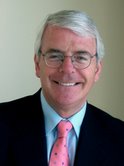
  • John Major – 1993 Speech to Conservative Central Council

    Below is the text of Mr Major’s speech to the 1993 Conservative Central Council meeting, held in Harrogate on 6th March 1993.

    PRIME MINISTER:

    Yesterday this Conference paid its tribute to Nick Ridley.

    He was an original. A one-off. And whatever he did he faced the world square on and never once flinched.

    The Commons was the poorer when he left it. And the Party is the poorer for his loss.

    Mr Chairman, in the last two years events have thrown at this country everything they could.

    Abroad – we’ve had the Gulf War, the Yugoslav war, a world recession that gets worse abroad as it gets better here. There have been plans from Europe that we’ve had to water down or reject. At home we have had our share of world recession, a difficult general election, and conflicts on Europe that strike deep at the instincts of many in our Party.

    Mr Chairman, on these issues it’s right that we should have vigorous debate. When people feel strongly they should express their views. Argue their case. Fight their corner.

    But once we have taken our decisions on how to proceed, then I believe we should all support those decisions. The British people put us back in power to carry on with the full range of our policies. They gave us five years to beat inflation, create growth and jobs, improve choice, fight crime and maintain the unity of the United Kingdom.

    Mr Chairman, that is what I want to see this Party and this Government do. And I want to see us do it now – and I want to see us do it together. It is in difficult times like these that the Conservative Party most needs to be united – and to stay united.

    At the last election we had one of the biggest leads in votes ever recorded. But only a 21 seat majority – now, sadly, for the moment only 20. So these are difficult days. We no longer have a cushion of 100 seats, and those who want us to be successful know what that means. Let me say it bluntly – disunity is a luxury we cannot afford.

    Mr Chairman, none of us should forget the scale of the responsibility placed upon us. On April 9th last year, 14 1/4 million people turned to us – people of all ages, all walks of life, from all corners of Britain. Every one different. Each with their own personal hopes and fears. They all trusted us with the hard job that lay ahead.

    We must live up to that trust. That does not mean responding to every short-term whim. It does not mean avoiding difficult decisions. It does mean holding fast to the long-term course that will bring us prosperity, growth, and jobs, even in the teeth of short-term difficulties.

    Those short-term problems have often caught the headlines. But they have not prevented progress towards our long-term objectives. So let me put it all in perspective. Let me remind you of what we have done in the last eleven months – smack in the middle of a world recession.

    I’ll start with the Health Service. Remember what Labour said about health. They said if we won it would be the end of the Health Service. One year on, we have more National Health Service Trust hospitals and more GP fundholders providing better care to more patients than ever before.

    The end of the Health Service? One year on, it’s not the NHS that’s falling apart; it is Labour’s scares that have fallen apart. Remember that truly disgraceful election broadcast? That was the one in which Robin Cook predicted the end of the NHS. Well today the Health Service is moving on – and Robin Cook has been moved on. Out on his Jennifer’s ear – and deservedly so.

    As hospitals have become self-governing – running their own affairs – so have schools. Over 500 have chosen the new freedom to become Grant Maintained. They have moved out of the hands of local authorities and into the care of governors and parents.

    And we’re promoting subject teaching in primary schools – so much more important than vague topic work and generalised themes. So it’s maths, geography, science and history lessons. And putting emphasis right from the start on standard English and on the 3Rs.

    That, Mr Chairman, is the right Tory agenda – and we have put it in place in the first year. We’re supporting good teachers and putting the spotlight on the bad. Publishing the exam results of every school.

    Mr Chairman, those results should never have been hidden in the first place. Now we’ve brought them into the open. And they will never be hidden again.

    And, one more thing, Mr Chairman. When we talk of publishing the facts, I must say this to those teacher unions that are threatening to boycott tests – you are wrong. Life is a test. You do pupils no good by hiding them from reality.

    To teach children what they need to know, we must find out what they don’t know. Tests are an essential part of good schooling. Tests are here to stay. And I hope the teacher union leaders get that message loud and clear from this Conference. And, before I leave education, here’s something for the history books.

    By 1996 nearly a quarter of a million extra students will be in college – the biggest expansion ever. And when they are there they won’t have to join the activities of the National Union of Students – because we are ending the NUS closed shop.

    That’s the right Tory agenda – and all in the first year. And it is not only the NUS monopoly that is going – remember Neddy, that hangover from the 1960s, that corporatist relic?

    Well, that’s gone, too. Unlamented. We have scrapped it. And not before time. We are giving new freedoms to members of Trades Unions. And new powers for every individual to act in court to stop wildcat strikes. All part of the right Tory agenda – and in hand in the first year.

    And the Tory programme to promote ownership is rolling forward, too. We have introduced a new incentive for personal pensions. One that will help millions enjoy their retirement in comfort and security.

    In housing, we are back on course for the home-owning democracy. We have a new scheme to help tenants become homeowners by treating rents as mortgage payments. We’re giving leaseholders the right to buy their freeholds. And later this spring Michael Howard and his team will launch a new campaign to spread the Right to Buy.

    That’s the right Tory agenda – this Government’s agenda. Never mind the news – that’s the reality.

    All that sounds like a full menu for a full Parliament. Yet all I have done is to give you a selection of starters. Your starters for 5, 10, 20 years, years in which we will indeed – build a stronger and better Britain.

    Fine words, you say. But fine words butter no parsnips. What about jobs? I know that the main thing so many people seek above all is a worthwhile job. That is why, from April, we will have in place the most comprehensive package to help people back to work that we have ever seen in Britain: youth training, Training for Work, Restart, Job interview guarantees, business start up schemes. Schemes that will help up to 1 1/2 million of our fellow citizens keep in touch with the world of work.

    And those schemes all have one thing in common. Every one was opposed by the Labour Party. How can they defend that? They call for help for unemployed people and then vote against it.

    We want our training schemes to lead to full-time jobs. It’s permanent jobs that people want. The only way to get people permanently back to work is to help the economy grow. To improve our skills. To promote our exports. To widen our manufacturing base. And to make it worthwhile to start new companies.

    That’s the road back to jobs. Permanent jobs. Jobs with prospects. And that’s the road we are travelling. The outlook for our economy is good. Interest rates down. Inflation down. Strikes down. Manufacturing productivity up. Retail sales up. Exports up. That’s what’s happening. And that’s the way back to work for Britain. The only way.

    The prospects for the Nineties are good. It’s been slow, frustratingly slow. But we are on our way. And don’t just take it from me. Over the next two years Britain is forecast to have the highest rate of growth in Western Europe.

    If we have confidence in ourselves others will have confidence in us. And when confidence grows jobs must follow. Some people still haven’t quite grasped the progress we’ve made.

    So let me put this way. 1954 – that’s 39 years ago, the year Roger Bannister ran the 4 minute mile – that was the last time the January inflation rate fell to 1.7%.

    And 1956 – 37 years ago, the year Jim Laker took 10 Australian wickets for 88 at the Oval and, no, drat it, I wasn’t there! – that was the last time mortgage rates for first time buyers were as low as they are, now.

    So, for goodness sake, let’s not belittle what we’ve done. Let’s not run our prospects down. Let’s leave that to the Labour Party. Day after day they attack us for ‘talking the economy up’. What a crime. What a dreadful thing to do. Trying to instill confidence.

    Well, it’s about time we got after them for talking the economy down. When did you last hear John Smith say a good word about Britain?

    And another thing, is there anyone here who’s ever seen Gordon Brown smile? No one. I thought not. Is there anyone anywhere who’s ever seen Gordon Brown smile? Is there anyone who wants to see Gordon Brown smile? And by the way, has anyone yet seen Gerald?

    Mr Chairman, there’s something else that is absolutely crucial to business confidence – the certainty that Britain will help determine policy in Europe, and not be dragged along behind a policy made by others. We should remember what we have achieved for Britain in Europe this year. We have every right to be proud of it.

    We have completed the biggest free trade area the world has ever seen. We have reformed the Common Agricultural Policy after years of squabbling. We have put a ceiling on EC spending right until the end of the century. We have opened up the Community to new members. And we are changing the course of Europe – away from centralism and returning powers to member states.

    That is the classic British agenda for Europe. It is not the federalist agenda. On crucial issues we are making sure the final say sits where it should be – right here in Britain. So let’s not fear the future in Europe. Let’s go out and shape the future of Europe. Shape a market of 340 million, where businesses can compete, export and invest wherever they like – where future generations will have opportunities we never dreamed of to work and to travel.

    And we must shape a wider Europe. That’s what we decided at Edinburgh – to bring in new member nations, first from Scandinavia and later from central Europe. And we won agreement – against all expectations – that our old friends, the Poles, the Hungarians, and the Czechs would eventually join us.

    Do you remember how as the Iron Curtain fell we welcomed them to our Party Conference two years ago? Well, we are still working on their side. And now – in time – we look forward to them joining the European Community, too – as a result of our influence.

    The present Community is but a fragment of Europe. Our long- term vision is a Europe without trade barriers, a vast continent of free democracies, from the Urals to the Atlantic and from the Baltic to the Mediterranean.

    A Europe full of trade and free of war. We won’t achieve that speedily – but isn’t that what we should work for for future generations? So let me tell you what’s at stake. I know the concerns and passions aroused by arguments over our future in Europe. I see them in the House of Commons whenever we debate the Treaty of Maastricht.

    I understand the instincts and the patriotic feelings that motivate many in our Party who have doubts about the Treaty. I understand, and share, their pride in Britain’s great past. But we have to build a great future. So let me tell you, clearly and frankly, that I believe the fears of those who resist our European policy are mistaken.

    Mistaken because they underestimate what we have achieved in our negotiations in Europe.

    Mistaken because they have failed to focus on our wider vision of Europe.

    Mistaken because if we step aside from what we have agreed there would be an enormous economic price to pay.

    There would be an immediate blow to economic recovery. International investors, who have poured money into Britain, £100,000 million in the last five years, would turn their backs on us.

    Those investors want access to the European market. And if we sidelined ourselves they would no longer be certain that that would be the case. That is why the price of standing aside from the agreement we freely made would be heavy. As Douglas Hurd told you yesterday, it would be £50 billion off our national production over the next five years. I wonder how many jobs that would cost?

    And then there is that Social Chapter – another threat to jobs. Surely no-one in this Party – for any reason – would give houseroom to that. Where we want to be is on the inside track to prosperity, and outside the grasp of bureaucracy and socialism. Inside Europe and outside the Social Chapter.

    I know our Party. I cannot believe that anyone, when they have considered all the facts, could want to let slip those opportunities before us.

    Let me tell you what I believe. To do so would be to take a conscious decision to become irrelevant in Europe. That would be a decision not only for our time, but for our children’s also. It would be the surest possible way to impoverish our country and damage our standing in the world – almost beyond repair.

    So let us put aside the fears and hesitations that hold our Party back. We may have our differences. But they are as nothing to the things that unite us.

    So let us take the chance we have today – to mould Europe in our own image. Don’t let us shirk that challenge. In a thousand years of history we never have. And we must not now.

    Mr Chairman, I want British industry to win not just in Europe, but around the world. I want a different attitude to industry at every level in this country. I want people to see that making things matters. I want more that matters to be made in Britain.

    Our exporters need to know that the Government supports them. And where we can help to open doors and free up markets we will always do so. That’s why in the Autumn Statement we committed £700 million extra to help British companies win new orders. And when our businessmen travel abroad I expect all our embassies to work with them. Cultural exchanges are fine – but I want export deals as well.

    Mr Chairman, exports are booming. Leaving the factories faster than journalists leaving the Daily Mirror. Mirror, mirror, on the wall – are there any journalists left there at all? In the battle for exports I want Government out there in the field foursquare behind our businesses.

    A few weeks ago, I spent the morning in India, lunched in the desert in Oman, and had dinner in a palace in Saudi Arabia. And that day, as a result of months of effort by business and Government working together, we won orders for British goods worth billions and safeguarded thousands of jobs. These days there are no easy exports. The world is too competitive for that. More competitive than ever before.

    Those countries that once were captive markets are now manufacturing themselves or challenging us as rivals. The countries on the Pacific Rim have developed massive industries of their own. China is set to become a huge manufacturing power in the century to come. Against that background, we need to help British companies carve out a bigger place for Britain. But before we export, we have to manufacture. And we have to manufacture quality.

    That’s why we need to build up craft skills and practical training in every part of Britain. End once and for all that senseless prejudice against the best of our brains going into commerce and industry. That prejudice is damaging – and we can no longer accept it.

    Mr Chairman, by helping business I don’t mean artificial subsidies to industries. I mean setting the right economic structure for business. I mean pursuing the right policies for business. I mean having the right curriculum in our schools. I mean reforming vocational training. I mean lifting burdens from the back of businesses.

    Of course, we need some regulations. But there are people in Brussels, in local councils and, yes, in Whitehall who seem to have a mania to hold back the future in a mesh of pettifogging detail.

    So I have told every Department of State: scrap unnecessary regulation. It’s a simple message. Red tape means lost jobs. And that doesn’t only apply to large companies like ICI. It applies to the smallest businesses and local services too.

    You know what I mean. Health and safety enthusiasts bent on eliminating every conceivable – and inconceivable – risk. Local councils badgering good nursery schools when they’d be better employed helping them.

    The food safety people who tell us that what we’ve been eating for generations will certainly kill us if we don’t stop instantly. Well we’ll certainly die a good deal sooner if we do stop eating instantly. Mr Chairman, it’s all gone way over the top. Well, I’d rather it went in the bin.

    Isn’t it barmy? Would Drake have been in time to meet the Armada, and would Nelson have made Trafalgar, if an inspector had been on hand to say ‘Hold everything – we haven’t checked the ship’s biscuits!”

    Mr Chairman, I said earlier that one of the reasons we were elected was to keep up the fight against crime. Vandalism; burglary; car theft. Crimes against property; crimes of violence; crimes involving drugs.

    The fear of crime lies deep in the instincts of law-abiding people. They find it hard to understand how others move outside the law, careless of the interests of their neighbours, preying on the property of others, even threatening their lives. I said last week that we need to understand less and to condemn a little more. That was not a simple cry for retribution.

    My point was this. Unless society sets rules and standards and enforces them, we cannot be surprised if others flout them. It’s true we mustn’t exaggerate the problem. Compared to many others in the world, Britain is still a safe country.

    But those who point to that and say ‘do nothing’ are wrong. I say to those people: even if the problem here is smaller, it’s still far too big. And every single victim of crime in this country will agree with that.

    That’s why this Government has done so much to step up crime prevention and crack down on crime. There are too many violent offences – that’s why we have increased penalties against them, especially for those thugs who go out carrying firearms.

    There is too much drug dealing – that’s why we’ve taken powers to confiscate the assets of those who sell drugs and wreck the lives of young people. There have been too many lenient sentences – that’s why we’ve given the Attorney General power to refer sentences to the Court of Appeal. And one final example – it is intolerable that some offenders charged with a crime go out and commit another while they’re on bail. I want to see those further offences reflected in the sentences they receive.

    Mr Chairman, there can be no doubt about where this Party stands in the fight against crime. And no doubt about the support we have given to those who fight it. We have given our police forces better pay and more resources than any Government in history. Now we must help them get even better results in everything they do. That is why we are now reviewing the effectiveness and the organisation of British police. I want our police to the most modern and the most efficient crime-fighting force in the world.

    Mr Chairman, the issue of crime runs deep. To catch and to punish is to deter. But we want to prevent crime too. So we must go to the roots of why some young people do what they do. Too many children have been denied the proper guidance they need in their own homes and schools. Of course, the authority of the family comes in here.

    And, yes, the churches – they may have a legitimate role to criticise, but they certainly have a role to play. And there’s another factor that goes right home in every sense. And that’s too much violence in videos and on television. What we watch is the single biggest influence on many people’s thinking.

    We’re an open society. We can’t censor television. But we can say to parents – control what your children watch. And we can say to those who make and distribute films and videos – think whether a relentless diet of violence won’t have a serious effect on the young. And we can say to television programmers – don’t just be careful when you show it, be careful what you show.

    Mr Chairman, Government alone cannot change behaviour. Concepts of right and wrong are something for all of us. But there are some things Government can do – and we will.

    First, truancy. It is stark staring obvious to me that if children are staying out of school, they are not learning what they should be and they are probably learning what they shouldn’t. For too long the facts on truancy have been hidden by a conspiracy of silence. So from this autumn in our new league tables we will make all schools publish openly their levels of attendance.

    We will find out where the problem is worst. We’ll target it and tackle it. I want our children in class. Not in trouble. And, Mr Chairman, we are taking another step. This morning Ken Clarke told you about his new proposals to set up secure centres for that hard core of youngsters who go on offending and reoffending, devoid, it seems, of any sense of fear or guilt about what they do.

    Some say we shouldn’t respond. They say it’s a relatively minor concern. I don’t agree. I say that not to respond would be a double dereliction of duty. A dereliction of duty to the public at large. And, worse, a dereliction to those children. Because we let children down if we don’t set boundaries and enforce them. For their own good and for the good of their communities we must take those persistent young offenders off the streets.

    It is a clear-cut idea, carefully worked up over these last few months, targeted directly at an obvious gap in the law. How strange – but how very revealing – that in a matter of minutes it was condemned out of hand by the new model Labour Party. When I heard that, it sounded just like the old unreconstructed Labour Party to me.

    When the test came they failed it – so let’s give them another chance. We’ll set them another test. Eleven times in all Labour have voted against the Prevention of Terrorism Act. I find that unbelievable.

    And so, I suspect, do the people in the battle against terrorism who are putting their lives on the line to protect the lives of others. Terrorism is the biggest crime of all. So for Labour let it be the biggest test of all. So no hedging, no weaving, no messing about. Let them vote with us next week – or pipe down about crime.

    Mr Chairman, I’ve reminded you of some of the things we have done in these last few months – and set out some of our plans for the future. As always this Party is a reforming Party. And as a nation we need to reform. Because we live in a rapidly changing world. Change can be frightening. We must manage it carefully. Nurture it to our national advantage. Our watchword is – to hold on to the best of the past and to create the best for the future.

    Mr Chairman, last March it was at this Central Council that we launched the General Election campaign – the election that no-one thought we could win. We took our message to every part of our country. It was the roughest, toughest campaign for years. But we won it.

    And how did we win? By sticking to our principles. By keeping our nerve. By standing together. And, above all, by staying together. United. That’s how we won – and that’s a lesson we must never forget.
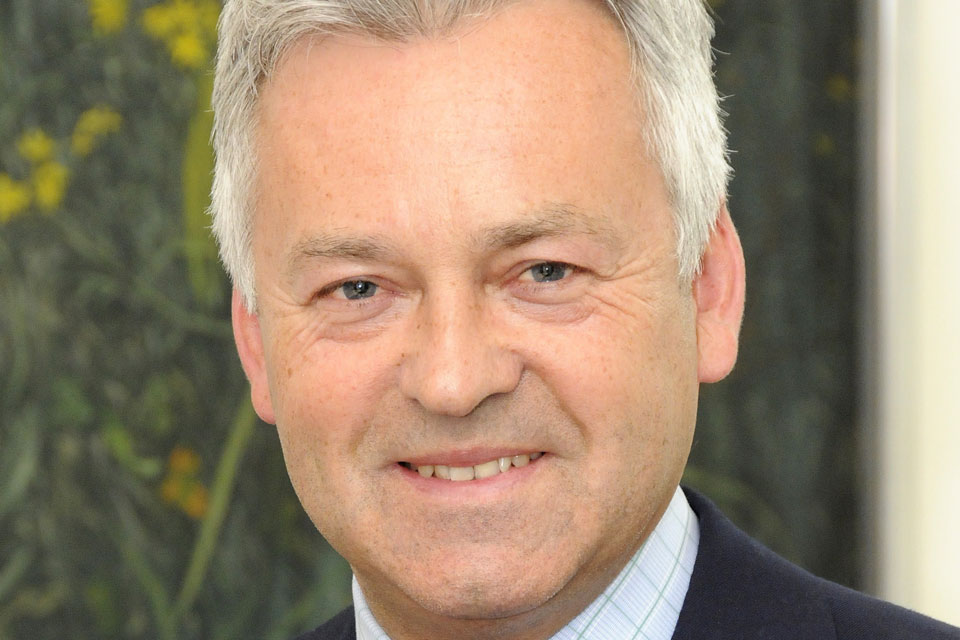
  • Alan Duncan – 2018 Statement on the Foreign Affairs Council

    Below is the text of the speech made by Alan Duncan, the Minister for Europe and the Americas, in the House of Commons on 22 May 2018.

    My right hon. Friend the Secretary of State for Foreign and Commonwealth Affairs attended the Foreign Affairs Council on 16 April. The Council was chaired by the High Representative of the European Union for Foreign Affairs and Security Policy (HRVP), Federica Mogherini. The meeting was held in Luxembourg.​

    Foreign Affairs Council – Syria

    The Council discussed the latest developments in Syria, including the targeted US, French and British airstrikes on chemical weapons facilities. Ahead of the Brussels Conference on Syria and the region, Ministers discussed the need to relaunch a political solution to the conflict in the framework of the UN-led Geneva process. The Council adopted conclusions on Syria.

    Iran

    Ministers agreed on the need for unity on continuing the implementation of the Iran nuclear deal (JCPOA). They encouraged the diplomatic efforts to ensure that there continues to be strong commitment to the agreement by all the parties involved. Ministers also discussed other issues outside the scope of the JCPOA, in particular the role of Iran in regional conflicts, not least in Syria and Yemen, as well as the EU’s concerns at Iran’s ballistic missiles programme and its human rights situation.

    Russia

    The Council agreed unanimously on the continued relevance of the five guiding principles that were agreed in March 2016. Following the Salisbury attack and the European Council conclusions that were agreed in March 2018, Ministers highlighted the need to strengthen the resilience of the EU and its neighbours against Russian threats, including hybrid threats such as disinformation campaigns. Ministers commended the work carried out by the East StratComms taskforce in the European External Action Service. Ministers also highlighted the importance of supporting Russian civil society and continuing to develop people-to-people contacts.

    Western Balkans

    Over lunch, Ministers discussed the Western Balkans in preparation for the EU-Western Balkans summit in Sofia on 17 May 2018.

    External action financing instruments

    The Council held a preliminary exchange of views on the future financing of external action instruments after 2020. The Commission is preparing its proposal for the EU’s next long-term budget (the future multiannual financial framework, MFF).

    Members agreed a number of measures without discussion:

    The Council approved the annual progress report on the implementation of the EU strategy against the proliferation of weapons of mass destruction (WMD), which covers activities carried out in 2017;

    The Council adopted conclusions on chemical disarmament and non-proliferation ahead of the Fourth Special Session of the Conference of the States Parties to review the operation of the chemical weapons convention on the prohibition of the development, production, stockpiling and use of chemical weapons and on their destruction. This session will take place in The Hague on 21-30 November 2018;

    The Council adopted conclusions on South Sudan;

    The Council adopted conclusions on malicious cyber activities that underline the importance of a global, open, free, stable and secure cyberspace where human rights, fundamental freedoms, and the rule of law fully apply;​
    The Council approved the High Representative’s six-monthly report on Operation Althea, which covers the period from 1 September 2017 to 28 February 2018;

    The Council adopted a decision approving Mazars and KPMG S.A. as the external auditors of the Banque de France, the National Central Bank of France, for the 2018-23 period.

  • Michael Gove – 2018 Speech on Clean Air Strategy

    Below is the text of the speech made by Michael Gove, the Secretary of State for Environment, Food and Rural Affairs, on 22 May 2018.

    Today, the Government published their consultation on a clean air strategy. At the most fundamental level, our health and prosperity depend on the health of the planet on which we live. From the air we breathe to the water we drink, the food we eat and the energy which powers our homes and businesses, we need to ensure we have a healthy and sustainable environment.

    Nowhere is this more true than in the case of air quality. Air pollution is a major public health risk ranking alongside cancer, heart disease and obesity. It causes more harm than passive smoking.

    This clean air strategy sets out the case for action and demonstrates this Government’s determination to improve our air quality. Leaving the EU provides us with an excellent opportunity to be even more ambitious about achieving cleaner air for the health of the nation, and for our environment and the biodiversity it sustains. We want to do all that we can to reduce people’s exposure to pollutants such as nitrogen oxides, ammonia, volatile organic compounds, particulate matter and sulphur dioxide.

    Air pollution has improved since 2010, but we recognise that there is more to do. This comprehensive clean air strategy sets out how we will tackle all sources of air pollution, making our air healthier to breathe, protecting nature and boosting the economy.

    Government must act to tackle air pollution which shortens lives. We are already acting to reduce concentrations of nitrogen dioxide (N02) around roads from cars, but vehicles are not the only source of toxic emissions. Air pollution is a result of the way we currently generate power, heat our homes, produce food, manufacture consumer goods and power transport. Better, cleaner technologies and simple changes in behaviour will tackle the pollution that claims lives.

    The new strategy is a key part of our 25-year plan to leave our environment in a better state than we found it. It sets out the comprehensive action that is required from across all parts of government and society to meet the challenge. By 2025, we will halve the number of people living in locations where concentrations of particulate matter are above the World Health Organisation guideline limit of 10 ug/m3, protecting public health.

    Through the introduction of new primary legislation, we will introduce a stronger and more coherent legislative framework for action to tackle air pollution, giving local government new powers to take decisive action in areas with an air pollution problem.

    We are investing £10 million in improving our modelling, data and analytical tools to give a more precise picture of current air quality and the impact of policies on it in ​future. Alongside this, we will seek ways to support further investment in research and innovation, in partnership with UKRI, which will help the UK become world leaders in clean technology and secure further emissions reductions.

    From farming to consumer products, a large range of other day-to-day practices, processes and products produce harmful emissions. Of particular concern is burning wood and coal to heat a home, which contributes 38% to harmful particulate matter emissions. It is why we will ensure only the cleanest fuels will be available for sale and only the cleanest stoves will be available to buy and install.

    For the first time, the Government will take concerted action to tackle ammonia from farming by requiring and supporting farmers to invest in the infrastructure and equipment that will reduce emissions. The agriculture sector accounts for 88% of UK emissions of ammonia, and action by farmers can make a big difference in reducing the impacts of excess nitrogen on sensitive habitats and reducing the overall background levels of particulates in the atmosphere.

    Government cannot act alone in tackling air pollution, and our strategy sets out how we will work with businesses, farmers and industry to implement lasting solutions to reduce air pollution, and the importance of each of us taking action and playing an important role in cleaning up our air for the next generation.

    These actions will, we hope, ensure that this country is recognised as the leading global champion of cleaner air for the next generation.

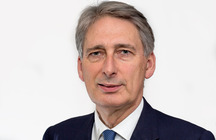
  • Philip Hammond – 2018 Speech at CBI Annual Dinner

    Below is the text of the speech made by Philip Hammond, the Chancellor of the Exchequer, on 22 May 2018.

    Thank you, Paul.

    And let me join you in commemorating those who lost their lives and those who were injured during the appalling attack in Manchester, a year ago today…

    …our thoughts this evening are with the families and friends of those affected.

    As ever it’s a pleasure to speak to you tonight.

    And what a week it has been.

    The Royal Wedding; the FA Cup Final; and now the CBI dinner!

    And I’m especially pleased to be here this evening to mark the end of Paul’s three-year tenure at the helm.

    I was doing a little research and stumbled across an FT interview with Paul in 2011.

    When asked “which historical or fictional character do you most identify with?”, Paul replied, with characteristic modesty: “Nelson Mandela”.

    History will determine!

    Paul, congratulations on the achievements of your Presidency, and thank you for the leadership you have shown.

    It was Nelson Mandela, reflecting on his first 100 days as President, who noted that “on occasion, strong language has been used to drive home a strongly held belief”…

    …and he reassured his audience that this was a sign of “a robust, vibrant democracy, with broad consensus on the most important national questions”.

    Paul, I will welcome your speech tonight as a sign of our “robust, vibrant democracy”!

    Because we are in broad agreement on the big questions facing our country and our economy.

    We agree that:

    We must rebuild a consensus for the liberal market economy as the best way to deliver future prosperity.

    We must embrace digital technology, and ensure Britain is at the forefront of the technological revolution.

    We must invest in skills and training – to ensure the next generation is prepared for the economy of the future.

    We must build the world class infrastructure and invest in the R&D needed to ensure Britain stays ahead in the global race.

    We must raise our productivity – and thus deliver higher wages for people up and down this country.

    And yes, we must deliver a Brexit that prioritises jobs, growth, and prosperity.

    And it is absolutely my belief that central to all of this, is listening to business, and believing in the power of business to deliver higher living standards, and spread greater prosperity.

    I can promise you, Paul, business advice is a welcome input, not an “inconvenient truth”!

    So I hear the concerns you have set out tonight about the Brexit challenge…

    …but I remain confident. And, by the way, when Donald Tusk says Brexit is the “saddest moment in Modern European history”…

    …I assume he didn’t see this year’s Eurovision.

    The PM has always had a vision for a close economic partnership between the UK and the EU…

    …a partnership that protects supply chains, and established trade relationships…

    …that backs businesses, and safeguards jobs…

    …and that promotes the values that we share across the continent of Europe.

    We have made good progress:

    In March we agreed on an implementation period…

    …which allows “business as usual”…

    …and ensures you only have to navigate one set of changes.

    Focus has now moved on to our future economic partnership, and in particular the customs relationship.

    I have listened to the four customs tests you have set out tonight…

    …and we share your aspirations to minimise frictions and burdens…

    …to avoid new barriers in Ireland…

    …and to grow British exports.

    But we do not agree that staying in the customs union is necessary to deliver them.

    The UK has proposed two possible future customs models…

    …both are “works in progress”…

    …but we are confident that, building on these two models, we can develop a solution that will allow us to move forward while meeting your concerns, Paul.

    And beyond customs, we will seek a comprehensive system of mutual recognition to ensure that, as now, products only need to undergo approvals in one country to show that they meet regulatory standards across Europe…

    …and we will explore the terms on which the UK could maintain a relationship with the EU agencies, such as those for the chemicals, pharmaceutical, and aerospace industries…

    …as the route to deliver such an outcome.

    On services, we have the opportunity to establish a broader agreement than ever before…

    …including continued recognition of professional qualifications, and a labour mobility framework that enables travel to provide services to clients in person.

    And an opportunity to seek a bespoke partnership in financial services…

    …that will enable the ongoing delivery of cross-border financial services in both directions, while protecting financial stability and maintaining fair competition.

    We made good progress in December and March, and I hope and expect we will make further progress at the upcoming June Council.

    It is in the interests of both the UK and the EU to secure a mutually beneficial deal that will allow us to continue to have a close economic partnership…

    …and to do so as soon as possible to give businesses the certainty they need.

    I am confident that we will reach such a deal.

    That is my most immediate priority as Chancellor.

    But as we embark on a technological revolution that will transform our economy and our lives…

    …my most important long-term challenge is to ensure that the UK continues to be at the forefront of that technological revolution, leading the world in innovation.

    This is what our Modern Industrial Strategy is all about.

    It isn’t about picking winners…

    …or propping up failed industries.

    But about exploiting the synergy between the facilitating power of the state…

    …and the energy of the private sector…

    …to deliver the innovation that will secure Britain’s future…

    …within a market that is working properly and fairly.

    Supporting entrepreneurship to ensure the industries of the future get off the ground…

    …investing in research and development…

    …ensuring that start-ups can access the finance they need to become “scale-ups”…

    …and, most importantly, creating an environment where innovation can flourish.

    And we’re putting our money where our mouth is…

    …we’ve committed to the largest increase in public R&D spending in three decades, as part of our ambition to raise R&D investment across the economy to 2.4% of GDP.

    We’re investing £640 million of public money in artificial intelligence and over £1.7 billion in autonomous and ultra-low emission vehicles…

    …and in the Budget last Autumn I launched a plan to unlock over £20 billion of patient capital, for the UK’s most innovative firms to grow to scale.

    But we won’t be able to put the UK at the front of the pack unless we have infrastructure that is fit for the future.

    And that is why infrastructure is at the heart of our plan.

    In the 18th century, it was canals;

    In the 19th, it was the railways, and in the 20th the arterial roads and then the motorways.

    In the 21st century, fibre networks will be the enabling infrastructure that drives economic growth.

    We’ve already connected more than 95% of the UK to superfast broadband.

    But we must now take the next big leap forward.

    Full-fibre networks are faster, more reliable, and cheaper to operate than their copper predecessors.

    Over a million premises already have direct access to them…

    …70% of those connected in the last 18 months alone.

    But if we are to achieve our ambition of a truly high-speed economy, and keep up with our competitors, then we need a step change in our approach.

    So I am now setting a new target to see full-fibre to the premises connections being available to 15 million premises, that’s the majority of homes and businesses, by 2025.

    This is ambitious…

    …and it will require industry to connect more than 2 million additional premises a year for the next seven years.

    We won’t do that by government diktat.

    We will do it by creating the conditions for the market to deliver…

    …and we will use all the tools at the government’s disposal to ensure that target is met…

    …and we’ll go further, by committing to finish the job – and deliver a nationwide full-fibre to the premises network by 2033.

    Running both copper and fibre networks indefinitely will not benefit either the consumer or the industry…

    …so we must start thinking now about that switchover and how to sharpen the incentives for industry to move customers away from copper and on to fibre.

    And Matt Hancock, the DCMS Secretary, will set out our strategy to deliver these ambitious targets in the Future Telecoms Infrastructure Review, later this Summer.

    The talent of the future.

    The digital industrial revolution and Artificial Intelligence will bring about a step-change in automation.

    This, in turn, will have profound implications for jobs, and the way we work.

    And if we want our people to embrace the digital economy, we must support them when they are affected by automation…

    …and help them train and retrain into the new high quality jobs of the future.

    Because just as the assembly line allowed Ford to triple the number of cars produced per worker…

    …cut the price of a car in half…

    …and increase employment eleven-fold…

    So the digital industrial revolution will also create millions of new jobs, and huge increases in living standards…

    …but that will not reassure those whose current jobs will be displaced.

    So, between us in government and business we have a vital role in managing this transition;

    In investing in skills and retraining;

    In providing the reassurance our workforce will need.

    We have made a start.

    Through the Apprenticeship Levy, we are increasing the quality of apprenticeships, and the capacity of the system.

    We’ve already seen a 25% increase in higher level apprenticeship starts.

    But I recognise the new levy system presents some challenges…

    …and we’re listening to your concerns around flexibility, and will keep that issue under review to make sure the levy works as intended.

    We’re investing over £500 million a year in our new T-Level technical qualifications…

    …and with the help of the CBI and the TUC we are establishing a new National Retraining Scheme…

    …to help adults faced with the consequences of technological change to re-train throughout their working lives.

    It’s a groundbreaking collaboration and I’m delighted we were able to make it happen through the leadership of Paul and others here tonight.

    But government cannot solve our nation’s productivity challenge on its own.

    Because it is not only about infrastructure and skills…

    It is also about management.

    Britain of course has many world-leading companies with globally competitive productivity…

    …but there are also far too many that could be doing a lot better.

    Tomorrow I will publish a call for evidence into why some businesses aren’t keeping up and don’t learn from the best…

    …seeking ideas for how government and industry can work together to help more firms realise their potential by taking best practice.

    And in parallel with the call for evidence I will announce with Greg Clark, the Business Secretary, further steps to boost firm-level productivity.

    We’ll invest £5.6 million to support smaller firms to adapt modern management practices and simple digital technologies, through two new pilot programmes delivered by Charlie Mayfield’s Be the Business.

    And we’re extending our backing for the Made Smarter Digital Manufacturing strategy…

    …led by Juergen Maier – and supported by the CBI.

    Made Smarter will help to maintain our position as a global leader in the digital revolution…

    …and so we’ll provide £20 million for a pilot in the North West, to support SME manufacturers to adopt industrial digital technologies, such as robotics and data analytics.

    Before I close, I want to touch on one further, important issue.

    I have talked about the big opportunities ahead;

    But there will be big challenges too – and challenges that go beyond the mere uptake of technology…

    …to pose questions about economic governance and the organisation of society in the 21st century digital economy.

    For those of us who believe in the demonstrated power of liberal market economics to deliver both prosperity and political freedom…

    …this is a question about how this most resilient of economic models transforms itself in response to the challenges of technological and societal change…

    …as it has done so many times before.

    For people of my generation – and looking around the room at many – though not all – of you, I see people who I think are of my generation…

    …congratulations that you can still get out of an evening!

    For people like us, who lived through the 1970s, the economic model [political content removed] is not a text book theory, but a vivid memory.

    And for people in a small number of countries around the globe, it is a miserable reality today.

    But not everyone in our society has shared that experience.

    And some of a younger generation will be tempted by ideas that sound radical; maybe even “new” (even though they are rooted in a book written in the 1860s).

    …because they do not feel the system is working for them.

    Many of them have started their working lives at a difficult time for our country…

    …emerging into the workforce as the financial crisis and its aftermath shook our system…

    …and enduring a decade of recovery from it.

    They look at their parents’ and their grandparents’ generations…

    …at the home ownership levels, the defined benefit pensions, the traditional jobs…

    …and they ask who or what decreed that so many of the things that previous generations took for granted, should be so much harder for them to obtain.

    They are not looking for a hand-out…

    …but they are looking for a reassurance that hard work will allow them, too, to achieve their aspirations for a better life for their kids.

    And as we look forward to, and prepare for, the transformational impact that technology will have on our economy and our society…

    …we must answer their challenge.

    We must articulate how we will refresh our economic model to respond to technological change…

    …in competition policy…

    …in taxation policy…

    …in ensuring an equitable distribution of the proceeds of growth as we manage the impact of smart automation and artificial intelligence on the world of work…

    …so that it speaks to their values…

    …addresses their concerns…

    …and unlocks the door to the achievement of their aspirations…

    …with solutions, which are framed not by the stale ideologies of the past, but by the exciting potential of our future.

    Solutions that build on, not undermine, the liberal market economy that is the bedrock, not only of our prosperity…

    …but of our freedom too.

    I have spoken tonight of our strategy for negotiating Brexit…

    …and of our vision for post-Brexit Britain.

    It is a vision of an open, dynamic, evolving, market economy…

    Of a Britain whose firms are at the cutting edge of technology and innovation.

    A Britain with infrastructure fit for the future…

    …and workers equipped with the skills they need for the challenges that lie ahead.

    A Britain where government and business work together to realise the potential of unlocking Britain’s productivity puzzle…

    …to deliver an economy that works for everyone.

    That is our vision of the prize that lies within our grasp.

    And I know we can count on British business to work with us to deliver it for the British people.

    Thank you.

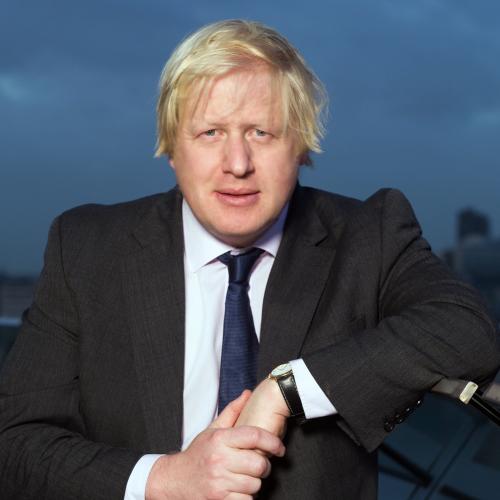
  • Boris Johnson – 2018 Speech at Paris Conference

    Below is the text of the speech made by Boris Johnson, the Foreign Secretary, at the Paris Conference on chemical weapons held on 18 May 2018.

    I’m grateful to the French Chair of the Partnership for convening this important meeting.

    We gather at a moment when the rules that guarantee the security of every country – including the global ban on chemical weapons – are gravely imperilled.

    Almost a century ago, the world united to prohibit the use of chemical weapons with the Geneva Protocol of 1925.

    More recently, 165 countries have signed the Chemical Weapons Convention of 1997 and agreed never to develop, manufacture or stockpile these munitions.

    Banning this terrible category of weapon must rank among the seminal diplomatic achievements of the last century.

    And yet I have the unwanted distinction of representing a country which has experienced the use of chemical weapons on its soil, not in a 20th century conflict but on 4th March this year,

    when a nerve agent struck down a father and daughter in Salisbury.

    Sergei and Yulia Skripal were rushed to hospital after being found reeling and distressed on a park bench.

    In the days that followed, our experts had to seal off nine locations in Salisbury – including a restaurant and a cemetery – in order to screen them for possible contamination.

    A police officer, Detective Sergeant Nick Bailey, was hospitalised after suffering the effects of exposure to the nerve agent.

    Scores of unwitting bystanders had to be checked for symptoms.

    Their only involvement was that chance had placed them in certain areas of Salisbury on 4th March;

    they could have been from any country – including those represented here – for Salisbury ranks among the most popular tourist destinations in Europe.

    The fact that no bystander was seriously harmed owed everything to luck and nothing to the perpetrators, who clearly did not care how many innocent people they endangered.

    I am glad to say that Mr Skripal was released from hospital earlier today – though he is still receiving treatment. His daughter and Detective Sergeant Bailey were discharged last month.

    Our experts analysed samples taken from the scene and identified them as a fourth generation, military-grade “Novichok” nerve agent.

    The highest concentration was found on the handle of the front door of Mr Skripal’s home.

    We sent samples to the Organisation for the Prohibition of Chemical Weapons, whose experts independently confirmed this identification.

    “Novichok” nerve agents were first developed in the Soviet Union in the 1980s.

    The British Government has information that within the last decade, Russia has produced and stockpiled small quantities of “Novichok” under the same programme that also investigated how to deliver nerve agents, including by application to door handles.

    The fact that such a pure nerve agent was used narrows down the list of culprits to a state actor.

    And there is only one state that combines possession of Novichoks with a record of conducting assassinations and an obvious – indeed publicly avowed – motive for targeting Sergei Skripal.

    We are left with no alternative conclusion except that the Russian state was responsible for attempted murder in a British city, using a banned nerve agent in breach of the Chemical Weapons Convention.

    Our friends around the world shared our assessment and 28 countries and NATO acted in solidarity with Britain by expelling over 130 Russian diplomats – the biggest coordinated expulsion in history.

    Many of those countries are represented here today; once again, I thank them from the bottom of my heart.

    This resolute action demonstrated our shared determination to ensure there can be no impunity for the use of chemical weapons,

    whether by a state or a terrorist group,

    whether in the UK or Syria or anywhere else.

    On 7th April, barely a month after the Salisbury incident, the Asad regime used poison gas in the Syrian town of Douma, killing as many as 75 people, including children.

    Britain, France and the United States responded by launching targeted, precise and proportionate strikes against the chemical weapons infrastructure of the Syrian regime.

    Even before the atrocity in Douma, a joint investigation by the UN and the OPCW had found the Asad regime guilty of using chemical weapons on four separate occasions between 2015 and 2017.

    Russia’s response was not to enforce the ban on chemical weapons but to use its veto in the Security Council to protect Asad by shutting down the international investigation.

    That is all the more tragic when you consider that Russia is a permanent member of the Security Council with special responsibility for upholding peace and security, including the global ban on chemical weapons.

    Given that the Kremlin seems determined to block any international investigation empowered to attribute responsibility for chemical attacks in Syria, then we must work together to develop another mechanism.

    In the meantime, we have it within our power to impose sanctions on any individuals or entities involved in the use of chemical weapons.

    We can collect and preserve the evidence of these crimes.

    We can call for a special session of the Conference of States Parties to the Chemical Weapons Convention, in order to consider how best to support the Convention and its implementing body, the OPCW.

    And we can make clear our resolve that the global ban on chemical weapons shall not be allowed to fade into irrelevance.

    If that moral calamity were to happen, the security of every nation would be at risk.

    My goal is to be the last foreign minister who attends a gathering like this as the representative of a country that has witnessed the use of chemical weapons.

    Thank you.

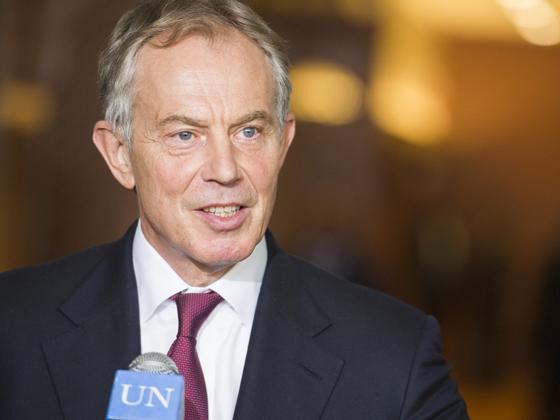
  • Tony Blair – 2018 Article on Brexit

    Below is the text of an article by Tony Blair, the former Prime Minister, published on 22 May 2018.

    We publish today a comprehensive guide to the issues around the Customs Union or Customs Partnership as a means of unlocking the deadlock of the Brexit negotiation. It is the work of Dr. Andy Tarrant, a recognised expert on EU affairs.

    It shows conclusively that:

    There is no Customs Partnership which will deliver the same benefits as staying in the Customs Union, even if the EU were prepared to accept such a Partnership.

    However, the Customs Union will not, on its own, deliver frictionless trade between the UK and the EU and therefore is neither good enough for British business nor a full answer to the Ireland question.

    Only membership of the Single Market or signing up to EEA comes close to genuine frictionless trade.

    Even that unless combined with a Customs Union would still have some friction attached.

    The ‘freedom’ to pursue trade deals is unlikely to result in any substantial benefit to Britain, involves very difficult choices, and in any event if it worked, would take a decade or more before any benefit was realised.
    The Government now know this. So, they’re again reverting to postponement rather than resolution of the Dilemma.

    The Dilemma, as I have described previously, is whether we stay in a close economic relationship with Europe to avoid economic damage, in which case one way or another we will end up abiding by Europe’s rules; or whether we break from Europe decisively, to have ‘freedom’ from those rules, in which case the economic damage at least short and medium term will be considerable.

    There is no way round this Dilemma. These are the two competing versions of Brexit. They aren’t ultimately capable of fudge. The Customs Partnership is just the latest failed attempt at fudging.

    Therefore, the Government have reverted to postponing the decision by agreeing to extend the period by which we will keep to Europe’s rules after the transition should that prove necessary.

    This is a very dangerous strategy. If this Dilemma is not resolved prior to March 2019, then Britain will be leaving Europe with no clear idea of what the future economic relationship entails. After March 2019, we will have no negotiating leverage. We will have left. We will be completely dependent on what we are given by the EU, with no say in Europe, no representation, no bargaining power.

    The Government should be obliged to decide which version of Brexit they want for any vote in Parliament to be meaningful before March 2019.

    But what is also now clear is that the leadership of both main political Parties are engaged in the same sleight of hand, namely pretending that we can have frictionless trade whilst leaving the Single Market.

    As our paper shows, this is simply wrong. The Single Market is a unique trading area where not only is trade tariff free, it is free of non tariff barriers, through regulatory alignment. It therefore allows complete freedom of trade for goods and a substantial amount of free trade in services where Europe has adopted common sets of rules.

    Membership of the Customs Union alone does not solve the problem of friction, because if Britain wants freedom to diverge on product regulation then there will still need to be checks. And, of course, if Britain is part of a Customs Union then it cannot make its own trade deals.

    The Customs Union option in any event does not at all address the question of services, particularly financial services where we have a huge surplus with the European Union.

    At some point the Dilemma must be resolved by a choice. And here is where the case for sending the issue back to the people is now overwhelming. Either option is a form of Brexit. Supporters of Brexit are to be found on both sides of the Dilemma. Brexit could mean either of these two very different outcomes. How then can it be said that the British people in June 2016 decided for one option over the other?

    The only right method of resolution is to give to the people who made the original choice to leave Europe, the choice of which Brexit they prefer or whether given that choice, in the light of what we now know, they want to proceed with Brexit or stay in Europe.

    Here is the challenge to both Party leaderships.

    The Conservative Party believes that if they ‘deliver Brexit’ they have fulfilled their mandate and the British people will be grateful that at least Brexit is done.

    This is a fundamental strategic error. The so-called ‘soft Brexit’ which will see us still tied to European rules in some form or another, will not satisfy the most ardent Leavers. They’re already shouting betrayal.

    So, if the Conservative Party thinks it has solved its European problem if it goes for a mishmash of theoretical freedom from, but practical alignment with, European rules, it is profoundly mistaken. It is just another route to disillusion.

    For the Labour Party the position is even more stark. As was entirely predictable and predicted, we now find ourselves in the worst of both worlds.

    The Leavers think we’re not really for Leave because we want to stay in the Customs Union and as I say for many Leavers that is an unacceptable compromise.

    The Labour Party position is also contradictory. If the reason for being against EFTA or the Single Market is we don’t want to be merely rule takers, then the Customs Union solution has the same objection. We will be taking the trade rules Europe negotiates. Go and talk to the Turks. They are bound by Europe’s trade agreements, and they are forced to align with a lot of European rules to minimise friction. Even so, their arrangement doesn’t work well.

    The Remainers, however, have now cottoned on to the fact Labour is not really for remaining either, except in the very limited sense of the Customs Union, and so, unsurprisingly, they’re losing faith in Labour as a route to avoid Brexit.

    The Labour Party will pay a heavy price for the leadership’s closet Euro-scepticism.

    The tragedy is the price the country will pay for Labour’s failure to lead.

    It would be a straightforward and in my view electorally winning position if the Labour Party were to say: we accepted the referendum verdict; we gave the Government the opportunity to negotiate a good deal; it is now apparent they can’t; it is equally apparent that this is not only because of division and incompetence but because there is no resolution to the Dilemma; therefore, we reject the deal but you, the British people, should have the final decision. You began Brexit, you mandated the negotiation and you should decide how it ends.

    45 years of European membership with all the intricate trading arrangements born of geography, common interest and then the Single Market means that Leaving Europe is economically painful. Look at the chart in our paper of how in 50 years our export relationships have been transformed.

    Labour cannot argue for a ‘jobs first’ Brexit and then oppose what is plainly the only way of protecting British jobs which is to remain part of Europe’s economic structures. It is greatly to the credit of those MPs both Labour and Conservative that they are prepared to put the country’s interests before their Party whip and support an EEA type amendment.

    The reality of the choices we face is what we now know in a way we did not in June 2016. It is a choice of two futures. They contrast starkly. There is no ‘having our cake and eating it.’ We must choose as a country in the light of two years of – let’s face it – inconclusive and unsatisfactory negotiation.

    We can all speculate as to which future the British people would now choose once they know the outcome of the negotiation.

    But there is only one sure way to find out and that is to ask them. The Labour Party should be leading that case.

  • Theresa May – 2018 Speech on Science

    Below is the text of the speech made by Theresa May, the Prime Minister, at Jodrell Bank on 21 May 2018.

    Introduction

    Jodrell Bank was established in 1945, in a Britain rebuilding in the aftermath of the Second World War.

    Motors from the gun turrets of battleships were built into the machinery used to rotate the dish of the awesome Lovell Telescope behind me.

    The first scientists to use it were continuing research into radar which had begun in wartime, with the purpose of defeating our enemies, but which they continued in peacetime, to extend human knowledge.

    Memories were fresh of the destruction that had been wreaked through what Winston Churchill called ‘the lights of perverted science’.

    But stronger than the doubts about technological change was a faith in the potential of scientific inquiry to overcome the great challenges of their time – want, disease, ignorance and squalor – and to light the path to a better future. They were men and women who stood at the threshold of a new age.

    Their grand-parents lit their homes with oil lamps and travelled by horse and cart, but they would live to see jet travel and space flight.

    Jodrell Bank is an icon of the United Kingdom’s tradition of scientific achievement and is today at the cutting edge of twenty-first century discovery.

    And as I look towards the future, that spirit of scientific inquiry, and its power to shape a better tomorrow, is at the heart of my vision.

    Because the world today stands at the threshold of a new technological age as exciting as any in our past.

    Great changes in how we live, how we work, how businesses trade will reshape our economy and transform our society in the years ahead.

    This technological revolution presents huge opportunities for countries with the means to seize them.

    And Britain is in pole position to do just that. We are ranked first in the world for research into the defining technologies of the next decade, from genomics and synthetic biology, to robotics and satellites.

    With 1 per cent of the world’s population, we are home to 12 of the top 100 universities.

    And London is Europe’s leading tech start-up cluster, attracting more venture capital investment than any other city.

    But this success is not automatic. We are at the forefront of scientific invention because we embrace change and use regulation not to stifle but to stimulate an environment for creativity.

    We have great universities because we have strengthened historic institutions and nurtured new intellectual powerhouses with public investment.

    Britain’s businesses can take on the world because they have access to a skilled workforce and modern infrastructure.

    Key to our success has been the combination of individual ingenuity and ambition with government action to invest in the future.

    British scientific achievement

    UK global leadership in science and innovation is one of this country’s greatest assets.

    For centuries Britain has been a cradle of scientific achievement.

    William Harvey’s discovery that blood circulates around the body provided the basis for modern physiology and lead directly to every great medical advance of the last 400 years.

    Isaac Newton’s establishment of the laws of motion, optics and gravitation defined the parameters of physics and laid the foundations on which modern science rests.

    Michael Faraday’s discovery of electromagnetic induction unlocked the potential of electricity to light up the world and power the modern age. Every day, we benefit from the work of generations of British scientists and engineers. Every time we use a computer or go online, we benefit from the genius of Alan Turing and the foresight of Sir Tim Berners-Lee.

    Every journey in an airliner is powered by the turbo-jet technology pioneered by Frank Whittle.

    Every day my life and the lives of millions of people around the world are made infinitely better because of the ground-breaking work on the structure of insulin by Dorothy Hodgkin.

    Each of these scientists and inventors has an inspiring story of human achievement borne of hours of patient labour from which we all reap the rewards.

    Contemporary British science is just as inspiring. Developing gene therapies to treat – and even cure – diseases that until now have been beyond us.

    Creating new materials like graphene that open-up opportunities across industry and medicine – from lighter display screens to synthetic bone tissue.

    Producing CT and MRI scanners to provide new ways of seeing inside the body to diagnose disease and target treatments.

    Scientific research is a noble pursuit and a public good – whether or not it leads directly to a commercial application.

    But when a discovery does have the potential to create or transform an industrial sector, time and again British entrepreneurs have been the first to capitalise on it.

    In the eighteenth century, Stoke-on-Trent became the ceramics capital of the world after Josiah Wedgewood industrialised the manufacture of pottery.

    In the nineteenth century, George Stephenson made Newcastle the first city anywhere to export railway locomotives.

    In the twentieth century, Arthur Pilkington made St Helen’s the global centre of innovation in glassmaking.

    The great towns and cities of Britain grew up as global centres of innovative production.

    However, the nature of innovation and progress is that new technology inevitably replaces old.

    And in the twenty-first century, some parts of the country that once thrived because of innovation and technology have seen the jobs and opportunities of the past fall away.

    But in others we have seen Britain’s capacity for invention and reinvention create twenty-first century success stories:

    Cardiff has gone from exporting coal to pioneering in semiconductors.

    Dundee from jute to computer gaming.

    Hull from whaling to wind-turbines.

    Our challenge as a nation, and my determination as Prime Minister, is not just to lead the world in the 4th industrial revolution – but to ensure that every part of our country powers that success.

    That is what our modern Industrial Strategy is all about.

    Investing in science and research to keep us at the forefront of new technologies and the benefits they bring.

    Nurturing the talent of tomorrow – through more outstanding schools, world-leading universities and the technical skills that will drive our economy.

    And transforming the places where people live and work – the places where ideas and inspiration are born – by backing businesses and building infrastructure not just in London and the South East but across every part of our country.

    Science at heart of a modern Industrial Strategy

    Government has always had a crucial role in supporting scientific research and the technological advancements that flow from it…

    …from the founding of the learned societies under royal patronage in the seventeenth century to the expansion of state-funded research in universities through the twentieth century.

    In the last few years, government support has helped create new landmark institutions, like the Francis Crick Institute – Europe’s biomedical research facility – and the Aerospace Technology Institute in Bedford – leading on research and technology in the aerospace sector.

    And in the Industrial Strategy, we have made a commitment to take our support for UK science and technology to another level.

    £7 billion in new public funding for science, research and innovation: the largest increase for 40 years.

    But to truly succeed we will go even further.

    As a government, we have set the goal of research and development investment reaching 2.4 per cent of GDP by 2027 – more than ever before.

    That could translate to an additional £80 billion investment in the ideas of the future over the next decade.

    But even that figure fails to capture the scale of the possibility this will create.

    Because science and technology have a dynamic relationship.

    The scientific breakthroughs of today will lead to technological advances which themselves open the door to further scientific discovery, the likes of which are beyond our imagination.

    And it won’t just be public funding – our R&D target covers the combined power of government and business alike.

    That is what the Industrial Strategy is all about – not just the state spending money but using smart public investment to harness private funding.

    Not government running enterprise, but a strategic state using its power and influence to create the right conditions to allow us to thrive in the long term.

    A strategic approach means ensuring we have an education system that gives young people the skills they need to contribute to the economy of the future.

    That means more free schools and academies providing great school places, a curriculum that sets the highest standards, and proper support for our teachers to deliver it…

    It means more rigorous science GCSEs preparing young people better for further study and work, and more young people going on to do sciences at A-level.

    And to attract talented science graduates into the teaching profession, we are offering tax-free bursaries worth up to £26,000 in priority subjects.

    And it means going even further in the future.

    Transforming technical education with new high-quality T-levels that are every bit as good as A-levels.

    New Institutes of Technology to provide higher-level education and training.

    And a national re-training scheme to help workers of all ages adapt their skills to the jobs of tomorrow.

    This is action from a strategic state to drive policy changes that will benefit our economy, our society and the individuals we serve.

    And it’s not just in education.

    A strategic approach means…

    …renewing and extending our infrastructure with faster trains, bigger stations, better road connections…

    …delivering next generation mobile and broadband connections, with faster speeds and better coverage…

    …ensuring we have the right regulation, modern employment standards, effective corporate governance rules.

    It means government doing what only it can do: fixing the essential foundations of our economy.

    That allows researchers, innovators and businesses to do what only they can do: generate and develop the great ideas, products and services that create jobs and produce growth.

    And if we do this – if we get the essentials of our economy right – we can focus our talents and ambition on seizing the opportunities of the future.

    Grand challenges

    We cannot predict the future or guess what technological or scientific breakthroughs might lie just around the corner.

    But we can observe the long-term trends that are shaping change in our world today and which will drive and demand innovation in the years ahead.

    We know that artificial intelligence and the big data revolution is transforming business models and employment practices across all sectors of the economy – especially in services, which are so important to our country.

    We can see that a rising global population and ever-increasing urbanisation, combined with new transport technologies, are driving profound changes in how we move people and goods around our cities and countries.

    We know that our society here in the UK, and in other developed countries around the world, is getting older – creating new demands and opportunities.

    And the international determination to address climate change and deliver clean growth in the future is one of the facts of our time – and one of the greatest industrial opportunities of all time.

    The modern Industrial Strategy identifies these four Grand Challenges as the areas of enormous potential for the UK economy.

    By channelling our efforts into meeting them – building on our strengths in science, innovation, and commerce – we can develop technologies to export around the world, we can grow whole new industries that bring good jobs across the UK, and we can achieve tangible social improvements for everyone in our society.

    Four missions

    From John Harrison’s development of the marine chronometer, to the sequencing of the human genome and treatments to tackle the AIDS crisis…

    …we have seen throughout our history that setting ambitious and clearly-defined missions motivates human endeavour.

    There is huge potential in a missions-based approach to drive faster solutions – and it is an approach being pioneered here in the UK, by University College London’s Commission on Mission-Oriented Industrial Strategy.

    So today I am setting the first four missions of our Industrial Strategy – one in each Grand Challenge.

    If they are to be meaningful, they must be ambitious and stretching.

    That means that our success in them cannot be guaranteed.

    But I believe that by setting a high ambition, we can achieve more than we otherwise would.

    So these are the missions I am setting today.

    AI and data

    First, as part of the AI and Data Grand Challenge, the United Kingdom will use data, artificial intelligence and innovation to transform the prevention, early diagnosis and treatment of diseases like cancer, diabetes, heart disease and dementia by 2030.

    Late diagnosis of otherwise treatable illnesses is one of the biggest causes of avoidable deaths.

    And the development of smart technologies to analyse great quantities of data quickly and with a higher degree of accuracy than is possible by human beings opens up a whole new field of medical research and gives us a new weapon in our armoury in the fight against disease.

    In cancer, our ambition is that within 15 years we will be able to diagnose at a much earlier stage the lung, bowel, prostate or ovarian cancer of at least 50,000 more people a year.

    Combined with the great treatment and care provided by our NHS, that will mean every year 22,000 fewer people will die within five years of their diagnosis compared to today.

    We will work with industry and the medical research community to announce specific ambitions in a range of other disease areas over the coming weeks and months.

    Achieving this mission will not only save thousands of lives.

    It will incubate a whole new industry around AI-in-healthcare, creating high-skilled science jobs across the country, drawing on existing centres of excellence in places like Edinburgh, Oxford and Leeds – and helping to grow new ones.

    Healthy ageing

    Second, through our healthy ageing grand challenge, we will ensure that people can enjoy five extra healthy, independent years of life by 2035, whilst narrowing the gap between the experience of the richest and poorest.

    We are living longer lives because of medical advances, better drugs, healthier lifestyles, and safer workplaces.

    It is a sign of our success, of our progress as a society, and is to be celebrated.

    But as we extend the years of our life, we should also work harder to increase quality of life in our later years.

    That should not just be the preserve of the wealthy – everyone, of every background and income level, has the right to enjoy a happy and active retirement.

    We can do that by supporting more people to stay happy, healthy and independent in their own homes for longer, instead of going into hospital.

    It will take a collective effort to achieve this.

    Employers can help, by meeting the needs of people who have caring responsibilities and by doing more to support older people to contribute in the workplace – and enjoy the emotional and physical benefits of having a job if they want one.

    Businesses can contribute, and benefit, by supplying the needs of a growing market.

    Innovative and well-designed products and services – from housing adaptations that make our homes safer for older people to live in, to smart technologies that help people continue to enjoy life if they have a health condition.

    These innovations can also be exported to a rapidly growing market around the world.

    And we can all play our part – by making healthier lifestyle choices ourselves, and by supporting our friends and neighbours as they get older.

    We can build a stronger society, where more people can contribute their talents for longer and fewer people face loneliness and isolation.

    Future of mobility

    Third, in the future of mobility grand challenge, we have a mission to put the UK at the forefront of the design and manufacturing of zero emission vehicles and for all new cars and vans to be effectively zero emission by 2040.

    Technology is revolutionising how we power vehicles, how they are driven, how we navigate and how we access information about public transport.

    Britain led the world into the railway age. We pioneered jet air travel.

    By putting the UK at the forefront of the twenty-first century transport revolution, we can ensure our automotive sector – one of our greatest success stories – continues to thrive and create good jobs across the country.

    We can make our towns and cities cleaner, safer and more productive places to live and work.

    We can set a global standard for managing technological change to maximise economic and environmental benefits.

    We will work with industry to achieve this ambition, and share the benefits this opportunity presents.

    Clean growth

    And fourth, in the clean growth grand challenge, we will use new technologies and modern construction practices to at least halve the energy usage of new buildings by 2030.

    Heating and powering buildings accounts for 40 per cent of our total energy usage.

    By making our buildings more energy efficient and embracing smart technologies, we can slash household energy bills, reduce demand for energy, and meet our targets for carbon reduction.

    By halving the energy use of new buildings – both commercial and residential – we could reduce the energy bills for their occupants by as much as 50 per cent.

    And we will aim to halve the costs of reaching the same standard in existing buildings too.

    Meeting this challenge will drive innovation and higher standards in the construction sector, helping it to meet our ambitious homebuilding targets and providing more jobs and opportunity to millions of workers across the country.

    It will be a catalyst for new technologies and more productive methods, which can be exported to a large and growing global market for clean technologies.

    These four missions are just the beginning – and in setting further missions across the four grand challenge areas, we will work closely with businesses and sectors.

    In each one of these four missions, scientific and technological innovations have the potential to create jobs, drive economic growth across the country and deliver tangible improvements for everyone in our country.

    This represents a level of ambition every bit as high as that which created Jodrell Bank and rebuilt Britain in 1945.

    We live in a different world today. Our economy is more globalised. Our strengths are in services, as well as in manufacturing. Our population is older.

    And the Industrial Strategy sets its sights on our future, not our past.

    As we look towards that new future for the UK outside of the European Union, the UK’s ingenuity and creativity will be what drives our progress as a nation.

    Science and Brexit

    William Wordsworth described the statue of Sir Isaac Newton that stands in the chapel of Trinity College, Cambridge as being ‘the marble index of a mind forever voyaging through strange seas of thought, alone.’

    That romantic image belies the truth that the essence of scientific progress is not private contemplation, but collaboration.

    Nothing is achieved in isolation and it is only through co-operation that advances are made. Every great British scientist could only reach new frontiers of invention because they built on the work of others, exchanged ideas with their contemporaries and participated in an international community of discovery.

    William Harvey learned medicine at the University of Padua.

    The first secretary of the Royal Society, Henry Oldenburg, was an immigrant from Germany.

    The discovery of DNA in Cambridge was the work of an Englishman, Francis Crick; an American, James Watson; a born New Zealander, Maurice Wilkins; and a descendent of Jewish immigrants from Poland, Rosalind Franklin.

    Indeed Newton himself put it best when he wrote that, ‘if I have seen further it is by standing on the shoulders of giants’.

    Science is an international enterprise and discoveries know no borders.

    The United Kingdom today is at the centre of a web of international collaboration.

    Our immigration system supports this, with no cap on the number of the students who can come to our universities, and thousands coming every year, learning from some of the finest academics and contributing to the success of some of the best universities in the world.

    Indeed, since 2010 the number of overseas students coming to study at UK universities has increased by almost a quarter.

    The UK will always be open to the brightest and the best researchers to come and make their valued contribution.

    And today over half of the UK’s resident researcher population were born overseas.

    When we leave the European Union, I will ensure that does not change.

    Indeed the Britain we build together in the decades ahead must be one in which scientific collaboration and the free exchange of ideas is increased and extended, both between the UK and the European Union and with partners around the world.

    I know how deeply British scientists value their collaboration with colleagues in other countries through EU-organised programmes.

    And the contribution which UK science makes to those programmes is immense.

    I have already said that I want the UK to have a deep science partnership with the European Union, because this is in the interests of scientists and industry right across Europe.

    And today I want to spell out that commitment even more clearly.

    The United Kingdom would like the option to fully associate ourselves with the excellence-based European science and innovation programmes – including the successor to Horizon 2020 and Euratom R&T.

    It is in the mutual interest of the UK and the EU that we should do so.

    Of course such an association would involve an appropriate UK financial contribution, which we would willingly make.

    In return, we would look to maintain a suitable level of influence in line with that contribution and the benefits we bring.

    The UK is ready to discuss these details with the Commission as soon as possible.

    Conclusion

    What I have set out today – unprecedented investment into science and research; four missions to drive businesses, academia, and government to meet the Grand Challenges of our time; and a clear commitment to extend our international collaboration after Brexit – build a positive vision for our country’s future.

    An open and innovative economy.

    The best place to start and grow a high-tech business.

    An outward-looking country, open to talent and ideas from around the world. A global centre for scientific discovery and creativity, where progress is driven by an optimism about the possibilities technological change can bring.

    There is no escaping the complexity of the challenge, but there should be no mistaking the scale of the opportunity before us either.

    The world is about to change – and is indeed already changing – at a remarkable pace.

    Technologies with the potential to transform our society will come of age in the years ahead.

    This is an exciting time to be alive – and rich in possibility for the curious, the inventive and the determined: the children in schools today studying STEM subjects in record numbers thanks to our education reforms.

    The undergraduates from an ever more diverse set of backgrounds now embarking on higher studies.

    The aspiring engineers and skilled workers who will benefit from our reforms to technical education over the coming years.

    The young researchers from around the world, starting their careers working in British laboratories.

    All have the chance to be part of one of the most exciting periods of discovery the world has ever known.

    Amongst their number will be names to be inscribed alongside the greatest figures of the past on the honour roll of scientific achievement.

    And together, we can continue a tradition of innovation that will extend our horizons and transform our lives.

  • Michael Gove – 2018 Speech on Plant Health

    Below is the text of the speech made by Michael Gove, the Secretary of State for Environment, Food and Rural Affairs, RHS Chelsea Flower Show on 21 May 2018.

    Thank you for those incredibly kind words and thank you also for the chance to come to Chelsea. Like all of you here I’m captivated by what’s been achieved by the designers, growers and everyone who has been brought together to create something truly magical for a limited period of time and something that we can all share.

    It’s a very special moment in the light of the nation Chelsea Flower Show. It’s a very special organisation the RHS and can I begin by expressing the thanks that I feel all of us to Sir Nicholas, the RHS and to everyone who has made this Chelsea possible. Can we show our gratitude please.

    This has been something of a Chelsea weekend for me. I spent Saturday at Wembley with my son watching Chelsea Football Club who afloat the FA cup. I can see that many of you were there. But it’s a somewhat different crowd who are here this afternoon. But what we are also celebrating is excellence in another field.

    But of course, both the Chelsea Flower Show and the FA cup were significant events this weekend. But there’s another event even more significant, if you forgive me this weekend, that was of course, the wonderful wedding of the Duke and Duchess of Sussex. And like many of you, I was held wrapped by the sermon delivered by Michael Curry. I thought that perhaps after hearing that sermon I should rewrite my speech.

    I shall begin thus, there’s a power in flowers, flower power can change the world. And indeed, there is a power in flowers, and flowers can change our world because its flowers that provide us with food and drink. It’s flowers that clean up the mess that mankind makes and ensures that climate change can be dealt with by coping with the CO2 that we emit.

    It’s flowers increasingly that are providing the treatments that will heal the sick. It’s flowers that ensure our Earth remains in balance. And in that sense, those who invest and those who care for, those who husband and nurture flowers, those who work in horticulture are those who are contributing so powerfully to keeping our Earth in balance and ensuring that future generations have a chance to flourish. So Chelsea as well as being an amazing celebration of creative, aesthetic power and of commercial flavour.

    It’s also a celebration of those who do the most fundamental work of all, the work of nurturing this planet, the only one that we have, so it can survive and flourish in the future. But of course, that work as Nicholas reminded us is threatened and challenged by the impact of globalisation and climate change.

    Now of course, globalisation and trade brings many benefits, it’s the single most powerful force for rescuing us from poverty and of course, the whole history of the RHS, the history of Chelsea is a history of taking different parts of the globe and celebrating fusion and growth.

    But even as our history is one of trade and interchanging, even as globalisation brings benefits. We know that the unique mixture of global trade flows on the scale that we have at the moment, and climate change occurring at the pace it is at the moment creates new threats and new dangers to the UK’s environment and particularly to plant life here. Whether it’s Oak Processionary Moth or Xlyella, it is the case that changing weather and also the flow of international trade brings to our shores, bugs, parasites and threats which now have a chance to flourish, multiple and cause devastation as never before.

    And that requires vigilance and above all, it requires a partnership between Government and the industry in order to ensure that we can continue to enjoy the benefits of trade. But we also provide protection for that which we grow here. And in particular, I want to thank Nicola Spence and all those who within the Defra family do so much in order to ensure that we have appropriate protection for that what we grow here. And the particular threat of Xlyella as Sir Nicholas pointed out has acted as a wakeup call, a particular goad to ensure that we do everything necessary in order to provide protection for our plants and our environment.

    And the plant health service carries out targeted inspections of plant and wood imports at ports and airports every day of the year in order to ensure that we can be protected. For the past five years, the UK and the work of the plant health service has ensure this have made around 900 interceptions of harmful organisms from Non-EU countries. That’s more than any other EU member state, that’s around 40% of the EU total, and it’s that energetic work which has ensured that our nurses can continue to flourish and we can continue to protect that what we grow here. And only last week, our plant inspectors outed the thousand pest to the UK plant health register. It’s an invaluable tool which reflects the outstanding work in making sure that we screen new pests and new diseases, and ensure that growing here can continue successfully. And of course, we continue to monitor these threats and we continually seek to ensure that we have the arrangements in place and expertise at hand in order to be able to deal with threats like Xlyella and others.

    Now of course, as well as the action that’s been taken which already exists within the Defra family. There’s more activity that we are launching today which you may have heard about. Today we are launching the Action Oak initiative and this particular initiative is intended to ensure that we, Defra, the RHS and others can bring together world-leading research in order to ensure that the oak, one of our most iconic species, can be protected from the predators and pests that increasingly pose a threat to this amazing example of the glory in the garden that is England. And of course that work, the Action Oak initiative, is simply one of a number of areas of collaboration which Defra seeks to lead with people in this room and with industry beyond it.

    And Sir Nicholas has already spoken about the new senior cross-industry alliance which meets for the first time on Wednesday and it will bring together the nurseries, retailers, tree suppliers, landscapers, foresters and of course our Chief Plant Officer Nicola. To ensure that all of the usual rivalries that exist in the commercial world are put aside so we can have one joint endeavour in order to provide the highest levels of biosecurity, in order to provide them with the reassurance they need. And in particular, we should note that here at Chelsea decisions have already been taken without waiting for Government in order to ensure that the appropriate protections are in place.

    And that’s the case the RHS here has banned from its show. Nine of the overseas growing species that are already known to be a Xlyella risk, including rosemary and oleander. And of course where the RHS have led, other nurseries are leading, Barcham is a specialist tree grower has again displayed outstanding leadership in the way it grows its own stock and makes sure it never imports any plants from immediate release. I believe that it’s through working together with the best in the industry and making sure that we use the expertise that we have that to provide that higher level of biosecurity which Nicholas has asked for and is so important.

    Because since we published our biosecurity strategy in 2014, I believe that we in this country have built a stronger reputation for setting the highest standards of biosecurity for plants and trees. Our approach is based on science combined with grassroots visualise and with the inspections which our expert team are responsible for. But we all agree in this room that there is no room for complacency and I do believe that there are opportunities as we leave the European Union to tighten our security further.

    In the ten years’ time, I wanted to be able to say that our oaks are thriving, that pests have been kept at bay, and I want my children and grandchildren to be able to come to Chelsea to marvel at the diversity of what is on show here. To pleasure and joy in the nature world around them, and to know that the power that there is in flowers is their preserved and enhanced for generations yet to come.

    Thank you all very much.

  • Theresa May – 2018 Speech at High Performing Teachers’ Reception

    Below is the text of the speech made by Theresa May, the Prime Minister, in Downing Street, London, on 21 May 2018.

    Good evening everyone and welcome to Downing Street.

    We have teachers here from across the country, including from a school in Wimbledon Park where I used to be a governor!

    One of the many wonderful things about living here and working here at No 10 is that I can draw inspiration from the countless great figures who have passed through these rooms over many years.

    I was asked earlier what it feels like to feel the history of this place when you are sitting in the Cabinet Room – so many great decisions have been made here, and it has seen so many great people.

    But few can claim to have shaped and influenced as many lives as the incredible people here this evening.

    You educate. You inspire. You unlock the potential of young minds, turn their aspirations into reality, you nurture the innovators, leaders and entrepreneurs of tomorrow.

    I was making a speech earlier today about science and the importance of nurturing innovation and creativity among our young people for the future. So teachers do a remarkable job, and you represent the best of the best. Indeed, we have among us Andria Zafirakou, who I am delighted to welcome back to Downing Street today, who has been named as the world’s best, the first ever British winner of the Global Teacher Prize.

    But amazing though it is, we are not here today just to celebrate Andria’s achievement. We are here to celebrate all of you, and all of your colleagues ups and down the country who do such vital work day-in, day-out.

    You are completely committed to giving every child the education that is right for them.

    And Damian and I are absolutely committed to helping you make that happen. You can see that from what we have achieved so far and what we are doing next.

    Compared with 2010, nearly two million more children are being taught in schools that are good or outstanding. We have raised teacher numbers to record levels. We are looking at ways of reducing your workload by stripping out unnecessary bureaucracy. We are working with the profession on a new strategy to drive recruitment and boost retention.

    And we are doing all of this because this is a government that supports and values teachers. Because we know that the success of every young person, in whatever they go on to do in life, is shaped by the education they receive at school.

    I was just asked about what education means to me. I said what I say to young people is education is the key to unlock the door to your future, and it is so important.

    Although I have to say on my first day at school I did not perhaps view it in quite the same way. Because on my very first day at primary school, the headmistress had to literally carry me, kicking and screaming, into the classroom.

    I think at the time she said “look what a silly girl we have here”.

    Fortunately, it did not take long for me to realise and appreciate both the power of education and the impact that good teachers have on so many young lives.

    That’s something that stayed with me in my time as a councillor, when I was chairman of the education authority in Merton. It stayed with me as a new MP, when the very first speech I gave was about education, and in my first frontbench job, was as shadow schools minister and then as shadow education secretary.

    And it is something that drives me today as Prime Minister.

    When I stood on the steps outside this house almost two years ago, I talked about my desire to tackle the burning injustices facing our country today.

    And education is the key to doing so, and that means teachers like you are the key to making Britain the great meritocracy it can and should be.

    The generations of famous figures who have graced this room throughout history owe their successes to the teachers who inspired and educated them. Teachers just like you.

    So I want to thank you, and thank all teachers, for everything you have already done to nurture the next generation.

    And let me say, once again, how much I look forward to working with you so that every child in every corner of this country has the best possible start in life.

  • Penny Mordaunt – 2018 Statement on Sexual Exploitation in the Aid Sector

    Below is the text of the statement made by Penny Mordaunt, the Secretary of State for International Development, in the House of Commons on 17 May 2018.

    Following the written ministerial statement of 20 March, Official Report, column 11WS, ​I am updating the House on what the Department for International Development (DFID) is doing to protect recipients of UK aid and those working in the sector from harm—safeguarding for short—with our focus on preventing and responding to sexual exploitation, abuse and harassment.

    Ensuring DFID’s programmes meet the highest standards

    Around 60% of DFID’s funding is delivered through multilateral organisations. On 21 April I co-hosted with the Dutch Minister for Foreign Trade and Development Co-operation a roundtable with senior representatives of international financial institutions—I am placing the list of names in an annex to this document in the Libraries of both Houses—and discussed how we can pool best practice and resources to tackle this issue across the sector. All 10 institutions signed a joint statement reaffirming their commitment to preventing sexual harassment, abuse and exploitation, both within their own institutions and their operations, many of which are funded by DFID. I will be pressing for them to translate this commitment into further concrete actions in 2018.

    From my recent meetings in Washington it is clear that multilateral organisations are taking this issue extremely seriously and looking to learn from previous cases and improve their systems and processes. For example, the World Bank has strengthened its staff rules covering sexual misconduct and abuse and is rolling out staff training and a wider review of its human resources policies with respect to sexual harassment and exploitation.

    The UN Secretary-General has made clear his zero tolerance approach to both sexual exploitation and abuse and sexual harassment. In the past two weeks I have discussed safeguarding with the heads of the United Nations Development Programme and the United Nations High Commission for Refugees. At the UN system chief executives board meeting in London earlier in May, Secretary-General António Guterres led a special session with the heads of 31 UN agencies, funds and programmes on addressing sexual harassment within the UN system. This included a new 24-hour helpline for staff to report harassment and access support, so fast-tracking complaints. I am pressing for agreement to a consistent UN-wide approach on reporting, investigation and outreach, and support when cases of sexual exploitation, abuse or harassment occur.

    I am also pressing all organisations that DFID funds to learn from best and worst practice. Last month Save the Children UK withdrew from bidding for new UK Government funding while it looks to learn lessons and the Charity Commission carries out a statutory inquiry into its handling of internal cases.

    Following my letter to DFID partners seeking assurances on their safeguarding policies and procedures, I have now received responses from our top suppliers, multilateral partners, development capital partners and research partners. This is a total of 283 organisations. I will publish a high-level summary of the returns on gov.uk later this month updating the information published on 20 March on the 179 charities directly receiving UK aid. I am including the link to that document in an annex to this document in the Libraries of both Houses.

    Following the 5 March summit organised by DFID and the Charity Commission, DFID has convened four NGO working groups and an external experts group to ​develop concrete ideas. I met representatives of the working groups and the experts this week to discuss which of their initial proposals could make the biggest difference. The work is focusing on:

    accountability to beneficiaries and survivors—prioritising those who have suffered and survived exploitation, abuse and violence, and designing systems of accountability and transparency that have beneficiaries at their centre;

    how the aid sector can demonstrate a step change in shifting organisational culture to tackle power imbalances and gender inequality;

    ensuring that safeguards are integrated throughout the employment cycle, including work on the proposal for a global register/passport; and

    providing full accountability through rigorous reporting and complaints mechanisms, and ensuring that concerns are heard and acted on.

    Ensuring all UK aid meets the highest standards

    On 28 March I chaired a meeting of UK Government Departments that spend official development assistance (ODA). I updated Ministers on DFID’s work including the new safeguarding due diligence standards which I announced in March. Following a successful pilot, the new process will be rolled out to other programmes later this month. DFID will write to all other UK ODA spending departments with the details should they wish to adopt the same approach.

    This month senior DFID officials have held further meetings with opposite numbers from the Foreign and Commonwealth Office, the Cabinet Office and the Charity Commission to discuss how we can raise our own performances on safeguarding and that of others in the aid sector.

    I am in contact with the Ministry of Defence about pre-deployment training for peacekeeping operations, and DFID’s HR director has been working with colleagues across Whitehall to drive up internal HR standards.

    Working with other donors to drive up standards

    The Department is working closely with Canada as G7 presidency and at a meeting of G7 Development Ministers at the end of May I have been asked to lead a discussion on sexual exploitation, abuse and harassment.

    DFID is now chairing monthly meetings of a group of 15 donors—I am placing the list of names in the Libraries of both Houses—to seek collective action including in our key implementing partners.

    DFID is also working with the Development Assistance Committee (DAC) of the Organisation of Economic Co-operation and Development (OECD) to explore how to measure donors’ performance on sexual exploitation, abuse and harassment as part regular peer reviews. I plan to write to all DAC donors, observers and other major donors updating them on our work and seeking their suggestions.

    The UK is leading the change needed on this issue. We have made good progress since March and I will use every opportunity possible in the coming weeks and months to push for much more. I will host an international conference in London on 18 October.