Author: admin

  • Ivan Lewis – 2019 Speech on the Withdrawal Agreement

    Below is the text of the speech made  by Ivan Lewis, the Independent MP for Bury South, in the House of Commons on 12 March 2019.

    Public dissatisfaction with this place has never been greater. It is true that, when the country is so divided on Brexit, it was always going to be the toughest of challenges to earn public confidence and respect, but the failure of leadership in both the major political parties, coupled with the rigid ideological dogma of some Members, has made the situation far worse than it needed to be. Party and dogma have sadly been put ahead of country.

    I have been consistent throughout. I believe that the result of the referendum has to be respected. A belief in the central importance of democracy and the dire consequences for progressive politics if we were to ignore or attempt to subvert the result mean that we must leave. Holding a second referendum would, irrespective of its result, fuel a dangerous right-wing populism in our politics that would be likely to lead to long-term ​right-wing Governments in this country. However, the basis on which we leave and engage with the EU in future is all-important. It will shape our destiny for a generation. It must protect our economy, the standard of living of our constituents and our security. We also have a solemn duty to preserve the United Kingdom, which should only ever change through explicit public consent, and to protect the peace in Northern Ireland, which remains fragile—we should never forget that.

    The deal we are being asked to support tonight was overwhelmingly rejected back in January largely, but not exclusively, because of the Northern Ireland backstop. The Brady amendment passed by this House gave the Government a clear instruction that the backstop must be replaced in the withdrawal agreement by alternative arrangements; this has not happened. Some propose a time limit; this has not happened. Others wanted us to be able to unilaterally leave the backstop if negotiations fail; again, this has not happened. So none of the conditions laid down by the vast majority of the original deal’s opponents has been met, and this has been starkly underlined by the Attorney General’s legal advice of this morning.

    As I have said, I believe we do have a duty to implement the referendum result and leave the EU, and I will only support a minimum extension to article 50 which would ensure that we were not obliged to participate in European elections. Therefore, I will be willing to consider supporting this agreement, for all its perfections, if only the Government were willing to be clear about their aspirations for our future relationship. For the sake of trade, jobs and living standards, that has to include a customs arrangement of some kind with the EU. That could, but need not, be membership of the customs union itself. Not only is that the best way of securing economic stability, but it would guarantee that the backstop is consigned to the dustbin of history. The best means of achieving this is Common Market 2.0, with the UK moving into the EFTA pillar of the EEA and joining a comprehensive arrangement with the EU, maintaining a common external tariff with frictionless trade and no hard border in Ireland. We would seek to maintain the closest possible economic relationship with the EU without the political integration which the majority in this country opposed very clearly in the referendum.

    The time has come to put this, along with other potential solutions, to the House so we can indicate where a majority can be secured. We know what the majority are against; the time has come for the majority in this place, free from the constraints of party Whips, to make it clear what they are for. That would truly be acting in the national interest.

  • Imran Hussain – 2019 Speech on the Withdrawal Agreement

    Below is the text of the speech made by Imran Hussain, the Labour MP for Bradford East, in the House of Commons on 12 March 2019.

    I declare straight away that I have never climbed mountains—there is time for me yet to get into it—but it is a pleasure to follow the right hon. Member for Preseli Pembrokeshire (Stephen Crabb). Time is short, so I will try to be brief and will not take any interventions, because many hon. Members are yet to speak and it would be unfair, in such an important debate, for Members to be reduced to a time limit of two to three minutes—so, my apologies.

    I echo many of the serious concerns that Opposition Members have raised about the Prime Minister’s deal or no deal, and the hugely negative impact that those scenarios will have on our communities, where a Tory Brexit will be devastating. The Prime Minister’s legal guarantee changes nothing. While we have heard lots of debate and emphasis on that today, quite rightly, I wish to concentrate my contribution on the human impact that is at play.

    I will start by looking at my home town and constituency of Bradford, and the destruction that ideological Tory policies and the Government’s austerity cuts have brought upon our communities in Bradford in the last decade. We see rampant poverty gripping the city, with more than half the children living in my constituency in poverty according to the End Child Poverty campaign, ​and with not a week going by that I do not have a worried parent in my constituency advice surgery telling me how they are struggling even to clothe or feed their children because of the desperate poverty that they live in. We see poor educational attainment, with far too many children leaving school without enough GCSEs and far too many unable to go university. We see abysmally low wages, with people in Bradford paid less than the national average, or even the regional average.

    We see insecure jobs and more and more people forced to take on zero-hours contract roles that do not pay the bills and do not offer the protection that they need. We see cuts to local government funding that have crushed advice centres, libraries, community halls and other services that people rely on and that are vital to the fabric of community life. We see an underfunded NHS, with our hospitals creaking as they are forced to do more with less, and staff underappreciated and underpaid. We see uncertain futures, with no hope of tomorrow being better than today and no bright future for our children.

    Do I think that the Prime Minister’s deal or no deal is the right choice and that it will offer people in Bradford a better future? Not at all, because let me be clear: it is the Prime Minister and this Tory Government who have left us in such a state, because it is their austerity that is driving Bradford into the ground, not the EU. We were promised by the leave campaign that everything would be fantastic—that there would be millions more for the NHS, that the economy would be fine and that wages would be higher—but the stark reality is that those promises have failed to materialise and that a Tory Brexit will only devastate our communities further.

    A Tory Brexit will help the Government to strip away workers’ rights—rights we have fought hard for and depend upon—and allow them to continue their relentless pursuit of deregulation to make it easier for people to lose their jobs, their holidays and their representation. It will grind down our economy in Bradford and Yorkshire, which exported £9.7 billion of goods—goods that create thousands of jobs but depend on free and unhindered access to the continent—to the EU in 2017. It will hit wages and the pockets of working people as the economy shrinks, jobs are lost and even food prices rise. It will allow the Government to continue their ideological austerity drive, with money set aside for the regions by the EU not coming back to the north but being spent in the south and the Tory shires. Ultimately, it will worsen poverty, as rights are watered down, jobs are lost, wages shrink and austerity continues.

    People in Bradford have suffered for years under this Tory Government, who have enacted ideologically driven policies and forced poverty on our communities, so why should they trust a Tory Brexit? A Tory Brexit is not the answer for people in Bradford, and nor is a Tory Government, full stop. I cannot support an outcome that would leave people in Bradford worse off. I cannot allow our communities to be dragged further into the spiral of deprivation, social injustice and poverty.

  • George Howarth – 2019 Speech on the Withdrawal Agreement

    Below is the text of the speech made by George Howarth, the Labour MP for Knowsley, to the House of Commons on 12 March 2019.

    It is a pleasure to follow the hon. Member for East Surrey (Mr Gyimah). He made a thoughtful, fluent and principled speech and I commend him for doing so.

    Back in January when we were debating this matter, I said that the Government had no majority, no authority, and no longer served any useful purpose. If that was debatable in January, it is now an absolute certainty. I am afraid that the debate we are having only reflects the mess that the Government have got themselves into on this issue.

    I want to be brief so I will not repeat a lot of the things that have already been said. I just want to make a couple of remarks about where the public are at and where they were at the beginning of this process, which leads on to the debate about whether a consensus is possible. I do not mean this in any critical way, but the right hon. Member for Loughborough (Nicky Morgan) called for consensus, the hon. Member for Morley and Outwood (Andrea Jenkyns) called for consensus, and—in a slightly different way—the hon. Member for East Surrey ​just made a plea for a kind of consensus. The difficulty is that they all mean something entirely different. The right hon. Member for Loughborough means a consensus around the Prime Minister’s deal, the hon. Member for East Surrey wants a pause so that we can think about whether other options could be considered, and the hon. Member for Morley and Outwood basically wants us to come out without a deal. In each case, there is no possible basis for consensus.

    When we started this process, I noticed that there were three different strands of opinion in my constituency, and Knowsley is not unique in that. The first strand was made up of people who voted to leave and wanted to leave on any basis it was possible to achieve, including without any kind of a deal. Secondly, there were those who agreed more with me than with anybody else, who felt that we had made a historic mistake in voting to leave in the referendum and were looking for a way to reverse that process. Finally, there was a group of people in the middle who simply wanted to get on with it, although they were not specific about what it was they wanted to get on with, other than the fact that they wanted to leave the European Union—and the Prime Minister has built her entire negotiating strategy around that one group.

    The difficulty is that that one group, which is also reflected in this House, cannot definitely be said to be on one side or the other when it comes to any specific deal. Yes, these people want to leave, but they do not necessarily want to leave on any terms put in front of them, and they certainly do not want to be part of a deal that makes them, their families and their communities worse off. The problem is that any solution has to involve a strategy that brings at least two of those three groups along with it, but I am afraid to say that what the Prime Minister is offering at the moment does not bring any one of those groups along fully, as we will see reflected in the Division Lobby tonight.

    It would be reasonable to challenge me on what I think should happen. All I can say is that at the beginning of this process, after we triggered article 50, I would have voted for a deal that I thought would not do too much damage to my constituents; that is where I started from. Frankly, I am now at the point where I will vote, if I get the opportunity over the coming days, for no deal because I think that it would be disastrous for my constituency and our country. [Hon. Members: “Against no deal.”] Sorry, I will vote against no deal; that was a Freudian slip. I will also vote for a second referendum if the opportunity arises, and I will certainly vote for the extension of article 50. We have to get somewhere with this. If we do not, the only option left will be to say to the people, “Is this what you really want?” And we are rapidly reaching a point where that is probably the only option left.

  • Geoffrey Cox – 2019 Statement on the Withdrawal Agreement

    Below is the text of the statement made by Geoffrey Cox, the Attorney General, in the House of Commons on 12 March 2019.

    With permission, Mr Speaker, I would like to make a statement about my legal opinion on the joint instrument and unilateral declaration concerning the withdrawal agreement published last night.

    Last week, I confirmed I would publish my

    “legal opinion on any document that is produced and negotiated with the Union.”—[Official Report, 7 March 2019; Vol. 655, c. 1112.]

    That has now been laid before the House. This statement summarises the instruments and my opinion of their legal effect.

    Last night in Strasbourg, the Prime Minister secured legally binding changes that strengthen and improve the withdrawal agreement and the political declaration. The Government laid three new documents reflecting those changes in the House: first, a joint legally binding instrument on the withdrawal agreement and the protocol on Northern Ireland; secondly, a unilateral declaration by the United Kingdom in relation to the operation of the Northern Ireland protocol; and thirdly, a joint statement to supplement the political declaration. The legal opinion I have provided to the House today focuses on the first two of those documents, which relate to the functioning of the backstop and the efforts of the parties that will be required to supersede it.

    Let me say frankly what, in my opinion, these documents do not do. They are not about a situation where, despite the parties properly fulfilling the duties of good faith and best endeavours, they cannot reach an agreement on a future relationship. Such an event, in my opinion, is highly unlikely to occur, and it is in the interests of both the United Kingdom and the European Union to agree a future relationship as quickly as possible. Let me make it clear, however, that were such a situation to occur, the legal risk, as I set it out in my letter of 13 November, remains unchanged. The question for the House is whether in the light of these improvements, as a political judgment, it should now enter into those arrangements.

    Let me move on to what the documents do achieve. As I set out in my opinion, the joint instrument puts the commitments in the letter from Presidents Tusk and Juncker of 14 January 2019 into a legally binding form, and provides, in addition, useful clarifications, amplifications of existing obligations, and some new obligations. The instrument confirms that the European Union cannot pursue an objective of trying to trap the UK in the backstop indefinitely. It makes explicit that that would constitute bad faith, which would be the basis of a formal dispute before an arbitration tribunal. That means, ultimately, that the protocol could be suspended if the European Union continued to breach its obligations.

    The joint instrument also reflects the United Kingdom’s and the Union’s commitment to work to replace the backstop with alternative arrangements by December 2020, including as set out in the withdrawal agreement. Those commitments include establishing

    “immediately following the ratification of the Withdrawal Agreement, a negotiating track for replacing the customs and regulatory alignment in goods elements of the protocol with alternative arrangements.”

    If an agreement has not been concluded within one year of the UK’s withdrawal, efforts must be redoubled.

    In my view, as a matter of law, the provisions relating to the timing of the efforts to be made in resolving withdrawal agreements make time of the essence in the negotiation of a subsequent agreement. A doctrine with which the lawyers in the House will be familiar is of legal relevance. In my opinion, the provisions of the joint instrument extend beyond mere interpretation of the withdrawal agreement, and represent materially new legal obligations and commitments which enhance its existing terms.

    Let me now turn to the unilateral declaration. It records the United Kingdom’s position that, if it were not possible to conclude a subsequent agreement to replace the protocol because of a breach by the Union of its duty of good faith, it would be entitled to take measures to disapply the provisions of the protocol in accordance with the withdrawal agreement’s dispute resolution procedures and article 20, to which I have referred. There is no doubt, in my view, that the clarifications and amplified obligations contained in the joint statement and the unilateral declaration provide a substantive and binding reinforcement of the legal rights available to the UK in the event that the Union were to fail in its duties of good faith and best endeavours.

    I have in this statement, and in the letter that I have published today, set out, frankly and candidly, my view of the legal effect of the new instruments that the Government have agreed with the Union. However, the matters of law affecting withdrawal can only inform what is essentially a political decision that each of us must make. This is a question not of the lawfulness of the Government’s action but of the prudence, as a matter of policy and political judgment, of entering into an international agreement on the terms proposed.

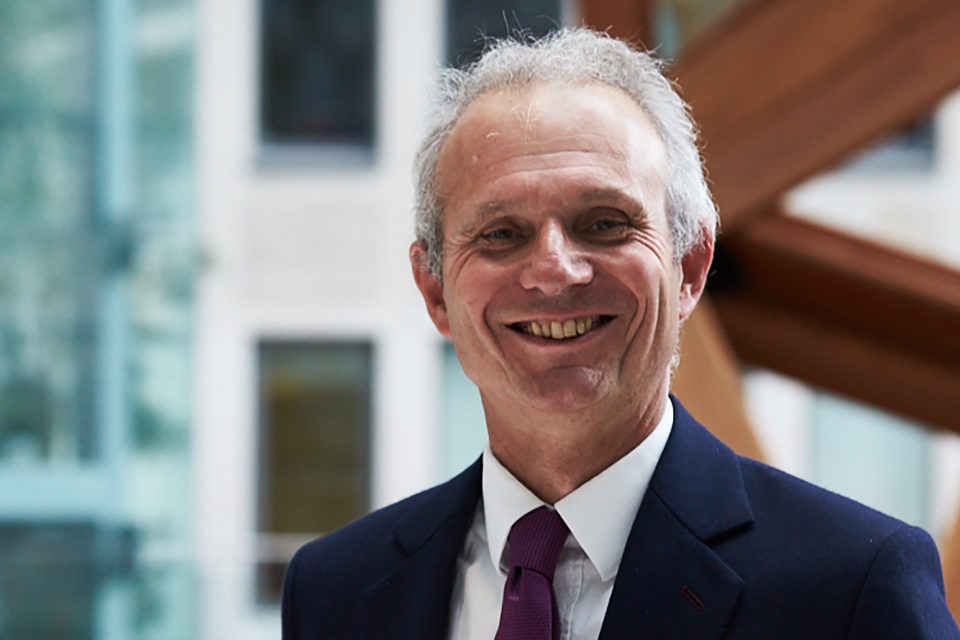
  • David Lidington – 2019 Speech on Brexit

    Below is the text of the speech made by David Lidington, the Chancellor of the Duchy of Lancaster, in the House of Commons on 11 March 2019.

    With permission, Mr Speaker, I would like to make a statement on the government’s negotiations to leave the European Union.

    Can I start Mr Speaker with an apology to you and to the Hon Gentleman for Holborn and St Pancras and to the SNP spokesman that we’ve not tonight been able to follow the usual courtesies that I would have wanted to do and give them advance notice. The reason for this as Honourable members who’ve been following the TV coverage will know, is that negotiations are still taking place in Strasbourg, and I think anybody who has taken part in EU business on behalf of this or any previous government will know that it is far from unusual for deadlines to be stretched or for talks to be going on late.

    I would emphasise to the House Mr Speaker that the intention of my Rt Hon Friend the Prime Minister is to secure a deal that works for the national interest of our country and she will persist in those negotiations until she is satisfied that that is what has been achieved.

    I can Mr Speaker, provide the House with an update tonight on what has been agreed so far and clearly the government will update the House at the earliest opportunity tomorrow should there be an outcome to the continuing talks in Strasbourg, that will have an impact on tomorrow’s debate.

    Legally-binding changes

    This evening in Strasbourg the Prime Minister and my Rt Hon Friend the Secretary of State for Exiting the EU has secured legally-binding changes that strengthen and improve the Withdrawal Agreement and Political Declaration.

    This House spoke clearly on 29 January when it voted in favour of honouring the decision of the British people and leaving the EU with a deal that works for the UK.

    The primary issue of concern then was the Northern Ireland backstop. This House needed legally-binding changes. And today, that is what the PM and the Secretary of State have achieved.

    Tonight, we will be laying two new documents in the House. A joint, legally-binding instrument on the Withdrawal Agreement and Protocol on Northern Ireland, and a joint statement to supplement the Political Declaration.

    The first provides confirmation that the EU cannot try to trap the UK in the backstop indefinitely and that doing so would be an explicit breach of the legally binding commitments both sides have agreed.

    And if, contrary to all expectations, the EU were to act with that intention, the UK could use this acceptance of what could constitute an explicit breach as the basis for a formal dispute through independent arbitration that such a breach had occurred – ultimately suspending the Protocol if the EU continued to breach its obligations.

    On top of this, the joint instrument also reflects the UK’s and the EU’s commitment to work to replace the backstop with alternative arrangements by December 2020 – setting out explicitly that these arrangements do not need to replicate the provisions of the backstop in any respect. By including this commitment in the joint instrument this provision on alternative arrangements will be legally binding.

    And I hope too that the legally binding commitment that the alternative arrangements do not need to replicate the backstop in any respect will go some way to reassure hon members that the backstop does not predetermine our future relationship with the EU should be.

    The joint instrument also puts the commitments set out by Presidents Juncker and Tusk in January onto a legally binding footing: underlining the meaning of best endeavours; stressing the need for negotiations on the future relationship to be taken forward urgently; and confirming the assurances we made to the people of Northern Ireland – for example providing a UK lock on any new EU laws being added to the backstop.

    The second is a joint statement supplementing the Political Declaration which outlines a number of commitments by the UK and EU to enhance and expedite the process of negotiating and bringing into force the future relationship, for example it makes reference to the possibility of provisional application of such future agreement, and it sets out in detail how the specific negotiating track on alternative arrangements will operate.

    As I said, Mr Speaker, negotiations are continuing and the government will provide an update to the House at the earliest opportunity should there be further changes.

    I would also completely understand that Honourable and Rt Hon members on all sides of the House will want to have the opportunity to study the documents in detail and to analyse their import. And clearly, there will be the opportunity at the debate scheduled tomorrow for members to question the Prime Minister and other Ministers and to seek answers to those questions.

    It is also the case that as he said during Law Officers’ oral questions last week, my Rt Hon and Learned friend the Attorney General has given a commitment from this dispatch box to publish his legal assessment and that will, of course, be available to all members in good time before the debate.

    I mean Hon members, Mr Speaker, say ‘when?’. Since my Rt Hon and Learned friend has just seen the outcome of the negotiations as they have concluded so far in Strasbourg, I think the House would expect that they would want the Attorney General to consider very carefully the implications of those documents, rather than rush an opinion out to meet the deadline for this statement this evening.

    Forward process

    Mr Speaker, this evening we shall table a motion that the House will debate tomorrow.

    We have already published the Withdrawal Agreement and Political Declaration, and the other papers required of us under the European Union Withdrawal Act. And those will be supplemented by the documents I have drawn to the House’s acquaintance this evening.

    Tomorrow the House will vote on this improved deal.

    A good deal

    Mr Speaker, I believe that the deal we have already secured represents a good deal for the whole country and delivers on the result of the referendum.

    When I was knocking on doors during the referendum campaign, the message I very clearly got from the people who voted to leave the EU was that they wanted to take back control – particularly of our borders but also of our laws.

    The deal ends free movement and allows us to deliver a skills-based immigration system; and it ends the jurisdiction of the European Court of Justice in the UK.

    Under the deal, we will also take back control of our money, no longer sending vast sums to the EU.

    We will leave the Common Fisheries Policy and Common Agricultural Policy and take back control of our trade policy.

    But I also found in 2016, Mr Speaker, that whether people voted to leave or to remain, they wanted us to have the deep and special partnership with the EU that our manifesto committed us to delivering.

    The Political Declaration – the framework for the future relationship – allows for this.

    The choice tomorrow

    So in the Meaningful Vote tomorrow this House will face a fundamental choice. We said we would negotiate a good deal with the EU and I believe we have. And the EU has been clear that with the improvements that have been announced, which continue to be negotiated, this will be the only deal on the table.

    And tomorrow there will be a fundamental choice: to vote for the improved deal or to plunge this country into a political crisis.

    And if we vote for this improved deal we will both end the current uncertainty and have delivered Brexit.

    This House was clear on the need for legally binding changes to the backstop. Today we have secured those changes.

    Now is the time to come together, to back this improved Brexit deal, and to deliver on the instruction of the British people.

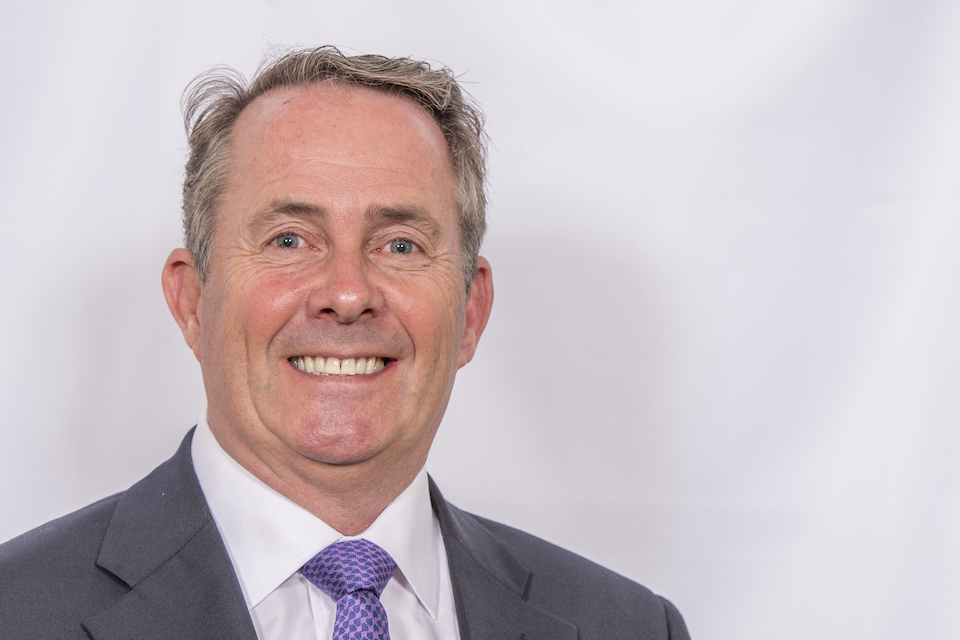
  • Liam Fox – 2019 Speech at Security and Policing Exhibition

    Below is the text of the speech made by Liam Fox, the Secretary of State for International Trade, on 5 March 2019.

    I would like to welcome the many international delegations who are joining us at today’s Security and Policing Show – more than 40, I believe – as well as Mark Goldsack, my Department’s new Director of our Defence and Security Organisation.

    And thank you to the Home Office’s Joint Resilience and Security Centre, and ADS for organising such a successful event yet again this year.

    The UK’s security industry is one of the strongest and most innovative in the world. It is one of our most diverse sectors in terms of both capabilities and application.

    You are experts in a wide-range of areas, including scanning, trace detection and anti-theft systems. We are one of the top three nations for cyber-security solutions globally. And we are renowned the world over for our expertise in securing public spaces, building on our experiences at London 2012 and elsewhere – thanks for your efforts.

    Your innovation, design, heritage and expertise are second to none.

    I sometimes get asked: “What does Britain actually make now?” I’ve no doubt many of you have heard the same thing. I have to point out that we export a huge variety of commodities. In the year to December 2018, we sold £33.3 billion-worth of cars, £24.7 billion of medicinal and pharmaceutical products, and £24.7 billion of mechanical power generator products-from aircraft engines to gas turbines, and from steam generators to nuclear reactors. So much for Britain not producing anything any more; we are actually experiencing a renaissance in manufacturing in this country.

    At the Department for International Trade, we also get the little brother of that: “What does Britain actually export?” Again, I tell them that we have an excellent economic success story to tell. Between 2010 and 2018, exports have grown by 40.8%, around 5% per year on average, driven by an increase in services exports of 55.2%.

    Exports of goods and services in the year to December 2018 were worth almost £630 billion.

    In addition to our world-class goods exports, we are also the world’s second largest services exporter. In the year to September 2018, we sold some £82.4 billion-worth of business services, almost £61 billion of financial services and nearly £38 billion of travel services. Here, across the sectors, the UK has huge comparative advantage. Services account for almost half of all our exports-42.4% going to the EU and 57.6% to non-EU countries.

    This sector is a great example of why such questions fail to understand our national success.

    The statistics are clear. The United Kingdom is the world’s second-largest defence exporter; the third-largest aerospace exporter and a producer of 40% of the world’s small satellites.

    At the Department of International Trade we have been doing our part to further strengthen that success, providing support to UK companies to help them get started and expand their footprint in global markets.

    This year alone, the department has supported over 140 export wins.

    For example, we have recently helped a Lincolnshire based security systems innovator, Concept Smoke Screen, to secure a £17.5 million contract to export anti-theft fogging systems to Brazil’s banking sector.

    Or there is Herefordshire based Silent Sentinel, who have recently sold £2.5 million of surveillance equipment into Poland.

    In terms of cyber we have exporters such as Garrison, developers of one of the world’s most secure commercial internet browsing technologies, who have recently secured major deals in Germany and the United States. It is success stories like these that underpin hundreds of thousands of high-skilled manufacturing jobs, allowing people to support their families right across the country.

    This sector plays a vital role in the UK’s prosperity: totalling some £4.8 billion of our exports – and it continues to grow.

    But it also plays a wider role: creating the products and services which promote global stability in a very direct way, by sharing the means of security and policing with our friends and allies, and, in the final analysis, saving lives.

    I am sure you don’t need me to tell you that we are at a pivotal time in British history. As we prepare to leave the European Union, Brexit is predictably consuming much of the Government’s attention – and a lot of our political bandwidth.

    In terms of my department’s own responsibilities, our main priority is making sure that we transition the trade agreements the EU has with third countries, and that our trade regime works operationally on day one, in any scenario.

    For the Government as a whole the priority is, of course, securing an agreement that the EU and the House of Commons can both agree to.

    While I cannot tell you exactly what the outcome of those discussions will be, I can tell you that it is the Government’s firm intention for you to have continued access to European markets and supply chains, and to provide certainty for businesses and individuals as we move towards our future deep and special partnership with the EU.

    But I would also like to highlight the fact that there is a world beyond Europe and there will be a time beyond Brexit.

    While people often think of International Trade as a ‘Brexit department’, about 90% of our staff work on trade and investment promotion.

    Around 130 of those are in the Defence and Security Organisation, our largest sector team by a wide margin, alongside a separate team for civil aerospace.

    We recently launched our first ever space exports campaign. And we are making renewed efforts to focus on our cyber security sector, which is driving much of the growth in our exports.

    Last April we launched a specific Cyber Security Export Strategy, based on the benefits of trade prosperity and our own national security, and I am glad to see so many representatives from companies in that area here this evening.

    Some of you may also have been involved in the work we have been doing to develop a revised Security Exports Strategy, which we hope to publish soon.

    It will set out our ambitions to support the industry, working in partnership with other departments, the Government’s innovation programmes and trade associations to provide greater levels of support to ensure that the UK’s exports in this important sector continue to grow.

    This work, in turn, forms part of our wider Export Strategy that was published in August 2018. It is informed by extensive engagement with businesses and business organisations across all parts of the UK.

    One of the things we identified in that Strategy was that the Government needed to concentrate our support on where we could make the most difference… … ensuring no viable export fails for lack of finance or insurance – through our world-class export credit agency UK Export Finance… … connecting businesses with local markets and addressing barriers to trade… … informing business about overseas markets, giving them the knowledge they need about local business cultures, regulations, or consumer needs – including the development of great.gov.uk as a one-stop advisory shop…

    … and encouraging firms to export through targeted support and in setting up a network of Export Champions – businesses who have successfully exported, and have the credibility to mentor others to do the same.

    No-one is better-placed than the Government to talk to other Governments – something that is important to many of you here.

    Many of you count foreign Governments as key customers. Even more of you count the British Government as a key customer.

    Many of you operate in heavily-regulated areas, where Government-to-Government conversations can make a real difference; helping to connect businesses, opening markets and unlocking opportunities overseas.

    And I am delighted to be able to add to that support this evening. Just before speaking to you, I signed an agreement with Sir Kevin Tebbitt, the Chairman of RISC.

    This document formalises the efforts we have made with RISC and the many trade bodies that they represent over the last year to strengthen our mutual support for the sector, and we will be setting out our plans for this in more detail in the forthcoming Security Export Strategy.

    The Security sector is one of the most adaptable and responsive industries in our country: rising again and again to the challenges posed to our safety and security.

    And it needs to be, given the ever-evolving nature of the security challenges we face: whether it be cyber security solutions to protect our data, innovative ways to manage crowded places, or in preventing disruption at large transport hubs.

    But I am confident that it is this very adaptability and responsiveness which will underpin your future success and continue to drive our international exports.

    The mission of my department – to build a future for the UK’s international trade that supports our prosperity, secures our stability and guarantees our security – is a vital one and it is complemented by the efforts of everyone in this room.

    Britain stands on the brink of a new era in our trading history, continuing our close cooperation with our partners in European Union while reaching out to friends old and new in the wider world, from which 90% of global growth is expected to originate in the next five years.

    Our mission is to open new markets, build new trade and investment opportunities and to use these to underpin the Government’s agenda for a truly Global Britain.

    It is a vital mission: and it is one I very much look forward to advancing in partnership with this sector in the year to come. Thank you.

  • Theresa May – 2019 Statement in Strasbourg

    Below is the text of the statement made by Theresa May, the Prime Minister, in Strasbourg, France on 11 March 2019.

    Last November, after two years of hard-fought negotiations, I agreed a Brexit deal with the EU that I passionately believe delivers on the decision taken by the British people to leave the European Union.

    Over the last four months, I have made the case for that deal in Westminster and across the UK.

    I stand by what that deal achieves for my country.

    It means we regain control of our laws, by ending the jurisdiction of the European Court of Justice in the UK.

    Regain control of our borders, by ending free movement.

    Regain control of our money, by ending vast annual payments to the EU.

    The end of the Common Agricultural Policy and the Common Fisheries Policy for British farmers and fishermen.

    An independent trade policy.

    And the deal sets us on course for a good future relationship with our friends and allies in the EU.

    A close economic partnership that is good for business.

    Ongoing security co-operation to keep our peoples safe.

    The deal honours the referendum result and is good for both the UK and the EU.

    But there was a clear concern in Parliament over one issue in particular: the Northern Ireland backstop.

    Having an insurance policy to guarantee that there will never be a hard border in Northern Ireland is absolutely right – it honours the UK’s solemn commitments in the Belfast/Good Friday Agreement.

    But if we ever have to use that insurance policy, it cannot become a permanent arrangement and it is not the template for our future relationship.

    The deal that MPs voted on in January was not strong enough in making that clear – and legally binding changes were needed to set that right.

    Today we have agreed them.

    First, a joint instrument with comparable legal weight to the Withdrawal Agreement will guarantee that the EU cannot act with the intent of applying the backstop indefinitely.

    If they do, it can be challenged through arbitration and if they are found to be in breach the UK can suspend the backstop.

    The joint instrument also gives a legal commitment that whatever replaces the backstop does not need to replicate it.

    And it entrenches in legally-binding form the commitments made in the exchange of letters with Presidents Tusk and Juncker in January.

    Second, the UK and the EU have made a joint statement in relation to the Political Declaration.

    It sets out a number of commitments to enhance and expedite the process of negotiating and bringing into force the future relationship.

    And it makes a legal commitment that the UK and the EU will begin work immediately to replace the backstop with alternative arrangements by the end of December 2020.

    There will be a specific negotiating track on alternative arrangements from the very start of the next phase of negotiations.

    It will consider facilitations and technologies – both those currently ready and emerging.

    The UK’s position will be informed by the three domestic groups announced last week – for technical experts, MPs, and business and trade unions.

    Third, alongside the joint instrument on the Withdrawal Agreement, the United Kingdom Government will make a Unilateral Declaration that if the backstop comes into use and discussions on our future relationship break down so that there is no prospect of subsequent agreement, it is the position of the United Kingdom that there would be nothing to prevent the UK instigating measures that would ultimately dis-apply the backstop.

    Unilateral Declarations are commonly used by states alongside the ratification of treaties.

    The Attorney General will set out in legal analysis the meaning of the joint instrument and unilateral declaration to Parliament.

    Tomorrow the House of Commons will debate the improved deal that these legal changes have created.

    I will speak in more detail about them when I open that debate.

    MPs were clear that legal changes were needed to the backstop.

    Today we have secured legal changes.

    Now is the time to come together, to back this improved Brexit deal, and to deliver on the instruction of the British people.

  • Theresa May – 2019 Speech Following Government Defeat on Brexit

    Below is the text of the speech made by Theresa May, the Prime Minister, in the House of Commons on 12 March 2019 following the Government’s defeat on Brexit.

    On a point of order, Mr Speaker,

    I profoundly regret the decision that this House has taken tonight.

    I continue to believe that by far the best outcome is that the UK leaves the EU in an orderly fashion with a deal, and that the deal we have negotiated is the best and indeed the only deal available.

    Mr Speaker, I would like to set out briefly how the Government means to proceed.

    Two weeks ago, I made a series of commitments from this despatch box regarding the steps we would take in the event that this House rejected the deal on offer. I stand by those commitments in full.

    Therefore, tonight we will table a motion for debate tomorrow to test whether the House supports leaving the European Union without a deal on 29 March.

    The Leader of the House will shortly make an emergency business statement confirming the change to tomorrow’s business.

    This is an issue of grave importance for the future of our country. Just like the referendum, there are strongly held and equally legitimate views on both sides.

    For that reason, I can confirm that this will be a free vote on this side of the House.

    I have personally struggled with this choice as I am sure many other Honourable Members will. I am passionate about delivering the result of the referendum. But I equally passionately believe that the best way to do that is to leave in an orderly way with a deal and I still believe there is a majority in the House for that course of action. And I am conscious also of my duties as Prime Minister of the United Kingdom of Great Britain and Northern Ireland and of the potential damage to the Union that leaving without a deal could do when one part of our country is without devolved governance.

    I can therefore confirm that the motion will read:

    That this House declines to approve leaving the European Union without a Withdrawal Agreement and a Framework on the Future Relationship on 29 March 2019; and notes that leaving without a deal remains the default in UK and EU law unless this House and the EU ratify an agreement.

    I will return to the House to open the debate tomorrow and to take interventions from Honourable Members. And to ensure the House is fully informed in making this historic decision, the Government will tomorrow publish information on essential policies which would need to be put in place if we were to leave without a deal. These will cover our approach to tariffs and the Northern Ireland border, among other matters.

    If the House votes to leave without a deal on 29 March, it will be the policy of the Government to implement that decision.

    If the House declines to approve leaving without a deal on 29 March, the Government will, following that vote, bring forward a motion on Thursday on whether Parliament wants to seek an extension to Article 50.

    If the House votes for an extension, the Government will seek to agree that extension with the EU and bring forward the necessary legislation to change the exit date commensurate with that extension.

    But let me be clear. Voting against leaving without a deal and for an extension does not solve the problems we face. The EU will want to know what use we mean to make of such an extension.

    This House will have to answer that question. Does it wish to revoke Article 50? Does it want to hold a second referendum? Or does it want to leave with a deal but not this deal?

    These are unenviable choices, but thanks to the decision the House has made this evening they must now be faced.

  • Theresa May – 2019 Speech on Brexit

    Below is the text of the speech made by Theresa May, the Prime Minister, in Grimsby on 8 March 2019.

    Thank you Matthew for that introduction and thank you to Ørsted for hosting us today.

    Your work in offshore wind does not just provide skilled jobs here in Grimsby, it makes a direct contribution to the UK’s efforts to reduce our carbon emissions and protect our environment.

    Achieving the economic benefits of the global shift to sustainable green growth is one of the four Grand Challenges in our Modern Industrial Strategy.

    The UK is the world-leader in offshore wind, and yesterday we launched our Offshore Wind Sector Deal to build on that success.

    As an international company investing in the UK, Ørsted is making a major contribution to that success and I am delighted to be with you today.

    Next week, Members of Parliament in Westminster face a crucial choice.

    Whether to back the Brexit deal – or to reject it.

    Back it and the UK will leave the European Union.

    Reject it and no one knows what will happen.

    We may not leave the EU for many months.

    We may leave without the protections that the deal provides.

    We may never leave at all.

    The only certainty would be ongoing uncertainty.

    Months more spent arguing about Brexit, when we could be focusing on improving our NHS, our schools and our communities.

    It will be for the 630-odd MPs at Westminster who will be voting next week to take this decision.

    But they will take it on your behalf – and on behalf of tens of millions of people across the UK.

    Parliament gave the decision to leave or remain in the European Union to you.

    Thirty-three and a half million people took part in the referendum – the biggest turnout for a generation.

    The result was close, but it was clear.

    If it had gone the other way, we would be staying in.

    But the decision was to leave – and that is what we must do.

    As Prime Minister, my job has been to negotiate the very best deal I could.

    And I believe that is precisely what the government has done – working with the EU team led by Michel Barnier.

    Discussions have at times been difficult and robust but we have both worked in a spirit of mutual respect and co-operation to get a good deal over the line.

    I have made a lot of speeches about that deal over the last few months.

    Most of them have been in the House of Commons.

    On Tuesday I will be making another one, when I open the debate ahead of the vote.

    But Brexit does not belong to MPs in Parliament. It belongs to the whole country.

    It belongs to the people who voted for it and want to see it implemented, so we can all move on to a prosperous future.

    And that more prosperous future also belongs to those who voted against Brexit, and who expect politicians to make reasonable compromises to bring our country back together.

    Everyone now wants to get it done.

    Move beyond the arguments, past the bitterness of the debate – and out of the EU as a united country, ready to make a success of the future.

    That is why I have come here to speak to you today to explain why this debate is dragging on and what is at stake.

    Because it was in places like Grimsby that the referendum was decided and where what is at stake can be seen most clearly of all.

    People here in North East Lincolnshire voted decisively to leave the European Union in 2016 – by a ratio of 7 to 3. Everyone had their own reasons for voting.

    But having spent much of the past three years talking to people about Brexit – about their hopes, their aspirations and their fears too – some common themes emerge.

    People wanted more control over the things that matter to them.

    And the Brexit deal before Parliament gives them that control.

    Today, vast amounts of taxpayers’ money is paid to the EU – in 2017 we made a net contribution of over £8.9 billion.

    The deal stops that. Instead we will spend our money on our own priorities, like our long-term plan for our precious NHS.

    Today, immigration between the UK and the EU is defined by free movement.

    People can move from one EU country to another without a job offer.

    They make a big contribution to our economy, our public services and our society.

    But it means our government does not have control of how many people move to Britain every year.

    The deal I have negotiated ends free movement and takes back control of our borders.

    We can then create an immigration system built around people’s skills, not the country they come from.

    Today, the European Court of Justice has jurisdiction in the United Kingdom.

    The deal will end that. We will make our own laws and British judges will determine how they are applied.

    Today, the terms of our international trade are decided by the EU. We cannot negotiate trade deals with other countries around the world – the EU does that on our behalf.

    The deal means we will take back control of our trade policy in our own interests.

    Many of our farmers feel that the Common Agricultural Policy does not work for them; many in fishing communities feel the same about the Common Fisheries Policy.

    The deal takes us out of the CAP, so we can design our own support for farmers.

    The deal takes us out of the CFP, restoring full sovereign control of our waters – the biggest opportunity for our fishing industry for 40 years.

    These are the changes people voted for.

    They were my priorities in the negotiations.

    And they are what the deal delivers.

    But when people voted in the referendum, it was not just about our relationship with the EU.

    It was about much more than that.

    It was also a vote for real change in our own country.

    And it was a message to those in positions of power that for too many people working hard up and down the country, life was too hard.

    It expressed a desire for positive change.

    Not just to take back control from Brussels, but to empower communities here in the UK.

    To create greater opportunity for the next generation.

    And Grimsby is a place determined to build that better future.

    Like many towns it has its share of challenges. But it also has huge potential.

    And last year it became the first town in the UK to sign a Town Deal.

    I want to congratulate everyone who worked so hard to land the deal, including both local MPs – Melanie Onn for Great Grimsby and Martin Vickers for Cleethorpes.

    The deal represents a collaboration between local and central government, businesses and the wider community. It sets as its goal making the most of Grimsby’s assets.

    The UK’s busiest port by tonnage, ready to expand its operation after we leave the EU and strike new trade deals. Its location on the Humber ‘Energy Estuary’, ideally placed to consolidate its position as one of Europe’s leading centres for off-shore wind – with firms like Ørsted making a major contribution.

    And its maritime and fishing heritage, central both to Grimsby’s identity and its future.

    The deal is a model for other towns to follow – and it has inspired the new £1.6 billion Stronger Towns Fund that we launched this week.

    That fund stands alongside the other support we are giving to local areas – over £9 billion of local growth funds, £3.4 billion for the Northern Powerhouse, £1.6 billion for the Midlands Engine – as a key part of our wider Modern Industrial Strategy.

    The central aim of that strategy is to ensure that good jobs of the future are available in every community.

    We are lucky as a country to have in London one of the world’s great cities. But it is no good all the growth in our economy and the opportunities that growth brings being concentrated in London and the South East.

    We need an economy that works for everyone, a country where everyone can be proud of their community and every community offers people the opportunity to get on in life.

    That is the opportunity that awaits our country if we agree the Brexit deal.

    We can build the stronger communities that must be the real legacy of the vote to leave.

    So the deal delivers on the priorities of those who voted to leave.

    And it also addresses the concerns of those who voted to remain.

    By maintaining the close relationships between our police and security agencies, the deal means we can carry on working with our EU allies to keep people safe.

    By reflecting the interests and serving the needs of Scotland and Wales, Northern Ireland and England, the deal will keep our precious Union of four proud nations strong and united.

    And maintaining that strength is crucial.

    More than ever before, we live in an interconnected world.

    One in which every country is affected by the decisions of its neighbours and partners across the globe. That will not change after we leave the EU.

    And neither will the values that guide our actions as a responsible actor on the world stage.

    We will be a strong voice on the UN Security Council and in NATO, the Commonwealth and the World Trade Organisation.

    We will be a leading military power, meeting our obligations to uphold global security.

    And we will keep our promises to the world’s poorest people, not just because it is the right thing to do, but because it is in our national interest.

    The deal also safeguards the protections that EU membership currently gives us and which people rightly value.

    That starts with the rights of all those from the EU who have moved here, contributed to our country, and built their lives in the UK.

    We have also committed to protecting the rights and standards currently set at the EU level – from workers’ rights to environmental protections.

    Brexit will not be a race to the bottom. In fact in most of these areas the UK has led the way, ahead of the EU. And this week we have said that if the EU expands workers’ rights, we will debate those measures in Parliament and decide if we want to follow suit.

    Our ongoing commitment will start with the two directives that will come into force after we have left, and which the UK supports.

    But we will not tie ourselves in automatically to follow EU changes without Parliament having its say.

    That would mean weakening workers’ rights if the EU ever chose to do so. And it would not be taking back control. The UK has led the way in the EU, and we will lead the way outside it.

    Leaving with the deal means workers’ rights will be protected.

    And if they back the Brexit deal on Tuesday, MPs will give our whole economy a boost.

    In spite of the unavoidable uncertainty of the Brexit process, our economy continues to do well, thanks to its underlying strengths.

    The employment rate is at a record high, the unemployment rate is at a 40 year low, borrowing this year is at a 17 year low, and debt is falling.

    Just imagine how much more we could achieve with the certainty of a deal.

    Our energy would be focused on building our future relationship, forging new trade deals with the rest of the world, and tackling the other issues that matter to people.

    Businesses will invest and create more jobs.

    Money that would be spent guarding against the economic shock of a no deal exit could be put to better use – on the services people need and on growing our economy.

    And the UK would send a message around the world – a giant ‘open for business’ sign to investors.

    The democratic case for backing the deal is clear. And so is the economic case.

    It not only removes the risk of a no deal exit, it allows us to reap the enormous benefits of leaving with a deal.

    I have set out why I believe MPs should back the deal next week.

    It takes back control of the issues people care about.

    It delivers the change that communities voted for.

    It protects the things we value.

    And it sets us on course for a prosperous future.

    Next week Parliament will make its choice.

    In January, MPs said no to the deal for a variety of reasons.

    Some wanted to stop Brexit altogether.

    But others voted against it because they had genuine concerns – and they felt there was time for the government to get changes to address them.

    The biggest concern was about the so-called Northern Ireland backstop.

    The backstop is an insurance policy.

    It is there to guarantee that if we run out of time to agree our new relationship with the EU during the next phase of the negotiations it will not lead to a hard border between Northern Ireland and Ireland.

    Like any insurance policy, no side ever wants to use it.

    It is part of the deal that the backstop cannot be permanent.

    And it is not in the EU’s interest for it to be permanent, because they fear this would give us a competitive advantage in the long-term.

    But there are genuine concerns that there is no clear way out of the backstop if the future negotiations break down. I have taken those concerns to Brussels.

    I have explained them to every single EU leader.

    And we have put forward serious, detailed proposals to address them.

    The government is in discussions with the EU right now, focused on getting the legal changes MPs have asked for.

    As I have said before, this will not in any way alter our enduring commitment to the Belfast / Good Friday Agreement, and to avoiding a hard border, in all circumstances.

    The Belfast / Good Friday Agreement was a landmark achievement for the UK Government, the Irish Government, and the political parties in Northern Ireland.

    It brought peace to our country after many years of tragedy.

    The people of Northern Ireland are our people and their security and well-being is our security and well-being.

    But just as MPs will face a big choice next week, the EU has to make a choice too.

    We are both participants in this process.

    It is in the European interest for the UK to leave with a deal.

    We are working with them but the decisions that the European Union makes over the next few days will have a big impact on the outcome of the vote.

    European leaders tell me they worry that time is running out, and that we only have one chance to get it right. My message to them is: now is the moment for us to act.

    We have worked hard together over two years on the deal.

    It is a comprehensive deal that provides for an orderly exit from the EU, and that sets a platform for an ambitious future relationship.

    It needs just one more push, to address the final specific concerns of our Parliament.

    So let’s not hold back.

    Let’s do what is necessary for MPs to back the deal on Tuesday.

    Because if MPs reject the deal, nothing is certain.

    It would be a moment of crisis.

    MPs would immediately be faced with another choice.

    Either we leave the EU with no deal on 29 March. I do not believe that would be the best outcome for the UK or the EU.

    Or we delay Brexit and carry on arguing about it, both amongst ourselves and with the EU. That’s not in our interests either.

    More talking will not change the questions that need to be settled.

    And a delay risks creating new problems.

    If we were simply asking for a bit more time to pass the legislation we need to implement Brexit once we have agreed the deal, a delay would be straightforward.

    But if it were a delay to give MPs even more time to decide what we are going to do, the EU might insist on new conditions that were not in our interest before they agreed to such an extension.

    And that might lead to a form of Brexit that does not match up to what people voted for.

    It could mean no end to free movement.

    No ability to strike our own trade deals.

    No end to the big annual payments.

    No taking back control – which is what the British people voted for.

    And a delay could lead to something else – a second Brexit referendum.

    If we go down that road, we might never leave the EU at all.

    That would be a political failure. It would let down the more than 17 million people who voted to leave the EU and do profound damage to their faith in our democracy.

    Some of the people who voted in the referendum did so for the first time in years.

    Why should they ever bother doing so again if their decision were over-turned without ever being implemented?

    My message to those MPs who agree with me that we should not risk that is simple: the only certain way to avoid it is to back the deal the government has secured with EU on Tuesday.

    Let’s get it done.

    MPs face a historic choice next week.

    I am ready to take us out of the EU with a deal that is good for the UK.

    Ready to implement the decision of voters here in Grimsby and across the UK.

    And ready to get on with making a success of a new chapter for our country.

    But I can only do that if Parliament supports the deal on Tuesday.

    I need the support of those who, like me, voted remain but believe in honouring the result, and believe that leaving with a good deal is much better than leaving with no deal.

    And I need the support of those who voted to leave, but who accept that compromise is necessary if we are bring our country back together.

    There may be some on both sides who are not prepared to back a negotiated deal with the EU.

    Some because they cannot accept leaving the EU at all; others because they cannot accept any compromise on their vision of Brexit.

    I do not doubt the sincerity of their views – but I profoundly disagree with them.

    Ironically, both sides would find themselves in the same lobby come the vote next week, each voting the same way, but each hoping for the opposite result.

    I hope that they will be in the minority.

    The British people have already moved on.

    They are ready for this to be settled.

    By coming together as a Parliament, we can bring our country together.

    Boost our economy.

    Safeguard our security.

    Protect our Union.

    And take a decisive step toward the bright future that the British people voted for, and which you and our whole country deserve.

    Let’s get it done.
  • Jeremy Wright – 2019 Speech at the Enders Conference

    Below is the text of the speech made by Jeremy Wright, the Secretary of State for Digital, Culture, Media and Sport, on 7 March 2019.

    Good afternoon everyone and thank you the invitation to come and speak here today.

    I often talk about DCMS as being a department that is all about the things that connect us.

    Like the ties of civil society that bind us and the culture, sport and heritage that brings our nation together.

    These connections of course include our world class media. Media that gives us all shared experiences and inspires and informs us every day.

    And of course, I don’t need to tell you, the digital infrastructure that is needed to power our growth as a digital economy.

    It is a crucial time for these industries.

    In recent years, we have seen new technologies emerge, new firms entering the market and consumer habits changing beyond recognition.

    This also presents a range of new challenges for policymakers.

    How can we make sure that public service broadcasters remain valued and relevant?

    How can we incentivise the type of content that underpins a healthy democracy and society?

    And how can we make sure we have the right digital infrastructure to support the digital pioneers who can make this country a better place?

    So today, I want to outline three areas I see as crucially important if we are to keep forging the connections that are so important for a well informed and prosperous nation.

    Supporting domestic broadcasters

    The first is supporting the UK media in a landscape that is increasingly competitive.

    There has been a lot of discussion about print media in recent weeks, especially after the publication of the Cairncross Review into high quality journalism.

    So today I wanted to talk about our broadcasters, another part of our media that has undergone massive changes I know that you have been discussing this morning.

    Traditional TV set viewing of broadcast channels is declining at an increasing rate, with a 5 per cent decline year-on-year in 2018. And for under 25’s the figure has fallen by half since 2010.

    Even in the midst of this seismic change, our broadcasters remain powerful forces for good at home.

    PSBs work for the public benefit to foster shared experiences, stimulate learning and inspire change.

    The very nature of our PSBs means they perform services that are in our national interest.

    For example ITV’s regional news coverage and Channel 4 driving the growth of the sector outside London, including through setting up their national HQ in Leeds.

    And they are making a huge impact across the globe too, with hit shows like Sherlock, Planet Earth and Victoria being sold to over 180 territories worldwide.

    And of course these PSBs are joined by other diverse and creative broadcasters who share many of their essential values.

    Sky and Sky News are a very strong example of this and I am sure you will hear more about their work from Jeremy Darroch a little later.

    We must recognise that while global competition and the opening of markets has been beneficial, it has also created tough challenges for traditional broadcasters.

    And we must not lose the good that public service broadcasting can do and the impact it makes on our society, our economy, and our standing around the world.

    That is why the Government asked Ofcom to look at prominence.

    It is vital that our regulatory environment adapts with the market and audience expectations.

    And that means ensuring that public service content can be found easily on different platforms and within PSBs’ on-demand offerings.

    There is no point having prominence rules that relate to how material used to be viewed, rather than how it is viewed today and how it will increasingly be used – from smart TVs to voice control.

    And we will consider Ofcom’s report carefully when it is published, and if they make legislative recommendations we will look at taking them forward.

    But there is also a need to look more broadly at how we can strengthen the foundations that support public service programming.

    An example of Government taking a new approach is through the new pilot Contestable Fund.

    This will provide up to 57 million pounds for new, UK originated children’s content, with a further fund of up to three million pounds for public service radio programming.

    This will test a new way of helping emerging British talent reach UK audiences.

    The fund is on track to be launched on the 1st April and I would encourage all eligible broadcasters and producers to engage with it.

    Of course, on the subject of things scheduled to happen around this time, Brexit.

    I realise it has not been an easy period and like all businesses, you are looking for certainty.

    And I will do everything I can to seek the best possible arrangements for broadcasters over the coming months.

    We have already confirmed that EU exit will not have any direct impact on creative sector tax reliefs.

    And that in the event of no deal, the Government will underwrite the payment of awards made before exit day, for programmes like Creative Europe.

    And last month, we reaffirmed our commitment to EU co-production by signing the revised Council of Europe’s Convention on Cinematographic Co Production.

    I am passionate about creating the best possible conditions for this vital industry to thrive. But we accept that as a Government we do not have all the answers.

    I have been heartened to see the work that broadcasters have been doing to form partnerships to achieve greater reach and impact.

    Last week, both BBC and ITV announced their plan to launch a new Britbox service.

    I am pleased to see the BBC and ITV bringing forward an ambitious proposal and I look forward to seeing more detail on this service as it develops.

    I see partnerships like these as a part of a competitive and highly creative future for the sector.

    Level playing field

    In pursuit of that bright future, the second topic I want to discuss today is a level playing field.

    The UK rightly prides itself on its world-leading broadcast regulation that allows for free speech and innovation whilst protecting consumers. It is vital we have effective regulation for digital content too.

    The Government will soon be publishing a White Paper on Online Harms, which will set out clear expectations for companies, focusing most directly on those harms which present the gravest threat to user safety.

    But beyond the White Paper, we must also make sure that our concept of broadcasting, and our policies towards it, recognise and reflect the growing impact of the digital world.

    We all know the likes of Netflix and Amazon Prime are now an established part of our media landscape and we will soon see other players entering too.

    Viewers clearly welcome their presence here and they have made a substantial investment..

    Netflix reported that it made 40 productions in the UK last year. It has also made important investments in talent, through training schemes and production initiatives.

    They are increasing their UK presence and engagement which is great news for our creative industries and for viewers.

    And it’s not mutually exclusive to have a thriving PSB system and a thriving SVoD world.

    But as the SVoD landscape develops, we do need to understand what this means for UK broadcasters and UK audiences.

    Our regulation of broadcasters is widely appreciated – including by audiences – for its robustness and effectiveness, and it sets the framework for much of the cultural and economic benefit that we so value.

    It provides crucial consumer protections, especially with regard to harmful and inaccurate content, which plays an important role in ensuring trust in our broadcasters.

    But for relatively new on demand platforms, rules are in many areas not as robust.

    We place high expectations on our public service broadcasters to reflect and represent the full diversity of the UK’s nations and regions, and in doing so creating a product that often appeals across the globe.

    On-demand platforms undoubtedly have global appeal. But it is worth thinking about how we can encourage them to develop in a way that means the content produced here truly reflects UK audiences.

    Otherwise there are risks that audiences become more reliant on content that feels, as Sir Peter Bazalgette said recently, “curiously stateless”.

    These changes are something we will consider carefully as the sector changes rapidly.

    Another area where there may not be a level playing field is advertising.

    I announced last month that my department will be conducting a review of how online advertising is regulated, and my officials are now scoping out how to take this work forward.

    Equity between the regulated broadcast world and currently unregulated online world will also be an important part of our consultation which will be published shortly – on potential advertising restrictions for high fat salt and sugar products.

    The consultation will look at online restrictions as well as those for TV. We will the make a decision solely based on the evidence and the proportionality of impact.

    This distinction between online and offline is one of the most important policy questions of our time, and it applies to areas far beyond broadcasting.

    I went to California a few weeks ago to meet leaders of many of the world’s biggest technology firms.

    And I was clear that while we are very supportive of technology and innovation, we need to see technology companies doing more to face up to their responsibilities in this area.

    There is some important work underway. Only today we saw the conclusion of a joint US-UK challenge event on disinformation.

    This gave tech companies who are developing solutions the opportunity to demonstrate their products to a government audience.

    But as more and more of our content, and public conversations, move online, we will need robust and democratic frameworks to help us find the right path.

    This is not a move against technology; this is recognition that technology plays a huge part in our lives, with all the good it brings.

    But it brings challenges too and a responsive and responsible Government must address them.

    This is not an easy task but we all have a stake in getting this right and I’m looking forward to working with you all to do so.

    Telecoms

    And finally, I wanted to talk about another form of forging connections – economic connections through our digital infrastructure.

    The UK has a strong digital economy. But to maintain our global position – and be ready for the future – we need to invest now and at scale in the latest technologies.

    There is a real opportunity for the UK to become a world leader in digital connectivity – increasing our competitiveness, boosting productivity and meeting the future demands of consumers and businesses.

    And we have ambitions in this area to make sure as many people as possible get the benefits, whether they live in urban centres or rural communities.

    These ambitions were set out in the Government’s recent Future Telecoms Infrastructure Review, that sets out a long-term, national strategy for the UK.

    We want to see 15 million premises connected to full fibre by 2025, with coverage across all parts of the country by 2033.

    We want to make sure 95 per cent of the country has good mobile coverage.

    And we want the UK to be a world leader in 5G, a new age of wireless connectivity that will open up important new areas of growth for our economy.

    We have seen significant progress in recent months, with industry taking a leading role.

    The availability of full fibre in the UK is now increasing rapidly – spurred by network competition. A million premises received full fibre over the last year.

    But the UK still lags behind many of our peers, with only 6 per cent availability.

    Mobile coverage has markedly improved – but too many parts of the country still have poor reception.

    A strong, competitive telecoms market is the best way of delivering our ambitions.

    As a Government we are working to create the best possible conditions to support the large-scale commercial investment we need.

    Our barrier busting measures – such as our planned legislation to make sure telecoms services can be installed more easily – will reduce the cost of building fibre and mobile networks.

    Our Statement of Strategic Priorities for Ofcom is clear that stable, long-term regulation will be necessary to incentivise network investment – and ensure fair and effective competition.

    Our publicly funded Rural Gigabit Connectivity programme will launch in Spring to trial new approaches to fibre deployment in hard-to-reach areas.

    And we are spending 200 million pounds on a programme of 5G trials to put the UK at the cutting edge of this new technology.

    So a lot is being done – by the market and by Government. But there is a lot still to do.

    There is an issue with customer satisfaction in many parts of the industry, as we set out in the recent Statement of Strategic Priorities for Ofcom.

    This Government is committed to working with Ofcom and the CMA to safeguard the interests of telecoms consumers, including the vulnerable and less engaged.

    More needs to be done to clamp down on harmful business practices and make it easier for customers to switch networks.

    And we need to see more on coverage too.

    It’s time to make seeing “no signal” on your screen a thing of the past.

    Ofcom’s proposed spectrum auction will make important further progress towards that 95 per cent target.

    But the Mobile Network Operators must also show leadership in this area and I am calling on them to respond to this challenge.

    I want to see new innovative ideas from industry to deliver widespread, high quality coverage.

    And if necessary, we will consider every single tool that we and Ofcom have in the policy and regulatory toolbox in order to achieve that 95 per cent goal.

    It is essential that the UK has the telecoms infrastructure to meet the growing demands of consumers and businesses. And promote the benefits of connectivity across the whole of the UK.

    These are the opportunities that we need to seize, if we are to build on our world leading digital economy.

    Our future prosperity and future productivity depends on it.

    Conclusion

    This is a very important conference, bringing together our creators and our innovators are what make our country great. And you are all doing crucial work to make life better, easier and more fulfilling for so many people.

    A vibrant media means a vibrant democracy.

    And strong infrastructure means a strong nation.

    And we must have both.

    Thank you very much.