
Author: admin

  • Mike Gapes – 2019 Speech on the UK’s Departure from the European Union

    Below is the text of the speech made by Mike Gapes, the Independent MP for Ilford South, on 14 March 2019.

    Two years ago when we debated article 50 and I voted against invoking it, I said that we would go on to an escalator with no brake and no way of getting off. I now understand why the Prime Minister invoked it at that time. It was because she wanted to stop a European Parliament election. The timetable of agreeing an article 50 process 18 months before the Government had even got an agreed position, which lasted about three days before the resignations, was driven by fear inside the Conservative party. They did not want UKIP to come back in a European election, so they triggered article 50 at that point.

    The reality is that the Government are now trying to get us out as quickly as possible, and amendments that refer to the end of June are also trying to get us out quickly because people fear a European election. The reality is that if we do not have a European election, we will have no voice, no say and no vote within the councils of Europe when we may still be in a transition. That will give us a great period of weakness in any future framework negotiations.

    In the 1970s this country was the sick man of Europe. We are now the joke of Europe.

  • Damian Hinds – 2019 Speech at Association of School and College Leaders’ Annual Conference

    Below is the text of the speech made by Damian Hinds, the Secretary of State for Education, in Birmingham on 15 March 2019.

    This morning I woke up to news of a terrible attack in New Zealand. In the never-ending battle against hate, education plays a leading role in tackling intolerance and teaching mutual respect. My thoughts and prayers are with those in New Zealand.

    Good morning everyone and thank you Rachael for that welcome.

    I am very pleased to be here, joining you for a second year. When I stood up this time last year, I had been in the job for just two months.

    I told you then how pleased I was at the prospect of working with you, and how I was acutely aware of the enormous weight of responsibility this job carries. It is a responsibility to you and all those school and college leaders like you, as well as the teachers, the support staff, the governors and of course the children, young people and families we all serve.

    One year on, I can say for certain that the best part of my job is getting out to visit as many of those schools and colleges as possible. In the last few weeks I have heard that I’m not meeting headteachers. This came as a bit of a surprise to me.

    I’m visiting schools, nurseries and colleges week in week out and I’ve heard from hundreds of headteachers about their ambitions for their students and the challenges they face. You couldn’t do this job without talking to headteachers.

    And I can reassure you that I have heard the message on funding loud and clear and before I go any further – I want to address this directly.

    I understand that there are real concerns on funding, that finances are challenging for schools and that many of you have had to make, and are having to make very hard choices. I know that rising costs from suppliers to supply agencies add to these pressures, alongside the particular pressures in High Needs.

    On Wednesday the Chancellor announced the next spending review, which is when Government sets out spending allocations for the year ahead. I will take that opportunity to make the strongest possible case for education. For me, its not only a moral argument about our priorities – though that can’t be overstated.

    From a hard-headed point of view, for a strong, highly skilled, productive economy clearly we need the right level of investment in our schools. And so too, to deliver the revolution we need in technical education we need investment in our colleges.

    I stood on this stage last year and said that I would back head teachers.

    Since then, when I was challenged to ban mobile phones in every school, I backed heads to make that judgement because you are best placed to make decisions in your schools.

    When I have been challenged to intervene to centrally direct behaviour policy, I’ve backed heads to know what is right for their schools, their staff and their pupils.

    And as we approach the next spending review, I will also back heads to have the resources they need to deliver a world class education.

    Of course there will be competing demands on the public finances, as there always are, but ours is a very strong case, because so much else relies on what you in our schools and colleges do.

    It is our education system that will shape the doctors, police and nurses of the future. It’s our education system that will produce the engineers, builders and lawyers of the future. And it’s our education system that will give us the teachers of the future.

    I want to work with you on this just as we’ve worked together in other areas – in particular on recruitment and retention.

    I’d like to say a special thank you to ASCL here, for their contribution and to Geoff in particular. And I’m also very grateful to the heads on our expert advisory group: Maura Regan, Jo Heaton, Vijita Patel and Lesley Powell.

    Making sure that teaching is a profession that attracts and retains top talent is our shared priority, and the strategy sets out a clear plan to put this into practice.

    Ultimately, a school can only be a great place for pupils to learn if it’s also a great place for teachers to teach.

    Clearly, it’s school leaders like you that shape a school’s working environment, its ethos. But it’s my responsibility to support headteachers to create great cultures in their schools. Critical to this is enabling you to be able to hire the best teachers possible and to keep them in post.

    You know that teaching can be an incredible career. But you also know it’s often a challenging and tiring one as well as one where you get to spend every day working with inspiring and inquiring young minds.

    I’m well aware that many of the people in this room regularly put in a working week which is just too long. The pressures that you and your staff face are not good for your quality of life and your families. This is why I made a promise to you last year that I would take an unflinching look at workload and its causes.

    Its why, for example, I asked Professor Becky Allen to take a hard look the issue of data and the burdens it creates. Our workload reduction toolkit, published in July, has been downloaded more than 95,000 times.

    We have just updated it with a new section on reducing workload linked to behaviour management and advice for governors in response to recommendations in Professor Allen’s report.

    And today we are also publishing updated guidance helping schools to reduce the workload and data collection burdens that often go with the pay and appraisal processes.

    But to make lasting progress on workload, we also need to do more to set up a system that works for both teachers and leaders.

    At the heart of this systematic approach – and as set out in the recruitment and retention strategy – are our reforms to the accountability system. Children only get one shot at an education so accountability is vital – and I know that you recognise that.

    But I do recognise that the current system can have unintended consequences that add unnecessary burdens, especially for schools in some of the most challenging circumstances.

    So we are radically simplifying the system to reduce the pressure on school leaders. As part of this we intend to make “requires improvement” the sole trigger for an offer of support – replacing floor and coasting standards.

    School accountability needs to be simpler and more supportive. Heads should have complete clarity on the way the system works, the distinct role that each actor plays within it and the support available to them.

    Central to this is the new Oftsed framework, Amanda Spielman and I are totally aligned on the need for an active focus on teacher workload, supporting and recognising leaders in managing this well alongside a commitment to reduce data burdens.

    Amanda and her team have been working hard to combat the myths about ‘what Ofsted wants’. And more broadly, this new inspection framework will – rightly – rebalance inspection towards the substance of what happens in a school.

    I recognise that workload is a tough one to crack. For many years now teachers have been reporting working excessive hours, but I hope we may now, with will and concerted action from all the actors in the system, be at a turning point. And what is making the biggest difference by far is what headteachers and principals are doing.

    From surveys we know that now virtually all schools – over 90% – have taken specific action on workload reduction. We’ve published some great examples today in the workload toolkit, from King Charles I School, and Ascent Trust, among others.

    Tackling workload is one of the ways we can build a supportive culture in schools. Another is to ensure that we’re providing our teachers with a proper professional pathway. The way in which teachers enter and progress in the profession must enable staff to achieve the things that brought them into teaching in the first place: inspiring children and ensuring they can fulfil their potential. This is already the case for many, but not yet for enough.

    You’ve all had talented teachers, who have decided they no longer want to do the job.

    It is a sad fact that more than 20% of new teachers leave within two years and 33% within five. And this problem is most acute, as you’ll know, in areas of disadvantage, where schools can least afford that kind of professional churn. They are hit particularly hard by high turnover in some subjects, like maths and science.

    The great tragedy of this situation – and it is a tragedy – is that teachers all come into the profession with such a burning vocation, such optimism – they want to change lives; they are passionate about their subject and sharing their knowledge.

    Retaining teachers in the first years of their practice is now the biggest challenge we face in the teaching profession.

    That’s why at the heart of the Recruitment & Retention Strategy is the Early Career Framework, the most significant reform to teaching since it became a graduate-only profession.

    Today, not enough early career teachers receive the high quality professional development they need to build the foundation for a successful career. We’ll change this by putting in place a fully-funded, two-year package of support for these teachers, linked to the best-available research evidence.

    The Early Career Framework will provide much needed structured support for all teachers at the start of their career. The headteachers were extremely clear during the creation of the Recruitment & Retention strategy that for the career framework to work, additional funding was required. We heard you.

    So by the time the framework is fully in place we will back it up with substantial extra investment and we expect to be spending at least an extra £130 million every year on its delivery.

    The framework covers the key areas that will form the building blocks of any teacher’s career: behaviour, management, pedagogy, curriculum, assessment and professional behaviours; and it underpins an entitlement to support and training in these areas for all new teachers, including a strengthened mentoring offer.

    To enable this, we are extending the induction period from one year to two and we are guaranteeing that every new teacher will have more time to consolidate what they are learning – with a fully funded 5% off-timetable in their second year.

    And our vision for the framework isn’t just to transform the experience for early career teachers joining the profession. We want the framework to become the key link that brings together professional development at all stages of a teacher’s working life. This covers everything from the reformed ITT core content, to the development of specialist NPQs that support those teachers who don’t want to go into leadership to continue to develop and progress.

    I want to enable more teachers at every stage of their careers to benefit from a clear, coherent professional pathway.

    Similarly, as people’s working patterns change, so it is increasingly important that schools are able to adapt their working practices, so that teachers are able to have the greater flexibility that is becoming more and more important throughout our country. Although more teachers are now working part time, it is still a smaller proportion than the working population as a whole.

    I appreciate that this can be a real challenge in schools which is why we are taking steps to help you make it more achievable.

    We will be creating a new jobshare matching service to support teachers who are looking for a potential jobshare partner. We have also launched a competition among EdTech providers to come up with innovative solutions to enable schools to accommodate more flexible working patterns, including through timetabling tools.

    In developing the R&R strategy, teachers told us that they don’t mind working hard when they can see the difference they are making. But their wellbeing is not something that we can take for granted or ignore.

    Today I’m announcing the creation of an expert advisory group on wellbeing. Among the experts who have agreed to take part are Paul Farmer, of Mind, Peter Fonagy, from the Anna Freud National Centre for Children and Families, Nancy Hey, of the What Works Wellbeing Centre and other leaders in the field. I am pleased to say that ASCL and other representatives of the school and college sector will also be involved, as well as serving teachers and leaders.

    The group will provide expert advice and work with us to look at what government, local authorities and academy trusts can do to promote wellbeing.

    I know there is a lot of excellent work already being done by schools and colleges involving charities such as the Education Support Partnership and I want to build on that.

    Of course, motivated, well-supported teachers are more likely to have motivated pupils in their classrooms.

    This point – that the success of teachers is inextricably linked to the success of their students – shapes my entire approach to education. It’s an idea formed through countless conversation with the people in this room and with the terrific teachers who work for you.

    I began this morning by talking about the sense of responsibility that I feel in this job. But it’s teachers and school leaders that shape the lives of their pupils – and in turn the future of our country. My job in government is to do everything I can to support you.

    We have made good progress on the Recruitment and Retention Strategy, the accountability framework and CPD. Make no mistake though, I see these efforts as a work in progress and something we must continue to shape together.

    I know that each one of you will continue to work tirelessly on behalf of your staff and students. In return, you can expect me to back your right to be the ones making the decisions in schools, and doggedly determined in working to ensure we have the resourcing we need for our schools.

    I very much look forward to seeing you again this time next year and to seeing the progress I know we are going to make between now and then.

  • Liam Fox – 2019 Speech on Wales

    Below is the text of the speech made by Liam Fox, the Secretary of State for International Trade, on 9 March 2019.

    As Wales Week in London draws to a close, there is no better time for us all to reflect on Wales’ position in the global marketplace – and there is much to be proud of.

    The amazing scope of Welsh innovation and entrepreneurship was showcased in last year’s Board of Trade Awards hosted in Swansea. They ranged from a marine lighting firm in Swansea, furniture makers in Wrexham, revolutionary construction material manufacturers based in Pontypridd – and a brewery in Newport. These companies have contributed to Wales’ impressive economic performance. LSN Diffusion – an Ammanford-based powder coating company – exports nearly 90% of its products to countries including India and the U.S for example.

    Goods exports from Wales continue to grow – rising by 3% to £16.9bn in the year to Q3 2018 – and that’s before taking into account our world-class services offering to global investors. Wales attracted 57 FDI projects in 2017/18, creating more than 3,100 new jobs.

    Wales is building a strong reputation for innovation around the world – offering foreign companies access to top class talent, and a growing range of opportunities in areas like semiconductors, cyber security, neuroscience, wound healing, and of course the financial and insurance sectors, which in 2017 employed 29,500 people in Wales, contributing over £2.8bn to the UK economy.

    The UK Government is working hard to continue that success by supporting Welsh firms to enter and expand into growing markets around the world.

    In November 2018, we announced a £250m Energy Investment Portfolio in Wales, which will deliver further growth in innovative sectors, create jobs, and drive prosperity.

    We also have dedicated online support – invest.great.gov.uk, giving overseas businesses help and advice to invest in the UK and access our high potential investment opportunities – and great.gov.uk, which acts as a first port of call to get Welsh firms started on their exporting journey. The platform also offers information and support ranging from country guides and export opportunities to specialist advice on accessing particular markets.

    And UK Export Finance – the UK’s export credit agency – has dedicated finance managers in Wales and has provided nearly £7.5m of support for Welsh exporters in 2017-18, resulting in over £64m worth of overseas sales.

    The truth is that if you’re a Welsh business, or thinking of investing in Wales, there has never been a better time, in terms of support, opportunity and ease of doing business.

    The UK – with Wales at its heart – stands at the beginning of an exciting period in its trading history, with the opportunity to reach out to the wider world as an independent trading nation. It is estimated that in the next 5 years, around 90% of global economic growth will come from non-EU nations.

    Cardiff-based company Sure Chill is one of the Welsh companies leading the way, with life-changing medical refrigerators that have protected 20 million vaccinations in over 50 countries including Kenya, Mali, Nepal, Nigeria and Pakistan.

    As we prepare to leave the EU, this is the moment to look to the future – to a world beyond Europe, and a time beyond Brexit. The UK is a great trading nation – and the UK Government will continue to work with firms in Wales to deliver the investment, exports and new opportunities that our people, businesses and communities need.

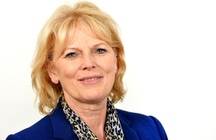
  • Anna Soubry – 2019 Speech on the UK’s Departure from the European Union

    Below is the text of the speech made by Anna Soubry, the Independent MP for Broxtowe, in the House of Commons on 14 March 2019.

    It is a pleasure to follow the hon. Member for Chesterfield (Toby Perkins). I rise to support amendment (h), tabled by my hon. Friend the Member for Totnes (Dr Wollaston) in support of a people’s vote.

    The people’s vote is not about the four of us who attended the event just over a year ago when we launched the People’s Vote campaign, although I am proud that the hon. Members for Oxford West and Abingdon (Layla Moran), for Brighton, Pavilion (Caroline Lucas), for Streatham (Chuka Umunna) and I will all tonight be true to our word and vote for a people’s vote. At the launch we were members of four parties; we are now, of course, in different positions. But as I say, it is not about us. We are not the people’s vote.

    The people’s vote is not even Susan and Linda, who go out every weekend as members of the Nottinghamshire People’s Vote campaign, not only in West Bridgford, where we were on Saturday, but in all weathers and all circumstances. They have been to Ashfield and to Mansfield. They have stood and made the case for a people’s vote, not only in bad weather but, frankly, in other adverse conditions, and they do it with a burning passion. They do it because they believe that our great nation has made a mistake, but they do not do it to thwart Brexit. They do not do it to stop Brexit; they do it as I do, and as I know many other Members do: because we believe with passion that this matter must now go back to the British people. It is the only way through the mess.

    It may be when I am long gone, but there will undoubtedly be an inquiry into what happened and how this great country came to find itself in a position of leaving the European Union—and, notwithstanding last night’s vote, I still gravely fear that we could do so without a deal. The inquiry will record that there was a lack of honesty, courage and leadership, not only in this place but among journalists and businesses—among people who said things in private but simply failed to do the right thing in public when it was needed for our country.

    The moment is now. I apologise if I caused offence by crying out “Shame” earlier, but I say gently to colleagues in the Labour party, many of whom I have huge respect for—they know that I work cross-party with them on all manner of campaigns and will always continue to do so—that they know in their hearts the courage of my friend the hon. Member for Redcar (Anna Turley). Her constituency voted leave in the number it did, but she has led in her constituency and persuaded the people of her constituency to back a people’s vote. She has shown courage, honesty and leadership. We cannot wait for the Labour Front-Bench team—they are Brexiteers. They do not want a people’s vote because they are frightened that the people will change their mind. If we do not do the right thing, that will be our legacy, knowing that people did not want it. We cannot let it happen.

  • James Frith – 2019 Speech on the UK’s Departure from the European Union

    Below is the text of the speech made by James Frith, the Labour MP for Bury North, in the House of Commons on 14 March 2019.

    The Prime Minister is not alone in failing us. The Government Back Benches are full of former Ministers who claimed, “I am the man who can!” The first Brexit Secretary said he could, but he could not. The former Foreign Secretary said he could, but he could not. The second Brexit Secretary said he could, but he could not. Now, they join the hardliners on their Benches who all say they can, but we know they cannot. It is not just the Prime Minister who has been let down by their mis-selling. The country has been misled, and now the plan has been mislaid. Ultimately though, this comes down to a failure of the Prime Minister—her leadership, her incapacity to build consensus or to hear what is said, and most alarming of all, her contempt for Parliament. This Parliament has been voted in more recently than the referendum. This Parliament is a more recently anointed authority than the referendum result. My town sent me here as someone who did not trigger article 50—many of my constituents did so because of that fact. We are a Parliament more representative of the changing picture we see.

    On at least three occasions, in normal times the Prime Minister’s record would have cost her her job. Those three occasions were opportunities for her to change tack: to offer the UK a tonic, with a deal that united the country through unity in this House. We are told that Parliament needs to decide what it is for, but we have been given no chance to decide. We have pored over this, many of us spending time doing the heavy lifting to understand why the people felt so deprived of a say, so overlooked, that they pulled the leave cord in 2016 to stop the show.

    We must extend article 50 and establish what we are for, through indicative votes and a process of gathering the way forward. Fill a deal with content that speaks to the support in this House for a deal—one with a customs union and a direction to deal with the world and the protection of our people and our planet. Then take this deal and seek further permission on it, not from the pomp in the Tory party but from the public. Go back and seek further instruction from the people. Let them hold it up to the light, for their final say. Let Britain have her last word—to stick or twist, to back it or keep what we have.

    Britons voted to leave or remain in their millions, then this changed Parliament was ushered in. Division is still palpable, and all the doorstepping and polling in the country tells us that there is no magic healing number. Compromise is a must. So the content of a deal with the permission of the public marry this changed Parliament to the changing picture we see—and of course everyone reserves the right to vote the same way again. At that point, I will support a deal before arguing we don’t know what we’ve got till it’s gone.

  • Lucy Powell – 2019 Speech on the UK’s Departure from the European Union

    Below is the text of the speech made by Lucy Powell, the Labour MP for Manchester Central, in the House of Commons on 14 March 2019.

    I will try to keep my remarks brief. Thank you, Mr Speaker, for selecting my hurried, last-minute manuscript amendment to amendment (i), which stands in the name of my right hon. Friend the Member for Leeds Central (Hilary Benn).

    As other Members have said, what a mess we are in. We really are not covering ourselves in glory right now. My hon. Friend the Member for Rhondda (Chris Bryant), in what I thought was an amazing speech, referred to the muppets. He is right, but to me this also feels like the last scene in “Thelma & Louise”, with the Prime Minister pressing down ever harder on the accelerator pedal as we head towards the cliff, with banners coming off the back of her car saying, “It’s my way or the highway.” She just keeps putting up these false choices. This really has to stop, because it is now beyond a joke.

    We need to find out once and for all—we have been asking for this for months now—whether there are other directions of travel that the House could agree on. Amendment (i) is now the only way—we can no longer trust the Government to bring forward the process—to allow Parliament to express its view.

    Whether or not we want a second referendum, we still need to resolve what leaving the EU looks like and what Parliament says it should look like. For most people, that is about addressing the political declaration that sits alongside the withdrawal agreement and that could be done in good time. There is no reason why that should take very long at all. The Minister for the Cabinet Office seemed to contradict himself earlier. He suggested that indicative votes or votes next week would mean a delay of a year. Well, if the Government think that, and if the amendment is agreed to tonight, they need to bring forward an extension for that time. That is up to them to determine.

    The reason for my hurried manuscript amendment is to try to maximise support in this House, because I know that many colleagues are concerned about the forthcoming European elections and about a long extension to article 50. But let us just remember that, if this amendment is passed tonight and we say that we want an extension to article 50, it is up to the Government to come forward with the necessary legislation, with the date therein, to decide how long it should be for. I hope that the House will agree to my amendment to my right hon. Friend’s amendment, so that we can maximise support for that process and allow us, at long last, to have a say on the way forward.

  • Chris Bryant – 2019 Speech on the UK’s Departure from the European Union

    Below is the text of the speech made by Chris Bryant, the Labour MP for Rhondda, in the House of Commons on 14 March 2019.

    If I am honest, all this just reminds me of the Muppets. It is that moment when Gonzo, I think it was, sings “The Windmills of Your Mind.” As he sings and runs faster and faster, with his legs wheeling like the Isle of Man’s coat of arms, he becomes wilder and wilder and goes out of control. We are

    “like a circle in a spiral, like a wheel within a wheel, never ending or beginning on an ever spinning reel”.

    It is just going on and on and on, and every two weeks we come around on the merry-go-round and we make the same speeches all over again, and we still ride our own hobby horses. Frankly, it is not doing us or the nation any good medically or emotionally.

    My amendment is a simple one, and it tries to put a stop to all this gyratory nonsense, as the right hon. Member for Clwyd West (Mr Jones) rightly mentioned. My amendment is the embodiment of a very old principle of this House. When James I became King in 1603—do not worry, I am not going to do every year—he summoned Parliament, and that Parliament became so fed up with MPs constantly bringing back issues on which it had already decided that the House expressly decided on 4 April 1604:

    “That a question being once made, and carried in the affirmative or negative, cannot be questioned again, but must stand as a judgement of the House.”

    That has been our rule.

    James Heappey

    Will the hon. Gentleman give way?

    Chris Bryant

    No, I will not give way. I am terribly sorry, but there is not much time and I am sure we have already decided the matter anyway, so it stands as a judgment of the House.

    This ruling has been repeated many, many times. On 30 June 1864, Sir John Pakington wanted to give more money to nursery schools—hoorah! On 17 May 1870, Mr Torrens wanted to relieve poverty by enabling the poor to emigrate to the colonies. On 9 May 1882, Henry Labouchère wanted to allow MPs to declare, rather than swear, an oath so as to take their seats. On 27 January 1891, Mr Leng wanted to limit railway workers’ very long hours. On 21 May 1912—this one would probably have the support of every Member—George Lansbury wanted to allow women to vote.

    On every single occasion, the Speaker—Speaker Brand, Speaker Peel, Speaker Denison and Speaker Lowther—said, “No, you can’t, because we’ve already decided that in this Session of Parliament”. That is why I believe the Government should not have the right to bring back exactly the same, or substantially the same, measure again and again as they are doing. It is not as if the Government do not have enough power. They decide every element of the timetable in the House. They decide what we can table and when. They decide when we sit. They can prorogue Parliament if they want. They have plenty of powers. The only limit is that they cannot bring back the same issue time and again in the same Session because it has already been decided.

    What do the Government not understand about losing a vote by more than 200 and losing it a second time by 149? For me, the biggest irony of all is that the Government repeatedly say, “The people can’t have a second vote”, but the House of Commons? “Oh, we’ll keep them voting until they come up with the right answer”. We should stand by tradition—Conservatives should be a bit more conservative about the traditions of the House—and stop this ludicrous, gyratory motion.

  • Amanda Spielman – 2019 Speech on Knife Crime

    Below is the text of the speech made by Amanda Spielman, the Chief Inspector of OFSTED, on 12 March 2019.

    This is a timely report for Ofsted to be publishing. The related issues of knife crime, gang violence and child exploitation are rightly high on public and political agendas. The images of those recently killed with knives on the front pages of newspapers remind us all of the tragic cost of violence being paid by our children. Our first thought is of course with the victims’ families.

    In a previous report, we highlighted the dangers of county lines drug operations, in which criminal and manipulative adults exploit children to travel from our major cities to all corners of the UK to distribute drugs, often leaving those children vulnerable to further physical and sexual abuse far from home. This is important context for this study.

    This report looks specifically at school leaders’ experiences of knife crime in London, as well as the views of children and some parents of both victims and perpetrators. It makes recommendations for school and college leaders, local authorities, the police and other pan-London agencies about how to work better together to help keep children safe.

    Use of exclusions

    The most hotly contested issue when it comes to schools’ responses to knife crime is the use of exclusions. This study did not set out to prove or disprove whether exclusions lead to knife crime – a task that is beyond the realm of the possible. There is evidence that points to a correlation between the 2, but of course this does not prove causation. It seems just as likely that exclusions and knife crime are 2 symptoms of the same underlying problems, exacerbated by cuts to local authority children’s services.

    There is a harmful narrative developing that exclusions must cause children to join gangs or carry knives because, when they are excluded, they are put in very poor-quality alternative provision (AP) or pupil referral units (PRUs), and eventually fall out of the school system altogether. In fact, over 80% of state-funded registered AP and PRUs are rated good or outstanding by my inspectors and, of those pupils not on a state school roll at age 16, few get there directly via exclusion from a mainstream school. See ‘The link between exclusions, alternative provision and off-rolling’.

    What’s much more concerning is off-rolling or managed moves to unregistered or illegal AP or to no education, employment or training at all. We do not know whether children in these settings are safe, let alone being educated.

    That isn’t to say permanent exclusions are never beyond criticism. What we found through our research is that exclusion decisions in cases of children bringing a bladed object into school do not always sufficiently take into account the best interests of the child, which have to be balanced against the wider needs of the school community. By law, headteachers should take contributory factors into account, consider intervention to address the underlying causes, and consider providing extra support to groups of pupils with high rates of exclusion, before they take the decision to exclude.

    Similarly, we found that schools’ decisions about whether or not to involve the police in an incident can be based on a variety of factors, not always relevant. It seems sensible to reflect on whether the child has any known connection to adults with a criminal history, but it is much less relevant to consider, as some schools told us they did, the child’s academic record. Headteachers clearly need more in the way of information and guidance.

    Permanent exclusions have risen in the last few years, and there is a shortage of registered provision for excluded children. Schools and local authorities need to work together to improve education and other preventative work, to reduce the need for exclusions. Exclusions are a necessary and important sanction, but it is not acceptable, or legal, to exclude without due regard for the impact on and risks to the child being excluded.

    Working together to keep children safe

    Schools have 2 very basic roles: to educate children with the powerful knowledge they need to thrive in and be connected to society; and to keep them safe. Doing the first well can be the best possible preventative experience when it comes to the second. Feeling a failure at school can lead to behavioural problems that may ultimately escalate into criminality. We know that nearly half of those who end up in prison have literacy skills no better than an average 11-year-old, so it is vital that primary schools prioritise teaching children to read at an early age. Children who cannot read well cannot access further learning, cannot discover their own unique interests and talents, and eventually will struggle to pass exams and get good jobs.

    However, our report focuses on activities specifically designed to achieve the second basic role – to keep children safe. Some school leaders feel that they are having to act alone to develop a response to rising rates of knife crime. We know that the best response is a multi-agency approach and good, timely information-sharing, but too often this is not happening.

    Spending per head on early help and preventative services has fallen by over 60% in real terms between financial years 2009 to 2010 and 2016 to 2017. Some of the funding that is available is only short term. Schools simply do not have the ability to counter the deep-seated societal problems behind the rise in knife crime. Some schools are valiantly trying to fund school-based early help services or other services that were once provided for free. But we cannot allow responsibility for this to be landed on schools in the absence of properly-funded local services.

    There are other ways in which schools and local agencies can help each other. Too often, concerns about data protection get in the way of vital information sharing. GDPR allows agencies to store and share information for safeguarding purposes, including that which is sensitive and personal. If schools have information about children, or adults, relevant to the safety of them or of the children around them, they need to pass that on, including at transition points such as primary to secondary school, or school to college. And they need to share it with local authorities and the police. The arrangement needs to be reciprocated.

    Educating about knife crime and gangs

    Many school and college leaders we spoke to were trying to educate children about the dangers of knife crime and the risks of grooming and exploitation by gangs. However some are concerned that if they do this they will be seen as a ‘problem school’, and subsequently avoided by parents. Others were rightly prepared to be open with pupils and parents about the issues and how to deal with them.

    As well as educating children, schools and others can play a vital role in educating parents. The parents of both victims and perpetrators that we spoke to were unanimous in their call for policy makers and local leaders to talk more to parents about grooming, criminal exploitation and knife crime. These parents could sense that something was wrong with their children, but did not have the knowledge to link that to criminal exploitation and therefore do something about it. Instead, and tragically, they thought their children’s increasingly challenging behaviour was due to their own divorce or even, in one case, suspecting their child was being sexually abused.

    Conclusion

    I hope this report is a valuable input into the current discussions about how to tackle knife crime in London and other UK cities. This is too serious and complex an issue to reduce to binary debates about exclusions, or over-simplified views about the quality of AP or PRUs. Schools can and should play their part, and many are. But this has to be as part of a broader coalition, with the support of local partners and the police.

  • Emma Reynolds – 2019 Speech on the Withdrawal Agreement

    Below is the text of the speech made by Emma Reynolds, the Labour MP for Wolverhampton North East, on 12 March 2019.

    It is a pleasure to follow the hon. Member for Cheadle (Mary Robinson). We might go through different Division Lobbies tonight, but I share her priority for safeguarding our constituents’ jobs and livelihoods. That is what is driving my decision to vote against the motion tonight, and I want to set out three reasons why I will be doing that. First, for many of us on the Opposition Benches, the package that the Prime Minister has brought back from Strasbourg at the eleventh hour totally misses the point. Our concerns about her deal have nothing to do with the Northern Irish backstop. In these debates about exiting the European Union, right hon. and hon. Members have expressed concerns about the economy and trade three times more often than concerns about the backstop.

    This last-minute deal, which really has not changed much, is just the latest chapter in the Tory party’s Brexit divisions and melodrama. When the Prime Minister says that she is listening to Parliament, she is actually listening to hard-line Tory Brexiteers and her confidence and supply partners, the DUP. When she says that she is acting in the national interest, she is actually putting her party’s interests above the prosperity of our constituents. She encourages us to come together, but she has done little to reach out across the House to appeal to Labour Members and other Opposition MPs. When it comes to the deal tonight, this is the first time that I can remember in British history that a PM and Chancellor have recommended a course of action that, according to their own economic analysis, will make people worse off and our economy smaller. The people did not vote in the 2016 referendum to be poorer, and I cannot in all conscience vote for a deal that makes my constituents poorer and the country less safe.

    Secondly, as the right hon. Member for Preseli Pembrokeshire (Stephen Crabb) said in his eloquent contribution, the Government have not levelled with people about the trade-offs and hard choices that should be made on Brexit. For example, Brexiteers claimed that trade deals with the US, India, Japan, Australia and New Zealand will boost our prosperity, but there is not a shred of evidence that those trade deals—even if agreed quickly and in our favour, on which the International Trade Secretary is not exactly doing a great job—would result in more jobs and investment than we would lose if we loosen our ties with the EU, which is our most important market and the destination of most of our exports. That is why it was so foolish of the Prime Minister to make leaving the customs union and the ​single market her red lines from the word go. If only she had dropped those red lines, she may have managed to build true cross-party consensus for an alternative deal.

    The irony of today’s debate is that it is all about reassuring hard-line Brexiteers that the UK will be able to pull out of the backstop, which is in essence about the UK leaving the customs union. However, just-in-time manufacturers in the food, automotive and aerospace industries, which employ tens of thousands of people across the country and thousands in my constituency, have stressed time and again the importance of frictionless trade and the customs union with the EU and of avoiding no deal. Supermarkets have warned that a no-deal scenario and any delays at the border would put food prices up, and the car and aerospace industries have warned that delays at the border will destroy just-in time manufacturing. Indeed, because of the threat of no deal we have seen companies big and small already taking decisions to put investments on hold. We have had bad news from Nissan in Sunderland and terrible news about Honda, and BMW has said that no deal would lead it to shift production elsewhere. As my right hon. Friend the Member for Leeds Central (Hilary Benn) said, the car industry should be the jewel in the crown of our economy, but the Government’s irresponsible actions are putting that at risk.

    Thirdly, I am not prepared to vote for a blindfold Brexit. The political declaration is vague and non-binding. We were told by Tory Brexiteers a couple of years ago that the trade agreement with the EU would be the “easiest in human history” but as Ivan Rogers, the UK’s former permanent representative to the EU, so eloquently put it only the other day:

    “We cannot live in glorious isolation. Talk to the Swiss and to the Norwegians—they live in a permanent state of negotiation with the EU.”

    To those who say that we should vote for the deal tonight so that we can get things over and done with and move on because people are fed up, I say that boredom is not a good reason for taking an important decision about the future of our country. The negotiations will go for years and years and years.

    I hope that the deal is defeated tonight, and I hope that we then vote against no deal tomorrow. It would be the height of irresponsibility. We have heard the right hon. Member for Uxbridge and South Ruislip (Boris Johnson) and the hon. Member for Morley and Outwood (Andrea Jenkyns) actually recommending a no-deal Brexit, which would be catastrophic for jobs, livelihoods and the wider economy, but do not take that from me; take it from Jaguar Land Rover and from businesses up and down the country.

  • Mary Robinson – 2019 Speech on the Withdrawal Agreement

    Below is the text of the speech made by Mary Robinson, the Conservative MP for Cheadle, in the House of Commons on 12 March 2019.

    It is a pleasure to follow the hon. Member for Bury South (Mr Lewis).

    Throughout the negotiation process I have always believed that the result of the referendum must be delivered. It is simply not enough to say that we respect the result of the people’s vote on 23 June 2016 and then ignore it. In that referendum the British people instructed the Government to leave the European Union, and the agreement that the Prime Minister has negotiated implements that vote effectively, ending the free movement of people, stopping the vast annual payments from the UK to the EU, and freeing the UK from the common agricultural policy and the common fisheries policy.​
    I personally voted to remain, and have always been conscious of the fact that a majority of my constituents—57.3%—voted to remain, while recognising and remembering that over 40%, a significant minority, voted to leave. One of the problems with the entire withdrawal process is that without compromising no side—whether leave or remain, for no deal or for a second referendum—would have been entirely and perfectly happy with terms of the deal whatever agreement the Prime Minister had brought back from Brussels. However, the referendum presented voters with an unambiguous choice to remain in the EU or to leave, and the consequences of either decision were conveyed to the electorate extensively.

    We rightly place our focus on a strong economy, but the vote was not just about economics. The referendum result brought to the surface of political debate people’s sense of identity as well as their concerns about immigration, free trade and the EU’s democratic deficit. However, events over the past few months have shown that the political discourse is frozen, and that is what we need to deal with. Many of us have been waiting for that decisive moment when we can have clarity on the future direction of travel. In my view, this withdrawal agreement provides the clarity that we need to move to the next stage of the negotiations—the implementation period—and to lay the foundations for a comprehensive free trade agreement with our European partners. The implementation period will provide Governments, businesses and people on both sides of the channel with the time to put in place the new infrastructure that will be integral to the arrangements that the Prime Minister has recently secured.

    I am one of the 27. No, not the EU27, but the 27 Members of Parliament representing Greater Manchester constituencies. I am therefore particularly interested in gaining the certainty that we need and in continuing the growth of our northern economy. There is nothing that businesses fear more than uncertainty. They need to know the direction of economic travel so that they can plan for future investments. That is hugely important for my constituency, for Greater Manchester and for the economy of the north of England.

    The Government’s commitment to the northern powerhouse is translating into record levels of investment across the region and, most importantly, into jobs. Greater Manchester’s local industrial strategy reinforces the region’s ambition to establish the country’s first Tech Nation hub, and a report from Ernst & Young reveals that Manchester has been ranked as the best performing city outside London for attracting foreign direct investment projects, with a 17% increase in projects since 2017. The digital sector is the leading sector influencing those figures. Many companies are now comparing Manchester to California’s silicon valley, because of the huge expansion of Manchester’s tech hub. Further evidence of the city’s confidence in this sector is Amazon’s decision to open a new office in the centre of Manchester, creating 600 digital jobs.

    However, we can continue this success only by laying the foundations for an orderly, smooth Brexit. This agreement provides the basis on which we can leave while giving people and businesses the certainty that they need. I understand that some people in Cheadle and elsewhere in the north, as well as some colleagues here in the House, want to reject this deal in the hope that that will force either a no-deal Brexit or a second referendum leading to the UK remaining in the EU. ​Both cannot be winners, however; both cannot be right at the same time. For any hon. Member who genuinely does not wish to stop Brexit, this is the best and only deal. The EU has made it clear that it will not change the terms of the agreement. Whatever our views on the nature of the future relationship, that relationship can be negotiated only when a withdrawal agreement has been passed. This is the only withdrawal agreement. If we do not agree to this motion today, we risk having no Brexit at all. I am backing this agreement to take us out of the European Union into a more global future, and I am anticipating a positive, optimistic future for our country.