Author: admin

  • Rushanara Ali – 2019 Speech on Removal of Cladding on Private Tower Blocks

    Below is the text of the speech made by Rushanara Ali, the Labour MP for Bethnal Green and Bow, in the House of Commons on 29 April 2019.

    Thank you, Madam Deputy Speaker.

    I secured this debate to highlight the grave danger facing thousands of people living in privately owned high-rise blocks in my constituency and up and down the country. I am referring, of course, to the presence of aluminium composite material—ACM—cladding on tower blocks that are owned by private companies, not council or housing associations. The danger is real and deeply worrying but can easily be alleviated if Ministers decide to take action. I hope that the Minister will today set out a firm plan of action with a clear set of deadlines to put the situation right.

    It is unlikely that many of us would have been aware or known what ACM cladding was were it not for the terrible tragedy of the Grenfell Tower fire. On the terrible night of 14 June 2017, 72 people lost their lives, and many more were injured, lost their homes and suffered a trauma that they are likely to carry with them for the rest of their lives. It was a trauma shared by the whole nation, which watched this needless tragedy.

    It is clear that ACM cladding contributed to the speed with which the fire spread up and down the building, and to the loss of life. This was an avoidable, man-made disaster. Shockingly, the nation then discovered that this kind of cladding and similar flammable cladding is present on hundreds of blocks and other buildings around the country. In the immediate aftermath, Ministers promised swift action to replace ACM and other flammable materials on high-rise blocks, but instead, we have seen unacceptably slow progress, and 22 months later, 345 high-rise buildings with ACM panels are yet to be made safe.

    Jim Shannon (Strangford) (DUP)

    I thank the hon. Lady for giving way and congratulate her on securing a debate on this issue, which has elicited the emotion and interest of the House over a period. Does she agree that it is imperative that the cladding is removed quickly and that a Government-aided scheme would ensure that owners do the right thing and we see the prevention of another Grenfell tragedy? That has to be our goal. It is good to see the Minister in his place; we are all appreciative of him and look forward to his response. I add that the hon. Lady has another two and a half hours for her debate.

    Rushanara Ali

    I thank the hon. Gentleman for his contribution, and I very much hope that the Minister will say something concrete about legislation and about other steps that he and his Government will take to rectify this appalling problem.​
    This is deeply worrying for families living in those blocks, and is causing huge anxiety, fear and insecurity. Many of my constituents have raised serious concerns. One of them said that

    “we are trapped with crippling fire warden charges and have an unsaleable flat. My wife is now taking anti-depressants.”

    The UK Cladding Action Group, established by residents in these unsafe blocks, has run a survey showing the impact on the mental health of these residents, and 88% stated that their mental health was worse than before. One resident said:

    “I feel as though I could burn alive at any minute. I live in constant fear, my physical and mental health has taken a huge impact. My financial situation is unbearable, I cannot sell my property or remortgage. I am stuck in a nightmare”.

    Another said:

    “The massive £18,500 charge bestowed upon me is completely un-payable in my current financial situation. I have put everything on hold in the hope of a solution to present itself but currently nothing.”

    Another said:

    “I was made redundant and can’t get a loan, can’t remortgage or sell my property. I feel trapped and the anxiety of this is affecting me getting another job”.

    Another said:

    “The constant stress and worry has destroyed the relationship with my long term partner and as a result we have terminated our relationship. She could not handle living in a building that could kill us”.

    Another said:

    “The financial stress and feeling unsafe in my own home is taking a huge toll on our lives—we are also getting married in two months and this huge cladding bill has overridden everything. We want to move so we can start a family but are unable to as the flat is not sellable, and we can’t raise a family in such a flammable building.”

    Others have listed many examples of struggle and trauma. One resident said:

    “My partner and I need to sell our property to buy a bigger place because I am pregnant and expecting our first child in 1 month. However, we have been unable to do this due to the cladding. This has caused immense amounts of anxiety and stress. We have also had to put our wedding plans on hold.”

    Another said:

    “I can’t sleep very well. I think about my unsafe property daily. I can’t believe that I bought it in good faith, thinking I’d live in a safe and happy home. I’m stressed every day.”

    Others have talked about their health issues. One resident said:

    “I suffer from an auto immune condition. Stress and working long hours can make the symptoms worse. This is a stressful situation as I feel I may not be able to sell/remortgage my property. And now I’m not only worried about my family’s safety, I’m worried about our financial security. So now I’m working harder than ever.”

    Another said:

    “My boyfriend has moved to Italy without me as I cannot sell my flat… I have had to take a second job as I am unable to sell the property and release capital”.

    Another of the residents said:

    “This has been the worst 21 months of my life. I am struggling to get through each day. Gone is the enjoyment of life.”

    There are hundreds of these testimonies, and I have highlighted just some of the experiences of anxiety and fear, as well as devastation, that living in ACM-cladded properties has caused people up and down the country, as well as in my own constituency.​

    On 8 May, the UK Cladding Action Group will host a meeting to share its findings and concerns. I hope the Minister will be able to meet us at this very important meeting, and that Members from across the House will join the residents attending that meeting.

    Sandy Martin (Ipswich) (Lab)

    Does my hon. Friend share my anxiety for the leaseholders who, even when the freeholder has done the right thing and removed the cladding, are left in a negative-equity situation, where the value of their flat is actually less than the bill hanging over their head for the removal of the cladding?

    Rushanara Ali

    Absolutely. I fully agree because the leaseholders bought the properties in good faith; they did not know that these blocks had ACM cladding. If anyone is responsible, it is the Government because the ACM cladding should never have been used—it was dangerous—and that is why it is important that the Government deal with this issue to protect people from this predicament.

    Paul Girvan (South Antrim) (DUP)

    On that very point, a lot of the retrofitting that used this type of cladding was actually done to comply with EU regulations on the energy efficiency of those buildings. As a consequence, those involved fell through the loophole of having to obtain an energy efficiency certificate for a building to comply legally with the associated legislation without, unfortunately, the safeguard of putting on something that met all the fire regulations and complied accordingly.

    Rushanara Ali

    I thank the hon. Gentleman for his comments. He has weaved in the European perspective, but I would say to him that, fundamentally, the duty of care is with our Government—of whichever political colour—and there was nothing stopping the Government making sure that flammable cladding was not used, so to revert to blaming the EU is frankly unhelpful and not in the spirit of the purpose of this debate. This is about how we protect our citizens in this country, and how we learn from what has happened with the failure of regulation in our country to protect people in the future and deal with what is happening now for those who have dangerous cladding covering their blocks of flats.

    Last summer, after vociferous campaigning, Ministers announced £400 of funding for urgent fire safety repairs in social housing blocks that are at risk. This is welcome, but it did not come easy. The Grenfell survivors, having been through the most horrific trauma, campaigned with charities, local authorities and Members of Parliament. We had to fight tooth and nail to secure this funding, and it took a year. It should not have taken so long; the Government should have done it immediately. Now, we have to fight tooth and nail for a similar pledge for people to be protected in privately owned blocks. I hope the Minister will say something positive today about additional funding because this has gone on for two years, and it should not be like that.

    Of the 345 buildings that I have mentioned are awaiting repairs, 226 are in private hands, and Ministers have done too little to make them safe. Of course, fire does not discriminate between private and public ownership. There is no logic in safeguarding social housing while ignoring private housing. Ministers have said that they expect private building owners to pay for these measures, ​although this has been backed only by an appeal to their good will and good nature, rather stipulating it through legislation. The Government should make this a legal requirement.

    Where repairs are being carried out, some private owners, as the Minister is fully aware, are passing on the costs to the people living in the flats as a service charge under the terms of their leases. This can amount to thousands of pounds, and it is simply unacceptable. As we know, freeholders who own these blocks are often in the shadows, obscured by front companies, and under data protection laws they can remain anonymous because of the risk of arson. If there is no law to compel freeholders and no public scrutiny, it is hardly surprising that many will fail to act.

    In January, the Minister said that he could guarantee that people in high-rise flats with ACM cladding were safe to sleep at night, but thousands living in flats in high-rise buildings, encased in cladding that could spread fire with rapacious speed, do not feel safe and there is no good night’s sleep. The sleepless nights will continue until Ministers get a grip and move fast to take down the cladding.

    My local authority, Tower Hamlets, is among those with the highest number of blocks with dangerous ACM cladding in the country: 41 are privately owned blocks, and nine are social housing blocks. Victoria Wharf in my constituency, which has been in the press, has ACM cladding like that at Grenfell. Residents have been charged nearly £7,000 per flat for temporary safety measures, such as 24-hour fire wardens. They are very concerned that no real action has been taken yet, despite the fact that the dangers are well known. The freeholder is Vuillard Holdings, which is registered offshore.

    Currently, there are no legal means of forcing the owners to meet their obligations—and if there are any, they are not affordable for my constituents. Perhaps the Government could take legal action against these companies if they are not prepared to legislate to make the companies pay. Time and again, when Ministers have heard the anguished cries of people in this situation, they have offered no solace. Indeed, the Minister for Housing told the Housing, Communities and Local Government Committee that he was “sorry to be opaque” when he was pressed on making funding available for private ACM-clad plots. I am sorry, too. This evening, instead of being opaque, I hope he will be transparent and demonstrate the urgency of the matter by announcing practical action backed by resources.

    Specifically, I ask the Minister to address the following. Will his Department commit to creating new national funding for the removal of dangerous cladding from private blocks, administered by either national or local government? That would mean that works could start straight away. The funding must be additional, given the crisis in local government finance. Will he agree a series of deadlines along a clear timeline to remove all dangerous cladding? Will he amend existing legislation to force freeholders to pay for repairs?

    I hope that we are about to hear an action plan about these important issues—making money available now, setting a timetable and making freeholders pay. In last year’s Budget, the Chancellor made £420 million of extra funding available to fix potholes. Do not get me wrong: fixing potholes is important—I tripped on one and had an injury—but the issue that we are debating is ​a matter of life and death for thousands of people up and down the country. For many in my constituency and the constituencies of Members across the House, urgent action is required.

    After Grenfell, the Prime Minister said:

    “My Government will do whatever it takes to…keep our people safe.”

    Two years on, her Government have completely failed to honour that commitment, even when people are living in utter fear and despair for their and their family’s safety and are trapped in properties with no end in sight. In fact, I would go as far as to say that if one more fatality like those at Grenfell occurs in a block with ACM cladding because of this Government’s failure to act, this Government will be absolutely liable. They will have blood on their hands if they do not take action and if some other disaster happens.
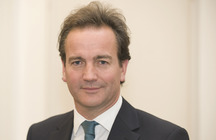

  • Nick Hurd – 2019 Statement on Disclosure of Evidence in Rape Cases

    Below is the text of the statement made by Nick Hurd, the Minister for Policing and the Fire Service, in the House of Commons on 29 April 2019.

    There is widespread recognition that disclosure in criminal cases must be improved. As the right hon. Member for Broxtowe (Anna Soubry), whom I still call my friend, knows, disclosure of evidence is crucial for ensuring the public’s confidence in the police and in our criminal justice system. It is important to note that police forces have been using forms to request victims’ consent to review mobile phones in investigations, including sexual assault cases, for some time. What is new is the national form that was introduced today, which attempts to distil current best practice and to replace the individual versions being used by the 43 police forces, to ensure that there is consistency and clarity for complainants. That is the intention of the police.

    In considering seeking such consent, the police must consider what is a reasonable line of inquiry and ensure that their approach avoids unnecessary intrusion into a complainant’s personal life. In July 2018, the Director of Public Prosecutions issued advice on investigating communications evidence, making it clear that the examination of the mobile telephones of complainants should not be pursued as a matter of course and that, where it was pursued, the level of extraction should be proportionate.

    This Government have made protecting women and girls from violence and supporting victims and survivors of sexual violence a key priority, and it is encouraging that more victims than ever before have had the confidence to come forward. However, it is surely critical that victims are not deterred from seeking justice by a perception of how their personal information is handled. They can and should expect nothing less than that it will be dealt with in a way that is consistent with their right to privacy and with the interests of justice.

    This is clearly a complex area, and while disclosure is an important component of the criminal justice system in ensuring a fair trial, the police have acknowledged that the use of personal data in criminal investigations is a source of anxiety. They will continue to work with victim groups and the Information Commissioner’s Office to ensure that their approach to this issue strikes the necessary, if difficult, balance between the requirement for reasonable lines of inquiry and the victim’s right to privacy. I can assure the House that the Government will continue to work with partners in the criminal justice system to deliver the recommendations in the Attorney General’s review designed to improve the efficiency and effectiveness of disclosure.

  • Nusrat Ghani – 2019 Statement on HS2

    Below is the text of the statement made by Nusrat Ghani, the Parliamentary Under-Secretary of State for Transport, in the House of Commons on 29 April 2019.

    Completing HS2 is Government policy and is crucial to unlocking economic growth and improved productivity in the midlands and north. It is supported by Members on both sides of this House. I therefore have no intention of halting work on HS2 in Buckinghamshire or elsewhere. There are already 7,000 people and 2,000 businesses working to deliver the HS2 project, and early works are well under way. Once HS2 Ltd has reached agreement with its suppliers and the Government are satisfied about both affordability and value for money, we will make a full business case for phase 1. This will inform notice to proceed, which is the formal contractual process that enables each phase 1 supplier to move from design and development to construction. Notice to proceed is scheduled to take place later this year. The works that are now taking place are necessary to enable the construction of HS2 to move forward in accordance with the programme, following notice to proceed.

    We are aiming for HS2 to be one of the most environmentally responsible infrastructure projects ever delivered in the UK, and managing its impact on the environment during construction is a high priority. HS2 will deliver a new green corridor made up of more than 650 hectares of new woodland, wetland and wildlife habitats alongside the line. More than 7 million new native trees and shrubs will be planted, to help blend the line into the landscape and leave a lasting legacy of high-quality green spaces all along the route. It will include more than 33 sq km of new and existing wildlife habitat—an increase of around 30%, compared with what is there now. Many of the early works that are now taking place on HS2 are activities aimed precisely at creating this environmental legacy. They are being done now to ensure that they become fully established as early as possible, alongside construction of the railway.

  • Chris Skidmore – 2019 Statement on Tuition Fees for EU Students

    Below is the text of the statement made by Chris Skidmore, the Minister for Universities, Science, Research and Innovation, in the House of Commons on 29 April 2019.

    The Government have repeatedly made it clear that we absolutely value international exchange and collaboration in education and training as part of our vision for a global Britain. We believe that the UK and European countries should continue to give young people and students the chance to benefit from each other’s world-leading universities post exit.

    Over the weekend, the media reported on a leaked Cabinet document discussing Government policy on EU student access to finance products for the 2020-21 academic year and beyond. At this time, I want to tell the House that no decision has yet been made on the continued access to student finance for EU students. Discussions at Cabinet level are ongoing and should remain confidential. I will make no comment on this apparent leak, which is deeply regrettable.

    Students from the EU make a vital contribution to the university sector. It is testament to the quality and reputation of our higher education system that so many students from abroad choose to come and study here. As I stated earlier, since 2017 EU student numbers are up 3.8% and non-EU student numbers are up by 4.9%. In July 2018, we announced that students from the European Union starting courses in England in the 2019-20 academic year will continue to be eligible for home fees status, which means that they will be charged the same tuition fees as UK students and have access to tuition fee loans for the duration of their studies. Applications for students studying in academic year 2020-21 open in September 2019 and the Government will provide sufficient notice for prospective EU students and the wider higher education sector on fee arrangements ahead of the 2020-21 academic year and the subsequent years, which, as I have just stated, will obviously reflect our future relationship with European Union and the negotiations on that going forward.

  • Rishi Sunak – 2019 Speech on Travellers

    Below is the text of the speech made by Rishi Sunak, the Parliamentary Under-Secretary of State for Housing, Communities and Local Government, in the House of Commons on 25 April 2019 in response to the speech made by Paul Beresford.

    I congratulate my hon. Friend the Member for Mole Valley (Sir Paul Beresford) on securing this important debate. Reading through the materials to prepare for this evening, I saw very clearly his long-standing ​commitment to standing up for his constituents on, as he described it, this vexing issue. It was also clear that he has consistently pushed the Government to support his residents, and I commend him for that.

    I am pleased to say that the Government take the issue of unauthorised encampments extremely seriously. Both my right hon. Friend the Secretary of State and my hon. Friend the Minister for Housing have listened extensively to the views of those in this House on this highly sensitive and important issue and recognise the strong feelings and concerns raised by many Members. Just as my hon. Friend the Member for Mole Valley has articulated powerfully about his own constituents, many other hon. Members have also highlighted the sense of unease and intimidation that residents feel when an unauthorised encampment occurs, the frustration at being unable to access amenities and premises and the waste left and cost once an unauthorised encampment has moved on. The Government were also troubled to hear about the widespread perception that the rule of law does not apply to those who choose a nomadic lifestyle and that the sense of available enforcement powers did not protect settled communities properly—all points that my hon. Friend has made on many occasions previously.

    The Government therefore sought evidence on this issue through a formal and substantive consultation. Our “Powers for dealing with unauthorised development and encampments” consultation received more than 2,000 responses, and I am pleased to say that the Government published our response just a couple of months ago. Among the various concerns raised by colleagues in the House and members of the public, particular issues were highlighted regarding illegal activity, enforcement or the lack thereof, concerns about planning policy and the green belt, and concerns about outcomes for the travelling community.

    I am confident that I speak for everyone in this House when I say that we recognise that the majority of the travelling community are decent, law-abiding people, but we need to ensure that the system is fair for all members of our communities. That means ensuring that everybody has the same opportunities, is subject to the same laws and is free from the negative effects of those who choose to break the law.

    I am pleased to say that the Government response puts forward a package of measures to address those issues, including consultation on stronger powers for the police to respond to unauthorised encampments, practical and financial support for local authorities to deal with unauthorised encampments, support for Traveller site provision, and support for the travelling community to improve life chances. I thank ministerial colleagues in the Home Office and the Ministry of Justice for their assistance in this work.

    I will summarise the various strands of work that the Government are now undertaking. In doing so, I will respond to the specific points raised by my hon. Friend. I will first address my hon. Friend’s concern regarding intentional unauthorised development—in particular, how intentional unauthorised development should be taken into account when planning permission is sought retrospectively. In 2015, the Government introduced a policy that made intentional unauthorised development a material consideration in the determination of planning applications and appeals. As set out in our response, we are concerned that harm is caused where the development ​of land has been undertaken in advance of obtaining planning permission; the Government have listened to my hon. Friend on this issue. The Government have now committed to consulting on options for strengthening this policy on intentional unauthorised development so that local authorities have the tools to address the effects of such development. This will help to ensure greater confidence and fairness in the planning system.

    On a related matter, I reassure my hon. Friend that the Government remain committed to strong protection of the green belt, which my hon. Friend has also championed many times in this place. The Government have been very clear, through the national planning policy framework, that inappropriate development—including Traveller sites, whether temporary or permanent —is harmful to the green belt and should only be approved in very special circumstances. The document “Planning policy for traveller sites”, which was updated in 2015, makes it clear that personal circumstances and unmet need are unlikely to clearly outweigh harm to the green belt.

    The planning system is of course continually reviewed, and I will take on board the comments made by my hon. Friend tonight as the Department looks at updating its guidance for Traveller sites to bring that in line with the national planning policy framework. Indeed, the Department always reserves the option of issuing planning practical guidance documents to fine tune our view on particular interpretations of planning guidance.

    This Government are also committed to continuing to address the disparities faced by Gypsy, Roma and Traveller communities. As a result, we have provided £200,000 of funding for six projects that aim to improve outcomes in the areas of educational attainment, health and social integration. We have also funded 22 projects that support Roma communities across England through the controlling migration fund. Interventions include improving access to services, improving health outcomes, outreach and supporting children and English language learning. We have also provided two projects with £55,000 each to tackle hate crime against GRT communities.

    I will finish by summarising our ongoing work on enforcement against unauthorised encampments, because I am aware that this has been a particular concern, as highlighted by my hon. Friend. I am pleased to say that we have identified a set of measures to extend the powers available to the police to enable unauthorised encampments to be tackled more effectively and hopefully to reduce the frustration felt by many constituents of my hon. Friend and others that these issues are not being dealt with as they would like.

    As highlighted in our response to the recent consultation, the Government will seek parliamentary approval to amend sections 61 and 62A of the Criminal Justice and Public Order Act 1994. These amendments will include increasing the period in which trespassers directed from land will be unable to return from three months to 12 months.

    Sir Paul Beresford

    Will that apply where the individuals concerned claim to own or actually own the land, or just on public-type land or other people’s land?

    Rishi Sunak

    This is a matter for the Home Office, which will soon be launching a public consultation on the specific nature of these measures. I am sure that it ​will welcome my hon. Friend’s views on how they should be implemented and the detail behind them. I would be happy to ensure that his views are passed on to the Department as it constructs the consultation.

    The amendments will also include lowering from six to two or more the number of vehicles needing to be involved in an unauthorised encampment before police powers can be exercised and enabling the police to remove trespassers from land that forms part of the highway, which is another very specific barrier that has been identified.

    My hon. Friend said that England should consider adopting the Irish model to criminalise unauthorised encampments. Like many others, he notes that this process in the Republic of Ireland had led to an increased number of Travellers in this country, and many have urged the Government to adopt the Irish model. I would like to reassure him and all those interested in pursuing this that the Government will conduct a review of how this can be achieved.

    My Department will support local authorities with up to £1.5 million of funding to support planning enforcement. Finally, my hon. Friend raised temporary stop notices. These allow local authorities to act swiftly ​to tackle unauthorised developments, and I am pleased to tell him that the Secretary of State has confirmed that he is minded to extend the period for which these temporary orders can be put in place.

    I am also pleased to tell my hon. Friend that the Secretary of State is looking forward to sitting down with him to discuss these issues in more detail and, in particular, to ensure we can learn from the experience of his constituents as we look to improve measures to tackle this greatly vexing issue.

    I thank my hon. Friend for all his contributions to this debate. He should without question be commended for ensuring that the views and needs of his constituents are raised in this House with force and power and repeatedly with Ministers so that we can act to improve the lives of his residents through changing these policies. I hope that he feels reassured that the Government are listening to his concerns and progressing the commitments we made in response to the consultation. I look forward to working with him on these issues in the coming months.

  • Paul Beresford – 2019 Speech on Travellers in Mole Valley

    Below is the text of the speech made by Sir Paul Beresford, the Conservative MP for Mole Valley, in the House of Commons on 25 April 2019.

    I thank the Minister for being here as the last man standing. It is an awful position, one I used to have, too. However, this is an opportunity to raise a vexing issue that has plagued my constituency and Surrey as a whole. We are now in what we call the summer Traveller season; it is like a disease. Mole Valley constituency consists of Mole Valley District Council south of the M25 and the eastern wards of Guildford Borough Council. It is close to London and to Epsom downs, so it is attractive to Travellers from afar, and many of those come with a distinct Irish accent.

    We have two distinct, different types of Traveller problem. The first involves those who suddenly appear and squat on a site. The second involves those who squat on a site that they say they own or have access to, and then proceed to openly defy planning regulations. The first group very occasionally have permission to camp—as I have noticed—use the site and then they leave it as it was found. That is rare, and normally things are quite different. This is exemplified by an incident at the end of March, when five caravans and various vehicles squatted on a public commuter car park near Leatherhead station. The council moved fast—or, rather, as fast as possible—and after a few days it served a section 77 notice for the caravans to move. Predictably, that was ignored and a couple of days later the police arrived in force and moved them on, with the council then doing the clean-up. This was a waste of time and money, and a blockage, with a loss of space, of a busy commuter car park.

    Last Traveller season, Surrey had hundreds of these incidents, and Mole Valley had more than its share. Surrey’s councils and the population accept the need for Traveller sites, but not without limit. Currently, the Surrey districts are working together to provide one or two transit sites, which will help the police and councils to justify their action. Elmbridge Borough Council, a Surrey council, has tried something revolutionary. It mapped every public space—churchyards, schools, playgrounds and so on—in Elmbridge and then obtained a three-year injunction against Traveller squatting on those mapped sites. That meant the police in Elmbridge could act straightaway, regardless of who the individuals were, and whom the vehicles and caravans belonged to. However, this approach has several downsides. As a member of the National Farmers Union, I note that no private land, including farm land, was covered by the injunction. The injunction was for only three years, and huge public efforts and expenditure went into setting up the maps. What this approach does provide is an indication that if such land squatting was criminalised nationally, as I believe applies in Ireland, direct action by the police could take place, whoever owns the land, although obviously at the landowner’s request.

    The second area of Traveller abuse relates to abuse of planning law. Mole Valley District Council and the Mole Valley constituency are smothered with building restrictions; we have sites of special scientific interest, areas of outstanding natural beauty, green belt and so on. ​This includes the Guildford wards next door. Any constituent from the settled community that builds without permission, particularly on land where these restrictions apply, can expect to be required to remove the development. Some of the Traveller community do not believe these laws apply to them—or they choose to ignore them. I wish to focus on how a very few of these Travellers manipulate the system in ways that would not be entertained by settled residents or by planning authorities. In saying that, I emphasise that there are a number of successful, popular Gypsy, Traveller sites in the constituency where there are no difficulties and no arguments, and where the community is integrated.

    First, I shall touch on two long-standing examples. One is in Guildford, on a site on a narrow little private lane off the A246. The A246 is a busy road, but the lane is tiny and narrow, with few properties. Development is severely limited as it is an area of natural beauty, with ancient forests—it is green belt and so on. A Traveller from outside Mole Valley inherited the land, or access to it, squatted on it and, over a short period, placed a number of caravans, trucks and cars there and ran several different businesses from the site.

    The second example is in Leatherhead, on green-belt pasture land. Since what I believe are Irish Travellers arrived at the site in 2003, which is a few days back, the area has been fenced, a fast-growing hedge has been planted, a number of caravans have been placed there and a few other buildings of a more permanent design have been built. To my amusement, two large, high, wrought-iron, electrically operated gates have been erected between pillars at the entrances. It looks like the entry to a minor stately home.

    On both sites, it is apparently the norm that all injunctions have been ignored; numerous applications have been made, rejected and appealed; and relations with the local community are fractious, with numerous threats to community members. As I said, the Travellers arrived in 2003, so this has been going on for years, without success in ensuring that the planning laws respected by the settled community are not ignored or dodged by devious legal means by the people who have squatted there.

    A third case commenced this Easter weekend in Capel. By chance, I drove past and came across the site. Going by the accent, it was probably a group of Irish Travellers, with two or three small caravans squatted on a two-acre field. They claim that they own the land, which may or may not be true. The land is accessed by a narrow agreed-access way over another person’s land. The squatters bought in a small digger and widened the access way, and they wooden-fenced the widened way without the landowner’s agreement. This morning, I observed that the fence has been taken down while the access is being further enlarged and re-fenced to allow through bigger vehicles, such as horse-carrying vehicles and bigger caravans. The standing passage right of way for this field specifically bans caravans.

    The individuals have brought in a number of lorry-loads of hardcore, which was laid and spread by a fairly large JCB digger. The wooden buildings were knocked down to make space for what I understand are going to be new buildings, including stables. A local neighbour I talked to was threatened by the individuals in respect of the water supply, which I understand has been accessed ​probably without the water company’s agreement. Moreover, other neighbours have been threatened and told not to interfere or they will suffer severe retaliation.

    The local council is seeking legal advice pending an approach to the courts. The Travellers have put in the usual foot-in-the-door planning application for caravans and stables for a horse business. This probably means that the council cannot act on any injunction until the application is heard, presumably reviewed, refused and then appealed. That will probably be followed by a further sequence of applications and appeals, and in around 20 years’ time these people will have continued to breed there, raised their horses, increased the whole site, or at least the number of vehicles on it, and added numerous caravans and more businesses.

    The behaviour is along the lines of what I have seen of the Mafia in Sicily. One might ask why these people would act in this way; the answer is, of course, because they can and nobody, including the courts, the police and the local authority, seems capable of stopping them. The Minister and his Department have being running a review for months, now running into years. It is time for a speedy and tough response.

    First, in cases of squatting on possibly-owned land and the ignoring of planning regulations, I would like the Government to change the legislation to enable local authority planning officers to place an immediate stop notice on even minor development, with heavy fines and ultimately jail for failure to comply and return the land to the condition it was in before. Leave it to the Travellers rather than the local authorities to go to court if they wish to oppose the stop notice. Where Travellers squat on other people’s land without permission, this should be made a criminal offence. That is how it is done in Ireland and it seems to work, enabling the police to take direct and immediate action.

    Next, will the Minister consider tightening up the legal definition of Travellers? It is too loose at the moment, and one thing that those who squat do not do is travel. Related to that is the extraordinary requirement that the claim to need to live in caravans should overcome the normal and understandable offer of bricks and mortar accommodation. That is particularly relevant where children and infants would by normal standards be accommodated in a better and healthier environment in a normal dwelling. I have a number of other suggestions, but I will test just one more. Will the Minister enlarge on the definition of repetitive similar applications, so that these can be accumulated and rejected at a stroke?

    There is a belief among many of the settled community who brush up against these individuals—that is a polite way of putting such contact—that such Travellers ignore normal law-abiding activity because the law is weak and ineffective. My experience supports that feeling. Change is years overdue; and, because of the Easter events, let me make a vain request: can any change be made retrospective to the day before last Easter? Over to you, Minister.

  • Robin Walker – 2019 Statement on the General Affairs Council

    Below is the text of the statement made by Robin Walker, the Parliamentary Under-Secretary of State for Exiting the European Union, in the House of Commons on 25 April 2019.

    The UK and the EU have agreed an extension to Article 50, until 31 October 2019, which is legally binding in EU and international law. Until we leave the European Union, we remain committed to fulfilling our rights and obligations as a full Member State, and continue to act in good faith.​

    I represented the UK at the General Affairs Council (GAC) in Luxembourg on 9 April 2019. A provisional report of the meeting and the conclusions adopted can be found on the Council of the European Union’s website at: https://www.consilium.europa.eu/en/meetings/gac/2019/04/09/

    Multiannual Financial Framework 2021 – 2027

    The presidency presented a progress report outlining the latest developments on negotiations on the Multiannual Financial Framework (MFF) – related sectorial proposals. The presidency also highlighted that common understandings have been reached with the European Parliament (EP) on ten sectorial files. Cohesion and Common Agricultural Policy (CAP) continued to be the central pillars of the next MFF. However, the Commission noted that the proposed cuts to Cohesion and CAP were unavoidable due to the loss of the UK’s contribution.

    The Cohesion fund aims to reduce economic and social disparities and to promote sustainable development. Ministers discussed how the Cohesion policy and CAP can best support EU priorities. Some member states criticised the proposed cuts and supported maintaining funding for transition regions (where GDP per capita falls between 75% and 90% of the EU average). Other member states advocated for a stronger link of funds to the EU’s core business, such as tackling climate change, rule of law and migration. There was general agreement that cohesion funding should be predictable, whilst allowing for a level of flexibility to manage unexpected events.

    Ministers agreed that the funding priorities should be modernisation of the agricultural industry and securing support for young farmers. Some member states proposed a set target for expenditure contributing to climate change goals, while incentivising farmers to meet the goals.

    Conclusions on the Reflection Paper “Towards a sustainable Europe by 2030”

    Ministers adopted conclusions on the EU’s implementation of the UN’s 2030 Sustainable Development Goals (SDGs). The SDGs are targets in 17 priority areas agreed between the members of the UN in 2015, with the aim of making the world a more sustainable place to live. The Council agreed that the SDGs are a key aspect of the EU’s Strategic Agenda 2019-2024, making clear reference to “leave no one behind”.

    The Council’s conclusions recognised the importance of the SDGs for the EU, stated that the UN 2030 Agenda was an overarching priority for the EU and stressed that it was in the EU’s interest to play a leading role in its implementation, recognising that delivery of this agenda is necessarily a shared responsibility between all stakeholders.

    Values of the Union – Hungary /Article 7(1) TEU Reasoned Proposal

    The Commission provided an update on the most recent developments regarding EU values in Hungary. Ministers discussed values of the Union in relation to Hungary.

    Rule of Law in Poland / Article 7(1) TEU Reasoned Proposal

    The Commission provided an update on the rule of law cases in Poland before the European Court of Justice, and its most recent infraction notification against Poland’s disciplinary procedures for ordinary judges. The presidency stated that the Council would return to the issue.

  • Philip Hammond – 2019 Belt and Road Forum Speech

    Below is the text of the speech made by Philip Hammond, the Chancellor of the Exchequer, in China on 26 April 2019.

    Excellencies; Ladies and Gentlemen. It’s a pleasure to be back in China for this second Belt and Road Forum. To take stock of how the Belt and Road Initiative (BRI) has evolved over the past two years…

    …to discuss the next phase of the Initiative.

    To hear, as we have of China’s commitment to the BRI not only to deliver much-needed economic infrastructure, but to demonstrate leadership in addressing social and environmental ‎challenges too;

    We have all seen how China’s own development has lifted hundreds of millions of its citizens out of poverty in just four decades…

    …and none of us doubts that the Belt and Road Initiative has tremendous potential to spread prosperity and sustainable development – touching, as it does, potentially 70% of the world’s population.

    A project of truly epic ambition…

    …and I congratulate President Xi and the Chinese people on the scale of this vision…

    ..and the determination with which it has been pursued.

    The UK is committed to helping to realise the potential of the BRI – and to doing so in a way that works for all whose lives are touched by the project.

    The potential benefits are clear to all of us in this room;

    But to deliver them, it is essential that BRI operates to the highest international standards;…

    …with all parties working together‎ in partnership within the rules-based international system…

    …to create genuine win-win outcomes, in which host countries, investors and promoters alike benefit…

    …with fair terms…

    … sensitivity to local concerns and traditions…

    …and the highest environmental standards…

    …all delivered to international norms of good governance…

    …with full transparency around projects, and around the sustainability of the debt that partner countries are incurring to secure them;

    …Ensuring that Belt and Road is an example of how globalised, open economic cooperation can deliver benefits for all.

    And I welcome the “triple pledge” we heard from President Xi Xinping this morning to ensure the highest international standards in delivery of Belt and Road, to maintain China’s commitment to free trade and multilateralism; and to continue the reform and opening up of China’s economy.

    Two years ago, at the First ‎Belt and Road Forum, I spoke of the UK as a ‘natural partner’ in Belt and Road…

    …citing the complementarity of the UK and Chinese economies…

    …the potential of London’s deep capital markets to support the future financing needs of the BRI…

    …and of the strength of the UK’s legal, professional and technical ‎services sectors to support the design, development, contracting and delivery of BRI projects.

    And since then, I have worked to turn that vision of cooperation into a reality.

    In May 2018, I was pleased to appoint Sir Douglas Flint, former Chairman of HSBC, as HM Treasury’s Financial and Professional Services Envoy to the Belt and Road Initiative;

    Under his chairmanship, we’re bringing together UK business leaders from financial and professional services and China Development Bank, Bank of China, and China Construction Bank to establish a Belt and Road expert board in London.

    We have launched, in April 2019, a three year China Infrastructure Programme to work with China to improve infrastructure development outcomes in Africa and Asia.

    And we have worked with the AIIB to deepen our relationship and to support the development of a pipeline of high-quality infrastructure projects.

    It is clear that, to support the sheer scale of the BRI vision, private finance will need to play an ever greater role in these infrastructure projects.

    And to unlock that private finance, and reassure investors, we must create a recognised infrastructure asset class for Belt and Road projects…

    …with standardised contract terms and uniform reporting that global investors will recognise and trust.

    In doing so, we should, of course, draw on the work that G20 and other international organisations are doing to create frameworks for sustainable infrastructure investments; and I want to offer London’s world class expertise in project financing and the associated legal, professional and technical skills as a partner of choice in delivering these international-standard infrastructure projects.

    The BRI is an extraordinarily, ambitious vision. To turn that vision into a sustainable reality it must work for everyone involved.

    That means achieving the highest economic, social, governance and environmental standards;

    It means attracting the necessary private capital;

    It means ensuring that all partner countries and all their citizens can benefit.

    Our offer is to bring the best of Chinese manufacturing, engineering and construction with the best of British project design and legal, technical and financial services expertise…as we harness the “Golden Era” of UK-China relations…

    …to deliver world-class sustainable infrastructure for all for the twenty-first century.

    I look forward to working with all of you to make that happen…

    To deliver jobs, growth and higher living standards for all of our citizens.

  • Theresa May – 2019 Statement on Northern Ireland

    Below is the text of the statement made by Theresa May, the Prime Minister, with Taoiseach Leo Varadkar of the Republic of Ireland on 26 April 2019.

    In coming together with other political leaders in St Anne’s Cathedral to pay tribute to Lyra McKee, we gave expression to the clear will and determination of all of the people of these islands to reject violence and to support peace and a better future for everyone in Northern Ireland.

    We also heard the unmistakable message to all political leaders that people across Northern Ireland want to see a new momentum for political progress. We agree that what is now needed is actions and not just words from all of us who are in positions of leadership.

    We have agreed to establish a new process of political talks, involving all the main political parties in Northern Ireland, together with the UK and Irish Governments, in accordance with the three stranded process. The aim of these talks is quickly to re-establish to full operation the democratic institutions of the Belfast/Good Friday Agreement – the NI Executive, Assembly and North-South Ministerial Council – so that they can effectively serve all of the people for the future.

    We have asked the Secretary of State for Northern Ireland and the Tánaiste to meet later today in Belfast to set out our proposed approach and to commence the talks process as soon as possible after the local elections in Northern Ireland.

    In addition, we have agreed that there should be a meeting of the British-Irish Intergovernmental Conference during the same period. The Conference will consider East/West relations, security cooperation, and political stability in Northern Ireland.

    We understand the complexity of the underlying concerns of all parties, and the need for renewed trust, mutual respect, generosity and new thinking to resolve the issues.

    As Prime Minister and Taoiseach, we are determined to work together to ensure this process comes to a successful conclusion.

    We will review progress at the end of May.

  • Caroline Nokes – 2019 Statement on the EU’s European Travel Information Authorisation System

    Below is the text of the statement made by Caroline Nokes, the Minister for Immigration, in the House of Commons on 24 April 2019.

    The Government have decided to opt in to the aspect of the draft regulation that establishes the conditions for the access of the European travel information authorisation system (ETIAS) to the European criminal records information system (ECRIS-TCN), and has decided not to opt out of the aspect of the draft regulation that establishes the conditions for the access of ETIAS to the second Schengen information system (SIS II).

    ETIAS is the EU’s travel authorisation system that visa-exempt visitors (third country nationals and stateless persons) will have to apply to prior to their entry in the Schengen area. The UK does not participate in ETIAS as it forms part of Schengen border legislation that the UK cannot participate in, but the UK fully supports the EU’s efforts to strengthen its external borders of which this forms part.

    Under this proposal, an ETIAS central unit will access EU information technology systems to support their considerations, specifically ECRIS-TCN and SIS II. Once implemented, the regulation will allow the EU to revoke a grant of admission to a third country national if a relevant alert is identified from data the UK has uploaded to the ECRIS-TCN or SIS II databases. The European Commission has been working towards 2021 as the date from which ETIAS would become operational, but the date might be extended to 2023.

    Whilst there are advantages to the EU from ETIAS having access to UK’s data, there are no obvious operational or public protection benefits for the UK given it involves the provision of data to a scheme that the UK does not participate in. However, a significant argument in favour of participating is to prevent the UK’s non-participation from giving rise to issues around UK access to SIS II or ECRIS-TCN in future.

    Until the UK leaves the EU we remain a full member, and the Government will continue to consider the application of the UK’s opt-in to EU legislation on a case by case basis, with a view to maximising the UK’s efforts to collaborate with the EU on a security partnership once the UK leaves the EU, including on SIS II and ECRIS-TCN.