Author: admin

  • Derek Thomas – 2019 Speech on Bank Holidays in 2020

    Below is the text of the speech made by Derek Thomas, the Conservative MP for St. Ives, in the House of Commons on 18 June 2019.

    I am grateful for the opportunity to bring this important issue before the House; it concerns many of my constituents and many other people around the country. Since being elected in 2015 I have secured a number of debates in Parliament, all triggered by someone from west Cornwall and Scilly raising an issue with me that deserves proper scrutiny and representation. The issue of the early May bank holiday next year is no exception.

    I am here to add my full support to the decision to make the 75th anniversary of VE Day on 8 May 2020 a bank holiday and a national day of celebration and commemoration. Victory in Europe Day, generally known as VE Day, is a day celebrating the formal acceptance by the allies of world war two of Nazi Germany’s unconditional surrender of its armed forces on 8 May 1945.

    It is worth remembering how we celebrated that momentous event all those years ago. At 11 am on 8 May church bells rang out across the nation signifying the end of the most destructive war Europe had ever seen. More than 1 million people took to the streets of London to celebrate. Crowds filled Trafalgar Square and up the Mall to Buckingham Palace, where King George, Queen Elizabeth and Winston Churchill stood on the palace balcony, waving and cheering the crowds on. Around the country, millions gathered in villages, towns and cities, marking the end of war in Europe with street parties, dances and parades. Social norms were abandoned as strangers hugged and danced with one another, and bonfires were lit in the street—I cannot imagine what local councillors would do about that these days. Despite rationing and years of economic strife, communities came together to cook sweet treats for children and shared meals with what food they had, and pub licensing hours were extended. Buildings and streets in major cities were illuminated for the first time since the start of the war, after years of blackouts to prevent German bombings.

    Julian Knight (Solihull) (Con)

    I congratulate my hon. Friend on securing this debate and add my support to the bank holiday idea. I recently read through the biography I wrote of my grandfather, who was a 17-year-old paratrooper—they used to lie about their age—in northern France and Germany in 1945; it addressed that time and when he came home. Does my hon. Friend agree that it is not unusual to mark the end of wars and major events in this way? For many years we marked Trafalgar Day and even the accession to the throne of Queen Elizabeth I.

    Derek Thomas

    I thank my hon. Friend for that intervention. The days that he has referenced are really good opportunities for MPs to take part in the commemorations that happen right across the country, which I enjoy. I make a point of taking part in them and taking my children along as well, so that they can learn about our great heritage and our great service.

    Hugh Gaffney (Coatbridge, Chryston and Bellshill) (Lab)

    I agree with what the hon. Gentleman says about the 75 years, and about the 50 years. I have been a trade ​unionist for 30 years, and the only day of action I took was for the bank holiday to remain as a traditional May Day bank holiday. It must remain. Give us the extra day for the 75, but the traditional May Day bank holiday on the first Monday of every May is for workers and trade unions, and it must remain as well.

    Derek Thomas

    That is the argument I will be making as I remind the House about the incredible event that took place on VE Day and explain why it is absolutely right that we set aside time to celebrate that next year, so that the whole of Great Britain can take part.

    Jim Shannon (Strangford) (DUP)

    I thank the hon. Gentleman for giving way, and if he needs any advice on bonfires in Northern Ireland, we would certainly have lots of information. We do them every 11 July, by the way. I attend one in Newtownards and it is always very well attended. There have been almost 1,000 people there in years gone past. Does he not agree, however, that it is difficult for businesses and even community groups to accept this roll-out of a new bank holiday date? I support the principle of what he is saying, but the proposal is not even for a year’s roll-in. Does he share my dismay at the news of calendar makers losing hundreds of thousands of pounds due to the short roll-in? Does he share my concern at the environmental aspects of the wastage of perfectly good material because the Government, in this case, did not pre-empt the change in the same way as was done with the last change to a bank holiday, which was announced in 1993 for a roll-out in 1995?

    Derek Thomas

    I welcome that intervention, and I would be happy to apply for a Westminster Hall debate with the hon. Gentleman if he chose to speak on that further.

    I want to make the point that I am not a fan of the way in which the Government have come to this decision, but it is really important for me, knowing what a great thing it is to remember the sacrifice made by the millions of men, their families and all the people involved in working and fighting for peace in Europe, that we spend a little bit of time remembering the great event that took place when that finally came to an end. For me, seeing the footage of crowds in the streets celebrating this momentous occasion—for them, a bittersweet moment after years of hardship, loss and fear—it is right that we should put aside all else and commemorate and celebrate that day on 8 May next year. I hope that we will be able to re-enact many, if not all, of the activities in our towns and villages. I would not need to go far, as I have a couple of sons in my own home who would be quite happy to tell me how to light fires, which the hon. Member for Strangford (Jim Shannon) mentioned.

    As I have said, I have no problem with the decision to move the bank holiday to 8 May. My problem is the cack-handed way in which the Department for Business, Energy and Industrial Strategy went about reaching this decision. I would be interested to hear from the Minister what impact assessment the Department did on the lateness of making such a substantive change to the bank holidays in 2020 before announcing this decision. What was the Department thinking when it decided to give to give just 11 months’ notice of the cancelation of the early May bank holiday?​

    Dr David Drew (Stroud) (Lab/Co-op)

    I am sure the hon. Gentleman is going to talk about this, but I will pre-empt him. At least two people have written to me to say that that was the ideal date for them to get married, and that they had invited people for the whole weekend. Their plans are now in tatters. We cannot just let people down in this way. It is not fair. People plan these things years in advance, based on the dates they know. Why don’t we just have an extra day?

    Derek Thomas

    I am glad that I have support from around the House, because Adjournment debates are often poorly attended. I thank the hon. Gentleman for that intervention, and I completely agree with him. The Secretary of State announced the change to the early May bank holiday, and it was an enormous decision for large numbers of small businesses, for the tourism industry—which I particularly want to focus on—for the people who have already, for good reasons, booked their holidays next May, and for the people who have decided to use that weekend because they would be able to take their children away without interfering with their schooling.

    I am disappointed that the Secretary of State himself is not here to respond to the debate, because the late notice of the announcement demonstrates a tin ear towards the tourism industry. For those in any doubt about the meaning of the expression “tin ear” and its use in relation to the Department’s attitude towards small businesses and many other people, it is defined as “a deafened or insensitive ear”. However, I want to make it clear that I do not include the Under-Secretary of State for Business, Energy and Industrial Strategy, my hon. Friend the Member for Pendle (Andrew Stephenson), who has been asked to respond to this debate, in that definition, because he has had nothing to do with it.

    I received a letter from a businessman on the Isles of Scilly a day after the announcement, and he put his concern across much more diplomatically, saying:

    “I have to say whichever government department decided at this late stage, 11 months before, to change the dates really does need to wake up to the realty of the holiday market. This change has the potential to create many upset guests unable to change their booked dates.”

    I know that I am not alone in receiving correspondence and representations from constituents and businesses, and I have selected a few extracts that help to express the various implications of the decision being so late. One constituent asked the following question of the Secretary of State in an email to me:

    “Have schools been considered in this late announcement about the changes to the May bank holiday? This will cause problems especially as holiday dates are already issued, residentials and school trips will have been planned, and this is the Friday before the important Y6 SAT tests”.

    Another wrote:

    “Hello Mr Thomas,

    I have also been affected by the change of the bank holiday. I have booked my Hen Do”—

    we have already had a reference to weddings—

    “for the bank holiday weekend, paying more to go on these dates so that more people could make it as they wouldn’t have to take the day off work. As the date has now changed, people are not able to make my Hen Do, and I am forced to pay to cancel the holiday booked for us all losing over £1000.​
    I hope you can help in this issue by asking the government to not take away our original bank holiday date.”

    Another constituent wrote to me to say:

    “Dear Sir,

    I am extremely pleased that VE day is to be celebrated as a priority in 2020.

    However, I do not believe that the decision yesterday to change the date to 8th May 2020 provides a suitable length of time for the country to adapt.

    My family are now left with the option of losing financially to cancel our annual May Day Bank Holiday as our children will be required to attend school.

    The tourism industry is just one example where 11 months’ notice is not suitable.

    I would expect that more foresight would have been given to this scenario.”

    Someone who is not a constituent—I will leave the House to work out where they are from—wrote:

    “Dear Mr Thomas

    I understand you are bringing up the cancellation of the May day holiday in Parliament.”

    A small group of us, they continue, organises

    “the annual bikers’ event and May day Morris dancing in Hastings. It is by far and above the biggest weekend in the annual calendar. Not only will it affect our events badly, it will also be a massive blow to local tourist businesses who rely on that weekend after a hard winter and tell me it’s their biggest earner of the year…Currently, Morris dancers and bikers from across the country”—

    this is something that we can all look forward to—

    “are planning a protest at Parliament on July 23rd. This is something we would rather not have to do”—

    although I think we would welcome it.

    “We fully support a commemoration of VE Day, but we do not support having our events that have already been booked and paid for, plus all those who have already booked hotels, disrupted with so little notice.”

    Returning to my constituency, many will know that the world gig rowing championships take place on the Isles of Scilly on the early May bank holiday every year. It is a momentous event in my constituency’s calendar, and it takes a considerable amount of time to get all the gigs over to Scilly. However, it is currently unclear what changes will need to be made if the Government stick to their decision. Moving on to other disruption that I am aware of, we have all seen the story in the national press about the small business that is set to lose £200,000 having just printed next year’s calendars.

    I am sure the Government do not need me to say how disruptive this decision is given how late in the day the announcement was made. The only possible, practical and pragmatic response is for the Government to keep the bank holiday to commemorate VE-day and to reinstate the early spring bank holiday on Monday 4 May. I make it clear to the Minister, to the House and to business that I have no appetite to create extra cost and disruption for small businesses, and I have never previously supported the idea of extra bank holidays. However, the fact remains that the Department for Business, Energy and Industrial Strategy has left the decision far too late and has caused far too much disruption and potential expense to far too many people. The appropriate response must be for the Department to quickly reinstate the bank holiday on 4 May.

    There is support for that proposal, which may not surprise the House. The British Beer & Pub Association sent me a letter:​

    “For clarity the BBPA does support the extra bank holiday that Mr Thomas is proposing. Based on the four-day bank holiday weekend for the Queen’s Diamond Jubilee in 2012, we predict that the extra bank holiday would provide a boost to Britain’s pubs and brewers, with an estimated 10 million extra pints sold. This would also support the taxman and the economy—the taxman would receive £4.5m in extra duty revenue and VAT and it would provide a £30m boost to the economy.”

    All of us, particularly those of us with rural constituencies, know the importance of small rural village pubs and how such opportunities really help them to continue their business of providing a community hub and keeping an eye on those who are otherwise often left at home on their own.

    Hugh Gaffney

    The hon. Gentleman mentioned earlier that people book holidays for that weekend, and sometimes it is the only time that families get together because they have to work through the school holidays to keep a roof above their head. The UK has the fewest bank holidays in the G20. Does he agree with Labour, which wants to increase the number of bank holidays? Let us start next year with VE Day and then look at each country’s patron saint’s day.

    Derek Thomas

    The hon. Gentleman will realise that I do not fully support everything he has just said, but I support what he says about next year. That is the whole point of this debate.

    We have left it too late. There is no question but that we need 8 May, but we should reinstate and keep the 4 May bank holiday, because that is what people have planned for, expect and, in many cases, have paid for. Tourism is a significant part of my constituency’s economy, and people have booked in advance because there has been real growth in staycations. People are staying in the UK for holidays, and Cornwall is obviously their No. 1 choice, particularly west Cornwall and the Isles of Scilly.

    I have always maintained that I represent the most beautiful, precious and wonderful part of the country. If people have any concerns about their wellbeing, they should come down for a well-deserved rest and therapy. I hope I have been able to get that across in this short commercial break.

    I agree about the extra bank holiday for next year, but I do not have it within me, as a former businessman, to impose further bank holidays, particularly on small businesses, unless there is a good reason to do so and the Department handles it much better than it has on this occasion.

    The British Beer & Pub Association’s letter continues:

    “Furthermore, the BBPA have already called on the Government to grant extended hours to pubs, so pubs can make the most of the celebratory weekend.”

    That is what happened 75 years ago, and I hope the Government follow suit.

    In summary—I am reluctant to keep people away from any activity they might want to pursue in the beer industry later this evening—I have no appetite to create further cost and disruption for small business. That is clear, and I spend my time trying to do what I can to support small businesses. In fact, I have spent a lot of time over the past four years arguing that the Government should improve the lot of small business by simplifying the tax system—scrapping business rates, for example—creating training opportunities and ensuring that businesses have affordable access to credit.​

    I have a record of wanting to support and promote small business, and I am not one to disrupt it any further, but I believe we should give the extra bank holiday on this occasion. The Business Secretary has given too little notice of the changes to the early May bank holiday. The Government should reinstate the bank holiday on 4 May and keep the planned bank holiday for 8 May that was recently announced to celebrate the 75th anniversary of victory in Europe.

    I completely support the proposed bank holiday. The challenge for businesses, particularly in tourism, is that the Government have given just 11 months’ notice of this change, as if the 75th anniversary has come as some sort of surprise. I sincerely apologise to business, which can ill afford another bank holiday, but it is too late to scrap the 4 May bank holiday. The Government should reinstate it, and reinstate it quickly—hopefully in the next 15 minutes.
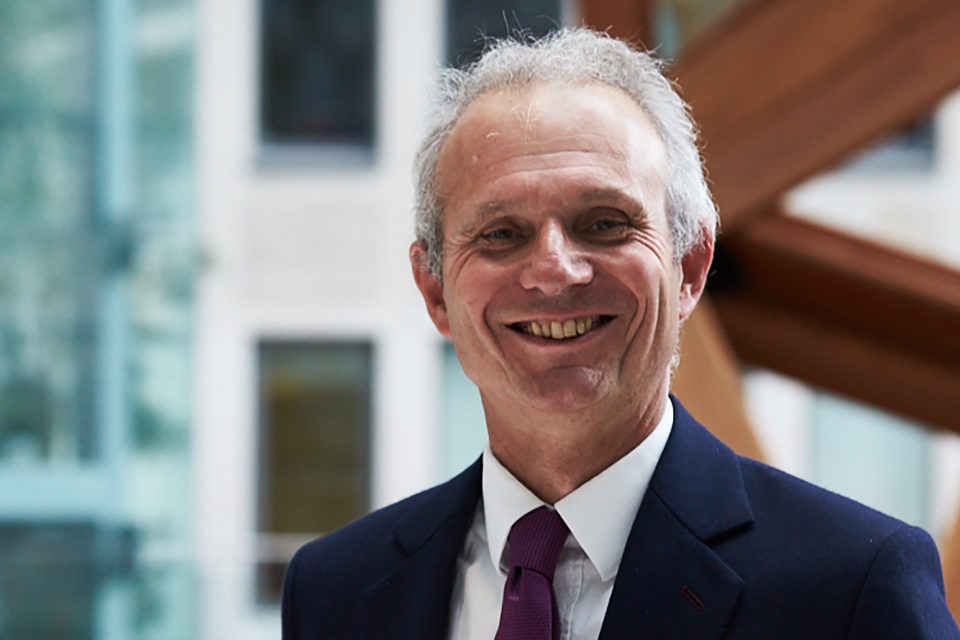

  • David Lidington – 2019 Speech to the Women in Security Network

    Below is the text of the speech made by David Lidington, the Chancellor of the Duchy of Lancaster, in the House of Commons on 18 June 2019.

    Hello, and thank you for having me here today. In the four years since it was created, the Women in Security Network has provided a crucial forum for women and underrepresented groups to gain skills and connections to help them get ahead in their careers.

    We all agree that the national security profession should reflect those it works to protect. So I am delighted to speak today about some of the work this Government is undertaking through the National Cyber Security Strategy to ensure a vibrant and representative cyber security profession.

    Of course, women have served in security and technology throughout history – and have often been pioneers in computing and codebreaking. I’ve attended briefings in the Lovelace Room, right here in the National Cyber Security Centre. Each briefing in that room is an excellent reminder how women such as Ada Lovelace, Joan Clark, and Mavis Batey have been trailblazers in this field. But women need to be the rule and not the exception – especially when it comes to cyber security.

    Today, cyber security is among the most important aspects of our national defence as we work to protect the UK and the British people.

    The National Cyber Security Strategy has revolutionised the UK’s fight against cyber threats as an ambitious, deliberately interventionist programme of action. During the last three years, we have put in place many of the building blocks to strengthen our cyber security and resilience, backed by an investment of £1.9 billion pounds.

    In 2016, we set up the world-leading National Cyber Security Centre to act as our single authority on cyber security. We’ve invested in cutting-edge cyber capabilities across all tiers of UK Law Enforcement. And we’re protecting UK internet users from lower-sophistication, high-volume attacks that have an impact on people’s everyday lives, that compromise their identities and undermine the individual security of their bank accounts.

    More than halfway into the Strategy, we’re seeing behavioural changes, too – and not just from our warnings to an estimated 23 million account holders that 123456 isn’t a suitable password! In Government and in the private sector, we’re also seeing Boards integrate cyber security into the core functions of their organisations. The results of DCMS’s Cyber Security Breaches Survey 2019 make clear that cyber security is increasingly a key issue for organisations, with three quarters of business and charities now rating it as a high priority. So we’ve made considerable progress in Government, and with industry. And the people in this building have been a crucial part of that success.

    But, we also recognise that there is much more work to be done.

    The government, and indeed, the national security profession – must reflect those that it seeks to represent and protect. Yet, national security has the lowest representation of women than any other profession in Government, at 15.7 percent. And the National Security Council Officials board has the lowest proportion of female officials than any other Civil Service board.

    The British government isn’t alone. There remains a severe lack of diversity and representation in the cyber security industry. According to a report from the Global Information Security Workforce, only 11% of the global workforce is made up of women – this falls to a mere 7% elsewhere in Europe.

    And we’ve seen the risks in other sectors when technology doesn’t get diversity right. A New York Times piece published yesterday outlined how human biases in artificial intelligence technology have led to minorities and underrepresented groups being turned down for job opportunities, denied bank loans and even misidentified as criminals. Because when the faces who create AI systems are all male, or white, the algorithms are unable to recognise other groups as easily.

    At the same time, we’ve seen ample research on how more diverse organisations do better at meeting their objectives. McKinsey studies of the British private sector show that greater gender diversity at the senior level corresponds to higher performance. So there is a business imperative, as well as a moral one.

    There are lots of ways to address the issue of diversity. But today, I’m going to focus on the urgency of addressing the skills gap in cyber security, and the importance of cultivating the right workplace environment.

    Cyber security is a nascent profession, which provides us with a narrow opportunity to shape its future. We need to be inspiring the next generation to think about a career in this field. There is a wealth of talented young people across the UK who could have successful careers in cyber security. Teenagers who are livestreamers with their own gaming vlogs. Students who consider Twitter their second language. They do not need to be fluent in Javascript to be the future of the industry.

    Many of you in this room have been involved in valuable efforts to engage younger people – especially young girls — in cyber security. In 2015, GCHQ launched the CyberFirst programme to give talented young people the support, skills, experience and exposure they need to become ‘cyberists’ of the future.

    This year, nearly 12,000 talented 12-13 year-old female students from over 800 schools across the UK took part in the CyberFirst Girls Competition. Last year, 44% of CyberFirst attendees were female. And in the Cyber Skills programme, female participation is at 23%, with the aim of achieving gender balance.

    At the same time, we also recognise that financial barriers can prevent very capable people from pursuing their chosen path. So the CyberFirst University Bursary aims to remove these barriers and give young people access to the training and skills they need to succeed, regardless of background. These are vital steps in unlocking and opening up the profession to young people, and I commend them wholeheartedly.

    However, it is important that senior leaders recognise that an emphasis on skills-building isn’t the only piece of the puzzle. There needs to be a cultural shift in the way we think about gender equality and diversity. We need to ensure that we don’t treat this as a tick-box exercise, thinking that the job is done once the recruitment process has been finalised. Instead, we all need to be thinking about the broader, collective environment we create for new recruits. That means replicating opportunities for mentorship, like the network that you have so successfully built here. But it also means encouraging more senior male leaders to mentor women and improve the underlying culture, as recommended by Harvard Business Review.

    Of course, a commitment to diversity is something even more rudimentary than skills, initiatives, or pathways. It means empowering staff to pursue their careers, building the confidence to constructively challenge their environments, and ensuring that they can construct opportunities for their colleagues in the future. This is the sort of power that diversity can bring to a profession as young and as pioneering as cyber security, and I challenge you all to embed this across your teams.

    When a young Ada Lovelace began her mathematical studies, her tutor fretted that “the very great tension of mind [that mathematics] require is beyond the strength of a woman’s physical power of application.” Ada, of course, went on to become a visionary of computer programming. And we can now laugh at this outdated thinking.

    But subtler societal perceptions persist. We can, and must, do more to encourage that a more diverse body of talent is represented at every level of government, business and beyond. Because as we chart the course for cyber security, we must ensure that our aims for the future of this profession remain as ambitious as our algorithms.

  • Damian Hinds – 2019 Speech on Disadvantage

    Below is the text of the speech made by Damian Hinds, the Secretary of State for Education, at the Reform Conference held on 17 June 2019.

    Thank you very much, Charlotte [Pickles]. Thank you very much to Reform for hosting this morning. Your organisation has a long track record taking on the big issues in public policy.

    This isn’t in the strictest sense a scripted speech. I think it’s probably fair to say that makes my brilliant civil servants a little nervous this morning, but I’ll still ask them and you to bear with me for the next… Well, we never know exactly how long, but don’t worry, it won’t be too long.

    I wanted to take the opportunity to draw together some of what we know now that we didn’t know a relatively short time ago, about the nature of disadvantage in education and attainment, and then of course in what happens in later life. Why does this matter? Well, I don’t think you would ask that question, because I think to everybody in this room it is self-evident that in public policy, in government, in what all the organisations represented here do, we should be constantly redoubling efforts to equalise the odds.

    Because no child’s prospects in life should be limited by the circumstances of their birth or who they were born to. They should have no limits other than the talents and the application that they themselves will put in.

    There’s also of course a hard-nosed economic argument. Because if we’re going to have an economy that’s operating at its maximum potential, which, of course, in turn is what allows us to afford the excellent public services that we all rely on, we do need every child to be able to fulfil absolutely their full potential.

    So, this sort of thing will be familiar, I think, to you all. We know that obviously people have innate ability, but how that is able to translate into attainment in school and then what happens later, can get significantly affected both by the background, the circumstances they’re born into and the experiences that they go through.

    It goes without saying, by the way, that obviously you also need to put the work in at school. But I’m just taking that for granted. This is about the factors that we as individuals perhaps can’t control. We know that the gaps in attainment, in development, actually start to appear from very early on in life. So, even in the early years the gap between the advantaged and the disadvantaged is something like four months of development. But it keeps on growing as you go through school.

    By the end of Key Stage 4, in other words GCSE time, that gap is the equivalent of 19 months. We also know that the effects of what happens back here [during school years] actually still has an effect much later on. In research that we released last year we showed that the effect of being a child who is eligible for free school meals still shows up in the data, in the workforce. So, still at age 27, you’re materially less likely to be in good, sustained employment if you’ve been on free school meals than somebody who was not.

    We also know that it can become something of a cycle. Because there’s a multigenerational impact that then means if you haven’t managed to, break out of that cycle then another generation also experiences some disadvantage coming through.

    Charlotte mentioned this, and this is worth reflecting on. The gap between the rich and the poor has narrowed in this country. And this isn’t something that’s happened all over the world. It’s not something natural or inevitable.

    When Michael Gove first instituted the reforms that started in 2010, he was very clear all the way through that we as a government should always be measured on two sets of criteria. First, that we’re raising the attainment overall. But secondly, that with everything we are also narrowing the gap between the advantaged and the disadvantaged.

    And this is something very much to be celebrated. But of course, you’ll have spotted that if you reduce the gap by 9% or 13%, the gap is still very large. Some of the things that I think would have helped this progress are things like the Pupil Premium, the Education Endowment Foundation. It’s great to see Kevan [Collins] here today who has produced some of the guidance that’s been given to schools on how to use that.

    Also the two-year-old offer, ensuring that more disadvantaged children have the benefit of high-quality early years education. Sponsored academies, and free schools, and the general school improvement drive that we’ve had consistently through that time. And of course most of all, teachers. It is the people who run, who operate education. Who inspire the next generation, who have made it happen.

    The problem we have right now is that although we’ve seen this great progress, although the gap has been narrowing, the pace has started to slow. So, if we’re going to sustain the progress on narrowing the gap, we need to figure out what else we need to do. We need to think about what we need to do differently.

    And that’s really what today is about. It’s about recognising the face of disadvantage; understanding more about aspects of disadvantage. It’s about recognising how disadvantage may have changed in certain respects, or for certain groups. And it’s also about understanding more about the scale of particular types of factors, and how they may have changed.

    And then ultimately, of course, whatever you know about disadvantage, the question is, what are you going to do about it? Both within the school system and also because schools cannot do everything. We cannot expect them to do everything. It’s a wider societal question of how the rest of society operates.

    So, today, I’m going to particularly cover five areas associated with disadvantage: Ethnicity, language, place, or in other words part of the country, the home environment and adversity in childhood. Some of those things you can think of as being more about the background of the child, more about where they’ve come from, and some of them are more about the experiences, the things that happen to that child during the course of their childhood. But actually, each of them has some elements typically of both.

    I’m not going to cover absolutely everything about disadvantage, otherwise we really would be here a very long time this morning. But in particular, I want to mention two very important areas.

    Mental health – we are more attentive today than ever before and we know that mental health problems can affect all sorts of young people. Of course, those in the most difficult circumstances are most likely to face this adversity. We’ve been doing quite a lot on mental health, both in terms of the Mental Health Green Paper, making sure that support networks will be available around schools, and Designated Mental Health Leads in schools. But also crucially, from an early age, through the new health education curriculum, we’ll be talking about mental health. Including talking at quite a young age about some of the strategies that you can put in place on self-regulation, on trying to help cope with the difficulties that come along in life.

    And you’ll also have heard the Prime Minister speaking this morning about the announcement today on mental health including enhancing the content in initial teacher training about spotting the early signs of mental health difficulties.

    And then of course, there’s the whole area of SEND. Special Educational Needs and Disabilities, which is in itself a huge and varied area in terms of the effect on children. It’s not something I’m going to cover today, but it is something that we will be coming back to in a similar vein.

    But it’s worth saying that all of these things can interact with each other. Clearly, everybody has an ethnicity and they live somewhere, and sometimes the danger is that we spot something, which we think is to do with one of those factors, when actually it’s to do with another. And they can easily be conflated.

    It is also true that things can operate one on top of another. So, you can have a cumulative effect of different disadvantages. They don’t quite work in a purely mathematical additive way, but they do concentrate the effects of each other. So, for example, later on when we talk about Children in Need, that is to say children who have need of the services of a social worker, many also have Special Educational Needs and are eligible for free school meals. That number of children adds up to 120,000.

    So, the Prime Minister instituted the Race Disparity Audit, to ask some of those difficult questions and face up to what can be difficult and deeply uncomfortable answers, when we look at the different experiences of people of different ethnicities in our society. And part of that is about education.

    Now, what do we see when we look at the experiences of people from different ethnic groups? Some ethnic groups experience a below average experience and attainment pretty much across the board. So, if we talk about black Caribbean children, for example, they are more likely than white British children to be eligible for free school meals, and they are likely to statistically attain a lower level when it comes to GCSEs.

    But for other groups, it can be more complex. This chart here shows the experience of black African children on average. Again, it’s important to stress, on average. Because of course, in every ethnic group you have a wide distribution. But among black African children, you’ll see that at primary and secondary school, compared to [the national average which includes] white British, they actually perform slightly better. Although, that reverses when you take other factors into account. And there’s actually a significantly higher rate of black African children going into university than [the national average which includes] the white British population. But when they get there, they are less likely to complete with a top degree, a first or a 2:1. Later on in life, they’re more likely to be in work but they’re less likely to experience good earnings growth.

    So, as I say, a complicated picture. .When we talk about social mobility, or disadvantage, how often do we just focus on GCSE attainment and assume that everything else will follow? Or historically, and I’ve been guilty of this myself, said that, the ability to go to university can be the most life-changing opportunity. That can be true. But not if you don’t finish university. So, we need to think about every stage along the way.

    There is another group of children who we often mention, but sometimes just in passing. Which is white British children. Among the disadvantaged population the lowest performing group is white British children. This isn’t among the population as a whole, but just among those who are classed as disadvantaged. Within that, you separate out the ethnicities and white British children are [among] the least likely to reach the expected level at reading and writing and mathematics, and make progress at secondary school.

    If we talk about ethnicity, we tend to talk about all other ethnicities and then sometimes say, well, of course we mustn’t forget this group of white British children. But then you convert the charts by volume and you realise that almost two thirds of the cohort of disadvantaged children are white British. So, if we are to really, really narrow the gap when it comes to the disadvantaged kids versus the rest, it is important to think about the places where there is a heavy concentration of white British children, as well as about the places where there are heavy concentrations of other ethnicities and those that are more diverse.

    So, let me move onto language, and you might think that having English as an additional language is a disadvantage at school. In fact, ladies and gentlemen, children with English as an additional language perform slightly better when it comes to GCSEs. Not a huge amount and not in every subject, but about half a grade better on average across eight subjects. It’s a slightly counterintuitive result. Let me explain this graph. Those who have very recently arrived do worse. But the longer you’re in the system, the better you do. And in fact most of the gap is gone within three years. If you’ve been here longer, you actually perform on par with or even slightly outperform the average.

    And it’s sometimes also thought that it’s not good for the rest of the class if you have a number of kids with English as an additional language. But actually, that’s not true either. The evidence shows there is no, disadvantage for other children in the class. In fact, there can be a slight advantage. But again, it’s important to stress that pupils with English as an Additional Language is a large group, which covers a number of different types of circumstance, and clearly, as this chart shows, there is a huge difference between being a newly arrived refugee and being a child growing up in a multilingual household.

    Now, I said at the start there is often an overlap between a number of these different factors, and I’m now going to talk about an important overlap between language and place. In this city, London, there is an extraordinary number of children who have English as an additional language.

    In fact, of last year’s Year 6, so in other words the kids who just started secondary school, in London 49% of them were classed as having English as an Additional Language. And that may be one of the reasons, but only one – and I’m going to say a number of times in the next few minutes that there are many, many reasons why performance in London is different – but that may be one of the reasons why London children do so much better than children elsewhere in the country.

    This table charts the different stages of school: early years, infants, juniors, secondary and higher education, for those who go. It shows separately, for all children and for those eligible for free school meals, what the performance is for children in London compared to elsewhere.

    You’ll see that among pupils as a whole, actually in the early years and the infants there’s not much difference really at all. They’re performing on par. Then they start performing a bit better, and a bit better, and by the time you talk about entry to a selective university as opposed to a recruiting university, you’re 1.5 times, 50% more likely to go if you’re a child in London.

    But it’s among the disadvantaged, among those eligible for free school meals, were the really striking difference is. The gap’s actually already there in nursery school and in infant school. And then it carries on growing as well, but the multiplicative effect is that by the time you talk about whether or not you’re going to a selective university, a free school meals eligible child in London is twice as likely as a free school meals eligible child elsewhere.

    What is different about London? I’ve said I was going to say this a number of times. Almost everything, actually. And that’s one of the reasons why it’s so difficult to ascribe exact causes to the effects that we see of these strong results. Families are different. Places are different. The work environment is different. What children walk past to go to school is different. Pretty much everything is different.

    Some things aren’t different, it’s worth saying, and sometimes they are the things that people most naturally look to as being likely drivers of difference in performance. But let me give you an example of a couple of these things, which are different and might surprise people that have an effect.

    First of all, tutoring. There’s a very high proportion of children in London who have tutors, and by the way, before anyone says it, this didn’t start in 2010. This is a long-standing phenomenon. Both that there are high levels of tutor usage in London and a gap between that level in London and the rest of the country.

    Shorter distances. It may seem like a trite and obvious point. But in a city, which is much more concentrated than most of our country, it means that from a school choice perspective, for example, you’ve got that many more schools within a reasonable travel distance. Even if you compare, say, Lambeth with Manchester, there are twice as many schools within a one-mile radius in Lambeth, as there are in Manchester, and of course that ends up being important also later on in life.

    There are also many more universities. The average travel to university is 59 miles. There are many, many more universities within 59 miles in this city than there are in most parts of the country. And in terms of work opportunities, the opportunities are that much greater. So, there are many, many possible explanations of why London outperforms the rest of the country. The one that is most often cited I’m going to suggest is not likely to be the biggest factor. The thing which is most often cited is a thing called the London Challenge, and for those of you in this room who worked on the London Challenge, let me be clear, I’m not dismissing the London Challenge. It was a very good thing to do and actually elements of it we have, shamelessly, borrowed for use elsewhere, for example in what we’re now doing in the north east.

    But the year that London started outperforming the rest of the country on GCSEs was the same year that the London Challenge started. So, in other words those kids had just been alive for 16 years, not under the London Challenge.

    And, in fact we see, as I’ve shown on the previous slide, that the outperformance of London was also in primary school and indeed in early years, whereas as the London Challenge initially was only focussed on secondary.

    There is some good news for the rest of the country of course as well on this, which is that the city effect doesn’t seem to occur only in London. So, some of the things I was talking about, like distance for example, of course are also relevant elsewhere.

    And, we find that if we look at cities, and this is new research that we’re releasing today, disadvantaged kids in our bigger cities do better than in school settings elsewhere.

    If we take Birmingham, for example: disadvantaged children in Birmingham will have a stronger performance than, say, neighbouring boroughs, Solihull, Dudley and so on, as well as performing above the national average.

    The performance of disadvantaged children in our biggest cities overall exceeds that in other types of areas. The north-south divide, ladies and gentlemen, I think there is still some truth to there being some differences on average in the north and south, but actually it’s far too simplistic a concept, if we’re to understand the complex makeup of the United Kingdom today.

    There’s another type of location, which we’ve had more focus on of late, and we now understand in greater detail: coastal areas, where people have long had a sort of suspicion that there is something endemic, which means that performance is lower on average. Again, there’s a big spread that will be lower, among disadvantaged children in coastal areas and elsewhere.

    And the new research that we’ve got demonstrates that that is indeed true. It’s no coincidence that our Opportunity Areas Programme includes many coastal towns, like Blackpool and Hastings and Scarborough and the north coast.

    One other area I want to touch on is the North East. This is relevant to the discussion about opportunity areas, because we’ve had some criticism that we didn’t have any opportunity areas initially in the North East.

    The reason for that is that nowhere in the North East fits the normal criteria that there isn’t a sufficient proportion of very strongly performing schools, because actually there are loads of really, really strongly performing schools in the North East.

    What’s different about the North East is that at primary and indeed early years, there’s a very, very heavy preponderance of very strongly performing schools, but at secondary, whilst there are a number of brilliant schools, as there are everywhere, it’s a much, much lower preponderance.

    What that means is that the outcomes for kids, by the time they get to 16, are lower than they are elsewhere. And then the progression on to college or on to university is lower as well. And so we introduced Opportunity North East specifically to look at that disparity between primary and secondary, to work on the transition from primary, secondary and to work with a number of secondary schools on school improvement.

    There are great schools everywhere, as I’ve just said, this is a map of outstanding schools. In every single part of the country there are outstanding schools.

    And it is worth just repeating, as everybody in this room knows well, that whatever we say about people’s background, whatever is true about people’s experiences, school can make a massive, massive difference, specifically the teachers within that school can make a massive, massive difference, but you do have to be there.

    We completed an extended project looking at exclusions, and you’ll be familiar with the very important findings from Edward Timpson’s report, and I want to thank him again for the extensive work he did.

    But actually I think one of the most important findings, from my perspective, to come out of that was about all the children who were not in school, who have not been excluded. And actually it turns out that there are a lot more children not in school, than those who have been permanently excluded.

    Now, that could be for many different reasons, but quite a few of them are unauthorised persistent absence, or what I call hyper-persistent absence. Hyper-persistent absence is when you’re missing half of school.

    Now the full amount includes others as well, including people who are away for medical reasons, for good reasons, but a significant proportion of that number are out of school unauthorised.

    And I said, although we’ve got a lot of focus on the permanently excluded, we need to worry as much actually about these children, those who are on unauthorised absence, and particularly the vulnerabilities that they may then experience.

    Okay, so we talked about place, there is another place that probably doesn’t get quite enough attention, and that is the home. I mentioned right at the start that there could be a lot of overlap between different factors, and actually most factors, if we talk about ethnicity, most of the factors,in different performance, different attainment of groups of kids with different ethnicities, actually could be explained by other things, including the home.

    And we know that the home learning environment, what parents do, is actually far more important than who the parents are. And we know that in the very earliest years, gaps appear in development, at even at age two and three, and about a fifth of the difference in development of cognitive ability, about a fifth, is to do with, parental engagement. This really matters, because, as I said at the start, you know, we know that gaps appear early, but we also know that they grow. And if we’re serious about social mobility, if we’re serious about narrowing that gap, then actually we have to pay attention to what happens in the very earliest years and we have the knowledge that what happens in the very earliest years actually happens mostly at home.

    I had a conversation with Alan Milburn a few years ago, and I can’t remember if I said it to him and he agreed or he said it to me and I agreed. I’m happy to credit Alan with the phrase, that home is the last taboo in public policy.

    Because none of want to go there, nobody wants to be the politician that starts talking about ‘you should do this and do that’ or make it sound like they think they know better than a family. I don’t want to be that person either.

    But if we are serious about social mobility, we have to go there; we have to care about the home learning environment, because it is going to determine the futures of a lot of those children. And that is why we’re putting in place a new programme, which isn’t going to be patronising and lecturing, but a new programme to help support parents.

    And we know that overwhelmingly parents do want support. Nobody’s born with a manual of how to bring up children. Parents want the hints and tips. And so we’re introducing a new programme, which will come out next month to support parents.

    We also know the effect the home environment has. We tend to talk about it for the very earliest years but actually it carries all the way through school and indeed beyond. If you take a child who has a combination of a lot of strife at home and parents being disengaged from their education, so not going to parents evening, not reading reports, these children’s attainment is the equivalent of nine grades lower across eight GCSE subjects. And just to put that in perspective, that – the strife at home and disengaged parenting – is a bigger difference , than either being born into a low income household or being at a school rated less than good or outstanding.

    So, the most, concentrated form of strife that children may experience when young is this one, Children in Need.It’s not a phrase which is particularly well understood out there. Most people in this room will understand it, but let me just explain what in public policy terms Children in Need means.

    These are children who are not children in care, they’re living at home, but they do need the services of a social worker and they either have a Child Protection Plan or a Children in Need plan. And there are five times as many of them as there are Children in Care. Now, this is a group that is not that well understood. I don’t get asked about them when I do media interviews, I don’t answer Parliamentary questions about Children in Need. It is I’m afraid a cohort of children who in general public discourse are just not as well understood as, Children in Care or indeed children overall.

    We understand Children in Care, or Looked after Children, have very poor outcomes, very poor attainment at school, compared to other children. Actually the truth is that this group, Children in Need, have outcomes which are almost as bad, I mean, very, very nearly as bad, but there are five times as many of them.

    And, if you talk about children who’ve ever been in those circumstances, so they have needed a social worker at some point, that’s 1.6 million children, or to put it in perspective, one in 10.

    Now, in our Children in Need Review, we are looking at, or we have been looking at what more can be done to help and support those children, and I’ll come onto that in a minute. As well as knowing that the attainment and the outcomes for Children in Need are very poor, we also know that those effects sustain.

    So, even if you are not classed as a Child in Need at the time when you’re doing your qualifications, you can still see that effect coming through. Overall if you’ve needed contact with a social worker at any time, since Year 5 in school, on average you score 20 grades lower across eight GCSEs.

    It’s quite an astonishing, gap. And as I say we’ve known, and it’s widely understood, that for Children in Care, so the Looked after Children, there’s a wide gap, but this doesn’t get talked about nearly as much.

    So, I said in our Children in Need Review, we’re considering and putting forward, what more we need to do. The first thing we need to do is improve the visibility of this group of children. And that’s true, both for individual schools and for the system as a whole.

    In fact, schools in general will know about this group of children, those who are in need of a social worker, because of safeguarding arrangements. But we need to make sure that is true in every case, so that information is passed on when a child moves a school, for example. We also need to make sure that at a system wide level we are tracking the outcomes of these children overall. So, that as we carry on developing policy, we always have this group of children high in our minds. We also need them to be in school.

    Now, I mentioned the absence persistence a moment ago, it probably isn’t a great surprise to you to hear that Children in Need are considerably more likely to be persistently absent from school than other children.

    And being in school is a key protective factor. It is not just about what you’re learning, but the very fact of being there in school and being around other trusted adults, is very, very important for these children. And helping to reduce the likelihood that they fall prey to criminal or sexual exploitation.

    So, we’re going to do a couple of these, including changing the admissions code, so that when a Child in Need has to move schools, so for example in the case of domestic abuse, we’re going to change the admissions code to help accelerate that process. And if one of these children is excluded from school, and we would hope that that is reduced, but if they do have to be excluded from school, we will make sure that their social worker is informed. We also need to continue to improve our knowledge of what works to help and support these children.

    We mustn’t lower our expectations to only expect so much, but actually, for these children, it’s more important than anything that they, can do their very, very best, make the very, very most of their talents when they are at school.

    And so, we need to learn what works with Looked after Children, Children in Care, for example the virtual school heads’ approach, and see what learning we can derive from that, for this group as well.

    To sum up, for the different groups that we have talked about ( ethnicity, English as an additional language, where you’re growing up, the home environment and for some children the adverse experiences that happen in childhood), our understanding of what constitutes, what drives disadvantage is greater than it used to be. And we need to make sure we use that greater knowledge to best effect.

    And there of course those many, many different levers, many different things that we can do to help minimise disadvantage, to help to continue to sustain the narrowing of that gap. One of them that I wanted to talk about very briefly just now is the Education Endowment Foundation (EEF) and the Pupil Premium.

    And I think this has been a very, very important structural change that we made in education, not only the Pupil Premium but crucially the guidance that goes with it.

    And today I thank EEF for publishing the new guidance on effective use of the Pupil Premium, which recommends a tiered approach. It starts with hiring brilliant teachers, because we know that, great teachers make the biggest difference to all children, but an even bigger difference to the most disadvantaged children.

    And the second tier is about targeted interventions with particular children, groups of children, and third making sure they have access to the goods and extra curriculum opportunities as other children.

    But there are many other things, as I say, that we have done, starting with the institution of the EEF, the increased entitlement to early years’ education and particularly for disadvantaged two-year olds.

    The Opportunity Areas, the virtual school heads for children in care, the changing accountability of the performance measures from the cliff edge, five or more GCSEs to the progress measure, which means that the progress and development of every child is counted.

    And overall, what we have been doing, and many people actually who I see in this room have been in the forefront of, is school improvement, and making sure that we are impatient for there to be a brilliant education, not just for some kids in our country, but for all kids in our country, and the School Improvement Programme, along with free schools and academies, particularly sponsored academies, has been at the forefront of that.

    There are a number of things which we’re at a relatively early stage development, like Opportunity North East, that I mentioned, the careers strategy to make sure that all children have a broad view and a stretching view of what they can achieve in life.

    Access and participation – whenever I hear that phrase, access and participation, I always want to insert another word, which is successful, there’s no point in widening access, if people aren’t finishing university, so access and successful participation of higher education. And the home learning environment, where actually it all starts, from that grounding that you get in the very earliest years at home and then that actually gets sustained through life as well. And there will be more to come in the future.

    This set of levers may not end up being a fully comprehensive set, there may need to be other things that we do as well. Because until we have closed that gap, until we have ensured that every child can make the absolute fullest use of their talents, there will always be more to do. Thank you.

  • Sajid Javid – 2019 Statement on Refugee Protection

    Below is the text of the statement made by Sajid Javid, the Home Secretary, in the House of Commons on 17 June 2019.

    The UK is today reaffirming its ongoing commitment to supporting refugees, and to working with partners to find a longer-term approach to refugee protection, an approach that restores dignity and offers refugees a viable future.

    The UK has a long history of supporting refugees in need of protection. Our schemes have provided safe and legal routes for tens of thousands of people to start new lives in the UK. In every year since 2016 the UK resettled ​more refugees from outside Europe than any other EU member state. These remarkable achievements have been made possible through the tireless commitment of individuals, community and faith groups, local authorities, the devolved administrations, NGOs and our international partners. I am grateful to them for their ongoing support.

    The global humanitarian need continues to grow with over 68.5 million people around the world forced from their homes and nearly 25.4 million refugees fleeing persecution; whether due to conflict, religious belief, sexuality or any reason under the refugee convention. Over half of those refugees are children and for some, resettlement to places like the UK is the only durable solution.

    With our commitments under the vulnerable persons’ resettlement scheme, vulnerable children’s resettlement scheme and gateway protection programme coming to an end during 2020, it is right to provide certainty to our partners on the future of the UK’s refugee resettlement offer. That is why today I want to confirm the UK’s ongoing commitment to resettlement and set out our plans for after 2020.

    Once we have delivered our current commitments we will consolidate our biggest resettlement schemes into a new global resettlement scheme. Our priority will be to continue to identify and resettle the most vulnerable refugees, identified and referred by UNHCR. Under the global resettlement scheme, we will broaden our geographical focus beyond the middle east and north Africa region and be better placed to swiftly respond to international crises in co-ordination with global partners.

    In the first year of operation of the new scheme, the UK will aim to resettle in the region of 5,000 of the world’s most vulnerable refugees. We will continue to purposefully target those most in need of assistance, including people requiring urgent medical treatment, survivors of violence and torture, and women and children at risk. A new process for emergency resettlement will also be developed, allowing the UK to respond quickly to instances of heightened protection need, providing a faster route to protection where lives are at risk. Building on the experience of delivering the current schemes and the significant contribution of our community sponsors a key part of our resettlement offer will be that those resettled through our community sponsorship and Mandate routes will be in addition to our yearly, global commitment.

    We will continue to work in partnership with local authorities. Recognising that their continued support will be fundamental to achieving our ambitions, we will ensure that they continue to be well-funded, supporting them to provide resettled refugees with the best possible support upon arrival.

    We will also continue our strong engagement with civil society as we move forward.

    We will continue to support the long-term integration of refugees, empowering them to fulfil their potential and contribute positively to their new communities.

  • Lilian Greenwood – 2019 Speech on the Local Housing Allowance

    Below is the text of the speech made by Lilian Greenwood, the Labour MP for Nottingham South, in the House of Commons on 17 June 2019.

    It is just over nine years since I became the Member of Parliament for Nottingham South and in that time, I have secured a number of debates on housing and homelessness. I wish I could say that my contributions had led to an improvement in the situation for some of my constituency’s most vulnerable citizens, but I am afraid that things have got worse, rather than better. I suggest that every one of us here will have witnessed a sharp rise in the most visible form of homelessness: rough sleeping.

    Back in 2010, the official count for rough sleepers in Nottingham was three. I first raised the issue in Parliament in December 2011, because it had risen sixfold in a year. Andrew Redfern, the chief executive of local homelessness charity, Framework, was warning that cuts to services and welfare changes were undermining years of success in tackling homelessness. Earlier this year, the number of rough sleepers in Nottingham reached a record high of 55. In eight years it was no better; it was much, much worse.

    In March 2013, I secured an Adjournment debate on the under-occupancy penalty. Despite the best efforts of the coalition Government, the official title never stuck, and we all know it as the bedroom tax. That measure left 6,000 of our city’s poorest households with “nowhere to go” as the Nottingham Post put it.

    In March 2015, I led a Westminster Hall debate on affordable housing, and in 2018 I used another Adjournment debate to highlight an Opportunity Nottingham report into persistent rough sleeping. The thing I find most shocking, looking back on those debates, is that on each occasion I was drawing attention to the problems faced by people in the city I represent, not as a result of lack of effort or even just bad luck, but as a direct result of Government policy. What is most shameful is that on each occasion Ministers were warned that their policies would cause hardship, poverty and debt but pursued them anyway.

    Last week, the Minister assured us that he wanted everyone to have security in their home and a roof over their head. I hope that he is serious, because if he is, he will not want to continue with policies that he knows will make the lives of people in my city and this country harder and poorer.

    Jim Shannon (Strangford) (DUP)

    The hon. Lady and I came into the House at the same time, in 2010, and these are issues that we are both very interested in. Does she agree that it is nigh impossible for people to find a private rented property within the LHA even in what are often known as council estates and that this must be urgently reviewed in areas where the number of houses does not tally with housing need? This causes landlords to push for more to cover their overheads, to the detriment of our vulnerable constituents on housing benefit living on the breadline and having to make up the difference.

    Lilian Greenwood

    The hon. Gentleman pre-empts much of my speech, but he is entirely right.​
    Today’s debate was prompted by research undertaken by Hannah Clemson, policy and communications officer at Advice Nottingham, into the availability and affordability of private rented accommodation in Nottingham city, specifically property within the local housing allowance rate. Advice Nottingham is a consortium of six advice agencies based in Nottingham and providing free, confidential and impartial advice on a range of issues, including benefit, debt, employment and housing. They do an incredible job supporting people who are often in desperate circumstances, and I am glad to have the opportunity to put on the record my thanks to them for the work they do.

    The availability of affordable homes to rent is clearly an issue of importance to many of my constituents in Nottingham, but it is not only an issue in our city. This debate is particularly timely, given last Thursday’s urgent question on the Supreme Court ruling in the case of Samuels v. Birmingham City Council led by my hon. Friend the Member for Battersea (Marsha De Cordova). That case highlighted the impact of the growing gap between actual rents and the amount of rent covered by local housing allowance, following the Government’s decision to freeze LHA rates from April 2016.

    Analysis by Shelter has revealed that there is now a shortfall between LHA rents at the 30th percentile in 97% of broad market rental areas in England. As the hon. Member for Strangford (Jim Shannon) said, people cannot find affordable rents, and that is true almost everywhere in this country. Nottingham is one such area, where the freeze on local housing allowance is leaving people homeless and in poverty. Many of my constituents simply cannot afford a home in the private rented sector, yet that is the only choice they have. The Government’s outdated LHA rates from 2016 show rents in Nottingham to be as low as £42.54 per week. In reality, Advice Nottingham has found the cheapest property is now at least £63 per week.

    Advice Nottingham knew that LHA was not meeting local needs from the work it did with its clients. It knew that rents were too high and that local people were struggling to find affordable accommodation, but it decided to do its own research to find out exactly how many properties were available in the city within the LHA rates. It undertook this research last November within a one-week period. Using Rightmove, Zoopla and Gumtree, it searched the city to find properties. It found only 12 properties at or below the rate for shared accommodation, and many of those were specifically marketed as student properties—I will explain the significance of that later in my speech. It found just five one-bedroom flats in the city at or below the LHA rate. Family homes proved even harder to find: there were only two two-bedroom properties at or below LHA rate; three three-bedroom properties; and one four-bedroom house, in the whole of the city, at a rent covered by LHA.

    More recent work by Nottingham City Council confirms Advice Nottingham’s findings. The LHA rate is intended to reflect the bottom 30th percentile of local rents, but it found that it actually covered less than 7% of one-bedroom flats, less than 3% of two-bedroom properties and less than 5% of three-bedroom homes. With a shortage of council or housing association properties available, many families are forced to rent properties that they cannot really afford, forgoing other essential household expenditure, including food, heating and clothing, simply to put a roof over their heads.​

    Alex Norris (Nottingham North) (Lab/Co-op)

    As usual, my hon. Friend is making a passionate case for our city. The bedroom tax was cruel because even if an individual complied with what the Government were trying to coerce them to do, there was not the housing there for them to go to, and we are seeing that repeated with the LHA. She correctly highlights the gap that people must make up just to get a roof over their head. Does she share my concern that my constituents in the north of the city, like hers in the south, are going without essentials—food, heating, things for their children—just to maintain these tenancies and that that is a sign of a system that fundamentally is not working?

    Lilian Greenwood

    My hon. Friend makes a very important point, and I will seek to explain precisely the problem our constituents are facing. The problem is that the gap they are seeking to fill between the LHA they receive and the rent they need to pay is not trivial but significant. According to Shelter, the gap between 30th percentile rents and the LHA rate in Nottingham is £15.17 a month for a room in a shared house; £55.01 for a one-bedroom flat; £54.57 for a two-bedroom property; £56.61 for a three-bedroom property; and £121.93 per month for a four-bedroom house. These are not trivial amounts. Trying to cover the shortfall is leaving people in a very vulnerable and insecure position and, as my hon. Friend has said, in poverty.

    Jim Shannon

    I am sure the hon. Lady, like others, will know from her constituency experience that whenever people’s income is reduced because of rental accommodation or benefit changes, more often than not they are pushed towards food banks. In my constituency, the Thriving Life food bank has been extremely busy due to benefit changes, rental accommodation not being available and being unable to pay the money. As a result, they are falling back on food banks—which we are very glad to have, by the way—with dismaying regularity.

    Lilian Greenwood

    The hon. Gentleman makes a really important point, and I cannot imagine how many people would get by without food banks, but some people will not go to a food bank—perhaps because they are too proud—and so will be going hungry, sitting in a cold house because they have not turned the heating on or sending their children to school in clothing that is too small or simply not appropriate. I have heard of children going to school in their pyjamas because they do not have proper clothing. It is shameful.

    Martyn Neal, a senior adviser at the Meadows Advice Group, spoke to Advice Nottingham’s researcher about his experiences trying to support clients with local housing allowance. He described meeting two clients, one already homeless and one threatened with homelessness. The housing plans given by Housing Aid were almost identical and contained instructions to the client to look for affordable accommodation in the private sector. The LHA was quoted as a guide to affordability, but absolutely no other guidance was given about how the client should go about this or what difficulties, if any, they would likely encounter. No other support was offered, at least for the next few weeks.

    Both Martyn’s clients were or had been living in the Meadows area of Nottingham and understandably preferred to remain local to be near schools for their children. Martyn says:

    “Under the LHA, both clients were entitled to a three-bedroom home. I logged onto Rightmove and using a 3-mile radius as a ​start, which would fit in with school transport rules, I began my search. There was not a single property available for rent less than £50.00 a month above the local housing allowance.

    I extended the radius to 5 miles, which revealed one property, in Bulwell”

    —which is in the constituency of my hon. Friend the Member for Nottingham North (Alex Norris)—

    “this met the local housing allowance.”

    The Minister may or may not know Nottingham well. Bulwell and the meadows are at opposite ends of the city, a tram ride or two bus rides away from each other. The journey is time-consuming and costly, especially for a large family.

    Sally Denton, from Nottingham Law Centre, has described the problems that she has witnessed. She said:

    “In the current rental market where there is a shortage of social housing there is an increased demand on the private sector. This means that landlords can charge more due to the demand.”

    She said that tenants

    “cannot do anything to challenge the level of rent and cannot move to cheaper accommodation as it does not exist.”

    She added:

    “We see clients regularly who are struggling to pay for unaffordable rents. If an unexpected expense occurs, or there is a change in income (like the 5-week wait under Universal Credit), people can very easily fall into rent arrears and risk losing their homes.”

    Nottingham Law Centre is not alone in identifying this problem. Terry Alafat, the chief executive of the Chartered Institute of Housing, has said:

    “Our research makes it clear just how far housing benefit for private renters has failed to keep pace with even the cheapest private rents.

    We fear this policy is putting thousands of private renters on low incomes at risk of poverty and homelessness.”

    How can the Minister preside over a system that forces people to put themselves at risk of debt and eviction? I am sure that when he responds to the debate he will talk about the Government’s targeted affordability funding, but while that is of course welcome, it is nowhere near enough to address the problem. In Nottingham, the targeted affordability funding means that the LHA rate for three and four-bedroom houses has increased by 3% in the last year. The monthly shortfall for an LHA claimant renting a three-bedroom house at the 30th percentile is now £56.61 rather than £60.22, and for a four-bedroom house it is £121.59 rather than £126.14. Yes, that is an improvement, but does the Minister really think that it is sufficient?

    While the freezing of LHA rates is creating this issue, a much bigger problem is the lack of affordable housing. Since 1980 Nottingham has lost 22,010 social homes through Right to Buy, and although Nottingham City Council, Nottingham City Homes and other local housing associations have built new homes, there are nowhere near enough to make up for those that have been lost. Indeed, the problem has accelerated since discounts were increased in 2012. In the last year there were 664 applications to Nottingham City Council for Right to Buy, whereas 134 homes were bought in 2012-13. There is a huge gap between the demand for and the supply of social housing. Nottingham City Homes made 1,431 new lets in the last year, but the housing register stood at 8,393.

    Of course, some of those on the housing register are in permanent accommodation, but I know from my constituency casework that too many are inadequately ​housed, such as young families living with their parents in overcrowded conditions or in properties that are unsuitable for their needs—perhaps forced to live in high-rise housing. According to a survey carried out by Inside Housing in 2017, nearly 40% of council homes sold under Right to Buy have been resold and are being let in the private rented sector, at higher rents and, even with LHA restrictions, at a higher cost to the taxpayer. What discussions has the Minister had with his colleagues in the Ministry of Housing, Communities and Local Government about this ludicrous situation?

    I am proud to represent a vibrant and extremely popular university city, but the rise in the city’s student population has also contributed to the lack of affordable family housing. Landlords have sought to capitalise on the student market by converting family homes into highly profitable shared accommodation. That increase in the number of houses in multiple occupation does not even help the under-35s whose LHA rate is restricted to the shared room rate. Many private rented properties in Nottingham are student-only lets. As students make up the majority of tenants, if someone entitled to LHA lived in a student let, the whole cost of the council tax would probably fall on the non-student tenant. Even when there appears to be an abundance of private rented accommodation, much of it is closed off to my constituents who receive LHA.

    Unfortunately, however, that is not the only reason property is closed off. Shelter has revealed that many landlords discriminate against people on universal credit, and the position is no different for other LHA claimants. With the cost of renting so high and the rates so low, private landlords are reluctant to let to LHA claimants; 43% bar them completely, while a further 18% prefer not to let to them. What plans do the Government have to ensure that landlords cannot discriminate in that way?

    The struggles that my constituents are facing are being replicated across the country. Last week the Supreme Court ruled in favour of Mrs Samuels, a single mum with four children, who was found to be “intentionally homeless” by Birmingham City Council because she did not use the subsistence benefits, intended for essential living costs, to pay the shortfall between her LHA and her rent. Shelter estimates that the majority of LHA households—65%—in private rented accommodation also face a monthly shortfall. Its survey of private renters detailed some of the impossible trade-offs that families receiving LHA are having to make. For example, one in three renters has cut back on food for either themselves or their partner, and 37% have been forced to borrow money to pay their rent in the last year.

    This cannot go on, but last week the Minister seemed unwilling to address the issue. Can he tell me what assessment he has made of the hardship suffered by households as a result of the freezing of LHA rates? Does he accept that the freeze has increased homelessness in Nottingham and across the country? Is he really saying that families should be forced to live below the breadline and use subsistence benefits to pay their rent? The Supreme Court ruling in favour of Mrs Samuels set a precedent, and his Department needs to respond urgently.

    There is a very clear solution: 92% of local authorities responding to the Local Government Association’s LHA survey thought that lifting the freeze on LHA rates, and ​better aligning them with rents, would help to reduce homelessness in their areas. The Residential Landlords Association has said:

    “The LHA has a ‘double whammy’ effect that is driving homelessness. This double whammy means that; first, tenants in receipt of Housing Benefit are more likely other tenants to have their tenancy ended by their landlord; and, secondly, these households are finding it increasingly difficult to find suitable, affordable accommodation in the private rented sector.”

    The Chartered Institute of Housing has said:

    “We are calling on the government to conduct an immediate review and to look at ending the freeze on Local Housing Allowance.”

    Shelter, the Child Poverty Action Group, and many other housing and homelessness charities are saying the same thing. It is time to act and lift LHA rates, so that housing benefit covers the true cost of renting in the private sector.

    The Government have pledged to halve rough sleeping in this Parliament, and to end it by 2027. I’m afraid that that shows a real lack of urgency, but how can I take the commitment seriously when Ministers have repeatedly ignored warnings over the past nine years, and have pursued the very policies that have caused homelessness to rise? They have cut Supporting People funds, changed the basis on which LHA rates are set from the median to the 30th percentile of market rents, restricted people aged 26 to 35 to the shared room rate, introduced the bedroom tax, subjected families to the benefit cap, and restricted and then frozen LHA rates.

    I do not hold the Minister responsible for things that happened before he was even a Member of Parliament, but I will hold him accountable for his actions now. Before he became a Minister, he chaired the all-party group on ending homelessness. Now that he is in a position to make a real difference, will he do so?

    Matt Downie, director of policy and external affairs at Crisis, said recently:

    “Homelessness is not inevitable—there is clear evidence that it can be ended with the right policies in place. The government must urgently reform housing benefits for private renters, so they not only match the true cost of renting but also keep pace with future rent changes.”

    Will the Minister end the freeze on local housing allowance, and if so, when? Will he provide additional targeted affordability funding to help those who are struggling to pay their rent right now? Will he ensure that LHA rates are restored to at least the 30th percentile of local rents? Given that this is a housing crisis, will he call on his colleagues at the Ministry for Housing, Communities and Local Government to act now to provide more social housing and controls on rent rises? Now that he is in a position to help to end one of the causes of homelessness, will he do the right thing?

  • Kelly Tolhurst – 2019 Statement on Recall of Tumble Dryers

    Below is the text of the statement made by Kelly Tolhurst, the Parliamentary Under-Secretary of State for Business, Energy and Industrial Strategy, in the House of Commons on 17 June 2019.

    The Government take the safety of electrical products very seriously. For our children, relatives and families, we all want our homes to be places of safety and security. I provided an update to the House at departmental questions last week on the most recent steps taken by the Office for Product Safety and Standards in respect of Whirlpool tumble dryers. This follows the OPSS review of the actions taken by Whirlpool in relation to its corrective action. The findings of the review were published on 4 April. The OPSS review examined in detail the modification programme put in place by Whirlpool as well as technical documents supplied by Whirlpool. The review concluded that the risk posed by modified tumble dryers is low.

    The Office for Product Safety and Standards produced a list of required actions for the business to take, and Whirlpool was given 28 days to respond, outlining the actions that it would take. The response received from Whirlpool was considered to be inadequate. As a result, the OPSS has written to Whirlpool to inform the company of its intention to serve a recall notice under the provisions of the General Product Safety Regulations 2005 in respect of the unmodified tumble dryers that remain in homes in the UK. As required by law, Whirlpool was given 10 days’ notice of that intention, which allowed it time to submit its views prior to the service of the recall notice or to seek arbitration in line with the provisions in the GPSR. Officials in the OPSS are reviewing Whirlpool’s response to determine whether it fully meets the requirements laid down in the draft recall notice.

    At this time, all enforcement options remain on the table, including serving a formal recall notice. It would be inappropriate for me to comment further while the legal process is ongoing, but I will update the House in due course. It is important to stress that consumers who have had their affected tumble dryers modified can continue to use them and that those with an unmodified affected tumble dryer have been urged to unplug them and to contact Whirlpool. I encourage all consumers to register their appliances to ensure they receive updates on product modification and recalls. The OPSS will continue to monitor the situation closely and will take any steps it deems appropriate to ensure that consumers in the UK continue to enjoy the high levels of protection they have come to expect.

  • Matt Hancock – 2019 Statement on Contaminated Sandwiches in NHS

    Below is the text of the speech made by Matt Hancock, the Secretary of State for Health, in the House of Commons on 17 June 2019.

    I would like to update the House on the actions the Government are taking to protect the public following cases of listeria in hospitals linked to contaminated food. The NHS has identified nine confirmed cases of listeria in seven different hospitals between 14 April and 28 May this year, all linked to contaminated sandwiches from a single supplier. All the known cases involve in-patients. Very sadly, five people have died. I would like to express my condolences to the families of those who have lost a loved one. I promise that there will be a full and thorough investigation, with severe consequences if there is any evidence of wrongdoing.

    Lab testing indicated a link between two cases in Manchester Royal Infirmary and one case in Liverpool. Contaminated sandwiches were identified as the likely cause by Public Health England. The manufacturer—The Good Food Chain—and its supplier, North Country Cooked Meats, have withdrawn the sandwiches, and voluntarily ceased supply of all products on 7 June. They are both complying with the Food Standards Agency on a full product withdrawal. The other cases have been identified at these hospitals: Royal Derby, Worthing, William Harvey in Ashford, Wexham Park, Leicester Royal Infirmary, and St Richards in Chichester.

    The risk to the public is very low, but any patients or members of the public with concerns should contact NHS 111 or, of course, 999 if they experience severe symptoms. Listeria infection in healthy people may cause mild illness but is rarely fatal. However, for certain groups it can be much more serious, as we have tragically seen. The NHS, Public Health England and the Food Standards Agency have acted swiftly to identify, contain and investigate the cause of this listeria outbreak. These deaths should never have happened. People rightly expect to be safe and looked after in hospitals, and we must ensure that we take the necessary steps to restore that trust that the public deserve to be able to hold.

    This is not just about ensuring that the food we serve in hospitals is safe—the NHS served 140 million main meals to in-patients last year—but, importantly, is also about ensuring that food given to patients is healthy, nutritious, and aids their recovery. So I can inform the House that we are launching a root-and-branch review of all the food in our hospitals—both the food served and the food sold. The Government will work with the NHS to build on progress in three vital areas. First, there is eliminating junk food from hospitals. Since the introduction of the NHS action on sugar scheme, we have halved the sale of high-sugar soft drinks, and trusts are taking action to remove unhealthy food and drink items and replace them with healthier alternatives. After all, hospitals are places for good health. Secondly, on improving nutrition, new national standards for all healthcare food will be published this year. All patient menus will have to ensure that minimum patient nutrition ​standards are met. Thirdly, on healthier choices, we will work closely with the Hospital Caterers Association and others to ensure that healthier food choices are available across the NHS.

    The review will identify where we need to do more, where we need to do better to improve the quality of food in our hospitals, and how we help people to make healthier choices. I know that this is an issue that many colleagues in the House feel strongly about, as do the public. We will do everything we can to ensure that the food we eat in hospitals is both safe and healthy.

  • Chris Grayling – 2019 Statement on the Transport Council

    Below is the text of the statement made by Chris Grayling, the Secretary of State for Transport, in the House of Commons on 13 June 2019.

    The Transport Council took place in Luxembourg on Thursday 6 June. This was the only Transport Council under the Romanian presidency (the presidency). The UK was represented by the UK’s Deputy Permanent Representative to the EU, Katrina Williams.

    The Council reached a general approach on the third tranche of the “mobility package” for a legal framework for the electronic communication of freight transport information. The UK welcomed the work that the presidency had done to achieve compromises on this text, as did a number of other member states.

    The presidency gave a progress report on the proposal from the third tranche of the “mobility package” to streamline planning and approval processes for projects on the trans-European transport network (TEN-T). Some delegations took the opportunity to flag outstanding concerns including scope, the role of the single competent authority and the duration of the permit granting process.

    There was also a progress report on the proposal from the first tranche of the “mobility package” hired vehicles directive, although discussion illustrated that there are still outstanding issues to be resolved.

    The Council was also given a progress report on the proposal from the first tranche of the “mobility package” to revise the current directive on Eurovignette (road charging). The UK intervened to highlight the need for flexibility in determining national charging schemes, a view shared by a number of other member states.

    Over lunch, Ministers from Armenia, Azerbaijan, Belarus, Georgia, Moldova and the Ukraine along with representatives from the World Bank, the European Investment Bank and the European Bank for Reconstruction and Development participated in a joint discussion with the Council and Commissioners Bulc and Hahn on the progress made by the eastern area partnership (EaP) in developing the external dimension of the TEN-T policy. Welcoming the progress made in relation to road safety, TEN-T connectivity and planning for future investment in transport infrastructure, the Council endorsed the joint EU-EaP declaration as a road map for future co-operation.

    Later, the Council was given a further progress report on negotiations on the proposals to revise the regulation on rail passengers’ rights and obligations.​
    Finally, there were several information points from member states, the presidency and Commissioner Bulc under any other business. Several member states supported Luxembourg’s call for consideration of aviation taxation as an additional means to tackle emissions reduction. The presidency gave information on discussions in other Councils on “A clean planet for all”, the Commission’s long-term climate strategy. On addressing airspace capacity, Commissioner Bulc noted the recent publications of the airspace architecture study and the wise person’s report on the future of air traffic management. The Commission noted the first findings of its study on sustainable transport ​infrastructure charging and the internalisation of transport externalities, which was published on the day of the Council, and updated the Council on the connectivity outcomes of the EU-China summit. The presidency provided an update on current legislative proposals and the Polish delegation provided information on the conference on “Benefits for regions resulting from the implementation of the route Via Carpatia”. Finally, Finland presented transport plans for its forthcoming presidency of the Council of the European Union.

  • Jim Cunningham – 2019 Speech on University Hospital Coventry

    Below is the text of the speech made by Jim Cunningham, the Labour MP for Coventry South, in the House of Commons on 13 June 2019.

    I am grateful to Mr Speaker for granting me the opportunity to raise this issue, which is very important to my constituents in Coventry South. I am sure it is also important to the constituents of colleagues from Warwickshire.

    I thank my colleagues—my hon. Friends the Members for Coventry North East (Colleen Fletcher), for Coventry North West (Mr Robinson) and for Warwick and Leamington (Matt Western), and the hon. Members for Nuneaton (Mr Jones), for Rugby (Mark Pawsey) and for North Warwickshire (Craig Tracey)—for their support. Together, we sent a letter to the Secretary of State for Health and Social Care to request a meeting to discuss these issues, and I am keenly awaiting a response. Many of those colleagues also attended an informative meeting with two surgeons from the hepato-pancreato-biliary unit at University Hospital Coventry, Mr Khan and Mr Lam. The point of the letter was that we wished to discuss the transfer of the HPB unit, which provides pancreatic services at University Hospitals Coventry and Warwickshire, to hospitals in Birmingham and Worcester.

    UHCW has been developing pancreatic cancer services since 1990. It has an excellent team of doctors, specialists, nurses, surgeons and other healthcare professionals, and has completed more than 1,000 major operations and thousands of other therapies. It deploys cutting-edge robotic, endoscopic and radiologic technology to treat patients in Coventry. It takes a patient-centred approach to its service, resulting in excellent feedback from those who have undergone treatment in its care. The success of the department cannot be denied. The outcomes of therapies are on a par with international standards in all spheres. Proposals to shut down this extremely successful department will be a great loss to the NHS.

    Matt Western (Warwick and Leamington) (Lab)

    I thank my hon. Friend for giving way. He is making a very important point. Does he agree that one of the key issues, as he was just alluding to, is that with any potential loss of service comes not just the potential loss of reputation but the issue of what sort of haemorrhaging effect it may have on the rest of this great hospital?

    Mr Cunningham

    Yes, I fully agree with my hon. Friend. That was one of the points made by the surgeons whom I and the hon. Member for Nuneaton met a few weeks ago.

    These proposals stem from the 2014 regional review of services. They are based on the fact that the UHCW was not providing care for enough people, according to the requirements of the Department of Health and Social Care and commissioning guidelines. There were serious capacity constraints at University Hospital Birmingham, leading to multiple cancellations of operations on the day and prolonged waiting times. The process of the review was in fact challenged by a legal notice. The initial proposal stated that UHB and UHCW services should be amalgamated, with the teams working together to develop a model that would provide more efficient services in the west midlands and maintain operating at both sites, with the joint service to be led by UHB.​

    Mr Marcus Jones (Nuneaton) (Con)

    I congratulate the hon. Gentleman on securing this debate. These are important services that my constituents also access. Clearly, amalgamating these services is of concern to me as it will take away the choice of residents as to whether they want treatment at Coventry or Birmingham. As the population is growing significantly in our area, amalgamating those services may also lead to longer waiting times. Does he agree with me?

    Mr Cunningham

    The hon. Gentleman makes a valid point, and I will be touching on that a little later on in my comments.

    As a bigger hospital in one of the UK’s biggest cities, UHB had a great deal of influence over these discussions. It soon became apparent to the UHCW team that the sacrifices would be one-sided. UHCW felt that it must pull out of the talks, as it was clear that its services would be downgraded and its specialised work would be removed completely—services that it had worked hard to develop. That would be detrimental to the people of Coventry, Warwickshire and beyond.

    In November 2018, NHS England served a formal notice on UHCW to transfer specialised liver and pancreas services to UHB in Birmingham or risk decommissioning. UHCW was denied the opportunity to establish the population base required to be an independent centre. There is now a concerted effort from UHB trust management and NHS England to enforce the takeover of the HPB centre at Coventry.

    The simple and accepted solution, which is in line with the professional recommendations, is to implement the agreement between UHCW, Worcester Acute Hospitals NHS Trust and Wye Valley NHS Trust to provide the liver and pancreas specialised service at UHCW NHS Trust. It is important to highlight the ongoing capacity constraints at UHB. The realignment from Worcester and Hereford to UHCW would effectively fulfil the required population base to be an independent centre—as per Department of Health and Social Care guidelines—and also reduce the very long waiting times for cancer operations and improve access.

    The proposals demonstrate more short-sighted, efficiency-obsessed thinking from NHS England based on the National Institute for Health and Care Excellence guidelines. The findings of the 2015 review, which stated that UHCW’s HBP unit does not serve enough people, totally ignored the good standard of pancreatic care at UHCW. It is of the highest quality and helps to provide patients with the best possible outcomes. NHS England’s proposals threaten the standard of care, which I will raise shortly. The proposals will have a detrimental impact on those in need of this care in Coventry and elsewhere in Warwickshire.

    Although the 2015 review stated that the HPB unit did not reach the population requirements, thousands of lives are saved because of the outstanding service that the team at UHCW have developed. The most obvious problem that my constituents in Coventry South, and people in east Warwickshire, will be faced ​with is geographical, as the hon. Member for Nuneaton said. Many of them will have to travel about 16 miles for treatment, which will be very costly. They will have to take trains, and we all know the problems associated with that. The time it will take patients who currently use the service to travel to Birmingham is unfair. Patient access will no doubt be reduced, as the journey time, as my colleagues from Coventry will be well aware, is about an hour by car and over 80 minutes by public transport. The journey time for patients who currently use the service at UHCW and live outside Coventry, in rural areas out of the reach of public transport, will be considerably longer and the journey will be considerably more expensive. NHS England will directly increase the stress and physical discomfort that patients and family members will have to endure. In addition, once patients have made the hour-long, or hours-long, journey to UHB, there will be a good chance that their treatment will be cancelled or delayed.

    University Hospital Birmingham specialises in liver transplants, and it has a success rate that the whole of the west midlands is immensely proud of. Understandably, those operations take priority because of the speed with which they need to take place. Patients at the hospital who have other, slightly less urgent, conditions find that their operations are routinely cancelled in place of a liver transplant. Moving pancreatic services to Birmingham will dramatically increase the number of patients at risk of having their vital operation cancelled. Any patient who suffers from pancreatic cancer, or people who have a family member who has died from this terrible disease, will know that the speed of detection and the speed of treatment are absolutely vital to survival. It is extremely hard to detect, and, as a result, doctors need to act quickly after a patient has been diagnosed. Any delay to operations decrease the chances of survival even further.

    The closure of the HPB unit at UHCW also poses a risk to the overall status of the hospital. By closing a key unit, the hospital is at risk of losing its specialist status, and, as a result, being downgraded to a district hospital. That will have a domino effect on the rest of the hospital.

    Matt Western

    My hon. Friend is making some very powerful points. For me, one of the most staggering facts —I am sure he will agree—is the sheer scale of the number of such operations that are undertaken at Coventry—5,000 over the past two years, I believe. That does not seem a small figure to me. Does he agree that it is surprising that this is even being considered in the first place?

    Mr Cunningham

    Of course, I totally agree. As I have outlined, it is not about just the volume of operations but their quality, and the skill of the surgeons, the nurses and all the auxiliary staff who do the best that they can for the patients. UHCW will inevitably lose its most skilled doctors and staff, and see the disintegration of the team, service and leadership that the unit has spent so long building.

    Finally, I understand that UHCW has written to NHS England outlining its opposition to these proposals—something that I fully support, as I am sure my colleagues here do. It is concerning that UHCW may face these proposals being forced upon it by NHS England, justified by guidelines that have little thought or respect for the quality of care already being provided and the concerns of local people. Not only do these guidelines ignore the quality of care, but NHS England has shown an incapacity ​to implement them fairly and equally across the country. There was a similar case in Stoke, but rather than close the unit, NHS England allowed it to carry on operating as normal, despite not meeting the population requirements. Will the Minister guarantee that NHS England will work with UHCW and support it by allowing it to continue to provide these outstanding services to the people of Coventry and Warwickshire?

  • Angela Eagle – 2019 Speech on Brexit and Parliament

    Below is the text of the speech made by Angela Eagle, the Labour MP for Wallasey, in the House of Commons on 12 June 2019.

    It is a great privilege to follow the right hon. and learned Member for Beaconsfield (Mr Grieve) and the speech he has just given. I fear that the trajectory of the entire Brexit debate since the referendum, with everything that has happened, is pushing us to the extremes of that debate, because we had a Prime Minister who simply did not bring the country back together, or seek to do so. She decided that the way through this conundrum was to appease the unappeasable Brextremists in her own party. It is hard to see whether there will be the kind of consensus and bringing back together of our fragmented country for which my hon. Friend the Member for Stoke-on-Trent Central (Gareth Snell) wishes.

    I see us heading towards a final choice between no deal and revocation but, in the absence of that choice being before us today, the modest measure that we are debating gives us a chance as a Parliament to have an insurance policy against careering off into the catastrophe of no deal. A newly elected leader of the Conservative party with no democratic mandate from the country and no majority in Parliament might manipulate the way in which this House works to deny us the chance to express what we have already expressed clearly: there is no majority in this Parliament to take this country out of the European Union without a deal. To me, that is a modest proposal.

    Lady Hermon

    The Brexit Secretary studiously avoided questions about the Government’s commitment to the Good Friday agreement. Does the hon. Lady agree with me that taking this country out of Europe without a ​deal would have very serious consequences for Northern Ireland? Sinn Féin would certainly be incentivised to campaign for a border poll were there any hardening of the border, which would be inevitable with a no-deal Brexit. Heaven help us, but think what dissident republicans might do if there were to be no deal.

    Ms Eagle

    I agree with the hon. Lady. She is absolutely right to point out the Irish dimension of the entire debate. That many Conservatives seem willing to cast the Good Friday agreement into the flames has been an astonishing aspect of this debate.

    Members of the Conservative party opposed to this modest insurance policy describe it as a constitutional outrage, that this Parliament should seek to ensure that the country is not driven off the cliff of a catastrophic no-deal Brexit. In seeking to put aside one modest day of debate, to try to pass a Bill—which would need a majority in this House and to get through the House of Lords—to prevent that scenario, they suggest that we are somehow upending years of constitutional propriety.

    I would listen to such self-serving arguments with far more patience had we not had a Government who have spent the past few years disregarding all sorts of constitutional propriety in how they have run this Parliament: gerrymandering the number of people on Select Committees, wilfully ignoring Opposition motions and finally refusing even to participate in votes, and being quite happy to ride roughshod over centuries of constitutional convention for their own aims. They then get themselves in a lather about the very modest motion that we are debating.

    In the interests of the economic prosperity and security of this country, we have to prevent the Government party and any new Prime Minister behaving like a latter-day Charles I, seeking to govern without this Parliament. If we have to do that by using a modest Bill, that is the least we can do. There is no way, for the legitimacy of what we do in the future, that this Parliament must allow a Government without a majority and a new Prime Minister who does not have a direct electoral mandate to cause a no-deal Brexit without referring this back to the people.

    There is only one way, in the end, of solving the constitutional issues facing us, and that is through either a general election or another referendum. In any case, it is the people who must decide how we go forward. We are not going to allow any newly elected head of the Conservative party to take that decision away from the British people. That is why I support the very modest change before us today to put that insurance policy on to the statute book.