Author: admin

  • Caoimhe Archibald – 2022 Comments on Energy Payments Support

    Caoimhe Archibald – 2022 Comments on Energy Payments Support

    The comments made by Caoimhe Archibald, the Sinn Fein’s economic spokesperson, on 1 November 2022.

    Back in May the former British Chancellor and now Prime Minister Rishi Sunak announced the £400 energy bill support scheme. Nearly six months later people here still don’t know when they will receive this support.

    Due to the DUP’s boycott of the Executive, workarounds have had to be found to deliver this support.

    Weeks ago the former DUP Economy Minister Gordon Lyons said the payment would be made in one lump sum in November.

    It now appears that may not be the case, with the utility regulator today saying a different approach is being considered by British ministers.

    People need to know when and how both the £400 energy bill support scheme payment and the £100 payment to households relying on oil, will be made.

    It is unacceptable that ordinary workers and families would be punished further for the DUP’s failure to show up for work.

  • PRESS RELEASE : British Secretary of State indecision adds to political limbo – Michelle O’Neill [November 2022]

    PRESS RELEASE : British Secretary of State indecision adds to political limbo – Michelle O’Neill [November 2022]

    The press release issued by Sinn Fein on 1 November 2022.

    Sinn Féin Leas-Uachtarán Michelle O’Neill has said the British Secretary of State has failed to give any clarity about when he will fulfil his legal obligations to call an Assembly election.

    Speaking after meeting Chris Heaton-Harris in Belfast today, Michelle O’Neill said:

    “We have no Assembly, no Executive and now not even caretaker ministers to support people during a cost of living crisis as a result of the DUP’s boycott of our political institutions.

    “We put it to Chris Heaton-Harris today that his indecision is adding to the instability caused by the DUP, and it has left society in political limbo.

    “Workers and families are struggling to put food on the table and businesses are struggling to keep the shutters up.

    “Our health service and health workers are under huge pressure and need urgent investment. They want and deserve parties working together to support them.

    “I told the British Secretary of State that he has a responsibility to help the political situation but that the current vacuum is clearly unhelpful and cannot continue.

    “That will also be my message to the British and Irish governments and to the US administration.”

  • Andrew Hauser – 2022 Speech on How Central Bank Balance Sheets can Support Monetary and Financial Stability

    Andrew Hauser – 2022 Speech on How Central Bank Balance Sheets can Support Monetary and Financial Stability

    The speech made by Andrew Hauser, the Executive Director for Markets at the Bank of England, on 4 November 2022.

    Speech (in .pdf format)

  • PRESS RELEASE : National Trust’s 2022 AGM celebrates the best of history and nature as members have their say on the charity’s future [November 2022]

    PRESS RELEASE : National Trust’s 2022 AGM celebrates the best of history and nature as members have their say on the charity’s future [November 2022]

    The press release issued by the National Trust on 5 November 2022.

    This year more than 127,000 members voted on six resolutions and elected seven new members of the National Trust Council at the charity’s Annual General Meeting on 5 November.

    A summary of the results of resolutions voting are as follows, with a detailed breakdown here:

    Resolution 1. Participation in Pride – not carried (43,569 for / 78,807 against)

    Resolution 2. Rewilding/rewetting – not carried (37,049 for / 84,414 against)

    Resolution 3. Ombudsman – not carried (38,985 for / 81,703 against)

    Resolution 4. Banking with Barclays – not carried (24,949 for / 86,854 against)

    Resolution 5. Stonehenge– not carried (30,670 for / 81,746 against)

    Resolution 6. Chair’s discretionary proxy vote – not carried (50,263 for / 70,224 against)

    Trustees will consider the outcomes of the resolutions later this autumn before updating members.

    René Olivieri, Chair of the National Trust’s Board of Trustees, said: “We are grateful that so many of our members were able to join us at our Annual General Meeting, either in person or online, and we would like to thank them and the many thousands of other members who took the time to vote on the resolutions and for new Council members. The Board of Trustees will reflect on the outcomes of the voting and we will be back in touch with members through our usual channels in the coming weeks.”

    On a personal note, I was delighted to have the chance to meet so many members today at what was my first AGM. It is very important to me that we listen to and consider diverse views on our work and future. We are privileged to have such dedicated and passionate people supporting the National Trust.”

    Members have also chosen seven people to join the National Trust Council – the governing body which appoints trustees and helps to monitor and support their work. The Council is made up of 36 members who have a range of expertise in everything from education and agriculture to nature and the built environment.

    Following the vote, the members joining the Council are:

    Harris Bokhari OBE (72,120 votes, elected)

    Anne Casement (72,963 votes, re-elected)

    Jane Dean (74,108 votes, re-elected)

    Sally Hunt (71,358 votes, elected)

    Duncan Mackay (66,850 votes, re-elected)

    Paul Roberts (63,771 votes, re-elected)

    Will Wilkin (65,609 votes, elected)

    As well as the standard voting procedures for resolutions and Council elections, the 2022 AGM celebrated people and nature stories from around the National Trust. Speeches and presentations celebrated pioneering farming projects in the Lake District, plans to improve access to nature for people in cities and the Trust’s more than 44,000 volunteers. They also included tours of National Trust places by bike and by scone, as staff member Huw Davies finished his cycling tour of 518 Trust places, and Sarah Merker nears the end of her 10 year-long endeavour to test the Trust’s renowned scones at each of the charity’s cafés. The AGM closed with a rendition of a song by Serena Ittoo, one of the winners of the Forthlin sessions, which offered unsigned musicians a chance to visit, write and perform at Forthlin Road, the childhood home of Paul and Mike McCartney.

    Hilary McGrady, Director-General of the National Trust, said: “Our Annual General Meeting is one of the most important events in our calendar. It is an essential part of our democratic governance process, as it gives our members the opportunity to ask the questions on the subjects that matter most to them and to have their say on the direction and focus of the National Trust. Our AGM is also a celebration of everything we do: our stories, our places and our people. I am delighted that we were able to share so much of that today.

    Questions from members ranged from the Trust’s future projects to engage children and young people, to its plans for Clandon. They also covered ensuring sustainability in Trust cafés, the introduction of Quick Vote for AGM voting and promoting sustainable travel to sites, amongst other topics.

  • PRESS RELEASE : Climate, nature, conservation and cost of living top the agenda as Director-General outlines challenges and opportunities ahead of National Trust’s AGM [November 2022]

    PRESS RELEASE : Climate, nature, conservation and cost of living top the agenda as Director-General outlines challenges and opportunities ahead of National Trust’s AGM [November 2022]

    The press release issued by the National Trust on 4 November 2022.

    Ahead of its Annual General Meeting (AGM) later today, the National Trust shares insight into a year of highs and lows and looks to its future, as the conservation charity navigates delivering its strategy amidst the challenging legacy of the pandemic and a difficult economic environment.

    New heritage acquisitions, campaigns to bring nature into cities, and responding to the increasing impacts of climate change are amongst the milestones of 2022 for the National Trust and will be outlined by Director-General Hilary McGrady in her address to members at the AGM. With rising costs beginning to have an impact, the charity anticipates a mixed year ahead but is optimistic about the deep and enduring connection people have with nature, beauty and history.

    From wildfires at popular beauty spots like Baggy Point and Studland Bay, to protecting historic collections from increasingly damp and humid conditions, this year has brought the climate crisis into focus like never before. Storm Arwen felled more than 50 veteran trees at Bodnant, demonstrating the threat to the natural environment. The Trust will continue its efforts to improve resilience to the effects of climate change by bolstering nature, including restoring peatlands, planting and establishing trees and creating new areas of wetland.

    Work to power more Trust places by renewable energy will be prioritised, to afford the charity more energy security in the long term. The Trust has committed to reaching net zero by 2030 and reducing reliance on non-sustainable forms of energy will play a critical role in reaching this goal. With electricity costs across the Trust’s portfolio of more than 500 sites having more than doubled over the last couple of months, recent projects to reduce the charity’s reliance on fossil fuels include the installation of an air source heat pump at Charlecote West Lodge, a ground source heat pump at Kingston Lacy and the installation of solar panels on the roof of the café and visitor centre at Sizergh Castle. Energy reduction measures such as improving pipe lagging at Quarry Bank Mill, upgrading storage heaters to more modern and efficient models at Hughenden and installing LED lighting at Beningborough Hall are also critical, as the Trust looks to weather the storms of the energy crisis, the need to decarbonise, and rising costs.

    The Trust is also introducing initiatives to tackle the impact that the cost of living crisis is having on visitors, and create more equal access to green and historic places. Castlefield Viaduct in Manchester and bringing thousands of new blossoming trees into city centres are creating new free-to-access spaces for nature and people in urban heartlands and this will continue in cities round the UK in 2023. This autumn, non-members and members could claim free passes for themselves or guests as part of a dedicated campaign to support people to visit National Trust places that normally charge for entry. Over the autumn half term holidays, 53 National Trust properties in England and Wales piloted a Kids Eat Free offer.

    The results of these initiatives are revealed by recent visitor figures, which indicate that escaping into nature and connecting with history and heritage has been important for people this year. The National Trust’s pay for entry places saw their busiest October ever, with footfall exceeding 2.6 million visitors. Particularly popular were places with fantastic displays of autumn colour on the trees, such as Winkworth Arboretum, Felbrigg, Stowe, Stourhead and Croome.

    Hilary McGrady, Director-General of the National Trust, said: “After a year of recovery, I’m proud of how much we have achieved over the last year – from the completion of works at Castle Drogo, England’s last castle, to the award-winning restoration of Seaton Delaval. There is no doubt we are facing challenges from a number of directions: rising costs across the board, the intensifying climate crisis, and a wide gulf to bridge as we work to tack unequal access to nature, beauty and history in the UK. But it’s clear that the National Trust’s charitable purpose is as relevant now to people as it ever was. We have a very big part to play in continuing to support people through the challenging times ahead, as we have done over the last few difficult years.”

    Facing forward, this year’s AGM will spotlight new acquisitions and stories in heritage. On display at the AGM will be an oil sketch by John Singer Sargent of Elsie Palmer, just acquired from her granddaughter. The work was undertaken in preparation for his famous portrait of the Lady in White. Members will have the chance to study the sketch up close before it returns to Ightham Mote, the English country house in Kent where Sargent painted Elsie Palmer. The AGM will also launch the first edition of the new Cultural Heritage Magazine, now available to download from the National Trust website. The quarterly publication will showcase the latest curatorial and conservation news, research projects and expertise and launches towards the end of a bumper year for history and heritage at the National Trust, during which the Trust opened new acquisition Crook Hall Gardens and the Children’s Country House at Sudbury.

    Hilary McGrady continued: “With a membership of 5.7 million and many more non-member visitors, we are very mindful that people come to the National Trust for different reasons. Some want to learn about our country’s fascinating history, others want to escape into beautiful outdoor spaces. Many want both. It is up to us as a charity to find new ways of helping people to do just that and this means going beyond our boundaries, taking nature, beauty and history directly to people as well as supporting them to come to us. I’m proud of what we have achieved so far and of our ambitions for the future. I look forward to celebrating the wonderful world of the National Trust, from scones to Sargent, with our members at our AGM later today.”

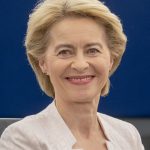
  • Ursula von der Leyen – 2022 Speech at the Berlin Process Summit for the Western Balkans

    Ursula von der Leyen – 2022 Speech at the Berlin Process Summit for the Western Balkans

    The speech made by Ursula von der Leyen, the President of the European Commission, on 3 November 2022.

    Indeed, we had a very good meeting today. And with Albania in the driving seat for next year, I know that the Berlin Process continues to be in very good hands. Our aim is very clear: It is the aim to bring our Western Balkan partners as close as possible, as fast as possible. And here we have two tracks: One track of work is of course the accession process. There, we have made good progress. The Commission has put enlargement back on the table, from the very first day of my mandate. We have been securing agreement on a new enlargement methodology that opened up ways, not only to unblock decisions – that was very important – but it also brought back credibility to the whole process. Then, we have put on the table a substantive Economic and Investment Plan. It brings EUR 30 billion of investment to the region, which is overall approximately one-third of the GDP of the whole region.

    In addition, last year, we had an Intergovernmental Conference with Montenegro. We opened one cluster with Serbia. And this year, we were very happy that we finally managed to have the first Intergovernmental Conference with Albania and North Macedonia and started the screening process. And we made the proposal to Council to give Bosnia and Herzegovina candidate status. I must say, this progress, which is good progress, dear Edi Rama, was possible because of the progress made in the Western Balkan countries themselves, so it is your success.

    Indeed, a second track of action is the Berlin Process. And here, the goal is to deepen our economic integration. And yes, we are facing manifold challenges, first and foremost Russia’s invasion of Ukraine that marks a geopolitical shift on our continent. But the longer the Russian war lasts, the more determined we are to stand together and to withstand. We know that our investments in the Western Balkans are not only important for a conducive business environment – this is also the case – but we also know that these investments are investments for peace, stability and prosperity of Europe as a whole.

    Against this backdrop, indeed, we discussed in depth the knock-on effects of the Russian war on energy. Therefore, today’s declaration on energy security and the green agenda for the Western Balkans marks a very important step. As the Chancellor already said, we are united in the goal of climate neutrality by 2050 and our climate targets by 2030. If we look at the immediate crisis, it is important that we synchronise our steps. We are in an energy community. Therefore, in the short term, this means for all of us: diversification of energy sources, the reduction of our dependency on Russian fossil fuels, and to keep energy prices in check with joint action.

    But we are also aware of the fact that unprecedented crises demand or need unprecedented steps and action. Therefore, I am pleased to announce that the Commission will put forward a substantial energy support package for the Western Balkans. It is EUR 1 billion in grants and it has two different parts. The first part is EUR 500 million in grants as a very immediate financial support for the six Western Balkan countries to put them in a position for the very short term to support vulnerable households and vulnerable businesses. This budget support will be adopted in December and available in January – in other ways: very shortly. The second part, the other EUR 500 million in grants, will be dedicated to investments in energy infrastructure. These are mainly investments in gas and electricity interconnectors to really have a common grid and interconnection in the region with the European Union. Very important is the emphasis on investments in renewable energy – because this gives us independence, it is clean energy and it creates good jobs at home – and, of course, energy efficiency measures.

    In addition, we will strengthen the security of supply by improving and facilitating the access in each other’s energy pipelines and storages. This is for the emergency. So that in case somebody is in trouble, there is solidarity from all of us. And the European Union and the Western Balkans will harmonise their crisis and emergency plans and measures, in a spirit of solidarity and increased neutral resilience. Finally, we are also inviting our partners from the Western Balkans to join us in our European attempt to have a joint procurement platform, so really to develop the strong market power we have if we stick together.

    And this brings me to the second point, the regional integration. That is the development of the common regional market. It is for us a very important stepping stone towards the EU Single Market. Indeed, in this regard, I welcome today’s signature of three very important agreements. The freedom of movement is key to both. It is of course key to the development of the common regional market, but it is also key to the integration of the Western Balkans in the European Single Market. It is about the people – be it students, be it professionals. They will bring the region forward.

    Therefore, the agreement is so important for 18 million people to move freely within the region. Professionals can tap their full potential, regardless of where they work. The professional qualifications – be it of skilled workers, students, researchers, medical doctors, dentists or architects – will all be recognised throughout the Western Balkans. Very important is also that the national ID cards will be accepted at every border. These measures will not only boost intra-regional travel in the Western Balkans, but it will also strengthen personal and cultural bonds between the people of the region. In the very end, it is always the same good old story that has always been at the heart of the European project. It is enhanced cooperation and harmonisation that bring peace and prosperity to all. We should use every opportunity to get closer with our Western Balkan friends.

    Thank you, once more, for a very good Berlin Process.

  • PRESS RELEASE : Ukraine Reconstruction – EU Commissioner Simson visits the country to boost the support for Ukraine’s energy system [November 2022]

    PRESS RELEASE : Ukraine Reconstruction – EU Commissioner Simson visits the country to boost the support for Ukraine’s energy system [November 2022]

    The press release issued by the European Commission on 1 November 2022.

    Commissioner for Energy Kadri Simson visited Ukraine on 1 November to discuss with President Volodymyr Zelenskyy, Minister of Energy German Galushchenko and international partners the immediate concrete support for its battered energy sector. Russia’s persistent and deliberate targeting of Ukrainian energy infrastructure over the past weeks and months has affected more than 30% of the country’s energy system.

    The EU has, together with the Member States and private companies, delivered millions of euros worth of emergency energy equipment to Ukraine, but the level of support needs to be ramped up in light of Russia’s escalating attacks. In addition to the necessary equipment, €25.5 million has been made available to cover the most urgent needs via the Ukraine Energy Support Fund that the Commission has set up with the Energy Community. A dedicated campaign to mobilise further support from the private sector will be launched in the coming days jointly by the Commission, the Ministry of Energy of Ukraine and the Energy Community.

    This visit comes just ahead of the winter season and less than a week after the European Commission and the G7 Presidency called for an international ‘Marshall plan for Ukraine’, which would pave the way for the country’s immediate and sustainable reconstruction.

    In Kyiv, Commissioner Simson met President Zelenskyy, to discuss the latest developments and how the EU can lead the international effort to repair and rebuild the Ukrainian energy infrastructure. She also participated in the first meeting of the International Energy Advisory Council for Ukraine (IEAC4U), a new forum announced by Minister Galushchenko at the EU energy ministers’ meeting in Prague in mid-October. The IEAC4U will help coordinate the efforts of all participating countries and will provide technical assistance in matching Ukrainian needs with potential donations.

    The visit was also an opportunity for Commissioner Simson to co-chair the EU-Ukraine High-Level Energy Dialogue together with the Minister of Energy, where the immediate needs of the Ukrainian energy system and the security of supply situation, as well as the reconstruction and decarbonisation of its energy system were discussed. At the meeting, the Commissioner announced that 13 million euros have been allocated for the restoration of laboratories damaged by the Russian occupiers at the nuclear site of Chornobyl and that the EU intends to channel through the International Atomic Energy Agency a further €3.5 million as support for Ukraine in this sector.

    The Commissioner also met with the members of the Ukrainian parliament, the Verkhovna Rada, and had discussions with Ukrenergo and other Ukrainian energy companies.

    Background

    Since the outbreak of Russia’s unjustified war, the EU has been supporting the Ukrainian energy sector via different channels and means. With ENTSO-E, it has enabled the emergency synchronisation of the Ukrainian and Moldovan electricity grids with the Continental one to ensure stability of the electricity system. To tackle the most immediate needs of reparation, the Commission has promoted the establishment of the Ukraine Energy Support Fund with the Energy Community Secretariat.

    Under the EU Civil Protection Mechanism, the Commission has facilitated numerous shipments of vital energy equipment, from generators to transformers and cables, through its Emergency Response Coordination Centre. In addition, more than 40 million euros worth chemical, biological, radiological and nuclear threat countermeasures and equipment have been delivered from the EU reserves. The Commission has also supported with €7.7 million the State Scientific Technical Centre for Nuclear and Radiation Safety of Ukraine.

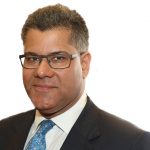
  • Alok Sharma – 2022 Speech at the Ceremonial Opening Speech at COP27

    Alok Sharma – 2022 Speech at the Ceremonial Opening Speech at COP27

    The speech made by Alok Sharma, the COP26 President, on 6 November 2022.

    Distinguished delegates, ladies and gentlemen, it gives me great pleasure to declare open the twenty-seventh session of the Conference of the Parties to the United Nations Framework Convention on Climate Change.

    Friends, let me begin by thanking our friends here in Egypt for such a warm welcome.

    My team and I know just how demanding hosting such a conference is, and how many people have worked incredibly hard to get us to this point.

    So congratulations, and thank you again.

    Now as the UK Presidency comes to an end, I want to reflect on what we achieved together in Glasgow,

    and also what has happened since in our Presidency year.

    Last November, the world gathered at COP26 against a fractured and fractious geopolitics, as a once-in-a-century pandemic dragged mercilessly on.

    And yet, leaders recognised that, despite their differences, often profound, cooperation on climate and nature is in our collective self-interest.

    And thanks to that spirit of cooperation and compromise, we forged together the Glasgow Climate Pact.

    Collectively we achieved something historic, and something hopeful.

    With your help:

    We closed the Paris Rulebook.

    We made unprecedented progress on coal, and on fossil fuel subsidies.

    We committed to rapidly scale up finance, and to double adaptation finance by 2025.

    We reiterated the urgency of action and support for loss and damage, and established serious work on funding arrangements.

    We hope that this will pave the way for a formal agenda item and tangible progress here in Egypt.

    And every Party, and I repeat this, every Party agreed to revisit and strengthen their 2030 emissions reduction targets, to align with Paris.

    I want to thank the 29 countries which have already updated their NDCs since Glasgow.

    From Australia to Micronesia.

    India to Vanuatu.

    Norway to Gabon.

    And we also made progress outside the negotiating rooms, with commitments from business, from finance, from philanthropy.

    Friends, thanks to the work we did together, we achieved our objective, the goal at the heart of the Paris Agreement:

    we kept 1.5 degrees alive.

    Now, none of us could have anticipated the year that followed.

    We have been buffeted by global headwinds that have tested our ability to make progress.

    Putin’s brutal and illegal war in Ukraine has precipitated multiple global crises: energy and food insecurity, inflationary pressures and spiralling debt.

    These crises have compounded existing climate vulnerabilities, and the scarring effects of the pandemic.

    And yet, despite this context, there has been some progress in implementing the commitments we delivered in Glasgow.

    Over 90 percent of the global economy is now covered by a net zero target, up from less than 30 percent when the UK took on the COP26 role.

    The biggest companies and financial institutions in the world have committed to net zero and they have done so in force,

    with a global wall of capital creating green jobs, and directing billions into the green industries of both today and tomorrow.

    Countries and companies are making tangible sectoral progress,

    from Zero Emission Vehicles to our Breakthrough Agenda,

    and are accelerating the rollout of renewable energy across the world.

    The Secretary General has been clear: our shared long-term futures do not lie in fossil fuels and I agree with him wholeheartedly.

    Every major report published this year underscores the point that progress is being made.

    Thanks to the commitments we garnered ahead of and at COP26, and indeed in our Presidency year, emissions in 2030 are expected to be around six gigatons lower.

    That is the equivalent of 12 percent of today’s global annual emissions.

    And with full implementation of all the commitments in place today, including NDCs and net zero targets, the reports suggest that we are heading to 1.7 degrees warming by the end of the century.

    Not 1.5.

    But still, progress.

    So, to those who remain sceptical about the multilateral process, and of the COP process in particular, my message is clear:

    as unwieldy and sometimes as frustrating as these processes can be, the system is delivering.

    And there are many people to thank for that.

    And certainly too many to name.

    The Prime Ministers and Presidents who have sensed the changing wind, and indeed sought instead to harness it.

    The Ministers to the miners who have recognised a just and sustainable future can only be delivered with a clean energy transition.

    The civil society organisations, youth representatives and indigenous peoples who pushed us to consider and reconsider what was possible in Glasgow, have continued to do so since.

    And, of course, the brilliant officials, the brilliant civil servants around the world, not least in the UK’s COP Unit, who have helped to deliver progress.

    And yet, despite this progress, I fully recognise the scale of the challenge still in front of us.

    Just as every report shows that we are making some progress, they are equally clear that there is so much more to be done in this critical decade.

    Friends, we are not currently on a pathway that keeps 1.5 in reach.

    And whilst I do understand that leaders around the world have faced competing priorities this year,

    we must be clear,

    as challenging as our current moment is, inaction is myopic, and can only defer climate catastrophe.

    We must find the ability to focus on more than one thing at once.

    How many more wake-up calls do world leaders actually need?

    A third of Pakistan under water.

    The worst flooding in Nigeria in a decade.

    This year, the worst drought in 500 years in Europe, in a thousand years in the US, and the worst on record in China.

    The cascading risks are also clear.

    Entire economic sectors becoming unsustainable and uninsurable,

    entire regions becoming unlivable,

    and the strain on the global movement of goods,

    and the pressure on people to relocate because of the climate crisis, becoming almost unimaginable.

    So, this conference must be about concrete action.

    And I hope that when the world leaders join us today, they will explain what their countries have achieved in the last year, and how they will go further.

    It is very simply, a matter of trust.

    Without its constituent members delivering on their commitments, and agreeing to go further, the entire system falters.

    I will do everything in my power to support our Egyptian friends.

    The UK is here to reach ambitious outcomes across the agenda, including on mitigation, on adaptation, and on loss and damage.

    And we know that we have reached a point where finance makes or breaks the programme of work that we have ahead of us.

    So whilst I would point to some of the progress shown on the $100 billion,

    I hear the criticisms, and I agree that more must be done, by governments and by the Multilateral Development Banks,

    including on doubling adaptation finance by 2025, and establishing a post-2025 goal.

    Ultimately though, I remain hopeful.

    Look back to where we were before Glasgow.

    Look back to where we were before Paris.

    Indeed, as we mark the thirtieth anniversary, look back to where we were before Rio.

    With thanks to all of you, the UK’s Presidency ends as a demonstration that progress is possible, is happening and is continuing.

    Yes, we need to accelerate that progress in the remainder of this decisive decade.

    But I believe fundamentally that we can.

    We know what we need to do to keep 1.5 degrees alive.

    We know how to do it.

    And Sameh, you and your team have our full support.

    So now friends, let’s make sure we delivery, let’s make it happen.

    Thank you.

  • PRESS RELEASE : The UK’s Presidency of COP26 ends as world leaders meet in Egypt for COP27 [November 2022]

    PRESS RELEASE : The UK’s Presidency of COP26 ends as world leaders meet in Egypt for COP27 [November 2022]

    The press release issued by the Foreign Office on 6 November 2022.

    One year on from hosting COP26 in Glasgow, the UK has handed over the Presidency of the United Nations Climate Change Conference to Egypt as world leaders, including the UK’s PM, Rishi Sunak, meet at Sharm el Sheikh for COP27.

    The UK’s Presidency of COP26 made progress on each of its four goals of: mitigation (reducing emissions), adaptation (helping those already impacted by climate change), finance (enabling countries to deliver on their climate goals) and collaboration (working together to deliver even greater action). Most importantly, if countries which agreed the Glasgow Climate Pact deliver on their commitments to phase down coal power, halt or reverse deforestation and speed up the switch to electric vehicles, limiting global warming to 1.5 degrees is still possible. This will be critical for preventing devastating climate impacts and protecting vulnerable countries like Pakistan.

    At COP26 the UK pledged £55m in financial support to Pakistan to assist with building climate resilience and tackling climate change. This support is in addition to £26.5m provided by the UK Government and £30m donated by UK citizens to provide relief following this year’s devastating floods.

    Having handed over the Presidency, the UK is maintaining its ambitious goals on climate change. This year the UK is launching the ‘Accelerating to Zero Coalition’ which will promote the use of more electric cars worldwide. The UK is also initiating the ‘Forest and Climate Leaders’ Partnership’ to halt and reverse forest loss and will be working with developed countries to increase the availability of climate finance to countries such as Pakistan.

    Development Director at the British High Commission, Islamabad Jo Moir, said the following:

    This year’s floods are a stark reminder of impact climate change is having on our lives. Globally, we will face more climate catastrophes, and climate-vulnerable countries like Pakistan face enormous challenges. Business as usual is not enough. At COP27 we need to make further progress on ensuring countries which have been affected by climate related disasters have the necessary tools to build-back smarter. The UK will be a leading voice on this.

  • PRESS RELEASE : Reversal of National Insurance Increase takes effect today [November 2022]

    PRESS RELEASE : Reversal of National Insurance Increase takes effect today [November 2022]

    The press release issued by HM Treasury on 6 November 2022.

    From today the 1.25% point cut to National Insurance rates for employees and employers takes effect across the UK.

    – The reversal of April’s rise in National Insurance takes effect across the UK from today

    – Added to July’s increase in National Insurance thresholds, almost 30 million people will be £500 better off on average next year

    – Most employees will start to receive this tax cut directly through payroll between November and February

    The tax cut was announced by the government on 22 September, as part of the reversal of the Health and Social Care Levy.

    Working people across the UK will begin receiving the tax cut in their payslips this month, with all expected to have started receiving it by February.

    The move to reverse April National Insurance increase follows the rise in National Insurance thresholds in July. As a result of both measures, working people will be £500 better off, on average, next year.

    Funding for health and social care services will be maintained at the same level as if the levy were in place.

    It takes effect in all parts of the UK and means working people will keep more of the money they earn.