Author: admin

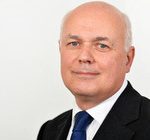
  • Iain Duncan Smith – 2002 Speech to Students at Westminster Central Hall

    Iain Duncan Smith – 2002 Speech to Students at Westminster Central Hall

    The speech made by Iain Duncan Smith, the then Leader of the Opposition, in London on 5 February 2002.

    It is a great pleasure for me to speak at the Westminster Day 2002 today and I am very grateful to you for inviting me. I know that my predecessor, William Hague, very much enjoyed coming to the Westminster Day and I look forward to doing what I can to support it in the future.

    One of the reasons for that is the importance that I attach to encouraging people from all walks of life, whatever their background, to take an interest in politics and what their political leaders are actually doing. That applies just as much to people of my own generation as it does to people of your generation. It is important because the decisions that are made here in Westminster can have a huge impact on all our lives.

    Questions about the future of our health service, about our education system, about the actions we will take to protect the state of the environment and to help those in our world less fortunate than ourselves, all of these will be decided through our political process.

    Our world is moving at a bewildering pace. It is important that democratic institutions guarantee our security at such a time, while leaving us free to take advantage of the opportunities that change presents us.

    But you cannot understand the power of politics without recognising first its place in modern life. At the very time when people are looking to politics for more and more answers, there has never been a more glaring disconnection between politicians and the people whom they are elected to represent.

    Active participation in politics is now very much a minority pastime. General apathy with politics is now leading to dangerously low levels of participation in the democratic process itself.

    Huge numbers of people cannot be bothered to vote. For them politics is just one big turn off.

    That was demonstrated clearly at the General Election last year. At just 59 per cent we had the lowest turnout of voters at any Election since 1918 – and even then there were exceptional circumstances at work. Alarmingly for the state of our politics, more people stayed at home and didn’t vote on polling day than actually went out and voted for the party that won.

    Among younger people the situation was more shocking. Just before the election an opinion poll for the BBC showed just 38 per cent of 18-24 year olds intending to vote, while among 25-34 year olds the figure was still only 45 per cent.

    This isn’t a partisan point at all but there is a strong argument for saying that the real winner at the Election was apathy.

    As a candidate, I met countless numbers of people who said to me that there was simply no point in voting. “They’re all the same – after your vote and then do nothing when they get in”. “Voting never changes anything. “It makes no difference to me”. They’re just in it for themselves”.

    So it almost goes without saying that the image of politics and politicians, especially among younger people, is not a good one. It is borne out in opinion polls that regularly place politicians among the least trustworthy members of society.

    There are numerous reasons for this. I don’t doubt that the various scandals that have hit all parties in recent years have tarnished the general image of politicians.

    There is a widespread feeling that Parliament no longer matters – that it is marginal to events and not a place where people can get things done.

    The language of politics is so often not the language of people and the priorities of politicians sometimes don’t appear to be the people’s priorities. As a result, political leaders seem to be remote arguing about obscure matters that have little or no relevance to people’s day-to-day experiences.

    There is the growth of single-issue pressure groups that channel people’s energies and act as an outlet for their political grievances rather than political parties.

    And, of course, there is the perfectly understandable fact that most people don’t sit around agonising about the day’s events at Westminster but simply want to get on with their lives.

    These, then, are the problems. What are the solutions?

    The first is that both politicians and voters must rise above the ritual cynicism that has become too ingrained in the conduct of politics.

    Britain does not need to be a nation of full time political junkies. But we should recognise that among all the freedoms we have in the country the democratic right to vote in, and to throw out, the Government of the day is perhaps the most priceless.

    Look at what is happening in places like Zimbabwe today, where free and fair elections are in peril. 20 years ago I served with the Army in Zimbabwe as we helped to help transform that country from white minority rule into a multiracial, multiparty state. Now, step-by-step it is becoming a dictatorship, unless we do something to stop it. That’s why democracy matters.

    Think of the first fully democratic elections in South Africa after the end of apartheid, when people from the black townships got up at dawn, walked for miles and then queued for hours simply in order to exercise their new-found freedom to vote after years of political struggle and oppression. That’s why democracy matters.

    When you see in Afghanistan today, women free to walk the streets by themselves, free to go to school and free to teach in those same schools because we lifted that country from the tyranny of the Taliban. That’s why democracy matters.

    If we pretend otherwise, if we allow our own cynicism to obscure what a precious and hard-earned thing democracy is, then we cheapen not only ourselves we cheapen those who have lived without it for far too long.

    We only have to look at our own country to see the power of democracy. Britain has become a very different place in the last 20 years in part because of the electoral successes of Margaret Thatcher, whether your parents agreed with her or voted for her.

    The second thing we can do to revive our democratic culture, is to engineer an outbreak of honesty. You might think this a particularly difficult thing for a politician to achieve!

    After all we live in an age of spin, soundbites and media manipulation, partly because we are led to believe that what looks and sounds good is more important than what is good.

    This not only insults you as future voters, it does politicians a disservice too. I became involved in politics because I believed in certain things:

    – that the more choice and more freedom people have the better their lives are;
    – that the traditional rights and laws which shape the way we live our lives in Britain should be preserved for future generations;
    – that governments don’t have all the answers and are at their worst when they pretend that they do.

    These beliefs haven’t changed. If you ask me what it is that politicians do, I would say we are in the business of ‘practical idealism’. Politics is at its best and its most honest when it is driven by values, when the political debate is between the policies which flow from different principles.

    These principles will differ from party to party. For the Conservatives it is about putting more trust in people and taking the world as we find it, rather than the way we would like it to be. That is where we start from when we seek to improve things.

    Some of these improvements will be modest. It doesn’t make them any less worthwhile. Today my colleague Caroline Spelman is announcing an appeal launched with Islamic Relief to raise money for a mobile ambulance that will help treat landmine victims in Afghanistan. It is a practical step that will help thousands of victims. It is the sort of initiative that is replicated by countless thousands of people in this country up and down our country every day.

    Trusting people means trusting their instincts, their desire to improve their neighbourhoods, to help out in their communities, to lend a hand to people on the other side of the world.

    In our public services, it means giving more power to doctors and nurses and to teachers so that they can offer the quality of health care or education that they joined their respective professions to give. It is a simple vision rather than a grand design, but putting it into practice is far from easy. It means looking again at the way we run our hospitals and schools.

    It is one of the reasons why my Conservative colleagues have spent so much time looking at the way other countries run their public services in France, Germany and Sweden to see what we can learn, to see what might be made to work here.

    It means breaking away from old thinking, from the dogma and ideology that has characterised too much of our political debate on these issues for too long.

    What really matters is that people are treated more quickly and to a higher standard in our hospitals; that more pupils have the chance to achieve the same qualifications and learn the same respect for themselves and for others that many of you here today take for granted.

    This is the sharp end of politics. The democratic debate over the future of our hospitals and schools will shape the health care your parents and grandparents receive, it will also shape the education your children and grandchildren get when you are their age.

    It is nothing less than a debate about the future direction of this country, about the future direction of your lives. If you want to be involved in that debate, now is the time.


  • Peter Ainsworth – 2002 Speech at the Tenant Farmers Association AGM

    Peter Ainsworth – 2002 Speech at the Tenant Farmers Association AGM

    The speech made by Peter Ainsworth, the then Shadow Secretary of State for Environment, Food and Rural Affairs, on 12 February 2002.

    I know that this has been for many of you a truly terrible year. Your chairman has described it as ‘horrendous’.

    It was horrendous even by the standards which your industry had sadly come to expect.

    In the three years to June 2001, over 60,000 farming jobs were lost, and total farm incomes crashed from over £5 billion to £1.8 billion. What other industry could take that kind of punishment and survive?

    By the start of last year, for many of you, achieving the National Minimum Wage was a pipe dream.

    You could be forgiven for asking what you had done wrong to invite the series of traumas, akin to the plagues of Ancient Egypt, which one after another struck. BSE, Classical Swine Fever, dreadful harvests, unprecedented rainfall, a collapse in commodity prices.

    And just when you thought it could not possibly get worse – it did.

    Next week will see the grim anniversary of the date on which Foot and Mouth became official.

    The scale of the disaster remains vividly in the mind. Over 2000 confirmed cases across thirty counties. Many of you saw your livelihoods quite literally vanish before your eyes as some 6.5 million animals were slaughtered, often in brutal circumstances, on nearly 10,000 farms.

    These are the official figures.

    Some estimates have put the number of animals slaughtered at nearer 10 million.

    I know that these numbers, horrific as they are, don’t tell the whole story. It is hard for anyone who was not directly touched by the tragedy to understand the emotional impact on the farming communities and families where the culling took place.

    I am acutely aware of the vital role played by this Association in providing advice, information and consolation during those painful months. It was a ghastly time, but the worst of times can often bring out the best in people and the whole country was moved by the resilience, determination and decency of the farming community during those days.

    There remain many questions to be answered by the Government over its handling of Foot and Mouth. When, precisely, did Ministers first become aware that the disease had broken out? Why was there a three day delay in imposing a total movement ban? Why were Ministers so slow in grasping the need for urgent action? Why was there no contingency plan in place? Why didn’t they mobilise local vets? Why did they rule out vaccination? Why was chaos allowed to develop before the army was finally called in to help with the disposal of carcasses? Was contiguous culling carried out legally? Who drew up the maps on which the culling was based? Why does the Prime Minister refer all enquiries to Defra when it was he who assumed personal responsibility for managing the outbreak?

    Were the Government’s eyes so transfixed by the date of the General Election that they couldn’t see the tragedy unfolding before them?

    All these questions, and more, we will continue to ask.

    But the honest way to learn the Lessons of Foot and Mouth would be to hold an independent public inquiry.

    Just why the Government has set its face against a thorough public scrutiny of its handling of the disease can only be guessed at. The fact is that if they have nothing to hide they have nothing to fear from a Public Inquiry, and in the absence of openness, we are left to draw our own conclusions about what it is they do not want to have exposed.

    What is certain is that the Prime Minister’s stance on this issue has done nothing whatever to heal the growing rift between Government and countryside which was already all too visible before the last Election.

    To make matters worse, the first measure introduced by the Government since the outbreak, the Animal Health Bill (Animal Death Bill) confers sweeping new powers of entry and destruction on Ministers and officials, and insinuates that farmers were chiefly responsible for the spread of Foot and Mouth.

    The uncompensated financial loss caused by Foot and Mouth to the livestock industry stands at over £1 billion.

    But the true costs to the wider economy have been far greater.

    It was only in the aftermath of the devastation that the Government seems to have begun to grasp the idea that farming is not an isolated activity, and that what happens to farming affects us all. That is why the future of agricultural policy is so important.

    Much has been said and written of the opportunities which now exist to develop a radical new approach to farming policy, but Ministers who lecture the rural community about the need for change must remember that before change must come trust. There remains an urgent need to restore consumer confidence in British farm produce, but equally urgent is the need to address the dysfunctional relationship between Government and the farming community.

    The most important policy objective must be to enable a return to profitable farming; this, more than any new regulations, will help to ensure the future of the rural environment. In fact the swathes of red tape are part of the problem and the Curry report has some useful recommendations to make in this area. Of course there is a need for regulation where issues concerning human health, the environment and animal welfare are concerned, but the command and control culture which originates from the Common Agricultural Policy and finds its expression in the Defra paperchase would be quaint if it were not so damaging.

    In all the discussions about the Future of farming, too little attention has been paid to the particular difficulties suffered by the tenant farmers. Given that you account for some 9.5 million hectares, 40% of land farmed in this country, your interests might be expected to form rather more than a footnote.

    If structural changes are believed to be necessary to farming, then Government thinking must take account of tenant farmers. With no assets to rely on, facing retirement can be a daunting prospect.

    That is why, before the last Election, we promised to use the Rural Development Regulation to introduce a retirement package for tenant farmers which would not only benefit existing tenants but also, importantly, help encourage newcomers into the tenanted sector.

    The Government made a similar pledge but so far they have done nothing to keep it; and we will work with you to hold them to their promise.

    Many of the problems facing farming and the environment will yield no easy or quick solutions, but a determined effort to get government out of the daily management of rural businesses would be a start.

    It seems that hardly a week goes by without some new regulation making life harder. In fact, since 1997 there have been a staggering 15,000 new regulations which have impacted on farming in some way. From the Right to Roam to the vibration of tractors, nothing can be allowed to happen without Ministerial approval and the endless, wasteful unproductive bureaucracy that goes with it.

    As Iain Duncan Smith said recently;:

    “It sometimes sees that what is not illegal is becoming compulsory”.

    What is happening to our country? What is happening to our freedom?

    And what is the meaning of Free Trade when British farmers are being asked to compete for supermarket orders with overseas producers who are less constrained by animal welfare, hygiene and environmental regulations?

    We must ensure that you are able to compete on fair terms.

    When it comes to farming, I want to hear a little less about free trade and a lot more about fair trade.

    The Curry Report had little to say about this, but it had much to say about modulation; indeed although it contains helpful thinking on better marketing and streamlining bureaucracy, modulation is its Big Idea.

    I am keen to help you do what, by and large, you have always done: manage the environment in sustainable way. The beauty of our landscape is of huge economic benefit, but it is more than that. For most of us, whether we live in the countryside or in cities, it has an intangible strength; something which cannot be adequately portrayed in a picture postcard; something essential to the way we think of ourselves as a nation.

    This environment is your work place and it has been fashioned by farmers over the centuries. It didn’t get there by accident, it got there because of you and your predecessors.

    But the words sustainable development become meaningless if sustainable does not also mean profitable.

    What worries me about the enthusiasm shown by Curry for modulation is that, under existing EU laws, it could simply mean that the taxpayer ends up paying an even higher bill, whilst farm incomes continue to decline and farmers become more, not less, dependent on the state.

    I will not attempt, this afternoon, to reform the CAP, although radical reform is urgently needed. The present stand off between the Commission on the one hand and Poland on the other shows just how great the problems are. Let me just say that you have a right to expect the British Government to have identified clear objectives long before now and to be taking a lead in mapping out the future of European agricultural policy. Well, if you know what Margaret Beckett wants out of CAP Reform do let me know, because I haven’t got a clue and don’t suppose she has either.

    The problems centred around the CAP and WTO talks must not be allowed to divert attention from measures which could be taken now. I have touched some of them:

    Start cutting bureaucracy now;

    Begin to rebuild trust;

    Help with retirement plans;

    Encourage new entrants to farming;

    Tackle unfair imports.

    And how about this? Margaret Beckett is keen to talk about encouraging local consumption of local food. We all think this is a good idea. Why doesn’t the Government take a look at its own food procurement policies and put its money where its mouth is (or vice versa)?

    Finally, the negligent approach to controlling illegal food imports is a disgrace which should be put right immediately. After all that went wrong last year, after all the waste and the cost and the heartbreak, perhaps the most disturbing thought is that literally nothing has been done to prevent Foot and Mouth being imported again tomorrow.

    I am once again, extremely grateful for the opportunity to share some thoughts with you today.

    In the months ahead, I look forward to working with TFA to develop the policies which you need, which we all need, for rural Britain to reverse the years of decline and to become once again a vibrant place to work and a source of physical and emotional nourishment.

    And I will never forget that all too often, Government has been part of the problem not part of the solution.

  • Theresa May – 2002 Speech to the Annual Royal Institute of British Architects Council Club Dinner

    Theresa May – 2002 Speech to the Annual Royal Institute of British Architects Council Club Dinner

    The speech made by Theresa May, the then Shadow Secretary of State for Transport, Local Government and the Regions, on 14 February 2002.

    I often find when I do radio interviews that I am asked for my correct title. When I tell them it is Shadow Secretary of State for Transport Local Government and the Regions they usually recoil in horror. Can we shorten it they say?

    I guess that to many people at first sight there is little that seems to marry together the various bits of this wide department, but I believe there is much that brings the issues together. It is what I call the Quality of Life department because it deals with the matters that affect people’s everyday quality of life – The things that can make the difference between a good and a bad day.

    How was the traffic taking the children to school, did the train run on time – or at all. How long did you wait for the bus? Did you trip up on that uneven pavement the council’s left for months – and they haven’t collected all the rubbish sacks again and the street lights weren’t working last night.

    And the traffic’s so much worse since they built that new development on the outskirts of the town – goodness knows what it will be like if that superstore gets the go-ahead. And now of course the primary school’s full – do you know how long it took me to get an appointment at the doctor’s surgery and what’s more the new houses don’t even look nice.

    Although the word environment no longer appears in the Department’s title and responsibility for the environment has moved to another department, the DTLR’s responsibilities palpably deal with the overall environment in which we live and the quality of life we experience.

    At this stage I should perhaps deliver an Opposition health warning. Our process of policy renewal has only recently started and I will not be able to set out for you tonight specific policy proposals. What I do hope to do is to stand back and identify the issues as I see them and show the direction in which our thinking is developing and I should say that in some areas there is some agreement with the Government at least on the aims of policy if not on delivery.

    But on one thing we are clear. As we develop policy we want to produce policy that meets the needs of people’s lives. This is not about Westminster knowing best. It is about understanding how people lead their lives, the problems they face and the issues that need to be addressed and developing policy to do just that. So involvement of people is important.

    Central to the question of environmental quality of course, is the planning system.

    Everyone is agreed that the planning system in England and Wales is in need of reform. The sorry saga of Terminal 5 exposed how the appeals system is cumbersome and costly. In my own constituency I see the resigned frustration felt as residents face a third planning inquiry on the development of motorway service areas on the M4.

    I think most would agree that there are too many tomes of regulations and guidance – the plethora of RPGs, PPGs and MPGs on top of UDPs and Structure Plans are inaccessible and unaffordable for local people and for business.

    My own concern is that these problems, together with the inconsistency of decisions, the uncertainty of timetables, and lack of information has generated a lack of confidence in the planning system. Too often developers feel they don’t get a fair crack of the whip as they despair at the last minute intervention of local lobby groups, and individuals and community groups feel that the odds are stacked against them as the developer has all the money and the means to keep coming back with application after application.

    So I agree with the Government that we need to make changes in the system, but I am not convinced that the Planning Green Paper is the answer. And indeed upon reflection, many planning professionals and business leaders are increasingly voicing their concern about its impact.

    I don’t want to spend long on the Green Paper tonight. I simply want to say this.

    We wholeheartedly support the removal of unnecessary planning red-tape, but we do not support proposals that look as if they will strip local communities of their voice and weaken environmental protection.

    The problems with planning are not just of cost, delay and lack of certainty. Whitehall politicians and regional bureaucrats too often override the wishes of local communities, resulting in loss of local character, uniformity of architecture and unsustainable development.

    The Green Paper proposes that 90% of planning decisions will be decided by officers, rather than elected councillors. This isn’t the best way to speed up planning decisions – and whereas business may welcome not being subject to the whim of elected councillors, local people will feel their democratic check on plans has been removed.

    And then there are the concerns about the proposals for dealing with major infrastructure projects. Will Parliament have the time for the complex issues such proposals raise to be properly addressed?

    Certainly, planning should be made more accessible to business. But weakening local residents’ say on local planning is a retrograde step.

    So I don’t think the Planning Green Paper is the answer.

    Indeed maybe it addressed the wrong question. What it assumed was that the issue was about delays and the need to speed the system up for business. I suggest that the fundamental question is how to restore integrity in the system and hence people’s confidence in it.

    For too many people their first inkling of a major development locally comes when they see an application notice or an article in the local paper. Neighbours talk. A residents action group is set up and immediately the focus is on stopping the development. The system immediately becomes adversarial.

    How much better if there was more involvement of people up-front so that discussions on what was needed locally and how it could be provided took place before decisions on a particular proposal.

    But there is another aspect of development proposals which I think is too often overlooked and that is the quality of the buildings and their design.

    Sadly for a variety of reasons today there are not many local authorities who are able to say that they have within their planning departments people with the design skills needed to make proper judgements about these quality issues. Indeed for too many planning departments particularly in the south east it is very difficult to get enough staff, let alone staff who have the skills to assess the design quality of a proposal.

    And when you do get them they rarely have the time to look at such issues. Indeed too often planners are so stretched that the process is simply mechanistic.

    That doesn’t improve the quality of the built environment which is so important for the quality of life. There is a very real need to look at what is happening in our planning departments. The problem for local authorities with stretched budgets is that education and social services naturally take precedence over planning.

    We need to understand rather better the way in which good design and planning can impact on the quality of life. We need to give far more attention to developing buildings that reflect people’s way of life and the needs of the local community and of the wider environment.

    Allied to this is my concern that planning needs to take more account of the context of development. Planning decisions particularly on significant developments need to be able to be set into the context of wider infrastructure issues – not just roads but can the local infrastructure for example on schools cope with the impact.

    And I do believe in this context again that design is important. If the housing application for the edge of the rural village is for identikit boxes which bear no resemblance to the village architecture or show no respect for the environment then they are more likely to be rejected by local people and the developer is more likely to find an inquiry on his hands with all the delay, uncertainty and cost that entails.

    That is not to say that all design must mirror the style of the area into which it fits. After all rural villages generally show a diversity of types of housing and of design. They have evolved over the years and evolution of design is important. And uniformity within a development can also create problems. But if the development stuck on the end of the village that nobody wanted is also badly designed it adds fuel to local discontent which has an impact on those who live there and on how they fit into the local community.

    So taking time and care on design is important. It should always be so, but it is particularly important when the pressure on space and on greenfields and Green Belt is as great as it is today.

    Today we see Government continuing to push a centrally-driven housebuilding policy. We believe in home ownership and support the construction of more quality housing to buy and rent. But the issue is where they should be put and what sort of houses they should be.

    Building houses in the Green Belt and perpetuating the neglect of our inner-cities, just fuels migration to the suburbs, and in turn, encourages yet more demand-led greenfield development.

    The state of our cities matters. Over the years governments have introduced regeneration programmes but too often today local communities find themselves mired in the red tape of these programmes.

    Yet planning is a practical way that our inner-cities can be helped, if we take a more holistic approach and if we focus on the quality of the built environment.

    As the President and possibly others will know I am wont on occasions such as this to refer to Alice Coleman and her book Utopia on Trial.

    When I read Utopia on Trial it all seemed such common sense yet common sense that had been ignored by planners and architects alike. Buildings and spaces should be designed with people in mind and with an understanding of people’s need for identity in place and space. Designing buildings and spaces to give people greater safety both in reality and in perception is important. It can in itself help to provide the environment that improves quality of life not destroys it.

    And design needs to understand people’s sense of place and identity with place. Buildings and spaces over which no-one feels ownership and for which no-one feels responsible encourage the destruction of the environment and the reduction in the quality of life.

    I was interested to read an article in the Estates Gazette about a seminar run by the Estates Gazette and Grosvenor Estates last autumn during which Sir Terry Farrell referred to large scale urban development as “a game of chess where nobody says what moves they are going to make next”. These are the problems faced in this system – exacerbated by the lack of confidence in it. At the same seminar Hugh Bullock Director of Gerald Eve said “We are beginning to see the realisation that urban regeneration is about rebuilding local elements of society”. Again quality of life comes through as an issue.

    Urban regeneration is not only valuable in its own right and in terms of the quality of life for individuals in urban areas, but it its also important in redressing the balance of demand between urban and rural development. It takes pressure off greeenfields and that benefits urban areas and those who live in them as well as rural areas and those who live in them.

    We should be protecting our green spaces. New housing should be targeted at areas with the most brownfield land and towards areas most in need of regeneration, rather than blindly applying arbitrary, regional and national targets. There should be no binding national or regional housebuilding targets, forcing Green Belt to be replaced with urban sprawl.

    Instead, central government must concentrate on working with local government and local people to help create residential cities where people want to live. Urban renewal and environmental protection go hand and hand, and the reform of the planning process must recognise this.

    Urban renewal has another benefit of course and that is in terms of sustainability. Living close to the place of work reduces the number or length of journeys people make. It can reduce the reliance on the car, particularly if good urban transit systems are in place. So planning urban design and transport are part of the same jigsaw puzzle and those taking individual decisions need to know the whole picture before they can piece together the individual pieces.

    Sustainability is important in other ways too. I am pleased to have in my constituency a project of Integer homes that are designed for energy efficiency right down to the Alpine sedum growing on the rooves. They are a housing association project so they are designed as affordable housing for which affordability has been taken a stage further. Initial estimates suggest that they could reduce energy costs by 30-50%. I have to say there have been teething problems since the first residents moved in but then every new building has such problems.

    Of course we need to give them time to settle down and the proof of pudding has yet to come after people have been living in them for say a year. But if they do what they claim then I believe this and other developments like it will be another important example of the role design can play in providing for sustainability.

    Doing all this of course needs architects and planners and politicians who understand the issues and who are willing to move forward and be innovative.

    At the Estates Gazette seminar I referred to earlier John Gummer said what we need is a different approach and attitude from politicians. Planning should not be about gate-keeping but about enabling.

    I know Mr President the importance that the Royal Institute is now placing on requiring students to show the necessary skills to embrace the needs of sustainability within their work and I welcome that and support you in that work.

    The aim of all involved – planners architects and the politicians who are taking policy and individual decisions – should be planning and designing for people and planning and designing for the future.

    By setting policy and making decisions that recognise and meet the needs of people and the wider community, by understanding the role played by good design and the quality of the built environment in improving the quality of life then we can all be not gatekeepers but enablers.

  • David Davis – 2002 Speech to the Newspaper Society

    David Davis – 2002 Speech to the Newspaper Society

    The speech made by David Davis, the then Chair of the Conservative Party, in London on 21 February 2002.

    In a few weeks we will celebrate 5 years of New Labour in power. Even as we speak, glossy proofs of a Government 5-year Report will be lying on Alastair Campbell’s desk.

    Never were the ritual words “Check against Delivery” more appropriate.

    For nearly 5 years into government, what exactly have New Labour achieved?

    They’ve turned the constitution upside down – with a strategic sense that reminds me of Pooh Bear trying to work out how to open a honey jar.

    They’ve also kept the economy on a fairly even keel, largely by sticking to the 3-year economic plan laid down by the previous government – though I worry about the effects of the huge structural increases in taxation, spending and regulation now kicking in.

    And they have, of course, done what Tony Blair always said he wanted most of all – won two elections.

    On the other hand it is now clear that on the key issues that touch nearly 60 million real lives – health, transport, crime, schools, welfare reform – New Labour are utterly incapable of delivering the improvements they promised. New Labour will fail in the next four years – fail as a government, fail the “instruction to deliver” that was Tony Blair’s key message at the last election.

    They will fail for four reasons intrinsic to New Labour’s whole approach.

    Lack of philosophy and principle

    The first – and most serious – is that they lack any roots in philosophy or principle.

    The longer we live with it, the harder it becomes to understand what New Labour or Blairism actually amounts to.

    We have all followed their public search for the truth of political life. Cool Britannia – Third Way – communitarianism – stakeholder society.

    We have all watched a procession of gurus trekking into No.10 – from Will Hutton via Antony Giddens to the new wunderkind, John Birt, and his “blue-skies thinking”.

    Frankly, it is all pretty fragile stuff.

    In reality, the Third Way is a political posture – a rhetorical device – no more, no less. It is defined by what it is not, rather than by what it is.

    Unfortunately, the Third Way is sometimes the worst of choices – and certainly not always the best. Ask anyone who’s been fooled by the three-card trick.

    Obsession with perception management

    This lack of any serious philosophy gives free reign to the second fatal flaw in Blairism – an obsession with perception management. Of course, politicians down the ages have worried about what people think. It is inherent in democracy. Indeed, it is one reason I am here today.

    But this government is more obsessed with perceptions, with “spin”, than any in history.

    Politicians should worry about what the people think. What they should not do is allow that to override issues of real achievement, let alone allow management of perception to displace the proper running of government, as has happened all too often in recent years

    Let me give just one example. New Labour recognised that you get almost as big a headline for “Government spends £10 million” as you do for “Government spends £10 billion”.

    So they created literally hundreds of initiatives to “fix this” or “change that”. One offender was the Department of Education under David Blunkett. It unleashed an artillery barrage of paper on the staff rooms of England. As a result, it seriously undermined teacher morale, with little or no benefit to educational attainment.

    The gain for government was a weekly headline and a perception of action. The danger was that ministers confused activity with achievement, mere change with real progress.

    Many other sins, of course, arise from an obsession with perception:

    · the willingness to fiddle figures

    · deceitful management of news

    · pressurising of civil servants

    · twisting of policy priorities to win a headline

    · intoxication with propaganda to a point that corrupts the entire operation of the government machine.

    Most of these sins are more than obvious to this audience. So I need not say Jo Moore.

    Instead, I will move on to a third fatal vice of New Labour – related to its obsession with perception, and almost as pernicious. Its constant short-termism.

    Political short-termism

    Old and New Labour both often accuse business of short-termism. In fact, business is capable of being enormously long-sighted and creative, whether we look at the creation of canals and railways that underpinned the Industrial Revolution, or the huge electronic, telecoms and software infrastructure supporting the modern economy.

    No business is, in fact, as short-term as a politician under pressure. (I should know – after all, I was a minister in the last Conservative government).

    But this government is even more short-termist than most. It has raised inconsistency to art form. Its obsession with public perception makes it a slave to polls and focus groups and sends it flailing back and forth like seaweed in the turning tide.

    That is why Stephen Byers embraces the private sector, then turns on it 6 months later. Why Alan Milburn does exactly the opposite, at exactly the same time.

    Labour made short-termism a core political tactic. They adopted the words and imagery of New Labour to dissociate themselves from their own past. The success of the tactic is so deeply ingrained they cannot help repeating it endlessly even in Government. Thus:

    · The 2001 election was fought not on defending their record, but on an entirely new set of promises.

    · They launch 10-year plans for health, railways, or crime, but we never find ourselves even 4 or 5 years into a 10-year plan – long before then the plan has been superseded by another one, with a new flourish and no acknowledgement of its predecessor.

    · Exactly the same happens to ministers. David Blunkett positions himself as a new broom, a fresh start, by repudiating his predecessor Jack Straw. Stephen Byers does the same in transport contrasting himself with John Prescott. Patricia Hewitt elaborately distances herself from the record of Stephen Byers at DTI.

    Every year is year zero – so no recognition of failure, no responsibility, no accountability.

    Philosophical incoherence and weak comprehension of policies

    This cocktail of philosophical incoherence and short-term expediency explains Labour’s total failure on the central planks of the public service policies on which they were elected.

    It is why they promised welfare reform, but have brought more and more people into benefits than ever before.

    Why they pledged to solve public transport, but have presided over five years of dither, bickering, inactivity and decay.

    In fact, all too often, when they attempt a new policy, they appear not to understand what they are doing. Their aims are confused; the outcomes are often perverse.

    Take the Private Finance Initiative, or Public Private Partnerships, to use the New Labour alias.

    At its best it can introduce private sector levels of innovation to public services, delivering a lot more public service bang for the taxpayer’s buck.

    But it is not easy to manage. Delivering the benefits of PFI requires clarity of thought, firmness of purpose and adherence to principle.

    It means giving consumers a choice so they can force providers to deliver. It means allowing providers the freedom to manage so they can innovate and improve. It requires transparency so that producers and consumers can make informed choices. And it demands a level of trust between government, the customer and the provider that contracts will be honoured.

    Time and again, Labour’s actions have flown in the face of these principles.

    The Railtrack fiasco shows just how little trust now exists between the private sector and this Government. By abolishing GP fundholding and dismantling GM schools, Labour have shown just what they think of consumer choice.

    Their co-dependent relationship with the unions means they cannot give public service managers the freedom to actually manage.

    And the idea of freely available information about public sector performance flies in the face of Labour’s obsession with media management. Again I will say Jo Moore.

    When it comes to delivering the real benefits of PFI, Labour fail on every count. What we are left with is a piece of creative accounting. Public services on the never-never. Expensive. Low performance. But politically convenient.

    Nowhere is this confusion and incoherence more evident than in the mind of the Prime Minister. First, he claims public sector unions have left scars on his back by opposing his reforms. Then he tells them they are heroes. 10 days later he briefs they are to be counted among the “wreckers”. 24 hours after that, they are given an apology by his political secretary.

    There is no long-term political compass at work here. It is small wonder we have watched for five years as Labour groped in the dark for a Tube policy while the service has slid from poor, to inadequate, to intolerable. But not to worry. Instead of a 10-year plan, we now have a 30-year plan for its revival. Somehow, I do not think that Mr Byers will be here to see its completion.

    The centralising mentality

    Throughout all the twists and turns, the advances and retreats, only one thing about Labour remains constant. Tony Blair may have taken Clause IV out of the Constitution of the Labour Party, but he has been unable to erase it from their hearts, minds and instincts.

    Time and again Ministers attack problems with a big government, command-economy, centre-knows-best outlook. So we have avalanches of initiatives, the most complex tax rules ever; and more regulations per year than ever before in British history.

    But human behaviour will always frustrate the planners’ best intentions.

    The Government demands that waiting lists be cut. So in the NHS easy operations are done before the urgent, the expedient before the important.

    The Government sets targets for MMR jabs. So some GPs faced with concerned parents move their children off their lists altogether.

    This top-down approach to reform fails to solve the existing problems and creates a raft of new ones. And all the time faith in public services falls further.

    The tyranny of targets is achieving precisely the opposite to that which the Government intended, which is why public services are going backwards.

    In Opposition they spent all their time deciding how to get back into power, how to stay in power, but not what to do once they were in power.

    So a government of control freaks now find themselves, to paraphrase Norman Lamont, in power but not in control. Not in control of events; not in control of the government machine; not in control of public service delivery.

    And as the years pass, their undoubted control of the government spin machine looks more and more like a desperate attempt to paper over the cracks.

    The task of the Conservative Party is to get to grips with this underlying failure to govern and to end the climate of media manipulation that has become a substitute for real achievement.

    Serious questions now have to be asked about the health of our political culture. Our civil service has been compromised. Our public servants are being drawn day-by-day into a culture of deceit.

    The standards of public administration in this country – long the envy of the world – are being undermined and with them our public’s faith in the democratic process.

    We need to take some urgent and radical steps to restore the impartiality of the civil service and to shore-up the integrity of our political system.

    We have already come up with a number of proposals to strengthen both Houses of Parliament, but we need to go further.

    We need to slim down the swelling apparat of advisers, spin doctors, envoys and czars – and subject them to scrutiny by Parliament. And I am becoming convinced we need a new Civil Service Act to lay down ground rules for political appointees in government, set out the rights and duties of civil servants, and introduce safeguards against coercion.

    The government has promised such an Act. But we have been here before, with Freedom of Information Bill, campaigned for in ’97, castrated in 2000, the sorry remains to be delivered in 2005.

    For a Civil Services Act to work, and stop dead the new corruption at the core of our constitution, it must at very least do 3 things.

    First is must take control and arbitration of the Ministerial code of conduct away from the Prime Minister, and put it under the control of a Parliamentary tribunal consisting solely of senior Privy Councillors, and on which no political Party has a majority. Whether a Minister has transgressed will then be decided without concern for the convenience of the government of the day.

    Secondly, the code of conduct of special advisers should be tightened up, and also put under the supervision of the tribunal. I am afraid that the civilised, gentlemanly methods of the Civil Service have not proved up to the job of policing the behaviour of this new tribe of special advisers, and it is time they came under control.

    Thirdly, we do not believe that political appointees should be able to command independent civil servants. That never used to be the case, but this government, on the day it took office, excepted themselves from this long-standing rule, giving these powers to Alastair Campbell and Jonathan Powell. Too many of the problems we have witnessed in the last few weeks, months and years, too much of the institutionalised influence peddling, have their origins in this original pernicious action. No government should be allowed to do it again.

    When I hear the Prime Minister now plans to change the role of the Cabinet Secretary, hitherto the bulwark of civil service independence, but increasingly now pressurised and squeezed, I think the need for such an Act is more urgent. We will not restore confidence in our political process unless we also restore confidence in the way political power is exercised.

    Governments in office may find accountability inconvenient. But accountability is a proper test of their policies and their actions. This government has failed the test. The next Conservative government will not – we will start as we mean to go on, by acting upon our commitment to a new kind of politics.

  • PRESS RELEASE : UK’s first large-scale merchant lithium refinery announced [November 2022]

    PRESS RELEASE : UK’s first large-scale merchant lithium refinery announced [November 2022]

    The press release issued by the Department for Business, Energy and Industrial Strategy on 7 November 2022.

    Today the Business Secretary Grant Shapps is visiting Teesside to announce the UK’s first large-scale merchant lithium refinery, providing battery grade materials for use in the electric vehicle, renewable energy and consumer technology supply chains.

    In a boost for Levelling Up and government plans to make the UK the best place in the world to do business, Green Lithium has unveiled Teesport in Middlesbrough as the site for their forthcoming lithium refinery, delivering more than 1,000 jobs in construction and 250 long-term high-skill jobs for local people once up and running. 89% of the world’s lithium processing currently takes place in East Asia and there are currently no lithium refineries in Europe. Green Lithium aims for this to be the first merchant lithium refinery outside of Asia.

    The UK Government has backed Green Lithium with a grant of over £600,000 through the Automotive Transformation Fund.

    Lithium is an essential component of batteries and a secure supply will be critical for our automotive and energy industries. Critical minerals are irreplaceable in products essential to our everyday lives – such as mobile phones, wind turbines and fighter jets.

    Critical minerals are at high risk of supply disruption, because of volatile markets and complex supply chains. The world in 2040 is projected to need four times more critical minerals than it does today.

    Business Secretary Grant Shapps said:

    We’re backing companies, like Green Lithium here in Teesside, to grow the new, green industries across the UK, sparking jobs and growth for decades to come.

    This is levelling up in action. The refinery will deliver more than 1,000 jobs during its construction and 250 long-term, high-skill jobs for local people when in operation.

    It is also allowing us to move quickly to secure our supply chains of critical minerals, as we know that geopolitical threats and global events beyond our control can severely impact the supply of key components that could delay the rollout of electric vehicles in the UK.

  • PRESS RELEASE : UK strengthens Taiwan trade ties as Minister visits Taipei [November 2022]

    PRESS RELEASE : UK strengthens Taiwan trade ties as Minister visits Taipei [November 2022]

    The press release issued by the Department for International Trade on 7 November 2022.

    • Trade Policy Minister Greg Hands heads to Taiwan for first in-person trade talks since pandemic
    • During a two-day visit, he will meet President Tsai Ing-wen and co-host the 25th annual UK-Taiwan Trade Talks
    • The Minister will use talks to tackle barriers to trade and promote UK expertise in areas like offshore wind and hydrogen

    Trade Minister Greg Hands will co-host the UK-Taiwan 25th annual Trade Talks in Taipei to boost trade and future-proof our economy through collaboration on green trade and supply chains.

    With its advanced, high-tech economy, a GDP of over $770 billion, and strong economic growth – averaging 4% over the last 30 years – Taiwan is an important trading partner for the UK.

    Visiting Taiwan in person is a clear signal of the UK’s commitment to boosting UK-Taiwan trade ties. Like the UK, Taiwan is a champion of free and fair trade underpinned by a rules-based global trading system.

    The talks with Deputy Minister Chern-Chyi Chen will look at tackling barriers to trade in sectors like fintech, food and drink and pharma, aimed at helping more UK firms export and invest in Taiwan. The Minister will also promote UK expertise in offshore wind, hydrogen and electric vehicles in discussions on areas of mutual interest such as renewables and science and innovation.

    Minister of State for Trade Policy Greg Hands said:

    “I first visited Taiwan 31 years ago in 1991 and it’s been fantastic to see the growth of this dynamic, vibrant economy. I’m thrilled to be the first Trade Minister here post-pandemic and to be celebrating the 25th anniversary of trade talks.

    “Boosting trade with this vital partner is part of the UK’s post-Brexit tilt towards the Indo-Pacific and closer collaboration will help us future-proof our economy in the decades to come.”

    Our thriving £8bn trade partnership has gone up 14% in the last two years, with UK exports to Taiwan also increasing in that time. The Government’s most recent annual business survey showed the overwhelming majority of UK companies operating in Taiwan are optimistic about its economy and prospects.

    During the Trade Talks, Innovate UK will sign a Memorandum of Understanding (MoU) with the Ministry of Economic Affairs in Taiwan, pledging to increase collaboration on technology and innovation. This includes a £5m funding commitment through to 2025 and support to UK businesses via a bespoke Innovation Programme between the UK and Taiwan.

    As a leading manufacturer of semiconductors – the chips used in electronic devices like iPhones and electric vehicles – Taiwan is a key player in global supply chains. The Minister will use meetings with President Tsai Ing-wen, Minister of Economic Affairs Wang Mei-Hua, Minister of Digital Affairs Audrey Tang, Minister Kung Ming-Hsin and Minister John Deng – to promote diversified, resilient supply chains and greater economic cooperation.

    Thanks to the UK’s unmatched offshore wind experience and expertise, the UK is already a major partner in Taiwan’s green transition, with more than 38 British companies already having set up offices in Taiwan. The Minister will visit the Formosa 2 offshore wind site – the first international offshore wind project supported by UK Export Finance – which more than 10 British companies are involved in.

    Luxfer Gas Cylinders, a British company based in Nottingham (UK), has just signed a contract to supply cylinders for Taiwan’s first pilot hydrogen bus project.

  • Sadiq Khan – 2022 Statement on Arts Funding

    Sadiq Khan – 2022 Statement on Arts Funding

    The statement made by Sadiq Khan, the Mayor of London, on 4 November 2022.

    Many of our world-leading cultural organisations will be left devastated by this announcement of over £50 million worth of Government cuts to London’s arts funding.

    These cuts could not have come at a worse time as arts organisations already face a triple whammy of spiralling operating costs, soaring energy bills, and the impact of both the pandemic and the cost of living crisis on audience figures.

    London’s cultural organisations contribute billions and power our capital’s economic comeback as well as the wider UK economy every year which is why they need continued investment. A strong London equals a strong UK that’s why I am urging the Government to think again and reconsider the consequences of these detrimental cuts.

  • PRESS RELEASE : Mayor announces £130m to support Londoners into good work in key sectors [November 2022]

    PRESS RELEASE : Mayor announces £130m to support Londoners into good work in key sectors [November 2022]

    The press release issued by the Mayor of London on 4 November 2022.

    The Mayor of London, Sadiq Khan, today launched a new £130m fund which will help Londoners to get the skills they need to progress into jobs in key sectors such as digital, hospitality and the green industry.

    From today, adult skills providers in London, such as colleges, will be able to bid for grants of up to £5.4m over three years to provide training to around 80,000 Londoners who are unemployed or in lower paid work with a particular focus on those who are underrepresented across key industries.

    As the cost of living continues to rise, it is more important than ever that Londoners can access secure, well paid jobs in future-proof industries like the health, creative and digital sectors. The Mayor is going further by introducing a ‘good work’ outcome payment within this new Jobs and Skills for Londoners Fund, ensuring provision leads to fair employment that supports the needs of Londoners and businesses.

    The Mayor of London, Sadiq Khan said: “Many Londoners are making tough choices in the run up to winter with the increase in inflation and energy bills leaving them with less money in their pocket.

    “This funding will support low income Londoners and those who are unemployed to gain skills that will allow them to earn more or get better paying jobs and help ensure that we are building a better London for everyone – a safer, fairer and more prosperous city for all Londoners.”

    “Adult education providers play a huge role in supporting London’s communities and I urge providers to bid for this funding so they can help even more Londoners get the skills they need.”

  • PRESS RELEASE : Mayor warns PM not to pursue policy of ‘Austerity 2.0′ [November 2022]

    PRESS RELEASE : Mayor warns PM not to pursue policy of ‘Austerity 2.0′ [November 2022]

    The press release issued by the Mayor of London on 1 November 2022.

    The Mayor of London, Sadiq Khan has pledged to work with the new Prime Minister to create the high-wage, high-quality jobs Londoners deserve, saying he’ll always be prepared to put differences aside and work in the best interests of the capital and the country.

    However, in a keynote address to an audience of influential leaders at The Centre for London’s flagship London Conference today, the Mayor will also warn that ‘Austerity 2.0’ is not the way forward or the route to sustainable growth and prosperity.

    As the city faces multiple challenges from the fallout from Covid, the upheaval of Brexit, the climate emergency, growing inequality and the cost of living crisis, Sadiq will set out his vision for a London economy “firing on all cylinders” through “more devolution, a race to the top – not the bottom, and sustained investment”. The Mayor will point to how he is championing the London Living Wage and investing heavily in skills and retraining programmes, a Green New Deal for London and City Hall’s Anchor Institutions programme.

    All of these initiatives are about creating the high-wage, high-quality jobs Londoners deserve, benefitting local communities and businesses, while at the same time helping to address longstanding inequalities and accelerating London’s shift to net-zero by 2030.

    Sadiq will say he has a serious, sustainable, inclusive growth plan for London, which isn’t ‘Singapore on Thames or Austerity 2.0’, but about investing in London’s communities to help make sure the city works for everyone.

    The Mayor will warn against “swingeing cuts” in the Chancellor’s Autumn Statement later this month and encourage him to abandon his predecessor’s notion of trickle down economic gains from cutting taxes for the wealthiest and removing regulations. Instead, Sadiq will call for Government to deliver “a better Brexit deal, a more flexible approach to immigration so we can access talent, greater funding for green infrastructure and an end – once and for all – to the divisive anti-London approach of recent years.”

    Sadiq will also say “the London promise – the idea that if you work hard, you get a helping hand, and you can achieve anything – is under serious threat as economic forces are rapidly eroding any expectation that the next generation will be better off than the last.”

    Sadiq will once again demand the Government act now to mitigate the impact of the cost of living crisis, which is set to hit the most vulnerable Londoners hardest over the winter. His message to Ministers is clear: “give me the powers to freeze private rents in London for two years, as well as increase welfare benefits in line with inflation and roll out free school meals to all primary school pupils.”

    It is only with this support that the Mayor can build on what he has already achieved – record affordable homebuilding, greener and more affordable transport, cleaner air, introducing a public health approach to tackling crime – and continue to continue build “a better London for everyone, a city that is fairer, safer, greener and more prosperous for all our communities.”

    On the need for economic growth, the Mayor is expected to say:

    “It’s my firm belief that in order to help our communities through this terrible cost of living crisis – and get growth back into our economy – what we need is, more devolution, a race to the top – not the bottom and sustained investment, not swingeing cuts.

    “That’s why as Mayor, I’m championing the London Living Wage, which has led to a quadrupling of living wage employers in London, and investing heavily in our skills and retraining schemes, in a Green New Deal for London and in our Anchor Institutions programme.

    “All of these initiatives are about creating the high-wage, high-quality jobs Londoners deserve. And they are about promoting good growth, which benefits London’s communities, boosts local economies, businesses and supply chains, tackles longstanding inequalities and accelerates our shift to net zero.

    “This is a serious, sustainable, inclusive growth plan, not Singapore on Thames or Austerity 2.0.

    “It’s one that’s designed to help make sure our city works for everyone.”

    On levelling up, the Mayor is expected to say:

    “You can’t level up the country by levelling down London.

    “So my message to the new Prime Minister today is work with me and invest in London if you want to grow the national economy, level up other regions and raise living standards – not just in London, but right across the country.

    “Because the UK only works when London works – and vice versa, and I’ll always be willing to put party politics aside in the best interests of our capital and country.”

    On the need for greater devolution, the Mayor is expected to say:

    “We must get our economy firing on all cylinders. This means devolving more powers, funding and resources to London not only so we can ensure our city works for all our communities, but so we can help power the national recovery.

    “We have the most centralised democracy in the Western world and unlocking the potential of London – and our other great towns, cities and regions – would aid our country’s fortunes, not hinder them.”

  • PRESS RELEASE : Mayor calls on the Government to introduce rebate to freeze rents for social housing tenants and shared owners [November 2022]

    PRESS RELEASE : Mayor calls on the Government to introduce rebate to freeze rents for social housing tenants and shared owners [November 2022]

    The press release issued by the Mayor of London on 1 November 2022.

    The Mayor of London, Sadiq Khan, is today calling for London’s 292,000 social housing tenants and shared owners to receive a Government-funded rebate to compensate for looming social rent increases next April.

    Sadiq believes the cost-of-living crisis demands the same focus that saw the Government and housing providers collaborate during the pandemic, ensuring the most vulnerable in society were protected and supported.

    A quarter of a million households in London pay for their social rent from their own pocket, meaning any substantial increase in rents would drag more households into poverty and, for some, drive new benefit applications.

    Ministers are currently considering a new cap limiting annual social rent increases at either three per cent, five per cent or seven per cent. The Mayor is calling on the Government to go further by providing an effective rent freeze for residents. This would be achieved by giving social housing residents – including shared owners who are currently not covered by the Government’s plans – a rebate on any increases that landlords make next year. It could be fully paid for by housing benefit savings that Government will make, whichever level of rent cap it decides on.

    The Mayor is also calling on the Government to scrap the benefit cap, which unfairly targets larger families. The benefit cap sets a limit to the maximum amount households where no one is at work can receive in benefits. If households’ entitlement hits this maximum amount – which is more likely to happen with higher rents – then deductions are made from their housing-related benefits. Therefore, social rent rises, even if capped, could mean some households who access housing benefit will have to cover increases themselves, with limited capacity to do so given other cost of living pressures.

    By arguing for a rent rebate rather than a conventional rent freeze, the Mayor’s proposal would prevent the complete choking off of new social housing supply and essential maintenance work. Councils and housing associations wouldn’t contribute a penny more than what is set out by Government in response to their rent cap consultation. The Mayor believes it is crucial that the Government provides the investment that enables social landlords to continue to focus on building new genuinely affordable homes, and on investing in maintaining the quality and safety of all social housing. For social landlords, recent evidence shows the cost of building new homes is rising 12 per cent a year, and the cost of repairs and maintenance materials are up 14 per cent annually. Any cap on the rent increases that they are able to implement will have a significant impact on providers’ business plans and ability to invest in London’s social housing stock which are already very stretched due to inflation and increasing borrowing costs.

    For Londoners waiting on housing registers, slowing down the new development of social housing is unacceptable. It is not in the interests of current tenants to scrap or pause efforts to invest in the quality and safety of their homes. And with an ever more urgent climate crisis, it is also not in the interests of the housing sector or society to reduce investment into making homes more energy efficient and achieving net zero. A rent freeze, via rebates for all social housing residents who are out pocket, would protect investment plans of social landlords alongside the household budgets of tenants and shared ownership leaseholders.

    Mayor of London Sadiq Khan said: “Londoners living in social housing are on the front line of the cost of living crisis, facing ever increasing bills and costs. That’s why I am urging Ministers to implement a rent freeze for social housing tenants via a rebate to compensate for any upcoming social rent increases.

    “I have called repeatedly for a rent freeze for London’s private renters. Those in social housing and shared owners should also get the benefits this would bring too.

    “We are now building council homes in London at a rate not seen since the 1970s, but the Government needs to help ensure that inflation doesn’t render these homes unaffordable for those who need them. A social housing rent freeze is the only sensible solution as we continue to build a London that is fairer for everyone.”

    Dinah Roake, Chair of the London Housing Panel said: “As the Chair of the London Housing Panel, I welcome the Mayor’s position that government should implement a rent freeze, via a rebate scheme, for social housing tenants (including shared owners) whose rents are not covered by benefits and who will be dealing with immense pressures already in the current cost-of-living crisis. The panel also recognises the need for more government investment in existing and new social housing. The need for more new high-quality social housing is only increasing in the current context. For the majority of Londoners who are currently homeless, living in temporary accommodation, or living under precarious housing conditions, social rented homes are the most secure and affordable tenure – and desperately needed.”

    The proposed rebate could be fully funded through whatever rent capping scenario the Government chooses, because the funds the Government would have spent through housing-related benefits under the current rent settlement would be reduced via imposing a new cap. This money could then be re-routed to social housing residents who pay rent from their own pockets.