Author: admin

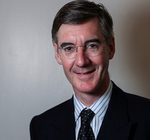
  • Jacob Rees-Mogg – 2010 Maiden Speech in the House of Commons

    Jacob Rees-Mogg – 2010 Maiden Speech in the House of Commons

    The maiden speech made by Jacob Rees-Mogg, the Conservative MP for North East Somerset, in the House of Commons on 7 June 2010.

    It is a great pleasure to follow my hon. Friend the Member for West Suffolk (Matthew Hancock) in making a maiden speech in this debate. He made a fantastic maiden speech and we all now know to be very careful where we blow our noses in his constituency.

    It is a great honour for my family for me to be elected for North East Somerset. My father—or my noble kinsman, Lord Rees-Mogg, as I am now meant to call him—told me that between him, myself and my sister, we have tried seven times with one victory. I fear that if we were a football team, people would be calling for the manager to be removed.

    It is also an enormous honour for me to be elected for North East Somerset, which is where I was brought up and where my family have lived for generations. As everybody knows, Somerset is God’s own county, and North East Somerset is God’s own part of God’s own county.

    I inherit the seat from two very distinguished gentlemen, one of whom is my hon. Friend the Member for Bath (Mr Foster). I am very glad he is now my hon. Friend, because I discovered when canvassing that a lot of people who were unaware of boundary changes were still intending to vote for him. When they discovered they could no longer do so, they turned out to be lifelong Conservatives, so I welcome him to the Peelite coalition that we now have.

    The main part of my constituency was the old Wansdyke seat, which I have inherited from Mr Dan Norris, a most distinguished Labour Member, and a Parliamentary Private Secretary to the right hon. Member for South Shields (David Miliband). He is probably sorely missed at the moment during the Labour leadership election. He was the model of an assiduous constituency MP. He worked tirelessly both as an Avon county councillor and as an MP and I indeed have large shoes to fill.

    North East Somerset, which, as I said, is God’s own part of God’s own county, has a great place in British history. I am not going to go back at any great length to Bladud, the father of King Lear, who in 683 BC founded Bath—he found some pigs with skin disease in north-east Somerset, and washed them in the waters—because he is a rather peripheral figure.

    Alfred the Great is more substantial. Alfred the Great, we must remember, in 878 AD, had just Somerset left, with the Danes all around, as they had begun to take over all of Wessex and already had much of the rest of England. Alfred, however, brought together the people of Somerset, Wiltshire and parts of Hampshire and they crossed over from the Somerset levels through north-east Somerset to Edington, near Chippenham, and there they fought the great battle on which our freedoms depend. They put paid to Danish occupation. Alfred was a great law giver—a man we should think about in this debate particularly, because he did not want to innovate laws; he wanted to codify laws. He wanted to tell people what ancient rights they had and how they ought to have their liberties. He was able to expel the Danes and his grandson became the first King of England on borders we would recognise to this day.

    Moving on a little later, the next great figure from North East Somerset is Alphege, Archbishop of Canterbury, born in Weston, a village bordering north-east Somerset and Bath. He is really the first tax martyr. He was called upon to pay the Danegeld, and he took £48,000 to the Danes, then at Greenwich, and handed it over. They said, “Mr Alphege, we would like some more, and if you don’t give us more, we are going to hold on to you as a hostage.” And Alphege replied: “I will not give you more; I will not put higher taxes on my people; I will not have them suffer this imposition.” So they threw ox bones at Alphege until he died. I hope that people will not find it necessary to throw ox bones at me, but as another representative from North East Somerset, I will stand constantly for low taxation.

    The final figure I am going to mention in this great pantheon of wonderful figures from God’s own part of God’s own county is John Locke. Brought up in Belluton—this really is a sop to the Whig coalition that we now have—this philosopher of the Whigs was in many ways the founder of the constitution that we now have, one that has as its essence the fact that power comes from the people up to the legislature, which is there to supervise the Executive. Members will all know that the argument at the time was about the divine right of kings and some may now think that we have another form of divine right of the Executive. Locke made it clear that the duty of the legislature was to check and to stop the Executive exceeding the powers, the rights and the authority that it had from time immemorial.

    Let us take these three great Somerset men: Alfred the Great, the first Eurosceptic, who got rid of the Danes and made England independent; Alphege, the low-tax martyr; and John Locke, standing up for the legislature and the people against the Executive. For however long I represent North East Somerset, I will take these three as my great heroes and hope to model my political words on their thoughts.

  • Jacob Rees-Mogg – 2021 Appearance at the Committee of Privileges

    Jacob Rees-Mogg – 2021 Appearance at the Committee of Privileges

    The appearance of Jacob Rees-Mogg, the then Leader of the House of Commons, at the Committee of Privileges on 30 November 2021. The meeting was chaired by Chris Bryant.

    Chair: Welcome, Leader of the House. It is very good to have you with us on an issue that has been vexing and troubling the House for many years through many processes. We are keen, if we possibly can, to help the House get to a settled position on all of this without undermining our historic powers. Do you think that the House presently has the powers that it needs?

    Mr Rees-Mogg: In a way, this is the work that you are doing to try and establish whether the powers that are currently there, even if they are more theoretical than actual, achieve the objective of getting witnesses to come before Select Committees. We have discussed privately the reality of the powers—whether they could be used and whether they would survive challenge—but what would be interesting to see from your final report is not the anecdotal experiences of Select Committees, which tend to focus on a very small number of high-profile cases, but whether, year in, year out, most witnesses who were summoned actually attend, including the low-profile ones, or whether there is a real problem for Committee after Committee of not getting the people that they want. That statistical analysis would be incredibly useful.

    Q229       Chair: All the evidence we have had so far is that the vast majority of witnesses come without any bother, and it is a pretty simple, straightforward, relatively informal process. The problem is that a theoretical power, to use your words, is quite difficult to enforce, and that leaves us with the hard cases. I know that makes it look anecdotal, but it is none the less a series of hard cases. In fact, the two cases that we just heard about were both people who said, “I’m not coming to that Select Committee,” and then a while later decided that they were going to another Select Committee, so they are picking and choosing which inquiry they will participate in.

    Mr Rees-Mogg: Again, an important part of what you are doing is to understand both the scale of the problem and also whether changing things would make it better. By getting the one difficult person, do you make it a different atmosphere for the others who have come willingly? Would a formalisation undermine the informal system that is working very well in most cases? Or would it simply work in the cases that need it? Again, I think that is something that your report needs to work out because that will be essential to deciding whether legislation helps or hinders.

    Q230       Chair: I think I would be right in characterising the evidence we have had from everybody today as pretty much that there might be a risk that having a more formalised system, because otherwise there is no sanction, might do two things: it might invite the courts to enter into questioning elements of proceedings in Parliament, and it might make for a more formalised setting for all questioning. There are ways of mitigating both of those risks in terms of the way we draft the legislation and the way we make sure that it is not just a decision of individual Committee, on a whim, whether or not to have an individual come along, but a decision of the whole House. Then, as Lord Judge put it to us, that is a deliberate contempt of Parliament, and the question for the House is, do we really want to put up with deliberate contempts of Parliament without sanction?

    Mr Rees-Mogg: Then sanction becomes very important, because the sanctions that do exist—theoretically—have not really been used since Sir John Junor’s case because the sanction made the House look more ridiculous than powerful. In the Dominic Cummings case, a very mild sanction was applied because of the risk of appearing ridiculous with a different sanction. I think that the draft legislation, with the prospect of two years’ imprisonment, risks going to the other end of the scale. It is hard to see what level of contempt would warrant two years in prison.

    Q231       Chair: What sanctions do you think are available now?

    Mr Rees-Mogg: I am sure you have discussed this with the Clerks, but Parliament has never formally given up its ability to imprison during the Session of Parliament. It is not, I believe, a power that has been used since the 17th century.

    Q232       Chair: Do you think we still have that power?

    Mr Rees-Mogg: I think the power still exists. Would it be subject to challenge? Almost certainly. Would the challenge succeed?

    Chair: Would you ever advocate using it?

    Mr Rees-Mogg: Do we have the power to fine? I think the power to fine is more debatable. I cannot remember when it was last used, if ever—you will know from your Clerks. The House of Lords made a very interesting argument in relation to fining its own Members, which you will remember. Whether that argument would apply in relation to the Commons and recalcitrant witnesses, I do not know. I think the reality of our powers is that we do not know whether they are there until they are used. Then you might find that they are upheld by the courts, or you might find that they are not. This is an argument where learned lawyers disagree.

    Q233       Chair: I am not sure many learned lawyers disagree, do they? The last time there was a fine was 1665, and I think imprisonment was 1891—

    Mr Rees-Mogg: So sorry, I was wrong on the last imprisonment, which if it was 1891 is only just beyond living memory.

    Q234       Chair: I think the last imprisonment was 1880, which was Charles Grissell. You are saying you think that, if the House were to come to you, as Leader of the House, you would table a motion that would say, “We are now going to imprison such and such for refusing to attend.”

    Mr Rees-Mogg: I could not predict whether that motion would get through, and I could not predict whether the courts would maintain it. This is all very theoretical.

    Q235       Chair: But you think that that power still exists.

    Mr Rees-Mogg: The power has not been formally abandoned by Parliament.

    Q236       Chair: I am going to try again. So you think that it is still a power that we hold. Do you think it would be morally okay for Parliament to imprison somebody?

    Mr Rees-Mogg: I repeat what I said: Parliament has not formally abandoned this power. But I am not saying with any degree of confidence that the power, if used, would not be challenged. Is it an effective power? I do not know. But has it formally been abandoned by Parliament? No, as you know.

    Q237       Chair: I think nearly every Committee that has investigated fining has said that we no longer have the power to fine, and I think that is written in “Erskine May”. You can argue about the legal status of “Erskine May” if you want to.

    You have used the word “theoretical” several times, but I am not sure whether you are advocating that we should reassert our historic powers and say, “We now have the power to imprison,” so that is the sanction that would be appropriate for somebody refusing to give evidence.

    Mr Rees-Mogg: But I have just said that, in the draft Bill, the potential of two years in prison is entirely disproportionate to failing to appear as a witness. It is very hard to see the circumstances where two years in prison would be a suitable penalty.

    Q238       Sir Bernard Jenkin: First, I apologise for missing your opening remarks. How theoretical does something need to be and how long ago does it need to be, before we start using a term I learned during the consideration of this matter in the 2013 Joint Committee—“desuetude”?

    Mr Rees-Mogg: I was just thinking of the word “desuetude”. Is there an option of desuetude in terms of the powers of Parliament? That is a question for the Committee.

    Q239       Sir Bernard Jenkin: You yourself say the powers are theoretical. When you say that, what do you mean?

    Mr Rees-Mogg: What I mean is that if the powers had been used, when they were used, in the 19th century, there was no question that they would be challenged in a court. We live in a very different era in terms of courts’ exercise of their powers, and we have the European Court of Human Rights, which is currently considering a case relating to Sir Philip Green. Therefore courts are able to go where they would not have dreamed of going in the 19th century, and that is why I think it is a theoretical power and that you do not know whether it would survive challenge until tested.

    Q240       Sir Bernard Jenkin: Is it your view, in that case, that we need to test this before we resort to statute?

    Mr Rees-Mogg: I think this is an important part of your Committee’s report, as to whether you think that is a course worth using. But you may come to the conclusion that it is not. You may come to the conclusion that desuetude is the right answer in this case.

    Q241       Sir Bernard Jenkin: And if the powers have fallen into desuetude, what should we do about it?

    Mr Rees-Mogg: I think the next stage in that is to consider whether the current situation is in fact working. That’s the bit I was saying earlier: if this is just a very small number of very high-profile cases—

    Q242       Sir Bernard Jenkin: I heard that bit. I think we accept that it is a very small number of very high-profile cases, but the question is to what extent that discredits Parliament as a whole. If there was a statutory process, to which the Speaker would only give access if we had been through a series of hoops, so it clearly was not a vexatious summons, over-political or designed to bully the witness, but to get on public record evidence that is legitimately required for a legitimate inquiry, and if all those hoops had been gone through and the person is still refusing, do you not think the additional persuasive power of embroiling a potential person in a statutory process might act as an encouragement for them to attend?

    Mr Rees-Mogg: Possibly. There are obvious risks—the risks that we discussed briefly—of formalising it with other witnesses, who feel that this is a more intimidating experience than it currently is, and I think, for many witnesses, it is already quite an intimidating experience. And there is always the issue of exclusive cognisance of our proceedings, and how we lock in with the courts, which I do have a nervousness about, because once you let the courts in, how far are they able to go? Our ability to run our own affairs is fundamental to how Parliament works, both Lords and Commons.

    Q243       Sir Bernard Jenkin: The courts might do that if we try to fine a witness for non-attendance anyway.

    Mr Rees-Mogg: They might. That bit is untried, and you may come to the conclusion that you think it is so unrealistic as not to be worth trying. You may think that the untested nature of it actually in and of itself provides an incentive to attend, because people are not entirely sure whether it would be effective or not.

    Q244       Sir Bernard Jenkin: To be clear, if the Committee proposes that the House adopts a report that supports legislation, are the Government predisposed to resist that?

    Mr Rees-Mogg: No, I am not saying that at all. What I have been trying to set out is what I think is necessary to make the case for legislation. There are three points: first, the legislation would not affect the exclusive cognisance of the House; secondly, that it would be more effective than the current system in terms of witness attendance and the information that they were willing to give—it needs to be actively better than the current system. And that leads to the third point: I think we need a statistical analysis of who has not been appearing and who has been appearing. It is quite hard to make the case to legislate for a very small percentage of cases if most people are in fact turning up and the system is working well.

    Q245       Chair: In which case you are saying no to legislation? We have said it, and every report has always said it: it is a very small number, but they are hard cases that make a mockery of our theoretical powers.

    Mr Rees-Mogg: I think your report needs the numbers, so that we have the context. Is it that 1,000 have come and there is one who refused? Is it that 100 have come and one has refused? What is the proportionality? I don’t think legislating on one or two high-profile cases is a sufficient case.

    Q246       Chair: In which case you are saying no to legislation. Incidentally, I am still in a bit of shock at your belief that Parliament has the power to arrest and imprison, because I think that certainly went with the Human Rights Act 1998 and arguably went with the European convention on human rights.

    Mr Rees-Mogg: But I note you use the word “arguably”, and that is exactly what I have been saying.

    Q247       Chair: I don’t think anybody is arguing it—you are quite unusual in that position.

    Mr Rees-Mogg: I have not been saying that I think these powers would survive test; I am simply saying they have not been tested and they have not been abandoned by the House.

    Q248       Chair: But do you think they should stand the test?

    Mr Rees-Mogg: I would not want to imprison for non-attendance, as I have already said. Could the House have a system where it had some penal mechanism for people who failed to attend that was entirely a House matter? I don’t personally think that would be unreasonable, but it is a matter for your Committee to work out how that could be done in a way that was fair.

    Q249       Chair: Do you think it would be reasonable for the House to arrest?

    Mr Rees-Mogg: I am not advocating arrest. I think imprisonment for non-attendance would be an extreme procedure. I am not advocating going back to the days of Peter Wentworth.

    Q250       Chair: What penal power would you suggest?

    Mr Rees-Mogg: I think it is not unreasonable for the House to fine people for failing to attend.

    Q251       Chair: Wow! That is pretty extraordinary.

    Mr Rees-Mogg: I don’t think it is. I would much rather the House did it and maintained its exclusive cognisance than that the courts did it. But that may in itself need legislation because, if the powers have fallen by the wayside, they cannot just be magicked up.

    Q252       Sir Bernard Jenkin: But if the offence being committed was not failure to attend, but first of all contempt of Parliament, it would secondly be contempt of court, because the court would order the person to attend.

    Mr Rees-Mogg: That gets very difficult. If courts start ordering people to attend Parliament, we are getting the courts directly involved in our proceedings, which I would be very nervous about.

    Q253       Chair: I am still in a bit of shock, I’m afraid.

    Mr Rees-Mogg: I think the high court of Parliament should exercise its powers as a general principle. We are a sovereign Parliament: we are higher than any court in the land, and we should not be mealy-mouthed about being a Parliament.

    Q254       Chair: I think that is very difficult, but—

    Mr Rees-Mogg: I may be less committed to the niceties of human rights law, but I think a supreme sovereign Parliament with a democratic mandate is the greatest protection of human rights in this country.

    Q255       Chair: Okay. If we were to go down the route of the proposal we have come up with, I accept your point that two years may be excessive and that may need to be looked at. Indeed, Lord Judge made a sensible suggestion.

    My assumption is that this law would never be used; I think it would make it easier to get the difficult people to come, because the advice they would then be given by their lawyers would be that there is more reputational and financial risk and risk of criminal sanction if they do not turn up than if they do. I think it would improve things, and there is no reason why that would necessarily have an effect on all the other people with whom, in the normal course of things, it just happens very simply and informally.

    One of the things we have suggested to mitigate the problems and some of the risks that you and others have referred to is ensuring that there is a proper gatekeeper role, so it is not just one Committee deciding on a whim to summon somebody, but there would be a gatekeeper to go through before you get to the Speaker’s certificate, and then it is a deliberate contempt of Parliament. Does that process, if we were to go down that route, seem sensible to you?

    Mr Rees-Mogg: I have a couple of things to say. First of all, if you are creating a power that you think would never be used, you are in much the same position as we are already, and then you get into the question—the Scottish Parliament has the power to fine, which I understand it has never used on a witness—of whether powers that you intend never to use are any better than the powers that you may or may not have that you never use. That is a matter for you.

    On the gatekeeper Committee, it depends on how it would interrelate with the court.

    Chair: Go on.

    Mr Rees-Mogg: Well, looking at the legislation, it doesn’t interrelate with the court; the court just looks at the fairness of the summons. So how does the court determine that and how do the two fit in together? That I am not clear on.

    Q256       Chair: So the bit for the court would be whether there is a reasonable excuse—something courts decide all the time is whether somebody turns up to court. Was it the 1948 contempt of court Act that basically formalised a set of agreements that had existed for a long time?

    Mr Rees-Mogg: Would the court be looking at the gatekeeper Committee having decided the summons? How would that be formalised? Would that be formalised in Standing Orders? It’s the question of how these two relate, because that is obviously where you get to the exclusive cognisance issue.

    Q257       Chair: Our working assumption has been—I think I am right, unless anybody corrects me—that if we were going down this legislative route, we would have to do some Standing Order changes so that there was a new process that got you to the Speaker’s certificate.

    We use the Speaker’s certificate because that has been an accepted system for some time and it limits the engagement of the court in the background to the decision. But it is undoubtedly true, as Lord Judge said earlier, that the defendant in a case might want to say, “Well, my reasonable excuse is that I think you’re all just engaged in a party political ding-dong and I don’t want to get involved in that.” Whether that would count as an excuse would be a matter for the court.

    Mr Rees-Mogg: Yes, and you would hope that the Speaker’s certificate, like the Speaker’s certificate under the Parliament Act or to money Bills, would not be challenged. This may be a more litigious area than money Bills if you have somebody who is very determined not to come. I think one has to be quite cautious about extending the remit of Speaker’s certificates. Just because they have not been challenged in a very specific area does not mean that they could not be challenged in another area. As I have said throughout, exclusive cognisance is very important.

    Q258       Sir Bernard Jenkin: You are setting some very important hurdles for legislation, but I think they are hurdles we may have to jump. I agree with you that Parliament is sovereign; Parliament is, in fact, the greatest guarantor of human rights in this country. After all, the only reason we have the Human Rights Act is that Parliament passed an Act. But doesn’t that also demonstrate that actually the only way Parliament can assert its sovereignty is through statute? While history may be littered with examples of how Parliament used to assert its sovereignty in different ways, statute has become the habit.

    Mr Rees-Mogg: Well, even article IX is statute.

    Q259       Sir Bernard Jenkin: Indeed, but article IX has a peculiar constitutional status, which also hitherto observed a self-restraining ordinance in respect of exclusive cognisance.

    Mr Rees-Mogg: Even the Act on tallage is statute. You go all the way back, and statute is of course how powers within the different arms of the state are exercised. That is absolutely right.

    Q260       Sir Bernard Jenkin: But there are all kinds of non-statutory powers that Parliament used to exercise that we don’t exercise anymore. I think if we sent a posse into the street to arrest somebody, the posse would not have any statutory authority and would not be regarded as a legitimate force. But that used not to be the case.

    Mr Rees-Mogg: This is the argument about Sessional Orders.

    Q261       Sir Bernard Jenkin: Which I hope you will restore.

    Mr Rees-Mogg: I am very interested in that.

    Sir Bernard Jenkin: Not because they have any statutory force, but because they would inform the police outside the Palace that whatever statutory rules remain in force, they also have a public obligation to Parliament to secure the passages and so on—within the law, within statute law.

    Mr Rees-Mogg: The moral authority of Parliament should not be underestimated, even when the powers are not codified. That is an essential part of this investigation.

    Sir Bernard Jenkin: I look forward to your implementing the 2013 recommendation to restore Sessional Orders.

    Q262       Chair: That rather makes the point that we have been going around this track for a very long time—longer than I have been in the House and much longer than you have been in the House. I have an anxiety about that—that we will just be doing this again in 10 years’ time, 20 years’ time and 30 years’ time, by which time desuetude itself will have fallen into desuetude.

    On Scotland, the Scottish Parliament is of course set up by statute, so it is somewhat different. There is a reasonable excuse provision in that as well. It is all justiciable. It feels to me that we have three routes: one is that we can just accept desuetude and live with it, which I think is sort of where you are at, because you are reluctant to legislate unless it is absolutely necessary. Basically, you are saying to us, we have to prove to you that it is absolutely necessary.

    Mr Rees-Mogg: I do not think that that was an unreasonable challenge.

    Chair: I am not objecting to that—

    Sir Bernard Jenkin: For the record, Chair, I do not think it is a no, but you are taking it as a no. I do not think it is a no.

    Q263       Chair: We will do our best to persuade, if that is the route that we want to go down. But you have reinvigorated a bit the argument that we could just reassert our powers today, which was considered in previous versions of this inquiry. It is just that when we have said we would reassert them, we have never done anything about reasserting them and, personally, I am very sceptical that that really meets—it feels a bit like an Act of Attainder.

    Mr Rees-Mogg: If all court judgments always went the way one thought in advance they would go, one would never go to court. Therefore, until you do this, you do not know whether it would work. We all have our views, and mine may not be that dissimilar from yours, but you do not know, and it has not been tested. Whether it is worth testing is a different question, because Parliament always has to make sure that it does not look ridiculous. That is why we have to be so careful about this. Whatever powers we have, if we use them aggressively or arbitrarily, we look ridiculous. We remain scarred—it is a long time ago now, but the John Junor case has scarred Parliament’s use of its powers ever since.

    We always face that problem, as we would with legislation. What would we actually want to do when someone refused to come—who was it, which Committee was it, and so on? I doubt it would be as simple as someone not coming, therefore we automatically go through this process and take them to court. There would be many political considerations we would want to take into account about the reputation of Parliament.

    Chair: You know how this ended up with us, which is basically that people worried that the dragon has no teeth and no flame-throwing ability, so it ends up being just a rather limp dragon.

    Mr Rees-Mogg: That is why I think it needs to be shown statistically what the real level of the problem is.

    Q264       Chair: I will ask you a completely different question, unless anyone has anything else they want to ask. As you know, the Committee of Privileges may only consider things that have been referred to it. There have been various suggestions that we should have a bigger power, so that, like most other Select Committees, we are able to consider things that interest us. Would you welcome that, or do you think that that is unnecessary?

    Mr Rees-Mogg: I think that the Privileges Committee is a particularly and singularly important Committee because it has that very narrow remit to do things specifically charged to it by the House. I think that is a good thing for the Committee and strengthens your reports.

    Chair: Anyone else? No. In which case, we are done. Thank you very much, Leader of the House.

  • PRESS RELEASE : Government fund to support collaboration in farming communities opens [November 2022]

    PRESS RELEASE : Government fund to support collaboration in farming communities opens [November 2022]

    The press release issued by the Department for Environment, Food and Rural Affairs on 7 November 2022.

    The latest round of the popular Countryside Stewardship Facilitation Fund has opened today, giving groups of farmers and landowners in England the opportunity to work together and share knowledge to protect and enhance the local environment, in line with their local Countryside Stewardship priorities.

    The £2.5 million fund encourages collaboration between farming groups and supports Government efforts to improve the environment and create cleaner, greener landscapes. The fund is an important part of the Rural Payments Agency’s aim to support agricultural and rural communities across the country.

    The funding allows facilitators, for example local farming and nature groups and charities, to give advice and share knowledge with groups of farmers and other land managers on activities such as restoring habitats for wildlife and improving biodiversity, creating woodland, improving air and water quality, or restoring historic environments.

    Farming Minister Mark Spencer said:

    By joining forces on shared environmental ambitions, farmers and landowners are able to deliver a greater positive impact on our landscape than they could ever achieve alone.

    This Countryside Stewardship Facilitation Fund is already helping to bring farmers and landowners together for the benefit of nature and the environment, and I encourage farming communities across England to consider applying.

    Paul Caldwell, Chief Executive of the Rural Payments Agency said:

    I am delighted we are able to provide farmers and landowners with another opportunity to come together on projects to improve their local environment.

    We want to see uptake from new and existing groups to deliver large-scale environmental improvement in their local areas, create valuable connections and share farming knowledge.

    Marian Spain, Chief Executive of Natural England, said:

    Countryside Stewardship and the farmers and land managers who take up the scheme make a vital contribution to delivering the Government’s environmental commitments, including the statutory target to halt the decline in species abundance by 2030.

    By bringing groups of land managers together in pursuit of positive habitat management and species re-introductions, the Facilitation Fund leads to long term initiatives for nature recovery where partnerships strengthen delivery on the ground.

    Natural England works closely with farming groups and we look forward to supporting further groups via the fund as they nurture wildlife-rich habitats that provide clean water and air and underpin sustainable food production.

    This is the seventh round of the Countryside Stewardship Facilitation Fund under the current Rural Development Programme for England. 180 groups with over 4,000 members have benefited from the funding so far, with this round of funding expected to benefit more than 40 further groups.

    Previous projects to have benefited have include:

    • Running demonstration days in timber extraction and wood processing in Morecambe Bay
    • Exploring measures to reduce flooding along the Glenderamackin river in the Lake District
    • Improving farmers’ understanding of ground nesting birds in the Upper Nidderdale
    • Helping to reconnect farmers with nature and improving their confidence in conservation farming in the White Peak

    The fund supports the delivery of the 25 Year Environmental Plan, and is a part of Defra’s plans for a renewed agricultural sector, centred around incentivising sustainable farming practices alongside profitable food production.

    The application window is open from 7 November until 25 January 2023.

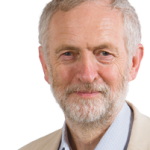
  • Jeremy Corbyn – 2022 Comments on COP27

    Jeremy Corbyn – 2022 Comments on COP27

    The comments made by Jeremy Corbyn, the Independent MP for North Islington, on Twitter on 7 November 2022.

    Humanity is at a tipping point.

    #COP27 must achieve climate justice, support the poorest for loss and damage, and deliver systemic change on a global scale.

    We are running out of time. Solidarity with climate activists and human rights defenders who cannot wait any longer.

  • Rishi Sunak – 2022 Comments on Benjamin Netanyahu Winning Election in Israel

    Rishi Sunak – 2022 Comments on Benjamin Netanyahu Winning Election in Israel

    The comments made by Rishi Sunak, the Prime Minister, on 7 November 2022.

    On behalf of the UK, I would like to congratulate Benjamin Netanyahu on his victory in the Israeli elections. Across areas like trade, security and technology there is a huge amount our countries do together and I look forward to working with the returning Prime Minister.

  • Keir Starmer – 2022 Comments on Gavin Williamson

    Keir Starmer – 2022 Comments on Gavin Williamson

    The comments made by Keir Starmer, the Leader of the Opposition, on 7 November 2022.

    I think that the Prime Minister has got people who are clearly not fit for the job around the cabinet table. Gavin Williamson has got history when it comes to breaches of security and leaking. He is clearly not suitable, but the central focus really here is on the Prime Minister, to ask the question why has he put these people around the cabinet.

  • PRESS RELEASE : Climate finance to flow to Kenya as UK Prime Minister agrees with President Ruto to fast-track KES 500 billion of British investment [November 2022]

    PRESS RELEASE : Climate finance to flow to Kenya as UK Prime Minister agrees with President Ruto to fast-track KES 500 billion of British investment [November 2022]

    The press release issued by the Foreign Office on 7 November 2022.

    • UK Prime Minister Rishi Sunak and Kenyan President H.E. William Ruto met at the COP27 climate summit today [Monday 7 November].
    • The leaders agreed to fast-track six green investment projects worth KES 500 billion spanning green energy, agriculture and transport.
    • Sunak praised Kenya’s pioneering climate leadership and urged President Ruto to continue championing clean growth.

    The UK and Kenya have agreed to fast-track six projects worth KES 500 billion to accelerate the flow of climate finance into Kenya after the UK Prime Minister and President Ruto met at the COP27 climate summit in Sharm-el-Sheik, Egypt.

    These new, clean and green investments will become flagship projects of the UK-Kenya Strategic Partnership – an ambitious five-year agreement that is unlocking mutual benefits for the UK and Kenya.

    The projects include: new geothermal and solar energy generation at Menegai and Malindi; a KES 425 billion Public Private Partnership to deliver the Grand High Falls Dam, which will generate a gigawatt of renewable power and provide an area over twice the size of the Maasai Mara with drought-combating irrigation solutions; the green regeneration of central Nairobi anchored around a new central rail station; and a Ksh 32 billion investment in a climate-resilient agriculture hub for the Lake Victoria region in Kisumu that will create 2,000 direct jobs and provide an income for a further 20,000 farmers.

    The UK Government will commit KES 2 billion to a new guarantee company that will lower investment risk and unlock KES 12 bn of climate finance for Kenyan projects over the next 3 years, through collaboration with CPF Financial Services and other private investors.

    The Prime Minister praised President Ruto’s pioneering climate leadership and urged Kenya to continue along the path of green growth, urging all countries to deliver on the commitments made at COP26 in Glasgow.

    Throughout its COP26 Presidency, the UK has worked with partners across Africa to deliver and build on the Glasgow Climate Pact, and to see commitments made at COP26 turned into action. For example, in Kenya since COP26 £5.4m has been committed and £2.8m will be spent to support Kenya’s energy transition, unlocking private sector investment in forest protection and the Kenyan Government’s ambitious 10% forest cover target.

    But the UK recognises that there is further work to do. During his recent visit to Kenya, COP President Alok Sharma reaffirmed the need for progress on access to finance and transformational adaptation action by COP27.

    British High Commissioner to Kenya Jane Marriott, said:

    The UK and Kenya go far when we go together. By fast-tracking finance into these clean, green projects with honest, reliable investment the UK is supporting Kenya to advance and maintain its continent-leading climate credentials – with mutual benefits for both our countries.

  • PRESS RELEASE : England’s treasured island seabird populations to be protected with new government funding [November 2022]

    PRESS RELEASE : England’s treasured island seabird populations to be protected with new government funding [November 2022]

    The press release issued by the Department for Environment, Food and Rural Affairs on 7 November 2022.

    The UK government has today announced £156,000 to protect England’s much-loved island seabird populations against the threat of invasive predators.

    This is one of the first instances globally of a central government providing funding to protect seabird islands against these specific threats, setting the UK as a global leader for seabird island biosecurity.

    The UK’s islands such as Coquet Island and the Isles of Scilly are internationally important for millions of seabirds, with Coquet Island being the only breeding place in the UK for Roseate terns which are a red listed species. However, some key breeding populations are in decline due to multiple threats including invasive mammals such as stoats and mice.

    The eggs and chicks of ground-nesting seabirds including puffins, razorbills, gannets, terns and European storm-petrels are particularly vulnerable, and their populations can quickly be decimated by invasive mammals.

    The funding will be delivered through the AfterLIFE plan from July 2023. It will ensure existing biosecurity measures across England’s seabird islands are maintained and enhanced so we can continue to protect the recovery and secure the future of important seabirds.

    It will also fund new measures including:

    • The employment of a full time Biosecurity Officer
    • A conservation detection dog team that will train dogs to search for and indicate the presence of brown rats
    • Information campaigns targeting island visitors
    • Training of volunteers to support biosecurity implementation across England’s seabird island Special Protection Areas
    • Frequent surveillance checks

    These measures will build on the Biosecurity for LIFE project, which Defra has supported since 2018 and has implemented key biosecurity measures such as surveillance checks and volunteering programmes on seabird island Special Protected Areas.

    Minister for Biosecurity, Marine and Rural Affairs Lord Benyon said:

    “British seabirds are part of what make our coastlines so beautiful, and it’s vitally important we continue to do all we can to protect each unique species and allow them to recover and thrive.

    “Defra’s contribution to the AfterLIFE Plan will ensure important measures continue to safeguard our treasured seabirds against invasive mammals that have the potential to obliterate entire populations.”

    RSPB’s Seabird Recovery Officer and Biosecurity for LIFE project executive Laura Bambini said:

    “The Biosecurity for LIFE project has worked with a diverse range of organisations, communities and individuals to set up critical biosecurity measures in place on England’s internationally important seabird islands. Having worked with Defra, Natural England and key stakeholders in other UK nations to secure the maintenance of these measures in the long term, we are pleased now to see the development of national island biosecurity programmes underway across the UK. This is important for building resilience in our seabird populations which are in a precarious situation due to the pressures they face at sea.”

    “This announcement is significant, ahead of the UN’s CBD COP in Montreal, as it sets the UK Government as leaders in island biosecurity, in one of the very few instances globally of a government using core funds to protect seabird islands from the threat of invasive non-native mammalian predators.”

    RSPB’s Principal Marine Policy Officer Kirsten Carter said:

    “The islands of the UK are amazing, their relative isolation has allowed seabirds and other wildlife to thrive. But these wild and sometimes rugged places are delicate, protecting them requires constant vigilance as the precarious balance that has allowed wildlife to flourish can be easily disrupted with catastrophic consequences.”

    “We have seen how even just a single inadvertently introduced predator can have a devastating effect on an island where the native species have no natural defences. This is why today’s announcement to fund the Biosecurity AfterLIFE is so important, it enables the protection of these inspiring places for future generations.”

    In light of the ongoing outbreak of bird flu, conservation efforts such as AfterLIFE are vital for boosting the resilience of our vulnerable seabird populations. This work aligns with Defra’s development of an English Seabird Conservation and Recovery Plan which will assess the vulnerability of and threats to England’s seabirds and propose actions to address them, due to be published in Spring 2023.

  • PRESS RELEASE : UK announces major new package of climate support at COP27 [November 2022]

    PRESS RELEASE : UK announces major new package of climate support at COP27 [November 2022]

    The press release issued by 10 Downing Street on 7 November 2022.

    • PM to launch major international climate package to deliver on the UK’s Glasgow legacy at COP27
    • New announcements include £65.5m for green tech innovation and significant clean energy investments with Kenya and Egypt
    • UK will also launch a new Forests and Climate Leaders’ Partnership and confirm more than £150m for protecting rainforests and natural habitats, including the Congo Basin and Amazon
    • Rishi Sunak will reaffirm the UK’s steadfast commitment to supporting countries on the frontline of climate change

    Prime Minister Rishi Sunak will cement the UK’s COP legacy with a series of announcements on energy transition, climate financing and forest and nature preservation, as he hands over the baton to Egypt at COP27 today [Monday 7th November].

    The UK continues deliver on our key funding commitments, spending £11.6 billion on international climate finance. Recognising the existential threat climate change is already posing around the world – from catastrophic floods in Pakistan to drought in Somalia – the Government will commit to triple funding for climate adaptation as part of that budget, from £500m in 2019 to £1.5bn in 2025.

    The Prime Minister will also host an event later today to launch the Forests and Climate Leaders’ Partnership. The new group, initially comprising 20 countries, will meet twice yearly to track commitments on the landmark Forests and Land Use declaration at COP26, which aims to halt and reverse forest loss by 2030.

    To support the forest agenda, the UK is committing £90m today for conservation in the Congo Basin, a vital tropical rainforest which is home to some 10,000 species of tropical plants and several endangered species, including forest elephants, chimpanzees and mountain gorillas.

    The PM will also confirm £65 million in funding for the Nature, People and Climate Investment Fund, which supports indigenous and local forest communities, and new financing for Treevive, which is working to conserve and restore two million hectares of tropical forest.

    As we hand over the Presidency of COP, the Government is focused in particular on partnering with the private sector to facilitate green innovation and energy transition, at home and around the world. As well as helping the drive for net zero, reducing the global demand for oil and gas cuts off the funds for Russia’s brutal war machine.

    In support of this, the Prime Minister will announce a further £65.5 million for the Clean Energy Innovation Facility today, which provides grants to researchers and scientists in developing countries to accelerate the development of clean technology. Since the BEIS-led fund was launched in 2019 it has supported the creation of biomass-powered refrigeration in India, prototype lithium-ion batteries in Nigeria and clean hydrogen-based fuels for steel production in Morocco, among other innovations.

    Prime Minister Rishi Sunak is expected to tell COP27 later today:

    The world came together in Glasgow with one last chance to create a plan that would limit global temperature rises to 1.5 degrees. The question today is: can we summon the collective will to deliver on those promises?

    I believe we can. By honouring the pledges we made in Glasgow, we can turn our struggle against climate change into a global mission for new jobs and clean growth.

    And we can bequeath our children a greener planet and a more prosperous future. That’s a legacy we could be proud of.

    As well as supporting innovation, the UK is working with G7 allies to provide countries with reliable, transparent sources of sustainable infrastructure financing. Ahead of an expected meeting later today between the Prime Minister and President Ruto, the UK and Kenya have reaffirmed their commitment to the UK-Kenya Strategic Partnership and agreed to progress a number of flagship green investment projects.

    The projects include new and expanded solar and geothermal power plants in Kenya backed by British International Investment, UK export financing for Nairobi’s ground-breaking Railway City and a major Public-private Partnership on the $3 billion Grand High Falls Dam hydropower project led by UK firm GBM Engineering.

    The UK will also confirm new financial support for Egypt’s flagship COP27 initiative, the ‘Nexus on Food, Water and Energy’. The funding will develop projects including solar parks and energy storage innovations, and is expected to mobilise billions in private sector finance.

    The Prime Minister is also expected to hold a series of bilateral meetings at COP27 today, including with French President Emmanuel Macron and Italian Prime Minister Georgia Meloni.

    He will also attend a roundtable discussion focused on energy transition partnerships, and will deliver a national plenary statement later in the day setting out the UK’s climate commitments.

  • Rishi Sunak – 2022 Comments on COP27

    Rishi Sunak – 2022 Comments on COP27

    The comments made by Rishi Sunak, the Prime Minister, on 7 November 2022.

    When the world came together in Glasgow last year, nations agreed an historic roadmap for preventing catastrophic global warming. As I travel to COP27 in Egypt today, it is more important than ever that we deliver on those pledges.

    Fighting climate change is not just a moral good – is it fundamental to our future prosperity and security. Russia’s invasion of Ukraine and contemptible manipulation of energy prices has only reinforced the importance of ending our dependence on fossil fuels.

    We need to move further and faster to transition to renewable energy, and I will ensure the UK is at the forefront of this global movement as a clean energy superpower.