Author: admin

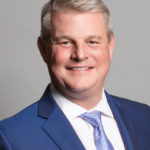
  • Steve Brine – 2022 Speech on Early Years Childcare and Staff-Child Ratios

    Steve Brine – 2022 Speech on Early Years Childcare and Staff-Child Ratios

    The speech made by Steve Brine, the Conservative MP for Winchester, in Westminster Hall, the House of Commons, on 14 November 2022.

    It is a pleasure to see you and your pink hair in the Chair, Ms Harris. It is not often that is said in this Chamber. I thank the petitioners, including a number of my constituents, for signing the e-petition. I thank those in the Public Gallery who have come to watch, and, of course, Zoe and Lewis for being here today. They are very brave.

    I speak as constituency MP for Winchester, and in my capacity as chair of the all-party parliamentary group for childcare and early education. I will start with what I always say in these debates: early years education should be thought of and seen in terms of quality, not in terms of quantity. Investment early in a child’s life pays dividends later on as they move through the system. The impact upon a child’s future is priceless. Internationally, the UK has the second lowest level of Government investment in the early years, but the highest level of investment from parents. Thus, parents have every right to ask for the very best. I know that is what the early education professionals, whom I speak to all the time, seek to provide. I declare my interest in that I am married to an early years worker—so I had better be good.

    My view is that increasing ratios would have an adverse effect on that quality. Seeing as the ratios are where they are now, it is incumbent on those who propose to change them to explain why I am wrong in that thesis. The stated intention of the last Prime Minister and the Prime Minister before last to change the ratios—potentially abolishing them altogether—would not, as hoped for, improve flexibility or reduce the cost of childcare. Research from Coram suggests that a full-time nursery for children under the age of two costs almost 66%—two thirds—of a parent’s weekly take-home pay in England.

    As the hon. Member for Newcastle upon Tyne North (Catherine McKinnell) set out in her excellent opening remarks, if the proposed reforms are to save money for parents in the cost of living crisis—a perfectly sensible and laudable aim—the evidence to back that up has to be laid before us and the Government have to show their workings out. I am not deaf to those arguments; I am perfectly willing to hear them and happy to see those figures—but see those figures, I must.

    Early years settings have expressed concerns to me, and to those of us on the all-party group, that the relaxation of staffing ratios raises the risk of accidents for young children due to fewer staff needing to provide the same quality of care to a greater number of children.

    Vicky Ford (Chelmsford) (Con)

    I thank my hon. Friend for everything he does for the early years sector. I also give my condolences to Zoe and Lewis for their tragic loss. In my constituency of Chelmsford, people want to have outstanding childcare, and, like others across the country, they care about the safety of their children. As a mother who once had three under four, I know what tight ratios mean. But people are also concerned about the affordability of childcare. Does my hon. Friend agree with me that when looking at the issue of international comparisons on ratios, one should try to compare apples with apples? We have to look at not just the staffing numbers but the investment in qualifications. Does he agree with me that the Minister is right to look at rations, but needs to ensure that those comparisons are done on a level playing field, taking into account those other considerations too?

    Steve Brine

    I absolutely agree with my right hon. Friend, the former Minister. As set out in the opening speech, the situation is very different in Scotland; there are different qualification levels. Also, in Scotland practitioners have to register with the Scottish Social Services Council in order to work in early years, and they have to commit to continuing professional development qualification levels to do that. The hourly rate is also higher. I do think it is different. My right hon. Friend referred to having had three children—I only have two. Yes, it is about the qualification, but it is also simply a numbers game and about having eyes on the child. Our two children are 12 and 15 next week—it is a busy month—but when they were small, my wife and I would divide and rule. We had a 1:1 ratio. When we were looking after their cousins, the ratio went up and it was more challenging. Clearly, I am not suggesting a 1:1 ratio in early years education, but why on earth would we want to go the other way in a setting where children potentially spend seven or eight hours a day for five days a week? I question it but, as I say, show me the money. Show me the evidence, show me the workings out and show me the savings, and then we can make an informed judgment.

    There are concerns among providers and parents about settings having the capacity to support children with any additional needs, such as children with SEND, who may need more, rather than less, time with educators. I know the Minister will touch on this issue in her remarks. My fear, and that of providers and parents, is that a further ratio reduction would reduce the capacity and parental confidence even further, potentially driving more exclusion in early years education.

    Another point is that current staffing ratios reflect the requirements for facilities and space set out in the Ofsted framework, which is very clear. It would therefore be troubling if the Department contradicted the guidance of the official regulator. If we were to proceed with reducing staff to child ratios, do Ministers intend to consult on changing the Ofsted framework? Of course, that would require a statutory consultation.

    I have said that good early years education is vital to supporting our young people to develop, and Ofsted has identified children aged two to three as needing a particular focus on speech and language in order to build necessary communication skills for later in life. More children per staff member can only mean less time per child. Why is that particularly acute right now? Because of the pandemic, young children who started nursery in September do not have the socialisation skills that my children had in the years before they started in early years education, so I would suggest that that is even more important than ever right now.

    Let me give some figures. Some 52% of early years staff say their workload and a lack of work-life balance are a cause of stress or unhappiness for them. With the existing ratios, staff are under pressure—I hear that every night at home—and they tell me they are worried about the time they are able to give each child in their care. We face a staffing challenge in the early years sector, and staff are leaving the sector, with many choosing careers in retail with fewer hours but similar, or even greater, levels of pay. Data from the University of Leeds shows a post-pandemic net loss of workers from the sector above and beyond the usual churn of staff, and I often make the point that dog-sitters in my area are often paid more than the people who look after our most precious asset. Dogs are precious too, but they are not our children.

    On Saturday I was out in my constituency, talking to constituents. I spoke to a lady in Winchester who said that she was very worried about the nursery round the corner—I will not identify it, for obvious reasons—because it is losing the key worker who looks after her young daughter. It is really disruptive for her young daughter, and she is very worried about it. The nursery is losing that key worker because she is going to work in an office job, as she can get paid better and probably have a lot less stress. This is the reality of life. As the new Minister—obviously, she is a constituency MP as well—gets out and about, I dare to say that she will hear that more and more from the people she meets in the sector.

    I would suggest that increasing the number of children each member of staff is working with or responsible for will only increase the pressure and stress within the workforce, and more of these vital workers will leave the sector, which already faces a recruitment and retention crisis. That will drive up costs for parents and exacerbate the financial problems in the sector, with over 84% of providers telling the APPG on childcare and early education that they expect to operate at a loss or merely break even this year—up from just over half in 2018. Nursery and early education providers said it is more difficult to recruit, and some 20% of childminders told us that they did not think they would be working in the sector in six months’ time. Many of those people are concerned about working with new ratios, in what they regard as potentially unsafe conditions.

    One nursery worker wrote to me to say that the changes to ratios gave her “nightmares”; she said that the situation was like an episode of “Crimewatch”. Another said that she was “extremely concerned” about the additional pressure on staff, “both physically and emotionally”. I have seen figures that suggest that almost two thirds of practitioners could leave the sector if ratios went in the wrong direction. That is not just a figure; parents across the country will be unable to find good childcare and early education for their children to enable them to go to work and feed the workforce—a challenge in many other parts of the economy. This is not just a childcare story. Childcare is to the economy what social care is to the NHS. If we do not get this right, the economy will slow down, and heaven knows that right now we need the economy to speed up. We need growth.

    Staff are referencing workload, stress and burnout as key concerns. I am not defending the current way of working as being perfect—far from it. The all-party group that I chair has for a while been calling for a wholesale review of childcare and early education, and we will write to the new Chair of the Education Committee when they are elected on Wednesday to request that review. I have already spoken to some of those standing for that position, two of whom are in this room.

    In conclusion, we do not need a change in ratios. We need a wholesale, fact-based review of childcare and early education that focuses on the workforce, parents and, ultimately—the most important stakeholder—children. Our children deserve nothing less. I have already spoken to the new Minister, the Under-Secretary of State for Education, my hon. Friend the Member for East Surrey (Claire Coutinho), about the issue. I congratulate her on her position. She is a thinker and a serious person, and I really look forward to working with her. I respectfully ask her to meet my all-party group as soon as possible; we look forward to that conversation.

  • PRESS RELEASE : More than 401,300 families saved on childcare costs in September [November 2022]

    PRESS RELEASE : More than 401,300 families saved on childcare costs in September [November 2022]

    The press release issued by HM Treasury on 16 November 2022.

    More than 401,300 families benefitted from £44.4 million in government funding towards childcare costs in September 2022, HM Revenue and Customs (HMRC) has revealed.

    Compared to September 2021, the latest Tax-Free Childcare statistics show the number of families who are using Tax-Free Childcare has increased by 85,475. But thousands of families are still missing out on the top-up which could save them up to £2,000 a year per child towards the cost of their childcare.

    Tax-Free Childcare provides working families, earning up to £100,000 a year, with financial help towards childcare. For every £8 paid into a Tax-Free Childcare online account, families will automatically receive an additional £2 from the government. This means they can receive up to £500 every three months (£2,000 a year), or £1,000 (£4,000 a year) if their child is disabled.

    The top up payments can be used to pay for any approved childcare for children aged 11 or under, or up to 17 if the child has a disability whether your child goes to nursery, a child minder, has term-time wraparound care or goes to a holiday club.

    Families can check their eligibility and see the options for childcare support at Childcare Choices.

    Myrtle Lloyd, HMRC’s Director General for Customer Services, said:

    We know childcare can be expensive so using Tax-Free Childcare can make a huge difference to household finances. To find out more, search ‘Tax-Free Childcare’ on GOV.UK.

    Families could be eligible for Tax-Free Childcare if they:

    • have a child or children aged 11 or under. They stop being eligible on 1 September after their 11th birthday. If their child has a disability, they may get up to £4,000 a year until they are 17
    • earn, or expect to earn, at least the National Minimum Wage or Living Wage for 16 hours a week, on average
    • each earn no more than £100,000 per annum
    • do not receive tax credits, Universal Credit or childcare vouchers

    A full list of the eligibility criteria is available on GOV.UK.

    Opening an online Tax-Free Childcare account is straightforward and can take around 20 minutes to sign up. Accounts can be opened at any time, money can be deposited and used straight away or when it’s needed. Unused money in the account can be withdrawn at any time. Go to GOV.UK to register to get started.

    The government has launched an awareness raising advertising campaign to ensure families get the childcare support they are entitled to. Visit Childcare Choices to learn about the options and find out the best childcare offer for families.

    The government is offering help for households. Check GOV.UK to find out what cost of living support, including help with childcare costs, families could be eligible for.

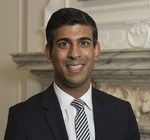
  • Rishi Sunak – 2022 Opening Statement at G20 Conference in Indonesia

    Rishi Sunak – 2022 Opening Statement at G20 Conference in Indonesia

    The opening statement made by Rishi Sunak, the Prime Minister, in Bali, Indonesia, on 16 November 2022.

    Yesterday at the G20, my fellow leaders and I directly confronted the Russian Foreign Minister with the illegality and brutality of his country’s war in Ukraine.

    Barely twelve hours later, more than 80 Russian missiles rained down on western Ukraine, killing civilians and destroying civilian infrastructure.

    While other world leaders were working together to tackle the greatest challenges our people face, Putin was launching indiscriminate attacks on civilians in Ukraine.

    In the wake of these attacks today we held an urgent meeting of G7 and NATO leaders to underscore our solidarity with Poland and Indonesia.

    I also spoke to Polish President Duda this morning to offer my wholehearted support and assurance that the UK stands steadfastly behind him and his people at this worrying time.

    We should all be clear – none of this would be happening if it weren’t for Russia’s invasion of Ukraine.

    This is the cruel and unrelenting reality of Putin’s war.

    As long as it goes on it poses a threat to our security and that of our allies.

    And as long as it goes on, it will continue to devastate the global economy.

    Two-thirds of G20 members are currently experiencing inflation rates over 7% and the IMF predicts a third of the world’s economy will be in recession this year or next.

    At a time when countries are tentatively emerging from the ravages of the Covid-19 pandemic, households across the world have been hit by punishing price rises and are facing an uncertain future.

    When the G20 was established, it was with the acknowledgement that economic shocks are inherently global.

    Responding to them requires coordination and cooperation between the world’s largest economies.

    We have come together over the years, despite our political differences, in recognition of the economic importance of this forum.

    But this year in particular – as last night’s events laid bare – the challenges we face are utterly political.

    The persistent threat to our security and global economic asphyxiation has been driven by the actions of the one man unwilling to be at this summit – Vladimir Putin.

    There is not a single person in the world who hasn’t felt the impact of Putin’s war.

    Global food markets have been severely disrupted by his attempts to choke off Ukrainian grain supply…

    there has been an eightfold increase in global energy prices thanks to Russia turning off their gas taps…

    and the economic aftershocks of Putin’s casual disregard for human life will ripple around the world for years to come.

    But in Indonesia this week the rest of the G20 have refused to let Russia’s grandstanding and hollow excuse-making undermine this important opportunity to make life easier for our people.

    Economic stability and confidence are at the heart of the government’s agenda.

    That means being a constructive and reliable member to the international community, using our influence to keep global prices down and create the conditions that will help the UK – and other global economies – return to growth.

    At this summit G20 partners have come together to strengthen our international economic foundations, making ambitious commitments to

    help the most vulnerable,

    reduce global reliance on Russian fossil fuels in favour of greener, more secure alternatives,

    and drive a better future where no country has the power to devastate the global economy.

    I’d like to thank the Indonesian President Jokowi for the role he has played in hosting these discussions and leading the G20 at this challenging time.

    Tomorrow, the Chancellor will build on these international foundations when he makes the Autumn Statement, outlining his plan to get the country on a positive trajectory, put the public finances on the right footing and get debt falling.

    By promoting free markets, forging strong international relationships, and prioritising our stability and security, we will build a global platform for the United Kingdom to thrive – giving the people of our country the certainty that they need.

  • Stuart Andrew – 2022 Speech at the Association of Charitable Foundations conference

    Stuart Andrew – 2022 Speech at the Association of Charitable Foundations conference

    The speech made by Stuart Andrew, the Minister for Civil Society, on 15 November 2022.

    Thank you for the introduction, Jessica.

    It’s a pleasure to be here. I think you may have been expecting someone else a couple of weeks ago, but I am absolutely thrilled to have taken on the Civil Society portfolio and to be here today.

    Thank you Carol and Jessica for inviting me. I know this is a big event in the ACF calendar, as well as being your first ‘in person’ conference in the last three years.

    It is also my first engagement as Minister for Civil Society, and I am delighted to be in the presence of so many inspiring leaders of such a vital part of our sector.

    Trusts and foundations are lifelines to so many civil society organisations – providing crucial independent funding to enable them to carry out their work and support communities across the country.

    I’d like to extend my thanks and appreciation to you, the leaders of trusts and foundations, for the resilience you’ve shown over the past few challenging years. And the determination you’ve displayed in tackling our current economic challenges.

    Your wealth of experience is a clear asset to be harnessed in promoting innovation in philanthropy, empowering the sector, and supporting trusts and foundations to thrive.

    As you might know, my early career was in the charitable sector. As a fundraiser, I understood the generosity of the British public as well as the importance of philanthropy.

    At Hope House Children’s Hospice, I experienced first hand the challenges that crises can have on giving – I was there at a time where donations dropped 50% during the Kosovo crisis.

    We had to come up with solutions at a fast pace. And I’m aware of how – amidst the current pressures – funders have had to quickly adapt to a changing environment.

    Throughout my career – in charities, and in politics – I have witnessed the impact that valuable funds can have for those who need it most – from vital health services for children and their families, to tackling homelessness, and levelling up our communities.

    I know you have been focussing today on courageous leadership, and what it means over the next 10 years.

    To me, courageous leadership is about three things: resilience, collaboration and humility.

    We are facing unprecedented times – the global pandemic, climate change, Putin’s war on Ukraine, and the cost of living have created significant impacts across our society.

    And it is the civil society organisations who are on the front line – helping individuals and families.

    We have seen the resilience of great leaders and trustees who are able to adapt, pivot and flex against these challenges.

    I’ve been inspired by the work and innovation in the civil society sector to make precious resources go further to reach those most in need.

    I also believe that resilience means drawing on support.

    I’m aware that trusts and foundations are seeing increased demand, and organisations – from small to large – are facing higher energy prices.

    And I know that many of you are looking at the grants you have in place with vital civil society organisations – and are now providing flexibility, or additional funding to help them through the challenges they are facing.

    In Government, we are also taking action to support these organisations by helping them with their bills over the winter, as part of our Energy Bill Relief Scheme.

    And my department will continue to engage constructively across the civil society sector to monitor the impact of rising costs and pressures.

    In order to be resilient, to be truly resilient in a way that allows us to ‘spring back’, we also need strong foundations to ensure our impact is sustainable.

    ACF’s Stronger Foundations initiative does just that – bringing foundations together to share best practice – from strategy to investment – with the aim of understanding and promoting what works best.

    At a time of huge global change, collaboration is more important than ever.

    I was impressed to see that your Stronger Foundations format is a world leader, with influence outside the UK.

    And finally, courageous leadership is about humility. As leaders, we don’t know it all, and never will. Acknowledging that is courageous.

    We must continually listen to those around us – to those whose views resonate with ours – and just as importantly – those which challenge them.

    As Minister for Sport, Tourism and Civil Society, including Minister for Equalities, there are – quite literally – countless opportunities to connect across my portfolio and the intersections of this amazing sector.

    I am committed to listening to your views, championing the fantastic achievements of civil society, and building a strong relationship together.

    Thank you again for inviting me here today. I look forward to meeting with some of you this evening, and to working with you in the months and years ahead.

  • PRESS RELEASE : Suspended prison sentence for Bounce Back Loan fraudster Ben Hamilton from Middlesbrough [November 2022]

    PRESS RELEASE : Suspended prison sentence for Bounce Back Loan fraudster Ben Hamilton from Middlesbrough [November 2022]

    The press release issued by HM Treasury on 16 November 2022.

    Ben Hamilton, 34, from Middlesbrough, has been sentenced to 15 months imprisonment, suspended for 18 months, after being convicted under the Companies Act following abuse of the Bounce Back Loan financial support scheme in 2020.

    Hamilton was director of Netelco Ltd, a telecommunications design and installation business based in Bishop Auckland.

    The company had been incorporated in 2018 and in May 2020 Hamilton applied for a £25,000 Bounce Back Loan from his bank on behalf of his business. Under the Bounce Back Loan scheme, genuine businesses impacted by the pandemic could take out interest-free taxpayer-backed loans of up to £50,000.

    The loan was paid into the company bank account on 14 May 2020 and the following day Hamilton filed paperwork with Companies House to have the business dissolved.

    The striking-off application to dissolve the company was explicit that interested parties and creditors, such as a bank with an outstanding loan, must be notified within seven days of making an application to dissolve a company. The form also highlighted that failure to notify interested parties is a criminal offence, however Hamilton did not follow these rules.

    The company was dissolved in December 2020, and was subsequently identified as likely Bounce Back Loan fraud as part of the government’s forensic counter-fraud work.

    Hamilton did not co-operate with the Insolvency Service criminal investigation team, nor attend an interview when given the opportunity. Only when the Insolvency Service obtained a Proceeds of Crime Act restraining order on his bank accounts did he engage with the investigation, at which point he repaid the Bounce Back Loan in full.

    He pleaded guilty to charges under the Companies Act 2006 at Teeside Magistrate’s Court on 14 October. He was sentenced on 15 November at Teeside Magistrate’s Court.

    In addition to the suspended sentence, Hamilton was ordered to pay £2,500 in costs.

    Julie Barnes, Chief Investigator at the Insolvency Service said:

    This was a clear case of attempted fraud by a company director who thought he could abuse the Covid-19 financial support schemes and get away with it.

    Even though Ben Hamilton has now repaid the loan, this sentence sends a clear warning to others that attempting to defraud taxpayers is not acceptable, and when prosecuting the Insolvency Service will use all of the tools in its armoury, including the Proceeds of Crime Act, to prevent criminals from retaining their benefit from crime”.

    Ben Hamilton is of Middlesbrough and his date of birth is August 1988.

    Netelco Ltd (company reg no. 11266825).

    The sentence result was announced at Teeside Magistrate’s Court by judge Recorder Anthony Hawks.

  • PRESS RELEASE : Rishi Sunak call with Prime Minister Justin Trudeau and President Zelenskyy [November 2022]

    PRESS RELEASE : Rishi Sunak call with Prime Minister Justin Trudeau and President Zelenskyy [November 2022]

    The press release issued by 10 Downing Street on 16 November 2022.

    The Prime Minister and Canadian Prime Minister Justin Trudeau spoke to Ukrainian President Zelenskyy from the G20 in Indonesia today.

    The Prime Minister and Prime Minister Trudeau expressed their condolences for the terrible loss of life as a result of Russian attacks on Ukraine overnight.

    They underscored their enduring support for Ukraine’s resistance and updated President Zelenskyy on their discussions at the G20 on this issue.

    The Prime Minister and Prime Minister Trudeau emphasised the importance of a full investigation into the circumstances behind missiles falling in Poland yesterday. They stressed that, whatever the outcome of that investigation, Putin’s invasion of Ukraine is squarely to blame for the ongoing violence.

    President Zelenskyy thanked the Prime Minister and Prime Minister Trudeau for their support.

  • PRESS RELEASE : Rishi Sunak meeting with President Biden of the United States [November 2022]

    PRESS RELEASE : Rishi Sunak meeting with President Biden of the United States [November 2022]

    The press release issued by 10 Downing Street on 16 November 2022.

    The Prime Minister met US President Biden today at the G20 Summit in Indonesia.

    The leaders agreed on the national and international importance of the strong UK-US relationship, particularly given the challenging economic times the world is currently facing.

    The Prime Minister and President Biden underscored that the actions of President Putin and his regime are directly responsible for precipitating global economic issues including rising inflation. Maintaining international pressure to ensure Putin fails in Ukraine is in everyone’s interest.

    The leaders agreed to work together, and with allies, to address the economic consequences of Putin’s brutality. This includes action to protect the most vulnerable in our countries and around the world, and efforts to secure our long-term energy supply.

    They stressed the importance of likeminded allies providing a counterpoint to authoritarian regimes, including ensuring developing countries can grow in a sustainable way.

    The Prime Minister and President Biden both agreed on the importance of sustained engagement in the Indo-Pacific region and pointed to the AUKUS pact as an example of that. The Prime Minister outlined the UK’s Indo-Pacific priorities, including joining the CPTPP trade bloc.

    The leaders looked forward to working together to take forward cooperation between the UK and the US on areas including trade, defence and upholding the Belfast (Good Friday) Agreement.


  • G7 – 2022 Joint Statement on Ukraine and Explosion in Poland

    G7 – 2022 Joint Statement on Ukraine and Explosion in Poland

    The joint statement made by the G7 on 16 November 2022.

    We condemn the barbaric missile attacks that Russia perpetrated on Ukrainian cities and civilian infrastructure on Tuesday.

    We discussed the explosion that took place in the eastern part of Poland near the border with Ukraine. We offer our full support for and assistance with Poland’s ongoing investigation. We agree to remain in close touch to determine appropriate next steps as the investigation proceeds.

    We reaffirm our steadfast support for Ukraine and the Ukrainian people in the face of ongoing Russian aggression, as well as our continued readiness to hold Russia accountable for its brazen attacks on Ukrainian communities, even as the G20 meets to deal with the wider impacts of the war. We all express our condolences to the families of the victims in Poland and Ukraine.

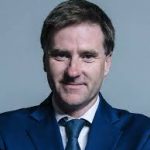
  • PRESS RELEASE : Health and Social Care Secretary sets out key priorities ahead of winter [November 2022]

    PRESS RELEASE : Health and Social Care Secretary sets out key priorities ahead of winter [November 2022]

    The press release issued by the Department for Health and Social Care on 16 November 2022.

    • He is expected to set out his key priorities including a focus on what matters most to patients
    • Focus will be on delivering for patients and making it as easy as possible for NHS and social care frontline staff to do their jobs

    The Health and Social Care Secretary Steve Barclay will today set out his plans to steer the health and care system through the upcoming winter and signal changes that will make the NHS better prepared for future “storms to come.”

    Addressing the NHS Providers conference in Liverpool, Steve Barclay will say he will focus “on the areas that matter most to the patient experience” and measures which make it “as easy as possible” for frontline NHS and care workers to do their jobs.

    In his first speech since returning to the role, Mr Barclay will outline his five key priorities for the months ahead:

    • Supporting the workforce including through more staff for NHS 111 and 999
    • Focusing on recovery plans across electives, urgent and emergency care
    • Tackling the issue of delayed hospital discharge
    • Improving access to primary care
    • Ensuring a stronger future for health including maintaining momentum on the New Hospital Programme and investing in technology to improve patient outcomes

    He will say:

    We face the twin threats of Covid and flu, external pressures around energy and cost of living, and we enter the colder months without the breathing space that we might have usually had due to covid pressures over the summer.

    So there is a huge amount to do to steer health and care through this storm and crucially, make the changes that will better prepare us for the storms to come.

    He will add:

    My focus will be on the areas that matter most to the patient experience.

    On tackling the Covid backlogs the Secretary of State will emphasise the importance of close working between the Department of Health and Social Care and NHS England to reduce variation in patient access and waiting times across the country. He will say he will be taking forward an approach that is “informed by the data” and “focuses attention where it is needed the most.”

    He will also outline a need to invest in new technology and harness the opportunities of new ways of working shown by the pandemic including use of the NHS app to reduce pressures in primary care.

    Looking beyond the immediate challenges of this winter, the Secretary of State will reiterate the need to ensure a stronger future for health and care including investment in NHS buildings and the need to modernise the way future hospitals are built as part of the government’s commitment to deliver 40 new hospitals by 2030.

  • PRESS RELEASE : Rishi Sunak call with President Andrzej Duda of Poland following reports of a missile strike in Poland [November 2022]

    PRESS RELEASE : Rishi Sunak call with President Andrzej Duda of Poland following reports of a missile strike in Poland [November 2022]

    The press release issued by 10 Downing Street on 15 November 2022.

    The Prime Minister spoke to Polish President Andrzej Duda today (16 November) from the G20 in Indonesia, following reports of a missile strike in Poland.

    He reiterated the UK’s solidarity with Poland as a close ally and expressed condolences for the victims and their families.

    President Duda updated on the Polish investigation efforts, and the Prime Minister offered any assistance needed to urgently establish what happened.

    The leaders agreed to remain in close contact and continue coordinating with our international partners, including NATO Allies, on the next steps.