Author: admin

  • PRESS RELEASE : E3 statement to the IAEA Board of Governors on the Joint Comprehensive Plan of Action [November 2022]

    PRESS RELEASE : E3 statement to the IAEA Board of Governors on the Joint Comprehensive Plan of Action [November 2022]

    The press release issued by the Foreign Office on 16 November 2022.

    Delivered 16 November 2022 on behalf of France, Germany and the United Kingdom to the IAEA Board of Governors addressing Iran’s implementation of its nuclear commitments under the JCPoA.

    Chair,

    On behalf of France, Germany and the United Kingdom, I thank Director General Grossi for his latest report contained in GOV/2022/62, and Deputy Director General Aparo for his Technical Briefing. Once again, we commend the Agency for carrying out its mandate conferred by the United Nations Security Council – even given Iranian non-adherence with its commitments under the Joint Comprehensive Plan of Action.

    The E3 thank the Agency for its objective reporting of Iran’s activities with regards to these commitments and encourage the Director General to keep the Board informed regarding the Iranian nuclear programme in all its aspects. We would welcome the Agency’s last quarterly report on monitoring and verification in Iran to be made public.

    The Director General very clearly reports that Iran is moving further and further away from its commitments agreed upon in 2015.

    Today, Iran’s total enriched uranium stockpile exceeds JCPoA limits by 18 times and comprises very concerning amounts of uranium enriched up to 5, 20 and 60 percent.
    Since the Director General`s last report as of September this year, Iran has increased its stockpile of uranium enriched up to 20 percent by 16 percent and its stockpile of uranium enriched up to 60 percent by 12 percent.
    There is no credible civilian justification for these activities which are inconsistent with Iran’s JCPoA commitments for both enrichment levels and quantities of enriched material.
    This situation will only worsen in the near future if Iran does not decide to return to full compliance with its commitments under the JCPoA. Iran has also drastically increased production of uranium enriched up to 5 percent, enabling Iran to produce even more HEU in the future. In his report, the Director General notes Iran has rapidly increased its enrichment capabilities through the testing and installation of additional IR-1 centrifuges as well as of advanced centrifuges. For example,

    At the underground location in Natanz, Iran has significantly increased the number of centrifuges producing uranium enriched up to 5 percent.
    More than half of Iran`s advanced centrifuges at Natanz have been installed since the beginning of this year.
    Iran’s knowledge gains from the operation of advanced centrifuges are irreversible.
    In addition, the Director General once again emphasised in his report that Iran’s decision to stop cooperating with the Agency with regards to monitoring and verification activities agreed in the JCPoA has seriously affected the Agency’s knowledge of Iran’s nuclear programme. Iran’s decision to remove Agency surveillance and monitoring equipment has, as the Director General says, detrimental implications for the Agency’s ability to provide assurance of the peaceful nature of Iran`s nuclear programme.

    Chair,

    These steps present a very clear picture: Iran continues its unprecedented nuclear escalation. This raises serious doubts as to the nature of Iran’s nuclear programme, which threatens regional and international security.

    The E3, along with our partners, have done our utmost to negotiate a return to a reasonably restricted Iranian nuclear programme. After many months of negotiations, the JCPoA Coordinator tabled viable deals in March and again in August this year which would have returned Iran to full compliance with its JCPoA commitments and returned the US to the deal. Iran refused these packages with continued demands beyond the scope of the JCPoA, despite further efforts over the summer.

    Chair,

    The situation we are in is very dangerous. We urge Iran to immediately stop and reverse its nuclear escalation, allow for complete transparency with the IAEA by returning to full cooperation, and re-applying the Additional Protocol, as an important confidence-building step. We also recall that, under its Comprehensive Safeguards Agreement, Iran is legally obliged to implement Modified Code 3.1. and, according to international law, Iran cannot change its application or withdraw from it unilaterally.

    Chair,

    We will continue consultations, alongside international partners, on how best to address Iran’s unabated and dangerous nuclear escalation. Thank you.

  • PRESS RELEASE : A57 Link Roads development consent decision announced [November 2022]

    PRESS RELEASE : A57 Link Roads development consent decision announced [November 2022]

    The press release issued by the Department of Transport on 16 November 2022.

    The A57 Link Roads (previously known as Trans Pennine Upgrade Programme) application has been granted development consent by the Secretary of State for Transport.

    The A57 Link Roads project will include the creation of two new link roads: (1) Mottram Moor Link Road – a new dual carriageway from the M67 junction 4 roundabout to a new junction on the A57(T) at Mottram Moor; and (2) A57 Link Road – a new single carriageway link from the A57(T) at Mottram Moor to a new junction on the A57 in Woolley Bridge.

    The application was submitted to the Planning Inspectorate for consideration by National Highways on 28 June 2021 and accepted for Examination on 26 July 2021.

    Following an Examination during which the public, Statutory Consultees and Interested Parties were given the opportunity to give evidence to the Examining Authority, recommendations were made to the Secretary of State on 16 August 2022.

    This is the 120th Nationally Significant Infrastructure Project and 47th transport application to have been examined by The Planning Inspectorate within the timescales laid down in the Planning Act 2008.

    The Planning Inspectorate’s interim Chief Executive, Navees Rahman said:

    “The Planning Inspectorate has now examined more than 100 nationally significant infrastructure projects since the Planning Act 2008 process was introduced, ensuring local communities, the local authority and other interested parties have had the opportunity of being involved in the examination of projects that may affect them.

    “The Examining Authority listened and gave full consideration to all local views and the evidence gathered during the Examination before making its recommendation to the Secretary of State.”

  • PRESS RELEASE : Supporting a sustainable, collective response to challenges facing the Sahel [November 2022]

    PRESS RELEASE : Supporting a sustainable, collective response to challenges facing the Sahel [November 2022]

    The press release issued by the Foreign Office on 16 November 2022.

    Statement by Ambassador James Kariuki at the Security Council briefing on the Sahel.

    Thank you President, and I thank ASG Pobee, Executive Secretary Tiare, and to Mr Usman for their briefings.

    President, the regional picture in the Sahel is stark. Countries are facing unprecedented challenges with escalating violence, rising humanitarian needs and famine-like conditions. As always, it is ordinary people who suffer the most. The United Kingdom remains committed to supporting the people of the Sahel – last year we contributed around $355 million to the region.

    However, if our collective response to these challenges is to be sustainable then the right conditions need to be in place.

    Firstly, political will is needed to drive forward accountable governance, rule of law and justice. With three countries in the region now in the midst of political transitions, continued engagement with ECOWAS and the African Union is vital. We urge the Burkinabe, Chadian and Malian authorities to prepare for elections in open dialogue with civil society, including women and young people.

    Second, effective counter-terrorism and respect for human rights must go hand in hand. To do otherwise risks aggravating grievances, undermining trust with local communities, and driving recruitment to terrorist groups. The harmful impact of Wagner Group operations on civilians in Mali and elsewhere on the continent is, by now, well documented. This is why Wagner will not succeed in Mali, and why they are not the right answer for any other country in the region.

    We welcome the UN’s efforts to build the G5 Sahel Joint Force’s capacities for human rights compliance. But we urge the Joint Force to implement the mitigation measures identified under Human Rights Due Diligence assessments, as a condition of MINUSMA’s support.

    Finally, President, like others we look forward to the outcome of the Independent High Level Panel Strategic Assessment on the Sahel. We also look forward to the forthcoming discussions in the region on the Accra Initiative. Together these will help us to identify how best to work together to support regional security.

    The United Kingdom remains committed to helping address the Sahel’s challenges through a holistic approach, with accountable governance and human rights at its heart. Thank you.

  • PRESS RELEASE : A417 Missing Link development consent decision announced [November 2022]

    PRESS RELEASE : A417 Missing Link development consent decision announced [November 2022]

    The press release issued by the Department for Transport on 16 November 2022.

    Please note that, although the letter refers to the decision of “the Secretary of State”, the Rt Hon Mark Harper has not personally been involved in this decision, which has in practice been allocated to and taken by the Minister of State for Transport, Hugh Merriman, but by law has to be issued in the name of the Secretary of State. Accordingly, the letter refers to the Secretary of State throughout.

    The proposed scheme would provide a dual carriageway to improve the current “Missing Link” section of single carriageway of the A417 between Cowley roundabout and Crickley Hill.

    The application was submitted to the Planning Inspectorate for consideration by National Highways on 01 June 2021 and accepted for Examination on 29 June 2021.

    Following an Examination during which the public, Statutory Consultees and Interested Parties were given the opportunity to give evidence to the Examining Authority, recommendations were made to the Secretary of State on 16 August 2022.

    This is the 119th Nationally Significant Infrastructure Project and 46th transport application to have been examined by The Planning Inspectorate within the timescales laid down in the Planning Act 2008.

    The Planning Inspectorate’s interim Chief Executive, Navees Rahman said:

    “The Planning Inspectorate has now examined more than 100 nationally significant infrastructure projects since the Planning Act 2008 process was introduced, ensuring local communities, the local authority and other interested parties have had the opportunity of being involved in the examination of projects that may affect them.

    “The Examining Authority listened and gave full consideration to all local views and the evidence gathered during the Examination before making its recommendation to the Secretary of State.”

    The decision, the recommendation made by the Examining Authority to the Secretary of State for Transport and the evidence considered by the Examining Authority in reaching its recommendation are publicly available on the project pages of the National Infrastructure Planning website.

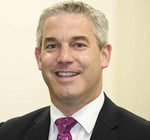
  • Steve Barclay – 2022 Letter to the NHS Pay Review Body

    Steve Barclay – 2022 Letter to the NHS Pay Review Body

    The letter sent by Steve Barclay, the Secretary of State for Health and Social Care, on 16 November 2022.

    Dear Ms Hird,

    I would firstly like to offer my thanks to the NHS Pay Review Body (NHSPRB) for their work over the past year on the 2022 report. The government appreciates the independent, expert advice and valuable contribution that the NHSPRB makes.

    I write to you now to formally commence the 2023 to 2024 pay round and ask NHSPRB for recommendations for the Agenda for Change workforce from April 2023. This includes all non-medical staff groups in the NHS – nurses and health visitors, midwives, ambulance staff, scientific therapeutic and technical staff, support to all clinical staff, central functions, hotel, property and estates, managers and senior managers.

    As described during last year’s pay round, the NHS budget has already been set until 2024 to 2025. Pay awards must strike a careful balance – recognising the vital importance of public sector workers while delivering value for the taxpayer, considering private sector pay levels, not increasing the country’s debt further, and being careful not to drive prices even higher in the future.

    In the current economic context, it is particularly important that you also have regard to the government’s inflation target when forming recommendations.

    The evidence that my department, HM Treasury and NHS England will provide in the coming months, will support you in your consideration of these factors, for example via the provision of details on recruitment and retention.

    As always, while your remit covers the whole of the United Kingdom, it is for each administration to make its own decisions on its approach to this year’s pay round and to communicate this to you directly.

    It is important that we make progress towards bringing the timetable of the pay review body round back to normal. We are hoping to expediate the process as much as possible this year and would welcome your report in April 2023, subject to ongoing conversations with the Office of Manpower Economics.

    I would like to thank you again for your and the review body’s invaluable contribution to the pay round, and look forward to receiving your 2023 report in due course.

    Yours ever,

    Steve Barclay, Secretary of State for Health and Social Care

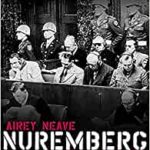
  • BOOK REVIEW : Nuremberg – A Personal Record of the Trial of the Major Nazi War Criminals by Airey Neave

    BOOK REVIEW : Nuremberg – A Personal Record of the Trial of the Major Nazi War Criminals by Airey Neave


    This book is a recent reprint by Biteback Publishing, using the foreword from the 1978 edition which was written by Dame Rebecca West. The author of the book, Airey Neave, had what could be called a busy war, escaping from the Colditz prisoner of war camp and working as an intelligence agent for MI9. At the end of the Second World War, and somewhat to his surprise, he was asked to support the International Military Tribunal, not least as he spoke fluent German. This is the book that he wrote about the war crimes trials and his involvement in them in Nuremberg. Neave became the Conservative MP for Abingdon in 1953 and he was the Shadow Secretary of State for Northern Ireland in the second half of the 1970s, later becoming one of the key supporters of Margaret Thatcher. The end of Neave’s story was tragic, assassinated by the INLA who killed him on 30 March 1979 by planting a car bomb which exploded in the estate of the Palace of Westminster.

    Neave is understated in the book about how he received the call to assist in the Nuremberg Trials, although his credentials to work alongside the allies to deliver justice were strong. He had experience of interrogation having been grilled by the Gestapo, he was able to speak German, he knew how prisoners were kept and had studied some international law at Oxford University. Neave notes in the book that the trials nearly didn’t take place, as Winston Churchill had been keen for German leaders to have been shot dead during the advance of the allied troops, but Roosevelt felt that there should be a trial. Neave mentions that numerous countries such as the Netherlands, Belgium, Norway and Poland were “urging vengeance” and that the “Americans and British had not experienced the horrors of Nazi occupation and misunderstood the depth of feeling in liberated countries”.

    One of Neave’s responsibilities was informing the German prisoners what they were being tried for and explaining their rights to legal assistance. He found Rudolf Hess to be a “worn figure” and he was also “disturbed by his wild appearance”, but Neave was confident that he was fit to face trial mentally and physically. Many years later Neave was one of the MPs who appealed for the release of Hess from Spandau prison, where he was the only inmate from 1966 and 1987.

    Neave had little respect for Julius Streicher, noting that he was “primarily a sex criminal” and noted that he had the lowest IQ of any of the prisoners and “was a primitive creature”. He noted that it was Streicher’s anti-semitism, and his control of the Der Stürmer newspaper, which he had founded, that helped the propaganda campaign the Nazis wanted against the Jewish community.

    During 1941, Neave had escaped from a prisoner of war camp in what is now Torun, in Poland, and had seen himself the way that Jews were treated. He also formed many friendships with Poles and notes in the book that “I felt particularly devoted to their Resistance movement”. This was on his mind when he served legal notice on Hans Frank in his cell, as he had been the Governor General of the Polish territory between 1939 and 1945. Although recognising the effective and brutal way in which Frank had slaughtered hundreds of thousands of Jews, Neave noted “Frank had not been squeamish about murdering innocent people, why should the world be squeamish about his end?”. When serving legal notice on Ernst Kaltenbrunner, Neave admitted saying to a colleague who asked him why he spent longer reading the charges to this prisoner “because of Mauthausen, because of Warsaw and not for the first time that afternoon I felt that I had come to speak for the dead”. Much of this inevitably felt personal to Neave, although he did attempt to remain a dutiful servant of the courts and didn’t let his experiences during the war impact on that element of his role.

    Neave spends a lot of time in the book writing pen portraits of those facing trial, noting their physical appearance (often fat or bloated) and how they him feel when talking to them. Although not taken in by the Nazis, he was sympathetic to some more than others, describing his exchanges with the prisoners with considerable clarity. There is relatively little about the trial itself in the book, as Neave mentions that “there were few highlights” and “relentless hours of boredom” of the legal proceedings themselves.

    Neave’s writing comes across as making him sound as a fair man and he did try and get an understanding of the individuals and how their emotions changed during their time in prison cells awaiting trial. He concluded though that “I sought for any signs of true remorse and did not find them. They were crocodile tears, they wept for themselves and not for the dead”. It is the human side of this book which is its greatest strength, as there is no shortage of material written about the trials themselves. Neave was able to observe the prisoners in a manner that few others had the opportunity to do so, making this account authentic and deeper.

    As for the trials themselves, Neave concluded:

    “Those who did not experience Nazi occupation or are too young to have taken part in the death struggle with the Third Reich should not ignore the lessons of Nuremberg. The mass murder of Jews dominated the trial, but there were other acts of cruelty displayed to an unbelieving world”.

    It is fortunate that Biteback have enabled the book to be republished and hopefully it will be a useful resource not just to those wanting an historical account of the trials, but also to those wanting a greater understanding of Airey Neave himself, who would have likely become one of the more distinguished politicians during the Thatcher years.

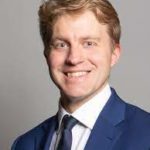
  • Ben Spencer – 2022 Speech on the Situation in Ukraine

    Ben Spencer – 2022 Speech on the Situation in Ukraine

    The speech made by Ben Spencer, the Conservative MP for Runnymede and Weybridge, in the House of Commons on 14 November 2022.

    It is always a great pleasure to follow the hon. Member for Rotherham (Sarah Champion), and I want to develop some of the points that she made so powerfully about the humanitarian response. I want to talk about the local response and about support for refugees.

    It is hard to believe that, for almost the entire year, we have watched the horrors unfolding in Ukraine, unleashed by Putin, and have witnessed an absolutely awful war and senseless bloodshed and violence. We have seen an incredible response from constituents across the country, and I have seen that particularly in my community, where we have opened our hearts and our homes to refugees in their plight. That is something quite special. There is no more personal response than the support that so many people are giving in opening up their homes to refugees from Ukraine, and I think we should be very proud of that.

    Alongside the “big stuff”—the amazing international leadership we have shown in terms of sanctions and the forming of a coalition to support the Ukrainians with military technology, kit and training—there is the domestic “small stuff”. In fact, I think that some of the most powerful support we have given is the opening up of our homes to refugees. I want to send a huge thank you to everyone in my constituency who has done that. I am sure many other Members across the country have thanked their constituents as well.

    Dean Russell (Watford) (Con)

    May I echo my hon. Friend’s comments? In Watford, we have seen an incredible burst of love and care for Ukrainian people who are over here. Yesterday in St Mary’s church, as part of the remembrance ceremony—supported by Luther Blissett, the Watford football legend, and his partner Lauren—a lady in the group read a beautiful Ukrainian poem from the pulpit. It was an incredible moment, bringing home to us the loss of her family back in Ukraine since she has been here, but also the incredible strength that these people are showing by being here and giving support from afar.

    Dr Spencer

    I thank my hon. Friend for his intervention. It builds on a point I was about to make about paying tribute to particular individuals and groups. It is always invidious to do this because there are so many people to single out and so many groups to thank for what they are doing, but I want to raise four areas in my constituency that deserve special attention, in among the work that so many individuals and community groups are doing. One is the Revive café in Chertsey, which has a coffee morning for refugees. One of the key players there is a lady called Lizzie Wayland, who is a member of the Beacon Church, which hosts the cafe. It gives incredible support to people locally.

    I also want to draw the House’s attention to Lesia Scholey and Councillor Charu Sood, who have set up Weybridge Friends of Ukraine. They have been pivotal in leading support in Weybridge, alongside Elmbridge CAN and the Weybridge community hub. We also have a lady called Olena Melnyk, a refugee from Ukraine who now works in Runnymede Borough Council helping with translation for Ukrainian refugees. I would also like to thank my team in my office who have been incredible in supporting people going through the visa application process and in working on many pieces of casework supporting refugees once they have moved into my constituency.

    Building on that spirit, I would like to give my thanks to the Right Rev. Kenneth Nowakowski, the bishop of the Ukrainian Catholic Eparchy of the Holy Family in London, who came to speak to community groups in my constituency last week. I do not know whether Members have heard him speak, but he is incredible. Without doubt it was one of the best community speech events I have ever been to. He has been central to the refugee response from the start and he spoke about the support he has set up and the lessons learned, and gave a cautious commentary on what he sees for the future. He made two points in his speech that I hope he will not mind me mentioning. One of them really sent a chill through me. When he visited Ukraine recently, he went to a school and a little boy came up to him, very excited to see him. He said, “Come, come—you have to see our bomb shelter. It’s really cool.” That sent a chill, but in a sense it is also quite sweet, because it shows the resilience of children and the excitement of how life changes and we have to adjust in the context of conflict.

    The other thing the bishop reflected on in his talk was when people can start thinking about forgiveness. Given where we are now, that is very difficult to contemplate, but of course every war ends and things move on. One of the important things that we are talking about today is the rebuilding of Ukraine and what peace will look like. I say this cautiously to the House, because it is a difficult statement to make right now, given where we are and the pain that everyone is suffering, but perhaps these could be the early stages of thinking about the future that we want to have and the future that we can start hoping for as this awful conflict comes to an end.

    I would like to thank all the people who came to the event in my constituency: the community groups, the elected representatives and the people who have supported refugees across my constituency. Our communities are precious, and my communities in Runnymede and Weybridge are without doubt the things that make my constituency the best place, in my view—I am sure my colleagues would say similar things about their constituencies—and we need to support them. We need to recognise the incredible work that they do.

    Andy Carter (Warrington South) (Con)

    I was not intending to intervene in this debate, but my hon. Friend is making some excellent points. I attended a meeting of Ukrainian family sponsors in my constituency two weeks ago, and the thing I took away from it was the message that we need to encourage the Government to do more to support our fabulous sponsors and encourage them to continue to provide that service. In many cases, they are coming to the end of the six-month initial term, and in parts of Warrington we have high levels of Ukrainian families who are thinking about where they can live next. The sponsors have given up six months and they are thinking about what they do next as well. Does my hon. Friend agree that the Government could take a more active lead in supporting and encouraging sponsor families to continue?

    Dr Spencer

    I thank my hon. Friend for his intervention. It is almost as if he had foresight of my speech—which I know he did not—because I am going to go on to talk about the challenges when sponsor-refugee relationships break down. I will come on to that in a moment.

    We must all cherish our communities and the support that they are giving. There is something very special about that, and if we do not fight to protect, cherish and thank them, it will be too late and we will lose them. I am sure that that is something that we all share. For a few months now, sadly, we have been hearing in my constituency about breakdowns in the relationships between sponsors and refugees. This is getting more concerning as we approach Christmas. A lot of people, when they generously offered to take part in the scheme, saw it as only a six-month commitment. It is important to recognise that if some can continue after six months that is fantastic, but for those who cannot, it is fantastic that they have helped out. There should be no animus if people feel that they cannot continue beyond the initial six months.

    I have had many conversations with the leader of Runnymede Borough Council, Councillor Tom Gracey, and its chief executive officer regarding concerns about the matching process. Some refugees are not able to be rematched, and Runnymede is going to give them homelessness support. It will help to rehouse refugees locally if they cannot be rematched. The concern is that this will put an additional burden on to the local authorities. I know that the Government have been very generous in their support to local authorities, but this will nevertheless be a challenge, especially in constituencies such as mine where the availability of affordable housing and affordable rents is very much at a premium.

    I have a question for the Minister about cases in which a refugee’s sponsorship has broken down and they cannot be rematched, and the state effectively takes on the role of sponsoring them through homelessness provision. Under the Homes for Ukraine scheme as it currently stands, the sponsor gets a monthly payment of about 350 quid, so when the Government effectively take over in a state sponsorship role, could the Minister look at the possibility of local authorities getting that sponsorship payment in lieu of the sponsor getting it? That would seem to be a cost-neutral provision—those are at a premium at the moment—to support local authorities when those relationships have broken down so that the homelessness provision does not put them under undue pressure.

    Sarah Champion

    I am glad that the hon. Member has raised that point, because it is key. Is he also aware that the Home Office currently seems to be funding schemes such as these from official development assistance—foreign aid money—but it is able to attribute that only for the first year? I am very concerned that, come February, all the support that we are able to give to Ukrainian refugees here will come to an end. I am interested to see if the Minister has any information about whether the Treasury will step up and fund those people from that point forward.

    Dr Spencer

    I thank the hon. Member for her intervention. Looking back at the past year and the incredible support given to Ukrainians at all levels, I am absolutely confident that the Government will ensure that they are doing their part, but equally I too would be interested to know what the specific plans are. Unfortunately, given where we are at the moment, it seems that this is going to be a long war that will displace people for a long period of time, so it will be interesting to hear about the medium-term and long-term transition plans.

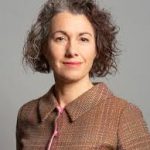
  • Sarah Champion – 2022 Speech on the Situation in Ukraine

    Sarah Champion – 2022 Speech on the Situation in Ukraine

    The speech made by Sarah Champion, the Labour MP for Rotherham, in the House of Commons on 14 November 2022.

    Let me begin by thanking the hon. Member for Isle of Wight (Bob Seely), who always speaks in a measured and informative tone. I always learn from listening to him.

    We have seen horrors taking place in Ukraine throughout this year, but, sadly, there has been humanitarian need in the region for much longer. In 2014, Russia’s annexation of Crimea heavily affected the east of Ukraine. Since Putin’s illegal war began in February, it has led to an explosion in humanitarian need and to Ukraine enduring mass human rights violations. The United Nations Office for the Coordination of Humanitarian Affairs estimates that there are a staggering 17.7 million people in need of humanitarian assistance and an estimated 6.24 million people internally displaced within Ukraine. The United Nations Human Rights Monitoring Mission in Ukraine estimates that there have been at least 16,150 civilian casualties, with the majority in the east, but emphasises that the true figure is likely to be much higher.

    Evident violations of international humanitarian law have taken place, with Russian forces clearly targeting civilian infrastructure, as we have seen with the bombing of children’s playgrounds and supermarkets. Russian forces have hidden landmines across the country, restricting refugees’ ability to leave through humanitarian corridors and complicating access for aid workers. In March, the Chair of the Defence Committee, the former Chair of the Foreign Affairs Committee, the right hon. Member for Tonbridge and Malling (Tom Tugendhat), and I wrote jointly to the former Prime Minister, the right hon. Member for Uxbridge and South Ruislip (Boris Johnson), to highlight these issues, and I continue to urge the current Prime Minister to ensure that organisations such as the HALO Trust and the Mines Advisory Group receive the funds that they need to clear mines on the ground.

    The current picture is extremely bleak, but with winter fast approaching, it is more crucial than ever that aid reaches people who desperately need it. In December, the daytime temperature rarely reaches above zero degrees in Kyiv, so generators, blankets and warm clothes are essential. Women and girls are being disproportionately affected by the conflict, with the UN reporting that girls are at increased risk of child marriage and being forced to leave school as a result of their families’ simply trying to survive. The UK has pledged £220 million in humanitarian assistance to Ukraine since the conflict began, but I continue to express my concern that this aid is not being disbursed quickly enough. In his response to the debate, can the Minister guarantee that aid is reaching local charities and is being distributed in the most effective ways possible?

    The conflict has been marked by mass human rights violations by Russian forces, including the widespread, despicable use of sexual violence as a weapon of war. In October, the UN Independent International Commission of Inquiry on Ukraine published damning evidence of war crimes, with Russian forces responsible for the vast majority of those crimes. They included the executions of civilians, torture and ill treatment, of which there were consistent accounts, and the use of sexual violence against women and children. The commission concluded that those violations continue to have a devastating effect on victims and survivors, who emphasised the essential role of justice and accountability.

    Of the many human rights abuses, notable examples include the massacre in Bucha, during which civilians were rounded up by Russian troops for execution, and the siege of Mariupol, when Russian forces encircled the city, preventing humanitarian supplies from being accessible and bombing a maternity hospital. There have also been reports of rape and torture during the Russian occupation of lzyum. Those responsible for countless and horrifying crimes must be held accountable, and there must be zero impunity for war crimes committed during the conflict.

    The events in Ukraine have pulled the importance of a rigorous approach to atrocity prevention into sharp focus. We cannot allow such violations of human rights to occur on this scale, both within and outside conflict. My Committee, the International Development Committee, recently published a report on preventing future mass atrocities around the world, highlighting the need for the UK to develop an atrocity prevention strategy. I urge the Minister to heed our report, and to take urgent action to prevent further atrocities.

    We cannot underestimate the value of a strong position taken by the international community on war crimes, with those who have committed crimes being sufficiently held to account. Victims and survivors deserve our support in securing justice and ensuring that these contemptible crimes cannot go on any longer. The UK’s support in Ukraine has been crucial since the invasion, but the Government must ensure that we provide joined-up responses to the humanitarian situation in Ukraine, and prioritise assistance for local charities wherever possible. We cannot step away.

  • Bob Seely – 2022 Speech on the Situation in Ukraine

    Bob Seely – 2022 Speech on the Situation in Ukraine

    The speech made by Bob Seely, the Conservative MP for the Isle of Wight, in the House of Commons on 14 November 2022.

    I will not try the House’s patience for too long; I just want to make some general points.

    The Minister was completely right when he said that the Kherson victory was enormously important, regardless of whether it was significant in military terms or symbolically. He made the point that it is difficult for someone to invade a country if they are going backwards, as we can all agree. Although it is symbolically dreadful, I would say that it is not yet a military game changer.

    To build on my question to the Minister, the current Russian strategy seems to be two-pronged. First, Surovikin, with his Syrian experience, has said to the Russian Ministry of Defence, “Give me a line that I can hold.” Because Kherson is on the western bank of the Dnipro, it was simply not holdable: it was a death trap and a disaster waiting for the Russian military. By pulling out of Kherson city and going over to the eastern bank of the Dnipro, Surovikin has effectively put the Dnipro river between himself and the Ukrainians.

    I lived in Ukraine from 1990 to 1995. For those who do not know the geography of Ukraine, the Dnipro river from south of Kherson all the way up to Zaporizhzhia is 0.5 km at its thinnest. If we add the waterbanks, the Konka river, the marshland and the open grassland, it is a minimum of 3 km wide. Up at Zaporizhzhia, where the nuclear power plant is, it is more of a lake; it is 10 km to 12 km wide. By moving his forces to the eastern bank of the Dnipro, Surovikin has effectively made the Dnipro a considerable buffer between himself and the Ukrainian forces.

    Realistically, a Ukrainian advance is not going to happen south of Zaporizhzhia, simply because of the geography—one might as well try to cross the channel. It cannot be done without phenomenal resources. It involves going across significant open territory. The casualty rate, even against forces as disorganised and demoralised as Russia’s, would simply not be acceptable. It would fail, and it would be a significant counter to the Ukrainians. By getting the Dnipro on the right side of him, Surovikin now has a defensible line all the way up to Zaporizhzhia.

    The second thing that Surovikin has done is to prioritise the destruction of civilian morale. Sadly, those of us who followed him in Syria know that that is par for the course. One of the really awful and depressing things in Syria was that the Syrians and their backers from Russia, which is one of the five permanent members of the Security Council, prioritised the destruction of civilian targets. Most importantly and most tragically—I have talked to many Syrian doctors about this—the Russians targeted hospitals for destruction. Destroying the hospitals first destroyed popular morale. Men would fight as long as their women and their families stayed, but for that to happen they needed some kind of food supply and they needed hospitals. Destroying hospitals meant that women and children fled. Without the women and children, men were effectively pulled back as well. Destroying civilian infrastructure destroyed morale.

    There was another thing that the Syrians and their Russian backers did. For four years Aleppo had been bombed, and for four years it had survived: civilian life, in bizarre and horrendous circumstances, continued. Then the Syrians and their Russian backers used chemical weapons for 17 days and cleared the city. There were four years of bombardment and there were attacks on hospitals, which took a few months to clear civilian populations, but what cleared the city pretty much overnight was the use of chemical weapons.

    I raise that point because the Russians are still making accusations against the Ukrainians and the Americans about bioterrorism, and we know that they are still talking about nuclear. The Russians are still holding out the option of using chemical and nuclear weapons. We should not simply dismiss that as bluff. It may well be bluff, but we do not know that—we cannot tell.

    Those are the two prongs of the Russians’ strategy: getting a line that they think is defensible, and destroying civilian infrastructure. The current phase of the war started back in September, when I was in Ukraine with several hon. Members present; it is good to see them in the Chamber today. We saw Zelensky on the Sunday, and the Ukrainians were overjoyed because of the collapse of the Kharkiv positions. We were there as it was happening. That was the beginning of the new phase, in which the Russians realised that they could not win. That was the weekend when the Ukrainians thought, “Actually, we can win this war.” It was a very important moment.

    By having a defensible line and attacking civilian infrastructure, the Russians bought some time—they probably bought themselves a few months. The next phase of the war will probably take place in the spring, when Russian positions come under significant pressure. If my understanding is correct, they will come under pressure in the south between Zaporizhzhia and Donetsk or in the east around the Luhansk area. The Ukrainians may try a feint to the south while attacking Donbas, because that is where their best armour is. Either way, when the new phase happens, with a spring offensive or potentially a late winter offensive, what we will witness—if we do witness it—will be the collapse of Russian positions.

    The critical point for the strategy in the war is not necessarily securing a defeat in Donbas, which would be great for the Ukrainians, but the collapse of the land corridor between Crimea and Donetsk. If that happened, it would be the beginning of the end for the Russians. They could continue to hold the area of Donbas that they seized in 2014, and it would not make much difference; they could keep hold of Crimea, which I think will be last to go; but the destruction of the land corridor will mean the final defeat, or entering the endgame. It will be the beginning of the end for the Russian forces if that land corridor goes.

    At that point, Putin will face a series of very important decision points, to use a military term. Does he go nuclear? Does he not? Does he use chemicals? Does he not? Does he blow up the Zaporizhzhia nuclear power station? Does he not? Those questions will become critical, because Russian military defeat in war often signals the collapse of a regime. People like the KGB or the FSB—whatever they are calling themselves now—do not distinguish between collapse of the state and collapse of the regime. Collapse of the regime and collapse of the state are not identical, but they are much closer than they would be in our country.

    Of the wars that the Russians have fought in the past 200 years, they won the Napoleonic war and world war two, but pretty much every other war they have lost, resulting in the collapse or significant reform of the Russian state. The Crimean war resulted in the end of serfdom. The Russian-Japanese war resulted in the 1905 revolution. The horrors of world war one resulted in the appalling disasters of the Bolshevik revolution. The Finnish war could have gone very badly wrong in 1940. The Afghan war heralded the end of the Soviet Union.

    When this war is lost by the Russian state, we will have to start asking ourselves how desperate Putin will be and what will happen internally to Russia. On Wednesday morning, for those who are interested, Navalny’s chief of staff Leonid Volkov will be talking to the all-party parliamentary group on Russia about the potential for the collapse of the Russian state.

    There are clearly some significant decisions to be made. Internally, Putin has arrested, murdered, killed off and imprisoned many of his opponents—most noticeably Navalny, whose health may or may not be slowly worsening in the penal colony where he is doing nine years. Putin does not face pressure from the democratic bloc, but he does face pressure from two groups and it is worth paying attention to them both.

    One group is the nationalist-fascist military blogger community. These are people who have been very vocal; importantly, the state allows them to be vocal because they were significant supporters of the war. We know from reading sites such as Telegram, where they have half a million followers, that they are now despairing and calling for firmer, tougher action. Some public figures, such as Prigozhin, who runs the Wagner mercenary group, and the Chechen head, whose name I have temporarily forgotten, are also outliers in attacking bits of the military, various generals who displease them or the Russian Ministry of Defence. There is a problem building up in the nationalist-fascist community within Russia.

    There is also a problem building up with the wives, mothers and partners of soldiers killed and injured. I have met on many occasions the mothers of soldiers in the Afghan war—a wonderful group of people. They fought very movingly for the memory of their kids; it was really sad to see. The number of Russians dead or seriously injured is probably pushing 100,000, which means 100,000 wives, partners, girlfriends, occasionally boyfriends, and mums and dads. That is a significant potential audience. The new soldiers’ mums and soldiers’ wives have not made common cause with the democratic faction, which is pretty much non-existent in Russia, and they have not yet made common cause with the nationalist-fascist blogger group, which I think would be difficult. Those are the two groups that I think Putin will be looking most nervously at.

    Thank you for letting me speak for so long, Mr Deputy Speaker. Let me now sum up the position. We have to start thinking about the endgame, because it will probably begin in the spring. Then we will have to start thinking about what will happen with nuclear decision points, and then we will have to start thinking about, potentially, the failure of Russia and what the disaster of a chaotic nuclear-powered Russia looks like—so there is much to do. I congratulate the Government on almost all they have done. I would just say that I think a bit more integration across Government Departments is always needed and we still do not have that.

    When it comes to diplomacy—I asked the Foreign Secretary about this earlier—the United States and the United Kingdom have the best diplomatic networks in the developing world, while Ukraine has very few such networks and they are modest, certainly by comparison with ours. There is much more that the US and the UK can do systemically across Asia and Africa to make sure that we partner with the Ukrainians so that they can make their case. Those are the nations that are receiving grain from the Ukrainians and they want to know where it is. We must ensure that they know it is the Russians who are the problem in that regard and not the Ukrainians, but those are also the people who are most neutral to what the Russians are doing. We have to start to get them onside and get that community built.

    On Wednesday evening this week, the Magnitsky awards will be presented, in memory of Sergei Magnitsky, beaten to death 13 years ago on Wednesday by agents of the Russian state because he was exposed while trying to investigate a $250 million Russian fraud. We remember people like Magnitsky, but we also remember many of those human rights activists. It would be great to see more non-aligned and neutral countries, and countries in Asia and Africa, bringing in their own Magnitsky laws so that they can start prosecuting these bad people, whether they are in Russia, in Iran or, indeed, in China—but that is a discussion for another day.

  • Martin Docherty-Hughes – 2022 Speech on the Situation in Ukraine

    Martin Docherty-Hughes – 2022 Speech on the Situation in Ukraine

    The speech made by Martin Docherty-Hughes, the SNP’s defence spokesperson at Westminster, in the House of Commons on 14 November 2022.

    First, let me associate myself both with the Minister’s words about the armed forces supporting the training of the men and women of the Ukrainian armed forces, and with the words of the shadow Minister, the hon. Member for Plymouth, Sutton and Devonport (Luke Pollard), about Remembrance Sunday. I am very mindful that my brother, who is a veteran of Iraq and Afghanistan, attended the Cenotaph in Whitehall for the first time at the weekend with former comrades.

    It is welcome to be standing here following the statement about the liberation of Kherson. Like so many people, it has been a joy to watch the videos and accounts of the liberation over the weekend. Unfortunately, there is a pattern in this conflict of the elation after the liberation of towns and villages being followed by revulsion and anger as we discover the litany of crimes committed by the Russian armed forces and administrators during their occupation. I shudder to think of what happened to those who were brave enough to resist the invasion during the early days of February, as was so memorably caught on camera for the world to see.

    None the less, forcing the invading force off the west bank of the Dnieper should be celebrated for the triumph that it is, along with the liberation of the last remaining regional capital under renewed occupation. The decision of the retreating forces to blow bridges and mine the lines of the withdrawal demonstrates the direction in which they believe the conflict to be moving. We must hope, however, that it can move as quickly as possible in that direction to avoid Kherson facing the same sort of retribution that Russia has visited on the likes of Kharkiv and Mykolaiv.

    The fact that the targeting and destroying of civilian infrastructure has become such a feature of the Russian military handbook again demonstrates the weakness of its position and its repeated inability to abide by, as I think the whole House will agree, the key tenets of the Geneva convention—namely, its failure to avoid unnecessary suffering and to distinguish between civilians and combatants. That is as damning an indictment of its “Russkiy mir”, which it claims to be defending, as we are ever likely to see. I am sure that the Minister and others across the House will join me in beseeching the Russian Federation to withdraw from the rest of the country that it has illegally occupied since 2014, so that the suffering does not continue.

    The liberation of such a large port also brings into focus, as the Minister touched on, the global consequences of continuing this unnecessary conflict, not only because Kherson’s famous watermelons can now be exported, but because that applies to a whole host of other agricultural products of Ukraine’s famous black soil. Those grains and vegetable oils have effectively been held hostage by the Kremlin, by Vladimir Putin, as part of a strategy of resource terrorism that seeks to punish some of the poorest people in the world as a way of putting pressure on those who would support Ukraine. As the G20 summit comes to a close, overshadowed by this coercive diplomacy, I am sure we all hope that we will not face the same issue come the next summit.

    As we talk about exports, we must also think about the health of the Ukrainian economy as a whole. Let us not forget the importance of providing, as the Minister mentioned, long-term economic guarantees to Ukraine to ensure that it can rebuild when the end of the conflict comes, as it must. The incredible potential that it has hitherto been unable to fully realise can be released only with a generous range of measures and with full integration into western economic networks—as Ukraine would wish—including the European Union.

    Regardless of the military and economic support that we give Ukraine and its people, we cannot forget the human element in all this and the fact that those people are fighting for so much more than economic growth or European security; they are fighting simply for the right to exist—that is, the right to exist not only as Ukrainians, but as who they are as people.

    I am glad to have the opportunity to acknowledge the contribution made by the LGBTQ+ Ukrainians in this conflict. Their struggle is emblematic of what it is at stake, and not only because Putin and other Kremlin talking heads have specifically made their increasing prominence in that society a major plank of their spurious rationale for invasion. We know very well in this country that the realities of a wartime society can bring about large-scale social change, as previously under-represented groups come forward to demonstrate the role that they can play in society. It is through this conflict that we have seen how LGBTQ+ Ukrainians—known as the Pride brigade—have come forward to serve in their droves at every level.

    I am very grateful for the work done by people such as Maksym Eristavi, who has documented the contribution that those Ukrainians have made to the defence of their common homeland. There is evidence that that is changing Ukrainian society for the better. Thanks to Maksym, I found out this summer that almost 60% of Ukrainians now have more positive attitudes to their LGBTQ+ siblings, a massive increase since 2016 when they were last asked the question. These people know what it is that they are fighting for: the possibility to live in a country where they are free from the dystopian control and coercion that we see too often in Putin’s Russia.

    Let me bring my remarks to an end by thanking Ministers and the Government for ensuring that Ukraine can continue to push the invaders out of their country. They can be assured of the support from everyone on the SNP Benches, and essentially everyone across the House, in making sure that that continues to be the case. Here is hoping we will be marking the liberation of Ukraine sooner rather than later.