Author: admin

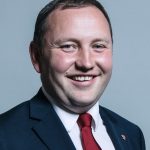
  • Ian Murray – 2022 Speech on the Supreme Court Decision on a Scottish Referendum

    Ian Murray – 2022 Speech on the Supreme Court Decision on a Scottish Referendum

    The speech made by Ian Murray, the Shadow Secretary of State for Scotland, in the House of Commons on 23 November 2022.

    I begin by thanking the Supreme Court for examining this case in detail, for reaching a unanimous decision and for doing so in a speedy manner. I also thank the Scottish Lord Advocate for referring this case to the Supreme Court. She was right not to allow it to be launched in the Scottish Parliament before seeking legal clarity on this matter, and we are all in a better place now for that clarity having been put forward. The Supreme Court’s ruling is absolutely clear and concise.

    The Leader of the SNP has just accused those who are against independence of “triumphalism”. Nothing could be further from the truth. We are deeply disappointed and angry that the politics in Scotland is paralysed by this constitutional grievance. It is now time for all of us in Scottish politics to focus on the problems facing our country, from rocketing bills to the crisis in the NHS, and I wish the SNP had such passion for doing that. I fear that that will not happen after the First Minister announced that she will turn the next general election into a de facto referendum. As an example, the SNP has made such a mess of our NHS that, earlier this week, it was reported that NHS chiefs have been discussing plans to privatise our health service—Labour’s and perhaps our country’s greatest achievement.

    There is not a majority in Scotland for a referendum or for independence, but neither is the majority for the status quo. There is a majority in Scotland, and across the UK, for change. This failing and incapable Tory Government are unfit to govern this country. They have crashed the economy and they are as big a threat to the Union as any nationalist. People in Scotland and across the UK are sick of watching their incompetence, our national standing falling in the world, and working people paying for their decisions, but change is coming. It is coming with a UK Labour Government that will bring economic growth, raise living standards and restore our nation’s place in the world.

    Does the Secretary of State agree that change is indeed coming and that Scottish voters will lead the way by kicking his Government out of office and helping to elect a UK Labour Government?

    Mr Jack

    No, I do not agree with the hon. Gentleman on his last point.
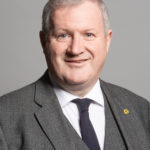
  • Ian Blackford – 2022 Speech on the Supreme Court Decision on a Scottish Referendum

    Ian Blackford – 2022 Speech on the Supreme Court Decision on a Scottish Referendum

    The speech made by Ian Blackford, the SNP leader at Westminster, in the House of Commons on 23 November 2022.

    Thank you for granting this urgent question, Mr Speaker.

    It is right that the UK Government answer questions today, and answer them quickly, because this morning the Supreme Court dealt with a question of law; there is now a massive question of democracy. Some of the Westminster parties are already wildly celebrating this morning’s decision, but I think it is safe to say that their thoughtless triumphalism will not last very long, because this judgment raises profound and deeply uncomfortable questions about the basis of the future of the United Kingdom.

    The biggest question of all is how the Prime Minister can ever again repeat the myth that the United Kingdom is a voluntary union of nations. In 2014, the Smith Commission made it clear that

    “nothing in this report prevents Scotland becoming an independent country in the future should the people of Scotland so choose.”

    If that is true and if the Secretary of State’s Government are still committed to that promise, will he urgently amend the Scotland Act 1998 to ensure that the Scottish people have the right to choose our own future? If he fails to do that, is he deliberately choosing to deny democracy, because a so-called partnership in which one partner is denied the right to choose a different future, or even to ask itself the question, cannot be described in any way as a voluntary partnership, or even a partnership at all?

    Today’s decision casts focus on the democratic decisions of the Scottish people. Since 2014, the Scottish National party has won eight elections in a row. We have secured multiple mandates. The question is: how many times do people in Scotland have to vote for a referendum before they get it?

    The more contempt the Westminster establishment shows for Scottish democracy, the more certain it is that Scotland will vote yes when the choice comes to be made. Scotland did not vote for Brexit. We did not vote for a new age of Tory austerity. We did not vote for this Prime Minister, and we have not voted for the Tories in Scotland since 1955. What we did vote for was the choice of a different future. If Westminster keeps blocking our democratic decisions, lawfully and democratically Scotland will find a way out of this Union.

    Mr Jack

    This idea that a mandate was delivered in 2021 in the Holyrood elections is completely misleading. As the First Minister herself said very clearly in an interview in The Herald—this is when she thought that the former First Minister, the previous SNP leader Alex Salmond, was gaming the system with his party Alba—that parties should stand on both the list and first-past-the-post constituency systems. The Greens did not fulfil that and neither did Alba. Let us be clear: in the 2021 Holyrood elections—the so-called mandate—less than one third of the Scottish electorate voted for the SNP.

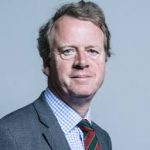
  • Alister Jack – 2022 Statement on the Supreme Court Decision on a Scottish Referendum

    Alister Jack – 2022 Statement on the Supreme Court Decision on a Scottish Referendum

    The statement made by Alister Jack, the Secretary of State for Scotland, in the House of Commons on 23 November 2022.

    I am grateful to the right hon. Member for providing me with the opportunity to address the House on this important ruling of the Supreme Court on the issue of the competence of the Scottish Parliament to legislate for a referendum on independence.

    The UK Supreme Court has today determined that it is outside the powers of the Scottish Parliament to hold an independence referendum, and I respect the Court’s clear and definitive ruling on this matter. The Scottish Government’s Lord Advocate referred this question to the Supreme Court, which has today given its judgment, and the UK Government’s position has always been clear: that it would be outside the Scottish Parliament’s competence to legislate for a referendum on Scottish independence because it is a matter wholly reserved to the United Kingdom Parliament.

    We welcome the Court’s unanimous and unequivocal ruling, which supports the United Kingdom Government’s long-standing position on this matter. People want to see the Scottish Parliament and the Scottish Government focus on issues that matter to them, not on constitutional division. People across Scotland rightly want and expect to see both their Governments—the United Kingdom Government and the Scottish Government—working together with a relentless focus on the issues that matter to them, their families and their communities.

    The Prime Minister has been very clear, and has demonstrated since day one, that it is our duty to work constructively with the Scottish Government. We fully respect the devolution settlement and we want to work together with the Scottish Government on vital areas such as tackling the cost of living, growing our economy and leading the international response to Russia’s illegal war in Ukraine.

    At this time of unprecedented challenges, the benefits of being part of the United Kingdom have never been more apparent. The United Kingdom Government are providing the Scottish Government with a record block grant settlement of £41 billion per year over the next three years, and the people in Scotland are benefiting from unprecedented cost of living support announced by this Prime Minister and our Chancellor. It is important now that we move on from constitutional issues, to focus on tackling our shared challenges. I therefore welcome the Supreme Court’s judgment, and I call on the Scottish Government to set aside these divisive constitutional issues so that we can work together, focusing all of our attention and resources on the key issues that matter to the people of Scotland.

    The United Kingdom Government are proud of their role as the custodian of the devolution settlement. The United Kingdom is one of the most successful political and economic unions in the world. By promoting and protecting its combined strengths, we are building on hundreds of years of partnership and shared history. I will conclude by saying that when we work together as one United Kingdom, we are safer, stronger and more prosperous.

  • PRESS RELEASE : Essex property developer, Anthony James Killarney, banned for falsely claiming Bounce Back Loan [November 2022]

    PRESS RELEASE : Essex property developer, Anthony James Killarney, banned for falsely claiming Bounce Back Loan [November 2022]

    The press release issued by the Treasury on 24 November 2022.

    Anthony James Killarney, 62, from Brentwood, has been given an 11-year ban for falsely claiming a £50,000 Bounce Back Loan for his property development firm.

    Killarney was the sole director of K11 Developments Ltd, which was incorporated in August 2015 and traded as a property development company based in Essex until it went into liquidation in November 2021.

    In May 2020, Killarney applied for a Bounce Back Loan for K11 Developments Ltd, stating the company’s 2019 turnover as £600,000. This led to the company receiving the maximum £50,000 loan.

    Bounce Back Loans were a government scheme to help support businesses through the Covid-19 pandemic. Under the rules of the scheme, companies could apply for loans of between £2,000 and £50,000, up to a maximum of 25% of their turnover for 2019.

    But K11 Developments Ltd went into liquidation in November 2021, owing around £388,800, which triggered an investigation by the Insolvency Service.

    Investigators discovered that K11 Developments’ turnover for the years ending August 2017, 2018 and 2019 had been nil, and the company had not been entitled to the £50,000 Bounce Back Loan. The full amount of the loan was still owed when the company went into liquidation.

    The Secretary of State accepted a disqualification undertaking from Anthony James Killarney after he did not dispute that he had caused K11 Developments Ltd to breach the condition of the government’s Bounce Back Loan scheme by overstating turnover in order to claim £50,000 to which the company was not entitled.

    Killarney’s disqualification began on 2 November 2022 and lasts for 11 years. The ban prevents him from directly or indirectly becoming involved in the promotion, formation or management of a company, without the permission of the court.

    The liquidator of K11 Developments Ltd is working to recover the full amount of the loan from the former director.

    Martin Gitner, Deputy Head of Insolvent Investigations at the Insolvency Service, said:

    Bounce back loans were put in place to provide vital support to help viable businesses through the pandemic, providing them with the financial support to protect jobs and return to prosperity.

    The conduct of Anthony James Killarney fell extremely short of the standards required of company directors and his ban should serve as a stark warning to other directors who may have misused financial support during the pandemic that the Insolvency Service will act to bring your misconduct to account and remove you from the corporate arena.

  • PRESS RELEASE : Landmark times tables data and investment in maths teaching [November 2022]

    PRESS RELEASE : Landmark times tables data and investment in maths teaching [November 2022]

    The press release issued by the Department for Education on 24 November 2022.

    The first ever set of national data, alongside new investment from Government in high quality maths teaching.

    The data shows an average score of 20 out of 25, with full marks the most common score, and follows a new Multiplications Table Check sat by year 4 children across the country over the summer.

    The check includes 25 times tables questions, up to 12 x 12, with pupils having a maximum of six seconds to answer each one. It helps schools determine whether pupils can recall their times tables fluently – an essential skill for future success in the subject and day-to-day life. The Multiplication Tables Check is the first statutory assessment students complete online, either on a PC or tablet.

    The Department for Education is also announcing funding of up to £59.3 million to continue driving up the quality of maths teaching in schools across the country, in line the Government’s commitment to making sure every child leaves school with a strong grasp of the basics.

    The funding will support the continuation of the Maths Hubs Programme through to the end of the next academic year. The flagship programme which started in 2014 aims to reach 11,000 primary and secondary schools by 2023 and 40 hubs across England are now helping schools to improve their teaching quality.

    Today’s announcements build on the significant boost to school funding announced in the Autumn Statement last week, with an additional £2bn going into schools’ budgets both next year and the following year.

    Schools Minister, Nick Gibb said:

    Learning your times tables fluently is so important for children – both for their time in school and in day-to-day life, and today’s data gives us an important benchmark to build from over the years to come.

    Mathematics is vital for doing essential calculations like how a higher base rate will affect your mortgage or working out the best multi-pack bargains in a supermarket.

    The additional funding for maths hubs announced today is also crucial, as we continue raising the standard of maths teaching across the country and driving towards our target for 90% of children leaving primary school with the expected standard in Mathematics and English by 2030.

    Pupils knowing their times tables will make more complex mathematics like algebra and long division simpler to process and give children the platform they need to move on to more advanced mental arithmetic.

    The Multiplication Table Checks results show:

    Of pupils who took the check, the mean average score was 19.8 out of 25.

    25 out of 25 was the most common score (27% of pupils achieved this score) and 24 out of 25 was the second most common score (12% of pupils achieved this score).

    London was the highest performing region, with an average score of 20.9.

    South West was the lowest performing region, with an average score of 19.1.

    Over 625,000 students took the check in the summer.

    The results from the data published today will provide teachers with standardised information to help to identify pupils who have not yet mastered their times tables, so that additional support can be provided.

  • PRESS RELEASE : Address by Co-Chairs of the Geneva International Discussions on Georgia –  UK response [November 2022]

    PRESS RELEASE : Address by Co-Chairs of the Geneva International Discussions on Georgia – UK response [November 2022]

    The press release issued by the Foreign Office on 24 November 2022.

    Ambassador Neil Bush reiterates UK support for the work of GID Co-Chairs and calls on Russia to stop attacks on Georgia’s sovereignty and territorial integrity.

    Thank you, Chair. On behalf of the United Kingdom, let me welcome the Co-Chairs of the Geneva International Discussions (GID) to the Permanent Council and thank you for your remarks.

    Georgia has been under continuous hybrid attack from Russia since the 2008 war which saw 20% of Georgian territory effectively annexed. The UK remains deeply concerned over the continued illegal Russian presence in Georgia’s Abkhazia and South Ossetia regions and fully supports Georgia’s sovereignty and territorial integrity within its internationally recognized borders.

    This year, the multitude of hybrid tactics against Georgia have included the August announcement of the so-called transfer of the Bichvinta estate in Abkhazia to the Federal Protective Service of the Russian Federation on a 49-year lease. This is yet another flagrant breach of Georgia’s sovereignty and territorial integrity.

    The UK was deeply concerned by the illegal so-called Parliamentary election which took place on 12 March 2022 in Abkhazia, and the illegal so-called Presidential elections which took place on 10 April 2022 in South Ossetia. We welcome that the proposed illegal referendum in South Ossetia did not go ahead, and strongly indicate that it should not be rearranged in future.

    We call on Russia to reverse its recognition of the so-called independence of Abkhazia and South Ossetia and end all practices aimed at creeping annexation of these territories into the Russian Federation. We welcome initiatives by the government of Georgia to promote reconciliation among the populations separated by the Administrative Boundary Lines and urge Russia not to obstruct these valuable peace building and people to people contacts.

    Co-chairs, the UK reiterates our unwavering support for your work. As the only international forum that brings together all sides from the conflict, the GID plays a vital role in trying to achieve a lasting resolution. We welcomed the 56th round of Discussions held on 5 October and your continued open channels of communication following the 10-month pause since the 55th round held in December 2021. We stress the importance of continued communication as you look towards the 57th round of talks. The UK continues to support UN Women to help facilitate the meaningful participation of grass-roots women peacebuilders in the formal dialogues, so we also urge further discussion in future rounds on the role of women in peacebuilding and security.

    We remain grateful to the OSCE for its engagement in the GID and the Incident Prevention and Response Mechanism meetings, as well as in the implementation of confidence-building measures. Although we welcome the functioning of the IPRM in Ergneti and the last meeting which took place in September, we highlight the need to restart regular meetings of the Gali IPRM. These meetings play an important role in preventing the escalation of the conflict and in helping to provide safety and security to people on the ground.

    We call upon the Russian Federation to immediately fulfil its clear obligation under the 2008 ceasefire agreement to withdraw its forces to pre-conflict positions, as well as its commitments to allow unfettered access for the delivery of humanitarian assistance and the return of internally displaced persons to return to their homes in safety and dignity.

    The burden lies with Russia to take these actions, respect the territorial integrity of Georgia as well as its neighbours including Ukraine, and rebuild the trust that underpins the OSCE and the GID.

    Thank you.

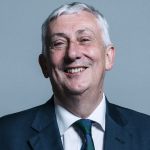
  • Lindsay Hoyle – 2022 Statement on the Personal Conduct of John Nicolson

    Lindsay Hoyle – 2022 Statement on the Personal Conduct of John Nicolson

    The statement made by Lindsay Hoyle, the Speaker of the House of Commons, in the House on 23 November 2022.

    On 20 October, the Digital, Culture, Media and Sport Committee published a special report on answers given to it by the right hon. Member for Mid Bedfordshire (Ms Dorries) when she was Secretary of State for Digital, Culture, Media and Sport. The hon. Member for Ochil and South Perthshire (John Nicolson) subsequently wrote to me asking for precedence for a complaint of a breach of privilege, as was his right. I declined to do so since the bar for such a complaint is high. The House should take action only when essential in order to provide reasonable protection for the House, its Members or its officers from improper obstruction. I note that the Committee itself, of which the hon. Gentleman is a member, has said:

    “Had Ms Dorries remained Secretary of State, driving a policy of selling the channel, we may have sought a referral to the Privileges Committee but, as her claims have not inhibited the work of the Committee and she no longer has a position of power over the future of Channel 4, we are, instead, publishing this Report to enable the House, and its Members, to draw their own conclusions.”

    So I considered it appropriate to respect the Committee’s assessment of the situation.

    Correspondence on matters of privilege is private. Indeed, I go to great lengths to ensure that Members can write to me in confidence on any matter, knowing that their communication will remain private. I expect the same courtesy with my replies. The hon. Member has seen fit to give a partial and biased account of my letter on Twitter, and I await his apology. I gave the hon. Member notice that I would be raising this matter at this time, but I do stress that it is not the way we should be doing business in this House.

    John Nicolson (Ochil and South Perthshire) (SNP)

    As you have just explained, Mr Speaker, the DCMS Committee, on which I sit, published a unanimous cross-party report about the testimony given to us by the right hon. Member for Mid Bedfordshire (Ms Dorries), and there is now considerable public interest in what should happen next. I want to put on record that I deplore social media pile-ons against you, or indeed anyone else—I have been on the receiving end of them, and they are exceedingly unpleasant. But could I ask for guidance on what I and other Members should tell our constituents about integrity in politics in this context? If someone misleads a Committee, what should happen next?

    Mr Speaker

    First of all, printing the letter, and only half the letter, is not integrity; in fact, it is far from it. It misled the people of this country, and it certainly put me in a bad light with the people of this country, and I do not expect that to happen, as an impartial Speaker. If that was an apology, I do not think it was very good.

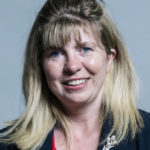
  • Maria Caulfield – 2022 Statement on Manchester Mental Health Trust and the Edenfield Centre

    Maria Caulfield – 2022 Statement on Manchester Mental Health Trust and the Edenfield Centre

    The statement made by Maria Caulfield, the Parliamentary Under-Secretary of State for Health and Social Care, in the House of Commons on 23 November 2022.

    Yesterday, NHS England announced an independent review will be taking place regarding the unacceptable incidents that took place at the Greater Manchester Mental Health Trust this year. It will focus on how these incidents were able to happen and why the failings were not picked up.

    The abhorrent treatment of vulnerable people at the Edenfield Centre shown in the Panorama episode was completely unacceptable. Every patient has the right to be treated with dignity and respect, in a caring and therapeutic environment where their rights are upheld, their needs are met, and they feel supported and listened to.

    This is why I welcome the steps taken by colleagues in the NHS to investigate those events. As the Minister of State, Department of Health and Social Care, my hon. Friend the Member for Colchester (Will Quince), stated in Parliament on 13 October 2022, this should not have happened. Therefore, it is vital that we get to the bottom of what went wrong so that we can make sure we do better in the future. As I said at the Dispatch Box, I have also instructed my officials to consider what is needed on wider issues for mental health inpatient care, separately to this independent review. I will give an update on this in due course.

  • Jeremy Hunt – 2022 Statement on the Bank of England Asset Purchase Facility

    Jeremy Hunt – 2022 Statement on the Bank of England Asset Purchase Facility

    The statement made by Jeremy Hunt, the Chancellor of the Exchequer, in the House of Commons on 23 November 2022.

    The Monetary Policy Committee of the Bank of England decided at its meeting ending on 3 February 2022 to reduce the stocks of UK Government bonds and sterling non-financial investment-grade corporate bonds held in the APF—asset purchase facility—by ceasing to reinvest maturing securities. The Bank ceased reinvestment of assets in this portfolio in February 2022 and has since commenced sales of corporate bonds on 28 September 2022, and sales of gilts acquired for monetary policy purposes on 1 November 2022.

    The then Chancellor agreed a joint approach with the Governor, in an exchange of letters on 3 February 2022, to reduce the maximum authorised size of the APF for asset purchases every six months, as the size of APF holdings reduces.

    On 4 November the Governor and I agreed to reduce the maximum size of the APF from £966 billion to £886 billion, to reflect the unused portion of the recent financial stability-related APF expansion. Since 5 May 2022, the total stock of assets held by the APF for monetary policy purposes has fallen from £866.6 billion to £851.6 billion. In line with the approach agreed with the Governor, the authorised maximum total size of the APF has therefore been reduced to £871 billion.

    The risk control framework previously agreed with the Bank will remain in place, and HM Treasury will continue to monitor risks to public funds from the APF through regular risk oversight meetings and enhanced information sharing with the Bank.

    There will continue to be an opportunity for HM Treasury to provide views to the MPC on the design of the schemes within the APF, as they affect the Government’s broader economic objectives and may pose risks to the Exchequer.

    The Government will continue to indemnify the Bank, the APF and its directors from any losses arising out of, or in connection with, the facility. If the liability is called, provision for any payment will be sought through the normal supply procedure.

    A full departmental minute has been laid in the House of Commons providing more detail on this contingent liability.

  • George Freeman – 2022 Statement on UK Earth Observation

    George Freeman – 2022 Statement on UK Earth Observation

    The statement made by George Freeman, the Minister of State at the Department for Business, Energy and Industrial Strategy, in the House of Commons on 23 November 2022.

    The Government are announcing today a package of up to £200 million funding to invest in the UK Earth observation sector, to protect the future of UK talent and industry in earth observation and mitigate the impact of ongoing delays to UK participation in the EU Copernicus programme, while the EU continues to block our association.

    Earth observation (EO) is a vital science and a growing industry. This is the right time to invest in projects that benefit our planet and grow our economy: EO supports the UK to become a science superpower and prioritises our space and net zero ambitions—more than half of key climate data comes from space.

    The UK has a vibrant landscape of world-leading EO academic and industrial organisations and a well-founded reputation for excellence in EO. For example, in climate science, leading UK research institutions have been measuring sea and land surface temperature from space for over three decades—Oxford University, RAL Space, Reading University and Leicester University. This data is used by meteorological agencies around the world to improve weather forecast accuracy, helping to save lives, infrastructure and crops.

    In the “National space strategy”, His Majesty’s Government committed to remain at the forefront of earth observation technology and know-how. The investments announced today will deliver an essential funding boost to recognise the importance of this work/market and will benefit academia and industry and build our national capability. The funding is spread across 17 projects delivered through the following Government partner organisations:

    £137.6 million UK Space Agency (UKSA)

    £19.3 million Natural Environment Research Council (NERC)

    £14.7 million Science and Technology Facilities Council (STFC)

    £11.7 million Met Office

    £4.2 million Innovate UK

    These projects will deliver benefits across the UK and include a broad range of activities from measuring wind speeds to improving the accuracy of climate data, and from funding small and medium-sized enterprise projects to additional PhD places. Some projects will involve new or extended collaborations with international partners such as Australia.

    Investing in the UK EO sector is a vital part of achieving our ambitions in space and with the range of applications of EO data, including net zero targets, but it is just the first step.

    Over the last few months, my officials have begun discussions with the Earth observation community about the longer-term plans for the sector. The package announced today provides an interim response to what we have been hearing are their biggest challenges. We will continue to work with the sector to identify strategic priorities to keep building on the world-leading excellence in UK Earth observation.

    These investments are UK-wide and will provide targeted support during this time of uncertainty. They aim to support the retention of talent and firms across the sector, and we have particularly focused on how to ensure that both academia and industry can benefit from these projects.

    Context

    The EU has now delayed our association for nearly two years. The UK has done everything it can to secure association, including entering into formal consultations to encourage the EU to implement its obligations.

    The Government remain ready to discuss association with the EU, but with the EU continuing to refuse our request to formalise association, we cannot wait forever. Our priority is to invest in the UK’s EO sector and protect our knowledge and capabilities.