Author: admin

  • David Evennett – 2022 Speech on Southeastern Railway Timetable Changes

    David Evennett – 2022 Speech on Southeastern Railway Timetable Changes

    The speech made by David Evennett, the Conservative MP for Bexleyheath and Crayford, in Westminster Hall, the House of Commons, on 6 December 2022.

    It is a great pleasure to serve under your chairmanship, Ms Harris; it is the first time for me as well. I am particularly pleased to see my personal and political friend, the Minister of State, Department for Transport, my hon. Friend the Member for Bexhill and Battle (Huw Merriman) in his place to respond to the debate.

    I congratulate the hon. Member for Eltham (Clive Efford), from my neighbouring borough, on securing this important debate and thank him for doing so. He made a powerful case with the facts and figures on passenger numbers. That is very important and he has done a good job and a good service for us in south-east London by raising those figures.

    I am grateful for the opportunity to raise such an important issue on behalf of my constituents in Bexleyheath and Crayford. The decisions affect so much and so many people adversely. I am pleased to see present a number of colleagues from both the Conservative and Labour parties, singing from the same hymn sheet. It is important that these issues are considered to be cross-party. We are grateful to participate in the hon. Member for Eltham’s debate.

    Bexley is not on either the London underground or Docklands light railway network. Although the Elizabeth line was originally proposed to run through Bexley and hopefully to Ebbsfleet, it now terminates at Abbey Wood in Greenwich, so there are limited viable alternatives to Southeastern rail services for the people of our area to use to get into central London. For example, although it is fewer than 15 miles from my home in Bexleyheath to Westminster, to travel exclusively by bus would probably take two hours, which is just not practical in any day-to-day commute. My constituents are therefore more reliant than most on rail services to travel to central London, whether to commute, to go to health meetings or for social reasons. For hospitals, work and pleasure, they use the railway and they use those services.

    I know the hon. Member for Eltham is, like me, a regular commuter, as we often travel on the same train. As such, we know and appreciate constituents’ anger about the services that they pay for and share the view that Southeastern, having a monopoly, is failing its customers. However, rather than talk about the shocking service that we have suffered over many years, and which the hon. Gentleman and I have batted away regularly over the past five or six years at least, I shall focus today on the inconsiderate, unfair and damaging new timetable that Southeastern plans to implement later this month.

    The new timetable affects all three of the lines that go through my constituency, as the Bexleyheath, Sidcup and Woolwich lines all go through Bexleyheath and Crayford. My constituency of Bexleyheath and Crayford is currently served badly by those services, and the changes will be a disaster because the service will suffer, as the hon. Member for Eltham said in his excellent speech.

    The Bexleyheath line is served by Barnehurst and Bexleyheath stations in my constituency and by Welling station, which is in the constituency of my hon. Friend the Member for Old Bexley and Sidcup (Mr French) but is used by a number of my constituents. The changes will mean that the line will no longer enjoy off-peak or weekend services to Charing Cross. The services running will be only two trains per hour to Cannon Street and two trains per hour to Victoria.

    The Sidcup line, which serves Crayford station in my constituency, will lose the off-peak and weekend services to Cannon Street, with the majority of those services being transferred to Charing Cross, with the result that four trains per hour will go there. The timetable changes mean the loss of our loop line, with the end of the direct service to get on the Elizabeth line at Abbey Wood. That is a disadvantage for commuters who need to go to the Docklands or other places via the excellent Elizabeth line.

    The Woolwich line is served by Slade Green station in my constituency and by Erith station, which is used by a lot of my constituents in the Barnehurst and North End wards. The relevant services will go only to Cannon Street at both peak and off-peak times.

    The new timetable has met with huge dismay across our borough of Bexley, and indeed throughout other parts of south-east London. My constituents and I are bitterly disappointed by, and rather angry about, the lack of consultation on the dramatic changes that are taking place that will affect rail users and businesses across our south-east region.

    Southeastern has explained the reasons why it did not consult, which I do not accept—I know that my hon. Friend the Member for Old Bexley and Sidcup has been even more robust in that division. I advise Southeastern, and the Minister, that if it consulted on the timetable now, it would be amazed at the overwhelming opposition from people from all sections of the community, of all ages, and from all the travelling public. I remain totally unconvinced about why some of the Cannon Street services at off-peak times and at weekends cannot be substituted on the Bexleyheath line for some Charing Cross services instead.

    Southeastern has explained to me—very badly and disappointingly—that the reason for the new timetable is, as the hon. Member for Eltham said, to untangle the crossovers in the line at Lewisham and improve punctuality. I was at meetings with the hon. Gentleman about a previous consultation when that was disproved. I do not accept the views of Southeastern. It has failed to acknowledge the disruption and the added time that journeys will require in order for people to change at London Bridge, which will cause more inconvenience for our constituents when they travel.

    The Bexleyheath line has enjoyed direct services to Charing Cross since the Victoria era. A year or two ago, we celebrated the 150th anniversary of the Crayford line, which goes through Sidcup. The new timetable will see the Charing Cross to Bexleyheath line come to an end for off-peak services, with only two trains an hour at peak times, which is totally inadequate for the needs of constituents. Those commuting at that time often face delays that tend to originate from Dartford, at the kick-off, not from the crossover at Lewisham.

    The status given to Cannon Street as a major terminus area is absolute nonsense. Cannon Street is a commuter line. It is a ghost area outside the rush hour. Families would not take the train to Cannon Street to go to a Saturday afternoon matinee at the theatre or to an appointment with a doctor or consultant at a London hospital. It is unbelievably crass to suggest that that is fine. Barely anyone wants to travel to Cannon Street for non-work purposes, while Charing Cross is the most popular service for rail users travelling to London from Bexley for both work and leisure. The staff and the ambience at Charing Cross is very good, commensurate with safety and security, and there is a buzz there. I do not think there is that buzz at Cannon Street, even in the rush hour.

    Frankly, the changes are inconsiderate, totally unfair and lacking in logic. As I have mentioned, although it is a London borough, Bexley does not have a tube station. The residents therefore want a reliable, good service to get them to their place of work, hospital appointments and social events. We have fought on a bipartisan basis across my borough of Bexley and Greenwich, and also with Lewisham, to say that this is what people want and expect. In other parts of the country, such as on the Essex side of the Thames, the train service is so much better. I can never understand how it is that my personal assistant Perry Taylor can get in much quicker and easier from Billericay than we can from south-east London. We are closer to London than he is, and he is never late—I hope he will not be late tomorrow, at any rate.

    The train service available for rail users at London Bridge to get to their destinations is unacceptable. It will also add unnecessary stress and time for passengers. A number of people based at the House of Commons do not work peak times. They are going home, as we are, after 10 o’clock at night, which means that they have to change at London Bridge station. That makes things far worse and they will get home even later. I know we have more user-friendly hours in Parliament than we were used to in the past, but we were still here last night voting at 10 o’clock. The staff have to be here after that. A lot of them work in this property and are on our line down to Dartford.

    There are also vulnerable passengers, such as the elderly, those with mobility issues and parents with pushchairs, who have to navigate lifts, escalators and stairs to get on to the main concourse and on to the next line. Whereas, when they come to Charing Cross, they can go straight through to Eltham, Welling, Bexleyheath or wherever, without changing. Once they are on the train, they know they are there until they get to their destination station. Coming home late means more time, more hassle and more stress. We are here as representatives of the people to support constituents and the best service for them—not one that is convenient to civil servants and Southeastern, but one that is convenient to the people who pay the bills. That is why I am passionate and cross about the new timetable.

    One concern raised by people in Crayford is that they lose the loop around to Abbey Wood. Although that is not devastating, it is certainly disappointing, because people moved to our area in the belief that it meant that they could commute reasonably quickly into London, but that will not happen under these new proposals. A lack of connectivity with the Elizabeth line is a great disappointment, and I ask for that to be looked at again.

    Bexley borough generally has poor transport links from north to south. Buses and trains run more from east to west, though buses are impacted by traffic. There is considerably more traffic in Bexley now than there was a decade ago. We have been given no reasonable explanation why the connectivity service should be removed.

    I have had many meetings and discussions, as well as written communications, with Ministers present and past from the Department for Transport over the years, as has the hon. Member for Eltham. That includes the current Minister over the past month or two. I have also asked questions in Parliament, raised debates and collaborated with parliamentary neighbours and the leader of Bexley Council on transport issues affecting our borough. Yet we have seen no progress, despite the increasing cost of fares and the frustration for railway users.

    We need—we deserve—to see improvements finally, and we thought we were getting there with longer trains, more trains and newer trains. Does the hon. Member for Eltham remember that? We were going to get all those things. Well, they have not materialised. Now we are getting detrimental cuts to our services, just when we are trying to encourage people to go back to the office and other workplaces, and to go to the city and enjoy the recreational facilities in London, which is the greatest city in the world.

    I appreciate the time and sympathy that our new Rail Minister has given me and my parliamentary neighbour, my hon. Friend the Member for Old Bexley and Sidcup, and colleagues on the Labour Benches. He has listened and we appreciate that very much. However, the new timetable needs to be amended and changed, so that residents in south-east London—not just Bexley but all south-east London boroughs affected—have the benefit of a better service. They need to be consulted. This needs to be thought about again. We are being told that we cannot do anything because this has already been agreed with everybody, even though we did not agree with it and did not even know much about it until quite recently. We need to be consulted on changes for when the next timetables come in, because these new timetables are not fit for purpose.

  • Clive Efford – 2022 Speech on Southeastern Railway Timetable Changes

    Clive Efford – 2022 Speech on Southeastern Railway Timetable Changes

    The speech made by Clive Efford, the Labour MP for Eltham, in Westminster Hall, the House of Commons, on 6 December 2022.

    I beg to move,

    That this House has considered Southeastern railway timetable changes.

    It is genuinely a pleasure to serve under your chairmanship, Ms Harris, for the first time, I think. We are here because on 4 August Southeastern sought and got the Government’s permission to cut rail services without consultation. It is cutting two trains from the morning peak in my constituency on the New Eltham and Mottingham line, and three from the Eltham and Kidbrooke line. On the Bexleyheath line, which services Eltham and Kidbrooke, it is cutting three trains out of 15—a 20% cut in the morning peak capacity of trains that go via London Bridge. It is a similar cut in New Eltham and Mottingham, where the number of trains will go from 18 down to 16, but there is the welcome addition of one single train that goes to New Eltham via Blackfriars. Given an average of 10-car trains, the cuts on the Bexleyheath line amount to 3,000 passengers at peak time who have to find spaces on the remaining trains. It is a similar situation on the New Eltham line.

    Before the pandemic, we had PiXC—passengers in excess of capacity—on our lines. We campaigned previously for additional trains, particularly off peak, and were successful in getting them. Transport planners do not recognise that our part of south-east London is not served by the London underground and we rely very heavily on train services. The cuts take no account of that fact, nor of the fact that my constituency has a huge new development at Kidbrooke, which has had a considerable effect on the numbers of passengers getting on and off trains at Kidbrooke station.

    According to the Office of Rail and Road, there were 890,000 passenger exits and entrances at Kidbrooke station in 2010. That had risen by more than 42% to 1.5 million by 2018. During the pandemic, as we would expect, the number of exits and entrances went down to 429,000 in 2020, but it is already back over 1 million at Kidbrooke station and it is continuing to rise. There were also increases at Eltham station, but on nowhere near the scale of the increases at Kidbrooke station because of that development.

    The Kidbrooke development is approaching 7,000 homes, about half of which have been completed. Passenger entrances and exits had already increased by 640,000, as I said, but that was prior to the pandemic. Taking that as a guide, that means we will see a further 1.5 million entrances and exits at that station by the time all the properties are built. The proximity to the train station was used as justification by the developer Berkeley Homes, as well as by the Mayor of London and Transport for London, in respect of the development of 619 homes at Kidbrooke. Was that taken into consideration when the Government approved the cuts to train services?

    Back in September 2017 we all thought we had cracked the problem of overcrowding. We all campaigned to get extra trains and longer trains on the line and the Government allowed Southeastern to do that—we were told that we got 68 extra carriages. The then managing director, David Statham, said:

    “Longer trains will mean more seats, more space and more comfortable journeys…Southeastern has worked very closely with the Department for Transport and Govia Thameslink Railway to deliver this extra capacity for passengers.”

    The press release went on to say that trains to Hayes, Bexleyheath, Woolwich, Sidcup, Bromley South and Grove Park would be lengthened. We were told we were going to get extra capacity, not less. Now we are told there is a need to rationalise services post covid.

    A report on Southeastern published in July by the Office of Rail and Road shows that 2018-19 was its busiest year—but then, of course, the pandemic hit us. There were 183.2 million passenger journeys in 2018-19, but the number dropped to 40.2 million in 2019-20. In 2021-22, passenger journeys went up to 97.8 million, which is more than a 50% increase, and they are continuing to rise, so this is hardly the climate in which we should undertake cuts.

    Sir David Evennett (Bexleyheath and Crayford) (Con)

    The hon. Gentleman is doing a really good job of explaining the figures. In the London Borough of Bexley, a lot of new apartments and houses are being built and there will be increased demand.

    Clive Efford

    Absolutely. I do not think any account has been taken of the increased demand from the additional development in our part of London—certainly not the demand from the very big development at Kidbrooke. We are seeing considerable growth and no one can know where it will end.

    We see a similar pattern in passenger kilometres. Again, the highest number was in 2018-19. That dropped massively in 2020-21, but more than doubled in 2021-22. For planned trains—the trains agreed with Southeastern and Network Rail the night before they run—2018-19 was the busiest year, with 654,389 trains. The number dropped to 527,855 in 2020-21, then still further in 2021-22 to 523,965—that is a 20% drop in planned trains. If we look at the performance figures—bear in mind that the Government’s rationale is that running fewer trains makes the trains more efficient—we do not see the huge improvement in performance that we would expect from running considerably fewer trains, so the Government’s argument that fewer is better is not borne out by the facts.

    The rationale is the old chestnut that the all the trains crossing over west of Lewisham create too much congestion, which leads to knock-on effects and delays. That argument was rolled out several years ago when Southeastern wanted to take away the Victoria service from the Bexleyheath line. It was the same story: “It’s all those trains crossing over west of Lewisham.” Back then, I spoke to some rail experts about the problem and they told me that what Network Rail and Southeastern were saying was complete nonsense. There is not a problem with trains crossing over at that point unless there is bad maintenance and a lack of investment in the infrastructure.

    We need to be clear about what is happening. In Transport questions recently, the Minister said to me:

    “It is not just about taking down some costs; it is also about simplifying the line structure, so that at Lewisham, for example, there will not be as many trains crossing.”—[Official Report, 24 November 2022; Vol. 723, c. 436.]

    First, this is about cost cutting—the Minister has made that clear. There is then this issue of too many trains crossing. It might be fine to say that to people who still have trains, but we are having trains cut. Obviously, our trains cannot cross if they do not exist, so actually what the Minister says is true: the service will improve because the trains are not there. If we follow that logic, we should perhaps just get rid of all the trains; that would solve the problems on our railway.

    When I first asked questions about these cuts, I was told that cutting peak-time trains would reduce cancellations and delays. When I pressed further, I was told:

    “The number of train services in the new timetable is broadly very similar to the current timetable on both of these routes.”

    I pushed a bit further, because that answer denied that there are cuts on the Bexleyheath and Sidcup lines. The idea that the trains will run better becomes a self-fulfilling prophecy, because nobody can be criticised for a delayed train that does not exist. Given the logic of the solution that running a future railway should be based on cuts to services, I suspect we will be back here again listening to the Minister explain why we need to cut trains further because we still have a problem of poor maintenance and lack of investment in the infrastructure west of Lewisham.

    First, the Government tried to avoid admitting they had approved the cuts without consultation; I was told that they would reduce cancellations, which is not what I had asked. Then, the Government said there would be a similar number of trains, when I had asked how many cuts there would be. It has been a shameful attempt by the Government to avoid their responsibility for approving cuts to our services. Admitting now that there are cuts is a welcome step, but that will make everyone else’s trains run on time while we have to endure cuts.

    The new timetable has been imposed without listening to our constituents. It is too late to change that and the Government are determined to press ahead. What is the Minister going to do to monitor the situation so we do not go back to overcrowded trains and a poor service after the new timetable is introduced? That is what we endured before and I see nothing in the decision to cut our train services that is going to change it.

  • Rishi Sunak – 2022 Comments on Michelle Mone (Baroness Mone)

    Rishi Sunak – 2022 Comments on Michelle Mone (Baroness Mone)

    The comments made by Rishi Sunak, the Prime Minister, in the House of Commons on 7 December 2022.

    Like everyone else, I was absolutely shocked to read about the allegations. It is absolutely right that the baroness [Baroness Mone] is no longer attending the House of Lords and therefore no longer has the Conservative Whip. The one thing that we know about the right hon. and learned Gentleman is that he is a lawyer and should know that there is a process in place. It is right that that process concludes; I hope that it is resolved promptly

  • Jesse Norman – 2022 Speech on Blackpool Airport

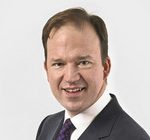
    Jesse Norman – 2022 Speech on Blackpool Airport

    The speech made by Jesse Norman, the Minister of State at the Department for Transport, in Westminster Hall, the House of Commons on 6 December 2022.

    It is a delight to see you in the Chair, Mr Gray. I am also delighted to respond to the very good speech and useful interventions made by my hon. Friends the Members for Fylde (Mark Menzies), for Witney (Robert Courts) and for Blackpool South (Scott Benton). I am a man with a family background in general aviation. Many years ago, I got a private pilot licence, and my uncle designed the Britten-Norman Islander. I do not know whether Members recall the moment in the James Bond film “Spectre” when the plane is flying along and gets its wings knocked off and goes skiing. That was a Britten-Norman Islander designed by my uncle, so we have a certain amount of traction in this field, and a certain sympathy for the issues raised by my hon. Friend the Member for Fylde.

    Let me be clear that within the Department for Transport we recognise the importance of Blackpool airport to the region. We also recognise it as the centre of the Blackpool airport enterprise zone, set up as a hub for business, medevac, flying schools and general aviation. I note that this is the second debate that we have had this year on this topic, or a related topic. I thank my hon. Friend the Member for Blackpool South for his earlier debate, which I note that my hon. Friend the Member for Witney responded to very ably as the Minister. There is a certain circularity here, but there is also a sense of energy and purpose that all three of my hon. Friends have rightly brought to the issue. I thank them very much for what they have said.

    As my hon. Friends have been at pains to emphasise, the UK enjoys what is in many ways a world-leading competitive commercial aviation sector, with airports and airlines operating and investing to attract passengers and respond to demand. Airports themselves have a key role to play as part of the sector. Where opportunities for growth exist, local partners can come together with the industry to develop the business case for new commercial flights. My hon. Friend the Member for Fylde rightly focused on the key goals of commercial development and sustainability of the airport, levelling up, and Union integration.

    It is for airports, local authorities, local enterprise partnerships, local businesses and other stakeholders to try to come together to build the case for commercial flights and work with airline partners to create new connections for their communities. Airlines will ultimately determine the routes they operate based on their own assessment of commercial viability. As my hon. Friend the Member for Fylde said, it is notable that Blackpool has a proud history of innovation in this area as well as a historically thriving tourism industry. The airport was used as recently as 15 or so years ago—perhaps even less. We need to consider the question of the commercial development of the airport in the context of the wider processes of levelling up and regeneration.

    As hon. Members will know, air travel is provided almost entirely by a competitive market. There is no bespoke funding or support from Government for new routes, but there is support for domestic connectivity. The 50% reduction in domestic air passenger duty was designed to provide that support. It was part of a package of air passenger duty reforms. There was a new reduced domestic band to support regional connectivity and a new ultra-long-haul band to align air passenger duty more closely with environmental objectives. That begins from April next year.

    The question of a targeted APD is very interesting. I have no doubt, speaking as a former Treasury Minister in part, that the thought of a hypothecated or targeted APD will cause severe tremors and, dare I say, nervous palpitations within the Treasury—for many understandable and obvious reasons. As Ernie Bevin once said in a different context,

    “Open up that Pandora’s box, you never know what Trojan horses will jump out.”

    Robert Courts

    The Minister makes a good point. The 50% APD cut was welcome, but my point is about what the Department calls open PSOs. Those are not a further Treasury subsidy, but simply the removal of APD on routes that are non-operational—where the Treasury is getting no revenue or marginal revenue. There is a business growth opportunity there. That is what I am asking him to push the Treasury on, though I appreciate it is not in his gift.

    Jesse Norman

    That clarification is very helpful. There is a way of thinking with open PSOs that is not just tied to APD, but I will come back to the question of PSOs in general.

    We have some support for administered connectivity through domestic APD. We are continuing to explore alternative routes and are seeing whether there are other ways to address this. In the context of PSOs, I will lay a slightly different emphasis from my hon. Friend the Member for Fylde. It is important to recognise that the PSO policy as it presently is set up is designed to support not new flight—that is the question being raised by my hon. Friend the Member for Witney—but routes that have previously been operated commercially or are now at risk of being lost.

    The question of new routes is somewhat different. The routes that are funded at the moment, at least across the UK, are modest. There are three public service obligations: from Londonderry/Derry to Stansted, Newquay to London Gatwick, and Dundee to London City. An additional 17 PSOs connect the highlands and islands of Scotland, which are wholly within the borders of Scotland. The administration and funding of those, by agreement with the Department for Transport, is the responsibility of the Scottish Government.

    We operate within a context of existing policy. To the point about the stance of the local authority, as raised by colleagues, it is important to say that my officials have so far received no requests from the local authority to discuss the need for any PSO routes from Blackpool airport—I will leave local colleagues to decide how they want to interpret that. Of course, if there was going to be PSO support, it would have to be initiated and agreed with the local authority, and the fact that we have heard nothing from them is not helpful to the cause being promoted.

    As I say, PSOs are considered in the context of commercial services that either are at risk of being lost or have recently—generally speaking, within the past two years—been lost. The loss referenced by my hon. Friend the Member for Fylde goes outside that remit and therefore does not fit within the existing policy. If and when it did apply, which would undoubtedly be part of the same process as the consideration of any new routes in the future, which I will come on to shortly, it would be through a business case, warmly and widely agreed locally, in which the local authority would play a leading role. That is very important. Hon. Friends will be aware that levelling up works effectively only when everyone is lined up in the same way. When business, the local authority, local Members of Parliament and other key stakeholders are so lined up, it can be enormously effective and successful.

    As a reminder to all, eligible routes should be ones in which there are historically no viable alternative modes of travel and where it is deemed and demonstrated to be vital to the social and economic development of the region.

    It is important to say that if and when a PSO is granted under the current policy, there must then be a procurement exercise to find an airline, which, in turn, needs to be a full and open tender for selection. The subsidy provided is based on the airline’s operating losses on that route, which it must submit as part of a tender bid. It is a very context-dependent decision. Of course, those things would be independently assessed, as any new approach would have to decide how, where there had not been a prior existing commercial flight, a non-distortive method of subsidy and support could be provided.

    Let me pick up a couple of points relating to the Union connectivity review that were rightly raised by colleagues. As hon. Members will recall, in November 2021, Sir Peter Hendy published an independent review designed to explore how improvements to transport connectivity between Scotland, Wales, Northern Ireland and England could boost not just economic growth but access to opportunities, everyday connection and social integration. The review identified the key importance of airports and air connectivity by providing connectivity both into London and in and between peripheral regions, which gets to the points raised by colleagues today.

    As hon. Members might imagine, the Government are considering our response to the Union connectivity review, and my colleague Baroness Vere leads on the issue of aviation. Our response will be Department-wide, because it is a multimodal strategic review in nature. As part of that, we are exploring further opportunities to utilise PSOs in order to support regional connectivity and the levelling-up agenda.

    My officials have already been actively considering how airport slots are allocated in the UK. Now that the UK has left the EU, there is an opportunity for the Government to legislate to improve the slots system to ensure it provides the connectivity that UK passengers need. That can be expected to have knock-on effects on economic growth around the country.

    Regional airports play an important role in levelling up. It is important to recognise that that is not just about the foundation of the wider UK aviation sector; it is also about the business opportunities that can be directly generated as a result of the supply chains and other enterprise engagement. Members will recall that the Government published a strategy on the future of aviation, “Flightpath to the future”, which sets out a vision for the sector over the next 10 years. It includes not just connectivity, which we have discussed, but workforce, skills, innovation and decarbonisation.

    We expect a naturally low-carbon approach to the regeneration of any new airports for all the reasons my hon. Friend the Member for Fylde set out. That is a potential source of advantage if it is properly handled. It is our goal that UK domestic flights should be net zero by 2040, and airport operations, which are an important potential ancillary contributor to carbon emissions, should be zero emission by 2040. We are providing significant support for that, not just for sustainable aviation fuels but for the commercialisation of those plants and other research and development co-investment —in particular, through the Aerospace Technology Institute. Alongside that, the levelling-up agenda, jet zero and net zero provide the context within which there can be diversification, a deepening and broadening, and a very significant boost to the activity conducted in and around airports.

    I want to give my hon. Friend a moment to respond—

    James Gray (in the Chair)

    No, you don’t. Not in a half-hour debate.

    Jesse Norman

    In any case, I will not abuse the privilege by speaking further. I thank my hon. Friend the Member for Fylde very much for his comments, and I thank my hon. Friends the Members for Witney and for Blackpool South for their interventions and the interest they have shown in this issue.

  • Mark Menzies – 2022 Speech on Blackpool Airport

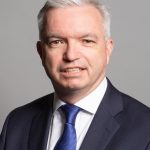
    Mark Menzies – 2022 Speech on Blackpool Airport

    The speech made by Mark Menzies, the Conservative MP for Fylde, in Westminster Hall, the House of Commons, on 6 December 2022.

    I beg to move,

    That this House has considered public service obligation funding and Blackpool Airport.

    As always, it is a privilege to serve under your chairmanship, Mr Gray. Blackpool airport has a long and proud history—from hosting the UK’s first official public flying meeting to playing its part in the war effort as RAF Squires Gate. During peacetime, the airport’s focus turned to private and commercial aviation. The arrival of low-cost air travel in the early 2000s saw the airport truly take off and resulted in a fivefold increase in passenger numbers, which peaked at more than 500,000 in the late noughties.

    Changes in ownership and contractual issues with airlines triggered a period of decline. Passenger numbers halved from the peak of 500,000 in 2014, and that year saw the last commercial flights from the airport. Since then, I have fought to preserve the site’s viability for scheduled passenger flights, including by opposing development that would have left the airport with a shortened runway. The airport is now owned by Blackpool Council, which has brought much-needed stability and security. I share the ambition of the airport team to use the Government’s enterprise zone investment to make the most of the site. That includes exploring how scheduled passenger flights can return.

    In June this year, I welcomed the then Prime Minister to Blackpool airport, along with my hon. Friend the Member for Blackpool South (Scott Benton). Prior to that, in March, I hosted a visit from the then Transport Secretary, who is now the Business Secretary. Most recently, the Northern Ireland Secretary visited the airport. On all three occasions, we highlighted the potential of Blackpool airport and discussed the possibility of kick-starting the revival of passenger flights. Nobody is expecting the immediate return of major airlines flying holidaymakers to the Costas, but there are opportunities to explore historic and important connections that will not only greatly benefit Blackpool but improve transport links between the regions of the United Kingdom.

    Public service obligation routes are connections to which the Government provide substantial subsidies that open up routes that would otherwise not be commercially viable. Current UK Government rules dictate that PSO flights must be between London and a regional airport. That does not apply to devolved Governments, and Scotland has been particularly effective at using PSOs to support connections between the central belt, highlands and islands. I checked this morning and found that Blackpool airport is slightly more than an hour’s drive from Manchester and Liverpool airports, and therefore qualifies for PSO flights to London.

    PSO flights would make it easier for people in Lancashire to travel for business, leisure or onward connections and would support the Government in delivering on the levelling-up promise to coastal communities, such as those I serve in Fylde. However, this must be about more than just improving access to London. The approach of focusing solely on London is out of tune with the Government’s commitment to levelling up and the future of our Union. Airports in London and the south-east have long struggled with runway capacity.

    I want the PSO rules to change to allow a shift in emphasis to connecting our nations and regions. Indeed, that idea is supported by Sir Peter Hendy, who lists it among his recommendations in the Government’s Union connectivity review. As Sir Peter points out in the review, new regional PSO routes would likely be cost-neutral to the Treasury. This opportunity to boost regional growth, support levelling up and bolster links within the Union should not be missed.

    Robert Courts (Witney) (Con)

    My hon. Friend is making extremely powerful points. The House will know that I was Aviation Minister until the summer, and I was lucky enough to visit his outstanding airport and meet the energetic team there. I can see how important it is to his area.

    He mentioned a couple of points that also have national importance, particularly that of PSO policy connecting not just with London but between regions. PSOs traditionally rely on subsidy—

    James Gray (in the Chair)

    Order. Interventions must be brief.

    Robert Courts

    I beg your pardon, Mr Gray. Has my hon. Friend considered the role that targeted air passenger duty relief—not a direct subsidy, but targeted APD relief —could play on routes that are non-operational or marginal?

    Mark Menzies

    I thank the former Minister for his intervention; he brings some important material to the debate. I hope the Minister will consider that sort of targeted APD relief in his response. It opens up another way to support the recommencement of flights from Blackpool to airports around the United Kingdom, which is incredibly important.

    I return to the point I was making. As Sir Peter points out in his review, new regional PSO routes would likely be cost-neutral to the Treasury. For example, Blackpool Airport has historic links to Northern Ireland, with a route to Belfast the last route to run commercially from the airport; it ended only because of contractual and licensing issues with the operation.

    Blackpool has numerous advantages over alternatives in the north-west, being cheaper to operate from than Manchester and Liverpool. Given its proximity to the airport enterprise zone in my constituency and Blackpool town centre, there is a real possibility of desk-to-desk travel time of little over an hour and half for Anglo-Irish business. PSO routes to places such as Belfast and Londonderry could potentially be the first steps towards greater regional connectivity to places such as Scotland, and in particular the central belt, which has strong cultural and economic ties to Blackpool.

    Scott Benton (Blackpool South) (Con)

    My hon. Friend has set out a powerful case for reforming public service obligation routes. I am sure he would agree that the Government have a good record on regional aviation so far, not just with the cut to air passenger duty but with the measures in the 10-point aviation plan and the regional connectivity review. However, Blackpool Airport is owned and run by Labour-run Blackpool Council. Does my hon. Friend agree that the council must do far more to look for opportunities to develop the airport and regional flights?

    Mark Menzies

    My hon. Friend makes an important point, in that the airport is owned and run by the council. Much of that I welcome, because under the previous private ownership there was a danger of that asset being run into the ground and developed for non-airport-related purposes. That would have been of great concern to me. There is an opportunity now for the Government to work in conjunction with the council to raise the ambition of the airport owners—the council—to seek ways to stimulate and bring forward flights from the airport. I am sure my hon. Friend and I will work with all parties to try to secure that.

    Teesside Airport is a possible destination and an inspiration for what a future Blackpool Airport might look like. I believe the PSOs can be a vital catalyst and a first step towards the return of flights from Blackpool, ultimately to continental Europe. Importantly, those opportunities may not be seen as contrary to environmental commitments. Just last week, easyJet and Rolls-Royce trialled the first jet engine powered by hydrogen, providing a glimpse of a lower-carbon future. Blackpool Airport has ambitions to be a leader in sustainable short-haul aviation, be that through electric and hydrogen-powered aircraft or innovation through new low-carbon fuels. The airport is keen to include electric charging and hydrogen fuelling infrastructure in its redevelopment plans.

    Regional airports, such as Belfast and Londonderry, are within the range of the generation of electrical aircraft in development. Currently, the opportunity to introduce those on a commercial basis is very much on the horizon. As we look to a low-carbon future, Blackpool provides a fantastic opportunity to support and showcase the development of a clean, green short-haul flight technology.

    Furthermore, as Lancashire continues to grow as a green energy hub, with its strategic location on Britain’s energy coast for wind and tidal power, and its position in the north-west nuclear arc, we can use the flights to connect other areas, leading to the technologies of the future. There are 41,000 workers in the energy and environment sector in Lancashire. Those industries have a significant footprint for Scotland and the north-east of England and will continue to grow in future decades. The Fylde coast is already training the next generation of engineers in those industries at the renowned Blackpool energy college which, incidentally, is located on the site of the former terminal building.

    Beyond the Fylde and Blackpool, the airport’s location gives it great onward connections to Lancashire and the wider north-west, as it is just minutes from the M55. The south Fylde line stops several hundred metres away, giving quick access to Lytham St Annes and Kirkham in my constituency, as well as onwards to Blackpool and Preston, the latter providing connections on to local Lancashire services, the west coast main line, and the future High Speed 2.

    Blackpool airport is a fantastic asset for Lancashire, with potential to support its manufacturing and energy sectors, as well as its fantastic tourism sector. Its closure to commercial flights remains a key issue locally, and residents the length and breadth of the Fylde coast continue to push for their return. The team at the airport have the drive and vision to get this off the ground. They are eager to make a success of the airport, embracing new low-carbon technologies and the opportunities that they present. An initial terminal building may not need to be large—just sufficient to get passengers checked in and safely on to their flights, as part of a longer-term vision to add further routes and investment to the airport’s infrastructure. We have seen that work elsewhere, and it can work again at Blackpool airport.

    Levelling up, strengthening our Union and the drive for net zero are at the very heart of the Government’s mission. With a little help to get things off the ground, Blackpool airport can support all three objectives. All that is required are small tweaks to the rules surrounding PSOs, combined with relatively minor investments and alternative support, such as targeted relief on air passenger duty for routes from small regional airports—again, estimated to be cost-neutral to the Treasury. This is a good opportunity, and we should not pass it up. I know that the Minister will recognise that, and I hope that he will take the steps required to reinvigorate Blackpool airport.

  • Graham Stuart – 2022 Speech on Burning Trees for Energy Generation

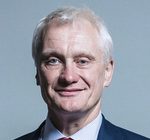
    Graham Stuart – 2022 Speech on Burning Trees for Energy Generation

    The speech made by Graham Stuart, the Minister for Energy and Climate, in Westminster Hall, the House of Commons, on 6 December 2022.

    It is a pleasure to serve under your chairmanship, Mr Gray. I congratulate my hon. Friend the Member for North Devon (Selaine Saxby) on securing the debate and thank all right hon. and hon. Members for their participation.

    My first reflection, having heard the tenor of the debate and the contributions so far, is that I have a bit of an uphill struggle to the persuade people in Westminster Hall of my case. It was noticeable in the contribution of the hon. Member for Southampton, Test (Dr Whitehead), given in his classically well-informed but downbeat style, that the position of His Majesty’s Opposition is to support the use of biomass. They think it does have a role, although the hon. Gentleman caveated that by saying that it was “not a large” contribution, which in the overall scheme of our energy use perhaps leaves a lot of unanswered questions. However, I welcome the fact that he said that.

    My hon. Friend the Member for North Devon raised important questions about biomass sustainability. I welcome the opportunity to clarify both the type of material and the stringent requirements we have in place to ensure that we support the sustainable use of this valuable resource. Using sustainable biomass in energy generation in the UK’s power sector has helped to reduce the use of fossil fuels. In 2021, biomass made up 12.9% of total electricity generation and the flexible generation provided by biomass technologies helps to support and stabilise the grid. It is not comparable with renewables, which by their very nature are not dispatchable and available as and when they are required—unlike biomass.

    The use of wood pellets for bioenergy production has attracted a lot of interest and it is right that operations are closely scrutinised. However, there are claims against wood pellet use for bioenergy from forests that misrepresent on-the-ground forestry practices. That is short-sighted and ignores the environmental and social benefits of sustainable forest practices and the role that forest-derived biomass plays in supporting them.

    Policy decisions need to be based on facts and rigorous evidence gathering, not on inaccuracies and misconceptions. The use of biomass from sustainably managed forests in well supported by evidence and experts such as the International Energy Agency, which is the global authority on energy, and the Intergovernmental Panel on Climate Change, which I would have thought that Members present would regard as being particularly well placed to make judgments on the balances that need to be struck in coming up with policy, yet the tenor of today’s debate is to dismiss these global experts and the different organisations that have looked at this issue extensively and come to the conclusion that the use of biomass is sustainable and right.

    Selaine Saxby rose—

    Barry Gardiner rose—

    Graham Stuart

    I will make a little more progress, if I may.

    It is important to remember that wood used for bioenergy is not high-quality and high-value timber. Although it has been said repeatedly in the debate that wood used for bioenergy diverts material away from other uses, the opposite is true. In response to my hon. Friend the Member for St Ives (Derek Thomas), who comes from the construction industry, the value of timber for other uses is much higher than the value of timber used for waste, so there is no economic rationale for using it.

    Wood pellets and Drax purchases do not compete, because they do not offer the same financial return. The idea—it has obviously been seeded, taken root and taken off, because I hear it again and again—that people are, in a sinister way, diverting excellent wood from uses for which they would get paid a lot more money to a use for which they get paid a lot less has spread, and it has become a conspiracy. In fact, bioenergy use does the opposite: it supports sustainable forestry. It supports the very forests that can supply wood panelling and construction material. We can ensure that it is part and parcel of delivering a stronger forestry industry around the world, and that we can have more wooden-constructed homes, as my hon. Friend the Member for St Ives suggested we should have.

    Barry Gardiner

    I am sorry to interrupt the Minister in his rhetorical flow, but does he accept that two of the licences that Drax has utilised in British Colombia were for areas of primary forest that have been destroyed? Those areas—in one case, more than one square mile of primary forest—have been clear-felled, and Drax has denied it.

    Graham Stuart

    I will write to the hon. Gentleman on that specific issue, as it is right that I give him a proper answer. On investigation, we do not find that the allegations that “Panorama” made are fundamentally sustained. The general process involves thinnings. Every managed forest has to be thinned in order to be sustainably managed, and thinnings sometimes include whole trees—that is the nature of forest management. If we do not do it, it does not have the desired effect. It is worth saying again to my hon. Friend the Member for North Devon that young, vigorous stands grow and sequester carbon at maximum speed. As stands get older, the tree canopy closes and individual trees begin to die off from self-thinning and other causes. Very old forest stands can reach a carbon-neutral equilibrium, whereby trees die and decay at approximately the same rate as they grow back.

    It is worth saying that before thinnings were used for bioenergy and turned into pellets, they were typically burned to get rid of them. The idea that the use of biomass is taking away fundamental primary forest, which is being cut down even though there are better uses for it, is false, but I will write to the hon. Member for Brent North (Barry Gardiner) about the specifics of that. It is always possible that there are exceptions, but Canada and the United States have really strong forest management and sustainability practices, regulations and laws. We have looked closely at the issue, and if they wish to keep this business going and manage the crops of these forests, they have every incentive to maintain them.

    I say to my hon. Friend the Member for North Devon that we could do with bringing in some experts, and I will hold a meeting. Let us have the scientists in and discuss some of this stuff—it would be an opportunity to talk about it further.

    Selaine Saxby

    I thank the Minister for giving way on this point, although I am very disappointed by the stance he is taking. Will he invite the 600 scientists who wrote to the Prime Minister earlier this week with their very detailed analysis? The professors with whom many of us in this room have spent much time understand that the science has evolved and that some of the information we used back in 2014 is no longer correct. We need to re-evaluate things; we cannot just get stuck on what we used to do in the past.

    Graham Stuart

    I entirely agree with my hon. Friend. We must not get stuck in the past, and we need to have a thorough and proper examination of the issues. That is why, as one small contribution to that, bringing in the Government experts and the people we are listening to would be a useful way to carry on with this and make sure that we are making the right judgments overall. The last thing we want to do is get this wrong. As successive Members have said, there is a substantial subsidy involved for a start, and we want to ensure that whatever we are doing is the most sustainable, both economically and environmentally, for the good of the country. It is well worth having that conversation.

    Forest sites are harvested to produce fibre for multiple products, such as timber, plywood and oriented strand board, among others. Those industries invariably pay more for the fibre. Wood pellets for bioenergy make up only a small portion of a harvest—notwithstanding the talk of 27 million trees—and help to maximise the benefit of each harvest. It is, effectively, a harvest—an energy crop, and a by-product energy crop of the main product, which is timber produced for other uses.

    Material that is not wanted by sawmills can be used when it does not have a suitable destination in the sourcing regions—for example, when there is a lack of local pulp and paper mills or other suitable industries. The destination of lower-quality material such as low-grade roundwood that is unsuitable for use in sawmills depends on the types of industry present around the sourcing area. If there is a pulp or paper mill nearby or a wood panel producer, material suitable for use in those industries is taken there, as those end users pay more for the fibre than wood pellet producers do. It is simply not economical for the harvester to sell those materials to the pellet mill if other, higher-paying industries are present.

    Barry Gardiner rose—

    Graham Stuart

    I give way, for the last time, I think.

    Barry Gardiner

    The Minister has been generous in giving way, and I appreciate that. Will he address an issue that many Members have raised, which is the payback period and the cycles not being short enough to achieve the emissions reductions in the timeframe that the climate will allow?

    Graham Stuart

    The hon. Gentleman, as so often, has put his finger on the central point. We cannot do this by looking at an individual tree. We look at the whole forest and different parts of it, which are of different ages. That forest is harvested in an ordered way. We need to look at the whole forest, and as long as there is replanting—that is precisely what the sustainability criteria are about, and those are applied in Canada, America and elsewhere—and the overall carbon sequestration is maintained, and indeed over time preferably increased, there are no emissions, effectively.

    Let me return to the point source emissions at Drax and say that that is why we do not count them. As long as the overall picture is in balance—this is only a by-product of the energy crop and of the main use, which is for timber—we can see, straightforwardly, that it is right not to view that as having emissions. That is what the policies are in place to try to ensure.

    I must allow two minutes for my hon. Friend the Member for North Devon, and I look forward to a further discussion of the matter. As has been said, I have been in the job for only a relatively short time, and, as Members can tell, I am seized of a certain view, but I am certainly interested—

    Sammy Wilson

    So was a previous Minister.

    Graham Stuart

    We have had those quotes, which might or might not have been accurate. My right hon. Friend the Member for Spelthorne (Kwasi Kwarteng) did then say that he fully supported Drax and the policy of the Government. He was not a junior Minister; he was Secretary of State, so if he had a different view he could have said so. I do not suppose he was too constrained.

    Anyway, I look forward to further examination of the issue, but I should give the floor to my hon. Friend the Member for North Devon.

    Selaine Saxby

    I thank you, Mr Gray, for chairing the debate, and my colleagues for their contributions. I suspect we will return to the issue, and I would be happy to join the Minister in doing so.

    As we move through the transition to net zero, it is vital that we understand that things are going to change, that the science has changed and that we are moving forward. When people first burned coal, they did not understand the damage they were doing to the planet, and I think the same is true for wood pellets. In 1959, plastic bags were invented to stop us cutting down trees to make paper bags, and we recognise now that that probably was not the right decision.

    I hope that as the Minister reviews the matter and considers the release of his biomass strategy, he will find those same advisers who persuaded the former Secretary of State that importing trees to burn is not a sustainable practice in view of our intention to get to net zero by 2050. On the current path, we are simply not going to achieve that.

  • Alan Whitehead – 2022 Speech on Burning Trees for Energy Generation

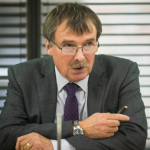
    Alan Whitehead – 2022 Speech on Burning Trees for Energy Generation

    The speech made by Alan Whitehead, the Labour MP for Southampton Test, in Westminster Hall, the House of Commons, on 6 December 2022.

    I have listened very carefully to the debate and I congratulate the hon. Member for North Devon (Selaine Saxby) on securing it.

    Overall, we have had a thoughtful debate about the difficult issues facing UK energy production, including what sources it is right or wrong to use, subsidies that might be put in place, and arrangements for the production of comparatively low-carbon energy that could provide power more cheaply and efficiently, as well as, most importantly, on a lower carbon basis.

    As the hon. Member for Mid Derbyshire (Mrs Latham) mentioned, undoubtedly a while ago biomass was thought to be a simple proposition for power production that was fine in terms of the overall carbon cycle: it uses trees that grow again, thus balancing the CO2 put into the atmosphere through burning. Actually, the same is true of gas power, for example, only carbon has been sequestered in the ground over many millions of years and now we are putting it back into the atmosphere. It is all about cycles and the carbon replacement period, which is an important initial point to consider. The debate has moved on considerably, because people are thinking carefully about what those cycles mean for carbon replacement.

    We need to question if it is ever right to use thermal means to produce power. We currently have 200 biomass generators in the UK, producing 88% of UK power. In addition, whether or not we regard burning wood waste and other materials for power as unacceptable, we have 54 energy and waste plants across the country that produce some power, half of which produce a lot of heat that can be used for district heating purposes. They ought to come into the carbon balance equation that we are trying to achieve.

    We have heard today an incontrovertible point: taking whole trees, burning them for power and transporting the product of those trees across large parts of the world is clearly not the best use for them. That is particularly the case if those whole trees have not been grown in farmed or managed forests but in primeval ones, where they have captured carbon for many centuries, and are being clear felled and used to fill a hole in energy production.

    Barry Gardiner

    Would my hon. Friend also accept the distinction that a managed forest for production timber and biomass has nowhere near the biodiversity that there is in the primary forests that we have been talking about? It is a matter that we cannot look at simply in terms of carbon emissions; we have to look at it in terms of wider sustainability and the biodiversity of species.

    Dr Whitehead

    Yes, indeed, we need to take careful account of the points my hon. Friend has made about wider biodiversity issues. However, we have sources of material—starting with the idea of managed forests, under certain circumstances, or energy crops, under other circumstances—that are much shorter in their use and carbon sequestration, such as miscanthus and short-rotation coppicing of willow. Those can be produced with a very short time of burning and resequestration. However, as my hon. Friend has said, there may be other environmental consequences attached to the practice.

    Wera Hobhouse

    Is it not the outcome of today’s debate that burning wood or biomass is neither low in carbon nor a renewable source of energy—so why are we still subsiding the industry?

    Dr Whitehead

    That was the case I was trying to pick apart. Is it right that we should ever burn anything for power? If we burn some things for power, what are the circumstances under which we burn them and what are the constraints we have to put on their burning? One of the issues is just how much we pay for that burning. If there are better uses for the subsidies we might put towards that burning, then we should undertake those instead. We need to be very mean in terms of the resource we put into subsidies so that we get the best outcome for those subsidies.

    We cannot draw an overall conclusion today about the wide issue of what is waste, whether it is appropriate to burn it under any circumstances and how we manage that waste stream. Clearly, with whole forests—even if they are managed—the production of timber that goes into houses and buildings is a much better way of sequestering carbon from that timber than burning it. Waste material, on the other hand, does not have the same uses, although the hon. Member for North Devon mentioned the wood panelling industry, where there are certain uses for roundwood and other timber that can sequester carbon in a better way than burning it. However, we still have the issue of whether there is a role at all for biomass burning and waste burning in future.

    We have also had a discussion about CCS, on the back of burning wood, residual material and waste. That applies to energy from waste just as it does to biomass use. Of course, the Climate Change Committee is quite keen on BECCS. The idea is that the whole process can become net negative as far as contributions to net zero are concerned, and we are producing a net negative contribution to the overall carbon balance, providing that CCS works well and sequesters as much carbon as it is supposed to.

    Sammy Wilson

    This is being put forward as another way of trying to deal with the unfortunate consequences of the CO2 emissions from the Drax station. First, carbon capture and storage is expensive. Secondly, it would use about a third of the power that is produced to capture the gas.

    Dr Whitehead

    This underpins just how wide this debate really is and what we need to think about: for example, is CCS a reasonable way to go forward in sequestering emissions over the long period and how much is that going to cost overall in subsidies? My conclusion is that, yes, there is a role for biomass and for energy from waste, with the proper constraints and the proper circumstances under which we provide that power. It has a role, but not a large role. On the other hand, we need every source of low and lowish carbon energy that we can get at the moment, so we need it to make a contribution, but not a large one, to our overall power arrangements.

    I look forward to the rather delayed biomass strategy that the Government are about to publish, which perhaps will give us a much better understanding of these issues as they combine together. I hope the Minister will give us a foretaste of what that biomass strategy will look like so that we can move this debate forward.

  • PRESS RELEASE : UK orders thousands more anti-tank weapons to bolster stockpiles [December 2022]

    PRESS RELEASE : UK orders thousands more anti-tank weapons to bolster stockpiles [December 2022]

    The press release issued by the Ministry of Defence on 7 December 2022.

    Thousands of new anti-tank weapons will be assembled in Northern Ireland and delivered to the British Army, Defence Secretary Ben Wallace announced today (7 December).

    A £223 million deal has been agreed with Swedish manufacturer Saab for Next Generation Light Anti-Tank Weapon (NLAW) systems, which are assembled at Thales’ facility in Belfast, Northern Ireland.

    The UK has provided thousands of NLAWs to Ukraine to support the defence of their nation following Russia’s unprovoked and illegal invasion. With NLAW, a single soldier can take out a heavily protected modern main battle tank from 20 to 800 metres away.

    Defence Secretary Ben Wallace said:
    These next generation light anti-tank weapons have played a decisive role in supporting Ukraine’s army to drive back Russia’s illegal invading forces.

    Working with our first-class industry partners, we are continuing to fulfil our commitment to NATO by ensuring our Armed Forces will receive a steady supply of these weapons over the coming years, whilst supporting UK jobs across the length and breadth of the country.

    Secured through Defence Equipment and Support – the MOD’s procurement arm – today’s agreement will see several thousand units delivered to UK Armed Forces across 2024-2026, in addition to around 500 being delivered in 2023 through a separate procurement.

    NLAW is a shoulder-launched missile system that attacks a tank from above. It combines the simplicity of light anti-armour weapons with the advantages of heavy, crew-operated guided missile systems.

    It is as a result of this agility, reliability and accuracy that the NLAW has been an important capability in Ukraine’s fight back against Russia’s illegal invasion, making up part of the 10,000 anti-tank weapons the UK has supplied to the Ukrainian armed forces.

    The UK continues to be actively engaged with industry, allies and partners to ensure we can equip Ukraine with vital military support while replacing, at pace, equipment and munitions granted in kind from UK stocks.


  • Volodymyr Zelenskyy – 2022 Statement on the Situation in Ukraine (20/11/2022)

    Volodymyr Zelenskyy – 2022 Statement on the Situation in Ukraine (20/11/2022)

    The statement made by Volodymyr Zelenskyy, the President of Ukraine, on 20 November 2022.

    Dear Ukrainians, I wish you health!

    I briefly report on the day, which started very early today, it was very active, and my schedule for this day is not yet exhausted.

    I just held another meeting of the Staff. The main issues are the front. The provision of our troops, the situation in particular sections of the front line and that we are planning to increase the number of Ukrainian flags in the cities in the south and east of the country.

    The battles in Donetsk region were discussed separately. Reports were presented. We are doing everything to help our heroes withstand Russian attacks.

    Of course, special attention was paid to energy.

    The composition of the participants of the Staff meeting is traditional. The Commander-in-Chief, commanders and all who work for our defense.

    An extremely important visit to Ukraine took place today – the visit of the new British Prime Minister, Rishi Sunak. A very meaningful visit. We managed to discuss all the key issues of our relations. There will be new results for both our countries – that’s for sure.

    Thank you, Rishi, Mr. Prime Minister, for your willingness to defend freedom even more strongly with us. We also have some very necessary decisions – we agreed on them today.

    As always, today I received reports on restoration work in the energy sector.

    We are working throughout the country to stabilize the situation.

    The most problems with electricity are in the city of Kyiv and Kyiv region, the city of Odesa and Odesa region, the city of Kharkiv and Kharkiv region. Vinnytsia, Ternopil, Cherkasy, Chernihiv and other regions – energy workers are doing everything possible to give people a normal life.

    Kherson – we are restoring transport connections. There is the first train from Kyiv. We create new opportunities for people every day.

    We are preparing important international events – they will be soon. We will provide everything that is needed for our protection.

    We involve everyone who can be involved in supporting our state.

    Thank you to everyone who works for Ukraine!

    Thank you to everyone who fights for Ukraine!

    Thanks to everyone in the world who helps!

    Glory to Ukraine!

  • Volodymyr Zelenskyy – 2022 Statement on the Situation in Ukraine (19/11/2022)

    Volodymyr Zelenskyy – 2022 Statement on the Situation in Ukraine (19/11/2022)

    The statement made by Volodymyr Zelenskyy, the President of Ukraine, on 19 November 2022.

    Good health to you, fellow Ukrainians!

    All day long, the energy staff worked to restore the normal technical possibility of electricity supply, as a result today there are already significantly fewer emergency shutdowns.

    As of the evening, in most regions where shutdowns continue, stabilization hourly schedules were in effect. Emergency shutdowns were used to a greater extent in the Odesa region and Kyiv.

    The difficult situation with energy supply persists in a total of 17 regions and in the capital. Kyiv region and Kyiv, it’s very difficult in the Odesa region, and also the Vinnytsia region and Ternopil region.

    Special “Points of Invincibility” were opened in Kherson today. The first two points. There will be more.

    While electricity is restored in the city, people can charge their phones, stay warm, drink tea and get help. We have provided communication service there, there are “Starlinks”, etc.

    We know that it is very difficult for people, because the occupiers destroyed everything before fleeing. But we will connect everything, restore everything.

    Vice-President of the European Commission Dombrovskis was in Kyiv today. We talked with him, in particular, about energy. Financial cooperation between Ukraine and the European Union, the financing needs of our country until the end of the year and in the next year were also discussed in detail.

    This year, we expect two tranches of macro-financial aid – EUR 2.5 billion in November and EUR 0.5 billion in early December.

    We also discussed new sanctions against Russia, which may be introduced at the European level.

    I spoke today with the student community of Ireland – a country that supports us fundamentally. Although it is a neutral country militarily, Ireland strongly defends European values and helps us politically and humanitarianly.

    I made two requests to the Irish. The first is to promote at the pan-European level the need to strengthen sanctions against Russia. The second is to help us spread the truth about the events in Ukraine and about Russian terror.

    I also addressed the participants of the security forum in Halifax, Canada, which is one of the world’s security forums. Once again, I presented the Ukrainian peace formula and invited Canada and our other partners to choose for themselves a component of the peace formula in which they can show their leadership as much as possible.

    This is the point of the way we present our proposals for restoring peace.

    We have broken them down into elements – what Russian aggression consists of. And we do everything to neutralize each of these elements and to neutralize the aggressor because of it.

    Every day, I receive very positive feedback from the world about this approach of ours – major leaders support Ukrainian constructiveness. And I believe that we will be able to implement our peace formula.

    The fierce fighting in the Donetsk region continues to this day, there has been no alleviation of hostilities or respite. About a hundred Russian attacks were repelled in the Donetsk region only yesterday. All our warriors who are holding out in Donbas are true heroes.

    Today, I would like to pay particular attention to the border guards of the Kharkiv and Sumy detachments, who are currently operating in the Donetsk region. Their mortars help a lot, giving the invaders no rest. Nice job, guys! Thank you!

    I also thank the warriors of the 4th operational brigade of the National Guard, which protects Ukraine in the direction of Bakhmut. Smart initiative and persistence are two things that produce extremely useful results.

    Nowhere on the frontline do we give in to the enemy. We respond everywhere, we hold positions everywhere. We are preparing future successes in certain areas.

    I spoke today with the President of Türkiye Erdoğan. Thanked him for the efforts to extend our grain export initiative.

    We also discussed the details of our new humanitarian initiative Grain from Ukraine. I hope that Türkiye will join its implementation.

    Of course, attention was paid to both security cooperation and energy situation.

    Tomorrow we will have a very active day, not a day off at all. We are expecting news and opportunities for Ukraine. And we are already preparing the appropriate soil for them.

    And today I want to say one more thing – congratulations. Congratulations to all sergeants of the Armed Forces of Ukraine on their professional day. Today, many kind words were said both in the army and in society.

    Sergeants are truly the people who ensure real unity and understanding between commanders and soldiers. The sergeant corps is the true backbone of the Army, and I thank all of our sergeants who live up to those words.

    Thank you to each and everyone who is currently serving in our defense forces!

    Thank you to everyone who made the defense of Ukraine a part of their personal destiny!

    Glory to our heroes!

    Eternal memory and honor to those who gave their lives for the freedom of Ukrainians!

    Glory to Ukraine!